Denial of suicidal intent in adolescents after firearm injury can coexist with high-risk behaviors, necessitating assessment beyond self-report, particularly when affect appears constricted or emotionally numb.
Firearms dominate adolescent suicide mortality due to high case-fatality; epidemiologic trends show rising firearm suicide rates among Black and Hispanic adolescent girls, sharpening vigilance in at-risk groups.
In this case exploration, a teen survives a gun injury yet denies self-harm, pushing clinicians to read beyond words and plan safety when suicide intent is unclear.
thebigland45/AdobeStock
TALES FROM THE CLINIC
-Series Editor Nidal Moukaddam, MD, PhD
In this installment of Tales From The Clinic: The Art of Psychiatry, we evaluate psychiatric care for adolescents following injury. Working with adolescents in psychiatry can be difficult and complex, especially after injuries. Teenagers may struggle to explain their emotions or may deny distress even after dangerous events, claiming they are fine. The case example tells the story of a teenage girl who survives a firearm injury, but denies self-harm. Her denial raises difficult questions about safety and suicide risk, highlighting a challenge in child and adolescent psychiatry: assessing risk when intent is unclear.
It can be difficult to assess suicide risk in adolescents when they deny any intent. Words alone may not show the full situation. A young person’s behavior, life situation, and access to dangerous means can give a clearer picture. This is shared as a teaching reflection to support careful thinking, safety planning, and kind, thoughtful care when the full truth is not clear.
Case Example
“Veronica,” a 17-year-old girl, is admitted to the emergency department (ED) for injuries sustained during an event involving a firearm in her home.No one else was seriously injured and she claims the gun going off was merely “an accident,” but the situation raised concerns about her safety. When asked, she denies any suicidal intent.
You, as her mental health clinician, notice she is very quiet. She sits near the window and pulls the sleeves of her sweatshirt over her hands. She is hesitant to make eye contact and answers questions with shrugs or 1-word responses. When asked how she is feeling, she responds “fine.” Again, when questioned, she denies any intent to self-harm or attempt suicide. She does admit that she has easy access to her father’s gun cabinet, which he often forgets to lock.
Over the next few days, she reveals more information. School had become difficult for her. Classmates mocked her online. Rumors about her spread through social media. Friends she trusted no longer spoke to her. At home, arguments became more common and increasingly physically violent.
During the next evaluation, her sister mentions Veronica’s troubling internet search history: “Easiest way to die,” “Ways people kill themselves,” and “How long does it take to bleed out?”
When questioned about these searches, Veronica claims it was purely out of curiosity, but asks, “Can someone be falling apart without anyone noticing?” When you answer in the affirmative, she starts crying, but again claims she is “fine.” You recommend she gets psychiatric care outside of the ED and offer a referral.
Upon discharge the next day, Veronica speaks more than when she arrived. She attends groups, makes plans for follow-up care, and talks about things she wants to do in the future.
Background
Suicide is the leading cause of death among adolescents, and firearms are involved in about 65% of deaths among adolescents.1-3 Although unintentional firearm injuries are less common, they still cause approximately 440 deaths among children in a single year, with ED visits for nonfatal injuries occurring about 5 times more often than fatal cases.1Firearms are the most lethal method of self-harm in adolescents, accounting for nearly 59% of suicide deaths from 2010 to 2019, with about 91% of attempts resulting in death.1,4By 2019, firearms were used in about 51% of suicide deaths among teenage boys and 25% among teenage girls.4 Although firearm suicide remains more common in boys, rates among girls have increased in recent years.4,5 From 2019 to 2023, gun suicide rates rose by 65% among Black adolescent girls and by 25% among Hispanic adolescent girls, highlighting a growing risk in this population.5 Teenagers may act quickly without thinking and often find it hard to understand or explain their emotions.6 After serious injuries, some adolescents may say they did not mean to harm themselves, which can make it difficult for clinicians to understand the true risk.6
Guidance is limited for managing adolescents seriously injured by firearms who insist the event was accidental.Such cases fall between accident, impulsive behavior, and suicide attempt, showing why it is important to look beyond words. Clinicians should consider recent stress, behavior changes, emotional state, and firearm access when making decisions about adolescent safety.
Discussion
The case example shows a problem many clinicians face when working with adolescents after serious injuries. It is often hard to assess suicide risk when a teenager says they did not want to die or says the event was an accident. In situations involving firearms, uncertainty can be especially difficult because the consequences are often severe or fatal. A young person may repeatedly say, “I didn’t mean it,” yet the behavior itself may suggest significant risk.
Teenagers often find it hard to explain emotional pain. Some do not fully understand what they are feeling. Others may hide their distress because they feel embarrassed, scared, or worry about being judged. After a traumatic event, a young person may feel emotionally numb or show very little emotion.7 This may be a sign of emotional shut-down after trauma, not a sign that the person is coping well. Because of this, a calm or quiet appearance should not be taken as proof that the teen is doing well or that the risk has gone away.7
The case highlights several factors that may raise concerns about a teenager’s safety. These include bullying, problems with friends, family conflict, feeling alone, emotional struggles, internet searches about death or suicide, and access to a firearm.7 None of these things by itself means that a teenager is suicidal. However, when several of these concerns are present simultaneously, the risk may be higher.7 Because of this, clinicians should carefully review the entire situation and conduct a thorough safety assessment.
Access to firearms needs special attention. Teenagers may act on impulse, especially when they are feeling strong emotions. Because guns are very dangerous, even a short moment of acting without thinking can lead to serious or deadly harm.8 For this reason, clinicians should carefully ask about access to firearms and other dangerous means. They should also talk with families about safe storage and making sure these items are kept out of reach.9
Figure. Beyond Words: A Stepwise Approach to Adolescent Suicide Risk Assessment After Firearm Exposure
Assess Immediate Risk
How serious was the injury?
Was a firearm involved?
Is there ongoing suicidal thinking, self-harm behavior, or severe emotional distress?
Consider what was happening in the teen’s life
Recent losses or stressful events
Bullying, social media conflict, or peer problems
Family conflict or instability
Trauma or major life changes
Internet searches related to death, self-harm, or suicide
Psychiatric symptoms (depression, anxiety, substance use
Think about safety
Is there access to firearms or other dangerous means?
Is there enough supervision and support at home?
Listen carefully, but not only to words
A teen may deny suicidal intent
Little emotion does not always mean little distress
Insight and judgment may be limited
Choose the safest next step
More observation if concerns remain
Safety planning with the family
Mental health follow-up and support
Restrict access to firearms and other lethal means
The case also shows that interviews alone are not always enough. Teenagers may not fully understand their own reasons or may not be able to explain them clearly. Watching behavior over time, gathering information from other sources, and using structured risk tools can give a more complete view.10The flow chart in the Figure helps clinicians think in an organized way when intent is unclear. It looks at how serious the event was, current stress in the teen’s life, access to lethal means, and overall daily functioning. This helps guide safer planning and treatment decisions.
In the end, the goal is not to know exactly what a young person was thinking at one moment. The goal is to understand risk, reduce harm, and help create safety and recovery. It is more important to look at the whole story, not just a single statement. When clinicians do this, they are more likely to make safer and better decisions for adolescents.
Concluding Thoughts
The case in this article highlights a difficult reality in adolescent psychiatry: words do not always tell the whole story. A teenager may deny wanting to die while still engaging in behavior that places them at serious risk. Access to firearms, recent losses, trauma, and emotional distress can increase vulnerability, even when intent is unclear. Clinicians must look beyond a single statement and consider the larger picture, including behavior, life circumstances, and safety risks. Careful assessment, observation, and thoughtful safety planning can help protect adolescents during vulnerable moments and support their path toward healing and recovery.
Dr Sarkeris a PGY3 psychiatry resident at Baptist Hospitals of Southeast Texas, in Beaumont, TX.
Dr Memonis a child, adolescent, and adult psychiatrist; the medical and program director of the Child & Adolescent Psychiatry Fellowship Program; and the associate program director of the Psychiatry Residency Program at Baptist Hospitals of Southeast Texas in Beaumont, TX.
Bed- and couch-rotting is driving the U.S. economy.Ute Grabowsky/Photothek via Getty Images
Add Fortune on Google for similar content.Add us on Google
You’ve been there. You’re on the couch, and the kitchen might as well be a mile away. Cooking is out of the question, let alone walking to pick up takeout. So, you order delivery instead because it’s three taps away on your phone.
Recommended Video
Now Serving: Global Ambition
Welcome to the new modern economy: whatever you want, delivered instantly to your fingertips, all with the least amount of friction.
But getting things when we want it is leading to a dopamine recession. Stanford psychiatrist Anna Lembke, author of Dopamine Nation, found the brain processes pleasure and pain in the same physical location, using what she calls an “opponent-process mechanism”: Every hit of pleasure is automatically followed by an equal, below-baseline crash of discomfort or craving once the high wears off.
Repeat that enough (say by ordering food delivered nightly) and that pleasure-pain balance tips permanently toward the pain side. Researchers call this a “dopamine deficit,” in which a person no longer uses the reward to feel good, but simply to feel normal again. The easier and more instant the reward—delivery apps, infinite scroll, one-tap purchases—the faster and harder that crash comes, and the more of it you need just to break even. An ouroboros, if you will, a cycle that manufactures its own demand.
The behavior is now large enough to show up in the country’s spending data. New Visa Business and Economic Insights research found the share of U.S. domestic spending online and in-app rose from 48% to 58% between 2019 and 2026, with similar jumps in the U.K., the U.A.E., Poland, Brazil, and Australia. Streaming subscriptions now sit on more cards than cinema and concert spending in every market studied. Food delivery adoption in the U.A.E. went from 2% of cards to nearly 30% in less than a decade, driven mostly by everyday spenders rather than high earners.
Visa calls this the “couch economy,” and treats it as an opportunity: Convenience is now the baseline expectation, and businesses that don’t deliver it lose customers to ones that do.
We don’t want to talk to anyone anymore
So what’s driving this phenomenon of wanting to stay secluded at home? It’s gotten so bad Americans are speaking roughly 28% fewer words a day than they did in 2007, a trend the researchers tied directly to the convenience economy.
“Using the self checkout is more efficient because you don’t have to wait in line as much,” Valeria Pfeifer, one of the researchers behind the study, told Fortune. “You don’t have to waste time talking with the cashier. Instead, you just scan your stuff and leave.”
This connects to the broader loneliness epidemic, which estimates show costs the U.S. economy $406 billion a year in lost productivity and health care spending, a condition researchers say carries a mortality risk on par with smoking 15 cigarettes a day. That withdrawal shows up in the physical world too, as America’s third places are running sparse just as regular contact with neighbors among young adults has fallen from 51% to about one in four in just over a decade.
Meanwhile, Americans now spend roughly 93% of their lives indoors, according to physician John La Puma, author of Indoor Epidemic. Part of that is driving brain fog, poor sleep, and chronic disease.
“You’re living like a zoo animal, no horizon, stale air, in a box,” he told the Santa Barbara Independent. “That’s not burnout. It’s captivity biology.”
Maybe it’s your phone, maybe it’s life after COVID
“Screen time does matter, but the heaviest users aren’t the most overloaded,” said Henrik Lassila, the study’s lead author. “Those who feel most overwhelmed are the ones who return to their phone again and again for brief moments and then put it down shortly after.”
A separate study then looked at Oxford’s 2024 word of the year: “brain rot.” They found it directly predicts burnout, which cascades into stress, anxiety, and eventually depression.
Other research may point to the direct effects of having COVID. Not only have we spoken less to each other and spent more time inside since the pandemic, but those who have contracted COVID and are experiencing long COVID symptoms like brain fog may be suffering from a dopamine hit as well. Researchers recently found measurable, physical loss of dopamine-releasing nerve terminals, up to 20% in some brain regions, in long COVID patients with brain fog and motivation loss.
Whatever’s driving the bedrotting economy, it’s also driving a loss in the very social interactions we’re having. And that’s pretty alarming, especially to people who crave community and someone to talk to.
“We likely have fewer conversations because we have fewer opportunities to have social interactions,” Pfeiffer previously told Fortune. “Or some of those social interactions may not be as long or as intense as they used to be, and therefore we may not feel as connected with others.”
Fortune Daily breaks the traditional barrier between audience and newsroom. The show transforms Fortune’s trusted reporting into actionable, conversational, and entertaining insights for an emerging class of business leaders. Watch here.
Published: November 24, 2009 Last Updated: September 14, 2026
On September 18, 1793, George Washington lays the cornerstone to the United States Capitol building, the home of the legislative branch of American government. The building would take nearly a century to complete, as architects came and went, the British set fire to it, and it was called into use during the Civil War. Today, the Capitol building, with its famous cast-iron dome and important collection of American art, is part of the Capitol Complex, which includes five Congressional office buildings and three Library of Congress buildings, all developed in the 19th and 20th centuries.
As a young nation, the United States had no permanent capital, and Congress met in eight different cities, including Baltimore, New York City and Philadelphia, before 1791. In 1790, Congress passed the Residence Act, which gave President Washington the power to select a permanent home for the federal government. The following year, he chose what would become the District of Columbia from land provided by Maryland and Virginia.
Washington, D.C.
George Washington picked out the location and laid out a perfect diamond shape for the city, spanning parts of Maryland and Virginia. But a looming fight over slavery caused the Virginia side to leave the District and return to its home state, giving D.C. its strange shape.
Washington picked three commissioners to oversee the capital city’s development, and they in turn chose French engineer Pierre Charles L’Enfant to come up with the design. However, L’Enfant clashed with the commissioners and was fired in 1792. A design competition was then held, with a Scotsman named William Thornton submitting the winning entry for the Capitol building. In September 1793, Washington laid the Capitol’s cornerstone and the lengthy construction process, which would involve a line of project managers and architects, got under way.
In 1800, Congress moved into the Capitol’s north wing. In 1807, the House of Representatives moved into the building’s south wing, which was finished in 1811. During the War of 1812, the British invaded Washington, D.C., and set fire to the Capitol on August 24, 1814. A rainstorm saved the building from total destruction. Congress met in nearby temporary quarters from 1815 to 1819.
This Week in History Quiz: September 13-19
Test your knowledge of this week in history trivia in this timed quiz.
In the early 1850s, work began to expand the Capitol to accommodate the growing number of Congressmen. In 1861, construction was temporarily halted while the Capitol was used by Union troops as a hospital and barracks. Following the war, expansions and modern upgrades to the building continued into the next century.
Today, the Capitol, which is visited by an estimated 3 million to 5 million people each year, has 540 rooms and covers a ground area of about four acres.
Disabled Activists Crawl Up the Steps of the Capitol
Protestors gathered at the Capitol in March of 1990, abandoned their assistive devices and crawled up the steps. Known as the Capitol Crawl, it was a major catalyst for the passage of the Americans With Disabilities Act (ADA).
“I used ChatGPT to help me manage my health care. I have multiple diagnoses, including CHF, CKD, pulmonary hypertension, lupus, a metabolic disorder, and kidney cancer.
I gave ChatGPT access to my medical history and began using it to review my test results and prioritize questions for my doctors. On a recent lab report, my platelet count was low. ChatGPT reviewed six years of results and showed me that it had consistently been low, with the latest result below the threshold.
It helps me identify which questions to ask and which of my six doctors I should address about each report. This has transformed the way I’m able to manage my care.”
See Lisa’s full workflowhere. How do you use AI?Tell usfor a chance to be featured.
Late August, Nigerian Navy and FDFA arrested 33 people in Exercise Coastal Grip II / Operation Abo Eja: three Chinese, two Ghanaians, 28 Nigerians. Role of the Chinese on board was not specified; Chinese captains often hire African crews. Ships, helicopters, SBS, and Western Naval Command surveillance; fisheries staff as technical advisers.
Rear Adm. Mustapha: IUU has left Nigeria importing more than 70% of its fish. Adegoke: presence at sea deters and informs. Nigeria loses ~$70m a year to illegal foreign fleets. IUU Fishing Risk Index: China has the world’s largest distant-water fleet and ranks as the worst illegal-fishing offender. Stimson: West Africa is the IUU epicenter, ~$10bn a year—bottom trawling, EEZ incursions, flags of convenience. Beijing did not sign the Mombasa Declaration; EJF’s Trent: subsidies and weak control enable the fleet.
1 June Combined Maritime Task Force: Côte d’Ivoire, Gambia, Ghana, Liberia, Sierra Leone, and Nigeria—first African-led rapid-response maritime effort, HQ Lagos. ISS: so far only Nigeria has put kit in (one helicopter, ships, trucks). It will work with West and Central African maritime security centres.
The Nigerian Navy and Federal Department of Fisheries and Aquaculture (FDFA) arrested 33 people, including three Chinese nationals, in late August as part of a three-day initiative known as Exercise Coastal Grip II and Operation Abo Eja.
It was not immediately clear what the Chinese nationals did on the vessels, but Chinese fishing captains have committed illegal, unregulated and unreported (IUU) fishing in the Gulf of Guinea for decades. Also arrested were two Ghanaians and 28 Nigerians. Chinese captains routinely hire African workers.
The operation involved naval ships, helicopters, Special Boat Service personnel and maritime surveillance assets, and was coordinated through the Western Naval Command Mission Control Centre, Nigeria’s Channels Television reported. Fisheries officials offered technical guidance.
“The Operation has demonstrated the importance of maintaining a strong presence at sea, as regular and credible surveillance creates deterrent and encourages compliance amongst the legitimate operators and provides the authorities with valuable information on the activities taking place on the Nigerian maritime jurisdictions,” Adeleke Adegoke, FDFA deputy director, said in a Radio Nigeria report.
After the arrests, Nigerian Navy Rear Adm. Abubakar Mustapha told reporters that IUU fishing has reduced the country’s fish stocks to the extent that it now imports more than 70% of its “fishery needs.”
“So, the partnership between the Nigerian Navy and the [FDFA] is a step in the right direction,” Mustapha said in a Channels Television report. “In fact, the days of illegal fishers and poachers are numbered because the intersection of security, which the Navy brings, and regulation, which the [FDFA] brings to the table, would translate to the denial of these criminal activities, and which will also translate to more revenue and more food security.”
Nigeria loses about $70 million annually to illegal fishing perpetrated by a host of foreign fleets. Beijing commands the world’s largest distant-water fishing fleet and is the world’s worst illegal fishing offender, according to the IUU Fishing Risk Index. Due mostly to illegal Chinese fishing vessels, West Africa has become the world’s epicenter for IUU fishing. It costs the region an estimated $10 billion a year, according to a Stimson Center think tank report.
Chinese vessels commit many fishing violations, including bottom trawling, which involves dragging a net along the sea floor, indiscriminately scooping up marine life. This kills juvenile fish, decimates fish stocks and destroys ecosystems.
Beijing’s vessels also commonly fish illegally in countries’ exclusive economic zones and abuse local rules to enter African fishing registries under local flags. This is known as flagging in, or flying a flag of convenience. It helps a vessel’s owners dodge financial charges and other regulations.
Beijing recently refused to sign the Mombasa Declaration, an agreement meant to improve efforts to combat illegal fishing in East Africa. Steve Trent, CEO and co-founder of the Environmental Justice Foundation, said the Chinese government has taken a disingenuous approach regarding its fishing fleet.
“It’s simply not credible for them to carry on in this way,” Trent told the BBC in July. “China, to date, still is not doing nearly enough to control its fleet. In fact, I would say they’re enabling it, through subsidies, through a lack of oversight and control.”
Nigeria and other West African nations are collaborating to halt illegal fishing. On June 1, the Combined Maritime Task Force (CMTF) was established to address IUU fishing and other regional sea crimes. Côte d’Ivoire, The Gambia, Ghana, Liberia and Sierra Leone joined Nigeria in signing the pact. The CMTF will be the first joint, African-led maritime security effort to include a rapid response force.
The force will be headquartered in Lagos and is expected to conduct intelligence, interdiction, patrols, surveillance, search and rescue missions, and other security operations. According to the Institute for Security Studies, Nigeria is the only country so far to contribute to the fleet, with one helicopter, two vans, two pickup trucks, three ships and three military trucks. The force will work closely with the West Africa Regional Maritime Security Center and the Central African Regional Maritime Safety Center.
About Africa Defense Forum
The Africa Defense Forum (ADF) magazine is a security affairs journal that focuses on all issues affecting peace, stability, and good governance in Africa. ADF is published by the U.S. Africa Command.
Zhang Yiming, the founder of TikTok parent company ByteDance, is now richer than any other person in Asia.VCG / Contributor / Getty Images
Add Fortune on Google for similar content.Add us on Google
Recommended Video
How Bill Ackman Built Success on Cold-Calling Billionaires
Zhang Yiming, the founder of TikTok parent company ByteDance, has just overtaken Indian tycoon Gautam Adani as the richest person in Asia, according toBloomberg, who currently boasts a net worth of $104.8 billion.
Despite regulatory hurdles that nearly shut down one of his most popular apps in the U.S., TikTok, Zhang’s fortune has swelled to a whopping $105.5 billion.
Zhang, who owns around 21% of his company, saw his net worth skyrocket $12 billion this month alone following new valuations from BlackRock and Fidelity.
Now, his riches are nearly eight times greater than the $13 billion he had to his name in 2019—when Bloomberg first began monitoring his net worth. And AI has been one of the biggest wealth drivers.
How AI helped TikTok’s founder become even richer: ‘He plays his cards right’
The Chinese billionaire won out on the AI boom by taking big swings at the right time.
Zhang developed ByteDance’s AI technology in the midst of the U.S.-TikTok standoff; and Bloomberg reporting said that the company can leverage data from its social media apps to train its AI models. These advanced tech products may be the business’ biggest growth engines aside from the success of its video platform, boasting over a billion of daily active TikTok users, and hundreds of millions of people on Douyin.
“He plays his cards right,” Lian Jye Su, chief analyst at research firm Omdia, toldBloomberg. “He stayed on course and then continued to double down on AI investment.”
Zhang’s rise is one of many examples of how AI is reshaping the billionaire ranks—creating new fortunes, and rapidly growing the wealth of some of the world’s richest people.
AI is minting new billionaires and sending net worths soaring
The world’s richest entrepreneurs have watched their net worths skyrocket and plummet at the whim of the stock market. And just like Zhang, Michael Dell—the founder and CEO of pioneering tech company Dell Technologies—nearly doubled his wealth in just one year thanks to the AI boom. Now, he’s the fifth richest man in the world.
The 61-year-old entrepreneur, who owns 40% of his tech company, has gained around $122 billion since this month in 2025, nearly doubling his wealth to a whopping $262 billion, according to the Bloomberg Billionaires Index.
During its Q1 fiscal 2027 financial results earlier this year, Dell reported better-than-expected quarterly adjusted earnings, which has more than tripled from the year before as AI-optimized server revenue rocketed 757% to $16.1 billion. That helped Dell shoot past Zuckerberg on the billionaires list.
The innovation—seen as an improvement from Gemini 2.5 released around eight months ago—ignited optimism from investors and analysts, causing Alphabet stock to jump 3%. And in the months since, his investments have only continued to pay off, with Page’s net worth swelling to $293 billion today. Now, he’s the second richest person in the world, per Bloomberg’s estimate.
And AI isn’t just accelerating the wealth of established bigwigs—it’s also adding young newcomers to the billionaire club.
Last year the number of self-made billionaires under 30 hit an all-time high, according to an analysis fromForbes.
The majority made their wealth by jumping on the AI industry while it’s hot. For example, 25-year-old Sualeh Asif found success as the creator of company Anysphere—the team behind popular $29.3 billion AI editing tool Cursor. And Gen Zers Adarsh Hiremath and Surya Midha hit ten figures in cofounding Mercor: an AI-powered recruiting startup helping connect talent with Silicon Valley’s biggest AI labs.
Of the 11 young entrepreneurs who became billionaires analyzed, eight saw their fortunes boom through their AI innovations.
Fortune Daily breaks the traditional barrier between audience and newsroom. The show transforms Fortune’s trusted reporting into actionable, conversational, and entertaining insights for an emerging class of business leaders. Watch here.
Emma Burleigh is a reporter at Fortune, covering success, careers, entrepreneurship, and personal finance. Before joining the Success desk, she co-authored Fortune’s CHRO Daily newsletter, extensively covering the workplace and the future of jobs. Emma has also written for publications including the Observer and The China Project, publishing long-form stories on culture, entertainment, and geopolitics. She has a joint-master’s degree from New York U
You like Ike. But AI may help campaigns figure how to ensure you actually vote
Strategists predict powerful new technology will bring seismic shifts in U.S. political life
Christina Pazzanese
Harvard Staff Writer
September 16, 2026 4 min read
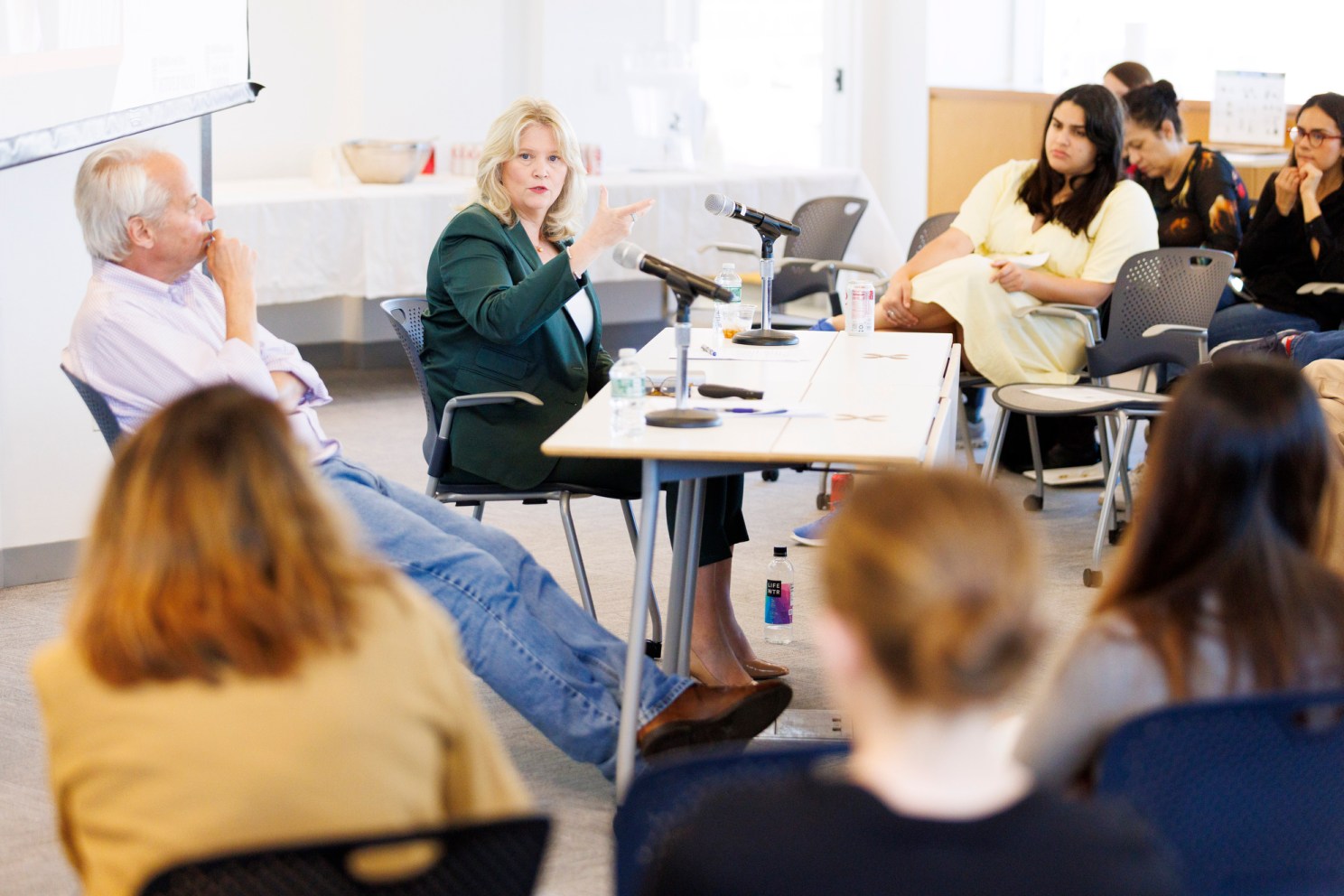
At a Harvard Kennedy School event Monday, strategists from both parties forecast that the 2028 presidential election will mark the start of a seismic and generational shift in U.S. politics as campaigns fully embrace the rapidly escalating power of AI.
“It’ll be the first AI campaign, so the stakes are going to be unbelievably high,” said Doug Sosnik, a former White House political director and veteran political adviser to dozens of Democratic candidates, including President Bill Clinton.
The strategists discussed how they expect AI to impact everything from how candidates reach and persuade potential voters to how organizations figure out where their supporters are and what will get them to actually vote on Election Day.
Sara Fagen, a strategic data and technology consultant, said that because of its speed and power, AI soon will allow political campaigns to customize their messaging to reach specific voters using data collected about a voter’s activities and motivations in a much more sophisticated way than currently.
“Eventually, probably not in ’28, but perhaps in the next presidential [election], you’ll hit a button and your target audience of 20 million people will get 20 million different campaigns,” said Fagen, who served as White House director of political affairs under President George W. Bush.
“Eventually, probably not in ’28, but perhaps in the next presidential [election], you’ll hit a button and your target audience of 20 million people will get 20 million different campaigns.”Sara Fagen
Like the historic 1960 presidential election between John F. Kennedy Jr. and Richard Nixon, the first in which television played a decisive role, reshaped political campaigns for decades, 2028 will usher in a new political era, said Sosnik, now a fall 2026 Hauser Leader, Center for Public Leadership at HKS.
It’s been more than two decades since political campaigns began to harness data and technology in a serious way, analysts said.
Before 2004, campaigns had been organized and analyzed around precincts. But as Republicans found it increasingly difficult to accurately map Democratic voters, they turned to a very early form of data analytics during the 2004 presidential election between George W. Bush and John Kerry.
“We were able to figure out a different way to do this and sort of pinpoint who would be a supporter, who would need to be persuaded. It didn’t matter where they lived; it just mattered based on our algorithm and how to make those predictions,” said Fagen, who worked on the Bush campaign. “And we did that, and we did it very successfully.”
In 2008, the Obama campaign famously took microtargeting and data analytics to the next level and made it a significant component of the campaign’s structure, not just a helpful add-on. Since then, there’s been very little change in how campaigns use data and digital technology until now, they said.
Two big costly features of campaigns, advertising and polling, will also change thanks to AI, Sosnik and Fagen said.
Campaigns will be able to crank out new content much faster and cheaper and AI will affect advertising buying decisions, not only where and when to place ads, but how to best approach voters, said Sosnik.
Pollsters continue to face difficulties connecting with younger and non-college-educated adults by phone, a trend that’s likely to grow and leads to a skewed sense of the electorate.
With AI’s ability to analyze vast data sets, polling firms and even news organizations will be able to build “synthetic” cohorts to test messaging, particularly on voters who shun politics or are harder to reach by phone and better predict what people will or won’t support rather than relying solely on traditional polling methods, which are very expensive to do properly, said Fagen.
Certainly, they warned, AI’s entry into the body politic poses risks that have already emerged. Some campaigns have begun using AI-created images and deep fakes, as well as near-perfect voice manipulations that put words into a person’s mouth that were never said.
There are some “very positive” aspects of AI becoming a fixture of campaigns, Fagen said.
Fact-checking will become much faster and draw from a wider array of sources, providing voters with more information that’s less easily manipulated to assess the accuracy of candidates and political claims.
Even with political will, efforts by Congress or the courts to regulate AI will not catch up to how campaigns are currently using it in time to affect the 2026 midterms or 2028 presidential election, said Fagen.
Sosnick agreed.
By the time Congress finally takes action on AI, “It’s not going to matter functionally,” he said.













 Menu
Menu Search
 Events