Michael Smerconish: Clancy Trial Debate: Homicide Prosecutor vs. Criminal Defense Lawyer

4,690 views Streamed live 9 hours agoOne man.

One vote. Eleven against him. Is the lone holdout juror in the Lindsay Clancy trial a hero—or pariah? Facing off in this special live edition of “Can We Agree?“: Carlos Vega, with 35 years as a Philadelphia prosecutor, most of them trying homicides, and Danny Cevallos, criminal defense attorney and NBC News legal analyst, a man whose whole career rests on one juror holding. It’s the oldest rivalry in the courthouse. Can they agree?

Posted in Uncategorized | Leave a comment

The Conversation: The term “neurodivergent” is being used more and more often in everyday conversation, on social media and even in scientific research.

The Conversation

Academic rigour, journalistic flair

Arts + CultureBusiness + EconomyEducationEnvironmentHealthPolitics + SocietyScience + TechWorldPodcastsInsights

Share article

Print article

The term “neurodivergent” is being used more and more often in everyday conversation, on social media and even in scientific research.

Neurodivergent is usually used to described a brain that works differently from what is seen as typical. For instance, it is often used to describe someone with a diagnosis of autism or ADHD.

But there’s an inherent problem with the term: it’s hard to say exactly what counts as “typical” brain function.  Our new review shows that even academics can’t agree on what neurodivergent actually means, or which clinical diagnoses it covers.

We looked at 134 scientific studies that included over 151,000 participants. The majority of this research was conducted in the UK and US. These studies mainly looked at people who were labelled “neurodivergent” or “neurodiverse”, exploring their education and work experiences, mental health, identity and social connection, diagnosis and traits, support, and the views of families and caregivers.

Our aim was to find out what specific diagnoses, if any, were reported in relation to the terms “neurodivergent” and “neurodiverse”.

We found almost 20 different diagnoses linked to neurodivergence and neurodiversity. Autism and ADHD came up most often, followed by dyslexia and dyspraxia. However, anxiety, depression, post-traumatic stress disorder and neurological disorders such as stroke or traumatic brain injury also appeared.

Elevate your inbox. Get our free daily email.

This site is protected by reCAPTCHA and the Google Privacy Policy and Terms of Service apply.

One in five studies used the words without naming any diagnosis at all. A third simply asked people to self-identify as “neurodivergent”, rather than using a formal clinical assessment.

Some studies mixed up “neurodivergent” and “neurodiverse” – even though the two mean different things.

Neurodiversity refers to the natural variation in how people’s brains work, think and learn. Because of this, it’s incorrect to call one person “neurodiverse” or “with a neurodiversity”. Neurodiversity describes a group, not any one person, so it’s correct to say our society is neurodiverse.

Neurodivergent, on the other hand, describes one person whose brain works differently from what is considered typical. But the problem is that currently, nobody agrees on how to define or measure this difference.

Although doctors can use established criteria to test for specific conditions such as ADHD or autism, there’s no test that can separate what is “neurodivergent” from what is “neurotypical”.

Why these findings are important

For decades, people with neurodevelopmental conditions – especially autistic people – have campaigned for better rights and inclusion. As part of the neurodiversity movement, they called for terminology that they deemed would be kinder to describe conditions such as autism, ADHD and dyslexia.

A person wearing an autism infinity symbol rainbow pin on the strap of their backpack.
The terms grew out of the neurodiversity movement’s campaigns. Veja/ Shutterstock

Words such as neurodiverse and neurodivergent grew out of this campaign, and are now used in schools, workplaces and the media. People often use them instead of naming specific diagnoses.

Conditions such as autism and ADHD are grouped together in the Diagnostic and Statistical Manual of Mental Disorders (DSM) – the manual psychiatrists use to reach a diagnosis for a specific person – as they often overlap. Many people with ADHD are also autistic, for example.

But each condition has its own specific clinical features and diagnostic criteria. This is why using “neurodivergent” as a catch-all term, even in research, can cause problems.

The support that helps an autistic person is not the same as the support that helps someone with anxiety. These are different conditions with different needs. Broad labels can hide this important detail.

In clinical research, the vagueness of using such a broad label as “neurodivergent” causes important problems, too. If a study only says its participants are “neurodivergent”, it’s hard to interpret the results. This particularly matters when that research later shapes clinical care.

Vague terms may cause problems for the public, as well. For example, a workplace policy built around “neurodivergence” might sound inclusive – but it can end up too broad and unhelpful if it doesn’t target specific needs.

There’s a stigma risk as well. It’s true that “everyone is neurodiverse”, since all our brains work differently. But this can inadvertently slide into “everyone is a bit neurodivergent” – and then it’s a short step into “we’re all a bit ADHD” or “a bit autistic”.

This kind of thinking is unfair for people with an established diagnosis. Their day-to-day experience is often very different from that of people without a diagnosis.

“Neurodiversity” and “neurodivergence” are useful for describing an identity and experiences that people may share. There is nothing wrong with someone saying “I think I am neurodivergent”. But in clinical research, healthcare and education, clear and recognised clinical diagnoses serve people better than catch-all labels.

Posted in Uncategorized | Leave a comment

Iran Observer: JUST IN: The Yemeni Ansarullah Movement (Houthis) has dug 20 KM of Trenches around the Bab el-Mandeb Strait. The Group is preparing for a possible Offensive by Pro-Saudi Forces The Trenches are built on High Ground to allow for the use of Anti-Tank Missiles against Armored Vehicles

JUST IN: The Yemeni Ansarullah Movement (Houthis) has dug 20 KM of Trenches around the Bab el-Mandeb Strait The Group is preparing for a possible Offensive by Pro-Saudi Forces The Trenches are built on High Ground to allow for the use of Anti-Tank Missiles against Armored Vehicles

Posted in Uncategorized | Leave a comment

“WARNING !!! This Is Coming…” – Douglas Macgregor

Sep 17, 2026 #DouglasMacgregor#Iran#GeopoliticsDouglas Macgregor discusses the Iran conflict, U.S. strategy in the Middle East, the Strait of Hormuz, and growing challenges to American influence. He also examines the potential economic and geopolitical consequences of the conflict and the rise of alternative global financial alliances.

#DouglasMacgregor#Iran#Geopolitics#MiddleEast#USPolitics CREDITS: Judge Napolitano – Judging Freedom 🔥 Watch The FULL Interview:    • COL. Douglas Macgregor : Can Trump Get Out…   👉 FINANCIAL DISCLAIMER This channel is intended to share tips and investment videos by experts. We DO NOT GIVE FINANCIAL ADVICE! Please consult a licensed financial advisor and do your own research before making any financial action.

Posted in Uncategorized | Leave a comment

Maura Higgins’ Premiere Night Foxtrot : Dancing with the Stars

Posted in Uncategorized | Leave a comment

Bulletin of the Atomic Scientists: Insiders “betting on wars” … how prediction markets … are becoming a national security threat. Polymarkets be aware.

Insiders are betting on war: How prediction markets are becoming a national security threat

By David Szakonyi, Michelle Kendler-Kretsch, Michael Hornsby | Analysis | September 17, 2026

Website interface of the prediction market platform Polymarket showing a geopolitical market regarding the US and Iran is seen displayed on a computer screen.On Polymarket, users can bet on the occurrence of strikes and ceasefires in armed conflicts around the world. Image: MamunSheikh/Depositphotos Share

In April, a United States serviceman was charged with using classified information on the January 2026 kidnapping of Nicolás Maduro to make an astonishing $400,000 from bets on prediction markets about the future of Venezuela, its leadership, and a possible US intervention. Prosecutors say the soldier, Gannon Ken Van Dyke, helped plan the military operation and used his inside knowledge to profit from wagers considered highly unlikely at the time. He has pleaded not guilty, with a trial expected later this year.

The case underscores a new threat to national security information. Military and political leaders go to incredible lengths to prevent details of such operations from leaking to the public. Nearly every country around the world requires an arduous vetting process to obtain security clearance and closely guards access to classified information.

Prediction markets, however, create new nightmares for operational security. Anyone with insider information and internet access can bet anonymously and make a substantial profit. Moreover, their bets are observable to the whole world, giving both allies and adversaries alike a potential heads-up, even if the underlying information was never shared publicly.

Other bettors are ready to copy users with an information advantage, so a single bet on classified information can snowball into a blaring signal of impending military action visible to intelligence agencies around the world. Even more alarming, the possibility of betting on war could incentivize manipulating, or even undermining, military operations to maximize personal profit.

These risks have grown exponentially as prediction markets have exploded in popularity in recent years. The Pew Research Center estimates the combined monthly trading volume across the two biggest platforms, Kalshi and Polymarket, reached $24 billion in April 2026, up from $2 billion in August 2025.

Gone mainstream. Prediction market platforms allow users to bet on real-world events, from sports to celebrities to elections. On Polymarket, there are even markets on the occurrence of strikes and ceasefires in armed conflicts around the world. Users trade contracts based on the outcome of a yes/no question, with prices ranging between $0 and $1 to reflect the perceived probability of the event occurring. The lower the price, the lower the implied probability. When the market resolves, users holding a contract for the correct outcome receive $1, with potential profits increasing as the event’s implied likelihood falls. It pays to beat the consensus.

Prediction markets once occupied a niche, mostly confined to academic experiments. But recent legal and regulatory developments, growing investment from Wall Street, and political support from the White House have opened the door to much wider adoption.

Markets about politics are incredibly popular. Although political markets make up just 4 percent of the total questions Polymarket users can bet on, they attract over a third of the money. As of April 2026, traders have bet almost $20 billion on Polymarket’s political markets alone. The 2024 US presidential election was a watershed moment for the industry, with $4 billion dollars bet on Polymarket. Despite major polls indicating a Trump defeat, prediction markets correctly called a Republican victory, adding to the hype and helping transform the technology from a niche pursuit to a mainstream pastime.

Elections and other events decided by the public are not the only outcomes available to bet on. Polymarket allows betting on questions that certain groups, institutions, and, in some cases, individuals can know the result to in advance: These can include which luminary wins the Nobel Peace Prize, what film wins Best Picture at the Oscars, or if the United States strike Iran this month.

Our research at the Anti-Corruption Data Collective supports the theory that markets on these knowable outcomes are more susceptible to insider trading. Longshot bets—high-value, low probability wagers where a user risks $2,500 or more on something with less than 35 percent probability—are more successful in these markets, suggesting widespread abuse of information advantages.

RELATED:

The rise of the military-technology complex

This is not a theoretical risk, either.

In addition to the case of US serviceman who was charged this year, Israel has charged two members of its air force for betting on strikes. During his defense, one of the airmen reportedly said the practice is so ubiquitous he didn’t realize it was illegal, telling the court: “The entire Israel Air Force is involved in gambling.”

A Google employee was also charged in May for allegedly trading on confidential business information. Even the person in charge of the teleprompter at the White House was recently fined $172,000 after admitting to making $100,000 placing bets on Kalshi about the contents of President Trump’s speeches.

These cases are likely just the tip of a much larger iceberg.

Visible trail. Polymarket trades are recorded on the blockchain. This means everyone can see every trade that has ever been made, as well as the source of the money used to fund the bet, and where winnings were sent afterward. The only thing people don’t know is who runs the account.

Polymarket may not know either. Users on the main platform are not required to prove their identity and can create multiple accounts each with its own digital “wallet.” Polymarket also operates a much smaller, licensed US entity—Polymarket US—that does require users to register with their true identity, as does Kalshi. But most of the betting on military operations occurs on the Polymarket’s main platform, which performs no Know Your Customer (KYC) checks.

Analyzing more than 400,000 settled markets on Polymarket, we found that rather than being isolated incidents, suspicious betting is especially rife on military markets. In line with expectations, high value, risky bets with an implied probability of under 35 percent payout only 14 percent of the time across the platform. But in military and defense markets, the win rate rises to a staggering 52 percent.

Looking at the digital wallets making these unlikely bets, we found an alarming cohort of users who only traded on one or two topics yet won at abnormally high rates. We dubbed these “Orcas,” after the highly specialized and successful predators they resemble. These users usually open accounts just days or even hours before making their first longshot trade. Most only ever place high-risk, low-probability bets. In military markets, we found 152 of these Orcas, who collectively have made more than $8 million on the platform. Their average win rate was tellingly over 97 percent on such risky bets.

It is difficult to attribute such successes to luck alone, especially when the markets concern events that are knowable to a select few, and are unknown to the public.

When journalists at CNN presented Polymarket with our analysis figures, representatives from the betting platform indicated the company had referred “dozens” of such wallets to the U.S. Department of Justice, and that criminal investigations are ongoing.

In August, The Wall Street Journal reported that the Department of Justice is investigating and preparing to charge another US soldier for insider trading on classified information, as part of a wave of  such prosecutions. An employee at the British accounting and consulting firm KPMG is also reportedly suspected of betting using non-public information to gain an advantage. While it is reassuring that Polymarket tracks and refers such cases to officials, its response appears to confirm the scale of possible insider trading on military markets—which the company continues to allow on its platform.

RELATED:

How to salvage the NPT Review Conference

Law enforcement investigations take time. Absent real identities reliably connected to wallets, investigators are left tracing the money across the blockchain, hoping it passed through a regulated crypto exchange that can reveal who the user is.

Meanwhile, these hallmarks of insider trading are visible in real time to anyone watching the chain, which not only allows public-interest researchers and journalists like us to see risky trades, but also other traders.

Analyzing the pattern of betting on US military strikes against Iran, we found signs that wallet betting by Orca wallets (meaning potential insiders) is copied by prediction market super users—giant traders we call Whales, who make wagers in more than 100 markets and multiple topics, hedging their bets across the platform. Automated, algorithm-powered trading accounts also pick up these insider signals. In fact, serious traders can even subscribe to services that send an alert about possible insider activity which they could mimic for a shot at a big pay day.

That means that a bet based on secret or sensitive information can not only be seen but also amplified. Ahead of both the June 2025 and 2026 US-Israel strikes on Iran, we saw patterns of longshot bets by “Orcas” being placed on highly specific outcomes related to the conflict: “US military action against Iran by Saturday?” or “Will the US next strike Iran on February 28, 2026?”  Soon after, “Whale” accounts, with far more capital at their disposal, placed much larger wagers, appearing to follow the breadcrumbs left by users who appear to know something that others don’t.

Tipping intelligence agencies. If financial speculators can see such trades happening in real time, one can safely predict that intelligence agencies around the world can see them too. In combination with other sources, these data points can become a remarkably precise warning of the timing and target of military actions. A foreign adversary that wants to acquire classified information no longer needs to arrange a bribe or even hack into a closed system. All it needs to do is to monitor prediction markets for anomalous wagers.

A top-secret military operation being foiled because a military insider bet on it would not only be enormously embarrassing, it also would create an unnecessary risk of life and be a disaster for international relations. If allies suspected that clues about classified information might appear on the blockchain, it could put delicate intelligence-sharing relationships built over decades at risk.

Perhaps even more troubling, markets on the probability of military outcomes can create a perverse incentive to conduct, move forward, delay, or even sabotage a military operation for personal profit.

As of now, there haven’t been any visible signs of this taking place. But the mere existence of markets that allow gambling on war creates the possibility. There are currently more than 450 open markets on Polymarket on questions related to military and defense.

Everyone, from regulators and lawmakers to the public to the companies themselves should reject gambling on war, before something previously unthinkable happens. The next funding bill for the U.S. military contains a provision that would, if passed, ban Americans from placing, accepting, or facilitating bets on war. But enforcing such a ban when the bets are placed anonymously on an offshore platform will test the capacity of US legal authorities. It is not enough just to ban insider trading or even require more robust identification of bettors. Collectively, people need to decide whether there are certain topics that should not be wagered on. National security must come before personal profit.

Posted in Uncategorized | Leave a comment

New Atlas: Heavy hauling goes hybrid: Self-unloading cargo ship cuts emissions

Heavy hauling goes hybrid: Self-unloading cargo ship cuts emissions

By Simon Heptinstall

September 16, 2026

The MV Yampu is not only geared up to sail under electric power – but it is pioneering an automatic self-loading/unloading system

The MV Yampu is not only geared up to sail under electric power – but it is pioneering an automatic self-loading/unloading system

CSL Ships

View 5 ImagesView gallery – 5 images

The maritime industry is under pressure to clean up its act, giving rise to everything from high-tech rigid wing sails to pioneering zero-emission designs like the Yara Birkeland all-electric autonomous cargo vessel.

But decarbonizing heavy-duty coastal carriers currently hauling thousands of tonnes of industrial raw materials all over the globe remains an exceptionally tough nut to crack. That’s why there has been such a fanfare in the maritime industry about the MV Yampu – the world’s first battery-powered, self-unloading bulk carrier, which has just commenced commercial operations in South Australia.

The Yampu was purpose-built by maritime giant CSL Group for construction materials producer Adbri. The 125-meter (410-ft) vessel boasts an impressive 11,900 tonnage capacity and its designed for a grueling schedule ferrying 2.7 million tonnes of raw limestone annually across Australia’s Gulf St Vincent. The ship moves the material 42 miles (68km) from the Klein Point quarry on the Yorke Peninsula to a cement factory in Birkenhead, Adelaide. It does that round-trip 227 times a year. If it didn’t, there would be a round road trip of around 300 miles each time.

The hybrid bulk freighter has a grueling schedule of 227 round-trips a year carrying heavy cargos of limestone

So the electrification of that journey is big news in the region. The vessel’s heavy-duty hybrid architecture has been developed by Finland’s technology pioneer Wärtsilä. Its state-of-the-art diesel-electric setup uses a massive 6,758-kilowatt-hour marine battery system. The battery itself weighs 131 tonnes and offers up to 600 kilowatts of power.

While the shipping industry has historically looked to alternatives like ammonia or hydrogen for long-haul routes, projects like this are part of the Wärtsilä marine decarbonization strategy we covered last year, which advocates immediate, practical hybrid steps to bridge the gap toward total electrification.

To put the Yampu’s 6.7-MWh capacity into perspective, the containerized battery racks pack enough juice to power a standard family home for five months. That’s smaller than the multi-megawatt configurations proposed by the ambitious PowerX battery tanker concept we looked at three years ago, which was designed to transport electricity across coastal waters. The Yampu’s pack is optimized for a different task, the high-frequency demands of its bulk cargo shuttle routine.

This battery system allows the ship to operate entirely on electric power for 40 percent of its operating time. The ship plugs into the grid to top up while docked at Birkenhead. Even when port maneuvering and unloading on diesel power, the battery helps reduce the load on the engines.

The MV Yampu’s limestone cargo is a crucial chain in an operation providing cement for infrastructure projects across South Australia

So if the technology is so promising, why can’t MV Yampa go 100% electric right now? The constraint isn’t actually the ship. It’s that the shore-side high-voltage fast-charging infrastructure required to rapidly charge up an 11,900-ton carrier in a tight port turnaround window does not yet exist at Klein Point. Even if it did, battery packs capable of pushing a fully loaded ship the length of the voyage would add so much weight that it would reduce the vessel’s cargo capacity. The ship operators plan to go fully electric – but when charging and battery technology allows.

Still, the hybrid efficiency gains are already big. Compared to the aging MV Accolade II it replaces, the MV Yampu reduces overall diesel consumption by more than 500,000 liters (132,000 gallons) per year. This means exhaust emissions are reduced by 40% and cargo carrying capacity is up by 35%.

The Yampu also serves as a testing ground for cargo-handling technology. Traditional bulk carriers often require cargo to be physically shifted and leveled during loading to maintain the vessel’s stability. CSL bypassed this awkward process by devising an advanced single hopper that automatically distributes the limestone in the hold. Once it arrives at port, the ship’s automated self-unloading boom can discharge the heavy limestone cargo at a rapid rate of 1,500 tonnes per hour, without any shore-side cranes or heavy machinery.

The ship’s self-loading and unloading system features a single hopper that automatically transfers the heavy stone cargo

The MV Yampu’s operators hope shore-charging infrastructure expands and next-generation battery densities advance so the vessel’s system can transition to fully electric. The date being whispered hopefully is 2031.

This phased progress is a little behind the passenger transport sector, where massive vessels, like the history-making Incat Hull 096 electric ferry launch that we reported on last year (and which has now arrived in South America for its commissioning phase in Uruguay), have already demonstrated that purely battery-driven propulsion is possible. As proved during the Incat’s recent harbor trials, the combination of volatile fuel prices and rapidly evolving shore infrastructure is forcing operators to consider total electrification faster than anticipated.

Back in the freight sector, the Yampu – the local Indigenous Narungga and Kaurna word for dolphin – represents an industry caught between climate targets and economic realities. By treating the ship as an evolving platform, CSL and Adbri have bypassed the infrastructure gridlock that leaves many zero-emission concepts stranded on the drawing board. This pioneering vessel proves that cleaning up the operation doesn’t require waiting for a distant technological utopia.

Source: CSL GroupView gallery – 5 images

We recommend

Posted in Uncategorized | Leave a comment

Clash Report: North Korea’s Vice Defense Minister Kim Kang-il:

The ceaseless nuclear arms buildup of the enemy states fully justifies the building of a solid nuclear shield of the DPRK.

https://twitter.com/clashreport/status/2100538309617307908/video/1

Posted in Uncategorized | Leave a comment

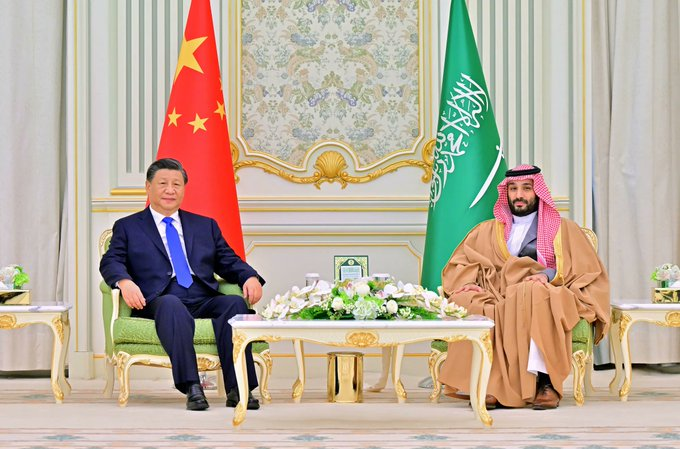
Mario Nawfal on X: U.S. intel is warning a $24B sale of 48 F-35s to Saudi could give China an opportunity to steal some of America’s most sensitive military tech…

U.S. intel is warning a $24B sale of 48 F-35s to Saudi could give China an opportunity to steal some of America’s most sensitive military tech…

The Pentagon assessment reportedly flags Chinese military access to Saudi bases, Huawei and ZTE infrastructure, and Beijing’s work helping Riyadh develop ballistic missiles as MAJOR concerns.

Officials are particularly worried about protecting the F-35’s advanced radar and surveillance tech, and whether Saudi facilities can be kept secure from China.

It’s not clear what the U.S. plans to do to mitigate these risks, or how far Washington is willing to compromise to keep the Kingdom firmly in its orbit…

Source: NYT / Writer: Mhedi

Posted in Uncategorized | Leave a comment

Mario Nawfal on X: U.S. intelligence warns China could steal F-35 secrets through the $24 billion jet sale to Saudi Arabia…

U.S. intelligence warns China could steal F-35 secrets through the $24 billion jet sale to Saudi Arabia… A Defense Intelligence Agency report circulating through agencies and congressional offices flags Chinese military access to Saudi bases, Chinese gear inside Saudi telecom infrastructure, and doubts that the two countries can keep the jets’ radar and surveillance technology secure. Analysts ask whether Riyadh would limit contact with Chinese military personnel at all, and whether it would strip Huawei and ZTE equipment out of its networks and defense sites. The administration is preparing to formally submit the package of 48 jets to Congress soon. Beijing is already helping the Saudis build ballistic missiles. Washington killed the identical deal with the UAE in 2021 for exactly these reasons. What happens next is the real test. If lawmakers balk, Rubio can invoke the same emergency powers he has used repeatedly for Israel and push it through anyway, and the Senate is already demanding the classified annexes on the Saudi nuclear deal. Two of the most sensitive transfers in American history, the stealth fighter and the reactor, are moving together toward a partner whose air force cannot stop Houthi drones and whose phone system runs on Chinese hardware. Source: The New York Times / Writer: Daniel

68K V

Posted in Uncategorized | Leave a comment