
Heavy hauling goes hybrid: Self-unloading cargo ship cuts emissions
September 16, 2026
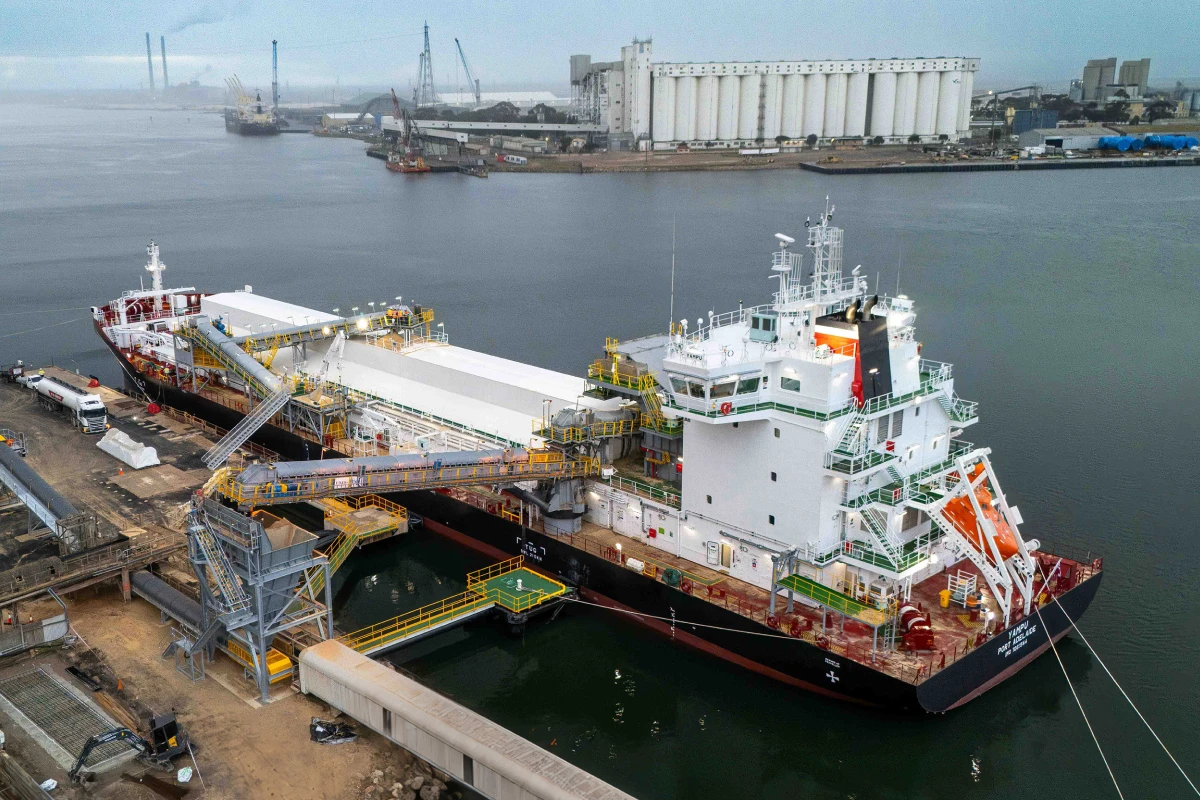
The MV Yampu is not only geared up to sail under electric power – but it is pioneering an automatic self-loading/unloading system
CSL Ships
View 5 ImagesView gallery – 5 images
The maritime industry is under pressure to clean up its act, giving rise to everything from high-tech rigid wing sails to pioneering zero-emission designs like the Yara Birkeland all-electric autonomous cargo vessel.
But decarbonizing heavy-duty coastal carriers currently hauling thousands of tonnes of industrial raw materials all over the globe remains an exceptionally tough nut to crack. That’s why there has been such a fanfare in the maritime industry about the MV Yampu – the world’s first battery-powered, self-unloading bulk carrier, which has just commenced commercial operations in South Australia.
The Yampu was purpose-built by maritime giant CSL Group for construction materials producer Adbri. The 125-meter (410-ft) vessel boasts an impressive 11,900 tonnage capacity and its designed for a grueling schedule ferrying 2.7 million tonnes of raw limestone annually across Australia’s Gulf St Vincent. The ship moves the material 42 miles (68km) from the Klein Point quarry on the Yorke Peninsula to a cement factory in Birkenhead, Adelaide. It does that round-trip 227 times a year. If it didn’t, there would be a round road trip of around 300 miles each time.
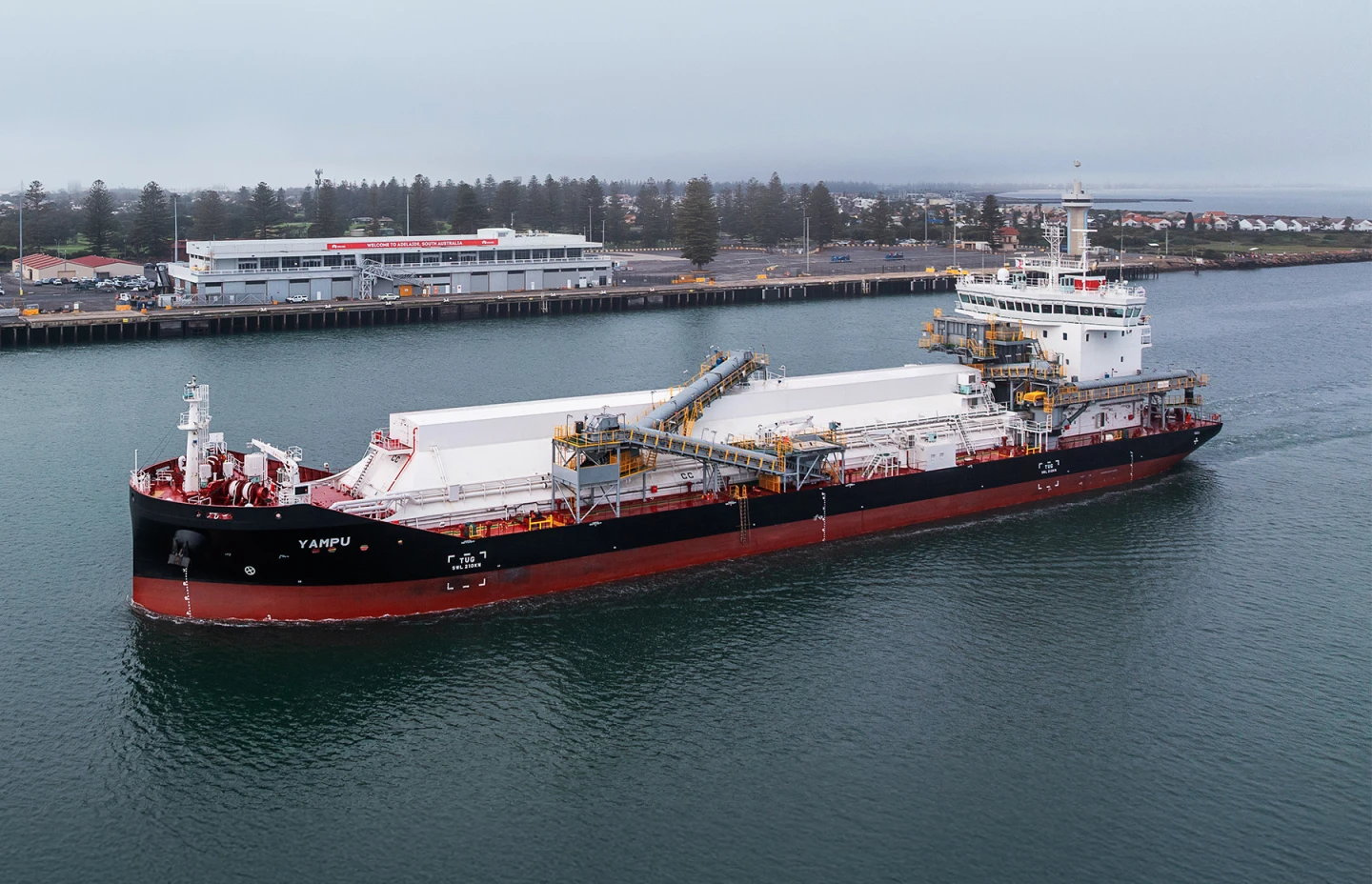
So the electrification of that journey is big news in the region. The vessel’s heavy-duty hybrid architecture has been developed by Finland’s technology pioneer Wärtsilä. Its state-of-the-art diesel-electric setup uses a massive 6,758-kilowatt-hour marine battery system. The battery itself weighs 131 tonnes and offers up to 600 kilowatts of power.
While the shipping industry has historically looked to alternatives like ammonia or hydrogen for long-haul routes, projects like this are part of the Wärtsilä marine decarbonization strategy we covered last year, which advocates immediate, practical hybrid steps to bridge the gap toward total electrification.
To put the Yampu’s 6.7-MWh capacity into perspective, the containerized battery racks pack enough juice to power a standard family home for five months. That’s smaller than the multi-megawatt configurations proposed by the ambitious PowerX battery tanker concept we looked at three years ago, which was designed to transport electricity across coastal waters. The Yampu’s pack is optimized for a different task, the high-frequency demands of its bulk cargo shuttle routine.
This battery system allows the ship to operate entirely on electric power for 40 percent of its operating time. The ship plugs into the grid to top up while docked at Birkenhead. Even when port maneuvering and unloading on diesel power, the battery helps reduce the load on the engines.
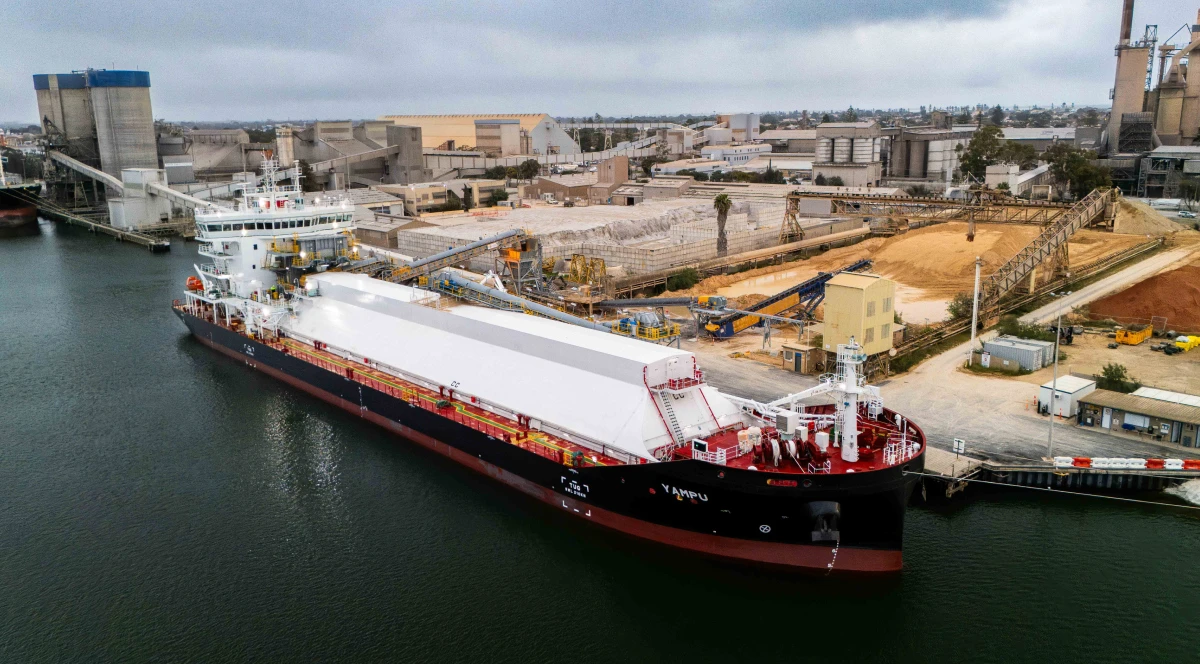
So if the technology is so promising, why can’t MV Yampa go 100% electric right now? The constraint isn’t actually the ship. It’s that the shore-side high-voltage fast-charging infrastructure required to rapidly charge up an 11,900-ton carrier in a tight port turnaround window does not yet exist at Klein Point. Even if it did, battery packs capable of pushing a fully loaded ship the length of the voyage would add so much weight that it would reduce the vessel’s cargo capacity. The ship operators plan to go fully electric – but when charging and battery technology allows.
Still, the hybrid efficiency gains are already big. Compared to the aging MV Accolade II it replaces, the MV Yampu reduces overall diesel consumption by more than 500,000 liters (132,000 gallons) per year. This means exhaust emissions are reduced by 40% and cargo carrying capacity is up by 35%.
The Yampu also serves as a testing ground for cargo-handling technology. Traditional bulk carriers often require cargo to be physically shifted and leveled during loading to maintain the vessel’s stability. CSL bypassed this awkward process by devising an advanced single hopper that automatically distributes the limestone in the hold. Once it arrives at port, the ship’s automated self-unloading boom can discharge the heavy limestone cargo at a rapid rate of 1,500 tonnes per hour, without any shore-side cranes or heavy machinery.
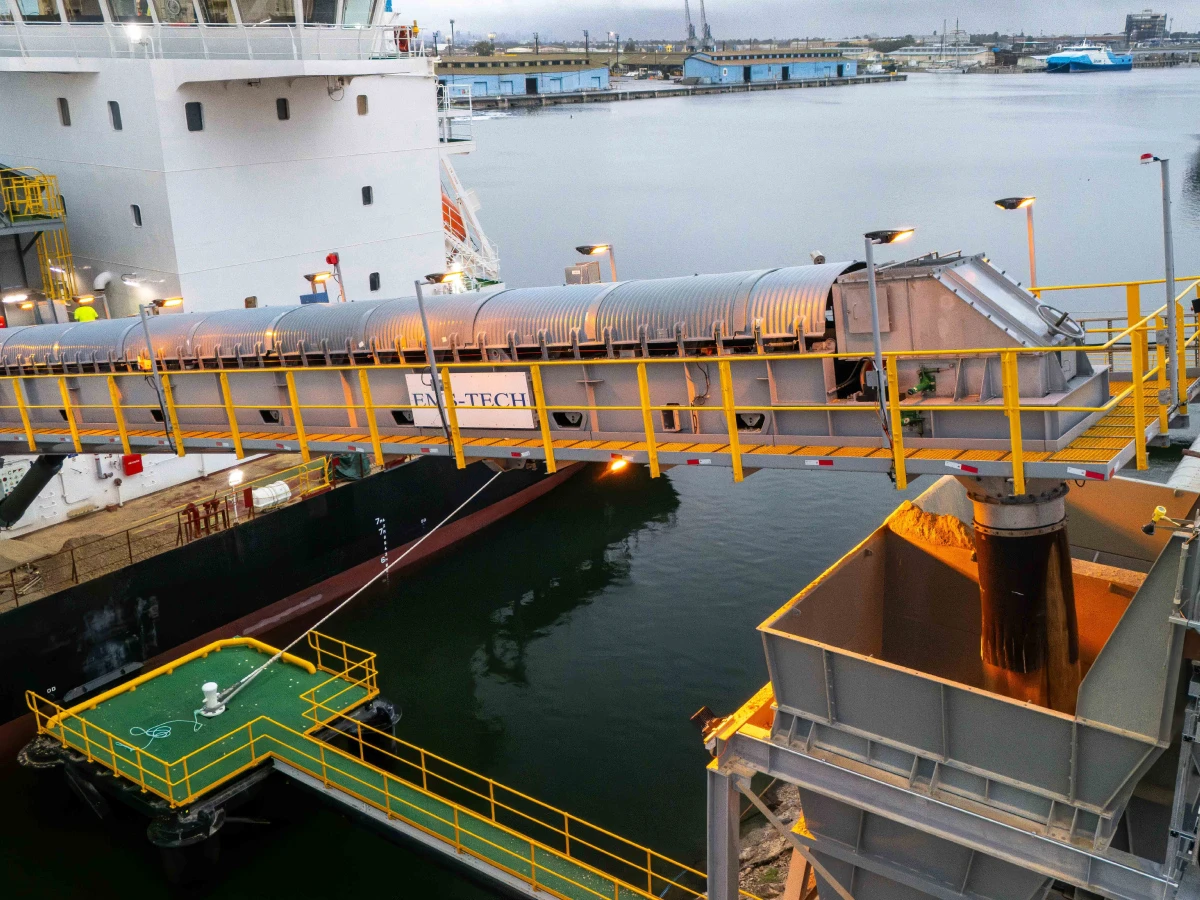
The MV Yampu’s operators hope shore-charging infrastructure expands and next-generation battery densities advance so the vessel’s system can transition to fully electric. The date being whispered hopefully is 2031.
This phased progress is a little behind the passenger transport sector, where massive vessels, like the history-making Incat Hull 096 electric ferry launch that we reported on last year (and which has now arrived in South America for its commissioning phase in Uruguay), have already demonstrated that purely battery-driven propulsion is possible. As proved during the Incat’s recent harbor trials, the combination of volatile fuel prices and rapidly evolving shore infrastructure is forcing operators to consider total electrification faster than anticipated.
Back in the freight sector, the Yampu – the local Indigenous Narungga and Kaurna word for dolphin – represents an industry caught between climate targets and economic realities. By treating the ship as an evolving platform, CSL and Adbri have bypassed the infrastructure gridlock that leaves many zero-emission concepts stranded on the drawing board. This pioneering vessel proves that cleaning up the operation doesn’t require waiting for a distant technological utopia.
Source: CSL GroupView gallery – 5 images
We recommend
- The climate impact of high seas shippingNational Science Review
- China’s TOP 10 breakthroughs in science and technology in 2022He Zhu, National Science Review, 2023
- Hydrogen-based industry: a prospective transition pathway towards a low-carbon futureCheng Yunlv, National Science Review, 2023
- Preface to special topic on new era of zeolite scienceJihong Yu, National Science Review, 2022
- Construction of nanocarriers based on nucleic acids and their applications in nanobiology delivery systemsby Science China Press, National Science Review, 2022
- Chromene-based BioAIEgens: ‘in-water’ synthesis, regiostructure-dependent fluorescence and ER-specific imagingCai Xu-Min, National Science Review, 2023


