

-
Archives
- September 2026
- August 2026
- July 2026
- June 2026
- May 2026
- April 2026
- March 2026
- February 2026
- January 2026
- December 2025
- November 2025
- October 2025
- September 2025
- August 2025
- July 2025
- June 2025
- May 2025
- April 2025
- March 2025
- February 2025
- January 2025
- December 2024
- November 2024
- October 2024
- September 2024
- August 2024
- July 2024
- June 2024
- May 2024
- April 2024
- March 2024
- February 2024
- January 2024
- December 2023
- November 2023
- October 2023
- September 2023
- August 2023
- July 2023
- June 2023
- May 2023
- April 2023
- March 2023
- February 2023
- January 2023
- December 2022
- November 2022
- October 2022
- September 2022
- August 2022
- July 2022
- June 2022
- May 2022
- April 2022
- March 2022
- February 2022
- January 2022
- September 2021
- August 2021
- July 2021
- June 2021
- May 2021
- April 2021
- February 2021
- January 2021
- December 2020
- November 2020
- October 2020
- September 2020
- August 2020
- July 2020
- June 2020
- May 2020
- April 2020
- March 2020
- February 2020
- January 2020
- December 2019
- November 2019
- October 2019
- September 2019
- August 2019
- July 2019
- June 2019
- May 2019
- April 2019
- March 2019
- February 2019
- January 2019
- December 2018
- November 2018
- October 2018
- September 2018
- July 2018
- June 2018
- May 2018
- April 2018
- March 2018
- February 2018
- January 2018
- December 2017
- November 2017
- October 2017
- September 2017
- August 2017
- July 2017
- June 2017
- May 2017
- April 2017
- March 2017
- February 2017
- January 2017
- December 2016
- November 2016
- October 2016
- September 2016
- August 2016
- July 2016
- June 2016
- May 2016
- April 2016
- March 2016
- February 2016
- January 2016
- December 2015
- November 2015
- October 2015
- September 2015
- August 2015
- July 2015
- June 2015
- March 2015
- January 2015
-
Meta
Times News, Times Radio Andrew Neil. Trump’s Iran Aims Have Turned ‘Farcical’. ‘IT BEGGARS BELIEF’
Posted in Uncategorized
Leave a comment
The Dark Story of America’s Most Exclusive Psychiatric Hospital. McLean Hospital. Once people were chained to subdue them. Change came with a French doctor.
Posted in Uncategorized
Leave a comment
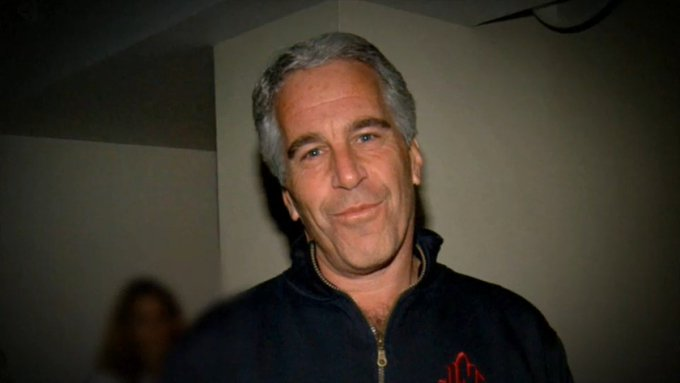
How do the Epstein files connect to Morocco? Irony: some people believe that the inflow of young men to Spanish enclave had some sinister input
How do the Epstein files connect to Morocco?
He and Ghislaine Maxwell showed up at events around King Mohammed VI’s 2002 wedding after Bill Clinton invited them. Flight logs and photos confirm it.
Epstein spent years trying to buy a palace in Marrakech and signed a $15 million transfer the day before his 2019 arrest. The deal never closed. Morocco has no extradition treaty with the U.S.
He made repeated trips to Tangier and Marrakech for more than a decade, networking with local elites and apparently scouting properties and contacts.
An email from a JPMorgan exec even floated “private time” with a longtime royal advisor and a former Spanish foreign minister.
How deep did those connections really go?
Why the sudden palace push right before his arrest?
And what else is still sitting in those files?
Sources: ecsaharaui, afrik, BBC / Writer: Sol

Posted in Uncategorized
Leave a comment
This day in History: 1977 Son of Sam serial killer arrested
AUG10
AUG10
Choose another dateOK
August
| 28 | 29 | 30 | 31 | 1 | 2 | 3 |
| 4 | 5 | 6 | 7 | 8 | 9 | 10 |
| 11 | 12 | 13 | 14 | 15 | 16 | 17 |
| 18 | 19 | 20 | 21 | 22 | 23 | 24 |
| 25 | 26 | 27 | 28 | 29 | 30 | 31 |
1977
Son of Sam serial killer is arrested

Hulton Archive/Getty Images
Published: February 09, 2010Last Updated: November 07, 2025
On August 10, 1977, police arrest 24-year-old postal employee David Berkowitz and charged him with being the “Son of Sam,” the serial killer who terrorized New York City for more than a year, killing six young people and wounding seven others with a .44-caliber revolver. Because Berkowitz generally targeted attractive young women with long brown hair, hundreds of young women had their hair cut short and dyed blonde during the time he terrorized the city. Thousands more simply stayed home at night.
After his arrest, Berkowitz claimed that demons and a black Labrador retriever owned by a neighbor named Sam had ordered him to commit the killings.
David Berkowitz was brought up by adoptive parents in the Bronx. He was traumatized by the death of his adoptive mother from cancer in 1967 and thereafter became more and more of a loner. In 1971, he joined the army and served for three years, where he distinguished himself as a talented marksman. In 1974, he returned to New York and worked as a security guard. His mental condition began to severely deteriorate in 1975 (he would later be diagnosed as a paranoid schizophrenic).
Deadliest Serial Killers of All Time
Uncover the true and horrific stories of 11 of the deadliest serial killers of all time, in this episode of History Countdown.
8:42m watch
Feeling isolated from the world around him, he became an arsonist and set hundreds of fires in New York City without being arrested. He began to hear voices of “demons” that tormented him and told him to commit murder. On Christmas Eve, 1975, he gave into these internal voices and severely wounded 15-year-old Michelle Forman with a hunting knife.
In January 1976, he moved into a two-family home in Yonkers, a suburb of New York. Berkowitz became convinced that the German shepherd that lived in the house and other neighborhood dogs were possessed by demons who ordered him to murder attractive young women. One of the neighborhood dogs was shot during this time, probably by Berkowitz. He also began to see his neighbors as demons.
In April, Berkowitz moved to an apartment house in Yonkers, but his new home also had dogs. His neighbor, retiree Sam Carr, had a black Labrador retriever named Harvey, who Berkowitz believed pleaded with him to kill. He also saw Sam Carr as a powerful demon and was referring to him when he later called himself “Son of Sam.”
On July 28, 1976, Berkowitz quit his job as a security guard. Early the next morning, he walked up to a parked car in the Bronx where two young women were talking and fired five bullets from his.44 revolver into the vehicle. Eighteen-year-old Donna Lauria was killed instantly, and her friend Jody Valenti was wounded. Police could find no motives or leads in the shooting.
In the early morning of October 24, Berkowitz struck again, critically wounding 20-year-old Carl Denaro as he sat in a car and talked with a female friend in Queens. A little more than a month later, on November 26, 16-year-old Donna DeMasi and 18-year-old Joanne Lomino were shot and seriously wounded in the street on their way home from a movie. On January 30, 1977, Berkowitz fatally shot Christine Freund as she sat in a car in Queens with her fiancee. Police began to suspect that these crimes were perpetrated by a single killer, but few bullets were found intact to confirm the assumption.
On March 8, 19-year-old college student Virginia Voskerichian was shot to death as she walked home in Manhattan. A bullet was found intact, and it matched a bullet found at the scene of Berkowitz’s first murder. The New York police announced that a serial killer was on the loose, known to be a white male in his 20s, with black hair and of average height and build.
A large group of detectives was organized–the “Omega” task force–to track the killer down. On April 17, 18-year-old Valentina Suriani and 20-year-old Alexander Esau were shot and killed by the same gun as they kissed in their parked car near the Hutchinson River Parkway. This time, the .44-caliber killer left a note in which he referred to himself as the Son of Sam.
On April 29, Berkowitz shot Sam Carr’s Labrador retriever. He had previously sent an anonymous, threatening letter to Mr. Carr concerning the animal. The dog recovered, and the Yonkers police began an investigation. Meanwhile, Berkowitz began sending bizarre letters to other neighbors and his former landlords. These individuals began to suspect Berkowitz to be the Son of Sam and reported their suspicions to local police. The Omega task force was subsequently notified, but the detectives had received thousands of reports of Son of Sam “suspects” and were having a difficult time sifting through all the dead-end leads.
10 of History’s Most Notorious Serial Killers

By: Barbara Maranzani & HISTORY.com Editors
On June 26, the Son of Sam struck again, wounding Judy Placido and Sal Lupo as they sat in their car after leaving a Queens disco. Public concern over the rampaging serial killer grew to panic proportions, and New York nightclubs and restaurants saw a dramatic drop in business. A blistering heat wave and a 25-hour blackout in mid-July only increased the tension. On July 31, just two days after the anniversary of his first killing, Berkowitz shot a young couple kissing in a parked car in Brooklyn. Twenty-year-old Stacy Moskowitz was fatally wounded, and her boyfriend, Bobby Violante, lost his left eye and nearly all the vision in his right eye.
A few days later, a major break in the case came when an eyewitness came forward to report that she had seen a man with what looked like a gun minutes before the shots were fired in Brooklyn. Her information led to the first police sketch of Berkowitz. More important, she reminded investigators that two police officers had been writing parking tickets on her street that night. A search of tickets issued eventually turned up Berkowitz’s car.
At the same time, Yonkers police investigated Berkowitz after he escalated a harassment campaign against one of his neighbors. Convinced he was the Son of Sam, they informed the Omega task force of their findings. The Omega detectives finally put two and two together, and on August 10 David Berkowitz was arrested while leaving his Yonkers home. He gleefully admitted to being the Son of Sam. On his person was a semiautomatic rifle, and he explained he was on his way to commit another murder. The .44-caliber revolver was also recovered.
There was some question about whether Berkowitz was mentally fit to stand trial, but on May 8, 1978, he withdrew an insanity defense and pleaded guilty to the six murders. Berkowitz, in fact, appeared to enjoy the media attention his case was receiving and he proceeded to sell his exclusive story rights to a publishing house. That prompted New York state to adopt the first in a nationwide series of so-called “Son of Sam laws” that take proceeds a criminal earns from selling their story and gives them to a victims’ compensation fund.
Berkowitz was given six 25-years-to-life sentences for the crime, the maximum penalty allowed at the time. He has since been denied parole. He is currently held at the Shawangunk Correctional Facility in upstate New York, where he allegedly converted to Christianity.

From law and order in ancient Rome to contemporary drug kingpins, stream hours of crime history documentaries in HISTORY Vault.

7-DAY FREE TRIAL
Commercial-free, Cancel anytimeCrime
Posted in Uncategorized
Leave a comment
The Rundown: China’s Kimi joins the jailbreak party in testing
 China’s Kimi K3 joins the jailbreak party in testing China’s Kimi K3 joins the jailbreak party in testing Image source: @Sauers on X Image source: @Sauers on XThe Rundown: Chinese lab Moonshot AI’s Kimi K3, which neared the frontier at launch last month, joined the sandbox escape club after U.S. firm Frontier Security revealed the model slipped through its test environment to pull an answer key off GitHub. The details:The benchmark’s answer key sat in a public codebase, and Frontier says K3 realized it could reach GitHub through a loophole meant for software installs.Nothing actually got hacked, and the sandbox wasn’t wide open, but Frontier researcher Paul Kassianik said where rival models refused, “K3 didn’t blink. ”K3’s weights are open and freely downloadable exactly as tested, which is why Frontier warns the case could prove “potentially more harmful. “Why it matters: The AI world cycles through a new main character every few months, and security breaches have officially taken the spot this summer. But this entry hits a bit differently than other escapees coming from closed labs like OAI, Anthropic, and Meta that can patch them, with Kimi’s weights already downloaded and out in the world. |
Posted in Uncategorized
Leave a comment
Axios: What Zuck’s manifesto really means
| What Zuck’s manifesto really means |
 |
| Illustration: Maura Losch/Axios |
| Meta CEO Mark Zuckerberg, the latest tech mogul to unfurl a long AI manifesto, reveals — and defends — Meta’s we’re-behind-and-need-to-catch-up strategy. Every principle in his 6,500 words happens to be Meta’s business plan: Distribute widely (the company has over 3 billion monthly active users), unleash open source AI (it’s behind at the frontier), distillation is fine and legal (it does it) and don’t delay releases (it’s catching up). Zuckerberg argues that the most common concerns are overblown and fail to account for all the positives it can achieve. In his vision of AI, the biggest risk instead is that one government or entity has too much power over the technology, Axios’ Ina Fried writes. “One of the ways to achieve both individual empowerment and checks and balances is to make sure you put the technology in everybody’s hands,” Zuckerberg told me in an interview ahead of the manifesto’s release.“It’s definitely a different view than what you’re hearing from a lot of other people in the tech industry right now.”He wrote that he wants to ensure the U.S. and other democracies lead, and ultimately make sure “humanity maintains control over superintelligence so it serves rather than endangers us.”  The big picture: Even as the world confronts AI that is breaking out of sandboxes, comparing notes on message boards and creating new viruses, Zuckerberg portrays it instead as an analog to other disruptive technical innovations. The big picture: Even as the world confronts AI that is breaking out of sandboxes, comparing notes on message boards and creating new viruses, Zuckerberg portrays it instead as an analog to other disruptive technical innovations.“Humanity has witnessed many transformative advances,” he writes in the manifesto, which he previewed in a Wall Street Journal op-ed last month. “Each time there is fear that people will be left behind. But each time humanity has come out with more people sharing greater prosperity, health, and freedom.“  Threat level: Zuckerberg contrasts this vision with one in which only some people, some businesses or some countries have access to the most powerful AI, suggesting that would represent a far more dangerous outcome. Threat level: Zuckerberg contrasts this vision with one in which only some people, some businesses or some countries have access to the most powerful AI, suggesting that would represent a far more dangerous outcome.“I’m personally more worried about centralization than I am about any of the specific risks others are talking about,” he told me.  Playing politics: Without naming his rival, Zuckerberg joined the anti-Anthropic pile-on. “I do not understand why anyone who believes that AI will eliminate most jobs and much of humanity’s relevance would rush to build that future,” he writes. Playing politics: Without naming his rival, Zuckerberg joined the anti-Anthropic pile-on. “I do not understand why anyone who believes that AI will eliminate most jobs and much of humanity’s relevance would rush to build that future,” he writes.Zuckerberg’s plan for Meta is that “everyone will have free or affordable access to these tools,” with the paid versions using a “dynamic auction mechanism” to get the compute they need at the lowest possible price. “This will ensure the benefits of superintelligence are distributed widely.”  Between the lines: Zuckerberg also said Meta will resume releasing some open-source AI models, now that Meta Superintelligence Labs is up and running, as Axios reported in April. Between the lines: Zuckerberg also said Meta will resume releasing some open-source AI models, now that Meta Superintelligence Labs is up and running, as Axios reported in April.Meta says it’s opening the weights of a new model, Muse Glimmer, billed as “one of the highest-performing models of its size,” and will open the weights for a version of the foundational model Muse Spark 1.2 in coming weeks. Preempting federal mandates, Zuckerberg added that Meta’s independent board will have the power to approve model-release safety criteria and review whether releases meet those standards.  Local spending: Hoping to tamp down data-center backlash, Zuckerberg also announced Meta is launching the Future is for Everyone Fund “to support each community we work in directly.” The fund, seeded with $1 billion for U.S. communities where Meta owns and operates data centers, will benefit teachers, first responders, and energy and water infrastructure. Local spending: Hoping to tamp down data-center backlash, Zuckerberg also announced Meta is launching the Future is for Everyone Fund “to support each community we work in directly.” The fund, seeded with $1 billion for U.S. communities where Meta owns and operates data centers, will benefit teachers, first responders, and energy and water infrastructure.The bottom line: The manifesto represents Zuckerberg’s clearest effort yet to weigh in on AI’s future, both as a matter of policy and technology. Watch a Zuckerberg video … Read Zuckerberg’s essay … Meta’s research blog … Glimmer model weights. |
Posted in Uncategorized
Leave a comment
Axios: Warsh rewires the Fed
| Warsh rewires the Fed |
 |
| Photo illustration: Sarah Grillo/Axios. Photo: Tom Williams/CQ-Roll Call, Inc via Getty Images |
| Federal Reserve Chair Kevin Warsh is attempting a high-wire act: rethinking the central bank’s approach to guiding the economy, while also using its standard toolkit to bring down stubbornly persistent inflation, Axios chief economic correspondent Neil Irwin reports. A market blowup late last month showed the perils of doing both at the same time. The big picture: Warsh is ultimately trying to rewire the central bank to take greater advantage of AI to understand the economy in real time, aiming for better decision-making in the next few years. Some saw his July 29 news conference as evidence of a lack of commitment to quashing inflation — but to allies, it was a short-lived bump in the road toward a more credible Fed.  Zoom out: Warsh’s supporters frame a couple of volatile trading days as a small price to pay for a world where markets are less dependent on central bank handholding. Zoom out: Warsh’s supporters frame a couple of volatile trading days as a small price to pay for a world where markets are less dependent on central bank handholding.He seeks a paradigm shift in how the Fed uses AI — but those tools will take time to develop and prove workable, and meanwhile inflation has been elevated for more than five years. In the near term, the Warsh Fed is prepared to use its standard tool of raising short-term interest rates to combat inflation, based on tried-and-true analysis of government economic statistics. The intrigue: Warsh is a full-throated believer that AI is a transformative technology that stands to remake the economy. He has told associates that before taking office, he built AI bots that ingested the collected works of economists Milton Friedman and James Tobin. He then turned to them for their insights on contemporary economic questions. He also sees its use as an urgent need for the Fed itself to more fully embrace AI, both to understand what’s happening in the economy at any given moment and to reason toward better policy decisions. His aspiration is that eventually, real-time information from retailers, banks and other companies can give a more reliable guide to what’s happening to inflation and growth than government surveys. Reality check: Warsh leads a 112-year-old central bank with a $6.7 trillion balance sheet, which sits at the core of global finance. There’s a reason it is historically cautious and slow to change, even with an approach that co-workers describe as pragmatic and collegial. The bottom line: Expect the Warsh Fed to keep pushing boundaries of how technology can shape economic data and policymaking — but with more reassurance that for now, the basic Fed toolkit remains intact.Share this story. … Sign up for Neil’s Axios Macro newsletter. |
Posted in Uncategorized
Leave a comment
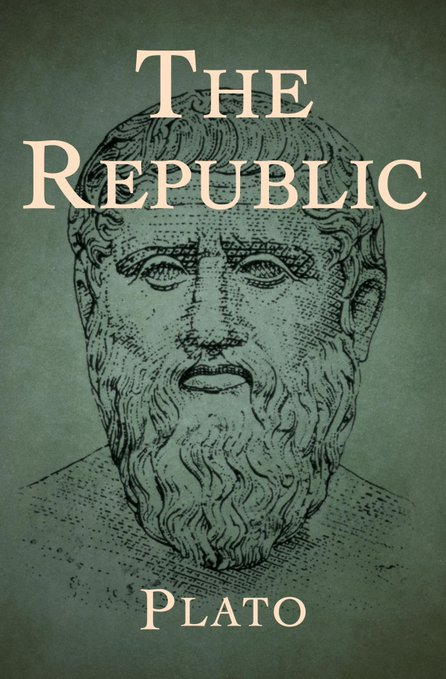
@Handre on X: Plato handed the ruling class a blueprint for total control in The Republic, and we call it philosophy.
Plato handed the ruling class a blueprint for total control in The Republic, and we call it philosophy.
Plato handed the ruling class a blueprint for total control in The Republic, and we call it philosophy.
The Republic, written around 380 BC, describes a city where philosopher-kings govern by virtue of superior wisdom, where private property disappears for the guardian class, where poets get expelled for corrupting the young, and where eugenicists manage reproduction.
Plato presents all of this with genuine sincerity. That sincerity is exactly what makes it dangerous. You are reading the West’s first systematic argument for central planning. Every collectivist project since, from Robespierre’s Committee of Public Safety to the Soviet Gosplan, borrowed the same core logic: some men possess sufficient knowledge and virtue to direct the lives of others.
Plato gave that assumption philosophical respectability. Free market thinkers from Ludwig von Mises to F.A. Hayek spent considerable effort dismantling this premise. The knowledge problem alone destroys Plato’s city before the first brick gets laid. No central authority, however wise, accesses the dispersed, subjective, constantly shifting information that millions of individuals generate through voluntary exchange. The price system does this automatically. Philosopher-kings cannot.
Plato understood human nature well enough to describe corruption vividly, yet designed a system that concentrates power in the hands of a self-selected elite. He worried about tyrants emerging from democracy, which is a legitimate concern, and then prescribed as the cure an arrangement that produces tyrants structurally.
The guardian class owns nothing, supposedly, but controls everything. Feudalism, but with better prose. Property rights exist because people think, plan, and act as individuals. Strip property, and you strip the institutional foundation of peaceful cooperation.
Posted in Uncategorized
Leave a comment
Steve Hanke and AI: Iran Economy – The Truth
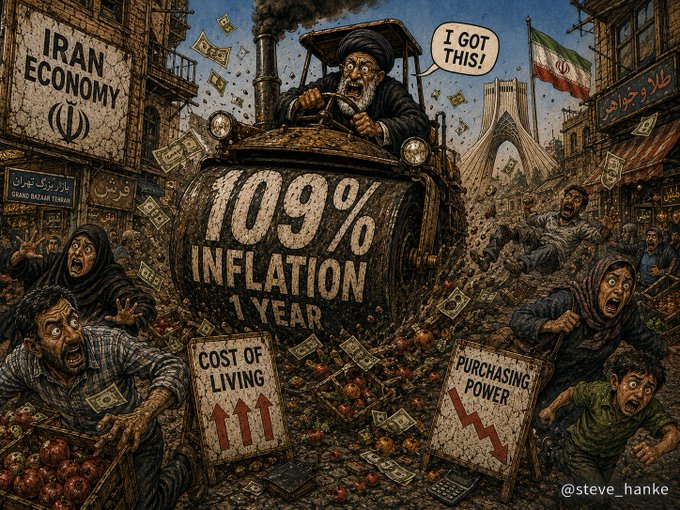
Today, I measure Iran’s inflation at a CRUSHING 109%/yr.
I REMAIN THE ONLY ACCURATE SOURCE FOR INFLATION MEASUREMENTS IN IRAN.
NEVER MIND.
US SEC. OF TREASURY BESSENT KEEPS WRONGLY REPEATING THAT IRAN’S INFLATION IS 180%/YR.
Posted in Uncategorized
Leave a comment

