Outsider art can refashion how we think about mental illness
Published: January 20, 2015 10.44am GMT
Author
Victoria Tischler Senior Lecturer in Psychology, University of the Arts London
Disclosure statement
Victoria Tischler does not work for, consult, own shares in or receive funding from any company or organisation that would benefit from this article, and has disclosed no relevant affiliations beyond their academic appointment.
Partners
The Conversation UK receives funding from these organisations
Organisations such as MIND work tirelessly to raise awareness of mental health problems and real progress has been made in destigmatising mental illness through campaigns such as Time to Change and Black Dog.
But some mental illnesses suffer more from bad public perceptions.What of the more stigmatised and often chronic conditions such as schizophrenia, dementia or personality disorders? What of those who cannot cope with independent living, are incarcerated, or living alone in abject poverty?Those with unwashed hair, overweight through medication and poor diet, unable to engage in nurturing, intimate relationships. Can we fashion a new understanding of mental illness that will improve their lives?
I work with people at the sharp end of mental health care – those deemed too ill or too risky to live in society among us. People in institutions, who cannot cope with real life, who have lost touch with reality. Amid these severe dysfunctions, complex problems, rejections and repressions, one thing that remains is creative vision which reveals itself with a boom or very quietly.
Some without speech create grand visions on paper. Others repent their sins on canvas. Those with forearms covered in self-inflicted scars sit quietly and intently carve complex symmetrical patterns into printing materials. The severely agitated sit transfixed as they paint.
Join our readers who subscribe to free evidence-based news
This creativity can offer a different way of thinking about mental illness – both in mental health campaigns, potential therapies, and maybe via fashion.
Fashion, art and mental illness
There exists a natural space for the mentally ill in the fashion and art worlds. Both of these worlds nurture and even celebrate eccentricity, flamboyance, and unfettered vision. Artists and designers are celebrated style-setters. Fashion and art in society represents the “cool”, the “edgy” and the desirable. High fashion is fuelled on fantasy, innovation and experimentation. Can these be harnessed to improve the lives of the most vulnerable, and to fashion a new and desirable view of mental health?
Untitled by Mehrdad Rashidi. Henry Boxer Gallery
There is enormous interest in the art of those deemed mentally ill. At the Outsider Art Fair in a chic Parisian hotel recently a gallerist from New York commented that collectors specifically request work by “manic depressives or schizophrenics”. The importance of the art of people who are mentally ill is gaining recognition.
In 2013 there were no less than five major exhibitions of outsider art in Europe. While “outsider” doesn’t automatically equate with mental illness, most outsider artists could be described as eccentric – and some have diagnosed mental illness. A number of studies support links between mental illness and creativity.
Through my research and curatorial work I have learnt that, despite wider stigma, people have a strong interest in – and attraction to – otherness, perhaps even to mental illness itself. Perhaps it reassures us of our own sanity or provides revelations of what lies beyond, in the realm of our visions and fantasies. The disinhibition of mental illness may facilitate an unfiltered perusal of our inner lives. Outsider art allows us to indulge in these depths, but from a discreet distance.
Delving into the unconscious
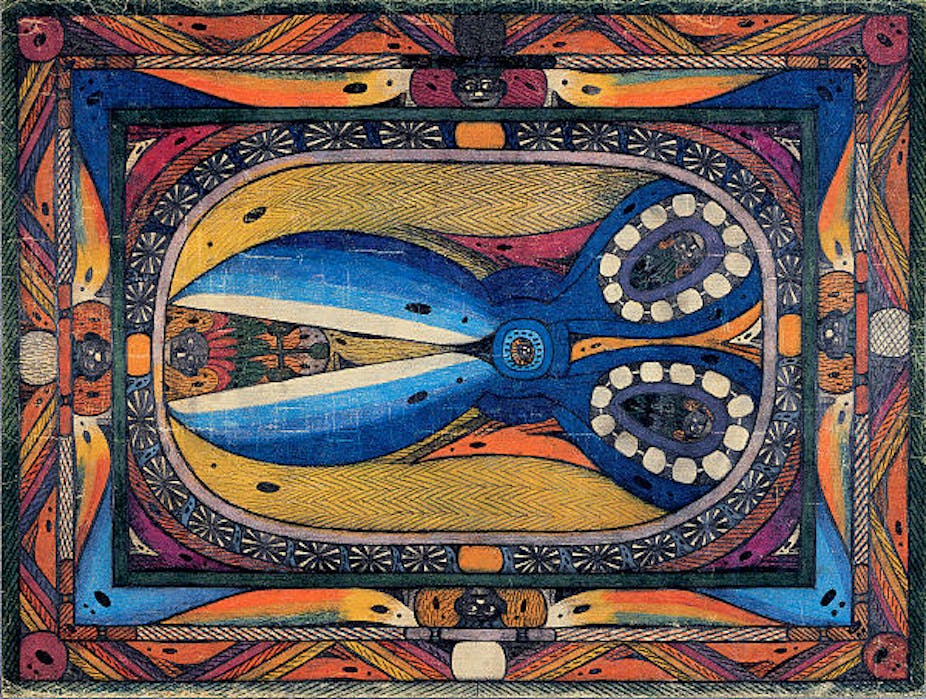
The art created by outsiders reveals illuminating truths about what it is to be human. The work is real and pure – and has a depth that contrasts with the often contrived offerings of conventionally trained artists. It shows us what we dare not think, let alone speak. The artists tell seemingly bizarre stories, translate hallucinatory experiences, or depict imaginary and fantastical worlds which trace painful personal trajectories. They reveal the psyche; our dreams, our nightmares, the afterlife. The art is unknowing yet visionary. The artists do not subscribe to standard art-school criteria – and this is what separates them from the mainstream.
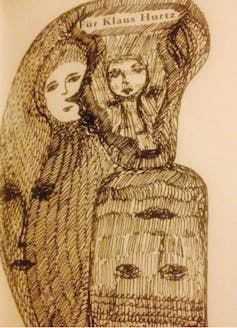
A more colourful world. Anonymous, Author provided
From a psychoanalytic perspective, outsider art delves into our vast unconscious, that part which represents us but which we barely recognise or are aware of. We look, in order to understand the other and to understand ourselves. Outsider art adds gravitas to an existence that nowadays can feel very superficial. It is uncensored. It transcends speech.
Outsider artists report being compelled to create work, drawing and painting obsessively for hours and days at a time. This is fascinating, especially if the same individuals experience severe difficulties in day-to-day living as is often the case with serious mental illness.
Our interest in the art of the mentally ill may follow from a morbid fascination with the diseased, the odd, the eccentric.In Victorian times the public would visit asylums as a pastime to view “the lunatics”. Care in the community policies means that the “mad” now live among us but not alongside us. The muttering old woman in the cafe, the dazed and staring sunken eyes of the unknown figure lying on cardboard on a busy London thoroughfare, the woman with knotted hair, swearing at full volume on an underground platform as the train pulls in.
In the past the melancholic was viewed as a romantic outsider, creating poetry and music laden with sorrow, misery and pathos. There is a long tradition of art as foundational to culture and artistic practices tend to be ritualised, curated and held in high esteem so could be potentially therapeutic both for individuals and collectively for example via art workshops and exhibition of artwork created by those with mental illness.
Making mental health fashionable
At the London College of Fashion (LCF), the campaign Making Mental Health Fashionable brings together artists, curators, psychiatrists, psychologists, designers, policy makers and those with mental health problems to develop ideas and projects to change our views about mental health and to challenge negative perceptions about mental illness. The aim is to fashion the meaning of mental illness into something more positive and desirable.
The allure of outsider art is testament to the appeal of the talents of those on the periphery of society. Combining this with the innovative and style-setting powers of the fashion industry as a collaborative venture promises much.
My hope is to engage fashion students with mental health issues and to create exciting, thoughtful and aesthetically pleasing garments that the public will want to wear and which challenge negative ideas about mental illness.
A meek, smartly dressed, young middle-class woman in a psychiatric hospital recently told me it was the first time she’d been ill but that she was likely to spend a long time in the secure facility. Her “normal” demeanour reminded me how close many of us are to madness. It takes but one cruel genetic swipe, an adverse life event; a bereavement, childhood abuse, or a great love gone awry. It’s time to value the experiences and skills of those with mental illness, and to enlist their creative talents to refashion our thinking about mental health.
#PANDAS#science#newstalk A “debilitating” psychiatric condition in children appears to be curable through antibiotics – but not enough doctors know about it. On The Pat Kenny Show this morning, Trinity Professor Luke O’Neill said Paediatric Autoimmune Neuropsychiatric Disorder Associated with Streptococcus (PANDAS) is far more common than most people – including medical professionals – realise. “Children get infected with bacteria and develop psychiatric illness,” he said. Children develop PANDAS or Paediatric Acute Neuropsychiatric Syndrome (PANS) when the immune system, detecting streptococcus, sends the “wrong signals” to the brain, making the body react against it. ‘He thought birds were going to attack him’ Prof O’Neill said a woman contacted him last year about her seven-year-old grandson who had strange psychiatric symptoms. “He came home from school one day and had very strange behaviour,” he said. “He said there was radiation coming out the sockets and thought that birds were going to attack him when he went outdoors. “Then his mother takes him to the doctor, and they give him antibiotics for a sinus infection and the neuropsychiatric symptoms went away. “It’s a remarkable example of how you clear up a very complicated sort of syndrome with antibiotics.” ‘Most paediatricians don’t know about it’ Prof O’Neill said PANDAS and PANS are both mysteries to many doctors. “It turns out most GPs don’t know about it,” he said. “The Economist did a survey showing most paediatricians don’t know about it.” The survey showed 95% of parents whose children have PANDAS said their family doctors were not able to diagnose it. Around half of paediatricians also said they had never heard of the disease and roughly one-in-five of the parents surveyed said their paediatrician felt that the diagnosis was controversial. Misdiagnosis Prof O’Neill said doctors often diagnose children with PANDAS/PANS with other conditions such as ADHD, psychosis or autism. “Some even end up in institutions,” he said. “Yet it could be stopped with an antibiotic.” He said the immune system is extremely complex, particularly when it comes to working with the brain. “If you’ve any autoimmune disease, you have a 40% increased risk of schizophrenia,” he said. “There’s also this strange disease called Sydenham chorea, where you develop all these strange movements and ticks caused by a bacteria.” It’s important children with psychiatric symptoms are also tested for autoimmune conditions, according to Prof O’Neill. “Psychiatrists need to learn some immunology action,” he said. “Lots more research is needed.”
Researchers are feeding machine-learning tools millions of medical scans to give them general diagnostic capabilities. Credit: Massimo Brega/Science Photo Library
Jordan Perchik started his radiology residency at the University of Alabama at Birmingham near the peak of what he calls the field’s “AI scare”. It was 2018, just two years after computer scientist Geoffrey Hinton had proclaimed that people should stop training to be radiologists because machine-learning tools would soon displace them.Hinton, sometimes referred to as the godfather of artificial intelligence (AI), predicted that these systems would soon be able to read and interpret medical scans and X-rays better than people could. A substantial drop in applications for radiology programmes followed. “People were worried that they were going to finish residency and just wouldn’t have a job,” Perchik says.
Hinton had a point. AI-based tools are increasingly part of medical care; more than 500 have been authorized by the US Food and Drug Administration (FDA) for use in medicine. Most are related to medical imaging — used for enhancing images, measuring abnormalities or flagging test results for follow-up.
But even seven years after Hinton’s prediction, radiologists are still very much in demand. And clinicians, for the most part, seem underwhelmed by the performance of these technologies.Science and the new age of AI: a Nature special
Surveys show that although many physicians are aware of clinical AI tools, only a small proportion — between 10% and 30% — has actually used them1. Attitudes range from cautious optimism to an outright lack of trust. “Some radiologists doubt the quality and safety of AI applications,” says Charisma Hehakaya, a specialist in the implementation of medical innovations at University Medical Center Utrecht in the Netherlands. She was part of a team that interviewed two dozen clinicians and hospital managers in the Netherlands for their views on AI tools in 20192. Because of that doubt, she says, the latest approaches sometimes get abandoned.
And even when AI tools accomplish what they’re designed to do, it’s still not clear whether this translates into better care for patients. “That would require a more robust analysis,” Perchik says.
But excitement does seem to be growing about an approach sometimes called generalist medical AI. These are models trained on massive data sets, much like the models that power ChatGPT and other AIchatbots. After ingesting large quantities of medical images and text, the models can be adapted for many tasks. Whereas currently approved tools serve specific functions, such as detecting lung nodules in a computed tomography (CT) chest scan, these generalist models would act more like a physician, assessing every anomaly in the scan and assimilating it into something like a diagnosis.
Although AI enthusiasts now tend to steer clear of bold claims about machines replacing doctors, many say that these models could overcome some of the current limitations of medical AI, and they could one day surpass physicians in certain scenarios. “The real goal to me is for AI to help us do the things that humans aren’t very good at,” says radiologist Bibb Allen, chief medical officer at the American College of Radiology Data Science Institute, who is based in Birmingham, Alabama.
But there’s a long journey ahead before these latest tools can be used for clinical care in the real world.
Current limitations
AI tools for medicine serve a support role for practitioners, for example by going through scans rapidly and flagging potential issues that a physician might want to look at right away. Such tools sometimes work beautifully. Perchik remembers the time an AI triage flagged a chest CT scan for someone who was experiencing shortness of breath. It was 3 a.m. — the middle of an overnight shift. He prioritized the scan and agreed with the AI assessment that it showed a pulmonary embolism, a potentially fatal condition that requires immediate treatment. Had it not been flagged, the scan might not have been evaluated until later that day.
But if the AI makes a mistake, it can have the opposite effect. Perchik says he recently spotted a case of pulmonary embolism that the AI had failed to flag. He decided to take extra review steps, which confirmed his assessment but slowed down his work. “If I had decided to trust the AI and just move forward, that could have gone undiagnosed.”AI and science: what 1,600 researchers think
Many devices that have been approved don’t necessarily line up with the needs of physicians, says radiologist Curtis Langlotz, director of Stanford University’s Center for Artificial Intelligence in Medicine and Imaging in Palo Alto, California. Early AI medical tools were developed according to the availability of imaging data, so some applications have been built for things that are common and easily spotted. “I don’t need help detecting pneumonia” or a bone fracture, Langlotz says. Even so, multiple tools are available for assisting physicians with these diagnoses.
Another issue is that the tools tend to focus on specific tasks rather than interpreting a medical examination comprehensively — observing everything that might be relevant in an image, taking into account previous results and the person’s clinical history. “Although focusing on detecting a few diseases has some value, it doesn’t reflect the true cognitive work of the radiologist,” says Pranav Rajpurkar, a computer scientist who works on biomedical AI at Harvard Medical School in Boston, Massachusetts.
The solution has often been to add more AI-powered tools, but that creates challenges for medical care, too, says Alan Karthikesalingam, a clinical research scientist at Google Health in London. Consider a person having a routine mammography. The technicians might be assisted by an AI tool for breast cancer screening. If an abnormality is found, the same person might require a magnetic resonance imaging (MRI) scan to confirm the diagnosis, for which there could be a separate AI device. If the diagnosis is confirmed, the lesion would be removed surgically, and there might be yet another AI system to assist with the pathology.
“If you scale that to the level of a health system, you can start to see how there’s a plethora of choices to make about the devices themselves and a plethora of decisions on how to integrate them, purchase them, monitor them, deploy them,” he says. “It can quickly become a kind of IT soup.”
Many hospitals are unaware of the challenges involved in monitoring AI performance and safety, says Xiaoxuan Liu, a clinical researcher who studies responsible innovation in health AI at the University of Birmingham, UK. She and her colleagues identified thousands of medical-imaging studies that compared the diagnostic performance of deep-learning models with that of health-care professionals3. For the 69 studies the team assessed for diagnostic accuracy, a main finding was that a majority of models weren’t tested using a data set that was truly independent of the information used to train the model. This means that these studies might have overestimated the models’ performance.
“It’s becoming now better known in the field that you have to do an external validation,” Liu says. But, she adds, “there’s only a handful of institutions in the world that are very aware of this”. Without testing the performance of the model, particularly in the setting in which it will be used, it is not possible to know whether these tools are actually helping.
Solid foundations
Aiming to address some of the limitations of AI tools in medicine, researchers have been exploring medical AI with broader capabilities. They’ve been inspired by revolutionary large language models such as the ones that underlie ChatGPT.
These are examples of what some scientists call a foundation model. The term, coined in 2021 by scientists at Stanford University, describes models trained on broad data sets — which can include images, text and other data — using a method called self-supervised learning. Also called base models or pre-trained models, they form a basis that can later be adapted to perform different tasks.
Most medical AI devices already in use by hospitals were developed using supervised learning. Training a model with this method to identify pneumonia, for example, requires specialists to analyse numerous chest X-rays and label them as ‘pneumonia’ or ‘not pneumonia’, to teach the system to recognize patterns associated with the disease.
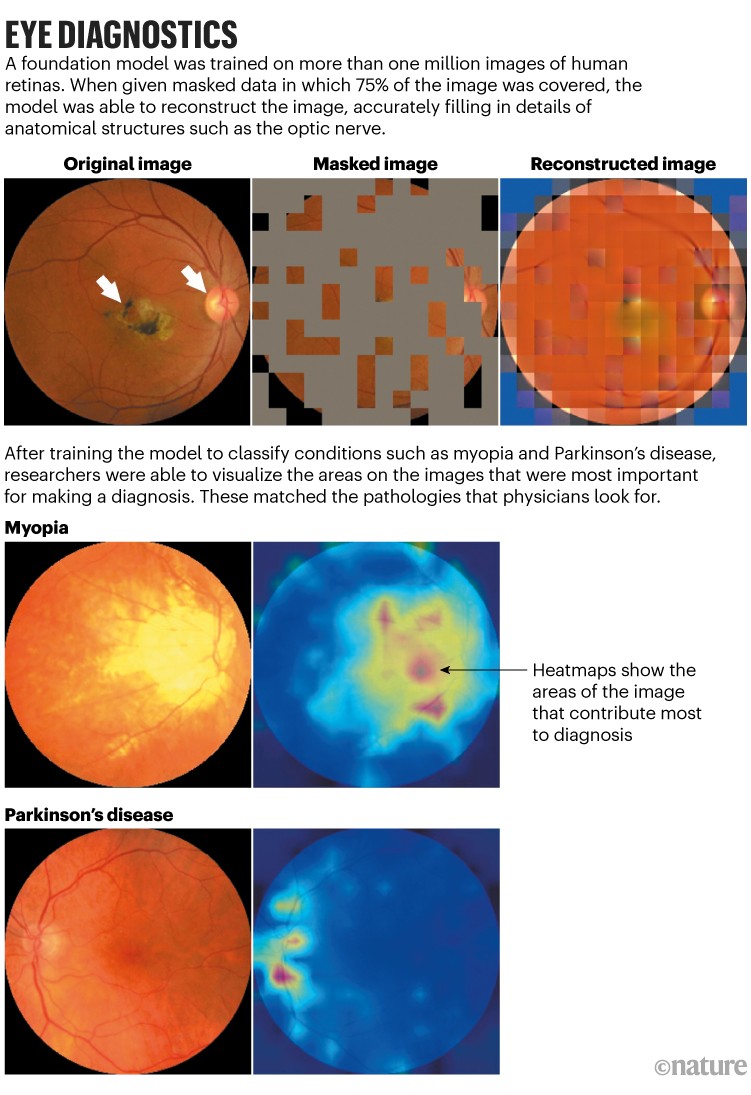
The annotation of large numbers of images, an expensive and time-consuming process, is not required in foundation models. or ChatGPT, for example, vast collections of text were used to train a language model that learns by predicting the next word in a sentence. Similarly, a medical foundation model developed by Pearse Keane, an ophthalmologist at Moorfields Eye Hospital in London, and his colleagues used 1.6 million retinal photos and scans to learn how to predict what missing portions of the images should look like4 (see ‘Eye diagnostics’). After the model had learnt all the features of a retina during this pre-training, the researchers introduced a few hundred labelled images that allowed it to learn about specific sight-related conditions, such as diabetic retinopathy and glaucoma. The system was better than previous models at detecting these ocular diseases, and at predicting systemic diseases that can be detected through tiny changes in the blood vessels of the eye, such as heart disease and Parkinson’s. The model hasn’t yet been tested ina clinical setting.
Source: Ref. 4
Keane says that foundation models could be especially suitable for ophthalmology, because almost every part of the eye can be imaged at high resolution. And huge data sets of these images are available to train such models. “AI is going to transform health care,” he says. “And ophthalmology can be an example for other medical specialities.”
Foundation models are “a very flexible framework”, says Karthikesalingam, adding that their characteristics seem to be well suited to addressing some of the limitations of first-generation medical AI tools.
Big tech companies are already investing in medical-imaging foundation models that use multiple image types — including skin photographs, retinal scans, X-rays and pathology slides — and incorporate electronic health records and genomics data.
In June, scientists at Google Research in Mountain View, California, published a paper describing an approach they call REMEDIS (‘robust and efficient medical imaging with self-supervision’), which was able to improve diagnostic accuracies by up to 11.5% compared with AI tools trained using supervised learning5. The study found that, after pre-training a model on large data sets of unlabelled images, only a small number of labelled images were needed to achieve those results. “Our key insight was that REMEDIS was able to, in a really efficient way, with very few examples, learn how to classify lots of different things in lots of different medical images,” including chest X-rays, digital pathology scans and mammograms, says Karthikesalingam, who is a co-author of the paper.AI tools as science policy advisers? The potential and the pitfalls
The following month, Google researchers described in a preprint6 how they had brought that approach together with the firm’s medical large language model Med-PaLM, which can answer some open-ended medical queries almost as well as a physician. The result is Med-PaLM Multimodal, a single AI system that demonstrated that it could not only interpret chest X-ray images, for example, but also draft a medical report in natural language6.
Microsoft is also working to integrate language and vision into a single medical AI tool. In June, scientists at the company introduced LLaVA-Med (Large Language and Vision Assistant for biomedicine), which was trained on images paired with text extracted from PubMed Central, a database of publicly accessible biomedical articles7. “Once you do that, then you can basically start to have conversations with images just like you are talking with ChatGPT,” says computer scientist Hoifung Poon, who leads biomedical AI research at Microsoft Health Futures and is based in Redmond, Washington. One of the challenges of this approach is that it requires huge numbers of text–image pairs. Poon says he and his colleagues have now collected more than 46 million pairs from PubMed Central.
As these models are trained on ever more data, some scientists are optimistic that they might be able to identify patterns that humans cannot. Keane mentions a 2018 study by Google researchers that described AI models capable of identifying a person’s characteristics — such as age and gender — from retinal images8. That is something that even experienced ophthalmologists can’t do, Keane says. “So, there’s a real hope that there’s a lot of scientific information embedded within these high-dimensional images.”
One example of where AI tools could surpass human abilities, according to Poon, is the use of digital pathology to predict tumoral responses to immunotherapy. It is thought that the tumour microenvironment — the milieu of cancerous, non-cancerous and immune cells that can be sampled using a biopsy — influences whether an individual will respond well to various anti-cancer drugs. “If you can see millions and millions of patients that have already taken a checkpoint inhibitor or other immunotherapy, and you look at the exceptional responders and the non-responders, you could start to actually discern a lot of these patterns that an expert may not be able to see,” says Poon.
He cautions that, although there’s a lot of excitement around the diagnostic potential of AI devices, these tools also have a high bar for success. Other medical uses for AI, such as matching participants to clinical trials, are likely to have a more immediate impact.
Karthikesalingam also notes that even the best results achieved by Google’s medical imaging AI are still no match for humans. “An X-ray report by a human radiologist is still considered significantly superior to a state-of-the-art multimodal generalist medical system,” he says. Although foundation models seem to be particularly well poised to broaden the applications of medical AI tools, there is a long way to go to demonstrate that they can safely be used in clinical care, Karthikesalingam adds. “While we want to be bold, we also think it’s very important to be responsible.”
Perchik has no doubt that the role of AI will continue to grow in his field of radiology, but rather than replacing radiologists, he thinks people will need to be trained to use AI. In 2020, he organized a free AI literacy course for radiologists that has since expanded to 25 programmes across the United States. “A lot of the work that we do is demystifying AI and managing the hype versus what the reality of AI is,” he says.
Today, my office and a nationwide coalition of AGs are suing
@Meta for harming kids with its platforms and fueling the youth mental health crisis. We’re going to end Meta’s behavior and keep our kids safe online.
Today, my office and a nationwide coalition of AGs are suing @Meta for harming kids with its platforms and fueling the youth mental health crisis.
I’m lying down in a white cylinder barely wider than my body, surrounded on all sides by a mass of sophisticated machinery the size of a small camper van. It’s an fMRI machine, one of the technological marvels of modern neuroscience. Two small inflatable cushions squeeze my temples, keeping my head still.
“We are ready to begin the next batch of exercises,” I hear Dr. Horikawa’s gentle voice saying. We’re underground, in one of the laboratories of Tokyo University’s Faculty of Medicine, Hongo Campus. “Do you feel like proceeding?”
Nautilus Members enjoy an ad-free experience. Log in or Join now .
“Yes, let’s go,” I answer.
The machine sets in motion again. A powerful current grows inside the cryogenically cooled wires that coil around me, showering my head with radio waves, knocking the hydrogen atoms inside my head off their original spin axis, and measuring the rate at which the axis recovers afterward. To the sensors around me, I’m now as transparent as a glass of water. Every tiny change of blood flow anywhere inside my brain is being watched and recorded in 3-D.
A few seconds pass, then a synthetic female voice speaks into my ears over the electronic clamor: “top hat.” I close my eyes and I imagine a top hat. A few seconds later a beep tells me I should rate the quality of my mental picture, which I do with a controller in my hand. The voice speaks again: “fire extinguisher,” and I repeat the routine. Next is “butterfly,” then “camel,” then “snowmobile,” and so on, for about 10 minutes, while the system monitors the activation of my brain synapses.
Understanding aphantasia means learning something more about what it means to be human.
For most people, this should be a rather simple exercise, perhaps even satisfying. For me, it’s a considerable strain, because I don’t “see” any of those things. For each and every one of the prompts, I rate my mental image “0” on a 0 to 5 scale, because as soon as I close my eyes, what I see are not everyday objects, animals, and vehicles, but the dark underside of my eyelids. I can’t willingly form the faintest of images in my mind. And, although it isn’t the subject of the current experiment, I also can’t conjure sounds, smells, or any other kind of sensory stimulation inside my head. I have what is called “aphantasia,” the absence of voluntary imagination of the senses. I know what a top hat is. I can describe its main characteristics. I can even draw an above-average impression of one on a piece of paper for you. But I can’t visualize it mentally. What’s wrong with me?
My whole life, I’ve been aware—sometimes painfully so—of my own peculiarities, strengths, and weaknesses: A terrible memory, a good sense of direction, and what I felt was a lack of “visual creativity,” among others. I always thought these were just random, disconnected traits, and didn’t think much about them. Who doesn’t have their quirks?
Then, some time in 2021 (not coincidentally, I forget exactly where or when) I read about aphantasia for the first time, and it hit me hard: When people say “picture this scene in your head,” they aren’t speaking metaphorically! People can actually invoke shapes and colors in their minds. The shock of this realization was followed by a piecing together of many of those little idiosyncrasies of mine into a single, coherent phenomenon that fit with the scientific description of the condition. By the time my formal diagnosis came, I was already quite sure I was aphantasic.
I share this trait with many people. Occasional reports of people claiming to be without a “mind’s eye” go back to the 1800s, with several cases briefly mentioned in the scientific literature throughout the 20th century. Yet these cases were ignored by the broader scientific community, relegated to the fringes of the field as outliers or misunderstandings.
It was only in the 2010s that the topic began to attract attention. A man approached Adam Zeman, professor of cognitive and behavioral neurology at the University of Exeter, in the United Kingdom, claiming to have lost his mind’s eye following a heart surgery. In 2010, Zeman published a study showing that the man had different brain activation patterns from other subjects when trying to imagine things.1
This was an interesting case study on its own, but something more surprising followed the publication of Zeman’s paper: Several people contacted him claiming to have had that same condition for as long as they could remember. Zeman and his collaborators assessed their claims using the Vividness of Visual Imagery Questionnaire (VVIQ), a popular measure of internal visualization quality, and found that these individuals indeed seemed to have little to no ability to visualize at will. The researchers published these findings in 2015, and proposed to call the condition “aphantasia”—literally “the absence of images” in Greek.2
Illustration by Paulaparaula / Shutterstock
With this new label, word about aphantasia finally started to spread within the neuroscience community and the broader public. More groups of researchers around the world began studying it, and every year a larger number of papers on the topic reaches scientific journals. We now know that roughly 1 out of 25 people are “aphantasics” (or “aphants,” in internet slang)—a rare condition, but common enough that each of us must know several people in the category.
For those equipped with a trusty inner eye, hearing about aphantasia can be a puzzling experience. How can someone even function as a human being without the ability to imagine pictures and sounds?
The biggest source of confusion with aphantasia comes from the assumption that “imagination” and “forming mental images” are one and the same thing. This is, of course, incorrect. I’m able to imagine anything, except it is all devoid of sensory representations. The imagined objects exist in my mind as interconnected concepts, like bullet lists of facts about things. For example, when I reread the scene in Ernest Hemingway’s The Old Man and the Sea where the protagonist battles a giant marlin, I’m able to take in a large amount of information: We’re on his skiff, bobbing on the waves of the deep waters of the Gulf of Mexico, the sun hammering mercilessly on the poor man while he pulls on the line for hours on end. I can reason about the situation, try to predict what could happen next, and relate with the character’s plight.
None of this requires having a picture of the scene in my head. This way of imagining is, perhaps, more abstract than what most people are used to, but not significantly less useful.
A surprising aspect of this is that, for me, the physical “bullet-list concepts” don’t just float haphazardly in nothingness, but are embodied in coherent three-dimensional structures that I can manipulate in my mind. In the scene of the old fisherman, I can imagine moving around the small boat, sitting down next to Santiago, and I can “feel” the monstrous mass of the fish floating near the vessel. This spatial awareness might be what allows me to find my way around my bedroom in darkness: I know where the furniture is and the rough distances between things even without seeing them. The science is still unclear as to why someone like me can form spatial thoughts without the accompanying imagery, but some speculate that it might have something to do with a separation of these functions in and around the visual cortex.
For non-aphants, it’s also hard to imagine how those of us without this sensory mind’s eye remember events if we can’t call to mind images, smells, or sounds. Scientists have begun trying to untangle this difficult question about the brain as well. In a 2015 paper, a group of researchers from the University of Toronto led by psychologist Daniela Palombo identified a new syndrome they called “Severely Deficient Autobiographical Memory,” or SDAM for short.3 People with SDAM lack the ability to relive past experiences in their minds. While this condition is rare among the general population, a preliminary survey hints at a link with aphantasia, with as many as 51 percent of a sample of 2,000 SDAM individuals also having aphantasia.
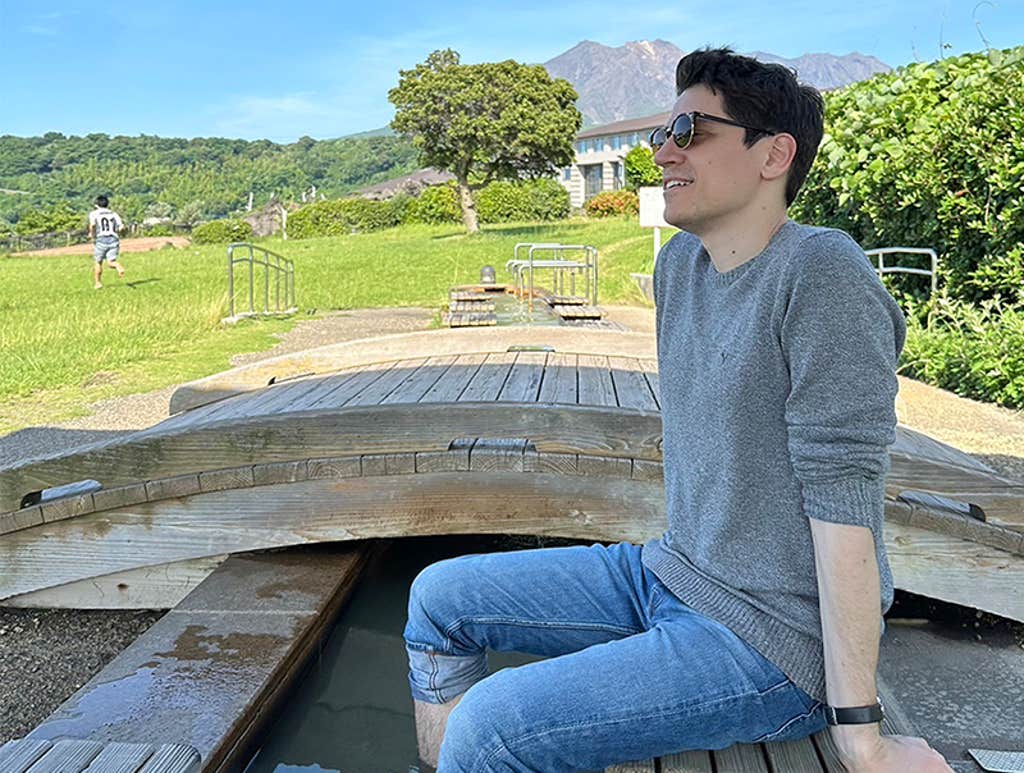
IN THE MOMENT: The author enjoying the passing sensation of an ashi-yu, or “foot bath,” at the foot of Sakurajima, an active volcano in southern Japan whose name means “Cherry Blossom Island.” Images and sensations from this moment will soon scatter from his mind, like petals on the breeze, but that doesn’t much bother Giancotti. Photo courtesy of Ayako Itazu.
My own experience is similar. Past episodes of my life—when I can recall them at all—feel distant and non-sensory. SDAM is a new discovery, still unknown to most practicing psychiatrists, so people like me have to rely on self-diagnosis for the time being. But the symptoms described by the researchers match with what I’ve always taken for granted. I would describe my recollections as summaries of key facts rather than first-person “mind movies.” When asked, out of the blue, about an experience I’ve surely had—say, any childhood birthday party—my mind first responds by drawing a blank. It feels as if my episodic memories were filed into a “mental cabinet” without an index. Many memories are in there, somewhere, but retrieving them is a daunting task unless I’m provided with very specific prompts. With some groping work of deduction (where did I live at the time? Who did I hang out with?) I can gather enough hints to bring out some locations and non-visual facts: I had a big party in our countryside garden when I was 11 or 12; there was cake; a lot of kids running around and … that’s about it.
How does all ofthis affect my life? The surprising answer is that it doesn’t, at least not in any debilitating way. To my great relief, people rarely ask me what happened at parties held decades ago. But even when there is a need to describe scenes or people visually, I usually have enough “verbal facts” and eloquence to give a satisfying answer, without the need to replicate the actual pictures in my head.
Among researchers, the consensus seems to be that aphantasia doesn’t meet the criteria to be called a disability, and that aphantasic individuals, in general, are fully functional and just as successful at living their lives and performing in their careers as the rest of the population. This seems to be further supported by a new paper published by two researchers at Sorbonne University.4 They presented their participants, including many aphantasics, with a series of tasks involving the comparison of shapes, colors, words, faces, and spatial relations in one’s head. Aphantasics were as accurate as the other participants in all the tests, although they took longer to solve the imagery-based tasks, presumably because they used different, less-direct strategies to complete them.
Yet, some of those who discover they have aphantasia despair at the news. I’ve seen people make claims like “my whole life was a lie” and “this must be what ruined my marriage.” While I’m not quite as pessimistic, I can relate with that minority of fellow aphants. Sure, aphantasia and SDAM may not be causing major problems in our daily lives, but wouldn’t their subtle effects compound over time? And could they not be the cause of many of our other more embarrassing weaknesses and shortcomings?
For those equipped with a trusty inner eye, hearing about aphantasia can be a puzzling experience.
For many of us, the aftermath of learning about one’s aphantasia leads to some sort of self-consciousness crisis. Suddenly, your performance in every other aspect of life comes under scrutiny, and blaming your congenital aphantasia for it is almost irresistible. Is drawing without a reference so difficult because of my aphantasia? Could SDAM be why I’m so bad at keeping in touch with people? Would I be less socially awkward without it? Very few of these supposed connections have been tested yet, let alone confirmed by solid scientific studies. Yet almost every aphantasic I’ve talked to does this. But everyone seems to focus their self-doubt on whatever they don’t like about themselves, scapegoating different shortcomings.
I have learned to embrace the diversity of aphantasia, and I hope to spread the word about it. And so does Junichi Takahashi, the first researcher I talked to about my condition. Takahashi is a psychologist at Fukushima University and was one of the first scientists to pay attention to aphantasia in Japan, where I’ve lived since 2011. He set up a website with the VVIQ survey, which is what led me to confirm my suspicions of having aphantasia. I got in touch with him directly and began to learn more about the science behind mental visualization and its absence.
Rather than studying aphantasia as a single phenomenon, Takahashi is trying to bring clarity to its diversity. In July 2023, he and several co-authors published a paper examining subtypes of aphantasia.5 While most previous studies relied solely on the VVIQ questionnaire to identify aphantasic individuals, Takahashi and his team administered a battery of additional psychological question-sets to the same subjects and analyzed their correlations.
Illustration by suns07butterfly / Shutterstock
One of these questionnaires probed the vividness of multi-sensory mental imagery, including the sense of hearing, smell, and so on. Can aphantasics mentally replay their parents’ voices or the unique taste of cheesecake? Another questionnaire tested the tendency toward verbally oriented (relying more on words to figure out things) or visually oriented (relying more on images) thinking styles. Yet another one was used to detect “face blindness,” the inability to recognize faces.
Their statistical analysis revealed that all of these factors are somewhat correlated, but none fully. For instance, many of their aphantasic subjects lacked all of their “mind senses,” but some did have the ability to imagine sounds, flavors, or other non-visual sensations. The paper also found that face blindness did occur more often among people with aphantasia (40 percent) than in the control group (20 percent), but is far from being a universal aphantasic trait.
But all this talk of questionnaires and self-reports brings us to the age-old question: How do we know that aphantasia really exists, as opposed to being a form of psychological denial or simply a different interpretation of the same inner experience?
When aphantasia was first formally proposed, some researchers wondered whether the purported lack of visualization ability might in many cases be, not a congenital trait, but a psychopathological issue, such as neurosis or a defensive response against trauma. A kind of “philosophical language barrier” further complicates the issue: We might be talking about the same thing with different words and, language being the only medium we have to compare inner experiences, we have (or, rather, had) no way of confirming that. Even Ludwig Wittgenstein, one of the great philosophers of the 20th century, wondered about this very scenario more than 60 years before aphantasia got its name: If a person claimed they can’t imagine a picture but is still able to draw one, he asked, should we believe that something different is really going on in their head?
Scientists are now finding ways to answer these questions with hard, objective data. “Even before aphantasia became a thing, researchers tried separating people with low VVIQ from those with high VVIQ, and found that the performance at certain tasks is different between the two groups,” Takahashi explained to me. “There is also a lot of research showing a good correlation between VVIQ scores and fMRI scans.” The way the questions are posed in the questionnaire seems to work well enough to pick out individuals with demonstrably different visualization abilities.
Of the groups working on this front, Joel Pearson’s is one of the most active. His team at the University of New South Wales, in Australia, has been researching mental imagery since long before aphantasia became widely known. In 2022, his team even found a measurable physical characteristic of aphantasics.6 They discovered that, while the pupils of typical people involuntarily contracted when imagining bright shapes, no such response happened to the aphantasic group. In other words, Pearson’s team showed the first physiological difference confirming the reports of people claiming to have aphantasia. It looks like, at least in most cases, something different is happening inside our heads.
Aphantasia is turning out to be a little cornucopia of scientific insights.
And some are trying to go even further. That’s why I periodically get into the fMRI machine in Dr. Horikawa’s lab to get my brain scanned. A researcher at NTT Communication Science Laboratories in Japan, Tomoyasu Horikawa specializes in using AI to decipher the contents of the human visual cortex. He has recently turned his attention to aphantasia. I connected with him in April 2023, when Takahashi suggested I join Horikawa’s new research project. Horikawa is still collecting data from me and several other people, but preliminary, unpublished analysis indeed shows a quantitative difference in brain activity when aphantasic and typical subjects imagine things. When measuring the “distinctness” of brain activation patterns—how accurately the same patterns are repeated in a subject’s brain when imagining the same object, and how reliably different when imagining different objects—aphantasic subjects seem to score a bit lower. But he says that much more data is necessary to definitely tell. That may turn out to be the best proof of the neural differences between people with and without the condition.
All things considered, learning about my aphantasia made me doubly optimistic, both at the collective and personal levels.
In terms of social impact, aphantasia is turning out to be a little cornucopia of scientific insights. Already scientists are working with aphantasics not only to understand the condition itself, but also to shed light on the intricate workings of the human brain in general.
Rebecca Keogh, a cognitive neuroscientist at Macquarie University, in Australia, for example, has looked into the mechanisms of PTSD by comparing the occurrence of intrusive thoughts between aphantasics and people who can visualize. For Horikawa, aphantasia is a way to isolate the precise neural processes that create mental imagery in the general population. And researchers from the universities of Calgary and Radboud in the Netherlands recently published an article in Nature Reviews Psychology arguing for the use of aphantasia to resolve long-running debates about “embodied cognition”—a theory that treats thinking as a process involving mental simulations of one’s body and sensations, as opposed to only abstract concepts and symbols. The absence of something—like the lack of “inner senses” in aphantasics—can teach us much about the presence of it. This might be the biggest reason why I participate in these experiments: Understanding aphantasia means learning something more about what it means to be human.
In a sense, discovering aphantasia as a scientific topic is a bit like landing on a beach on an unknown continent. We know it’s new, but we have no idea of its geography and size. The binary division between “aphantasic” and “everyone else” might be a short-lived one. The subtype studies of Takahashi and others may lead to a more detailed map of the myriad ways a lack of visualization manifests in people and how they work around it. The brain seems to always have more surprises in store for us, more facets and inter-connections where we previously expected simplicity. We now have an even more interesting landscape to explore.
I would not want to remove the aphantasia even if it were possible.
And as this additional diversity comes into focus, it is easier for us to marvel at the paradox of human cooperation. What would seem like fundamental differences in the way we think—some with pictures, others without—do not lead to fundamental barriers in the way we talk to, connect with, and love each other. We are able to form societies and, through struggle and errors, build thriving communities despite these cognitive differences, and maybe because of them.
On the personal level, my “self-consciousness crisis” is eclipsed by a more powerful “self-knowledge renaissance.” Learning that I have aphantasia gave me the habit of carefully observing my inner experience. It led, among other things, to realizing that I may also have SDAM and mild synesthesia, something that I had never paid any attention to before. It also honed my ability to explain to others what goes on inside me. Armed with these new skills, I can say that I am better at managing myself and at picking the battles that I am best at. I feel like I have gained much and lost nothing.
Some people ask me if my aphantasia can be cured. The easy answer is no, because you can’t cure what isn’t a disease, and anyway we don’t know enough about it yet to influence it. The more sincere answer is that I would not want to remove the aphantasia even if it were possible. Temporary visualization tools? Sure. But not permanent changes to my brain. Whatever compounding effects it had on me over the decades, it helped produce the person I am today. I’m glad it did, even counting all the flaws. The question I started with—what’s wrong with me?—was both rhetorical and itself wrong. The better question is one we all ask ourselves at some point: “What makes me who I am?”
Lead illustration by FrentaN / Shutterstock
References
1. Zeman, A.Z.J., et al. Loss of imagery phenomenology with intact visuo-spatial task performance: A case of “blink imagination.” Neuropsychologia48, 145-155 (2010).
2. Zeman, A., Dewar, M., & Della Sala, S. Lives without imagery—congenital aphantasia. Cortex73, 378-380 (2015).
3. Palombo, D.J., Alain, C., Söderlund, H., Khuu, W., & Levine, B. Severely deficient autobiographical memory (SDAM) in healthy adults: A new mnemonic syndrome. Neuropsychologia72, 105-118 (2015).
4. Liu, J. & Bartolomeo, P. Probing the unimaginable: The impact of aphantasia on distinct domains of visual mental imagery and visual perception. Cortex166, 338-347 (2023).
5. Takahashi, J., et al. Diversity of aphantasia revealed by multiple assessments of visual imagery, multisensory imagery, and cognitive style. Frontiers in Psychology14 (2023).
6. Kay, L., Keogh, R., Andrillon, T., & Person, J. The pupillary light response as a physiological index of aphantasia, sensory, and phenomenological imagery strength. eLife11, e72484 (2022).
Marco Giancotti Posted on October 4, 2023 Marco Giancotti is a freelance writer, product manager, and aphant living in Japan. He has graduate degrees in astrophysics and aerospace engineering—both of which happen to rely on equations more than on mental pictures. He is working on an accessible reframing of key science insights on his website, Plankton Valhalla (which, yes, does contain lots of visualizations). Follow him on Twitter @marco_giancotti.
Get the Nautilus newsletter
Cutting-edge science, unraveled by the very brightest living thinkers. Newsletter Signup – In Page Mobile Email: *
Tech summit organizer quits following backlash for accusing Israel of war crimes
Paddy Cosgrave says his ‘personal comments have become a distraction from the event,’ again apologizes after Meta, Google and others boycott Web Summit
LISBON, Portugal — The organizer of the Web Summit, one of the tech sector’s leading events, announced his resignation Saturday following a backlash over his online posts following the devastating Hamas assault on Israel.
“Unfortunately, my personal comments have become a distraction from the event,” Paddy Cosgrave of Ireland explained in a brief statement sent to AFP.
“I sincerely apologize again for any hurt I have caused,” added the co-founder of the tech mega gathering created in 2009 in Dublin but held in Lisbon since 2016.
A spokesperson for the organization said: “Web Summit will appoint a new CEO as soon as possible, and Web Summit 2023 in Lisbon will go ahead as planned.”
This year’s edition from November 13 to 16, is set to bring together some 2,300 startups and more than 70,000 participants, say organizers.
Get The Times of Israel’s Daily Editionby email and never miss our top storiesNewsletter email addressGET IT
Several companies, including tech giants Google and Meta, which is behind Facebook and Instagram, as well as event headliners have announced they are boycotting the gathering since Cosgrave’s remarks.
He had written on X, formerly Twitter, that he was “shocked at the rhetoric and actions of so many Western leaders & governments” in support of Israel.
“War crimes are war crimes even when committed by allies, and should be called out for what they are,” he wrote on October 13.
ADVERTISEMENT
The boycott by Meta and Google followed other exits by companies and tech figures, including Intel, Siemens and US comedian Amy Poehler and X-Files actor Gillian Anderson.
Queen Rania Al-Abdullah of Jordan is displayed on screens as she answers questions after addressing the Web Summit technology conference in Lisbon, Portugal, November 2, 2022. (AP Photo/Armando Franca)
Some 2,500 Palestinian terrorists from the Gaza Strip stormed into Israel by land, air and sea on October 7, killing some 1,400 people and seizing 200-250 hostages of all ages under the cover of massive rocket fire at Israeli towns and communities. The vast majority of those killed as gunmen seized border communities were civilians — men, women, children and the elderly, with entire families executed in their homes and over 260 slaughtered at an outdoor festival, many amid horrific acts of brutality by the terrorists
The Hamas-controlled health ministry in Gaza says over 4,300 Palestinians have been killed in Israeli strikes since the Hamas onslaught. The figures issued by the terror group cannot be independently verified, and are believed to include its own fighters and the victims of a blast at a Gaza City hospital on October 17 caused by an Islamic Jihad missile misfire that Hamas has blamed on Israel.
Medical groups on both sides of the debate address Oireachtas meeting
There is a risk that a lack of resources in other areas of healthcare may push people into choosing to be medically assisted in their death – should new legislation permit it, the president of the Irish Hospital Consultants Association (IHCA) has warned.
Prof Robert Landers made the comments this week in a meeting of the Oireachtas joint committee on assisted dying, which is examining legislative proposals that would permit voluntary assisted dying in Ireland in certain circumstances.
While the IHCA has adopted a neutral stance in the ongoing debate around the issue, Prof Landers did express concerns that a lack of resources and healthcare staffing could push patients into taking what for them could be an ‘inappropriate action’.
“What we were doing as an association is outlining the limitations of current capacity and resources within the health system,” he told the committee. “We are outlining the risk that people may choose assisted dying because of a lack of capacity or resource elsewhere in the health service.
“If we are that short of palliative care consultants, and we know we are short of mental health professionals, physicians for the elderly, diagnostic physicians, hospital beds and beds in the community, we do not want people taking what could be an inappropriate option because of a lack of proper resources elsewhere in the system.”
Dr Feargal Twomey, clinical lead for palliative care at the Royal College of Physicians of Ireland (RCPI), expressed the body’s opposition to the introduction of legislation for assisted dying.
“There have been major advances in promoting high-quality care at the end of life across a spectrum of healthcare provision in Ireland, in particular, through the provision of palliative care services and increased training in palliative care and palliative medicine across the professions,” he told the committee.
“Legislation for assisted suicide threatens to undermine these efforts, risking a shift away from funding, development and delivery of new and existing palliative care services and potentially reducing research in this area.”
The committee also heard from Irish Doctors Supporting Medical Assistance in Dying (MAiD), a group of around 100 clinicians who are in favour of assisted dying legislation.
Chairman of the group Dr Andrew Lyne said: “Medical paternalism, where doctors assume what is in the patient’s best interest, is no longer acceptable. Patients’ choices should be respected and supported where reasonable, with decision-making shared between doctor and patient.”
Also representing the group, Kildare GP and IMT columnist Dr Brendan O’Shea added that, while the issue of resources is important, indications elsewhere have been that uptake of assisted dying has been higher among more affluent people.
“Dr Lyne observed that in systems where this service is available, among the earliest takers and significant users of the service are particularly affluent people,” he said. “To translate that to Ireland, that means people with private health insurance, where there are far lesser strictures on service provision. Affluent, educated people act on this and see this as a service relevant to them.
“That is an important point but probably should not be the most important point, which should be based on the existential need of a small proportion of people for whom this is an important choice at end of life. As doctors, we have all observed deaths we would not like for ourselves and that have worked out really wrong.”
While the committee heard from opposing views within the medical community, IHCA vice president Dr Gabrielle Colleran stressed the difficulties in finding a consensus on the issue. “The association has 3,500 consultants and there are varied views on this,” she told the meeting. “Probably similarly to the committee, people have strong views either way and many of us in the middle are struggling with the nuance of the debate.”
When we think of the Crimean War, we think of Florence Nightingale. But Irish nuns had an equally important role to play – despite being written out of the history writes Prof Pierce A. Grace
When I was growing up I spent a lot of time in my grandparents house which was just down the road. On rainy days I used to look at Newnes’ Pictorial Knowledge which was a seven-volume encyclopaedia that my grandparents had bought for my father and his siblings in the 1930s. Although other nations were mentioned – even the plucky Irish Free State – the work was unashamedly British and extolled the ‘virtues’ of the Empire and its peoples.
So when I came across a reference to the ‘lady with the lamp’ I asked my grandmother – source of all my historical knowledge – who she was. With a ‘harrumph!’ she said the lady was Florence Nightingale who was credited with sorting out the hospitals during the Crimean War, while in fact the Irish Sisters of Mercy had done all of the work; my grandmother’s aunts were nuns, so she knew a thing or two about them. While Miss Nightingale cannot be airbrushed from history as my granny might have wished, neither should the contribution of the Irish Sisters of Mercy be forgotten.
In 1850 a serious row erupted between Orthodox and Roman Catholic monks as to who should control the Christian religious sites of the Holy Land – then part of the Ottoman Empire; several Orthodox monks were killed in the affair. Czar Nicholas I demanded that Russia be made protector of all Christians in the Ottoman Empire, but Napoleon III, Emperor of the French, had different ideas and seized control of the various holy sites.
The Ottoman sultan, Abdulmecid I, refused the Czar’s request and in July 1853 Russian troops invaded Turkey’s Danubian provinces of Moldavia and Wallachia (modern Romania). Turkey declared war on Russia whose Black Sea fleet promptly wiped out the antiquated Turkish navy at Sinope.
Fearing that Russian expansion into the eastern Mediterranean would interfere with the trade routes to their colonies in North Africa and India, France and Britain came to Turkey’s aid and declared war on Russia in March 1854. In January 1855 the Italian kingdom of Sardinia-Piedmont joined the allies and everyone expected a short war.
In spite of the fact that the country had just experienced the Great Famine and the Young Ireland rebellion of 1848, there was considerable support for the imperial war in Ireland. Up to 35 per cent of the British army of the time was Irish and it is estimated that 30,000 Irish soldiers served in the Crimea, and many of the generals were Irish.
A large Irish civilian contingent comprising doctors, engineers, navvies and members of the Irish Constabulary also went to war. Some soldiers’ wives went and helped with cooking, washing and looking after the wounded. In September 1854 the Allies landed 60,000 troops on the Crimean peninsula with the intention of capturing Sevastopol, the main naval base of Russia’s Black Sea fleet.
As with all war, chaos ensued – witness the Charge of the Light Brigade – and thousands died from wounds, sepsis, cholera and typhus. The poor army medical facilities were quickly overwhelmed. All of this was observed and reported uncensored by Dublin-born journalist William Howard Russell and others – in highly critical reports to the newspapers.
In response Sidney Herbert, Secretary of State for War, turned to Florence Nightingale, a personal friend of his wife’s, asking her to tackle the problems in the British military hospitals.
Described by the medical historian, Roy Porter, as a ‘stern, starchy, but gifted organiser’, Miss Nightingale had learned nursing at Kaiserswerth in Germany and with the French Daughters of Charity of St Vincent de Paul in Paris.
In 1852 she transformed a small London hospital, the Institution for Ill Gentlewomen, and also gained experience nursing cholera victims at the Middlesex Hospital; she was a superb organiser and force to be reckoned with. Gathering together a group of thirty-eight nurses, including some English Sisters of Mercy from Bermondsey, whose religious superior was Irish-born Mother M. Clare Moore, Nightingale set off for Turkey in October 1854.
While the fighting took place on the Crimean peninsula, the main hospital was at Scutari in Turkey, so the wounded had to be transported across the Black Sea for treatment. Armed with the title ‘Superintendent of the female nursing establishment in the English General Hospitals in Turkey’, Nightingale deployed her nurses in the face of hostility from some of the medical officers who resented her close association with the Secretary of State.
Elizabeth Thompson, Lady Butler, Calling the Roll After An Engagement, Crimea (1874; Royal Collection)
Nonetheless, she began to make a difference and became famous for her nightly rounds through the wards with her lamp looking at the conditions and visiting the soldier patients. She firmly believed in the miasma theory of disease and her commitment to hygiene undoubtedly saved many lives.
Attending to what we would consider the basics – washing the patients, providing them with clean clothes, beds and food, and most importantly getting the drains and sewers working properly – she and her nurses made a difference; the mortality rate at Scutari hospital fell from 42 to 2.2 per cent. She was also a good statistician.
However, unbeknownst to Miss Nightingale, Sydney Herbert sanctioned a second group of forty-six nurses for the Crimea led by Mary Stanley, another of his wife’s friends. This group included fifteen Irish Sisters of Charity whose contract with the War Office, negotiated on their behalf by the Irish bishops, was very different to the one agreed with Mother M. Moore in London. The revival of Catholicism in England was viewed with great suspicion.
The English Catholic hierarchy had only been re-established in 1850, and some high profile conversions from Anglicanism to Catholicism, such as John Henry Newman and Henry Edward Manning, had occurred. In this environment, the English nuns thought it politic to work under the direction of the Protestant Miss Nightingale.
Not so the Irish. The Irish sisters were to have their own Superior, and were not to be under the jurisdiction of Miss Nightingale in any realm except the management of the hospital; they were to answer directly to the military medical officers in all medical matters.
They were to have their own chaplain and their own quarters so that they could maintain the pattern of their communal life as much as possible. All the sisters were experienced nurses, having cared for cholera victims and others during the Great Famine.
Led by their Superior, the formidable Mother M. Francis Bridgeman, the nuns set off for Turkey via London, Paris and Marseilles in December 1854 as part of Mary Stanley’s party. They were encouraged to keep a record of their experiences, but only the diaries of Mother M. Bridgeman, Sister M. Aloysius Doyle and Sister M. Joseph Croke have survived.
When Mary Stanley’s group arrived off Constantinople on December 17, 1854, to their astonishment they were told in a letter by Miss Nightingale that she had ‘neither accommodation nor need of more nurses at Scutari’ and that it was ‘a gross mistake on the part of the War Office to send the party out’.
As Maria Luddy noted the three women, Florence Nightingale, Mother M. Moore and Mother M. Bridgeman were very wary of each other with none of them fully understanding the positions and strong feelings held by the others. Nightingale could not countenance the independence of Mother M. Bridgeman and her nuns.
For political reasons Mother M. Moore and the English sisters had agreed to be placed under the direct supervision and protection of Nightingale, but the Irish sisters had only accepted her jurisdiction in nursing matters and, as she had rejected them on arrival, Mother M. Bridgeman no longer felt bound even by that agreement.
Eventually, with the help of their new chaplain, Fr William Ronan, S.J., a compromise was reached and the Irish nuns agreed to work in a new hospital at Koulali, Turkey, in February 1855.
By October they had moved to the general hospital on the Crimean peninsula at Balaclava where Miss Nightingale’s writ did not run as she was superintendent of nursing ‘in Turkey’ only and not in the Crimea.
One area of contention was that the Irish nuns would proselytize among the injured soldiers, a charge vigorously denied by the sisters, but they did claim their right to provide spiritual support to Catholic soldiers, of whom there were many.
The fact that Mary Stanley and another English lady, Miss Taylor, converted to Catholicism while in the Crimea didn’t allay the suspicion that the sisters were trying to convert the soldiers.
After much agitation, Nightingale was made superintendent of all female nursing in the East in March 1856, and immediately headed for Balaclava – an unstoppable force met an immovable object.
Mother M. Bridgeman said that she would not acknowledge any right of interference from Nightingale and, as Nicholas I had died and an armistice signaling the end of the war had been signed on February 29, 1856, she and her nuns packed up their bags and headed for home.
Sr M. Aloysius’ diary provides a vivid account of the nursing at Scutari where she worked with four other nuns for a short period. Wounded and frostbitten soldiers arrived in the hospital having spent two or three days ‘tossing about on the Black Sea’. With nowhere to put them they were laid in rows on the floor ‘till the beds are emptied of those who are dying of cholera and every other disease’.
In spite of hot wine administered by the sisters, many just died on the floor. The treatment for cholera comprised stuping with a hot flannel sometimes sprinkled with chloroform and the application of mustard poultices.
Brandy followed by a piece of ice was given ‘to settle the stomach’, but mostly the patients ‘get into a kind of collapse, out of which they never rally’.
At Koulali Hospital Mr Robertson, purveyor-in-chief, noting that ‘the sisters were doing the work of the hospital’ arranged better accommodation for them and told Mother M. Bridgeman to ‘act as if the hospital were her own.’ While there the nuns experienced an earthquake which lasted for three minutes. Later, at the Balaclava General Hospital where they lived in huts, they had to contend with ‘a number of enormous rats… with an air of independence about them.’
However, they were helped in their struggles against the rodents by the purchase of a Russian cat for seven shillings. They also had several military orderlies ‘who were good and fairly sober’ assigned to help them with their chores. Unfortunately, two of their number Sr M. Winifred and Sr M. Elizabeth died at Balaclava from cholera and typhus respectively.
Sr M. Joseph recorded in her diary that at Balaclava the sisters had charge of two wards each, with fourteen patients and two orderlies to a ward. After their prayers and a breakfast of ‘the remains of the ragged beef, pretty good bread and extremely good tea with preserved milk’ the nuns started work on the wards at 9.00am on their first day.
However, sometimes the fare was ‘just a few hard sea biscuits to work on for the day’ but occasionally they were given a present of ‘a bottle of real milk’. Later they would have mass every day from the chaplains – who were constantly in attendance on the Catholic soldier patients. After some time Mother M. Bridgeman was able to get their accommodation improved by the addition of two new huts.
Sr M. Joseph noted that ‘we have little to do in the hospital save putting the wards into order’, but sometimes the sisters were up at night looking after cholera patients and wounded soldiers. Sr. M. Joseph became sick with ‘Crimean fever’ but with rest and a better food she recovered.
She occasionally wrote verse in her diary such as this on an unseasonably fine day in the cold December of 1855: For here in this so fickle clime A winter morning oft may bring A summer noon, when glad birds chime As if they bade farewell to spring.
The nuns were highly thought of by the military authorities who were very sorry to see them leave. The Inspector of Hospitals, Sir John Hall, the most senior doctor with the army in the East, wrote to Mother M. Bridgeman that he ‘unfeignedly’ regretted her departure and that she had given him perfect satisfaction in her administration of the hospital at Balaclava.
The Commander in Chief of the army in the Crimea, General Sir William Codrington, added that the sisters were held in high estimation by the medical officers and the many patients that they had attended during their time with the army. On their return home they had many letters of thanks from soldiers they had treated; in London, Dr Andrew Smith, Director General of Army Medical Services, reported that the sisters would be amazed at the amount of gratifying testimony he had received about their work.
The Crimean War was an imperial conflict engineered by Russia whose reactionary Czar, Nicholas I, hated democracy and saw an opportunity to dismember Turkey, ‘The Sick Man of Europe’. Britain and France, protecting their own interests, went to Turkey’s aid resulting in up to a million deaths, mostly from disease.
The British army’s medical services were appalling, and only when female nurses appeared on the scene did conditions improve and mortality decline. The three strong women who led the nursing cohorts, Nightingale, Moore and Bridgeman were all highly motivated to work hard and help their fellow human beings, but for personality, religious and racial reasons they were all very suspicious of each other. While Florence Nightingale’s fame has eclipsed the work of the others, nevertheless, the Mercy Sisters provided dedicated care to their patients, many of whose lives they undoubtedly saved.
They should be remembered. The awfulness of the Crimean War was graphically captured twenty years later by Elizabeth Thompson (Lady Butler, wife of general Sir William Butler from Bansha, Co Tipperary) in her huge painting The Roll Call exhibited at the Royal Academy’s Summer Exhibition in London in 1874.
RIA Publications Newsletter View this email in your browserTo wrap up Irish Book Week 2023, find out more about the latest publication from the Royal Irish Academy:Asylum: Inside Grangegorman by Brendan Kelly Listen back to Brendan Kelly’s interview with Claire Byrne on RTÉ Radio 1 this weekFind out more. Book review: Asylum an insightful look into the good and bad of a place hidden in plain sight – read full review ” One central premise of this insightful book is that the constantly increasing numbers of patients being admitted meant that, no matter how laudable the intentions of staff, the focus always shifted from coping with the needs of individuals to simply keeping these overcrowded institutions running. As Kelly puts it, ‘The societal hunger for simple solutions to complex problems leads to the use of institutions to meet complicated social needs which often have little to do with the original purpose of the establishment.’ ” While this new work is deliberately short […], the clarity of his writing and the superb design by the Royal Irish Academy makes it approachable for any reader. Asylum: Inside Grangegorman by Brendan Kelly In 1814, the Richmond Lunatic Asylum at Grangegorman in Dublin started an extraordinary programme of asylum building across Ireland, aimed at alleviating the suffering of people with mental illness who were homeless, in prison, or confined in appalling circumstances. By the 1950s, Ireland had proportionately more people in ‘mental hospitals’ than any other country in the world. On a given night, the number of people in Ireland’s psychiatric hospitals was more than double those in all our other institutions put together: prisons, laundries, mother and baby homes, industrial schools, orphanages.
What was the life of a patient in an asylum really like?

 We believe in the free flow of information













 Asylum: Inside Grangegorman by Brendan Kelly
 Coming soon!


