
-
Archives
- October 2026
- September 2026
- August 2026
- July 2026
- June 2026
- May 2026
- April 2026
- March 2026
- February 2026
- January 2026
- December 2025
- November 2025
- October 2025
- September 2025
- August 2025
- July 2025
- June 2025
- May 2025
- April 2025
- March 2025
- February 2025
- January 2025
- December 2024
- November 2024
- October 2024
- September 2024
- August 2024
- July 2024
- June 2024
- May 2024
- April 2024
- March 2024
- February 2024
- January 2024
- December 2023
- November 2023
- October 2023
- September 2023
- August 2023
- July 2023
- June 2023
- May 2023
- April 2023
- March 2023
- February 2023
- January 2023
- December 2022
- November 2022
- October 2022
- September 2022
- August 2022
- July 2022
- June 2022
- May 2022
- April 2022
- March 2022
- February 2022
- January 2022
- September 2021
- August 2021
- July 2021
- June 2021
- May 2021
- April 2021
- February 2021
- January 2021
- December 2020
- November 2020
- October 2020
- September 2020
- August 2020
- July 2020
- June 2020
- May 2020
- April 2020
- March 2020
- February 2020
- January 2020
- December 2019
- November 2019
- October 2019
- September 2019
- August 2019
- July 2019
- June 2019
- May 2019
- April 2019
- March 2019
- February 2019
- January 2019
- December 2018
- November 2018
- October 2018
- September 2018
- July 2018
- June 2018
- May 2018
- April 2018
- March 2018
- February 2018
- January 2018
- December 2017
- November 2017
- October 2017
- September 2017
- August 2017
- July 2017
- June 2017
- May 2017
- April 2017
- March 2017
- February 2017
- January 2017
- December 2016
- November 2016
- October 2016
- September 2016
- August 2016
- July 2016
- June 2016
- May 2016
- April 2016
- March 2016
- February 2016
- January 2016
- December 2015
- November 2015
- October 2015
- September 2015
- August 2015
- July 2015
- June 2015
- March 2015
- January 2015
-
Meta
Anthony Clare “In the Psychiatrist’s Chair” book located in a charity shop and fascinating interviews yield this man Colin Blakemore…the changes in the brain over time. Those neurons firing off each other make the brain a greedy organ taking 30% of energy generated. Plasticity interpretation and the changes. I have included Colin Blakemore’s obituary, Most interesting is interview at Lund University: 6 myths about the Brain
Posted in Uncategorized
Leave a comment
Bird’s Nest Soup by Hannah Greally born 1925. If I had a choice as to what book should be on the school curriculum, it would be this. Scrolling web it is marketed by many companies including Amazon but there are very few reviews. Psychiatric hospitals used to be institutions (with no link to the Church) run by the state for people unwanted under the guise of mental illness, intellectual disability … the discretion was often from the parents, the priest, the local doctor. Hannah was locked away for almost 20 years and each visit from her mum, she hoped her mum was taking her home. Note link to documentary by Mary Raftery … the life of Hannah Greally; “Behind the Walls”,

‘Lunatic, There I Go’ – An Irishwoman’s Diary on Hanna Greally

Gill McCaw
Sat Dec 30 2017 – 00:01
Many of us have kept diaries – mine stretches to books and books of repetitive scrawl, rarely entertaining and mostly embarrassing. As in my case, a teenage diary may well be the most mundane of all. Mine features several vital and recurring themes. Namely, what time I woke up, who got the corner piece of cake from the birthday girl of the day, and which boy I now fancied or who might possibly fancy me. The tripartite infrastructure of teenage thinking – sleep, food and vanity.
While I was recording this daily minutiae of my life, incarcerated (as I thought), in a boarding school, Hanna Greally was publicly discussing her life experiences on the couch of the Late Late Show. Hers was a serious and disturbing account of a true incarceration while mine was merely a teenage exaggeration.
Hanna Greally was born in 1925 in Athlone. The eldest of two children, her comfortable middle-class business family were well known in the town.
Hanna, christened Johanna, showed writing talent from an early age and her poems were published in the local paper. Unfortunately, the untimely death of her father took its toll on Hanna’s young mother and the family found themselves with very little meaning
Training as a nurse in London during the Blitz, Hanna more than likely suffered greatly as a result of her working environment. At her mother’s illness, she returned home and this was the point in her life where she began her stay in St Loman’s psychiatric institution, Mullingar – then affectionately known as the “Big House”, where she stayed for 18 years.
Hanna was not alone. There are many who know of relatives that were committed to their local “Big House”. Ireland has a frightening record of such incarcerations – no less than 0.7 per cent of the population in 1958, for example.
Legislation seemed to have made it easy for family members to consign relatives to a psychiatric institution with little cause, and in Hanna’s case, it was her mother who did so.
It is not known if Hanna kept a diary while she was in St Loman’s. Nonetheless, once she was released she courageously brought her story into the public domain in her book Birds’ Nest Soup.
It was the publication of this book that gave her temporary celebrity status and brought her to the RTÉ television studios. Since then her story has been featured in both RTÉ radio and TV documentaries made by Mary Owens and Mary Raftery, respectively.
The latest reincarnation of Hanna’s book comes in the form of a stage production which I was fortunate enough to be asked to write as far back as 2013. It seems that longevity is a common feature of Hanna’s story.
At first it was a challenge to find access to Hanna’s voice. Early mornings at my desk, still dark outside, with the events of the book plastered all over the walls seemed like a kind of incarceration itself.
A full team of artists subsequently worked on the play for a fortnight and gradually her voice emerged, clear as a bell, strident, self-assured, demanding of both her freedom and her sanity.
It is that voice that ultimately inspired Floating World Productions’ artistic director Andrea Scott and myself to continue pressing for a production of this play when we could easily have given up.
Ultimately we found that we could not let Hanna Greally go. The play, called Lunatic, There I Go, has been welcomed as part of First Fortnight, Ireland’s Mental Health Arts Festival and is supported by mental health charity Grow.
Our wish would be that the themes of this play would provide a platform to challenge mental health stigma as Hanna so proudly did when she exposed her most vulnerable self in the writing of her book.
You may imagine that keeping a diary has no purpose except to later provide material for a very public self-parody in the Irishwoman’s Diary. And yet, perhaps like Hanna Greally, the sharing of our inner thoughts, our memories and our stories will be much more meaningful than a corner piece of birthday cake and may in fact be an inspiration to others. Keep writing – you never know. Lunatic, There I Go runs at the Civic Theatre, Tallaght, from January 2nd to 6th at 8.15pm (civictheatre.ie). After each performance, there will be a post-show discussion with guest panellists.
Recommend
https://www.rte.ie/brainstorm/2019/0924/1077823-how-asylum-systems-haunt-irish-writing/
Posted in Uncategorized
Leave a comment
Useful but harm findings need to be noted: “Smartphone Addiction and Gen Alpha”. Instagram – the worst for girls mental health, TikTok reduces their ability to focus on anything…Parents need to get focused. Mental illness is a lifetime affliction. Recommend Jonathan Haidt. Suicide and children on the increase and we need to look to what is obvious. “Fragile children” and becoming more “fragile”
Smartphone Addiction and Gen Alpha | Jonathan Haidt, Social Psychologist
Alliance for Responsible Citizenship
93.1K subscribers
15 Nov 2023
Professor Jonathan Haidt is a social psychologist and author. He is a Professor of Ethical Leadership at the New York University Stern School of Business. He authored The Happiness Hypothesis, The Righteous Mind and The Coddling of the American Mind.
Posted in Uncategorized
Leave a comment
“Dignity in Death” presently up for discussion in Ireland. This documentary is not for the faint hearted but for people who have profound and deep impacting mental illness, it outlines their reasons for the importance of Choice. I know people will disagree but surely people who suffer to this degree in a society that fails to provide adequately for them, should be allowed. Presently reading book by Professor Brendan Kelly, Asylum. What strikes me most is the fact that symptoms in 1800’s existed then as now but people were cared for in institutions whereas now you are meeting them homeless, living in tents, taking illegal drugs, living in hostels but they have no voice, other than that of a passer by who may give them some money or food, but the money is less since COVID-19 when Ireland seemed to opt for cashless. Truth is hard to take but we need to know exactly what is happening in Ireland for older people with mental illness.
Do You Want To Die Today? Inside Canada’s Euthanasia Program
The number of Canadians receiving euthanasia is the highest in the world as the country expands access to the procedure.
In this documentary, Fault Lines examines how Canada became the most permissive place in the world for those seeking medical assistance in dying, or MAID, the country’s term for euthanasia, and whether it’s putting Canada’s vulnerable citizens at risk.
In September 2021, Rosina Kamis, a 41-year-old woman from Malaysia, was euthanised through Canada’s newly expanded medical assistance in dying regime. Rosina told doctors that she was seeking euthanasia to put an end to the suffering caused by her fibromyalgia, which she had developed in her 20s. Yet in conversations with her friends and in dozens of videos, emails, and phone calls, she made it clear that she was actually seeking death as an escape from the poverty and isolation she faced in her day-to-day life.
In just a few months, the country will expand eligibility for euthanasia once again – this time for people whose sole underlying condition is mental illness, like Mitchell Tremblay, a 41-year-old man from Guelph, Ontario who plans to apply as soon as he becomes eligible.
Posted in Uncategorized
Leave a comment
How Parents’ Trauma Leaves Biological Traces in Children. Source: Scientific American. (Comment: Gaza, Afghanistan, Sudan, Ukraine, Yemen, Sahel…all the little children, the pain, the suffering. Why? Where is the education of the aggressors; not alone do they cause death and mayhem but they cause intergenerational trauma. What have the American’s learnt from Vietnam? People ignore the impact on soldiers, families and children).
Adverse experiences can change future generations through epigenetic pathways.
- Rachel Yehuda
Read when you’ve got time to spare.

More from Scientific American
- Solar Power’s Benefits Don’t Shine Equally on Everyone
- Deep Sleep Gives Your Brain a Deep Clean
- What a Body Built to Last 100 Years Would Look Like

Catherine Falls Commercial/Getty Images
After the twin towers of the World Trade Center collapsed on September 11, 2001, in a haze of horror and smoke, clinicians at the Icahn School of Medicine at Mount Sinai in Manhattan offered to check anyone who’d been in the area for exposure to toxins. Among those who came in for evaluation were 187 pregnant women. Many were in shock, and a colleague asked if I could help diagnose and monitor them. They were at risk of developing post-traumatic stress disorder, or PTSD—experiencing flashbacks, nightmares, emotional numbness or other psychiatric symptoms for years afterward. And were the fetuses at risk?
My trauma research team quickly trained health professionals to evaluate and, if needed, treat the women. We monitored them through their pregnancies and beyond. When the babies were born, they were smaller than usual—the first sign that the trauma of the World Trade Center attack had reached the womb. Nine months later we examined 38 women and their infants when they came in for a wellness visit. Psychological evaluations revealed that many of the mothers had developed PTSD. And those with PTSD had unusually low levels of the stress-related hormone cortisol, a feature that researchers were coming to associate with the disorder.
Surprisingly and disturbingly, the saliva of the nine-month-old babies of the women with PTSD also showed low cortisol. The effect was most prominent in babies whose mothers had been in their third trimester on that fateful day. Just a year earlier a team I led had reported low cortisol levels in adult children of Holocaust survivors, but we’d assumed that it had something to do with being raised by parents who were suffering from the long-term emotional consequences of severe trauma. Now it looked like trauma could leave a trace in offspring even before they are born.
In the decades since, research by my group and others has confirmed that adverse experiences may influence the next generation through multiple pathways. The most apparent route runs through parental behavior, but influences during gestation and even changes in eggs and sperm may also play a role. And all these channels seem to involve epigenetics: alterations in the way that genes function. Epigenetics potentially explains why effects of trauma may endure long after the immediate threat is gone, and it is also implicated in the diverse pathways by which trauma is transmitted to future generations.
The implications of these findings may seem dire, suggesting that parental trauma predisposes offspring to be vulnerable to mental health conditions. But there is some evidence that the epigenetic response may serve as an adaptation that might help the children of traumatized parents cope with similar adversities. Or could both outcomes be possible?
In the Aftermath
My first encounter with intergenerational transmission of trauma was in the 1990s, soon after my team documented high rates of PTSD among Holocaust survivors in my childhood community in Cleveland. The first study of its kind, it garnered a lot of publicity; within weeks I found myself heading a newly created Holocaust research center at Mount Sinai staffed largely by professional volunteers. The phone was ringing off the hook. The callers weren’t all Holocaust survivors, though; most were the adult children of Holocaust survivors. One particularly persistent caller—I’ll call him Joseph—insisted that I study people like him. “I’m a casualty of the Holocaust,” he claimed.
When he came in for an interview, Joseph didn’t look like a casualty of anything. A handsome and wealthy investment banker in an Armani suit, he could’ve stepped off the pages of a magazine. But Joseph lived each day with a vague sense that something terrible was going to happen and that he might need to flee or fight for his life. He’d been preparing for the worst since his early 20s, keeping cash and jewelry at hand and becoming proficient in boxing and martial arts. Lately he was tormented by panic attacks and nightmares of persecution, possibly triggered by reports of ethnic cleansing in Bosnia.
Joseph’s parents had met in a displaced-persons camp after surviving several years at Auschwitz, then arrived penniless in the U.S. His father worked 14 hours a day and said very little, never mentioning the war. But almost every night he woke the family with shrieks of terror from his nightmares. His mother spoke endlessly about the war, telling vivid bedtime stories about how relatives had been murdered before her eyes. She was determined that her son succeed, and his decision to remain unattached and childless infuriated her. “I didn’t survive Auschwitz so that my own child would end the family line,” she’d say. “You have an obligation to me and to history.”
We ended up talking to many people like Joseph: adult children of Holocaust survivors who suffered from anxiety, grief, guilt, dysfunctional relationships and intrusions of Holocaust-related imagery. Joseph was right—I needed to study people like him. Because those who were calling us were (in research-speak) self-selecting, we decided to evaluate the offspring of the Holocaust survivors we had just studied in Cleveland. The results were clear. Survivors’ adult children were more likely than others to have mood and anxiety disorders, as well as PTSD. Further, many Holocaust offspring also had low cortisol levels—something that we had observed in their parents with PTSD.
Fight, Flight—or Freeze
What did it all mean? Unraveling the tangle of trauma, cortisol and PTSD has occupied me and many other researchers for the decades since. In the classic fight-or-flight response, identified in the 1920s, a threatening encounter triggers the release of stress hormones such as adrenaline and cortisol. The hormones prompt a cascade of changes, such as quickening the pulse and sharpening the senses to enable the threatened person or animal to focus on and react to the immediate danger. These acute effects were believed to dissipate once the danger receded.
In 1980, however, psychiatrists and other advocates for Vietnam War veterans won a prolonged struggle to get post-traumatic stress included in the third edition of the Diagnostic and Statistical Manual of Mental Disorders (DSM-III). It was the first official recognition that trauma could have long-lasting effects. But the diagnosis was controversial. Many psychologists believed that its inclusion in DSM-III had been politically, rather than scientifically, driven—in part because there were no scientific explanations for how a threat could continue to influence the body long after it was removed.
Complicating matters, studies of Vietnam veterans were generating perplexing results. In the mid-1980s neuroscientists John Mason, Earl Giller and Thomas Kosten, then all at Yale University, reported that veterans with PTSD had high levels of adrenaline but lower levels of cortisol than patients with other psychiatric diagnoses. Because stress usually causes stress hormones, including cortisol, to rise, many researchers, including myself, were skeptical of these observations. When I joined the Yale laboratory as a postdoctoral fellow a year later, I studied a different group of veterans using other methods for measuring cortisol. To my astonishment, I replicated the finding.
I still couldn’t believe that the low cortisol levels had anything to do with trauma. Surely the Holocaust was as terrible as the Vietnam War, I reasoned—and growing up as a rabbi’s daughter in a community full of Holocaust survivors, many of them my friends’ parents, I’d noticed nothing out of the ordinary about them. I was sure that they didn’t have either PTSD or low cortisol, I told my mentor, Giller. “That’s a testable hypothesis,” he responded. “Why don’t you study that, instead of conjecturing?”
So my team of five people landed in Cleveland, along with a centrifuge and other equipment. We stayed in my parents’ home, walking door to door to interview people by day and returning to test blood and urine samples in the evening. When the results came in, they were clear: half the Holocaust survivors had PTSD, and those with PTSD had low cortisol. There was no question about it—even if the traumatic experience happened long ago, PTSD went hand in hand with low cortisol.
But why? And which came first? An important clue came from a 1984 review by the late Allan Munck and other researchers at the Geisel School of Medicine at Dartmouth. They noted that among stress hormones, cortisol played a special, regulatory role. High levels of stress hormones, if sustained for a long time, harm the body in multiple ways, weakening the immune system and increasing susceptibility to problems such as hypertension. But in a context of acute trauma, cortisol may paradoxically also have a protective effect. It shuts down the release of stress hormones—including itself—reducing the potential damage to organs and the brain. Such a trauma-induced feedback loop could conceivably reset the cortisol “thermostat” to a lower level.
I picked up another piece of the puzzle and placed it. In the early 1990s we’d shown that Vietnam veterans were more likely to develop PTSD if they’d been abused as children. Slowly a shape was emerging that connected intense childhood adversity—a period of “freeze” because a child usually cannot fight or flee—with low cortisol and the possibility of future PTSD. We studied people who’d been raped or who’d been in auto accidents when they came into emergency rooms, finding that those with lower cortisol levels were more likely to develop PTSD after the attack or accident.
Could low cortisol levels have been present before the event that brought them into the emergency room? I wondered. If someone with low cortisol was subjected to a traumatic experience, we reasoned, the cortisol levels in their bodies might be too low to tamp down the stress reaction. Adrenaline levels might then shoot way up, searing the memory of the new trauma into the brain—from where it might later surface as flashbacks or nightmares. Perhaps low cortisol marked a vulnerability to developing PTSD.
The study of Holocaust offspring supported this conjecture. Children of Holocaust survivors with PTSD tended to have low cortisol even if they did not have their own PTSD. As we’d suspected, low cortisol seemed related to vulnerability to PTSD.
The Feedback Loop
But what mechanism connected trauma exposure to low cortisol to future PTSD? We began a series of studies to answer this question. Significantly, we found that Vietnam veterans with PTSD had a greater number of glucocorticoid receptors. These are proteins to which cortisol binds to exert its diverse influences. That suggested a greater sensitivity to cortisol: a small increase in the hormone’s concentration would precipitate a disproportionate physiological reaction. But it wasn’t until we looked more closely at the molecular underpinnings of cortisol functioning—in part by examining epigenetics—that we understood how exposure to trauma might reset the cortisol feedback loop.
In the 1990s scientists were realizing that the output of our genes is sensitive to factors not written directly into our genetic code. Genes provide the templates for producing proteins. But much like cakes baked using the same ingredients may turn out differently depending on variations in the oven’s temperature, how much of those proteins gets produced, or “expressed,” depends on the environment. The discovery gave rise to epigenetics, the study of what influences gene expression and how. It proved crucial to understanding both the neurobiology of PTSD and the intergenerational effects of trauma.
Epigeneticists explore the switches that turn gene expression on and off. One such mechanism, called methylation, involves a methyl group—a methane molecule that is missing one of its four hydrogen atoms, leaving a chemical bond free to attach to another atom or molecule. Methylation is a process by which, in the presence of specific enzymes, methyl groups attach to key sites on a strand of DNA or within the complex of DNA and proteins known as chromatin. By occupying these sites like roadblocks on a highway, methyl groups can alter transcription, a basic step in gene expression where a piece of RNA is made from a DNA template. Increased methylation generally impedes RNA transcription, whereas less methylation enhances transcription. These changes are enduring in that they survive normal cell division and require specific enzymes for their removal.
In 2015 our group became one of the first to pinpoint epigenetic changes on stress-related genes of veterans with PTSD. These alterations partially explained why trauma’s effects were so persistent, lasting for decades. Specifically we observed reduced methylation in an important region of NR3C1, a gene that encodes the glucocorticoid receptor, likely increasing the sensitivity of these receptors.
This epigenetic modification suggests a potential explanation for how trauma might reset cortisol levels. The body regulates the stress response through a complicated feedback mechanism. A rise in cortisol levels will prompt the body to produce less of the hormone, which may drive up the numbers and responsiveness of glucocorticoid receptors. Given the epigenetic and other changes occurring with sustained responses to trauma, the feedback loop might become recalibrated. In people who have already endured trauma, their stress systems might be sensitized and their cortisol levels diminished—increasing their adrenaline response to further trauma and leading to PTSD.
Epigenetic Inheritance
Could some of these epigenetic changes in trauma survivors also be found in the children of trauma survivors? Finding low cortisol in the 9/11 babies back in 2002 had told us that we’d been thinking about some things all wrong. We’d assumed all along that trauma was behaviorally transmitted: Joseph’s problems seemed to result from the stressful, bereaved atmosphere in his childhood home. But now it looked like the uterine environment also played a role. So did the sex of the traumatized parent.
In our early studies of Holocaust offspring, we had selected only those people with two parents who were Holocaust survivors. We redid the studies to figure out if the sex of the parent mattered—and it did. Those whose mother (or both parents) had PTSD tended to exhibit lower cortisol levels and showed evidence of more sensitive glucocorticoid receptors. In contrast, those whose fathers, but not mothers, had PTSD showed the opposite effect.
Taking a closer look, we again discovered lower methylation within the glucocorticoid receptor gene, NR3C1, in Holocaust offspring whose mothers, or both parents, had PTSD. These changes mirrored what we’d observed in the maternal survivors themselves. But in offspring with only paternal PTSD, we observed more methylation—the opposite effect. These findings raised the possibility that PTSD in mothers and fathers might lead to different epigenetic changes on the glucocorticoid receptor in children.
In a second series of studies beginning in 2016, we examined methylation within another gene, FKBP5, which encodes a protein involved in regulating the ability of the glucocorticoid receptor to bind cortisol. The findings showed related methylation patterns within the FKBP5 gene in both Holocaust parents and their children. But because of the small number of participants in that study—by this time it was difficult to find many living Holocaust survivors who could participate with their offspring—we couldn’t examine how factors such as the parents’ PTSD status might contribute to FKBP5 methylation.
We were able to replicate and extend this work in a substantially larger sample of just the Holocaust offspring, however. In 2020 we reported lower levels of FKBP5 methylation in the adult children whose mothers—and not fathers—were exposed to the Holocaust during childhood. This effect was independent of whether the mother had PTSD. It suggested that trauma might have affected the mothers’ eggs decades before her children were conceived, while she was herself a child.
Given the obvious difficulties in studying generations of people, scientists often resort to animal studies to explore epigenetic transmission. In 2014 Brian Dias and Kerry Ressler, then both at the Emory University School of Medicine, reported an intergenerational epigenetic pathway that ran through sperm. They gave a male mouse a mild electric shock as it smelled a cherry blossom scent, stimulating a fear response to the odor. The response was accompanied by epigenetic changes in its brain and sperm. Intriguingly, the male offspring of the shocked mice demonstrated a similar fear of cherry blossoms—as well as epigenetic changes in their brain and sperm—without being exposed to the shock. These effects were passed down for two generations. In other words, the lesson the grandfather mouse learned, that the cherry blossom scent means danger, was transmitted to its son and grandson.
In a study published in 2020, my colleagues and I experimented with genome-wide gene expression, a tool that can identify links between protein expression and specific conditions across the entire human genome. With this approach, we again observed distinct patterns of gene expression linked with maternal and paternal trauma exposure and PTSD.
In the Womb
Apart from altering the eggs and sperm that encapsulate our genetic inheritance, sometimes decades before conception, trauma also seems to influence the uterine environment. Meticulous studies of the offspring of women who were pregnant during the Dutch Famine—a six-month period during World War II when the Nazis blocked the food supply to the Netherlands, causing widespread starvation—provided an early indication of in utero effects. Researchers discovered that the combined effects of extreme stress and nutritional deprivation, such as deficits in metabolism and susceptibility to cardiovascular illness, depended on the trimester of exposure.
The 9/11 babies were also impacted in the womb, with those in the third trimester having significantly lower cortisol levels. What this condition meant for their future development I sadly never found out. At the wellness visit, mothers who had PTSD (and low cortisol) were more likely to report that their nine-month-olds were unusually anxious and afraid of strangers. But we didn’t get the funding to follow the babies into adulthood.
How might the uterine environment leave a trauma trace in the offspring? Our work on Holocaust survivors and their adult children provided some clues. The story is again complicated, and it involves an enzyme known as 11-beta-hydroxysteroid dehydrogenase type 2 (11β-HSD2). Holocaust survivors had lower levels of the enzyme than those who hadn’t lived through the Holocaust—and such effects were particularly pronounced in those who were the youngest during World War II. The enzyme is normally concentrated in the liver, kidneys and brain. Under conditions of food deprivation, however, the body can lower levels of 11β-HSD2 to increase metabolic fuel in the interest of promoting survival. In adults, the enzyme level will return to what it had been originally when there is no more starvation, but in children, the level may remain low. Our findings suggested that 11β-HSD2 levels might have been altered during childhood when Holocaust survivors were exposed to long periods of malnourishment; the change persisted well into old age.
In the children of women who were Holocaust survivors, however, we saw quite the opposite: 11β-HSD2 levels were higher than in Jewish control subjects. The result might seem contradictory, but there is a logic to it. During pregnancy, 11β-HSD2 also acts in the placenta, protecting the fetus from exposure to circulating maternal cortisol, which can be toxic to the developing brain. The enzyme, which is particularly active in the third trimester, converts maternal cortisol into an inactive form, creating a kind of chemical shield in the placenta that protects the fetus from the hormone’s harmful effects. The high levels of this enzyme in the offspring of Holocaust survivors may thus reflect an adaptation, an effort to protect the fetus from the lowered 11β-HSD2 levels in their mothers.
All of this means that offspring are not always passive recipients of their parents’ scars. Just as a parent was able to survive trauma by means of biological adaptations, offspring can sometimes adapt to the biological impact of their parents’ trauma.
How traumatized parents interact with their children, of course, also influences their development. One of the most powerful nonfiction accounts of growing up with Holocaust survivor parents was Art Spiegelman’s graphic novel Maus; serialized between 1980 and 1991, it broke through a cultural barrier, helping others to open up about their suffering. Many psychologists and neuroscientists have examined the traumatized family, finding ever more subtleties, and the story will continue to unfold for decades to come.
An important question is whether epigenetic alterations in stress-related genes, particularly those reflected in the offspring of traumatized parents, are necessarily markers of vulnerability or whether they may reflect a mechanism through which offspring become better equipped to cope with adversity. This is an area we’re actively exploring.
It is tempting to interpret epigenetic inheritance as a story of how trauma results in permanent damage. Epigenetic influences might nonetheless represent the body’s attempts to prepare offspring for challenges similar to those encountered by their parents. As circumstances change, however, the benefits conferred by such alterations may wane or even result in the emergence of novel vulnerabilities. Thus, the survival advantage of this form of intergenerational transmission depends in large part on the environment encountered by the offspring themselves.
Moreover, some of these stress-related and intergenerational changes may be reversible. Several years ago we discovered that combat veterans with PTSD who benefited from cognitive-behavioral psychotherapy showed treatment-induced changes in FKBP5 methylation. The finding confirmed that healing is also reflected in epigenetic change. And Dias and Ressler reconditioned their mice to lose their fear of cherry blossoms; the offspring conceived after this “treatment” did not have the cherry blossom epigenetic alteration, nor did they fear the scent. Preliminary as they are, such findings represent an important frontier in psychiatry and may suggest new avenues for treatment.
The hope is that as we learn more about the ways catastrophic experiences have shaped both those who lived through those horrors and their descendants, we will become better equipped to deal with dangers now and in the future, facing them with resolution and resilience.
Rachel Yehuda is a professor of psychiatry and neuroscience and director of the Center for Psychedelic Psychotherapy and Trauma Research at the Icahn School of Medicine at Mount Sinai. She is also director of mental health at the James J. Peters Veterans Affairs Medical Center.
How was it? Save stories you love and never lose them.

This post originally appeared on Scientific American and was published July 1, 2022. This article is republished here with permission.
Posted in Uncategorized
Leave a comment
Researchers Warn We Could Run Out of Data to Train AI by 2026. What Then? Source: Singularity Hub. (Only a few years ago someone said “Data” will become the new “Gold/Oil/Diamonds/Commodities too”? It seems to be something that is now proven.)
Researchers Warn We Could Run Out of Data to Train AI by 2026. What Then?
November 14, 2023

As artificial intelligence reaches the peak of its popularity, researchers have warned the industry might be running out of training data—the fuel that runs powerful AI systems. This could slow down the growth of AI models, especially large language models, and may even alter the trajectory of the AI revolution.
But why is a potential lack of data an issue, considering how much there is on the web? And is there a way to address the risk?
Why High-Quality Data Is Important for AI
We need a lot of data to train powerful, accurate, and high-quality AI algorithms. For instance, the algorithm powering ChatGPT was originally trained on 570 gigabytes of text data, or about 300 billion words.
Similarly, the Stable Diffusion algorithm (which is behind many AI image-generating apps) was trained on the LAION-5B dataset comprised of 5.8 billion image-text pairs. If an algorithm is trained on an insufficient amount of data, it will produce inaccurate or low-quality outputs.
The quality of the training data is also important. Low-quality data such as social media posts or blurry photographs are easy to source but aren’t sufficient to train high-performing AI models.
Text taken from social media platforms might be biased or prejudiced, or may include disinformation or illegal content which could be replicated by the model. For example, when Microsoft tried to train its AI bot using Twitter content, it learned to produce racist and misogynistic outputs.
This is why AI developers seek out high-quality content such as text from books, online articles, scientific papers, Wikipedia, and certain filtered web content. The Google Assistant was trained on 11,000 romance novels taken from self-publishing site Smashwords to make it more conversational.
Do We Have Enough Data?
The AI industry has been training AI systems on ever-larger datasets, which is why we now have high-performing models such as ChatGPT or DALL-E 3. At the same time, research shows online data stocks are growing much more slowly than datasets used to train AI.
In a paper published last year, a group of researchers predicted we will run out of high-quality text data before 2026 if current AI training trends continue. They also estimated low-quality language data will be exhausted sometime between 2030 and 2050, and low-quality image data between 2030 and 2060.
AI could contribute up to $15.7 trillion to the world economy by 2030, according to accounting and consulting group PwC. But running out of usable data could slow down its development.
Should We Be Worried?
While the above points might alarm some AI fans, the situation may not be as bad as it seems. There are many unknowns about how AI models will develop in the future, as well as a few ways to address the risk of data shortages.
One opportunity is for AI developers to improve algorithms so they use the data they already have more efficiently.
It’s likely in the coming years they will be able to train high-performing AI systems using less data, and possibly less computational power. This would also help reduce AI’s carbon footprint.
Another option is to use AI to create synthetic data to train systems. In other words, developers can simply generate the data they need, curated to suit their particular AI model.
Several projects are already using synthetic content, often sourced from data-generating services such as Mostly AI. This will become more common in the future.
Developers are also searching for content outside the free online space, such as that held by large publishers and offline repositories. Think about the millions of texts published before the internet. Made available digitally, they could provide a new source of data for AI projects.
News Corp, one of the world’s largest news content owners (which has much of its content behind a paywall) recently said it was negotiating content deals with AI developers. Such deals would force AI companies to pay for training data—whereas they have mostly scraped it off the internet for free so far.
Content creators have protested against the unauthorized use of their content to train AI models, with some suing companies such as Microsoft, OpenAI, and Stability AI. Being remunerated for their work may help restore some of the power imbalance that exists between creatives and AI companies.
This article is republished from The Conversation under a Creative Commons license. Read the original article.
Image Credit: Emil Widlund / Unsplash
Posted in Uncategorized
Leave a comment
ChatGPT has entered the classroom: how LLMs could transform education. ChatGPT “an exoskeleton for the mind”. Source: Nature. Personal question: (ChatGPT: will it help people with language difficulties post TBI? When would it be ChatBot but non reflective of person with TBI whose processes are impaired through injuries to the Brain?)

- NEWS FEATURE
- 15 November 2023
ChatGPT has entered the classroom: how LLMs could transform education
Researchers, educators and companies are experimenting with ways to turn flawed but famous large language models into trustworthy, accurate ‘thought partners’ for learning.

Last month, educational psychologist Ronald Beghetto asked a group of graduate students and teaching professionals to discuss their work in an unusual way. As well as talking to each other, they conversed with a collection of creativity-focused chatbots that Beghetto had designed and that will soon be hosted on a platform run by his institute, Arizona State University (ASU).
The bots are based on the same artificial-intelligence (AI) technology that powers the famous and conversationally fluent ChatGPT. Beghetto prompts the bots to take on various personas to encourage creativity — for example, by deliberately challenging someone’s assumptions. One student discussed various dissertation topics with the chatbots. Lecturers talked about how to design classes.
The feedback was overwhelmingly positive. One participant said that they had previously tried to use ChatGPT to support learning but had not found it useful — unlike Beghetto’s chatbots. Another asked: “When are these things going to be available?” The bots helped participants to generate more possibilities than they would have considered otherwise.Why teachers should explore ChatGPT’s potential — despite the risks
Many educators fear that the rise of ChatGPT will make it easier for students to cheat on assignments. Yet Beghetto, who is based in Tempe, and others are exploring the potential of large language models (LLMs), such as ChatGPT, as tools to enhance education.
Using LLMs to read and summarize large stretches of text could save students and teachers time and help them to instead focus on discussion and learning. ChatGPT’s ability to lucidly discuss nearly any topic raises the prospect of using LLMs to create a personalized, conversational educational experience. Some educators see them as potential ‘thought partners’ that might cost less than a human tutor and — unlike people — are always available.
“One-on-one tutoring is the single most effective intervention for teaching, but it’s very expensive and not scalable,” says Theodore Gray, co-founder of Wolfram Research, a technology company in Champaign, Illinois. “People have tried software, and it generally doesn’t work very well. There’s now a real possibility that one could make educational software that works.” Gray told Nature that Wolfram Research is currently working on an LLM-based tutor but gave few details.
Such AI partners could be used to lead students through a problem step by step, stimulate critical thinking or — as in the case of Beghetto’s experiment — enhance users’ creativity and broaden the possibilities being considered. Jules White, director of the Initiative on the Future of Learning and Generative AI at Vanderbilt University in Nashville, Tennessee, calls ChatGPT “an exoskeleton for the mind”.
The risks are real
Since California firm OpenAI launched ChatGPT in November 2022, much of the attention regarding its use in education has been negative. LLMs work by learning how words and phrases relate to each other from training data containing billions of examples. In response to user prompts, they then produce sentences, including the answer to an assignment question, and even whole essays.
Unlike previous AI systems, ChatGPT’s answers are often well written and seemingly well researched. This raises concerns that students will simply be able to get ChatGPT to do their homework for them, or at least that they might become reliant on a chatbot to get quick answers, without understanding the rationale.
ChatGPT could also lead students astray. Despite excelling in a host of business, legal and academic exams1, the bot is notoriously brittle, getting things wrong if a question is phrased slightly differently, and it even makes things up, an issue known as hallucination.
Wei Wang, a computer scientist at the University of California, Los Angeles, found that GPT-3.5 — which powers the free version of ChatGPT — and its successor, GPT-4, got a lot wrong when tested on questions in physics, chemistry, computer science and mathematics taken from university-level textbooks and exams2. Wang and her colleagues experimented with different ways to query the two GPT bots. They found that the best method used GPT-4, and that its bot could answer around one-third of the textbook questions correctly that way (see ‘AI’s textbook errors’), although it scored 80% in one exam.
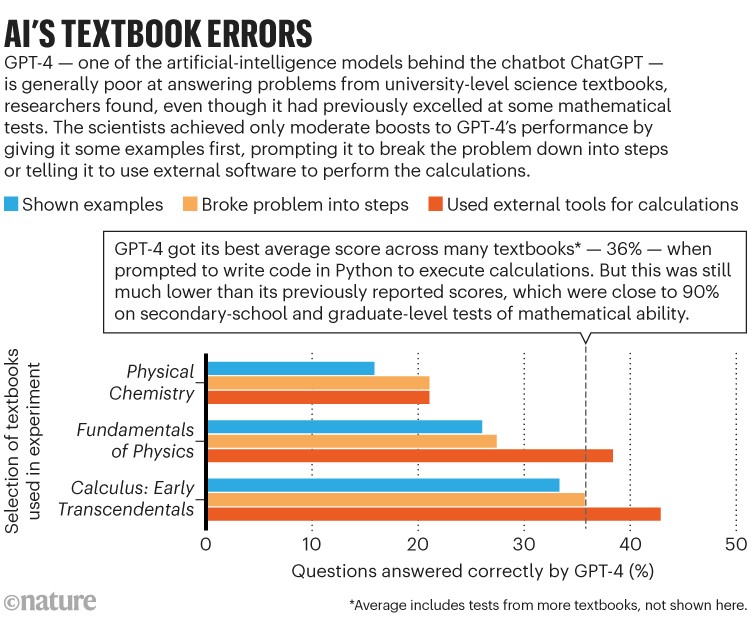
Privacy is another hurdle: students might be put off working regularly with LLMs once they realize that everything they type into them is being stored by OpenAI and might be used to train the models.
Embracing LLMs
But despite the challenges, some researchers, educators and companies see huge potential in ChatGPT and its underlying LLM technology. Like Beghetto and Wolfram Research, they are now experimenting with how best to use LLMs in education. Some use alternatives to ChatGPT, some find ways to minimize inaccuracies and hallucinations, and some improve the LLMs’ subject-specific knowledge.
“Are there positive uses?” asks Collin Lynch, a computer scientist at North Carolina State University in Raleigh who specializes in educational systems. “Absolutely. Are there risks? There are huge risks and concerns. But I think there are ways to mitigate those.”
Society needs to help students to understand LLMs’ strengths and risks, rather than just forbidding them to use the technology, says Sobhi Tawil, director of the future of learning and innovation at UNESCO, the United Nations’ agency for education, in Paris. In September, UNESCO published a report entitled Guidance for Generative AI in Education and Research. One of its key recommendations is that educational institutions validate tools such as ChatGPT before using them to support learning3.
Companies are marketing commercial assistants, such as MagicSchool and Eduaide, that are based on OpenAI’s LLM technology and help schoolteachers to plan lesson activities and assess students’ work. Academics have produced other tools, such as PyrEval4, created by computer scientist Rebecca Passonneau’s team at Pennsylvania State University in State College, to read essays and extract the key ideas.

With help from educational psychologist Sadhana Puntambekar at the University of Wisconsin–Madison, PyrEval has scored physics essays5 written during science classes by around 2,000 middle-school students a year for the past three years. The essays are not given conventional grades, but PyrEval enables teachers to quickly check whether assignments include key themes and to provide feedback during the class itself, something that would otherwise be impossible, says Puntambekar.
PyrEval’s scores also help students to reflect on their work: if the AI doesn’t detect a theme that the student thought they had included, it could indicate that the idea needs to be explained more clearly or that they made small conceptual or grammatical errors, she says. The team is now asking ChatGPT and other LLMs to do the same task and is comparing the results.
Introducing the AI tutor
Other organizations use AI to help students directly. That’s the approach of what is perhaps the most widely used LLM-based education tool other than ChatGPT itself; the AI tutor and teaching assistant Khanmigo. The tool is the result of a partnership between OpenAI and education non-profit organization Khan Academy in Mountain View, California. Using GPT-4, Khanmigo offers students tips as they work through an exercise, saving teachers time.
Khanmigo works differently from ChatGPT. It appears as a pop-up chatbot on a student’s computer screen. Students can discuss the problem that they are working on with it. The tool automatically adds a prompt before it sends the student’s query to GPT-4, instructing the bot not to give away answers and instead to ask lots of questions.AI bot ChatGPT writes smart essays — should professors worry?
Kristen DiCerbo, the academy’s chief learning officer, calls this process a “productive struggle”. But she acknowledges that Khanmigo is still in a pilot phase and that there is a fine line between a question that aids learning and one that’s so difficult that it makes students give up. “The trick is to figure out where that line is,” she says.
Khanmigo was first introduced in March, and more than 28,000 US teachers and 11–18-year-old students are piloting the AI assistant this school year, according to Khan Academy. Users include private subscribers as well as more than 30 school districts. Individuals pay US$99 a year to cover the computing costs of LLMs, and school districts pay $60 a year per student for access. To protect student privacy, OpenAI has agreed not to use Khanmigo data for training.
But whether Khanmigo can truly revolutionize education is still unclear. LLMs are trained to include only the next most likely word in a sentence, not to check facts. They therefore sometimes get things wrong. To improve its accuracy, the prompt that Khanmigo sends to GPT-4 now includes the right answers for guidance, says DiCerbo. It still makes mistakes, however, and Khan Academy asks users to let the organization know when it does.
Lynch says Khanmigo seems to be doing well. But he cautions: “I haven’t seen a clear validation yet.”
More generally, Lynch stresses that it’s crucial that any chatbot used in education is carefully checked for its tone, as well as accuracy — and that it does not insult or belittle students, or make them feel lost. “Emotion is key to learning. You can legitimately destroy somebody’s interest in learning by helping them in a bad way,” Lynch says.
DiCerbo notes that Khanmigo responds differently to each student in each situation, which she hopes makes the bot more engaging than previous tutoring systems. Khan Academy expects to share its research on Khanmigo’s efficacy in late 2024 or early 2025.
Other tutoring companies are offering LLMs as assistants for students or are experimenting with them. The education technology firm Chegg in Santa Clara, California, launched an assistant based on GPT-4 in April. And TAL Education Group, a Chinese tutoring company based in Beijing, has created an LLM called MathGPT that it claims is more accurate than GPT-4 at answering maths-specific questions. MathGPT also aims to help students by explaining how to solve problems.
Augmenting retrieval
Another approach to creating an AI learning partner integrates the LLM with external, focused corpuses of knowledge — such as a textbook or a set of scientific papers — that have been rigorously verified. The goal of this retrieval-augmented generation (RAG) method is to sidestep the impossibility of verifying the billions of sources of text that give an LLM its conversational power.
AI company Merlyn Mind in New York City is using RAG in its open-source Corpus-qa LLM, which is aimed at education. Like ChatGPT, Merlyn Mind’s LLM is initially trained on a big body of text not related to education specifically — this gives it its conversational ability.
But unlike ChatGPT, when the LLM answers a query, it does not rely just on what it has learnt in its training. Instead, it also refers to a specific corpus of information, which minimizes hallucinations and other errors, says Satya Nitta, chief executive of the company. Merlyn Mind also fine-tunes its LLMs to “confess” if they don’t have a high-quality response and work on producing a better answer, and thereby resist hallucination in many cases, says Nitta.ChatGPT broke the Turing test — the race is on for new ways to assess AI
RAG is also being used by ASU, which is one of the most progressive universities for LLM adoption, says Claire Zau, vice-president of GSV Ventures, an investor in educational-technology companies in New York City. After an initial narrow release for testing, ASU launched a toolbox in October that enables its faculty members to experiment with LLMs in education through a web interface. This includes access to six LLMs, including GPT-3.5, GPT-4 and Google’s Bard, as well as RAG capabilities.
The tools will allow more researchers, such as Beghetto, to construct chatbots for their students to interact with. After his initial workshop, Beghetto plans to use the bots in a course that he is developing. ASU hosts secure versions of the LLMs in its private cloud to minimize privacy concerns, says Elizabeth Reilley, ASU’s executive director of AI acceleration, who is based in Phoenix.
Reilley says that the bots are already having a positive impact on education at ASU. For example, she says, a bot created for use in ASU’s introductory chemistry course uses RAG to combine GPT-3.5 with PDF and PowerPoint course materials. She gives an example of a test that imagined a baseball-loving student asking the LLM for an explanation of dipole–dipole interactions in molecules based on that sport. The response was an accurate explanation, she says, that wove in “a baseball metaphor to make that a little bit more meaningful”.
Using a general LLM combined with RAG differs from previous machine-learning approaches, which sought to train an AI system to simulate a science expert, says Danielle McNamara, executive director of ASU’s learning engineering institute in Tempe. Those tools lacked generalized capabilities, such as the capacity to incorporate baseball into chemical concepts, that could help students. McNamara and her colleagues now plan to study how effective the chatbots and LLM tools that ASU uses are.
Other institutions are also embracing LLMs, including Vanderbilt University in Nashville, Tennessee, which has given students on certain courses access to a paid version of ChatGPT, including access to specialized plug-in tools. Researchers at East China Normal University in Shanghai have created a dedicated educational LLM called EduChat that combines essay assessment, dialogue-based tutoring and emotional support in one chatbot6. The team has shared the tool as open-source code. Although EduChat is still at an early stage, it is notable for being a dedicated educational LLM rather than an adaptation of an existing, general-purpose model, such as ChatGPT or Bard.
Will it catch on?
An important question around the use of AI in education is who will have access to it, and whether paid services such as Khanmigo will exacerbate existing inequalities in educational resources. DiCerbo says Khan Academy is now looking for philanthropists and grants to help to pay for computing power and to provide access for under-resourced schools, having prioritized such schools in the pilot phase. “We are working to make sure that digital divide doesn’t happen,” she says.How ChatGPT is transforming the postdoc experience
Another challenge is how to ensure that the information LLMs provide is not biased, and that the models consider knowledge and viewpoints from under-represented groups. Such information is absent from much of the text that LLMs are trained on. Sean Dudley, ASU’s associate vice-president for research technology, based in Tempe, says that RAG allows ASU’s LLM platform to provide users with the sources of its answers. This doesn’t remove the problem of bias, but he hopes that it will at least provide transparency and a chance for students to critically consider where the information has come from. “Part of our mission is asking who’s been left out,” Dudley says.
Whether LLMs’ promise for education will ultimately outweigh the risks is still not clear. Lynch accepts that they are powerful tools, but also seeks to keep their shortcomings in focus. “It isn’t like overnight we’ve learnt to fly,” he says.
He likens the attention that they’re attracting to that previously lavished on massively online open courses and educational uses of the 3D virtual worlds known as the metaverse. Neither have the transformative power that some once predicted, but both have their uses. “In a sense, this is going to be the same. It’s not bad. It’s not perfect. It’s not everything. It’s a new thing,” he says.
Tawil, who has worked in education at UNESCO for more than two decades, says that understanding AI’s limitations is crucial. At the same time, LLMs are now so bound up in human endeavours that he says it is essential to rethink how to teach and assess learning. “It’s redefining what makes us human, what is unique about our intelligence.”
Nature 623, 474-477 (2023)
doi: https://doi.org/10.1038/d41586-023-03507-3
References
- OpenAI. Preprint at https://arxiv.org/abs/2303.08774 (2023).
- Wang, X. et al. Preprint at https://arxiv.org/abs/2307.10635 (2023).
- UNESCO. Guidance for Generative AI in Education and Research (UNESCO, 2023).Google Scholar
- Gao, Y., Sun, C. & Passonneau, R. J. In Proc. 23rd Conf. Comput. Natural Language Learning 404–418 (2019).
- Singh, P. et al. In Proc. Int. Conf. Learning Sciences 1521–1524 (2022).
- Dan, Y. et al. Preprint at https://a
Posted in Uncategorized
Leave a comment
Amnesia and the Multiple Memory Systems of the Brain. Neuroscience and Psychology published 2018. For people with TBI or for people who have family members affected by the same and want to find out more, this is interesting. The abstracts cover explanations to young children too. Points of particular significance to me will be bold and italics. Thank you Natalie V. Coving, Melissa C. Duff. Traumatic brain injury 1993. Thrown from horse going over jump in Zimbabwe…Amnesia is the symptom, as you have clarified via HM. I will continue searching but thankfully this WordPress is shared & someone, someday, may gain a little of my experiences from traumatic brain injury that may be useful to others. Please pass on recommendation related to traumatic brain injury, amnesia, bipolar, anxiety to researches because this below is an excellent grasp of the blight that happens but then it can give hope. Curiousity is an incredible gift alongside technology and social media X which I use in a skill, habit forming way. Michelle. WordPress canisgallicus.com
Core Concept Neuroscience and Psychology Published: September 6, 2018
Amnesia and the Multiple Memory Systems of the Brain
Authors and reviewers
Authors

I am a researcher and speech-language pathologist. I am passionate about understanding the human brain and using what we know about the brain to help people regain skills lost after a brain injury. In my free time, I love cooking, swimming, and teaching my cat new tricks. *natalie.v.covington@vanderbilt.edu

I am also a researcher and speech-language pathologist. I love to learn new facts about the hippocampus and memory and new skills like paddle boarding. When I am not in the lab, I like to play board games and travel with my family.
Young Reviewers

Explora Science Center and Children’s Museum
Explora Science Center and Children’s Museum
Age: 8–14
The Explora Young Minds reviewers are a group of science enthusiasts working with museum educators and mentors from the University of New Mexico. We enjoy learning about the brain through the articles. We also enjoy asking questions and making suggestions to help the scientists make their work more understandable for everyone! We were helped by our Science Mentor Jennifer Walter. She just received her PhD in pediatric neuropsychology. She enjoys working with kids, playing with her dog, and trying to cook new recipes.
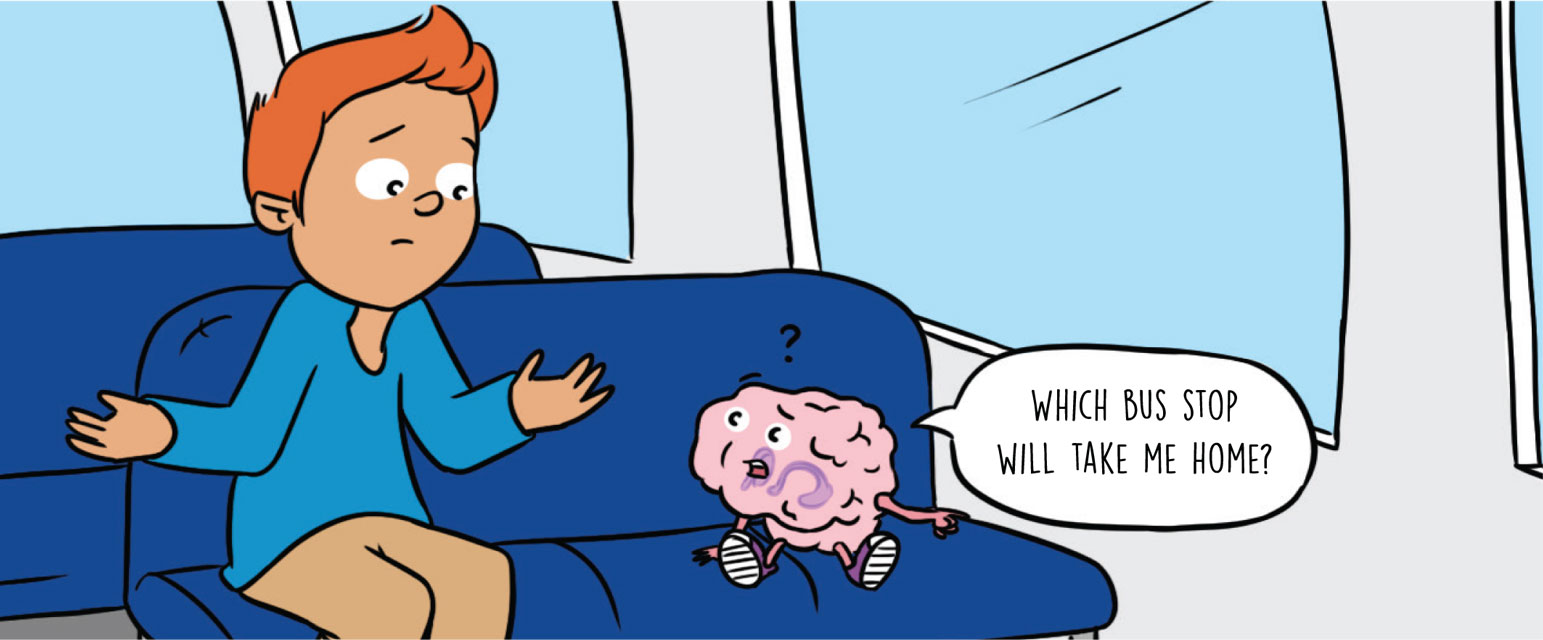
Abstract
The character Dory from Finding Nemo has a memory problem. Poor Dory has a hard time remembering anything. She forgets who her family is and what has happened in her life. In just a couple of minutes, she forgets the things that her friends say to her. Movie makers are trying to show what amnesia, a type of memory loss, is like. However, real-life amnesia looks very different from how it appears in movies. We will talk about how hurting the hippocampus, a special, small part of the brain, can cause real-life amnesia. We will talk about how amnesia makes it extremely hard to learn and remember some kinds of information (facts, e.g., the rules of a video game), but not other kinds of information (skills, e.g., how to use a joystick). Finally, we will talk about the special people throughout history who have taught scientists the most about what amnesia is, what causes amnesia, and what can be done to help people who have amnesia.
Have you ever forgotten somebody’s name, even though you just met them? Or have you ever forgotten where you put something in your room? These types of difficulties remembering things are very common: they happen to all healthy people some of the time. But for some people, having a hard time remembering things happens almost all of the time. When people have a very severe problem learning and remembering new information, we say that they have amnesia
Memory loss or difficulty learning new information.
The word amnesia is used frequently on TV and in the movies to talk about anyone who has a problem with memory. Dory, from Finding Nemo, is one of the most famous examples (Box 1). Some characters in TV shows or movies might wake up one morning and suddenly forget who they are and where they are from. Other times, a character is hit on the head and forgets everything that has happened to them in their life. These types of memory changes do not actually happen very often in real life. Real-life amnesia looks different than it does in the movies. Next, we will talk about what amnesia means in real life.
Box 1. Amnesia in the movies.
The character Dory from the movies Finding Nemo and Finding Dory is an example of a movie character who has amnesia, or memory loss. Some of the things that Dory does in the movies are a lot like real-life amnesia. For example, Dory forgets that she has met Marlin, another character in the movie. This is an example of anterograde amnesia. On the other hand, some of the things Dory does in the movies are not like real-life amnesia. Dory forgets many of her childhood memories. For example, she forgets who her parents are and how they became separated when Dory was a kid. Forgetting memories from childhood is not common in real-life amnesia. Dory also says she has “short-term memory loss.” This is another example of how the movies can get amnesia wrong. Dory does not have trouble holding onto information for a “short” time but rather has trouble getting information into her long-term memory to be remembered later.
What Causes Amnesia?
What causes real-life amnesia? Amnesia is usually caused by damage to a special part of the brain called the hippocampus
A brain structure important for learning and memory.
Every person has two of these: one on the right side of the brain, and one on the left. The hippocampus is pretty small—around 3.5 m3 (or 0.21 in3)—but it is a really important part of the brain (Figure 1). Damaging the hippocampus is the most common way to get amnesia, but damaging other brain areas that communicate with the hippocampus can also cause amnesia. In this study, we are going to focus on the hippocampus, because the role of the hippocampus in amnesia has been studied the most.
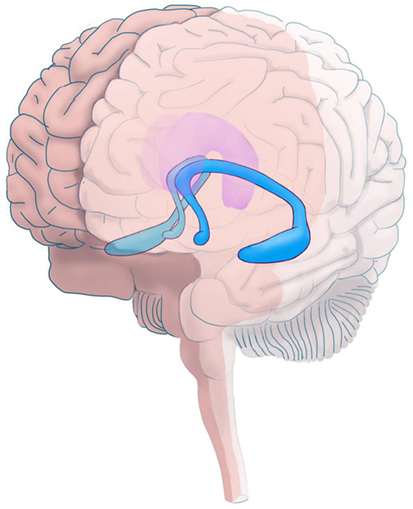
There are two ways that scientists talk about amnesia. First, amnesia can happen alongside other problems. For example, there are some diseases and injuries that can cause damage to the hippocampus and cause memory loss. These include Alzheimer’s disease and traumatic brain injury. Both of these conditions can cause memory loss, but they usually also cause other problems for a person’s ability to think. For example, a person with Alzheimer’s disease or traumatic brain injury might have difficulty planning for the day or making good decisions. So, when people with Alzheimer’s disease or traumatic brain injury have memory loss, we say that they have amnesia as one of their symptoms. People can have different degrees of amnesia as a symptom, from mild memory problems to severe memory problems. Having amnesia as part of a large set of problems is fairly common. But amnesia can also occur by itself, without other problems.
Amnesia by itself is very rare, because damage to just the hippocampus is very rare. A person can hurt his/her hippocampus by getting very sick with a disease called herpes simplex encephalitis, by having a brain surgery that removes part of the hippocampus, or by having an accident that keeps oxygen from getting to the hippocampus (Box 2). Luckily, these things do not happen very often. But if a person does damage the hippocampus, this usually causes the person to have memory problems. Interestingly, people who have amnesia have a hard time learning some kinds of information, but not other kinds of information. People who have amnesia are very rare, but they are very important for teaching doctors and scientists about how memory works and how scientists can help people with memory impairment to get better.
Box 2. Damage to the hippocampus.
One way that a person can get amnesia is after an incident that prevents oxygen from getting to the brain. This can happen as a result of a heart attack, very bad seizures, or a traumatic brain injury. When the brain is not getting enough oxygen, brain tissue starts to shrink (also called atrophy) and does not work well any more. The hippocampus is very sensitive to a lack of oxygen. This means that it atrophies faster than other parts of the brain when it does not have enough oxygen. Unfortunately, when the brain is injured, sometimes it does not heal the same way that skin heals when a person gets a scrape or a cut. Sometimes, the brain stays injured and atrophied and causes problems like amnesia.
Patients with Amnesia
Scientists have learned a lot about amnesia and different types of memory by studying people who have damaged the hippocampus. In the scientific literature, these people are often called “patients,” but it is important to remember that patients are people. The most famous patient with amnesia is known by his initials: H.M. Scientists use initials to protect the identity of patients when they write about them in scientific articles. We now know that this patient’s name was Henry Molaison. Henry Molaison was born in 1926. Mr. Molaison had seizures
Abnormal activity in the brain.
when he was a child, which means that his brain was not working normally. These seizures caused Mr. Molaison to have a very difficult life. To stop the seizures, a brain surgeon named Dr. William Scoville removed both of Mr. Molaison’s hippocampi [1]. Because this happened a long time ago, the surgeon was not completely sure what would happen. Scientists did not know what the hippocampus was important for yet, and Dr. Scoville thought he could help Mr. Molaison’s seizures by taking them out. A good thing that happened because of the surgery was that Mr. Molaison’s seizure disorder got better. But, unfortunately, removing both of Mr. Molaison’s hippocampi meant that he had a very severe memory problem. He had amnesia.
Amnesia made lots of things difficult for Mr. Molaison. But, Mr. Molaison also helped scientists learn a lot about the brain and about what the hippocampus does [2]. The scientists who worked with Mr. Molaison were the first to discover that the hippocampus was important for memory. While many different scientists worked with Mr. Molaison, two of the most famous were Brenda Milner and Suzanne Corkin. Before Mr. Molaison’s surgery, scientists thought that there was no specific part of the brain that was special for memory. After Mr. Molaison’s surgery, scientists learned that the hippocampus is special for memory—if you damage the hippocampus, you will have memory problems.
Other Cognitive Abilities
Another thing that Mr. Molaison’s surgery taught scientists was that damage to the hippocampus impacts only memory. After his surgery, Mr. Molaison had bad memory problems and was not able to form new memories for facts and events. You might think that Mr. Molaison would have many other problems besides this memory impairment, but this was not the case. After the surgery, Mr. Molaison was just as intelligent and able to problem-solve as he was before his surgery. He seemed to have normal thinking abilities and normal language ability. Mr. Molaison also had the same personality as he did before his surgery. These normal abilities were surprising to scientists, because many types of brain damage (like the kind that causes Alzheimer’s disease or traumatic brain injury) cause many problems at the same time.
Timing of Information
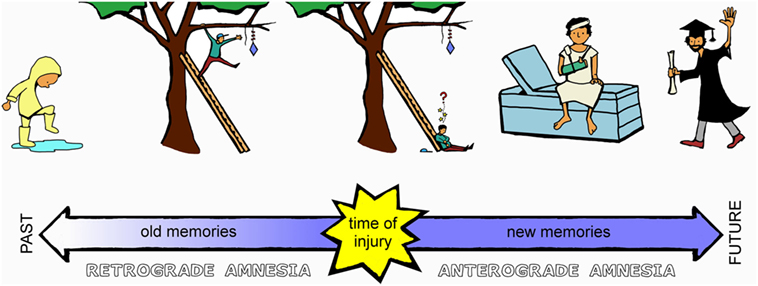
People who have amnesia have a very hard time learning and remembering new information. In real-life amnesia, it is not common for people to forget things about themselves or to forget things that have happened to them in the past. In general, people with amnesia have a hard time learning new information [3]. They have a hard time learning new things after they damage the hippocampus. This kind of amnesia has a specific name: anterograde amnesia
Difficulty learning new information after an injury.
(Figure 2). The things that they learned before they hurt the hippocampus are not usually hard for them to remember. This means that adults with amnesia can usually remember stories from when they were kids, even though they cannot remember what they ate for breakfast this morning. The scientists working with Mr. Molaison realized that he could remember things from when he was a kid, even though he could not remember working with them from day to day. So, even though Suzanne Corkin worked with Mr. Molaison for years, she needed to tell him her name each time she saw him: Mr. Molaison could not learn that information [4]. While people with amnesia can usually remember things from the long-ago past, they can forget some things that happened to them right before they damaged the hippocampus. Forgetting information from before damage to the hippocampus is called retrograde amnesia
Difficulty remembering things that happened before an injury..
Type of Information
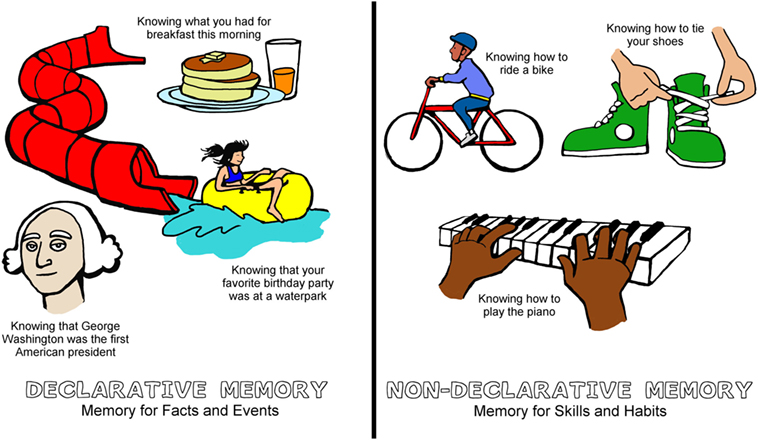
The timing of information is not the only thing that affects whether people with amnesia will have a problem learning things. The kind of information a person is trying to learn is also important. In particular, people with amnesia have a hard time remembering new facts and events. For example, a person with amnesia would have a hard time learning a new fact from a textbook at school. If the person did not already know that George Washington was the first president of the United States, it would not matter how many times you tried to tell them, they still would have a hard time remembering that fact. Also, a person with amnesia would have a very hard time remembering new events in their life. So, the person might take a walk with you in the park. An hour later, when you try to talk about the funny dog you saw at the park, the person with amnesia would not remember the dog you saw, or that you had taken a walk at all. Memories for facts and events are called declarative memories. People with amnesia have a specific problem with declarative memory
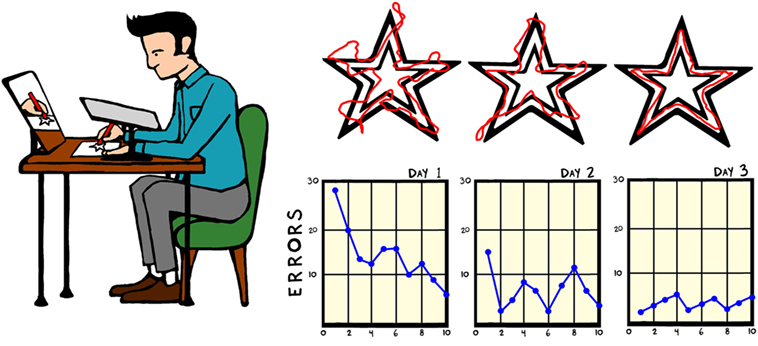
When scientists first discovered that damage to the hippocampus caused a person to be unable to learn new facts or remember new events, they thought that people with amnesia were unable to learn anything new. But, the scientists working with Mr. Molaison quickly discovered that people with amnesia can learn some kinds of new information [5]. The kinds of information that people with amnesia are able to learn are new skills and habits [6]. An example of how scientists discovered that people with amnesia are able to learn new skills is presented in Figure 3. So, a person with amnesia might learn how to sew or how to move a joystick to play a new video game. Memories for skills or habits are called non-declarative memories. People with amnesia generally do not have a problem with non-declarative memory
. Figure 4 gives examples of declarative and non-declarative memory.
Memory Research Today
Today, scientists studying memory still work with patients with amnesia to learn how the human memory system works [7]. Because technology keeps advancing, scientists have many new tools to help them learn about memory and learning [8]. These tools include fMRI, which stands for functional magnetic resonance imaging. fMRI lets scientists see which parts of the brain are doing more work during certain tasks. Scientists can use fMRI to see what healthy people’s brains are doing during memory and learning tasks. Using fMRI has taught scientists that different parts of the hippocampus are important for different things and that other parts of the brain besides the hippocampus are also important for memory. Scientists also study memory and learning in other animals. Mammals like rats and monkeys also have hippocampi and can have memory problems if their hippocampi are damaged.
Scientists study memory in humans and animals to understand how the brain works. They also study memory to learn how to help people who have memory problems. Unfortunately, there is no cure for amnesia. One way scientists have tried to help patients like Mr. Molaison is to use the kinds of memory that they are good at (non-declarative memory) to help them learn things that they usually cannot (new facts, or declarative memory). These techniques do help patients with amnesia to learn new facts, but they do not learn these new facts as quickly or as well as someone with a healthy brain. Scientists are continuing to try to learn about memory, to understand how we learn and remember new things, and to help people with conditions that cause memory difficulties.
Conclusion
Next time you watch a movie or a TV show that shows someone with a memory problem, pay attention to how the movie talks about amnesia. Now you know that amnesia usually does not affect all of a person’s memories, just their ability to form new memories. And you know that while people with amnesia have a hard time learning new facts, they are able to learn new skills. Finally, you have learned that people with amnesia can have severe memory problems, but they usually have normal intelligence and other thinking skills. Most importantly, you have learned that people with amnesia are people just like you and me and have helped scientists learn lots about how the brain works when we learn and remember.
Glossary
Amnesia: ↑ Memory loss or difficulty learning new information.
Hippocampus: ↑ A brain structure important for learning and memory.
Seizure: ↑ Abnormal activity in the brain.
Anterograde Amnesia: ↑ Difficulty learning new information after an injury.
Retrograde Amnesia: ↑ Difficulty remembering things that happened before an injury.
Declarative Memory: ↑ Memory for facts and events.
Non-Declarative Memory: ↑ Memory for skills and habits.
Conflict of Interest Statement
The authors declare that the research was conducted in the absence of any commercial or financial relationships that could be construed as a potential conflict of interest.
Acknowledgments
The authors would like to thank Rob Vanderveen for illustrating Figures 2–4 and Eleanor Duff for her comments on an earlier draft. Support provided by NIDCD grant R01 DC011755.
References
[1] ↑ Scoville, W. B., and Milner, B. 1957. Loss of recent memory after bilateral hippocampal lesions. J. Neurol. Neurosurg. Psychiatry 20:11–21. doi:10.1136/jnnp.20.1.11
[2] ↑ Corkin, S. 2002. What’s new with the amnesic patient H.M.? Nat. Rev. Neurosci. 3:153–160. doi:10.1038/nrn726
[3] ↑ Ribot, T. 1881. Les Maladies de la Memoire. New York: Appleton-Century-Crofts.
[4] ↑ Corkin, S. 2013. Permanent Present Tense: The Unforgettable Life of the Amnesic Patient, HM. New York: Basic Books.
[5] ↑ Milner, B. 1962. “Physiologie de l’hippocampe,” in Physiologie de l’’hippocampe, ed P. Passouant, 257–272. Paris: Centra National de la Recherche Scientifique.
[6] ↑ Cohen, N. J., and Squire, L. R. 1980. Preserved learning and retention of a pattern-analyzing skill in amnesia: dissociation of knowing how and knowing that. Science 210:207–210. doi:10.1126/science.7414331
[7] ↑ Rosenbaum, R. S., Gilboa, A., and Moscovitch, M. 2014. Case studies continue to illuminate the cognitive neuroscience of memory. Ann. N. Y. Acad. Sci. 1316(1):105–33. doi:10.1111/nyas.12467
[8] ↑ Addis, D. R., Barense, M., and Duarte, A. 2015. The Wiley Handbook on the Cognitive Neuroscience of Memory. Hoboken, NJ: John Wiley & Sons.
Article information
Citation
V. Covington N and C. Duff M (2018) Amnesia and the Multiple Memory Systems of the Brain. Front. Young Minds. 6:45. doi: 10.3389/frym.2018.00045
Editor
Science Mentors
Publishing dates
Submitted: April 5, 2018; Accepted: August 22, 2018; Published online: September 6, 2018.
Copyright © 2018 V. Covington and C. Duff
This is an open-access article distributed under the terms of the Creative Commons Attribution License (CC BY). The use, distribution or reproduction in other forums is permitted, provided the original author(s) and the copyright owner(s) are credited and that the original publication in this journal is cited, in accordance with accepted academic practice. No use, distribution or reproduction is permitted which does not comply with these terms.
Related Article
Posted in Uncategorized
Leave a comment
Simple blood tests for dementia to be trialled in NHS. The Guardian. Oldies or approaching 60’s, it is very important to be able to identify memory gaps and a blood test, if it at all possible, would be great place to start. I use Twitter to augment my memory just as someone who gets a pair of glasses for long vision or short vision, it makes life so much easier. Add to this to remember where you left your glasses and if you have a problem with this, come up with a strategy. My optician is a gem regarding memory deficits that apply in my case.

Dementia affects about 900,000 people in the UK Photograph: MBI/Alamy
Simple blood tests for dementia to be trialled in NHS
£5m project launched with aim of having reliable tests within five years to provide quick diagnosis
Andrew Gregory Health editor
Thu 9 Nov 2023 06.00 CET
Scientists are to begin piloting simple blood tests for dementia that could revolutionise detection of the disease and within five years lead to people being diagnosed in seconds by the NHS.
Currently, getting a formal diagnosis in the UK relies on mental ability tests, brain scans or invasive and painful lumbar punctures, where a sample of cerebrospinal fluid is drawn from the lower back.
Patients and their families wait for up to four years to get an appointment and the results, charities say. More than one in three people living with dementia in England are yet to receive a formal diagnosis.
A team of researchers backed by Alzheimer’s Research UK and the Alzheimer’s Society have launched a £5m project to trial simple blood tests in the NHS, with the hope of speeding up diagnosis and reaching more people. They aim to be able to determine whether someone has the disease using a single drop of blood.
Blood tests are already offered in private clinics in the US and in Hong Kong, where patients can pay the equivalent of £693 to see if they have dementia up to a decade before symptoms first emerge.
Researchers behind the initiative in the UK say more work is needed to ensure tests measure the right combination of biomarkers and do not wrongly confirm or rule out the disease.
Dementia affects about 900,000 people in the UK. Experts predict that this will rise to 1.4 million by 2040.
With funding from the People’s Postcode Lottery, the team is working with the National Institute for Health and Care Research to make reliable blood tests for dementia on the NHS a reality.
A range of tests are in the research stages, including tests looking for specific proteins that occur before dementia symptoms appear. The pharmaceutical firms Roche and Eli Lilly have announced that they have joined forces to develop a blood test for dementia.
The need for blood tests to diagnose Alzheimer’s has become more pressing since the medicines donanemab and lecanemab were found to slow cognitive decline.
Fiona Carragher, the director of research and influencing at the Alzheimer’s Society, told a briefing in London that some people faced “heartbreaking” waits of up to four years for a diagnosis, and hundreds of thousands remained undiagnosed.
“Nearly four in 10 people in the UK who have dementia have not received a diagnosis,” she said. “We also know that those who do have a diagnosis have often waited many months, sometimes years, to receive it. This means thousands of families are stuck in limbo, trying to manage symptoms and plan for the future without access to the vital care and support that a diagnosis can bring.
“New drugs targeting early-stage Alzheimer’s disease are just around the corner, but without a diagnosis, people simply won’t be able to access them if they are approved.”
She said developing a blood test for use on the NHS within five years was pivotal to enable as many people as possible to access the groundbreaking treatments on the horizon.
“This could absolutely revolutionise the way dementia is diagnosed and accelerate progress towards a blood test for dementia into UK healthcare systems – a truly gamechanging win in the fight against this devastating disease,” Carragher said.
Dr Susan Kohlhaas, the executive director of research and partnerships at Alzheimer’s Research UK, told the briefing: “We expect more people to be coming forward for diagnosis, we expect them to be coming forward at a younger age and we expect them to be coming forward with less obvious symptoms. We need better, more scalable tests that are also accurate and compare to current gold-standard methods.
“Significant investment is needed to ensure the NHS has the right tools to identify people with dementia much earlier than it is currently able to. Low-cost tools like blood tests that are non-invasive and simpler to administer than current gold-standard methods are the answer to this. But we need to move these tests out of the lab and assess their effectiveness in real-world settings like the NHS.”
Posted in Uncategorized
Leave a comment
A book, a gift, a fear of confinement for mental illness complicated by traumatic brain injury; and the much denied chronic fatigue which I know to be most debilitating and for years too; back to the gift, is the book Asylum, Inside Grangegorman, just released by Professor Brendan Kelly. As I have outlined before I am presently reading Oliver Sacks books … Awakenings has so much to teach us and if anyone has dealings with mental illness, diseases like Parkinsons, neurological conditions or for that matter traumatic brain injury, I suggest first listening to Professor Sacks, link below. Do we have the detail in the written word now? Reading the book I think we lose out on detail but more so in the joint adventure of physician and patient to find a solution to create a better life for other people. This is the “Altruism” of the other cultures and their priorities. Too many insurance claims have caused “Fear in Physicians” to encourage their patients/clients to contribute especially so in Psychiatry, ironically, the area where medical people shun. When St. Brendan’s or as it was known in my time, Grangegorman was being decommissioned I recall that much correspondence and personal belongings of those confined there often for decades, was available and I wrote to politicians to ask that these letters be archived. Awakenings reiterates the importance of such archives. Professor Kelly’s book is next on my agenda followed by the “Birds Nest” novel but having the background of Awakenings gives me hope.
___________________________________________________________________________________
Asylum: Inside Grangegorman Royal Irish Academyhttps://www.ria.ie › asylum-inside-grangegorman
Brendan Kelly is Professor of Psychiatry at Trinity College Dublin, Consultant Psychiatrist at Tallaght University Hospital, Dublin, and UCD Visiting Full …
€18.95
Posted in Uncategorized
Leave a comment

