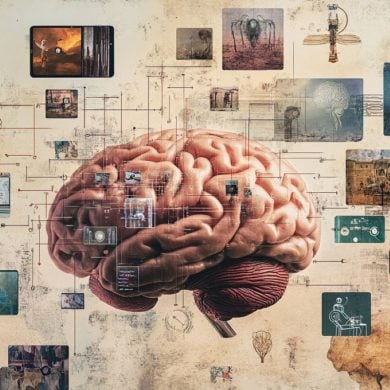
How Brain Cells Identify Smells and Related Images. Comment: In my case, TBI resulted in loss of smell; loss of visualisation Aphantasia.

How Brain Cells Identify Smells and Related Images

Featured Neuroscience

·October 9, 2024

Summary: A recent study reveals that specific brain cells respond not only to smells but also to images and written words related to those scents, providing deeper insight into human odor perception. Researchers found that neurons in the olfactory cortex and other brain regions, like the hippocampus and amygdala, distinguish between different smells and associate them with visual cues.

This research, using data from epilepsy patients, bridges a gap between animal and human studies on olfactory processing. Remarkably, individual neurons responded to scent, image, and word, suggesting that smell processing integrates visual and semantic information early on. These findings could lead to future innovations in “olfactory aids.” The study emphasizes the interconnected nature of smell and visual memory in the human brain.

Key Facts

  • Neurons in the olfactory cortex respond to smells, images, and words alike.
  • The study found the amygdala differentiates between pleasant and unpleasant odors.
  • This research bridges knowledge gaps in human and animal olfactory processing studies.

Source: University of Bonn

We often only realize how important our sense of smell is when it is no longer there: food hardly tastes good, or we no longer react to dangers such as the smell of smoke.

Researchers at the University Hospital Bonn (UKB), the University of Bonn and the University of Aachen have investigated the neuronal mechanisms of human odor perception for the first time. Individual nerve cells in the brain recognize odors and react specifically to the smell, the image and the written word of an object, for example a banana.

The results of this study close a long-standing knowledge gap between animal and human odor research and have now been published in the renowned journal Nature.

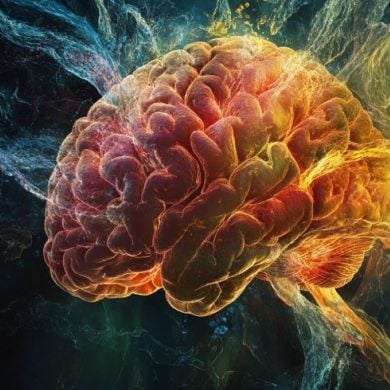
This shows a woman smelling a rose.
In a next step, the researchers investigated the connection between the perception of scents and images. Credit: Neuroscience News

Imaging techniques such as functional magnetic resonance imaging (fMRI) have previously revealed which regions of the human brain are involved in olfactory perception. However, these methods do not allow the sense of smell to be investigated at the fundamental level of individual nerve cells.

“Therefore, our understanding of odor processing at the cellular level is mainly based on animal studies, and it has not been clear to what extent these results can be transferred to humans,” says co-corresponding author Prof. Florian Mormann from the Department of Epileptology at the UKB, who is also a member of the Transdisciplinary Research Area (TRA) “Life & Health” at the University of Bonn.

Nerve cells in the brain identify odors

Prof. Mormann’s research group has now succeeded for the first time in recording the activity of individual nerve cells during smelling.

This was only possible because the researchers worked together with patients from the Clinic for Epileptology at the UKB, one of the largest epilepsy centers in Europe, who had electrodes implanted in their brains for diagnostic purposes. They were presented with both pleasant and unpleasant scents, such as old fish.

“We discovered that individual nerve cells in the human brain react to odors. Based on their activity, we were able to precisely predict which scent was being smelled,” says first author Marcel Kehl, a doctoral student at the University of Bonn in Prof. Mormann’s working group at the UKB.

The measurements showed that different brain regions such as the primary olfactory cortex, anatomically known as the piriform cortex, and also certain areas of the medial temporal lobe, specifically the amygdala, the hippocampus and the entorhinal cortex, are involved in specific tasks.

While the activity of nerve cells in the olfactory cortex most accurately predicted which scent was smelled, neuronal activity in the hippocampus was able to predict whether scents were correctly identified.

Only nerve cells in the amygdala, a region involved in emotional processing, reacted differently depending on whether a scent was perceived as pleasant or unpleasant.

Nerve cells react to the smell, image and name of the banana

In a next step, the researchers investigated the connection between the perception of scents and images. To do this, they presented the participants in the Bonn study with the matching images for each odor, for example the scent and later a photo of a banana, and examined the reaction of the neurons. Surprisingly, nerve cells in the primary olfactory cortex responded not only to scents, but also to images.

“This suggests that the task of the human olfactory cortex goes far beyond the pure perception of odors,” says co-corresponding author Prof. Marc Spehr from the Institute of Biology II at RWTH Aachen University.

The researchers discovered individual nerve cells that reacted specifically to the smell, the image and the written word of – for example – the banana. This discovery indicates that semantic information are processed early on in human olfactory processing.

The results not only confirm decades of animal studies, but also show how different brain regions are involved in specific human odor processing functions.

“This is an important contribution on the way to decoding the human olfactory code,” says Prof. Mormann.

“Further research in this area is necessary in order to one day develop olfactory aids that we can use in everyday life as naturally as glasses or hearing aids.”

Funding: The study was funded by the German Research Foundation (DFG), the Federal Ministry of Education and Research (BMBF) and the state of North Rhine-Westphalia (NRW) as part of the iBehave project.

About this olfaction and visual neuroscience research news

Author: Inka Väth
Source: University of Bonn
Contact: Inka Väth – University of Bonn
Image: The image is credited to Neuroscience News

Original Research: Open access.
“Single-neuron representations of odours in the human brain” by Florian Mormann et al. Nature


Abstract

Single-neuron representations of odours in the human brain

Olfaction is a fundamental sensory modality that guides animal and human behaviour. However, the underlying neural processes of human olfaction are still poorly understood at the fundamental—that is, the single-neuron—level.

Here we report recordings of single-neuron activity in the piriform cortex and medial temporal lobe in awake humans performing an odour rating and identification task. We identified odour-modulated neurons within the piriform cortex, amygdala, entorhinal cortex and hippocampus.

In each of these regions, neuronal firing accurately encodes odour identity. Notably, repeated odour presentations reduce response firing rates, demonstrating central repetition suppression and habituation.

Different medial temporal lobe regions have distinct roles in odour processing, with amygdala neurons encoding subjective odour valence, and hippocampal neurons predicting behavioural odour identification performance.

Whereas piriform neurons preferably encode chemical odour identity, hippocampal activity reflects subjective odour perception.

Critically, we identify that piriform cortex neurons reliably encode odour-related images, supporting a multimodal role of the human piriform cortex.

We also observe marked cross-modal coding of both odours and images, especially in the amygdala and piriform cortex. Moreover, we identify neurons that respond to semantically coherent odour and image information, demonstrating conceptual coding schemes in olfaction.

Our results bridge the long-standing gap between animal models and non-invasive human studies and advance our understanding of odour processing in the human brain by identifying neuronal odour-coding principles, regional functional differences and cross-modal integration.

Join our Newsletter

 I agree to have my personal information transferred to AWeber for Neuroscience Newsletter ( more information )

Sign up to receive our recent neuroscience headlines and summaries sent to your email once a day, totally free.

We hate spam and only use your email to contact you about newsletters. You can cancel your subscription any time.

Tags

brain researchMemoryneurobiologyNeuroscienceolfactionUniversity of Bonnvisual neuroscience

ShareTweetShareShareSubmitEmail

Neuroscience News

Posted in Uncategorized | Tagged , , , , | Leave a comment

Thanks to Dublin Inquirer, highly recommend it. Why is one of Ireland’s biggest landlords evicting so many of its tenants? …”His landlord, Xerico Limited, is one of 21 Cyprus-based subsidiaries of the Luxembourg fund LRC RE-1 through which it owns 2,036 rentals across Ireland making it one of the country’s biggest private landlords.”… “Rent in 2017 for the tenant living in Apartment 11 was €750 a month, said a sales brochure. By May 2021, the property was being advertised online for €1,385 a month.”…


Dublin Inquirer

Local. Independent. Different.

Open Search Why is one of Ireland’s biggest landlords evicting so many of its tenants?

Figures suggest that Luxembourg fund LRC RE-1 has been issuing eviction notices at a much higher rate than peers – and at a greater rate than in the sector overall.

by Lois Kapila October 9, 2024

Gabriel Catanoiu at his home. Credit: Lois Kapila

Gabriel Catanoiu rubs the base of his back. 

He works in construction, he says. Block houses, extensions, insulation, fire-proofing. Or rather, he did. 

Before he was signed off, after a fall from a ladder at work left him with a painful slipped disc and in need of surgery, he says, sat on the edge of his sofa in his small dimly lit studio.

He is also being evicted – and , unsure, he says, when he will have a stable place to recover from any procedure.

A few steps to one side is the kitchen he put in and, to the other, a cupboard he fitted. Underfoot is the floor that he laid. In front of him is a small coffee table, and beyond that a wall with a stock image of a beach, blue sea, a bowed palm tree. 

Catanoiu has lived here for 14 years. 

He has asked Home Club, the property manager for his landlord, if he can stay in his home, one of a few apartments in a red-brick terrace on Whitworth Road just north of the Royal Canal.

“I explained to them. I’m on disability payment. I’m waiting for my back surgery. Especially, it is winter time,” he says. “Where can I go in winter time?”

He is being evicted because, under current rules for older “Part 4” tenancies, the landlord can at a point in time end the contract for no reason.

His landlord, Xerico Limited, is one of 21 Cyprus-based subsidiaries of the Luxembourg fund LRC RE-1 through which it owns 2,036 rentals across Ireland making it one of the country’s biggest private landlords.

In 2023, the fund’s subsidiaries issued at least 191 notices to quit to tenants, shows Residential Tenancies Board (RTB) data. That’s equivalent to more than 9 percent of its homes.

It is also a greater rate than across the private rental sector as a whole – and a much greater rate than some other large institutional landlords.

As the make-up of Ireland’s rental sector changes, some housing policy experts have posited that institutional landlords offer greater stability to tenants than individual landlords. But the figures show that it matters which institutional landlord, and when. 

Company strategies vary dramatically at different times. So too, then, does the risk for communities of instability and tenants of eviction.

Increasing revenue

RTB figures show that, within those 191 eviction notices issued last year, a chunk were issued on the same grounds cited to Catanoiu, that his Part 4 tenancy is ending. 

LRC RE-1 subsidiaries issued 89 of these kinds of notices to quit in 2023 – and another 34 in the first half of this year, the figures say. 

Neither LRC Group, nor the property management firm Home Club, responded to queries sent by email on 30 September, asking why LRC RE-1 is seeking to evict long-term tenants when Part 4 tenancies are up.

During a hearing at the RTB in July, Home Club’s manager Michelle Savage told a tribunal that she had sympathy for a tenant living in New Maltings, a complex on Watling Street in the south inner-city, who the landlord – the subsidiary Jersia Limited – was evicting on the same grounds.

But the tenant couldn’t buy the place because the landlord hadn’t evicted him to sell it, she said. It hadn’t decided what it would do next, she said.

“It may be renovated and upgraded and rented out again, or it may be sold,” said Savage, according to the tribunal report.

Apartments in New Maltings – where Jersia Limited bought 47 apartments for €7.1 million in April 2018, an average of €151,000 each – have seen significant hikes in advertised rents, alongside tenant turnover, in recent years.  

Rent in 2017 for the tenant living in Apartment 11 was €750 a month, said a sales brochure. By May 2021, the property was being advertised online for €1,385 a month.

Queried on that in June 2021, a spokesperson for LRC Group said that those figures aren’t exactly comparable.

The brochure figure is the rent, they said. “The advertised figure includes more than just the rental component – such as car parking and service charges (which are all listed on the lease agreement).”

Rents at New Maltings are set in line with RTB rules, said the spokesperson.

File photo of New Maltings. Credit: Lois Kapila

Neither LRC Group nor Home Club responded to queries as to what it expects to do with Catanoiu’s apartment on Whitworth Road, where he currently pays €527 a month, once he has left. They didn’t say if they would intend any new tenants to pay extra charges on top of the rent.

Orkstake Limited – another LRC RE-1 subsidiary – was charging €85 a month in service charges and €300 a month for a car parking space on top of the base rent at a property in Tyrrelstown, shows a report from an RTB tribunal last December. 

Eoin Ó Broin, the Sinn Féin TD and housing spokesperson, says that if there seems to be a pattern of a significantly high volume of eviction notices – and use of Part 4 grounds at a higher rate – by one institutional landlord, the RTB should investigate. 

The RTB should look at whether it is possibly breaching rent-pressure zone rules when it retenants, he said. 

The legality of adding extra charges on top of the rent, given laws capping rent increases at 2 percent a year, is contested.

Ó Broin says the Department of Housing should also change the law so that no tenants can be evicted on the grounds that their Part 4 tenancy has timed out.

The Department of Housing did revise the law once at the end of 2021. Now, if a tenancy began after June 2022, a tenant can’t be evicted on those grounds. But that doesn’t apply to tenancies that started before that date. 

A spokesperson for the Department of Housing says that they opted to transition the change in like this after guidance from the attorney general. “Naturally over time, all ‘Part 4 tenancies’ will be of unlimited duration.” 

Ó Broin points to how there have been other legal changes that have applied to all tenancies, retrospectively even, such as the length of notice periods. 

The government needs to end the right to evict on the grounds that the Part 4 tenancy is up for all tenancies now, he says. “And then, if some landlord wants to challenge it, let the courts decide.”

Selling up

In October 2022, Tom Dunne, then – and now – chair of the RTB, said that big institutional landlords offer more stable tenancies than smaller landlords.

After all, the main reasons put forward by landlords issuing notices to quit – that they are selling up or need the property back for family – don’t apply to institutional investors, he said. 

Indeed, about 75 percent of the notices to quit issued between Q3 2022 and Q2 2024 have said either that the landlord is selling or that a family member wants to move in, show RTB figures. 

Some company landlords did issue fewer eviction notices than average last year. 

In 2023 across the rental sector, the equivalent of about 8 percent of tenants were issued with notices to quit, show RTB figures. 

Ires REIT issued notices to quit to 5 percent of its tenants, suggest RTB figures. 

And, in 2023, Kennedy Wilson, another of Ireland’s big institutional landlords, issued notices to quit to 0.5 percent,  – although it’s not totally clear whether that RTB data does include all of Kennedy Wilson’s evictions or if some could be logged under its letting agent.

chart visualization

Still, at more than 9 percent, LRC Group surpassed its peers and the sector as a whole. Institutional landlords can evict ahead of selling too and LRC Group, unlike some of its peers, has also been doing that.

In March, Savage, of the property manager Home Club, said that the landlord Xerico Limited – another LRC RE-1 subsidiary – had earmarked “in the region of 100 properties that this landlord wanted to sell at the same time”.

The homes had been purchased as part of a larger portfolio, she said, during a case before the RTB challenging one eviction notice that had been issued on the grounds of sale.

The landlord was looking to offload some to reinvest in other properties, she said, according to the tribunal report. 

That process is ongoing, company accounts suggest. In 2022 and 2023, Xerico Limited sold 53 of its homes, they show. 

Meanwhile, Ireland’s biggest private landlord Ires-REIT, is also looking to sell hundreds of apartments. 

But while it plans to offload 315 properties, its policy is not to evict tenants and to wait for natural vacancy and turnover, said a spokesperson for the company.

“It expects this programme to take up to 5 years to complete due to its standing policy of not evicting residents to sell units”, the spokesperson said. 

The government’s review of the rental sector, published in July, did nod at the possibility of tightening rules around pre-sale evictions. 

The government could “include provision for sales with a tenant in situ, particularly for professional landlords with multiple properties”. 

More Articles to read

Task force government set up “to rejuvenate” Dublin city centre didn’t talk to forum government set up to make the city centre safer

Task force government set up “to rejuvenate” Dublin city centre didn’t talk to forum government set up to make the city centre safer

In Crumlin, a narrow shop is stuffed with Indonesian snacks and spices

In Crumlin, a narrow shop is stuffed with Indonesian snacks and spices

Fear of the impact on landlord investment has stopped the government from making moves like this or improving security of tenure significantly in recent years, says Mick Byrne, assistant professor of UCD’s School of Social Policy, Social Work and Social Justice. 

All landlords will want at some point to recover their property to sell it, he says. “So inability to recover the property at any point, it would substantially change the nature of private rental housing as an investment.”

It’s unclear right now if lenders would lend to landlords to buy properties that aren’t vacant, he says, and also how big upgrades could happen if homes weren’t empty.

Countries that don’t let landlords evict to sell often have better tax incentives making the numbers add up for landlords, he says.

His attempt to square all this is to float the idea that government create six-year secure tenancies – so, landlords could only evict their tenants at the end of every six years, unless they don’t pay rent or wreck a place.

It would give tenants and landlords more certainty and predictability, he says. And, he says, be politically viable. 

He knows this idea will get criticism, he says. People, after all, could still find themselves in a situation such as Catanoiu – being evicted from their home of many years through no fault of their own. 

It wouldn’t be life-time tenure, he says. “My answer to that is that social housing and cost-rental are the solution to that problem.”

Ó Broin meanwhile says the Sinn Féin housing plan reiterates the party’s call to remove sale completely as a reason to end a tenancy. “Because it’s just not a legitimate ground.”

He would also tighten – albeit not scrap entirely for existing tenancies – the rules around recouping a home for a family member, he says.

The ideal as he sees it would be to eventually get to a situation where unless a tenant is breaching their contract – not paying rent, or damaging the property – they can stay as long as they want, he says. 

“I lost everything”

Just because a landlord has issued a notice to quit doesn’t mean that a tenant always has to leave. The tenant may challenge the notice and it be found invalid, or the landlord and tenant reach an agreement.

A review of the RTB disputes shows that several notices to quit issued on the grounds of sale by subsidiaries of LRC RE-1 were found to be invalid because of a technicality around the statutory declaration.

Still though, the breakdown of different rates does indicate how varied companies can be, depending on strategies for managing the homes and where they may be in an investment cycle.

“Part of the variation is very much, what is their strategy in a given point in time,” says Maedhbh Nic Lochlainn, a lecturer in the Department of Geography at University College Cork. “What phase of the pattern are you looking at?”

She has researched how Ires-REIT managed its properties and evicted tenants during its earlier days – relying on the RTB’s database of disputes before data on notices to quit was available.

There looked to be peaks of time when it issued more eviction notices than others. 

“Earlier, in RTB dispute records, around 2015 and 2016, they cleared essentially properties where people were in long-term arrears,” she says.

Notices to quit issued on the grounds of rent arrears also feature prominently among LRC RE-1 subsidiaries in the RTB database – with arrears for those eviction cases ranging from around €570 to more than €19,700.

Kennedy Wilson didn’t respond to media queries sent through its website, asking to talk about its policies around notices to quit, or to confirm the RTB figures.

Nic Lochlainn says that Kennedy Wilson’s seemingly low rate of evictions last year may be down to a different business model. They build rather than buy older rentals, and their customer base may be more affluent, with more screening of tenants, she says. 

The trajectory and horizon of different companies varies so much, she says – and whether they are looking to stabilise or to gather a portfolio and sell it.

“I think that’s really important to unpick a bit because it’s particularly volatile at the moment,” she says. 

Searching for a new home. Credit: Lois Kapila

On his sofa on 26 September, Catanoiu scrolled through his phone to show how hard he had been searching for a new place – even if he doesn’t want to move.

He isn’t doing nothing, he says, showing his emails on a bright screen. “Every day I do something.”

“See how many Daft emails. Daft, Daft, Daft, Daft, Daft, Daft,” he says. “Nothing, not even one email to send back to let me know.”

Catanoiu describes a spiral. 

In the last year and a half, his mother passed, his daughter left Ireland with her mother, he lost his work and now – evicted by Xerico Limited through no fault – he has lost his flat, he says. 

“In one and a half years, I lost everything,” he says.

Do you live in Fingal? We’re delighted you’ve found us.

Posted in Uncategorized | Tagged , , , , | Leave a comment

The Guardian: US states sue TikTok, claiming its addictive features harm youth mental health. Comment: search canisgallicus.com for Jonathan Haidt; al mental illness

US states sue TikTok, claiming its addictive features harm youth mental health

Lawsuits allege platform’s ‘dopamine-inducing’ algorithm can lead to anxiety, depression and body dysmorphia

Johana Bhuiyan, Nick Robins-Early and agenciesTue 8 Oct 2024 17.07 CESTShare

More than a dozen states and the District of Columbia filed lawsuits against TikTok on Tuesday, alleging the popular short-form video app is damaging children’s mental health with a product designed to be used compulsively and excessively.

The lawsuits stem from a national investigation into TikTok, which was launched in March 2022 by a bipartisan coalition of attorneys general from several states, including California, Kentucky and New Jersey. All of the complaints were filed in state courts and claim that TikTok’s algorithm is especially dangerous given the platform’s widespread use among young people and its ability to deliver quick hits of dopamine. Design choices such as infinite scrolling, push notifications and in-app purchases prey on youth and create addictive habits among users, prosecutors allege. There are over 170m monthly active TikTok users in the US, and over a billion worldwide.

At the heart of each lawsuit is the TikTok algorithm, which powers what users see on the platform by populating the app’s main “For You” feed with content tailored to people’s interests.

A mobile phone with the TikTok app

In its filings, the District of Columbia called the algorithm “dopamine-inducing”, and said it was created to be intentionally addictive so the company could trap many young users into excessive use and keep them on its app for hours on end. TikTok does this despite knowing that these behaviors will lead to “profound psychological and physiological harms”, such as anxiety, depression, body dysmorphia and other long-lasting problems, the complaint said.

“TikTok’s design choices exploit the neurotransmitter dopamine, which helps humans feel pleasure as part of the brain’s reward system to encourage reinforcement,” the state’s filing in the superior court of California read. “Dopamine ‘rewards’ can lead to addictive behavior, particularly when rewards are unpredictable.”

Citing internal documents and presentations, the states claim TikTok considers users under 13 a “critical demographic” and knowingly targets them and collects their data without parental consent.

Michael Hughes, a TikTok spokesperson, said in a statement: “We strongly disagree with these claims, many of which we believe to be inaccurate and misleading.” Hughes cited the app’s “robust safeguards” such as proactive removal of underage users, default screentime limits and default privacy settings for users under 16.

“We’ve endeavored to work with the attorneys general for over two years, and it is incredibly disappointing they have taken this step rather than work with us on constructive solutions to industrywide challenges,” Hughes said.

TikTok has faced intense pressure from US lawmakers and prosecutors over the past year. Congress passed a law in April that will force a nationwide ban on TikTok that will come into effect in January unless its parent company, the China-based ByteDance, sells the app to a new owner. The US Department of Justice and the Federal Trade Commission also sued TikTok and ByteDance in August for allegedly breaking child privacy laws.

“It is profiting off the fact that it’s addicting young people to its platform,” said Brian Schwalb, District of Columbia attorney general.

Keeping people on the platform is “how they generate massive ad revenue”, Schwalb said. “But unfortunately, that’s also how they generate adverse mental health impacts on the users.”

TikTok does not allow children under 13 to sign up for its main service and restricts some content for everyone under 18. But the District of Columbia and several other states said in their filing that children can easily bypass those restrictions, allowing them to access the service adults use despite the company’s claims that its platform is safe for children.

The lawsuit from California also alleges TikTok’s beauty filters can perpetuate “self-hatred of their appearance” among its young users. The complaint claims the platform knows these filters can harm users but continues to design these filters to increase engagement. The filters perpetuate beauty stereotypes, the complaint reads, including favoring certain Caucasian or European features.skip past newsletter promotion

Sign up to TechScape

Free weekly newsletter

A weekly dive in to how technology is shaping our lives

Enter your email address Sign up

“Indeed, plastic surgeons have reported an increase in patients seeking procedures to look better onscreen and have remarked that TikTok’s advanced ‘effects’ blur the line between fantasy and reality,” the complaint reads.

District of Columbia’s lawsuit takes aim at other parts of the company’s business.

It alleges TikTok is operating as an “unlicensed virtual economy” by allowing people to purchase TikTok Coins – a virtual currency within the platform – and gift it to streamers on TikTok Live, who can then cash it out for real money. TikTok takes a 50% commission on these financial transactions but hasn’t registered as a money transmitter with the US treasury department or authorities in the district, according to the complaint.

Officials say teens are frequently exploited for sexually explicit content through TikTok’s livestreaming feature, which has allowed the app to operate essentially as a “virtual strip club” without any age restrictions. They say the cut the company gets from the financial transactions allows it to profit from exploitation.

“TikTok profits from the sexual exploitation of children – operating like a virtual strip club,” Schwalb said on X.

TikTok’s CEO, Shou Zi Chew, has repeatedly pushed back against claims that the platform is harmful for young people and in January pledged to spend $2bn to protect US users.

Read on for your exclusive offer …

You’ll be aware of the bad actors spreading disinformation online to fuel intolerance.

Maybe you’ll also know that there are teams of lawyers from the rich and powerful trying to stop us publishing stories they don’t want you to see. 

In addition, lobby groups with opaque funding structures are determined to undermine facts about the climate emergency and other established science. 

Meanwhile authoritarian states continue to show disregard for the freedom of the press.

This is why we need your support more than ever to keep our website free and open for all. We simply cannot do it without your help.

For a limited time, we’re offering readers like you 50% off an All-access digital subscription for three months. With this, you’ll unlock:

1. Unlimited articles in our app

2. Ad-free reading on all your devices

3. Exclusive newsletter for supporters, sent every week from the Guardian newsroom

4. Far fewer asks for support

5. Full access to the Guardian Feast app

If you believe in the importance of open journalism, make the most of an All-access digital subscription – with 50% off for three months. Support independent journalism now with your exclusive discount.

Support €4/month

50% off

Support €12 €6/month

Unlock All-access digital benefits:

  • Unlimited access to the Guardian app
  • Ad-free reading on all your devices
  • Exclusive newsletter for supporters, sent every week from the Guardian newsroom
  • Far fewer asks for support

Support with another amount

ContinueRemind me in November

Accepted payment methods: Visa, Mastercard, American Express and PayPal

Explore more on these topics

Share

Reuse this content

Most viewed

Posted in Uncategorized | Leave a comment

Neuroscience News: AI Enhances Early Detection of Health Issues.”…As it stands right now, the AInSights is extremely cost-effective to run: Less than a dollar per patient, and just about $700 per month at this large health system that sees a high volume of patients…”

AI Enhances Early Detection of Health Issues

Featured Neuroscience

October 7, 2024

Summary: Penn AInSights, an AI-based imaging system, enhances radiology by creating precise 3D views of internal organs, enabling early detection of health issues like fatty liver disease and diabetes. By analyzing 2,000 scans per month, it helps clinicians screen for conditions beyond their primary focus.

The system’s seamless integration into existing workflows and its cost-effectiveness make it a game changer in healthcare, potentially extending lives through early intervention.

Key Facts:

  • Penn AInSights helps screen multiple organs during routine CT scans.
  • The system analyzes 2,000 abdominal and chest scans per month.
  • It provides results in just 2.8 minutes per scan, improving patient care.

Source: University of Pennsylvania

Our imagination for artificial intelligence is expansive and ambitious. While there are plenty of dystopian tropes, pop culture is full of hopeful examples of what we believe artificial intelligence could bring to us, ranging from operating systems that cure loneliness to assistants that push the limits of humans’ physiological capabilities.

Maybe the most famous fictional AI is Roy Batty—an impossibly strong soldier android (or “replicant” in the “Blade Runner” films). What has made the character enduring is less about his superhuman capabilities, and more about what hewed him closer to our most core desire: to live, and to live longer.

This shows AI imaged lungs.
All of this is toward creating a system that can quickly and easily help clinicians decide “what’s normal, and what’s not” and then decide the most effective course of action. Credit: Neuroscience News

At present, many consumer AI tools fall short of the potential imagined in science fiction. In the medical realm, though, an AI program now widely used at Penn Medicine can give us some of the life-sustaining help that Batty wanted most.

Recently, Penn AInSights, an AI-guided imaging system that helps create a more-precise, three-dimensional view of internal organs, was named a CIO 100 winner for its work in the field of radiology.

The program, at its root, is a clinical support tool for physicians, allowing them to look at images of people’s livers, spleens, kidneys, and more to determine with some exactitude if the organs are showing any abnormal traits that could shorten lives.

With this precise knowledge of whether a patient has developed something like fatty liver disease, or is showing warning signs of diabetes, or that their kidneys may fail in time, Penn Medicine’s clinical staff can take steps to help patients sooner and more effectively than ever before, potentially adding years to their lives.

Normal or abnormal?

“When you look at the liver you say, ‘Okay, is this normal?’” said Charles Kahn, MD, MS, a professor of Radiology in the Perelman School of Medicine at the University of Pennsylvania.

“You eyeball it and use some measurements to say whether it’s big or small. It’s kind of like when you look at someone and think whether they could play basketball or be a jockey at the Preakness. But, sometimes, it isn’t as easy as that.”

From the very first X-rays, radiologic imaging has necessarily involved reconciling two-dimensional images with the space a body part takes up in physical reality. Measurements of length and width may not be perfect indicators of “big” or “small” on three-dimensional objects. 

“If your spleen is longer than 13 centimeters, that’s considered big,” said Kahn. “So if you’ve got a spleen the shape of a hot dog that’s 15 centimeters long, that would be called enlarged. But the actual volume would make it small.”

That’s where AInSights shows its value. 

Trained on thousands of images, the program can quickly analyze a huge amount of imaging and effectively build a digital 3D model of organs. From there, it can flag potential issues, right within the technological tools that clinicians already use every day.

Built and thoroughly tested at Penn Medicine before it was brought to clinicians for fine-tuning to serve patient populations, AInSights was first developed with images gathered through researchers, and built in partnership with Penn Medicine IS teams well-versed in how doctors use technology to diagnose and treat patients.

“The value of this, really, is about having an end-to-end pipeline of development, one of the successful times that Information Services, research, and clinical teams came together,” said Ameena Elahi, MPA, RT(R), CIIP, an application manager in Penn Medicine Information Services (IS).

AInSights has been particularly effective because of the holes in other products.

“You look around and there are countless vendors selling AI solutions, with the vast majority in Radiology,” said Walter Witschey, PhD, an associate professor Radiology, who helped build the AInSights program and has done research with it.

“But despite that number and the huge interest in AI in medicine, they really haven’t been adopted by hospitals in a huge way because there were simple problems of integration that were being overlooked by the vendors.”

The regular clinical pathway for interpreting radiological images has been for the images to be taken, manually reviewed by radiologists, then put into a report. AInSights was built as a supportive tool to sit, invisibly, atop that infrastructure and seamlessly integrate itself into the process—while improving it.

“The model looks at the images, generates AI annotations and quantifies the traits of what it’s looking at—that’s given to the radiologist, all automatically,” Witschey said.

The process to build this has taken years, but the program has gotten exponentially better and is now used at Penn Medicine to analyze roughly 2,000 scans of the abdomen or chest a month.

“We started off testing it and it was literally an hour to get the final product,” Elahi remembered. “Then, quickly, we got it down to about 10 minutes. And, since, we’ve gotten it down a lot further so it is really clinically convenient.”

A Journal of Imaging Informatics in Medicine paper that came out in July (co-authored by Elahi, Kahn, Witschey, and others) showed that the “turnaround time” for CT scans of the abdomen was just 2.8 minutes.

Expanding opportunities

With this type of technology, clinicians are able to do some “opportunistic screening,” said Kahn. Someone doing a CT scan to monitor a kidney condition can then also have their liver, spleen, pancreas, and the bottoms of their lungs screened for any extra issues.

“There’s a lot of information in the 400 to 500 images you end up looking at,” Kahn said. “Some of these things are not detectable to the unaided eye, so having these tools really plays into that.”

This is allowing clinicians to get on top of conditions that could progress nearly invisibly until they become a serious problem. 

For instance, Witschey said that the program, by scanning pixel-level image data, can find patterns among imaging features such as the fattiness of the liver and create a predictive measure for whether someone has diabetes without needing the help of a typical diabetic panel of testing. This makes it easier to recommend follow-up diagnostic testing for those patients.

Additionally, a program taking AInSights out of the abdomen and to the brain is working to assist radiologists in searching for dementia, such as in Alzheimer’s disease, which is challenging because of how subtle the changes in imaging can be.

“We can measure the size of the various parts of the brain and compare them to a large database of people who have normal brain imaging to see what parts of the brain have changed and how severe brain volume loss might be,” said Ilya Nasrallah, MD, PhD, an associate professor of Radiology, who leads implementation of AI tools in the department.

“We anticipate will add confidence to our assessment process in dementia screening and inform management of the condition.”

Of special importance to AInSights is the Penn Medicine BioBank. More than 40,000 people have had whole genome sequencing stored in the biobank, and tens of thousands have imaging attached to it, Kahn said. 

“That really helps us tease out what we call ‘imaging phenotypes,’ which we can work to connect with information about a person’s genetics,” Kahn said. 

All of this is toward creating a system that can quickly and easily help clinicians decide “what’s normal, and what’s not” and then decide the most effective course of action.

“We want to develop simple things like a ‘nomogram’ for spleen volume, which would allow us to look at our patient population and say, ‘This spleen is normal for a 33-year-old woman, but for a 70-year-old male patient, that’s not right.’”

The future

Eventually, the hope is that AInSights can be used for the whole suite of imaging done at Penn Medicine, including for cancer, neuromuscular degeneration, and cardiovascular conditions.

As it stands right now, the AInSights is extremely cost-effective to run: Less than a dollar per patient, and just about $700 per month at this large health system that sees a high volume of patients.

That makes it appealing even beyond Penn Medicine.

“We have had conversations about getting this into developing countries where AI support would be incredibly valuable,” Witschey said.

Having such a powerful system also allows for greater public health applications. Kahn said they’re planning on looking at the distribution of “unrecognized kidney disease by zip codes” to better map out underdiagnoses by the social determinants of health. It’s a step further in rooting out what was once unseen.

At one point in “Blade Runner,” Roy Batty encounters the man who made his artificial eyes. Batty’s character is deeply motivated by the scope and wonder of what he has seen, far exceeding what most, if not all, natural, human eyes could see.

He says to the manufacturer, “If only you could see what I’ve seen with your eyes.”

With AInSights, the team at Penn Medicine now can.

About this AI and neuroimaging research news

Author: Frank Otto
Source: University of Pennsylvania
Contact: Frank Otto – University of Pennsylvania
Image: The image is credited to Neuroscience News

Join our Newsletter

 I agree to have my personal information transferred to AWeber for Neuroscience Newsletter ( more information )

Sign up to receive our recent neuroscience headlines and summaries sent to your email once a day, totally free.

We hate spam and only use your email to contact you about newsletters. You can cancel your subscription any time.

Neuroscience News

Neuroscience News posts science research news from labs, universities, hospitals and news departments around the world. Science articles cover neuroscience, psychology, AI, robotics, neurology, brain cancer, mental health, machine learning, autism, Parkinson’s, Alzheimer’s, brain research, depression and other sciences.

Related

This shows a brain.

How Conscious Thought Fades Under Anesthesia

This shows a brain and old photos.

Are Digital Memories Enhancing or Altering Our Autobiographical Past?

This shows a brain.

Imaging Study Reveals Brain’s Waste-Clearing Pathways

Leave a Reply

Your email address will not be published. Required fields are marked *

Comment *

Name *

Email *

Website

Notify me of follow-up comments by email.

Notify me of new posts by email.

Neuroscience Videos

Video Playerhttps://www.youtube.com/embed/o3Fsyb9Vo3I?controls=0&rel=0&disablekb=1&showinfo=0&modestbranding=0&html5=1&iv_load_policy=3&autoplay=0&end=0&loop=0&playsinline=0&start=0&nocookie=false&enablejsapi=1&origin=https%3A%2F%2Fneurosciencenews.com&widgetid=1

00:00

03:03

Latest Neuro News

Neuroscience News Footer Logo

Neuroscience News Sitemap
Neuroscience Graduate and Undergraduate Programs
Free Neuroscience MOOCs
About
Contact Us
Privacy Policy
Submit Neuroscience News
Subscribe for Emails

Neuroscience Research
Psychology News
Brain Cancer Research
Alzheimer’s Disease
Parkinson’s News
Autism / ASD News
Neurotechnology News
Artificial Intelligence News
Robotics News

Search Neuroscience News

Neuroscience News is an online science magazine offering free to read research articles about neuroscience, neurology, psychology, artificial intelligence, neurotechnology, robotics, deep learning, neurosurgery, mental health and more.

Neuroscience News

Neuroscience News Logo

This shows a brain.

This shows a brain and old photos.

This shows a brain.

This shows a cartoon of older people in a lab.

Update Privacy Settings

Posted in Uncategorized | Tagged , , , , | Leave a comment

Nature (this is just excerpt): Citizen Science could be the way forward especially with AI forging ahead. Comment: 1996/1997 Trinity Horizon Programme (search Trinity Horizon Programme canisgallicus.com), I was one of first 15 participants in research into re-integration into work for women with depression in a Study funded by Horizon, Trinity College Dublin, Dr Margret Fine-Davis and St Patrick’s Hospital, Dublin 8.

Towards a cognitive citizen science

Eva Van den Bussche, Kirsten A. Verhaegen, Gethin Hughes & Bert Reynvoet

Psychology is slowly embracing citizen science, in which non-professional scientists are actively involved in research. This approach has great potential to inspire research with greater relevance for society in cognitive science and beyond.

Curiosity about the world and its phenomena has been a strong driving force in the emergence of science as a formal profession. However, science is typically an endeavour reserved for a select group of people who have completed years of formal training, excluding the majority of society.

‘Citizen science’ emerged as an approach that incorporates the perspectives of non-professional scientists or ‘citizens’ through their active participation in scientific research. Citizen science can be seen as an extension of participatory (action) research. However, where participatory research typically aims to involve the expertise of those with lived experience to tackle a social issue in co-creation (such as working with minoritized communities)1, citizen science encompasses different degrees of participation in research by all citizens. The implementation of citizen science can have a range of levels of citizen involvement, from a passive contributory role to co-creation of research2.

Over the past decade, citizen science has rapidly gained academic and public interest and has been highly encouraged by agencies such as the European Commission, the US government and the United Nations. Citizen science in psychology is a special case, because people’s behaviour, cognition and attitudes are the object of study, and therefore citizens automatically act as participants in research. However, taking part in surveys or experiments designed and conducted by scientists hardly empowers citizens in the scientific process. Indeed, passive citizen participation can in some cases be alienating, if scientists do not carefully consider the experience of the citizens they aim to investigate, and this can prevent a sense of meaning from their participation3. This disconnection is felt particularly acutely in research on psycho-pathology, mental health and neurodiversity, in which research has historically not been conducted in collaboration with the people whose specific challenges are being studied4,5. However, in the past 5years, these fields have begun to increasingly integrate the voices of people with lived experience into the scientific process4.

Citizen science approaches can extend to other disciplines within psychology. For example, citizen science remains largely unexplored in investigations of the basic mechanisms of human behaviour and cognition, although it is not completely nonexistent. One example is a large-scale study of the effect of classroom breaks to perform physical activity on cognitive performance in schools across the UK, with over 7,000 participating children6. Volunteering teachers guided children in collecting data on themselves while educating them on the scientific method.

Another example is a study that investigated the effects of inhibition training in children, in which teachers and researchers co-designed training activities, randomly assigned children to the experimental conditions and collected the data7.

Another study used a citizen science approach to study the impact of nitrogen dioxide on selective attention (among other variables)8.

However, citizen science approaches to study human cognition and behaviour are still rare and are often limited to citizen involvement in data collection. The potential of citizen science to involve citizens in multiple steps of the research cycle, such as co-creation, remains largely underexplored.

Opportunities: The examples above highlight crucial opportunities of the citizen science approach. First and foremost, the perspectives and unique experience-based knowledge of research participants can lead to the development of new, timely and impactful research questions and methods. For example, in the study of nitrogen dioxide on attention, citizens identified topics they wished to investigate with regards to air pollution and health, translated their concerns into research questions and co-designed the study protocol8. This involvement uncovered the priorities of citizens on this topic — for instance, exposing their interest in understanding the effects of air pollution on cognition — which established a new direction in the field8. Second, when the topic of scientific research is defined according to the needs and concerns of citizens, research becomes more relevant for society and can influence the behaviour and opinions of citizens and policy makers. This relevance can also make study results easier to communicate to a broad audience9 and enhance trust in science and scientific experts2. Third, citizen science research has the potential to achieve large sample sizes10 or reach samples of participants that are typically more difficult to access by massively extending the potential participant base and decreasing reliance on researcher and participant mobility for collecting data (for instance, reaching people who are unable to come to the lab). In that respect, citizen science can help to address the issues of replication and failure to generalize in psychology10. Finally, through participation in citizen science projects, citizens become more acquainted with scientific methods and reasoning, which can increase their scientific literacy6.

Scientific literacy is indispensable in today’s information-rich society, in which people need to make complex decisions (such as regarding their health) by appropriately evaluating sources of knowledge. Collaboration between citizens and traditionally defined scientists can bidirectionally enrich both groups. It can help scientists to define societally important research questions about cognition and behaviour in daily life that they perhaps had not even thought of and aid them in realizing studies of an unprecedented scale or complexity. It can also help citizens to be heard by science and to receive answers to their key concerns, and provide them with increased knowledge about and trust in science.

Challenges: Despite these advantages, citizen science is still scarce in psychology and cognitive science. This scarcity might be caused by a lack of researcher familiarity with citizen science, but also by specific challenges for citizen science in psychology. For instance, it can be Check for updates nature reviews psychology science projects. Although psychology is not yet well-represented in these resources, they offer a good starting point to begin the citizen science journey. Inspired by examples within cognitive science and beyond, we hope that citizen participation in research design and execution will become more mainstream in cognitive science, thereby contribut-ing to the development of citizen science within the broader field of psychology. Ultimately, citizen involvement in cognitive science has the potential to inspire unique and impactful cognitive research that complements existing methodologies.

Eva Van den Bussche   1,3 , Kirsten A. Verhaegen1,3, Gethin Hughes2,4 & Bert Reynvoet1,41Brain & Cognition, KU Leuven, Leuven, Belgium. 2Department of Psychology, University of Essex, Colchester, UK. 3 These authors contributed equally: Eva Van den Bussche, Kirsten A. Verhaegen. 4These authors jointly supervised this work: Gethin Hughes, Bert Reynvoet. e-mail: eva.vandenbussche@kuleuven.bePublished online: xx xx xxxxReferences1. Cornish, F. et al. Participatory action research. Nat. Rev. Methods Primers 3, 34 (2023).2. den Houting, J., Higgins, J., Isaacs, K., Mahony, J. & Pellicano, E. ‘I’m not just a guinea pig’: academic and community perceptions of participatory autism research. Autism 25, 148–163 (2021).3. Malmqvist, E. “Paid to endure”: paid research participation, passivity, and the goods of work. Am. J. Bioeth 19, 11–20 (2019).4. Todowede, O. et al. Best practice guidelines for citizen science in mental health research: systematic review and evidence synthesis. Front. Psychiatry 14, 1175311 (2023).5. Sonuga-Barke, E. J. S. et al. Participatory translational science of neurodivergence: model for attention-deicit/hyperactivity disorder and autism research. Br. J. Psychiatry 224, 127–131 (2024).6. Booth, J. N., Chesham, R. A., Brooks, N. E., Gorely, T. & Moran, C. N. A citizen science study of short physical activity breaks at school: improvements in cognition and wellbeing with self-paced activity. BMC Med. 18, 62 (2020).7. Letang, M., Citron, P., Garbarg‐Chenon, J., Houdé, O. & Borst, G. Bridging the gap between the lab and the classroom: an online citizen scientiic research project with teachers aiming at improving inhibitory control of school‐age children. Mind Brain Educ. 15, 122–128 (2021).8. Gignac, F. et al. Short-term NO2 exposure and cognitive and mental health: a panel study based on a citizen science project in Barcelona, Spain. Environ. Int. 164, 107284 (2022).9. Van Brussel, S. & Huyse, H. Citizen science on speed? Realising the triple objective of scientiic rigour, policy inluence and deep citizen engagement in a large-scale citizen science project on ambient air quality in Antwerp. J. Environ. Plann. Manage. 62, 534–551 (2019).10. Li, W., Germine, L. T., Mehr, S. A., Srinivasan, M. & Hartshorne, J. Developmental psychologists should adopt citizen science to improve generalization and reproducibility. Infant Child Dev. 33, 2348 (2024).11. Szigeti, B. et al. Self-blinding citizen science to explore psychedelic microdosing. eLife 10, e62878 (2021).12. Resnik, D. B. Citizen scientists as human subjects: ethical issues. Citiz. Sci. 4, 11 (2019).Competing interestsThe authors declare no competing interests.challenging for citizens to collect data on themselves, as they would simultaneously take the roles of both researcher and participant. If the participant is aware of the hypotheses of the study, social desir-ability bias and confirmation bias might influence the results. However, there are ways to decouple the roles of researcher and participant. For example, the citizens collecting data and those providing data do not have to be the same group. With support and training from scientific experts, citizens can test each other7. Furthermore, citizens can be trained in how to self-test in ways that aim to avoid bias, for example with self-anonymizing procedures11 or extensive guidelines and support during self-testing6. Admittedly, overcoming this challenge requires out-of-the-box thinking, and best practices remain to be developed as psychology embraces citizen science.A second challenge for citizen science in psychology is ethical considerations for citizen researchers. Psychology researchers who deal with personal and often sensitive data have to follow strict ethical guidelines determined by their institution and privacy laws such as the General Data Protection Regulation (GDPR) law in Europe. If citizens are to be involved in the collection or processing of other citizens’ personal data, these directives will apply to them. Thus, efforts must be made to advance knowledge on the specific ethical and legal considerations of citizen science within psychology12.It is a misconception that citizens must be involved in data collec-tion for a study to qualify as citizen science. Citizens can be involved in other phases of research, such as formulating research questions, study design, data processing and the interpretation of results. Indeed, co-created or participatory (action) research1, in which citizens par-ticipate in the design and planning of research but not necessarily in its execution, is a particularly accessible form of citizen science for psychology and its subdomains to adopt.OutlookPsychology domains such as psychopathology, mental health and neurodiversity have started to embrace citizen science, but fields such as cognitive science lag behind. However, citizen science is applica-ble across psychology. Researchers embarking on their next project should ask themselves whether it might benefit from a citizen sci-ence approach. Perhaps citizen input could help to define or refine the research questions or approach. Maybe citizens could be involved in data collection and/or analysis. Researchers should reflect on the optimal level of citizen participation, the potential challenges that might arise with that approach and how to mitigate these challenges. Finally, anyone who develops a new citizen science methodology within psychology should consider contributing to openly shared guidelines and resources to benefit the field of psychology as a whole. Citizen science organizations and governments (such as EU-Citizen.Science, European Citizen Science Association and CitizenScience.gov) provide resources, good practices and even funding opportunities for citizen

Posted in Uncategorized | Tagged , , , , | Leave a comment

“Knowledge is no load”. We need to engage with people like Melanie Phillips

Oct 6, 2024 TRIGGERnometry – NEW episodes every Sunday and Wednesday 2 pm ET/7 pm UK

Melanie Phillips is a British journalist, broadcaster and author. She has a weekly column in The Times of London and also writes for the Jewish Chronicle and Jewish News Syndicate. She is a regular panellist on BBC’s The Moral Maze and speaks on public platforms throughout the English-speaking world. She is the author of the best-selling ‘Londonistan: How Britain Is Creating a Terror State Within’, ‘The World Turned Upside Down: the Global Battle over God, Truth and Power’, and her personal and political memoir ‘Guardian Angel’ – all of which are available here: https://www.amazon.co.uk/stores/autho… Follow Melanie’s work: https://melaniephillips.substack.com/ Follow Melanie on Twitter/X: https://x.com/MelanieLatest

Posted in Uncategorized | Leave a comment

Sir Richard Dearlove, Former MI6 Head. Israel is going to ‘punish Iran heavily’. Source: Times Radio

Posted in Uncategorized | Leave a comment

Yusuf / Cat Stevens (@YusufCatStevens)

Yusuf / Cat Stevens (@YusufCatStevens) posted at 7:44 am on Sat, Oct 05, 2024:


Here’s an interesting fact from Chat GPT
#Peace #Money #USA https://t.co/H9Czbtox70
(https://x.com/YusufCatStevens/status/1842455840290230356?t=T45DFv5ZDL3s8t8f_AG21A&s=03) 

Posted in Uncategorized | Leave a comment

Harvard Medical School: Self-regulation for adults: Strategies for getting a handle on emotions and behavior.

Self-regulation for adults: Strategies for getting a handle on emotions and behaviorphoto of a couple sitting at a table talking in front of a large window showing trees


Everyone has unpleasant emotions from time to time, such as anger, jealousy, fear, or anxiety. It’s human nature. But a key to living a satisfying life and getting along with others is to be able to manage your emotions and behavior even in times of stress. One way to do this is with self-regulation. Get your copy of Anger A bumper-to-bumper traffic jam… a hurtful comment…a relationship fight or breakup…an inflammatory online post…a rude store clerk…There’s no shortage of things that can make get our pulse pounding with anger. At best, such things can be distracting. At worst—left unchecked—they can be harmful to both your emotional and physical health, robbing you of the simple pleasures of life. That’s why—for your health’s sake—the experts at Harvard Medical School have created Anger Management: How to Manage Your Volatile Feelings in a Skillful Way. It’s the research-proven online guide that reveals the effective tools to help redirect your anger in a more positive direction.

 SHOW ME MORE →What is self-regulation?
Self-regulation is the act of controlling your behaviors, thoughts, emotions, choices, and impulses. Self-regulation skills help you keep negative emotions in check and think before you react. In essence, it’s a type of self-control or emotion regulation.

Negative emotions are disruptive. They can interfere with your happiness, productivity, and relationships. While you can’t always avoid negative feelings, you can change the way you react to them. Self-regulation draws upon: emotional stability self-discipline flexibility in adapting to different situations persistence in getting through tough times strong personal values that guide your reactions and decisions. People with good self-regulation skills can still feel sad, angry, or stressed during difficult times. But they have learned to manage these challenges better.

Why is self-regulation important?
When confronted with distressing or challenging situations, people with a strong ability to self-regulate can maintain a measured outlook and respond with thoughtfulness and maturity. People with good emotion regulation skills tend to have healthier behaviors and better overall health. Some of the healthy behaviors connected with self-regulation include being physically active, having a good diet, and not smoking.

On the other hand, people who are emotionally dysregulated experience high levels of stress and anxiety that can lead to poor physical and mental health. Some of the conditions associated with emotional dysregulation include being more sedentary, being overweight, and having high blood pressure and other stress-related problems. Having good self-regulation yourself can be especially valuable for parents teaching these skills to their children, from toddlers to teenagers.

Techniques for improving self-regulation
Improving your emotion regulation skills can help you be better prepared when you encounter obstacles — big or small — throughout your life. Self-regulation starts with exploring and understanding your behaviors, emotional reactions, and impulses. For example, do you notice that you are triggered by certain environments or people? Are you responding to an experience in your past rather than the current situation? You then consider the consequences of possible responses, and consciously choose those that can lead to a more positive outcome.

Mindfulness and cognitive behavior strategies are two ways to do this. Mindfulness and self-regulation. Mindfulness plays a strong role in self-regulation. It involves focusing one’s awareness on the breath and then expanding awareness in an open way to passing thoughts, and taking the time to calm them by focusing on the present moment without judgement. Practicing mindfulness helps you appreciate the simple pleasures of life. Then, when you face stressful situations, you can tap into those feelings of peace and satisfaction to help you self-regulate and keep your emotions under your control. Practicing mindfulness can help you build the capacity to to deal with problems. Cognitive behavioral strategies for self-regulation: Cognitive behavioral strategies help one reduce internal drivers of emotional dysregulation by replacing unhelpful thoughts and behaviors with positive ones.

These techniques are often done with the help of a therapist, but they can be practiced at home as well. Cognitive behavioral techniques include identifying and labeling your emotions, understanding the reasons for your emotions that may include distorted thoughts or catastrophizing, and learning to let painful feelings go. You might also consider any regrettable responses you have had to difficult and stressful situations in the past, and replace those behaviors with positive alternatives.

Practical tips for daily self-regulation The ability to self-regulate can be learned and improved. One tip to help you practice improving your self-regulation skills involves using the four-step Stop-Breathe-Reflect-Choose approach:When you feel upsetting emotions, tell yourself to calm down and think more clearly. Try to relax by taking deep slow breaths, counting to 10, or taking a walk. Don’t react until you feel like you have your emotions under control. Think about responding instead of simply reacting. To learn more about what may be causing your anger, read Anger Management, an Online Guide from Harvard Medical School.

Image: © Getty ImagesShare this story:
FEATURED CONTENT Anger
•When anger seems too hard to control•The nature of anger•Feelings, behavior, and your health•Assessing anger issues •Self-help strategies•Do you need anger management therapy?•Anger management is up to you
Click here to learn more »
You are currently subscribed to HEALTHbeat as michellemarcella.clarke1@gmail.com.

UPDATE EMAIL FREQUENCY/PROFILE
UNSUBSCRIBE
SUBSCRIBE TO HEALTHbeat
VIEW HEALTHbeat ARCHIVES
PRIVACY POLICYVisit our website at: https://www.health.harvard.edu
Email us at: healthbeat@health.harvard.edu
Posted in Uncategorized | Tagged , , , , | Leave a comment

AYAAN HIRSI ALI SPEAKS OUT ON NIGEL FARAGE, ELON MUSK, KEIR STARMER & PLOT TO DESTROY UK

Streamed live on Oct 4, 2024 #keirstarmer#ukpolitics#reformuk

Dan hosts a very special interview with one of the most outspoken women in the world, whose bravery standing up against extreme Islam has seen her one of the most hunted women in the world, with multiple fatwas on her head.

Ayaan Hirsi Ali, who was born in Somalia and lived throughout Africa and the Middle East, where she was radicalised as a member of the Muslim Brotherhood, received political asylum in the Netherlands, where she renounced the Islamic faith following the 9/11 terror attacks. She then became a leading figure in Dutch politics, serving alongside Geert Wilders in the People’s Party for Freedom and Democracy.

Just a year after being elected in 2003, she made a film about the oppression of women in Islam called Submission. Its director Theo Van Gogh was brutally murdered in a terror attack by a Moroccan-Dutch Islamic terrorist. The note placed on his body said he was coming for Ayaan next, resulting in years in hiding.

She moved to the United States, becoming one of the world’s most high profile writers and activists, publishing books including Why Islam Needs a Reformation Now, and launching her own media venture The Ayaan Hirsi Ali Podcast. Having been one of the most famous atheists, until last year when she revealed she had converted to Christianity in a column for Unherd.

Everything Ayaan does is about saving the west from itself. Woke ideology is the most dangerous in the world. Multiculturalism has failed. Our globalist leaders want to reduce us to rubble. Ayaan will express the unspeakable, with the experience of someone who has lived extreme Islam, with all its dire consequences. To watch the exclusive Uncancelled After Show for 30-minutes extra content EVERY weekday, sign up at: https://outspoken.live/premium

Posted in Uncategorized | Tagged , , , , | Leave a comment