Science American: The Path Bill Gates Sees to Overcoming Alzheimer’s Biggest Remaining Challenges. Positive news for people have a genetic link to Alzheimers, for people diagnosed early, for people who sustain Traumatic Brain Injury and the view that they are susceptible to Alzheimers or Parkinsons.

April 15, 2024

6 min read

The Path Bill Gates Sees to Overcoming Alzheimer’s Biggest Remaining Challenges

Gates talks about his own experience as a caregiver and all he is doing to fight this disease

Illustration of Bill Gates
Tony Healey
Scientific American Custom Media Logo
Davos Alzheimer’s Collaborative logo

This article was produced in partnership with the Davos Alzheimer’s Collaborative by Scientific American Custom Media, a division separate from the magazine’s board of editors.

It would be hard to imagine any one person who’s had more of an impact on public health than Bill Gates. Much of the wealth he amassed as founder of Microsoft has gone to charity—according to Fortune, he is one of only five billionaires to have given away more than 20 percent of his wealth. In 2023, the Bill and Melinda Gates Foundation, which he started with his former wife, Melinda Gates, spent more than $8 billion of its more than $70-billion endowment. 

Gates has focused his philanthropy largely on some of the most intractable health problems, such as malaria, HIV/AIDS and childhood vaccination. In recent years, he has turned to Alzheimer’s disease, starting with diagnostics and more recently expanding to proteomics and healthcare programs related to the disease. Scientific American Custom Media asked him about Alzheimer’s:

SCIENTIFIC AMERICAN CUSTOM MEDIA:
What sparked your interest in Alzheimer’s? How has your personal experience with the disease contributed to your decision to get involved?

Gates: Like many people, I have a personal connection to Alzheimer’s. My dad died from Alzheimer’s, so I understand first-hand what a cruel disease it is, and how difficult it can be to watch a loved one suffer with it. We were fortunate to have the resources to provide my dad with excellent care, and our family is grateful for the wonderful caregivers who helped him in the 13 years he lived with the disease. But for the majority of families battling Alzheimer’s, this is not an option. Caregiving most often falls to a spouse or a child, which can be overwhelming.

The financial burden of the disease is easier to quantify than the emotional cost. The lifetime cost of care for Alzheimer’s and other dementias is rapidly increasing in the U.S., Japan, Europe, and other countries. According to the Institute for Health Metrics and Evaluation, the global cost will exceed $1.6 trillion by 2050 and represent nearly one-third of all healthcare spending. Unlike those with many chronic diseases, people with Alzheimer’s incur long-term care costs as well as direct medical expenses. If you get the disease in your 60s or 70s, you might require expensive care for decades. 

As I spent time learning about Alzheimer’s and the research into it, I came to understand the challenges. The brain can’t be sampled easily or often, for example, and the blood-brain barrier is a double-edged sword—it both protects the brain and makes it harder for treatments to get in.

Even so, as I learned about all the innovation in this field, I grew optimistic about the ability to make progress toward treatment and eventually a cure. This is a frontier where we can dramatically improve human life. It’s a miracle that people are living so much longer today, but longer life expectancies alone are not enough. People should be able to enjoy their later years—and we need a breakthrough in Alzheimer’s to fulfill that. 

As someone who takes a bird’s- eye view of major health issues, how would you describe the current outlook for Alzheimer’s research and clinical practice? 

After decades of negative clinical trials and dozens of failed therapies, researchers are making progress on both diagnostics and therapeutics. 

Blood-based diagnostics are advancing rapidly—the first blood test for Alzheimer’s, PrecivityAD, was launched in late 2020. A few others have followed since, but we are looking forward to the first FDA-cleared blood tests on the horizon. Once this becomes a reality, the next hurdle will be ensuring these tests are used properly, accessible and available to the patients that need them, and that we understand how these tests work in different patient populations.

Read More from This Report

The New Age of Alzheimer’s

View the Report

The therapeutic pipeline is diverse and robust—at the beginning of 2023, there were 187 trials assessing 141 different therapeutics.  The anti-amyloid agent lecanemab has been approved for use in patients, and donanemab is expected to follow soon. Other therapeutics in the pipeline include disease-modifying therapies and cover a wide range of approaches, including amyloid and tau but also newer mechanisms such as neuroinflammation, synaptic plasticity/neuroprotection, metabolism and oxidative stress (see J. Cummings et al., Alzheimers Dement (N Y), Apr-Jun 2023, Vol. 9: e12385).

With these and other breakthroughs that are coming, it’s fair to say we’re at a tipping point on Alzheimer’s. 

In recent years you’ve directed funding to accelerate development of diagnostic technologies for Alzheimer’s. Why did you pick that particular area to start? 

We systematically looked at the barriers to R&D on Alzheimer’s disease, and we heard consistently that not having a simple, non-invasive, scalable and relatively inexpensive diagnostic (such as a blood test) was a key challenge. It’s a barrier to early diagnosis and subsequent enrollment in clinical trials—and continuing to make advances on the disease depends on getting enough people enrolled early enough in trials.

Another problem is that the commercial market for diagnostics does not stimulate investment, so potential scientific breakthroughs are not being pushed forward as rapidly as they should be. This is why I partnered with the Alzheimer’s Drug Discovery Foundation to create the Diagnostics Accelerator, which is designed to advance bold ideas for easier, more accurate and earlier diagnosis of Alzheimer’s disease.

Do you have any plans to direct funding to accelerate progress in other areas of Alzheimer’s, such as treatments, diversity in clinical trials, public-health outreach or others?  

We’re focused on five areas: understanding the biology of the disease, diagnosing it, treating it, overcoming bottlenecks in clinical trials, and making it easier for researchers to share data with each other.

One of our latest investments is with the Global Neurodegeneration Proteomics Consortium, which brings together data from more than 40,000 blood samples around the world so researchers can identify biomarkers for detecting neurodegenerative diseases and identifying new mechanisms to test. We’re also partners in the Clinical Trial Recruitment Lab and the Global Alzheimer’s Platform Bio-Hermes Study, both of which are aimed at recruiting people from diverse backgrounds to join clinical trials. 

We’re also partnering in the Davos Alzheimer’s Collaborative’s Healthcare System Preparedness Initiative, as well as a recently announced Innovative Health Initiative-funded program, AD-RIDDLE, all of which are efforts to ensure that breakthroughs can be deployed in healthcare systems once they’re approved for use.  

You’ve written about how data sharing is vital to learning more about Alzheimer’s disease and accelerating progress. Why is that so important and how is that effort going? 

Over the past few decades, drug trials and longitudinal cohort studies have generated an enormous amount of data. But right now, that information is not being shared to the fullest extent possible. Much of it remains locked away or accessible only to select groups. That’s a missed opportunity as well as a disservice to the people who agreed to join studies so they could help advance the field.

To help unlock these datasets while making sure they’re used responsibly, we worked with several partners to launch the Alzheimer’s Disease Data Initiative. Our goal is to help researchers from around the world access more information by making data and data platforms interoperable. So far, the effort has established interoperability with several data platforms, including the Dementias Platform U.K. portal, the Vivli Platform, and the Global Alzheimer’s Association Interactive Network platform (GAAIN).

More recently we’ve gotten involved in the European Platform for Neurodegenerative Diseases (EPND), which is building a platform that will help researchers make their data and biosamples shareable. Their platform will build on data and analysis tools made available by the Alzheimer’s Disease Data Initiative, including the Global Research and Imaging Platform, a nonprofit that I fund. Finally, we’ve created a two-year fellowship, named after my dad, that brings in researchers from around the world to work on data analysis and to champion the idea of interoperability. 

What is the biggest obstacle to making progress on Alzheimer’s? Is there a cultural shift that needs to happen?

Although we’ve recently seen important advances in therapeutics and diagnostics, there is still a lot we don’t know about Alzheimer’s disease and the brain. Timely diagnosis is the first major shift that needs to happen—many studies have shown that Alzheimer’s disease and dementia are dramatically underdiagnosed today. If we’re able to catch the disease sooner, we’ll be able to give patients more options for treatment, social services, and participating in clinical trials and other research opportunities. 

But Alzheimer’s disease is also a heterogeneous disease, and patients who have it show a wide range of pathologies in the brain and resulting symptoms. I’m hopeful that the field will be able to capitalize on recent advances in diagnosis and treatment—and also make it easier and more efficient for people to enroll in Alzheimer’s clinical trials—so we can continue to improve our understanding of subtypes of the disease and target our efforts at treatment and prevention.

Finally, there is still a lot of stigma surrounding neurodegenerative diseases. That makes it harder to discuss them openly. But I think a lot of that is driven by the fact that these diseases seem so mysterious because we haven’t had sophisticated diagnostics or treatments. I’m optimistic that as more advances happen, the stigma will fade, and open public conversations about Alzheimer’s will accelerate progress even more.

This article is part of The New Age of Alzheimer’s, a special report on the advances fueling hope for ending this devastating disease.


Learn more here about the innovation ecosystem that Davos Alzheimer’s Collaborative is building to speed breakthroughs and end Alzheimer’s disease. Explore the transforming landscape of Alzheimer’s in this special report.

Posted in Uncategorized | Tagged , , , , | Leave a comment

I am the mother of Caitlin, I want to thank @TomClonan for his support and for raising the urgent need for this report which everyone, including her abuser has seen, apart from us. Thank you to @CMHaughey for their unwavering support and to @CareChampions2 for everything! Comment: Abusers especially of people in care need to be identified and if their crime is criminal they should be arrested by the Gardai, their case sent to the DPP and if the DPP says Court then let the Judge decide.

Louise hassan (@Louisehassan4) posted at 10:09 am on Sat, Oct 12, 2024:


I am the mother of Caitlin, I want to thank @TomClonan for his support and for raising the urgent need for this report which everyone, including her abuser has seen, apart from us. Thank you to @CMHaughey for their unwavering support and to @CareChampions2 for everything!


https://x.com/Louisehassan4/status/1845029033123127639?t=f97o9qQF3SjlQbIXgQHz2g&s=03 

ReplyForwardAdd reaction
Posted in Uncategorized | Leave a comment

Neuroscience News: Why Our Brains Prefer Rewards Over Habits

This shows a person using a cell phone and a lit up brain.

In other words, what tech companies leverage are our subjective values by rewarding our attention shifts and actions. Credit: Neuroscience News

Why Our Brains Prefer Rewards Over Habits

FeaturedNeurosciencePsychology

·October 11, 2024

Summary: New research suggests our brains prioritize actions based on rewards, not habits, challenging the idea that tech simply “steals” attention. The study found that when presented with multiple tasks, participants consistently chose the option with the highest reward, even if it conflicted with a trained habit.

This reward-driven attention helps explain why digital technology is so engaging; it taps into our natural preference for immediate, valuable rewards. Understanding how we choose actions in the moment could inform future studies on long-term planning, especially for actions tied to personal values. In essence, it’s not technology but our reward-seeking minds that drive attention shifts.

Key Facts:

  • Reward-driven attention: People prioritize tasks with the highest perceived reward over habitual actions.
  • Tech’s role: Digital tech doesn’t control attention but leverages our natural reward-seeking tendencies.
  • Future research: Studies are planned to explore how we recall actions planned for the future.

Source: Univesity of Copenhagen

The mobile phone is often blamed for drowning us in information and stealing our attention. But it is rather our inner reward system that our phones and tech companies utilize, shows new research from the University of Copenhagen.

We often hear that we live in an attention economy, where tech companies like Google, Apple, and Facebook present us with an overwhelming amount of irresistible information that steals our attention.

This is not wrong, but our understanding of how attention works is imprecise. In a new study, researchers from the University of Copenhagen show that our attention works surprisingly well. And that it enables us to achieve exactly what our brains most desire—rewards.

In a series of controlled experiments that have just been published in the article “Testing Biased Competition Between Attention Shifts,” in the Journal of Experimental Psychology: Human Perception and Performance, the researchers have studied what causes people to turn their attention towards a particular action when they are presented with a number of different courses of action.

In the experiments, the choices were represented by a series of boxes on a computer screen, which could hold between 1 and 9 points. Each box was associated with a corner of the screen where a random letter was displayed. The task was then to report one of the letters and thus earn the points indicated by the box.

“The participants in our experiments were presented with four boxes at once and had to quickly shift their attention to one of the possibilities. They marked the attention shift by entering a letter, which was presented in the corner of the screen.

“The process had to be repeated thousands of times by each individual participant, so we could be certain that it was not a matter of chance,” explains Associate Professor Thor Grünbaum from the Cognition, Intention and Action research group, which he heads together with Professor Søren Kyllingsbæk.

“Our experiments show that the participants prepare several attention shifts at the same time. That is, several attention shifts compete simultaneously to be performed. By associating the different shifts with different rewards, we can show that the shift associated with the highest reward usually wins.

“The experiments therefore show that reward is a decisive factor in determining what we notice and remember to do when we are presented with multiple opportunities.”

Therefore, Grünbaum and Kyllingsbæk also believe that it is imprecise to talk about the digital world stealing or controlling our attention. It is almost the opposite. The technologies often exploit our ability to choose exactly the content that gives us the greatest reward when presented with a wide range of possibilities.

In other words, what tech companies leverage are our subjective values by rewarding our attention shifts and actions.

Habits versus rewards

Normally we think of habits as close to unbreakable, but here too the experiment can tell us something important.

“It tells us something about our behavior in a situation where we have been trained for a certain action. The participants in our experiments spent a lot of time learning how to connect a single box with a shift of attention to a particular corner of the screen.

“Training the attention shifts should make them into habits. When they are presented with four competing actions that they have a short time to decide on, we show that they choose the reward over the habitual behavior,” says Grünbaum.

In the experimental situation, the action with the highest subjective value is most likely to be selected, even though other actions have been trained extensively, conclude the authors.

This means that a person’s values compete with ingrained habits—a competition the habit often loses if another action is more important. This insight is also worth bringing into the discussion about attention economy.

Long-term planning

The next step for the researchers will be a project in which they will examine how we plan in the long term. The current experiment shows something about what activates our shift in attention in the short term, but what happens when we try to plan actions in the future?

“If I have now decided to buy flour on the way home from work, I have to save the action in my long-term memory. What we want to understand is how we go about recalling the things we set out to do. Especially when we have planned several different actions, which we typically do,” says Grünbaum.

Grünbaum and Kyllingsbæk expect that here too we will focus our attention on the action to which we attach the highest value. But when we are in the real world as opposed to a laboratory, other factors come into play.

“Previous research has shown that our surroundings play an important role in how we remember things. Therefore, one can imagine that my plan to buy flour will be activated if I see a supermarket sign on my way home from work. We are developing experimental designs to study the factors involved in the selection between competing plans.”

Posted in Uncategorized | Tagged , , , , | Leave a comment

Pandora Papers

Posted in Uncategorized | Leave a comment

Iran’s Execution Crisis: A Global Call For Justice On World Day Against The Death Penalty – OpEd Source: eurasia review follow it

gallows death penalty hanging iran flag human rights

Iran’s Execution Crisis: A Global Call For Justice On World Day Against The Death Penalty – OpEd

   0 Comments

By Mahin Horri

Twenty-two years ago, several global human rights organizations declared October 10 as “World Day Against the Death Penalty.” However, for the people of Iran, “No to Execution” is synonymous with “No to the regime of mass murder ruling Iran” and “No” to a regime whose survival and rule are dependent on executions and massacres. Thus, the World Day of “No to Execution” is a symbol of rage and disgust against Supreme Leader Ali Khamenei and the religious dictatorship ruling Iran, which breathes with every execution and holds the highest number of executions per capita.

In tandem with its warmongering in the region, the regime has been waging a campaign of executions in Iran. On the eve of the World Day Against the Death Penalty, regime authorities hanged seven people in Karaj and Zahedan. Since Massoud Pezeshkian became the regime’s president in July, the number of executions has reached 267. On October 8, Pezeshkian, in defense of these brutal executions, mockingly said that those who “talk about human rights ask why you execute a murderer.”

On Tuesday, October 8, the 37th campaign of “No to Execution Tuesdays” was held in 22 different prisons across the country. In a statement, the participating prisoners declared: “The execution regime in Iran, to prevent public protests, executed 30 people in various prisons across the country on the 1st and 2nd of October, three of whom were women.”

The statement from the striking prisoners also noted: “As we approach the ‘World Day Against the Death Penalty,’ we are witnessing the most extreme violence by the backward regime, which executes prisoners in public and ranks first in the world in executions. Since the start of the Persian year 1403 (March 2024), nearly 450 people have been executed.”

The support of figures, parliaments, human rights organizations, and free Iranians across the globe for the prisoners’ protest in the “No to Execution Tuesdays” campaign has extended the “No to Execution” movement beyond Iran’s borders, awakening the conscience of the world to stand with the prisoners and their campaign.

In a message for the World Day Against the Death Penalty, Mai Sato, the UN Special Rapporteur on Human Rights in Iran, said: “This year, the World Day Against the Death Penalty holds particular significance for the Islamic Republic of Iran, where we continue to witness an alarming increase in the use of the death penalty, with over 500 executions reportedly carried out this year.”

The Special Rapporteur added: “In the face of this, the courage of the Iranian people shines through. The ‘No to Execution Tuesdays’ campaign, a prisoner-led initiative, in which prisoners go on a hunger strike every Tuesday against the death penalty, demonstrates the unwavering commitment to human rights and justice.”

Simultaneously with the 57th session of the UN Human Rights Council in Geneva, a conference titled “Human Rights Violations and the Wave of Executions in Iran” was held at the European headquarters of the UN in Geneva, attended by political, legal, and human rights figures. In his speech, Antonio Stango, President of the Italian Federation for Human Rights, recalled the federation’s support for the international campaign to stop executions in Iran and the “No to Execution Tuesdays” campaign. He said: “In in only in the first nine months of 2024, there have been more than 450 executions in Iran and they are continuing and this trend is constantly growing.”

Mr. Stango added: “Somebody said that, that the Iranian regime is the head of the snake of the evil in the region. I do share that opinion, and that is the reason why I think that all the international community has to strongly support the Iranian people in their struggle for freedom. They bravely, every day, are challenging the regime.”

Last week, in a speech at the Parliamentary Assembly of the Council of Europe, Mrs. Maryam Rajavi, the president-elect of the National Council of Resistance of Iran (NCRI), said: “I stand before you today under circumstances where the Iranian regime’s killing machine is operating at full force. The number of executions has reached 223, including eight women, in the two months since Pezeshkian took office as the regime’s president. Eighteen years ago, in 2006, I announced the Iranian Resistance’s Ten-Point Plan for the future of Iran, right here, in this same place. One of the key points of this plan emphasizes the abolition of the death penalty. Once again, on the verge of the World Day against the Death Penalty, I urge the Council of Europe and the Parliamentary Assembly that are committed to human rights, to support the international campaign to halt executions in Iran.”

FacebookTwitterEmailFlipboardMastodonLinkedInShare

Mahin Horri

Mahin Horri writes for the People’s Mojahedin Organization of Iran (PMOI/MEK).

Posted in Uncategorized | Tagged , , , , | Leave a comment

FastCompany: Exclusive: Headspace’s new AI chatbot will offer mental health support to subscribers

10-10-2024 TECH

Exclusive: Headspace’s new AI chatbot will offer mental health support to subscribers

Called Ebb, the chatbot was trained by clinical psychologists and data scientists to help people make positive behavioral changes with motivational interviewing.

Exclusive: Headspace’s new AI chatbot will offer mental health support to subscribers

[Photo: Headspace]

BY Jessica Bursztynsky 2 minute read

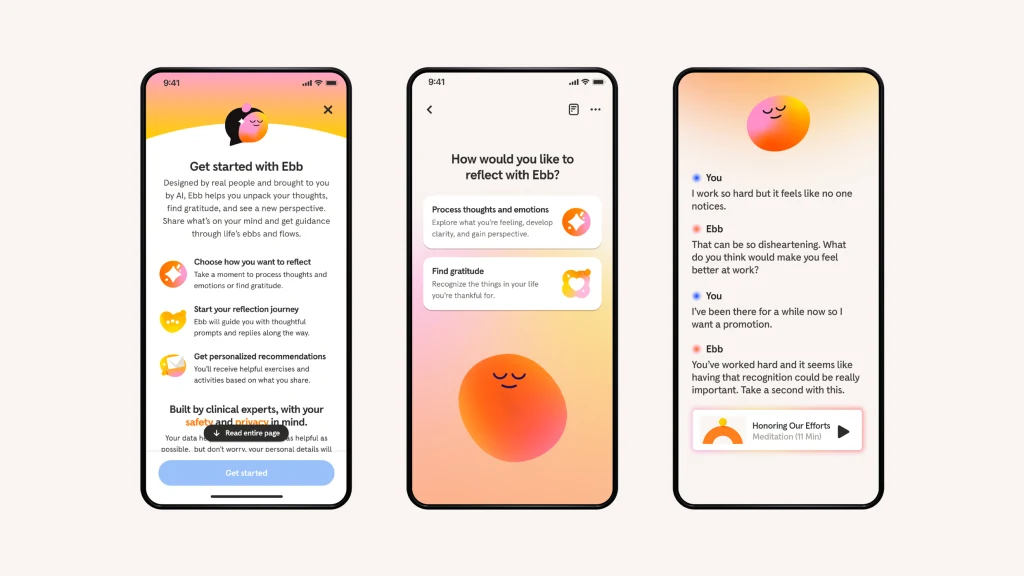
Mental health app Headspace has launched a generative AI-powered chatbot called Ebb for users to get instant, personalized support through life’s ebbs and flows, the company exclusively told Fast Company.

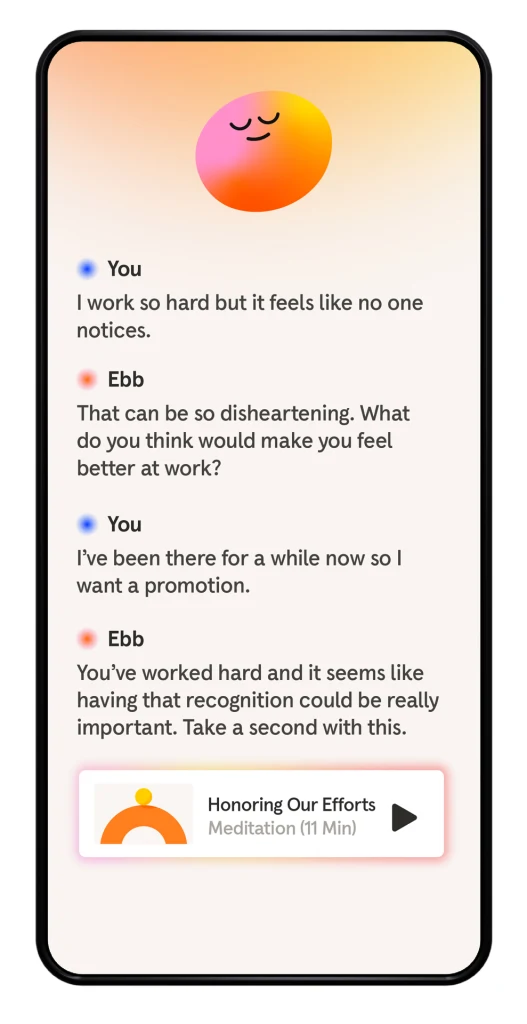
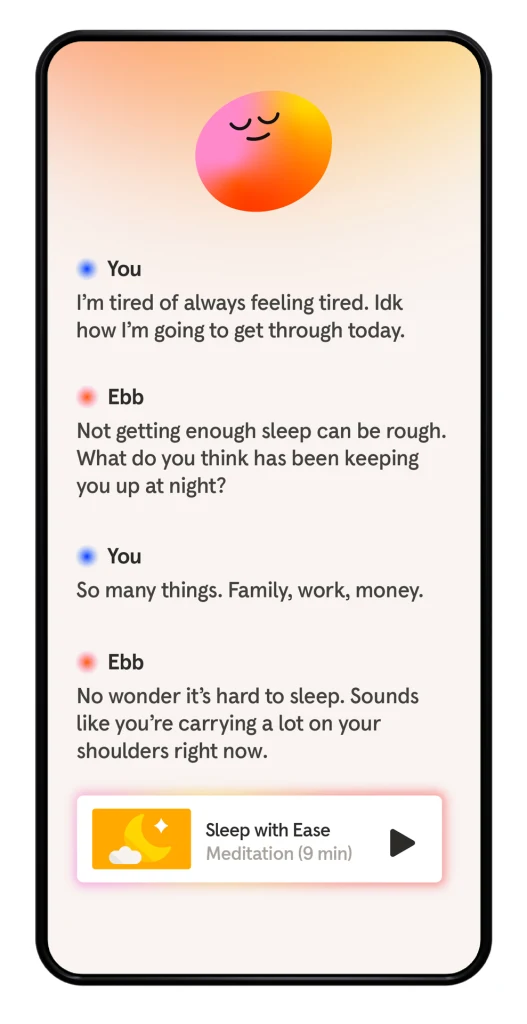
Ebb was specifically trained by clinical psychologists and data scientists in motivational interviewing, an evidence-based methodology that works to help people make positive behavioral changes. The chatbot has two paths: having users reflect on certain events (and then suggesting content found within the app), or having users reflect on things they’re grateful for.

“It’s really meant to be this sort of empathetic companion to someone along their Headspace journey,” Dr. Matthew Chester, Headspace senior product manager for conversational AI and clinical psychologist, said in an interview. Ebb is included in consumer subscribers’ plans at no additional cost.

[Photo: Headspace]

To be sure, the chatbot doesn’t give mental health advice, guidance, or diagnoses. If a user seems to be at risk of immediate harm, Ebb will quickly respond, empathetically saying that the issue is beyond what it can help with and sharing the number to the national crisis hotline that can be accessed with the tap of a button. When Fast Company tested this response, it immediately ended the ability to have a conversation, and the next time a new chat opened, it went to what we spoke about prior to the tested crisis.

Anytime a piece of technology is used to help with mental health, there could be a risk of it going off the rails. Headspace, according to Chester, “did some very rigorous and intensive development and testing to ensure that Ebb keeps users in boundaries of the types of conversations that we want them to be having.”

In the event there wasn’t a crisis, right now, the chatbot can only remember the last conversation it had with users, meaning it can’t retain much information and draw from it during future conversations. The company is hoping to increase that memory span. It’s also thinking about deeper integration of its chatbot care with its mental health providers. Headspace currently has coaches, therapists, and psychiatrists offering care. In the future, it could, with consent, share the types of things users talked about in sessions with Ebb with care providers or vice versa. 

Companies, including Headspace, have been deploying artificial intelligence technology for several years now.

[Photo: Headspace]

In 2021, Headspace merged with Ginger, a leader in on-demand mental health care, to form Headspace Health. The following year, it bought AI-powered mental health and wellness startup Sayana to accelerate its AI efforts. It had been using AI technology to match coaches with users, help coaches fill out note-taking summaries from sessions, and create so-called smart replies for coaches to use in responding to conversations.

But recent advancements in the generative AI space have taken off exponentially, allowing companies to come up with and release features even faster.

[Photo: Headspace]

“With the rise of large language models and generative AI, we’ve been excited, but very intentional about ways in which that can start to bridge much more actively into the member experience,” Headspace chief product and design officer Leslie Witt said in an interview.

Headspace currently doesn’t have plans to directly monetize Ebb.

“It has member value,” Witt said. “And member value drives business value. And so what we have seen, even with our initial pilot, is that members who use Ebb have more active use days, and they also are consuming more content, they’re taking the recommendations given by Ebb and using that.”

Apply to the Most Innovative Companies Awards and be recognized as an organization driving the world forward through innovation. Extended deadline: October 11.

PluggedIn Newsletter logo

Sign up for our weekly tech digest.

SIGN UP

This site is protected by reCAPTCHA and the Google Privacy Policy and Terms of Service apply.

Privacy Policy


ABOUT THE AUTHOR

Jessica Bursztynsky is a staff writer for Fast Company, covering the gig economy and other consumer internet companies. She previously covered tech and breaking news for CNBC. More


Explore Topics

Posted in Uncategorized | Tagged , , , , | Leave a comment

Tortoise: Daily Sensemaker


5 of 27,769

Print all

In new window

The new Nobelity

.The new Nobelity

Google was celebrating its association with two pairs of Nobel prize winners yesterday, one in chemistry and one in physics.

So what? Google isn’t a university or a government lab and it doesn’t do research in physics or chemistry. It’s a private sector profit engine specialising in applied computer science.
Its connection to the Nobels – awarded to Geoffrey Hinton, John Hopfield, Demis Hassabis and John Jumper – is a telling reminder of how much cutting-edge science now depends on AI; and how much of that cutting-edge science is migrating to the private sector as a result.
Also worth noting: this could be good or bad for the future of the human race.

Category error. Since announcing the prizes on Wednesday, the Nobel committee has been getting unsolicited advice to update or add to its prize categories to account for the march of technology.

Physics. Hinton and Hopfield won for discoveries and inventions in machine learning, for which Hinton has admitted a prize for computer science would “clearly be more appropriate”.

Chemistry. Hassabis and Jumper won for decoding protein structures with help from an algorithm called AlphaFold2 and from the European Bioinformatics Institute (EBI), whose deputy director suggests an engineering Nobel would have been more suitable.

But Alfred Nobel set out the prize categories in his will in 1895, and computer science and engineering weren’t among them.

So the committee has shoehorned the scientists it deems most deserving into old-fashioned categories even though the winners are all, essentially, heralds of AI.

Alphabet soup. Hinton – the supposed godfather of AI – was until last year pursuing pure AI research at Google, leaving the company to be able to speak freely about the risks of the technology he helped create.

Hassabis and Jumper are at DeepMind, which Google owns and for which it provides the prodigious computing power AlphaFold2 uses to predict the shape of proteins based on their amino acid sequences. It has predicted 200 million so far, a thousand-fold increase on the number decoded experimentally before the algorithm became available (for free, to everyone).

BrAIn drAIn. Research for Tortoise’s Global AI Index shows that
Ten years ago 85 per cent of state-of-the-art models for neural networks – pioneered by Hinton and Hopfield to recognise patterns in data – were developed by academic institutions, and 15 per cent by industry.This year, 80 per cent of state-of-the-art models are developed by industry. Not one has been developed solely by an academic institution, since universities no longer have the compute resources to train large AI models without an industry partner.
The index shows that in the past six years there’s been a steady drift of AI talent from academia to industry in the US, the UK and globally.

The good. Business can fund research on a scale most governments can only dream of. State funding via UK Research and Innovation amounts to £8 billion a year compared with research budgets at Google and Meta of $45 billion and $38 billion last year respectively.

In general, tech firms can also offer computing muscle; and the kind of “product-based mindset” that produced Covid vaccines in under a year, the EBI’s Jo McEntyre says.
In particular, protein-folding powered by AI and run as a business has the potential to dramatically accelerate the fight against antimicrobial resistance, cancer, other diseases and even marine plastic pollution.

The questionable. Hinton famously worries – as Oppenheimer did about the bomb – that if AI surpasses humans intellectually it could spin out of control. And that risk is probably not diminished by private sector players dominating AI development while locked in competition with each other.

What’s more. There’s no Nobel prize for robots to appeal to the better angels of their nature.
Posted in Uncategorized | Tagged , , , , | Leave a comment

How Brain Cells Identify Smells and Related Images. Comment: In my case, TBI resulted in loss of smell; loss of visualisation Aphantasia.

How Brain Cells Identify Smells and Related Images

Featured Neuroscience

·October 9, 2024

Summary: A recent study reveals that specific brain cells respond not only to smells but also to images and written words related to those scents, providing deeper insight into human odor perception. Researchers found that neurons in the olfactory cortex and other brain regions, like the hippocampus and amygdala, distinguish between different smells and associate them with visual cues.

This research, using data from epilepsy patients, bridges a gap between animal and human studies on olfactory processing. Remarkably, individual neurons responded to scent, image, and word, suggesting that smell processing integrates visual and semantic information early on. These findings could lead to future innovations in “olfactory aids.” The study emphasizes the interconnected nature of smell and visual memory in the human brain.

Key Facts

  • Neurons in the olfactory cortex respond to smells, images, and words alike.
  • The study found the amygdala differentiates between pleasant and unpleasant odors.
  • This research bridges knowledge gaps in human and animal olfactory processing studies.

Source: University of Bonn

We often only realize how important our sense of smell is when it is no longer there: food hardly tastes good, or we no longer react to dangers such as the smell of smoke.

Researchers at the University Hospital Bonn (UKB), the University of Bonn and the University of Aachen have investigated the neuronal mechanisms of human odor perception for the first time. Individual nerve cells in the brain recognize odors and react specifically to the smell, the image and the written word of an object, for example a banana.

The results of this study close a long-standing knowledge gap between animal and human odor research and have now been published in the renowned journal Nature.

This shows a woman smelling a rose.
In a next step, the researchers investigated the connection between the perception of scents and images. Credit: Neuroscience News

Imaging techniques such as functional magnetic resonance imaging (fMRI) have previously revealed which regions of the human brain are involved in olfactory perception. However, these methods do not allow the sense of smell to be investigated at the fundamental level of individual nerve cells.

“Therefore, our understanding of odor processing at the cellular level is mainly based on animal studies, and it has not been clear to what extent these results can be transferred to humans,” says co-corresponding author Prof. Florian Mormann from the Department of Epileptology at the UKB, who is also a member of the Transdisciplinary Research Area (TRA) “Life & Health” at the University of Bonn.

Nerve cells in the brain identify odors

Prof. Mormann’s research group has now succeeded for the first time in recording the activity of individual nerve cells during smelling.

This was only possible because the researchers worked together with patients from the Clinic for Epileptology at the UKB, one of the largest epilepsy centers in Europe, who had electrodes implanted in their brains for diagnostic purposes. They were presented with both pleasant and unpleasant scents, such as old fish.

“We discovered that individual nerve cells in the human brain react to odors. Based on their activity, we were able to precisely predict which scent was being smelled,” says first author Marcel Kehl, a doctoral student at the University of Bonn in Prof. Mormann’s working group at the UKB.

The measurements showed that different brain regions such as the primary olfactory cortex, anatomically known as the piriform cortex, and also certain areas of the medial temporal lobe, specifically the amygdala, the hippocampus and the entorhinal cortex, are involved in specific tasks.

While the activity of nerve cells in the olfactory cortex most accurately predicted which scent was smelled, neuronal activity in the hippocampus was able to predict whether scents were correctly identified.

Only nerve cells in the amygdala, a region involved in emotional processing, reacted differently depending on whether a scent was perceived as pleasant or unpleasant.

Nerve cells react to the smell, image and name of the banana

In a next step, the researchers investigated the connection between the perception of scents and images. To do this, they presented the participants in the Bonn study with the matching images for each odor, for example the scent and later a photo of a banana, and examined the reaction of the neurons. Surprisingly, nerve cells in the primary olfactory cortex responded not only to scents, but also to images.

“This suggests that the task of the human olfactory cortex goes far beyond the pure perception of odors,” says co-corresponding author Prof. Marc Spehr from the Institute of Biology II at RWTH Aachen University.

The researchers discovered individual nerve cells that reacted specifically to the smell, the image and the written word of – for example – the banana. This discovery indicates that semantic information are processed early on in human olfactory processing.

The results not only confirm decades of animal studies, but also show how different brain regions are involved in specific human odor processing functions.

“This is an important contribution on the way to decoding the human olfactory code,” says Prof. Mormann.

“Further research in this area is necessary in order to one day develop olfactory aids that we can use in everyday life as naturally as glasses or hearing aids.”

Funding: The study was funded by the German Research Foundation (DFG), the Federal Ministry of Education and Research (BMBF) and the state of North Rhine-Westphalia (NRW) as part of the iBehave project.

About this olfaction and visual neuroscience research news

Author: Inka Väth
Source: University of Bonn
Contact: Inka Väth – University of Bonn
Image: The image is credited to Neuroscience News

Original Research: Open access.
“Single-neuron representations of odours in the human brain” by Florian Mormann et al. Nature


Abstract

Single-neuron representations of odours in the human brain

Olfaction is a fundamental sensory modality that guides animal and human behaviour. However, the underlying neural processes of human olfaction are still poorly understood at the fundamental—that is, the single-neuron—level.

Here we report recordings of single-neuron activity in the piriform cortex and medial temporal lobe in awake humans performing an odour rating and identification task. We identified odour-modulated neurons within the piriform cortex, amygdala, entorhinal cortex and hippocampus.

In each of these regions, neuronal firing accurately encodes odour identity. Notably, repeated odour presentations reduce response firing rates, demonstrating central repetition suppression and habituation.

Different medial temporal lobe regions have distinct roles in odour processing, with amygdala neurons encoding subjective odour valence, and hippocampal neurons predicting behavioural odour identification performance.

Whereas piriform neurons preferably encode chemical odour identity, hippocampal activity reflects subjective odour perception.

Critically, we identify that piriform cortex neurons reliably encode odour-related images, supporting a multimodal role of the human piriform cortex.

We also observe marked cross-modal coding of both odours and images, especially in the amygdala and piriform cortex. Moreover, we identify neurons that respond to semantically coherent odour and image information, demonstrating conceptual coding schemes in olfaction.

Our results bridge the long-standing gap between animal models and non-invasive human studies and advance our understanding of odour processing in the human brain by identifying neuronal odour-coding principles, regional functional differences and cross-modal integration.

Join our Newsletter

 I agree to have my personal information transferred to AWeber for Neuroscience Newsletter ( more information )

Sign up to receive our recent neuroscience headlines and summaries sent to your email once a day, totally free.

We hate spam and only use your email to contact you about newsletters. You can cancel your subscription any time.

Tags

brain researchMemoryneurobiologyNeuroscienceolfactionUniversity of Bonnvisual neuroscience

ShareTweetShareShareSubmitEmail

Neuroscience News

Posted in Uncategorized | Tagged , , , , | Leave a comment

Thanks to Dublin Inquirer, highly recommend it. Why is one of Ireland’s biggest landlords evicting so many of its tenants? …”His landlord, Xerico Limited, is one of 21 Cyprus-based subsidiaries of the Luxembourg fund LRC RE-1 through which it owns 2,036 rentals across Ireland making it one of the country’s biggest private landlords.”… “Rent in 2017 for the tenant living in Apartment 11 was €750 a month, said a sales brochure. By May 2021, the property was being advertised online for €1,385 a month.”…


Dublin Inquirer

Local. Independent. Different.

Open Search Why is one of Ireland’s biggest landlords evicting so many of its tenants?

Figures suggest that Luxembourg fund LRC RE-1 has been issuing eviction notices at a much higher rate than peers – and at a greater rate than in the sector overall.

by Lois Kapila October 9, 2024

Gabriel Catanoiu at his home. Credit: Lois Kapila

Gabriel Catanoiu rubs the base of his back. 

He works in construction, he says. Block houses, extensions, insulation, fire-proofing. Or rather, he did. 

Before he was signed off, after a fall from a ladder at work left him with a painful slipped disc and in need of surgery, he says, sat on the edge of his sofa in his small dimly lit studio.

He is also being evicted – and , unsure, he says, when he will have a stable place to recover from any procedure.

A few steps to one side is the kitchen he put in and, to the other, a cupboard he fitted. Underfoot is the floor that he laid. In front of him is a small coffee table, and beyond that a wall with a stock image of a beach, blue sea, a bowed palm tree. 

Catanoiu has lived here for 14 years. 

He has asked Home Club, the property manager for his landlord, if he can stay in his home, one of a few apartments in a red-brick terrace on Whitworth Road just north of the Royal Canal.

“I explained to them. I’m on disability payment. I’m waiting for my back surgery. Especially, it is winter time,” he says. “Where can I go in winter time?”

He is being evicted because, under current rules for older “Part 4” tenancies, the landlord can at a point in time end the contract for no reason.

His landlord, Xerico Limited, is one of 21 Cyprus-based subsidiaries of the Luxembourg fund LRC RE-1 through which it owns 2,036 rentals across Ireland making it one of the country’s biggest private landlords.

In 2023, the fund’s subsidiaries issued at least 191 notices to quit to tenants, shows Residential Tenancies Board (RTB) data. That’s equivalent to more than 9 percent of its homes.

It is also a greater rate than across the private rental sector as a whole – and a much greater rate than some other large institutional landlords.

As the make-up of Ireland’s rental sector changes, some housing policy experts have posited that institutional landlords offer greater stability to tenants than individual landlords. But the figures show that it matters which institutional landlord, and when. 

Company strategies vary dramatically at different times. So too, then, does the risk for communities of instability and tenants of eviction.

Increasing revenue

RTB figures show that, within those 191 eviction notices issued last year, a chunk were issued on the same grounds cited to Catanoiu, that his Part 4 tenancy is ending. 

LRC RE-1 subsidiaries issued 89 of these kinds of notices to quit in 2023 – and another 34 in the first half of this year, the figures say. 

Neither LRC Group, nor the property management firm Home Club, responded to queries sent by email on 30 September, asking why LRC RE-1 is seeking to evict long-term tenants when Part 4 tenancies are up.

During a hearing at the RTB in July, Home Club’s manager Michelle Savage told a tribunal that she had sympathy for a tenant living in New Maltings, a complex on Watling Street in the south inner-city, who the landlord – the subsidiary Jersia Limited – was evicting on the same grounds.

But the tenant couldn’t buy the place because the landlord hadn’t evicted him to sell it, she said. It hadn’t decided what it would do next, she said.

“It may be renovated and upgraded and rented out again, or it may be sold,” said Savage, according to the tribunal report.

Apartments in New Maltings – where Jersia Limited bought 47 apartments for €7.1 million in April 2018, an average of €151,000 each – have seen significant hikes in advertised rents, alongside tenant turnover, in recent years.  

Rent in 2017 for the tenant living in Apartment 11 was €750 a month, said a sales brochure. By May 2021, the property was being advertised online for €1,385 a month.

Queried on that in June 2021, a spokesperson for LRC Group said that those figures aren’t exactly comparable.

The brochure figure is the rent, they said. “The advertised figure includes more than just the rental component – such as car parking and service charges (which are all listed on the lease agreement).”

Rents at New Maltings are set in line with RTB rules, said the spokesperson.

File photo of New Maltings. Credit: Lois Kapila

Neither LRC Group nor Home Club responded to queries as to what it expects to do with Catanoiu’s apartment on Whitworth Road, where he currently pays €527 a month, once he has left. They didn’t say if they would intend any new tenants to pay extra charges on top of the rent.

Orkstake Limited – another LRC RE-1 subsidiary – was charging €85 a month in service charges and €300 a month for a car parking space on top of the base rent at a property in Tyrrelstown, shows a report from an RTB tribunal last December. 

Eoin Ó Broin, the Sinn Féin TD and housing spokesperson, says that if there seems to be a pattern of a significantly high volume of eviction notices – and use of Part 4 grounds at a higher rate – by one institutional landlord, the RTB should investigate. 

The RTB should look at whether it is possibly breaching rent-pressure zone rules when it retenants, he said. 

The legality of adding extra charges on top of the rent, given laws capping rent increases at 2 percent a year, is contested.

Ó Broin says the Department of Housing should also change the law so that no tenants can be evicted on the grounds that their Part 4 tenancy has timed out.

The Department of Housing did revise the law once at the end of 2021. Now, if a tenancy began after June 2022, a tenant can’t be evicted on those grounds. But that doesn’t apply to tenancies that started before that date. 

A spokesperson for the Department of Housing says that they opted to transition the change in like this after guidance from the attorney general. “Naturally over time, all ‘Part 4 tenancies’ will be of unlimited duration.” 

Ó Broin points to how there have been other legal changes that have applied to all tenancies, retrospectively even, such as the length of notice periods. 

The government needs to end the right to evict on the grounds that the Part 4 tenancy is up for all tenancies now, he says. “And then, if some landlord wants to challenge it, let the courts decide.”

Selling up

In October 2022, Tom Dunne, then – and now – chair of the RTB, said that big institutional landlords offer more stable tenancies than smaller landlords.

After all, the main reasons put forward by landlords issuing notices to quit – that they are selling up or need the property back for family – don’t apply to institutional investors, he said. 

Indeed, about 75 percent of the notices to quit issued between Q3 2022 and Q2 2024 have said either that the landlord is selling or that a family member wants to move in, show RTB figures. 

Some company landlords did issue fewer eviction notices than average last year. 

In 2023 across the rental sector, the equivalent of about 8 percent of tenants were issued with notices to quit, show RTB figures. 

Ires REIT issued notices to quit to 5 percent of its tenants, suggest RTB figures. 

And, in 2023, Kennedy Wilson, another of Ireland’s big institutional landlords, issued notices to quit to 0.5 percent,  – although it’s not totally clear whether that RTB data does include all of Kennedy Wilson’s evictions or if some could be logged under its letting agent.

chart visualization

Still, at more than 9 percent, LRC Group surpassed its peers and the sector as a whole. Institutional landlords can evict ahead of selling too and LRC Group, unlike some of its peers, has also been doing that.

In March, Savage, of the property manager Home Club, said that the landlord Xerico Limited – another LRC RE-1 subsidiary – had earmarked “in the region of 100 properties that this landlord wanted to sell at the same time”.

The homes had been purchased as part of a larger portfolio, she said, during a case before the RTB challenging one eviction notice that had been issued on the grounds of sale.

The landlord was looking to offload some to reinvest in other properties, she said, according to the tribunal report. 

That process is ongoing, company accounts suggest. In 2022 and 2023, Xerico Limited sold 53 of its homes, they show. 

Meanwhile, Ireland’s biggest private landlord Ires-REIT, is also looking to sell hundreds of apartments. 

But while it plans to offload 315 properties, its policy is not to evict tenants and to wait for natural vacancy and turnover, said a spokesperson for the company.

“It expects this programme to take up to 5 years to complete due to its standing policy of not evicting residents to sell units”, the spokesperson said. 

The government’s review of the rental sector, published in July, did nod at the possibility of tightening rules around pre-sale evictions. 

The government could “include provision for sales with a tenant in situ, particularly for professional landlords with multiple properties”. 

More Articles to read

Task force government set up “to rejuvenate” Dublin city centre didn’t talk to forum government set up to make the city centre safer

Task force government set up “to rejuvenate” Dublin city centre didn’t talk to forum government set up to make the city centre safer

In Crumlin, a narrow shop is stuffed with Indonesian snacks and spices

In Crumlin, a narrow shop is stuffed with Indonesian snacks and spices

Fear of the impact on landlord investment has stopped the government from making moves like this or improving security of tenure significantly in recent years, says Mick Byrne, assistant professor of UCD’s School of Social Policy, Social Work and Social Justice. 

All landlords will want at some point to recover their property to sell it, he says. “So inability to recover the property at any point, it would substantially change the nature of private rental housing as an investment.”

It’s unclear right now if lenders would lend to landlords to buy properties that aren’t vacant, he says, and also how big upgrades could happen if homes weren’t empty.

Countries that don’t let landlords evict to sell often have better tax incentives making the numbers add up for landlords, he says.

His attempt to square all this is to float the idea that government create six-year secure tenancies – so, landlords could only evict their tenants at the end of every six years, unless they don’t pay rent or wreck a place.

It would give tenants and landlords more certainty and predictability, he says. And, he says, be politically viable. 

He knows this idea will get criticism, he says. People, after all, could still find themselves in a situation such as Catanoiu – being evicted from their home of many years through no fault of their own. 

It wouldn’t be life-time tenure, he says. “My answer to that is that social housing and cost-rental are the solution to that problem.”

Ó Broin meanwhile says the Sinn Féin housing plan reiterates the party’s call to remove sale completely as a reason to end a tenancy. “Because it’s just not a legitimate ground.”

He would also tighten – albeit not scrap entirely for existing tenancies – the rules around recouping a home for a family member, he says.

The ideal as he sees it would be to eventually get to a situation where unless a tenant is breaching their contract – not paying rent, or damaging the property – they can stay as long as they want, he says. 

“I lost everything”

Just because a landlord has issued a notice to quit doesn’t mean that a tenant always has to leave. The tenant may challenge the notice and it be found invalid, or the landlord and tenant reach an agreement.

A review of the RTB disputes shows that several notices to quit issued on the grounds of sale by subsidiaries of LRC RE-1 were found to be invalid because of a technicality around the statutory declaration.

Still though, the breakdown of different rates does indicate how varied companies can be, depending on strategies for managing the homes and where they may be in an investment cycle.

“Part of the variation is very much, what is their strategy in a given point in time,” says Maedhbh Nic Lochlainn, a lecturer in the Department of Geography at University College Cork. “What phase of the pattern are you looking at?”

She has researched how Ires-REIT managed its properties and evicted tenants during its earlier days – relying on the RTB’s database of disputes before data on notices to quit was available.

There looked to be peaks of time when it issued more eviction notices than others. 

“Earlier, in RTB dispute records, around 2015 and 2016, they cleared essentially properties where people were in long-term arrears,” she says.

Notices to quit issued on the grounds of rent arrears also feature prominently among LRC RE-1 subsidiaries in the RTB database – with arrears for those eviction cases ranging from around €570 to more than €19,700.

Kennedy Wilson didn’t respond to media queries sent through its website, asking to talk about its policies around notices to quit, or to confirm the RTB figures.

Nic Lochlainn says that Kennedy Wilson’s seemingly low rate of evictions last year may be down to a different business model. They build rather than buy older rentals, and their customer base may be more affluent, with more screening of tenants, she says. 

The trajectory and horizon of different companies varies so much, she says – and whether they are looking to stabilise or to gather a portfolio and sell it.

“I think that’s really important to unpick a bit because it’s particularly volatile at the moment,” she says. 

Searching for a new home. Credit: Lois Kapila

On his sofa on 26 September, Catanoiu scrolled through his phone to show how hard he had been searching for a new place – even if he doesn’t want to move.

He isn’t doing nothing, he says, showing his emails on a bright screen. “Every day I do something.”

“See how many Daft emails. Daft, Daft, Daft, Daft, Daft, Daft,” he says. “Nothing, not even one email to send back to let me know.”

Catanoiu describes a spiral. 

In the last year and a half, his mother passed, his daughter left Ireland with her mother, he lost his work and now – evicted by Xerico Limited through no fault – he has lost his flat, he says. 

“In one and a half years, I lost everything,” he says.

Do you live in Fingal? We’re delighted you’ve found us.

Posted in Uncategorized | Tagged , , , , | Leave a comment

The Guardian: US states sue TikTok, claiming its addictive features harm youth mental health. Comment: search canisgallicus.com for Jonathan Haidt; al mental illness

US states sue TikTok, claiming its addictive features harm youth mental health

Lawsuits allege platform’s ‘dopamine-inducing’ algorithm can lead to anxiety, depression and body dysmorphia

Johana Bhuiyan, Nick Robins-Early and agenciesTue 8 Oct 2024 17.07 CESTShare

More than a dozen states and the District of Columbia filed lawsuits against TikTok on Tuesday, alleging the popular short-form video app is damaging children’s mental health with a product designed to be used compulsively and excessively.

The lawsuits stem from a national investigation into TikTok, which was launched in March 2022 by a bipartisan coalition of attorneys general from several states, including California, Kentucky and New Jersey. All of the complaints were filed in state courts and claim that TikTok’s algorithm is especially dangerous given the platform’s widespread use among young people and its ability to deliver quick hits of dopamine. Design choices such as infinite scrolling, push notifications and in-app purchases prey on youth and create addictive habits among users, prosecutors allege. There are over 170m monthly active TikTok users in the US, and over a billion worldwide.

At the heart of each lawsuit is the TikTok algorithm, which powers what users see on the platform by populating the app’s main “For You” feed with content tailored to people’s interests.

A mobile phone with the TikTok app

In its filings, the District of Columbia called the algorithm “dopamine-inducing”, and said it was created to be intentionally addictive so the company could trap many young users into excessive use and keep them on its app for hours on end. TikTok does this despite knowing that these behaviors will lead to “profound psychological and physiological harms”, such as anxiety, depression, body dysmorphia and other long-lasting problems, the complaint said.

“TikTok’s design choices exploit the neurotransmitter dopamine, which helps humans feel pleasure as part of the brain’s reward system to encourage reinforcement,” the state’s filing in the superior court of California read. “Dopamine ‘rewards’ can lead to addictive behavior, particularly when rewards are unpredictable.”

Citing internal documents and presentations, the states claim TikTok considers users under 13 a “critical demographic” and knowingly targets them and collects their data without parental consent.

Michael Hughes, a TikTok spokesperson, said in a statement: “We strongly disagree with these claims, many of which we believe to be inaccurate and misleading.” Hughes cited the app’s “robust safeguards” such as proactive removal of underage users, default screentime limits and default privacy settings for users under 16.

“We’ve endeavored to work with the attorneys general for over two years, and it is incredibly disappointing they have taken this step rather than work with us on constructive solutions to industrywide challenges,” Hughes said.

TikTok has faced intense pressure from US lawmakers and prosecutors over the past year. Congress passed a law in April that will force a nationwide ban on TikTok that will come into effect in January unless its parent company, the China-based ByteDance, sells the app to a new owner. The US Department of Justice and the Federal Trade Commission also sued TikTok and ByteDance in August for allegedly breaking child privacy laws.

“It is profiting off the fact that it’s addicting young people to its platform,” said Brian Schwalb, District of Columbia attorney general.

Keeping people on the platform is “how they generate massive ad revenue”, Schwalb said. “But unfortunately, that’s also how they generate adverse mental health impacts on the users.”

TikTok does not allow children under 13 to sign up for its main service and restricts some content for everyone under 18. But the District of Columbia and several other states said in their filing that children can easily bypass those restrictions, allowing them to access the service adults use despite the company’s claims that its platform is safe for children.

The lawsuit from California also alleges TikTok’s beauty filters can perpetuate “self-hatred of their appearance” among its young users. The complaint claims the platform knows these filters can harm users but continues to design these filters to increase engagement. The filters perpetuate beauty stereotypes, the complaint reads, including favoring certain Caucasian or European features.skip past newsletter promotion

Sign up to TechScape

Free weekly newsletter

A weekly dive in to how technology is shaping our lives

Enter your email address Sign up

“Indeed, plastic surgeons have reported an increase in patients seeking procedures to look better onscreen and have remarked that TikTok’s advanced ‘effects’ blur the line between fantasy and reality,” the complaint reads.

District of Columbia’s lawsuit takes aim at other parts of the company’s business.

It alleges TikTok is operating as an “unlicensed virtual economy” by allowing people to purchase TikTok Coins – a virtual currency within the platform – and gift it to streamers on TikTok Live, who can then cash it out for real money. TikTok takes a 50% commission on these financial transactions but hasn’t registered as a money transmitter with the US treasury department or authorities in the district, according to the complaint.

Officials say teens are frequently exploited for sexually explicit content through TikTok’s livestreaming feature, which has allowed the app to operate essentially as a “virtual strip club” without any age restrictions. They say the cut the company gets from the financial transactions allows it to profit from exploitation.

“TikTok profits from the sexual exploitation of children – operating like a virtual strip club,” Schwalb said on X.

TikTok’s CEO, Shou Zi Chew, has repeatedly pushed back against claims that the platform is harmful for young people and in January pledged to spend $2bn to protect US users.

Read on for your exclusive offer …

You’ll be aware of the bad actors spreading disinformation online to fuel intolerance.

Maybe you’ll also know that there are teams of lawyers from the rich and powerful trying to stop us publishing stories they don’t want you to see. 

In addition, lobby groups with opaque funding structures are determined to undermine facts about the climate emergency and other established science. 

Meanwhile authoritarian states continue to show disregard for the freedom of the press.

This is why we need your support more than ever to keep our website free and open for all. We simply cannot do it without your help.

For a limited time, we’re offering readers like you 50% off an All-access digital subscription for three months. With this, you’ll unlock:

1. Unlimited articles in our app

2. Ad-free reading on all your devices

3. Exclusive newsletter for supporters, sent every week from the Guardian newsroom

4. Far fewer asks for support

5. Full access to the Guardian Feast app

If you believe in the importance of open journalism, make the most of an All-access digital subscription – with 50% off for three months. Support independent journalism now with your exclusive discount.

Support €4/month

50% off

Support €12 €6/month

Unlock All-access digital benefits:

  • Unlimited access to the Guardian app
  • Ad-free reading on all your devices
  • Exclusive newsletter for supporters, sent every week from the Guardian newsroom
  • Far fewer asks for support

Support with another amount

ContinueRemind me in November

Accepted payment methods: Visa, Mastercard, American Express and PayPal

Explore more on these topics

Share

Reuse this content

Most viewed

Posted in Uncategorized | Leave a comment