Bulletin of the Atomic Scientists: Hibakusha group receives Nobel Peace Prize for “demonstrating through witness testimony that nuclear weapons must never be used again”

The authoritative guide to ensuring science and technology make life on Earth better, not worse.

Hibakusha group receives Nobel Peace Prize for “demonstrating through witness testimony that nuclear weapons must never be used again”

By François Diaz-Maurin, Thomas Gaulkin | October 11, 2024

Photoillustration: Thomas Gaulkin; Nihon Hidankyo logo portrait by Niklas Elmehed / Nobel Prize OutreachShare

The Norwegian Nobel Committee has awarded this year’s Nobel Peace Prize to the Japanese organization Nihon Hidankyo, a grassroots movement formed by survivors of the Hiroshima and Nagasaki atomic bombings and nuclear weapons testing (or Hibakusha), “for its efforts to achieve a world free of nuclear weapons and for demonstrating through witness testimony that nuclear weapons must never be used again.”

“The extraordinary efforts of Nihon Hidankyo and other representatives of the Hibakusha have contributed greatly to the establishment of the nuclear taboo,” the Norwegian Nobel Committee said in a statement presented by its chair, Jergen Watne Frydnes. “It is therefore alarming that today this taboo against the use of nuclear weapons is under pressure. The nuclear powers are modernizing and upgrading their arsenals; new countries appear to be preparing to acquire nuclear weapons; and threats are being made to use nuclear weapons in ongoing warfare. At this moment in human history, it is worth reminding ourselves what nuclear weapons are: the most destructive weapons the world has ever seen.”

“One day, the Hibakusha will no longer be among us as witnesses to history. But with a strong culture of remembrance and continued commitment, new generations in Japan are carrying forward the experience and the message of the witnesses. They are inspiring and educating people around the world. In this way they are helping to maintain the nuclear taboo—a precondition of a peaceful future for humanity.”

In an interview with the Nobel Prize organization, Masako Wada, a representative of Nihon Hidankyo and survivor of the Nagasaki bombing, said, “The world is currently moving backward on nuclear disarmament. The Russian invasion of Ukraine has caused unspeakable human suffering and raised the risk of nuclear war. I have dedicated my life to nuclear abolition. I feel how sinful humans are. Rather than anger, I feel sorrow, and fear how deep humans will fall into the darkness. We have to keep going forward to convey our wish, our hope to reject nuclear weapons. That’s our mission as Hibakusha.”

Nihon Hidankyo (in English, the Japan Confederation of A- and H-Bomb Sufferers Organizations) was founded in 1956 by survivors of the atomic bombs dropped on Hiroshima and Nagasaki in 1945, along with those who suffered from exposure to radioactive fallout from subsequent hydrogen bomb testing. In Japan, there was a deep sense of injustice over the United States’ refusal to accept responsibility for the suffering of the Japanese population. “For nearly 10 years after the bombing, the Hibakusha received no help from the US occupation forces, which strictly prohibited the people to write or speak about the bombing and damages, including the miserable deaths of 200,000 people, from the Japanese government even after the country regained its sovereignty in 1952,” the organization explains on its website.

For over half a century, Nihon Hidankyo has sent Hibakusha delegations to many parts of the world, giving testimony about the damage and suffering caused by the use of nuclear weapons. In 1974, a Hibakusha delegation first visited the United States and petitioned the United Nations to support an international treaty for a total ban on nuclear weapons. “We are so honored to work alongside Nihon Hidankyo and the Hibakusha to push for the prohibition and total elimination of nuclear weapons,” Daniel Högsta, the deputy director of the International Campaign to Abolish Nuclear Weapons (ICAN), said in a statement shared with the Bulletin. “The Hibakusha, the survivors of Hiroshima and Nagasaki, have worked tirelessly to raise awareness of the catastrophic impacts of nuclear weapons and push for their total elimination. Their testimonies and advocacy have been crucial to nuclear disarmament as a whole and the adoption and entry into force of the UN Treaty on the Prohibition of Nuclear Weapons (TPNW) in particular.”

What do Americans really think about the bombing of Hiroshima and Nagasaki?

This year’s award to Nihon Hidankyo is the fourth time the Nobel Committee has recognized the work of grassroots organizations opposing nuclear weapons. Earlier recipients include the Physicians for the Prevention of Nuclear War (1985), the Pugwash Conferences and a key leader, physicist Joseph Rotblat (1995), and ICAN (2017).

The cenotaph at the Peace Memorial Park in Hiroshima, western Japan, on October 11. Japan's leading organization of atomic bomb survivors, Nihon Hidankyo, won the 2024 Nobel Peace Prize the same day. (Photo by Kyodo News via Getty Images)
The cenotaph at the Peace Memorial Park in Hiroshima, western Japan, on October 11. Japan’s leading organization of atomic bomb survivors, Nihon Hidankyo, won the 2024 Nobel Peace Prize the same day. (Photo by Kyodo News via Getty Images)

This year’s Nobel Peace Prize doesn’t come so much as a surprise as a relief for many in the nuclear disarmament community.

“The fact that most of the Nihon Hidankyo members are reacting to the news of the Nobel Prize with incredulity underscores their feeling that their efforts had not been properly recognized up until now,” Sayuri Romei, senior fellow for Japan at The German Marshall Fund, explained to the Bulletin. “Over the decades, [the movement] has struggled to survive because of the fast-aging hibakusha community, among other reasons. It was about time that their efforts were recognized.”

“I think that the Nobel Peace prize award is well deserved, but it comes very, very late,” said Ray Matsumiya, the executive director of the Oleander Initiative, a group that organizes educational trips to Hiroshima for “peacebuilders from around the world.” “The majority of the Hidankyo survivors are well into their 80s and 90s. The recognition and monetary award would have been better leveraged for our cause, 20 or even 10 years ago,” he added.

There was indeed a sense of urgency, which may explain the timing of this year’s award.

“There is a lot of anxiety in these two towns [of Hiroshima and Nagasaki] about the passing of the hibakusha generation and the maintenance of memory culture,” Robert Jacobs, a nuclear historian at the Hiroshima Peace Institute in Japan and author of the 2022 book Nuclear Bodies: The Global Hibakusha, said. “These are seen as the last years that people will be able to hear testimony directly from hibakusha, and so the role witnessing can play in compelling nuclear abolition, a key part of ‘Hiroshima peace culture’ is slipping away.”

“When there will be no longer anyone to tell those important stories first-hand, it will become increasingly difficult for the next generations to imagine the terrible human costs of nuclear weapons. This removal from first-hand testimonies will have the dangerous effect of forgetting those costs and loosening the nuclear taboo in the future,” Romei warns.

Masako Toki, a research associate with the James Martin Center for Nonproliferation Studies at the Middlebury Institute of International Studies at Monterey, also shares this sense of urgency. “[The Hibakusha] are using their every ounce of remaining energy to accomplish their goals, especially, they are sharing their testimonials with youth, to make sure that people, especially younger generations understand the catastrophic humanitarian impact of the use of nuclear weapons,” Toki told the Bulletin.

In an article for the Bulletin last year, Toki reminded our readers how the Hibakusha, atomic bombing survivors, have worked tirelessly toward a world free of nuclear weapons, with their only wish that no one else would ever go through the sufferings they have experienced. “As the memories of Hiroshima and Nagasaki are further fading away every year given the advanced age of hibakusha, it is urgent for younger generations to learn more,” Toki wrote. “Time is of the essence.”

“The award is clearly linked to the fact that this next August 6th is the 80th anniversary of the nuclear attack here,” Jacobs added.

Video: How many people were killed by the bombing of Hiroshima and Nagasaki?

“This award is long overdue,” Gregory Kulacki, East Asia Project Manager with the Global Security Program at the Union of Concerned Scientists, told the Bulletin. “As we approach the 80th anniversary of the bombing, I suppose the Nobel committee felt it had to do something to recognize the efforts of some of the bravest people I have ever met.” (Nobel Prizes can be awarded only to individuals who are still alive, which explains the committee’s decision to award this year’s prize to Nihon Hidankyo, not individuals working with the organization.)

But for all the symbolism, this year’s Nobel Peace Prize seems to have a purpose beyond the recognition of a past achievement.

“The Nobel Committee’s decision to recognize Nihon Hidankyo is a reminder that human civilization remains precariously tethered to the existence of nuclear weapons and the threat they might be used again,” Daryl Kimball, the director of the Arms Control Association, wrote in a statement shared with the Bulletin. “It is also a call to action for the leaders of the world’s nuclear-armed states and non-nuclear weapon states, to implement concrete steps to refrain from nuclear threats, avert dangerous and destabilizing nuclear competition, and to return to the negotiating table to conclude effective risk reduction and disarmament measures.”

“The timing of this Nobel Prize is especially important as Moscow is ramping up its nuclear saber-rattling,” Romei added. “The voices of the hibakusha will need to be amplified further to contribute to a deeper understanding of all the consequences of nuclear warfare.”

For Jacobs, the award can act as a legacy for the future generations. It will “amplify the voices of the Hibakusha and put their experiences as the only people to suffer direct nuclear attack back in the public mind and conscience. Given that we live in a time of rising anxiety over the potential use of nuclear weaponry in warfare again, these voices need to be heard, and the reality of nuclear usage must be faced and understood. This is likely another motivation of the Nobel committee.”

Kathleen Sullivan, the director of Hibakusha Stories, an organization that for over a decade hosted atomic bomb survivors to share their testimony with youth, primarily from the New York Metro Area, recalls the importance of passing the legacy of the atomic bombings of Hiroshima and Nagasaki to the new generations. “I never really thought about how badly people were hurt by this one atomic bomb,” a student told Sullivan after one such visit. “It really opened my eyes to what can happen if history repeats itself.”

“This award, at this time, will ease this transitional era of the passing of the Hibakusha generation, giving people the sense that their message will endure into future generations,” Jacobs said after today’s announcement. “But it is still up to us to do this work. The award will not accomplish disarmament, but it can motivate us to take this work up.”

“I feel certain nearly every remaining survivor would rather hear that the nuclear-armed states were negotiating in good faith to eliminate nuclear weapons,” Kulacki agreed, “than the news they received a Nobel Prize.”

John Wester, the Archbishop of Santa Fe, shared his hope with the Bulletin “that this Peace Prize awarded to Nihon Hidankyo will get the attention of the nuclear states who have yet to sign the Treaty for the Prohibition of Nuclear Weapons.”

“Now that would be a real prize for the Hibakusha and for all of us!”

Together, we make the world safer.

The Bulletin elevates expert voices above the noise. But as an independent nonprofit organization, our operations depend on the support of readers like you. Help us continue to deliver quality journalism that holds leaders accountable. Your support of our work at any level is important. In return, we promise our coverage will be understandable, influential, vigilant, solution-oriented, and fair-minded. Together we can make a difference.

Make your gift now

Keywords: Hiroshima, Nagasaki, Nihon Hidankyo, Nobel Peace Prize, atomic bombings, hibakusha
Topics: Analysis, Nuclear Risk, Nuclear Weapons

Posted in Uncategorized | Tagged , , , , | Leave a comment

X (a gem). If you’re always trying to say something important, does it just turn into slogans? This talk with @JonKabatZinn at @Wisdom20 explores how silence brings depth to our words. Full conversation here: 

Yuval Noah Harari (@harari_yuval) posted at 5:25 pm on Mon, Oct 14, 2024:


If you’re always trying to say something important, does it just turn into slogans? This talk with @JonKabatZinn at @Wisdom20 explores how silence brings depth to our words.
Full conversation here: 

https://t.co/5LSOs7SOaW.
#NexusBook 

https://t.co/nKuZIk3EXM
https://x.com/harari_yuval/status/1845863594275074060?t=avsXU4-yVp2a8pyPG46BEw&s=03 

Posted in Uncategorized | Leave a comment

New Atlas: Innovation island: See the near future at the 2024 Taiwan Innotech Expo

Technology

Innovation island: See the near future at the 2024 Taiwan Innotech Expo

By Bronwyn Thompson

October 13, 2024

Taiwan shines the spotlight on innovation at TIE 2024

Taiwan shines the spotlight on innovation at TIE 2024

Depositphotos

View 1 Images

Taiwan may be only 0.37% the land size of the US, but the small island has become a hub for startups, sustainable design and technological innovation. And this year, close to 600 inventions will be vying for the Platinum Award, the coveted top prize at the long-runing annual Taiwan Innotech Expo (TIE).

And, yes, New Atlas will be on hand to cover the event. More than 1,100 inventions and tech developments will be on show at the annual Taiwan Innotech Expo (TIE), with nearly 450 exhibitors across three distinct pavilions – so we’re going to need some decent walking shoes and lots of coffee.

Not surprisingly, AI will feature heavily in the Future Tech Pavilion, and across broad fields like optoelectronics, medical research and development and biotechnology. It’ll also be seen throughout the Sustainability Pavilion, as innovators look to harness the power of AI to deliver a greener future. Meanwhile, cybersecurity and digital resilience, smart healthcare, smart cities and defense technology will be showcased across the Innovation Pilot Pavilion.

This year, the International Trends Forum shines a spotlight on quantum technology and sports technology, and across the three days there’ll be plenty of opportunity to test out new tech or take a guided tour of specific areas of research and development.

Locally, 90 Taiwanese companies will showcase the island’s strong innovation sector, including the National Atomic Research Institute, Chunghwa Telecom Laboratories and Taiwan Power Company, as well as more than 40 research organizations and universities, such as Kun Shan University, National Yang-Ming Chiao Tung University and Taipei City University of Science and Technology.

TIE will take place at the Taipei World Trade Center Hall 1, October 17-19, running 9.30 am – 5.30 pm (17-18) and 9.30 am – 4.30 pm on the final day.

Source: Taiwan Innotech Expo

Posted in Uncategorized | Tagged , , , , | Leave a comment

FastCompany: The Future of the Work. AI.

10-14-2024 THE FUTURE OF WORK

Here’s how AI can, and can’t, disrupt the hiring process 

An expert argues that while AI may streamline parts of the hiring process, human expertise and deep relationships are still essential–particularly for high-stakes leadership roles.Here’s how AI can, and can’t, disrupt the hiring process 

[Source Photos: Getty Images]

BY Adam Charlson 6 minute read

Artificial intelligence has become part of the fabric of our everyday lives–both personally and professionally. Whether it’s AI-powered dynamic pricing or healthcare diagnostics, businesses are continuously exploring new ways to incorporate AI into their daily operations. Companies are also leveraging AI-powered tools when it comes to hiring. In fact, 64% of human resources professionals say talent acquisition is the top way they are using AI.

For many organizations, AI has long been a part of the recruitment process—specifically in the form of applicant tracking systems (ATS), which have evolved considerably since their inception in the 1990s. Modern ATS solutions now offer advanced functionalities, including the ability to craft job postings, manage résumé collection, screen résumés, and provide analytics.

AI can quickly sift through a vast pool of résumés and pinpoint those that best match the keywords in a job posting. It can be tempting to rely almost exclusively on AI to identify top candidates for an opening. But can AI alone truly determine the best fit for a position?

The short answer is no. While AI can do a lot, it doesn’t replace a human when it comes to hiring.  

CoDesign Newsletter logo

Subscribe to the Compass Newsletter.Fast Company’s trending stories delivered to you daily

SIGN UP

Privacy Policy

|Fast Company Newsletters

The longer answer is that while AI is a powerful additive to the hiring process, it cannot entirely substitute the nuanced judgment and relational insights that human recruiters bring to the table. The biggest AI application in the hiring process today is in the initial stages of sourcing and recruitment. The efficiency made possible by AI is a major benefit, especially for handling large volumes of applications.

But while AI excels at sorting data and automating repetitive tasks, it lacks the ability to fully comprehend the subtleties of human interactions and complex decision-making. Particularly for roles that require strategic planning, innovative thinking or leadership, AI’s capabilities still fall incredibly short. Take, for example, product management roles, which require complex decision-making and innovative thinking. It’s probably one of the few roles where—especially in the technology industry—the candidate needs to be both an engineer and a marketer, because they’re responsible for a product that will eventually become a revenue stream for the company. AI is not an ideal tool to screen for unique or new positions or for those that require a combination of skills.

Why we still need humans for hiring 

Effective hiring relies heavily on understanding nuanced human qualities that data alone cannot capture. Human recruiters excel at evaluating soft skills, emotional intelligence, and adaptability—traits that are vital for professional success, regardless of the role. In the hiring process, these qualities are revealed through personal interactions, interviews, and informal conversations—not through résumés keywords or automated screenings.

The rapport recruiters build with hiring companies, or that internal talent acquisition teams innately know by working there, gives humans the unique ability to match candidates to an organization not just based on both their skills but also based on an understanding that the candidate would be a good cultural fit. Hiring someone is about establishing a relationship, not just a systems match.

What’s more, recruiters and HR professionals are able to leverage their industry relationships to tap into a broader network, reaching passive candidates who may not be actively seeking new roles but who are a great fit for the organization. This strategic outreach and personal engagement are aspects of recruitment that AI simply cannot replicate yet. It takes skill and the ability to connect as a person first, and to reach out to someone who may very well be happy in their current job, and convince them to take a look at an open role. Recruiting is both thoughtful and incredibly relational; it involves actively searching for and connecting with people who are the right fit for the role, as detailed on paper, but who will also drive lasting impact and feel fulfilled in the work they are doing. It’s a science and an art. 

AI’s limitations when it comes to hiring 

When faced with multiple candidates who possess similar qualifications, AI lacks the valuation abilities to determine the best fit for an organization’s specific needs and culture. It cannot conduct marketplace research, which often includes an element of interviews to gather sentiments and other intangibles, or gather critical insights from individuals who have worked with someone before. Human recruiters play a crucial role in this comparative analysis, taking the time to assess someone’s background and speak one-on-one with references.

For executive-level and high-stakes roles, the impact of hiring decisions can be even more substantial and the cost of a misstep can be significant. In these scenarios, human judgment is paramount. Executives and senior leaders are relied on to make critical decisions, and finding the right person for these roles involves more than just matching qualifications—it requires a deep understanding of how someone will contribute to the organization’s culture and dynamics. This can only be achieved through interviews with a person, and subsequent conversations with team leaders who have a vested interest in the role and the organization.  

When it comes to extending an offer, recruiters must also navigate a variety of scenarios, including budget constraints, commuting considerations, benefits issues, and counteroffers. Ultimately, it’s the human touch that will motivate candidates to accept an offer, often balancing multiple competing factors. It goes without saying, but this negotiation expertise is something AI does not yet possess. 

Risks of excessive AI reliance 

Relying too heavily on AI in the hiring process comes with risks. One major concern is algorithmic bias. AI systems are only as unbiased as the data used to train them, and historical data may contain implicit biases that become amplified by AI, leading to potential discrimination. This could impact a company’s diversity and inclusion efforts and could result in highly capable candidates being overlooked because they did not use specific keywords or phrases in their résumés. Legal and compliance risks are also possible, particularly with privacy issues and the potential for biased decision-making without proper human oversight.

How to utilize AI responsibly 

So, what is the right way to utilize AI when hiring? The ideal approach is a blend of both AI and human expertise. Here are three considerations to keep in mind:  

Let AI handle the data-heavy tasks, such as initial résumés screenings, managing applications, and tracking applicants through the recruitment process. I believe this is where AI can make the biggest impact and save people a lot of time. By automating repetitive tasks, human recruiters and talent acquisition professionals can focus on more strategic activities, such as engaging with top candidates and refining hiring strategies.

Leave the complex hiring evaluations to experienced professionals. Humans should be leading hiring tasks when it comes to nuanced aspects of the process, including assessing leadership style, emotional intelligence, career aspirations, and organizational fit, as well as late-stage candidate comparisons. This ensures that critical elements are evaluated with the depth and multifaceted understanding that AI cannot today provide.

Recalibrate your AI-driven processes from time to time. As with any automated process, it’s a good practice to assess your AI technology to ensure it’s truly capturing the right résumés during the initial résumé screening phase. Regular evaluations help identify any biases or gaps and ensure the process evolves with changing job requirements and market trends.

Consider a time when you were job searching and felt you were the perfect fit for a role, only to be overlooked—or worse, never looked at at all. Most of us have experienced this frustration at one time or another, and unfortunately, one of the biggest downsides of relying too heavily on AI is missing out on strong, qualified people who don’t align perfectly with keyword searches. This is why I believe an integrated approach is the best way to ensure hiring remains both effective and inclusive, capturing the right range of talent through the powerful efficiencies of AI and the irreplaceable human touch that matters, especially when it comes to work.


ABOUT THE AUTHOR

Adam Charlson is the Managing Partner of Focus Search Partners. More

Posted in Uncategorized | Tagged , , , , | Leave a comment

World Science Festival: Brain Plasticity

Rewiring the Brain: The Promise and Peril of Neuroplasticity

9th March 2023

Posted in Uncategorized | Leave a comment

Neuroscience News: Unraveling Schizophrenia: Genetics and Environmental Insights

Neuroscience News Logo

Unraveling Schizophrenia: Genetics and Environmental Insights

Featured Genetics Neuroscience Psychology

·August 2, 2024

Summary: A recent review outlines the genetic complexity of schizophrenia, highlighting nearly 300 common genetic variants and over 20 rare variants linked to the disorder. Researchers emphasize that schizophrenia’s genetic basis is multifaceted, involving multiple genes rather than a single cause.

Environmental factors like lifestyle and stress also play crucial roles. This understanding underscores the need for comprehensive research to develop better interventions for schizophrenia.

Key Facts:

  1. Schizophrenia is linked to nearly 300 common and over 20 rare genetic variants.
  2. The disorder’s complexity involves multiple genes, not single-gene causation.
  3. Environmental factors like lifestyle and stress significantly impact schizophrenia risk.

Source: UNC

Patrick Sullivan, MD, FRANZCP, the Yeargan Distinguished Professor of Psychiatry and Genetics at the UNC School of Medicine, and researchers at the Karolinska Institutet in Stockholm, Sweden, have developed a comprehensive outline of the genetics of schizophrenia.

The review was published in Nature Reviews Neuroscience.

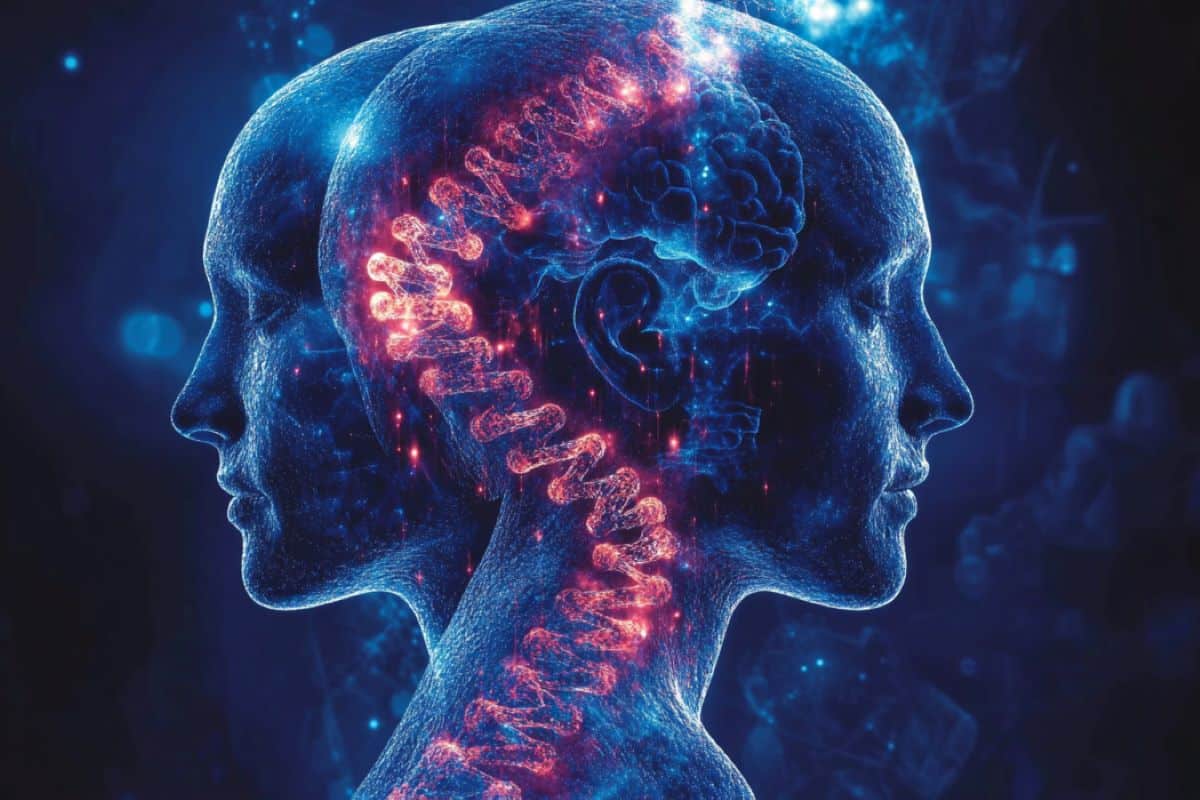
This shows a head and DNA.
These findings reveal a surprising complexity in the mechanisms underlying schizophrenia, emphasizing the role of multiple genes rather than single-gene causation. Credit: Neuroscience News

Schizophrenia is a neuropsychiatric disorder featuring recurrent episodes of psychosis – such as hallucinations, delusions, and disorganized thinking – with many patients developing apathy, social withdrawal, and poor emotional control as a result.

Because schizophrenia has been known to run in families for centuries, researchers have turned to genetic testing and analyses to identify risk factors for the condition. Recent genomic research on schizophrenia has identified nearly 300 common genetic variants and over 20 rare variants as significant risk factors for the disorder.

These discoveries have emerged from extensive genome-wide association studies, whole-exome sequencing, and other analyses. Simultaneously, studies of the functional organization of the brain have shed light on the intricate cellular composition and interconnections of the brain in both neurotypical individuals and those with schizophrenia.

These findings reveal a surprising complexity in the mechanisms underlying schizophrenia, emphasizing the role of multiple genes rather than single-gene causation.

This “polygenicity” highlights a mechanism that remains challenging to fully understand due to the lack of robust theoretical frameworks and experimental tools. Sullivan and colleagues reviewed these issues and provided ideas for a path forward in the Nature Reviews Neuroscience article.

However, Sullivan and colleagues stress that environmental factors (including lifestyle, drug use, poverty, stress, and complications at birth) are also relevant in addition to genomic risk.

Although these factors are more difficult to study compared to the genome, this genetic information is important for researchers to consider because some environmental factors are modifiable.

“The findings to date resoundingly indicate complexity,” wrote Sullivan, who is also director of the UNC Center for Psychiatric Genomics and the UNC Suicide Prevention Institute.

“Rather than being a deterrent to future research, this knowledge underscores the importance of accepting schizophrenia as a genetic and environmental enigma and scaling our research accordingly in our efforts improve the lives of those impacted by schizophrenia.”

About this schizophrenia and genetics research news

Author: Kendall Daniels
Source: UNC
Contact: Kendall Daniels – UNC
Image: The image is credited to Neuroscience News

Original Research: Closed access.
“Schizophrenia genomics: genetic complexity and functional insights” by Patrick Sullivan et al. Nature Reviews Neuroscience


Abstract

Schizophrenia genomics: genetic complexity and functional insights

Determining the causes of schizophrenia has been a notoriously intractable problem, resistant to a multitude of investigative approaches over centuries.

In recent decades, genomic studies have delivered hundreds of robust findings that implicate nearly 300 common genetic variants (via genome-wide association studies) and more than 20 rare variants (via whole-exome sequencing and copy number variant studies) as risk factors for schizophrenia.

In parallel, functional genomic and neurobiological studies have provided exceptionally detailed information about the cellular composition of the brain and its interconnections in neurotypical individuals and, increasingly, in those with schizophrenia.

Taken together, these results suggest unexpected complexity in the mechanisms that drive schizophrenia, pointing to the involvement of ensembles of genes (polygenicity) rather than single-gene causation.

In this Review, we describe what we now know about the genetics of schizophrenia and consider the neurobiological implications of this information.

Posted in Uncategorized | Tagged , , , , | Leave a comment

DW: Israel-Iran: A strike on oil assets could revive inflation


Israel-Iran: A strike on oil assets could revive inflation

Nik Martin

13th October 2024

Oil prices have spiked as speculation mounts that Israel could next target Iran’s oil or nuclear facilities. Could prices rise to $200 a barrel and what would be the impact on the global economy?

A view of Kharg Island Oil Terminal, 25 km from the Iranian coast in the Persian Gulf, in Iran on March 12, 2017
Israel could target Iran’s largest oil export terminal, Kharg IslandImage: Fatemeh Bahrami/Anadolu Agency/picture alliance

When Iran launched a barrage of some 180 ballistic missiles at Israel a week ago — causing little damage or casualties — Israeli Prime Minister Benjamin Netanyahu warned that Tehran had made a “big mistake” and would “pay for it.”

Iran’s first large strike on Israel in April — featuring 300 drones and missiles — drew a limited counterattack. But Israeli officials have this time vowed a “significant retaliation,” fueling speculation that Israel could target Iran’s oil, military and nuclear infrastructure.

Netanyahu is under intense pressure from some senior Israeli officials, including former Prime Minister Yair Lapid, to strike Iran’s “most painful target,” while US President Joe Biden has called for calm, saying October 4 he would think about alternatives to striking Iranian oil fields if he were in Israel’s shoes.

What might Israel’s retaliation look like?

Oil prices leap due to geopolitical risk 

Since Iran’s most recent strikes, oil prices have spiked sharply. Brent crude rose 17% in a week to $81.16 (€74), although prices have eased again after the Iran-backed Hezbollah militia signaled a readiness for a cease-fire in its conflict with Israel across the Lebanese border.

If Israel were to damage Iran’s most critical oil assets, it could remove nearly 2 million barrels per day from the global oil market, leading some traders to speculate about a return to three-digit oil prices. The oil price last crossed the $100 mark shortly after Russia launched its full-scale invasion of Ukraine in February 2022.

Some fear oil prices could reach $200

“If you [Israel] take out oil Installations in Iran, easily you [oil prices] could go to $200 plus,” Bjarne Schieldrop, chief commodities analyst at Swedish bank SEB, told US broadcaster CNBC last week.

The exports of Iran, one of the world’s largest oil producers, are subject to harsh international sanctions as part of a protracted dispute with the West over Tehran’s nuclear ambitions. Despite this, Iranian oil exports hit a five-year high of 1.7 million barrels in May, according to energy analytics firm Vortexa. About 90% of its oil is delivered to China, much of it illicitly, through Tehran’s so-called ghost fleet of nearly 400 tankers that disguise their movements to breach the sanctions.

“The Iranian economy is hugely dependent on the revenues it generates from its oil exports,” Carole Nakhle, CEO of the London-based consultancy Crystol Energy, told DW. “Any disruption to those revenues will have severe impacts on the economy.”

What oil facilities could Israel target?

If Israel did target Iran’s oil infrastructure, an attack on Kharg Island would likely be the most crippling. The island is home to Iran’s main oil export terminal, which plays a critical role in facilitating the country’s official and clandestine oil trade.

Located in the Persian Gulf, about 40 kilometers (25 miles) off the Iranian coast, Kharg Island has vast storage facilities, enabling it to handle nine-tenths of the Islamic Republic’s oil exports. Most of Iran’s tankers load from the Kharg facility, so any disruption could severely affect the country’s ability to meet its export commitments.

Other possible targets include the Bandar Abbas oil refinery, located in the southern Gulf port city of the same name, which plays a key role in crude exports but also hosts military facilities. The Abadan refinery, in the southwest, with a capacity of 400,000 barrels per day, is vital for Iran’s domestic consumption.

An Israeli attack on refineries might not drive oil prices as high as an attack on the Kharg export terminal, but it would cause more misery for ordinary Iranians, already struggling with high inflation, a weak currency and high unemployment as a result of years of Western sanctions.

The South Pars gas field, located in the Gulf, is the world’s largest natural gas field, shared with Qatar. South Pars contains around 8% of the world’s natural gas reserves and is a major revenue source for Iran. The Bushehr oil terminals, meanwhile, are located close to a nuclear plant of the same name, so Israel could achieve a double whammy if it decided to target that area.

An Iranian oil worker makes his way through Tehran's oil refinery south of the capital Tehran, Iran, Monday, Dec. 22, 2014
If Israel were to target one of Iran’s oil refineries, it could hurt domestic suppliesImage: Vahid Salemi/AP/picture alliance

Excess capacity keeps oil prices in check, for now

The rise in oil prices has been somewhat tamed by “plentiful supplies” in global markets, said Nakhle, noting how OPEC+ is sitting on almost 5 million barrels a day of spare capacity. At the same time demand is not growing fast, she said, as China’s appetite for oil has been hurt by a sluggish economic recovery from the COVID-19 pandemic.

But those supplies could quickly dry up if spare capacity dwindles in the event of a wider regional conflict. Tehran has repeatedly threatened to blockade the Strait of Hormuz, a critical choke point for around 20% of the world’s oil supply. This would add to the woes facing maritime trade after Iran-backed Houthis attacked shipping in the Red Sea over the past 11 months. Iran’s foreign minister, Abbas Araghchi, this week threatened “an even stronger response” to any attack by Israel on its infrastructure.

Some speculators have even compared the worsening Middle East tensions with the 1970s oil crisis, triggered by a war between Israel and several Arab states that saw oil prices quadruple, which Nakhle thinks is unsound.

“Oil is not as important in energy consumption as it used to be in the ’70s. Back then, it used to meet 50% of our energy needs worldwide,” she said. “The Middle East is no longer the only producer,” she added, noting how increased production by the United States, Brazil, Canada and Guyana has helped diversify supplies.

Israel more likely to target Iranian regime and military

Avner Cohen, professor of non-proliferation and terrorism studies at the Middlebury Institute of International Studies at Monterey, in the United States, doesn’t believe an Israeli attack on Iran is imminent. While strikes on Iran’s oil facilities can “not be ruled out,” Cohen believes Israel is more likely to target regime and military installations, including those belonging to the country’s elite Revolutionary Guards.

“If Israel were to hit major economic interests such as oil facilities and oil refineries, damage to the global economy could be felt,” he told DW, adding that he hoped Netanyahu “would be smart enough not to take that action.”

Any lengthy jump in energy prices could upset efforts by central banks to tame decades-high inflation, particularly in the West. That could lead to the return of higher interest rates, which would weaken the global economy, hurting consumer spending and business investment.

With the US presidential election less than a month away and Washington stepping up the pressure on Netanyahu, Cohen thinks Israel’s payback may likely be more symbolic, so as not to force Tehran into a further escalation that could draw in Arab neighbors and the United States.

“Both countries [Iran and Israel] do not want to create a full cycle of violence that would lead to a war of attrition. It would be bad for both countries, may force the US to intervene, and would bring even more chaos to the Middle East,” he said.

“At the same time, there is no communication between the two sides, no clarity on what the red line could be, and there are very few interlocutors who could influence both sides. So the margin for error is very high.”

Edited by: Uwe Hessler

Correction, October 10, 2024: An earlier version of this article misspelled the name of Carole Nakhle and her consultancy, Crystol Energy. DW apologizes for the errors.

Posted in Uncategorized | Tagged , , , , | Leave a comment

Iranian chess player Dorsa Derakhshani was given an ultimatum by the Islamic regime of Iran: either wear Hijab or you won’t be allowed to compete. She refused to wear the Hijab, she joined the USA team and became a world champion. Comment: Iran Ayatollah Khameni led could be slowly losing ground as Persian Royalty seek to regain their control; or young people stand apart from a dark autocratic theism in favour of a different culture; their very rich Persian culture. People should examine the history of Persia pre the 1979 take-over by Ayatollah Khomeni and his cohorts.

Azat (@AzatAlsalim) posted at 7:38 am on Thu, Oct 10, 2024:

Iranian chess player Dorsa Derakhshani was given an ultimatum by the Islamic regime of Iran: either wear Hijab or you won’t be allowed to compete.

she refused to wear the Hijab, she joined the USA team and became a world champion. 

https://t.co/oBvRBtfqLG
https://x.com/AzatAlsalim/status/1844266355190899055?t=vHYGJVK8XvZEkUCE2ixadA&s=03 

ReplyForwardAdd reaction
Posted in Uncategorized | Leave a comment

Neuroscience News: Neuroscience Confirms Your Subconscious Shapes Your Reality — via @bigthink

David Eagleman (@davideagleman) posted at 1:56 am on Thu, Oct 10, 2024:
Neuroscience Confirms Your Subconscious Shapes Your Reality — via @bigthink

https://t.co/YgzAWflAIq
https://x.com/davideagleman/status/1844180043628527892?t=majCK8vtKfEgdVFsA2nL0A&s=03 

Posted in Uncategorized | Leave a comment

Science American: The Path Bill Gates Sees to Overcoming Alzheimer’s Biggest Remaining Challenges. Positive news for people have a genetic link to Alzheimers, for people diagnosed early, for people who sustain Traumatic Brain Injury and the view that they are susceptible to Alzheimers or Parkinsons.

April 15, 2024

6 min read

The Path Bill Gates Sees to Overcoming Alzheimer’s Biggest Remaining Challenges

Gates talks about his own experience as a caregiver and all he is doing to fight this disease

Illustration of Bill Gates
Tony Healey
Scientific American Custom Media Logo
Davos Alzheimer’s Collaborative logo

This article was produced in partnership with the Davos Alzheimer’s Collaborative by Scientific American Custom Media, a division separate from the magazine’s board of editors.

It would be hard to imagine any one person who’s had more of an impact on public health than Bill Gates. Much of the wealth he amassed as founder of Microsoft has gone to charity—according to Fortune, he is one of only five billionaires to have given away more than 20 percent of his wealth. In 2023, the Bill and Melinda Gates Foundation, which he started with his former wife, Melinda Gates, spent more than $8 billion of its more than $70-billion endowment. 

Gates has focused his philanthropy largely on some of the most intractable health problems, such as malaria, HIV/AIDS and childhood vaccination. In recent years, he has turned to Alzheimer’s disease, starting with diagnostics and more recently expanding to proteomics and healthcare programs related to the disease. Scientific American Custom Media asked him about Alzheimer’s:

SCIENTIFIC AMERICAN CUSTOM MEDIA:
What sparked your interest in Alzheimer’s? How has your personal experience with the disease contributed to your decision to get involved?

Gates: Like many people, I have a personal connection to Alzheimer’s. My dad died from Alzheimer’s, so I understand first-hand what a cruel disease it is, and how difficult it can be to watch a loved one suffer with it. We were fortunate to have the resources to provide my dad with excellent care, and our family is grateful for the wonderful caregivers who helped him in the 13 years he lived with the disease. But for the majority of families battling Alzheimer’s, this is not an option. Caregiving most often falls to a spouse or a child, which can be overwhelming.

The financial burden of the disease is easier to quantify than the emotional cost. The lifetime cost of care for Alzheimer’s and other dementias is rapidly increasing in the U.S., Japan, Europe, and other countries. According to the Institute for Health Metrics and Evaluation, the global cost will exceed $1.6 trillion by 2050 and represent nearly one-third of all healthcare spending. Unlike those with many chronic diseases, people with Alzheimer’s incur long-term care costs as well as direct medical expenses. If you get the disease in your 60s or 70s, you might require expensive care for decades. 

As I spent time learning about Alzheimer’s and the research into it, I came to understand the challenges. The brain can’t be sampled easily or often, for example, and the blood-brain barrier is a double-edged sword—it both protects the brain and makes it harder for treatments to get in.

Even so, as I learned about all the innovation in this field, I grew optimistic about the ability to make progress toward treatment and eventually a cure. This is a frontier where we can dramatically improve human life. It’s a miracle that people are living so much longer today, but longer life expectancies alone are not enough. People should be able to enjoy their later years—and we need a breakthrough in Alzheimer’s to fulfill that. 

As someone who takes a bird’s- eye view of major health issues, how would you describe the current outlook for Alzheimer’s research and clinical practice? 

After decades of negative clinical trials and dozens of failed therapies, researchers are making progress on both diagnostics and therapeutics. 

Blood-based diagnostics are advancing rapidly—the first blood test for Alzheimer’s, PrecivityAD, was launched in late 2020. A few others have followed since, but we are looking forward to the first FDA-cleared blood tests on the horizon. Once this becomes a reality, the next hurdle will be ensuring these tests are used properly, accessible and available to the patients that need them, and that we understand how these tests work in different patient populations.

Read More from This Report

The New Age of Alzheimer’s

View the Report

The therapeutic pipeline is diverse and robust—at the beginning of 2023, there were 187 trials assessing 141 different therapeutics.  The anti-amyloid agent lecanemab has been approved for use in patients, and donanemab is expected to follow soon. Other therapeutics in the pipeline include disease-modifying therapies and cover a wide range of approaches, including amyloid and tau but also newer mechanisms such as neuroinflammation, synaptic plasticity/neuroprotection, metabolism and oxidative stress (see J. Cummings et al., Alzheimers Dement (N Y), Apr-Jun 2023, Vol. 9: e12385).

With these and other breakthroughs that are coming, it’s fair to say we’re at a tipping point on Alzheimer’s. 

In recent years you’ve directed funding to accelerate development of diagnostic technologies for Alzheimer’s. Why did you pick that particular area to start? 

We systematically looked at the barriers to R&D on Alzheimer’s disease, and we heard consistently that not having a simple, non-invasive, scalable and relatively inexpensive diagnostic (such as a blood test) was a key challenge. It’s a barrier to early diagnosis and subsequent enrollment in clinical trials—and continuing to make advances on the disease depends on getting enough people enrolled early enough in trials.

Another problem is that the commercial market for diagnostics does not stimulate investment, so potential scientific breakthroughs are not being pushed forward as rapidly as they should be. This is why I partnered with the Alzheimer’s Drug Discovery Foundation to create the Diagnostics Accelerator, which is designed to advance bold ideas for easier, more accurate and earlier diagnosis of Alzheimer’s disease.

Do you have any plans to direct funding to accelerate progress in other areas of Alzheimer’s, such as treatments, diversity in clinical trials, public-health outreach or others?  

We’re focused on five areas: understanding the biology of the disease, diagnosing it, treating it, overcoming bottlenecks in clinical trials, and making it easier for researchers to share data with each other.

One of our latest investments is with the Global Neurodegeneration Proteomics Consortium, which brings together data from more than 40,000 blood samples around the world so researchers can identify biomarkers for detecting neurodegenerative diseases and identifying new mechanisms to test. We’re also partners in the Clinical Trial Recruitment Lab and the Global Alzheimer’s Platform Bio-Hermes Study, both of which are aimed at recruiting people from diverse backgrounds to join clinical trials. 

We’re also partnering in the Davos Alzheimer’s Collaborative’s Healthcare System Preparedness Initiative, as well as a recently announced Innovative Health Initiative-funded program, AD-RIDDLE, all of which are efforts to ensure that breakthroughs can be deployed in healthcare systems once they’re approved for use.  

You’ve written about how data sharing is vital to learning more about Alzheimer’s disease and accelerating progress. Why is that so important and how is that effort going? 

Over the past few decades, drug trials and longitudinal cohort studies have generated an enormous amount of data. But right now, that information is not being shared to the fullest extent possible. Much of it remains locked away or accessible only to select groups. That’s a missed opportunity as well as a disservice to the people who agreed to join studies so they could help advance the field.

To help unlock these datasets while making sure they’re used responsibly, we worked with several partners to launch the Alzheimer’s Disease Data Initiative. Our goal is to help researchers from around the world access more information by making data and data platforms interoperable. So far, the effort has established interoperability with several data platforms, including the Dementias Platform U.K. portal, the Vivli Platform, and the Global Alzheimer’s Association Interactive Network platform (GAAIN).

More recently we’ve gotten involved in the European Platform for Neurodegenerative Diseases (EPND), which is building a platform that will help researchers make their data and biosamples shareable. Their platform will build on data and analysis tools made available by the Alzheimer’s Disease Data Initiative, including the Global Research and Imaging Platform, a nonprofit that I fund. Finally, we’ve created a two-year fellowship, named after my dad, that brings in researchers from around the world to work on data analysis and to champion the idea of interoperability. 

What is the biggest obstacle to making progress on Alzheimer’s? Is there a cultural shift that needs to happen?

Although we’ve recently seen important advances in therapeutics and diagnostics, there is still a lot we don’t know about Alzheimer’s disease and the brain. Timely diagnosis is the first major shift that needs to happen—many studies have shown that Alzheimer’s disease and dementia are dramatically underdiagnosed today. If we’re able to catch the disease sooner, we’ll be able to give patients more options for treatment, social services, and participating in clinical trials and other research opportunities. 

But Alzheimer’s disease is also a heterogeneous disease, and patients who have it show a wide range of pathologies in the brain and resulting symptoms. I’m hopeful that the field will be able to capitalize on recent advances in diagnosis and treatment—and also make it easier and more efficient for people to enroll in Alzheimer’s clinical trials—so we can continue to improve our understanding of subtypes of the disease and target our efforts at treatment and prevention.

Finally, there is still a lot of stigma surrounding neurodegenerative diseases. That makes it harder to discuss them openly. But I think a lot of that is driven by the fact that these diseases seem so mysterious because we haven’t had sophisticated diagnostics or treatments. I’m optimistic that as more advances happen, the stigma will fade, and open public conversations about Alzheimer’s will accelerate progress even more.

This article is part of The New Age of Alzheimer’s, a special report on the advances fueling hope for ending this devastating disease.

Learn more here about the innovation ecosystem that Davos Alzheimer’s Collaborative is building to speed breakthroughs and end Alzheimer’s disease. Explore the transforming landscape of Alzheimer’s in this special report.

Posted in Uncategorized | Tagged , , , , | Leave a comment