Are Large Language Models the New “Thinking Aids”? Comment: with joy I greet innovations like these. TBI 30 yrs ago; hearing deficits, olfactory damage, brocas et al. Opportunity placed me in Trinity College Dublin where I had access to computers and notetaking lectures too. Groundwork via computer, Twitter, WordPress means this was my source of augmented reality but now what greatly interests me is AI those LLM’s. Embrace is all I can say. We all have a cognitive reserve and we should add to it.


 Verified by Psychology Today

John Nosta

John Nosta

The Digital Self

Cognition

Are Large Language Models the New “Thinking Aids”?

LLMs may be a perfect tool to support and sustain cognitive health.

Posted October 3, 2024 |  Reviewed by Michelle Quirk

Key points

  • Cognitive function declines with reduced sensory stimulation, emphasizing the importance of engagement.
  • LLMs can act as “thinking aids,” providing personalized, interactive cognitive stimulation.
  • By fostering dynamic dialogues, LLMs help bridge cognitive gaps and may promote ongoing cognitive health.
Source: DALL-E / OpenAI

Source: DALL-E / OpenAI

Let’s cut to the chase: Cognitive function tends to decline when sensory stimulation to the brain is reduced. In this context, the adage “Use it or lose it” carries significant weight. A recent study examining hearing loss and cognitive impairment reinforces the connection between sensory engagement and cognitive resilience. Clearly, the utility of a hearing aid goes far beyond merely amplifying sound.

And that got me thinking. Perhaps we can look beyond traditional interventions like hearing aids to explore a new horizon in cognitive preservation: the role of large language models (LLMs) as tools for sustained and tailored cognitive stimulation. Maybe we can even call them “thinking aids.”

The Cognitive Impact of Sensory Engagement

The study on hearing loss and cognition underscores a crucial point: Sensory input is a key driver of cognitive connectivity. As we age, sensory deficits like hearing loss can lead to reduced cognitive function, highlighting the importance of maintaining mental stimulation throughout life. However, the solution may not lie solely in the physical aids we traditionally rely on (such as hearing devices) but rather in how we engage the mind in meaningful activities like reading.

Here, the phrase “Use it or lose it” gains nuance. The decline in cognitive function isn’t just about a physical sensory deficit; it may be also about a lack of cognitive exercise. Hearing loss may limit social interaction, which, in turn, reduces cognitive engagement. This is where technology, specifically LLMs, could fill a gap.

LLMs as “Thinking Aids” and Beyond

LLMs represent a new frontier in fostering cognitive engagement. Unlike static interventions, LLMs offer a dynamic, iterative experience that can be fine-tuned to an individual’s cognitive needs. From casual conversation to deep philosophical discussion, LLMs provide a rich spectrum of interactions designed to stimulate various aspects of cognition.

Traditional methods of cognitive engagement, like puzzles or reading, are effective but often limited in their interactivity and adaptability. LLMs, however, have the potential to act as personalized cognitive coaches. They can adapt their complexity, tone, and subject matter based on an individual’s interests, attention span, and cognitive capabilities. This adaptability creates a unique form of “cognitive jazz“—an improvisational interplay of ideas that keeps the mind agile and engaged.

Cognitive Connectivity in Action

Imagine an elderly individual engaging in daily conversations with an LLM, ranging from discussing the latest news to exploring historical events in depth. The LLM isn’t just serving static information; it’s responding, challenging, and even provoking new lines of thought. This interactive process could foster a form of cognitive connectivity that mimics social interaction—a critical factor in cognitive health.

Moreover, the LLM can help identify and bridge cognitive gaps. By noting patterns in a person’s responses, such as hesitations or frequent forgetfulness, it could subtly guide conversations toward topics that strengthen weak areas of cognition. This approach moves beyond simple exercises; it creates an ongoing, evolving dialogue that adapts to the user’s cognitive needs.

From Play to Deep Thought: The Iterative Learning Model

The beauty of LLMs lies in their versatility. They can engage in playful banter, solving riddles or creating stories—activities that spark joy while also engaging critical cognitive functions like memory, reasoning, and creativity. On the other end of the spectrum, LLMs can dive into complex topics, encouraging users to reflect, question, and synthesize information.

This iterative learning model aligns perfectly with the “lifelong learning” concept. Cognitive health isn’t merely about maintaining sharpness; it’s about embracing continuous growth. LLMs, with their ability to shift from light-hearted conversation to deep analysis, can be powerful allies in keeping the mind not just active but curious and adaptable.

Confronting Cognitive Isolation

The use of LLMs as tools for cognitive engagement could help with our approach to cognitive decline. Traditional interventions, like hearing aids, address the sensory deficits that may contribute to cognitive impairment. However, LLMs go a step further by engaging the mind directly, adapting to individual needs in real time, and fostering a dynamic interplay of ideas.

Monitoring cognitive function, as suggested in the recent study, is indeed valuable. But what if we also had tools that actively stimulate and sustain cognitive connectivity? The LLMs’ potential to personalize and adapt cognitive experiences means they could serve as more than just monitoring tools—they could become catalysts for lifelong cognitive fitness.

Thinking and a Future of Cognitive Well-Being

The emerging role of LLMs in cognitive health represents a shift from passive intervention to active engagement. By providing tailored, iterative interactions that range from simple play to deep intellectual stimulation, LLMs could help keep our cognitive faculties in tune. They have the potential to drive cognitive fitness and promote lifelong learning, creating a robust buffer against decline. And, of course, it is a tremendous opportunity for clinical research.

By integrating LLMs into our daily lives, we might find that the key to cognitive health isn’t just in mitigating sensory deficits, but in nurturing a lifetime of curiosity and connection.

About the Author

John Nosta

John Nosta is an innovation theorist and founder of NostaLab.

Online:

 Nostalab Official Websi

Posted in Uncategorized | Tagged , , , , | Leave a comment

John Nosta: Can ChatGPT Diagnose Brain Tumours Better than Doctors

John Nosta (@JohnNosta) posted at 9:02 pm on Thu, Oct 03, 2024:
Can ChatGPT Diagnose Brain Tumors Better than Doctors?

“The accuracy rate of GPT-4 in the task of performing differential diagnoses was 94%, which was significantly higher than the best-performing human radiologist.”

https://t.co/wXoU84E0Ff #AI #LLMs #radiology #medicine


https://x.com/JohnNosta/status/1841931823250551196?t=no8JqBVFm5Dddf4pJZjqYA&s=03 


 Verified by Psychology Today

Cami Rosso

Cami Rosso

The Future Brain

Artificial Intelligence

Can ChatGPT Diagnose Brain Tumors Better than Doctors?

AI machine learning LLMs versus human radiologists for diagnosing brain tumors.

Posted October 3, 2024 |  Reviewed by Lybi Ma

DeltaWorks/Pixabay

Source: DeltaWorks/Pixabay

The predictive capabilities of artificial intelligence (AI) large language models (LLMs) to find patterns in enormous amounts of complex brain imaging data are actively being evaluated by researchers and neuroscientists. A new study published recently in European Radiology explores the performance of the AI large language model GPT-4 versus human radiologists with surprising results.

“This study is the first attempt to evaluate GPT-4’s ability to interpret actual clinical radiology reports, rather than from settings like image diagnosis quizzes,” wrote corresponding author Daiju Ueda, an associate professor at Osaka Metropolitan University’s Graduate School of Medicine, along with his research team consisting of Yasuhito Mitsuyama, Hiroyuki Tatekawa, and colleagues.

In the field of artificial intelligence, large language models are machine learning models, specifically deep learning models, which can perform a wide range of natural language processing (NLP) tasks such as generating text, answering questions, analyzing text, translation, classifying text, categorizing text, and acting as a conversational chatbot.

Examples of large language models include Generative Pretrained Transformer (GPT) by OpenAI, Bidirectional Encoder Representations from Transformers (BERT) by Google, and Robustly Optimized BERT Approach (RoBERTa) by Meta AI, among many others.

“Large language models like GPT-4 have demonstrated potential for diagnosis in radiology,” wrote the researchers.

According to the researchers, what’s lacking in the evaluation of GPT-4 as a potential tool for radiologists is a study that evaluates the AI using actual radiology reports where the data tends to be more varied and unstructured in comparison to studies based on more structured data from diagnostic quizzes. This team aimed to investigate this unknown by comparing the diagnostic abilities of GPT-4 performance ability using data from real-world clinical radiology reports.

“We zeroed in on MRI reports pertaining to brain tumors, given the pivotal role radiological reports play in determining treatment routes such as surgery, medication, or monitoring; and that pathological outcomes offer a definitive ground truth for brain tumors,” the scientists wrote.

The researchers assembled a team of human radiologists consisting of four general radiologists and three neuroradiologists who have been certified specialists in diagnostic imaging for the central nervous system by the Japanese Society of Radiology. MRI reports of preoperative brain tumors taken at Osaka Metropolitan University Hospital and the National Hospital Organization Osaka Minami Medical Center were translated from Japanese to English by a general radiologist. To ensure translation quality, a board-certified neuroradiologist who uses English daily and has eight years of experience verified that the translation was complete with no data lost.

The researchers prompted ChatGPT based on GPT-4 by listing three possible differential and final diagnoses ranked in the order of likelihood from the following head MRI findings and then provided real-world data from clinical practices of imaging findings.

In health care, a differential diagnosis describes the process where the medical doctor lists possible conditions or diseases that may account for the symptoms.

For example, a brain abscess is swelling in the brain filled with an opaque, thick, typically off-white fluid called pus. Differential diagnoses of brain abscesses may include bacterial meningitis, brain cancer, fungal infection by the fungus Cryptococcus neoformans, Cysticercosis (tissue infection by parasitic pork tapeworm larvae), and other causes according to Medscape.

The GPT-4 findings were compared to a different group of radiologists consisting of three general radiologists and two board-certified neuroradiologists. Using this methodology, the team evaluated man versus machine learning for 150 radiological reports.

The result revealed that the accuracy rate of GPT-4 in the task of performing differential diagnoses was 94%, which was significantly higher than the best-performing human radiologist. Overall, the human radiologists’ accuracy rate was much lower, ranging between 73% to 89%. The final diagnostic accuracy rate for GPT-4 was 73%, versus the human radiologists ranging between 65% to 79%.

“This study evaluated GPT-4-based ChatGPT’s diagnostic capabilities using real-world clinical MRI reports from brain tumor cases, revealing that its accuracy in interpreting brain tumors from MRI findings is competitive with radiologists,” the researchers reported.

Based on their discovery, the scientists conclude that GPT-4 can serve as an effective second opinion as a neuroradiology tool for final diagnoses and as an advisory tool for general radiologists and residents.

Copyright © 2024 Cami Rosso All rights reserved.

Posted in Uncategorized | Leave a comment

Princeton-led team of neuroscientis has built a complete roadmap through a fruit fly brain video; followed by article from Nature: Largest brain map ever reveals fruit fly’s neurons in exquisite detail

============

sement

Nature

  • NEWS
  • 02 October 2024

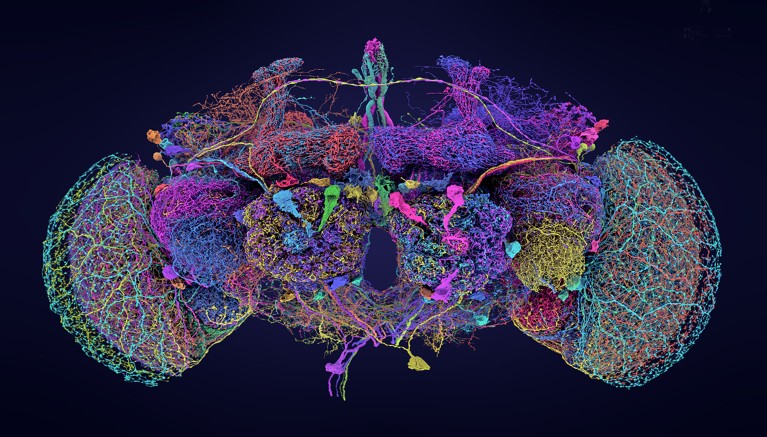
Largest brain map ever reveals fruit fly’s neurons in exquisite detail

Wiring diagram lays out connections between nearly 140,000 neurons and reveals new types of nerve cell.

A comprehensive map of the fifty largest neural connections of the fly brain.
Researchers have mapped nearly 140,000 neurons in the fruit-fly brain. This version shows the 50 largest. Credit: Tyler Sloan and Amy Sterling for FlyWire, Princeton University (ref. 1)

A fruit fly might not be the smartest organism, but scientists can still learn a lot from its brain. Researchers are hoping to do that now that they have a new map — the most complete for any organism so far — of the brain of a single fruit fly (Drosophila melanogaster). The wiring diagram, or ‘connectome’, includes nearly 140,000 neurons and captures more than 54.5 million synapses, which are the connections between nerve cells.

“This is a huge deal,” says Clay Reid, a neurobiologist at the Allen Institute for Brain Science in Seattle, Washington, who was not involved in the project but has worked with one of the team members who was. “It’s something that the world has been anxiously waiting for, for a long time.”

The map1 is described in a package of nine papers about the data published in Nature today. Its creators are part of a consortium known as FlyWire, co-led by neuroscientists Mala Murthy and Sebastian Seung at Princeton University in New Jersey.

A long road

Seung and Murthy say that they’ve been developing the FlyWire map for more than four years, using electron microscopy images of slices of the fly’s brain. The researchers and their colleagues stitched the data together to form a full map of the brain with the help of artificial-intelligence (AI) tools.

But these tools aren’t perfect, and the wiring diagram needed to be checked for errors. The scientists spent a great deal of time manually proofreading the data — so much time that they invited volunteers to help. In all, the consortium members and the volunteers made more than three million manual edits, according to co-author Gregory Jefferis, a neuroscientist at the University of Cambridge, UK. (He notes that much of this work took place in 2020, when fly researchers were at loose ends and working from home during the COVID-19 pandemic.)

An animation of the CT1 neuron in the fruit-fly brain. There are two of them; each one spans an entire eye and has more than 148,000 synapses. Credit: Amy Sterling, Murthy and Seung laboratories, Princeton University (ref. 1)

But the work wasn’t finished: the map still had to be annotated, a process in which the researchers and volunteers labelled each neuron as a particular cell type. Jefferis compares the task to assessing satellite images: AI software might be trained to recognize lakes or roads in such images, but humans would have to check the results and name the specific lakes or roads themselves. All told, the researchers identified 8,453 types of neuron — much more than anyone had expected. Of these, 4,581 were newly discovered, which will create new research directions, Seung says. “Every one of those cell types is a question,” he adds.

The team was surprised by some of the ways in which the various cells connect to one another, too. For instance, neurons that were thought to be involved in just one sensory wiring circuit, such as a visual pathway, tended to receive cues from multiple senses, including hearing and touch1. “It’s astounding how interconnected the brain is,” Murthy says.

Exploring the map

The FlyWire map data have been available for the past few years for researchers to explore. This has enabled scientists to learn more about the brain and about fruit flies — findings that are captured in some of the papers published in Nature today. Cubic millimetre of brain mapped in spectacular detail

In one paper2, for example, researchers used the connectome to create a computer model of the entire fruit-fly brain, including all the connections between neurons. They tested it by activating neurons that they knew either sense sweet or bitter tastes. These neurons then launched a cascade of signals through the virtual fly’s brain, ultimately triggering motor neurons tied to the fly’s proboscis — the equivalent of the mammalian tongue. When the sweet circuit was activated, a signal for extending the proboscis was transmitted, as if the insect was preparing to feed; when the bitter circuit was activated, this signal was inhibited. To validate these findings, the team activated the same neurons in a real fruit fly. The researchers learnt that the simulation was more than 90% accurate at predicting which neurons would respond and therefore how the fly would behave.

In another study3, researchers describe two wiring circuits that signal a fly to stop walking. One of these contains two neurons that are responsible for halting ‘walk’ signals sent from the brain when the fly wants to stop and feed. The other circuit includes neurons in the nerve cord, which receives and processes signals from the brain. These cells create resistance in the fly’s leg joints, allowing the insect to stop while it grooms itself.

One limitation of the new connectome is that it was created from a single female fruit fly. Although fruit-fly brains are similar to each other, they are not identical. Until now, the most complete connectome for a fruit-fly brain was a map of a ‘hemibrain’ — a portion of a fly’s brain containing around 25,000 neurons. In one of the Nature papers out today4, Jefferis, Davi Bock, a neurobiologist at the University of Vermont in Burlington, and their colleagues compared the FlyWire brain with the hemibrain.

Some of the differences were striking. The FlyWire fly had almost twice as many neurons in a brain structure called the mushroom body, which is involved in smell, compared with the fly used in the hemibrain-mapping project. Bock thinks the discrepancy could be because the hemibrain fly might have starved while it was still growing, which harmed its brain development.

The FlyWire researchers say that much work remains to be done to fully understand the fruit-fly brain. For instance, the latest connectome shows only how neurons connect through chemical synapses, across which molecules called neurotransmitters send information. It doesn’t offer any information about electrical connectivity between neurons or about how neurons chemically communicate outside synapses. And Murthy hopes to eventually have a male fly connectome, too, which would allow researchers to study male-specific behaviours such as singing. “We’re not done, but it’s a big step,” Bock says.

doi: https://doi.org/10.1038/d41586-024-03190-y

Posted in Uncategorized | Tagged , , , , | Leave a comment

Tortoise Daily Sensemaker: The Cult of Sam. Artificial Intelligence from non profit making to immense returns

View in browserDaily Sensemaker
The Cult of Sam


AI, the company behind ChatGPT, has raised $6.6 billion in its latest funding round. It’s the largest fundraise in Silicon Valley’s history and has nearly doubled the company’s valuation to $157 billion.

So what? This does not mean OpenAI’s products are twice as intelligent as they were a few months ago. It just means the company is twice as focused on money. Also: its founder could be in line for an eleven-figure fortune; his staff are going to have to decide whether to follow him in pursuit of dollars or stick with their original goal of benefitting all humanity; and the sector as a whole is going to have to start to pay its way.

For context: OpenAI has never made a profit and is on course to lose $5 billion this year, but its market cap would make it the second-largest company in the FTSE 100. East Coast analysts are starting to wonder if West Coast software engineers will ever find a commercial use for AI’s large language models (LLMs); or make a reality of artificial general intelligence (a version that supposedly could think for itself and even eclipse humanity). Even so, about 10 million ChatGPT users pay OpenAI $20 a month, and the company’s revenue is up 1,700 per cent since the beginning of 2023, nearing $4 billion this year.

Cult of altruism. OpenAI was founded as a nonprofit on the twin principles of “openness” and subordinating AI to humans rather than vice versa.

Cult of Sam. Its founder, Sam Altman, has spent the past year consolidating his power after briefly losing it in an argument with his more idealistic co-founders last November. Since then more than 20 researchers and executives have left the company. Having previously said he wouldn’t take an ownership stake because he has “enough money”, Altman is now discussing the possibility of holding equity (although he’s dismissed as “ludicrous” a Bloomberg report that it could be worth $10 billion).

Cult of AGI. Artificial general intelligence remains OpenAI’s lofty holy grail even though it has no strict definition and the quest for it could tear the company apart:

Internal disputes. There has always been a dissonance between OpenAI’s altruists and those who want to move fast and break things in the name of AGI. Now the WSJ says this divide could destabilise the company and drive away its researchers.

External doubt. Some observers doubt that AGI exists even in principle, and Goldman Sachs Research recently questioned whether the $1 trillion invested in generative AI and LLMs will ever pay off.

Stake in the ground. Such scepticism cuts little ice in Silicon Valley, where OpenAI has told investors not to fund its competitors, including Anthropic and Elon Musk’s xAI (Musk co-funded OpenAI and left in 2018). OpenAI can make this highly unusual case because investors believe it’s the frontrunner in a race for a technology that could change the world as the internet and mobile did.

No limits. On Monday the governor of California vetoed a landmark bill designed to regulate AI companies, saying it could stifle innovation.

No business model. OpenAI is duly innovating – and burning through cash. Machine learning engineers are expensive to employ, but the real cost is the computing required to train the models.
Altman isn’t worried. “Whether we burn $500 million a year or $5 billion – or $50 billion a year – I don’t care, I genuinely don’t,” he told Stanford University students in May. “As long as we can figure out a way to pay the bills, we’re making AGI. It’s going to be expensive.”
Investors may recoil.


What’s more… They may decide cheaper, smaller, less ambitious uses of AI are the way to go. Google’s newly-released organisational tool, NotebookLM, can search through 500,000 words of notes at a time, answering user queries and making disturbingly good podcasts out of thin air. These more focused language models will change the world faster than AGI. They might even turn a profit.
Posted in Uncategorized | Tagged , , , , | Leave a comment

Irish Legal News: TikTok opens ‘transparency and accountability centre’ in Dublin

TikTok opens ‘transparency and accountability centre’ in Dublin


TikTok opens 'transparency and accountability centre' in DublinPictured: Dara Calleary and Elaine Fox opening TikTok’s new Dublin Transparency and Accountability Centre.



TikTok has opened a new “transparency and accountability centre” in Dublin which experts can visit to see how it works to protect users online. Dara Calleary, minister of state for trade promotion, digital and company regulation, joined TikTok yesterday to officially open the new centre, which joins similar centres already established in Los Angeles, Washington DC and Singapore.

Commenting, Mr Calleary said: “The new transparency and accountability centre will undertake another important area of work for TikTok aligning with both the trust and safety and privacy hubs.“You have had an amazing expansion over the last four years, and it is truly impressive how rapidly your Irish operations have expanded. I have no doubt the skilled team at TikTok will ensure the new transparency and accountability centre is a huge success.

”Elaine Fox, a solicitor recently appointed as head of Ireland for TikTok, added: “It’s fitting to open this space in Dublin as it really is a showcase of the work many of our highly skilled teams here do across the areas of data security, privacy and trust and safety.“We look forward to welcoming guests from Europe and around the world, and offering them insights into how we safeguard our platform and the one billion people globally that come to it every month.”


The centre, known as DUBTAC for short, is located in The Sorting Office, which will soon be home to TikTok’s entire Ireland-based workforce. Academics, businesses, policymakers, politicians, regulators, researchers and other experts will be able to come to DUBTAC to see how TikTok secures its users’ safety, data and privacy, as well as learning about its recommendation technology and its work to protect European users’ data.

…

[Message clipped]  View entire message

Posted in Uncategorized | Tagged , , , , | Leave a comment

eurasia review follow it: The ‘Financial Coup’ That Seized America – OpEd

    dollar eye Benjamin close up

    The ‘Financial Coup’ That Seized America – OpEd

       0 Comments

    By Peter St. Onge

    In the wake of the 2008 Financial Crisis, former chief economist of the IMF Simon Johnson warned that the same dysfunctional policies he saw in his basketcase banana republics had taken hold in the United States.

    Johnson warned that if America didn’t act fast, we would plunge into a “Quiet Coup” as the American financial system effectively captures the government, bailing itself out until we run out of money.

    Well, we didn’t act fast. In fact, we got worse.

    And here we are.

    Our Bankrupt Financial System

    In recent videos I’ve talked about the trillion of distress in the financial system, the common thread being that you, the taxpayer, will be bailing them all out – we saw this in the 2023 bank bailouts, pre-paid in the dark.

    Of course, given our $35 trillion in national debt, we can’t afford it. But pay it we will, driving that $35 trillion to, according to the CBO, $50 trillion-plus.

    At some point, it gets too big to bail out. This means either hard default – they stop paying interest. Or the more likely soft default – they let inflation rip, melting away the national debt along with our life savings. And between here and there is a wholesale fleecing of the middle class and the working class who rely on them for a job.

    The Ignored Warning

    So, first, the ignored warning by Simon Johnson. I’m no fan of the IMF – their role is essentially feeding their client dictators fresh drugs at massive taxpayer expense. But one thing the IMF does know is dysfunctional governments.

    In his warning, Johnson detailed the typical pattern when countries collapse – when they come in desperation to the IMF.

    First, a small group of powerful elites takes over policy. This is typically the financial elite, or large companies when the country has them. 

    Because these elites know they’ll be bailed out, they take excessive risks in good times. An iron law of finance is that risk pays reward. Meaning if you know you’re going to get bailed out, you’d be a moron not to take on too much risk. 

    If every hand at the poker game is all-in, inevitably you lose. You pass your losses to the taxpayer and start over with fresh chips, courtesy of the suckers.

    The Quiet Coup

    Johnson lays out his numbers: from 1973 to 1985, America’s financial sector never earned more than 16% of the domestic corporate product. But by the early 2000s, it was earning 41%. 

    It turned a chunk of these profits into lobbying, repealing Depression-era prudential regulations separating banking and investment banking. In other words, freeing banks to gamble with taxpayer-guaranteed funds. 

    Then it lobbied to raise leverage – meaning how much the financial sector could borrow. So it could make large gambles with a small amount of money – again, all taxpayer-guaranteed. 

    The end result was the 2008 crisis, where banks made trillions in risky loans to people with no income, no assets, and no credit. 

    The leverage meant they had bet the farm and then some – keeping all the profits. Then when it turned south they sicced lobbyists on Washington to line up bailouts, using the real economy as a hostage to wring out yet more lobbyist favors. 

    The Washington-Wall Street Racket

    In return, they gave politicians and their staff plum positions or even outright bribes. 

    Ben Bernanke got $250,000 for a single speech at a financial conference. 

    Janet Yellen was paid $7 million in speaking fees by Goldman Sachs and other Wall Street banks – hedge fund Citadel paid Yellen $292,500 for a single speech. 

    London-based Standard Chartered paid $270,000 for one speech – interesting for a foreign bank when we can only imagine what favors were done in return.

    Johnson sums it up: the American financial system is “desperately ill,” kept alive only by an endless series of bailouts, like the ones that headed off bank failures last year. 

    He says the only solution is forced recognition of bank losses – which would bankrupt them – then selling them to new management that will not have access to bailouts.

    What’s Next

    Given their lobbying power, the odds of breaking up America’s megabanks are slim to none. 

    Meaning unless Washington reins in the banks, we’re in store for more existential financial crises, more bailouts and national debt, and more running out the clock to financial catastrophe. 

    We missed our chance in 2008, and in all likelihood, it will take an even bigger crisis before politicians turn on their lobbyists and the financial coup that has seized our republic.

    FacebookTwitterEmailFlipboardMastodonLinkedInShare

    Peter St. Onge

    Peter St. Onge is an economist, a Fellow at the Mises Institute, and a former MBA professor

    Posted in Uncategorized | Tagged , , , , | Leave a comment

    TedTalks: As War Erupts and Iran rises up in war, please watch this. Iran is an inhumane society especially to women, but there are those who are prepared to speak out.

    “Woman, Life, Freedom” in Iran — and what it means for the rest of the world

    TED2023

    • April 2023

    Posted in Uncategorized | Leave a comment

    Eurasia Review: Iran: Prisoners Warn Of Looming Wave Of Executions – OpEd. Comment: Those subjugated in Iran.

    Iran: Prisoners Warn Of Looming Wave Of Executions – OpEd. Comment: Those subjugated in Iran.

       0 Comments

    By Mahin Horri

    Inmates in multiple prisons across Iran held the thirty-sixth week of the “No to Executions Tuesdays” campaign on Tuesday, October 1, protesting the wave of executions in Iran by holding hunger strikes. The prisons that took part in the campaign include:

    Evin (Women’s Ward, Ward 4, and Ward 8), Ghezel Hesar (Unit 3 and Unit 4), Greater Tehran Prison, Khorramabad Prison, Nezam Prison in Shiraz, Asadabad Prison in Isfahan, Bam Prison, Mashhad Prison, Qaemshahr Prison, Lakan Prison in Rasht, Ardabil Prison, Tabriz Prison, Urmia Prison, Khoy Prison, Naqadeh Prison, Salmas Prison, Saqqez Prison, Baneh Prison, Marivan Prison, Kamyaran Prison, and Arak Prison.

    The prisoners participating in this week’s campaign issued a statement, honoring the memory of those killed in the “Bloody Friday” in Zahedan. They strongly condemned the regime’s crime and declared that they would continue to stand in solidarity with the grieving mothers and families in their fight for justice.

    The statement from the striking prisoners also added: “The execution-driven regime continues to push the boundaries of crime and executions. In just the past ten days, more than 23 people have been executed, and in a medieval act, two individuals were publicly executed in Khomein on Monday.

    “This regime has executed 20 people in Shiraz prison alone from September 14 to October 25. These figures have not been reported by any state media.”

    The striking prisoners’ statement further emphasized: “Regardless of the charges, the ultimate goal of executions is repression and suffocation. Given the current sensitive situation and the international crises the regime is facing, which it cannot resolve externally, its most accessible tool of retaliation is to increase the use of the gallows and take revenge on prisoners and those sentenced to death.

    “Therefore, we warn that in the coming weeks, due to the aforementioned reasons, there is a likelihood of an increase in executions and death sentences. We express our concern for those on death row, as they are the first targets to compensate for the regime’s regional and international failures.

    “We call on all independent and free human rights activists, both domestic and international, to be the voice of the prisoners sentenced to death.”

    The warnings of the prisoners come while the regime is wantonly carrying out executions in its prisons. On Monday, September 30, 2024, regime authorities in Khomeyn hanged two prisoners in public on charges of killing an officer of the suppressive State Security Force in December 2020.

    On Thursday, September 26, 2024, three prisoners was executed in Zahedan, Isfahan, and Kerman Prison. On Wednesday, September 25, 2024, while regime president Massoud Pezeshkian was addressing the UN General Assembly, regime authorities carried out five executions in Shiraz, Kermanshah, and Karaj.

    On September 24, three prisoners were hanged in Jiroft. On September 23, another three prisoners were executed in Hamedan, Qazvin, and Shiraz.

    This brings the total number of recorded executions since Pezeshkian took office in July to 191.

    FacebookTwitterEmailFlipboardMastodonLinkedInShare

    Mahin Horri

    Mahin Horri writes for the People’s Mojahedin Organization of Iran (PMOI/MEK).

    Posted in Uncategorized | Tagged , , , , | Leave a comment

    New Atlas: Environment … Carbon-neutral granite-based concrete finds use in towering NYC skyscraper. What will be the impact on CRH and other companies?

    Environment

    Carbon-neutral granite-based concrete finds use in towering NYC skyscraper

    By Ben Coxworth

    October 01, 2024

    Designed by Foster + Partners, 270 Park Avenue will be the new global headquarters of banking company JPMorganChase

    Designed by Foster + Partners, 270 Park Avenue will be the new global headquarters of banking company JPMorganChase

    dbox / Foster + Partners

    View 3 Images

    A new type of carbon-neutral concrete has been commercially used for the first time, in a high-profile skyscraper being built in Manhattan. The binder utilized in the concrete is made of granite instead of traditional greenhouse-gas-emitting limestone cement.

    Concrete consists of three main ingredients: cement, an aggregate (such as sand and/or gravel) and water. The cement undergoes a chemical reaction when mixed with the water, ultimately forming a solid that binds the mixture together.

    Traditional Portland-style cement is made by grinding up limestone and other raw materials, then heating the resulting powder to temperatures of up to 1,450 ºC (2,642 ºF). Unfortunately, the processes by which that heat is generated produce a lot of carbon dioxide.

    What’s more, as the heated limestone forms into cement via a process known as calcination, it releases trapped carbon dioxide as a byproduct. The combination of that CO2 and the CO2 produced in the heat-generating process is estimated to be responsible for 5% to 8% of all human-caused greenhouse gas emissions.

    Various groups have set out to reduce cement’s carbon footprint by replacing the limestone with feedstocks such as discarded clay, fly ash, and magnesium silicate. Last year we also heard about C-Crete, a Portland-cement-free type of concrete made by California-based C-Crete Technologies. At that time, a version of the material that used slag as a binder was being used to retrofit a 120-year-old Seattle building’s foundation.

    This July, a newer granite-binder version was poured to form a 12-cubic-yard (9.2-cubic-meter) topping slab in the upper lobby of 270 Park Avenue, a 1,388 ft (423 m)-tall skyscraper being constructed in New York City. A topping slab is a layer of concrete placed over another concrete surface to enhance its appearance and functionality.

    C-Crete president Rouzbeh Savary tells us that the new cement-alternative is made by grinding up raw granite, followed by a number of proprietary steps that cause the powdered granite to be reactive with water – thus allowing it to act as a binder. No heat is required at any point in the process.

    As far as performance goes, the new form of C-Crete is claimed to “demonstrate pumpability, workability, setting time and surface finish akin to conventional concrete, while meeting ASTM international standards for mechanical and durability properties, a fact verified by independent third parties.”

    Source: C-Crete Technologies

    Posted in Uncategorized | Tagged , , , , | Leave a comment

    Tehran Times: What does Iran have to report?

    Iran’s attack on Israel in accordance with legitimate rights: Pezeshkian

    1. Politics

    October 1, 2024 – 23:4

    TEHRAN – Iranian President Masoud Pezeshkian has stated that Iran’s military actions against Israel were carried out in accordance with its legitimate rights and with the goal of ensuring peace and security for both Iran and the broader region.

    On Tuesday night, Iran fired about 400 ballistic missiles, some of them of hypersonic models, at military targets in the Israeli cities of Tel Aviv and Haifa.

    In a message shared on X (formerly Twitter), Pezeshkian also sent a strong warning to Israel, emphasizing Iran’s decisive response to recent acts of aggression by the Zionist regime.

    Iran’s missile attacks on Israel came in response to back-to-back assassinations by Israel inside and outside Iran.

    Pezeshkian highlighted that the response was taken to defend Iranian interests and citizens in the face of repeated aggressions. Addressing Israeli Prime Minister Benjamin Netanyahu directly, he warned that while Iran does not seek war, it will not hesitate to stand firmly against any threats.

    “Netanyahu should know that Iran is not war-seeking, but in the face of any threat, we will respond decisively,” Pezeshkian wrote. He also stressed that Israel should take heed of the message, noting that the actions taken were just a small display of Iran’s capabilities. “This is just a glimpse of our power. Do not engage in conflict with Iran.”

    Posted in Uncategorized | Tagged , , , , | Leave a comment