International Julian Assange: ‘I am free because I pleaded guilty to journalism’
The WikiLeaks founder made his first public appearance since his release before a committee of the Council of Europe in Strasbourg, France
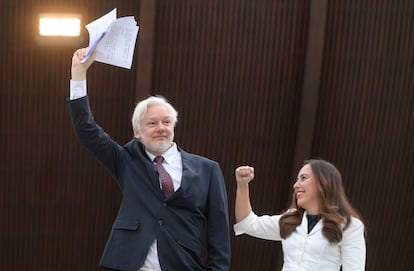
WikiLeaks founder Julian Assange and his wife Stella Assange raise their arms as they arrive at the Council of Europe on Tuesday in Strasbourg.Associated Press/LaPresse (APN)
WikiLeaks founder Julian Assange on Tuesday broke the silence he had maintained since his release in June after spending 12 years deprived of freedom. And he stressed that he can now move around again without fear of being arrested or extradited to the United States not because the system or the safeguards provided to protect freedom of expression worked, but because he gave in to pressure and pleaded guilty to conducting journalism.
“I want to be clear: I am not free today because the system worked,” he said. “If I am free, it is because I pled guilty to seeking information from a source. I pled guilty to obtaining information from a source. And I pled guilty to informing the public what that information was. I pled guilty to nothing else,” the Australian activist said during a hearing of the Committee on Legal Affairs and Human Rights of the Parliamentary Assembly of the Council of Europe (PACE), in Strasbourg, France. Assange has asked institutions to “act” so that what happened to him for publishing classified information “does not happen again.”
“Journalism is not a crime”
“A journalist should not be persecuted for doing his job, journalism is not a crime, it is a pillar of a free and informed society,” he stressed to applause from lawmakers, whom he asked not to let down their guard. “If there is a future in Europe today in which the freedom to speak and publish the truth is not the privilege of a few, but the right of all, they must act so that what happened in my case never happens to anyone again.” Starting, he said, by reviewing the legal protections for whistleblowers because “many exist only on paper.”
His presence at the Council of Europe on Tuesday and Wednesday, where his case and the “chilling effects on human rights” it has had are being discussed, constitutes Assange’s first trip outside his native Australia since, following an agreement with the U.S. justice system, he was released at the end of June from the maximum-security British prison where he spent the last five years. It is also the first time that the 53-year-old has broken his silence. And he has done so to reveal that part of the agreement with the U.S. Department of Justice implies the impossibility of him being able to legally challenge the harassment he underwent for more than a decade, the extradition procedure, or requesting access to records of his case through the Freedom of Information Act (FOIA).
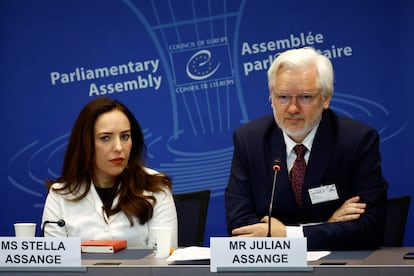
WikiLeaks founder Julian Assange and his wife Stella Assange during a hearing before the Legal Affairs and Human Rights Committee of the Parliamentary Assembly of the Council of Europe in Strasbourg on October 1.Stephane Mahe (REUTERS)
Assange, dressed in a suit and with a well-groomed beard, arrived at the Council of Europe headquarters early in the morning accompanied by his wife, the lawyer Stella Assange. The publisher made no statements to the press before entering the room, where he spoke for an hour before lawmakers from the 46 member states of the Strasbourg-based institution.
His statement was punctuated by fits of coughing and pauses, and Assange said he is still trying to “readjust” to normal life after more than a decade of being locked up, first for seven years in the Ecuadorian embassy in London, and then in a maximum-security British prison. “I have lost 14 years of my life,” he has said on several occasions. It was in 2010 when the legal process against him began after he was accused by Swedish prosecutors of sexual harassment.
“I have come a long way to be here, literally and figuratively,” he said, indicating that the isolation he was subjected to for so many years “takes its toll.” “Speaking here is a challenge,” he admitted.
Sign up for our weekly newsletter to get more English-language news coverage from EL PAÍS USA Edition
Psychoanalysis and free sex: The Sullivanians, a commune that mutated into a cult on New York’s Upper West Side
A book and a documentary reconstruct the history of an organization set up by a couple of therapists in the late 1950s. The painter Jackson Pollock and the novelist Richard Price were linked to the group, which dissolved in 1991 and once had 400 members
Rehearsal of a play by the Sullivanians’ theater company, The Fourth Wall.DONNA WARSHAW
It was not in some desert in Oregon, nor was there a guru from afar who laid down the rules and doctrine. The Sullivanians group operated in Manhattan — the apartments and houses in which its members lived, segregated by sex, were located in just a handful of streets on the Upper West Side — and the guidelines were dictated by Saul Newton (1906-1991), trained in Chicago’s anti-fascist circles and a brigade commander on the Republican side in the Spanish Civil War. The group that he created in the late 1950s with his fourth wife, Dr. Jane Pearce, advocated a radical, interventionist model of therapy: patients had to distance themselves from suffocating family ties and expand their circle of social and sexual relationships as widely as possible.
Over the years, the group became a cult, and its dissolution did not take place until 1991, the same year Newton died. “It was a radical social experiment: a 35-year attempt to reshape family, sexual, and social life in what might be America’s largest urban commune,” writes Alexander Stille in The Sullivanians: Sex, Psychotherapy and the Wild Life of an American Commune. Stille’s in-depth book and the documentary series The Fourth Wall, the first episode of which was presented at the most recent Tribeca Film Festival and directed by Luke Meyer, the son of a former member of the group, have broken the silence that has surrounded the Sullivanians. For more than three decades, the unique collective managed to operate under the radar, despite the fact that its members included well-known figures such as the painter Jackson Pollock, the dancer Lucinda Childs, and the novelist and screenwriter Richard Price.
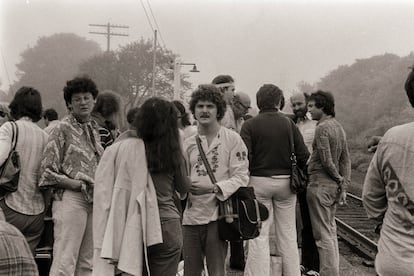
Members of the Sullivanians on a Long Island station platform in the 1970s.Donna Warshaw
Pollock, one of the most important figures in the abstract expressionism that shook up the art world in the United States in the 1950s, came to the Sullivanians through the legendary critic Clem Greenberg, who played a fundamental role in the growing popularity of the Sullivan Institute among artists of the time. “The group emerged in the late 1950s, a time when there was a response to the predominant culture with the beat generation, the Kinsey report on sexual conduct, or films like Rebel Without a Cause (1955),” Stille explains over the phone. But this rebellion against the established order led to an organization that maintained a tight control over the lives of its members. “One of my interviewees told me that the Stasi would have liked to have had that level of control over people in East Germany, because they controlled not only actions, but also thoughts. In therapy sessions, members confessed,” Stille says.
The group’s therapists, many of whom had been trained within the organization and had no official qualifications, determined who their patients should have sex with (the aim was to avoid “focusing” on a single partner), forced the separation of children, if they had any, and even decided which jobs they should keep. “I wanted to try to understand what led so many people to accept this. Belonging to the group offered a community, a place to live, and guilt-free sex,” explains the journalist and professor at Columbia University. His book steers clear of sensationalism. “That wouldn’t do this story justice,” he says.
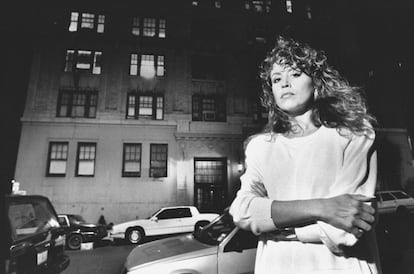
Barbara Antmann, whose sister was a member of the Sullivanians, stands in front of one of the buildings where members of the cult lived in the 1980s.Marianne Barcellona (Getty Images)
At the origin of the Sullivanians were Harry Stack Sullivan and Clara Thompson, founders of the White Institute in New York, which advocated a closer approach to patients and which included Erich Fromm and Frieda Fromm-Reichmann, among others. The psychoanalyst Jane Pearce was also part of this institution, where Newton worked, although not as a therapist because she lacked a degree.“If Freud concentrated on the internal drama of each patient (the Oedipus complex, the friction between the ego and the superego), Sullivan and Thompson insisted that it was important to understand the patient in relation to other people in their life (not just the ‘family romance’ with their parents),” writes Stille.
Pearce and Newton’s Sullivan Institute went much further. “Patients were to break out of the trap of the nuclear family and monogamous marriage,” Stille notes. The radical ideas took shape in a real estate network, as the group lived in several apartments on the Upper West Side, and spent the summer in houses near Pearce and Newton’s in the Hamptons. In that early stage, the therapy encouraged creativity and experimentation for personal fulfillment. “Later, it was more about doing what suited the group, being good patients,” Stille continues. One of the therapists who eventually left, Michael Cohen, explains the shift that the therapy took from 1978 onwards: it was no longer about fostering individuality, but about getting members to comply with what the leader dictated. “If they were reluctant to put in the work or money that was demanded of them, your job was to turn them into good soldiers. Unfortunately, I was good at it,” Cohen says.
Jane Pearce would end up marginalized from the late 1970s and Newton, with his new wives — numbers five and six — would emerge as the supreme leader. They left the Hamptons for the Catskills and the group ran a theater in the East Village where the productions of their own company, The Fourth Wall, were presented. By this time, the Sullivanians fulfilled all the requirements of a cult and it was the members of the group themselves who exercised control over each other.The therapists had sexual relations with their patients, even during the therapy sessions; when one of the women wanted to be a mother, it was decided which men in the group she should sleep with so that there was no clear paternity; and as soon as the baby was a few months old, they separated them to avoid establishing “toxic” bonds.
Only the leader and his wives were allowed to continue raising their children. The lawsuits that some mothers and fathers ended up filing were what led to the story of the Sullivanians being uncovered in the late 1980s.“Saul Newton had a Stalinist component; he believed that purges were good for maintaining cohesion,” explains Stille. Richard Price told him that the reaction of the Sullivanians to the nuclear accident at Three Miles Island in 1979 (Newton ordered all members of the organization to march to Orlando) and the climate of paranoia that it unleashed made him distance himself from the group.
Stille, author of the book on Silvio Berlusconi, The Sack of Rome, and the investigation into the Italian mafia, Excellent Cadavers, says that he came across the story of the Sullivanians through friends who knew one of Newton’s sons. He thought of making a podcast but as he delved into the story he realized that it would become a book. “The people who had been part of the group were in their seventies and I think they were beginning to wonder what it had all been like. I was surprised by the things they told me, the sexual abuse they endured, being separated from their children and sent to boarding schools so they wouldn’t see them even on holidays, the therapists cornering the patients, humiliating them,” he says. In the book he details the DNA tests that some of the Sullivanians’ children decided to undergo, and what they uncovered. “The United States has a certain tradition of groups that aim to create a utopian society. Religious communities that break away from orthodoxy, groups that try to promote a new society and start from scratch, from the Shakers to New Harmony. A society of seekers,” he concludes.
Sign up for our weekly newsletter to get more English-language news coverage from EL PAÍS USA Edition
Jimmy Carter, the 39th President of the United States, has left an important legacy marked by both his time in office and his extensive activities after leaving the White House.As a one-term president from 1977 to 1981, the Carter Administration faced significant challenges, but his commitment to human rights, diplomacy and environmental issues shaped his administration. After leaving office, he emerged as one of the most active and respected former presidents in U.S. history, devoting himself to humanitarian efforts, conflict resolution and public health through The Carter Center. As he becomes the first U.S. president to reach the age of 100 on October 1, we look back at some of the key moments in his life.
Presidency
Carter’s time in the White House was defined by a number of ambitious policies, many of which were based on his belief in the importance of moral leadership.One of his major domestic initiatives was to address the country’s energy crisis, which was a problem during the 1970s due to the oil embargo caused by tensions in the Middle East.He implemented a national energy policy aimed at reducing dependence on foreign oil, encouraging energy conservation and exploring renewable energy sources.Although his proposals faced resistance from Congress and the public, they laid the groundwork for future energy policies, particularly his push for energy efficiency and alternative energy sources, which remain relevant in modern environmental discussions.
Economy
On the economic front, Carter inherited a country struggling with stagflation, a combination of high inflation and unemployment, and his administration had difficulty stabilizing the economy. His efforts to reduce inflation through restrictive monetary policies met with mixed results, causing short-term recessions and leading to negative political consequences. At the end of his term, inflation and interest rates were still high, which contributed to national frustration and played a major role in his defeat by the Republican candidate Ronald Reagan in the 1980 election. Despite these economic difficulties, Carter was able to claim some accomplishments, such as the creation of nearly eight million jobs during his tenure and improvements in the federal deficit.
President Jimmy Carter listens to residents of the Bronx, New York, during a visit in 1977.Bettmann (Getty Images)
Foreign policy
The politician’s legacy is best remembered for his focus on human rights and diplomacy. Early in his presidency, he made human rights a pillar of U.S. foreign policy, often pressuring authoritarian governments to improve their treatment of their citizens. This approach was innovative at the time,although it strained relations with some U.S. allies, especially in the context of the Cold War. His dedication to human rights was most evident in his handling of relations with Latin America and his push for the Panama Canal treaties, which successfully transferred control of the canal to Panama, ending a contentious chapter in U.S.-Panama relations.
One of his most important foreign policy achievements was the Camp David Accords, which brought peace between Egypt and Israel after years of hostility. Through intense negotiations over 12 days in 1978, Carter achieved an agreement between Egyptian President Anwar Sadat and Israeli Prime Minister Menachem Begin, resulting in the first peace treaty between Israel and an Arab country. This agreement remains one of the most important diplomatic successes in the Middle East, although it did not lead to a broader peace in the region, as Carter had hoped. Still, it won him international praise and cemented his reputation as a mediator.
However, Carter’s foreign policy also faced serious setbacks. The Iranian Revolution of 1979, followed by the Iran hostage crisis, proved to be a turning point in his presidency.After Iranian revolutionaries seized the U.S. Embassy in Tehran and captured 52 Americans, the Carter Administration struggled to secure their release. A failed rescue mission in April 1980, in which eight U.S. servicemen were killed, further damaged his administration’s credibility. The hostages were finally released on the day Carter left office in January 1981, which was perceived as a symbolic end to his complex presidency.
Egyptian President Anwar al-Sadat and Israeli Prime Minister Menachem Begin embrace as U.S. President Jimmy Carter applauds after signing the Camp David Accords at the White House in 1978.David Hume Kennerly (Getty Images)
After the presidency
Despite the challenges he faced in office, Carter’s later life is considered one of the most active and impactful in American history. In 1982, Carter and his wife Rosalynn founded The Carter Center, a nonprofit organization focused on human rights, conflict resolution and public health. Through this organization, Carter became a global advocate for democracy and human rights, serving as a mediator in international conflicts and promoting fair elections in developing countries. According to official data, The Carter Center has overseen more than 100 elections worldwide, helping to ensure transparency and fairness in countries in transition to democracy.
One of The Carter Center’s most recognized achievements has been its effort to eradicate guinea worm disease, a parasitic disease that has affected millions in developing countries. Carter took a personal interest in this cause and, through the center’s health initiatives, guinea worm disease has come close to being eradicated, with fewer than 100 cases reported annually by the 2020s.
Carter also continued his diplomatic efforts after leaving the White House, serving as an unofficial envoy in several global conflicts. He played key roles in mediating disputes in countries such as North Korea, Haiti and Sudan, and was often sought out by foreign leaders for his ability to negotiate and resolve complex international issues. His willingness to engage in dialogue with controversial figures and regimes, though sometimes criticized, demonstrated his belief in dialogue rather than confrontation as a path to peace.
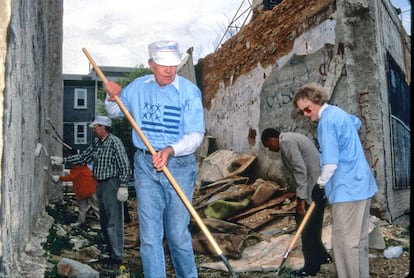
Former President Jimmy Carter and former first lady Rosalyn Carter work to restore homes in New York City in 1996.Bill Tompkins (Getty Images)
In addition to his work at the Carter Center, Carter became involved with Habitat for Humanity, a nonprofit organization dedicated to building affordable housing for those in need. He and Rosalynn spent many years volunteering with the organization, personally helping to build homes for low-income families in the United States and around the world.
Carter’s commitment to his faith and moral principles have also defined his later years. He remained an active member of Maranatha Baptist Church in Plains, Georgia, and taught Sunday school well into his 90s.His books, including several memoirs and reflections on faith, reaffirm his belief that public service is a form of moral duty. In 2002, Carter received the Nobel Peace Prize in recognition of his decades of efforts to promote peace and human rights, a rare honor for a former president.
Jimmy Carter receives the Nobel Peace Prize, during the ceremony held in Oslo, Norway, on December 10, 2002.Getty Images (Getty Images)
Sign up for our weekly newsletterto get more English-language news coverage from EL PAÍS USA Edition
Nearly 200 executions in Saudi Arabia this year so far
30 Sep 2024Reading time: 2 minutes
Saudi Arabia has executed at least 198 people so far in 2024, the highest number of executions in the country since 1990, according to Amnesty International.
The official Saudi Press Agency announced on Saturday that the 198th execution of the year had been carried out, though experts say the news agency has previously under-reported the true number of executions in the country.
Saudi Arabia previously executed 196 people in 2022, the highest annual number of executions that Amnesty had recorded in the country in the last 30 years.
In March 2022, Crown Prince Mohammed bin Salma said that the country had “got rid of” the death penalty except for cases where it is mandated under Sharia.
However, in November 2022, the authorities carried the first executions for drug-related offences in nearly three years, reversing a moratorium on executions for such offences which was announced by the Saudi Human Rights Commission in 2021.
Earlier this year, Amnesty analysed the country’s draft penal code, which codifies the death penalty as a punishment and continues to enable judges to use their discretion to impose death sentences for murder, rape, blasphemy and apostasy.
Despite repeated promises to limit the use of the death penalty, the Saudi authorities have ramped up executions while routinely failing to abide by international fair trial standards and safeguards for defendants.
Executions for drug-related crimes have soared this year, with 53 carried out so far — with an average of one execution every two days in July alone — rising from just two drug-related executions in 2023.
The authorities have also weaponised the death penalty to silence political dissent, punishing citizens from the country’s Shia minority who’ve supported “anti-government” protests between 2011 and 2013.
Agnès Callamard, Amnesty International’s secretary general, said: “The death penalty is an abhorrent and inhuman punishment which Saudi Arabia has used against people for a wide range of offences, including political dissent and drug-related charges following grossly unfair trials.
“The authorities must immediately establish a moratorium on executions, and order re-trials for those on death row in line with international standards without resorting to the death penalty.”
Paul Tweed threatens Big Tech companies with screen addiction group action
30 Sep 2024Reading time: 2 minutes
Paul Tweed
Lawyer Paul Tweed has said he is exploring the possibility of bringing a group action against Big Tech companies in the Irish courts.
Mr Tweed told The Journal that he is discussing with with cyberpsychology professor Mary Aiken the possibility of a legal action focused on screen addiction.
A group action can be brought under the relatively new Representative Actions for the Protection of the Collective Interests of Consumers Act 2023 by a consumer organisation designated by the government as a ‘qualified entity’.
Mr Tweed said the Irish courts would be the “preferred choice” for the lawsuit, given that many major tech companies are headquartered in Dublin, but this would be “subject to funding arrangements being allowed, and subject to the classification, whether a group action would suffice”.
He continued: “But I’m looking at that at the moment — the likelihood is group action in Ireland, but it’s obviously subject to quite a number of caveats.”
Mr Tweed has also said social media companies should be held responsible for their AI output.
“Up to now, the platforms have claimed ‘we’re not a publisher’ because they don’t create their own content,” he said.
“Generative AI does create some content. It creates new content, stuff that it’s bringing in as a sort of a news aggregator or an information aggregator.
“So they can’t use the old social media argument, that ‘we have no input on what’s put in our platforms’. I think that’s going to be crucial.”
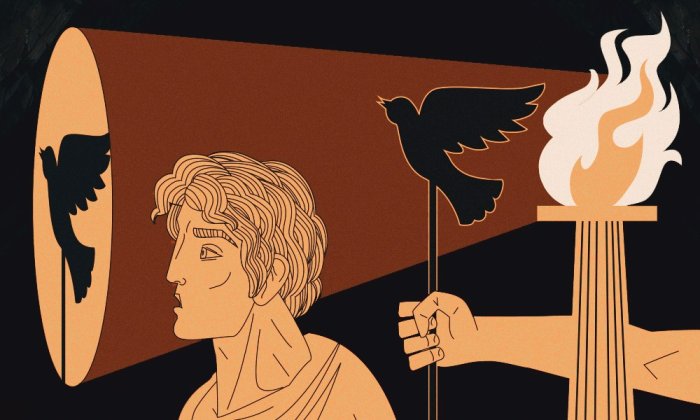
Plato’s Cave and the Stubborn Persistence of Ignorance
Plato’s cave metaphor illustrates the cognitive trap of ignorance, where we may be unaware of the limitations of our understanding.
Source image: Adobe Stock
By: Daniel R. DeNicola
The most memorable image of ignorance occurs in what is probably the most famous passage of all philosophy: Plato’s Allegory of the Cave in “The Republic.”Recall the scenario: human beings dwelling in the darkness of an underground cavern, bound at the legs and neck so that they cannot move, even to turn their heads. They have no other memory of life, since they have been imprisoned in this way since childhood. Before them, they see only moving shadows that are cast by objects unknown to them, illumined by a flickering fire that we are told lies somewhere behind them. They know nothing of this except the shadows and hear only echoes from the voices of their keepers, whom they have never seen. In such a benighted state, they pass their days.
This place of ignorance is not only a dark cave; it is a prison, a deprivation chamber. As we imagine this predicament, what we are likely to feel acutely is an epistemic claustrophobia, the absence of freedom in any meaningful sense, and the numbness and despair that would set in from such a deprived routine.Freedom is primordially the ability to move our body. Beyond being our basic capacity for meeting our needs, bodily movement, including change of place, leads us to new experiences, permits learning, and generates perspective. But confined in such profound ignorance, the world of experience is severely restricted.Plato regards such a plight as worse than imprisonment, worse than servitude, more like death: he says, quoting the “Odyssey,”“Better to be the humble servant of a poor master and to endure anything, than to live and believe as they do” — and the Homeric reference here is to the dead who dwell in Hades. As Plato expects, we feel deep sadness at the absence of any chance to understand anything, to achieve anything of value, or to experience anything of beauty. The horror of ignorance is incapacity.
As Plato expects, we feel deep sadness at the absence of any chance to understand anything, to achieve anything of value, or to experience anything of beauty.
This account of their predicament is not, of course, one that the prisoners themselves would — or could — offer. They do not and cannot understand their situation, since all of life’s experiences are but shifting shadows and echoes.Plato says that the “prisoners would in every way believe that the truth is nothing other than the shadows.” Indeed they would not suspect that the things they see are but shadows, nor even have the concept of a shadow. They pass the time in trivial games of shadow-prediction, unaware of their keepers, the fire, or the parade of objects behind them. Though they are troglodytes in extremis, they do not feel claustrophobic or deprived. The actual circumstances of their confinement in the dark cavern, the possibility of a way up and out, and indeed the notion that there may be an incandescent world of wonders to ascend to, are unknown and unsuspected. Life is what it is, what it has always been; they do what they do and feel what they feel because they know nothing else. They are ignorant. But we know … and it is terrifying. Because Plato has, through his narrative, given us privileged knowledge of their situation, we know what they do not; we can affirm their ignorance.
The Cave is a fiction, of course. With a shudder, we gratefully distance ourselves and our lives from that bizarre place and its “strange prisoners.” We breathe deeply the air of the sunlit world. But then, almost off-handedly, comes Plato’s stark and chilling statement: “They’re like us.”
Recognizing Ignorance
Are we like these cave dwellers? Is this gloomy cave the image of the womb from which we were all thrust unknowing into the light? But do we not then quickly overcome this primal oblivion — or do we all still dwell in a place of such abysmal ignorance? To think this through, I want to reverse Plato’s approach: Rather than describing how we may know the truth, let us consider how we recognize ignorance.
Obviously, no one is born educated; and every educated person is, at any given moment, ignorant about many things. Often, it is easy to pinpoint our ignorance quite precisely. Though you may have acquired considerable knowledge about a subject, say, automobiles, you may not know a particular arcane fact — for example, the number of carburetors that were standard in a 1955 Singer roadster. You simply lack a piece of information. In this common form of factual ignorance, should the question arise, you are able to specify exactly the datum you lack. Based on what you already know, you comprehend fully what you need to learn, even before you learn it — you know what to “look up” or to search for. And you even already know the sort of fact that will constitute the answer — “one” or “two,” for example, and not “one hundred” and certainly not “red” or “mammalian” carburetors.
Suppose, however, that you had never heard of the Singer automobile. Despite your familiarity with antique automobile manufacturers and models, you might be surprised to learn of a make or model that had escaped your notice. Or, imagine that you, somewhat less expert, only knew the names of a few sports car manufacturers.In either case, you would have some sense of what acquiring such new knowledge would be like; you could specify its parameters beforehand. You would grasp in a general way what learning about an unfamiliar automaker would entail; and given that possibility, you could identify what it is you do not know — albeit with less precision than in the first case. Such factual ignorance can be delineated in this way because you possess other general, relevant knowledge (in this case, knowledge about cars, their manufacturers, the meaning of “roadster,” and so on). In these ordinary situations, it is the knowledge we possess that serves to awaken and focus our sense of our own ignorance.
Our world is vast, however. There are whole realms of knowledge of which each of us is ignorant, though the list, if we could make one, is different for each person. You may be unusually well educated, perhaps possessing expertise in several fields, and yet, when it comes to, say, ichthyology or Chinese porcelain or deltiology or Sanskrit grammar, you are lost. In such cases, our sense of what we don’t know isn’t as sharp; we are less sure that we understand what it would mean to know such things. Nevertheless, if we know the meaning of the relevant terms, if we are familiar with parallel or related subjects, we may have some sense of what such missing knowledge would involve. (If you know English, Latin, and Greek grammar, for instance, you will have a clearer idea of what it would mean to learn Sanskrit grammar than if you had never studied any grammar.) Of course, you might really have no desire to learn about such facts or fields; indeed, you might ignore them, avoid them, or even resist attempts to be informed or taught about them. Or, you might decide to master them or to learn more about them. In these cases also, we can identify what we have not learned, at least to some level of specification.
So, let us pause to amend a fundamental point:ignorance may be recognized and ascribed only from the perspective of knowledge, and the knowledge we possess determines the degree of specificity of the ignorance we recognize and serves to characterize the ignorance and its importance.This is why we readers of Plato can recognize that cavern as a place of profound ignorance, lacking in truth and sustained by deception.
Utter ignorance, however, for which the dictionary offers the term ignoration, is yet more profound: The prisoners in Plato’s Cave do not know what they do not know; they do not even know that they do not know. They dwell in ignorance, but cannot recognize it. Ignoration is thus a predicament, a trap — one that is not comprehended by those who are caught in it and dwell there. In a sense, they are not in a place at all: Theirs is rather a placelessness in which one doesn’t even know one is lost.
Fortunately, this trap, like a Chinese finger puzzle, has a simple solution: learning. And yet, it is remarkable that an escape occurs — how does one come to learn what one does not know one does not know? After all, the prisoners have no ability to free themselves; more to the point, they have no motivation to escape, since even that desire would presuppose a sense of possibility they lack. Their bondage seems natural to them; it is their form of life; nothing better calls to them. They cannot see their ignorance as ignorance. As the influential Muslim philosopher Al-Ghazzali put it: “Heedlessness is an illness which the afflicted person cannot cure himself.”
In Plato’s account, the unenlightened must rely on accident or the beneficent intervention of others for the critical first step: A prisoner is released from his bonds by happenstance (phusei) or by an implied other — “one of them was freed.” What follows his release is not a swift and purposeful escape motivated by eager anticipation of the waiting outside world; it is only the slow, hesitant, gradual, painful process of learning itself. The newly released prisoner is hardly keen for enlightenment:He is “compelled to stand up, to turn his head,” and he is “pained and dazzled and unable to see the things whose shadows he’d seen before.” He is stupefied and wants to return to life as he knew it. Plato asks, “And if someone dragged him away from there by force, up the rough, steep path, and didn’t let him go until he had dragged him into the sunlight, wouldn’t he be pained and irritated at being treated that way?” Who the “someone” is doesn’t matter at this point (except that it cannot be another prisoner), but it is clear that this is an educational intervention: It is necessary for finding the truth, it is initiated from without, and it is initially coercive, requiring the forceful overcoming of the learner’s resistance. “He’d need time to get adjusted before he could see things in the world above,” Plato acknowledges. But eventually, as understanding flows into him, “he’d count himself happy for the change and pity the others.” He finally comes to know the sunlit world of wonders; and then he understands, with horror, what his condition was in the Cave. And, as we have heard, he would rather undergo anything than return to that place of ignorance.
Human beings tend to prefer cognitive comfort, the reinforcement of the familiar, to an encounter with the unknown.
Plato thus legitimates the claim of educational paternalism, the infamous, age-old dictum that parents say to their children and teachers repeat to their students regarding all sorts of coerced activities: “You will thank me for it one day, because then you will understand.” His justification rests on the distinctions between knowledge, mere belief, and ignorance, and on the transformation of the soul that learning can produce.Regardless of the likelihood of later gratitude, however, if accident or intervention or coercion is required to start one on the path of learning, then the escape from utter ignorance is not self-motivated. (In other dialogues, especially “Symposium,” Plato implies that eros provides the initial impulse and the sustaining motivation for pursuing the good, the true, and the beautiful.)And that does not seem surprising. Would it be reasonable to pursue a goal that one does not possess and cannot envision? A self-initiated escape would not be a reasonable decision or even a live option.
But that explains only why the prisoner would not seek to escape. What explains his resistance to freedom and the need for coercion? One factor is that, in general, human beings tend to prefer cognitive comfort, the reinforcement of the familiar, to an encounter with the unknown. Learning may disrupt our cognitive comfort; it displaces us. Education requires us to revise or abandon our routines, recipes, and rituals — life as we know it — and to do so we must overcome a kind of natural cognitive inertia. A place of ignorance can be a sturdy nest of cognitive comfort for those who dwell within.
Plato’s benighted cave dwellers believe they already know the important truths— “Then the prisoners would in every way believe that the truth is nothing other than the shadows of those artifacts.” We know, of course, that their “knowledge” is not worthy of the name; it is no more than pointless familiarity with contrived images.And when forced to widen their experience and confront their illusory situation, they are nonplussed, irritated, and even pained. We understand. It is painful for any of us to accept the revelation that our precious “knowledge” is false, that we have been deluded, and to confront the radical implications: assumptions discarded, insights misguided, principles betrayed, relationships undone, lives altered, and worlds shattered. False knowledge can be sticky; it is difficult to remove it and all it implies from our worldview — even when we acknowledge its falsity. Belief can be a bulwark against learning. The ignorance that hides in false knowledge is disguised as the very learning it defies.
These considerations may cause us to question whether Plato’s Cave is, after all, a place of utter ignorance.It may indeed be home to deep ignorance, but the prisoners have beliefs about the shadows, make cognitive claims, and seem confident that what they believe is true — however deluded they may be. Actually, some of their beliefs are confirmed by their experience — some prisoners are adept at identifying shadows and remembering the sequences of their appearance. Perhaps it is impossible to describe a human situation of complete and total ignorance, ignoration so abysmal that no thin shaft of understanding penetrates it. One wonders how beings in such a situation could survive without any knowledge, without a single belief that is true. And one wonders what a mental state of ignoration would be: a tabula rasa — the hypothetical blank slate of the mind before it receives outside impressions? Consciousness without memory? Awareness without conceptualization? Prenatal mind?
To ascribe ignorance as a mental state is to imply a capacity for learning, which in turn implies a capacity for knowing. A potential for knowledge is embedded in ignorance. Moreover, the ascription of ignorance is relational; it is made from the vantage point of someone’s knowledge about the lack of knowledge in an otherwise knowing creature. Ignorance and knowledge are concepts that cannot stand alone: They presuppose each other. It seems as convoluted to describe absolute and complete ignorance as is to describe absolute and complete knowledge. Ignoration and omniscience are comprehendible only as limiting concepts.
So, are we like Plato’s Cave dwellers — not just in infancy, but throughout our adult lives? It seems we are, at least in one important way: I refer to the unsettling fact that we too are haunted by things we do not know we do not know; and we cannot imagine how drastically those unknowns would alter our lives and our view of the world.
The MIT Press is a mission-driven, not-for-profit scholarly publisher. Your support helps make it possible for us to create open publishing models and produce books of superior design quality.
The ruling Chinese Communist Party has called on Hong Kong’s leader to mobilize the city’s wealthiest families into kick-starting economic growth, although signs that any are answering the call have been thin on the ground.
Xia Baolong, who heads the ruling party’s Hong Kong and Macao Work Office, “expressed the hope that all sectors of Hong Kong society, especially the business community and entrepreneurs, will unite as one and seize the opportunity to strive for economic development,” the city’s Chief Executive John Lee told reporters following a Sept. 20 meeting with Xia, as he attended an investment cooperation conference in Beijing.
Hong Kong’s business community should “transform their love for their country and for Hong Kong into concrete and practical action, and work together to promote Hong Kong’s … prosperity,” Xia told Lee during the meeting.
Xia’s call to action echoes recent policy moves from Beijing to find a role for the private sector in boosting flagging economic growth, under Chinese President Xi Jinping’s concept of “public-private partnerships,” which analysts have warned could be a disguised asset grab by the government.
It also comes after Xi wrote to the descendants of the “Ningbo Gang” – wealthy Hong Kong families with roots in the eastern port city of Ningbo – in July, calling on them to “contribute to the dream of the rejuvenation of the Chinese nation,” state media reported.
They included Anna Pao, eldest daughter of the late shipping magnate Sir Pao Yue-kong, and Ronald Chao, eldest son of the late industrialist Chao Kuang-piu, families whose business operations formed the backbone of much of Hong Kong’s growth under British colonial rule.
Lee said the private sector in Hong Kong “are not bystanders, but participants, contributors and beneficiaries” of the city’s economic rewards.
‘Serve the country’
But commentators said there hasn’t exactly been a big rush to respond to Beijing’s call for investments on the part of Hong Kong’s entrepreneurs.
The city’s richest man, Li Ka-shing, has instead been stepping up his investments in the United Kingdom, with his CK Infrastructure Holdings acquiring a wind farm portfolio in from Aviva Investors for £350 million (US$450 million) in August, renewable power generator UU Solar for £90.8 million (US$122 million) in May, and natural gas distributor Phoenix Energy in April.
Exiled Hong Kong businessman Elmer Yuen, whose family hails from Ningbo, said Beijing has repeatedly called on Hong Kong’s tycoons to “serve the country.”
But he said there is unlikely to be much response, given that few business families from Ningbo and Shanghai trust the Chinese Communist Party.
“You can lump all of us together, us Shanghainese, most of whom are from Ningbo, and say that we have absolutely zero trust in the Chinese Communist Party,” Yuen said.
“Maybe a small number of people will invest, but the rest already know who they’re dealing with.”
According to Xia Ming, professor of political science at the City University of New York, Lee is being tasked by Beijing to step up integration with neighboring Guangdong province and Macau, and provide a much-needed shot in the arm for the sluggish Chinese economy.
“Policy in today’s Hong Kong is clearly about how to perfectly integrate Hong Kong into what Xi Jinping calls the China rejuvenation strategy, which is basically about controlling the economy,” Xia told RFA Cantonese in a recent interview. “[Lee’s aim] is to more perfectly integrate Hong Kong into China’s accelerated regression.”
Xia said the overall aim is to integrate Hong Kong into the mainland Chinese economy and “ultimately sell Hong Kong off to Beijing and to Xi Jinping.”
“The goal of Xi Jinping’s reforms is not that mainland China will become more like Hong Kong, but that Hong Kong will become more like Yan’an,” he said in a reference to the revolutionary wartime base of Mao Zedong’s communists.
Stimulus measures
The call for investments came as Chinese leaders announced a slew of stimulus measures to boost demand for real estate, including lower mortgage rates, fewer restrictions on buyers and tax cuts as part of “a new model” for real estate development.
On Tuesday, China’s central bank, top securities regulator and financial regulator announced a raft of monetary stimulus, property market support and capital market strengthening measures to boost “high-quality economic development,” state news agency Xinhua reported.
The top economic meeting, attended by Xi, also called on officials to “foster a favorable environment for the development of the non-public sector,” with efforts made to boost consumption among low- and middle-income groups.
China has also extended a helping hand to Hong Kong in the form of pandas, with a ceremony at the Hong Kong International Airport on Thursday to welcome An An and Ke Ke, described by Lee as “just entering adulthood and full of energy” and likely to be a successful draw for tourists.
The giant pandas will live in a newly refurbished suite at the Ocean Park theme park complete with climbing frames and more plants.
“Citizens will join in welcoming the two giant pandas to Hong Kong, and the whole city is looking forward to it,” Lee told reporters on Tuesday, adding that images of the pandas will be added to the Oct. 1 National Day drone and light show over Victoria Harbour.
Hong Kong is expecting an influx of up to 1.2 million mainland Chinese tourists to mark the 75th anniversary of the founding of the People’s Republic of China, Lee said.
“We hope that everyone can celebrate the 75th anniversary of National Day together, and also bring in many business activities to increase business and tourism revenues,” he said.
Radio Free Asia’s mission is to provide accurate and timely news and information to Asian countries whose governments prohibit access to a free press. Content used with the permission of Radio Free Asia, 2025 M St. NW, Suite 300, Washington DC 20036.
Plenty’s 30-ft vertical indoor towers of strawberries
Plenty
View 2 Images
Major steps towards better, sustainable and affordable food production free of environmental challenges have been taken, with the “world’s first farm to grow indoor, vertically farmed berries at scale” opening in Richmond, VA. It’s backed by an international team of scientists that see this new phase of agriculture as a way to ease global food demands.
The Plenty Richmond Farm is designed to produce more than four million pounds (1.8M kg) of strawberries grown indoors vertically in 30-ft-tall (9-m) towers, using up less than 40,000 square feet – or less than a single acre. This is a fraction of the land needed in traditional strawberry production, which is also subject to seasonal and environmental factors that limit yield.
The company says the strawberries, from global company Driscoll’s, will be on grocery store shelves in early 2025.
“Plenty’s farm will boost local agriculture production and drive economic development, all while diversifying against risks and protecting the environment,” said Virginia Governor Glenn Youngkin. “We look forward to supporting their innovative approaches to revolutionizing the industry.”
To date, plant-based commercial vertical farming has mostly been limited to the production of lettuce crops, but this latest technological advancement has broadened the scope of what can be grown upwards.With temperature, light and humidity controlled across 12 growing ‘rooms,’ pollination of plants has also been engineered to be more efficient than bees. Ultimately, the company believes this will result in more uniformity in fruit and result in less waste.
“This farm is a model for the positive impact climate-agnostic agriculture can have, and proof that vertical farming can deliver the crop diversity, scaled and local production needed to future-proof the global food system,” said Arama Kukutai, Plenty CEO. “The Plenty Richmond Farm is the culmination of 200 research trials over the past six years to perfect growing strawberries with consistent peak-season flavor indoors year-round. Driscoll’s sets an incredibly high bar for the quality of its berries and we’re excited to join forces to consistently deliver an ultra-premium Driscoll’s strawberry year-round.”
This video, from a year ago, shows the company’s early work in establishing the vertical-farming model that could enable this sort of small-area, high-yield and year-round production of food.https://www.youtube.com/embed/clDlTVwWZ1I?enablejsapi=1
Plenty—Creating the Future of Farming in Compton
The opening of this first vertical farm is the culmination of years of scientific research into the model, with work undertaken by a global team from organizations including The University of Queensland, Macquarie University, Wageningen University, University of Florida, University of the Basque Country, CAS Center for Excellence in Molecular Plant Sciences and Shanghai Institute of Plant Physiology and Ecology.
“Vertical farms grow crops indoors in stacked layers and provide consistent yield and crop quality but they use a tremendous amount of costly energy for light and air flow,” said Paul Gauthier, Professor of Protected Cropping at the University of Queensland, Australia. “If we create a more dynamic environment that turns lights and sensors on and off during the day in line with the cycles of photosynthesis rather than leaving them on all the time, we could tap into cheaper energy at off peak times and still maximize the advantages of vertical farming.
“I managed to get strawberries to produce 6 kg (13 lb) per plant when everybody was saying that the maximum you could produce in a greenhouse was 2 kg (4.4 lb),” he added. “I multiplied the strawberry yield by three by modifying the environment and pushing them to the limit.”
The Richmond farm uses 97% less land and up to 90% less water than conventional farming, eradicates the use of pesticides, and the controlled environment and shorter supply chain will also lower pathogenic risk to crops.
“I would like to see protected cropping or controlled environment agriculture treated as a separate discipline of plant science,” added Gauthier. “If we are to increase food production by as much as 70% by 2050, we need to look at things differently.
“That is what vertical farming allows us to do – we didn’t have this possibility before,” he added.
“By combining our 100 years of farming expertise and proprietary varieties along with Plenty’s cutting-edge technology, we can deliver the same consistent flavor and quality our customers love – now grown locally,” said Soren Bjorn, Driscoll’s CEO. “This new innovative farm is a powerful step forward in continuing to drive category growth in new ways for our customers and consumers.”
Bronwyn has always loved words and animals, and she has the journalism and zoology degrees to prove it. After more than 20 years as a writer and editor, the former music journalist went back to university to build on her passion for wildlife and conservation with a Bachelor of Zoology, which unlocked two new loves: sharing animal facts at any opportunity and getting others excited about science. Particularly interested in neuroscience, genetics, animal behavior and evolutionary biology, Bronwyn has found a happy home at New Atlas, coming on board in February 2023.
Blood biomarkers show even one-off brain injuries have effects lasting decades: study
25 September 2024
Monash University-led research, believed to be the first of its kind, has used blood tests and MRI scans to show that the effects of traumatic brain injuries (TBI) can last decades.
Published in Brain,and involving researchers from the University of Melbourne and Austin Health,the Monash-Epworth Rehabilitation Research Centre (MERRC) TBI Ageing Study integrated a range of techniques to understand the enduring consequences of moderate to severe TBI.
They included imaging to measure the integrity of the brain microstructure, blood biomarkers to determine ongoing brain pathology, and cognitive tests to understand how blood markers might be linked to a person’s cognitive health and clinical condition.
It’s one of few global studies on participants with moderate-severe TBI due to a single incident and have also been living with their injury for an average of 22 years, as opposed to experiencing repetitive injury.
Senior author Professor Sandy Shultz, from the Monash School of Translational Medicine, said, “Our finding of chronic pathology in the brains of traumatic brain injury survivors, and the ability to identify this with imaging and blood tests, not only provides us with methods to detect these changes but also a foundation to develop treatments that might prevent or slow evolving pathology and improve recovery.”
While TBI is a potential risk factor for neurodegenerative disorders, including Alzheimer’s Disease and Parkinson’s Disease, there is a critical need for comprehensive knowledge about long-term impacts. This involves delineating the biological and clinical characteristics of any lasting neurodegeneration and identifying who is at risk, and then using this information to develop long-term management strategies.
First author Dr Gershon Spitz, from the Monash-Epworth Rehabilitation Research Centre (MERRC), the Monash School of Psychological Sciences, and the School of Translational Medicine Department of Neuroscience, said the findings supported the hypothesis that the effects of a moderate-severe TBI could be felt decades following the initial injury.
“We found that elevated levels of blood biomarkers are related to poorer brain microstructure and poor cognition,” Dr Spitz said.
“Traditionally, TBI was viewed as an isolated event with a fixed recovery trajectory. Over the last decade, TBI has been redefined as a chronic, ongoing health condition. This redefinition is a crucial first step in overhauling our healthcare models, which presently allocate the bulk of resources to the immediate post-injury phase and leave long-term symptoms inadequately treated.”
Dr Spitz said further work was needed on the connection between blood biomarkers and symptoms/improvement. “We need to see whether the biological signatures of possible ongoing neuropathology can also tell us about people who may be at higher risk of experiencing progressive decline in functions like memory,” he said.
Case Study – Bruce Powell
Dr Bruce Powell, 57, suffered a traumatic brain injury in 2018 as a result of a terrible cycling accident. He remembers very little of the first year or so after the accident, and said that perhaps he is lucky in that respect.
“I never thought for a moment about my life and how lucky I was. How often do we only notice the gifts we have, when we lose them? I spent a long time being angry and even longer feeling low and lost,” Dr Powell said.
Before his accident, Dr Powell was an anaesthetist, and former director of Western Australia’s organ-donation program, DonateLife. He said after his TBI he tried to return to his old life but he couldn’t cope with the cognitive demands nor the responsibility.
“I have lost my career and my identity due to the accident and that has been very tough. I miss medicine. I loved caring for people and I devoted my whole career to that aim. It’s hard to find a replacement for that privilege. It was who I was and I am not that now. Finding meaning in this new life of mine is the hardest thing of all,” he said.
“I suffer with flashbacks and an illogical fear of many things. PTSD I guess people call it. I’m no fan of labels but it is difficult to overcome sometimes. Fractures heal and wounds close up, but the brain injury has left me emotionally unstable, unpredictable and occasionally disinhibited.
“I have to concentrate hard to control my behaviour and that can be exhausting on its own. My working memory is poor and if I am not concentrating, or tired, the day can slip past without me recalling much about it. I have to accept those things and move on.”
Dr Powell said that after his TBI he worried about dementia as a result of the injury and being pointless, lost and unseen.
“I want to do important things, good things and I don’t want people to notice me for my brain injury,” he said. “I’m done with being a patient although I will always struggle with the fatigue and memory challenges.
“Brain injury is much more common than we think and the long-term risks of chronic brain deterioration are confronting and important. Since we may not see the actual clinical impact upon people’s lives until the process is advanced, if we can identify it early we may be able to alter the course of the disease. The implications for sport, insurance and lifestyle are immense and they may creep up on us unless we start to figure out how to identify the warning signs.”
Monash University is Australia’s largest university with more than 80,000 students. In the 60 years since its foundation, it has developed a reputation for world-leading high-impact research, quality teaching, and inspiring innovation.
With four campuses in Australia and a presence in Malaysia, China, India, Indonesia and Italy, it is one of the most internationalised Australian universities.
As a leading international medical research university with the largest medical faculty in Australia and integration with leading Australian teaching hospitals, we consistently rank in the top 50 universities worldwide for clinical, pre-clinical and health sciences.








 Reading time: 2 minutes