What happens when we stop talking to each other? New research suggests we’re speaking hundreds of words less every day than we were just a few years ago. The decline may have profound consequences for how we form relationships and build communities. DW host Jared Reed speaks with author Dr Valeria Pfeifer, whose research shows we’re speaking around 338 fewer words per person per day, every year. Evolutionary psychologist Professor Robin Dunbar explains why conversation may be about much more than exchanging information – it’s one of the ways humans create community. And as face-to-face interaction gives way to texting, social media and video calls, they explore what we might lose when conversation becomes less common. Could fewer everyday conversations mean weaker relationships, greater loneliness and more divided communities? And if talking to other people is a skill, what happens when we stop practicing it? Link to the research: https://journals.sagepub.com/doi/10.1…#dwcurrentaffairs Chapters: 00:00 What happens when a society stops talking? 01:20 We’re rapidly losing spoken words 02:32 Aren’t we just being more efficient? 03:57 The evolutionary purpose of language 05:26 Is digital communication an adequate substitute? 07:00 Conversation in person is a skill 08:55 Possible impacts at a time of increased loneliness 10:19 Quality friendships help our wellbeing 10:59 Conclusion
Nigeria’s National Drug Law Enforcement Agency uncovered a clandestine methamphetamine laboratory in an Oyo State forest in June 2026. Authorities arrested one Mexican national and four Nigerians. NIGERIA NATIONAL DRUG LAW ENFORCMENT AGENCY
Mexican cartels, including Sinaloa and Jalisco New Generation, are expanding meth production in Africa by placing their own cooks in industrial-scale labs in Nigeria, South Africa, Kenya, and related networks in Mozambique.
Major seizures in 2024–2026—including Nigeria’s largest meth-related bust and repeated finds in South Africa—show a shift from using the continent mainly as a transit zone toward local production under a franchise-style model.
Investigators link the expansion to porous borders,remote ungoverned areas, and alleged protection-for-financing arrangements with local armed or criminal groups, raising public-health and security risks across the region.
Methamphetamine cooks supplied by Mexican drug cartels have been discovered working at several drug laboratories in Africa over the past two years.
Several arrests, including Nigeria’s largest-ever meth bust in May, have occurred as Mexico’s Sinaloa and Jalisco New Generation cartels expand their operations under a franchise-style business model. The cartels are accused of funding continental terrorists, armed groups and criminal groups that help them produce and move the drugs.
“The relationship between cartels and drug use and terrorism is very, very simple,” Nigerian organized crime expert Faisal Sanusi Ibrahim told news service Deutsche Welle (DW). “The terrorists give the cartels protection, while the cartels give the terrorists financing. We have porous borders. We have a large part of forests ungoverned. We also have a situation where you have cheap labor … and also the trans-Atlantic route for the shipping.”
Nigerian authorities seized precursor chemicals and drugs worth $363 million when they raided a clandestine, industrial-scale lab in a heavily forested area in Ogun State in mid-May.
“The volume of what was recovered here, that’s enough to cause a lot of issues — public health issues, security challenges, not only in … Nigeria, but in the sub-region,” Femi Babafemi, director of media and advocacy for Nigeria’s National Drug Law Enforcement Agency (NDLEA), told DW.
In June, the NDLEA uncovered another meth lab in a forested area of Oyo State and arrested five suspects, including one Mexican national. NDLEA Chairman Mohamed Buba Marwa described the facility as “a sophisticated, factory-scale methamphetamine production center run by a highly organized transnational criminal syndicate.”
Mexican meth cooks have operated in Nigeria since 2016, but the recent local arrests and significant meth busts in Kenya and South Africa — areas that historically have been used as transit hubs for drugs — show that the cartels are increasingly sending their own chemists to produce meth.
According to the InSight Crime think tank, Mexico’s meth industry has grown more sophisticated over the past two decades, and the country produces some of the purest meth globally.This makes Mexican meth producers attractive partners for criminal networks, according to Jason Eligh, a senior expert at the Global Initiative Against Transnational Organized Crime (GI-TOC).
“It is likely that there has been an initial contact [between Mexican and Africa-based criminal actors] where production has significantly changed because the Mexican model of production is superior to the model that has existed in the past in Africa,” Eligh told InSight Crime.
In recent years, Mexican cartels have expanded their meth operations into South Africa, which is considered one of the world’s largest consumer markets for crystal meth. This was underscored in July 2024 when two Mexican nationals were arrested at an industrial-scale meth lab on a farm in Groblersdal, a small town in Limpopo Province. Authorities discovered large quantities of precursor chemicals with an estimated street value of 2 billion rand ($122 million).
This was one of South Africa’s largest-ever drug busts, and it preceded three more major meth busts involving Mexican nationals over the next 18 months.
“All of those labs are located in quite remote areas; not many people get in there, not a lot of prying eyes,” Willem Els, a counterterrorism expert at the Institute for Security Studies, told ADF. “In these areas they compromise the [property] owners. We saw they arrested some of these Mexicans at the Botswana border and got information that a Nigerian national in Botswana is arranging to bring the Mexican cooks from the Sinaloa and other cartels that are diversifying, then they deploy them at these clandestine labs. They are typically there for one month to four months, then they keep on rotating them.”
The Sinaloa cartel has tried to expand its South African operations to neighboring countries. In Mozambique, authorities arrested three people, including two Mexican nationals, in April 2026 at Maputo International Airport. Authorities said the cartel wanted to establish itself in Maputo province.
Kenya’s growing role in Mexican meth production was highlighted in September 2024 when authorities arrested six people, including a CGNJ member, in the countryside near Namanga, a community on the border with Tanzania. Although remote, the Namanga lab sat along traditional trafficking routes and had easy access to seaports and airports in Kenya, Tanzania and Uganda, Eligh told ADF last year.
About Africa Defense Forum
The Africa Defense Forum (ADF) magazine is a security affairs journal that focuses on all issues affecting peace, stability, and good governance in Africa. ADF is published by the U.S. Africa Command.
In 1988 Dolly Parton pulled every 7th and 8th grader in Sevier County into a room and told them to pick a buddy. She made them sign a contract.. if BOTH graduate, she hands you both $500.One fails, nobody gets paid.The county dropout rate went from 35% to 6%. She handed out the checks herself.
In 1989 she offered $500 to every kid in the county who wanted to go to the local college.
When Gatlinburg burned in 2016, she sent 900 families $1,000 a month for six months. You’ve probably heard that part.
Here’s the part you haven’t: The fund raised more than expected, so she showed up in May and handed every one of those families another $5,000 on top.Then she quietly put $3 million into the recovery group that handles the years after the news trucks leave.
She built her county an entire hospital. She played a benefit concert in 2007, Dollywood and the Stampede matched it, and LeConte Medical Center opened in 2010 with a birthing unit and a women’s center in it.
In 2022 she started covering 100% of tuition, books, and fees for Dollywood employees. Full-time, part-time, AND seasonal.
In 1991 she paid for a bald eagle sanctuary because the birds couldn’t be released back into the wild, no press release. And when Hurricane Helene came through here in Western North Carolina, she wrote a personal check for $1 million and her companies matched it. She didn’t owe North Carolina anything, but she helped anyway.
She started the Imagination Library because her daddy couldn’t read or write. Before he passed, he told her it was the most important thing she ever did. Rest in Peace, Dolly
Iranian President Pezeshkian and Russian President Putin are expected to meet next week in Kyrgyzstan, after the two countries signed a $25 billion deal to build new nuclear plants.
Russia’s continued trade with Iran is a clear rejection of Trump’s Economic D-Day against Tehran, despite US warnings of tough measures against countries trading with Iran.
In this video, John Mearsheimer examines the latest developments involving Iran and the United States and explores what they could mean for the strategic balance in the Middle East. The discussion focuses on Iran’s military and geopolitical position, U.S. foreign policy, regional security, and the difficult choices facing American policymakers. Mearsheimer provides his perspective on how recent developments could influence Washington’s strategy and the calculations of Iran, Israel, and other regional powers. The analysis also considers the risks of escalation, strategic miscalculation, shifting alliances, and prolonged confrontation. Rather than presenting dramatic claims as established facts, this video examines the broader geopolitical forces and possible scenarios shaping the current situation. If you follow John Mearsheimer, Iran, U.S. foreign policy, military affairs, Israel, and Middle East geopolitics, this discussion offers valuable context and analysis. Watch until the end for Mearsheimer’s assessment of what could happen next and what these developments could mean for America, Iran, Israel, regional stability, and the wider international security environment.
In this clip, Pulitzer Prize-winning journalist Chris Hedges argues that the growing tensions between Donald Trump and Benjamin Netanyahu reveal the limits of American influence over Israel. He explains how the political power of the Israel lobby and continued US military support constrains Washington as the economic and military costs of the conflict with Iran mount. Hedges also argues that the war has strengthened hardliners in Iran, depleted US military resources and benefited weapons manufacturers and war profiteers, while leaving ordinary people to bear the economic consequences.
Why AI agents are moving to your desktopPerplexity is doing what it does best. Releasing something that feels like others could soon copy. But this time, Nvidia is joining in as a partner.
On Tuesday, Perplexity announced Portable Computer, a version of its AI agent that can run open models locally on your own desktop hardware to do three things:
Save significant money on tokens
Get faster performance
Boost data privacy
That’s the kind of stuff more and more people have been trying to do because of soaring token bills due to AI agents and because of wanting to run agents on their most sensitive data, which they’d prefer to run locally and not send to the latest frontier models in the cloud from Anthropic, OpenAI, Google, and others.
Where Nvidia comes in is that Portable Computer will run on Nvidia’s DGX Spark machine, which has cult favorite status among AI builders. It’s a tiny box the size of Mac mini, but with the power of a Mac Studio for running AI. Spark has 128GB of unified memory and runs up to a petaflop of compute. Nvidia says it runs models up to 200B parameters and can fine-tune models up to 70B.Perplexity’s Personal Computer ran on a Mac mini at launch, so a big part of the announcement is Perplexity’s AI agent now running on PC hardware powered by Nvidia GPUs. That means it’s likely to come to other DGX Spark competitors like the ones from Dell, Lenovo, Asus, MSI, and others.
Right now, the software only runs on Linux. But Perplexity is also working on a version that will run on Windows, as well as a version that will run on Nvidia’s more powerful version of DGX Spark called DGX Station, which is the size of a full computer tower like a Mac Pro.The other big part of the announcement, of course, is being able to run Perplexity’s agent on open models that run locally on your machine. At launch, Portable Computer will run a post-trained version of Alibaba’s Qwen 3.8 27B called PPLX 27B, with a version of Nvidia’s Nemotron 3.5 Lightning coming to the device soon, according to Perplexity. You can also use a local inference server like Ollama or LM Studio to run any open model you’d like, but that starts to get a little more complicated.The problem that Perplexity and Nvidia are trying to solve is that more and more people are trying their hand at AI agents and would like to save the token costs and get the privacy you can get by running these models locally, but it’s a very involved process that requires time and technical expertise.”Now that we’re seeing people actually run frontier intelligence on their desk, the remaining bottleneck becomes that it’s quite cumbersome to set up,” said Nate Kupp, VP of infrastructure at Perplexity, in a briefing with the media. “We really focused on making this a straightforward experience where you can get up and running very quickly.”While DGX Spark and competitors cost $4,000-$5,000, they can save you so much in token costs that AI builders don’t even blink at that price. Heavy AI agent users can spend up to twice that a month in token costs. And if Portable Computer catches on, and other AI companies offer something similar, then it could increase competition and drive down the price tag.Perplexity’s best attribute is arguably how fast it can execute. It’s small and nimble and, again and again, the team has shown the ability to launch things quickly. Its AI agent was an idea that was hatched in about a month and launched around the same time OpenClaw went viral in early 2026. Perplexity’s general purpose agent can now help you code your own software like Claude Code or OpenAI’s Codex, but it can also help you carry out knowledge work tasks the same way Claude Cowork and ChatGPT Work can. The ability to run locally on open models is a super power. But even highly technical people have complained about how involved the setup is to get Nvidia’s DGX Spark up and running, so this would be a win for both Nvidia and AI enthusiasts if Perplexity can make that process more streamlined.
Autism Spectrum Disorder and Behaviours of Concern
Behaviours of concern are not part of Autism Spectrum Disorder but are maladaptive ways of responding to inadequacies in the environment or occur due to lack of socially-adaptive skills for controlling environment.
Autisc individuals are at higher risk of developing behaviours of concern due to difficulties with learning, communication and perception.
Behaviour Detectives will conduct a behavioural assessment, develop an individualised plan to address any problem behaviours and teaches new skills.
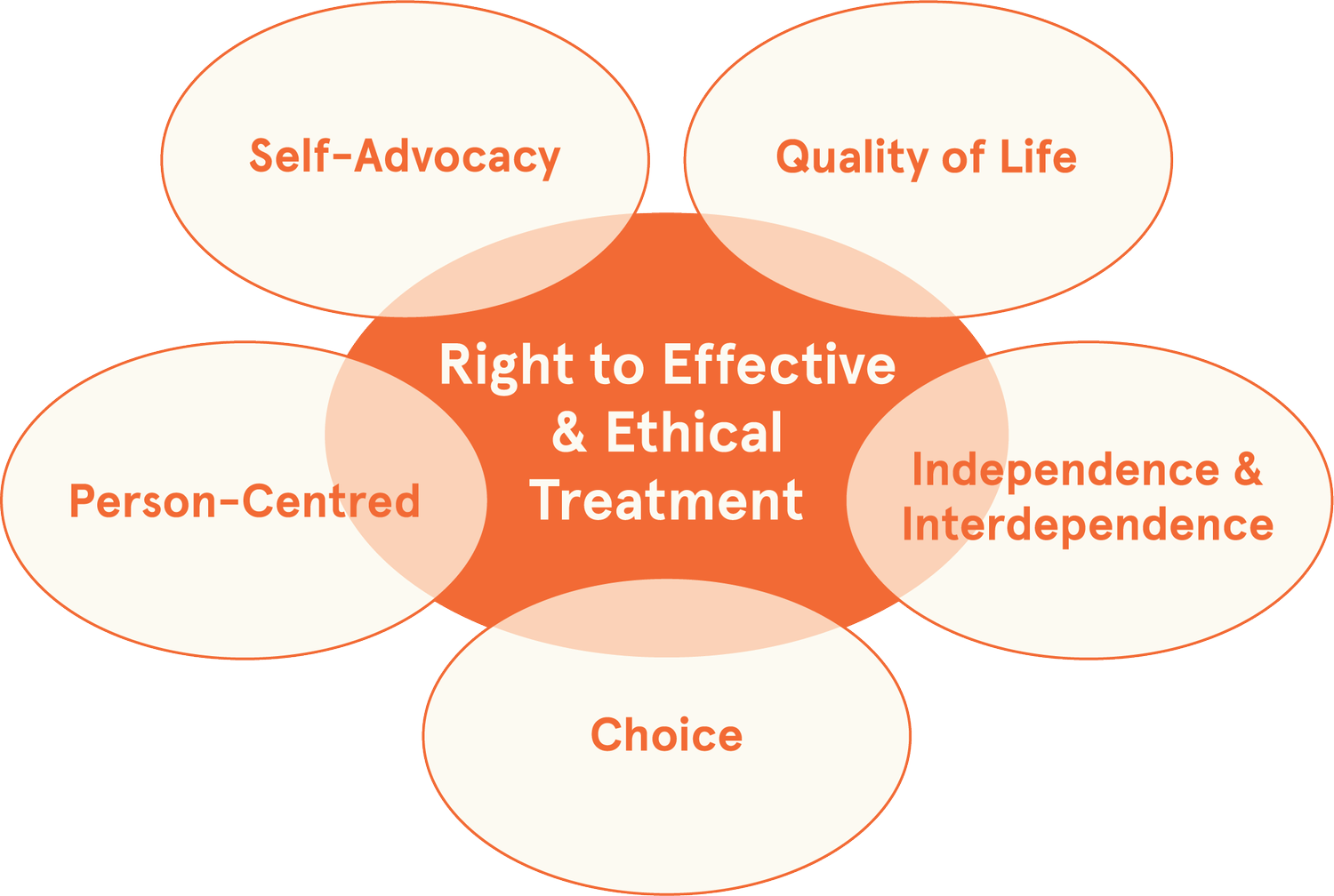
Behaviour Detectives provides an outcomes-based service with evidence-based therapeutic input. We work towards overcoming behaviours of concern, assisting the family and caregivers in implementing strategies to archive these goals and aim to improve the quality of life.
Transition Programme
Behaviour Detectives Transition Programme is mainly aimed for early school leavers and young adults, with a focus on Emerging Adulthood – in-between age who find difficulty transitioning from adolescence to adulthood. Young people age range is usually 18 years to 25 years and have Autism Spectrum Disorder (ASD) or other diagnoses. They may present with anxiety, self-isolation and with little to no community inclusion.Using an evidence based approaches, we utilise scientifically proven strategies that are monitored by data collection to determine the progress towards discovering new opportunities and opening new doors. Programmes are designed in line with the HSE New Directions and person-centred planning.
Encouragement is provided to make positive choices about future planning and to identify personal values, while always acknowledging individuality, preferences and needs. The emphasis is on improving the quality of life and skills development. Input from Behaviour Detectives can begin either at home, at the Transition Programme Base in Naas or in the community and would target the following areas:
Independent Living Skills
Further Education and Employment
Social Skills and Community Participation
Psychosexual Education
ASD Awareness, Rights and Responsibilities
Behaviour Detectives is an outcome-based service applying evidence-based practices, such as:
Acceptance and Commitment Therapy (ACT)
Cognitive Behaviour Therapy (CBT)
Motivational Interviewing (MI)
Process Based Behaviour Therapy (PBBT)
The aim is to have another adult who is not your parent by your side while gaining confidence to step in to the wide world as independently as possible. The focus is on overcoming barriers and making plans about the future that may include further education, employment or discovering new pathways.
Community Outreach
Children, adolescents and adults with Autism often present with behavioural problems in social and community settings. This can result in the family or carers having to limit social interactions at home or in the community leading to further stress and isolation for all involved.
This is especially prevalent among older children, adolescents, and young adults who may have missed out from early intervention or have not had the appropriate input to support their needs. Behaviour Detectives outreach and respite holiday service focuses on the increased demand to support families beyond the usual home support services that are currently on offer.
The goals are chosen with careful consideration to individualised behaviour support plan and family values.Community access and skills development are achieved by selecting suitable indoor and outdoor activities. The aim is to increase daily living skills and assist with behavioural support needs in the community settings.
Also, to help establishing a regular practice of being apart from the family, leaving the family home for periods of time and being able to transition outside of the home.
Workshops, Training and Supervision
Behaviour Detectives team has extensive experience in the frontline Autism services across settings such as school, home, community, respite and residential care. A neuro-affirmative ethos is at the core of our work while supporting children, young adults, and adults.
We have been involved in adult education since 2014. Our team, including a PhD level Autistic Behaviour Analyst, have reviewed, designed modules, and delivered lectures and workshops for colleges such as South East University, University of Galway, Open Training College and University College Cork Certificate/Diploma in Autism Studies course.
Virge holds a postgraduate certificate in Teaching and Learning in Higher Education, undertook the Train the Trainer course, and completed competency-based supervision training required by the Behavior Analyst Certification Board (BACB). She is also registered with the Teaching Council.
Whether you are a healthcare provider, parent group or a school seeking training, we will gladly set up a bespoke solution. Professional workshops can be tailored to the individual needs of the healthcare organisation, such as a school or residential home. If you would like more information on our training services, please feel free to contact us at hello@behaviourdetectives.ie.
We look forward to hearing from you!
Positive Behaviour Support Skills Training – Introduction to Understanding and Managing Behaviours of Concern course outline.
Play
00:00
02:16MuteSettingsEnter fullscreen
00:00
Social validity – It’s all about participant feedback and the data!
Play
00:00
03:43MuteSettingsEnter fullscreen
00:00
Court and Incident Reports
Virge’s first path to further education was to study law. As a qualified Court Clerk, she gained an understanding of various aspects of the law, an ability to interpret policies, court observations, reviewing documents and reports. Moving to Ireland, she pursued and studied Psychology instead. A client familiar with Behaviour Detectives needed an expert witness for a case involving behaviours of concern, which presented a perfect blend of psychology and law.
Virge has over ten years of experience in the field and is responsible for ensuring the governance and safety of her team and clients. Behaviour Detectives are happy to undertake reviews, provide written expert testimony and court appearances.
Dolly Parton reads to schoolchildren at the Library of Congress in 2018. Photo: Shannon Finney/Getty Images
Dolly Parton, who died yesterday at 80, was a towering musician — but her proudest accomplishment was her Imagination Library. It has sent children worldwide more than 304 million free books, Axios Nashville’s Adam Tamburin and Nate Rau write.
She founded it in 1995 to honor her father, a sharecropper who never learned to read. Before he died in 2000, Parton said, he told her the program was the most important thing she’d ever done.
As she put it, “that’s saying a lot.”Covers of today’s USA Today, New York Post
“I didn’t have children because I believed that God didn’t mean for me to have kids, so everybody’s kids could be mine so I could do things like Imagination Library,” Parton told Oprah in 2020.
For an experienced reader, recognising the words on this page feels effortless. Yet, evolutionarily speaking, your brain shouldn’t be able to read. Reading has existed for too short a time to have shaped a dedicated centre in the brain.
For an experienced reader, recognising the words on this page feels effortless. Yet, evolutionarily speaking, your brain shouldn’t be able to read. Reading has existed for too short a time to have shaped a dedicated centre in the brain.
This is important, as differences in these pre-existing systems could shed light on why some of us find reading easier than others.It could also explain how people who are deaf, blind or have dyslexia learn to read in remarkably different ways. In my new paper, published in Cerebral Cortex, I have come up with some answers.
In my study, I investigated the relationship between individuals’ reading skills and their fine-grained brain structure. I also compared twins with different degrees of genetic overlap to see whether shared genetic factors contribute to the links between brain structure and reading skill.
These patterns offer clues about which parts of the distributed “reading network” might provide the initial conditions for reading, and which might respond more to experience.
The Insights section is committed to high-quality longform journalism. Our editors work with academics from many different backgrounds who are tackling a wide range of societal and scientific challenges.
Basic, neural hardware
I used high-resolution brain scans from the Human Connectome Project, a large study of healthy young adults. The participants did not read while their brains were being scanned. Instead, they completed a range of language tests separately. The most important of these tests for my study was an adaptive reading test in which participants pronounced written words aloud. I used their scores on this test as a measure of reading ability.
I discovered that several brain areas contribute to the skills needed for reading, and that some show heritable links with it. To be clear, heritability does not mean that we are born a certain way and cannot change. The brain is, in fact, constantly changing. Rather, we begin with a partly inherited lump of clay that we continuously shape and refine throughout our lives.
Let’s begin with auditory abilities. When we learn how to read in school, we typically begin with identifying sounds and putting them together in our minds. In fact, problems with perceiving the sound structure of language are commonly cited as an underlying factor in developmental dyslexia.
To read, children learn to map each letter to a sound and join strings of letters into words: the letter s to the “sss” sound, i to the short “i”, and t to the “t” sound, so that s-i-t is pronounced “sit”. Breaking spoken words into individual speech sounds starts at the syllable level, dividing sitting into sit|ting. This requires the skill to identify slowly developing changes in loudness. Most syllables start quiet with a consonant like s-, then grow louder at the vowel (-i-), with its singing character, before going down in intensity again (-t).
Before we’ve learnt how to read properly, the brain can use auditory cues like these to detect syllables and their internal structure in spoken language and begin its road to literacy.
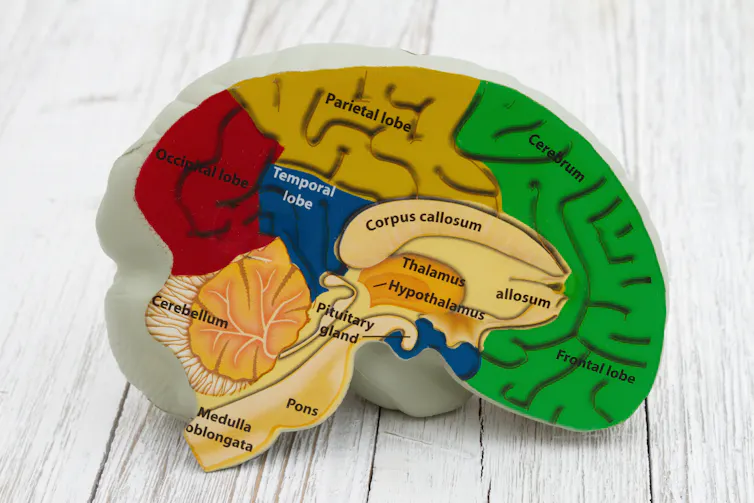
Particularly suited for this task is a region next to the primary auditory cortex at the top of the left temporal lobe, which sits underneath the temple and upper ear. It is called the medial belt area and is tuned to slow, coarse changes in sound. Strikingly, I found that a well-organised structure of its nerve cells is linked with reading ability.
The relationship had a genetic component, suggesting that the organisation of this perceptual system might affect how easy we find it to learn to read. Such differences could contribute to variation in literacy that does not simply separate people with and without dyslexia, but span the whole population.
We also need to understand what we read, however. A skilled reader can usually see words and directly connect them to meaning, in parallel with the activation of their sound. Recognising the visual aspect of a word is thought to build on our capacity to distinguish faces through their defining features. We identify letters and words by their smaller parts – bows, dots and lines – just like we recognise faces by the eyes, noses and chins.
Face identification seems to depend on a brain area in the right anterior temporal lobe called the dorsal temporal pole. Interestingly, I found that the size of this area is linked with reading ability – and this combination is also passed down. A possible explanation is that it helps us identify written words in a way similar way to how we recognise a face.
Finally, another region in the left anterior temporal lobe (the anterior middle temporal gyrus) is thought to connect word form and meaning. The bigger it is, the better we are at deciphering meaning. And it makes sense that having an advantage in accessing the meaning of words might make it easier to learn to read. Indeed, its size was also genetically related to reading ability.
The role of nurture
Now that we have identified some possible initial conditions for the brain’s reading ability – the lump of clay – we can turn to how the clay might be shaped.
After detecting syllables, the speech-sound distinctions need to be refined. This requires the primary auditory cortex to perform fine-grained sound analysis. Here, a thicker cortex (the outermost layer of the brain) is associated with better reading skills.
But, as I discovered, this combination of reading skill and a thick cortex was not genetically driven. In fact, it might be that experience – including exposure to speech sounds, other forms of auditory analysis (such as picking up different individual sounds from a soundscape) and reading practice – contributes to greater cortical thickness.
The structure of the nerve fibre bundles connecting sound to meaning and visual form also correlates with reading ability. But these relationships do not appear to be heritable either. These bundles might develop when sound, meaning and visual word form are connected during literacy training and general language exposure. So the more we read, the better the brain gets at doing it.
What can we learn from all this? Some brains might have an easier time learning to sound out letters, identify written words or access the meaning of words. In the end, though, our reading and language activities substantially mould the brain’s reading network.In other words, devoted parents, teachers and speech therapists can actually help children develop their inner worlds.
Alternative ways of learning to read
But there is not only one way to learn to read or even only one way to read. I once talked to a physics professor with dyslexia. He was incapable of sounding out words readily and didn’t hear them in his head while reading. He did, however, understand text, describing it as if written words silently built up systems of meaning in his head. He even felt that his reading style was advantageous in his line of work. While listening, I couldn’t keep from wondering what his anterior temporal lobes (involved in identifying familiar forms and accessing meaning) might look like.
My guess is that, because of limited support from the auditory route, his brain has learned to rely more heavily on direct links between written word forms and meaning. His anterior temporal lobes might have helped support this alternative route to understanding what he read.
Of course, that doesn’t mean that dyslexia is a requirement to become a physics professor. For many people, reading difficulties can mean a hard struggle. Even for him, reaching that level of proficiency cannot have been a walk in the park.
People born deaf provide another striking example of the brain finding alternative paths to learn how to read. As with the physics professor, skilled deaf readers can rely heavily on the visual form and meaning of written words. For signers, however, learning to read additionally means building connections between written words and another language – their signed language. Sign languages are independent systems with their own vocabulary and grammar, rather than spoken languages translated into signs.
The brain engages different areas to read Braille. wikipedia, CC BY-SA
Braille provides yet another route to reading. It represents letters through patterns of raised dots, allowing words to be read through touch rather than vision. Remarkably, people who become blind early in life can recruit parts of the brain normally devoted to vision when reading Braille.
‘Post-literate’ brains?
Recently, there has been lots of talk about humanity becoming “post-literate”. We increasingly turn to short videos, audio and other media instead of reading longform articles, let alone books. And indeed, an OECD report has found that literacy skills are declining.
We should be worried about this development because literacy ultimately underpins democracy. We need the ability to read at depth, and the continuous attention that comes with it, to properly evaluate ideas and policies.
Regardless of how we read, we all have our clever brains to thank for the ability. We have learned to hack our brains to bring different types of information – auditory, visual and even tactile – together with meaning.
And it doesn’t stop there. We build increasingly complex networks of meaning that help us understand and influence the world we live in.
So, should we surrender to the post-literate era and stop exercising this remarkable brain network? If you ask me – not a chance. Instead, we should keep moulding our grey lumps of clay into ever more beautiful shapes. How do we do that? We read.
To hear about new Insights articles, join the hundreds of thousands of people who value The Conversation’s evidence-based news. Subscribe to our newsletter.
Mikael RollProfessor of Phonetics, Lund University
Disclosure statement
Mikael Roll receives funding from the Swedish Research Council (Grant No. 2018.00632), the Knut and Alice Wallenberg Foundation (Grant No. 2018.0454) and Riksbankens Jubileumsfond (Grant No. M23-0052). He is affiliated with Lund University.
Partners
Lund University provides funding as a member of The Conversation UK.
The Conversation UK receives funding from these organisations







 Perplexity’s best attribute is arguably how fast it can execute. It’s small and nimble and, again and again, the team has shown the ability to launch things quickly. Its AI agent was an idea that was hatched in about a month and launched around the same time OpenClaw went viral in early 2026. Perplexity’s general purpose agent can now help you code your own software like Claude Code or OpenAI’s Codex, but it can also help you carry out knowledge work tasks the same way Claude Cowork and ChatGPT Work can. The ability to run locally on open models is a super power. But even highly technical people have complained about how involved the setup is to get Nvidia’s DGX Spark up and running, so this would be a win for both Nvidia and AI enthusiasts if Perplexity can make that process more streamlined.




 Dolly’s literary legacy
 Dolly Parton reads to schoolchildren at the Library of Congress in 2018. Photo: Shannon Finney/Getty Images
 Covers of today’s USA Today, New York Post