Jeffrey Sachs Live: ‘Very Dangerous Person’, Jeffrey Sachs Launches Scathing Attack on Trump Economist Jeffrey Sachs is predicting a major political reckoning over President Donald Trump’s war with Iran, arguing that those responsible for the conflict could eventually face removal from office.Sachs has repeatedly attacked the Trump administration’s Iran strategy, arguing that the war cannot be sustained at acceptable financial, military and political costs. He has also sharply criticized Defense Secretary Pete Hegseth’s role in the conflict.
The race to develop artificial intelligence is in dire need of a slowdown, Anthropic’s chief executive Dario Amodei said in an essay posted early Saturday. “We must slow the pace at which we improve the capabilities of AI models. Progress will still seem fast, and we must make wise use of the time we gain,” Amodei wrote in the 3,800-word post to his website.
BB0:00 Why Amodei agrees with his ex-employee’s dire warning 2:56 Amodei calls for more oversight of AI through ’embedded evaluators’ 6:38 On September 9, former Anthropic insider Jacob Coxon explains his public warning Watch 24/7 live news with CNN Headlines: https://bit.ly/4eIvlTr
The race to develop artificial intelligence is in dire need of a slowdown, Anthropic’s chief executive Dario Amodei said in an essay posted early Saturday. “We must slow the pace at which we improve the capabilities of AI models. Progress will still seem fast, and we must make wise use of the time we gain,” Amodei wrote in the 3,800-word post to his website.
0:00 Why Amodei agrees with his ex-employee’s dire warning 2:56 Amodei calls for more oversight of AI through ’embedded evaluators’ 6:38 On September 9, former Anthropic insider Jacob Coxon explains his public warning Watch 24/7 live news with CNN Headlines: https://bit.ly/4eIvlTr
Radical AI is building a self-driving lab in Manhattan, with a second site opening in Brooklyn’s Navy Yard, where robots synthesize and test materials while AI decides what experiment to run next. The company has raised over $65 million and counts the US Air Force among its clients, chasing breakthroughs in batteries, semiconductors, and heat-resistant alloys. The Bulletin of the Atomic Scientists’ Rambo Talabong went inside the lab to see how it works and ask whether AI can do science without scientists. CEO Joseph Krause says one scientist can now run 10 experiments at once, calling it “one of the most important tools in the world for scientists.” Principal Scientist Michael Pavel says AI has cut months of coding work down to an afternoon. Columbia University’s William Bailey is more skeptical, arguing that some material transformations can’t be rushed and questioning whether AI can extrapolate the way great scientists do.
TIMESTAMPS 00:00 – Inside Radical AI’s Manhattan lab 1:15 – Why Materials Science Matters 2:18 – Brief History of Self-Driving Labs 4:17 – A Radical AI Scientist’s Perspective 5:25 – Where Humans Still Dominate 7:18 – An Independent Scientist’s Perspective 9:01 – Conclusion Subscribe for more, and sign up for our newsletter: https://thebulletin.org/receive-email…
Lately, I’m shocked by the vapid content that some of my smartest friends are writing and posting. Who’s doing the thinking, and what are the consequences?John The Smartest Person I Know Is an Idiot What happens when intelligence remains, but thinking becomes optional?By John Nosta
KEY POINTS: Smart people still have intelligence but often hand the hard work of thinking to AI. AI erases the messy struggle of developing an idea and leaves only the look of thought. Cognitive friction may now feel like a defect, so people shun thinking and rely on AI for the answer.Source: PublicDomainPictures / Pixabay
This story started out rather differently. The initial idea was that the “genius experience” may be widely accessible to those using artificial intelligence (AI), even those with average IQs. And this thinking extended into the quest for nurturing genius across a broad population. But lately, I’m seeing something else going on in our quest for genius.And it’s happening to people I consider to be exceptionally smart.
In this curious cohort, their intelligence is there, but the expression of that intelligence feels, at least to me, sort of frictionless, if not theatrical. Most of this arrives in the written form—functionally insulated from live encounters. And it’s not just AI slop or today’s popular argument that AI is “making” us stupid.Nope, it’s something more subtle, and I think it’s worth a closer look.
Here’s the key insight. People who are perfectly capable of thinking are becoming comfortable, even complacent, with deferring cognition to AI.
When Friction Becomes a Defect
Recently, I wrote about the Activities of Daily Thinking, or ADTs. This references the “cognitive work” that may support our intellectual capabilities or even independence of thought. Looking back at that post, there’s a line that is spot on: “The friction that genuine understanding requires begins to feel like a defect.”AI is really good at removing that friction. AI can polish the paragraph, summarize the paper, and generate a counterargument. And that’s fine. But what happens when the friction removal becomes a cognitive expectation or even an imperative? Could it be that this cognitive friction increasingly feels like a defect? And does that defect foster a new personal compulsion for completion?
The Cognitive Inversion
This is where things turn inside out. We usually see or experience intellectual decline through exactly that—a decline. Today, AI might be driving something rather different. Cognitive independence can decline while perceived cognitive output can soar.The prose can seem brilliant. But here’s what fascinates and confounds me.Intelligence remains in plain sight, except for the one place that matters most. That’s the interval between encountering an idea and advancing it forward. Typically, this cognitive interval is a mess. It contains a mishmash of uncertainty and even confusion. AI can compress that interval almost to zero. And in doing so, it produces the artifact of intellectual engagement without necessarily preserving the experience of it. And that’s a sentence worth rereading. This is where an internal cognitive habit can find its way to the real world. Someone accustomed to the ease of frictionless thinking. And perhaps even more insidious, one may become less tolerant of the friction expressed by others. And when that gains traction in social discourse, disagreement may become something to resolve rather than inhabit. And conversation becomes increasingly efficient while becoming less reciprocal and genuine.
What Happened to That Smart Person?The smartest person I know isn’t an idiot because intelligence has disappeared. And that’s the key point.Intelligence can remain intact while the practice of thinking begins to erode or become compromised because technology typically follows a path of human nature—to make things easier.
Perhaps that’s the emerging paradox of AI as it participates in human thought. We can become increasingly capable of sounding intelligent while becoming less willing to “live” the experiences that intelligence requires.
An analysis of 2015–2025 conflict data says ISWAP’s war in the Lake Chad basin (Chad, Cameroon, Niger, Nigeria) has shifted from cities toward the countryside. Urban-linked events fell from about half in 2015 to under 30% by 2025, after a brief urban rebound around 2023.
The piece ties that to “supercamps” and earthworks around northeastern Nigerian cities. Urban attacks peaked at 356 events in 2020, then settled near 200 a year. Daily Boko Haram/ISWAP attacks more than doubled after the camp strategy, while government strike rates stayed flat.
Non-urban violence moved from about 15 km outside towns (2015–21) to roughly 17–20 km after 2021, into islands, Sambisa, and roads. The author calls urban hardening a partial win that leaves rural patrols, intelligence, and aid harder, and wants more mobile, community-based presence.
For more than a decade, the Islamic State West Africa Province (ISWAP) has waged an intense insurgency across the Lake Chad region, affecting communities in Chad, Cameroon, Niger and Nigeria. But the geographic nature of this threat is changing.
An analysis of conflict data from 2015 to 2025 reveals that although the insurgency initially targeted urban centers, it has increasingly expanded deeper into rural areas. This ruralization mirrors the growing concentration of government troops in fortified camps.
In the Sahel, terrorist groups have gone through several expansions. Before ISWAP officially splintered from Boko Haram in 2016, major Lake Chad Basin cities served as active battlegrounds as the group contested state authority.
Combining data from the Armed Conflict Location and Event Database project (ACLED) with city data from the Organisation for Economic Co-operation and Development’s Africapolis shows that half of all violent events involving ISWAP occurred within urban areas in 2015.
As ISWAP expanded in the late 2010s, the share of urban attacks declined. Unlike Boko Haram, which gained infamy for indiscriminate attacks targeting marketplaces, mosques and civilian infrastructure, ISWAP sought to pose as a more governance-oriented alternative in rural areas often left underserved by the government.
This first period of ruralization was short-lived, however. In the early 2020s, ISWAP gradually intensified attacks in urban centers, briefly returning to the 2015 level of 49% in 2023 before focusing increasingly on rural areas. By 2025, the proportion of events within urban areas had plummeted below 30%.
ISWAP’s recent ruralization does not mean that the group has decided to spare cities. ISWAP has continued to carry out attacks against urban centers in the Lake Chad Basin as its operational capabilities increased at the expense of Boko Haram’s.
The number of urban events peaked in 2020, with 356. This spike represents an intense operational push by ISWAP, with the total number of attacks having expanded so aggressively that its rural campaigns grew at a greater pace than its urban attacks.
After the 2020 spike, the number of urban events stabilized, hovering near 200 per year by 2024 and 2025. This suggests that regional military pressures have reduced the group’s ability to operate freely inside cities. It coincides with the implementation of fortified military camps and the construction of defensive earthen barriers around most cities in northeastern Nigeria. These initiatives are part of a government strategy to prevent or slow terrorist incursions in highly populated areas.
Supercamps and defensive trenches are a double-edged sword, however. They provide short-term protection, but they also can deepen rural insecurity and civilian vulnerability. The daily rate of attacks by Boko Haram and ISWAP has more than doubled since the supercamp strategy was implemented in the late 2010s. The rate of attacks by government forces against insurgents has remained stable. In other words, terrorists have rapidly filled the void left in rural areas and resumed their offensive outside fortified camps.
ISWAP is not just being pushed out of cities but is moving further away from them. Between 2015 and 2021, violence that took place outside urban areas averaged about 15 kilometers from urban centers. This suggests that the terrorists were targeting rural communities just outside fortified towns.
However, after 2021, ISWAP shifted outward. In 2022, the average distance of a nonurban event surged to 20 kilometers from urban areas. This expanded rural footprint has remained consistent through 2025, continuing to hover between 17 and 19 kilometers.
ISWAP has extended its reach deeper into rural spaces, embedding into the Lake Chad islands, the Sambisa forest and along major transport corridors.
ISWAP’s ruralization by 2025 can be viewed as a victory for urban counterinsurgency. However, data suggests that the threat has simply relocated and adapted. By pushing operations deeper into rural areas, ISWAP creates several tactical advantages for itself and challenges for state forces.
To engage the enemy, state military patrols now must venture farther away from fortified urban superbases, exposing them to ambushes and IEDs along rural roads. Human intelligence networks also are significantly harder to maintain and protect in isolated, distant villages. As the conflict moves deeper into the rural communities, international aid organizations find it harder to reach vulnerable populations, which exacerbates food insecurity and displacement.
Ultimately, ISWAP’s expansion into rural areas means that the static urban defense and superbase model may no longer be sufficient. Security frameworks must try to be more agile and community-based to project state authority into the Lake Chad Basin’s rural areas.
About the authors: Finley Walker is a student at Trinity College Dublin in Ireland, pursuing a degree in geography with a minor in sociology. Olivier Walther is an associate professor in the University of Florida’s Department of Geography.
The Africa Defense Forum (ADF) magazine is a security affairs journal that focuses on all issues affecting peace, stability, and good governance in Africa. ADF is published by the U.S. Africa Command.
AI is tearing down barriers that have long constrained the world’s most dangerous actors. A handful of people can now mount operations that once required legions of spies, engineers or hackers, Axios’ Zachary Basu writes.
Anthropic — the safety-focused lab behind Claude — says it spent the past eight months tracking and disrupting attempts to misuse its models. The company’s latest threat report shows how today’s models are already helping U.S. adversaries develop kamikaze drones, hunt dissidents and conduct dangerous virus research.
Among the most alarming cases:
1. An Iran-linked operation used Claude to help target U.S. naval forces. Claude helped build targeting handbooks tracking ship positions, U.S. personnel, aircraft and ship identifiers, satellite imagery and websites exposing naval movements.
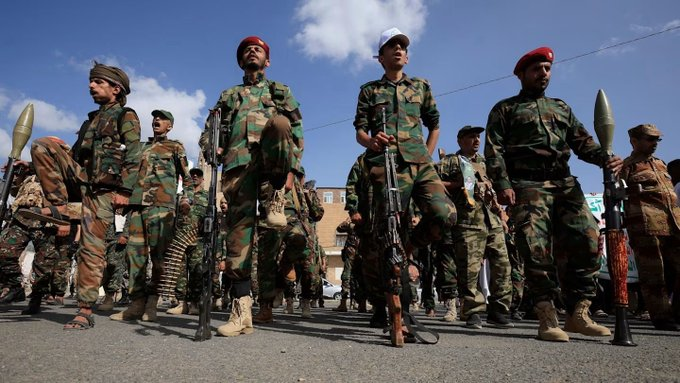
2. Claude served as an engineer for a Yemeni team building missiles.A weapons cell in northern Yemen relied on Claude Code to develop guidance software for rockets and missiles. After one guided-rocket test apparently failed, they returned to Claude within hours to diagnose what went wrong.
3. A China-linked operation used Claude to hunt Uyghurs. Anthropic says the actor sifted through more than 100 WhatsApp groups and dozens of Telegram channels to identify Uyghurs in Syria who could be pressured or paid to report on armed Uyghur groups.
4. One man used Claude to help build surveillance for 25 million phones.
A consultant in Mali relied on Claude as the main engineering force behind a nationwide system capable of collecting call records, texts and voice traffic. The system could generate intelligence dossiers on any phone number without a warrant.
5. Claude refused dangerous virus research — so the request went to another
AI.Researchers on a state-backed grant were trying to alter chikungunya, a mosquito-borne virus, to spread more easily or evade immune defenses. The work was intended for a military research institute. Claude blocked the most sensitive requests, but the service researchers were using routed them to a rival model with weaker safeguards — a stark reminder that one lab’s safety rules only go so far.Share this story.





 By John Nosta
 Source: PublicDomainPictures / Pixabay


