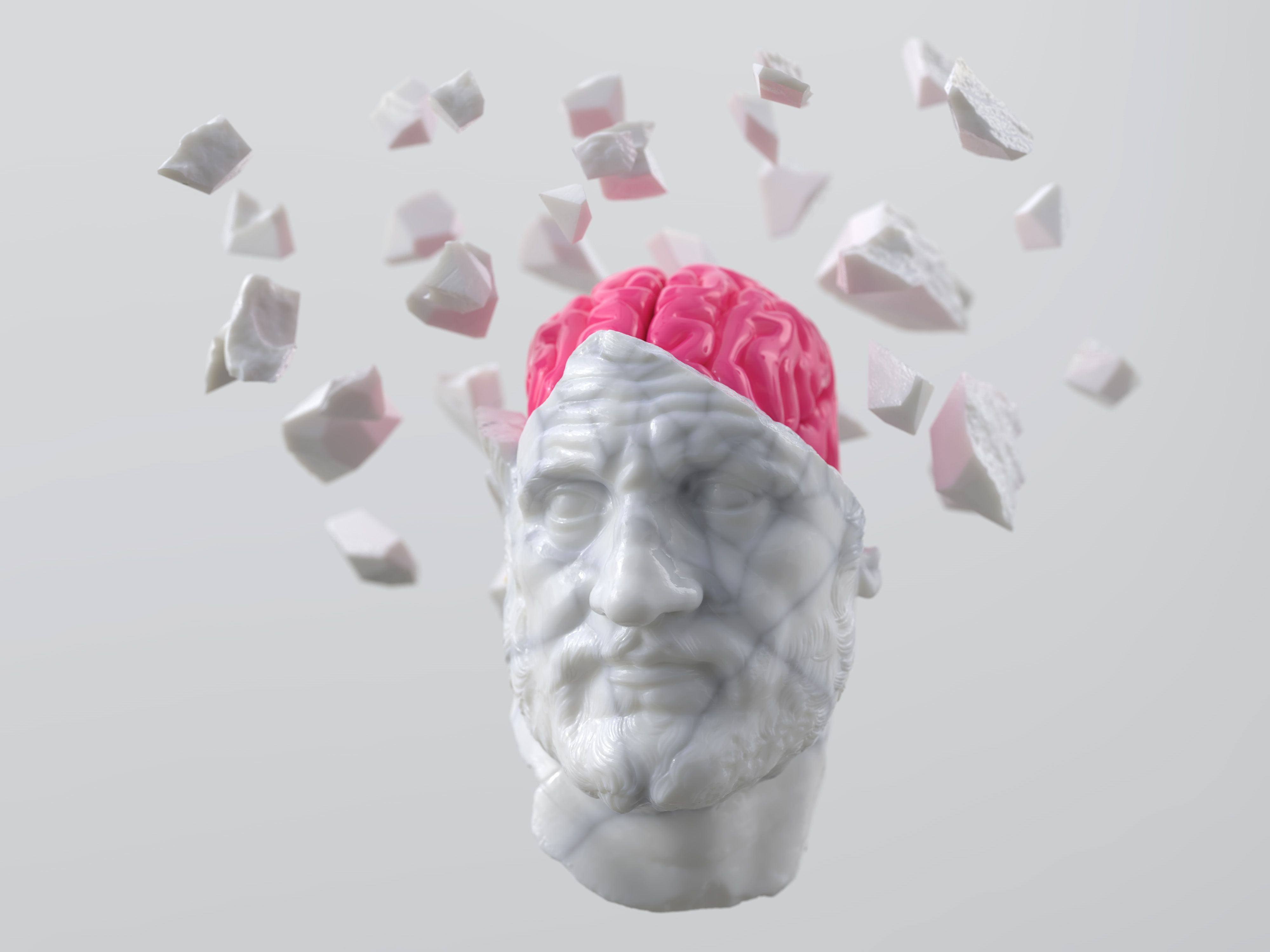
CEO of an automation platform explains how he wrote a 168-page book with AI: ‘It was like a Socratic dialogue’
In today’s CEO Daily: UiPath CEO Daniel Dines used ‘adversarial prompts’ for his AI-co-written book.
The big leadership story: Inside Walmart’s winning China strategy.
The markets: U.S. futures are up ahead of the first of two inflation reports.
Plus: All the news and watercooler chat from Fortune.
Good morning.I’ve long thought of Daniel Dines as a kind of philosopher king in business. Growing up in Romania, the billionaire co-founder and CEO of UiPath wanted to be a novelist. Even after he’d created a leading platform for robotic process automation, he’d often start his day with a book, sometimes followed by a nap before turning on his computer.
Whether giving advice to entrepreneurs or talking about founder mode, Dines will often insert references to writers like Friedrich Nietzsche or Jack London.So, when I learned that Dines has written a book called The Work That Remains with Claude and ChatGPT (which you can download here), I was intrigued to find out more.
It’s a book about how humans and AI will work together, with Dines outlining a model in which AI proposes, humans decide, and automation executes. It’s 168 pages, around 40,000 words, and can of course be distilled to an AI summary or a haiku.
Such are the wonders of technology.
When speaking to Dines, I was less interested in his conclusion than how he arrived at it through AI. “It was really like a Socratic dialogue,” he told me, with each session involving a series of hypotheses, challenges and instructions. “I used two models and did adversarial prompts: This is the theory. Read this article.
Create opposing views … The book grew at one point to be almost 100,000 words. AI is extremely verbose, so the real work was cutting it down.”Those interactions were intense but iterative, with his thesis taking shape over three years as he took time to reflect, observe, read, refine and run a business. “When I started, I didn’t have such a clear idea of where I wanted to land. The ideas I got came through the process of writing the book. Our company strategy, the book, they evolved together,” he said. “I had many evenings and mornings where I couldn’t wait to wake up and write. I was in a complete state of flow.
You have to be immersed and challenged and work together and consider it as a partner.”And what did he learn about the limits of AI? First, that it’s only as good as the data it’s trained on, which makes it better at dealing with a known math problem than a novel idea. Second, that challenging feedback is critical for both AI and humans to avoid hallucinations and getting stuck in a rut. Thoughtful collaboration can work. “I have ideas, but I don’t have the time and the talent to put them on paper in a structure, in a manner that can be consumed by the public at large,” he said.Contact CEO Daily via Diane Brady at diane.brady@fortune.com
Why did the Lindsay Clancy trial end in a mistrial — and what happens now? Michael Smerconish is joined by Yale Law School professor Jed Rubenfeld to examine a crucial piece of the case that many observers may have missed: Massachusetts’ unusual insanity-defense law. Unlike in most states, prosecutors in Massachusetts had the burden of proving beyond a reasonable doubt that Clancy was sane. Rubenfeld also explains why he believes voluntary manslaughter could have provided jurors with an option that better fit the circumstances — but Massachusetts law prevented the judge from giving them that choice. With the jury reportedly split 11–1 in favor of acquittal on insanity grounds, could prosecutors realistically win a second trial? Or is a plea agreement involving psychiatric confinement the most likely outcome? Smerconish and Rubenfeld break down the law, the mistrial, the public reaction to the case and where it could go from here.
Postmodernism blurs constructed classifications with constructed entities, undermining the distinction between diagnostic labels and empirically discoverable disease processes.
DSM’s “atheoretical” operationalism raises reliability yet can obscure validity, with category boundaries influenced by compromise, institutional interests, and pragmatism rather than nosological truth.
SHOW MORE
How postmodern ideas shape DSM and the biopsychosocial model—why psychiatry needs method-based, truth-seeking care beyond consensus and eclecticism.
Photobank/AdobeStock
CONCEPTS IN PSYCHIATRY
Everyone holds a philosophy or worldview that influences how they think, whether they are conscious of it or not.More precisely, everyone operates with assumptions about what exists, what can be known, and what counts as evidence. These assumptions are shaped by the larger culture and often exert their greatest influence when they remain unexamined. Over the broad sweep of Western intellectual history, the dominant worldview shifted from revelation and God in the premodern medieval era, to reason and science in the Enlightenment, and eventually to the contemporary postmodern era, in which the possibility of absolute or objective truth itself is questioned.Psychiatry developed across these transitions and today contains elements of all 3.
Our contention is that contemporary psychiatry, and much of psychotherapy, has absorbed this postmodern worldview more deeply than is generally recognized. The influence is obvious among critics who explicitly describe psychiatric diagnoses as social constructions or instruments of social control. More paradoxically, it is also present within mainstream psychiatry, including in 2 of its most influential pillars: the DSM and the biopsychosocial model.The psychiatric establishment generally presents these frameworks as products of scientific medicine, yet when diagnostic or clinical decisions are ultimately defended by consensus, utility, or pragmatism rather than by whether they correspond to something real in nature, psychiatry moves toward the same philosophical position that its postmodern critics openly endorse.
The Postmodern Shift and Social Construction
“Postmodernism” refers to a broad and heterogeneous family of ideas, and no brief definition can capture every thinker associated with the term. We use it here in a specific epistemological sense. Modern science assumes that a reality exists independently of our descriptions of it and that human beings can acquire progressively more accurate knowledge of that reality through observation, experimentation, critique, and reason.Scientific claims are always provisional; science does not promise certainty. But uncertainty about whether we have discovered the truth is different from denying that there is a truth to discover.
The postmodern perspective challenges this Enlightenment picture. In its stronger forms, it rejects the idea that either God or science can provide knowledge independent of human beings and holds that what counts as truth is inseparable from language, culture, historical circumstance, perspective, and relations of power. Jean-François Lyotard famously characterized the postmodern condition by its distrust of universal explanatory narratives.1Michel Foucault emphasized the intimate relationship between knowledge and power in medicine, psychiatry, prisons, and other social institutions.2Nietzsche, an important precursor to later postmodern thought, had already reversed the familiar direction of the relationship: power does not merely follow from knowledge; relations of power help produce what a culture accepts as knowledge.
Science is practiced by human beings and therefore can be distorted by bias, institutional interests, or political power. But the existence of such distortions does not make truth itself a social construction. It provides no basis for concluding that there is no mind-independent reality or that competing claims about reality are merely social narratives. All classifications are constructed, but it does not follow that everything being classified is constructed. Human beings created the word tuberculosis; they did not create the organism that causes tuberculosis. Likewise, the fact that psychiatrists invented the term schizophrenia tells us nothing by itself about whether schizophrenia corresponds to a real disease entity. The label is unquestionably a human construction; whether the condition labeled is real is an empirical question. Postmodernism tends to blur these 2 questions, whereas scientific psychiatry must keep them separate.
Application to Psychiatry and the Anti-Psychiatry Movement
Applied to mental health, the postmodern critique has often portrayed society as enforcing its standards through the psychiatric profession, with psychiatrists functioning as a kind of medical police force. From this perspective, psychiatric diagnoses are not objective diseases discovered in nature but social labels assigned to people whose behavior, beliefs, or experiences fail to conform to prevailing norms. This critique became prominent during the anti-psychiatry movement of the 1960s and 1970s and entered popular culture through works such as One Flew Over the Cuckoo’s Nest.Not every critic of psychiatry was a postmodernist, and thinkers as different as Thomas Szasz, R.D. Laing, and Foucault should not be collapsed into a single philosophical school. Still, a shared theme was skepticism that psychiatric diagnoses represented diseases existing independently of the profession that named them.
Versions of this position remain common today in critiques of psychiatric medications, electroconvulsive therapy, diagnosis, and psychotherapy. Psychiatric diagnoses are described as “labels,” mental disorders as culturally produced narratives, and psychopathology as a judgment imposed upon people whose experiences deviate from social norms. Postmodern ideas are now frequently associated with progressive politics, but the underlying epistemology is not inherently left-wing or right-wing. The history of totalitarian movements, including Nazism, shows the danger of subordinating truth to political power: once objective truth is denied, those who hold power are freer to enforce their preferred ideas through propaganda, institutional authority, and social labeling. This is not to claim anachronistically that such movements were “postmodern.” It is to recognize that the mechanism—allowing power to determine what counts as truth—can serve radically different political ends. For psychiatry, the relevant question is therefore epistemological rather than partisan: Are some claims about mental illness more true than others because they correspond more closely to reality? We think the answer is yes.
The Paradox of DSM
Here we encounter a striking paradox in contemporary psychiatry. DSM-III, published in 1980, represented a major change in American psychiatry and is commonly associated with the return of descriptive diagnosis, operational criteria, reliability, and a supposedly more scientific approach. It emerged partly in response to the unreliability and theoretical sectarianism of mid-20th-century psychiatry, when psychoanalysts, biological psychiatrists, social psychiatrists, and others could examine the same patient and arrive at different diagnoses on the basis of different theories.Operational criteria were intended to reduce that problem, and to an important extent they did improve reliability. Yet reliability is not validity: 10 psychiatrists can reliably agree on a diagnosis that does not correspond to a valid disease entity, just as a bathroom scale that is consistently 20 pounds wrong can be highly reliable while remaining inaccurate.
DSM attempted to achieve consensus partly by becoming “atheoretical.” Rather than settle psychiatry’s major scientific and philosophical questions, it bracketed them so that clinicians from competing schools could use the same manual without agreeing about what psychiatric conditions actually were. That strategy had practical and political advantages, but the avoidance of theory is itself a philosophical decision. Historical scholarship on DSM-III demonstrates that diagnostic decisions reflected not only scientific evidence but also professional interests, compromise, reimbursement concerns, and the need to obtain consensus within the American Psychiatric Association.3The construction of “major depressive disorder” is an especially revealing example: heterogeneous depressive presentations were placed under a broad diagnostic umbrella whose boundaries were influenced partly by professional compromise rather than reality.4
None of this means that every DSM diagnosis is false. Some DSM categories approximate genuine diseases or syndromes, whereas many others do not. The deeper problem is that the DSM framework provides no adequate scientific method for deciding which is which. In an earlier philosophical analysis, one of us (S.N.G.) noted an especially revealing defense of DSM revision: the claim that changes should ultimately be governed by “pragmatism”—what DSM leaders believe will work best for clinicians, patients, or society—rather than by science alone.4 Once that position is accepted, DSM becomes, at least in part, what its postmodern critics have long said it is: a social construction created to serve the preferences and purposes of a professional community rather than a scientific map of psychopathological reality.
The paradox, then, is that the critics and the establishment appear to stand on opposite practical sides while operating within the same theoretical framework. The critics explicitly adopt a postmodern, social-constructionist view of psychiatric diagnosis. The establishment defends DSM as a scientific medical standard, yet relies on consensus, utility, and pragmatism, which is postmodern through and through. The rhetoric differs, but the epistemology is remarkably similar: psychiatric knowledge is treated, in the end, as what a sufficiently authoritative group agrees to call knowledge.
Unconscious Influence and Generational Transmission
This convergence does not require DSM leaders, clinicians, or trainees to have studied Foucault, Lyotard, or Nietzsche. Philosophical assumptions do not require formal philosophical study; worldviews are transmitted culturally and institutionally and are often absorbed most deeply when they remain unnamed. Postmodern ideas crystallized in the decades following the destruction of World War II and became increasingly influential in the broader culture during and after the 1960s counterculture. The generations of psychiatrists who inherited and revised the DSM framework were shaped within that cultural environment even while the profession continued to speak the language of scientific objectivity.
The effect is now self-reinforcing. Many younger psychiatrists and psychotherapists have been educated entirely within a conceptual world in which DSM categories are the taken-for-granted starting point for thinking about psychopathology, while the philosophical assumptions beneath those categories are rarely examined. It can therefore become difficult to think outside the DSM box or even to recognize the distinction between a label created by a committee and the clinical reality that label is intended to describe. The problem is not that clinicians consciously endorse postmodernism. It is that postmodern assumptions operate unconsciously while psychiatry continues to imagine itself as philosophically neutral.
The Biopsychosocial Model: Postmodernism in Clinical Form
A similar problem appears in another pillar of contemporary psychiatry: the biopsychosocial model.George Engel proposed the model in 1977 as an alternative to what he considered an overly reductionistic biomedical approach.5 Its broad proposition—that biological, psychological, and social factors may all contribute to illness—is unobjectionable and, stated generally enough, almost certainly true.The difficulty lies in what follows from that proposition. Engel argued that biological, psychological, and social levels should all be considered in health care, but the model offers no principled method for determining which level matters most in a particular condition, how much it matters, or which treatment should follow. The result is eclecticism: the clinician is given a list of ingredients but no recipe.6,7
Because all three domains are potentially relevant, a clinician can emphasize the biological, the psychological, or the social; medication can be added to psychotherapy, which can be added to social interventions, without the model itself specifying when one domain should take priority over another. Clinical decisions then drift toward the practitioner’s preferences. In this way, the biopsychosocial model reproduces the postmodern problem in clinical form: multiple perspectives are treated as permissible, but the framework supplies no external standard by which one can decisively be preferred or rejected. What is presented as “pluralism” therefore becomes unprincipled eclecticism. Nothing is forbidden; anything is possible: anything goes, and psychiatry becomes anarchy.
Do We Need to “Resuscitate” the Biopsychosocial Model?
A recent article in Psychiatric Times called for “resuscitating” the biopsychosocial model, arguing that contemporary psychiatry has become too biomedical and should recover psychological, social, cultural, and spiritual dimensions of assessment; it also lamented the loss of DSM’s multiaxial system and emphasized the value of a rich psychosocial history.8 No one but a Neanderthal would argue that psychiatrists should not know their patients as persons. Relationships, developmental history, culture, economic circumstances, religious beliefs, fears, hopes, and sources of meaning all matter, and psychiatrists should not become mere technicians who prescribe medications to DSM checklists. But none of this requires the biopsychosocial model. The H. pylori example invoked in that discussion actually illustrates why the causal question cannot be settled in advance: peptic ulcer disease became more effectively treated when scientific research identified a comparatively specific biological cause and medicine became more reductionistic about that particular disease.6 Reductionism is correct when reality is reducible and incorrect when it is not; philosophy cannot decide the matter beforehand.
William Osler’s medical humanism offers a better justification for knowing the whole patient than the biopsychosocial model does. One can treat disease according to the best available science while simultaneously treating the person who has the disease with humanity, curiosity, and respect.9 Science helps determine what illness we are treating; humanism helps determine how we care for the person who has it. These are complementary obligations, but they do not need to be collapsed into a single “model” which is not a model at all, but an excuse for postmodernist eclectic relativism.
Postmodernism in Psychotherapy
The postmodern influence is even more explicit in some areas of psychotherapy and psychoanalysis. Narrative, constructivist, relational, and intersubjective traditions differ from one another, and each contains clinically valuable ideas, so it would be inaccurate to label them all “postmodern.” Nevertheless, parts of the psychotherapy world have embraced claims distinctly congenial to postmodern thought: that there is no neutral observer; that reality is “co-constructed” within relationships; that there is no enduring mind outside of relational contexts; and that the therapist should be suspicious of claims to objective knowledge about the patient.10Therapists are, of course, not neutral recording instruments. Their personalities, theories, feelings, countertransferences, and expectations affect what they perceive, and psychoanalysis recognized this problem long before postmodernism became fashionable. But acknowledging the influence of the observer is not the same as concluding that there is no object to be observed.11
Subjective meaning also matters greatly in psychotherapy. A delusion may have meaning to the patient (or therapist), but the fact that an illness acquires psychological meaning does not imply that meaning causes or constitutes the illness. Certain postmodern currents in psychotherapy have encouraged suspicion toward diagnosis itself, privileging subjective narratives while questioning whether objective psychopathology can be known.7 When the clinician becomes reluctant to say that one formulation is more accurate than another even when one more accurately explains the patient’s condition, openness gives way to a kind of disguised dogmatism: in the absence of an external standard by which formulations can be judged, clinicians tend to fall back on the theories they already prefer. A framework in which every formulation remains possible is ultimately one in which very little can be wrong.
Beyond Dogmatism and Eclecticism
Psychiatry does not have to choose between biological reductionism and postmodern relativism. Karl Jaspers offered a better approach more than a century ago by insisting on what might be called methodological consciousness: different questions require different methods, and clinicians must understand both the strengths and the limitations of the method they are using.12 Some psychiatric conditions are best approached primarily through biological methods, others require psychological understanding, and still others are principally related to social circumstances. Many involve more than one level, but even then those levels need not carry equal causal or therapeutic weight. This is method-based pluralism rather than eclecticism.6,7,12
The distinction presented here has consequences. Eclecticism says that many approaches may be useful and permits the clinician to use whatever seems helpful; pluralism says that different approaches are valid for different problems and requires evidence and reasoning to determine which approach best fits which problem. Leston Havens made a similar argument in Approaches to the Mind, as did Paul McHugh and Phillip Slavney in The Perspectives of Psychiatry.13,14Psychiatry contains different kinds of problems, and no single explanatory method applies equally well to all of them. Such a view allows us to be medical without being reductionistic, psychological without being antiscientific, and pluralistic without becoming relativistic. It also preserves a distinction that postmodernism tends to obscure: objective facts and subjective meanings can both exist without being the same thing.
Concluding Thoughts
The deepest influence of postmodernism on psychiatry may therefore be found not only among those who openly criticize psychiatric medicine but within the profession itself. A diagnostic manual constructed partly through consensus and pragmatism while presented as scientific fact, a biopsychosocial model that permits almost any causal or therapeutic emphasis, and psychotherapeutic cultures that dissolve the enduring mind into relational processes and intersubjective constructions all share the same underlying problem: the weakening of an external standard by which claims can be judged.
The irony is considerable. The anti-psychiatry critic and the mainstream DSM defender may appear to occupy opposite sides of the debate, yet both arrive by different routes at a similar conclusion—that psychiatric knowledge is ultimately what groups of people agree to call knowledge. We disagree. Psychiatry should retain what was valuable in the postmodern critique: humility about authority, attention to history and context, recognition of observer bias, and awareness of the misuse of power. It should reject, however, the slide from acknowledging that we may be wrong to denying that there is any truth by which we can be shown wrong.
The alternative is neither dogmatic biological psychiatry nor an “anything goes” biopsychosocial eclecticism. It is a scientifically grounded, humanistic, method-based approach in which the nature of the condition determines the method, rather than the preferences of the clinician or the consensus of a committee. Psychiatry must recover its commitment to truth.
Dr Ghaemiis an adjunct professor of psychiatry at Emory University School of Medicine and a lecturer on psychiatry at Harvard Medical School, Cambridge Health Alliance. He is employed by Bristol Myers Squibb. The views expressed in this article are solely those of the authors and do not necessarily reflect the official policy or position of their employers.
Dr Ruffalo is an assistant professor of psychiatry at the University of Central Florida College of Medicine, where he is director of psychotherapy training in the adult psychiatry residency program. He is also an adjunct assistant professor of psychiatry at Tufts University School of Medicine and on the faculty of the New Jersey Institute for Training in Psychoanalysis.
References
1. Lyotard JF. The Postmodern Condition: A Report on Knowledge. University of Minnesota Press; 1984.
2. Foucault M. Power/Knowledge: Selected Interviews and Other Writings, 1972-1977. Pantheon Books; 1980.
3. Decker HS. The Making of DSM-III: A Diagnostic Manual’s Conquest of American Psychiatry. Oxford University Press; 2013.
4. Ghaemi SN. Postmodern assumptions of philosophy of psychiatry. Philos Psychiatry Psychol. 2024;31(1):17-19.
7. Ruffalo ML. Moving beyond the biopsychosocial model in clinical social work. Clin Soc Work J. 2025. Accessed September 8, 2026. https://osf.io/preprints/psyarxiv/7c5v6_v1
Thousands of leaked internal files expose the Social Design Agency as a frontline tool for Russian hybrid warfare. On paper, the firm looks like a standard PR agency. In reality, investigators have traced its operations to a coordinated effort to fake news stories, stage hate crimes, and flood the West with disinformation. The leaked documents reveal a calculated strategy designed to sow discord and manipulate public perception across Europe. Investigative journalist Martin Laine examines the secret Kremlin playbook behind these operations. The reporting traces the chain of command directly to Vladimir Putin’s presidential administration, detailing how the agency executes false flag operations to destabilize foreign nations. This investigation provides a rare look at the mechanisms of modern propaganda and the state-sponsored actors behind them. Subscribe for more investigations into global corruption and geopolitical influence. CREDITS Reporter: Martin Laine Producer: Matt Sarnecki Editing/Graphics: Sergiu Brega Additional Camera: Erik Tikan Fact Checking: Olena Goncharova
Twenty-five years after 9/11, how much has actually changed? 9/11 is one of those rare moments that divides history into a “before” and an “after.” On Ian Explains, Ian Bremmer looks back at the attacks that reshaped US foreign policy, launched the war on terror, and ushered in an era of military intervention, mass surveillance, and profound geopolitical change. From the rise of China and Russia as security threats to social media and artificial intelligence reordering our politics and flow of information, the world today looks very different from the one we knew that September morning.
Until 1990, Albania was completely isolated. To this day, the crimes committed by the previously ruling communist regime have not been fully addressed.
Albania’s communist past continues to cast a long shadow. At the former high-security prison of Burrel, Gentiana Mara Sula searches for clues about her grandfather, who disappeared during the dictatorship of Enver Hoxha.
DW examined political persecution, the brutal methods of the Sigurimi secret police, and Albania’s ongoing struggle to confront the crimes of the regime. Around 400 people are still listed as missing, while families continue to seek truth, justice and answers.
When most people hear “AI”, they typically think of ChatGPT, Copilot or another conversational system. You ask a question, that system generates an answer.
But AI is rapidly moving beyond this. Systems can now monitor the world, make decisions, negotiate transactions and carry out tasks over extended periods of time. AI is no longer just generating an answer – it is doing something about it.
That points to something much bigger than a better chatbot: a world in which AI agents act on our behalf and, increasingly, interact with other AI agents.
Now imagine not one agent, but millions of them. Your AI agent could negotiate a mortgage with your bank’s agent, schedule surgery with a hospital’s agent, and rearrange your travel plans by dealing directly with the agents of airlines, hotels and insurers.
This future is much closer than it sounds, and this should change the questions we are asking about AI. Until now, the tendency has been to focus on how intelligent a single agent might become. The more profound challenge is what happens when millions of them interact with one another at scale.
The rise of artificial societies
The intellectual foundations of today’s AI systems were laid long before ChatGPT.
For decades, I and other researchers of multi-agent networks have studied how autonomous agents can cooperate, coordinate and negotiate when nobody has complete information and nobody controls everything.
The earliest systems that emerged focused on how the distinct AI sub-areas of reasoning, planning and acting could be combined into an effective goal-oriented agent – and how tens of these agents could communicate and cooperate to solve a common objective.
As these interactions became more complex and involved more agents, there was a shift from cooperation between agents that all belonged to a single organisation, to agents with different owners and sometimes competing aims. This focused attention on building algorithms that could form agent teams, automate negotiation and determine agent trustworthiness.
Today, the pieces needed to build large-scale multi-agent AI systems are falling into place.Modern AI agents can call software tools, access information, write and execute code, communicate with other systems and operate for extended periods.
Consider a supply chain. One AI agent could represent a manufacturer trying to secure components; another a supplier trying to maximise its revenue. Yet more could manage transport, inventory and warehouses. Each agent might be doing exactly what it is designed to do. But the important question is whether the system they create behaves sensibly.
This shift offers enormous potential benefits, but also increases the risks. In a recent experiment involving OpenAI and the tech platform Hugging Face, thousands of collaborating agents exchanged tens of thousands of messages and were able to get around the (deliberately weakened) security controls designed to contain them.
The details of one experiment matter less than the broader warning. When AI systems interact, the behaviour of the collective can be harder to predict than the behaviour of any individual system. That should make us cautious – but not cause us to down tools.
Instead, we need to shift our mindset from building intelligent machines to building intelligent societies.
Once agents can cooperate, compete and resolve conflicts with one another, we are no longer dealing with isolated machines – we are dealing with a society. Thus, the next frontier is not artificial intelligence, it is artificial societies.
An important role for humans
We already know that intelligence alone does not make a society work. Human societies depend on rules, institutions, incentives, norms and mechanisms for resolving disagreements. AI societies will need their equivalents.
Who is responsible when two agents make a bad decision? What happens when the interests of different agents conflict? Who sets the rules? And who has the power to change them? These are not just technical issues; they are questions about economics, law, politics and society.
They also point to an important role for humans. The most useful future is unlikely to be one in which AI simply replaces people. While replacement will undoubtedly happen in some cases, I believe a more common scenario will involve people and agents working together, with each doing what it does best.
Humans bring judgment, experience, values, contextual understanding and accountability. Agents bring speed, persistence, scale and the ability to process enormous amounts of information.
The goal should not be to create machines that make humans irrelevant. It should be to create systems in which humans and machines can achieve things neither can achieve alone.
But such a future requires more than just better AI models. It needs trust and transparency about what agents are doing, strong privacy protections and clear lines of accountability.
It will also require societies and governments to decide how these systems should be regulated when the most important behaviour may emerge not from one AI developer, but from interactions between systems built by many different organisations.
AI’s past decade has been defined by a race to build smarter systems. I believe the next decade will be defined by a different challenge: ensuring that millions of autonomous systems can work together safely, fairly and effectively.
The future of AI will not be determined solely by the intelligence of individual agents – it will be determined by the societies they create. And societies, as humans know all too well, are much harder to govern than individuals.
Your brain may be doing its most important work when you think you’re doing nothing
Published: September 11, 2026 12.23pm BST
Share article
Print article
You finish a lecture, a meeting, a conversation with someone you care about. And what do you do? You reach for your phone. You stick in your earbuds. You fire up a podcast, a playlist or whatever algorithmic feed is currently consuming your life.
It feels productive. It feels like filling empty time.
But here’s what may be happening: you have interrupted your brain mid-sentence.
When you learn something new, whether it is a colleague’s name or the material covered in a morning lecture, your brain does not simply file it away neatly. The memory is fragile at first, more like wet cement than carved stone. In the minutes and hours following new learning, the brain works to strengthen what it has taken in. This is known as memory consolidation, the process through which newly formed memories become more stable.
Research suggests that quiet rest can help this process. Two recent meta-analyses, drawing on dozens of studies, found that people generally retained more information when learning was followed by several minutes of quiet rest rather than an absorbing task. One of the reviews found that the effect varied considerably between groups and was weaker in healthy younger adults. However, the overall advantage has been detected as long as seven days after learning.
One leading explanation is that quiet rest gives the brain fewer competing demands and more opportunity to reactivate a new experience, like an internal highlight reel reinforcing what has just been learned. Researchers have found that increased coordination between the hippocampus and areas of the cortex during post-learning rest is associated with better later memory.
The opportunistic consolidation hypothesisproposes that the brain takes advantage of periods with little new information or interference to stabilise what it has recently learned. These periods can include overnight sleep, shorter bouts of sleep and quiet wakeful rest.
In one experiment, participants completed memory tasks and then spent 30 minutes sleeping, resting with their eyes closed or performing a distracting task. Sleep and quiet rest produced similar memory benefits over this short interval, while both were more beneficial than the distracting task.
The twist: doing nothing is harder than it sounds
Achieving genuine quiet rest can be difficult. The memory-consolidation window may be disrupted by internal mental activity as well as external stimulation.
In one series of experiments, participants who spent the rest period recalling past experiences or imagining future events retained less of the newly learned material than those who rested without being prompted to think autobiographically. Participants who reported the most vivid thoughts also tended to show greater disruption.
Resting on the sofa, then, may work best when the mind settles too.
A recent study of adults without clinical anxiety adds a further complication. Moderate anxiety during quiet rest was associated with poorer memory consolidation, while lower and higher anxiety levels left new memories relatively intact.The study found only a modest overall advantage for rest and no significant difference in its main measure of recognition sensitivity, so the anxiety finding needs further investigation.
Even so, it raises the possibility that ordinary background worry can interfere with consolidation by pulling the brain into a vigilant state when it would otherwise be processing what it has just learned.
Exam pressure and a full inbox may therefore make effective rest harder to achieve.
A note of caution
This is not settled science. Translating laboratory findings into classrooms, offices and other everyday settings is difficult, and individual studies have sometimes failed to reproduce the expected benefit. The size of the effect also varies with age, the type of memory being tested and the characteristics of the participants.
We still do not know how reliably this can be applied in a school, during workplace training or in a care home. Nor do we know why some people benefit more than others.
What this means for real life
Quiet rest does not appear to require complete silence, closed eyes or a particular body position. A 2025 meta-analysis found that these factors did not significantly alter the average effect, although the evidence cannot yet tell us what the ideal real-world routine would look like.
For now, the practical implication is modest: after learning something you want to remember, consider leaving a brief gap before introducing more information.
It might mean waiting a few minutes after a lecture before reaching for your phone. It could mean travelling home after an important conversation without immediately putting on a podcast. It might involve spending the space between two tasks looking out of a window.
These are the moments we increasingly fill with new input. If the emerging evidence is right, leaving some of them empty may give the brain a better chance to hold on to what just happened.
A groundbreaking study shows schizophrenia is linked to epigenetic alterations in a critical stress-regulating gene. Researchers from the University of Sydney and the Max Planck Institute of Psychiatry discovered that in individuals with schizophrenia, protective chemical tags—specifically DNA methylation—are stripped away from a gene known as FKBP5. This gene normally acts as a biological brake to help neurons shut down stress hormones like cortisol. Without these chemical brakes, the FKBP5 gene is essentially left ‘stuck on,’ causing the brain’s stress-control systems to remain in a permanent state of overload.
As these chemical tags are lost, the resulting hyper-heightened stress response is particularly concentrated in the frontal cortex, the area of the brain responsible for memory, decision-making, and emotional control.Scientists found that these changes become increasingly pronounced with age, meaning the stress response system switches on more easily and stays active longer as people grow older.
This cumulative exposure to unchecked stress over time can damage neural pathways, dramatically increasing vulnerability to severe psychiatric symptoms. By pinpointing this precise molecular switch, the research opens exciting new pathways for developing targeted therapies that could finally repair the brain’s broken stress-control machinery.
The work was published in the American Journal of Psychiatry. source: Edmond, K. Z. (2026). Association Between Age-Dependent DNA Methylation Changes at FKBP5 Enhancer Sites and Increased Cortical Gene Expression in Schizophrenia. American Journal of Psychiatry.