Elon Musk “I think colleges are basically for fun…You literally just need the phone, internet and Grok to learn../

Posted in Uncategorized | Leave a comment

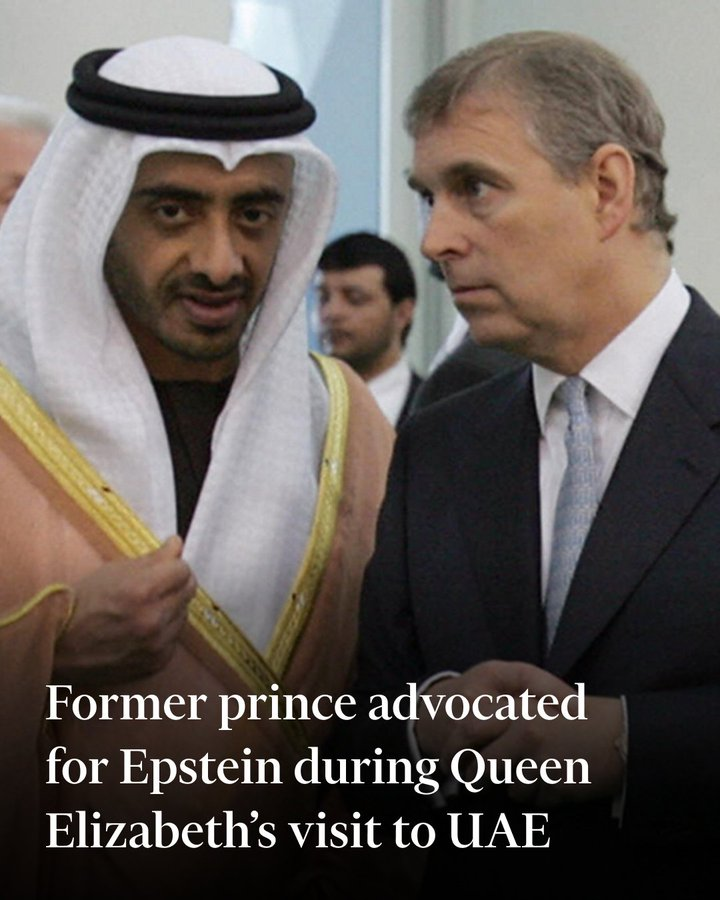
Financial Times: Files released by the US justice department indicate that Andrew Mountbatten-Windsor sought to encourage an Emirati foreign minister to do business with Jeffrey Epstein in 2010.

Financial Times

@FT

Files released by the US justice department indicate that Andrew Mountbatten-Windsor sought to encourage an Emirati foreign minister to do business with Jeffrey Epstein in 2010. https://ft.trib.al/khrb0rM

Posted in Uncategorized | Leave a comment

President Trump: Europe has big problems

Posted in Uncategorized | Leave a comment

Lizz Truss interview on X. Often said there are so many good people found in the NHS but “there are also a lot of lazy people”

Posted in Uncategorized | Leave a comment

Elon Musk … The National Debt

Posted in Uncategorized | Leave a comment

The Harvard Gazette: New AI tool predicts brain age and more…

New AI tool predicts brain age, dementia risk, cancer survival 

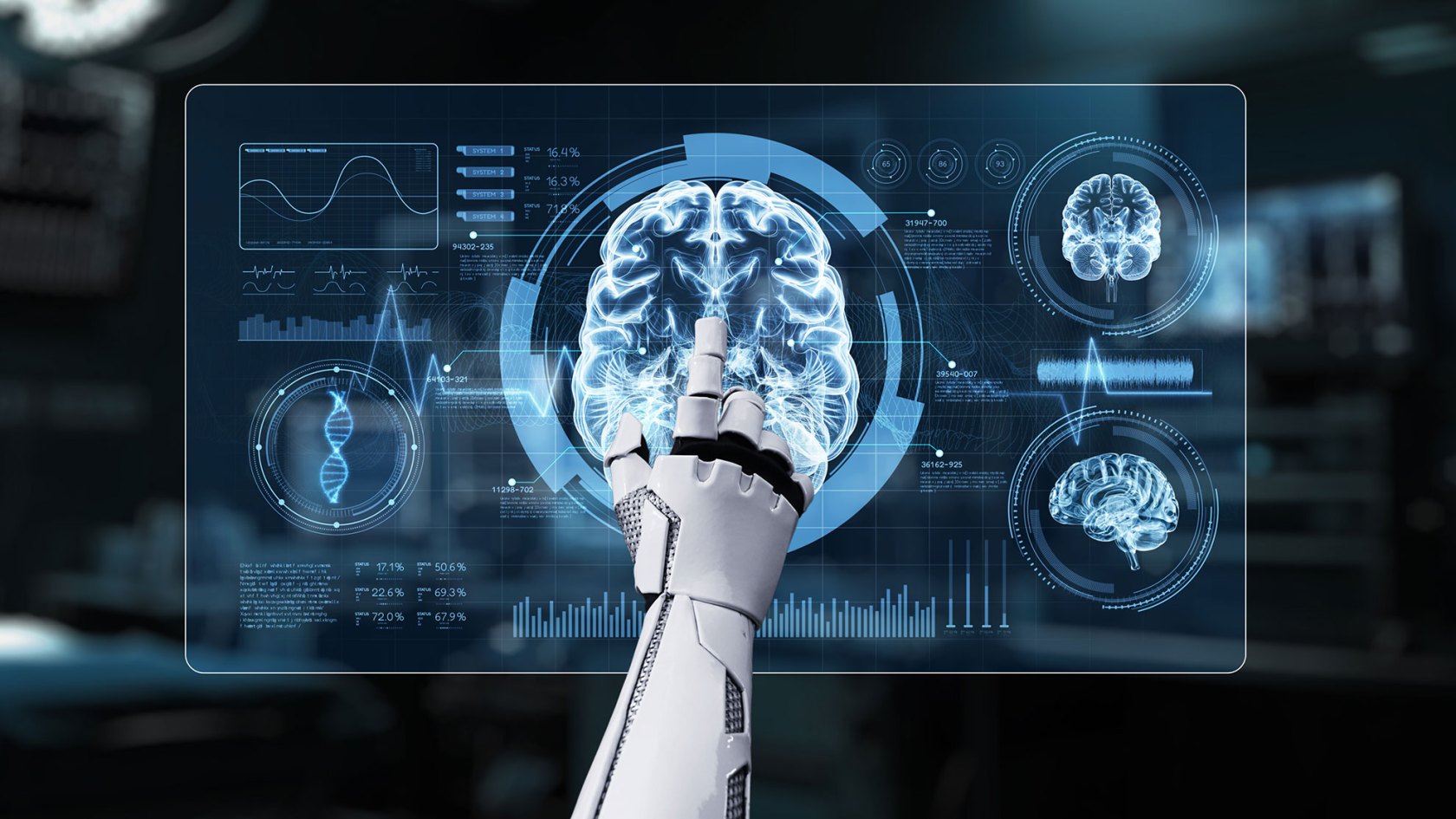
Close up of robotic hand pointing and clicking at brain holographic to access medical data or diagnosis symptom.

Mass General Brigham Communications

February 5, 2026 3 min read

Unlike other AI models, BrainIAC needs limited data to ID key neurological health indicators

A new AI foundation model has been developed that can accurately extract multiple disease risk signals from routine brain MRIs, including: estimating a person’s “brain age”; predicting dementia risk; detecting brain tumor mutations; and predicting survival from brain cancer, according to investigators from Harvard-affiliated Mass General Brigham.

The model, a brain imaging adaptive core called BrainIAC, was trained on nearly 49,000 brain MRI scans. The tool outperformed other, more task-specific AI models, and was especially efficient when limited training data were available. 

Results are published in Nature Neuroscience.

According to researchers, despite recent advances in medical AI approaches, there is a lack of publicly available models that focus on broad, brain MRI analysis. Most conventional frameworks perform specific tasks and require extensive training with large, annotated datasets that can be hard to obtain. Furthermore, brain MRI images from different institutions can vary in appearance and based on their intended applications (such as in neurology versus oncology care), making it challenging for AI frameworks to learn similar information from them.

To address these limitations, BrainIAC uses a method called self-supervised learning to identify inherent features from unlabeled datasets, which can then be adapted to a range of applications. After pretraining the framework on multiple brain MRI imaging datasets, the researchers validated its performance on 48,965 diverse brain MRI scans across seven distinct tasks of varying clinical complexity.

Researchers found that BrainIAC could successfully generalize its learnings across healthy and abnormal images and subsequently apply them to both relatively straightforward tasks, such as classifying MRI scan types, and very challenging tasks, such as detecting brain tumor mutation types. The model also outperformed three more conventional, task-specific AI frameworks at these applications and others.

The authors note that BrainIAC was especially good at predicting outcomes when training data was scarce or task complexity was high, suggesting that the model could adapt well to real-world settings where annotated medical datasets are not always readily available. Further research is needed to test this framework on additional brain imaging methods and larger datasets.

“BrainIAC has the potential to accelerate biomarker discovery, enhance diagnostic tools, and speed the adoption of AI in clinical practice,” said corresponding author Benjamin Kann of the Artificial Intelligence in Medicine (AIM) Program at MGB and associate professor of radiation oncology at Harvard Medical School. “Integrating BrainIAC into imaging protocols could help clinicians better personalize and improve patient care.”


This study was supported in part by the National Institutes of Health/the National Cancer Institute and Botha-Chan Low Grade Glioma Consortium.

Share this article

Posted in Uncategorized | Tagged , , , , | Leave a comment

GZERO: Why Singapore sees AI as an opportunity, not a threat

Posted in Uncategorized | Leave a comment

Palantir: makes me think lavender where AI intervenes making decision to deliver. Carole Cadwalladr video below re Mandelson-Epstein scandal

Posted in Uncategorized | Leave a comment

AL Jazeera English (Qatar) Leaked audio from the Epstein files suggests ex-UK PM : read for yourself and decide

Posted in Uncategorized | Leave a comment

Elon Musk on X: Solar panels can do 5 times more power in space…..

==============

and

Posted in Uncategorized | Leave a comment