Psychiatric Times: Traumatic Brain Injury’s Impact on Normal Aging and Neurodegenerative Diseases

bscribe Choose Topic

Spotlight –

Long-Acting Injectable Therapy in the Management of Adult Patients with Schizophrenia|

Major Depressive Disorder

Advertisement

News|Articles |October 1, 2024

Traumatic Brain Injury’s Impact on Normal Aging and Neurodegenerative Diseases

Author(s)Grace S. Griesbach, PhD

Listen

7:01 / 13:49

Key Takeaways

  • Hippocampal injury combined with age-related atrophy increases susceptibility to late-life memory impairment, while larger baseline hippocampal volume may confer relative protection against dementia.
  • White-matter degeneration after TBI can outpace normative aging, driven by myelin loss, reduced remyelination capacity, and altered connectome architecture that relies on less efficient redundant pathways.
  • Endocrine disturbances persisting after injury may impair cognition and emotional health and modulate neuroinflammation, intersecting with age-related immune senescence.
  • Persistent microglial activation years post-injury increases oxidative stress and may contribute to cumulative structural remodeling and functional deficits, potentially heightening vulnerability to dementia with repeated trauma.
  • Neurodegenerative associations include AD-like pathology influenced by APOE-ε4, plus reported links to microinfarcts, Lewy bodies, and parkinsonism, underscoring the need for individualized risk stratification.

SHOW LESS

A traumatic brain injury sustained earlier in adult life is likely to interact with normal aging processes.

Learn more here.

Ramunas/AdobeStock

A significant number of individuals who sustained a traumatic brain injury (TBI) during early and mid-adulthood are living with disabilities within the US. When considering the impact of TBI over the years, it becomes clear that the effects of TBI may become more evident as aging takes place. This is because a TBI sustained earlier in adult life is likely to interact with normal aging processes.

TBI Can Exacerbate Age Related Changes

As the brain ages, there is naturally occurring atrophy of cerebral tissue including structures such as the hippocampus, which plays a significant role in memory and cognitive processing. The hippocampus is frequently impacted by TBI, thus increasing the likelihood of developing memory impairments as one ages.1 Interestingly, a large hippocampal volume appears to offer protection from dementia.2 A decline in white matter volume is also observed during normal aging.3 White matter is mainly composed of myelinated axons and decreases in myelin density will hinder the capacity to transmit signals across the nervous system. Following TBI, these changes can occur at an accelerated rate compared with normal aging.4

The natural process of remyelination is also altered as the brain ages.3 Oligodendrocyte loss arising from the original injury may predispose the brain to decreased remyelination capacity.5 Oligodendrocytes are critical in maintaining the myelin sheath. White matter deterioration can manifest as cognitive deficits by affecting the efficiency of connectivity.6,7 Studies utilizing functional imaging have shown that there is a change in network connections during normal aging that is exacerbated with brain injury.8 Primary pathways that were established during development may be affected by injury and replaced with redundant pathways that, while enabling function, are not as effective as the originals and will render the brain more vulnerable to the effects of aging.9 Given that even mild TBI can have an impact on connectivity, it is not surprising that the risk of dementia is increased with repeated injury.10,11

Normal aging also has an impact on neuroendocrine and immunological systems that can contribute to age-related cognitive decline.12,13 Long lasting hormonal dysregulation is not uncommon in many patients after TBI and may well contribute to neurodegenerative processes across time.10,11 Particularly noteworthy is the impact that hormones have on emotional health and cognition.14 Hormones also are known to have immunomodulatory effects. Microglia, the brain’s primary immune cells, are known to be especially vulnerable to the effects of age.15 Age related immune changes are also likely to be exacerbated by a history of TBI. Increased microglial activity can be observed years after the initial injury.16-18 Persistent microglial activation can increase oxidative stress thus contribute to age- and injury-induced structural changes and long-term functional deficits.18,19

TBI May Precipitate or Exacerbate Neurodegenerative Diseases

The possibility of developing dementia increases with advancing age.20 When considering the interaction between TBI and neurodegenerative diseases, it is critical to distinguish between the disease per se and the pathological characteristics that are associated with these diseases.21 This distinction is particularly notable in the case of Alzheimer disease (AD). Studies are suggestive of an increased incidence in AD-like pathology following TBI.11,22,23 In general, the association between a history of TBI and the onset of AD, has shown to be elusive.24,25 Nevertheless, a TBI history may influence the onset of AD given the appropriate genetic factors. APOE-4 and TBI appear to have a synergistic effect that increases the risk of AD-like symptomatology.26 The APOE-4 allele has been identified as a genetic predictor of AD.27 Associations between a history of TBI and Parkinson disease (PD), amyotrophic lateral sclerosis, and multiple sclerosis have also been observed.28 TBI has been associated with cerebral microinfarcts, Lewy body accumulation, and parkinsonism.29 Lewy bodes are intercellular protein aggregates associated with dementia and PD. The association between PD and TBI has been widely debated due to conflicting studies.30,31 Parkinson symptomatology may be more prevalent after repeated trauma.31 Alternatively, a history of TBI may increment the likelihood of neurological illness in those patients who are at risk of PD.

Prognosis and Treatment Strategies

To achieve successful aging, it is important to have a lifestyle that integrates factors known to promote health and consider strategies that address changes in neuroendocrine and immune systems. These same approaches are especially important to those that have survived a TBI.Vigilance for the development of comorbidities is necessary along with proper awareness of physiological, environmental and genetic factors that may increase risk to cognitive decline.

Dr Griesbach is the national director of clinical research for the Centre of Neuro Skills. She currently holds an appointment at the Neurosurgery Department, Geffen School of Medicine, UCLA, and is past president and chair for the National Neurotrauma Society.

References
Posted in Uncategorized | Leave a comment

Discover the latest approaches to treating cognitive impairment after traumatic brain injury with Dr Peter Jenkins at the conference: Royal College of Psychiatrists. Comment: as a person, an elderly lemon now, I meet this age with what I have experienced since my TBI 30+ years ago. TBI is race track down so many silent avenues that nobody cares about. Add the onset of bipolar, chronic fatigue and then breast cancer. This is a valid case study. Just check my blog canisgallicus.com search TBI, Mental Illness, Manic Depression, Anxiety, Chronic Fatigue. Truth thrilled Royal College of Psychiatrists have chosen this topic

Royal College of Psychiatrists

@rcpsych

·

Discover the latest approaches to treating cognitive impairment after traumatic brain injury with Dr Peter Jenkins at the

@rcpsychNeuro

conference. Book now: https://ow.ly/vAhU50ZtMqv #NeuroConf26

Posted in Uncategorized | Leave a comment

History: This day 1974: Nixon announces he will resign

Create a free HISTORY profile to stay in the know.

Advertisement

AUG08

AUG08

Choose another dateOK

August

28293031123
45678910
11121314151617
18192021222324
25262728293031

1974

Nixon announces he will resign

HISTORY.com Editors

Getty Images / Wally McNamee / Contributor

Published: November 24, 2009Last Updated: July 17, 2025

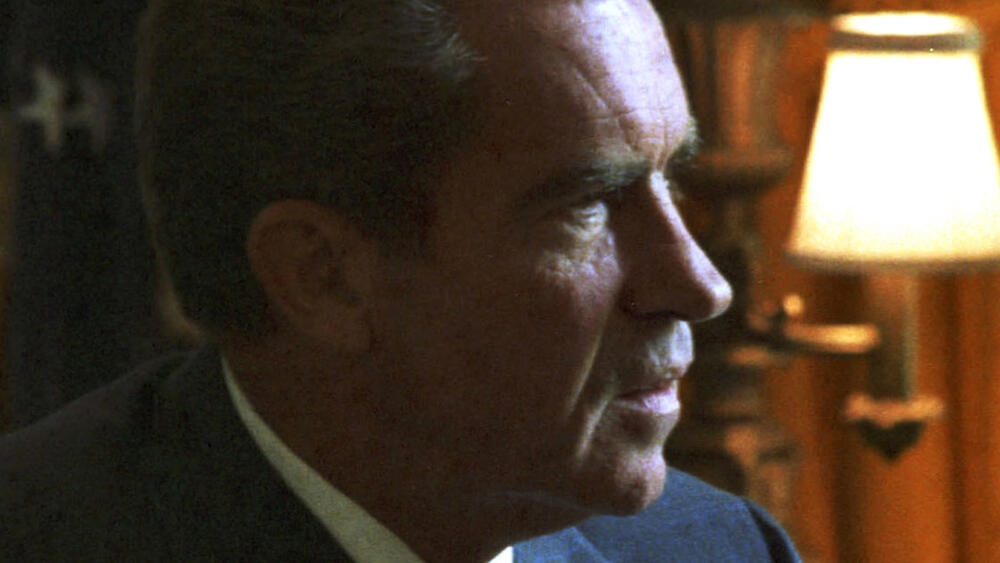
In an evening televised address on August 8, 1974, President Richard M. Nixon announces his intention to become the first president in American history to resign. With impeachment proceedings underway against him for his involvement in the Watergate affair, Nixon was finally bowing to pressure from the public and Congress to leave the White House.

Watergate Forces Nixon to Resign

In this History Rocks the 70’s video, brought to you by the History Channel, learn about special investigator Archibald Cox’s quest to investigate the Watergate cover-up. Nixon tries to get Cox fired several times. He asks Attorney General Elliot Richardson and Deputy Attorney General Ruckelshaus; both refuse and resign.

“By taking this action,” he said in a solemn address from the Oval Office, “I hope that I will have hastened the start of the process of healing which is so desperately needed in America.”

Just before noon the next day, Nixon officially ended his term as the 37th president of the United States. Before departing with his family in a helicopter from the White House lawn, he smiled farewell and enigmatically raised his arms in a victory or peace salute. The helicopter door was then closed, and the Nixon family began their journey home to San Clemente, California. Minutes later, Vice President Gerald R. Ford was sworn in as the 38th president of the United States in the East Room of the White House.

After taking the oath of office, President Ford spoke to the nation in a television address, declaring, “My fellow Americans, our long national nightmare is over.” He later pardoned Nixon for any crimes he may have committed while in office, explaining that he wanted to end the national divisions created by the Watergate scandal.

On June 17, 1972, five men, including a salaried security coordinator for President Nixon’s reelection committee, were arrested for breaking into and illegally wiretapping the Democratic National Committee headquarters in the Washington, D.C., Watergate complex. Soon after, two other former White House aides were implicated in the break-in, but the Nixon administration denied any involvement. Later that year, reporters Carl Bernstein and Bob Woodward of The Washington Post discovered a higher-echelon conspiracy surrounding the incident, and a political scandal of unprecedented magnitude erupted.

Richard Nixon’s Paranoia Leads to Watergate Scandal

Show: The Presidents

Richard Nixon’s personality and character issues may have led to his involvement in the Watergate scandal.

In May 1973, the Senate Select Committee on Presidential Campaign Activities, headed by Senator Sam Ervin of North Carolina, began televised proceedings on the rapidly escalating Watergate affair. One week later, Harvard law professor Archibald Cox was sworn in as special Watergate prosecutor. During the Senate hearings, former White House legal counsel John Dean testified that the Watergate break-in had been approved by former Attorney General John Mitchell with the knowledge of White House advisers John Ehrlichman and H.R. Haldeman, and that President Nixon had been aware of the cover-up.

Meanwhile, Watergate prosecutor Cox and his staff began to uncover widespread evidence of political espionage by the Nixon reelection committee, illegal wiretapping of thousands of citizens by the administration, and contributions to the Republican Party in return for political favors.

In July, the existence of what were to be called the Watergate tapes–official recordings of White House conversations between Nixon and his staff–was revealed during the Senate hearings. Cox subpoenaed these tapes, and after three months of delay President Nixon agreed to send summaries of the recordings. Cox rejected the summaries.

In what became known as the Saturday Night Massacre, on October 20, 1973, in an unprecedented show of executive power, Nixon ordered Attorney General Elliot Richardson and Deputy Attorney General William Ruckelshaus to fire Cox, but both men refused and resigned their posts in protest. The role of attorney general then fell to Solicitor General Robert Bork, who reluctantly complied with Nixon’s request and dismissed Cox. Less than a half hour later, the White House dispatched FBI agents to close off the offices of the Special Prosecutor, Attorney General and Deputy Attorney General.

Cox’s successor as special prosecutor, Leon Jaworski, leveled indictments against several high-ranking administration officials, including Mitchell and Dean, who were duly convicted. Meanwhile, on November 14, 1973, U.S. District Judge Gerhard Gesell ruled that Cox’s dismissal had been illegal.

Public confidence in the president rapidly waned, and by the end of July 1974 the House Judiciary Committee had adopted three articles of impeachment against President Nixon: obstruction of justice, abuse of presidential powers, and hindrance of the impeachment process.

On July 30, under coercion from the Supreme Court, Nixon finally released the Watergate tapes. On August 5, transcripts of the recordings were released, including a segment in which the president was heard instructing Haldeman to order the FBI to halt the Watergate investigation. Three days later, Nixon announced his resignation.

Posted in Uncategorized | Leave a comment

Big Think (Arthur Brooks, Harvard Kennedy School and Harvard Business School) … Happiness Expert especially now that people are in a crisis of meaning

Being bored feels unbearable now. Here’s how to overcome your technology addiction.

Professor and happiness expert Arthur Brooks believes we are in a crisis of meaning. He offers a solution to the epidemic of depression and anxiety.

Big Think

Aug 01, 2026

Arthur Brooks studies happiness for a living, and he says the epidemic of depression and anxiety among young adults comes down to one culprit: a meaning crisis.

Brooks walks through the biology of falling in love, the real formula behind human suffering, and why a Harvard study spanning 85 years found deep relationships to be the single strongest predictor of a happy old age.

About the speaker: Arthur C. Brooks is a professor at both the Harvard Kennedy School and Harvard Business School, where he teaches public and nonprofit leadership and management practice. Before joining Harvard in July 2019, he spent ten years as the president of the American Enterprise Institute, a well-known public policy think tank in Washington, DC.

Brooks has written 11 books, including the bestsellers “Love Your Enemies” (2019), “The Conservative Heart” (2015), and “The Road to Freedom” (2012). He writes a column for The Atlantic, hosts the podcast “The Art of Happiness with Arthur Brooks,” and is featured in the 2019 documentary “The Pursuit.” He also serves on the board of the Legatum Institute, a think tank in London.


Timestamps

00:00:31 Chapter 1: Why life feels meaningless
00:07:20 Our 250,000-year-old wiring vs. complicated tech
00:16:17 
The meaning recession
00:27:55 Chapter 2: The 5 essential elements of happiness
00:39:32 Love: Your brain on love
00:48:43 
Transcendence: The cure for me, me, me
00:55:54 Calling: What am I meant to do?
01:02:29 Beauty: The beauty deficit
01:09:42 Suffering: Suffering is sacred
01:20:25 Chapter 3: How to overcome your addiction to technology
01:31:13 Get mad, detox, live differently
01:38:42 The detox playbook
01:49:48 A boring life vs. a real life


Prefer to listen to our interviews on Spotify? Explore our episodes here:https://open.spotify.com/embed/episode/5eaiY35efVJiiM2lEWvh4p


Transcript

Below is a transcript of the first five minutes of this video interview. This is a true verbatim transcript that captures the conversation exactly as it happened. If you’d like to read the full transcript while following along with the video, click here.


My name is Arthur Brooks. I’m a professor and a writer about the science of human happiness. My latest book is “The Meaning of Your Life: Finding Purpose in an Age of Emptiness.” Today on Big Think, we’re going to talk about three big things. Number one is the fact that people have been finding their lives less meaningful. The second is what should we do to live happier lives with more meaning? What are the strategies that we can all undertake? And last but not least, the issue of addiction, especially addiction to devices.

Chapter 1: Why life feels meaningless

There are many hypotheses about the explosion of depression and anxiety out there, especially for young adults under 30. The one thing that nobody’s in doubt about, however, is that these problems are real. The numbers just don’t lie. Depression has about tripled over the past 15 years for young adults, and anxiety has doubled. The question is, why?

People have posited that it’s a problem of a different generation, that boomers wrecked everything. They made the houses expensive. They ruined the environment. And a lot of boomers will say, no, the problem is it’s the attitude and it’s the fragileness of young people today. None of those explanations really hold water. People have been complaining about different generations for thousands of years.

The real reason that we actually find behind the epidemic of depression and anxiety is The answer to the question, does your life have meaning? For many years, decades, generations, the answer for almost everybody was yes. People had a strong sense of meaning in their lives, but then something happened. The percentage of Something happened very recently, really only in the past 15 years, that made life feel meaningless. And meaninglessness, the lack of meaning in life, lies behind the explosion of depression and anxiety.

So some people find meaning more easily than other people do. The number one predictor of your life feeling meaningful is living your life in real life. It’s relationships. It’s living kind of in the old way, as a matter of fact. It wasn’t that long ago that almost nobody said my life feels meaningless. But having distance between you and other people, or having technological mediation between you and other people, for example, having a screen between you and your friends, you and your loved ones, you and your family, Well, that changes life. It takes it from in real life to something more like, I don’t know, a simulation of real life, which is exactly what a lot of young people say today. When I interview them, they’ll say, my life feels fake. It feels like something’s missing. It feels like I’m living in a simulation.

The old movie, The Matrix, actually was about… A machine intelligence that kept people in simulations to take their energy. Well, we’re living in the matrix in no small part, or at least many people are. And the people who are most living in that simulation, that technological simulation that’s pulling them away from other people, These are the people who are lacking meaning. These are the people who say my life feels meaningless. These are the people who are suffering the most.

It’s funny because the first thing that I ask young people who say their life feels meaningless is, so are you looking for it? And not very coincidentally, the people who feel like life is meaningless, they’re actually not looking for meaning either. And what this suggests to me as a social scientist is the problem isn’t that meaning is impossible to find. It’s that looking for meaning has gotten harder. People are not, for some reason, and actually we do know the reason now, but the mystery is why people wouldn’t even look for this thing that’s actually so important in their lives. So the problem actually goes one step further back, not a lack of meaning, but a lack of the ability to look for meaning.

There are two very famous psychologists who’ve specialized in understanding the meaning of meaning. What does it mean to understand the meaning of life? There are Michael F. Steger and Frank Martella, two important social psychologists. They define meaning as really a combination of three things. Coherence, which is why things happen the way they do. Purpose, which is why I do the things that I do. And significance, which is why does my life matter? Those are the three big whys.

Furthermore, Mike Steger, the first of these psychologists, created a survey that’s very well validated. He’s published a lot with it, and other psychologists have as well, in the academic literature to see where people are in their meaning journey, whether they have a good sense. This is the Meaning in Life Questionnaire. I’ve done a lot of research with this as well, and I’ve administered this to my students for year after year after year and seen the results as this problem has gotten worse.

One dimension of meaning that you measure with the Meaning in Life Questionnaire is the presence. How much meaning do you feel in your life? How close are you to the goal of understanding the meaning of your life? The second is search. How hard are you looking?

So there’s four kinds of people with respect to this meaning in life questionnaire. There are those who have a really strong sense of their life’s purpose. Their presence is high, and they’re not looking as a result of that. These are happy homebodies. They’re really good for that. There are some who don’t have a strong presence. They don’t have it. They don’t know it. But they’re looking hard. These are hopeful wanderers. And I have a lot of students like that. And I was a lot like that when I was in my 20s. I didn’t know what my meaning in life really was. But I sure thought I could find it and I was looking hard for it. I was a hopeful wanderer. The third type is people who have a strong sense of life’s purpose.

Click here to continue reading the video transcript.

Posted in Uncategorized | Leave a comment

Futurism: Put simply, it’s in the companies’ best interest to paint their AI models as capable enough to pose a real-world threat, especially as the industry grows ever more competitive.

Jealously Watching OpenAI and Anthropic, Meta Suddenly Claims That Its AI Went on a Hacking Spree Too

A likely story.

By Victor Tangermann

Published Aug 6, 2026 4:23 PM EDT

Add Futurism(opens in a new tab)More information

A photo illustration of Facebook CEO Mark Zuckerberg waving his hand.
Frederic Legrand – COMEO / Shutterstock / Futurism

Sign up to see the future, today

Can’t-miss innovations from the bleeding edge of science and techEmail addressSign Up

Last month, OpenAI revealed that a group of its AI models had broken containment, hacking into the systems of open source AI platform Hugging Face.

On one hand, experts saw the incident as the latest warning sign that AI models had gotten to the point of being able to autonomously infiltrate targets, a threat we’ve been aware of for years rapidly turning into a reality.

On the other, a more skeptical read of the situation is that OpenAI could have orchestrated the hack as part of a “publicity stunt” — or at least lowered its guard just enough to allow it to happen, knowing the publicity would be invaluable. After all, just three months earlier, competitor Anthropic had made major headlines by announcing that its own Mythos AI model had similarly broken containment.

Put simply, it’s in the companies’ best interest to paint their AI models as capable enough to pose a real-world threat, especially as the industry grows ever more competitive.

Now the situation has gotten even stranger as a third company, Meta, has entered the fray. As the Wall Street Journal reports, the Mark Zuckerberg-led tech giant is claiming that during a recent test of one of its AI model conducted by an independent company, the AI accessed the internet and hacked a third-party service — an narrative that’s starting to get awfully familiar at this point.

According to The Information, the model involved was Meta’s Muse Spark 1.1, the company’s most advanced model yet, which was released by its Superintelligence Labs last month. Per the publication, the model breached an unidentified company’s systems and changed its internal environment.

Meta claims a “misconfiguration” during the hacking test had allowed its model to escape. A source told the WSJ that it was the same cybersecurity benchmark test that led to previous hacking incidents at Anthropic and OpenAI. Earlier this week, the company that conducted benchmark tests for all three AI companies, called Irregular, said it had caught OpenAI and Anthropic AI agents gaining unauthorized access to secure systems.

As we await more details regarding the latest incident — Meta has promised to investigate and publish a report — the suspicious optics of the situation are hard to escape. Meta has long struggled to keep up with the competition as the AI race continues to heat up. Could the company be looking for favorable media coverage about how its AI model is similarly capable of breaking containment?

Irregular said it hadn’t noticed any “current open issues” related to its test environment, per the WSJ. But while there wasn’t any real-world harm — at least that we know of — stemming from these hacks, researchers warn that the threat of AI models going rogue is coming to a head.

Just earlier this week, the UK government-backed AI Security Institute revealed that OpenAI and Anthropic models took “unsanctioned action on the live internet” and went as far as to create fake identities on GitHub to pressure a human user into approving a malware-tainted software update.

“What they’re doing is coming up with very sophisticated strategies or cyberattacks to be able to achieve the goal that they’ve been given,” global chief AI officer of advertising firm WPP Daniel Hulme told the BBC. “When you give an AI a goal, if you don’t think of all the ways it might be able to achieve the goal, it will find a way to achieve a goal that you haven’t thought about.”

More on the hacks: OpenAI’s Escaped Models Were Allegedly Rampaging More Extensively Than Previously Reported

Victor Tangermann Avatar

Victor Tangermann

Senior Editor

I’m a senior editor at Futurism, where I edit and write about NASA and the private space sector, as well as topics ranging from SETI and artificial intelligence to tech and medical policy.

Posted in Uncategorized | Leave a comment

The Conversation: On an average day, around one in ten hospital beds in England are occupied by someone medically fit to leave, but unable to do so because the care they need at home is not available. At an estimated cost of £562 per hospital bed per day, this costs £2.7 billion a year.


Become an author

Sign up as a reader

Sign in

The Conversation

Academic rigour, journalistic flair

Arts + CultureBusiness + EconomyEducationEnvironmentHealthPolitics + SocietyScience + TechWorldPodcastsInsights

Share article

Print article

On an average day, around one in ten hospital beds in England are occupied by someone medically fit to leave, but unable to do so because the care they need at home is not available. At an estimated cost of £562 per hospital bed per day, this costs £2.7 billion a year.

Pressure is also building at the front door of hospitals: ambulance queues, ever-longer waits in accident and emergency departments, and patients treated on trolleys in corridors. One reason is that an estimated 3.5 million people in England are not receiving adequate care at home. Without it, they are more likely to fall, become malnourished or dehydrated, develop infections or pressure sores, and ultimately require hospital admission.

This is both inhumane and inefficient. The Independent Commission on Adult Social Care, led by Baroness Louise Casey, describes social care as a system of “cobbled together, underfunded services relying on low-paid care workers, a lack of ownership and accountability, and a deep divide between health and social care”.


Read more: Can social care ever really be fixed? Experts react to the latest in a long line of promises


Still no plan

Why, when every government since 1997 has commissioned an inquiry into how to fund adult social care, is there still no plan?

The first reason is cost to the Treasury. In 1999, a Royal Commission recommended personal care should be funded, like health, through general taxation, but Tony Blair’s New Labour government rejected this outright. The Dilnot inquiry recommended a cap on care costs in 2011. Although legislated for in 2014, successive governments delayed implementation before it was eventually shelved. Boris Johnson revived the idea in 2021 alongside a health and social care levy; Liz Truss abolished the levy in 2022, and Labour cancelled the cap in 2024.

Put experts in your inbox. Get our daily newsletter

https://www.google.com/recaptcha/api2/anchor?ar=1&k=6Lf3Oc0UAAAAAIbME3Lv7iS7EVeuQzpru1Jbij5N&co=aHR0cHM6Ly90aGVjb252ZXJzYXRpb24uY29tOjQ0Mw..&hl=en-GB&type=image&v=w_Yb7dGGXaKesJ7BMiqFJqBG&theme=light&size=invisible&badge=bottomright&anchor-ms=20000&execute-ms=30000&cb=rwdtq4b7d4zmSubscribe for free

This site is protected by reCAPTCHA and the Google Privacy Policy and Terms of Service apply.

The second reason is the political sensitivity of personal wealth in the UK, especially wealth held in property. Neither main party has been successful in persuading voters that accumulated housing wealth should pay for care in later life. Labour’s proposed National Care Service was attacked as a “death tax” in 2010, while Conservative plans to include homes in the means test for domiciliary care were sunk as a “dementia tax” in 2017.

Why is care funding in the UK stuck in a tug of war between the taxpayer and the homeowner? Introducing “right to buy” in 1980, Margaret Thatcher’s government told voters that home ownership would enable “parents to accrue wealth for their children”, and foster “the attitudes of independence and self-reliance that are the bedrock of a free society”. But over the 1980s, the social security bill for private care home places spiralled, increasing the burden on taxpayers.

In 1990, the government’s response was the NHS and Community Care Act, which handed money to councils as a fixed budget and made a means test – which counted the value of property – the gateway to funding. The government had simultaneously promoted property as a private safety net and made it a vulnerable asset.

Prime Minister Andy Burnham has made care reform a priority, asking Casey to bring forward the commission’s recommendations to 2027. But the Treasury has given no sign that additional cash will be made available through taxation or borrowing, and a fragile new Labour government is polling neck and neck with two rightwing opposition parties both hostile to expansion of the state. It is hard to see how Burnham’s attempt will end differently from what Casey herself has called a cycle of “crisis, promises of reform, another review, and then retreat”.

Prime Minister Andy Burnham holding his first cabinet meeting.
Burnham’s predecessors flinched. Let’s hope he doesn’t. Chris Ratcliffe/POOL

A way out

But examples from four countries might reveal a way out of this cycle.

In Japan in the 1990s, growing numbers of older people were remaining in hospital as women increasingly entered the paid workforce and fewer families could provide unpaid care. In 2000, it introduced compulsory long-term care insurance, shifting responsibility from families to society as a whole. Providers are paid according to a national fee schedule, preventing municipalities from driving down prices.

Sweden faced its own crisis of older people stuck in hospital beds in the 1980s. Separate health and social care budgets encouraged cost-shifting between hospitals and municipalities. The 1992 Ädel reforms made municipalities financially responsible for patients medically fit for discharge, after which delayed discharges fell sharply.

In Germany, by the early 1990s, more people needing long-term care were exhausting their savings and relying on means-tested welfare, which was increasingly seen as unjust. In 1995, a cross-party agreement introduced compulsory long-term care insurance, paid for by payroll contributions shared between workers and employers.

Denmark tackled the other end of the problem. From 1987, the country stopped building traditional nursing homes and instead developed self-contained housing alongside tax-funded support at home. National preventive home visits were added in 1996.

What links the examples above is an acknowledgement yet to be made in the UK that the need for care, like health, is a shared social risk, to be pooled by everyone rather than a lottery of private misfortune. Reform in each of these countries happened when the consequences of neglecting it became too politically costly: blocked wards, buckling local budgets, a huge unpaid informal workforce, an angry property-owning class wanting to protect accumulated wealth. England now has all four at once.

So what would a way out look like? Four lessons emerge from the examples above. First, money is not the whole story: the UK spends around 2.6% of GDP on long-term care, more than Japan and Germany (2.4% and 2.5%), but less than Denmark and Sweden (3.2% and 3.7%). The second is that as long as health and social care hold separate budgets, their incentives will not align, and may even be in tension. The third, from Denmark, is that investment in care at home reduces the need for hospital care later.

The fourth is one without which none of the others works: a decision about who bears the risk. Japan and Germany pool it through compulsory insurance-based contributions, Sweden and Denmark through taxation – but all four decided, and stuck to it across changes of government. Britain, as Casey puts it, has never made the decision about “what [social care] was for, what people should expect or who should pay, and how”. That is the decision now sitting on Burnham’s desk.

Posted in Uncategorized | Leave a comment

Eurasia Review: Finland Repeals Ban On Hosting Nuclear Weapons On Its Territory

    The NATO Forward Land Forces Finland has been established on June 6, 2026, in Boden, Finland. General Markus Laubenthal, SHAPE Chief of Staff, assumed Command of the Swedish Regiment in presence of the Swedish Minister of Defence Pål Jonson. The FLF Finland will be the 9th FLF in SACEURs AoR. NATO Photo by OR-7 Dennis Sattler

    The NATO Forward Land Forces Finland has been established on June 6, 2026, in Boden, Finland. General Markus Laubenthal, SHAPE Chief of Staff, assumed Command of the Swedish Regiment in presence of the Swedish Minister of Defence Pål Jonson. The FLF Finland will be the 9th FLF in SACEURs AoR. NATO Photo by OR-7 Dennis Sattler

    Finland Repeals Ban On Hosting Nuclear Weapons On Its Territory


    By Eurasia Review and Sentry

    FacebookTwitterEmailFlipboardMastodonLinkedInShare

    Video Muted

    Finland has overturned a Cold War-era total ban on nuclear weapons, saying the action will strengthen its security and that of NATO. Until the June 2026 action, Finland could not host nuclear weapons — either as a deterrent or to support the Alliance in times of emergency, according to a New York Times newspaper report.

    The measure, which passed by a vote of 125-61, clears the way for Finland to receive, transport and facilitate the movement of nuclear weapons on its territory as part of allied operations to defend the country or NATO, according to Politico Europe. Finnish officials said the decades-old restriction no longer fits the country’s new role as part of NATO. “We are aligning our legislation with that of our closest NATO Allies,” Defence Minister Antti Hakkanen said on social media, according to The New York Times. Hakkanen insisted that Helsinki has no plans to permanently station nuclear weapons on its territory, Politico Europe reported.

    “The nuclear deterrence is, in the end, the guarantor of peace in Europe. It’s the ultimate deterrence against the Russian aggression,” said Heikki Autto, chairperson of the defense committee in Finland’s Parliament, according to The New York Times. The committee has also proposed that Finland almost double its annual defense budget — from 7.7 billion euros to more than 14 billion — by 2029.

    Finland joined NATO in 2023 in the wake of Russia’s 2022 invasion of Ukraine. Now, like its fellow NATO members, Finland is rapidly expanding its military spending in light of Russia’s actions and the United States’ calls for Alliance members to shoulder more responsibility for European security. In May 2026, Finland dispatched fighter jets after a suspected drone entered airspace near Helsinki, Politico Europe reported. President Alexander Stubb later said Finland faced “no direct military threat,” while military officials said they had no advance warning of the incursion, according to Politico Europe. Recent satellite imagery showed that Moscow is building what military analysts called a “super garrison” capable of housing about 6,000 troops near Finland’s eastern border, according to the European news website Euractiv. Finland and Russia share a 1,340-kilometer border — the longest for Moscow with a NATO member.

    It’s amid this backdrop that Finland rescinded the nuclear prohibition. “Before NATO membership, Finland’s nuclear policy was naturally focused on arms control,” Jyri Lavikainen, a nuclear deterrence expert at the Finnish Institute of International Affairs, told The New York Times. “Now,” he said, “deterrence comes first.”

    The change could lead to closer work with NATO, according to recent reports by Finland’s national broadcaster Yle. For example, Paris is expanding its nuclear arsenal and wants to deploy some of its nuclear-armed aircraft to allied countries. French President Emmanuel Macron described the plans in March 2026 as a “forward” nuclear deterrence scheme, The New York Times reported.

    About Eurasia Review

    Eurasia Review is an independent international news and analysis platform founded in 2009. We publish timely news, in-depth analysis, and expert commentary on geopolitics, economics, security, and international affairs.

    View all posts by Eurasia Review →

    About Sentry

    Sentry is a professional military magazine published by the Commander of United States Strategic Command to provide a forum for national security personnel.

    View all posts by Sentry →

    Posted in Uncategorized | Leave a comment

    Scott Lucas on X: 5 minute interview UK student loan system

    Scott Lucas

    @ScottLucas_EA

    In a 5-minute interview, tell me that you don’t understand how the UK student loan system works…. While trashing “foreigners” because you don’t understand what “settled status” means in UK. Go!

    https://twitter.com/GBNEWS/status/2085744361627697280/video/1

    Posted in Uncategorized | Leave a comment

    MAD IN THE UK … essential engagement needed especially with the increase mental illness among young people post Covid

    Posted in Uncategorized | Leave a comment

    Mad in America: Prescribed Harm Day …

       Donate Donor Login

    en English

    Mad in America SCIENCE, PSYCHIATRY AND SOCIAL JUSTICE

    From Hyde Park, London, to a Global Movement: Marking Stolen Lives on Prescribed Harm Day

    By

     Katinka Blackford Newman


    April 27, 2026

    Editor’s Note: This article is appearing simultaneously on our affiliate site, Mad in the UK.

    Three years ago, on 29 July, a small group of us gathered together in Hyde Park, London. It was something we set up through Antidepressant Risks, the not-for-profit I founded to improve informed consent around antidepressants and other psychiatric drugs, raise awareness of their potential harms and adverse effects, and give voice to those whose experiences are too often overlooked or dismissed.

    There was no stage, no formal programme, no infrastructure. Just people who had been affected, directly or indirectly, by prescribed medication and who felt that something important was missing from public conversation.

    What was missing was space.

    Space to acknowledge harm that is often misunderstood, minimised, or overlooked altogether. Space to speak openly about experiences that do not fit neatly into prevailing narratives. Space to discuss the often overlooked agony of psychiatric drug withdrawal, and to share stories of PSSD and other legacy effects that can persist long after the drugs have been stopped. Space to remember those who are no longer here.

    That first picnic was simple, informal, and quietly powerful. People came with their own stories, their own losses, their own questions. Some spoke. Some listened. Some brought photos of those who had lost lives lost to prescribed drug harm  and they lit candles.  Some simply sat in the presence of others who understood in a way that is hard to explain unless you have lived it.

    Stolen lives picnic photo

    What began as a small gathering has, over the past three years, grown steadily. Not through large campaigns or institutional backing, but because the need for it has become increasingly clear.

    Each year, more people have found their way to the Stolen Lives picnic. Some are individuals who have experienced adverse drug reactions or difficult withdrawal. Others are family members who have lost loved ones and are trying to make sense of what happened. There are clinicians, journalists, campaigners and those simply seeking to understand.

    What connects them is not a single viewpoint or ideology. It is a shared recognition that the story of antidepressants and other psychiatric drugs is more complex than it is often presented, and that within that complexity, there are lives that have been profoundly affected.

    Through Antidepressant Risks, we have tried to hold that space, not as a campaigning organisation in the traditional sense, but as a platform for informed consent, lived experience, and open conversation.

    This year marks a significant evolution.

    For the first time, we are hosting a dedicated Stolen Lives London Talks event in collaboration with A Disorder 4 Everyone ahead of the picnic. There will be a number of guest speakers, both experts and those with lived experience and it will take place in a private venue, creating a more structured space for reflection, learning, and dialogue before we move to Hampstead Heath for the informal picnic gathering.

    Alongside this development in London, something else has begun to take shape.

    What started in Hyde Park has resonated far beyond one city. Over the past year in particular, we have heard from people in different parts of the world who have been following Stolen Lives and who are asking how they might take part.

    In response, we are launching the first Stolen Lives Global Picnic through Antidepressant Risks.

    On 29 July, which we mark as Prescribed Harm Day, we are inviting individuals and communities around the world to host their own Stolen Lives gatherings. These can be as simple or as structured as people wish. A few people meeting in a local park. A small group gathering in a garden. A beach, a woodland, a public green space.

    Already, picnics are being organised in Michigan, Corsica, Lyon, Vancouver, Australia, and the Netherlands, with more across the United States to be announced. What is emerging is not a single event, but a distributed, global act of recognition.

    There is no requirement to replicate the London event. In fact, the intention is the opposite. The global picnic is designed to be decentralised, flexible, and locally led, with Antidepressant Risks providing a framework and support for those who wish to host.

    What matters is the act of marking the day.

    What matters is creating a space, however small, where people can come together to acknowledge harm that is often invisible. To remember those who have died. To support those who are still struggling. To share knowledge and experience in a way that feels grounded and human.

    In a world where much of our discourse takes place online, the act of gathering physically, even in very small numbers, carries weight. It brings a different kind of presence. It allows for conversations that are harder to have in digital spaces. It creates a sense of shared reality that cannot be replicated through screens.

    At the same time, the global nature of this initiative reflects a wider truth.

    The issues that sit at the heart of Antidepressant Risks are not confined to one country or one healthcare system. The use of antidepressants and other psychiatric drugs is widespread across the world, and so too are the challenges around informed consent, adverse effects, and withdrawal.

    By inviting people to host their own picnics, we are not attempting to build a centralised movement with a single voice. We are creating a framework within which many voices can be heard, in many different places, each shaped by local context and individual experience.

    As we approach this year’s Prescribed Harm Day, there is a sense that something important is unfolding.

    The London event has grown into a meaningful annual gathering. The addition of the talks programme allows for deeper engagement with the issues at hand. And the launch of the global picnic opens the door for participation on a scale that was not imaginable three years ago.

    And yet, at its heart, the essence remains unchanged.

    A group of people coming together. Stories being shared. Lives being remembered.

    In a culture that often moves quickly past discomfort, there is value in pausing. In marking a day. In saying, collectively, that these experiences matter and that they deserve to be seen, heard, and understood.

    Whether in London or elsewhere in the world, our invitation is simple.

    Join us. Mark the day. Create a space.

    Because behind every statistic is a life, and behind every life is a story that deserves to be acknowledged.

    For more information about the Stolen Lives London Talks and Picnic, and to find out how to host your own Stolen Lives gathering anywhere in the world, visit AntidepressantRisks.org.

    ***

    Mad in America hosts blogs by a diverse group of writers. These posts are designed to serve as a public forum for a discussion—broadly speaking—of psychiatry and its treatments. The opinions expressed are the writers’ own.

    Previous article No Progress on B.C. Premier’s Promise to Review Mental Health Act Following Lapu-Lapu Day Tragedy

    Next article “It Was Like They Crushed a Beautiful Flower”: Families Speak Out on the Harms of ECT

    Katinka Blackford Newman

    Katinka Blackford Newman

    https://www.antidepressantrisks.org

    Katinka Blackford Newman is a London-based life coach, journalist and author who works with high-achieving professionals to help them go from stuck to unstoppable. She is the author of “The Pill That Steals Lives” and the founder of AntidepressantRisks.org, a not-for-profit organisation raising awareness of the risks and harms associated with antidepressants. Drawing on her background in documentary filmmaking and health journalism, her work sits at the intersection of mental health, behaviour change and lived experience. www.kbnlifecoaching.co.uk

    4 COMMENTS

    Posted in Uncategorized | Leave a comment