Increasingly desperate job hunters are paying recruiters to land their next gig, The Wall Street Journal reports. That’s a stunning reversal.
Companies usually pay recruiters to headhunt talent, not the other way around — a sign of how tough the job market is right now.
AI is playing a role here, too, with some reverse-recruiting firms using the tech to connect job seekers and hiring managers — or even to pose as candidates.
Reverse Recruiting Agency founder Alex Shinkarovsky tells The Journal: “Some folks just don’t have time to [job search], some folks are scared, some folks are unemployed and on their last effort.”Gift link.
Last month, the popular social video app TikTok finalized a deal with investors, including Oracle, to appease a bipartisan bill that called on the app’s Chinese owner, ByteDance, to divest — or be banned in the United States.
That sparked new fears. As The New Republic argues, TikTok’s deal means that agents at Immigration and Customs Enforcement (ICE), whose deportation efforts have been supercharged under the Trump administration, could skip tedious court-ordered data requests and monitor users by buying their data from private data brokers that obtain the info from TikTok directly — a “highly ironic” development, the magazine writes, considering the ByteDance deal was motivated in the first place by fears over Chinese state-sponsored surveillance.
Users’ “Mobile Advertising ID” broadcasts their exact GPS coordinates to data brokerages, information that could then land in the hands of the Department of Homeland Security, the New Republic suggested. Meanwhile, ICE could use the data to build a probabilistic “confidence score” for individuals and declare protesters and legal observers “domestic terrorists.”
It’s not an unreasonable fear. Oracle cofounder Larry Ellison, an extremely close ally to president Donald Trump, has even made remarks about AI ushering in an era where “citizens are on their best behavior” due to mass surveillance.
The controversial ICE is already making use of an app called ELITE, which was developed by intelligence contractor Palantir, to inform agents ahead of neighborhood raids, as 404 Media reported last month.
“One can easily imagine a scenario where TikTok provides the last missing piece of data — user location and citizenship status — that ICE needs to green-light one of its raids,” The New Republic‘s Logan McMillen wrote.
And when we asked directly, TikTok pointedly declined to provide a comment and would neither confirm nor deny that US immigration authorities were accessing data about its users. ICE didn’t respond to a request for comment by press time.
Meanwhile, many netizens have heard enough.
“Yeah, everyone just go ahead and delete TikTok now if you haven’t already,” one user wrote.
I’m a senior editor at Futurism, where I edit and write about NASA and the private space sector, as well as topics ranging from SETI and artificial intelligence to tech and medical policy.
Photo illustration: Sarah Grillo/Axios. Photos: Getty Images
President Trump told Axios’ Barak Ravid yesterday he’s considering sending a second aircraft carrier strike group to the Middle East to prepare for military action if negotiations with Iran fail.
Why it matters: The U.S. and Iran resumed negotiations last Friday in Oman for the first time since the 12-day war in June, but Trump has simultaneously launched a massive military buildup in the Gulf.“Either we will make a deal or we will have to do something very tough like last time,” Trump told Axios.
Trump said he expects the second round of U.S.–Iran talks to take place next week.
The president added that “we have an armada that is heading there and another one might be going” and said he’s “thinking” about sending another aircraft carrier strike group.
The USS Abraham Lincoln and its strike group, which includes fighter jets, Tomahawk missiles and several ships, already deployed. The U.S. had two carriers there during much of the war in Gaza. Zoom out: Trump expressed optimism about the diplomatic path, claiming Iran “wants to make a deal very badly” and is engaging much more seriously than in previous talks because of the military threat.“Last time they didn’t believe I would do it,” Trump said, alluding to the June strikes on Iran’s nuclear facilities. “They overplayed their hand.”This time the talks are “very different,” he said.
What’s next: Israeli Prime Minister Benjamin Netanyahu will visit the Oval Office this morning and is far more skeptical of a great deal.More from Barak’s interview.
After working on the launch of Claude 2 through Claude 4, Michael Gerstenhaber left Anthropic to join Google five months ago, where he’s now focused on bringing AI to more people and organizations.
In fact, that’s why Gerstenhaber left Anthropic. While he believed in the value of the technology and the importance of sharing it with the world, he felt Anthropic’s focus on reaching AGI was incongruent with that goal.
“So I left because I accidentally got AGI pilled along way. Dario [Amodei, Anthropic’s CEO] has a very specific effect on people, and I believe that the technology is one of the biggest of our time, probably the biggest,” said Gerstenhaber. “Distributing the technology has become, if not a moral endeavor, a very exciting endeavor for me because of its importance.”
Like OpenAI, Anthropic is racing toward AGI, but the two companies frame their missions differently. Amodei has spoken out about the risks of AGI, including the displacement of entry-level white-collar jobs. At the same time, OpenAI explicitly centers AGI as its goal. We reached out to Anthropic for comment on Gerstenhaber’s assessment, but the company did not have a response.
At Google, Gerstenhaber serves as Vice President of Product for Vertex AI and Agents, the company’s platform for building and deploying AI in the enterprise. The role puts him at the center of Google’s AI cloud infrastructure, everything from inference APIs to agentic capabilities, where he works directly with customers to find the right solutions.
“At Google, we do have that ability to distribute. We’re the only Cloud that’s vertically integrated among the power plants with the data centers, with the TPUs in the data centers, with access to the smartest models in the world, whether it’s ours or my former colleagues, and the platform itself with customers on the cloud,” said Gerstenhaber.
He has already seen AI drive meaningful workflow transformations across companies, including through agentic solutions. For instance, he cited a large pharmaceutical company that delegated statistical analysis and coding of clinical data to agents. Another example was Thomson Reuters’s development of agentic products, such as CoCounsel and Westlaw, for legal research.
He acknowledged AI agents haven’t reached their full expected value, not because the technology isn’t ready, but because of trust issues. Organizations lack clear ways to define scopes, struggle with accountability when AI fails, and can’t easily evaluate whether workflows are performing correctly. His advice for implementation? Take bite-sized steps.
“People should find the scope over which they don’t need a human at all, and that might be a very narrow scope, not a very ambitious scope,” said Gerstenhaberand, “then you’ll widen the aperture from there.”
Though many workers worry that AI is going to take their jobs, evidence suggests that it’s actually giving AI adopters more work, not less.
In an eight-month study of approximately 200 workers at a US-based tech company, Harvard University researchersdiscovered that AI tools consistently intensified work, rather than reducing the load. The researchers found that AI tools allowed workers to complete tasks faster, enabling them to take on a broader scope of tasks, thereby extending their work hours.Though the company being studied offered enterprise subscriptions to AI tools for their employees, the researchers noted that these employees were not mandated to use AI. Rather, the workers did so of their own accord. The problem, however, is that once the excitement over these shiny new AI tools wore off, workers found that their workload had increased without them noticing.
The researchers identified three main ways that these workloads intensified: AI made tasks that were once out of reach feel achievable to new audiences. For example, coding and engineering tasks are now within reach for non-technical employees. Reduced friction in starting and completing tasks also blurred the boundaries between work and non-work. Finally, these tools allowed for easier multitasking, with the tech being seen as a “partner” that could handle more tasks in the background. The consequence of that, however, was also an increased taskload.
Harvard’s study joins a litany of conflicting research detailing how AI will impact the way we work. While some say that AI can already automate thousands of hours of work and make certain jobs obsolete, others argue that AI will create new jobs entirely. This study lands somewhere in the middle: Creating new work in the jobs that we already have, while quietly piling on more right under our noses. Since this study is focused on an American company, it may demonstrate a symptom of US work culture more than the impact of AI alone. However, it highlights the downside of unlocking more productivity: When AI enables people to do more, people often feel as though they have to do more, too. This comes as AI-powered displacement is also creating a constant undercurrent of anxiety among workers. Though all new tech comes with a learning curve, AI’s learning curve could involve learning to do less.
BREAKING NEWS: Rowan Atkinson, a legendary icon of comedy, television, and cinema, has left even the world’s richest and most powerful figures stunned—not just with his words, but with decisive action.
At a glamorous red-carpet gala in Los Angeles on December 20, attended by film moguls, tech billionaires, and Hollywood’s most elite stars, Rowan Atkinson took the stage to receive a Lifetime Achievement Award. But instead of offering a conventional acceptance speech, he chose a moment of truth—direct, fearless, and deeply human. He did not thank the Academy. He did not reminisce about Mr. Bean, Blackadder, or decades of global laughter.
Instead, Atkinson looked straight into the audience of wealth and influence and declared: “We sit here surrounded by diamonds and artistic glory while the world outside is falling apart. If your voice can move millions and you choose not to use it for those who have no voice, then you are not creating change—you are creating noise.”
The room fell into complete silence. Film executives and invited guests sat motionless, struck by the weight of his words. He continued, unwavering: “If you have more than you need, it no longer belongs only to you. Your responsibility is to lift up those who are still beneath you.”
And he did not stop at words.
That very night, Atkinson announced that all profits from his archived works and future creative projects—estimated at 160 million USD—will be donated to fund children’s health initiatives, climate action programs, and arts education for underprivileged youth.
His message was unmistakable: “Legacy is not built on what you earn. It is built on what you give.” In an era when celebrities are often dismissed as hollow symbols, Rowan Atkinson delivered a powerful reminder to the world: true impact is not created by applause, but by easing the suffering of others.
Yes We have English courts and Scottish courts, and they should handle all legal matters in Britain If people want Sharia courts, there are 60 countries that have them
Quote
Benonwine
@benonwine
7h
Do you AGREE with Sarah Pochin that Sharia Courts have NO place in Britain. YES OR NO?
Hundreds of people died by suspected suicide after recent contact with HSE services
Almost 450 suicides were reported to the HSE between 2022 and 2024 by healthcare staff across a range of patient services, including Emergency Departments.
12.02am, 10 Feb 2026
25.8k
HUNDREDS OF PATIENTS died by suspected suicide shortly after being in contact with healthcare services in Ireland, internal HSE figures reveal.
Documents obtained by The Journal Investigates show that 449 suspected suicides were recorded on the HSE’s internal reporting system between 2022 and 2024.
The incidents – recorded under the National Incident Management System (NIMS) – are logged by staff when a death occurs within three weeks of contact with a patient with mental health difficulties.
They are not publicly reported, and don’t appear in official suicide figures until after a coroner’s inquest officially determines a cause of death, which can take place months or even years later.
The Journal Investigates has found that Ireland’s mental health system routinely funnels those in suicidal crisis through busy Emergency Departments [EDs], with little capacity to track or protect them after they leave.
It comes just weeks after the National Self Harm Registry revealed that more than one-third of those attending emergency departments with self harm injuries were not assessed by a mental health professional during their visit.
Families of those who have lost loved ones say this critical gap in Ireland’s suicide-prevention system must now be fixed to save lives.
“This system is understaffed, under-resourced and overwhelmed,” Joe Loughnane, whose brother Adam took his own life last year, told The Journal Investigates.
“But that doesn’t mean we accept people dying as collateral damage.”
In Ireland, official figures surrounding deaths by suicide are only published by the Central Statistics Office (CSO).
It shows that in 2022, 436 suicides were registered, while provisional data for 2023 records 453 deaths.
These figures are subject to change due to the fact that suicide can only be ruled as a cause of death by a coroner, with inquests taking some time to complete.
The CSO data captures all confirmed suicides nationally, regardless of whether the person had any recent contact with health services.
By contrast, NIMS captures deaths logged by healthcare staff as suspected suicides where services were aware that the person had recent contact with mental health services.
This can include hospital-based liaison psychiatry teams, in-patient mental health units, community mental health teams and Emergency Departments.
While the two datasets are not directly comparable, the NIMS figures point to a substantial number of people who died after actively engaging with medical staff, highlighting the critical risk period following contact or discharge.
Noeleen Eustace knows of that risk all too well.
In May last year, her 26-year-old son Kelvin Brennan died just weeks after telling a psychiatrist he was suicidal.
In the years leading up to Kelvin’s death, his mother said she attended hundreds of medical and emergency room appointments alongside him while he was in crisis.
“In one year alone, I presented with him to Naas General Hospital A&E at least 60 times,” she told The Journal Investigates.
I remember one time in the waiting room, I just sat and held him. I said, ‘I have to keep him alive’.
When asked about the family’s experience, HSE Dublin and Midlands Region – which oversees Naas General Hospital – said it does not comment on individual cases.
However, a spokesperson stated that all people presenting to Emergency Departments with suicidal ideation follow a “standard care pathway”, including clinical assessment and referral to liaison mental health services.
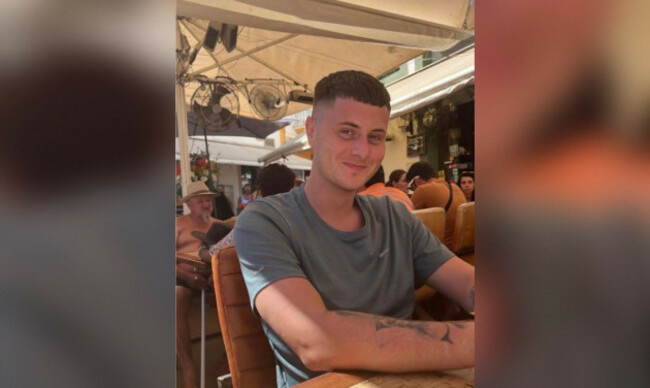
Kelvin Brennan took his own life in May last year after years of ED attendances. Noeleen Eustace
No coordination of services
Kelvin’s mental health struggles did not appear out of nowhere. Eustace described how from a young age, she repeatedly brought him to GPs, therapists and mental health services, warning that something was deeply wrong with her son.
He struggled to sleep, regulate his emotions, and cope with overwhelming anxiety. At just five-years-old, Kelvin was referred to Child and Adolescent Mental Health Services (CAMHS).
Despite years of contact, he was not formally diagnosed with Asperger’s Syndrome – which was considered a form of autism up until the 2010s and is now recognised as autism spectrum disorder – until his teens.
This diagnosis, alongside generalised anxiety, dyspraxia and sensory processing disorder, was only made after his mother sought out a private assessment.
“When I rang CAMHS to tell them he’d been diagnosed with Asperger’s, they said: ‘Yeah, we were kind of thinking that,’” she said.
I remember thinking: When were you going to tell me?
In a statement to The Journal Investigates, a CAMHS spokesperson said its service is designed to “treat moderate to severe” mental health presentations and does not assess autism.
Autism evaluation and diagnosis is primarily carried out by Primary Care Services here.
It declined to comment further on Noeleen Eustace’s concerns, citing confidentiality issues.
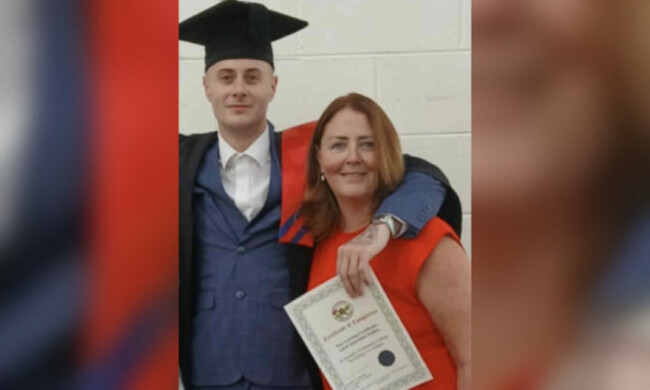
Kelvin Brennan from Co Kildare pictured with his mum Noeleen. Noeleen Eustace
‘No man’s land’
By the time Kelvin reached his teenage years, he was explicitly telling clinicians, and his mother, that he wanted to die.
As he grew older, Kelvin’s mental health deteriorated further, with extreme emotional dysregulation, sleep deprivation, and later substance misuse – a pattern Eustace says health services failed to respond to in any coordinated way.
When Kelvin turned 18, he fell into what she describes as “no man’s land” – too old for CAMHS, but not taken on by adult services.
“For nine months, there was nothing,” she said. “No support. No pathway.”
In April last year, a month before his death, Kelvin again told clinicians that he was suicidal. His mother claims he was signposted to a self-referral support service.
“Four weeks later, he was dead,” Eustace said. “He should have been sectioned [involuntarily detained], and I believe if we were in the UK instead of Ireland, he would have been.”
A hospital spokesperson again declined to directly comment on the 26-year-old’s case, but did state that Emergency Departments prioritise patients based on “clinical severity”.
The spokesperson also pointed to national programmes aimed at improving crisis care, including liaison mental health services in hospitals, suicide crisis assessment nurses, and community-based crisis resolution services.
HSE Dublin and Midlands said these are intended to provide “assessment, safety planning and alternatives to hospital” admission as part of ongoing service development.
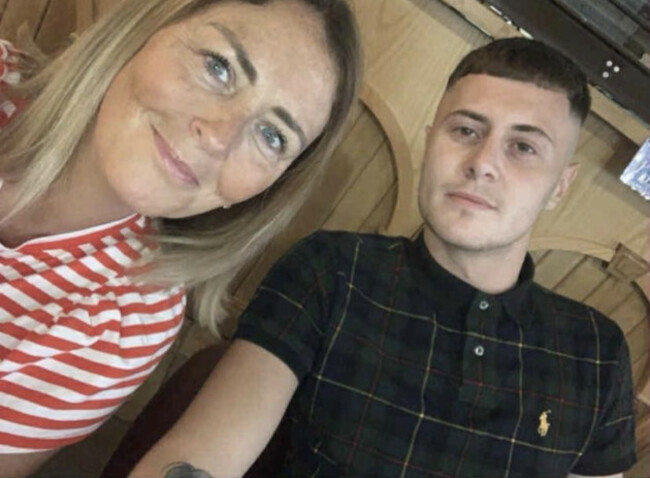
Noeleen Eustace pictured with her son Kelvin who passed away in May 2025. Noeleen Eustace
Last year, an estimated 12,621 self-harm presentations were made to ED departments by 9,436 individuals.
Almost half of those resulted in discharge directly from an ED, while one-in-seven patients left before any next-care recommendation could be made.
Crucially, the NSHR research shows that suicide risk is highest immediately following hospital attendance.
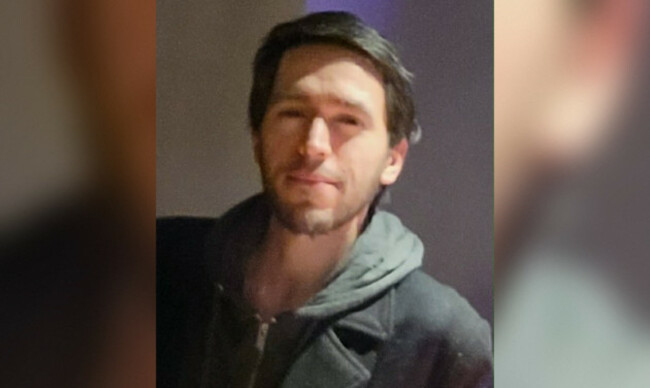
On 11 February last year, Adam Loughnane attended the Emergency Department at University Hospital Galway. He was in the midst of a mental health crisis.
The 34-year-old from Galway had packed an overnight bag, believing he would be admitted to hospital.
Instead, Adam was triaged and told to wait in an overcrowded ED. He didn’t stay, and within half an hour of leaving the hospital, he was dead.
“What has haunted us ever since is that two hours before he was found, he was sitting in that waiting room asking for help,” his brother Joe told The Journal Investigates.
He later learned that Adam had presented to the same Emergency Department as suicidal on four previous occasions since 2015.
The hospital is currently carrying out a review into Adam’s death.
A spokesperson said: “While we cannot comment on individual cases, UGH management and staff offer our sincere condolences to the family of this patient.
Sign up
The Journal Investigates is dedicated to lifting the lid on how Ireland works. Our newsletter gives you an inside look at how we do this. Sign up here…
Sign up
“This matter is now under review and we are engaging directly with the family. In the interests of patient confidentiality, it would be inappropriate to comment further.”
Adam Loughnane from Galway who passed away in February last year after attending University Hospital Galway’s Emergency Department. Joe Loughnane
Mental health EDs needed
In the weeks following Adam’s death, his brother launched a petition calling for an end to those in mental health crises being treated in general Emergency Departments.
Joe Loughnane compiled a 54-page pre-budget submission building a case for mental health EDs in Ireland.
The document – titled ‘Adam’s Protocols’ – maps every pathway available to someone in suicidal distress. It shows that every route leads back to an Emergency Department.
“If you go to a GP, you’re sent to A&E,” he said. “If you go to an out-of-hours GP, you’re sent to A&E. If you go to a crisis café and say you’re suicidal, you’re sent to A&E.”
The report – which Loughnane said received no responses from any TDs he contacted – points to successful mental health models already operating in some parts of England and the US.
These include standalone, 24/7 mental health emergency units staffed by psychiatric teams, separate from general emergency departments.
His submission estimates that piloting such a unit in Ireland could cost as little as €1.7 million – a fraction of the HSE’s €1.5 billion health budget.
He said: “What Adam needed wasn’t a trolley.
He needed one trained person, in a room, to stop him from dying.
The family’s petition has received almost 21,000 signatures in support of the proposals.
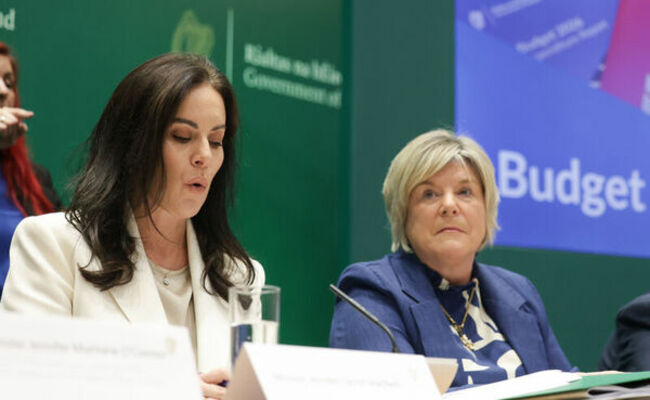
In a statement to The Journal Investigates, Minister of State for Mental Health Mary Butler extended her sympathies to both families, adding that the Department of Health is working with the HSE to “expand alternatives to emergency departments”.
The Minister also said enhanced surveillance systems, including a register of deaths among mental health service users, are planned but not yet operational, and highlighted ongoing work to strengthen regulation of mental health services and expand dual-diagnosis supports.
Minister for Health Jennifer Carroll MacNeill and Minister of State for Mental Health Mary Butler speaking at a briefing on the budget for her Department in October. Rollingnews.ie
Increase in under-12s self-harming
Last year, a report by the Mental Health Commission (MHC) concluded that there is “no consistent level of mental health service” across Emergency Departments in Ireland.
MHC found that out-of-hours care is weaker and delays common, with psychiatric support often provided by on-call community teams rather than ED-based staff.
Discharge, the report states, is the default outcome. Follow-up is recommended, but not guaranteed, it said.
Meanwhile, the system not only continues to cope with persistently high demand, but growing complexity.
Professor Ella Arensman, chief scientist at the National Suicide Research Foundation, warned that Ireland is now seeing a rapid increase in self-harm among children under 12.
“There is a fast, speeding increase of self-harm, including children under the age of 12,” she said.
One third of these children already present with repeated acts of self-harm – something we never observed two decades ago.
She warned that early hospital presentations are now being followed by an escalation in suicidal ideation, underlining the need for specialist intervention long before crisis point.
Despite the scale of the issue, deaths following hospital contact remain statistically invisible for years.
At present, both Adam Loughnane and Kelvin Brennan’s deaths have not been formally recorded as suicides.
Both families will now have to wait until a coroner officially declares their cause of deaths, long after intervention might have saved their lives.
If you need to talk, contact:
Pieta House 1800 247 247 or email mary@pieta.ie Samaritans 116 123 or email jo@samaritans.org Aware 1800 80 48 48 Teen-Line Ireland 1800 833 634 (for ages 13 to 19) Childline 1800 66 66 66 (for under 18s)
The Journal Investigates
Reporter: Patricia Devlin • Editor: Noel Baker • Video: Nicky Ryan • Social Media: Cliodhna Travers • Main Image Design: Lorcan O’Reilly
Investigations like this don’t happen without your support…
Impactful investigative reporting is powered by people like you. Over 5,000 readers have already supported our mission with a monthly or one-off payment. Join them here:

 Job hunters are paying recruiters now
 Illustration: Aïda Amer/Axios




 Investigates Suicide Prevention
 Kelvin Brennan took his own life in May last year after years of ED attendances. Noeleen Eustace
 Kelvin Brennan from Co Kildare pictured with his mum Noeleen. Noeleen Eustace
 Noeleen Eustace pictured with her son Kelvin who passed away in May 2025. Noeleen Eustace
 Adam Loughnane from Galway who passed away in February last year after attending University Hospital Galway’s Emergency Department. Joe Loughnane
 Minister for Health Jennifer Carroll MacNeill and Minister of State for Mental Health Mary Butler speaking at a briefing on the budget for her Department in October. Rollingnews.ie
 canisgallicus