Published: November 24, 2009Last Updated: August 11, 2025
A group of federal prisoners classified as “most dangerous” arrives at Alcatraz Island, a 22-acre rocky outcrop situated 1.5 miles offshore in San Francisco Bay, on August 11, 1934. The convicts—the first civilian prisoners to be housed in the new high-security penitentiary—joined a few dozen military prisoners left over from the island’s days as a U.S. military prison.
Alcatraz was an uninhabited seabird haven when it was explored by Spanish Lieutenant Juan Manuel de Ayala in 1775. He named it Isla de los Alcatraces, or “Island of the Pelicans.”Fortified by the Spanish, Alcatraz was sold to the United States in 1849.In 1854, it had the distinction of housing the first lighthouse on the coast of California. Beginning in 1859, a U.S. Army detachment was garrisoned there, and from 1868 Alcatraz was used to house military criminals. In addition to recalcitrant U.S. soldiers, prisoners included rebellious Indian scouts, American soldiers fighting in the Philippines who had deserted to the Filipino cause, and Chinese civilians who resisted the U.S. Army during the Boxer Rebellion. In 1907, Alcatraz was designated the Pacific Branch of the United States Military Prison.
Why Prisoners Preferred Alcatraz
Alcatraz is one of the most notorious prisons in American history, but did it really live up to its feared reputation?
1:02m watch
In 1934, Alcatraz was fortified into a high-security federal penitentiary designed to hold the most dangerous prisoners in the U.S. penal system, especially those with a penchant for escape attempts. The first shipment of civilian prisoners arrived on August 11, 1934. Later that month, more shiploads arrived, featuring, among other convicts, infamous mobster Al Capone. In September, George “Machine Gun” Kelly, another luminary of organized crime, landed on Alcatraz.
In the 1940s, a famous Alcatraz prisoner was Robert Stroud, the “Birdman of Alcatraz.” A convicted murderer, Stroud wrote an important study on birds while being held in solitary confinement in Leavenworth Prison in Kansas. Regarded as extremely dangerous because of his 1916 murder of a guard at Leavenworth, he was transferred to Alcatraz in 1942. Stroud was not allowed to continue his avian research at Alcatraz.
Although some three dozen attempted, no prisoner was known to have successfully escaped “The Rock.” However, the bodies of several escapees believed drowned in the treacherous waters of San Francisco Bay were never found. The story of the 1962 escape of three of these men, Frank Morris and brothers John and Clarence Anglin, inspired the 1979 film Escape from Alcatraz. Another prisoner, John Giles, caught a boat ride to the shore in 1945 dressed in an army uniform he had stolen piece by piece, but he was questioned by a suspicious officer after disembarking and sent back to Alcatraz. Only one man, John Paul Scott, was recorded to have reached the mainland by swimming, but he came ashore exhausted and hypothermic at the foot of the Golden Gate Bridge. Police found him lying unconscious and in a state of shock.
In 1963, U.S. Attorney General Robert F. Kennedy ordered Alcatraz closed, citing the high expense of its maintenance. In its 29-year run, Alcatraz housed more than 1,500 convicts. In March 1964 a group of Sioux Indians briefly occupied the island, citing an 1868 treaty with the Sioux allowing Indians to claim any “unoccupied government land.” In November 1969, a group of nearly 100 Native American students and activists began a more prolonged occupation of the island, remaining there until they were forced off by federal marshals in June 1971.
In 1972, Alcatraz was opened to the public as part of the newly created Golden Gate National Recreation Area, which is maintained by the National Park Service. More than one million tourists visit Alcatraz Island and the former prison annually.
New research reveals that listening to music can slash dementia risk by 40%. A landmark Monash University-led study involving more than 10,800 participants has discovered a powerful connection between music and cognitive preservation in seniors. Researchers found that consistently listening to music after age 70 is associated with a staggering 39 percent reduction in dementia risk. For those who play an instrument, the risk is lowered by 35 percent, indicating that both active and passive musical engagement can serve as a potent shield against brain decline. Lead researchers Emma Jaffa and Professor Joanne Ryan emphasize that these findings offer a vital, accessible strategy for maintaining brain health in an aging global population. Beyond reducing dementia risk, regular musical engagement was linked to sharper episodic memory and improved overall cognition. As medicine continues to extend human lifespans, integrating music into daily life represents a simple yet transformative lifestyle choice that may delay the onset of neurodegenerative conditions where cures remain elusive. source: Jaffa, E., & Ryan, J. (2025). What is the association between music-related leisure activities and dementia risk? A cohort study. International Journal of Geriatric Psychiatry.
Iceland is a founding member of NATO but doesn’t have its own army, or even a defense budget.
During the Cold War, Iceland was crucial in the alliance’s efforts to detect Soviet submarines using P-3 Orion patrol aircraft because the island lies at a chokepoint known as the Greenland-Iceland-UK (GIUK) gap between the Arctic Ocean and the Atlantic.
That strategic location was and still is especially important to the US which is why among security experts, Iceland is often dubbed an “unsinkable US aircraft carrier” in the middle of the North Atlantic.
But US President Donald Trump threatening Greenland and the NATO alliance as a whole, as well as growing tensions in the Arctic have Iceland on edge.
Janina Semenova German journalist and editor with a special focus on Russia
Wall Street is now paying up to $100k a month to read Trump’s posts before you do. Trump Media just told analysts it’s signed more than 10 deals, mostly with high-frequency trading firms, for direct API access to Truth Social. That feed delivers Trump’s posts split-seconds ahead of the public. Here’s why that matters. Trump routinely drops policy on Truth Social first, tariffs, national security, executive orders, sometimes before his own administration knows. For trading algorithms, a few milliseconds on news like that is real money. The firms paying in get an early look at market-moving news. Regular traders see it once it’s already priced in. Senators Warren and Schiff have asked the SEC to look into whether the arrangement is legal, calling it a threat to basic market fairness. The platform itself stays small. Just 261,300 daily users in July, down 40% on the year, and a $238 million quarterly loss. X pulls nearly 500 times the traffic. Sure, they’ll catch the big policy posts first, and also the most random shit Trump drops with zero context.
Today marks the anniversary of the tragic and forgotten Russian crime. A crime on a larger scale than Volhynia or Katyn. “The NKVD’s Polish Operation (1937–1938) was a planned, mass crime of an ethnic cleansing and genocidal nature, which led to the extermination of at least 111 thousand people; historians’ estimates reach as high as 200 thousand.
This action was launched on August 11, 1937, under the secret Order No. 00485 issued by NKVD chief Nikolai Yezhov with the full consent of Joseph Stalin.Under the pretext of ‘complete liquidation of Polish spy networks,’ the Soviets carried out the total elimination of the Polish population residing in the territory of the USSR. The basis for arrest was simply Polish origin, surname, or Roman Catholic faith.
The Soviets sought out victims http://m.in in telephone books or workplace registries. Victims were divided into two categories – the first meant immediate execution by shooting, and the second meant deportation to labor camps for 5 to 10 years. Over 80% of those detained were murdered with a shot to the back of the head.
Lightning-fast procedures: Sentences were issued by so-called ‘Trojkas’ (special NKVD commissions) without trials, without the presence of the accused, and without defenders, often approving lists en masse. Fate of families: Wives of executed men were sent to labor camps (GULAG), and their children were placed in special Soviet orphanages, where they were subjected to forced Russification and indoctrination.”
Illustration: Sarah Grillo/Axios. Stock: Getty Images
AI could help produce more oil and natural gas — but with a climate impact outweighing the tech’s benefits for renewable energy, Axios’ Amy Harder reports from a new study.
The big picture: AI can help oil companies find new resources and extract more from existing fields.
At the same time, it can also improve forecasting and operations for renewables.
What they found: The researchers estimate that AI could add emissions equal to roughly 1% to 5% of the global energy sector’s 2024 total.
Co-author Holly Alpine tells Axios: “Most assessments of AI’s climate impact are framed as a trade-off between data center energy use and the emissions AI might help avoid through renewables and efficiency gains.”
“What’s missing from that calculation entirely is the other side of the same ledger: the emissions enabled from using AI to make fossil fuel production cheaper and more profitable.
“American Petroleum Institute spokeswoman Andrea Woods tells Axios: “The U.S. oil and natural gas industry is continuing to produce more energy while reducing emissions by investing in better technology, implementing stronger operational practices and supporting science-based policy.
View in browser Axios Finish LineBy Mike Allen and Erica Pandey and Jim VandeHei ·Aug 10, 2026
Welcome back! Tonight’s host is Axios publisher Nicholas Johnston, sharing how AI can help bookworms remember the plot, skip the spoilers and tackle dense prose.Smart Brevity™ count: 428 words … 1½ mins. Edited by Natalie Daher and copy edited by Amy Stern.
1 big thing: Don’t lose the plotIllustration: Aïda Amer/Axios. Stock: Getty Images
AI has become my reading buddy as I’ve plowed through my summer book list, helping me keep track of plots and characters, unpack themes, and make sense of wordy, old prose, Axios’ Nicholas Johnston writes.
Why it matters: The way many of us actually read books — a few pages before bed, a chapter at the beach, another on a plane — makes it easy to lose the thread. AI can help you pick it back up without starting over.
I really got into using AI while reading James Fenimore Cooper’s “The Last of the Mohicans.” The text was far too dense for casual vacation reading. My first prompt asked:
“I’d like a guide as I read The Last of the Mohicans who can help me understand what I’ve read and where the story is, without giving spoilers or getting ahead of my progress. Can you do this, chapter by chapter?”
The robot agreed: “Cooper’s sentences are long and his diction is archaic.
“It promised to give me “a recap of what’s happened so far and clarify anything confusing. … I’ll stick strictly to what you’ve read. No hints about what’s coming.”
That’s now become part of my reading routine: Tell AI where you stopped and ask for a spoiler-free recap so far, which often surfaces details I’d missed or forgotten
. Reality check: AI is working from its training data, not the actual text. The vibes can be right while the details are wrong.
After I read James Jones’ “The Thin Red Line,” AI confused Captain Stein with Captain Staros, the corresponding character in the movie adaptation.
Pro tip: If the book is old enough to be in the public domain, tell AI to find the online text so it can be more accurate with its answers. “The Last of the Mohicans,” for example, is available through Project Gutenberg.
Valeria Luiselli’s ‘deep dive into mother-daughter relationships’
Writing the new release “Beginning Middle End” was like “building a mosaic piece,” the incoming professor of English said
Aug 6, 2026 | 5 minutes
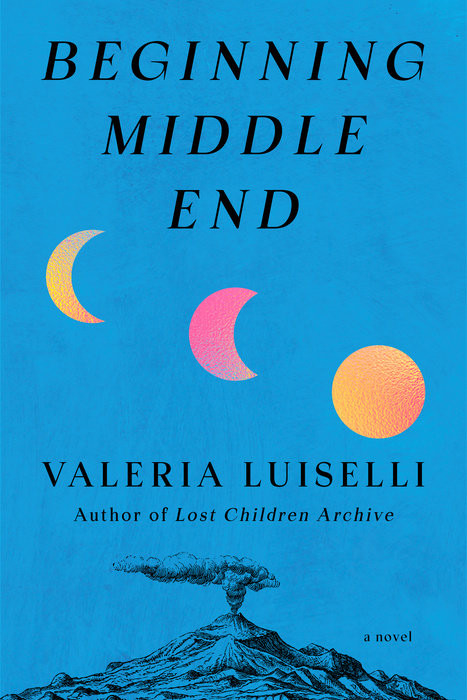
Luiselli’s fourth novel, “Beginning Middle End,” follows a mother and her 12-year-old daughter as they rebuild their lives in Sicily.Photo by Clayton Cubitt
Eileen O’Grady
Harvard Staff Writer
One of the central ideas in Valeria Luiselli’s latest novel came from reading Greek myths to her daughter at bedtime. The child, who was then about 10, had some pressing questions for her mother: Why do creation myths always start with things being “torn asunder”? And what does “torn asunder” even mean?
Luiselli, an incoming professor of English, was able to answer the latter question. Torn asunder is about something being divided, broken, separated, she explained.
“I wasn’t able to answer the big, important question about why beginnings are defined by rupture,” recalled Luiselli, author of “Lost Children Archive” (2020), “The Story of My Teeth” (2015), and “Faces in the Crowd” (2014). “The novel became an investigation about that. What happens when things end — when we lose a family, we lose a structure, we lose a life we had, we lose people? How are beginnings born from this state of brokenness, or being sundered?”
Her resulting fourth novel, “Beginning Middle End,” follows a mother and her 12-year-old daughter as they travel to Sicily, where the mother’s grandmother once worked on an archaeological dig. The narrator’s marriage has recently ended, and the mother-daughter duo is figuring out how to reconstruct their lives amid their encounters with the island’s daily life, its winds, waters, and volcanoes.
While readers may notice similarities with the mother and daughter in “Lost Children Archive,” Luiselli emphasized that the new novel is not a sequel.
“There was something in the characters from ‘Lost Children Archive’ that I wanted to think about developing further. This little girl who had a 5-year-old consciousness back then — what might she be like at 12 years old?” Luiselli said. “But it really doesn’t matter whether one book is read before the other. The seed for ‘Beginning Middle End’ is not in ‘Lost Children Archive.’”
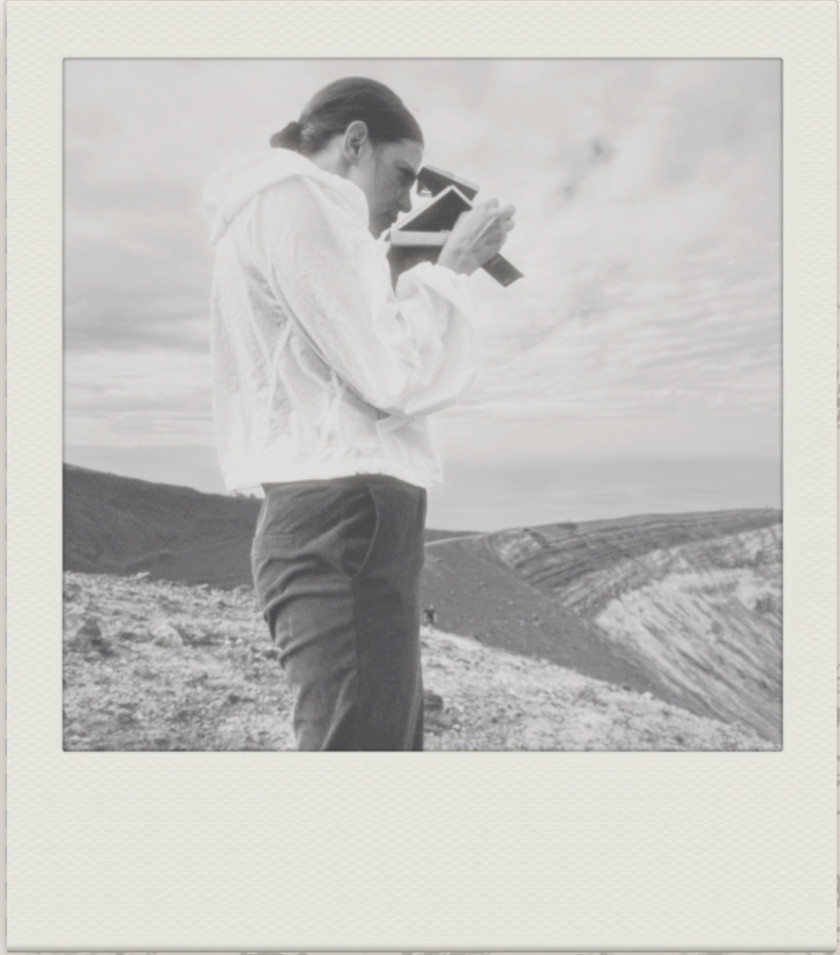
Novelist Valeria Luiselli during a recording trip to Sicily and the Aeolian IslandsCourtesy of Valeria LuiselliValeria Luiselli‘s “Beginning Middle End,” available nowCourtesy of Knopf
In an interview with the FAS Current, edited for length and clarity, Luiselli discussed her note-taking habits, the art of attentive listening, and how to make ancient philosophers fun for students today.
You’ve just touched on the theme of endings and new beginnings. What other questions did you want to explore as you set out to write the latest book?
For me, “Beginning Middle End” was, from the start, primarily a deep dive into mother-daughter relationships across generations. It’s a book about motherhood, but also about daughterhood and the role that memory and imagination play in intergenerational storytelling, in the way that we configure our identities as women within a family. I write very much without knowing what a novel is going to be about in terms of plot.
Can you say more about your creative process?
I accumulate little notes for years sometimes. And in the case of “Beginning Middle End,” it was at least four years of just taking little notes and not knowing at any point what was going to happen in this novel. Note-taking, for me, is really just moments of noticing things, like a conversation between two people, or what’s happening on the other side of a window.
It was during my very profoundly happy two years teaching at Harvard [first as visiting professor of Ethnicity, Indigeneity, and Migration and then visiting professor of English], reading in my little office, that I was able to start giving shape to all those notes, and finally give shape to the novel.
How did you approach the writing after accumulating all those notes?
I feel like my writing process with this novel was very much like building a mosaic piece. When I have enough subject matter, enough little pieces, I can start playing with textures and colors and internal architectures, and I can start seeing shapes.It requires patience and, sometimes, blind faith — because if one doesn’t have a blueprint and an overall plan, there’s times one loses one’s way.
You can stray for months, writing about something you think is the direction you need to go in. And then it turns out it was a blind alley, and you have to turn back. For me, it’s a very exhilarating way of working, because it is in not knowing where I’m going that the journey becomes much more thrilling and interesting. For me, the discipline in writing comes from being able to maintain the flame of enthusiasm for that work, so as to always sit back down and try to figure out what it is that I’m trying to say and how can I best say it.
You’ve done a lot of work with sound, including your “Echoes from the Borderlands” project, a 24-hour work featuring recordings collected along the U.S.-Mexico border. How has working with sound influenced your writing?
It was in working on “Echoes from the Borderlands” that I learned how to listen much more attentively. I feel my paradigm shifted completely in terms of what listening was and how one is lodged in time and space so differently when one is actually listening attentively. It informed the way I thought about nature and the presence of winds and the ocean and fire when I was writing “Beginning Middle End.”
I went on several sound recording trips to the space where “Beginning Middle End” happens, which is in Sicily. We set off to record the elements there: winds, tides, fires, volcanoes. There’s a sonic translation of the book that has a narrative voice reading the story, but threaded with that voice is an ongoing Greek chorus of the sounds of the elements. We’ve put together in a web page a sonic archive of the entire novel with layers of sound components. One of those layers is only the soundscape, without human voices, so you can also just listen to that.
This spring, you’re slated to teach “Writing the Natural World: From Creation Myths to Catastrophe.” Can you talk about your plans for this course?
I’m primarily interested in inviting students to read early sources of observations of the natural world, sometimes in tandem with more contemporary sources. For example, what happens in pairing Empedocles and Audre Lorde — Audre Lorde discussing the force of the erotic, and Empedocles discussing love and strife as two forces that bring together elements and separate them and create universes? Or what happens if one pairs observations of the ocean in Pliny with Rachel Carson’s magnificent book “The Sea Around Us”?
I’m interested in opening a door for students to dive into sources like Empedocles that seem so remote and sometimes impenetrable, but are actually incredibly fun, wild, imaginative, and just a source of great learning in terms of how to become more attentive, imaginative observers.
What happens when the world’s most powerful actors stop facing accountability? That’s the question at the heart of the Atlas and Impunity, an annual report from the Eurasia Group that measures how people experience the abuse of power in nearly 200 countries. Ian Bremmer sat down with International Rescue Committee president and CEO David Miliband on GZERO World to talk about why the levels of impunity in conflict states like Sudan and Syria are spiraling out of control, and what the data reveals about the state of democracy, human rights, and how power is wielded around the globe.
As Miliband points out, impunity extends far beyond dictators and war crimes. It’s about the everyday consequences of power exercised without accountability. Corporations can exploit workers and consumers. States can exploit property rights. Even the climate crisis is a form of impunity against future generations and the planet. But despite a disturbing lack of accountability around the world, he explains, there are some reasons for cautious optimism.
“The greatest cause for hope is the assertion of democratic rights,” Miliband says, “If you’re looking for bright spots at the moment, you have to look deep into civil societies that are mobilizing and organizing to defend the most basic rights.”
GZERO World with Ian Bremmer, the award-winning weekly global affairs series, airs nationwide on US public television stations (check local listings).



 AI could help unlock more oil — and emissions
 Illustration: Sarah Grillo/Axios. Stock: Getty Images
 The big picture: AI can help oil companies find new resources and extract more from existing fields.
 What they found: The researchers estimate that AI could add emissions equal to roughly 1% to 5% of the global energy sector’s 2024 total.
 Axios Finish Line: AI book club



 Illustration: Aïda Amer/Axios. Stock: Getty Images
  I really got into using AI while reading James Fenimore Cooper’s “The Last of the Mohicans.” The text was far too dense for casual vacation reading. My first prompt asked:
 That’s now become part of my reading routine: Tell AI where you stopped and ask for a spoiler-free recap so far, which often surfaces details I’d missed or forgotten
 Reality check: AI is working from its training data, not the actual text. The vibes can be right while the details are wrong.