You walk into a room, but can’t remember what you came in for. Or you bump into an old acquaintance at work, and forget their name. Most of us have had momentary memory lapses like this, but in middle age they can start to feel more ominous. Do they make us look unprofessional, or past it? Could this even be a sign of impending dementia? The good news for the increasingly forgetful, however, is that not only can memory be improved with practice, but that it looks increasingly as if some cases of Alzheimer’s may be preventable too.
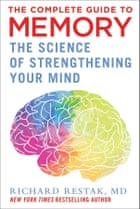
Neuroscientist Dr Richard Restak is a past president of the American Neuropsychiatric Association, who has lectured on the brain and behaviour everywhere from the Pentagon to Nasa, and written more than 20 books on the human brain. His latest, The Complete Guide to Memory: The Science of Strengthening Your Mind, homes in on the great unspoken fear that every time you can’t remember where you put your reading glasses, it’s a sign of impending doom. “In America today,” he writes “anyone over 50 lives in dread of the big A.” Memory lapses are, he writes, the single most common complaint over-55s raise with their doctors, even though much of what they describe turns out to be nothing to worry about.
Coming out of a shop and not being able to remember where you left the car, for example, is perfectly normal: it’s likely you just weren’t concentrating when you parked, and therefore the car’s location wasn’t properly encoded in your brain. Forgetting what you came into a room for is probably just a sign you’re busy and preoccupied with other things, says Restak.
“Samuel Johnson said that the art of memory is the art of attention,” he says, down the line from his office in Washington DC (at 80, Restak is still a practising clinical professor at George Washington Hospital University School of Medicine and Health). “Most of these sins of ‘memory loss’ are sins of not paying attention. If you’re at a party and you’re not really listening to someone, because you are still thinking about some work-related matter, suddenly later you find you can’t remember their name. The first thing is you put the information in memory – that’s consolidating it – and then you have to be able to retrieve it. But if you’ve never consolidated it in the first place, it doesn’t exist.”
But what if you forget where you left your car keys, and eventually find them inside the fridge? “That’s often the first sign of something serious – you open up the refrigerator door, and it’s the newspaper, or your car keys, inside. That’s a little bit beyond forgetful.”
Memory does vary, he points out, and some people will always have been scatty. But the real red flag is a change that seems out of character. If you’re a keen card player who prides yourself on always keeping track of which cards have been played, and suddenly realise you can’t do that any more, it could be worth investigating. Similarly, Restak has noticed that many patients in the early stages of dementia stop reading fiction, because it’s too difficult to remember what the character said or did a few chapters earlier – which is unfortunate, he says, because reading complex novels can be a valuable mental workout in itself.
Restak and his wife are currently on Alexandre Dumas’s The Count of Monte Cristo, which has a complex sprawling cast: “It’s an exercise in being able to keep track of characters without going backwards from one page to another.” If that’s already difficult for you, he says, it’s fine to underline the first mention of a new character and then flip back to remind yourself later if necessary. “Do whatever you have to, to keep yourself reading.”
Like following a recipe, keeping track of fictional plots is an exercise of working memory – as distinct from short-term memory (temporarily storing something like a phone number that you can safely forget the minute you’ve dialed it) or episodic memory, which covers things like recollections of childhood. Working memory is what we use to “work with the information we have”, says Restak, and it’s the one we should all prioritise. Left to its own devices, he points out, memory naturally starts to decline from your 30s onwards, which is why he advocates practising it daily.
‘The way we frame something in our memory is how we then perceive the world around us’ … Richard Restak. Photograph: Greg Kahn/The Guardian
Restak’s book is full of games, tricks and ideas for honing recall, often involving creating vivid visual images for things you want to remember. He holds a mental map of his neighbourhood in his head, incorporating visually familiar landmarks – his house, the local library, a restaurant he often goes to – and for each item on a list he wants to remember, he will create a memorable visual image and attach it somewhere specific on the map. To remember to buy milk, bread and coffee later, for example, he might envisage his house transformed into a carton of milk, the library full of loaves rather than books, and a giant cup of coffee spilling out of the restaurant.
The book also touches on broader lifestyle advice. Recently, research from the Lancet’s commission on dementia suggested up to 40% of Alzheimer’s cases could be prevented or delayed – much like heart disease and many cancers – by limiting 12 risk factors, from smoking to obesity and heavy drinking.
Restak advises his patients to quit alcohol by 70 at the latest. Over 65, he writes, you typically have fewer brain neurons than when you were younger, so why risk them? “Alcohol is a very, very weak neurotoxin – it’s not good for nerve cells.”
He’s also an advocate of the short afternoon nap, since getting enough sleep helps brain function (which may help explain why sleep-deprived new mothers, and menopausal women suffering from night sweats and insomnia, often complain of brain fog).
More unexpectedly, he recommends tackling hearing or vision problems promptly, because they make it harder to engage in conversations and hobbies that keep the cogs turning. “You have to have a certain level of vision to read comfortably, and if that’s missing then you are going to read less. As a result of that, you’re going to learn less and be a less interesting person to other people. All of these things really come down to socialisation, which is the most important part of keeping away Alzheimer’s and dementia, and keeping your memory.”
Socialisation is the most important part of keeping away Alzheimer’s and dementia, and keeping your memory
Is he saying that honing your memory can stop you getting Alzheimer’s? “No one can guarantee that anybody else is not going to get dementia. Take somebody like Iris Murdoch (the late writer, who suffered from it) – there’s probably not a more brilliant woman in all of Europe, so it shows that it can happen. But I compare it to driving a car: you can’t guarantee you won’t get in an accident but by wearing your seatbelt and checking your speed and keeping the car maintained, you can lessen your chances.”
Not all memories, however, are ones people want to treasure. Many have mental images they’d rather forget, whether it’s of an embarrassing mistake or a painful failed relationship, or intrusive flashbacks from post-traumatic stress disorder.
The fantasy of wiping the slate clean is a pervasive one in popular culture, from the film Eternal Sunshine of the Spotless Mind (about a couple who break up, and use a futuristic machine to zap memories of each other) to the Men in Black franchise, where alien-fighting secret agents electronically erase the memories of anyone who sees them in action, thus protecting mere mortals from the truth about what’s out there.
These may be strictly fantasies but we already have the technology, Restak suggests, to inhibit people from laying down memories that might in future haunt them. Beta blockers, drugs sometimes used to treat high blood pressure, have been found to dull the emotional response triggered when something frightening is recalled, but Restak says there’s evidence they also interfere with the consolidation of events as memories.
“There are actually discussions about whether these drugs should be part of the armoury that would be used if we have got to send people into terrible scenarios, such as after a shooting – that must be a horrible experience, to go in there and clean these places up.” But it’s a blunt tool – the drugs can’t distinguish between memories that might be useful in future to emergency first responders, and ones that are simply distressing – and raises complex questions about the ethics of tampering with people’s minds.
Don’t just look on dementia as a hopeless situation, although it’s a very frustrating one
Restak also highlights concerns about what he calls “memory wars”, or attempts to influence a nation’s collective memory by disputing what a particular event or period means. “The way we frame it in our memory is how we then perceive the world around us, and that’s what is encoded in the memory,” he says, pointing to recent political arguments in the US over whether the technical recession the country has entered – defined as two quarters of economic contraction – is actually a “real” recession. “It’s important because if you think you are in a recession you have certain beliefs and modes of action, and that’s how we are going to remember July 2022.”
And, as he argues, memory is intrinsic to who we are. It binds families and couples together, as we reminisce about our shared past. For individuals, meanwhile, past experience gives life meaning and texture. “We are what we can remember. The more things you can remember, the more clearly, the more full and enriched our personalities,” says Restak, who argues that the personalities of dementia sufferers can become flatter and more attenuated. “People say ‘Oh, they don’t seem to be the same person.’” Perhaps that’s why we fear Alzheimer’s so much: memory is so closely allied to a sense of self.
Yet even after memory loss has set in, it’s not necessarily too late to help people hold on to whatever’s left. One neurologist Restak knows had two patients who “weren’t sure where they were or what day it was”, but could still play a decent game of bridge. If someone you love has Alzheimer’s, Restak says, don’t upset them by constantly challenging mistakes or memory lapses; instead, meet them where they are now.
“What are they still interested in? Talk about that, work with that, because a lot of things stay within normal range even with a pattern of dementia,” he says. “You don’t just look on it as a hopeless situation, although it’s a very frustrating one and it’s very sad.” Where a flicker of memory remains, perhaps, there’s hope.
Like many American couples of modest but comfortable means, Susie McKinnon and her husband, Eric Green, discovered the joys of cruise vacations in middle age. Their home in a quiet suburb of Olympia, Washington, is filled with souvenirs and trinkets from their travels. There’s a plastic lizard in the master bathroom with the words “Cayman Islands” painted on it. From Curaçao there’s a framed patchwork collage made of oilcloth hanging in the entrance hall. On the gray summer day when I visit them, we all sit comfortably in their living room, Green decked out in a bright shirt with “Bermuda Islands” emblazoned on it, from a cruise in 2013. As they regale me with talk of their younger selves and their trips to Jamaica, Aruba, Cozumel, and Mazatlán, they present the very picture of well-adjusted adulthood on the verge of retirement.
Except for one fairly major thing.
As we chat, McKinnon makes clear that she has no memories of all those cruises. No memories of buying the lizard or finding that oilcloth collage. She doesn’t remember any vacation she’s ever taken. In fact, she cannot recall a single moment in her marriage to Green or before it.
Before you start to brace yourself for one of those stories—about the onset of dementia, the slow dissolve of a marriage into a relationship of unrequited love, the loss of self—let me reassure you: McKinnon hasn’t lost anything. She’s never been able to remember those experiences.
For decades, scientists suspected that someone like Susie McKinnon might exist. They figured she was probably out there, living an ordinary life—hard to tell apart from the next person in line at the grocery store, yet fundamentally different from the rest of us. And sure enough, they found her (or rather, she found them) in 2006.
“I don’t remember being smaller or having to reach up for things. I have no impressions of myself as a kid.”
McKinnon is the first person ever identified with a condition called severely deficient autobiographical memory. She knows plenty of facts about her life, but she lacks the ability to mentally relive any of it, the way you or I might meander back in our minds and evoke a particular afternoon. She has no episodic memories—none of those impressionistic recollections that feel a bit like scenes from a movie, always filmed from your perspective. To switch metaphors: Think of memory as a favorite book with pages that you return to again and again. Now imagine having access only to the index. Or the Wikipedia entry.
“I know bits and pieces of stuff that happened,” McKinnon says of her own childhood. But none of it bears a vivid, first-person stamp. “I don’t remember being shorter or smaller or having to reach up for things. I have no images or impressions of myself as a kid.” She finds herself guessing a lot at what her experiences must have been like: She assumes the Cayman Islands were hot. Perhaps she and Green walked around a lot there. “It was probably sometime between 2000 and 2010,” she ventures.
The way McKinnon experiences life scrambles much of what we presume is essential to being human. No less a figure than the philosopher John Locke argued that memory, the kind McKinnon lacks, is the very thing that constitutes personal identity. It’s hard to even imagine what it would feel like to be without these kinds of memories; when we do, we picture disaster. Last year’s blockbuster Pixar film, Inside Out, hinged on the idea that if the main character loses her core memories, then her “islands of personality” collapse into nothingness.
McKinnon has no core memories that she is aware of. But there can be no doubt of her personality. She is a liberal white woman who married a black man despite her conservative father’s disapproval. A Catholic who decided somewhere along the way that religion wasn’t for her. She’s bashful and sensitive. Intuitive, curious, and funny. She has a job—she’s a retirement specialist for the state of Washington—and she has hobbies, values, beliefs, opinions, a nucleus of friends. Though she doesn’t remember being a part of the anecdotes that shaped her into this person, she knows very well who she is. Which raises the question: Just how expendable is this supposedly essential part of being human after all?
Music has a powerful way of evoking memories. For McKinnon’s husband, this is especially true of songs by Motown acts like the Temptations and the Miracles. They take him back to weekend nights in Chicago when he was young, when he paid a quarter to go into someone’s basement and make out with a girl as music played in the dark. People called them quarter parties. Listening to Motown also reminds him of Saturdays with his cousins at the Regal, where for three bucks he watched performers like Marvin Gaye. It was always crowded and hot and smelled of stale popcorn. The guys wore $10 Ban-Lon shirts. The women wore ankle-length dresses. Most had processed hair, but Green was just starting to grow out an afro.
He grins as he describes the scene, peering through the eyes of a version of himself from decades ago. This was before he and McKinnon met as coworkers at a hospital in Illinois; long before they moved west and started going on cruises. “She was friendly—well, she was sexy,” Green says of when they first met. To McKinnon, all this mental time traveling seems magical. “It’s hard for me to believe,” she says.
Our ability to do this—to be the first-person protagonist of our own memories—is part of what psychologists call autonoetic consciousness. It’s the faculty that allows us to mentally reenact past experiences.
Memory researchers used to believe there was just one kind of long-term memory. But in 1972, Endel Tulving, a Canadian psychologist and cognitive neuroscientist, introduced the idea that long-term memory comes in multiple forms. One is semantic memory, which allows us to remember how to spell a word like, say, autonoetic. Years from now, you might recall how to spell it, but maybe not when and where you were when you first came across the word and its definition, perhaps in WIRED.
McKinnon performs in a choral ensemble. Lyrics and melodies stick with her, thanks to her intact semantic memory.
Tulving argued that autonoetic consciousness is crucial for the formation of another kind of long-term memory—episodic memory—which integrates time and sensory details in a cinematic, visceral way. Remembering where and when you learned how to spell autonoetic: That’s an episodic memory.
As it happens, McKinnon shares Green’s love of music. She even performs with a choral ensemble. Lyrics, melodies, and harmonies stick with her, thanks to her intact semantic memory. Similarly, she can tell you for a fact that three months ago, she sang a rendition of an old English folk song onstage—a solo. But only Green can supply the scene: how she strolled onto the stage alone and took her place in front of a piano. Green says her performance brought him close to tears. McKinnon thinks she must have felt a mixture of confidence and fear, but really she hasn’t the faintest idea.
She does, however, have a recording, and we decide to give it a listen. She walks over to the living room CD player, pops in a disc, and presses Play. “Are you ready?” she asks nervously. McKinnon retreats into herself, pacing self-consciously between the sofa, dining room chairs, and kitchen counter.
An alto fills the living room, a voice from another time. “The water is wide,” the voice sings. “I cannot cross o’er.” McKinnon notices a tremble in the voice and giggles with surprise. It’s as if she’s experiencing the performance for the first time.
McKinnon first began to realize that her memory was not the same as everyone else’s back in 1977, when a friend from high school, who was studying to be a physician’s assistant, asked if she would participate in a memory test as part of a school assignment. When her friend asked basic questions about her childhood as part of the test, McKinnon would reply, “Why are you asking stuff like this? No one remembers that!” She knew that other people claimed to have detailed memories, but she always thought they embellished and made stuff up—just like she did.
McKinnon’s friend was so disturbed by her responses that she suggested McKinnon get her memory checked by a professional. McKinnon put the exchange aside for almost three decades. Then one day in 2004, she came across an article about Endel Tulving, the researcher who had originally characterized the difference between episodic and semantic memory.
McKinnon read about how, at the University of Toronto, Tulving studied an amnesic patient, K. C., who was in a motorcycle accident at 30 that resulted in brain damage affecting his episodic memory. He could not remember anything in his life except experiences from the last minute or two. Yet despite this deficiency, the patient could remember basic knowledge learned before his accident, like math and history, and when taught new information in experiments, he could retain lessons, even though he could not recall visits to the laboratory where he was taught. His case became crucial to Tulving’s theories about memory.
McKinnon’s brain and life, as far as she knew, seemed to be healthy and intact.
Like McKinnon, people with amnesia usually lose their episodic memories and keep their semantic ones. But amnesiacs tend to come by their memory loss through brain trauma, developmental disorders, or degenerative conditions. And they are often impaired in their day-to-day functioning; they cannot live normal lives. Reading about Tulving’s case studies, McKinnon recognized a resemblance to her own experiences—minus the brain lesions, injuries, or debilitating side effects. Her brain and life, as far as she knew, seemed to be healthy and intact.
One of Tulving’s arguments struck a particular chord. A profile of the psychologist reported his belief “that some perfectly intelligent and healthy people also lack the ability to remember personal experiences. These people have no episodic memory; they know but do not remember. Such people have not yet been identified, but Tulving predicts they soon will be.”
McKinnon felt too intimidated to contact Tulving himself; he seemed too famous. So instead she set her sights on Brian Levine, a senior scientist at the Rotman Research Institute in Toronto who had worked closely with Tulving and whose expertise in episodic and autobiographical memory caught her eye.
On August 25, 2006, McKinnon sent Levine an email that referenced Tulving’s prediction about healthy people with no episodic memories: “I think there’s at least a possibility that I might be one of the people he was describing.
“I’m 52 y/o, extremely stable, with a very satisfying life & well-developed sense of humor. Contacting you is a big (and, frankly, scary) step for me … I’ll appreciate any guidance you may be able to give me.”
“I get a lot of emails from people with various issues,” Levine says. “With Susie, I felt like this was worth pursuing.” So Levine invited McKinnon to his lab in Toronto. His first move, in collaboration with researcher Daniela Palombo, was to begin looking for some underlying physiological or psychological explanation for McKinnon’s apparent lack of episodic memories: a neurological condition, trauma, or brain damage caused by anoxia at birth. They found no such thing.
Next, Levine ran McKinnon through something called an autobiographical interview, to vet her own report that she lacks episodic memories. Before the interview, his lab team spoke with Green, a close friend of McKinnon’s, and McKinnon’s brother and mother, asking each for stories about McKinnon that they would try to verify with her.
When Levine and colleagues quizzed McKinnon about events that her friends and relatives described—like the time she was in The Sound of Music during high school—she had no such recollections, even when she was probed with follow-up questions like “Do you remember any objects in the environment?” The interview seemed to confirm that, sure enough, McKinnon had no recognizable episodic memories.
“If humans can get by so well without episodic memories, why did we evolve to have them in the first place?”
Soon, Levine discovered two more healthy individuals who also seemed to lack episodic memories. Both were middle-aged men with successful jobs, one of them a PhD. One was in a long-term relationship. Levine put both men through the same battery of tests in his lab. He also ran all three of his patients through an MRI machine. Each showed reduced activity in regions of the brain crucial to the mind’s understanding of the self, the ability to mentally time travel, and the capacity to form episodic memories.
Levine published a study about McKinnon and his two other subjects in Neuropsychologia in April 2015. Since then, hundreds of people claiming to have severely deficient autobiographical memory have reached out to Levine’s team. Each must go through a set of tests as well, he says, and results might lead to only a dozen or so provable cases. But the response suggests that the discovery of McKinnon and the other two subjects wasn’t a fluke. “It raises fairly large questions,” Levine says. “What exactly does recollection do for us?” If members of our species can get by so well without episodic memories, why did we evolve to have them in the first place? And how long are they liable to stick around?
Spend enough time with McKinnon and it’s hard to escape the creeping sense that she’s not just different—she’s lucky. Memories that would be searing to anyone else leave little impression on her. Like the time in 1986 when the couple was living in Arizona and Green was jumped by a group of white men while out fishing. When he came home, his head was covered with welts. “She went to get ice and she started crying,” Green says. He began to cry too. They felt terrorized.
Once again, McKinnon knows the salient facts of the story, but the details and the painful associations all reside with Green. For McKinnon, the memory doesn’t trigger the trauma and fear associated with it. “I can imagine being upset and scared, but I don’t remember that at all,” she says. “I can’t put myself back there. I can only imagine what it would have been like.”
McKinnon also quickly forgets arguments, which might be the reason she and Green have stayed together so long, she jokes. She cannot hold a grudge. She is unfamiliar with the feeling of regret and oblivious to the diminishments of aging. A 1972 yearbook photo shows that she was once a petite brunette with a delicate face framed by a pixie cut. (“Dorky little innocent thing,” she says, looking at the picture.) On an intellectual level, McKinnon knows that this is her; but put the picture away and, in her mind, she has always been the 60-year-old woman she is now, broad-shouldered and fair, her face pinkish and time-lined, her closely cropped hair white and gray. She doesn’t know what it’s like to linger in a memory, to long for the past, to dwell in it.
Three More Cases That Changed What We Know About Memory
H. M.
In August 1953, doctors in Hartford, Connecticut, removed both hippocampi from the brain of Henry Molaison (H. M.) in hopes of curing his epileptic seizures. The operation had the desired effect, but it also left Molaison with profound amnesia and rendered him unable to form new memories, much to the surprise of his neurosurgeon. He was, however, still articulate, intelligent, and able to learn new skills. Studied for decades by MIT researchers, his case fundamentally transformed how psychologists understand memory: It showed that the brain handles long-term and short-term memory differently and that various functions reside in separate areas of the brain.
K. C.
After a fateful encounter with a bale of hay, a dune buggy crash, and—finally—a motorcycle accident, Kent Cochrane (K. C.) sustained damage to multiple parts of his brain and lost all memory of his past experiences. Cochrane could remember facts but not where he had learned them, offering scientists a clue to the distinction between semantic and episodic memory. In 2005 a team of psychologists including Endel Tulving wrote that K. C.’s case had helped contribute to “the eventual crumbling of the neat and tidy single-memory, single-locus model of amnesia.”
A. J.
In 2006, Jill Price (A. J.) became the first person diagnosed with highly superior autobiographical memory, a condition marked by an involuntary, extraordinary ability to remember the past. Researchers at UC Irvine found that Price could recall extraordinarily specific and wide-ranging details—the weekday on which a specific episode of a TV show first aired in the 1980s, for instance—going back to when she was 14. The researchers also noted that she displayed OCD-like symptoms. Price quickly became a media sensation, interviewed on national TV and covered in countless articles, including a 2009 WIRED feature that described her as “the Michael Jordan of autobiography.” —Chelsea Leu
More than a decade ago a woman named Jill Price came to the attention of scientists at UC Irvine. She exhibited a condition that is pretty much the direct opposite of McKinnon’s: the researchers called it hyperthymestic syndrome, or highly superior autobiographical memory. Price has an extraordinary ability to recall just about any fact that has intersected with her life: July 18, 1984, was a quiet Wednesday, as she writes in her memoir, and Price picked up the book Helter Skelter and read it for the second time. Monday, February 28, 1983, the final episode of M*A*S*H aired, and it was raining. The next day Price’s windshield wipers stopped working as she drove.
In contrast to McKinnon, who has received relatively little press attention, Price became an instant media sensation. Diane Sawyer had her on air twice in one day. Her powers of memory, after all, seemed supremely enviable, superhuman.
But as the UC Irvine researchers—and a story in WIRED—noted, Price’s extraordinary feats of recollection were accompanied by a kind of obsessive-compulsive fixation on recording the details of her life, one that appeared to have taken root after a “traumatizing” move to LA when she was a girl. As an adult in her 40s, she still lived with her parents. And she buttressed her memory with cramped pages full of notes on everything that happened to her in any given day.
Which is all just to say: When it comes to people with highly unusual memories, it’s not clear that we as a culture are so good at choosing who to envy.
You might think that McKinnon would lean on technology to help compensate for her disorder. After all, she lives at a moment when software companies are churning out products that are, essentially, surrogates for the very faculties she lacks. Isn’t a Facebook feed a kind of prosthetic autobiographical memory? Google Photos will even form gauzy retrospective mental associations for you: The artificially intelligent software plunges straight into your photo library, plucks out faces and related events, and automatically generates poignant little videos—synthetic episodic memories. Other software tools aim to capture your entire life in documents—emails, calendar reminders, schoolwork, voicemails, texts, snapshots, videos, and other bits of recordable data—to provide a searchable database of your memories.
And yet the life-logging impulse is lost on McKinnon. Once, she decided to keep a journal to see if she could preserve her memories. “I stopped doing that after two or three days,” she says. “If I get so obsessed with capturing every moment because I’m afraid of losing the memory, I’m never going to experience those moments.” And what else, really, does she have?
She does use email, which sometimes serves as a useful reference. But she doesn’t make a special effort to log her experiences there. And she doesn’t use social media. No Pinterest. No Instagram. She had a Facebook account, but she quit using it. It didn’t interest her.
Even if she had a Facebook feed, she would have very little to put there in the way of photos or videos. McKinnon once borrowed a video camera to film one of their departures on a Caribbean cruise, but she didn’t enjoy it. She lost the feeling of the moment, she says. She likewise doesn’t take photos. She says she doesn’t find them that compelling to look at. Sure enough, I notice there are no pictures on the couple’s refrigerator, shelves, or walls. No framed wedding portraits. No posed beach shots. There are just a few photo albums in an upstairs office.
McKinnon pulls down the album of her 1981 courthouse wedding to Green in Maywood, Illinois. There’s a shot of the friends who surprised the newlyweds on the steps outside. There’s one of Green opening a gag gift—a set of four mugs with images of cats having sex. McKinnon is practiced at laughing through all the anecdotes about the day that she has memorized over the years, with help from the album. But looking at the pictures, she says, feels like observing somebody else’s wedding.
Today, though, she learns something new about the day she married Green. As we look over the album, Green mentions a close friend who attended the wedding. “I didn’t even know she was there,” McKinnon says. That’s because there are no photos of this friend. Because she was the one behind the camera.
This actually feels like the kind of error anyone could make: Doesn’t the person behind the camera often get edited out of recall? Even when the person behind the camera is you?
McKinnon is practiced at laughing through all the anecdotes about her wedding day that she has memorized over the years.
While it’s abundantly clear that McKinnon isn’t using technology to become more like us, it’s conceivable that technology could, over the long run, make us all a bit more like McKinnon. My iPhone now holds 1,217 photos and 159 videos just from the past eight months. By focusing on clicking picture after picture, I may actually be blurring away my memories of these experiences through something researchers call “the photo-taking impairment effect.” And by automatically storing all those photos in the cloud—which relieves my mind of the burden of cataloging a bunch of memories—I may be short-circuiting some part of my own process of episodic memory formation.
“What would humanity lose if they lost some of that ability?” McKinnon asks during one of our conversations, as if wondering aloud for me. “If they had technology to replace it, what would be lost? The human experience would change, but would it be a plus? Or a minus? Or—just a change?”
I can hear McKinnon sniffling. We’re sitting in a dark movie theater at Olympia’s Capital Mall, watching Inside Out. Out of the corner of my eye, I see that she’s crying. Most of the movie takes place in the mind of an 11-year-old girl named Riley. The girl’s emotions, represented as cartoon workers in a control room, are on an emergency mission to save her from psychological catastrophe: the loss of her core memories, which look like little glowing orbs with video loops playing across their surface. The core memories power her personality islands, which—well, it’s hard to describe, but suffice it to say the structures of Riley’s personality begin to crumble when her core memories go missing.
McKinnon loves the movie, despite the fact that it seems to present her daily reality as an utter catastrophe. (When we talk about the islands of personality, core memories, and the control room of Riley’s consciousness, McKinnon laughs. “If I have the islands,” she says, “I’m not sure there’s any connections to headquarters.”)
I’m surprised to find out that, even though she doesn’t experience her own life as a narrative, McKinnon loves stories. Especially fantasy and sci-fi: Game of Thrones, The Hunger Games. She’s read all the books, seen all the movies and episodes. She can’t remember what they were about, but that just makes it better. Each time she rereads or rewatches something, it’s like experiencing it for the first time. (Here’s another thing to envy about her: She is impervious to spoilers.)
But she cannot for the life of her make up a story. She does not daydream. Her mind does not wander. This lack of imagination is common among amnesiacs. Most of us can visualize a beach scene on command, for example: We can picture lounging on a chair with a piña colada in hand, roaring waves, grains of sand between our toes. When McKinnon tries this mental exercise, she can visualize a hammock, maybe. “And then there’s probably a palm tree. As soon as, in my mind, I’d try to grab that palm tree, I lose the hammock.” She cannot fit the images together into a finished puzzle. She also cannot play chess, even though her husband plays often. “I can’t hold in my mind more than one move ahead.” In other words, not only does McKinnon lack a window into the past, she also lacks a window into the future.
McKinnon and I did a lot that day. We ate, we spoke, we walked around the mall. But of course, she doesn’t remember the details, nor does she seem to mind. While most of us experience life as a story of gain and loss, McKinnon exists always and only in her own denouement. There is no inciting incident. No conflict. And no anxious sense of momentum toward the finale. She achieves effortlessly what some people spend years striving for: She lives entirely in the present.
Note: This item is eligible for FREE Click and Collect without a minimum order subject to availability. Details
Michelle Clarke takes us on an extraordinary journey, through challenges most of us would never know, were it not for her courage to write this story. In 1993, aged 32, she suffers a fractured skull in a horse-riding accident in Zimbabwe, an event which changes her life forever. The traumatic brain injury adds to her existing conditions of Bipolar, Anxiety and Chronic Fatigue. Her marriage fails and she returns to live in Ireland. In 2003, she meets KT at a bus stop in Dublin. He invites her for coffee, and they have been together ever since. The third member of their team is Freddie, a very special little rescue dog. In July 2017, the shocking diagnosis of breast cancer arrives via a routine mammogram and she enters the next phase of ill-health, but this time with the loving support of KT and Freddie. She records her journey through this cancer, primarily to help others, who are experiencing cancer, and their supportersand loved ones, but in doing so she also reaches out to all of us who care about the rare life story of a fellow human being.
The purpose of the Repair and Leasing Scheme is to bring vacant properties in need of repair, back into use for social housing. The scheme is aimed at owners of vacant properties who cannot afford the repairs needed to bring their property up to the standard required to rent it out.
However, under a pilot expansion of the scheme, property owners of certain categories of buildings do not have to meet the requirement of being unable to afford or unable to fund the repairs. This applies to the following categories of properties:
Vacant commercial units
Vacant units associated with a commercial unit, for example, a flat over a shop
Vacant institutional buildings
Unfinished developments, which have been vacant for a significant amount of time
If your vacant property is suitable for social housing, the cost of necessary repairs is paid up-front by the local authority or approved housing body (AHB). You then lease, or make the property available, to the local authority or AHB, who will use it for social housing. You will get an agreed rental payment from the local authority or AHB and the value of the repairs will be gradually offset against this rental payment over a specified period.
If you notice a vacant home in your area, you can report this to your local authority using the online form on vacanthomes.ie. The local authority will investigate and, if appropriate, work to bring the vacant home back into use.
Rules
What properties are suitable for the scheme?
Certain conditions must be met for a property to qualify for the scheme.
The property must have been vacant for at least 12 months before you apply to the Repair and Leasing Scheme. You will need to provide proof that it has been vacant for this time.
There must be a demand for social housing in the area.
The property must be assessed as being suitable to provide social housing .
Repairs
If the property meets these requirements, staff of the local authority or AHB will inspect it and provide you with a checklist of the repairs that are necessary to bring it up to the standard required. These requirements may vary in each local authority. But when the repairs are completed, all properties must:
Be in good structural condition and subject to inspection by the local authority or AHB
You can arrange a contractor yourself to carry out the repairs. If you are not in a position to do this, the local authority or AHB can engage a contractor instead. You will need to give formal written permission to the local authority or AHB to arrange for works to be done on the property.
If you are arranging a contractor yourself, you must list out the works to be done and get a quote from the contractor. This must be agreed with the local authority or AHB before the work starts. The contractor must be tax-compliant and be able to provide evidence of this on request.
When the work is finished, you should get an invoice from the contractor and give it to the local authority or AHB, who will arrange a site visit to check that the work meets the required standard.
If all is in order, the local authority or AHB will pay you the agreed amount to settle the contractor’s invoice. You will need to provide a receipt from the contractor.
Direct lease arrangement or rental availability agreement
Under the Repair and Leasing Scheme you can agree to make your property available to the local authority or AHB for social housing through:
A direct lease arrangement, or
A rental availability agreement (RAA)
The main difference between the two options is that under a lease agreement the local authority or AHB is the landlord and looks after the tenant and the maintenance of the property. With an RAA the owner is the landlord and has these responsibilities.
The two options also have different maximum terms and rents available. Below see a table outlining the main differences between the options:
Direct lease agreement
Rental availability agreement (RAA)
Term
5 – 25 years
5 – 10 years
Rent
80% of current open market rate less RLS offset for the repairs (85% for apartments with a significant service charge and 70% for properties under the pilot scheme)
92% of current market rate less RLS offset for the repairs (95% for apartments with a significant service charge)
Cost savings
• No rent loss due to vacant periods • No rent arrears • No letting fees • No advertising costs • No RTB tenancy registration charge • No day to day maintenance costs
• No rent loss due to vacant periods • No rent arrears • No letting fees • No advertising costs
Tenant management
Local authority or AHB is responsible and they are the landlord
Property owner is responsible and is the landlord
Property maintenance
Local authority or AHB is responsible
Property owner is responsible
To agree to either of these arrangements, you will have to prove that you own the property and that you are tax-compliant. You should consult with your finance or mortgage provider and get their consent before entering into the scheme (if applicable).
Agreeing a direct lease agreement
If you decide to lease your property directly to the local authority or AHB you will sign an Agreement to Lease. This indicates that you agree to the length of the lease, the market rent of the property and a schedule of the works required. You will also agree how the cost of the works will be recouped through the lease payments.
Agreeing a rental availability agreement
If you decide to make your property available using an RAA, you will sign an availability agreement with the local authority or AHB. This states that you have agreed to make your property available for a specific period, to people nominated by the local authority to be your tenants. And that you will maintain the property in a lettable condition.
Repaying the cost of repairs
The cost of the repairs will be offset against the agreed rental payment until the value of the works is repaid. The local authority or AHB will agree with you what the appropriate offset period will be in your case. The agreement will contain a clawback clause to ensure that the full value of the works will be repaid if the property becomes unavailable during the agreed period. Further information about the offset period and clawback clause is available in the Department’s information about the scheme.
Landlord and tenant arrangements
When the repairs are completed, your property will be offered to households who have been approved by the local authority for social housing. If you have agreed a direct lease for your property, tenants will sign a tenancy agreement with the local authority or AHB. The local authority or AHB (acting as the landlord) will manage the property and provide support to its tenants. These properties will not be available to tenants on the Housing Assistance Payment (HAP) or the Rental Accommodation Scheme (RAS).
If you have made an RAA with the local authority or AHB, the tenancy agreement is between you, (the property owner) and the nominated tenant. You are the landlord, and you have landlord’s rights and responsibilities.
Ongoing maintenance, repairs and other charges
Certain responsibilities apply whether you have agreed a direct lease or an RAA with the local authority or AHB. As the owner, you remain responsible for structural insurance, structural maintenance and structural repair. You are also responsible for paying management company service charges, if applicable, and any other charges for which you are liable, such as Local Property Tax.
If you have agreed a lease agreement the local authority or AHB is responsible for internal maintenance and repairs during the term of the lease. And at the end of the term, the property will be returned to you in good repair, except for fair wear and tear.
However, in the case of an RAA agreement, you will manage and support the tenants and maintain the property internally for the term of the agreement.
Selling the property
You can sell the property during the term of a direct lease agreement as long as you transfer the lease agreement to the new owner and notify the local authority or AHB in advance.
In some cases, the property owner may agree with the local authority or AHB to include an ‘option to purchase’ as a condition of the lease. This gives the local authority or AHB the option to buy the property during the term of the lease. Such a condition can only be included if both parties agree.
Rates
The maximum repair cost under the scheme is €60,000 including VAT. This can include the cost of required furniture, as agreed with the local authority or AHB.
The cost of the repairs will be offset against the agreed rental payment until the value of the works is repaid. The local authority or AHB will agree with you what the appropriate offset period will be in your case.
The amount paid to you will be agreed through negotiation with the local authority or AHB. The maximum to be agreed will be a percentage of the current market rent.
For most direct leases this is 80% of the current market rent. However, it is 85% for apartments with a significant service charge and 70% for properties under the pilot scheme.
For RAA’s it is 92% of the current market rent or 95% for apartments with a significant service charge.
Rent reviews will usually take place every 3 or 4 years.
Where to apply
If you are interested in the Repair and Leasing Scheme, you should contact your local authority for more information.
The paddock that became a grave for the people New Zealand branded ‘defective’ – and chose to forget
The New Zealand royal commission into abuse in care heard that hundreds of patients of Tokanui psychiatric hospital were buried in unmarked graves in a paddock. Illustration: Avinash Weerasekera
Nearly 500 patients consigned to the Tokanui psychiatric hospital died there, their only legacy a memorial wall in a field
It was, remembers Caroline Arrell, just another paddock. Grazed by sheep under the wide Waikato sky, it gave no hint of its past – except perhaps that her labrador, Lucy, had an odd aversion to it. The dog would veer away from it, skirting the fence line.
But out riding her horse, Alice, on a quiet Sunday in early 1991, Arrell was about to discover a grave on the 200-hectare farm she called home. Beneath the feet of the sheep, under the grass and soil, nearly 500 people lay buried.
“I jumped Alice over the fence into this paddock and she tripped and fell, her rear foreleg disappeared down a hole,” she says. “I tumbled off. We were both OK, except I tumbled against a hard piece of rock – or so I thought. It was a metal plaque.”
An aerial view of Tokanui hospital in 1963. Photograph: National Library of New Zealand
Arrell pulled the plaque from the overgrown grass. It identified the resting place of a single woman – the only marker in the paddock. In reality, hundreds of others lay beneath the grass, their graves unmarked.
‘They were human beings, for God’s sake’
The graves were dug to receive patients who died at Tokanui hospital, a state-run institution that housed New Zealanders with intellectual disabilities or mental illness.
While the last burials at the graveyard were recorded in the mid-60s, the institution remained open until the late 1990s, with much of its surrounding grounds – including the gravesite – converted into farmland. Like its graveyard, the institution slipped mostly out of public memory after it was shut down in 1998. Now, New Zealand is in the midst of a royal commission of inquiry into claims of abuse and neglect of those cared for by the state.
Arrell, who worked at Tokanui as well as living at the farm, was one of those who shared their memories.
Today, Tokanui’s dead lie at the centre of a dairy farm run by Agresearch, a crown research institute. To find the graveyard, you trudge up the chewed-up mud of a track, past the gaze of a cluster of bobby calves. The graves have been fenced off, to stop stock wandering in. A wreath of purple flowers has blown into the next paddock, and lies half concealed by grass. At the field’s centre is a small wooden cross, crusted with lichen, leaning a little crookedly in the wind.
Maurice Zinsli came across the graveyard while researching his family tree. His great-aunt, Maria, had been committed to Tokanui at age 23, while grieving the sudden death of her fiance. She remained there until her death almost 40 years later. Zinsli had looked up where she was buried, and discovered it was nearby – in a cemetery he hadn’t heard of before. “I said oh – that’s just down the bloody road from me, I’ll go down and have a look.”
He was appalled by what he found. “It was a farm paddock – that’s all it was, that’s all you could say. The cattle were in there, the sheep were in there … It was an absolute disgrace,” he says. He began a decade-long campaign for recognition and a proper memorial for the people buried there. On the hill there now stands a memorial wall, etched with the 467 names of those Zinsli and genealogist Anna Purgar have spent almost a decade tracking down.
‘To find the graveyard, you trudge up the chewed-up mud of a track.’ Photograph: Tess McClure/The Guardian
Purgar also has an extended family member buried there, and says she’s saddened that no one took responsibility after the institution closed.
“It’s quite sad really, if you see it, it’s quite emotional. You sort of stand there, and turn around and see all these people’s names. And you turn back again and think well, they’re in this paddock.”
Zinsli says: “I couldn’t see why all these people that were buried there never got any recognition. I mean, they were human beings for God’s sake.”
The forgotten graveyard strikes him as symbolic of a wider societal forgetting. “If you went into a mental home, no matter what you went in for, a stigma got attached – and then nobody wants to know about it.”
‘Tokanui ruined my life’
New Zealand is in the process of excavating the experiences and memories of those who lived through its institutions, in an effort to understand how the country allowed abuse or neglect to occur, and to ensure it is not repeated.
The royal commission, which will deliver its final report in June next year, was established in 2018 and has been taking evidence since 2019. Over the past month, it conducted hearings on abuse in state psychiatric and disability care facilities, adding to thousands of hours of testimony from ex-staff, patients and family members.
An ex-resident of Tokanui, Peter Keoghan, was sent to the hospital when he was five years old, and remained there for 20 years. Keoghan told the tribunal he experienced physical abuse from staff members and sexual abuse from other patients.
“Tokanui ruined my life and it has affected me every day. It was not a nice place. The memories made me feel angry,” he said. “When I got out, I said ‘I’m free I’m free! I’m free!’ No one would kick me in the stomach or grab me around the neck.”
One witness to the tribunal – identified as Mr EY – testified about the loss of his 12-year-old brother, Jimmy, who was sent to Tokanui after being diagnosed with “imbecility” and difficulty walking. The family visited Jimmy just once after his admission. In a little over a year, EY alleged he had transformed – he was severely overweight, heavily medicated, non-verbal and confined to a wheelchair. Attempting to lift him up, EY discovered he was bleeding from severe bed sores.
“He couldn’t acknowledge us. He couldn’t even say anything. He was sitting there in a state of obvious anguish, in physical and mental pain,” EY testified. Jimmy died shortly afterwards, and was buried in an unmarked grave.
“I believe Jimmy died unnecessarily. His mana [pride and dignity] needs to be restored but I feel that this cannot happen until his resting place is marked,” EY said. “My brother died in care. Jimmy didn’t have a voice to express his pain and suffering. So, I must carry his voice from beyond the grave to ensure justice.”
‘What was going on for that to be able to happen?’
Tokanui was built in 1912, when eugenics ideas were mainstream in New Zealand. A year earlier, the country had signed its “Mental Defectives Act”, allowing for the detention and segregation of people considered “mentally deficient”. The New Zealand Nurse’s journal celebrated the bill’s passing, saying it would help with “stemming the tide of race deterioration”.
The idea developed “that it would be better to corral people with so-called ‘mental defects’ and take them away from wider society,” says University of Newcastle Prof Catharine Coleborne, who studied the history of Tokanui and other institutions like it. “A sense of protecting people from wider society, but also protecting wider society from them.”
‘At the field’s centre is a small wooden cross, crusted with lichen, leaning a little crookedly in the wind.’ Photograph: Tess McClure/The Guardian
“These kinds of institutions may become worlds unto their own,” says Coleborne – and their legacy is not black and white. “Institutions are complex places. They could be places where people found respite and asylum in the real sense of the word, and purpose. But they needed to have support from the outside world.”
She says that beyond the institutions themselves, there is a wider question for New Zealand, around how it chose to care for those with disability, mental health, and others who needed assistance.
“I would hate for institutions to receive all of the blame, because I think what was going on more broadly was a culture of silence around people who didn’t fit into a productive economy,” she says. “There’s a bigger question we have here … what was going on in wider society for that to be able to happen?”
UN Convention on the Rights of Persons with Disabilities
Respect Our Rights Report
Respect our Rights Report was launched at Inclusion Ireland’s AGM on 15th December 2021. It is the result of the work of a project led by self advocates in response to the work the state is doing on UNCRPD. You can read the report here
We also have video’s on the 7 different topics used in consultations for the report.
Well done to everyone involved in the project for all their great work.
You will also find more information on UNCRPD on this page if you keep scrolling down.
UN Convention on the Rights of Persons with Disabilities
The United Nations Convention on Rights of Persons with Disabilities (UNCRPD) says that all persons with all types of disabilities must enjoy all human rights and fundamental freedoms.
The UNCRPD requires change, from viewing people with disabilities as receivers of charity, medical treatment, and social protection to viewing people with disabilities as
people with rights, who are capable of claiming those rights,
people who are capable of making decisions for their lives based on their free and informed consent and
people who are capable of being active members of society.
The UNCRPD identifies 26 important rights that impact the lives of persons with disabilities. The Convention on the Rights of Persons with Disabilities was adopted in 2006 at the United Nations Headquarters in New York and came into force in 2008.
Our mission is to champion the rights of people with an intellectual disability in Ireland through securing the full implementation of the United Nations Convention on the Rights of Persons with Disabilities (UNCRPD).
What are the rights of persons with disabilities?
Equality and non-discrimination – The right to enjoy equal protection and benefit of the law (article 5)
Women with disabilities – The right of women with disabilities to full and equal enjoyment of all human rights and fundamental freedoms (article 6)
Children with disabilities – Children with disabilities enjoy all human rights and fundamental freedoms on an equal basis with other children (article 7)
Awareness-raising – A commitment by the state to raising awareness, to encourage respect for the rights and dignity of the person, to combat stereotypes and to promote awareness of the capabilities and contributions of persons with disabilities (article 8)
Accessibility – So that people with disabilities can live independently and participate fully in all aspects of life. Accessible – Buildings – Roads – Transport – Schools – Hospitals – Workplaces – Businesses – Services – Public spaces – Information – Communication systems -Technology (article 9)
Right to life – “Every human being has the inherent right to life, and we shall take all necessary measures to ensure its effective enjoyment by persons with disabilities on an equal basis with others.” (article 10)
Situations of risk and humanitarian emergencies – In times of risk, conflict, emergency or natural disaster, all necessary measures are taken to ensure the protection and safety of persons with disabilities. (article 11)
Equal recognition before the law – A right to recognition as persons before the law, to enjoy legal capacity on an equal basis with others, to own property and to control their financial affairs, with safeguards to prevent abuse (article 12)
Access to justice – A right to effective access to justice for persons with disabilities on an equal basis with others with appropriate accommodations in all legal proceedings and training for those working in the field of administration of justice (article 13)
Liberty and security of the person – The right to liberty and security on an equal basis with others – “The existence of a disability shall not justify a deprivation of liberty.” (article 14)
Freedom from torture or cruel, inhuman, or degrading treatment or punishment – No one shall be subjected to torture or to cruel, inhuman or degrading treatment or punishment. This is a right for persons with disabilities on an equal basis with others. (article 15)
Freedom from exploitation, violence and abuse – Persons with disabilities, both within and outside the home, shall be protected from all forms of exploitation, violence and abuse. Protection includes providing information and education on how to avoid, recognize and report instances of exploitation, violence and abuse. All services to persons with disabilities are effectively monitored by independent authorities. (article 16)
Protecting the integrity of the person – A right to respect for his or her physical and mental integrity on an equal basis with others (article 17)
Liberty of movement and nationality – The right to liberty of movement, to freedom to choose their residence and to a nationality, on an equal basis with others (article 18)
Living independently and being included in the community – The right to live in the community, be included and participate in the community, the opportunity to choose their place of residence and where and with whom they live, with support and responsive community services (article 19)
Personal mobility – Ensuring personal mobility with the greatest possible independence for persons with disabilities, in the manner and at the time of their choice and at affordable cost (article 20)
Freedom of expression and opinion, and access to information – The right to freedom of expression and opinion, including the freedom to look for, receive and pass on information and ideas. (article 21)
Respect for privacy – The right to the protection of the law against arbitrary or unlawful interference with his or her privacy, family, or communication or to unlawful attacks on his or her honour and reputation. (article 22)
Respect for home and the family – On an equal basis with others, the right to marry and found a family, decide freely and responsibly on the number and spacing of their children and access to reproductive and family planning education and to retain their fertility Respect for home and family also includes the right to services and support to prevent concealment, abandonment, neglect, and segregation of children with disabilities. A child shall not be separated from parents on the basis of a disability of either the child or one or both of the parents. (article 23)
Education – The right of persons with disabilities to education without discrimination and on the basis of equal opportunity and the right to an inclusive education system at all levels, in the communities in which they live, and lifelong learning (article 24)
Health – We recognize that persons with disabilities have the right to the enjoyment of the highest attainable standard of health without discrimination on the basis of disability. We shall: Provide the same range, quality, and standard of free or affordable health care and programmes as provided to other persons Provide those health services needed by persons with disabilities specifically because of their disabilities, including early identification and intervention and services designed to minimize and prevent further disabilities, all as close as possible to people’s own communities Provide care of the same quality to persons with disabilities as to others, including on the basis of free and informed consent. Prohibit discrimination against persons with disabilities in the provision of health insurance, and life insurance and prevent discriminatory denial of health care or health services or food and fluids on the basis of disability.(article 25)
Habilitation and rehabilitation – The right to attain and maintain maximum independence, full physical, mental, social and vocational ability, and full inclusion and participation in all aspects of life through comprehensive habilitation and rehabilitation services and programmes, particularly in the areas of health, employment, education and social services. (article 26)
Work and employment – Recognition of the right of persons with disabilities to work, on an equal basis with others; this includes the right to the opportunity to gain a living by work freely chosen or accepted in a labour market and a work environment that is open, inclusive and accessible to persons with disabilities. We shall: Have effective access to general technical and vocational guidance programmes, placement services, vocational and continuing training. Ensure that reasonable accommodation is provided to persons with disabilities in the workplace Ensure that persons with disabilities are not held in slavery or in servitude, and are protected, on an equal basis with others, from forced or compulsory labour (article 27)
Adequate standard of living and social protection – the right to an adequate standard of living for themselves and their families, including adequate food, clothing, and housing, and to the continuous improvement of living conditions The right to social protection without discrimination on the basis of disability Equal access to clean water services, appropriate and affordable services, devices and other assistance for disability-related needs, social protection programmes and poverty reduction programmes, public housing programmes and retirement benefits and programmes For persons with disabilities and their families living in situations of poverty we must ensure access to assistance from the State with disability-related expenses, adequate training, counselling, financial assistance, and respite care. (article 28)
Participation in political and public life – A guarantee of political rights and the opportunity to enjoy on an equal basis with others. This includes the right and opportunity for persons with disabilities to vote and be elected and the right to participate in non-governmental organizations and associations and political parties. (article 29)
Participation in cultural life, recreation, leisure and sport – The right of persons with disabilities to take part on an equal basis with others in cultural life including access to cultural materials (TV, theatre etc.), participation to the fullest extent possible in mainstream sporting activities at all levels and an opportunity to organize, develop and participate in disability-specific sporting and recreational activities. (article 30)
For the full UNCRPD and more information visit the UNCRPD webpage
UNCRPD Human Rights Project for Transition Year
To raise awareness of the United Nations Convention on the Rights of Persons with Disabilities we have developed a poster display with activity sheets for students.
The project introduces the topic of the UNCRPD and encourages discussion and understanding. Students learn that human rights belong to everybody, that children and adults with disability should enjoy the same rights as everyone else and that we should never have to choose between human rights.
The completed work is signed off by the supervising teacher or group leader. A certificate of completion will be awarded to each student.
To take part or for more information about this project please contact Inclusion Ireland at info@Inclusionireland.ie
A test commonly used to diagnose aphasia is helping researchers detect early signs of Alzheimer’s disease. While their findings have no impact on aphasia caused by a stroke or traumatic brain injury, the research could be of interest to people diagnosed with primary progressive aphasia (PPA). Alzheimer’s disease is not PPA, and in the past, we’ve outline the differences. But both are neurological diseases that include the deterioration of brain tissue.
To train the machines to detect those language changes, the researchers used data collected from the Framingham Heart Study, which included the use of the Boston Aphasia Diagnostic Examination—”a widely used cognitive test used to assess aphasia, a disorder that impairs speech and communication abilities, and increasingly for dementia as well.”
Researchers culled out a group of 80 from the study, looking at 40 individuals who went on to develop Alzheimer’s disease and 40 who did not, though all were cognitively normal during the data collection period. Differences in linguistic activity helped the researchers to train the machine to detect certain markers.
Amazing Results
The researchers found that “the machine learning model could predict Alzheimer’s disease with 70 percent accuracy when using linguistic variables.”
Moreover, “scientists have opened the door to the possibility of non-invasive, easy-to-administer diagnostic tests based on linguistics for early detection of Alzheimer’s disease in the future.”
At this stage, we don’t yet have information on whether this algorithm could also predict or diagnose PPA, or whether the research could be applied to other neurodegenerative disorders in a future study.
Whenever I teach about memory in my child development class at Rutgers University, I open by asking my students to recall their very first memories. Some students talk about their first day of pre-K; others talk about a time when they got hurt or upset; some cite the day their younger sibling was born.
Despite vast differences in the details, these memories do have a couple of things in common: They’re all autobiographical, or memories of significant experiences in a person’s life, and they typically didn’t happen before the age of two or three. In fact, most people can’t remember events from the first few years of their lives—a phenomenon researchers have dubbed infantile amnesia. But why can’t we remember the things that happened to us when we were infants? Does memory start to work only at a certain age?
Here’s what researchers know about babies and memory.
Infants Can Form Memories
Despite the fact that people can’t remember much before the age of 2 or 3, research suggests that infants can form memories—just not the kinds of memories you tell about yourself. Within the first few days of life, infants can recall their own mother’s face and distinguish it from the face of a stranger. A few months later, infants can demonstrate that they remember lots of familiar faces by smiling most at the ones they see most often.
In fact, there are lots of different kinds of memories besides those that are autobiographical. There are semantic memories, or memories of facts, like the names for different varieties of apples, or the capital of your home state. There are also procedural memories, or memories for how to perform an action, like opening your front door or driving a car.
Research from psychologist Carolyn Rovee-Collier’s lab in the 1980s and 1990s famously showed that infants can form some of these other kinds of memories from an early age. Of course, infants can’t exactly tell you what they remember. So the key to Rovee-Collier’s research was devising a task that was sensitive to babies’ rapidly changing bodies and abilities in order to assess their memories over a long period.
In the version for 2- to 6-month-old infants, researchers place an infant in a crib with a mobile hanging overhead. They measure how much the baby kicks to get an idea of their natural propensity to move their legs. Next, they tie a string from the baby’s leg to the end of the mobile, so that whenever the baby kicks, the mobile moves. As you might imagine, infants quickly learn that they’re in control—they like seeing the mobile move and so they kick more than before the string was attached to their leg, showing they’ve learned that kicking makes the mobile move.
The version for 6- to 18-month-old infants is similar. But instead of lying in a crib—which this age group just won’t do for very long—the infant sits on their parent’s lap with their hands on a lever that will eventually make a train move around a track. At first, the lever doesn’t work, and the experimenters measure how much a baby naturally presses down. Next, they turn the lever on. Now every time the infant presses on it, the train will move around its track. Infants again learn the game quickly and press on the lever significantly more when it makes the train move.
What does this have to do with memory? The cleverest part of this research is that after training infants on one of these tasks for a couple of days, Rovee-Collier later tested whether they remembered it. When infants came back into the lab, researchers simply showed them the mobile or train and measured if they still kicked and pressed the lever.
Using this method, Rovee-Collier and colleagues found that at six months, if infants are trained for one minute, they can remember an event a day later. The older infants were, the longer they remembered. She also found that you can get infants to remember events for longer by training them for longer periods of time, and by giving them reminders—for example, by showing them the mobile moving very briefly on its own.
Why Not Autobiographical Memories?
If infants can form memories in their first few months, why don’t people remember things from that earliest stage of life? It still isn’t clear whether people experience infantile amnesia because we can’t form autobiographical memories, or whether we just have no way to retrieve them. No one knows for sure what’s going on, but scientists have a few guesses.
One is that autobiographical memories require you to have some sense of self. You need to be able to think about your behavior with respect to how it relates to others. Researchers have tested this ability in the past using a mirror recognition task called the rouge test. It involves marking a baby’s nose with a spot of red lipstick or blush—or “rouge” as they said in the 1970s when the task was created.
Then researchers place the infant in front of a mirror. Infants younger than 18 months just smile at the cute baby in the reflection, not showing any evidence that they recognize themselves or the red mark on their face. Between 18 and 24 months, toddlers touch their own nose, even looking embarrassed, suggesting that they connect the red dot in the mirror with their own face—they have some sense of self.
Another possible explanation for infantile amnesia is that because infants don’t have language until later in the second year of life, they can’t form narratives about their own lives that they can later recall.
Scientists will continue to investigate how each of these factors might contribute to why you can’t remember much, if anything, about your life before the age of two.
Dr. LoBue is interested in the development of infants and young children in multiple domains, including emotional, cognitive, and perceptual. She received her B.S. at Carnegie Mellon University where she worked as an undergraduate research assistant in an infant cognition lab. From there, she went on to earn her M.A. and Ph.D. in developmental psychology at the University of Virginia, and the…
A bite of a madeleine cake and a sip of tea is all it took to send Marcel Proust tumbling back into the childhood memory of Sunday mornings with his aunt. “No sooner had the warm liquid, and the crumbs with it, touched my palate, a shudder ran through my whole body, and I stopped, intent upon the extraordinary changes that were taking place,” the French novelist wrote in 1913.
This experience of a smell sparking a vivid memory will be familiar to many people. As Proust said, “the smell and taste of things remain poised a long time, like souls, ready to remind us.” But how smells cause us to time travel in our minds and evoke emotion is not just of literary interest — it’s something that scientists are trying to decipher.
“Smell is very deeply ingrained in our emotional memory,” says Eric Vermetten, a clinical psychiatrist and trauma researcher at Leiden University Medical Center in the Netherlands. For him and many other researchers, the architecture of the brain itself is a clue to how tightly connected odours are to memories. When we hear a sound, the signal is conveyed from our ears to the brainstem, then up to a part of the brain called the thalamus, before finally reaching the auditory cortex. But when it comes to sensing smells, the connection to the brain is less circuitous. Smell-sensing neurons in the nose extend directly to the olfactory bulb of the brain, from which they can be passed on to other brain regions — including areas involved in memory.
The sense of smell is specific, which helps to explain how our smell memories can be so precise. Humans have more than 400 types of olfactory receptor. This affords us a tremendous amount of olfactory detail, and our nervous system needs to categorize all of that smell input. In 2013, one group of scientists suggested that just as there are five senses of taste (sweet, salty, sour, bitter and umami), there are ten basic dimensions of smell, such as fruity, nutty, woody and citrus1. However, the researchers gave participants in their study only 144 scents to profile — a tiny fraction of the full spectrum of smells, which might have limited the number of odour dimensions that the volunteers picked up.
Knowing how our brains keep track of the smells we encounter has been a source of fascination for Sandeep Robert Datta, a neuroscientist at Harvard Medical School in Boston, Massachusetts. In the past two years, he and his colleagues have published two studies that show how short-term and long-term odour memories function in the brain.
In one experiment, published in the journal Cell last December, they tried to understand how short-term neural memories of scents affected the sense of smell in mice2. It was previously thought that all olfactory sensory neurons had the same genetic inner workings, even though they have different odour receptors. But when the team exposed mice to odours and then looked at the gene-activity signatures of their odour receptor cells two hours later, they noticed that different olfactory sensory neurons had different patterns of gene activity. The key discovery was that exposure to odours would trigger smell-sensing cells to boost the activity of genes that attenuated their responses to those same odours. In other words, when neurons pick up a scent, they become less sensitive to it in the short term — “filtering out the expected to emphasize the new,” as Datta puts it. Many people experience this as getting used to a smell in their environment and becoming temporarily unaware of it.
The second paper from Datta’s group, published in Nature, addresses how smell memories are coded in the brain over the long term3. The group exposed mice to different smells while recording their responses to those scents in the olfactory cortex — the region of the brain where smell signals are often sent from the olfactory bulb. Initially, scents that were chemically similar were transmitted to nearby places in the olfactory cortex. But the researchers worked out that, over the long term, exposing mice to two dissimilar smells simultaneously could change where in the cortex the smell signals would map to. The researchers could get two radically different scents to map to a similar region of the cortex, which could explain why our unique personal smell memories can be a concoction of various odours — the smells of sunscreen and the ocean evoking a holiday, say, or the scent of bug spray mixed with smoke bringing to mind summer campfires. This also suggests that experience can shape the association of smell memories. “What is crazy, is as your experience changes, the actual relationships that are encoded in your brain move around,” Datta says.
The study of how smells influence memory in humans has long been a niche area of research. However, around a century after Proust wrote about his madeleine-and-tea-induced flashback, olfaction is beginning to attract more interest from researchers, who are starting to understand the mechanics of odour memory. “It’s getting more popular,” says Kei Igarashi, a neuroscientist at the University of California, Irvine.
By watching rodents navigate mazes guided by memories of odours, scientists are getting a sense of how neurons in the brain store this information. And there are also insights into the psychological elements of odour memories in humans. Smells can stir up cherished nostalgia, but there are also times when odours can cause anguish: researchers have shown that certain smells can trigger physiological stress in people with post-traumatic stress disorder (PTSD). Thanks to a flurry of research in the past decade, we might be on the cusp of understanding the lasting power of smells — and how odour memories might be used to boost and heal our brains.
Early recollections
Even before babies can see well, they have a robust sense of smell. An infant’s ability to detect odours is so strong that newborns will prefer the scent of their mother’s breast and clothes over those of other people4. One idea for why this preference develops so early is that human amniotic fluid seems to contain individualized chemical signatures that prime the developing fetus to be attracted to their parent. The memory and attachment to these smells in early life is so powerful that scientists have even explored ways to harness it therapeutically. In one experiment involving babies who were about to be vaccinated against hepatitis B5, researchers exposed some babies to the smell of their mother’s milk, whereas others were exposed to the scent of another woman’s milk or to water. The infants who were exposed to the odour of their own mother’s milk were less likely to show signs of pain or an elevated heart rate when receiving the immunization.
Even as adults, the tight connection between smell and memory persists. One brain-scan study6 published in June last year found that when people are resting, the activity of their olfactory brain centres is in sync with that of another brain region called the hippocampus — which is deeply involved in memory. The activities of other sensory systems such as sight and touch were significantly less correlated with the hippocampus. The finding suggests that olfaction is more-continuously connected to certain memory processes in the brain than are those other senses.
Sandeep Robert Datta studies how odour memories function in the brain.Credit: Anna Olivella
Rodent studies are also giving us clues to the pull that smell memories can exert. Female mice, for example, will keep returning to the place where they smelt urine pheromones of potential mates for at least a couple of weeks7. And there’s even a suggestion that smell memories can be passed down through generations. Mice whose grandfathers were exposed to a scent similar to cherry blossom in conjunction with an electric shock are more anxious around that smell than are their control counterparts8, for example. The scientists who conducted the study suggested that this learnt fear might be passed to future generations through chemical markers on DNA sequences known as epigenetic modifications.
In addition to amassing data underscoring that smell and memory are linked in the brain, scientists have sought to understand what is happening at the neuronal level when odour memories form. Earlier this year, Cindy Poo, a neuroscientist at the Champalimaud Foundation in Lisbon, and her colleagues reported the results of an experiment in which rats were trained to follow four distinct smells — citrus, grass, banana or vinegar — to specific locations in a maze to receive a reward9. They found that as the rats learnt to remember certain smells and their association with specific locations, there was activity in the hippocampus and a lesser-known brain region just beneath it called the entorhinal cortex. But, surprisingly, they also found that some neurons in the piriform cortex — thought to be involved in odour recognition — were doing double-duty: the neurons responded to both specific smells and locations. “They’re telling you what odour you’re smelling and also telling you where you are,” Poo says. “It basically shows that our sense of smell is very intimately connected with our spatial memory at the level of individual neurons in the brain.”
Igarashi also conducted a rodent experiment, published in 2014, to gain insight into how smell and memory are coded together in the brain. He and his colleagues designed a challenge for rats in which the animals were trained to navigate a maze using scent. One odour would indicate that the animal would need to turn right to find food, whereas another odour indicated the animal had to turn left. After three weeks of training, the rodents were choosing the correct direction on the basis of the odours more than 85% of the time10. Igarashi and his colleagues looked at brain recordings from the animals and noticed that as the rats learnt to respond to the scent cues, cells in three brain regions — the entorhinal cortex, the lateral entorhinal cortex and the hippocampus — would emit electrical signals in sync.
Igarashi wanted to know more about what kind of molecular changes were aiding memory consolidation at the cellular level. So he and his colleagues designed a follow-up study11 in which they looked at the brain activity of mice that were trained to associate various smells with either sugar water or bitter water. The group trained the animals using a range of scents, including fruity odours and other non-food-related odours, such as pine.
When the mice were learning to associate odour with the sugar water, the cells in their entorhinal cortex were releasing dopamine. This proved to be a key molecule in consolidating the association. When the scientists blocked that dopamine release it impaired the animals’ learning — they would not remember to lick for the sweet reward following exposure to the associated scent.
The work could have implications for Alzheimer’s disease, because the entorhinal cortex is among the first brain regions to show deterioration in people with the condition, and olfactory dysfunction is thought to sometimes be an early sign of cognitive decline.
The odorous past
Often, smell memories are associated with positive recollections of the past, but smells can also trigger traumatic memories. Vermetten recalls that when he was living in Connecticut years ago, he provided psychiatric help for a Vietnam War veteran who was affected by the smells of the Asian-food restaurant that he lived above. The fragrance of the food brought the man back to his time in Vietnam. “He couldn’t sleep at night,” Vermetten says. “It bothered him, and he couldn’t put it aside.”
To better understand the role of smell in the surfacing of traumatic memories, Vermetten recruited 16 Vietnam War combat veterans, half of whom had PTSD and half of whom did not12. He and his team then exposed the veterans to three smells: the scent of diesel, which was tightly associated with traumatic experiences during the veterans’ time fighting in the war; the pleasant smell of vanilla; and the stinky odour of hydrogen sulfide, which, although unpleasant, had no specific association with war. The scientists measured the brain activity of the participants, using a method called positron emission tomography, and noticed that the smell of diesel caused a rise in blood flow to a brain region associated with fear, known as the amygdala, in the veterans with PTSD but had less effect in the others. The former group also rated the diesel smell as more distressing than did the latter group.
Vermetten has advocated for scientists to look at how certain smells might be able to calm or ‘reset’ people who are in treatment for trauma. For example, when someone is recounting a traumatic war memory, he says, they can be given coffee grounds to sniff, which can help to bring them back to the present moment.
An evolving research area
The study of smell and recollections of the past continue to offer insights. Coincidentally, it was in 1973, around the time that the war in which Vermetten’s veterans were fighting was ending, that the study of lasting smell memories intensified. Interest in the ties between olfaction and memory grew after a study published that year13 demonstrated that participants who sniffed certain odours in a laboratory were able to identify those same odours when they encountered them again three months later. Further research showed that people exposed to smells and pictures had a better recall of the odours than of the images several months later.
More-recent studies have tried to harness the power of smell to help people recall information. In one 2019 study, volunteers were shown pictures — some of which were paired with unpleasant odours. When participants were tested on their recall 24 hours later, they were able to recall the images that were shown in tandem with the scent better than those shown without a smell14. And it’s not just stinky odours that boost memory: a study published the following year showed that smelling the scent of rose while learning, and at night before a test, boosted participants’ performance in exams15.
Working out why smells and memory evolved to be so intertwined is of interest to researchers. Poo wonders if there could have been an evolutionary advantage to leveraging scent memories. She speculates that our ancestors might have oriented themselves and their migration by discerning the wafting smells of places such as the desert or the coastline. “Theoretically, for our human ancestors who were navigating across different landscapes, this would be a kind of long-distance way to navigate, whereas visual and auditory [senses] are very local,” she says.
Although the reasons smell and memory have evolved to be connected are difficult to pin down, the flurry of data about how they interact on a neuronal level is heartening to scientists in the field. Thanks to faster and more-refined genetic sequencing approaches and brain-imagining technologies, studies are yielding new insights. “I’m a long-time olfaction researcher and I think we’re going through a little bit of a renaissance in terms of the tools that we have available to understand the sense of smell,” Datta says. With these tools in the hands of scientists, we might finally get more answers to why smells of the past linger in our brains long after the first whiff has wafted away.