
-
Archives
- October 2026
- September 2026
- August 2026
- July 2026
- June 2026
- May 2026
- April 2026
- March 2026
- February 2026
- January 2026
- December 2025
- November 2025
- October 2025
- September 2025
- August 2025
- July 2025
- June 2025
- May 2025
- April 2025
- March 2025
- February 2025
- January 2025
- December 2024
- November 2024
- October 2024
- September 2024
- August 2024
- July 2024
- June 2024
- May 2024
- April 2024
- March 2024
- February 2024
- January 2024
- December 2023
- November 2023
- October 2023
- September 2023
- August 2023
- July 2023
- June 2023
- May 2023
- April 2023
- March 2023
- February 2023
- January 2023
- December 2022
- November 2022
- October 2022
- September 2022
- August 2022
- July 2022
- June 2022
- May 2022
- April 2022
- March 2022
- February 2022
- January 2022
- September 2021
- August 2021
- July 2021
- June 2021
- May 2021
- April 2021
- February 2021
- January 2021
- December 2020
- November 2020
- October 2020
- September 2020
- August 2020
- July 2020
- June 2020
- May 2020
- April 2020
- March 2020
- February 2020
- January 2020
- December 2019
- November 2019
- October 2019
- September 2019
- August 2019
- July 2019
- June 2019
- May 2019
- April 2019
- March 2019
- February 2019
- January 2019
- December 2018
- November 2018
- October 2018
- September 2018
- July 2018
- June 2018
- May 2018
- April 2018
- March 2018
- February 2018
- January 2018
- December 2017
- November 2017
- October 2017
- September 2017
- August 2017
- July 2017
- June 2017
- May 2017
- April 2017
- March 2017
- February 2017
- January 2017
- December 2016
- November 2016
- October 2016
- September 2016
- August 2016
- July 2016
- June 2016
- May 2016
- April 2016
- March 2016
- February 2016
- January 2016
- December 2015
- November 2015
- October 2015
- September 2015
- August 2015
- July 2015
- June 2015
- March 2015
- January 2015
-
Meta
Ireland spend on mental illness is only 6% of budget when it is double as in the UK. Mental illness is lurking, stigma is prevalent, hidden, shameful yet we can learn from experience in other countries and we can leap frog surely. Mental illness needs to become, like cancer focus a number of years ago, the priority of a root and branch effort based on centre of excellence … it can be done. Mental illness includes so much from anxiety, to depression, addictions, compulsions. We need to tackle it head on. We have not taken account of the impact of COVID-19 and lockdowns and forced suppression which is yet to unfold. Let’s prepare … We can start here. Explore the social connection and mental illness through hip hop. University of Cambridge … 11 Hip Hop artists. Their message, starting 1970’s is so strong it is worth listening to now. Recommend song “Broski” to anyone who has lost a sibling, a family member, a friend to suicide.
Posted in Uncategorized
Leave a comment
Severely Deficient Autobiographical Memory (SDAM) is a syndrome in which healthy people report a failure to re-experience or recollect specific events from their past, although memory for factual information about themselves and the world is intact. For example, they know that they went on a trip to Norway, but they lack a richly detailed and vivid recollection of any events from that trip. (TBI … in my case neuropsychological test done 1994 as recommended by my psychiatrist Dr Jim Maguire)
Severely Deficient Autobiographical Memory (SDAM) is a syndrome in which healthy people report a failure to re-experience or recollect specific events from their past, although memory for factual information about themselves and the world is intact. For example, they know that they went on a trip to Norway, but they lack a richly detailed and vivid recollection of any events from that trip.
Severely Deficient Autobiographical Memory (SDAM)
84 views Jul 20, 2022 Aphantasia Network 1.84K subscribers 12DislikeShareClip Severely Deficient Autobiographical Memory (SDAM) is a syndrome in which healthy people report a failure to re-experience or recollect specific events from their past, although memory for factual information about themselves and the world is intact. For example, they know that they went on a trip to Norway, but they lack a richly detailed and vivid recollection of any events from that trip. In this talk, Dr. Brian Levine summarizes behavioral and brain imaging results addressing the following questions: (1) Is autobiographical recollection of past events expressed as a trait that varies across the population, with SDAM reflecting the extremes (as is the case in developmental disorders or personality)? (2) What is the relationship between autobiographical recollection and visual imagery? (3) How do people with SDAM function well in spite of their deficient autobiographical recollection? Recordings from the 2021 Extreme Imagination Confer
Posted in Uncategorized
Leave a comment
Aphantasia (named by Professor Adam Zeman) Exeter University. “Phantasia” is the Greek word for Imagination hence a lack of an imagination (no mind’s eye). Some refer to this as “Defective Revisualisation”. I think this is significant in my case, and that post traumatic brain injury, I lost this. Could this have had the outcome of deep unrelenting depressions post TBI?
Posted in Uncategorized
Leave a comment
Black Dog: Who fears its recurrence? Netflix docuseries about LSD – its discovery by Albert Hoffman, chemist, in 1943. The link to nature is profound. As a survivor of many pyschotic events which caused great fear in me, having watched this, what struck me was the controlled nature of the experiments giving people LSD under medical supervision. I am not promoting taking these drugs but for people with depression, mental illness, my experience of five decades with same, is knowledge is no load and be prepared to explore but under the guidance of your psychiatrist. Reading and internet are tools to help people overcome suffering.
Posted in Uncategorized
Leave a comment
Oliver Sacks on Music and Mind. Eric Kandel gives a most detailed account of the achievements of this marvellous man
Posted in Uncategorized
Leave a comment
Chronic Fatigue/ME; Post Pandemic Stress Disorder; Burnout – there are many casualties but if you feel or know someone who falls within the above categories, this is a most informative article. Quote: “Perfectionism has a very strong correlation with burnout, explains Curran, whose primary area of expertise is exactly that — how perfectionism develops, and how it impacts on mental health. “For millennial perfectionists, their internal dialogue becomes having to prove to the world that they’re not broken, weak or necessitate other people’s validation to feel good about themselves, which can be debilitatingly exhausting,” he explains. Just think of Smartphone that equates to the beating of the heart ie never switched off.
Posted in Uncategorized
Leave a comment
Memory: Fascinating and informative. TEDTalks move into new area. Courses of 4 week duration. This is one of the courses.
Posted in Uncategorized
Leave a comment
Chronic Fatigue/ME: So downplayed when it comes to diagnosis and often given in the absence of any other answers … Maybe now COVID-19 Fatigue will lead to findings that will help those of us who have been debilitated for a number of years by Chronic Fatigue/ME. Thankfully I am over it but lost years to ill-health in the process.
Jul 1, 2022 7:00 AM
The Secrets of Covid ‘Brain Fog’ Are Starting to Lift
Scientists are getting closer to understanding the neurology behind the memory problems and cognitive fuzziness that an infection can trigger.
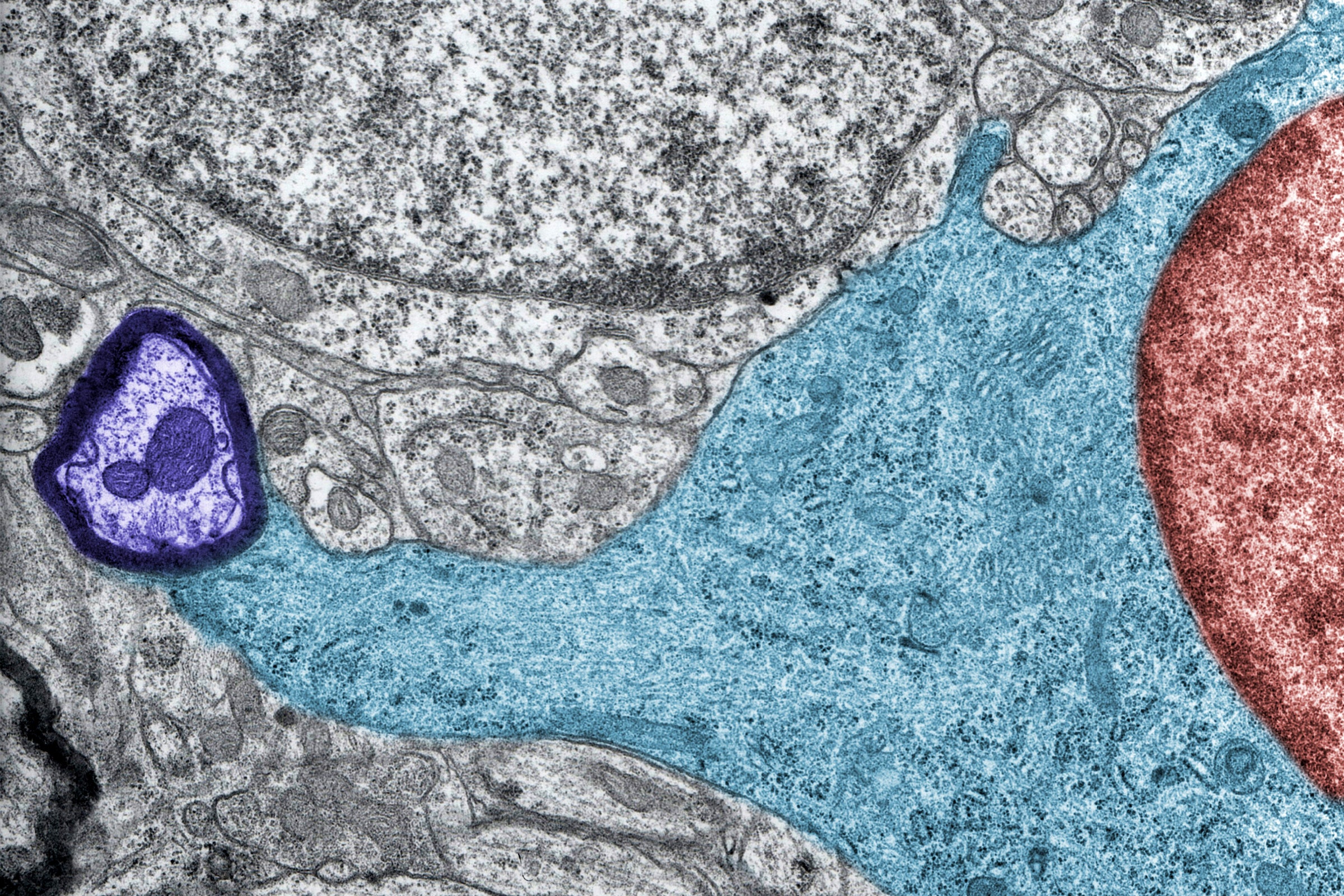
Allison Guy was having a great start to 2021. Her health was the best it had ever been. She loved her job and the people she worked with as a communications manager for a conservation nonprofit. She could get up early in the mornings to work on creative projects. Things were looking “really, really good,” she says—until she got Covid-19.
While the initial infection was not fun, what followed was worse. Four weeks later, when Guy had recovered enough to go back to work full-time, she woke up one day with an overwhelming fatigue that just never went away. It was accompanied by a loss of mental sharpness, part of a suite of sometimes hard-to-pin-down symptoms that are often referred to as Covid-19 “brain fog,” a general term for sluggish or fuzzy thinking. “I spent most of 2021 making decisions like: Is this the day where I get a shower, or I go up and microwave myself a frozen dinner?” Guy recalls. The high-level writing required for her job was out of the question. Living with those symptoms was, in her words, “hell on earth.”
Many of these hard-to-define Covid-19 symptoms can persist over time—weeks, months, years. Now, new research in the journal Cell is shedding some light on the biological mechanisms of how Covid-19 affects the brain. Led by researchers Michelle Monje and Akiko Iwasaki, of Stanford and Yale Universities respectively, scientists determined that in mice with mild Covid-19 infections, the virus disrupted the normal activity of several brain cell populations and left behind signs of inflammation. They believe that these findings may help explain some of the cognitive disruption experienced by Covid-19 survivors and provide potential pathways for therapies.
Featured VideoHow Nose Swabs Detect New Covid-19 Strains
For the past 20 years, Monje, a neuro-oncologist, had been trying to understand the neurobiology behind chemotherapy-induced cognitive symptoms—similarly known as “chemo fog.” When Covid-19 emerged as a major immune-activating virus, she worried about the potential for similar disruption. “Very quickly, as reports of cognitive impairment started to come out, it was clear that it was a very similar syndrome,” she says. “The same symptoms of impaired attention, memory, speed of information processing, dis-executive function—it really clinically looks just like the ‘chemo fog’ that people experienced and that we’d been studying.”
In September 2020, Monje reached out to Iwasaki, an immunologist. Her group had already established a mouse model of Covid-19, thanks to their Biosafety Level 3 clearance to work with the virus. A mouse model is engineered as a close stand-in for a human, and this experiment was meant to mimic the experience of a person with a mild Covid-19 infection. Using a viral vector, Iwasaki’s group introduced the human ACE2 receptor into cells in the trachea and lungs of the mice. This receptor is the point of entry for the Covid-causing virus, allowing it to bind to the cell. Then they shot a bit of virus up the mice’s noses to cause infection, controlling the amount and delivery so that the virus was limited to the respiratory system. For the mice, this infection cleared up within one week, and they did not lose weight.
Coupled with biosafety regulations and the challenges of cross-country collaboration, the security precautions required by the pandemic created some interesting work constraints. Because most virus-related work had to be done in Iwasaki’s laboratory, the Yale scientists would take advantage of overnight shipping to fly samples across the country to Monje’s Stanford laboratory where they could be analyzed. Sometimes, they would need to film experiments with a GoPro camera to make sure that everybody could see the same thing. “We made it work,” Monje says.
Once the mice had been infected with the virus, the scientists assessed the levels of cytokines in their blood and cerebrospinal fluid (the liquid surrounding the brain) at seven days and seven weeks after infection. Cytokines are markers secreted by the immune system, and they are critical in regulating inflammation. Not only were certain cytokines elevated in the cerebrospinal fluid at both time periods, but the scientists saw an increase of microglia reactivity in the subcortical white matter of the brain—the squishy white tissue rife with nerve fibers that makes up over half of the brain’s volume. That was another sign of potential trouble.
- Microglia are sort of like the central nervous system’s hungry scavengers. They are immune cells that clean up the brain by chomping on dead and unwanted neural debris, among other important functions. “There’s a unique subpopulation of microglia in the white matter called axon tract microglia,” Monje says. These have a specific genetic signature, she continues, and “are exquisitely sensitive to a wide range of insults,” like inflammatory or toxic stimuli.
- In response to these stimuli, microglia can become perpetually reactive. One consequence is that they can begin eating away at needed neurons or other brain cells, which further disrupts the brain’s homeostasis. In the case of Covid-19, the scientists found that this reactivity persisted even at seven weeks after infection. Monje’s team had seen similar elevation in this activity following chemotherapy and in brain samples from human patients who were infected with Covid-19. In the hippocampus (the area of the brain closely associated with memory), this overenthusiastic cleanup effort can deter the creation of new neurons, which are linked to maintaining healthy memory.
To figure out what exactly caused the microglia to become reactive, the researchers looked for the cytokines that had reached elevated levels. Specifically, Anthony Fernandez Castaneda, a postdoctoral researcher in Monje’s laboratory and a study coauthor, found CCL11—a factor that can decrease the generation of new neurons and impair learning or memory. “The elevated CCL11 result was very interesting, because it could potentially explain why some Covid survivors experience cognitive symptoms,” he says.
In a second phase of the experiment, the researchers gave shots of CCL11 to a separate group of mice. Then they examined tissue from their brains to discover where the microglia had been reactive, and where fewer new neurons had grown. That turned out to be in the hippocampus—indicating that CCL11 acted on very specific cell populations in a memory-related area of the brain.
Next, the scientists decided to investigate the effects of mild Covid-19 infection on myelinating oligodendrocytes—brain cells that generate the myelin “padding” around neurons to provide insulation for better inter-neuron communication. Previously, work done by Anna Geraghty (another postdoctoral fellow in Monje’s lab and study coauthor) had focused on how chemotherapy affects this process. Myelin loss in the mice treated with chemo was found to be directly linked with deficits in short-term memory and attention. “Even minor adjustments in those myelin can actually impact neuronal communication in quite diverse ways,” she says. “Losing that ability to adaptively respond to neuronal activity led to persistent cognitive impairments in these mice.”
Geraghty recalls staying in the lab late at night during the Christmas holiday to finish the analysis of how Covid-19 affected that padding in mouse neurons. The result: The infected mice had lost approximately one-third of their mature oligodendrocytes, and had a statistically significant drop in myelination compared to mice in a control group. The magnitude of myelin loss was almost identical to what the lab had discovered when studying mice and chemo. She excitedly texted the results to Monje. “There was just a big moment in my brain of, ‘Oh my gosh, this data is incredibly interesting,’” Geraghty recalls.
Joanna Hellmuth, a cognitive neurologist at UC San Francisco who was unaffiliated with the study, notes that the “mouse data is very compelling,” and more studies are needed to see how these results translate into treatments for human patients—like Guy or others struggling with long Covid and cognitive symptoms. Figuring out which drugs to try first, though, could benefit from understanding the biological cause of brain fog symptoms. “‘Brain fog’ is a colloquial term,” says Hellmuth—and it “kind of delegitimizes peoples’ having a neurological disorder.”
Wes Ely, a pulmonary and critical care specialist at Vanderbilt University Medical Center who was unaffiliated with the study, believes that such studies can lead to future therapeutic development. “This work paves the path towards both pharmacological, neuropsychological, and cognitive rehabilitative mechanisms to rebuild brain power,” he says.
Get the Latest Covid-19 News
Sign up for our Coronavirus Update newsletter, providing the latest insights on the pandemic, vaccine rollouts, and more.
Your email
By signing up you agree to our User Agreement (including the class action waiver and arbitration provisions), our Privacy Policy & Cookie Statement and to receive marketing and account-related emails from WIRED. You can unsubscribe at any time.
For example, Monje thinks, some drug candidates that already worked in “chemo fog” animal models might be useful for treating Covid-related cognitive symptoms. She hopes to test these candidates on the Covid-19 mouse model to see if they help.
The team would also like to investigate other questions, like whether these neurological effects are different after even longer periods of time, or if they are different following a breakthrough infection after vaccination. They’d also like to compare what they’ve found in Covid-19 mouse models to neurological reactions to another famous virus—H1N1, which causes swine flu. The team had found that in a mouse model of H1N1, the drop in oligodendrocytes and increase in microglial reactivity in the subcortical white matter generally normalized by seven weeks—unlike for the Covid-infected mice. They also found that, in mice infected with either virus, CCL11 was elevated in the cerebrospinal fluid. Monje hopes to study what she calls this “prominent shared mechanism” in further detail.
While Monje and Iwasaki’s work has given researchers a better idea of how Covid might affect the brain, it may take years before there is a working treatment for patients. For Guy, the time cannot come soon enough. In 2022, she got Covid again. “I’m just praying for medicine, praying for treatment,” she says.
More From WIRED on Covid-19
- 📩 The latest on tech, science, and more: Get our newsletters!
- Vaccines for little kids are finally here. Now comes the hardest part
- Welcome to the Great Reinfection
- When Covid came for Provincetown
- Rapid at-home Covid tests—and where to find them
- Need a face mask? Here are ones we like to wear
- Read all of our coronavirus coverage here
Groundbreaking. For anyone ever diagnosed with either Chronic Fatigue or ME, often belittled in medicine as yuppie flu. This article is most interesting. I sustained traumatic brain injury in 1994 and have battled with the “Fatigue” symptoms for decades. By 2017, it was time for breast cancer so I used the time to write a book about my experiences of ill-health roller coaster so that it could be of interest to people especially if I did not survive. I constantly refer to the fact that the exhaustion with cancer was nothing to what happened over the 6 years with chronic fatigue. I used to call it “Drop Dead Exhaustion”.
Book published on Amazon
Fortune Favours the Brave
Michelle Marcella Clarke (Survivor)
Posted in Uncategorized
1 Comment
Stammer: yes we can identify a person with a stammer. However people who have traumatic brain injury (or strokes) can have aphasia ie Brocas, as mentioned in earlier postings. This short video explains.
Posted in Uncategorized
Leave a comment
Conservatorship (Guardians; Wards of Court: newly appointed DSS). Ireland…how does our legal system operate? Legislation is due about wards of courts but what about those who are ghosted?
R/mend https://www.netflix.com/ie/title/81177110 Conservatorship in US but what really happens in Ireland with legal profession/family & how they treat ple esp where money assets r involved. What is it like to be ghosted & robbed? Mental illness & Stigma prevails
Article written in Irish Examiner
Posted in Uncategorized
Leave a comment

