Today I recognised that my fear of the phone for three decades now is in fact a phobia; It is under the umbrella of social anxiety disorder and is called telephobia. This may be of assistance to other people especially those who have Broca’s post TBI.

More menu

Search BBC

What is Worklife?

How We WorkHow We LiveHow We Think

Psychology of Work | Psychology

Scared of the phone? Here’s how to overcome that fear

Share using EmailShare on TwitterShare on FacebookShare on Linkedin

(Image credit: Getty Images)

We’re rarely separated from our mobile phones, but many people still suffer from a true, deep fear of making a phone call (Credit: Getty Images)

By Renuka Rayasam

14th December 2016

Article continues below

D

Does hearing the phone ring make you panic? Does the thought of making a call give you cold sweats?

We’re rarely separated from our mobile phones these days, but many people still suffer from a true, deep fear of making a phone call. Recognised as an offshoot of social anxiety disorder, telephobia afflicts people across countries and generations.

Those who suffer from telephobia might be comfortable delivering a talk in a room full of strangers or might send dozens of text messages a day, but get shivers when they need to talk on the phone.

You have to think of things on the fly and you have to respond to what someone is saying to you

“For a lot of people, getting on the phone is a particularly complex interaction,” says Jill Isenstadt, vice president of coaching for Joyable, which offers online therapy. “You have to think of things on the fly and you have to respond to what someone is saying to you.”(Credit: Getty Images)

(Credit: Getty Images)

Have you managed to counteract telephobia? Share your tips and tricks with us on Facebook.

Technologies that enable communication without directly speaking to someone, have made it easier to mask the problem of telephobia. As a result, the problem has become harder to spot, and there’s no hard data on the prevalence of telephobia. Ultimately, the fear of talking on the phone can have disastrous results for productivity or job mobility.

 “We have clients who come in and are held back in their careers because they are anxious about interacting with other people,” says Isenstadt. “They avoid it until it becomes dire.”

Looking foolish 

Telephobia has been around well before the advent of smartphones. George Dudley and Shannon Goodson wrote The Psychology of Sales Call Reluctance in 1986. In his 1929 autobiography, British poet and writer Robert Graves writes about developing a deep fear of using the telephone after suffering an injury while serving in the First World War.   

Isenstadt has seen more recent cases of telephobia. The phone produces anxiety in her clients for a variety of reasons.

It’s not about the phone itself, but it’s something about the interaction

“It’s not about the phone itself, but it’s something about the interaction,” she says. “For some clients, the phone is another place where they might say the wrong thing.”

One of Isenstadt’s 27-year-old patients, who works in sales, worries about stumbling over her words or taking too long to respond, making her look foolish in front of clients and colleagues in nearby cubicles.Those who suffer from telephobia might send dozens of text messages a day, but get shivers when they need to talk on the phone (Credit: Getty Images)

Those who suffer from telephobia might send dozens of text messages a day, but get shivers when they need to talk on the phone (Credit: Getty Images)

Another patient, a 52-year-old financial consultant, also worried about being judged and appearing unintelligent during phone calls. Instead, she defaulted to communicating with clients over email so that she could take time to compose and double check her responses. 

Sales trainer Jeff Shore says that many sales professionals fear cold calling because they worry about harassing potential clients. As telemarketing took off, the phone started to be seen as a nuisance that interrupted family dinners and other personal time. Shore says that he works with people in sales who worry about “annoying people.”

“Sales people say ‘I don’t want to get those annoying phone calls,’” says Shore. “They say, ‘I don’t want to be that person.’” 

Navigating cultural norms

In some cultures, people are apprehensive about talking on the phone, says Michael Landers, global director of Culture Crossing, a consultancy which advises groups and individuals working in a global context. 

“In Japan there is a hesitancy [regarding] talking to someone you don’t know — they don’t want to offend someone or lose face,” says Landers. In Indonesia, where the average person sends about a hundred text messages every day, he says people are just less comfortable making calls. 

Across cultures, the fear of the phone closely relates to a fear of being rejected, whether that means asking for an appointment with someone or trying to close a deal

Landers says that across cultures the fear of the phone closely relates to a fear of being rejected, whether that means asking for an appointment with someone or trying to close a deal.

 “I don’t know a culture that loves rejection,” he says. “It’s just how you define it.”

Working a muscle

Most therapists use an approach rooted in cognitive behavioral therapy to help patients overcome their fear of the phone. Isenstadt asks patients to identify the anxious thoughts they have about talking on the phone and walks them through worse case scenarios.

“We’re helping their mind realise it’s OK and not dangerous,” she says. Eventually they build up to making low stakes calls like ordering a pizza. 

In trainings, Shore recommends that sales professionals have a concrete plan for how they will start and end conversations. He suggests thinking through how they might be adding value to the person at the other end of the line.

“The key thing is to get the motive right,” he says. When a sales professional starts to see how they are helping potential clients, cold calling becomes easier. “Once you find your worst fears don’t come through, it changes your belief about what a phone call is.” And if they can’t find a way to add value, they shouldn’t make the call.

While telephobia has mainly been studied in sales professionals, it affects people across careers from journalists and public relations professionals to secretaries, lawyers, consultants and anyone else that needs to make and receive calls to do their jobs. Telephobia can even make it hard to get a job when a candidate panics over a phone interview. Molly Irani, director of hospitality for Chai Pani Restaurant Group, mostly now texts employees, many under the age of 35, who show an aversion to the phone (Credit: Robert Gunn)

Molly Irani, director of hospitality for Chai Pani Restaurant Group, mostly now texts employees, many under the age of 35, who show an aversion to the phone (Credit: Robert Gunn)

Sometimes managers learn to adjust around the habits of their employees.

Molly Irani is director of hospitality for Chai Pani Restaurant Group, which has restaurants in Asheville, North Carolina, and Atlanta, Georgia. She says that out of 180 employees, she can count on one hand the number that will pick up the phone when she calls. Irani says she’s now gotten used to texting employees, many of whom are under the age of 35, instead. 

Irani understands her colleagues’ aversion to the phone. A call, for example, can catch you off guard, when you’re not ready to deal with the conversation. The difference today, she says, is that with so many alternatives to calling, her younger employees can avoid awkward phone situations.

“Many of us have felt that [aversion], but have had to rise above it,” says Irani. “We worked that muscle, but this generation doesn’t have to.”

To comment on this story or anything else you have seen on BBC Capital, please head over to our Facebook page or message us on Twitter.

Five ways to master your telephobia

• Think through the worst-case scenario — usually it’s not as bad as you feared.
• Understand why you are making the call. Is it to inform a client or get a key piece of information?
• Plan through both the way you will start and end the call — often it’s hardest to think of a graceful way to exit.
• Start with something low stakes. To practice, make calls like ordering takeout where it’s OK to mess up.
• Know that you aren’t expected to be perfect.

Source: Joyable and Jeff Shore
Posted in Uncategorized | Leave a comment

TBI, dementia, mental illness, disabilities, finally this legislation will be put into effect in 2023. This is from St. Patrick’s hospital. “The Assisted Decision-Making (Capacity) Act and mental health”. (St. Patrick’s Mental Health Services)

 Have a query? Get in touch01 249 3200

Make a referralGet help and supportGo to Your Portal

Advocacy

22 November, 2022

The Assisted Decision-Making (Capacity) Act and mental health

Looking at the Assisted Decision-Making Capacity Act: illustration of a woman leaning on a question mark

We explore the new Assisted Decision-Making (Capacity) Act, why it’s important, and what kinds of decision supports will be available.

The Assisted Decision-Making (Capacity) Act is a new law due to come into effect in Ireland in early 2023. This is an important law which will advance the rights of people with disabilities in Ireland, including people experiencing mental health difficulties.

Below, we share an overview of the law and some of the main changes it will bring.

What is assisted decision-making?

“Assisted decision-making” or “supported decision-making” means we are supported and enabled to make choices and decisions about our lives at times when we may be unable to do so on our own.

Supported decision-making can take different forms. It can include being given:

  • information in a way that is understandable to us
  • information about the choices available to us
  • enough time and support to consider our choices.

It can also include making advance plans or legal arrangements that will come into place in the future if there is a time when we have difficulty making decisions.

Supported decision-making is different from previous systems in place, where a decision was made for someone else “in their best interests”. This is referred to as “substitute decision-making”.

Why is this important?

We all have the right to make decisions about our own lives, what is important to us, and what our preferences are on different matters. At different stages in our lives, we may be unable to make or have difficulty with making decisions about important issues for a variety of reasons. This might be due to physical or mental health reasons, or because of an intellectual disability, for example.

Support to make decisions may be needed only to help with specific areas of our lives. For example, a person might be able to make decisions about healthcare independently, but then may need help to make decisions about finances or housing. Someone also may only need support to make decisions for a limited amount of time; for example, due to mental health reasons. Someone else may need ongoing or increasing decision supports; for example, if someone has a progressive condition such as dementia.

Assisted or supported decision-making means that our will and preferences are at the centre of decisions about our lives, even at times when we may be unable to communicate them clearly by ourselves. A person’s “will” is about their values, beliefs and goals, and a person’s “preferences” means a greater liking for one choice over another.

What is the Assisted Decision-Making (Capacity) Act?

The Assisted Decision-Making (Capacity) Act is a new law in Ireland which sets out a legal framework for assisted decision-making. It establishes a new service – the Decision Support Service – to put in place many of the changes and to provide information to the public. It introduces different levels of support a person can access to help them make decisions if needed. These are outlined below.

Important principles of the Act include that:

  • a person is presumed to have capacity to make decisions unless proven otherwise
  • a person should be supported to make decisions in so far as possible
  • a person has the right to make an “unwise” decision if they choose to
  • a person has the right to access different supports to help make decisions if they need them.

The Act replaces the “Wards of Courts” system previously in place, which is an example of a substitute decision-making approach.

You can watch a brief video explaining the Act here.

Why is this new law important?

This law is important because it strengthens the human rights of people in Ireland, and especially the rights of people with disabilities. In particular, it recognizes that everyone should enjoy ‘legal capacity’ regardless of disability.  Legal capacity involves the right to make decisions about our lives and speak on our own behalf. It is an important part of the United Nations Convention on the Rights of Persons with Disabilities (UNCRPD) which Ireland has signed up to and must work on implementing. You can learn more about legal capacity and the UNCRPD in this short video.

The UNCRPD also recognizes that people with disabilities may, at times, need help and support to exercise legal capacity, and supported decision-making allows for this.

What types of decision supports are there?

Decision supports can take different forms. People can access different levels of support and nominate others to help them in different ways. These are:

A decision-making assistance agreement

A decision-making assistance agreement is a written agreement you prepare in which you identify one or more people you trust to act as a decision-making assistant to help you make decisions. In the agreement, you can choose what decisions you need help with. For example, these might be about your personal welfare or money matters.

You can find more information about decision-making assistance agreements here.

A co-decision making agreement

A co-decision making agreement is a written agreement you prepare in which you choose a person to make decisions jointly with you as a co-decision-maker. This can be helpful if you are unable to make decisions on your own.

You can find more information about co-decision making agreements here.

A decision-making representative

A decision-making representative is someone who is appointed by the court to make certain decisions on your behalf, taking into account your wishes. This can happen if you are unable to make decisions, even with help. The person appointed can be someone you know and trust, or a person from a special panel who is trained for the role.

You can find more information about decision-making representatives here.

An advance healthcare directive

An advance healthcare directive is a document that you complete at a time when you are able to make decisions, about your preferences for healthcare treatment you might need in the future. It comes into effect if, in the future, there is a time when you are unable to make decisions about your healthcare.

As part of this, you can choose someone to act as a designated healthcare representative to make sure your directive is followed. You can include things like where you would like to be admitted to hospital if that’s required, treatments you would prefer, and treatments you do not want. Healthcare providers must respect your wishes to refuse certain treatments if you have included this. Requests or preferences for certain treatments do not have to be followed by healthcare providers, but should be used to help with care plans.

There is one exception to the legal recognition of advance healthcare directives in mental healthcare settings, which is explained below.

You can learn more about advance healthcare directives here.

Enduring powers of attorney

Another way to plan ahead is by making an enduring power of attorney. This allows you to choose one or more people you know and trust to act on your behalf should you be unable to make certain decisions in the future. The person is referred to as your “attorney” under this arrangement. These decisions might be about your personal welfare, property or money matters. You can choose what decisions the person will have authority to make.

You can learn more about powers of attorney here.

What does the new law mean for mental healthcare?

Assisted decision-making is an example of a shift to rights-based approaches to disability and mental healthcare.  A human rights-based approach to care and support is one that “seeks to ensure that the human rights of people using health and social care services are protected, promoted and supported in practice, and embedded in the culture of a service”. 

Mental health services and people working in mental healthcare will need to learn about and uphold the requirements of the law. They may also need to make changes to how they work to ensure people’s right to make decisions about their lives, including their healthcare, are promoted and protected.

Capacity to make decisions

An important principle of the Assisted Decision-Making Act is the “presumption of capacity”. This means that it should be assumed that all adults are able to make decisions for themselves, unless proven otherwise.

Another key principle of the law is that people should be supported as much as possible to make their own decisions. This means staff must ensure people have enough time and understandable information about their choices to make decisions.

Formal decision support arrangements only become relevant when:

  • a person has chosen to set them up
  • at such a time when the person is having decision-making capacity difficulties.

When there is a concern that a person may not be able to make a decision about an issue at a particular time, a “functional assessment of capacity” may be completed to determine if this is the case. This means answering the question-

“In relation to this specific issue, at this time, does this person have capacity“? An important follow-up question to this is “what level and type of support might be needed in order to assist this person to make a decision”? “

If someone is found to be having difficulties with decision-making capacity, the decision supports chosen by the person may then be put into action if appropriate; for example, if a person has a co-decision maker arranged or has prepared an advance healthcare directive. Mental health services and staff will need to engage with a person’s decision supporter if they are found to be unable to make decisions relevant to their healthcare at a particular time.

Advance healthcare directives and mental healthcare

If someone has an advance healthcare directive in place and they become unable to make relevant decisions during time at a mental healthcare facility, the staff and service will need to be aware of this and use it to help with treatment decisions. This means that, where particular treatments or aspects of care have been refused in advance by a person within an advance healthcare directive, this must be respected. Requests for particular treatments or aspects of care should be taken into account by the service and staff, but do not have to be followed.

One important exception under the law concerns people admitted to hospital on an involuntary basis. If someone has been admitted to a mental health hospital on an involuntary basis due to a risk of harm to themselves or others, an advance healthcare directive does not have to be upheld or referenced under the law.

Where can I get more information?

You can get more information from the Decision Support Service’s website. You can also call the Decision Support Service on 01 211 9750 or email queries@decisionsupportservice.ie.

Sage Advocacy also provides more information: visit the Sage Advocacy website here. You can call Sage Advocacy on 01 536 7330 or email info@sageadvocacy.ie. 

Disability and your rights

The UNCRPD sets out the rights of people with disabilities, including people with mental health difficulties.See more about the UNCRPD 

Posted in Uncategorized | Leave a comment

Stifling: You may have thought it was agoraphobia but it differs. I highly recommend this discussion on youtube.

Posted in Uncategorized | Leave a comment

27th December 2022: Irish Independent article by Mary Kenny about Nun’s and their contributions brought to mind Sr (Dr) Maura O’Donohue. What an incredible contribution. I had the privilege of meeting Maura in Zimbabwe, while she was on a work visit, so fiery, spirited and this contribution to the Dictionary of Biography tells us that there are many people who chose to be priests and nuns, who travelled on the Missions and are the hidden backbone of survival, education, health provision and so much more. My paternal grandmother was an O’Donohue and related.

Skip to main content

Dictionary of Irish Biography

  1. Home
  2. O’Donohue, Maura

O’Donohue, Maura

Contributed by

O’Riordan, Turlough

Maura O'Donohue

Maura O’Donohue

Copyright

Courtesy of the Medical Missionaries of Mary. All rights reserved

O’Donohue, Maura (1933–2015), missionary doctor and public health campaigner, was born on 2 March 1933 at Likeen, her family home in Kilfenora, Co. Clare, the second of four children (two girls and two boys) of Andrew O’Donohue, a farmer, and his wife Kate (née O’Brien). Mary Brigid, as she was christened, was educated locally before boarding at the Presentation convent, Mountmellick, Co. Laois. In her penultimate year she was inspired by the documentary film Visitation, which described the work of the recently founded Medical Missionaries of Mary (MMM) in Drogheda and Nigeria, and contacted the congregation’s founder, Mary Martin (qv). O’Donohue joined the congregation in September 1950, studied medicine at University College Dublin (1951–7) and completed her medical training at St Vincent’s Hospital, Dublin, and Our Lady of Lourdes Hospital, Drogheda. After graduating Bachelor of Medicine (MB), Bachelor of Surgery (B.Ch.) and Bachelor of Arts in Obstetrics (BAO) in 1957, she went to Anua, Nigeria, as a missionary doctor, and made her final commitment in the congregation there in 1959. Initially her name in religion was ‘Sister M. Andrew’, though she adopted ‘Maura’ in the late 1960s. In October 1959 she was elected to the order’s council (its youngest ever member, serving until 1962), and was appointed Martin’s assistant and personal physician (Martin endured chronic heart problems). They toured Africa, Asia and North America for six months and returned to Drogheda in April 1960, having visited over twenty countries.

O’Donohue studied theology (1960–61) at the Regina Mundi Institute in Rome, acquired fluency in Spanish in two years in Spain (1962–4) and briefly worked in Rome and Brussels with Cardinal Joseph Suenens. She then returned to Ireland to assist Martin, analysing and ingesting the teachings of the second Vatican Council of 1962–5. In 1966 Cardinal William Conway (qv) appointed her to an advisory board on the future of Maynooth College. She strongly supported the decision to admit both female and male lay students to Maynooth, as the theological college – and the National University of Ireland governed faculties of arts and science – broadened their intake in the late 1960s. In 1967 she served on the MMM congregation’s council, was regional superior in Europe (1967–9) and was on the general chapter (1969–70; 1979; 1991; 2003; 2009).

She broadened her medical knowledge as a registrar (1970–71) at Edinburgh Royal Infirmary and medical coordinator (1971–3) on MMM mission projects in Obudu, Nigeria, and completed an Master of Science (M.Sc.) in international community health at the Liverpool School of Tropical Medicine (1978). Having endured recurring bouts of severe malaria, she was posted from Nigeria to Ethiopia, where the disease was less prevalent, and treated those suffering from Hansen’s disease (leprosy) in Gambo (1974–7), the lone doctor in a remote hospital, managing medical, surgical and paediatric cases in straitened circumstances. After a brief spell in Kenya she returned to Ethiopia in 1979. By then fluent in Amharic, upon hearing reports of emerging famine, O’Donohue surveyed conditions and lobbied the regional authorities to organise food aid and assistance. The socialist regime, regarding aid organisations and religious workers with suspicion, was reluctant to publicly recognise the reoccurrence of drought or famine. In Addis Ababa O’Donohue sourced vehicles and food aid from international donors to initiate a nutritional programme which reached 36,000 people in six weeks and, working with the Ethiopian Catholic Secretariat, established major food aid and nutrition monitoring programmes. Famine relief work was combined with structured development programmes which delivered basic primary health care training to communities. Sanitation training, and the safe burial of famine victims, significantly minimised the prevalence of cholera and typhus, and she insisted that the projects she managed were evaluated by external international experts. Throughout her famine work (1983–8), she was required to report to the regime every two weeks and endured frequent lengthy interrogations. On one occasion she had to flee the field under threat of violence from local militia, returning only when the central government assured her security. Elements of the regime gradually came to respect her effectiveness and she was commissioned by the government to evaluate primary health care services across Ethiopia.

In 1988 O’Donohue began working with the UK-based Catholic Agency for Overseas Development (CAFOD) and was soon appointed to lead their newly founded HIV/AIDS programme. She successfully coordinated and implemented testing and counselling programmes alongside education and information projects, and CAFOD became the lead agency for HIV/AIDS within Caritas Internationalis, the international umbrella body for national catholic development organisations. By the mid-1990s she was running ninety-five such programmes for CAFOD, and many more on behalf of other catholic development agencies across the world. Recognising the efficacy of condoms in preventing the spread of HIV/AIDS, she raised awareness of their use and benefits, using her extensive international contacts to lobby and seek funding from national and regional bishops’ organisations, conferences of religious and lay religious organisations. With Rev. Robert Vitillo of Caritas Internationalis, she was often invited to present seminars on HIV/AIDS to church leaders. She played a pivotal role in informing the global catholic church about the disease and was widely respected in the international development community.

A keen observer of the impact of HIV/AIDS on a range of development issues, she discerned that poverty and marginalisation magnified its impact, especially on women. After she informed Cardinal Basil Hume, head of the catholic church in England and Wales, of repeated reports of sexual abuse and the impregnation of lay and religious women by catholic clergy, he urged her to investigate. Caritas Internationalis, in conjunction with an informal grouping of catholic moral theologians, organised a symposium on HIV/AIDS on 6–9 January 1994 at the Redemptorist Marianella Pastoral Centre in Rathgar, Dublin. O’Donohue and Vitillo presented an international audience with startling findings that included documented reports of the rape of women religious by priests in several countries (Manning). Priests often justified their actions as relieving them of the need to have sex with other women and reducing their risk of being infected with HIV. (Some believed that having sexual intercourse with virgins was a prophylactic against AIDS, and others that it would cure them of the disease).

In February 1994 Hume presented O’Donohue’s report to the Vatican. It detailed a concerted pattern of sexual exploitation and rape of women religious by priests and some bishops over the previous six years in twenty-three countries (including Ireland, Nigeria, the Philippines, Tanzania and the USA). The report noted that sisters were often urged to take the contraceptive pill, which they were told would prevent HIV transmission, and that some had abortions procured for them by the priests who impregnated them. Other pregnant women religious left or were turned out of their orders and some were forced into prostitution due to penury. The document concluded ‘the church will be judged not only by its response to HIV/AIDS, but also on its perceived hypocrisy and apparent duplicity in this context’ (‘Memo from Sr. Maura O’Donohue MMM’, 9 Mar. 2001).

On 18 February 1995 O’Donohue was invited to the Vatican to meet Cardinal Eduardo Martinez-Somalo, who as chief administrator of the Holy See (1993–2004) and head of the Congregation for Institutes of Consecrated Life and Societies of Apostolic Life (1992–2004) directly oversaw religious congregations and orders. Urging an apostolic visitation to investigate sexual exploitation and rape, she requested greater guidance from the Congregation in such instances and emphasised the need to care for and support clergy and religious infected with HIV. While she sought to address these issues through internal church channels, the membership of the International Union of Superiors General, an umbrella body for women religious, were incensed by the report’s findings and Vatican inaction. It leaked a copy of O’Donohue’s 1994 report and her aide memoire of the February 1995 meeting to the respected American catholic weekly, National Catholic Reporter, which published them in March 2001. This roused an enormous outcry in the international media. Organisations with which O’Donohue had links sought publicly to distance themselves from her and she received a barrage of hate mail. O’Donohue, profoundly respectful of her Hippocratic oath, was uncomfortable with the leak. She ignored all media contact, requested her colleagues and friends do the same, and threw herself into field work until the furore died down. Later she was integral in forming the Working Group of the Union of Superiors General, established to support members of catholic religious communities living with and dying from AIDS.

In 1997 O’Donohue was recruited by the New York-based Catholic Medical Mission Board (CMMB) as deputy director and head of international planning. She had extensive prior experience distributing drugs in the field provided by the organisation. With the CCMB she designed and implemented drug treatment programmes targeting disease eradication and worked closely with US pharmaceutical manufacturers on long-term drug delivery initiatives, distributing $50 million of drugs annually to developing countries. Much of her work focussed on the former Yugoslavia, then engulfed in widespread civil war. To maximise the efficacy of programmes O’Donohue ensured they were accompanied by educational and public health initiatives.

In 1999 she returned to CAFOD as health and nutritional advisor to their disaster and emergency response teams. Among the areas she worked were Grozny, Chechnya, where she supported the efforts of Islamic Relief to feed vulnerable women and children and establish primary healthcare facilities and early childhood educational services. In 2003 she was one of the first aid workers to reach Baghdad in the aftermath of the US-led invasion of Iraq. There she established childcare clinics and nutritional support programmes. When not deployed to specific emergencies or disasters, she worked in the field on CAFOD food programmes in Kenya, Zimbabwe and elsewhere. Based in Dublin from 2003, she consulted for CAFOD and continued to travel the globe. In 2011 she was voted ‘Clare person of the year’.

During visits to Asia she recognised that many women who became infected with HIV were involuntary sex workers, illegally trafficked and held captive in appalling conditions. Her visits to brothels deeply affected her and she worked tirelessly to raise awareness of human trafficking and the horrific treatment of forced sex workers. She contributed to international interfaith initiatives to raise awareness and in 2005 was a founding member of Act to Prevent Trafficking in Ireland. She argued that the scourge of human trafficking ranked behind only the illegal trades in drugs and arms, and was controlled by the same international criminal organisations.

Diagnosed with leukaemia in September 2014, she moved to Aras Mhuire, Drogheda. She remained alert and interested, regularly playing scrabble until days before her death there on 3 May 2015. The eminent theologian Enda MacDonagh (1930–2021), a close friend, was a concelebrant at her funeral mass, held 6 May at the MMM congregation’s mother house, Drogheda; she was buried in St Peter’s cemetery in the town.

In addressing issues of gender, injustice, poverty, nutrition and public health, O’Donohue strove to identify underlying causes and related effects. She was deeply committed to social justice and alleviating the burdens of poverty and ill-health, which she noted fell heaviest on women. She excelled in planning and coordinating multi-agency aid and development programmes and with characteristic modesty described her own career as merely ‘getting other people to do their bit’ (Irish missionary sisters in Africa radio programme). In February 2019 Pope Francis’s announcements on the sexual abuse of women religious by catholic clergy brought her to international attention as major international publications – including the New York Times and Die Zeit – referenced her ground-breaking 1994 report. Her work in unearthing the sustained sexual abuse and exploitation of women religious across the global catholic church, widely recognised by experts and campaigners, remains largely unheralded in Ireland.

Sources

Connacht Tribune, 31 Oct. 1959; Irish Independent, 13 Sept. 1989; 31 May 1998; 21 Mar. 2001; National Catholic Register, 8 Feb. 1998; 9 Mar. 2001; 22 Feb. 2019; Kevin Kelly, ‘A brief history of the Association of Teachers of Moral Theology’, The Month, vol. 32, no. 8 (Aug. 1999), 299–304; ‘Memo from Sr. Maura O’Donohue MMM: urgent concerns for the church in the context of HIV/AIDS’ (https://natcath.org/NCR_Online/documents/UrgentConcernsO’DONOHUE.htm), ‘Meeting at SRC, Rome, 18 February 1995’, ‘Personal Memo Date: 21 February 1995’, (https://natcath.org/NCR_Online/documents/PersonalMemoO%27DONOHUE.htm), National Catholic Reporter, 9 Mar. 2001; Guardian, 21 Mar. 2001; Irish Times, 21, 26 Mar. 2001; 13 June 2005; 11 Feb. 2019; New York Times, 21 Mar. 2001; 6 Feb. 2019; Sunday Times, 25 Mar. 2001; Drogheda Independent, 6 Apr. 2001; 23 July 2003; Klaus Fleischer et al., Responses of the Catholic Church to HIV and AIDS in Africa: lessons learned. An international field study by African and German theologians and health workers (2015), 115; Vincent Manning, ‘Encountering Christ through the Passion of HIV: an inquiry into the theological meaning of HIV in the Church’, Doctor of Philosophy, University of Surrey, June 2019 (esp. footnote 189 (p. 122) and footnote 214 (p. 145)); ‘Irish missionary sisters in Africa’, (radio programme six of eight), first broadcast on Dublin South FM, 2011, (posted 11 Sept. 2014, https://www.youtube.com/watch?v=z-_lVSvCRdk, accessed May 2022); private information

Publishing information

Last revised August 2022

This content is licensed under a Creative Commons Attribution Non Commercial 4.0 International license.

Footer 1

Footer 2

Footer 3

Footer 4

Decoration

The Dictionary of Irish Biography is a project of the Royal Irish Academy, 19 Dawson Street, Dublin, D02 HH58, +353 1 609 0600, website

Follow us on Twitter @DIB_RIA

Accessibility | Privacy | Cookie policy | Cookie settings

Copyright Dictionary of Irish Biography 2022

Posted in Uncategorized | Leave a comment

Thanks to tweet from Erskine Childer’s great grandson of a photo of my grandfather, Michael Comyn, KC, as they gathered to form first De Valera government 1933.

Posted in Uncategorized | Leave a comment

Untold stories CNN …. over 9,500 brains held in collection in Denmark since 1940’s. Ethics causes indecision. Science needs to find answers but then ethics says these brains were taken from psychiatric patients without proper sanction. Personally, I believe Scientists should have access to them now … there are blunt answers to mental health still and stigma. We no longer have lobotomies, or recurrent ECT but what are the medications and their implications? Blackdog hounds me especially when routine days are interrupted by so called festivities. I fear collapse to restraint to being locked away indefinitely. Why? that is what depression is and if you can’t hold on, you just fall backwards into a hole that becomes more and more difficult to see light of any significance and the game is up when the light fails to penetrate and you are gone. I thank the team who put together this TV programme, the grandniece journalist who sought out the story … and most importantly shared it. I hope someone with the expertise can go to Denmark and the brains of so many people can be used to help find an answer to psychiatric illnesses like Schizophrenia, Bipolar, horrid depression. Too often Anxiety in all its manifestations can be the instigator of significant depression but anxiety is ignored or scoffed as normal or something that can be overcome by exercise!

The complications of family history with manic depression; personally having same with the complication of traumatic brain injury, I had naively thought, “for the benefit of others, so they did not have to suffer the same as me” that I would gladly donate my brain to science. Following through becomes a major problem in my case so apart from contacting Trinity College Dublin and not really able to work through the process, I found this programme heart rendering. It would be my hope that someone out there would tap this incredible resource of possible answers to these appalling mental illnesses which are still treated by Stigma and incomplete processes involving medications and psychology, both of which have supported me in my existence to remain engaged and living in society without being locked up, or in a community mental health care centre, for over 20 years now.

https://edition.cnn.com/2022/11/11/world/denmark-brain-collection-scn-spc-intl/index.html

Posted in Uncategorized | Leave a comment

‘I haven’t come across any paranormal phenomena that cannot be explained by a damaged brain’ Interview: Saul Martinez-Horta. Ref: EL PAIS

INTERVIEW

Saul Martínez-Horta: ‘I haven’t come across any paranormal phenomena that cannot be explained by a damaged brain’

In a new book, the Barcelona-based neuropsychologist unravels the strange behaviors and conduct that neurological diseases can cause in people

The neuropsychologist Saul Martínez-Horta at Sant Pau Hospital in Barcelona.
The neuropsychologist Saul Martínez-Horta at Sant Pau Hospital in Barcelona.MASSIMILIANO MINOCRI
Jessica Mouzo

JESSICA MOUZO

DEC 13, 2022 – 13:02 CET

Sometimes, the neuropsychologist Saul Martínez-Horta instructs his patients to draw a clock. “It seems silly,” he admits. But beyond producing a circle that should contain 12 numbers placed around it along with hands marking the time, the exercise is “a display of very elementary cognitive processes,” such as planning, order, sequence, spatial processing… Seeing how a patient draws that simple sketch – and whether he or she can do it – gives this specialist key information about how the patient’s brain works and, most importantly, whether something is wrong.

Martínez-Horta, 41, who works at the Department of Neurology at Sant Pau Hospital in Barcelona, Spain, thoroughly scrutinizes his patients’ gestures, words and behaviors. Any activity can provide a hint of brain processes gone awry or help discover hidden neurological diseases, such as the ones Martínez-Horta describes in his book Cerebros Rotos [or Broken Brains]. His compilation of clinical cases recalls the neurologist Oliver Sacks’ classic The Man Who Mistook His Wife for a Hat. The Spanish neuropsychologist says he was inspired to write the book by the response he got from his Twitter threads discussing the typical cases he sees in therapy. “I think everyone is fascinated about what happens when the brain is damaged,” reflects Martínez-Horta, who now has nearly 40,000 Twitter followers.

Question: How far can a damaged brain go?

Answer. As far as anyone can imagine. The day I realized that brain diseases could possibly explain everything you can imagine happening to a human being, from the most normal things to the most bizarre, I said: this is fascinating.

Q. Can damaged brains be fixed?

A. Some of them can. When a brain stops working as it should, it is not always the consequence of an inevitably progressive disease. It can also be due to intoxication, cancer-related diseases, metabolic ailments… And if you diagnose it, discover what is going on and treat it, you can repair it. That’s why it’s important not to take everything for granted and get to the bottom of it, because some damaged brains can be repaired.

Q. You explain that memory can play tricks on us because it is “an active encoding process,” a transformation of information that was once an experience. Is memory a lie?

A. But what is a lie and what is the truth? We do not have any evidence to suggest that the reality we experience – the reality you experience and the one I experience – is the same. We know that the reality you perceive is what is the most probable, the most plausible, according to your brain’s way of thinking. The brain is constantly anticipating things; it is interpreting the world, not analyzing it, because [otherwise] it would get overloaded; the [brain] uses previous knowledge to anticipate it [instead]. That’s why storing memories isn’t like storing a photo, which I [can] keep in a drawer and take out one day. It’s not like that. The brain transforms an experience into a code and distributes it in different areas of the brain. When we try to retrieve the information through the act of remembering, it has to be reintegrated and the brain uses probabilities, what is most plausible, [to do that], resulting in the transformation of the information. These transformations are normal. Although it is very hard for people to accept, most of our memories are not exact replicas of what we experienced. And that is normal. But with certain diseases, that transformation becomes extraordinarily pathological, although it is experienced as real. That’s what we call confabulation.

Saul Martinez-Horta during the interview.
Saul Martinez-Horta during the interview.MASSIMILIANO MINOCRI

Q. Why do we remember certain things but not others?

A. The brain tends to prioritize certain things. When it comes to memory and memory formation, attention is a key factor: the depth with which you process the information you pay attention to correlates with the quality of your memory of it. A very common complaint is: “I am so forgetful lately.” But it’s not that you forget; you just don’t apprehend it [in the first place] because you aren’t paying attention, because you are overwhelmed, tired… On the other hand, because of how memory works, certain aspects of a context make it easier to learn and remember information: emotional information is the typical example because the brain prioritizes everything it associates with signals that are important for survival. The classic example is that everyone remembers what they were doing [on September 11, 2001] when the Twin Towers were brought down: the context’s high emotional impact means that we can remember everything perfectly.

Q. In the book, you argue against normalizing memory loss and other cognitive problems as inherent to aging. But aging leads to cognitive decline. How do you distinguish between the two?

A. There is this idea that senile dementia is inevitable. But that is incorrect. Senile dementia does not exist. Aging does not mean dementia. Dementia is a disease in which the cognitive impairment occurs to such a degree that the person can no longer survive on their own. Someone who gets dementia as they grow older has an associated degenerative disease or some other process [at work]. Indeed, getting older means losing skills that we have acquired or developed, and it also impacts how we function cognitively. But there’s a curve of normality, normal limits. Is it normal to stumble more as we get older? I suppose so. Is it normal to constantly fall on the ground? No. Is it normal to be slower and not as cognitively agile? Yes. Is it normal to repeatedly forget things and have difficulty recalling words? No. When we don’t think of these problems as normal, the next step is to seek help. We should have a little bit of that intuition without becoming hypochondriacs either.

Q. You also say that the brain always prioritizes fear. Why does that happen?

A. Fear is a very primitive emotion, and it is designed to help us survive. In the brain, when the systems that control fear are put into action, they override the expression of all other processes. For example, the way the brain is organized means that when these structures that govern fear are activated, areas that have evolved to be much more modern, such as the ones we use for abstract reasoning or language, function much less well. In fact, a person who is frightened has trouble speaking. And that happens because when we’re facing danger, it may be more useful to not think and [just] act versus thinking and wasting time making decisions.

Q. When you are afraid, you can’t think straight.

A. Exactly. And there are a host of mental health disorders related to expressing fear in a context in which nothing [frightening] is happening. That is typical of anxiety disorders: a person experiences the horrible fear of a situation in which, in principle, there is no danger, and s/he cannot manage that cognitively. The brain is experiencing that moment as a serious danger.

Q. Emotions can be lost?

A. Yes. It’s like any other process. We are the result of what the brain does, and when its parts are failing, anything that depends on it can [also] fail. There are many situations in which, sometimes, a disease’s first symptom is that it completely transforms how a person experiences emotions.

Q. In the book, you explain and label apparitions, ghosts and supernatural events. Can a damaged brain explain all these paranormal phenomena?

A. To date, I haven’t come across any such phenomena that cannot be explained by a damaged brain. When I was a kid, one of the things that most interested me about the world of neuropsychology, about brain damage, was that it could explain paranormal phenomena. If you asked me how many paranormal experiences I have seen with my patients, I would tell you that I think I have [seen] every one in the book. A phenomenon that stems from a damaged brain gives rise to a series of sensations that are what people describe as paranormal.

Q. In your book, when describing the pareidolia phenomenon, for example, you break down the famous Bélmez faces [in 1971, residents of a house in southern Spain claimed that images of faces had appeared on the floor].

A. Yes. Pareidolia is seeing familiar shapes, especially faces, in objects where there aren’t any. The human brain has a region called the facial fusiform gyrus. It is in the lower part of the temporal lobe, which is an area that evolved in humans strictly to process faces. Pareidolia occurs when, because of the ways in which certain visual stimuli are configured, the fusiform gyrus is activated – without you being able to control it – and triggers the perception of a face. This process is unique: you can induce [the faces] by giving [someone] information and after that you cannot go back; that is, if I tell you that there’s a face on the floor and I show it to you, you will not be able to stop seeing the face. The Bélmez faces and apparitions of the Virgin Mary on pieces of toast are examples of that.

Q. And what about déjà vu, the feeling of having previously experienced something that is happening in the present? Does it have a neuroscientific explanation?

A. It has to do with updating memory, which has a temporal gradient: memories have an implicit position in time; I know that my memories of today are from today and not from yesterday. But in cases of déjà vu, for some reason there seems to be a lack of synchronization in this updating process, and the experience in the present is labeled as if it were another moment in time.

Q. Is there anything that neuroscience cannot explain or does not understand?

A. We still don’t fully understand how some things happen, but we don’t have to go to the paranormal [for that]. Take consciousness, for example: it is an attribute that comes from the functioning brain, but we haven’t figured out how the organ and its biochemistry give rise to the phenomenon that allows you and me to be conscious right now. That seems much more complex to me than trying to explain any kind of paranormal phenomenon; I maintain that all paranormal phenomena can either be clearly explained – and, I would argue, even caused – by neurobiology, or they give us a theoretical model for understanding why they happen based on our knowledge of the brain.

Q. In your book, you talk about a man who tried to kill his wife. In that case, he had a neurological problem, but how do you explain evil and violence in general?

A. Violence and evil are multifactorial; there are many variables that come into play when explaining acts of profound evil or violence. Now, in the context of certain diseases, extreme or disturbed violence is a central element of the disease [itself]. One of the frontal lobe’s main functions is self-regulation: [we have] the capacity for self-control and [can] adapt our behavior to an environment’s needs or demands; in addition, we base our behavior on our impression of how the other person feels. We have empathy. In diseases where certain regions of the frontal lobe are not working properly, there may be persistent or occasional behavior of extreme violence. As a neuropsychologist, I believe that it is worth thoroughly exploring the origins of violence or evil when it’s right before our eyes, although we cannot ignore the fact that evil can also be inherent in some people. It’s not about exculpating someone or looking for a coherent explanation but rather bringing what we know about the brain to bear on all human behavior.

Q. But can that always be explained by a neurological problem?

A. Without denying context’s crucial role in all of this, from my perspective as a neuropsychologist with a background in biological behavior, I find it very difficult not to conceptualize the extreme acts of violence or extreme evil that we all see in the news as something dysfunctional that occurred at that moment. That person is not sick, but something has malfunctioned. That is, based on our models of how the human mind works and how it translates into behavior, at that time something in [the person’s] mind is not working the way it should be. But that doesn’t mean that it should not be punishable behavior.

Posted in Uncategorized | Leave a comment

Comerford — Blake-Forster — Comyn

https://www.blogger.com/navbar.g?targetBlogID=6561249004966522983&blogName=Patrick+Comerford&publishMode=PUBLISH_MODE_HOSTED&navbarType=LIGHT&layoutType=LAYOUTS&searchRoot=https://www.patrickcomerford.com/search&blogLocale=en_GB&v=2&homepageUrl=https://www.patrickcomerford.com/&targetPostID=2991322514805062314&blogPostOrPageUrl=https://www.patrickcomerford.com/2022/02/the-judge-from-co-clare-family-who-was.html&vt=8815153255018484625&usegapi=1&jsh=m%3B%2F_%2Fscs%2Fabc-static%2F_%2Fjs%2Fk%3Dgapi.lb.en.geaHZXF2-fw.O%2Fd%3D1%2Frs%3DAHpOoo9yYF5eCIYPx4UH9gpJptM2Q_GGxQ%2Fm%3D__features__#id=navbar-iframe&_gfid=navbar-iframe&parent=https%3A%2F%2Fwww.patrickcomerford.com&pfname=&rpctoken=13301123

PATRICK COMERFORD: an online journal on Anglicanism, theology, spirituality, history, architecture, travel, poetry, beach walks … and more

10 FEBRUARY 2022

The judge from a Co Clare
family who was once sacked
from ‘The Irish Times’

Drumcreehy Churchyard, near Ballyvaughan, Co Clare … the burial place of many members of the Comerford, Blake-Forster and Comyn families (Photograph: Patrick Comerford, 2022)

Patrick Comerford

During last weekend’s visit to Ballyvaughan, Co Clare, and Kinvara, Co Galway, I was searching for the mausoleum in Drumcreehy churchyard of Henry Comerford (1796-1861), JP, of Merchant’s Road, Galway, and Ballykeel House, Kilfenora, Co Clare.

Henry Comerford is buried in Drumcreehy churchyard in Bishop’s Quarter, near Ballyvaughan, overlooking Galway Bay on one side, and overlooked by the Burren on the other side.

He is buried in the Comerford mausoleum with his grandson, Captain Francis O’Donnellan Blake Forster (1853-1912), and Francis’s wife, Marcella (Johnson), the eldest daughter of Robert Johnson of Arran View, Doolin, Co Clare, and the heiress of Admiral Sir Burton Macnamara.

Marcella Comerford’s fascinating descent from the Macnama family of Ennistymon House – now the Falls Hotel in Ennistymon – led me to yesterday’s story about the distant yet fascinating family links with the Welsh poet Dylan Thomas through his wife Caitlin Macnamara.

But as I explored the stories of the Blake Forster family and other related families in this part of north Clare, I also came across some interesting stories about the Comyn family, who were intermarried on many occasions over the generations with the Macnamara family, as I pointed out yesterday, and were related too to the Comerford and Blake Forster families. And here lies another fascinating family story that also has a humorous link with The Irish Times.

Francis O’Donnellan Blake Forster died in on 27 June 1912, Marcella died on 26 June 1917, and they are buried in the Comerford mausoleum in Drumcreehy churchyard. Their daughter, Marcella Margaret (1894-1961), married Judge Michael Comyn KC (1871-1952). They met when he stood for election for Sinn Fein in 1919, and they married in 1924. He was a former civil servant, a barrister, a Fianna Fáil Senator (1928-1936) and a Circuit Court judge. When Michael died in 1952 and Marcella died in 1961, they too were buried in Drumcreehy churchyard.

They were the parents of two daughters, Marcella and Eleanor Rose. But this evening’s family tale is about their nephew, Sir James Peter Comyn (1921-1997), the Dublin-born barrister who was drummed out of The Irish Times and later became an English High Court judge.

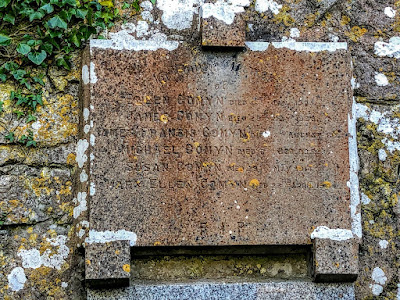
Members of the Comyn family commemorated on a plaque inside Drumcreehy Church, near Ballyvaughan, Co Clare (Photograph: Patrick Comerford, 2022)

Marcella’s husband, Michael Comyn, and his brother James Comyn were both prominent barristers and nationalists in Co Clare in the early decades of the 20th century. The two brothers were once political and legal advisers to Éamon de Valera, who at one point used James Comyn’s home in Dublin, Beaufield House, as a safe house.

However, the Comyn brothers fell out with de Valera shortly before he came to office in 1932, and Michael Comyn was passed over for appointment as Attorney-General of the Iris Free State

James Comyn’s son, Sir James Comyn, was later considered by many to be ‘the finest all-round advocate at the English bar,’ and was became a judge in the High Court of Justice in 1978, serving on the bench until he retired in 1985.

He was born at Beaufield House in Stillorgan, later the Beaufield Mews, a celebrated restaurant in south Dublin, on 8 March 1921. When the Comyn brothers fell out with Eamon de Valera, young James Comyn was taken out of school at Belvedere College in Dublin, and was sent by his father to the Oratory School in England.

He later recalled his father taking him to visit Edward Carson in London shortly before his death in 1936 and hearing from Carson’s own lips that he had never wanted partition and was still against it. He also recalled how Éamon de Valera sent for him in 1939 while he was an undergraduate at Oxford to question him on British attitudes and to suggest that he might consider joining the Irish diplomatic service.

Comyn read law at New College, Oxford. During his undergraduate days, he spent six months as a trainee journalist with The Irish Times, when RM Smyllie was the editor. However, he was obliged to abandon journalism when an obituary Comyn wrote of a cardinal concluded: ‘His Eminence was unmarried.

Comyn was demoted to the racing department. ‘God knows how you’ll ever turn out, Comyn,’ said an enraged Smyllie as they eventually parted company.

At Oxford, Comyn defeated Roy Jenkins for the presidency of the Oxford Union in 1940, winning by four votes. After suffering the first of several breakdowns through his life, he briefly worked for the BBC’s Empire Service during World War II.

He was called to the English bar by the Inner Temple in 1942, the Irish Bar in 1947, and the Hong Kong Bar in 1969.

He began his pupillage in 1944 with Edward Holroyd Pearce KC, later a law lord, and joined his chambers at Fountain Court. Comyn practised in London and on the Western circuit, supplementing his earnings by teaching banking, a subject of which he knew nothing. On one occasion, he rose in Lambeth County Court to cross-examine a female defendant in an eviction case. Just as Comyn began by saying ‘Madam,’ the defendant opened her bag, took out a dead cat, and threw it at him. The judge’s reaction was to tell the defendant: ‘Madam, if you do that again, I’ll commit you.’ Comyn won the case.

Comyn took silk in 1961, and acquired a large practice as a senior, appearing in many high-profile cases. In 1964, he won damages for libel for the former safe-breaker Alfie Hinds against a Scotland Yard inspector by convincing the jury that Hinds was in fact innocent. In 1970, he successfully defended the Labour MP Will Owen, who was accused of providing information to the Czechoslovak intelligence services.

He defeated the government’s attempt in 1975 to obtain an injunction against the publication by The Times of the ‘Crossman Diaries,’ the diaries of a former minister, Richard Crossman.

Comyn was Recorder of Andover in 1964-1971, commissioner of assize for the Western Circuit in 1971, and a Recorder of the Crown Court in 1972-1977. He was elected a bencher of the Inner Temple in 1968, and chaired the Bar Council in 1973-1974.

Comyn refused an invitation by Lord Hailsham to join the bench, but was nominated again by Lord Elwyn-Jones in 1977. He was appointed a High Court judge in 1978, and was knighted. He was assigned to the Family Division, and moved to the Queen’s Bench Division in 1979. He had a reputation for leniency in sentencing, and was nicknamed ‘Probation Comyn.’

A plaque in Drumcreehy Church, near Ballyvaughan, Co Clare, commemorates Sir James Comyn (Photograph: Patrick Comerford, 2022)

Comyn presided over an unsuccessful libel action by a member of the Unification Church (‘the Moonies’) against the Daily Mailin 1980-1981, the longest libel trial in England up to that time. His Irish background made him the target of the IRA, and in 1981 the Provisional IRA burnt his house in Tara. Recurring bouts of depression led to his early retirement, on grounds of ill health, in 1985.

In retirement, he divided his time between England and Ireland, wrote a number of books, including memoirs, light verse, and books on famous trials. He also bred Friesian cattle. He died of pneumonia in Navan Hospital on 5 January 1997 at age 75, and was buried in the old family plot in Drumcreehy churchyard. He married Anne Chaundler, a solicitor, in 1967, and they were the parents of two children, Rory and Kate.

Lady Comyn died in 2018, aged 92, and she too is buried in Drumcreehy churchyard.

Sir James Comyn … once an Irish Times journalist who knew the wrath of RM Smylie

Posted by Patrick Comerford at 18:30  

Email ThisBlogThis!Share to TwitterShare to FacebookShare to Pinterest

Labels: Ballyvaughan, Co Clare, Dylan Thomas, Family History, Genealogy, Justice, Road Trip 2022, The Irish Times

No comments:

Posted in Uncategorized | Leave a comment

The Criminal Justice Issue Nobody Talks About: Brain Injuries. My personal comment: People forget the onset of mental illness, especially, depression, anxiety disorders and phobias which are part of what is called the “silent epidemic”. Personally I have gone through periods of intense anxiety, necessitating daily medications for over 3 decades. I have tamed, slightly, the agoraphobia but in doing this I exist in a structured “box” mental state and going beyond is a real source of additional anxiety. The Marshall Project is needed in countries like Ireland. Too often cases get recorded by the newspaper but there is no journal for people who “exist” within our prisons. Maybe someone will think about this.

01.06.2022

Life Inside

The Criminal Justice Issue Nobody Talks About: Brain Injuries

I know firsthand what it’s like to navigate the criminal justice system with a brain injury caused by domestic violence. I also live with the fact that an injury like mine can turn a victim into a perpetrator.

Tracy J. Lee for The Marshall Project

By Melissa Bickford as told to Maurice Chammah

In the movie “Joker,” Joaquin Phoenix’s character frequently bursts into unnerving laughter at socially inappropriate moments. His actions were partially based on a real neurological condition called Pseudobulbar affect. I know this because I suffer from it too. The movie doesn’t show an exact cause, but for me and many others, it starts with a brain injury.

In 2018, I was with a man who beat me over the course of 10 weeks, strangling me, punching me in the head, and dragging me off the bed so that my head slammed into the ground. He went to prison, and my life was changed forever. In addition to the uncontrollable laughter, I often found myself emotionally overwhelmed, bursting into tears and physically collapsing in public. I’d always had a very active brain, with thoughts constantly flying around, but now I’d wake up in the morning and feel like I had no thoughts at all.

Life Inside

Perspectives from those who work and live in the criminal justice system. Sign up to receive “Life Inside” emailed to you every week.

Related Stories

More than a year passed before I learned this all stemmed from a brain injury. If I’d known this sooner, I would have had a far easier time navigating the criminal justice system. I’ve come to realize that my experience isn’t rare — among victims or perpetrators of crime. Studies show that incarcerated people are far more likely to have brain injuries than the general population.

After my abuser was sentenced, I met other victims, and I started showing up at the Colorado legislature to advocate for our interests. I learned that lawmakers were considering a measure to provide brain injury screenings to people in prison. At first, I was angry. Why should they get these screenings, I thought, when victims of violence also need this help?

But I also knew the line between those categories isn’t always clean. Before my brain injury, I had been coping with my partner’s emotional abuse by drinking, and one night I drove under the influence. Around the time that the abuse became physical and he injured my brain, I was sentenced to probation. Every day I had to call to see if I needed to do a random drug test. A brain injury can mess with your short-term memory. I would set alarms to remind me to make the call, but then I’d forget if I’d made it, and I’d panic.

If I did have to go in, the probation office was stressful for a surprising reason: the doorbell. At one point, I found myself having a meltdown, screaming at everyone, “How can you stand this doorbell!?” As a result, I had a breathalyzer machine in my car and would have to blow into it while driving.

All this pressure overwhelmed me, and on several occasions I attempted suicide.

Before my injury, I worked as a project manager for a medical company, a job that involves convincing specialists to explain stuff to you. I started making calls and soon met Kim Gorgens, a University of Denver professor of psychology who has been telling the public about how common brain injuries are inside prisons: Studies suggest that between 40% to 80% of people inside suffered an injury, compared with just 5% to 9% of the general population.

Gorgens in turn introduced me to Marchell Taylor, who served more than 20 years in prison, and was pushing the legislation to get neuropsychological exams for people inside. He has described how, for most of his life, he’d felt impulsive and easily agitated. He learned this was due to a brain injury early in his life. After getting out of prison, he committed another crime. He believes this stemmed from his inability to manage his emotions, in part because he hadn’t been educated about his brain injury.

Sign up to receive essays like this weekly.

Sign Up

Email list managed by Mailchimp

I said I wanted to pursue a bill that would require brain injury screenings for crime victims. We’re still writing it. Taylor was excited, because whatever process we come up with can be adapted to work for people in jail who are facing trial. District attorneys’ staff members can help victims fill out questionnaires — “Have you ever been hit in the head?” “Did you lose consciousness?” — while public defenders can help their clients do the same thing. The goal is to increase awareness among everyone who works in the system so that it’s more likely that someone, at some point, says, “Hey, have you considered seeing a neurologist?”

Because when you leave these brain injuries untreated, you make it more difficult for us to build a healthy and productive life.

One day, while I was on probation, I was late for a doctor’s appointment and my stress increased as he used jargon I didn’t understand. Then I drove to a pharmacy, where the bright lights, colors, noise and people were overwhelming — a brain injury can also trigger agoraphobia. Now I see how all those stresses fed on one another and attacked my frontal lobe. But at the time, I didn’t understand what was happening.

Outside the pharmacy, a child fell off her bike. I drove too close to her and her mother started screaming at me, “You almost hit my kid!” I put my car in park and fully intended to get out and punch her. Instead, I just screamed, “Shut up! Shut up!” And then the uncontrollable laughter set in, and I laughed as I drove home.

Who am I becoming?, I thought. This isn’t me.

I believe that if we get help for victims, we are going to prevent a lot of them from becoming offenders themselves. Whenever I see news of a football player assaulting his girlfriend or wife, I first feel angry. As a victim of such violence myself, I want them to be held accountable. But I also find myself thinking of all those brain injuries they suffered while playing. They also need help so that they don’t hurt anyone else. And if these NFL players aren’t getting the proper support, what hope do the rest of us have?

Melissa Bickford is a former project manager for a well-known medical company from Colorado. She now works on legislative issues with Colorado Victims for Justice.

If you experienced a traumatic brain injury and involvement in the criminal justice system, we’d like to hear from you. Please email Maurice Chammah at mchammah@themarshallproject.org.

Maurice Chammah is a staff writer whose book, “Let the Lord Sort Them: The Rise and Fall of the Death Penalty,” won the 2019 J. Anthony Lukas Work-In-Progress Book Award. A former Fulbright and H.F. Guggenheim fellow, he has reported on a range of criminal justice subjects, including jail conditions, sheriffs, wrongful convictions, and art by incarcerated people.

Posted in Uncategorized | Leave a comment

These are the untapped benefits of feeling gratitude. Source: COMPASS / FASTCOMPANY. Personal comment: If Black Dog is hounding you and all you feel like is withdrawal to the size of nothing of worth; this can be a good way either to start the day or to end it.

These are the untapped benefits of feeling gratitude

A cynical tendency can make survival in the modern world extremely difficult.

[Source Photo: Getty]

MORE LIKE THIS

The email Elon Musk just sent to Twitter employees is a masterclass in how not to communicate

This is what Gen Z thinks about their coworkers’ emoji use

7 ways to spot an emotionally intelligent leaderBY JEFF LERNER

3 MINUTE READ

I don’t know if there is a more misunderstood tool you can implement in your life than gratitude. But why do so many people find it hard to implement? Why do so many subconsciously ignore it or even flat-out reject it?

For one, it may be because we are accustomed to thinking about what we don’t have, rather than what we do.

WE ARE HARDWIRED TO BE UNGRATEFUL

As human beings, we tend to be cynical and pessimistic because anthropologically that is what has worked to keep us alive. In modern times it’s essential to shed this tendency. Tony Robbins says it this way: “One of the key traits of successful people is their ability to see things only as good or bad as they are, but not worse!”

There are two authors whose writings have illuminated this concept for me greatly and helped me overcome my own cynical tendencies. I will introduce you to their findings.

Expert #1: Hans Rosling

A Swedish physician and professor, Rosling wrote an excellent best-selling book titled Factfulness: Ten Reasons We’re Wrong About the World—and Why Things Are Better Than You Think, in which he lays out the following 10 human instincts that change the way we think about and interact with the world. I recommend taking the time to think of an example of how each of these shows up in your life.

  • Gap instinct: We divide everything in two and assume there is a massive difference between the two extremes.
  • Negativity instinct: This is our tendency to see the bad instead of the good or the glass as being half empty.
  • Straight-line instinct: It’s easy to assume that trends follow straight lines from A to B when every single trend curves.
  • Fear instinct: We pay more attention to things that scare us.
  • Size instinct: We have a tendency to misjudge proportion.
  • Generalization instinct: We automatically categorize things, but that can be misleading as it’s often done incorrectly.
  • Destiny instinct: This is the assumption that things have and always will be the same for some immutable reasons.
  • Single-perspective instinct: It’s easy for us to look at things only from our perspective without considering other ways to do things.
  • Blame instinct: We naturally look for scapegoats or a way to assume that others are the reason for our problems.
  • Urgency instinct: Everyone is in a rush, so when we see a problem, we try to solve it immediately.

The goal with these “cognitive distortions,” is not to dismiss them entirely but to develop a heightened awareness of them so we can refine them over time to align with our goals, as opposed to our fears.

Expert #2: Martin Seligman

Martin Seligman is a leading innovator in the field known as positive psychology. He developed the “three Ps of pessimism,” sometimes referred to as the “three Ps of learned helplessness.” Understanding them can make it much easier to be on guard against the negative effects of our own biases.

  • Permanence: This is an error of time. We assume that because one or more things are bad right now, they will remain that way indefinitely.
  • Pervasiveness: This is an error of size. We believe that if there is something in our life that’s negative, it applies to all aspects of our life.
  • Personalization: This is an error in assigning responsibility. We tend to think we are more to blame and responsible for fixing negative things that happen than we actually are.

Even as gratitude becomes conditioned, it will likely never become automatic. Unlocking our full potential demands that we transcend short-term survival instinct and play a longer game, one in which gratitude is essential.

START RIGHT NOW

To get started, try taking an immediate action of gratitude. Write a letter. Pick up the phone. Pay someone a visit. Whatever it is, make it heartfelt. Tell someone how you feel.

Identify those people in your life who you are the most grateful for and let them know it.

If this is uncomfortable for you, dig deep to figure out why. What is it about unbounded expressions of appreciation that makes you uncomfortable? Don’t judge yourself, just sit impartially on your own shoulder and watch yourself be you, taking notes.

And as gratitude becomes more natural and frequent for you, hold on tight. Now you’re ready for “the shift.”

Gratitude is just the first step, a catalyst for becoming outward-focused and unburdening yourself from the beliefs and patterns that keep your potential locked up. It is a series of changes that in hindsight will be a defined phase of your life when awareness was awakened and potential was unlocked.

Life after the shift is fundamentally different from life before it.


Excerpted from Unlock Your Potential: The Ultimate Guide for Creating Your Dream Life in the Modern World by Jeff Lerner. Published by BenBella, August 2022.

Jeff Lerner is the founder and chief vision officer of Entre, one of the fastest-growing education companies in the world.

Posted in Uncategorized | Leave a comment