Fortune: A small Texas company’s bid to create a Greenland oil boom—and a Dr. Phil documentary—is delayed but undaunted

1

Billionaire Joshua Kushner just bought the Lakers for $12.5 billion—OpenAI’s Sam Altman once said he ‘doesn’t care’ what others think

2

Iran says the Strait of Hormuz is shut down. The Trump administration says 9 million barrels a day are still getting out

3

Facing a decadeslong shortage, the FAA has now hired more than 2,000 air traffic controllers after its campaign recruiting Gen Z video gamers

EnergyGreenland

A small Texas company’s bid to create a Greenland oil boom—and a Dr. Phil documentary—is delayed but undaunted

Jordan Blum

By 

Jordan Blum

Editor, Energy

August 14, 2026, 3:07 AM ET

A plane carrying Donald Trump Jr. lands in Nuuk, Greenland, Jan. 7, 2025.

A plane carrying Donald Trump Jr. lands in Nuuk, Greenland, Jan. 7, 2025.Emil Stach/Ritzau Scanpix via AP

Amid the tensions spurred by President Donald Trump’s proclaimed desire to annex Greenland, one Texas driller made plans to create an oil boom along the Danish territory’s sparsely populated east coast. But those aspirations are now facing repeated delays in the face of regulatory and community pushback.

Recommended Video


How Trump used his 1987 playbook for Greenland deal

The first test well was slated to be drilled this summer with a camera crew overseen by producer Phil “Dr. Phil” McGraw to document the effort. As local opposition escalated and permitting slowdowns took hold, the drilling was delayed to the winter—upon the government’s request—and now, after an additional kerfuffle this week concerning the movement of drilling equipment, the project was further pushed back until the end of 2027, essentially an 18-month delay.

Oil drilling is especially sensitive in Greenland where there’s a climate change-related moratorium on licensing, though the Texas company is essentially operating by means of a grandfathered loophole. The situation has become more delicate still as the White House repeatedly signals it wishes to take over the massive icy territory in order to tap petroleum and critical minerals.

But Robert Price, the CEO of Texas-based Greenland Energy, exclusively told Fortune he is disappointed but undeterred, and he remains as bullish as ever about Greenland’s oil prospects.

“It was very frustrating. We’ve had some ups and downs in the last week or so,” Price said. “We actually had much of the equipment being mobilized. And when we got word from the government, we shut down the mobilization. We had a drilling rig in in Calgary that was en route to Montreal. So there were some sunken costs. A lot of those costs will be able to be used for the next drilling season.”

Wall Street was disappointed though. Since going public in March on the Nasdaq Global Market, Greenland Energy’s market cap has plunged nearly 85% down to about $54 million. But Price insists the company is stable.

“We preserved a lot of cash on hand. Financially, we’re still very sound,” the veteran oilman said.

The Greenland government requested the company drill in the winter instead of the summer for environmental purposes. “The birds have already migrated. The tundra will not be disturbed. We’ll be able to go literally over it when it’s iced up,” Price said.

On the downside, helicopter evacuations and harsher weather are trickier during the winter months. “The winter can be unpredictable in the Arctic Circle, and so we do worry about the health and safety of our people if someone got injured, being able to get them out,” Price added.

Even then, the hope was to drill this winter, and not more than a year from now.

Paid Content

AI can make customer conversations affordable, says Gladly’s CMO

From Gladly

“We had indications from the government that we’d get our permits soon and then, as it turned out, they wanted to take their time,” Price said. On the bright side, at least now, “We have a real clear timeline on the permitting,” he added.

And the goal of extracting many billions of barrels of oil remains intact. “This one [test] well could be up to 2.9 billion barrels of oil. So the prize is still there, and the upside is still there. The timing is the only thing that’s changed.”

Long time coming

L

The long history of Greenland oil is rife with decades of trial and error.

Fresh off the massive Prudhoe Bay oil discovery in Alaska in the late 1960s, the Atlantic Richfield Co., better known as ARCO—later acquired by BP—identified offshore Greenland as a top oil prospect in the 1970s.

ARCO and others spent more than $100 million on seismic surveying and assessments of Greenland with plans to develop oil and gas in the territory. But, after some initial drilling pilot programs were unsuccessful, dreams of Greenland’s black gold fell by the wayside when the oil industry infamously went bust in the 1980s. Smaller efforts popped up in Greenland over the years, but nothing came to fruition. The UK’s Cairn Energy—now Capricorn Energy—abandoned the most recent drilling effort in 2011 after mixed, mostly failed results.

Nearly all of these projects were offshore though, and Greenland Energy is taking an onshore approach. Despite decades of geological study, eastern Greenland’s Jameson Land Basin remains completely undrilled until potentially next summer.

Price believes Jameson could be the next Prudhoe Bay. And a defunct British company is his potential path to seeing that dream come true.

London-based White Flame Energy was founded over a decade ago to explore for oil and gas in Greenland. No development came to pass, but the company critically won three licenses for exploration in the Jameson basin. The licenses received three-year extensions in 2024. Later that year, U.K.-based 80 Mile acquired White Flame. And Price’s company partnered with 80 Mile to take over the grandfathered licenses—the only ones in Greenland that haven’t expired.

Earlier this year, a reverse merger deal was finalized to take Price’s company public. changing the name to Greenland Energy in the process. Price’s team leads the operations while 80 Mile keeps a 30% stake in the project.

The drilling pilot project was progressing but then came a new dispute with the government over a permit—or lack thereof—to recently move drilling equipment to the region. The Greenland government believed the oil company was trying to proceed without due permission, but the company says it was a misunderstanding

The government said it issued a “strong warning” with an additional “warning that all future logistical matters must be advised and approved by the mineral resources authority—before they are carried out.”

Price said they realized late in the process that its permit to move equipment onto the site expired at the end of 2025. As the renewal was pending, the company made a deal with the Greenland Airports authority to store equipment at the nearby Nerlerit Inaat Airport. Instead, it turned out they needed an additional permit from the government’s minerals authority—and not just the airport.

Everything is squared away now, Price insisted, and there should be no further delays.

“There’s a lot of time now to make sure that we get it right,” Price said.

As for the Dr. Phil-hosted documentary? It’s on pause and up in the air.

Fortune Daily breaks the traditional barrier between audience and newsroom. The show transforms Fortune’s trusted reporting into actionable, conversational, and entertaining insights for an emerging class of business leaders. Watch here.

About the Author

Jordan Blum

By Jordan BlumEditor, Energy

Jordan Blum is the Energy editor at Fortune, overseeing coverage of a growing global energy sector for oil and gas, transition businesses, renewables, and critical minerals.


Posted in Uncategorized | Leave a comment

Shining Science: Childhood trauma leaves a physical ”scar” on brain cells, lowering a person’s biological ability to handle stress in adulthood.

Shining Science

@ShiningScience

Childhood trauma leaves a physical ”scar” on brain cells, lowering a person’s biological ability to handle stress in adulthood.

Researchers at Washington University School of Medicine in St. Louis and Princeton University have discovered that early-life trauma physically alters how DNA is packaged inside brain cells. Focusing on the brain’s ventral tegmental area—a region critical for processing rewards and threats—the study revealed that severe childhood stress stretches open the packaging of certain DNA segments. This structural change leaves the genes responsible for responding to stress highly exposed and easily triggered.

Consequently, individuals who experience early adversity carry a molecular ‘scar’ that permanently lowers their biological tolerance for stress in adulthood. This breakthrough offers hope for revolutionary mental health treatments.

In animal models, the research team successfully blocked the specific enzyme responsible for this DNA stretching, effectively preventing the developing brain from becoming hypersensitive to future adversity. Because childhood trauma is a massive global public health challenge, uncovering this precise biological mechanism provides scientists with a concrete target to develop early-intervention therapeutics that can actively protect or repair the vulnerable young brain.

source: Creed, M., & Peña, C. J. (2026). Early-life stress alters H3K4me1 in VTA to prime stress sensitivity. Neuron.

Posted in Uncategorized | Leave a comment

DW: US-Iran war reveals high cost of keeping air carriers at sea

Terry Martin4 hours ago4 hours ago

The USS Abraham Lincoln has spent roughly 250 consecutive days at sea supporting US operations linked to the war with Iran, with the USS George Washington now heading to the region as its expected replacement.

https://p.dw.com/p/5ItCZ

President Donald Trump’s war against Iran is stretching the limits of US aircraft carriers, with USS Abraham Lincoln having had its time at sea extended from its original May return date to support operations against Iran.

DW News spoke with Alison Bath, investigative journalist at Stars and Stripes, who explained what sailors and their relatives are telling Navy leaders

Posted in Uncategorized | Leave a comment

Fortune: The ‘manosphere’ is actually a multibillion-dollar industry that sells courses and supplements to insecure Gen Z men, report finds


Trendingnow

1

Billionaire Joshua Kushner just bought the Lakers for $12.5 billion—OpenAI’s Sam Altman once said he ‘doesn’t care’ what others think

2

Iran says the Strait of Hormuz is shut down. The Trump administration says 9 million barrels a day are still getting out

3

Facing a decadeslong shortage, the FAA has now hired more than 2,000 air traffic controllers after its campaign recruiting Gen Z video gamers

SuccessGen Z

The ‘manosphere’ is actually a multibillion-dollar industry that sells courses and supplements to insecure Gen Z men, report finds

Sasha Rogelberg

By 

Sasha Rogelberg

Reporter

August 15, 2026, 8:00 AM ET

Adin Ross looks slightly upward.

Streamer Adin Ross is part of a multibillion-dollar industry emerging from the “manosphere,” a new report claims.Simone Joyner—Getty Images

The term “manosphere” first emerged in 2009, referring to a collection of blogs like The Spearhead and Return of Kings that promoted “men’s rights” and criticized the feminist movement, at times promoting violence against women. 

Recommended Video


Has Business Got the Creator Economy All Wrong?

https://imasdk.googleapis.com/js/core/bridge3.784.0_en.html?gdpr=1#deid=%22%22&eventfe_experiment_ids=%5B%5D&fid=%22goog_2050798089%22&genotype_experiment_data=%7B%22experimentStateProto%22%3A%22%5B%5B%5B45713128%2Cnull%2Cnull%2C%5B%5D%5D%2C%5B962325777%2Cnull%2Cnull%2C%5B%5D%5D%2C%5B45796605%2Cnull%2Cnull%2C%5B%5D%5D%2C%5Bnull%2C956056724%2Cnull%2C%5Bnull%2C128%5D%5D%2C%5Bnull%2C745150931%2Cnull%2C%5Bnull%2C1%5D%5D%2C%5B45816264%2Cnull%2Cnull%2C%5B%5D%5D%2C%5B45761044%2Cnull%2Cnull%2C%5B%5D%5D%2C%5B45722344%2Cnull%2Cnull%2C%5B%5D%5D%2C%5B45824086%2Cnull%2Cnull%2C%5B%5D%5D%2C%5B45801847%2Cnull%2Cnull%2C%5B%5D%5D%2C%5B45784857%2Cnull%2Cnull%2C%5B%5D%5D%2C%5Bnull%2Cnull%2C45792627%2C%5B%5D%5D%2C%5B45668885%2Cnull%2Cnull%2C%5B%5D%5D%2C%5B45685340%2Cnull%2Cnull%2C%5B%5D%5D%2C%5B45734716%2Cnull%2Cnull%2C%5B%5D%5D%2C%5B45735891%2Cnull%2Cnull%2C%5B%5D%5D%2C%5B45663239%2Cnull%2Cnull%2C%5B%5D%5D%2C%5B45661356%2Cnull%2Cnull%2C%5B1%5D%5D%2C%5B839547366%2Cnull%2Cnull%2C%5B1%5D%5D%2C%5B45676441%2Cnull%2Cnull%2C%5B%5D%5D%2C%5Bnull%2C45645574%2Cnull%2C%5B%5D%5D%2C%5B45688859%2Cnull%2Cnull%2C%5B%5D%5D%2C%5B45685601%2Cnull%2Cnull%2C%5B1%5D%5D%2C%5Bnull%2C45685602%2Cnull%2C%5Bnull%2C100%5D%5D%2C%5B45820997%2Cnull%2Cnull%2C%5B%5D%5D%2C%5Bnull%2C45812678%2Cnull%2C%5B%5D%5D%2C%5B45756824%2Cnull%2Cnull%2C%5B1%5D%5D%2C%5B45794243%2Cnull%2Cnull%2C%5B%5D%5D%2C%5B45747172%2Cnull%2Cnull%2C%5B%5D%5D%2C%5B775241416%2Cnull%2Cnull%2C%5B%5D%5D%2C%5B781107959%2Cnull%2Cnull%2C%5B%5D%5D%2C%5B781107958%2Cnull%2Cnull%2C%5B%5D%5D%2C%5B792614055%2Cnull%2Cnull%2C%5B%5D%5D%2C%5B781107957%2Cnull%2Cnull%2C%5B%5D%5D%2C%5B45729602%2Cnull%2Cnull%2C%5B%5D%5D%2C%5B45753603%2Cnull%2Cnull%2C%5B%5D%5D%2C%5B45753604%2Cnull%2Cnull%2C%5B%5D%5D%5D%2C%5B%5B16%2C%5B%5B1%2C%5B%5B31089630%5D%2C%5B31089631%2C%5B%5B45668885%2Cnull%2Cnull%2C%5B1%5D%5D%5D%5D%5D%5D%2C%5B10%2C%5B%5B83323635%5D%2C%5B83323636%2C%5B%5Bnull%2C45812678%2Cnull%2C%5Bnull%2C100%5D%5D%5D%5D%5D%5D%2C%5B1000%2C%5B%5B95332046%5D%5D%5D%2C%5Bnull%2C%5B%5B95332047%5D%5D%5D%2C%5B10%2C%5B%5B95338769%2C%5B%5Bnull%2C45645574%2Cnull%2C%5Bnull%2C1%5D%5D%5D%5D%2C%5B95338770%2C%5B%5Bnull%2C45645574%2Cnull%2C%5Bnull%2C2%5D%5D%5D%5D%5D%5D%2C%5B50%2C%5B%5B95351425%5D%2C%5B95351426%2C%5B%5B45676441%2Cnull%2Cnull%2C%5B1%5D%5D%5D%5D%5D%5D%2C%5B1%2C%5B%5B95373378%2C%5B%5B792614055%2Cnull%2Cnull%2C%5B1%5D%5D%5D%5D%2C%5B95373379%2C%5B%5B45747172%2Cnull%2Cnull%2C%5B1%5D%5D%2C%5B781107959%2Cnull%2Cnull%2C%5B1%5D%5D%2C%5B792614055%2Cnull%2Cnull%2C%5B1%5D%5D%2C%5B781107957%2Cnull%2Cnull%2C%5B1%5D%5D%5D%5D%5D%5D%2C%5B10%2C%5B%5B95378629%5D%2C%5B95378630%2C%5B%5B45729602%2Cnull%2Cnull%2C%5B1%5D%5D%5D%5D%2C%5B95381582%2C%5B%5B45729602%2Cnull%2Cnull%2C%5B1%5D%5D%2C%5B45753603%2Cnull%2Cnull%2C%5B1%5D%5D%5D%5D%2C%5B95381583%2C%5B%5B45729602%2Cnull%2Cnull%2C%5B1%5D%5D%2C%5B45753604%2Cnull%2Cnull%2C%5B1%5D%5D%5D%5D%5D%5D%2C%5B10%2C%5B%5B95389581%5D%2C%5B95389582%2C%5B%5B635466687%2Cnull%2Cnull%2C%5B1%5D%5D%5D%5D%5D%5D%2C%5Bnull%2C%5B%5B95391735%5D%5D%5D%2C%5B50%2C%5B%5B95393784%5D%2C%5B95393785%2C%5B%5B45796605%2Cnull%2Cnull%2C%5B1%5D%5D%5D%5D%5D%5D%2C%5Bnull%2C%5B%5B95394237%5D%2C%5B95394238%2C%5B%5B45801847%2Cnull%2Cnull%2C%5B1%5D%5D%5D%5D%5D%5D%2C%5B50%2C%5B%5B95396036%5D%2C%5B95396037%2C%5B%5B45756824%2Cnull%2Cnull%2C%5B%5D%5D%5D%5D%5D%5D%2C%5Bnull%2C%5B%5B95396834%5D%2C%5B95396835%2C%5B%5B45816264%2Cnull%2Cnull%2C%5B1%5D%5D%5D%5D%5D%5D%2C%5B10%2C%5B%5B95398187%5D%2C%5B95398188%2C%5B%5B945081832%2Cnull%2Cnull%2C%5B1%5D%5D%5D%5D%5D%5D%2C%5Bnull%2C%5B%5B95398415%5D%2C%5B95398416%2C%5B%5B45824086%2Cnull%2Cnull%2C%5B1%5D%5D%5D%5D%5D%5D%2C%5B10%2C%5B%5B95398837%5D%2C%5B95398838%2C%5B%5Bnull%2C960449109%2Cnull%2C%5Bnull%2C1%5D%5D%5D%5D%5D%5D%2C%5B100%2C%5B%5B122880242%5D%2C%5B122880243%2C%5B%5Bnull%2C956056724%2Cnull%2C%5B%5D%5D%5D%5D%5D%5D%5D%5D%5D%2Cnull%2Cnull%2C%5Bnull%2C1000%2C1%2C1000%5D%5D%22%7D&imalib_experiments=%5B95322027%2C95331589%2C95332046%2C95340252%2C95340254%5D&is_eap_loader=false&managed_js_experiment_id=0&page_correlator=4199704180567838&pvsid=2159475931076098&top_accessible_page_url=%22https%3A%2F%2Ffortune.com%2F2026%2F08%2F15%2Fmanosphere-multibillion-dollar-industry-adin-ross-looksmaxxing-report%2F%3Futm_content%3Dtest_b_f-0-hed%26utm_source%3Dsfmc%26utm_medium%3Demail%26utm_campaign%3DNL_fortune-features_2026-8-15_159853%26utm_term%3Dfortune-features%26sfmc_id%3D21326991%22

Over the next 15 years, the term evolved to encompass not just a generation of bloggers, but men no longer hiding behind keyboards and usernames—content creators and influencers attaching real names to their beliefs around what it means to be a man.

It would therefore be inaccurate to call the manosphere just an ideology, when actually it has transformed into its own economy—one exploiting Gen Z men’s anxieties and resentment toward society, according to researchers from digital safety organization Reset Tech and the nonprofit Equimundo.

In a new report titled “The Grift Economy: How Young Men Are Being Sold Fake Belonging and Fake Wealth Online,” they found the “movement” around men’s rights and masculinity masks a multibillion-dollar industry.

“We should be deeply concerned about the opportunists,” the report said. “In the very real moment of confusion–politicians peddling fear, uncertain job prospects, battles over the meaning of manhood–there is an industry of platforms, influencers and advertisers who are making billions off of young men’s insecurities.”

Masculinity’s emerging economy

Young men are struggling. For only the third time in history, women outnumber men in the U.S. workforce, likely a result of fewer young men entering the workforce. Instead of earning a living, more adult men are living with their parents and becoming NEETs, or not in employment, education, or training. 

Separately, men are also chronically online, which contributes to loneliness. A study published in the Journal of Political Economy found that about 70% of the hours young men spent not working were being filled with video games and recreational computer use. 

In need of belonging and economic security, this vulnerable demographic has found men online offering coaching and promising self-sufficiency, dominance, and emotional suppression, according to “The Grift Economy” authors. 

Meanwhile, Gen Z men are also chasing “looksmaxxing” trends, and start off “softmaxxing” then move on to higher-risk “hardmaxxing” practices like hormone injections, supplements, peptides, and surgery in the name of body optimization, the report said.

Paid Content

What ‘smart’ really means for your HVAC system

From ARS Rescue Rooter

The content creators promoting these solutions are raking in cash, according to the report. For example, streamer Adin Ross has an hourly streaming revenue of between $30,000 and $50,000 on the platform Kick, which he also has an equity stake in. A representative for Ross did not immediately respond to Fortune’s request for comment.

Other top streamers can earn between $1 million and $10 million in annual revenue, including from offering online courses, sponsorships, and speaker fees.

Where to lay the blame

But researchers warn against blaming the emergence of an economy based on young men’s insecurities on one particular influencer. Instead, algorithmic systems on social media platforms are to blame for the masculinity industry boom, according to Kristina Wilfore, director of Global Projects and Innovation at Reset Tech, who co-wrote the study.

“It’s just almost laughable, right? When you sort of see these viral trends and you dismiss them because they’re goofy or it seems like some idiot online,” she told Fortune. “But that reaction is dangerous because what we see behind it is massive infrastructure.” 

Wilfore has called for greater consumer protection, as well as platform accountability. Other countries have already taken steps toward regulating online spaces: In 2024, the European Union applied the Digital Services Act to online social media platforms, laying out strict boundaries on content moderation, safety, and transparency.

“I do not accept the idea that we just have to live in the world that the social media companies have created for us,” Wilfore said.

David Sasaki, director of the Boys & Men Online program at the American Institute for Boys and Men, told Fortune that addressing algorithmic systems could be beneficial in improving online safety for more than just men.

But he urged people to think beyond just retroactive measures for protecting young men, and instead toward practical, real-life solutions, like how adults can create analog opportunities to build community and provide role models to young men.

“It’s great to diagnose the problem, but boy, has there been a lot of diagnosing of problems of boys and men in the world that they inhabit,” Sasaki said. “What is missing is the affirmative message of what can we do about it.”

Fortune Daily breaks the traditional barrier between audience and newsroom. The show transforms Fortune’s trusted reporting into actionable, conversational, and entertaining insights for an emerging class of business leaders. Watch here.

About the Author

Sasha Rogelberg

By Sasha RogelbergReporter

Sasha Rogelberg is a reporter and former editorial fellow on the news desk at Fortune, covering retail and the intersection of business and popular culture.

See full bio

Sponsored Stories

Posted in Uncategorized | Leave a comment

Mario Nawfal on X: Venezuela’s new post-Maduro government is going after $4 billion worth of gold sitting in the Bank of England

Venezuela’s new post-Maduro government is going after $4 billion worth of gold sitting in the Bank of England

And honestly, who could blame them? The reserves were frozen amid the political chaos surrounding Maduro’s contested rule, leaving a fortune collecting dust in London.

Getting it back isn’t straightforward though. Legal battles and diplomatic tangles stand between Caracas and those bars, but recovering them could genuinely jumpstart Venezuela’s battered economy.

Posted in Uncategorized | Leave a comment

Axios: Colleges race to be AI-foward

 🔄 Colleges race to be AI-forward
 
Illustration of a student's desk covered in various papers, books, a laptop, and a calculator featuring binary code
Illustration: Sarah Grillo/Axios. Stock: Getty Images
 
AI is forcing colleges to rethink what students need to learn — and what a degree should prepare them to do, Axios’ Megan Morrone and Herb Scribner write.

Why it matters: Employers increasingly expect new graduates to arrive with AI fluency, even as colleges are still figuring out how to teach it.

💻 Split screen: This year’s graduating high school seniors have had access to ChatGPT since freshman year, while this year’s graduating college students booed mentions of AI at commencement.

As students’ command of AI has improved, colleges have revisited whether using it should always count as cheating.

“Now anyone can get that expertise in a minute,” OpenAI’s VP for education, Leah Belsky, tells Axios. Higher education “is more coaching, mentoring, guiding students” through prompts and analyzing outputs, she says.

📈 The pressure is growing: The number of employers that expect entry-level workers to be AI-competent has nearly tripled since last fall, according to the National Association of Colleges and Employers.

🦾 Zoom out: Schools are racing to catch up. American, Purdue and Miami University in Ohio have launched AI-forward initiatives.

🎟️ Another route: Short-term certificate programs are becoming a faster, cheaper way to build AI skills — and a way for universities to reach a broader pool of students, Bloomberg reports (gift link).

In 2022, just 2% of the professional certificate market focused on AI. This year, short-term AI training programs take up nearly a third.

📚 What students are saying: UC Davis student Burton Baecker told Axios he added finance to his accounting studies after seeing how quickly AI could perform accounting tasks.

What to watch: As AI tools take on more entry-level tasks, employers are raising the bar for young workers.

New graduates are now expected to manage projects and AI agents, conduct deeper research, present findings and defend their work, Casey Evans, interim dean at American University’s Kogod School of Business, tells Axios.
Share this story.
Posted in Uncategorized | Leave a comment

Charlie Rose: Mark Halperin on Trump, the Midterms, 2028 & The Future of America. Understanding America.

Posted in Uncategorized | Leave a comment

Neuroscience News: Regeneratove Astrocytes Repair Brain Damage. Comment: 30+ yrs since my TBI and fractured skull contracoup; this fascinates me

Neuroscience News Logo

Regenerative Astrocytes Repair Brain Damage

FeaturedNeurologyNeuroscience

·August 10, 2026

Summary: Researchers discovered a previously unknown mechanism through which the adult mammalian brain repairs itself following focal injuries or autoimmune damage. Using two-photon microscopy and longitudinal gene mapping in living mouse models, researchers identified a specialized population of “regenerative” astrocytes capable of repopulating damaged brain regions.

Rather than relying solely on classical cell body division at the site of injury, these specialized astrocytes situated along the lesion perimeter send newly formed daughter cell nuclei gliding long distances through their star-shaped cellular extensions. These migrating cell nuclei repopulate the depleted lesion zone, re-establishing functional astrocyte networks.

This discovery overturns long-held assumptions regarding the limited regenerative capacity of adult glial networks, revealing molecular signaling pathways that could serve as therapeutic targets for traumatic brain injury and autoimmune conditions such as neuromyelitis optica spectrum disorder (NMOSD).

Key Facts

  • Overturning Dogma on Glial Regeneration: Demonstrates that the adult central nervous system possesses a previously unrecognized capability to replace lost astrocytes and restore damaged tissue architecture.https://dc90155ab3b909798c6b9766ebf6a71e.safeframe.googlesyndication.com/safeframe/1-0-45/html/container.html
  • Mechanism of Long-Distance Nuclear Migration: Specialized regenerative astrocytes remain at the lesion boundary and send newly generated cell nuclei gliding across long astrocytic extensions into the depleted injury core.
  • Rebuilding Functional Glial Networks: Astrocytes perform vital homeostatic functions, including nutrient supply to neurons, blood flow regulation via end-feet, and extracellular ion balance, making their network reconstruction essential for neuronal survival.
  • Targeted Clinical Applications: Holds therapeutic relevance for neurotraumatic brain injuries and rare autoimmune conditions like neuromyelitis optica spectrum disorder (NMOSD), where autoantibodies selectively destroy astrocytes.
  • Molecular Targets for Therapeutics: The team identified specific genes and signaling pathways temporarily activated during nuclear migration, providing potential targets for pharmacological interventions to accelerate brain repair.

Source: University of Zurich

The brain evidently can regenerate itself better than previously assumed after injuries or certain autoimmune diseases. Using a mouse model, researchers at the University of Zurich have demonstrated that special supporting and nourishing cells repopulate damaged areas of the brain by initially sending only newly formed cell nuclei there.

Glial cells are supporting and nourishing cells in the brain. Star-shaped glial cells called astrocytes are vital to the functioning of neurons. They supply the nerve cells with nutrients, help to regulate blood flow and keep brain tissue healthy.

https://dc90155ab3b909798c6b9766ebf6a71e.safeframe.googlesyndication.com/safeframe/1-0-45/html/container.html

It had long been assumed that when astrocytes are lost – as happens, for instance, in brain injuries or autoimmune diseases such as rare neuromyelitis optica spectrum disorder, in which the body’s own antibodies destroy these cells – the adult brain cannot fully replace them.

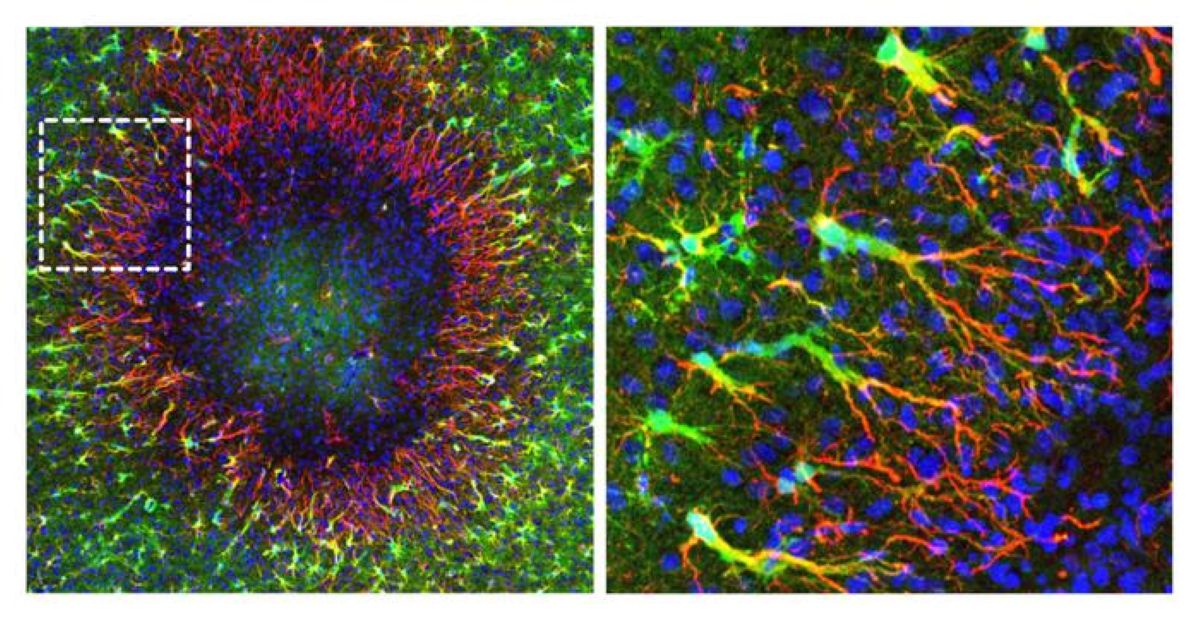
This shows the astrocytes repairing damaged tissue in the brain.
The image on the left shows a brain lesion (diameter: just under 0.5 mm). Around the perimeter of the lesion, the newly discovered “regenerative” astrocytes begin to seal the defect by forming long cellular extensions (shown in red). Newly formed cell nuclei (shown in blue) migrate along the cellular extensions toward the damaged area. Unaltered astrocytes (shown in green) surround the lesion area. The image on the right shows an enlargement of the marked area in the left image. Credit: Institute of Pharmacology and Toxicology, University of Zurich

Regenerative astrocytes repair damaged tissue

A new study by co-lead authors Marina Herwerth and Matthias Wyss from the Institute of Pharmacology and Toxicology at the University of Zurich (UZH) has now overturned that assumption: their research team headed by Bruno Weber discovered a specialized group of “regenerative” astrocytes in the brains of living mice that step in on the perimeter of the damaged area of the brain to rebuild the cells.

“The findings of our study reveal a previously unknown ability of the adult brain to repair itself. They point toward new ways of supporting recovery from ailments involving the loss of astrocytes,” Weber says.

Only cell nuclei migrate

The researchers used two-photon microscopy to observe the brains of living mice in real time over a period of several weeks and mapped which genes switch on in which areas of the brain. This way they were able to identify the special astrocytes that take care of rebuilding injured tissue. But those cells don’t just divide, they also perform a remarkable feat: “they send the newly formed nuclei of their daughter cells gliding across long distances to repopulate the damaged area of the brain and knit the astrocyte network back together,” Weber explains.

Starting points for targeted regeneration

The discovery of how adult brain cell nuclei migrate through the long star-shaped extensions of astrocytes to injured tissue expands comprehension of how the brain organizes and regenerates itself after certain injuries. If those mechanisms can be selectively activated, that could help to more effectively repair damaged brain tissue, restore astrocyte networks and thus improve recovery after certain brain disorders.

“We were able to identify numerous genes and signaling pathways that are temporarily activated during repair. They could serve as starting points in the future for influencing post-disease and -injury regeneration processes,” Weber stresses.

Key Questions Answered:

Q: How do “regenerative” astrocytes differ from standard cell division during tissue repair?

A: Instead of whole cells migrating or simply dividing locally, these specialized astrocytes remain at the perimeter of the damaged area. They divide and send the newly formed nuclei of their daughter cells gliding long distances through their extended cellular processes directly into the injured zone to rebuild the network.

Q: What conditions cause the loss of astrocytes in the adult brain?

A: Astrocytes are lost during traumatic brain injuries, strokes, and specific neuroinflammatory or autoimmune conditions, most notably Neuromyelitis Optica Spectrum Disorder (NMOSD), where the body’s immune system produces autoantibodies that target and destroy astrocytes.

Q: How was this nuclear migration observed in real time?

A: Researchers at the University of Zurich used in vivo two-photon microscopy in living mouse models over several weeks. This allowed them to track living cells, observe nuclear movement through astrocytic branches, and map corresponding gene expression changes as the tissue repaired itself.

Editorial Notes:

  • This article was edited by a Neuroscience News editor.
  • Journal paper reviewed in full.
  • Additional context added by our staff.

About this neuroscience research news

Author: Kurt Bodenmueller
Source: University of Zurich
Contact: Kurt Bodenmueller – University of Zurich
Image: The image is credited to Institute of Pharmacology and Toxicology, University of Zurich

Original Research: Open access.
“Focal astrocyte loss reveals nuclear translocation during lesion repopulation” by Marina Herwerth, Matthias T. Wyss, Nicola B. Schmid, Anna Lasne, Jacqueline Condrau, Luca Ravotto, José María Mateos Melero, Andres Kaech, Gustav Bredell, Carolina Thomas, Rachel Kim, Petra Kukanja, Vladyslav L. Korobeynyk, Christine Stadelmann, Thomas Misgeld, Jeffrey L. Bennett, Sebastian Jessberger, Aiman S. Saab, Shane A. Liddelow & Bruno Weber. Nature Neuroscience
DOI:10.1038/s41593-026-02354-5

Posted in Uncategorized | Leave a comment

Mario Nawfal on X: President Trump “Iran had 212 very nice airplanes some bought from the United States, brilliantly through Barack Hussein Obama …”

Posted in Uncategorized | Leave a comment

The Conversation: In 1906, the journalist W.T. Stead warned in A Plea for the Revival of Reading that Britain faced a reading crisis. People, he complained, no longer read books. Instead, they skimmed newspapers on trains, forgot what they had read by lunchtime and increasingly preferred distraction to sustained attention. His proposed solution? A national revival of reading.

The Conversation

Academic rigour, journalistic flair

Arts + CultureBusiness + EconomyEducationEnvironmentHealthPolitics + SocietyScience + TechWorldPodcastsInsights

Share article

Print article

In 1906, the journalist W.T. Stead warned in A Plea for the Revival of Reading that Britain faced a reading crisis. People, he complained, no longer read books. Instead, they skimmed newspapers on trains, forgot what they had read by lunchtime and increasingly preferred distraction to sustained attention. His proposed solution? A national revival of reading.

One hundred and twenty years later, 2026 is the UK’s National Year of Reading. After years of concern about declining rates of reading for pleasure, the headlines are dramatic. The Times recently warned: “If humans stop reading, barbarians will live among us again”. Screens, smartphones and short-form video social media platforms like TikTok are regularly presented as the culprits.

So, reading Stead’s pamphlet (1906) today is an uncanny experience. While researching Stead’s journalism for my book The Americanisation of W.T. Stead (2026), I found that many of the arguments we assume belong to the digital age were already being made in Victorian Britain.

Stead begins with a distinction that still lies at the heart of debates about reading: “Millions have never yet found out that books were interesting,” he writes. “They can read, but they do not care for reading”.

This observation chimes with our contemporary moment. The problem is not literacy alone, but reading identity. Someone may possess the technical ability to read without ever coming to think of themselves as a reader. Current reading research makes a similar distinction. There is now broad agreement that developing a love of reading depends not simply on decoding words but on motivation, confidence and finding books that feel relevant.

Stead also rejected the idea that this love of reading could simply be imposed: “The love for the reading of books is an acquired taste,” he argued. Children might have to be compelled to learn to read, but learning to love reading required something quite different, “instead of coercion there is needed a good deal of coaxing”.

Fight back against disinformation. Get your news here, direct from experts

Get newsletter

Again, this sounds very familiar today. Modern initiatives promoting shared reading, reading for pleasure and child-led book choice all rest on the principle: readers are made through encouragement rather than compulsion.

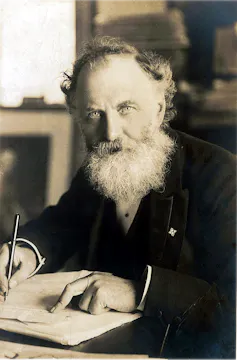
WT Stead
WT Stead was worried about the death of reading. Wikimedia

Stead’s advice began with children. He believed that one of the most effective ways of creating readers was simply reading aloud. Good oral reading, he claimed, was “the surest, simplest, and speediest way of awakening a love of reading”.

More than a century later, spoken language is once again moving up the educational agenda. The government’s proposed oracy framework, expected to be introduced by 2028, reflects a renewed recognition that speaking, listening and reading are closely connected – even if the framework’s primary focus extends beyond literacy alone.

It is in Stead’s discussion of attention, however, that the similarities with today’s debates become most apparent.

The attention debate

Stead worried that newspapers had fundamentally altered reading habits. Circulation libraries, newspapers and magazines encouraged “a habit of skimming rather than reading”. Newspapers, he complained, had become “mere rag bags of shreds and patches”. Readers looked through them “as we look into kaleidoscopes”, producing only “an evanescent effect upon our minds”.

Replace “newspapers” with “social media feeds” and the argument would sound entirely contemporary.

“Memory, judgement, the critical faculty are unexercised”, Stead lamented. It is difficult not to hear echoes of today’s debates about social media and, increasingly, concerns about generative-AI technologies. Critics now ask whether the use of AI assistants to process information and endless scrolling on screens fragments attention, weakens memory and encourages rapid emotional reactions rather than sustained reflection. While the technologies are radically different, the underlying concern is remarkably familiar: the way we consume information shapes how we think.

Where Stead relied on cultural observation, researchers today investigate these questions empirically. There is growing evidence that sustained, immersive reading supports concentration, reflection and aspects of mental wellbeing, while regular reading has also been associated with lower stress levels and, over the longer term, healthier cognitive ageing.

Old woman reading
Reading can help healthier cognitive ageing. McLean Museum and Art Gallery – Inverclyde Council, CC BY-NC-ND

At the same time, experts caution against simplistic comparisons between books and screens. Different media support different kinds of reading, and much depends on what people are reading and how they engage with it.

Stead quotes the Liberal MP and editor John Morley, who argued that people needed to make time in each day – half an hour ideally, but even a quarter of an hour, if pushed – for what he called “good and disinterested reading”. The value of this practice, he suggested, lay not simply in acquiring knowledge but in cultivating “happiness, fortitude, wisdom and calm”. To translate those words into modern terms, we might say reading supports our mental health, emotional resilience and everyday wellbeing. The language has changed, but the aspiration is the same.

Although Stead worried that newspapers encouraged superficial reading, he also recognised that books would have to adapt. “Books”, he wrote, “must struggle for existence by the use of the same weapons as those which have secured the ascendency of the newspaper”.

This is perhaps the most surprising insight in the pamphlet. Rather than defending books against modern media, Stead argued that they should borrow modern media’s strengths. Books should become cheaper, shorter, regularly issued and more accessible. Far from resisting new communication technologies, he believed reading could flourish by adapting to them. Today’s equivalent might be publishers embracing audiobooks, podcasts, readings apps and BookTok. The principle is the same: meet readers where they already are.

Dewsbury Library Interior by Malcolm Jones.
Reading should meet people where they’re at. Dewsbury Library Interior by Malcolm Jones. Kirklees Museums and Galleries

Of course, Stead did not get everything right. Like many of his contemporaries and forebears, he worried about the dangers of “habitual novel reading”. He discussed proposals from America that would have restricted children’s access to popular fiction in a similar way to how tobacco sales were regulated. Today, those fears seem excessive. Yet they offer a useful reminder that every generation identifies certain forms of reading as uniquely dangerous.

The recent resurgence of book challenges and bans reminds us that debates about reading have always been as much about what people read as whether they read at all. Whether such restrictions are justified or not, history suggests these debates often reveal broader anxieties about childhood, attention and morality as much as the medium itself. Each generation, it seems, has its preferred media villain.

That is not to say current concerns should be dismissed. Reading for pleasure has genuinely declined among children, and many adults struggle to sustain the time and concentration that long-form reading demands. These are important educational and cultural questions, but they are best understood as part of a much longer story. Every major communications revolution has prompted fears that serious reading was disappearing. Yet reading has repeatedly adapted rather than vanished.

Stead understood something that remains true today. The challenge is not merely persuading people that books matter. It is, as he put it in 1906, helping people who “can read” become people who “care for reading”.

Author

  1. Helena GoodwynAssistant Professor of English Literature and Creative Writing, Northumbria University, Newcastle

Disclosure statement

Helena Goodwyn does not work for, consult, own shares in or receive funding from any company or organisation that would benefit from this article, and has disclosed no relevant affiliations beyond their academic appointment.

Partners

Northumbria University, Newcastle provides funding as a member of The Conversation UK.

The Conversation UK receives funding from these organisations

View the full list

DOI

https://doi.org/10.64628/AB.fgfueynrn

CC BY ND

We believe in the free flow of information

Republish our articles for free, online or in print, under Creative Commons licence.Republish this article

Something Good

Your free time is precious, so spend it with something that an expert has guaranteed will be good. Our arts newsletter cuts through the noise with carefully curated recommendations of the best in film, TV, books, and UK exhibitions – straight to your inbox every Friday.

Subscribe for free

Avatar

Anna Walker

Senior Arts + Culture Editor

Posted in Uncategorized | Leave a comment