Artificial intelligence is seemingly everywhere. Right now, generative AI in particular—tools like Midjourney, ChatGPT, Gemini (previously Bard), and others—is at the peak of hype.
But as an academic discipline, AI has been around for much longer than just the last couple of years. When it comes to real-world applications, many have stayed hidden or relatively unknown. These AI tools are much less glossy than fantasy-image generators—yet they are also ubiquitous.
As various AI technologies continue to progress, we’ll only see an increase of AI use in various industries. This includes healthcare and consumer tech, but also more concerning uses, such as warfare. Here’s a rundown of some of the wide-ranging AI applications you may be less familiar with.
AI in Healthcare
Various AI systems are already being used in the health field, both to improve patient outcomes and to advance health research.
One of the strengths of computer programs powered by artificial intelligence is their ability to sift through and analyze truly enormous data sets in a fraction of the time it would take a human—or even a team of humans—to accomplish.
AI is also helping to speed up the search for medical treatments. Selecting and testing treatments for a particular disease can take ages, so leveraging AI’s ability to comb through data can be helpful here, too.
For example, United States-based non-profit Every Cure is using AI algorithms to search through medical databases to match up existing medications with illnesses they might potentially work for. This approach promises to save significant time and resources.
The Hidden AIs
Outside medical research, other fields not directly related to computer science are also benefiting from AI.
Last year, astronomers used an AI algorithm for the first time to identify a “potentially hazardous” asteroid—a space rock that might one day collide with Earth. This algorithm will be a core part of the operations of the Vera C. Rubin Observatory currently under construction in Chile.
One major area of our lives that uses largely “hidden” AI is transportation. Millions of flights and train trips are coordinated by AI all over the world. These AI systems are meant to optimize schedules to reduce costs and maximize efficiency.
Artificial intelligence can also manage real-time road traffic by analyzing traffic patterns, volume and other factors, and then adjusting traffic lights and signals accordingly. Navigation apps like Google Maps also use AI optimization algorithms to find the best path in their navigation systems.
AI is also present in various everyday items. Robot vacuum cleaners use AI software to process all their sensor inputs and deftly navigate our homes.
Of course, there is also no shortage of more quirky AI applications. A few years ago, UK-based brewery startup IntelligentX used AI to make custom beers for its customers. Other breweries are also using AI to help them optimize beer production.
And Meet the Ganimals is a “collaborative social experiment” from MIT Media Lab, which uses generative AI technologies to come up with new species that have never existed before.
AI Can Also Be Weaponized
On a less lighthearted note, AI also has many applications in defense. In the wrong hands, some of these uses can be terrifying.
For example, some experts have warnedAI can aid the creation of bioweapons. This could happen through gene sequencing, helping non-experts easily produce risky pathogens such as novel viruses.
Where active warfare is taking place, military powers can design warfare scenarios and plans using AI. If a power uses such tools without applying ethical considerations or even deploys autonomous AI-powered weapons, it could have catastrophic consequences.
In addition, AI can be used to predict and identify the activities and movements of terrorist groups. This way, intelligence agencies can come up with preventive measures. Since these types of AI systems have complex structures, they require high-processing power to get real-time insights.
Much has also been said about how generative AI is supercharging people’s abilities to produce fake news and disinformation. This has the potential to affect the democratic process and sway the outcomes of elections.
AI is present in our lives in so many ways, it is nearly impossible to keep track. Its myriad applications will affect us all.
This is why ethical and responsible use of AI, along with well-designed regulation, is more important than ever. This way we can reap the many benefits of AI while making sure we stay ahead of the risks.
AI educational tablets are gaining popularity in China, with a push from tech companies like iFlytek and Baidu.
The devices are popular in smaller, less-developed cities, where after-school education is harder to come by.
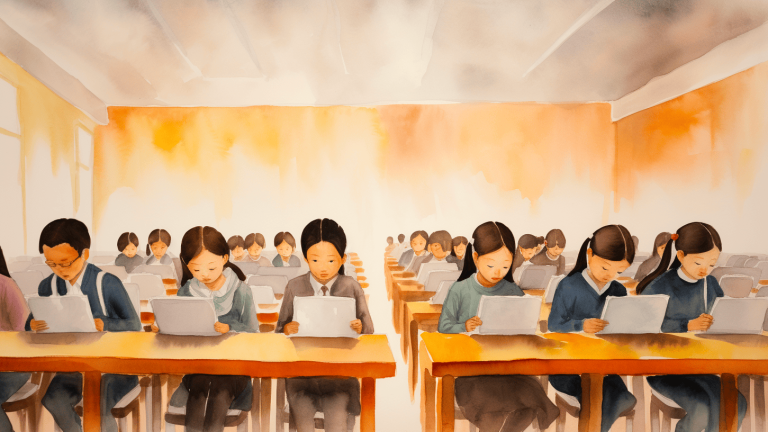
Eleven-year-old Lulu was once top of her class at a leading school in Xiangyang, a city in central China — but last year, her grades started to slip. Education is seen as the main gateway to social mobility in the country, and with a massive population vying for a limited number of places at top universities, the pressure to perform in school is intense. Following a clampdown on after-school tutors by the government, Lulu’s mother, Yang Hongyi, opted for an alternative approach to raising her daughter’s grades: She bought an artificial intelligence-powered educational tablet from iFlytek, priced at 8,999 yuan ($1,255). “No one wants their kid to fall behind so early in life,” Yang told Rest of World.
Tech companies like iFlytek and Baidu are now part of a growing industry leveraging AI to build tablets designed for learning. The iFlytek T20 Pro — the model Yang bought for her daughter — looks like an iPad but runs a modified version of Android. The device’s software is locked, which means children can’t download games or use other forms of entertainment. Instead, it comes with an array of apps that leverage Xinghuo, iFlytek’s large language model AI. These include a chatbot to converse with students in English, a gamified quiz tool to analyze test results, and OCR (optical character recognition) software that claims to be able to scan and grade handwritten essays like a teacher would.
Driven by this new wave of tablets touting AI capabilities, the market for educational devices in China is projected to be worth $20 billion in 2026, according to the research firm Frost & Sullivan. Personal educational devices, like portable dictionaries, have existed in China for decades, but AI hype is reviving the industry as tech companies jump in.Baidu, one of China’s biggest tech companies, has a line of tablets built around its AI chatbot Ernie. Even livestream megastar Austin Li is now peddling educational tablets to parents on short-video app Douyin.
Another factor driving the demand for educational tablets is a government clampdown on tutoring. China’s after-school educational system is an enormous business:137 million students took some form of out-of-school class in 2016. In an attempt to alleviate the pressure that students and parents face, the government ordered a review of 124,000 offline and 263 online education firms, and revoked the licenses of 96% of offline businesses and 87.1% of online ones. But while the supply of tutors is decreasing, the demand for them is as high as ever. Chen Hengyi, a primary school teacher in Wuhan, told Rest of World that almost all of the above-average students in his class still receive tutoring.That demand is causing prices for tutors to shoot up, forcing some parents to turn to alternative solutions for additional education — like AI tablets.
A study carried out by the consultancy firm iResearch found that 56.3% of surveyed parents expect to spend 10%–30% of their education budget on smart learning devices in the future, while 15.7% would be willing to spend over 40%, as their spending on tutoring declines. IFlytek’s business performance reflects the trend: According to the company’s financial report in the second quarter of 2023, educational devices and services comprised 29.14% of its revenue, with a gross profit margin of 48.64%, making education the largest and most profitable among iFlytek’s four listed service areas.
Terry Hong, a parent of two boys in the coastal province of Shandong, told Rest of World she bought two different educational tablets for each of her kids. “I got an iFlytek AI tablet for my oldest, who is top of his class, because iFlytek is better for test preparation.For my younger son, I bought a BBK AI tablet because it’s better for younger kids who are struggling a bit,” Hong said. Melody Liu, a Chinese parent in Japan, bought an iFlytek tablet during a trip home, aiming to immerse her two children — aged 7 and 5 years — in Chinese K-12 education. “Chinese students are always learning more advanced material at the same grade level compared to their global peers,” Liu told Rest of World.“If they can keep up with the Chinese pace, schooling in Japan will be smooth sailing.”
Cities like Yang’s home of Xiangyang are at the center of this boom, with a sharp rise in shops dedicated to educational tablets: IFlytek claims it opened 768 stores in 2022, a 100% increase from 2021, and aims to expand rapidly in 2023. But a review of the company’s listed store locations on its WeChat mini-program by Rest of World found only 1,103 stores — most of which were in smaller, less-developed cities. Many of these regions lack educational resources and have limited opportunities, forcing parents to look elsewhere for after-school education.
The AI tablets have filled a gap in China’s education market, especially for parents in less-developed cities, who felt they were not competent enough to assist their children with school work and were less savvy about technology. “A well-marketed solution that targets [parents’] insecurities is very easy to sell,” Rui Ma, a China tech analyst and founder of the Tech Buzz China podcast and newsletter, told Rest of World. “The iFlytek machine is just such a neatly quantifiable device that I think it’s easy for them to make the investment.”
Despite the hype surrounding AI, education professionals told Rest of World these tools can have a limited impact on enhancing academic performance. “These tablets don’t offer much beyond resources already available online,” said Kelly Zhang, an experienced tutor and former employee of AI education company Squirrel AI.
“While I do mostly enjoy the AI software, the content feels like it’s made in a rush and lacks quality control.”
“Many teenagers don’t have the focus or self-motivation needed to make the most of these tablets,” said Edward Wang, a former contractor at Gankao, a leading test-prep company that has launched its own educational tablet. Wang, who has had over six years of experience as a tutor, was commissioned by Gankao to create a comprehensive test-prepping content system, including video lectures and exams, for the tablet. “Our data indicates that most video classes have an under 20% open rate and an under 10% completion rate,” he said.
Hong, the parent in Shandong, said her children have benefited from studying with the tablet, although an effective learning session requires her supervision. Yang complained that the feature to scan handwritten essays only worked about half of the time, and spotted other factual errors in the material given to her daughter. “While I do mostly enjoy the AI software, the content feels like it’s made in a rush and lacks quality control,” she said.
OUR (FREE) EMAIL NEWSLETTERSign up for our free weekly newsletter and we’ll send you our freshest articles, what we’re reading, incisive stats, and more. A world of tech, right in your inbox.EMAIL
Purchases from public school systems could be another factor driving tablet sales. A considerable number of iFlytek tablets are bought by public schools, according to an iFlytek sales agent who preferred to remain anonymous because of concerns about his job security. Wang, the contractor, attributes iFlytek’s success outside of retail largely to its strategic partnerships with local governments, which integrated the company’s products like AI tablets, smart whiteboards, and AI grading systems in the public schools’ daily operations. “IFlytek is not a company that can be defeated,” he said.
Parents are sometimes pressured into purchasing these tablets by the school their children attend. Two parents interviewed by Rest of World claimed that teachers and school officials have pushed them to buy the tablet, by incorporating it in daily teaching. Despite the Chinese government’s 2022 ban on the compulsory sale of educational devices in schools, such mandates have persisted under the radar. The anonymous iFlytek sales agent told Rest of World that some schools have circumvented direct sales by imposing a “subscription fee” for tablet use on parents, who are billed every semester.
IFlytek denied that the company was involved in any kind of partnership with public schools to force purchases on parents.
Hong has made rigid study plans for her sons involving the AI tablet. After coming home from primary school, the boys have dinner, complete homework, and then study math and English for an hour each before they proceed to bedtime reading. All the additional learning happens with the help of educational tablets, usually under their mother’s supervision. “Both my boys are about one semester ahead of their school curriculum,” Hong said, with much pride.
Caiwei Chen is a Rest of World reporter based in New York.
Intermittent fasting: what is it, how does it work – and is it right for you?
From the 5:2 diet to Rishi Sunak’s 36 hours of abstinence, IF has taken off, with claims that it will make you fitter, smarter and even younger. What do the experts say?
Until its recent emergence as a mainstream health craze, fasting was largely a religious ritual. But then longevity scientists discovered that regularly fasted bodies lived longer, with better metabolic and cardiovascular health. Granted, these bodies mostly belonged to mice, but now Rishi Sunak, Elon Musk and many others are trying intermittent fasting (IF), with influencers singing its praises and apps offering to track your fasts and pepper you with motivational messages.
The first version of IF to break through was the 5:2 diet, popularised by Michael Mosley in 2012, which involves slashing daily calories to 500 or 600 (depending on biological sex) on two non-consecutive days each week. Now, a less drastic regime is taking hold: time-restricted eating, whereby you simply prolong the overnight fast to at least 12 hours. This can mean anything from avoiding snacking after an early dinner to the 16:8 version – cramming all your eating into eight hours.
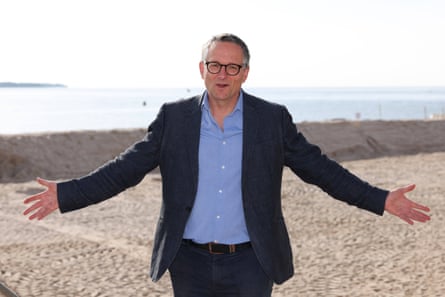
Michael Mosley, who popularised the 5:2 diet. Photograph: SIPA/Rex/Shutterstock
The logic goes that, back when we were hunter-gatherers and our bodily systems evolved to work in balance, the absence of supermarkets and industrially produced food meant that fasting sometimes happened naturally. The IF lifestyle, it is thought, could help us reset these systems, swerve disease and live longer.
But is it as simple as that? We asked a dietitian and two scientists working in the area.
Can intermittent fasting really be life-changing?
Valter Longo, a biologist at the University of Southern California, has been studying longevity and the effects of fasting on organisms from yeasts to humans for about 30 years. He has demonstrated that fasting can reverse diabetes and increase the effectiveness of cancer therapy (although more research is needed in this area). But what about the worried well, the middle-aged seeking healthy old age? “It can make a big difference, but it depends how you do it,” he says.
You have to be an adult to fast – and it’s important to ask your GP first
Ioannis Nezis
Ioannis Nezis, a professor of cell biology at the University of Warwick, studies the cellular effects of fasting. He says the answer is a hard yes. “My research is focused on how fasting activates a mechanism called autophagy, which is responsible for the recycling of damaged proteins inside the cells,” he says. “This is beneficial because your cells are clean and function better.”
From a public health perspective, Aisling Pigott, a dietitian and spokesperson for the British Dietetic Association, is less sure. While the potential is exciting, she says, “it is just another idea or diet packaged up in a slightly different format. It is another method or tool for restricting calories, but it’s not going to be this magic answer.” Every day, she witnesses the unique and complex relationships that many people living with obesity, or who want to change their body shape or size, have with food and “that make fasting not the best solution”.
What does it do to your metabolism?
Fasting seems to boost the body’s ability to digest and take nutrients from food, without spikes in blood sugar, blood fat, inflammation and insulin. “The metabolism changes because your body starts using the fat deposits that you have in order to produce energy,” says Nezis. Meanwhile, when the gut isn’t digesting food, the all-important microbiome gets a refresh, resulting in good bacteria flourishing, leading to associated improvements in digestion, immune function, mood, blood pressure and more.
Should everyone be doing it?
Fasting may be risky is you have low blood pressure. Photograph: Rawlstock/Getty Images
No. Fasting is not healthy for everyone – especially children and those who are pregnant or have an eating disorder. “You have to be an adult and it’s important to ask your GP first,” says Nezis. Many medical conditions could make fasting risky, he says, including low blood pressure, anaemia, being immunocompromised and having problems with your stomach, bowels or gallbladder. When we eat, our gallbladder empties bile into the digestive tract; when we fast, it holds bile inside for long periods. “It can become concentrated and create ‘gallbladder sludge’ or gallstones, which can block your bile duct and cause problems in the liver or the pancreas.” If you have a family history of gallstones, you could be more susceptible.
Can it cause eating disorders?
“Hypervigilance towards weight, or very strict rules around foods, are not appropriate for people with a history of disordered eating,” Pigott says. Also, using restrictive language in relation to food has been shown to be “related to risk of obesity”.
More broadly, she says, the focus on the science behind fasting “moves us further away from people trusting their bodies. We still want somebody else to tell us the magic answer, getting in the way of the basic messages about nourishing and feeding and fuelling our bodies.” She is also conscious of people trying restrictive eating in households with young children, particularly “what kind of message that will be sending to them, in a world where we’ve seen eating disorders explode over the last three to four years”.
Nezis says there is certainly a risk of getting carried away: “Sometimes, people start with 16-hour fasts and then they say: ‘OK, let’s try 24 hours, then 48 …’ They get obsessed. People should be careful.”
Which routine should you choose?
There is no long-term data on IF, so a lot of it comes down to opinion and what works for each individual. But everyone agrees that closing your eating window a good few hours before bedtime will help you sleep soundly. That said, while an early dinner may work for many, Pigott says: “In some cultures, the family meal is at 10pm, so we have to fit with everybody’s lifestyle.”
Nezis believes a 16:8 fast, which generally means skipping breakfast, gives you all the benefits. He thinks you can safely fast for up to 20 hours, if it suits you, but Sunak’s 36 hours every week is “quite a lot”.
Ioannis Nezis says skipping breakfast can be safe, although Valter Longo says it is associated with problems including cardiovascular disease. Photograph: alvarez/Getty Images
Longo, on the other hand, only recommends 12- or 13-hour daily fasts, because we don’t have proof of long-term safety. “Skipping breakfast is associated with a shorter lifespan, more cardiovascular disease and lots of other problems,” he says. “Just because you’re doing time-restricted eating, it doesn’t mean it’s good for you.” As for gallstones, he says, an epidemiological study in 1991 found that women who fasted more than 14 hours a day were twice as likely to need surgery related to them: “Some of the big hospitals even have prolonged fasting as a risk factor for gallstones.”
Nezis says that some of this risk is averted if you break your fast with a small meal. “A very big meal will push your gallbladder to function very hard – this is not good. When fasting, you need to have a balance in everything you do.”
What stages does a fasted body go through?
IF apps and gurus often list how many hours or days it takes for various benefits to kick in, such as autophagy and ketosis – whereby you convert fat into energy. But when you talk to the scientists studying this stuff, they are less easily drawn. “Most of the information we have about fasting and the activation of autophagy is based on animal models,” says Nezis. Plus, we are all physiologically and behaviourally different. “We are different sizes; it depends on your age.”
It is thought that autophagy doesn’t fully kick in until around two or three days of fasting. Nezis doesn’t dispute this. “However, 16:8 or 18:6 daily fasting for a prolonged period is believed to activate autophagy probably by a cumulative manner,” he says. “Overall, more studies in humans are needed to have a clear picture.”
Exercise can complement fasting – but don’t overdo it. Photograph: Maskot/Getty Images (posed by models)
Besides, he says, focusing on what is happening hour by hour is missing the point. “You can see the effects of IF on overall health after two or three months. If you do a blood test now and then another after three months of IF, all your blood parameters will be better – cholesterol, sugar, everything.”
That said, after about 16 hours, Pigott says, “your body will be producing ‘starvation ketones’, so you will be starting to break down fat and muscle stores. But everybody’s different.” Medically speaking, starvation mode doesn’t mean starving to death. However, she says, it can often “lead to a kind of fluid loss that can cause short‑term weight loss. Like anything, if something is a short-term fix, as soon as you stop doing the fix, you will see a weight regain.”
Like Nezis, Longo thinks getting hung up on precise timings and functions is pointless. “Autophagy is just one of those things that happens. It may happen in one cell, it may not happen. It is one of the many mechanisms of cellular repair.” In any case, fasting isn’t the only way to increase this natural process. Exercise can induce it, too.
How do you get started?
Gradually is best, says Longo. Don’t be tempted to go all-in for a quick win. “We take two years to convert people into a healthy state,” says Longo of his clinics. “They’re diabetic and have cardiovascular disease and hypertension. Take your time, have some small metabolic benefits, insulin resistance will improve, and eventually the small benefits become big benefits. The important thing is that you stick with it.”
Is it OK to consume your regular calories in your eating window?
There is no doubt that if you eat fewer calories as a by-product of IF, there can be benefits from that alone. Low-calorie diets extend lifespan and improve cardiovascular health, brain function, mental health and the immune system. “This is 100% verified in animal models and we can see it in several regions of the world where people take fewer calories and live more than 100 years,” says Nezis.
Better overall health tends to mean a healthier brain. Photograph: Andriy Onufriyenko/Getty Images
According to Longo’s studies, you will probably lose weight from fasting even if you have the same calorie intake overall. But he also says: “I don’t think that people should count calories – it is pointless. I think people should ask: did I get the right nourishment?” Fasting should never be viewed as a way to enable bingeing on junk food the rest of the time. “That puts you in a potentially dangerous situation, particularly if you’re skipping breakfast. Twenty years down the road, it could turn out to be a disaster.”
Is it OK to exercise when you have been fasting?
Another woolly area. Pigott urges caution if you are extending an overnight fast towards lunchtime the next day: “You’re really limiting the number of hours that you can give your body nourishing foods. If you throw exercise into the mix, you’re extending the period where you’re not refuelling those muscles.” Longo thinks a run is fine after about 13 hours of fasting, as long as you feel fine and have some protein straight after. “As long as you can sustain that run and you don’t get hypoglycaemic, there is no reason why you can’t do it. Just be careful and don’t suddenly start running 10k if you’ve had no dinner.”
As we age, we lose muscle mass, so more care needs to be taken as you get older. “It’s important to have a source of protein in your diet in order to be able to maintain your muscles,” says Nezis. But, as he points out, muscle wastage is also mitigated by exercise.
Any tips for coping with hunger pangs?
Drinking water will help you feel fuller. Photograph: Elena Vafina/Getty Images
Nezis recommends adding some flavour to water – “lemon juice, or pieces of orange or cucumber, to make it tasty. Overall, drinking water will give you a sense of fullness.”
What about mood swings?
“Try to do activities that make you feel good,” says Nezis. “If you have mood swings because you want to have chocolate, then do something else that will give you pleasure, like watching a movie or listening to music.”
Can fasting really boost your brain power?
As Nezis says, improved brain function generally comes with better systemic health: “When you have cells that have better metabolic rates and less damaged components, they work better, which is especially important for neurons.” This is because we are born with most of our neurons and barely make any more once past childhood.
Longo, meanwhile, has mouse data that indicates improvements in learning and memory after fasting, so he says: “Probably yes, particularly if you now sleep better and if your metabolism is better. Keep in mind that diabetes nearly doubles your risk of Alzheimer’s disease.” He adds that – again in mice – fasting, or a fasting-mimicking diet, can also have an effect on neurodegenerative diseases.
Will all this make you younger?
Look at it like this, says Nezis: “When your overall health is better, you live longer, you live a better life and you feel younger.”
What is the ‘endgame’ of armed conflicts? Is it to win the war or to win the peace? Russia’s history expert and author Stephen Kotkin shares his views on the current geopolitical turmoil, Russia’s invasion of Ukraine, and the importance of history in navigating the future world. Stephen Kotkin is a Senior Fellow at the Freeman Spogli Institute for International Studies (FSI) and Kleinheinz Senior Fellow at the Hoover Institution, Stanford University. He has been teaching for more than three decades at Princeton University, and currently holds the position of Professor of History & International Affairs. Kotkin is renowned for his two-volume biography of Joseph Stalin and is currently completing the third and final volume. This is part one of The Shifting World Order Series.
Is the U.S. a justice-addicted nation? On Thursday’s episode of Dr. Phil, “America’s Short Fuse: Afraid to Leave the House,” Dr. James Kimmel Jr., a lecturer in psychiatry at Yale School of Medicine who researches revenge cravings, justice addiction, violence prevention, and mental health says both Americans and others around the world have been experiencing an increasing number of grievances that have to be managed. Or, things that we think are unjust, including racial and political grievances, the pandemic, climate change and more. Simultaneously, he says, the advent of social networking platforms has made it very easy to turn grievances into contagion.
“If you think you’ve been wronged, you’re now able, on social networking platforms, to spread that across millions of people instantaneously.” Continuing, Dr. Kimmel says, “In human history, we’ve never had anything quite like this where we could experience and gratify revenge cravings at will – almost at no cost to ourselves.”
Is America’s justice addiction here to stay, or can this behavior be turned around? Check your local listing to find out where to watch Thursday’s, Dr. Phil. WATCH: Why A Psychiatric Researcher Says, ‘America Is Becoming A Justice-Addicted Nation’ TELL DR. PHIL YOUR STORY: Outrageous news story in your town?
A picture of a smartphone with a red line through it serves as a warning in the window of a hairdresser’s shop in a French village that has voted to ban people scrolling on their phones in public. “Everyone is struggling with too much screen time,” said Ludivine, a cardiology nurse, as she had her hair cut into a bob, leaving her phone out of sight in her bag. “I voted in favour, this could be a solution.”
Seine-Port, in the Seine-et-Marne area south of Paris, with a population of fewer than 2,000 people, last weekend voted yes in a referendum to restrict smartphone use in public, banning adults and children from scrolling on their devices while walking down the street, while sitting with others on a park bench, while in shops, cafes or eating in restaurants and while parents wait for their children in front of the school gates. Those who might check their phone’s map when lost are instead being encouraged to ask for directions.
Vincent Paul-Petit, the mayor of Seine-Port, who drove the ban. Photograph: Magali Delporte/The Guardian
The village has also approved a charter for families on children’s use of screens: no screens of any kind in the morning, no screens in bedrooms, no screens before bed or during meals. If parents of teenagers sign a written agreement not to give their child a smartphone before the age of 15, the town hall will provide the child with an old-fashioned handset for calls only.
“I’m totally in favour of this,” said Ludivine, 34, who has two children aged one and four. “Some say it’s an attack on freedoms but I don’t think so. It’s about raising awareness of the impact of phones in our lives.
“My one-year-old has zero screens. My four-year-old has no screens on a school day, and only ever for a short moment while the youngest is napping. A lot of children and adults are intoxicated by screens – even babies in pushchairs scroll phones. This is about replacing that with more human contact. Before I had children, my TV was always on in the background; now I never switch it on.”
A total of 277 people turned out to vote – about 20% of the electoral register – with 54% in favour of the charter. The mayor, Vincent Paul-Petit, of the rightwing party Les Républicains, will now write a municipal decree on smartphone use, the first of its kind in France. It is not enforceable by police – officers could not stop or fine people scrolling in the street because there is no national law against smartphones – but the mayor describes it as an incitement to stop scrolling and guidance for limiting phone use. Shopkeepers are being urged to put up stickers in windows and gently ask people to stop scrolling.
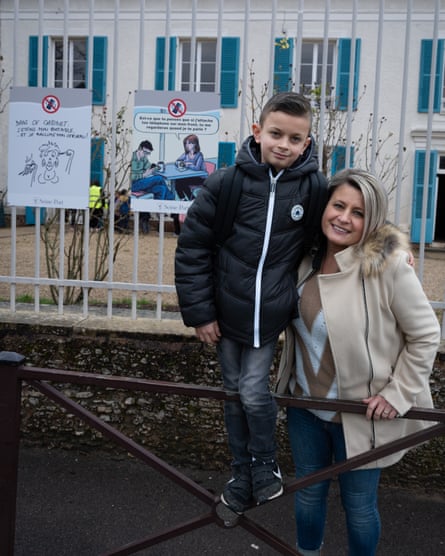
Children walk by signs discouraging smartphone use outside the village school. Photograph: Magali Delporte/The Guardian
In the village bar, the restaurant manager Angélique da Silva said she was unlikely to ask customers to stop scrolling but she saw its purpose. “It’s an interesting idea for children,” she said. “But the younger generation don’t approve of this because if you take their phone away, they have nothing. They grew up with a phone in their hand, not like our generation.”
Smartphones and screen time are increasingly becoming a political issue in France. Emmanuel Macron said last month he would consult scientific experts to “determine the best use of screens” for young children, suggesting there could be bans or restrictions.
Angélique da Silva at the Terrasse restaurant in Seine-Port. Photograph: Magali Delporte/The Guardian
“I want to preserve public spaces from the smartphone invasion,” said Paul-Petit, the mayor. “It’s not about banning all phones, it’s about proposing that people abstain from getting out their smartphones to scroll social media, play a game or watch videos in public places, which we want to preserve for social life.
“This is about the addiction element of smartphones, whether games or social networks, when we can no longer tear our eyes from the screens. We’ll encourage a baker or butcher not to serve someone who comes in scrolling on their phone: if they’re having a conversation on their phone, they can finish it outside, then come in and say hello.”
Signs outside the village school. Photograph: Magali Delporte/The Guardian
He added: “Teenagers walking down the street almost all have their phone in their hand … I understand that the word ‘ban’ can offend some people. But what is important is opening up a debate.”
Noémie, a psychologist waiting for her eight-year-old daughter outside the village school, was in favour of limiting scrolling. She said: “Recently in a waiting room, I brought books and dolls for my daughter to play with and everyone congratulated me that she wasn’t on a screen.”
Merry Landouzy with her son Tao.
Merry Landouzy, a school support worker for children with disabilities who has 10-year-old twins, had not voted. “Whether we like it or not, screens are part of this generation’s lives,” she said. “Ultimately, if we occupy kids with fun activities, particularly outside, they don’t actually want to be on screens. My daughter is a footballer and prefers to be outside. It’s about what alternative activities we can provide.”
Young people in the village complained there were not enough facilities for teenagers who had little to amuse them but their phones. The mayor has promised a film club, book exchanges and facilities for sport.
“There’s not much else to do – if you ban phones, you’d have to put in place real structures for young people’s leisure, sports and games,” said Nawel Deciron, 21, a history student and trainee teacher. Her mother, Fatiha, a former shop manager, said: “Parents are responsible and can deal with the issue of screens themselves.”
Adrien, 17, a high school student who wants to be an actor, said: “Smartphones are such an important part of our lives that I don’t think it’s possible to restrict them in the streets.” He has had a phone since the age of 11, listens to music on it in the street, uses it in school and uses the GPS for finding his way.
“It’s a generational thing,” said Jean-Luc Rodier, a recently retired postal worker who voted in favour of the restrictions. “I’m scared of artificial intelligence, ChatGPT, I’m not generally in favour of bans but this is about raising the alarm on phone use.”
Jean-Luc Rodier, right, supports the ban but his son Gabriel sees no point in it. Photograph: Magali Delporte/The Guardian
His son Gabriel, 20, also a postal worker, was against it. “I spend five hours a day on my phone, which I think is reasonable. I also read proper books. But I like looking things up on my phone in the street. You can’t ban knowledge at your fingertips.”
SAM ALTMAN SEEKING TRILLIONS OF DOLLARS FOR NEW AI VENTURE
HE’S TRYING TO SECURE A LUDICROUS AMOUNT OF MONEY.
KENT NISHIMURA/GETTY IMAGES
A Trilli
OpenAI CEO Sam Altman is looking to raise some serious cash.
The executive is currently trying to woo investors, including the United Arab Emirates government, the Wall Street Journal reports, to raise up to $7 trillion for an AI hardware venture.
To put that number into perspective, all of global chip sales barely cracked half a trillion dollars last year, per the report. And AI-specific chip sales were estimated to account for roughly $100 billion of that.
His goal is reportedly to set up a new chip manufacturing venture in order to boost hardware capacity and of course train AI, among other things. It’s not exactly surprising, considering OpenAI has struggled to get its hands on enough hardware to train its massive large language models, which power products like ChatGPT.
Training AIs doesn’t just require huge amounts of electricity. The process is also incredibly hardware-intensive, leading to companies like OpenAI, Google, and Meta, toppling over each other to secure specialized chips. And supplies are running low, while prices — and revenues for AI chip makers — are spiking.
Chip’s Challenge
Altman himself has complained of a “brutal” chip shortage in the past. Late last year, in the weeks leading up to when he was fired — and mystifyingly rehired less than a week later — Bloomberg reported that he was “fundraising in the Middle East” for a “new chip venture.”
Such a venture would be directly competing with Nvidia, which has been dominating the AI-focused chip market.
Now, new details have emerged, with the WSJ‘s sources claiming that Altman has met with several players, including the UAE’s Sheikh Tahnoun bin Zayed al Nahyan, a top security official and the brother of the president.
Per the report, Altman also told representatives of the Taiwan Semiconductor Manufacturing Company (TSMC), Taiwan’s biggest chip maker, that he wants to build dozens of chip-fabrication factories in a matter of years.
Interestingly, Nvidia CEO Jensen Huang met with his counterpart at TSMC late last month as well, showing that OpenAI is far from the only player trying to secure semiconductor supremacy these days.
Meanwhile, Altman has kept his cards open on the table, reportedly informing Satya Nadella, CEO of OpenAI’s largest investor Microsoft, of his fundraising efforts.
While Altman is hoping to build chip plants in the US, economic headwinds and a shortage of skilled labor could hinder those efforts.
That’s not to mention US politicians, who are growing wary of foreign governments like the UAE getting too much power over the AI market.
At 4 am, I walked to my car and tried to cry as silently as possible. I sucked the pain back in as a morning jogger ran past. Why would anyone be jogging at that time in the morning? I felt a brief rage that he had almost caught me and exposed my weakness. If no one saw me, it hadn’t happened.
I got to the car and sobbed all the way home. No one could hear me now, so I succumbed to my suffering without judgment.
I crossed paths with my dad as he got ready for work and tried to suppress my tears again, but they were free-flowing by now. I told him the bare bones of what I’d dealt with that night — that as a police officer, I’d dealt with an incident of unprecedented horror in such unique circumstances that they were unlikely ever to be repeated.
He gave me a cliched pep talk, I went to bed, and he went to work.
That incident was the cause of my Post Traumatic Stress Disorder. I’ve never confided all the details of that night to anyone, and I’ve paid a heavy price for my secrecy. A support network is crucial for helping move beyond pain. The love of my family was a key reason I’ve recovered better than I ever expected. Everyone should have a support network.
. . .
1. The healing power of opening up.
Although I couldn’t address my trauma, my loved ones helped me cope with my symptoms. When the anxiety was in danger of bubbling over, my mum would take me on a walk.
Those evening walks with my dog solved countless problems. Like magic, I’d leave the house at a fever pitch and return with a glimmer of hope. It taught me every problem can be helped if you confide in a trusted loved one.
Be careful because not everyone has your best interests at heart. But once you get your problem out into the world, it no longer flies around your brain like a bullet causing damage.
The Samaritans is an organization built on this principle. Volunteers are trained listeners. They talk to people across the entire gamut of human misery, including suicide. They don’t offer advice — they’re there to listen. And they save countless lives every year.Play Video
Don’t like ads? Become a supporter and enjoy The Good Men Project ad free
. . .
2. Let people know your struggles.
I never told my colleagues how much I suffered. They knew I took time off after the traumatic incident, but they assumed I was okay when I returned to work.
I did nothing to change that assumption. To admit I was still ill would have been career suicide. I had ambitions to join the armed response unit, and if mental illness was on my record, I could kiss that goodbye.
Policing still had a macho culture. You were one of the boys if you told the sickest jokes and proved how little you cared about everything you saw. My peers would reject me if I admitted something got to me, and they wouldn’t understand.
So I carried on. Every single shift, I’d dread going to a similar incident as the one that left me traumatized. I was confident I couldn’t cope with another tragedy like that, but at the same time, I’d never refuse to go to anything because it was my job.
Ideally, I could’ve let my colleagues know I was in pain. They’d understand and do their best to cover specific similar incidents. We’d all rally around each other and be the big family the police lie to you about when you first join. If someone then leaves the job through mental illness, they can count on the support of their colleagues.
Instead, during the process of medical retirement, I learned an Inspector illegally snooped through my medical history, and I had just ONE officer ever check how I was.
No one outside the emergency services could understand what I’d dealt with, yet my colleagues were the people I couldn’t tell. I was isolated in a prison of depression.
I couldn’t go into the details of the things I’d seen because they would cause secondary trauma to my loved ones who didn’t have experience in that side of life. The pain was too much for me to talk about. The isolation was complete.
The only way back from mental illness is through reconnection. I had to go from being outside society looking in, to learning to engage. I had to trust my loved ones and then put myself out there. I found a love of writing and trading the stock market and focused on these skills.
Through my writing, I’ve made friends and have had opportunities that boggle my mind. I still experience loneliness at times because people can only understand my trauma up to a certain point, but I can’t box myself in anymore. Such isolation compounds mental health problems.
. . .
4. Strengthen your relationships.
If you confide in the right people, it makes your relationships stronger. I’ve been with my partner for two decades — including all the trauma years. Confiding in her and the fact that she didn’t use my suffering against me showed mutual trust.
My mum and I are close, and that’s because I can tell her almost anything, knowing that I’ll feel better afterward.
The people that stay with you through bad times are the keepers.
When people heard I’d been retired at 27, they thought I was scamming the system because I was guaranteed an injury award for life, and I could spend the rest of my days however I wanted.
Even my dad didn’t understand and thought one day I’d return to the police as I had before. He expected me to improve, and the toxic positivity that infects the therapy profession bolstered that expectation.
So I started to share my story. I let people know that far from sunning myself on a sunny desert island and counting my money, I struggled to get out of bed and often fought the urge to kill myself.
I spoke out about the side effects of medication and the fact that I gained 90 lbs in weight in a year. I talked about how I slurred my words and slept 15 hours daily.
I talked about my lost purpose and feeling dead without the peace accompanying oblivion.
Did I convince everyone? No. But mentally ill people have lived in the shadows for too long, leading the ignorant to form many misconceptions. I see it as my duty to speak out.
. . .
An early release from your prison of loneliness.
A support network is vital for anyone. Nobody’s an island. This is especially true for those with mental health issues. Our minds can be scary places, and becoming trapped in them is easy.
Part of the reason I now wake up with a spring in my step is because I had the support network of my mum and partner. You don’t need a hundred friends. One or two is plenty. The less time you spend wallowing alone, the better.
Don’t like ads? Become a supporter and enjoy The Good Men Project ad free
Chances are, you’re known as the support system for others. Now it’s your turn to admit you need help. Mental illness is bad enough. Don’t suffer alone.
3,936 views 31 Aug 2022 Full Episodes Dr. Kimmel joins Dr. Phil on his podcast, Phil in the Blanks, for an important follow-up discussion. He shares the best ways to intervene when someone is addicted to violence and revenge, what he says could perhaps be the most important health issue in American society today. Plus, learn how to spot a revenge addict, how to approach someone addicted to violence, and how to “defuse the grenade” to keep yourself and loved ones safe from harm.
Home/Featured Content/Off the Street and Into a Home: Over 1,000 Homeless in Austria Get a Flat
Off the Street and Into a Home: Over 1,000 Homeless in Austria Get a Flat
An initiative by the Austrian Ministry of Social Affairs, non-profit building associations and the Federal Working Group for Assistance to the Homeless aims to get around 1,000 homeless people into housing by September 2024.
An initiative by the Austrian Ministry of Social Affairs, non-profit building associations and the Federal Working Group for Assistance to the Homeless aims to get around 1,000 homeless people into housing by September 2024. To achieve this, Austria is adopting the successful “Housing First” concept. The basic idea is simple, homeless people are given their own home – with no strings attached. It has been found that the housing first method helps 80% of homeless people involved find their way back into society.
Austria is one of the ten richest countries in the EU and yet over 20,000 people have no home. They are homeless and living on the streets. Day in, day out, they struggle to survive, especially when winter hits. In order to help these people in the long term, Austria is now switching to the successful “Housing First” model. Experts have been calling for this for a long time. Finland, for example, has drastically reduced homelessness over the last ten years with this model.
AFFORDABLE RENTAL FLATS FOR OVER 1,000 HOMELESS PEOPLE
With the “Housing First Austria – arriving at home” initiative, the Ministry of Social Affairs wants to offer over 1,000 homeless people a new home in the long term. Instead of emergency accommodation or temporary solutions, they are to be given their own flat with a tenancy agreement.
By September 2024, 512 affordable flats are to be provided by non-profit building associations for this purpose. The project is being managed by the Bundesarbeitsgemeinschaft Wohnungslosenhilfe (BAWO).
The costs for financial support, relocation and deposits are to be subsidised by the Ministry of Social Affairs with a contribution of around 6.6 million euros. The formerly homeless people pay the rent and ancillary costs themselves.
Social workers will accompany and support those affected as required. They will help with personal crises, financial matters and coping with everyday life.
“HOUSING FIRST APPROACH”: FIRST YOUR OWN FLAT, THEN EVERYTHING ELSE
The “housing first approach” is quite simple. Homeless people are first given their own flat – with no strings attached. This means that they do not have to complete any addiction programmes, use any therapeutic services or have a job. All of that can wait.
The approach is based on the assumption that people first need security and a place to feel safe. Only then will they gradually find their way back into life and society. This seems to be the case, as international examples such as Finland, Denver and Houston show. Studies show that 80% of formerly homeless people find their way back into a stable life through this method.
The concept is actually nothing new. It has been used by several organisations for years. These include Caritas Vienna, the Neunerhaus homeless aid organisation and various women’s shelters. Experts have long been calling for the government to facilitate the approach with the required level of financial backing.
THE HOUSING FIRST CONCEPT IS CHEAPER THAN HOMELESSNESS
Giving homeless people a new home is not only more humane, but also cheaper. This is because where people are in need, emergencies happen more often. Injuries, breakdowns, assaults and rescue operations. This not only places demand on the police, health and justice systems, but also costs money. For the state, the “housing first” concept is more favourable than ignoring the problem of homelessness.
HOMELESSNESS IN AUSTRIA
Around 20,000 people in Austria have no home. The number of unreported cases is estimated to be much higher. This is because the system only registers those who seek help and are registered. The majority of them, almost 60 per cent, live in Vienna. Vienna’s homelessness organisation assumes that almost 4,000 of them are under the age of 30.
There are many reasons for homelessness, such as unpredictable misfortunes, accidents, addictions or mental health problems, to name just the most dramatic. But homelessness can be easy to fall foul of:
“It doesn’t take a stroke of fate to become homeless. Transitional phases are often enough: A young person who has to leave their parents’ home. A separation. An expiring tenancy agreement. Anyone who has no access to affordable housing in such situations runs the risk of becoming homeless,” explains Elizabeth Hammer, Chairwoman of BAWO.
Critics of homelessness assistance often blame the individual for their own homelessness. But that would be too simplistic. After all, high inflation, rising rents and the lack of affordable housing also contribute to people ending up on the streets. Some people can simply no longer afford to live.
Join The Good Men Project as a Premium Member today.
All Premium Members get to view The Good Men Project with NO ADS.
A $50 annual membership gives you an all access pass. You can be a part of every call, group, class and community. A $25 annual membership gives you access to one class, one Social Interest group and our online communities. A $12 annual membership gives you access to our Friday calls with the publisher, our online community.