Scientology-linked UK drug rehab left vulnerable people ‘traumatised’. Source: The Observer. Comment: Ballivor, Co. Meath. Buildings bought to become a Rehabilitation Centre. People protested and rightly so. Cinderella HSE services blight our vulnerable people who have mental illness/addiction issues but that doesn’t mean we need The Church of Scientology regime.

Support the Guardian

Fund independent journalism with €10 per monthSupport us

ShowMore

The Scientology headquarters in Los Angeles. The drills at the Narconon rehab centre in Sussex are based on the writings of L Ron Hubbard, Scientology’s founder.

The Scientology headquarters in Los Angeles. The drills at the Narconon rehab centre in Sussex are based on the writings of L Ron Hubbard, Scientology’s founder. Photograph: Leigh Green/Alamy

The ObserverScientology

Scientology-linked UK drug rehab left vulnerable people ‘traumatised’

Exclusive: use of controversial church’s repetitive drills led to patients becoming ‘shattered’ or paranoid, witnesses say

Read more: ‘My mind had been shattered into a million pieces’: inside the Scientology-linked rehab centre

Shanti Das Home Affairs correspondent

Sat 3 Feb 2024 18.25 CET Last modified on Sun 4 Feb 2024 03.30 CET

  • An unregulated rehab centre linked to the Church of Scientology put mentally ill people through intense psychological drills that allegedly left them “traumatised” and in “trance-like” states, an investigation by the Observer can reveal.

Former patients and staff at Narconon UK say vulnerable people seeking help for addiction were expected to complete mental exercises, similar to methods used in Scientology’s controversial “auditing” process, at a secluded compound in rural Sussex.

Before arriving, they had thought Narconon was offering a holistic approach to rehabilitation and were drawn in by promises it could help them get “drug free for good”.

https://9300207416a4c116bf56cec2184addef.safeframe.googlesyndication.com/safeframe/1-0-40/html/container.html

In a call with an undercover reporter, a Narconon salesperson also claimed the programme was “not related” to Scientology. But over a three-month period, participants were allegedly subjected to methods near identical to those used by the religious movement.

In some cases they took part in the repetitive “drills” for so long, while in vulnerable states due to their mental health or past substance use, that they would zone out, become paranoid or break down, according to corroborating testimony from people familiar with the programme. Participants were also allegedly left feeling suicidal and as though their minds had been “shattered” by the exercises – which often involved following commands such as “stand up, sit down”, or pointing at different objects. The drills could last up to five hours a day, for several weeks.

Narconon said the drills, based on writings by L Ron Hubbard, Scientology’s founder, were “mentally strenuous” and required discipline but had helped save lives. It said they were not a religious doctrine but had a “positive secular application”.

Experts and witnesses likened the methods to a form of obedience training. People working at the facility were also expected to complete the programme.

The allegations raise questions over how a rehab with links to one of the world’s most controversial religious movements, accused of abusive practices, is able to operate unregulated in Britain.

Marketed as “world class”, and listed in an NHS directory, Narconon’s Sussex facility, on a nine-acre campus near the town of Heathfield, opened in 2015. But it has not been inspected since 2016, and has never been assessed to ensure its programme is effective or safe. Instead, it has been operating without oversight for the last five years due to a regulation loophole, the Observer’s investigation has found, and remains free of the same scrutiny that other addiction programmes face.

While the Care Quality Commission (CQC) oversees substance misuse services, it says Narconon’s programme is not within its remit and suggested this was because its approach was “alternative”.

It said the service was not known to be providing any regulated activities and had been considered dormant since 2019.

Records released under freedom of information laws show that in that time, the watchdog has received 14 complaints which it did not formally investigate, saying it had no duty to do so. Despite this, Narconon continues to display a “good” CQC rating on its website, from a prior inspection which assessed its accommodation, management and provision of personal care – but not the programme itself.

Dr David Bremner, medical director at addiction charity Turning Point, said the loophole showed the need for better regulation. The Department of Health declined to comment. skip past newsletter promotion

Sign up to First Edition

Free daily newsletter

Our morning email breaks down the key stories of the day, telling you what’s happening and why it matters

Enter your email address

An ex-participant at Narconon UK, and its logo.

In Scientology’s “auditing” process, Scientologists complete exercises they believe will help them become spiritually enlightened. To learn the skills Scientology says are needed for auditing, followers take part in a series of drills known as “training routines”. These include following repetitive commands, sitting perfectly still or undergoing persistent questioning – closely resembling drills used at Narconon.

Prof Sally Marlow from the Institute of Psychiatry, Psychology and Neuroscience at King’s College London, said the approach did not sound therapeutic. “It is extremely concerning,” she said.

Narconon UK, the charity behind the facility, said its “students” were assessed by a GP before the programme, which also includes long sauna sessions, high doses of vitamins and costs about £15,000. It said it was not a medical treatment and did not have patients, so did not need to be registered with the CQC as a substance misuse service. Sheila Maclean, Narconon UK’s manager, said it was “deeply regrettable” that some people did “not get on” with its methods but insisted they were safe. “Even the best-run services have their critics,” she said.

Posted in Uncategorized | Tagged , , , , | Leave a comment

An Ivy League school just announced its first AI degree

Generation A.I.

LEARN TO AI

An Ivy League school just announced its first AI degree

It’s a sign of the times. At the same time, AI talent is scarce

By

Michelle Cheng

Updated Tuesday 3:49PM 17th February 2024

University of Pennsylvania
There aren’t many Ivy League schools, but they have an outsized influence on society.

At the University of Pennsylvania, undergraduate students in its school of engineering will soon be able to study for a bachelor of science degree in artificial intelligence.

What can one do with an AI degree? The University of Pennsylvania says students will be able to apply the skills they learn in school to build responsible AI tools, develop materials for emerging chips and hardware, and create AI-driven breakthroughs in healthcare through new antibiotics, among other things.

Related Content

https://imasdk.googleapis.com/js/core/bridge3.621.0_en.html#goog_695213409

0:33 / 3:38

How AI will disrupt your job

China is already softening its strict stance on AI

Generative AI technology, which is essentially algorithms that can create new content, is transforming every aspect of life, producing an “urgent need” for AI engineers who understand the principles of AI and how to apply them in a responsible and ethical way, the school noted in a press release.

The undergraduate program offers coursework in topics including machine learning, computing algorithms, data analytics, and advanced robotics. Electives in “AI Ethics” and “Trustworthy AI” are also on the slate.

The rapid development of AI has raised plenty of concerns about how the technology is deployed, including the lack of transparency in developing large language models, the private and personal data used in building AI tools, and the known bias problems in algorithmic decision-making. The program, it seems, plans to take them head-on.

The AI degree gives a window into signs of a changing labor market

The reality is also that AI is changing the labor market, and future generations of students will be entering a job market of new opportunities.

“We are training students for jobs that don’t yet exist in fields that may be completely new or revolutionized by the time they graduate,” said Robert Ghrist, associate dean of undergraduate education at Penn Engineering, in a statement.

At the same time, AI talent is scarce. Workers with AI skills command high salaries: OpenAI engineers, for instance, reportedly make upwards of $800,000.

The University of Pennsylvania’s AI undergraduate program will begin this fall. It’s also not the only US college to have an AI program for undergrads. Carnegie Mellon and Purdue University also offer bachelor’s degrees in artificial intelligence.

📬 Sign up for the Daily Brief

Posted in Uncategorized | Tagged , , , , | Leave a comment

Munich Security Conference: ‘A Global Order That Works for Everyone’ : UN Chief

Posted in Uncategorized | Leave a comment

Direct from Munich Security Conference 2024. A Debate on Guns v Butter. The Kiel Institute is hosting a MSC Conversation on the “guns versus butter” question at the Munich Security Conference 2024. Essential to understand the need for European Countries to spend more money on security? War is in Europe and spreading via Ukraine and into Middle East. We need to be prepared to take a loan, think of it as insurance cover, because the Peace Dividend has halted and war is at our doorsteps.

A big picture view on “Guns vs. Butter, 1870–2022” (Marzian and Trebesch 2024)

The session will begin with a brief academic input on new research from the Kiel Institute (Marzian and Trebesch, 2024, “Budgets and Geopolitics”), as a factual backdrop for a “big picture” guns vs. butter debate. Figure 1 is the key chart, based on military and social spending data going back to the 19th century.

We live in an age of “butter” in the G7 countries (Canada, France, Germany, Italy, Japan, UK, US), as Figure 1 shows. On average, the share of military spending in government budgets has fallen to historic lows. At the same time, social spending (health, labor, welfare, education and social affairs) has grown steadily. These spending trends look similar when shown in percent of country GDP rather than as shares of budget.

The data also show a growing disconnect between military spending (at a historic low) and geopolitical risk (at a historic high), particularly in the case of Germany. This can be seen in Figure 2, which combines our data on budgetary spending with data on geopolitical risk from Caldara and Iacoviello (2022). Germany today faces exceptionally high geopolitical risk, at the level of the early 1960s. Compared to the 1960s, however, military spending is very low today, accounting for only about 10% of total spending or 5% of GDP. This is just about a third of what it was in the early 1960s. In sum, we live in dangerous times, but military budgets in the West have not responded to these developments.

Kiel Institute Speaker

Posted in Uncategorized | Leave a comment

AI MAY BE ATROPHYING OUR BRAINS, PROFESSOR WARNS. Source: Futurism. The__Byte

 AM EST

byNOOR AL-SIBAI

/ ARTIFICIAL INTELLIGENCE

Getty / Futurism

BRAIN DRAIN

AI MAY BE ATROPHYING OUR BRAINS, PROFESSOR WARNS

IF YOU DON’T USE YOUR BRAIN, YOU COULD LOSE ITS ABILITIES.

GETTY / FUTURISM

Barely Functional

Just like smartphone GPS has harmed our sense of spatial cognition and memory, artificial intelligence may soon impair our ability to make decisions for ourselves — an outcome that would be, one expert warns, “catastrophic.”

In an interview with PsyPost, neuropsychology expert Umberto León Domínguez of the University of Monterrey in Mexico said that his new research shows that AI chatbots may end up not just mimicking our speech patterns, but significantly harming our cognitive functioning in general.

https://imasdk.googleapis.com/js/core/bridge3.621.0_en.html#goog_1140234299

https://imasdk.googleapis.com/js/core/bridge3.621.0_en.html#goog_1140234300

https://imasdk.googleapis.com/js/core/bridge3.621.0_en.html#goog_1140234301

https://imasdk.googleapis.com/js/core/bridge3.621.0_en.html#goog_1140234302Top Storiesby FuturismSpaceX Launches Private Moon LanderREAD MOREElon Musk Selling Blue Checkmarks to Literal TerroristsScientific Article With Insane AI-Generated Images Somehow Passes Peer ReviewOpenAI Reveals Impressive AI That Generates Photorealistic VideoRumors Swirl That Russia Plans to Launch Space-Based Nuclear WeaponSpaceX Launches PrivateMoon Lander

Like many other educators, Domínguez said he’s concerned about how his students are using tools like OpenAI’s ChatGPT. Spurred by those concerns, he told PsyPost, he began to explore ways AI chatbots “could interfere with higher-order executive functions to understand how to also train these skills.”

“I began to explore and generalize the impact,” the researcher said, “not only as a student but as humanity, of the catastrophic effects these technologies could have on a significant portion of the population by blocking the development of these cognitive functions.”

In his paper, which was recently published in the American Psychology Association’s journal Neuropsychology, the researcher claimed that AI may act as a “cognitive prosthesis.” First theorized back in 2019 by Falk Lieder, an AI researcher at the Max Planck Institute for Intelligent Systems, these purported synthetic mental limbs that would process mental tasks and eventually assist in decision-making were initially thought of as a positive thing — but to Domínguez’s mind, they’re anything but.

https://bf558c38fd04ab8b8ede8175cdc7fb49.safeframe.googlesyndication.com/safeframe/1-0-40/html/container.html

Think It Through

Instead of being a helpful addition to human consciousness, the Mexican researcher argued in his paper that he’s worried about “cognitive offloading,” or the use of AI in place of the types of mental tasks like problem-solving that we currently do the old-fashioned way, by thinking. To use a physical metaphor, over-reliance on AI for thought processes may weaken our minds the way not exercising weakens our muscles — leading, ultimately, to atrophy.

Though cognitive offloading can be helpful because it “frees up cognitive load that can then be directed towards more complex cognitions,” Domínguez said he’s concerned that ChatGPT and its ilk may be capable of “planning and making decisions on your behalf” — which is a pretty freaky thought indeed.

“Just as one cannot become skilled at basketball without actually playing the game,” he explained, “the development of complex intellectual abilities requires active participation and cannot solely rely on technological assistance.”

While the thought of using ChatGPT in its current state to make decisions seems ridiculous to anyone following the technology’s advancement, there’s already evidence that folks are experimenting with it that way — and looking at the way phones have affected our brains, there’s no reason to think AI couldn’t have equally far-reaching effects.

More on AI decision-making: Man Uses AI to Talk to 5000 Women on Tinder, Finds Wife

Posted in Uncategorized | Tagged , , , , | Leave a comment

Nanna Bonde Thylstrup, expert in digital memory: ‘We could lose part of our memory because a file format becomes obsolete’. Source: EL PAIS. Comment: Small country like Ireland with many of the leading tech companies with offices here and the ever increasing number of data centres should read this article.

Technology

ARCHIVES

Nanna Bonde Thylstrup, expert in digital memory: ‘We could lose part of our memory because a file format becomes obsolete’

The Danish researcher speaks with EL PAÍS about how to understand the fragility of digital memory within the apparent abundance of the internet age

Nanna Bonde Thylstrup, an associate professor of Modern and Digital Culture at the University of Copenhagen.

Nanna Bonde Thylstrup, an associate professor of Modern and Digital Culture at the University of Copenhagen.GIANLUCA BATTISTA

Jordi Pérez Colomé

JORDI PÉREZ COLOMÉ

Nanna Bonde Thylstrup — a professor at the University of Copenhagen — researches data loss in the digital age. In June 2023, she published an article in The New York Times titled “The World’s Digital Memory Is at Risk.” This year, she has received one of the most important grants from the European Union to study how, in the era of digital abundance, our societies’ past is in danger.

Going paperless has unforeseen implications regarding how discussions, private messages and business documents can be preserved. It’s a challenge of surprising complexity: while it may appear that society leaves an infinite digital trail, this really isn’t the case.

Professor Thylstrup’s interview with EL PAÍS took place in Barcelona, where the 42-year-old Copenhagen-born researcher was participating in a conference linked to the exhibition AI: Artificial Intelligence at the Center of Contemporary Culture of Barcelona (CCCB).

Question. There is more and more information, more data, than ever before. What should be preserved?

Answer. It’s a political decision that each country must make. More and more data of public interest isn’t available. The problem isn’t just whose information it is: it’s also about who has access. And I’m not just talking about government information: it can also be data owned by Amazon, and not just what it stores on its servers. It could be data that they produce themselves, or that people produce for them — such as reviews or descriptions — [that the company] owns. Another preservation issue is which organizations should be able to access and preserve this type of information for historical purposes.

Q. Why is it such a complex issue?

A. [We’re still trying to understand] the challenges and opportunities of digital societies, which are related to accumulating more and more data. This gives us, on the one hand, benefits — such as advances in health — and, on the other hand, challenges, such as surveillance, or the extraction of data to sell us things. If we only focus on that accumulation, we run the risk of losing sight of the fact that [the digital world] is super volatile and fragile and needs constant conservation if we want it to remain accessible. File formats go out of fashion; there’s obsolescence of formats; platforms shut down. We don’t even have a vocabulary to talk about these issues: what do we mean when we say that a platform “closes” and the data “disappears”? It depends, for example, if there’s a merger with another company: the data could still be there, but we cannot access it. The data could actually still be there and be used without us knowing.

Nanna Bonde Thylstrup, at the CCCB exhibition 'AI: Artificial Intelligence.'
Nanna Bonde Thylstrup, at the CCCB exhibition ‘AI: Artificial Intelligence.’GIANLUCA BATTISTA

Q. What’s missing to be able to discuss this topic further?

A. We haven’t debated enough — from a political point of view — about how to preserve our digital memory. Now, that doesn’t necessarily mean we have to keep everything. That’s not my position. But we need a qualified discussion about who and how we make decisions about what to keep and what to let go of. That’s why I highly value one idea in the [EU’s new] data protection regulations: that people should also have the right to be forgotten. [I don’t simply believe] that everything should be saved forever. We know that we don’t live in a time of information scarcity like before. At the same time, the information we have is incredibly volatile. We could lose part of our memory because a file format becomes obsolete.

Q. So what information should we keep?

A. That question is for those who’re in charge of archives. Who’s to know what will be interesting [and] historically valuable 30 years from now? There are the great events, but then also the everyday things, which [are usually] the most interesting for historians. It helps to understand day-to-day problems, [to get a sense of] how people lived in 1950, or 1830.

Q. For example?

A. Recently there was a controversy in Denmark. There’s a national app that’s used to facilitate the relationship between schools and parents. The [Ministry] of Culture has just prohibited the preservation of private messages from that app, which national archivists were [collecting]. It’s controversial. Historians have said [that this correspondence] will be useful in 100 years, when we have to understand how parenting changed with the introduction of digital technologies. [For instance], can we see gender patterns? We know that women [tend to be] in charge of [monitoring] those apps, even in an egalitarian society. We don’t see men there. Or [maybe we’d like to know] how the schools changed with Covid. That’s the challenge of archiving; that’s why archivists are experts in evaluating, they make the decisions about what goes in and what doesn’t. And that’s always a political decision, because they’re guardians of a cultural memory.

Q. In Spain, there’s a similar debate.

A. I’m not an expert in the Spanish system, but it seems that [Spain has] a similar approach to the Danish one. They keep certain websites and [domain extensions] and so on. Then, [the archivists] have a massive scan that runs through the network in a very general way, [to subsequently identify] key events. For example, if there’s a big football match or a terrorist attack, they intensify tracking. Then, they have [specific classification] called “political” or “electoral,” where they do massive tracking, specifically in politics. There’s also one called “risk.” They have more specialized focuses and more thematic tracking.

Nanna Bonde in Barcelona, in November 2023.
Nanna Bonde in Barcelona, in November 2023.GIANLUCA BATTISTA

Q. Is this tracking taking place not only on internet search engines, but also on Instagram, or on instant-messaging services ?

A. Everywhere. For example, with Twitter, people reacted not only because of disagreements with Elon Musk’s strategy: there was also a great feeling of loss for the communities they had built there. An example is the so-called “Black Twitter,” which built an incredible archive and its own slang. The question is no longer just what happens to this cultural memory… [It’s also about the fact that] maybe you can’t access it. It’s basically a certain type of cultural memory that’s in the hands of a company, in this case Twitter.

We still have a feeling that these platforms will always be there. We don’t really think about mitigation strategies if they suddenly shut down, or decide to change, like Tumblr did with [the regulation of] pornographic content. They’re clearly private companies that have the right to run these communities however they want, because it’s within their purview. Then, we have organizations that set up something like counter-files. When Twitter started shutting down or dismantling [accounts], there were communities that said, “you need to counter-archive certain cases.”

Q. The archives don’t have agreements with these companies.

A. The problem is that [these firms] can change their technical access modes, so it becomes very difficult to trace [content from their platforms]. It’s one of the greatest challenges for archival institutions. They don’t have any agreements with these companies that allow them to do that, for the sake of research investigations, or [preserving] stories.

With newspapers or books in Denmark, we have a law that says that every time you publish something, it also has to go to the National Library. In my country, a website counts as one publication. But in and of itself, it’s unstable, because websites are updated and [aren’t the same as traditional] publications. Also, if there are elections and everything that happens is taking place on X or Instagram, it should be preserved, because it’s also an important part of the nation’s cultural memory. How can we understand Brexit without looking at what happened on Twitter or Facebook?

Q. Is the main concern that we don’t know what to preserve in general, or that we’re already losing so many things that it’s difficult to know what to keep and what to discard?

A. Both. Institutions decide what to keep, but sometimes, the conditions are difficult. We know that we want to save anything relevant to historically understanding an election… but the conditions for doing so are complicated, because private companies protect the data. So, the conditions complicate things for the institutions. Then, there are the slightly technical — but I think fundamental — questions about how, if we want to preserve something, do we differentiate what’s happening [in one region online] from what’s happening globally? Those are tough questions, too. But we’ve had these challenges before. The fundamental risk now is that conditions are poor for archivists to work professionally, because of [limited] access. The political challenge is: how do we organize our societies so that private companies don’t have the power to block access to something that’s of public interest? Then, there are material challenges around all of this… It’s not like a piece of paper that will be there in a hundred years. That’s a material challenge [that’s] linked to economic challenges, because companies make money with updates.

Sign up for our weekly newsletter to get more English-language news coverage from EL PAÍS USA Edition

Posted in Uncategorized | Tagged , , , , | Leave a comment

Robert Reich, one of America’s most prominent Jewish intellectuals calling out Israel’s barbarism in Gaza. Is Robert anti semitic?

Joe Brolly

@JoeBrolly1993

Robert Reich, one of America’s most prominent Jewish intellectuals calling out Israel’s barbarism in Gaza. Is Robert anti semitic?

Quote

Robert Reich

@RBReich

15th February 2024

It’s time for all of us who care about human rights to demand a ceasefire in Gaza. Now.

Posted in Uncategorized | Leave a comment

SAM ALTMAN WORRIES AI COULD GO “HORRIBLY WRONG”. Source: Futurism

Nordin Catic for the Cambridge Union via Getty / Futurism

ALTMAN ANXIETIES

SAM ALTMAN WORRIES AI COULD GO “HORRIBLY WRONG”

by FRANK LANDYMORE

14th February 2024, 9:57 AM EST

NORDIN CATIC FOR THE CAMBRIDGE UNION VIA GETTY / FUTURISM

“THERE’S SOME THINGS IN THERE THAT ARE EASY TO IMAGINE WHERE THINGS REALLY GO WRONG.”

Nightmare of the Bot-tom

Is AI keeping you up at night? Well, you’re not alone: Sam Altman, CEO of the multi-billion dollar ChatGPT-developer OpenAI, has been losing sleep over the scary tech, too.

At the World Governments Summit in Dubai, Altman, speaking via video call, said he fears that things could go “horribly wrong” with AI — even without any ill intent involved. He suggested that these consequences, if allowed to play out, could be mundane and “subtle.”

https://imasdk.googleapis.com/js/core/bridge3.620.1_en.html#goog_1781340863

https://imasdk.googleapis.com/js/core/bridge3.620.1_en.html#goog_1781340864

https://imasdk.googleapis.com/js/core/bridge3.620.1_en.html#goog_1781340865

https://imasdk.googleapis.com/js/core/bridge3.620.1_en.html#goog_1781340866

“There’s some things in there that are easy to imagine where things really go wrong. And I’m not that interested in the killer robots walking on the street direction of things going wrong,” Altman said, as quoted by the Associated Press. “I’m much more interested in the very subtle societal misalignments where we just have these systems out in society and through no particular ill intention, things just go horribly wrong.”

Global Body

Echoing a growing sentiment in the tech sector, Altman took the opportunity to call for an international body to regulate AI, comparing such an initiative to what the International Atomic Energy Agency does for nuclear power.

If we’re going to do this right, the CEO believes, the industry shouldn’t be left to regulate itself.

https://82a9df75086af646096d4e1e632519f4.safeframe.googlesyndication.com/safeframe/1-0-40/html/container.html

“We’re still in the stage of a lot of discussion,” Altman said, per the AP. “I think we’re still at a time where debate is needed and healthy, but at some point in the next few years, I think we have to move towards an action plan with real buy-in around the world.”

Rules For Me

This is a drum that AI leaders have been beating since the industry’s meteoric boom. In doing so, they’ve deftly tried to stay ahead of their critics, lecturing US senators about regulation in an historic, closed-door session and vaguely vouching support for some form of regulation.

As the face of the industry, Altman has been one of the most vocal proponents of the cause, repeatedly calling on governments, including the US Congress, to step in with guidelines on AI. On the other hand, he’s also threatened to cease operations in Europe in the past over some of the European Union’s regulations — so clearly, he’s not up for any and all government meddling.

https://82a9df75086af646096d4e1e632519f4.safeframe.googlesyndication.com/safeframe/1-0-40/html/container.html

It seems inevitable, though, that the courts will have as much a say on the industry’s future as as any government cooperation. Copyright qualms remain one of the biggest obstacles to generative AI, as artists, authors, and even media orgs have all fired off lawsuits against tech companies like OpenAI, Microsoft — which backs the Altman-led startup — and Google.

Whatever may come of those, Altman seems confident that AI is here to stay. All he asks is to give the tech a little time to not suck.

“I will say I think in a few more years it’ll be much better than it is now,” he said, per the AP. “And in a decade it should be pretty remarkable.”

More on AI: AI Used to Resurrect Dead Dictator to Sway Election

SHARE THIS ARTICLE

Posted in Uncategorized | Tagged , , , , | Leave a comment

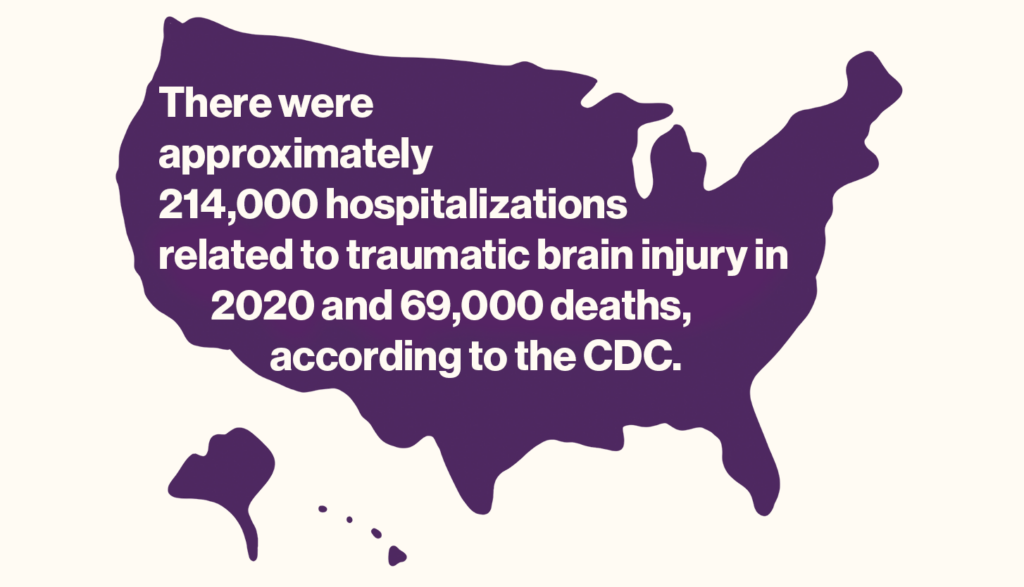
A win for science, and patients, against brain injury ‘nihilism’. “2020: 214,000 hospitalisations for traumatic brain injury and 69,000 deaths.” Source: The Harvard Gazette.

HEALTH

A win for science, and patients, against brain injury ‘nihilism’

Illustrations by Liz Zonarich/Harvard Staff

Alvin Powell

Harvard Staff Writer

February 14, 2024 6 min read

Hope for progress even after a 450-foot fall, trial shows, defying pessimism that hurts research and families

New research may upend the widely held view of traumatic brain injury as a permanently debilitating condition. The findings indicate that electrical stimulation can reawaken quiescent brain circuitry, leading to functional improvements that have the potential to restore work and social activities to patients’ lives. 

There were approximately 214,000 hospitalizations related to traumatic brain injury in 2020 and 69,000 deaths, according to the CDC.

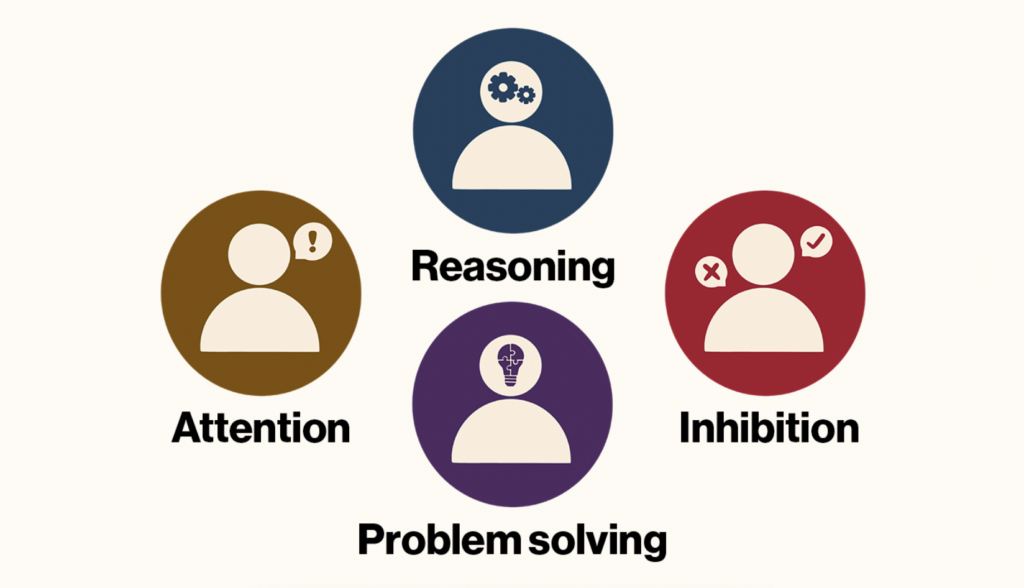
The early stage trial, by investigators at Harvard-affiliated Spaulding Rehabilitation Hospital and colleagues at institutions around the country, including Weill Cornell Medicine, Stanford University, the Cleveland Clinic, and the University of Utah, was completed by five of the six enrolled patients. It yielded improvements of between 15 percent and 52 percent on a standard test of executive function, which involves attention, inhibition, reasoning, problem-solving, and other key aspects of mental processing.  

Examples of executive function

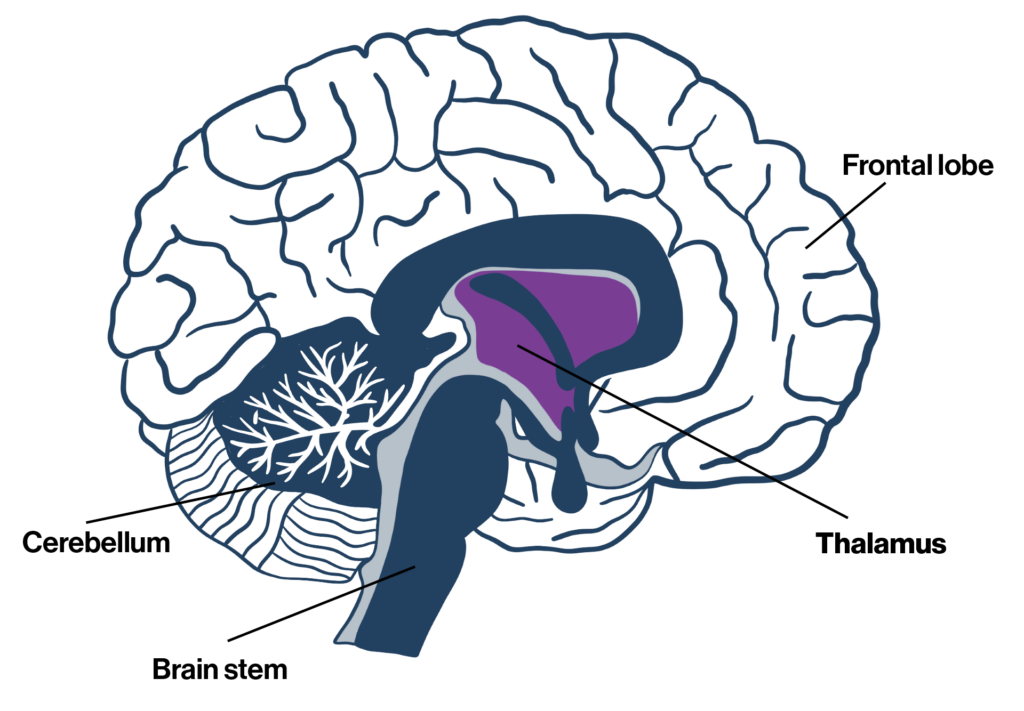
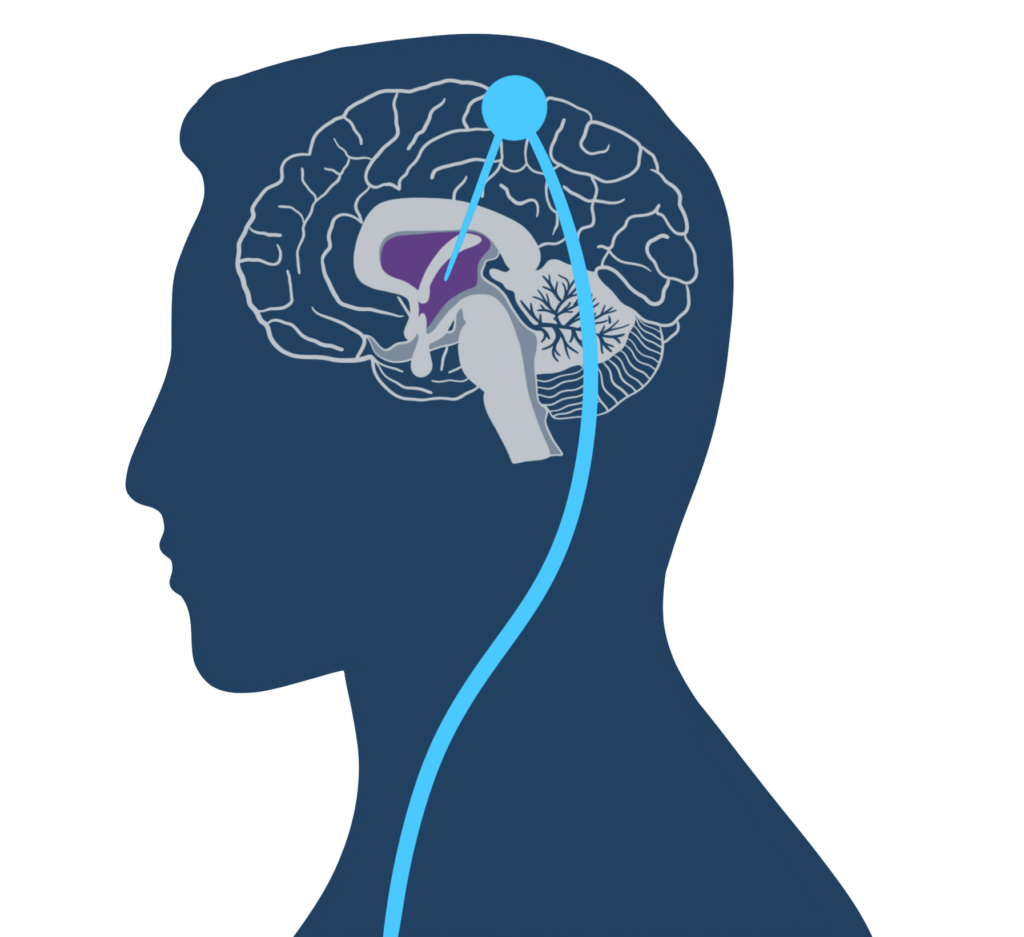
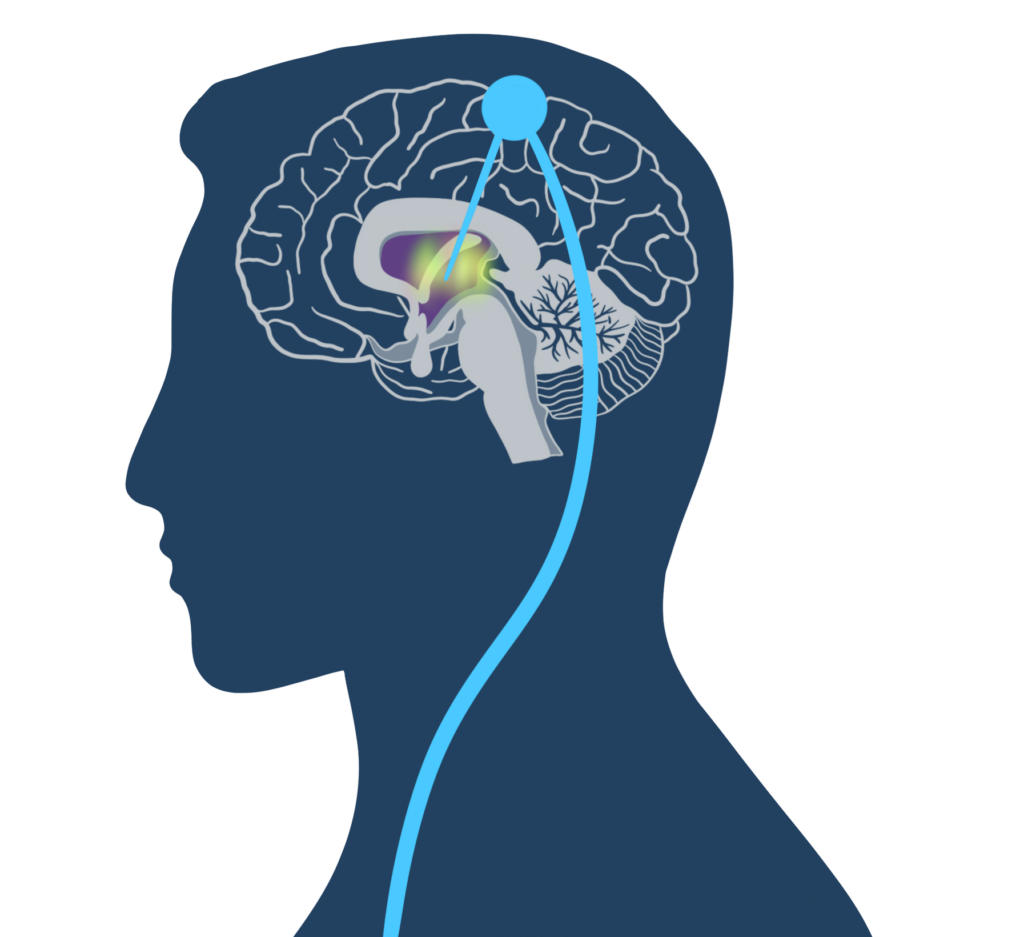
The study, published in December in Nature Medicine, relied on “deep brain stimulation,” in which a battery-powered device is implanted under a patient’s skin. Electrodes extend from the device to a part of the thalamus, which routes signals from one section of the brain to another. 

“There’s a lot of ways to shut parts of the system down,” said Joseph Giacino, Spaulding’s director of rehabilitation neuropsychology and a professor of physical medicine and rehabilitation at Harvard Medical School, who helped design the study. “One is by direct damage to specific structures. Then you have the more common situation where I can damage the pathways that connect those structures and I get the same effect. 

“If the thalamus — this key relay station and signaling system — is damaged, it can’t activate or upregulate those circuits that are relatively spared and could work and perform their role if they had the right input.”

Diagram of brain.
For this study, researchers electrically stimulated the thalamus, the region responsible for routing signals from one part of the brain to another.

The volunteers had suffered moderate to severe brain injury from either a motor vehicle accident or a fall — one from 450 feet and another from roughly 60 feet. The accidents occurred between three and 18 years earlier, long enough that the victims were considered past the immediate post-injury phase when most healing takes place. Each had recovered enough to perform the activities of daily living — personal hygiene, dressing, and feeding themselves — but had not regained pre-injury levels of work, study, and social activities. 

A common view of brain injury, held by both laypeople and the medical community, is that the affected cells cannot regrow, leading to permanent disability. In this case, investigators tested an alternate theory: The idea that some — perhaps many — injuries disrupt signaling between parts of the brain, and it is the loss of communication, rather than cell death, that causes much of the decline in function. If that’s the case, they say, then it’s possible that stimulating brain regions important in communication can restore some function.

The five volunteers received deep-brain stimulation for 12 hours a day for three months. To gauge results, the researchers selected a standard test of executive function called the “trail making test part B” and established 10 percent improvement as a clinically relevant threshold.

By the study’s end, all five patients had exceeded the 10 percent threshold, producing an average improvement of 31.75 percent. The greatest gains, more than 40 percent, were seen in the two who had suffered falls and had the deepest initial deficits. But even those with mild impairment improved by more than 20 percent. Two participants, one injured in a car accident and a second hit by a car while riding a bicycle, regained the ability to work, albeit at reduced capacity, and socialize. The functional status of the other volunteers remained stable.

How does the device work?

The stimulator is placed under the skin in the pectoral region.
Current reaches the electrodes via wires threaded under the skin of the chest and neck and then into the skull.
The electrodes are placed on the brain (central lateral nucleus of the thalamus).
The electrodes stimulate the thalamus.

One mother called her daughter’s improvement “profound” and “a miracle.” None of the participants were “cured,” however. Rather, the implant plays a long-term role analogous to that of a cardiac pacemaker. Even though the trial’s experimental phase concluded years ago, all five participants still have their devices. Some have had new batteries installed.

The researchers don’t understand precisely how deep-brain stimulation improves functioning, but they are skeptical that the artificial signals replace neural messages. The team’s favored explanation, Giacino said, is that the stimulation serves to activate the thalamus, which in turn upregulates viable downstream parts of the brain, restoring at least some signaling capacity.

“I think what it’s doing is putting the brain into a state of readiness, so when the demands are there to engage a particular network or subsystem, it can do that,” he said. 

Patients in the study saw improvements to capabilities that had been considered set in stone for as long as 18 years. This doesn’t mean that deep-brain stimulation is likely to be a universal answer, Giacino noted. And though the work suggests that not all loss of function is due to cell death in specific parts of the brain, some of it undoubtedly is. But overall, the results suggest that it’s time to rethink the idea that brain injury is permanent, he said. A Phase 2 study, set to involve about 50 people, is now in the planning stages.

“The degree of nihilistic belief that exists, both among the lay public and clinicians who see persons with severe brain injury, is remarkable and hugely problematic,” Giacino said. “This belief that if you have a severe brain injury you’re fated to do poorly — you’ll get some period of time in which your brain will naturally try to heal itself and then you’re at your final outcome — has been a problem for clinical practice, for research, for funding, and for people who have severe brain injury and their families.”

The progress of patients in the trial, he added, “helps chip away at the nihilism that really makes our work so much more difficult.”

Posted in Uncategorized | Tagged , , , , | Leave a comment

The Demise Of Traditional Journalism: The Craft Is Quickly Dying – OpEd. Source: Eurasia Review it

The Demise Of Traditional Journalism: The Craft Is Quickly Dying – OpEd

   0 Comments

By Murray Hunter

Back in the 1960s and 70s, the media was referred to as ‘The Fourth Estate’. The media played a role as a check and balance against government abuse of power, corruption, and overreach. The media was an integral part of any healthy democracy.

The old mass media companies prior to the information age, now referred to as the legacy media, carried a reputation for hard headed journalism, which exposed scandals without fear or favour. Walter Cronkite was an icon of creditability and trust in the media. The spirit of journalistic purity was symbolised by Carl Bernstein and Bob Woodward’s expose of the Watergate break in and subsequent cover up. 

Journalism was once a career many aspired to as a noble profession, embedded with ethics and a sense for telling the truth. Some journalists became legendary, after rigorous years of apprenticeship involving hardship and dangerous assignments, where their lives were sometimes at risk. There was a distinct career path, beginning as a junior reporter, beat journalist, investigative journalist, to correspondent, columnist, through to editor. However, most of this generation of modern journalists are long gone. 

The fall of nobility

Over the last three decades the craft of journalism has been losing integrity. This has become much more rapid over the last few years. Mainstream media jobs have disappeared, as local and beat journalism has waned, which was once a traditional training ground. 

Journalists have been forced by their employers to create stories from narratives. Facts now play a secondary role in the creation of ‘propaganda’ pieces. Very few journalists questioned the narrative of ‘weapons of mass destruction’ before the invasion of Iraq. No journalists questioned the narrative of governments during the Covid pandemic, and very few are willing to critically examine the narrative of climate change. The same is occurring over the Russo-Ukraine conflict. Tucker Carlson’s recent interview of Russin President Vladimir Putin was ridiculed by the mainstream media, rather than being seen as important piece of journalism capturing the Russian side of the story. 

Most journalists working toady in the mainstream media are acting for partisan interests. Some use the word ‘presstitute’ to describe the profession today. 

The symbol of today’s discredited media are the Pulitzer prizes given in 2018 regarding Russian election meddling awarded to the New York Times and Washington Post, which was later found to be a complete hoax. 

What has destroyed traditional journalism?

With the concentration of media ownership over the last couple of decades, organization rationalization has drastically reduced the number of jobs available. 

Various media groups have pushed their own editorial lines. This has led to polarization of the media, across a spectrum of bias. 

The release of the ‘Twitter files’ exposed the close relation ship the social media platform had with the various security agencies in the United States. Other disclosures around the world have shown that governments had been leaning on social media platforms to censor criticism. There is no question, governments have (and are) working in collusion with the major social media platforms. 

Organizations like the Public Media Alliance have developed a front against what they define as ‘disinformation’ among its members, which include the ABC and SBS (Australia), CBC (Canada), Mediacorp (Singapore), Thai PBS (Thailand), BBC (UK), and PBS (US). In addition, media organizations receive funding from corporations, such as Pfizer, which restricts open reporting. The Bill & Melinda Gates foundation gave out grants to media outlets like The Guardian in 2020 to support ‘global health’ reporting. 

All of the above has drastically limited the freedom of journalistic expression, where journalists themselves are discouraged from reporting what they believe to be the truth, against narratives their employers support. As a consequence, many talented journalists have sort more lucrative jobs as publicists, speech writers, and political secretaries. 

Investigative journalism is a dangerous occupation. According to the International Federation of Journalists, 120 journalists died on the job in 2023. Most of these have been in war zones. The institutional attacks on journalists are symbolized by the incarceration of Julian Assange at HM Prison Belmarsh in London, since 2019, while fighting extradition to the United States on charges of espionage. The defamation, libel, and Official Secrets Act are used to persecute journalists. Investigative journalist Clare Rewcastle-Brown was recently sentenced to two years jail in Malaysia in absentia for defamation.

Finally, the rapid development of artificial intelligence (AI) is drastically destroying journalism. We are now at the point where some media organizations are creating content through AI, dispensing with journalists all together. This saves media companies paying out massive salaries for journalists, with the AI creation of content from desktop resources. 

Impartial reporting is dead

Journalistic ethics have been forcibly dropped with the rise of the media as a propaganda tool. Objectivity and the facts have fallen victim to self-serving narratives.

Objective reporting has been replaced with ‘ego-journalism’, where news is replaced with opinion orientated commentary, where presenters become ‘brands’ in their own right. These platforms are being used to used to attack and ridicule political figures, in a way that would have not been acceptable a generation ago. 

It’s much easier (and cheaper) to espouse narratives than undertake hard investigative work. Good investigative work is often suppressed by social media censorship in a number of ways. This includes the inability to post certain articles, de-amplifying posts so few read them, modifying algorithms so posts wont show up in search results, labelling an article with so form of pseudo ‘fact check’, or deplatforming a person outright. 

With a concentrated media and less journalists, there is less coverage of a number of issues, leaving large gaps in news coverage, especially local news. Specialist journalists are now few and far between, as senior journalists are often sacrificed for juniors on much lower salaries. 

Traditional journalism is quickly dying, as is the media’s ability to act as a check and balance of government. 

A new era in journalism

However, the above doesn’t mean that journalism is totally dead. Journalism is taking on a new form through independent media. The recent Tucker Carlson interviews of Donald Trump and Vladimir Putin clearly show the rising influence of independent online journalism, much to the dismay of the legacy media. More people are heading across to alternative media, leaving the legacy media in large numbers.

Many journalists from the legacy media are jumping across and creating their own independent organizations, using multiple online platforms to get their material out to consumers. They utilize YouTube, Rumble, X (Twitter), Spotify, and Substack. New organizations like Public (Michael Shallenberger), and The Free Press (Douglas Murray), have their own research and production staff, collecting revenue through paywalls. 

Many new sites open each month, but few find themselves sustainable. There is a lot of experimentation going on with developing specialised newsletters, videos, and podcasts, where consumer monetary support deems them viable. 

There are dangers that many independent platforms are propagating opinionated current affairs. However, this style brings in the numbers and revenue. There is also a danger that some of the platforms these independent journalists use, might be purchased by corporations that censor content. 

There is a solution

The legacy media became concentrated, which fostered fragmentation through those who didn’t want to be part of the system, or left the system altogether. However, these independent platforms, some small and others not so small are competing for the same potential consumers. A single consumer only has a limited amount of money they are prepared to spend on news and opinion. They must choose very selectively, as its not practical to subscribe to multiple independent platforms.

The solution could be the amalgamation of independent platforms into consortiums, where consumers pay one subscription for access of a group of independent sites. This would not be too different than subscribing to Netflix, Disney, or Prime for movie content. Such a s consortium approach will strengthen the power of independent content producers, and make independent journalism accessible to more consumers than at present. 

These consortiums or networks of independent journalists, packaged around anchor sites is the next logical step in the growth and sustainability of independent journalism.

FacebookTwitterEmailFlipboardMastodonShare

Murray Hunter

Murray Hunter has been involved in Asia-Pacific business for the last 30 years as an entrepreneur, consultant, academic, and researcher. As an entrepreneur he was involved in numerous start-ups, developing a lot of patented technology, where one of his enterprises was listed in 1992 as the 5th fastest going company on the BRW/Price Waterhouse Fast100 list in Australia. Murray is now an associate professor at the University Malaysia Perlis, spending a lot of time consulting to Asian governments on community development and village biotechnology, both at the strategic level and “on the ground”. He is also a visiting professor at a number of universities and regular speaker at conferences and workshops in the region. Murray is the author of a number of books, numerous research and conceptual papers in referred journals, and commentator on the issues of entrepreneurship, development, and politics in a number of magazines and online news sites around the world. Murray takes a trans-disciplinary view of issues and events, trying to relate this to the enrichment and empowerment of people in the region.

Posted in Uncategorized | Tagged , , , , | 2 Comments