Is Hungary A Model For The American Right? – OpEd. Source: Eurasia Review

    Hungary's Prime Minister Viktor Orbán with former US President Donald Trump. Photo Credit: Viktor Orbán, X

    Hungary’s Prime Minister Viktor Orbán with former US President Donald Trump. Photo Credit: Viktor Orbán, X

    Is Hungary A Model For The American Right? – OpEd

    0 Comments

    By MISES

    By Tamás Klein

    In recent years, my homeland, Hungary, a small country in central-eastern Europe, has captured the attention of the American public, particularly those on the political Right. Led by Prime Minister Viktor Orbán, Hungary’s government has championed a somewhat “Pat Buchanan” style of conservatism, with a strong emphasis on putting the interests of Hungarian families first and resisting supranational political powers, such as the federalist bureaucrats of the European Union, globalist nongovernmental organizations like the Open Society Foundation backed by George Soros, mass immigration, and other threats to its national sovereignty. Viktor Orbán’s unapologetic embrace of right-wing sovereigntism and noninterventionist foreign policy offers valuable lessons and points of inspiration for the American Right. However, like all states, Hungary is far from being a perfect model; thus, Americans should be cautious when trying to learn from it.

    Dispelling the Smears

    First, it is unfortunately necessary to address and dispel at least some of the most common smears perpetuated by leftists in mainstream Western media. Hungary’s leader, Viktor Orbán, is often portrayed as a puppet of Russian president Vladimir Putin, a narrative that conveniently overlooks the geopolitical realities of the region. While Orbán does maintain good diplomatic relations with Russia—as do many other nations—insinuating that he is under Putin’s thumb is just as unfounded as was the Trump-Russia hoax.

    The reality is that there is a historical minority of about one hundred twenty-five thousand Hungarians living in Transcarpathia, a territory that was unjustly taken away from Hungary after World War I and is currently being occupied by the Ukrainian regime. As any sober-thinking person would realize, Orbán is understandably making sure that the Russian artillery and Air Force do not target his people. Furthermore, Hungary has been dependent on Russian natural gas ever since the communist era, a fact Orbán has endeavored to change. Orbán, being the leader of Hungary and not Ukraine nor the European Union, is first and foremost responsible for the well-being of his people and is completely in the right when refusing to satisfy the absurd demands of the Western Left in Washington and Brussels about completely cutting its diplomatic relationships with Russia.

    Moreover, even though Orbán could have refused to take in refugees from Ukraine, a country that has been terrorizing its Hungarian minority for decades, he decided to provide refuge for the innocent civilians trying to flee this war. But, of course, almost no one in the West gave him credit for his actions. As Paul Gottfried rightly pointed out,

    The media have said little about the world’s “largest democracy,” India, also buying energy from Russia and remaining conspicuously neutral in the Russian-Ukrainian conflict. There is a good reason for that lack of indignation. Since India is predominantly non-Christian, lies outside the West, and has a relatively dark-skinned population, the media is not going to hold that country to the same PC standard as a non-woke Western state.

    But Viktor Orbán, as the leader of a white Christian country, is, of course, held to different standards; but what is this double standard if not antiwhite racism?

    Orbán’s Success

    Viktor Orbán’s success in winning elections through populism cannot be ignored. His ability to tap into the concerns and aspirations of ordinary people has been a driving force behind his political longevity. Moreover, after winning elections, he was able to institute meaningful reforms.

    Since taking office in 2010, Orbán has quickly restored public order from the chaos that the social democrats created. He also instituted a more just and reasonable flat tax than the previous “progressive” tax policy that punished success. Orbán’s government also passed an income tax break for young people under twenty-five and tax relief that increases with the number of children raised by the family. Moreover, he built a fence on the southern border of the country to keep out the masses of invaders coming from the Middle East and Africa. Although receiving massive international attacks for doing so, Orbán has not shied away from confronting the agendas of powerful figures like George Soros, whose funding of leftist NGOs has been a toxic intrusion into Hungary’s domestic affairs. On the war question, Orbán consequently held a “Hungary first” position, advocating for peace and staying out of the Ukraine-Russia conflict, not sending soldiers, weapons, or ammunition. Also, in the European Union parliament, Hungary has been a frequent solo veto against economic sanctions that hurt its people. Orbán also bannedLGBTQ propaganda from schools, putting an end to the “drag queen story hour” before it even really began.

    Orbán’s government has effectively grabbed power by recognizing the concerns of ordinary people and unapologetically pointing out who the enemies are: leftists, socialists, the bureaucrats of the European Union, Soros-backed nongovernmental organizations, warmongers, and more. Thus, by not being afraid to use his political power against the Left, Orbán was able to implement policies that have positioned him as a champion of national sovereignty.

    Proceed with Caution

    While Hungary’s successes under Orbán cannot be understated, American right-wingers must proceed with caution before embracing it as a flawless model. Like any nation, Hungary has its share of challenges and imperfections, many of which are legacies of its communist past and the social democrats that came after it and before Orbán. Also, since Orbán must play by the rules of the game—that is, a democracy—he has to appeal to a population that grew up in socialism; thus, often, even though he most likely understands how some of his policies are detrimental to the economy, he has an election to win in order to make any reforms and thus has to embrace bad economic policies to please the Hungarian public. Nevertheless, high taxes, massive bureaucracies, inflation, economic regulations, price controls, subsidies, protectionist trade policies, and the promotion of green energy are all things that exist under Orbán and greatly hinder economic prosperity.

    Moreover, the extreme regulations on gun ownership and the effective impossibility of obtaining permits to carry firearms for self-defense are not something that we, Hungarians, can be proud of either. Additionally, Orbán’s government sadly also passed a new Public Education Law that extensively regulates private schools, effectively bans homeschooling, and makes kindergarten mandatory from age four.

    Learning from Each Other

    In considering Hungary as a model, the American Right should recognize both its strengths and weaknesses. Orbán’s strategic approach to politics and his ability to enact meaningful policies that protect Hungary’s sovereignty and identity from global leftist hegemony offer valuable lessons. However, blindly adopting all aspects of Hungary’s governance would be shortsighted. Americans should be selective, taking inspiration from Orbán’s successes while remaining vigilant against policies that undermine liberty and prosperity.

    Additionally, Hungary could benefit from observing the American Right, especially paleolibertarians, particularly in areas such as free-market economics, sound money, the importance of the right to bear arms, and the sovereignty of parents over their children’s education. By learning from each other, both Hungary and the American Right could greatly benefit. To ensure that both sides only learn from each other the good and not the bad, it is vital to keep in mind the words of Saint Basil the Great in his “Address to Young Men on the Right Use of Greek Literature.” In it, Saint Basil the Great of Caesarea gave guidance to the Christian youth about whether they should read literature from pagan sources, such as the great Greek philosophers. St. Basil instructed them to do so but with caution, only taking the good and leaving the bad:

    Now, then, altogether after the manner of bees must we use these writings, for the bees do not visit all the flowers without discrimination, nor indeed do they seek to carry away entire those upon which they light, but rather, having taken so much as is adapted to their needs, they let the rest go. So we, if wise, shall take from heathen books whatever befits us and is allied to the truth, and shall pass over the rest. And just as in culling roses we avoid the thorns, from such writings as these we will gather everything useful, and guard against the noxious.

    In conclusion, Hungary under Viktor Orbán presents a compelling case study for the American Right, showcasing the power of right-sovereigntist populism. However, it is essential to approach the Hungarian model with wisdom. The relationship between Hungary and the American Right should mirror the wisdom of Saint Basil’s counsel on using Greek literature. Just as bees selectively gather nectar from flowers, Americans should selectively adopt elements from Hungary’s model that align with its principles and goals while guarding against those that may be detrimental. And we, as Austrians and paleolibertarians, must be ready to point out when fellow right-wingers are about to take “poison with honey.” By doing so, the American Right can continue advancing its vision for a better future, guided by wisdom and discernment.

    • About the author: Tamás Klein is a Hungarian paleolibertarian and an economics student at Grove City College. He is the president of the Mises Society at Grove City College and an apprentice for the Mises Institute.
    • Source: This article was published by the Mises Institute
    Posted in Uncategorized | Tagged , , , , | Leave a comment

    Addicted ??? Design Trick that we should know about. Source: Harvard

    Center for Digital Thriving

    Digital Thriving

    Resource: Design Tricks

    How can we thrive with technologies that aren’t designed for well-being? 

    Technology companies compete for our time and attention; this is the “attention economy” that prioritizes our clicks over our thriving. Design choices like autoplay, notifications, and algorithms can compromise our sense of control (our digital agency.) These resources start to expose what is so often hidden and invite us to consider how design choices are not neutral.

    Mind Control Video https://www.youtube.com/embed/EY13xhNYsJw?si=AdvAektuB3ykjmyc

    This video, which was co-created and co-produced by Common Sense Education and the education team at KQED, highlights examples of some common design tricks used by tech companies.

    Reflection

    After watching the video, use this one-page guide to reflect on the content.

    Lesson Plan

    For a video discussion guide and to learn more about how to teach about Design Tricks explore this lesson plan we co-created with Common Sense Education.

    Tech + Values

    Design Tricks

    Thinking Traps

    Tech Habits

    Upcoming Resources

    Center for Digital Thriving


    A research and innovation center based at Project Zero at Harvard Graduate School of Education. Our mission is to create knowledge and research-based resources that help people – especially youth – thrive in a tech-filled world.

    Floral illustrations by Sollos. Sketch illustrations by Beck Tench.

    Connect with us.

    digitalthriving@gse.harvard.edu

    Subscribe to our newsletter.

    TwitterInstagramTikTok

    Posted in Uncategorized | Tagged , , , , | Leave a comment

    Ecocide, we are aware of the many countries at war but Climate Change is the war of nature against humanity. Source: Jagan Chapagain, Secretary General of the International Federation of the Red Cross and Red Crescent Societies (IFRC)

    Jagan Chapagain

    Secretary General of the International Federation of Red Cross and Red Crescent Societies (IFRC)

    27 Mar 2024

    A view of sign board warning of extreme heat in Death Valley, California, US July 15, 2023. [Jorge Garcia/File Photo/Reuters]

    Twenty million people dead in a heatwave, some poached alive in a lake they hoped to cool off in.

    It is, for now, science fiction.

    KEEP READING

    list of 4 itemslist 1 of 4

    Photos: Brazil races to the rescue as storm death toll rises

    list 2 of 4

    Global water crisis fuelling more conflicts, UN report warns

    list 3 of 4

    India’s Bengaluru fast running out of water – and it’s not summer yet

    list 4 of 4

    Is nuclear power on the verge of a revival?

    end of list

    Kim Stanley Robinson’s apocalyptic novel, Ministry for the Future, starts in an Indian town where many have not survived a summer night. By day, the survivors are choked with the fumes of generators powering air conditioners. The air is “like breathing through the exhaust pipe of an old bus”, he writes.

    We’re not there, yet. But extreme heat, far less visually dramatic than hurricanes or floods, is claiming lives and livelihoods with a stealth that belies its impact. Climate change is dramatically increasing the probability that we will see a mass fatality extreme heat disaster soon.

    Extreme heat is not only an issue in the Northern Hemisphere from June to September. As I write, in March, there’s an unprecedented closure of schools across South Sudan. It’s due not to conflict or economic woes but an extraordinary surge in temperatures to more than 42 degrees Celsius (108 degrees Fahrenheit). Parts of South America and Australia are just emerging from their two hottest summers ever. Worldwide, 2023 was the hottest on record – by a huge margin. Half the world’s people – 3.8 billion in fact – simmered under extreme heat for at least one day last year.

    Heatwaves across Europe killed more than 60,000 people in 2022. In the United Kingdom, roads melted and almost 3,000 people died. India sees at least 1,000 deaths a year attributable to extreme heat. In the United States, the number is similar. Extreme heat there kills more people than floods and tornadoes combined. According to The Lancet medical journal, China is on track to see from 20,000 to 80,000 heatwave deaths a year.

    And all these figures are, in fact, probably gross underestimates. Unlike deaths in floods, most of those during heatwaves are recorded as something medical. Extreme heat is the silent assassin of climate change.

    It’s to expose this and propose solutions that the inaugural Global Summit on Extreme Heat is convening this week. Jointly hosted by my organisation, the International Federation of Red Cross and Red Crescent Societies, and by the US Agency for International Development, the online forum will bring together thinkers and doers. Because there’s a lot to think about. And even more to do.

    Climate change, of course, exacerbates extreme heat. World Weather Attribution reports like a recent one about heat in southern West Africa show – near unequivocally – that heatwaves are much more frequent and hotter because of a generally warmer world. This underscores the need to mitigate emissions. But no amount of action now will stop heatwaves in our lifetimes. What we can do is cope better when they hit by preparing before they do.

    How?

    Sign up for Al Jazeera

    Weekly Newsletter

    The latest news from around the world. Timely. Accurate. Fair.Subscribe

    By signing up, you agree to our Privacy Policy

    protected by reCAPTCHA

    First, by focusing on the most vulnerable. Heatwaves have a disproportionate impact on those in cities, where heat is often trapped, and on those without the means to escape either literally or into air-conditioned cocoons. Cities need plans. City planners increasingly recognise this. Two-thirds of those who responded to a survey by The Lancet said they were concerned about climate change impacting public health. Extreme heat was the most frequently identified hazard, named by 72 percent of respondents. Heat action plans identify vulnerable groups and “heat island” or “hot spot” areas. They identify triggers for action and warnings and assign clear roles and responsibilities. They test innovative but simple solutions like shades over crowded outdoor areas such as markets and tree planting within informal settlements. Freetown in Sierra Leone recently launched its plan. I’m delighted Freetown’s mayor will be speaking at the summit.

    Red Cross and Red Crescent Societies often help with such plans. Kenya’s Red Cross, for example, has worked with scientists, researchers, city authorities and community leaders to map out areas of highest heat risk in Nairobi’s informal settlements. Red Cross and Red Crescent Societies have done similar studies in Cape Town, Hanoi, Mexico City and Dhaka.

    Second, by prioritising early warnings and early actions. Turning science and forecasts into accessible information saves lives. People warned in advance make better decisions and take better actions. That can be through media but also through telephone calls to people registered as vulnerable months ahead of time – Australia’s Telecross RED is one example. Anticipatory action – moving those who can move, for example, or putting temporary cooling infrastructure in place – also saves lives. In Hanoi, before a recent heatwave, volunteers with Vietnam’s Red Cross positioned mobile cooling centres near areas where street vendors and motorcycle riders gathered. Spain rosters more lifeguards on beaches on days projected to be the hottest, knowing that it’s on them that the least experienced swimmers venture into the sea.

    Advertisement

    Third, by putting power in the hands of those on the ground. Local people know their communities best. Fellow residents trust them. Skills and resources can be shared quickly and efficiently. Fatema Khatun and Sayma Khatun Bithi are two of many Red Crescent volunteers in Bangladesh who teach first-aid skills, including how to help someone who falls unconscious due to overheating.

    Above all, though, addressing extreme heat starts with highlighting the problem. At this week’s global summit, we’ll be announcing a two-month campaign of action on extreme heat ahead of Heat Action Day itself on June 2. We’ll be launching an online toolkit to help guide people with what they can do to spread knowledge and prepare for the Northern Hemisphere’s summer, which for many has already begun.

    Science fiction is deliberately scary. Reality need not be. With the right anticipation and action, the worst scenarios can remain in the realm of the imagination.

    The views expressed in this article are the author’s own and do not necessarily reflect Al Jazeera’s editorial stance.

    Posted in Uncategorized | Tagged , , , , | Leave a comment

    Introduction to Cyberpsychology | Dr. Mary Aiken. Highly recommend Mary Aiken’s book “The Cyber Effect”. It should compulsory reading for the parents of all school going children

    Capitol Technology University

    1,803 views 18 Sept 2023

    It was a landmark event for cyberpsychology. Earlier this year, the Office of the Director of National Intelligence announced an Intelligence Advanced Research Projects Activity (IARPA) initiative called “Reimagining Security with Cyberpsychology-Informed Network Defenses,” or ReSCIND. The program aims to improve cybersecurity by developing a new set of cyberpsychology-informed defenses that will leverage an attacker’s human limitations, such as innate decision-making biases and cognitive vulnerabilities. (www.iarpa.gov/research-programs/rescind) Cyberpsychology is the study of the impact of emerging technology on human behavior. Cyberpsychologists provide insight into the intersection between humans and technology. The cyber behavioral sciences are growing exponentially due to the rapid acceleration of Internet technologies and the unprecedented pervasive and profound influence of technology on human beings. In this webinar, we will look at this emerging field. Noted cyberpsychologist Dr. Mary Aiken will discuss several critical cyberpsychological constructs and topics, including the IARPA ReSCIND project and cyber attacker cognitive vulnerabilities, the Online Disinhibition Effect (ODE), anonymity online, human and technical drivers of cybercrime, online safety technologies (SafetyTech), escalation and amplification in cyber contexts, human factors in cybersecurity, forensic cyberpsychology, cyber behavioral profiling, organized cybercrime, cyber leadership and resilience in cyberspace.


    Posted in Uncategorized | Tagged , , , , | Leave a comment

    Why the Tavistock gender identity clinic was forced to shut … and what happens next. Observer

    The Observer Transgender

    Why the Tavistock gender identity clinic was forced to shut … and what happens next

    The clinic at the heart of a heated national debate formally closes this weekend. The journalist who told the inside story of its practice reflects on those it leaves behind

    Hannah Barnes

    Sun 31 Mar 2024 13.00 CEST Share

    It was a report in this newspaper that sparked my real interest in Gids – that made me ask “what’s going on?”. It was November 2018 and the article, by Jamie Doward, revealed that the Gender Identity Development Service, to use its full title, was undertaking a review. The details were scarce, but a senior member of staff had claimed that the service was “failing to examine fully the psychological and social reasons behind young people’s desire to change gender”.

    In the week that Gids’s 35-year history has finally ended, I’ve been thinking about that time. How it set the scene of what would unfold over the next few years, and how things could have been so different. What if NHS England had acted when it saw a report of those concerns? It didn’t, and the service remained open for another six years. A service which referred children for puberty-blocking drugs, without robust data to support that this was beneficial, and that shut down the concerns of a growing number of its own staff.

    https://ed5bd1dbbcb3a6f1d8cb1867a3cdab9d.safeframe.googlesyndication.com/safeframe/1-0-40/html/container.html

    Those professionals never questioned the identity of the young people they saw, nor the intensity of their distress. What they questioned was whether the NHS service they worked in was providing safe, evidence-based care for thousands of vulnerable children, or whether they might, in fact, be witnessing a medical scandal unfold.

    In February 2019, just a few months later, more details emerged – in the Sunday Times, and then in the Observer. The senior staff member mentioned was Dr David Bell, a highly respected psychiatrist and psychoanalyst. These weren’t his claims and concerns per se – though he clearly shared them – but, rather, 10 members of clinical staff from Gids had gone to him with their worries about how the service was operating.

    NHS whistleblowers are uncommon. To have 10, from one small clinic, is unheard of. I didn’t know if what they were saying was true, but the claims were extremely serious. I wanted to find out more.

    And that started a process resulting in a series of films for BBC Newsnight, together with my then colleague Deborah Cohen, and later a book chronicling this extraordinary episode in NHS history.

    The clinicians had sought out Bell after repeatedly raising concerns within Gids and the wider Tavistock itself to no avail. They told him how the service was unable to cope – the number seeking its help had increased tenfold in just five years. There was enormous pressure to “process referrals rapidly”, or, more bluntly, refer children on to endocrinologists who would prescribe puberty-blocking drugs.

    Blue and white NHS welcome sign at the entrance to the Tavistock Centre
    The Tavistock is due to be replaced by two clinics, one in London and one in north-west England. Photograph: Dan Kitwood/Getty Images

    Sometimes – though not often – this would happen after just an hour or two, staff said. Procedures for gaining consent to these potentially life-altering treatments were inadequate, and many of these children, staff explained, were vulnerable. Many were autistic. Many had been bullied, in some instances after coming out as gay. Most were unhappy. These children had complicated lives, and sometimes had suffered horrendous abuse or trauma. But this wasn’t always explored properly before referring for medication.

    In a small minority of cases, it’s difficult to properly convey just how troubled these children were. Some were non-verbal. Some could not read or write. Others even identified as another race.

    The official review that followed Bell’s report didn’t give Gids a clean bill of health, but the Tavistock trust told the press that the service had been found to be “safe and operating in line with the best practice in this field internationally”. The trust’s chief executive insisted that “none of the concerns around safety or safeguarding [highlighted by Dr Bell] were upheld by our medical director”. This wasn’t true. And the message underpinning these public statements was symptomatic of how the trust was responding to the difficulties Gids was facing.

    The Tavistock told this newspaper in November 2018 that it was “concerned by the tone and manner in which these allegations have been made”, and that they revealed “a negative attitude to gender dysphoria and gender identity”.

    For some who had contributed to Bell’s report, this confirmed what they had been saying all along: that if you raised concerns, you would face accusations of transphobia. That word wasn’t used in the statement, but it’s how staff interpreted it. When Bell’s report was leaked, the trust claimed that it “presented hypothetical vignettes, rather than actual case studies”. This was also untrue. Some were so appalled by the statement that they resigned. Others who stayed at the trust say it sent a message: if you spoke out, you would be vilified.

    When, in June 2020, Newsnight broadcast parts of transcripts of official interviews clinicians had held with the Tavistock’s medical director as part of that review, the trust’s claims didn’t stand up. A sizeable minority of staff had, in fact, told him that Gids’s model of care was unsafe, and that some children were being harmed.

    At about the same time, legal proceedings against the Tavistock trust questioned whether children could properly consent to treatment with puberty blockers. Keira Bell, the lead claimant, was referred for the drugs after just three or four appointments. She was also prescribed testosterone while under Gids’s care. A double mastectomy followed via adult services and, aged 22, she regretted it all. No alternatives had been explored by the service at the time, she said.

    Keira Bell stands outside the entrance tot he Royal Courts of Justice
    Keira Bell, a former patient at the Tavistock, became the lead claimant in legal proceedings against it. Photograph: David Levene/The Guardian

    The case was ultimately lost on appeal, but it showed how, over 30 years, Gids appeared to have collected no meaningful data on its patients or its core treatment pathway. It could not tell the court how many children had been referred for puberty blockers, how old they had been, what sex they were, or if they had gone on to take hormones.

    Change quickly followed Newsnight’s broadcast and the start of litigation. In September 2020, NHS England announced that paediatrician Dr Hilary Cass would undertake an independent review of gender identity services for children and young people. The Care Quality Commission (CQC) inspected Gids a month later. It rated the service inadequate and, in a damning report, upheld most of the concerns clinicians had been raising for years.

    Contrary to denials from the Tavistock, the CQC found examples of two-session assessments (the trust would later concede that one-session assessments had occurred too). The watchdog noted that Gids did not always adequately manage risk; that consent was not recorded routinely; and that some staff “felt unable to raise concerns without fear of retribution”. In some cases, it said, “there was no clear rationale for clinical decision making”.

    Cass’s interim review, published in February 2022, marked the beginning of the end for Gids. The “single specialist provider model is not a safe or viable long-term option”, she wrote; a “fundamentally different service model” was needed.

    Once children with complex needs were identified as having gender-related distress, those other important healthcare issues were sometimes overlooked, she said. There were “significant gaps in the research and evidence base”, and Gids’s “clinical approach has not been subjected to some of the usual control measures that are typically applied when new or innovative treatments are introduced”, the report explained. Cass was referring, diplomatically, to NHS England allowing Gids to routinely refer children as young as nine for puberty blockers from 2014 onwards, without insisting on any robust data to support the policy.skip past newsletter promotion

    Sign up to Headlines UK

    Free newsletter

    Get the day’s headlines and highlights emailed direct to you every morning

    Enter your email addressSign up

    https://www.google.com/recaptcha/api2/anchor?ar=1&k=6LdzlmsdAAAAALFH63cBVagSFPuuHXQ9OfpIDdMc&co=aHR0cHM6Ly93d3cudGhlZ3VhcmRpYW4uY29tOjQ0Mw..&hl=en&type=image&v=moV1mTgQ6S91nuTnmll4Y9yf&theme=light&size=invisible&badge=bottomright&cb=pvdnslnfxc36Privacy Notice: Newsletters may contain info about charities, online ads, and content funded by outside parties. For more information see our Privacy Policy. We use Google reCaptcha to protect our website and the Google Privacy Policy and Terms of Service apply.

    On 28 July 2022, NHS England announced its intention to close Gids. It would be replaced, initially, by two new regional services – one in London, the other in north-west England. They would follow a very different model of care, offering more “holistic treatment”, “a range of pathways”, and with the primary intervention being “psychological support” – not medication. NHS England confirmed on 12 March that puberty blockers would not be available going forward because there was not enough evidence to support their safety or clinical effectiveness. Blockers will not be prescribed on the NHS unless and until a research trial has been established.

    NHS England has updated its policy around hormones accordingly. Previously, someone could start hormones at “around their 16th birthday” (interpreted by Gids staff as 15 years and nine months) only if they had been on blockers for 12 months beforehand. Otherwise, they would have to wait to access adult services. NHS England’s new policy – largely copy-and-pasted from the previous one, complete with out-of-date document references – confirms hormones will now be available without the need for prior treatment with puberty blockers. A new safeguarding measure has been introduced whereby a national clinical team will have to agree the young person meets all relevant criteria for the drugs. The policy will be reviewed following Cass’s final recommendations, so may well be short-lived.

    The opening of the new youth gender service has been beset by delays; the aim was to have the first two clinics running by spring 2023. They will finally open on Monday, while a third is being set up in the Bristol area. Over time, there may be up to eight operating across England.

    But it won’t be easy. Great Ormond Street hospital, one of the trusts involved in the London services, has found it so difficult to recruit staff that it took to offering a £500 “refer a friend” bonus as part of its most recent recruitment drive. “Our two new providers on their own are not going to be able to make a significant dent immediately in that waiting list,” John Stewart, NHS England’s national director for specialised services, has confirmed. There is little to smile about for the 6,000 or so children on the waiting list for help. Some have already waited five years, and no one will be coming off that list soon – if ever.

    Dr David Bell poses for a photograph in his  office, sitting at his desk in front of bookshelves
    Dr David Bell at his office in London. Photograph: Antonio Olmos/The Observer

    Initially, the only children who will be seen by the new services will be those whose care is being transferred from Gids. But only 250 of them. According to Tavistock board minutes, 58 patients will require a face-to-face handover because of “complexity and/or risk”. Anyone already receiving puberty blockers or cross-sex hormones, or who has been referred to endocrinology but not begun treatment, will not have their care overseen by the new services. This is about 400 children and young people, NHS England told me. Some are eligible to be transferred to adult clinics; the others will receive a “wraparound service” from Nottinghamshire Healthcare NHS foundation trust.

    There are few details about the arrangement, which I first revealed in the New Statesman. The BBC has reported that job adverts for senior roles in this new service only closed to applicants the week before last. The choice of Nottinghamshire is also somewhat surprising: its CQC ratings are currently suspended because of a series of problems.

    Others have stepped into the void created by a stagnant Gids (about half the clinical and administrative teams have left since its closure was announced) and the absence of new services, recognising that there are high levels of distress and huge demand for interventions.

    It seems that some GP practices are sidestepping NHS guidance in their approach to young people aged between 16 and 18. One prescribes hormones to 16-year-olds at their first appointment, and says it follows an informed-consent model of care. As a rationale, the practice cites “Gillick competence” – the legal principle that a child may be sufficiently informed to consent to treatment on their own – and rules over interim “bridging prescriptions”, saying it is a harm-reduction measure while patients wait to be seen at a specialist gender clinic. It is not at all clear that this is correct: GMC guidance states bridging prescriptions only apply to “doctors treating adults”, and they are not generally used to start treatment.

    The private sector has seized the opportunity, too. Gender Plus, a private service, currently lists 10 Gids workers, or those who have worked in endocrinology services connected to Gids, on its team. Predominantly aimed at the 16-25 age group, Gender Plus will prescribe hormones to those 16 and older. Under-18s will need to have about six appointments, spanning six months, before being eligible for hormones, with each hour-long appointment costing £275.

    The Gender Plus team have stated their opposition to NHS England’s plans to end the routine prescription of puberty blockers. And while its own hormone clinic won’t prescribe puberty blockers to under-16s, it will inform them of those that will. Gender Plus argues that its approach to care is in line with best practice, as demonstrated by NHS England’s recent policy update on hormones.

    Cass’s long-awaited final report and recommendations on youth gender identity services will be published in the next fortnight. There is an opportunity to change the way gender-questioning young people are cared for – with compassion and underpinned by research and evidence, just like other areas of healthcare. This approach will no doubt be challenged, while private providers and NHS GPs alike continue to do their own thing.

    NHS England will have to do far better than it has in the past at providing oversight to ensure Cass’s recommendations are followed. It knew of serious concerns about Gids from at least 2018. Thousands of distressed young people have been badly let down and are now lingering on a waiting list, wanting help. Many will believe what “experts” have told them – that puberty blockers are the only thing that can take away their pain – and be distraught that these are now unavailable. There will be no quick fixes.

    Hannah Barnes is associate editor at the New Statesman. The updated paperback edition of her book, Time to Think: The Inside Story of the Collapse of the Tavistock’s Gender Service for Children (Swift Press), was published on 28 March

    Posted in Uncategorized | Tagged , , , , | Leave a comment

    Easter: An article in Irish Examiner about the Poor Clare sisters. Reminds me of a friend, long ago, who had a sister who was a poor clare. To reminisce I have chosen this today.

    'It’s regular we get mothers writing in for their daughters to find a good partner'
    Sr Canice Conan, Sr Mary Agnes, Sr Analiza, Sr Choolwe, Sr Dominic and Mother Rosario at the Poor Clare Monastery in Graiguecullen, Co Carlow.  Picture: Patrick Browne

    Sat, 30 Mar, 2024 – 01:00

    Ciara Phelan, Senior Correspondent

    Inside a monastery, over 100 years old, a wooden grid separates a group of enclosed nuns sitting silently, waiting for their visitor.

    It’s evident all over their faces they rarely spend time outdoors. Smooth skin, without a wrinkle — a sign of a life of no hardship, only peace.

    The walls are adorned with paintings and statues of Jesus Christ and Mary, mother of Jesus. The room is large and cold but there is a warm presence.

    The monastery in Graiguecullen, Co Carlow, is home to 10 Poor Clares, of which six sat down for a rare interview: Sr Conan, Sr Mary Agnes, Sr Analiza, Sr Choolwe, Sr Dominic, and Mother Rosario.

    The remainder are praying, something they have dedicated their whole lives to.

    “People think we’re very serious, that we don’t laugh or talk,” Sr Dominic says.

    The experience is quite the opposite of what people may believe, given on multiple occasions, the room is filled with laughter.

    Although there has been a decrease in the number of people visiting the Poor Clares in recent years, there are a few new faces. People are searching for a sense of belonging. What’s absolute is there is no decline in the number of letters they receive from the public.

    From farmers praying their cattle will be cleared from tuberculosis to mothers seeking help from the nuns for their daughter or son to find a life partner, the nation keeps the Poor Clares busy.

    Sr Canice said: “Sickness and asking for prayers for their families, babies and exams. People asking for prayer so that they can have a family, that is very common now, court cases too.”

    Mother Rosario: “Farmers write in asking for prayer to be said for good weather for their crops and animals and that their TB tests will be clear, we get that a lot too.”

    However, there has been an overwhelming demand for prayers from mothers who want their children to settle down.

    https://1261daf5c1b3e923a23630769f39f906.safeframe.googlesyndication.com/safeframe/1-0-40/html/container.html

    Mother Rosario said: “It’s regular we get mothers writing in for their daughters to find a good partner, it’s terribly important to them. When people have big decisions to make they also write looking for guidance such as making their will, advice on a boyfriend or selling their home.”

    It’s not always the big life decisions, though.

    “We also get people asking us to pray for their dogs and the delivery of puppies if they’re pregnant,” Sr Analiza laughed.

    Sr Canice reveals she has just finished responding to people who have written to her since Christmas.

    All six nuns had a similar calling from God to join the Poor Clares. They felt they had a vocation and wanted to live a religious life and did so between the ages of 18 and 30. Picture: Patrick BrowneAll six nuns had a similar calling from God to join the Poor Clares. They felt they had a vocation and wanted to live a religious life and did so between the ages of 18 and 30. Picture: Patrick Browne
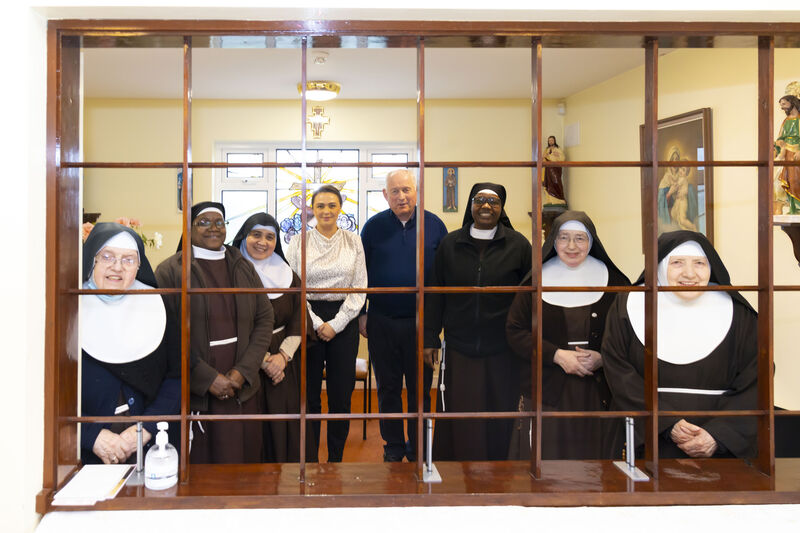
    All six nuns had a similar calling from God to join the Poor Clares. They felt they had a vocation and wanted to live a religious life and did so between the ages of 18 and 30.

    Devastation felt by their families of their decision to dedicate their lives to enclosure and prayer was also a commonality.

    It’s a myth that a bell is rung loudly by the nuns to alert the public that they are low on supplies. However, Sr Dominic said they depended solely on the community to provide food and whatever they need, only ever leaving the monastery if it’s a serious matter.

    And despite the lifestyle, there are young women making enquiries about joining the monastery.

    However, on quick inspection and the reality of what life will be life, not many decide to stay.

    Mother Rosario said: “We get enquiries up and down but not as many as we did. They might come for a weekend or a visit but when they see enclosure and the commitment, it puts them off.

    “You know when you talk to them, they probably know themselves too that they’re not ready.”

    There is complete silence from evening until after breakfast in the morning but “you wouldn’t feel the time going”, said Sr Dominic.

    Their monastery cells are small, consisting of a bed, a wardrobe and a few shelves, a stool and if there’s space, there might be a table.

    “It’s your private space where you talk to the Lord. We wouldn’t go in and visit each others cells at all,” Sr Analiza said, who once was a pharmacist in the Philippines before joining the Poor Clares.

    Why are young women coming to explore the possibility of becoming a Poor Clare?

    Sr Canice Conan, Sr Mary Agnes, Sr Analiza, Sr Choolwe, Sr Dominic and Mother Rosario with Ciara Phelan and Fr Dunphy. Picture: Patrick BrowneSr Canice Conan, Sr Mary Agnes, Sr Analiza, Sr Choolwe, Sr Dominic and Mother Rosario with Ciara Phelan and Fr Dunphy. Picture: Patrick Browne

    Mother Rosario: “They are trying to escape life outside and then some would genuinely be searching, not sure what God wants or what they want.

    “One beautiful girl came to us and she just can’t make any decisions in life.”

    Sr Mary-Agnes first joined the Poor Clares in Zambia when she was 22 years old but Mother Rosario believes this is now too young for people who may be confused about their path in life. 

    The ideal age is someone in their late 20s, who has lived and experienced life and has no doubt about making a commitment to giving up the rest of their days to prayer. 

    Joining at the age of 18 and after her Leaving Cert, Mother Rosario said she always thought of the religious life from a very young age. She said she “heard a voice” from the Lord who told her he wanted her as a Poor Clare, the last place she wanted to go.

    I said to the Lord, I’d never be able to stay there and the Lord said I’ll give you the grace and I knew I couldn’t back out.

    “I got tremendous peace and happiness, I never looked back,” she said.

    Mother Rosario has also accidentally connected with people through social media.

    The Poor Clares Facebook page has surpassed 22,000 followers, which “took off like wildfire”, Mother Rosario said.

    “It was set up for vocations and I just shared prayers first thing in the morning and then people began writing in through Facebook looking for prayers. I never intended for it to go like that but it did. People say the prayer I posted that day helped them out someway,” she added.

    The nuns explain how sorrow will come into everyone’s lives when asked what is their message to people who have difficulty believing in their faith due to live events or the tragic loss of a loved one. It’s their belief that if people hold onto their faith, healing comes quicker.

    Mother Rosario: “You’re never going to get through this life without sorrow. It’s not a bed of roses.”

    To those who are at a crossroads, struggling or seeking to reconnect to their faith, what’s the best approach?

    Sr Analiza: “People outside say they’ve no time for prayer. Every time, they’re on the phone from when they wake up. If you want to connect yourself and with the Lord, you have to pray so you know what’s happening in this world and you really need God in your life.”

    Sr Dominic added: “God’s love, he has enough for every one of us no matter who you are, where you come from or our history or background. God loves each of us and when you realise that, it gives you a great sense of belonging.”

    Part 2: The future of the church

    Fewer Sunday Masses, a hunger for spirituality and the need to pay lay people to keep parishes functioning is on the minds of figures who are attempting to keep religion alive in Ireland.

    As families join together to mark Easter, the Irish Examiner spoke to priests, nuns and lay people to hear their thoughts on what they believe the role of the Church and priests in communities will look like in the future.

    Fr Tom Hayes in Clonakilty, Co Cork, believes people are desperately searching for a sense of belonging. File picture: Andy GibsonFr Tom Hayes in Clonakilty, Co Cork, believes people are desperately searching for a sense of belonging. File picture: Andy Gibson
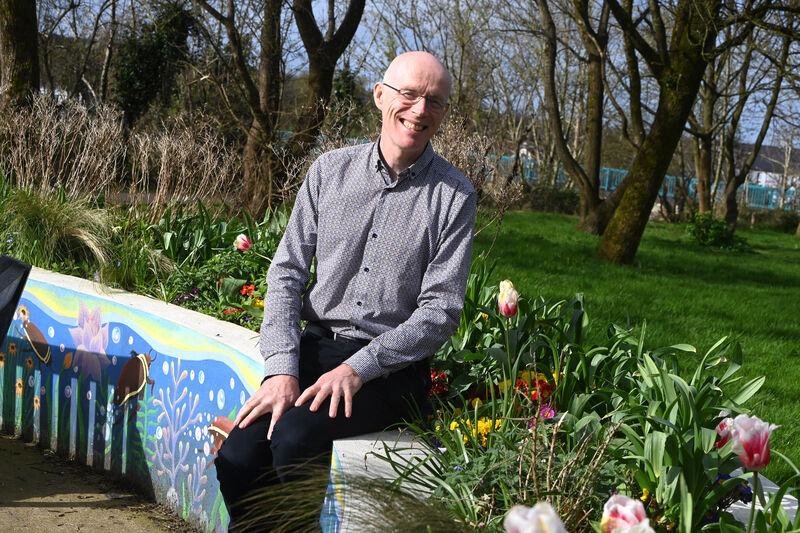
    While the results of Census 2022 have shown there has been a 10% drop in the number of people who identify as Catholics in Ireland and a 63% increase in people having no religion since the last census six years ago, Fr Tom Hayes in Clonakilty, Co Cork, believes people are desperately searching for a sense of belonging. And he’s not alone.

    “I think the biggest changes there is that when I was a youngster, practically everybody in the country went to Mass on Sunday and I never had to ask why,” he said.

    “I think what’s happened in the interim is that now people who are going to Mass now are not going just because of social conformity but they’re going because they actually have a deeper connection with what it means and what it’s really about.

    https://1261daf5c1b3e923a23630769f39f906.safeframe.googlesyndication.com/safeframe/1-0-40/html/container.html

    “I think at the same time, you know, there’s definitely more and more people kind of searching and looking for a kind of a deeper connection.

    “So I think that makes for kind of a stronger faith community, even if it’s smaller in numbers, and it also has the capacity to grow on that foundation then, which is a foundation of personal conviction.”

    Fr Hayes said the older members of the faith communities are happy with their beliefs and connection to God. Younger people are now more likely to have questions, he believes.

    “I think a lot of younger people are what I would call questing, you know, it’s kind of a mixture of questioning and searching.”

    He said “life has gone into overdrive” particularly post the covid-19 pandemic and people never have time for themselves these days. 

    He said he believed younger people were realising “that there actually is something missing from their lives”.

    Fr Hayes said he had also noticed the number of people going into church during the day randomly to stop and say a prayer had actually significantly increased.

    There’s a significant question being posed by Church leadership about the reality of parishoners’ roles in parishes which is significantly changing. Fr Hayes believes parishes will not survive into the future if their role remains passive.

    “It’s going to be the parishioners that are going to keep faith in our communities from here on in and the priests will continue to have a very significant role but our role is going to be much more focused and others are already stepping up anyway.”

    However, paying people to do the job needs to happen, Fr Hayes believes.

    “We also have to rethink. Lots of community groups and volunteer organisations are feeling the pinch as well, given the economy is going well, comparatively speaking, and we have almost full employment. Relying 100% on volunteerism isn’t always going to be easy.

    “We’re also going to have to make resources available to provide a livelihood for some people, for lay people who work in parishes.

    “And we’ve not had a great tradition of doing that in Ireland, because we had so many priests and so many religious that it was never seen as a need.

    A lot of our parishes now will be really struggling to keep going without the essential work that’s being done by paid parish secretaries.

    He said resources needed to be provided for people to be in the ministry as well as doing administrative work.

    But is there money available to do this?

    “My answer to that has always been, if there’s a hole in the roof in the morning we find the money to fix it,” he said.

    “This is a hole in the faith community that needs to be fixed. So we need to work to find the resources where you know, parishes have been very good historically and continue to be very good at funding the maintenance of buildings. We also need to fund the maintenance of ministry and the faith life in the parishes,” he said.

    Fr James McSweeney, a priest in Carrigaline: 'Simple math will tell you that the number of Sunday Masses will decrease because the priests will not be there to say them.' File picture: Larry CumminsFr James McSweeney, a priest in Carrigaline: ‘Simple math will tell you that the number of Sunday Masses will decrease because the priests will not be there to say them.’ File picture: Larry Cummins
    Fr James McSweeney in Carrigaline believes in just six years, the Church will be hugely different to what it is today. This will include fewer Sunday Masses due to the high number of priests that are due to retire, with no replacements in some parishes.

    “Simple math will tell you that the number of Sunday Masses will decrease because the priests will not be there to say them.

    “The Church will have to evolve to meet these changes. Within the family of parishes, lay people will take up more leadership roles.

    “There will be less priests and more people trained to lead faith communities in joyful occasions but also in the sad occasions such as bereavements and funerals. 

    “Will this transition be easy or straightforward? It certainly won’t. But if the Gospels are stories of hope and good news, then we must look to the future with hope and optimism.

    “People have to step up and do it and they know that they are stepping up.”

    Fr McSweeney also believes there is a “hunger for spirituality” out there, to believe in something and to be connected to God in whatever ways work best.

    “In the last 12 months we’ve seen a big kind of turnaround, more families coming back and younger people as well. I genuinely do think that people are not walking away.”

    He also noted in the past 12 months there had been a “swing again” in increasing Mass attendance and offertory collections are increasing, particularly in Carrigaline.

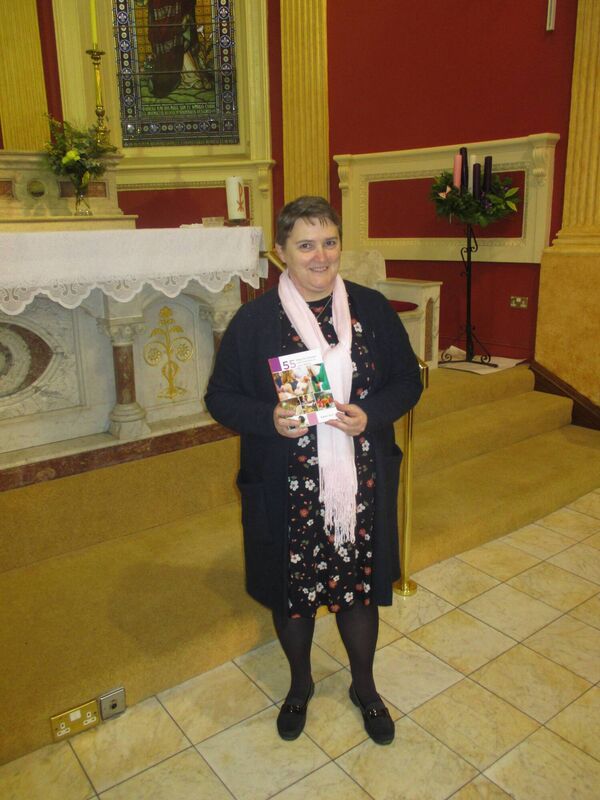
    Sr Karen Kent is based in Tralee, Co Kerry, where she aims to get parents and children involved with the Church.Sr Karen Kent is based in Tralee, Co Kerry, where she aims to get parents and children involved with the Church.
    Someone attempting to get people to engage and reconnect with their faith is pastoral worker Sr Karen Kent. She has moved around the country and is now based in Tralee, Co Kerry, where she aims to get parents and children involved with the Church.

    Sr Kent and the parish have developed a programme involving parents and children making their Holy Communion or Confirmation which focuses on the long-term connection with their faith and not just for the particular occasion. She hails the programme for attracting parents back getting involved with the Church, who may have not been to Mass in many years.

    There is a significant programme in place for pupils making their Confirmation, which includes attending Mass, an online programme and attending an evening at a local hotel which draws a large crowd.

    It includes round-table discussions where parents and children split into separate groups to hear from people whose lives have been influenced by God and the Holy Spirit.

    “The children hear from four different parishioners, each telling them their story and parents hear from people about moving on their faith in life’s journey alongside their children and another individual will talk about social media and its use for the good,” Sr Kent said.

    Children and parents also hear from the father of Donal Walsh, the Tralee teenager who shot to prominence in 2013 for his campaigning against teenage suicide while battling osteo sarcoma, a terminal form of bone cancer.

    Fionnbar Walsh speaks to the children about living life to their fullest —he is there to talk about encouraging children and supporting children, Sr Kent said. Of the 200 children making their confirmation, 180 attend the hotel event, which “gathers momentum”.

    Sr Kent agreed with Fr McSweeney there is a hunger for connection and faith, however, she said work needed to continue on giving people the confidence to be open about their faith.

    “A lot of people have faith but confidence to share it is not yet developed.

    “People who have grown up in the Catholic faith, they have faith but sometimes they’re almost shy talking about it. We need to give them the confidence.”

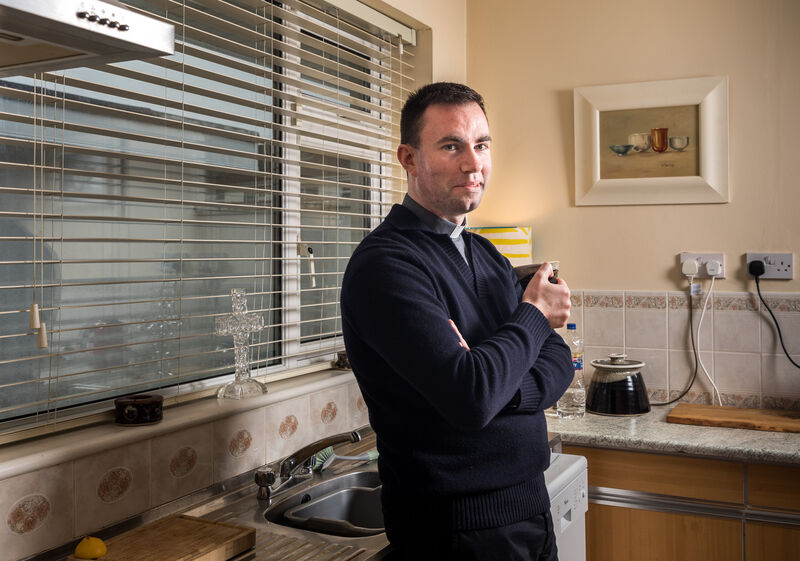
    Fr Ronan Sheehan is based in Ballincollig: You experience moments of loneliness but you can be married in a house full of people and experience loneliness as well.' File picture: David CreedonFr Ronan Sheehan is based in Ballincollig: You experience moments of loneliness but you can be married in a house full of people and experience loneliness as well.’ File picture: David Creedon

    Fr Ronan Sheehan, one of the country’s youngest priests and based in Ballincollig, Co Cork, said there were “critical moments” when he tried to attract people to continue coming to Church.

    Predominantly this is after they attend a funeral Mass and he always tries to create a sense of welcome in a bid to encourage people to return, not just for religious occasions such as Easter.

    The parish runs a course for 10 weeks which gives people the opportunity to explore faith and meaning together and learn the basics of faith.

    “The problem is how do you meet those people in order to invite them to kind of participate in this? It’s an ongoing process,” he said.

    “It’s a very basic introduction to Jesus to the Bible, to the church, and to kind of the Christian faith basically.”

    Fr Sheehan indicated he felt there was no longer the feeling of integration in parishes and communities, which has led to a decline in connection.

    “Certainly when I was growing up, there was a great integration of, you know, this is your parish. You belong here, there was a huge culture of integration.

    “The priests who come into the school, everything’s fairly neatly sewn up, you know, and that’s probably a lot of it was experienced in the countryside, even up until maybe now it’s probably totally just dying now.”

    His interaction with his local parish priest is what led him to joining the priesthood.

    “I was inspired by the pastoral life by the pastoral life of my parish priest and I created some sort of space through prayer.

    “There might have been a little call to action too,” he added.

    Sitting at his kitchen table, Fr Sheehan admits it can be lonely being a priest, particularly given he’s a young man.

    “You experience moments of loneliness but you can be married in a house full of people and experience loneliness as well.”

    For people who are curious or on the periphery of reconnecting with their faith, Fr Hayes’ advice is to “dive in and get stuck in”.

    “Get involved in some local community group in a parish group. Join a pilgrimage as a volunteer — it’s a transforming thing to do. I’ve never met anybody who said that I regretted doing something like that. It’s a kind of a growth moment for them.”

    Posted in Uncategorized | Tagged , , , , | Leave a comment

    ChatGPT Use Linked to Memory Loss, Procrastination in Students. Source: The__Byte, Futurism

    Mar 26, 9:31 AM EDT

    by Frank Landymore

    /Artificial Intelligence

    Getty / Futurism

    Classwork Cheatcode

    ChatGPT Use Linked to Memory Loss, Procrastination in Students

    You won’t always have an AI chatbot in your pocket… right?

    Getty / Futurism

    Brain Drain

    New research has found a worrying link to memory loss and tanking grades in students who relied on ChatGPT, in an early but fascinating exploration of the swift impact that large language models have had in education.

    As detailed in a new study published in the International Journal of Educational Technology in Higher Education, the researchers surveyed hundreds of university students — ranging from undergrads to doctoral candidates — over two phases, using self-reported evaluations. They were spurred on by witnessing more and more of their own students turn to ChatGPT.

    “My interest in this topic stemmed from the growing prevalence of generative artificial intelligence in academia and its potential impact on students,” study co-author Muhammad Abhas at the National University of Computer and Emerging Sciences in Pakistan told PsyPost. “For the last year, I observed an increasing, uncritical, reliance on generative AI tools among my students for various assignments and projects I assigned.”

    Show of Hands

    In the first phase, the researchers collected responses from 165 students who used an eight-item scale to report their degree of ChatGPT reliance. The items ranged from “I use ChatGPT for my course assignments” to “ChatGPT is part of my campus life.”

    To validate those results, they also conducted a more rigorous “time-lagged” second phase, in which they expanded their scope to nearly 500 students, who were surveyed three times at one to two week intervals.

    Perhaps unsurprisingly, the researchers found that students under a heavy academic workload and “time pressure” were much more likely to use ChatGPT. They observed that those who relied on ChatGPT reported more procrastination, more memory loss, and a drop in GPA. And the reason why is quite simple: the chatbot, however good or bad its responses are, is making schoolwork too easy.

    “Since ChatGPT can quickly respond to any questions asked by a user,” the researchers wrote in the study, “students who excessively use ChatGPT may reduce their cognitive efforts to complete their academic tasks, resulting in poor memory.”

    Two Way Street

    There were a few curveballs, however.

    “Contrary to expectations, students who were more sensitive to rewards were less likely to use generative AI,” Abbas told PsyPost, suggesting that those seeking good grades avoided using the chatbot out of fear of getting caught.

    It’s possible that the relationship between ChatGPT usage and its negative effects is bidirectional, notes PsyPost. A student may turn to the chatbot because they already have bad grades, and not the other way around. It’s also worth considering that the data was self-reported, which comes with its own biases.

    That’s not to exonerate AI, though. Based on these findings, we should be wary about ChatGPT’s role in education.

    “The average person should recognize the dark side of excessive generative AI usage,” Abbas told Psypost. “While these tools offer convenience, they can also lead to negative consequences such as procrastination, memory loss, and compromised academic performance.”

    More on AI: Google’s AI Search Caught Pushing Users to Download Malware

    Posted in Uncategorized | Tagged , , , , | Leave a comment

    ‘The Russians use a narrative in Africa that claims the West is decadent and perverts our children to turn them gay’. Source: EL PAIS

    International

    MEXICOCHINALATEST NEWS

    DISINFORMATION

    ‘The Russians use a narrative in Africa that claims the West is decadent and perverts our children to turn them gay’

    Justin Arestein, South African disinformation expert, explains how African and foreign political actors are pushing claims that support their geostrategic interests with the help of artificial intelligence and cheaper technology

    Justin Arestein
    Justin Arestein, disinformation expert and director of Code for Africa, at the National Museum in Nairobi last February.JONAH NJOROGE

    ANA CARBAJOSA

    Nairobi – 

    Talking to Justin Arestein requires close attention. He speaks quickly and more importantly, he shares a lot of very valuable information. He has a deep understanding of the sewers through which political and military disinformation circulates in Africa — fake news that comes to the surface in campaigns to discredit opponents, on the battlefield in the Sahel or even to bring forth coups d’états. Arestein follows the trail of disinformation that begins in Africa, but also comes from Moscow and Beijing, heavily impacting the continent as it seeks to achieve its political objectives. “The Russians use a narrative in Africa that claims the West is decadent and perverts our children to turn them gay,” he says.

    Arestein is the founder and director of Code for Africa, a platform specialized in disinformation that has 140 workers across 26 African countries and develops sophisticated journalistic investigations with drones and artificial intelligence (AI). This interview takes place on a terrace in Nairobi, where Arestein points out the brand new buildings and toll roads. “China has been very smart in investing in visible infrastructure that improves the lives of Africans,” he argues.

    Question. How much has misinformation in Africa changed with artificial intelligence?

    Answer. We have seen clumsy attempts to spread misinformation using videos made with generative artificial intelligence that create apparently real people, who express polarizing arguments. They use companies where for $40 you can buy an avatar and give it a script to make it look like it’s human. In the Democratic Republic of the Congo, for example, it was directed against U.N. peacekeepers to mobilize the people against them, and in support of the M23 rebel movement.

    Q. What is the biggest threat?

    A. The big threat today is not the things that people really focus on, like deepfake videos. The real threat is the way AI is being used to make it incredibly cheap and fast to produce seemingly authentic propaganda messages. In text — especially on WhatsApp and Telegram — it is practically undetectable.

    Q. How?

    A. We are seeing a greater influence in the industrial-scale use of large language models capable of creating different versions of existing information. For example, the Russians use a very powerful narrative throughout Africa that claims that the West is decadent has lost its way in the eyes of God and perverts our children to turn them gay. They say that they, the Russians, are the model of morality, rather than decadent Europeans. With AI you can retell that little story in a hundred different ways in seconds. And ask it to translate it into different languages. Then you can ask it to say it in the voice of an old woman, in that of a young rapper... you can have a thousand different versions of that message in minutes. Doing that with humans would cost weeks and a lot of money.

    Q. What other disinformation campaigns are circulating in Africa?

    A. Generative AI is capable of using a type of machine learning to analyze what problems cause polarization. In South Africa, for example, it is xenophobia, because the working class has a deep-rooted belief that other Africans steal their jobs and disrupt their cultural norms. They find hot topics and develop opportunistic propaganda that exacerbates the problem. There are consultancies that are hired to discredit a political opponent or to amplify a narrative and influence elections. You can see how they have discredited individual politicians and even the Red Cross to make it appear that they support the jihadists.

    Q. You mentioned Russia. Is it the main geopolitical source of disinformation in Africa?

    A. Russia is an opportunistic client of people who spread disinformation, and has geopolitical objectives, but it does not have the machinery to do the job on its own. We are seeing how combat troop are subcontracted from organizations like Wagner or the security forces of parastatal oil companies, which in turn subcontract propaganda from so-called keyboard warriors or digital mercenaries. They are often Africans or Israelis and other nationalities, who receive a commission from a Russian actor affiliated with an African state. They will say that a politician in Mali or Burkina Faso must be questioned and that the public must support the military junta, because the junta will then hire Wagner as an advisor. We are also seeing many propaganda campaigns from Turkey and religious messages from countries like the United Arab Emirates and Saudi Arabia.

    Q. To what extent do Russian destabilization efforts explain last year’s coups in African countries?

    A. Russia has been very successful in the Sahel region in identifying citizens’ fear of jihadists. These are usually Wagner-led campaigns about how governments and peacekeepers, like the French ones, are ineffective. From there, they build public support for more overt military action against incompetent democratically elected governments. This creates a climate in which a coup d’état with broad support can occur. There are campaigns in which Russia and Wagner project themselves as the saviors of the citizens. Every small victory for Wagner is amplified, and anyone who criticizes Wagner and its mining or wealth-extracting activities is smeared with coordinated messages.

    Wagner uses very well-produced animated short films in which they are portrayed as avenging angels who come down from heaven to kill French zombies.

    Q. Is this still true after the death of Yevgeny Prigozhin, the head of Wagner’s mercenaries?

    A. Wagner in Africa has never stopped operating. We have seen the withdrawal of some commanders loyal to Prigozhin and the restructuring of troops into new units. What has changed is that jihadists have also built very large communities on social media. What we see on those dark social platforms is that Wagner’s mercenaries are suffering many casualties on the battlefield. It is the result of the disorganization after Prigozhin’s death. The jihadists have invaded several military bases of Wagner and have also ambushed convoys. There are videos we have verified of Russian corpses strewn across African battlefields and armored vehicles blown up.

    Q. You say religious extremists also use disinformation.

    A. Wagner uses very well-produced animated short films in which they are portrayed as avenging angels who come down from heaven to kill French zombies. Now we are starting to see jihadists on Telegram and other encrypted channels using the same-styled videos and animations, but they show Africans, villagers with machine guns chasing Wagner’s troops so that they no longer steal their gold, crops and women. We are starting to see jihadists adapt and use the same type of narrative against Wagner.

    Q. To what degree is AI used to fuel anti-Western sentiment?

    A. Another narrative is the one that presents the French as colonialists. They argue that resisting them is a pan-Africanist necessity, that it is not a problem of a single country.

    Misinformation is not an education problem; it is an organized crime problem.

    Q. Is the West doing enough to counteract all this information?

    A. The West has been a little confused and has invested a lot in public literacy programs, but in reality, what it does is shame the victim. You are telling those who have been the target of propaganda that it is their fault, that they have to be smarter and read and know how to detect propaganda. Misinformation is not an education problem; it is an organized crime problem and the reason it succeeds is because it has become cheap and easy. Europeans and Americans are beginning to understand that the only way to combat it is to disrupt the economy of disinformation and that digital mercenaries, sitting in a hut or a garage, cannot be allowed to subvert a government’s national policy.

    Q. How much misinformation surrounds the votes on resolutions condemning Russia at the U.N.?

    A. Europeans and Americans find it difficult to understand that Africans do not see the geopolitical world in the same way as they do. There are wars in Africa of greater magnitude than the one in Ukraine, with more civilian victims, which do not receive nearly the same attention. It’s the perception that Europeans and Americans don’t value Black lives as much as white lives. It must be remembered that Russia and China liberated Africans from colonial occupation. The boogeymen that Europe sees from an African perspective were our liberators. We are talking about the 1970s, 1980s. Those who were children then are now adults who are told that we must vote against Russia at the U.N. to support the end of a war that does not affect us. Many Africans believe that what is happening in Ukraine is not our problem and that food and the cost of living have been weaponized against us to try to get us to support Europe. It is not my personal opinion, but it is a zeitgeist that opportunists exploit.

    Q. And China?

    A. We see that the Chinese have a slightly different approach. They recruit African experts to write opinion pieces in Chinese state media. They are commissioned by a Chinese news editor on a topic aligned with Beijing’s policy. They are published in China, but then they are distributed through syndication in African media without warning them that it comes from a state media agency and then the Chinese media write about it as if it were news of Africa’s support for Chinese policies, without supposedly any interference. This message is then amplified until it is perceived as the dominant public opinion in Africa. It is a very effective tactic in shaping African countries’ policies. It’s a longer-term view.

    Q. And beyond the media?

    A. Look here, in Nairobi. Until very recently, traffic in Nairobi was impossible and it took between two and three hours to get anywhere. Not anymore, because now there are highways. And who built them? China. There is a construction boom in Nairobi. Many of these buildings you see here are built or financed by China. We can argue about the debt implications, but China is a very active player in our economies that the people can see. And that makes the public perception of China very different from the one in Europe or the United States. Opinion is not based on their human rights record, but on how they are helping us out of poverty and growing our middle class. And we don’t see the same thing with the U.S. or the EU, because often, development aid from those countries goes to education systems and improving governance. It’s a bigger investment, but less visible to citizens. China has been very smart in investing in visible infrastructure that improves the lives of Africans.

    Sign up for our weekly newsletter to get more English-language news coverage from EL PAÍS USA Edition

    More information

    Passengers in transit on their way to Latin America, where they will forge their path to the United States.

    Madrid, the new launchpad for migration from Africa to the United States

    MARÍA MARTÍN | MADRID

    David Sumo is 18 years old and suffers from lymphatic filariasis, a mosquito-borne disease that creates deformities in his limbs.

    It’s not witchcraft, it’s a lack of development aid: a political lurch from London is putting the eradication of diseases in Africa at risk

    PABLO LINDE / ANA CARBAJOSA | MONROVIA (LIBERIA) / LONDON

    ARCHIVED IN

    Adheres to

    The Trust Project

    More information

    If you are interested in licensing this content, please contact ventacontenidos@prisamedia.com

    Sponsored Content

    Single Parents In Dublin Excited At €6,600 RefundsCHECK MY TAX REFUND|

    Learn More

    Invincible US Military Smartwatch Finally on Sale In Ireland. How Tough?BEST GADGET DISCOUNTS|

    Read More

    If you have a mouse, play this game for 1 minute and see why everyone is addicted.COMBAT SIEGE|

    And Also…

    Georgia plans its first execution in years. Lawyers say the inmate is intellectually disabledEL PAÍS

    How is Prince Harry connected to Diddy?AS

    Bianca Censori’s father demands that Kanye West travels to Australia to confront himAS

    NEWSLETTER

    Sign up to EL PAÍS in English Edition bulletinAPÚNTATE

    MOST VIEWED

    1. ‘Pink cocaine’: The expensive and trendy drug is neither cocaine nor high quality
    2. Robert Sapolsky, neuroscientist: ‘Meritocracy is system justification’
    3. Jim Caviezel: ‘All of a sudden, I wasn’t popular anymore just for playing Jesus’
    4. How James Gandolfini’s addictions to alcohol and drugs caused chaos during filming of ‘The Sopranos’
    5. ‘Mileva Einstein, theory of sadness’: when the physicist wanted to turn his wife, and brilliant mathematician, into his maid
    Posted in Uncategorized | Tagged , , , , | Leave a comment

    Donald Tusk: “We are in a pre-war era. I don’t exaggerate. Source: EL PAIS

    International

    MexicoChinaLatest News

    INTERVIEW

    Donald Tusk: ‘We are in a pre-war era. I don’t exaggerate’

    The Polish prime minister warns that Europe is at ‘the most critical moment since the end of the Second World War’ and must commit more to defense and protecting Ukraine

    Donald Tusk

    Polish Prime Minister Donald Tusk in Brussels on February 1.Nicolas Economou (NurPhoto/ Getty Images)

    Gloria Rodríguez-Pina

    Varsovia –

    Donald Tusk, 66, has an image of his childhood etched in his memory. It is a photograph that was in his family home in Sopot, on the shores of the Baltic Sea, next to his hometown: a beach full of smiling, happy people. The snapshot was taken on August 31, 1939. “A dozen hours later, five kilometers away, the Second World War began,” he remembers. The Polish prime minister warns that Europe is once again “in a pre-war era” and must get ready to defend itself.

    In an interview with several newspapers of the LENA media alliance, including EL PAÍS, in his office in Warsaw, Tusk argues that the NATO commitment to dedicate 2% of GDP to defense must be met and advocates for increasing aid to Ukraine to avoid “pessimistic scenarios.” The leader, who generates both hatred and admiration in Poland, served as prime minister between 2007 and 2014 and returned to power after winning the elections last October. His main campaign promise was to restore the rule of law after eight years of the ultra-conservative Law and Justice (PiS) government and return the country to the center of Europe, a task that he has undertaken with an iron fist and some controversial decisions.

    Tusk — who has been the leading figure of the liberal-conservative space in Poland for the last two decades — returned to his country’s political scene from Brussels, where he presided over the European Council and later, the European People’s Party (EPP), which in the next European elections must decide whether it partners with the extreme right or opts for the alliances of the last 60 years.

    Question. Politicians, military officials, and experts all over Europe say that within a few years Russia could attack NATO countries. Is war inevitable?

    Answer. What is most worrying now is that literally any scenario is possible. We have not had a situation like this since 1945. I know it sounds devastating, especially to people of the younger generation, but we have to mentally get used to a new era. We are in a pre-war era. I don’t exaggerate. This is becoming more and more apparent every day.

    Q. Recently, Polish airspace was again violated by a Russian cruise missile.

    A. Yes, this was another worrying incident. When Lviv or other cities in western Ukraine are attacked, the sound of explosions can be heard in our part of the border area. At the last European Council I had an interesting discussion with the Spanish Prime Minister Pedro Sánchez. He asked us to stop using the word “war” in statements. He argued that people do not want to be threatened in this way, that in Spain it sounds abstract. I replied that in my part of Europe, war is no longer an abstraction — and that our duty is not to discuss, but to act and prepare to defend ourselves.

    Q. Ukraine is currently experiencing hard times. What would have happened if it had lost the war?

    A. We need to abandon this way of thinking: “What if.” Our main task should be to protect Ukraine from the Russian invasion and to maintain Ukraine as an independent and integral state. It is up to us to ensure that Ukraine can avoid pessimistic scenarios. Its situation today is much more difficult than it was a year ago, but also much better than it was at the beginning of the war, when Putin’s soldiers were standing on the outskirts of Kyiv. The war in Ukraine may have to be thought about in the long term. This means more and more new responsibilities for European countries. In Poland, everyone is aware of this and it is not up for discussion. And yet it did not have to be taken for granted; we had a very difficult common history with Ukraine. What has now happened between our peoples — this undisputed solidarity — is a miracle. I want to maintain this attitude, although it is not easy.

    Q. Especially now, when Polish farmers and truck drivers are protesting.

    A. The saddest moments in my political career are when I have to be tough and harsh with our Ukrainian friends. As Polish prime minister, I am supposed to protect Poland’s fundamental interests. The search for a solution to this problem occupies a huge part of my time.

    Q. How can it be solved?

    A. We want to help Ukraine as much as we can. But at the last European Council I argued that the idea of free trade with Ukraine needs to be redesigned. I think I convinced France, Italy and Austria to do this. I want a fair agreement with Ukraine on this, I want to find a common denominator for the interests of Ukraine, Poland and the whole EU.

    Whether Joe Biden or Donald Trump wins the next election, it is Europe that needs to do more when it comes to defense

    Q. You were invited to the White House 15 days ago, then flew to Berlin to meet with German Chancellor Olaf Scholz and French President Emmanuel Macron. What message did you bring back from the U.S.?

    A. This message was that whether Joe Biden or Donald Trump wins the next election, it is Europe that needs to do more when it comes to defense. Not to achieve military autonomy vis-à-vis the U.S., or to create parallel structures to NATO — but to make better use of our potential, our capabilities and our strength. We will be a more attractive partner for the U.S. if we are more self-sufficient in defense matters.

    Q. You say that Europe should spend more on defense. But how can this spending be financed?

    A. There is no reason for Europeans not to respect the fundamental principle [of NATO] and spend a minimum of 2% of GDP on defense. We can discuss European arms bonds and more involvement of the European Investment Bank. We have to spend as much as we can to buy equipment and ammunition for Ukraine, because we are living in the most critical moment since the end of the Second World War. The next two years will decide everything. If we cannot support Ukraine with enough equipment and ammunition, if Ukraine loses, no one in Europe will be able to feel safe.

    Donald Tusk in an appearance with his Ukrainian counterpart, Denys Shmyhal, on Thursday in Warsaw.
    Donald Tusk in an appearance with his Ukrainian counterpart, Denys Shmyhal, on Thursday in Warsaw.Omar Marques (Getty Images)

    Q. The Italian Prime Minister Giorgia Meloni is campaigning against journalists and judges, reaching for patterns familiar from the PiS government. But there is growing talk in Brussels that the European People’s Party should cooperate with her, and even offer her membership. In your opinion, is this realistic?

    A. Meloni’s positive role in Brussels, in the European Council, is widely appreciated. I was impressed when I heard her speak publicly in support of Ukraine. Internationally, I hear only her pro-European statements. Meloni is certainly aware that I would find it difficult to accept her views and methods when it comes to domestic policy.

    Q. At the European elections, will there once again be a classic coalition of the EPP with social democrats and liberals, or are we going to see the EPP enter into cooperation with the extreme right?

    A. I have a clear position on the far-right parties in Poland, but every democratic leader knows best the situation in his country and decides for himself what strategy to adopt. The far right is part of government coalitions in Sweden, Finland, several Spanish regions, and it remains to be seen whether this will not also happen after the elections in Portugal. Looking for positive aspects, let us note that some far-right parties have changed thanks to this.

    It is the state’s job to effectively protect its borders and territory. If we continue to be naïve, unreservedly open, we will lose the support of the people

    Q. Does this mean that you want to renegotiate the migration pact adopted by the EU?

    A. Unfortunately, this pact is not a good answer to the problems we face in Poland. In our part of Europe, migration means something different to the Mediterranean. Today, once again, we are witnessing a well-prepared operation organized by the [Belarusian President Aleksandr] Lukashenko regime on the border with Belarus. I will not justify some of the methods used by the Polish border guards, but we cannot be helpless in the face of Putin and Lukashenko. It is the state’s job to effectively protect its borders and territory. If we continue to be naïve, unreservedly open, we will lose the support of the people. We will lose out to states and forces that are prepared to fight violently for their interests.

    Q. As leader of the Polish opposition, you won an unequal battle against PiS. What can Europe learn from this victory?

    A. It takes determination and belief in victory, this is key. The problem was to convince people that the concepts of “rule of law” or “freedom” are not abstractions, but issues that affect everyday life and fighting for them can lead to victory. One must have a very clear communication with the voters. Sometimes you have to be able to use their own arguments. [PiS leader Jaroslaw] Kaczynski or [Hungarian Prime Minister Viktor] Orbán are partly right in their diagnoses, but the medicine they propose is poisonous and wrong. For example, during the first migration crisis in 2015, people wanted to hear from the leaders what their plan was to protect the borders,

    Q. Is that why your government is continuing pushbacks on the border with Belarus?

    A. This is a completely different issue. I have already spoken about it. International law needs to be corrected on this issue, although I know it is almost impossible today, but the current legislation was introduced in completely different times. I am no longer even talking about the fact that the U.N. estimates that 100 million people from Asia and Africa are ready to emigrate to Europe, but about the fact that authoritarian regimes instrumentally use these already disadvantaged people as part of a hybrid war. Pushbacks as a method are morally unacceptable, we must find a better solution, but the alternative cannot be helplessness.

    Sign up for our weekly newsletter to get more English-language news coverage from EL PAÍS USA Edition

    Posted in Uncategorized | Tagged , , , , | Leave a comment

    The Harvard Gazette: “Artificial intelligence holds the promise of optimizing many aspects of life, from education and medical research to business and the arts. But some applications may have a deeply worrisome effect on human relationships.” Sociologist Sherry Turkle warns against growing trend of turning to AI for companionship, counsel

    Sherry Turkle.
    “Face-to-face conversation is where intimacy and empathy develop,” says Sherry Turkle.Niles Singer/Harvard Staff Photographer

    Science & Tech

    Lifting a few with my chatbot

    Sociologist Sherry Turkle warns against growing trend of turning to AI for companionship, counsel

    Christina Pazzanese

    Harvard Staff Writer

    March 27, 2024 4 min read

    Artificial intelligence holds the promise of optimizing many aspects of life, from education and medical research to business and the arts. But some applications may have a deeply worrisome effect on human relationships.

    During a talk March 20 at Harvard Law School, MIT sociologist Sherry Turkle, whose books include “Reclaiming Conversation” and “The Empathy Diaries,” outlined her concerns over the fact that individuals are starting to turn to generative AI chatbots to ease loneliness, a rising public health dilemma across the nation. The technology is not solving this problem but adding to it by warping our ability to empathize with others and to appreciate the value of real interpersonal connection, she said.

    Turkle, also a trained psychotherapist, said it’s “the greatest assault on empathy” she’s ever seen.

    Many already try to avoid face-to-face interactions in favor of texting or social media out of fear of rejection, or feeling uncomfortable about where things will go. “In my research, the most common thing that I hear is ‘I’d rather text than talk.’ People want, whenever possible, to keep their social interactions on the screen,” she said. “Why? It’s because they feel less vulnerable.”

    But the convenience and ease of text and chat belie the harms caused when digital technology becomes the primary medium through which people connect with family and friends, meet prospective dates, or find someone with whom to share worries and feelings.

    “Face-to-face conversation is where intimacy and empathy develop,” she said. “At work, conversation fosters productivity, engagement, and clarity and collaboration.”

    “In my research, the most common thing that I hear is ‘I’d rather text than talk.’ Why? It’s because they feel less vulnerable.”Sherry Turkle

    Now, AI chatbots serve as therapists and companions, providing a second-rate sense of connection, or what Turkle calls artificial intimacy.

    They offer a simulated, hollowed-out version of empathy, she said. They don’t understand — or care — about what the user is going through. They’re designed to keep them happily engaged, and providing simulated empathy is just a means to that end. 

    Based on her research, Turkle said many people surprisingly seem to find pretend empathy fairly satisfying even though they realize that it’s not authentic.

    “They say, ‘People disappoint; they judge you; they abandon you; the drama of human connection is exhausting,’” she said, whereas, “Our relationship with a chatbot is a sure thing. It’s always there day and night.”

    Tech executives and technologists who work with generative AI seem to share a common belief that because technology’s responses in an interaction are rooted in big data, it will always outperform human beings in providing satisfaction regardless of their expertise or training, Turkle said.

    But vast quantities of data averaged to produce a probable or popular response doesn’t work for human psychology. What leads to lasting change is not a therapist delivering curated bits of information, “but from the nurturing of a relationship,” she said, noting that major healthcare corporations are now considering using chatbot therapists as the first option for patients in part because demand for human therapists far exceeds supply.

    Society needs to stop and assess whether AI is molding us into the people we want to be, she said.

    “The technology challenges us to assert ourselves and our human values, which means that we have to figure out what those values are — which is not very easy,” said Turkle. “I think that conversation needs to really start now. This is really a moment of inflection.”

    Share this article

    Posted in Uncategorized | Tagged , , , , | Leave a comment