“Young couples with sex lives broken by porn”. Recommend search canisgallicus.com Dr Mary Aitken which refers to her book, her courage, her knowledge and expertise at a global level “Cyber Effects” … what parents and young people need to understand urgently. Also check out Fr Shay Cullen his weekly letters about the impact of porn on the vulnerable in the Philippines

Health

SEX

Young couples with sex lives broken by porn

Accessible pornography crept into their imagination when they were minors and destroyed their creativity. The explosion of instant gratification from these images and the disconnection from their partner has caused a mental block in young adults’ sexual relationships


26-year-old Marc has trouble having sex in real life as a result of early porn consumption, starting when he was 13.
26-year-old Marc has trouble having sex in real life as a result of early porn consumption, starting when he was 13.MASSIMILIANO MINOCRI
Ana Torres Menárguez

ANA TORRES MENÁRGUEZ

Madrid – 

Marc has a hard time talking about the impact porn has had on his life. The 26-year-old confesses that it’s difficult: “I can’t get an erection with girls in real life. My relationship with my girlfriend of two years ended because of that. We approached each other, we took off our clothes, we could touch each other and everything during foreplay and it got us both very aroused. But, when the moment came, my ability just disappeared.”

Every day he wonders if there is a culprit. His parents did not protect him from the internet nor did they ever talk to him about sex, and in high school he remembers some very basic conversations. As a teenager, his friends talked more and more about the subject and he felt more pressure to know what to say. At the age of 13 he started watching porn, and without realizing it he entered a downward spiral.

At first he was excited to watch any type of video, usually on Pornhub or Telegram, where he would do keyword searches (like the name of a porn actress) and he subscribed to channels and groups. All those images made him feel insecure and he did not have his first sexual encounter until he was 23. “I had high expectations, but suddenly I saw that I was the protagonist, I got overwhelmed, and my brain did not respond,” he says.

In countries like Spain there is no official data on how porn consumption affects sexual relations in young couples, but some of the sexologists and researchers who see patients in clinics have been noticing new patterns for years. Young couples are no longer indulging in petting — getting pleasure through stroking, rubbing, or kissing… with or without clothes — in their first sexual encounters, and instead they go directly to penetration. They no longer kiss as much as before, and it is common for them to start the encounters with fellatio (the girls report that it is mainly they who try to please their partners), and the pace is frenetic. Their partners want to reach orgasm quickly regardless of their partner’s pleasure.

21-year-old Carlota's early exposure to sex led her to have problems with emotional relationships later.
21-year-old Carlota’s early exposure to sex led her to have problems with emotional relationships later.ROCIO BADIOLA

“At an early age, porn is harmful to constructing one’s sexuality and it has a tsunami effect at a social level… You end up with a very specific vision of sex and what the interaction with the other person is like,” says gynecologist Raquel Tulleuda, who is also an expert in clinical sexuality and head of the sexuality care unit at the Mútua de Terrassa University Hospital (Spain). The average age of initiation into watching porn in Spain is 12 years old, although in 20% of cases it occurs when the minor is only eight years old. These were the findings of the largest study of its kind published in Spain, carried out by researchers from the University of the Balearic Islands in 2018.

How do these images impact the subsequent encoding of pleasure? Tulleuda explains that our brain does not have a basic mechanism to distinguish between fantasy and reality, and what it does is it compares with previous experiences. It searches its archives to catalog an emotion. “What happens when we are children is that the file folders are empty, so there is nothing to compare, and when an emotion is very shocking it becomes an experience. Children then have a genital response, and if that experience is pleasant, what they do is repeat it. After a time the folder is filled with what they see in porn and that transforms their desire.”

Other experts, such as the psychologist and sexologist Alejandro Villena, talk about mirror neurons, those that are connected to imitation. The greater the consumption, the more they are altered. “The mark it leaves in adolescence is greater, since the earlier the consumption of porn begins, the less capacity there is to digest it. It is a product that burns the stages of emotional-sexual development. Pornography destroys creativity,” says Villena, who also heads an organization that offers resources and help to people with porn addiction.

At age 24, Marc went to therapy for the first time. Everything related to screen time and masturbation worked, but his problem in real experiences kept repeating over and over again. “My sexologist explained to me that my mind had become so accustomed to being aroused by porn that even my body had become accustomed to climaxing in a certain position, lying on my side or on my back... By changing the conditions and standing up, or getting into other positions, I wouldn’t get an erection,” he says. He wanted to make sure that he did not have any physiological problem and went to the urologist. “It’s all mental,” they confirmed.

A study carried out with more than 3,400 men between 18 and 35 years old published in 2021 by JMIR Public Health and Surveillance tried to measure the relationship between men’s sexual response and porn consumption. The results showed that about 20% of the participants suffered from erectile dysfunction and that, the greater the viewing frequency, the greater the development of this dysfunction.

“The sexual response (auditory, visual, tactile, postural, sexual, and dopaminergic) associated with the conditions generated by porn consumption has been repeated so many times that they have been internalized as something that is commonplace in their sex life, and they generate automatic responses,” according to Villena. “They [the consumer] have become so accustomed to it that if you change the conditions and place them in a real sexual relationship, they have difficulty in acting naturally and fully,” he adds.

Clinically, it’s called performance anxiety: the man feels like he is undergoing an exam and added to that is the disconnection that occurs with respect to others. “Once you start watching porn, you end up preferring it, since it is easier, faster, and simpler,” says Villena, who believes that for years the ravages of porn on sexuality have been very silenced and that now there has been an explosion in cases.

I ask my partner to do what I have seen

According to one of the largest surveys carried out on almost 4,000 adolescents aged 13 to 18 from the Balearic Islands, Spain, on the access and impact of porn, 39.6% of the boys recognized that it negatively affects relationships with partners, a percentage that dropped to 7% in the case of girls. 26% of the boys said that “they ask their partner to do what they have seen” in those videos (compared to 19% of girls); and 50% of girls said they “watch porn to find out what their partner likes,” compared to 15% of the boys. The time when they watched porn was at night, and the most common place was in their own home, mostly in private, on the internet and through mobile phones.

Luis Ballester, a social researcher at the University of the Balearic Islands and co-author of the study, points out that there are well-documented effects of the impact of porn on minors, such as the impoverishment of sexuality, meaning that the role of seduction and sensoriality not focused on oral, vaginal, or anal penetrations is reduced. There is an increase in aggression and sexual violence with partners or strangers, and there is reduced empathy. “It changes our perceptions of the body, attitudes, and behavior itself,” he says.

This decrease in empathy is one of the effects that gynecologist and president of the Spanish Federation of Sexology Societies Francisca Molero sees the most in the clinic. “The majority profile is that of a man over 25 years old who finds it difficult to get excited with his partner. He is not interested in paying attention to her enjoyment and masturbation with porn is more rewarding because he reaches orgasm faster. Shared sex requires effort and [porn] has made him lazy.” It is what Alejandro Villena calls the sex of the me-me and the yeah-yeah. It isa more selfish and narcissistic sex, although it is not done consciously. “A lot of the time reciprocal pleasure is no longer the issue,” he points out.

In other research, Ballester’s team found that 69% of adolescents go to the internet to answer their questions about sex and that 90% of male university students believe that porn is faithful to real sexuality. Regarding the type of porn, 76.25% of the sample responded that they mainly watch hardcore porn (which shows genitals, explicit sexual acts, and physical and verbal violence) or extreme porn (showing violence physical and verbal, aberrations, and dominance-submission).

“Porn sneaks into the lives of minors through mimetic learning of sexual practices, even at ages when the existence of drives is unknown,” says Ballester, who emphasizes that less than 15% of the parents surveyed believe that their children consume pornography — when 90% of adolescents between 13 and 18 years old claim to have consumed it at some point. 68.8% of youths of that age claim to have received some type of emotional and sexual education at school, lasting between one and four hours.

Reprogramming the brain

Is it possible for a man like Marc to recode his way of perceiving sex? Sexologist Raquel Tulleuda explains that the first thing is for both he and his partner to be aware that it is a pathological construct and, from there, teach them to create new dynamics. “The first thing is to break with this video consumption. It is not a job that can be done in a couple of weeks, and the partner’s involvement is very important because they either become a co-therapist or they boycott the treatment.” One of the points is to work on the “mediocrity” of the sexual relationship and assume that there will not be fireworks every time, but that most of the time it will be like eating at an inexpensive restaurant. “Your toes are not going to curl with every encounter. There is a very clear conditioning with everything they have seen,” says the doctor.

Carlota, who prefers not to give her real name, is 21 years old and is still uneasy about penises. When she was 11, she discovered sexual videos of her parents on her father’s cell phone, and shortly afterwards, she saw that he was sharing sexual photos with other married couples through sexual chats without her mother knowing.

“The first time I discovered sex was from there, and as a teenager, when I began to have my first experiences with boys, I felt dirty. I had no emotions or feelings, I didn’t move a lot, and I never seemed active in any way, since I never had sexual desire. I would lie face down and do nothing else, I would let them penetrate me.” For years, everything that involved feeling pleasure disgusted her. “My partners didn’t know how to ask what was wrong with me and why I was not enjoying myself, that has created distance between us.”

Her therapist, who also does not give her name to protect Carlota, explains that the girl who came to her consultation was devastated. The impact of those images at such a young age had stolen her innocence and she was incapable of perceiving sex as something pleasurable. “She denied herself the possibility of enjoying herself. Instead, she focused on giving her partners pleasure and then she was overtaken by very unpleasant feelings. We are working on getting her to know her body and trying to codify her way of relating on a sexual level in a different way.”

In a study with more than 300 university students (average age 26) it was seen that 30% claimed that they imitated pornographic material to put it into practice in their real sexual life, and 24% reported that comparing themselves to what they saw in porn made them disappointed if they did not obtain the same results in real life. Only 5% said they got more pleasure from intimate encounters thanks to porn.

Carlota’s letter (21 years old) for parents with minor dependent children

Hi. My name is Carlota, and I am here to tell my story.

When I was 11 years old I found sexual videos of my parents and, shortly after, I found out that my father shared photos and lingerie with many other couples he met through sexual chat rooms. That was the first time I discovered sex, and from then on, I had a totally unpleasant view of it. I will never forgive my father’s immaturity, inability, and cowardice for not speaking to me from a grown-up perspective when I confronted him about it. I told him and my family what I had discovered. At 17 I had the strength to talk to my father, my therapist told me that I had to do it in order to move forward in my process, and I didn’t hesitate. Listening to him was a turning point and improvement in my sexual process.

From where I am now, a normal 21-year-old woman sitting on my couch eating a pizza, I would like to ask all those parents who have small children to take responsibility for their phone, and for what they let their children see. I ask for emotional responsibility, and that they be protected.

The images that I saw that summer led me be angry for many years, and that led me to smoke weed, to enter into bad relationships, and form bad habits. Now that I’m in therapy, I’m getting to know my own body, since I felt complete rejection. Some friends even asked me if I was asexual, but I knew it was something in me that was keeping me from getting carried away in the act.

I always believed that I would never be cured, or that I would never be able to have a sexual relationship with someone. I thought that I wouldn’t get over it, and that no one understood me. I experienced a huge block when it came to that kind of situation. I cried a lot and I suffered alone.

I would also like to ask all women and mothers to invite their daughters to discover themselves in a way that is healthy and natural, and to teach them that consensual sex between two people is good, and above all, it is based on desire, and it should not be something we do just to please others.

Lots of love,

Carlota

Sign up for our weekly newsletter to get more English-language news coverage from EL PAÍS USA Edition

Posted in Uncategorized | Tagged , , , , | Leave a comment

Author Brian Merchant: Luddites are ‘more dangerous to the elites and to the rich than Robin Hood’. EL PAIS English

Technology

ARTIFICIAL INTELLIGENCE

Author Brian Merchant: Luddites are ‘more dangerous to the elites and to the rich than Robin Hood’

The anti-machine movement arose in 19th-century England in a similar context to today. A new book reframes the revolt and reminds us that the conditions in which it occurred resemble our own day

Brian Merchant
Brian Merchant, the author of ‘Blood in the Machine,’ a book that gives new context to the Luddite revolt in England in the early 19th century.JACLYN CAMPANARO
Jordi Pérez Colomé

JORDI PÉREZ COLOMÉ

Luddites have been a great historical resource. Any showy enemy of something that looked like technological progress has been called a Luddite. Today, the word has been revived with generative artificial intelligence and its critics. Author and journalist Brian Merchant saw it coming and has written a book that summarizes the Luddite revolt in early 19th-century England and examines its similarities with current technologies: Blood in the Machine explores the origins of the current revolt against big technology.

Although the book appeared in the midst of the uproar over AI, Merchant began his research a decade ago: “Uber was getting big in the early 2010s and people were starting to point out the fact that it was having a nasty impact on taxi drivers, they were starting already to reduce wages. And so people were criticizing Uber and I remember the term Luddite floating around… The pro-Uber camp [was] saying don’t be a Luddite, and I was like, huh? I wrote this article called ‘You’ve Got the Luddites All Wrong.’” In his book he notes that the Luddite revolt was a labor struggle—not an anti-technology one—at a time when unions were prohibited. In a conversation with EL PAÍS from his residence in Los Angeles, Merchant explains the historical impact of the Luddites and the possible similar struggles being played out today in Silicon Valley.

1. The Luddites were not anti-progress

The labor revolt over the loss of rights was more important than the destruction of textile machines: “The biggest misconception about the Luddites…is that [people] think that the Luddites were anti-technology and anti-progress,” says Merchant. ” They were against certain technologies because they recognized the way that they were going to be used in a social and economic context against them as workers… It was a labor movement, it was an anti-poverty movement. It was not an anti-technology or anti-progress movement. The British State… started casting them that way almost immediately. So, they had an interest in deriding the Luddites and making this case that they were anti-progress [in] much the same way that people in positions of power, people at tech companies make the case against tech critics or workers who are complaining about bad working conditions at tech companies or tech adjacent companies today. It’s the same story for 200 years.”

The book quotes a phrase from historian Eric Hobsbawm that explains this stage: “collective bargaining by riot.” According to Merchant, this tactic is very powerful in workers’ struggles for two reasons: “[First], it was symbolic because everybody understood that what they were smashing was not just a piece of machinery. It was also the specific piece of machinery that was being used to transfer wealth from working people to a factory boss. And [second], it was useful because they were able to destroy the piece of equipment that the factory bosses were using to generate those extra revenue streams.”

2. Why Robin Hood is more acceptable than Ned Ludd

Ned Ludd was a legendary character. No one knows for sure if he existed. According to popular lore, he was the teenager who broke the first machines at the beginning of the Industrial Revolution. In 1811, rebellious workers used his legendary name to sign letters and scare others: “Ludd likely never existed at all. But his avatar would become a mascot, an organizing tool, and a winking joke: a powerful nineteenth-century meme,” Merchant writes.

Like another legendary figure who has fared better in history, Ludd lived near Nottingham, U.K. That’s not a coincidence, Merchant argues: “[The Luddites] staged a very popular and powerful rebellion. At [the] time, people were writing folk songs about them. They were Robin Hoods. But it’s interesting that Robin Hood has endured in a positive light, while the Luddites did not. That suggests to me that the Ned Ludd myth is in some ways more dangerous to the elites and to the rich than Robin Hood, which is a little more nebulous and a little more open-ended. The Luddites are saying: go ahead, break the machinery of your oppression… Robin Hood is saying: steal from the rich and give to the poor. I think that’s a little bit more tolerable.”

3. How the Luddites’ problems are similar to today’s

The backdrop of the book is that the story of the Luddites resembles what is happening today in Silicon Valley, where a small group of corporations are dominating new technologies. “The way that technologies are developed and deployed has basically been unchanged. You have a smaller handful of people [with] access to enough capital or political influence to be able to build a factory and to use automating technologies. Back then the most aggressive [factory owners] did all of this without asking the communities [where] they were building factories. It wasn’t like they worked with the cloth workers that were already there in the community and said, ‘we have these new technologies, how do we figure out a way to make this beneficial to society?’”

Merchant has been criticized for equating the big businessmen in 19th-century England with those in the 21st-century United States. But there are details he doesn’t see as dissimilar: “Strangely, the process of developing technology is somehow even more anti-democratic today than it was then. Because you have this immense pool of capital available to Silicon Valley innovators through the venture capital ecosystem. Uber was not profitable for 10 years, but they had access to this enormous pool of capital…Does anybody actually like this? Is this working for workers? Is this working for Riders? does that matter? We got some more money [and] we push on.

Artificial intelligence is just another stage in this process of an amazing new technology that survives for years until it finds a way to make a profit, says Merchant: ” They’re doing some things that are flashy and they’re getting a lot of hype [and] a lot of investment…It doesn’t seem like a lot of people like it, but they’re pressing ahead because they have just an unfathomable amount of capital and resources and influence. So…here’s Sora, it’s gonna turn text into video. Is this a good idea? I don’t know but here it is. So, it’s this remarkably anti-democratic way of developing technology. As a result, history supports the fact that for 200 years technological development has been out of harmony with social and economic stability. We correct, we catch up, we figure things out, but why [is it that] for 200 years when there’s a big new technology, the answer is: ‘Oh great, let’s see how this benefits society,’ but we react with fear,” Merchant notes.

4. What is the price of progress?

The usual response from businessmen and economists is that these fears are the price of progress. Technological advances forcefully bring disruption and suffering. For the Luddites, this argument was not obvious from the beginning because even the elites did not know how it would end. “A lot of economists say, yeah, there’s some dislocation, it’s painful for some people but new jobs are always created. [Yes, the elites] are getting richer. It could be painful in the short term, but look at the future. but always look at the people saying that. they’re the economists who have either a job at a think tank where they’re making six figures or they’re tenured. The people who are waving away the short-term pain are always people in a position to do [so],” says Merchant.

Brian Merchant
Brian Merchant warns that AI can lead to the erosion of vulnerable jobs.JACLYN CAMPANARO

Sometimes, the changes brought about by technological developments do not completely destroy jobs but erode them: “I do think the economists are right that it’s not really going to erase tons of jobs… In a lot of cases, it’s not going to be a blanket removal of jobs. In some cases, it may be. It’s going to be a further erosion of jobs that are already vulnerable carried out by vulnerable workers. In the industrial revolution with the luddites, it wasn’t like the weaving jobs disappeared. It’s that the factory owners were able to use the new machines as a justification for hiring children instead of skilled workers,” says Merchant.

For years, Silicon Valley has been debating a kind of basic income for humans for the future work that machines will do. Merchant sees it as papering over the problem: “I think universal basic income would be like a little tiny Band-Aid on a big structural problem. If the tech companies were serious about worrying about some of the social issues that their technologies might cause then I think you would see them lobbying for things like Universal Health Care or housing. It’s the way that 20 years ago or 15 years ago you’d see oil companies saying we support a carbon tax. They know it’s not gonna happen,” he says.

5. From the Hollywood screenwriters to the attack on a self-driving car

In February, a Waymo (Google) autonomous car in San Francisco seemed to have a problem and caused a small traffic jam. A group of people surrounded it and after a while they broke the windows and set it on fire, while others filmed it. This is the first major destruction of a machine owned by a major tech company since the 1970s, when student activists attacked Hewlett Packard labs. Will we see more similar cases? “The situation is so in flux that when I started writing this I would say, ‘no, we weren’t there yet, even though there was suffering being caused and people were very angry at Amazon and Uber and these conditions. We see a lot of anger at other places in the United States. I think if they are successful in automating a number of jobs or degrading working conditions for enough people, impoverishing more people, then you do wonder… That Waymo car attack [did] take me a little bit by surprise because it didn’t just happen in a vacuum. My guess is that it’s kind of a beacon for a lot of this more ambient anger that’s out there, that people are feeling at Big Tech and at the impact that it’s having on their lives.”

At the time, that attack was unheard of. But so was the first more or less successful strike and negotiation that included AI: the Hollywood screenwriters’ strike. “The really great thing about with the writer strike did is it just demonstrated how possible it is to win arrangements like that where workers have control over how AI is used within their own labor process. Again, especially in the [United] States, a lot of this stuff was kind of unthinkable, that you could…tell your boss how you’re able to use AI or keep your boss from [employing] potentially abusive uses of technology. It really shows that if you proactively organize around this stuff, then you can draw these red lines and say we refuse as workers to use AI or to have AI used by management on our behalf.”

Sign up for our weekly newsletter to get more English-language news coverage from EL PAÍS USA Edition

Posted in Uncategorized | Tagged , , , , | Leave a comment

GZERO – Ian Bremmer intervierws Thomas Friedman “Netanyahu is no longer at the wheel”

Posted in Uncategorized | Leave a comment

Harvard Public Health Magazine: “Talking about suicide saves kids’ lives”

Talking about suicide saves kids’ lives

A new book explores the social roots of a teen suicide cluster

Harvard Public Health Magazine

Talking about suicide saves kids’ lives

Mental Health

Written by Amy Roeder

Published April 3, 2024

In a series of journal entries she labeled “The Last 10 Days of My Life,” high school junior Aria described struggling with depression below the surface of her “perfect” life. She was surrounded by social supports that should have been protective—loving parents, devoted friends, and a tight-knit community—but Aria concluded that the only way to end her pain was to take her own life.

Youth suicide in the United States has risen significantly in the past 25 years—particularly since the mid-2000s—but it remains a relatively rare event. But in their new book, Life Under Pressure: The Social Roots of Youth Suicide and What to Do About Them, authors Anna S. Mueller and Seth Abrutyn describe Aria’s death as part of an alarming trend in her hometown, which Mueller and Abrutyn call Poplar Grove. Between 2000 and 2015, Poplar Grove experienced 19 teen suicides, often in clusters; eight of those suicides occurred in a short, two-year period.

Poplar Grove’s residents are mostly affluent and well-educated. They have a well-resourced school and access to green spaces; are actively engaged in civic, arts, and faith community activities; and take pride in knowing their neighbors. Children in Poplar Grove grow up surrounded by people who want to help. So why do some feel so hopeless?

A scientist from Poplar Grove contacted Mueller, a sociologist specializing in youth suicide, to ask for help addressing this question. Mueller enlisted fellow sociologist Abrutyn, and the pair embarked on a years-long community-engaged research project that resulted in published research and this book.

Sign up for Harvard Public Health

Exploring what works, what doesn’t, and why.

Delivered to your inbox weekly.

  • Email address By clicking “Subscribe,” you agree to receive email communications from Harvard Public Health.
  • NameThis field is for validation purposes and should be left unchanged.

The authors worked to gain residents’ trust, and they built up a study sample of youth, parents, and people from the community’s mental health safety, net including clinicians, teachers, and crisis responders. They also made observations of daily life in Poplar Grove and read the writings of Aria and other students who died by suicide, which were shared by their parents. At the conclusion of their research, the authors shared their findings with the community (and continue to advise on suicide prevention).

As their research took shape, they began to see a toxic side to this idyllic community. School activities and children’s achievements play a central role in the life of the town. Football games are major social events, where parents meet to gossip and brag about their kids. Everyone knew whose kid got an Ivy League scholarship and whose went on antidepressants.

Because of the town’s relatively homogenous demographics, kids experienced limited models for what can make a happy and successful life. Academic and athletic excellence were expected—not just to secure their own bright futures but to maintain the town’s stellar reputation. And just doing well was not enough. To be seen as a good kid from a good family, a young person had to be sociable and fun, and make their life look effortless.

Failure to live up to these high expectations was not an option, and kids suffered from the pressure. The authors describe one over-scheduled middle schooler breaking down and screaming to her parents that she just wanted to go outside and ride her bike; another high schooler was convinced he would wind up homeless if he failed a test.

When some of these “good” kids took their own lives, responses from the school and community were mixed. The impulse often seemed to be to shut down discussion and quickly move on, leaving kids feeling lost and confused.

There is little data on the prevalence or risk factors for youth suicide clusters, which the Centers for Disease Control and Prevention (CDC) defines as a group of suicides or suicide attempt occurring closer in time and space than would normally be expected in a community. Earlier this year, the CDC updated its guidance for responding to a suicide clusters, noting the importance of minimizing sensationalism in reporting or talking about the death. It also suggested considering two sides of social media—as a tool to bring survivors together and as a potential vector for spreading harmful information.

More from HPH

Book

How to calm The Anxious Generation

Research

How young people addicted to social media can cut the craving

Opinion

Reversing the teen mental health crisis in time

Mueller and Abrutyn write that schools face considerable challenges following a suicide. Teachers and administrators rightly fear inspiring contagion through excessive memorialization of the deceased student. Particularly in a town like Poplar Grove, kids may see taking their own life as a way to receive attention and prestige. But moving in the other extreme by shutting down kids’ desires to talk about and remember a friend can also be harmful.

“Bringing suicide out of the silence is the safer choice,” the authors write. They advise having difficult conversations, rather than shying away from them, and using authentic concern for students’ mental health as the guiding principle for responding to a suicide. For example, several youths talked about the importance a deceased classmate’s empty chair could take on, and the hurt they felt when teachers either ignored it or took it away too quickly. The authors suggest the chair could be left out for a little while, and then seating rearranged—in each case, in conversation with the class.

Throughout the book, they advocate for giving kids a role in creating communities that nurture their wellbeing. In Poplar Grove, they write, kids’ concerns around rigid expectations were often not taken seriously.

The authors also make a strong case for normalizing mental health struggles and making suicide prevention part of the curriculum. Among the common myths about suicide they note is that it comes out of nowhere. In Poplar Grove, the suicide deaths of kids who seemed to embody the town’s ideal were particularly shocking. Some kids described wondering who would be next, and if they themselves would one day wake up with suicidal thoughts.

Aria’s parents are among those in Poplar Grove who are working to destigmatize mental health concerns and to encourage kids to seek help if they need it. By openly discussing their own pain following their daughter’s death, they may be helping to keep other kids alive, the authors write. The authors found that kids with suicidal thoughts were profoundly affected by seeing an example of the devastation they would leave behind in their own families if they chose to take their life.

They end the book with a plea for talking about suicide and mental health in effective and non-stigmatizing ways. If you are unsure what to say, they write, “let empathy guide you. Active compassionate listening goes a long way.”

Book cover courtesy of Oxford University Press

Contributors

AR

Amy Roeder

Amy Roeder is a senior editor at Harvard Public Health. Read more from Amy Roeder.

Posted in Uncategorized | Tagged , , , , | Leave a comment

Textile Recycling Association warns sector is on the brink of “collapse”. Waste: when do we realise in our consumer led societies that waste is not acceptable. Waste needs to be explored as a Thief from those in need and that includes our planet.

Textile Recycling Association warns sector is on the brink of “collapse”

Environment and Energy, Sustainability, Treatment and Recovery

3rd April 2024

Listen to this article

0:00 / 1:35BeyondWords

Textile recycling

The Textile Recycling Association (TRA) has warned the textile recycling industry is on the brink of “imminent collapse” due to global market challenges.

The TRA, which is the recognised trade association for over 75% of the UK’s used textiles collectors and sorters, said the sector faces an “unprecedented financial crisis” amid global market challenges.

The Association said industry fears it will soon be unable to collect textiles from charity shops, recycling centres and community textile banks because processing plants have reached capacity.

Houthi attacks in the Red Sea have disrupted shipping lines and “significantly escalated” operational costs for textile merchants, the TRA said. The Association continued that this situation, alongside tax increases in African and Asian markets, has put the industry under “immense financial strain”.

The TRA said the increased flow of low-quality textiles into the recycling stream caused by fast fashion has also driven up operational costs.

France, Denmark, Sweden, Finland, and Austria have proposed a ban on the export of “used” textiles within the EU, signalling a shift in policy. European countries potentially halting textile sorting operations compound the industry’s fears for its future, the TRA said.

The TRA has urged the UK government to regulate the industry by introducing of an extended producer responsibility (EPR) scheme for textiles.

Posted in Uncategorized | Tagged , , , , | Leave a comment

‘Smite Amalek’ “Amalek in Judaism is Israel’s arch enemy. The word originally designated a specific tribe, but has come to mean the incarnation of absolute evil”. by Marius Schattner, Le Monde diplomatique

Le Monde diplomatique

2nd April 2024

‘We act like human beings – we are not on a killing spree’

‘Smite Amalek’

by Marius Schattner 

‘Smite Amalek’↑  

JPEG - 289.5 kb
‘Moses overcomes Amalek’, Society for Promoting Christian Knowledge, London, c 1880 Culture Club · Getty

Amalek in Judaism is Israel’s arch enemy. The word originally designated a specific tribe, but has come to mean the incarnation of absolute evil.

Esau’s grandson Amalek gave his name to the tribe that ambushed the rear guard of the Jewish people, who were recovering in the Sinai desert after the exodus from Egypt. God ordered the Israelites to wage relentless war against Amalek’s people for this treachery, and to remember the offence until it was expunged by the conquest of the Promised Land (Exodus 17:14; Deuteronomy 25:19).

This commandment translated into an explicit order to Saul: ‘Now go and smite Amalek, and utterly destroy all that they have, and spare them not; but slay both man and woman, infant and suckling, ox and sheep, camel and ass’ (1 Samuel 15:3). Saul obeyed, but spared Agag, the Amalekite king, earning God’s wrath.

In the book of Esther, Agag’s descendant Haman plans to annihilate the Jews of the Persian empire, but Esther intercedes with her husband, the Persian king Ahasuerus. During the festival of Purim, celebrating their salvation, the story of Amalek’s war on Israel is read aloud in the synagogue.

Did Amalek really exist? The Bible is the only text that mentions this enemy of the Jewish people. Yet Amalek has always been significant in Judaism.

Talmudic scholars have freely interpreted the Scriptures to defuse its potential for justifying violence, taking the view that it was impossible to identify this evil adversary among the mix of peoples that resulted from Assyria’s destruction of Israel in the eighth century BCE. Consequently, the mitzvah ‘Remember that which Amalek did to Israel’ can be detached from the now impossible injunction to eradicate it.

Some rabbinical sources saw a manifestation of Amalek in the Roman suppression of Jewish revolts. In the Middle Ages, others, in the Islamic world, identified it with Christianity, which was contested by Talmudic authorities in Christian lands. And in the 20th century, Nazism was denounced as a new Amalek.

From the 19th century, leading Jewish thinkers such as the German rabbi Samson Raphael Hirsch (1808-88), a major figure in the new orthodoxy, faithful to tradition but open to the Enlightenment, equated Amalek with the cult of force, the ‘glorification of the sword’ that God commanded be eradicated.

But this is not the meaning Netanyahu has given to Amalek. And that brings the risk Emmanuel Bloch warned of in 2015: ‘If, like the generations that preceded us, we want to escape the trap of religious violence, we must insist again and again on the safeguards that our tradition has developed over the centuries.’

Marius Schattner

Posted in Uncategorized | Tagged , , , , | Leave a comment

The US, UK forge truce on AI. Source: GZERO Media (Ian Bremmer)

ABOUT GZERO MEDIA

Blue Circle

Newsletters

TV

Videos

Podcasts

Events

Ian Bremmer

About GZERO

Scroll to the top
  1. Home›
  2. GZERO AI›
  3. The US, UK forge truce on AI

The US, UK forge truce on AI

April 02, 2024

Scott Nover

​British and American flags she takes part in a 'Here's to Meghan!' celebration ahead of her marriage to Prince Harry, as they celebrate at Immaculate Heart High School in Los Angeles, California, U.S., May 15, 2018.

British and American flags she takes part in a ‘Here’s to Meghan!’ celebration ahead of her marriage to Prince Harry, as they celebrate at Immaculate Heart High School in Los Angeles, California, U.S., May 15, 2018.

REUTERS/Mike Blake

The US and UK have struck the world’s first bilateral agreement on AI safety, agreeing to cooperate on testing and risk-assessing artificial intelligence.

Both countries will conduct their safety testing through new government bodies planned during last year’s summit at Bletchley Park in the UK – which each country is calling the Artificial Intelligence Safety Institute.

While the countries lag behind peers in the European Union on passing comprehensive legislation to govern the use of AI, they’ve introduced a series of lighter-touch measures to get the ball rolling. That said, the US seems much more eager to regulate the technology than the UK, which has promised a hands-off approach under its current leadership.

The two countries haven’t divulged how exactly they’ll cooperate but said they plan on jointly testing at least one “publicly accessible model.” If the collaboration bears fruit, we’re watching for the principles it innovates to spread more widely, and whether other countries adopt bilateral AI alliances.

Everyone’s talking about AI these days. The thing is, you don’t just want AI. You want enterprise-ready AI for your entire organization. But where do you even start?

The ServiceNow® platform brings intelligence into every corner of your business. Reaching horizontally across departments, disciplines, and silos. So every system, every process, every app — everything — works better. Not next year. Now.

Posted in Uncategorized | Tagged | Leave a comment

Ken Loach speaks out in support of Jonathan Glazer’s ‘occupation’ Oscar speech. Source: The Guardian

‘Respect’ … l to r, Ken Loach and Jonathan Glazer.

‘Respect’ … l to r, Ken Loach and Jonathan Glazer. Composite: Antonio Olmos

Film

Ken Loach speaks out in support of Jonathan Glazer’s ‘occupation’ Oscar speech

The acclaimed British director said Glazer had ‘understood the possible consequences, which made him braver still’

Andrew Pulver

Tue 2 Apr 2024 17.52 CEST

Veteran British director Ken Loach has added his support to Jonathan Glazer over the latter’s controversial Oscar acceptance speech for The Zone of Interest.

In an interview with Variety, Loach said he had “great respect” for Glazer and that his speech was “very brave”. He added: “And I’m sure he understood the possible consequences, which makes him braver still, so I’ve got great respect for him and his work.”

Glazer’s speech, in which he said he refuted his “Jewishness and the Holocaust being hijacked by an occupation which has led to conflict for so many innocent people”, attracted condemnation and praise from all sides of the debate over the Gaza war. The Holocaust Survivors’ Foundation USA attacked Glazer’s speech as “morally indefensible”, hundreds of Jewish creative industry figures signed an open letter claiming he was “fuel[ling] a growing anti-Jewish hatred around the world”, and Son of Saul director László Nemes said: “He should have stayed silent.” On the other hand, Glazer was supported by the likes of Piotr Cywiński, director of the Auschwitz Memorial (who said “Jonathan Glazer issued a universal moral warning against dehumanisation”), playwright Tony Kushner, and Jewish Voice for Peace.

https://ce8d62e89ad788baa71e5ff525c7485e.safeframe.googlesyndication.com/safeframe/1-0-40/html/container.html

Loach added that Glazer got “lots of support from many, many Jewish people who said it breaks the stereotype that all Jewish people support what Israel is doing, because clearly that’s not the case … [The speech] was hugely valuable in that it shows that diversity. So I’ve got great respect for what he did.”

Loach made his own protest on the Gaza conflict at the Bafta film awards in February, raising his fist as screenwriter Paul Laverty held up a “Stop the massacre” poster. The director also revealed he had tried but not succeeded in getting a project about the Middle East off the ground, saying: “That was a subject that I would have liked to have worked on, but I didn’t know quite how to tackle it. It would have had to be a documentary, but it was a big project and certainly beyond me for the last decade.”

In the same interview, Loach reiterated that The Old Oak, his recently released drama about refugees living in the north-east of England, was almost certainly his final film, saying, “I’ve reached the end of the line.”

He added: “I try just to think of the future and not be nostalgic. Not making films doesn’t mean that the connection to films and students and people that write about films ends by any means. And I’ve been lucky, there are lots of possibilities of doing things that are similar to doing work, but not at the same level of concentration and travel.”

Posted in Uncategorized | Tagged , , , , | Leave a comment

Why Isn’t Dental Health Considered Primary Medical Care? Source: By Lola Butcher & Knowable Magazine. Comment: Mental illness permeates every level of human existence. Teeth too often tell the story of poverty but also of a person struggling with mental illness. Nobody cares to think of the harm caused to the person. I suggest Psychiatrists especially those who work in the Mental Health Commission wake up and ensure a proper system of primary health care be provided. A thought “Some practitioners think dentistry should no longer be siloed”.

March 25, 2024

9 min read

Why Isn’t Dental Health Considered Primary Medical Care?

Ailments of the mouth can put the body at risk for a slew of other ills. Some practitioners think dentistry should no longer be siloed

By Lola Butcher & Knowable Magazine

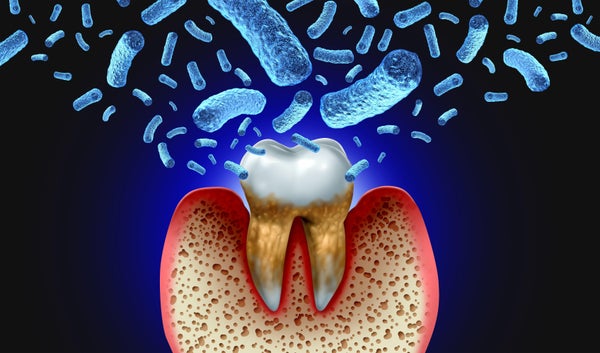
Illustration of a molar tooth with periodontitis.
Credit: Brain light/Alamy Stock Photo

The patient’s teeth appeared to be well cared for, but dentist James Mancini did not like the look of his gums. By chance, Mancini knew the man’s physician, so he raised an alert about a potential problem — and a diagnosis soon emerged.

“Actually, Bob had leukemia,” says Mancini, clinical director of the Meadville Dental Center in Pennsylvania. Though he wasn’t tired or having other symptoms, “his mouth was a disaster,” Mancini says. “Once his physician saw that, they were able to get him treated right away.”

Oral health is tightly connected to whole-body health, so Mancini’s hunch is not surprising. What is unusual is that the dentist and doctor communicated.

Historically, dentistry and medicine have operated as parallel fields: Dentists take care of the mouth, physicians the rest of the body. That is starting to change as many initiatives across the United States and other countries work to integrate oral and whole-body care to more effectively tackle diabetes, cardiovascular disease, joint replacements and many other conditions. The exact relationship between health of mouth and teeth and physical ailments elsewhere in the body is not well understood — and in some cases, is contentious — but experts agree there are links that should no longer be overlooked.

In recent years, dental hygienists have started working in medical clinics; physicians and dentists have started a professional association to promote working together; and a new kind of clinic — with dentists and doctors under one roof — is emerging.

“We are at a pivotal point — I call it the convergence era — where dentistry is not going to be separated from overall health for much longer,” says Stephen E. Thorne IV, founder and CEO of Pacific Dental Services, based in Irvine, California. “Dentistry will be brought into the primary care health-care team.”

Sick mouth, sick body

The list of connections between oral health and systemic health — conditions that affect the entire body — is remarkable. For starters, three common dental issues — cavities, tooth loss and periodontal disease — are all associated with heart disease, the leading cause of death in the United States. “To me, the number one hidden risk factor for the number one killer in our country is oral health,” says Ellie Campbell, a family physician in Cumming, Georgia, and board member of the American Academy for Oral Systemic Health, founded in 2010 to increase awareness of how oral and whole-body health are related.

Curated by Our Editors

Periodontal disease, infection and inflammation of the gums and bone that support the teeth, is the main culprit. Nearly half of adults 30 and older have periodontal disease; by age 65, the rate climbs to about 70 percent. In the early stages, called gingivitis, gums are swollen and may bleed. Periodontitis, a more serious condition in which gums can pull away from the teeth, is the sixth most common human disease.

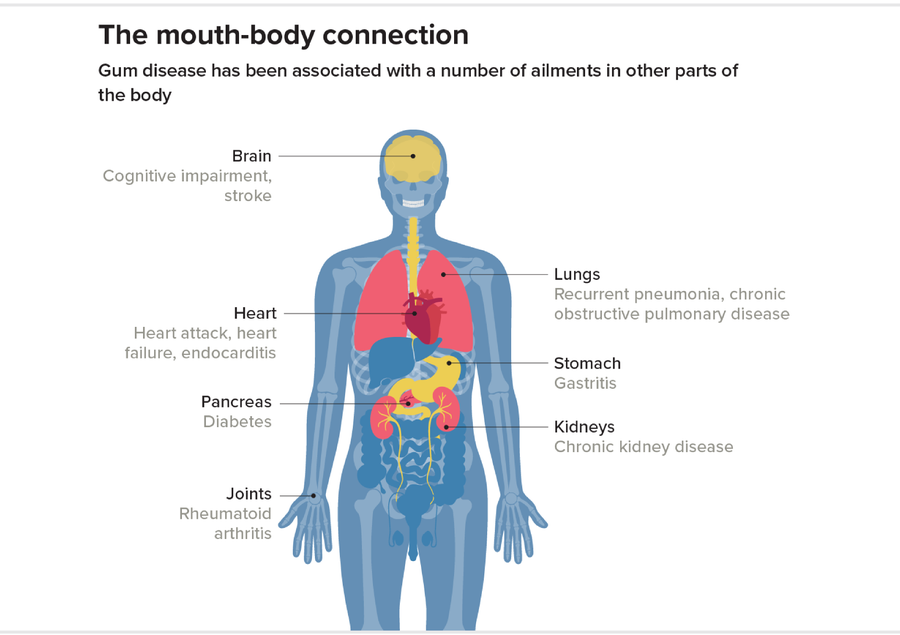
Periodontitis is associated with a slew of systemic ills: heart attacks, strokes, heart failure, diabetes, endocarditis, chronic kidney disease, recurrent pneumonia, chronic obstructive pulmonary disease, gastritis, rheumatoid arthritis, cancer and cognitive impairment.

Bad habits, including tobacco use, alcohol consumption and high-sugar diets, are implicated too. They raise the risk for cavities and most oral diseases, and are also linked to ills such as cancer, chronic respiratory disease and diabetes.

Diagram of a body highlighting the various organs affected by poor dental health.
Dental ailments, including gum disease, have been linked to numerous health problems elsewhere in the body.Credit: Knowable Magazine

Such connections were apparently lost on officials at the University of Maryland in 1837, when the university rebuffed a proposal from two physicians to teach dentistry to the school’s medical students. At the time, medicine wanted nothing to do with dentistry, which was practiced by unregulated and inadequately trained itinerants, says medical and dental historian Andrew I. Spielman, a dentist and oral surgeon at the New York University College of Dentistry. “There were a lot of charlatans,” he says. “They had a very bad reputation.”

The dismissal prompted the rejected physicians, Horace Hayden and Chapin Harris, to establish the world’s first dental school, the Baltimore College of Dental Surgery. Today, dentistry is a highly regulated profession, and the United States has 73 accredited dental schools.

Despite their disparate training, both doctors and dentists are aware that mouth health is important to whole-body health, Campbell says. “Ask a family practice doctor and they will say ‘Oh yeah, if the patient has diabetes, they’re going to have bad teeth and gums, and I can never get their diabetes better until the dentist fixes their gums,’” she says. “And the dentist is going to say, ‘Well, I’ll never get their gums better until the primary care doctor gets their sugar under control.’”

Mancini, the Pennsylvania dentist, says dentists often are asked to examine a patient’s mouth before physicians will proceed with certain treatments. “Physicians know any infection in a patient who’s being treated for cancer could be very much life-threatening,” he says. “The orthopedic guys are now sending all of their patients to the dentist for the same reason.”

Hurdles to holistic care

But working together to improve a patient’s health is not as simple as it might seem. A decade ago, the federal government hired the National Network for Oral Health Access to run a pilot program merging oral and primary health-care centers. The network’s dental consultant, Irene Hilton, a dentist with the San Francisco Department of Public Health, said three barriers to integration became clear.

The fragmented way that health care and dental care are paid for is one of them. While more than 90 percent of Americans have health insurance, only 77 percent of US adults ages 19 to 64 have dental coverage, which typically is sold separately from health insurance. The nation’s largest insurer — the federal Medicare program — generally does not cover dental services, and nearly half of Americans 65 and over have no dental coverage.

Sign Up for Our Daily Newsletter

Email Address

Posted in Uncategorized | Leave a comment

Mental Illness: Brent Hope a number of years back was involved in a project to do with “Outsider Art”. I attended the exhibition and all I can say is if only I had the courage I ought to have bought paintings that appealed to me. Outsider Art sadly is not known about in Ireland, most likely Stigma and Shame bury it. X (formerly Twitter) introduced me to this site and I share it with people who are interested. We need to seek out those artists who have mental illness as was done several years ago and breathe some air into the lungs of those plagued with deep dark depression. Boris Johnson’s mum was confined to the Maudsley (public psychiatric hospital in London) on occasions; her paintings are worth looking up.

Skip to content RAW VISION

  • SHOP

ABOUT EXPLORE

Log in

What is Outsider Art?

FREE Digital Issue: Raw Vision’s
100th Edition Magazine

The controversy surrounding the exact definition of Outsider Art and allied fields has been going on ever since awareness of the phenomenon began so here we try to clarify the different aspects. 

The development of the awareness of forms of creative expression that exist outside accepted cultural norms, or the realm of “fine art”, began with the researches of psychiatrists early in the century.

The work of Dr Morganthaler documented his patient Adolf Wolfli, a genius who produced countless thousands of works from a small cell in his Swiss asylum. Dr Hans Prinzhorn collected thousands of works by psychiatric patients and his book “Bildernerei der Geisteskranken” (Artistry of the Mentally Ill), published in 1922 became an influential work amongst Surrealist and other artists of the time.

One artist who was particularly affected by the works Prinzhorn presented was Jean Dubuffet. Together with others, including Andre Breton, he formed the Compagnie de l’Art Brut in 1948 and strove to seek out and collect works of extreme individuality and inventiveness by creators who were not only untrained artists but often had little concept of an art gallery or even any other forms of art other than their own.

Dubuffet’s concept of Art Brut was of works that were in their “raw” state, uncooked by cultural and artistic influences. He built up a vast collection of thousands of works, works which bore no relation to developments in contemporary art and yet were the innovative and powerful expressions of a wide range individuals from a variety of backgrounds.


ART BRUT

Artworks by Johann Hauser and Aloise Corbaz

Art Brut was Jean Dubuffet’s original term for the works that he collected and revered; later adopted by the Collection de l’Art Brut at Lausanne. Art Brut means “raw art”. Raw because it is “uncooked” or “unadulterated” by culture. Raw because it is creation in its most direct and uninhibited form. Not only were the works unique and original but their creators were seen to exist outside established culture and society. The purest of Art Brut creators would not consider themselves artists, nor would they even feel that they were producing art at all. Art Brut is visual creation at its purest – a spontaneous psychic flow from brain to surface. (examples: Aloïse Corbaz, Carlo Zinelli, Madge Gill, Johann Hauser, Adolf Wölfli)


OUTSIDER ART

Artworks by Bill Traylor and Ferdinand Cheval

The term “Outsider Art” was introduced as the title of Roger Cardinal’s book in 1972 and was originally intended to act as an exact English equivalent to Dubuffet’s term, although from the outset it encompassed not only Art Brut but also works in the Neuve Invention category Over the years it has been used increasingly loosely and can often now refer to any artist who is untrained or with disabilities or suffering social exclusion, whatever the nature of their work. (examples: Adolf Wölfli, Johann Hauser, Chomo, Bill Traylor, Frederich Schroder-Sonnenstern, Ferdinand Cheval, Simon Rodia) 


NEUVE INVENTION

Artworks by Gaston Chaissac and Albert Louden

Dubuffet realised that there existed many creators whose work was of comparable power and inventiveness to Art Brut, but their greater contact with normal society and the awareness they had of their art works precluded their inclusion within his strict Art Brut category. These creators were often humble workers who created in their spare time, or eccentric and untrained artists trying to make a living from their work – some of whom had dealings with commercial galleries. As an acknowledgement to them he formed his “Annex Collection”; in 1982 this became the Neuve Invention section of the Collection de l’Art Brut. As definitions become more merged this term is losing its significance. (examples: Gaston Chaissac, Mario Chichorro, Rosemarie Koczy, Gerard Lattier, Albert Louden, Frederich Schroder-Sonnenstern)


MARGINAL ART, ART SINGULIER

Artworks by Danielle Jacqui and Ody Saban

Marginal art (art singulier) is a term more used in Europe relating to the works of artists, usually, but not exclusively, self-taught, that are close to Art Brut and Outsider artists, both in appearance and directness of expression. These are the artists “on the margins”, that grey area of definition that lies between Outsider Art and normal mainstream art, very similar to Dubuffet’s Neuve Invention category. Art Singulier encompasses French marginal artists. (examples: Chomo, Danielle Jacqui, Raymond Reynaud, Ody Saban) 


FOLK ART / CONTEMPORARY FOLK ART

Artworks by William Edmondson and William L. Hawkins

Folk art is a simple and direct term that has become much used in North America. Originally pertaining to the indigenous crafts and decorative skills of peasant communities in Europe, the term was later applied to the simply-made practical objects of colonial days – a combination of charm and practical craftsmanship. In contemporary terms, Folk Art can cover anything from chain-saw animals to hub-cap buildings as well as the work of artists that would easily fall into the realm of Outsider Art. (examples: Sam Doyle, William Hawkins, William Edmondson, Mose Tolliver) 


SELF-TAUGHT ART

Artworks by Thornton Dial and Mr. Imagination

Self-taught art is a popular term in the United States which avoids the stigmas that some feel are attached to the Outsider Art definition. Many American artists are already pushed to the outer limits of society as a result of prejudice and feel this term offers more dignity. (examples: Mr Imagination, Thornton Dial)


VISIONARY ART, INTUITIVE ART

Artworks by Joe Coleman and Norbert Kox

Visionary art and intuitive art are fairly general terms; used together they can include much urban folk art of the third world, as well as works based on religious experiences and visions. They are avoid the specifics of Outsider Art or Folk Art and can also be used in conjunction with “Self-Taught”. (examples: Norbert Kox, Joe Coleman, Myrtice West, William Thomas Thompson, Donald Pass).


NAïVE ART

Artworks by John Kane and Ivan Generalic

Naïve art refers to untrained artists who depict largely realistic scenes, often in skilled detail, with people, animals, and other aspects of the observed world, sometimes combined with fantasy images. They often aspire to normal artistic status and may often be seen as quite sophisticated amateurs verging on professionalism. (examples: Grandma Moses, John Kane, Ivan Generalic, Douanier Rousseau).


VISIONARY ENVIRONMENTS

Artworks by Simon Rodia and Nek Chand

Visionary environments are spaces, buildings and sculpture parks built by intuitive artists almost defy definition. They have become known by various terms, Visionary Environments and Contemporary Folk Art Environments being perhaps the most appropriate in current use. Although Outsider Art has been used to describe the environments, some feel the label to be insulting to these particular creators, many of whom are integrated members of their local communities. Another popular term, especially in the US, is Grassroots Art, which can also cover the more humble expressions and constructions of ordinary folk in both town and country. (examples: Simon Rodia’s Watts Towers, SP Dinsmoor’s Garden of Eden, Ferdinand Cheval’s Palais Ideal, Nek Chand’s Rock Garden)


Take a look at Raw Vision’s magazine subscriptions 

View all

MORE INFO

POLICIES

Get our weekly newsletter, plus a 10% discount code:

Email Twitter Facebook Pinterest Instagram TikTok

© 2024, RAW VISION

https://rawvision.com/wpm@923483b2w04fb9a55pdf3e3378md2b76e35/custom/web-pixel-shopify-custom-pixel@0575/sandbox/modern/pages/what-is-outsider-art?currency=EUR

GET NEWS

Get 10% off when you sign up to our weekly newsletter

Posted in Uncategorized | Tagged , , , , | Leave a comment