Gary Stevenson: ‘Economists have been all wrong about almost everything for 15 years now’. Source: El Pais English. Comment Access Gary Stevenson by youtube, see below

After growing up in poverty he became a millionaire as a highly successful trader at Citibank, then quit at 26, feeling exhausted. These days Stevenson is an activist trying to stop the global economic system from collapsing due to rising inequality
GARY STEVENSON

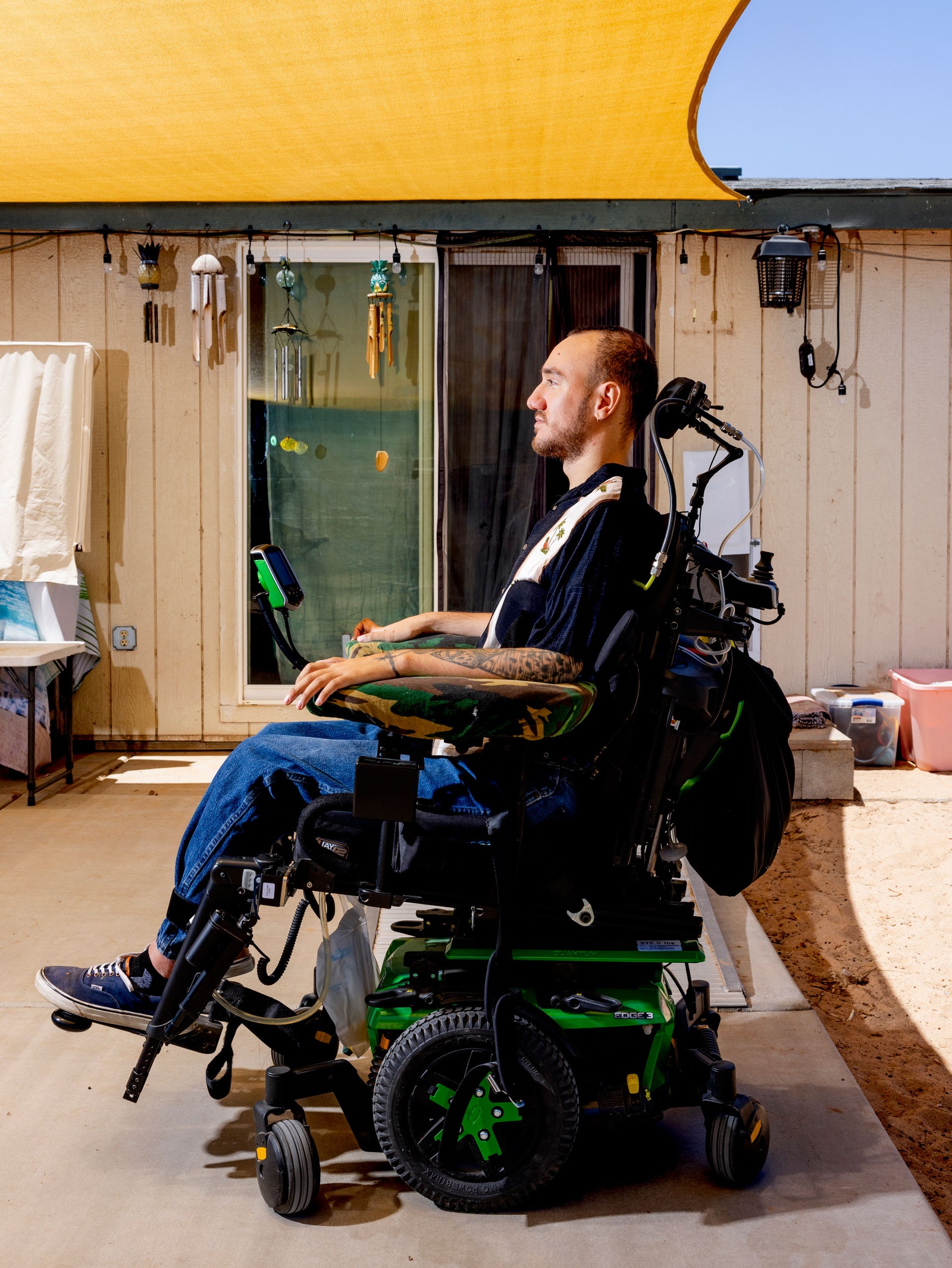
Gary Stevenson, this Tuesday in Madrid.Santi Burgos

Natalia Junquera

Natalia Junquera

Madrid – May 22, 2024 – 18:16 CEST

At age 12, Gary Stevenson sold candy. At 16, he was kicked out of high school for selling cannabis. At 23, Citigroup gave him a bonus of €47,000 for lending money, selling loans. It was double the annual salary of his father, a postal worker. By the age of 26, he was a millionaire, but he had holes in his shoes and was unable to buy a sofa for his empty house. Mentally and physically exhausted, he decided to quit, even though he says that they threatened him to try to make him stay. Now 36, the British economist has become an activist who dedicates his time to warning about the impending collapse of the economy due to inequality. He tells his story in The Trading Game: A Confession.

Question. Why did you write this book? Is it a warning or a confession?

Answer. Both. It is part of a political project. The economy is getting worse and worse without most economists realizing it. I try to raise awareness about this by writing in newspapers, with my own YouTube channel… but to connect with people you have to tell them a story and I wrote about my own experience. I think it is much more powerful politically than any purely economics book I could write.

Q. You say that shortly before entering Citigroup an employee committed suicide by jumping from the 20th floor. Did you think about that man while you worked there?

A. The truth is, not really. Bankers have a long history of jumping from skyscrapers. This guy could have jumped from the outside, but he jumped in the internal atrium, because he wanted everyone to see, for traders to have a peek before going back to their desks. And my reaction was “so it goes.” It was a powerful metaphor for the way this world works, the level of obsession. It is an example of dehumanization.

Q. What should a trader in the City be like? What do you need to survive?

A. There is a book, Catch-22, that tells what lots of different people do to survive the war: some become obsessed with money, others with escaping, and others with enjoying everything as much as they can. Different traders do different things, some go out drinking, take drugs, go to Vegas... Cocaine addiction is a massive problem, gambling is a massive problem. Others, like me, were obsessed with being the best trader. The question to me is how humans survive in traumatic spaces. And a lot of people do not survive in many ways because they become dehumanized, they become aggressive people who hate others.

Q. You say in the book: “Many rich people expect the poor to be dumb.” Did you use it as an advantage?

R. It definitely was. They assumed I was an idiot. It happened at the London School of Economics, at Oxford… But, on the trading floor, I realized that they thought: ‘If this guy got here with that accent, it must be because he must be very smart, because if not, how did he get here?’ There is an irony because at that time I had no idea what I was doing, but they thought I was going to be the best, and in the end I became the best.

Q. You once lost eight million pounds before making much more. In your book you write that “the best trading is made with the nose. It smells like stupidity.” What does that mean?

A. In the world of trading, you do not make big money just for being right, but when you are right and everybody else is wrong. And that’s the kind of trading I specialized in, in being able to smell the bullshit when everybody believes it. My big trade was in 2011 because everybody thought things were going to get better and everybody was wrong. With the nuclear crisis in Japan, everyone went crazy: no one really knew what it was about, but everyone pretended that they did. Economists have been all wrong about almost everything for 15 years now. Lots of very intelligent people, with the most expensive suits and haircuts and with elite degrees from elite universities, have got it all wrong for a long time now. That’s fascinating to me and I have made a lot of money thanks to that.

Q. You were betting on disaster. What would have happened if there hadn’t been people like you who were betting that the economy was going to crash?

A. The story of the last 15 years in economics has been one of incorrect optimism because there is an undiagnosed structural crisis of inequality. If you have cancer and are not diagnosed, if doctors treat the symptoms, but not the cause, you will get worse. That’s what’s happening in the economy. Nobody looks at the distribution, the inequality. People like me make no difference if we’re working as traders, even though we can get paid millions to work at a bank. Politicians are not paid to do the right thing, but to win elections. Nobody in the public sphere is paid to be right. There are no incentives in the public sector to get it right, to do the right thing.

Q. But if they don’t do the right thing, they can lose the next election.

A. Yes, but David Cameron earned £10 million within one year after leaving. Tony Blair’s son is one of the richest men in the world. The current prime minister’s father-in-law is one of the richest men in the world. Politicians who lose elections end up really rich.

Q. When they transferred you to Japan you were devastated. Your girlfriend, who only joined you when she had her own job and income, was asking you to leave Citigroup, but at that time, you left the girl, not the job. Did you exchange money for happiness?

A. Right now I could be on a beach in the Philippines, I don’t have to be making this book or videos for YouTube. I come from a poor family, from a bad neighborhood, from a difficult childhood. I don’t do what I do for money, but because I don’t want the bad guys to win. Sometimes I wonder why nice kids from nice families aren’t doing the work I’m doing. I do it because I don’t want the world to go down the toilet. That money that I was fighting for then [a bonus he was owed] is what funds the work I do now.

Q. Who are “the bad guys”?

A. Many people who read the book will think they are the bankers. That is not all I want to say. I have a lot of empathy for my former colleagues, although they are multimillionaires and can take care of themselves. I am very confident that poverty will grow massively in the next 10 years because the system guarantees a flow of wealth away from the middle class, increasing inequality. That means that your grandchildren will live in desperate poverty. It would very nice to be able to say that the bad guys are guys like Elon Musk or George Soros, but that won’t get us anywhere. We get somewhere by stopping the economy from collapsing. I don’t want to have a big meeting on the Titanic to decide who the bad guys are, I want to steer the ship away from the iceberg. Being a banker helped lift my family out of poverty. The bad guys aren’t them, it’s the system.

Q. Caleb, your mentor, retired at age 29, but later returned. Have you been tempted to return?

A. I still sometimes have a recurring dream that I am still trading really well but I don’t get the bonus. I still check the markets every day. I don’t need the money, but I miss being known as the best. But I don’t think I’ll ever go back. I think what I do now is important.

Q. What relationship do you have with money now?

A. I don’t spend much. I live frugally. I don’t wake up and think about money, I think about how to win this fight. In my life I went very quickly from being judged for being poor to being judged for being rich.

Q. Your book says: “Rich people get the assets, poor people get the debt.” How do you see the future of the middle class?

A. It’s going to get smaller and smaller. The future? Look at Colombia, Mexico, Brazil… Europeans are somewhat naive about the economy. They think that what happens in those places cannot happen here, but countries with a lot of inequality end up like this. When you read Dickens you see the poverty of my own country 150 years ago. We are losing the standards of well-being that our forefathers fought for.

Q. You signed a letter with other British millionaires asking the prime minister to raise your taxes. But people who will never smell the amount of money that you handle oppose the rich paying more. What do you attribute it to?

A. There are several reasons.The right is building a narrative that is not correct, but is compelling: ‘You are poor because of the immigrants, who occupy your homes and your job,’ when it is because of inequality, because the rich are the children of the rich, who are the ones who take the money, not the immigrants. And the left does not have a clear message on the economy, it is not able to explain that things can be changed. There are many rich people who own many newspapers capable of convincing people that the problem is immigrants. We are going towards a more xenophobic Europe and we could end up where we were 100 years ago.

Q. You talk about the economy of inheritance, but education also works against that, right? You are living proof: from a poor neighborhood to the London School of Economics and from there to Citigroup.

A. Yes, I come from a poor neighborhood and I got a good job and a lot of money. But almost everyone I know is exactly as rich as their father and I know people who can’t afford a house on their salary alone. It is not a meritocracy. Wealth is hereditary.
GARY STEVENSON
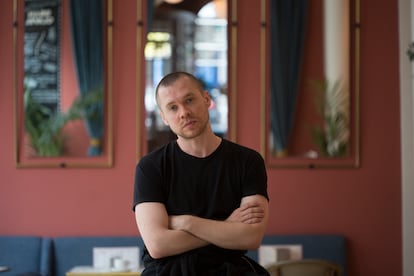
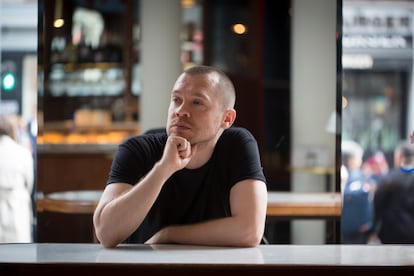
Gary Stevenson, this Tuesday, in Madrid. Santi Burgos

Sign up for our weekly newsletter to get more English-language news coverage from EL PAÍS USA Edition.

========================

91,420 views 28 Mar 2024 He went from working-class east Londoner to Citibank’s most profitable trader. He made his millions by predicting that inequality dooms our economic model. We discuss his bestselling new book – The Trading Game: A Confession – and why our economic model dooms us to falling living standards, and unless we can get our act together, fascism will triumph.

Posted in Uncategorized | Leave a comment

GZERO: Would Trump give Ukraine to Putin? Ivo Daalder

Posted in Uncategorized | Leave a comment

Khan Academy and Microsoft are teaming up to give teachers a free AI assistant. Source: Fast Company – Plugged In. Comment: School teachers proved a nightmare for me especially maths in the 1970’s, I think the robot and Microsoft is something that will empower students

05-21-2024 TECH

Khan Academy and Microsoft are teaming up to give teachers a free AI assistant

AI assistant Khanmigo can help time-strapped teachers come up with lesson ideas and test questions, the companies say.Khan Academy and Microsoft are teaming up to give teachers a free AI assistant

[Photo: Maskot/Getty Images]

BY Steven Melendez4 minute read

Khan Academy’s AI assistant will now be free to K-12 teachers in the U.S., thanks to a new deal with Microsoft, the companies said Tuesday during Microsoft’s Build conference.

Microsoft is donating access to its Microsoft Azure infrastructure to give teachers free use of the tool, which previously required a $4 per month subscription to pay for the cost of the underlying AI service. 

“They just have a very long reputation now of very successfully delivering these educational materials to learners everywhere in the world,” says Kevin Scott, Microsoft’s CTO and EVP of AI, referring to Khan Academy.

The education nonprofit, known for years for its acclaimed educational videos, will continue to charge school districts and other users for student access to the AI system, though Khan says the organization continues to search for ways to lower prices.

[Image: Khan Academy]

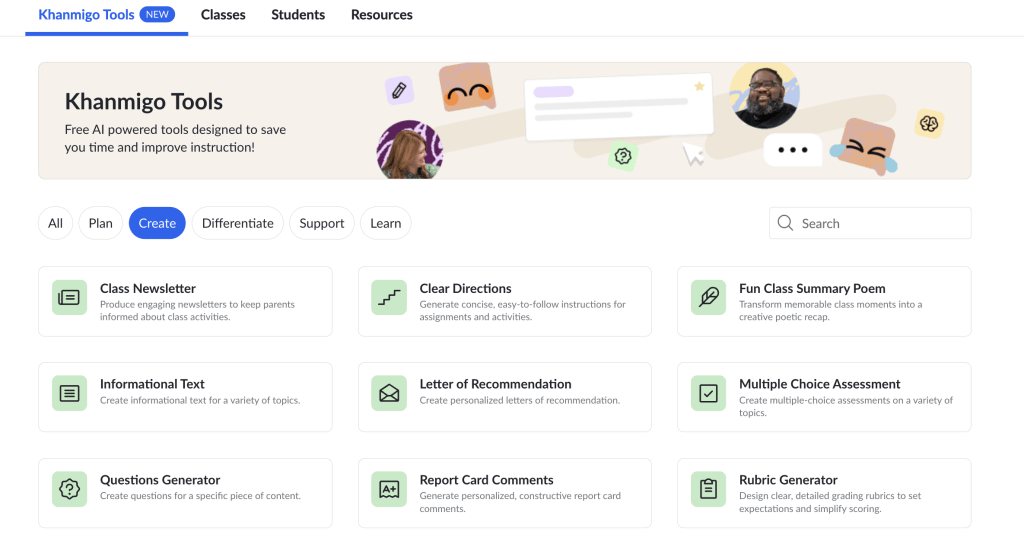
Khan Academy’s AI assistant, Khanmigo, has earned praise for helping students to understand and practice everything from math to English, but it can also help teachers devise lesson plans, formulate questions about assigned readings, and even generate reading passages appropriate for students at different levels. More than just a chatbot, the software offers specific AI-powered tools for generating quizzes and assignment instructions, drafting lesson plans, and formulating letters of recommendation. 

“This is something that hopefully a teacher, within hours of using it, is already starting to see a huge ROI,” says Khan Academy founder and CEO Sal Khan.

In announcing the deal, the companies pointed to examples of teachers who’ve successfully used the software to come up with colorful analogies to make abstract science topics stick—like comparing particles in chemical reactions to dancers changing partners—and adjust reading practice passages to include vocabulary at an appropriate level.

Having a virtual teaching assistant is especially valuable in light of recent research from the RAND Corporation that found teachers work longer hours than most working adults, which includes administrative and prep work outside the classroom. Long hours relative to pay can lead to teacher burnout and cause educators to leave the profession, which means students lose the benefit of their experience, according to the report. Khan Academy’s teacher tools can help reduce the amount of time teachers have to spend getting those lessons ready. 

“We are hoping that 10 to 20 hours can look a lot more like one to five hours,” says Khan.

Generative AI’s rapid growth initially brought anxiety to the world of education, with teachers from elementary school to the college level concerned about students simply having the software do their homework for them. But even beyond helping teachers, organizations including Khan Academy have increasingly honed AI-powered tools that function more like a human tutor, patiently walking students through solving a problem or offering tips for tightening up an essay without actually doing the assignment. 

“They don’t make you feel bad about asking dumb questions,” says Microsoft’s Scott. “Whenever your curiosity arises, if it’s at all hours of the night or in the morning, they’re there for you.”

Scott, who grew up in pre-online rural Virginia and recalls having to seek out information and guidance, sees how AI is already giving an edge to younger generations: His daughter, a high school freshman with an interest in biochemistry, is able to use ChatGPT to help understand research papers from the field. 

“Even though no one was targeting a 15-year-old when they were writing this material, she can make it accessible to herself with a free tool,” he says.

Microsoft and Khan Academy will also be working together developing AI tutoring tools for math, an area where generative AI has often struggled. The software will be powered by Microsoft’s Phi-3 small language models. As the name suggests, small language models are more compact and less computationally intensive than large language models like GPT-4, which means they can be cheaper to use and can potentially even be run on local devices instead of in the cloud. 

“If that means that more kids can have access to the product, then that’s a thing really, really, really worth exploring,” says Scott.

Small language models can also require fewer resources to fine-tune them for a specific purpose, he says. And Khan Academy is providing sample educational content like math problems and detailed answers to help the models get better at math. Microsoft has already fine-tuned the current version of Phi-3 to call external code when it needs to do calculations it can’t do directly and reports the AI can already generate math problems for specific topics at specific grade levels and walk students through explanations. 

Khan Academy user data won’t be used to train the models, the organizations say. 

Microsoft will also incorporate more material from Khan Academy into its own AI tools, ready to be surfaced when users ask questions where it can provide educational value.

“If a student wants to learn something, and they’re asking the AI for that help, I think it is much healthier for that AI to slip in Khan Academy content than not,” says Khan.

Recognize your brand’s excellence by applying to this year’s Brands That Matter Awards before the final deadline, June 7.

Sign up for Brands That Matter notifications here.

PluggedIn Newsletter logo
Posted in Uncategorized | Tagged , , , , | Leave a comment

Neuralink’s First User Is ‘Constantly Multitasking’ With His Brain Implant. Source: Wired

Emily Mullin

Science

May 22, 2024 2:00 AM

Neuralink’s First User Is ‘Constantly Multitasking’ With His Brain Implant

Noland Arbaugh is the first to get Elon Musk’s brain device. The 30-year-old speaks to WIRED about what it’s like to use a computer with his mind—and gain a new sense of independence.

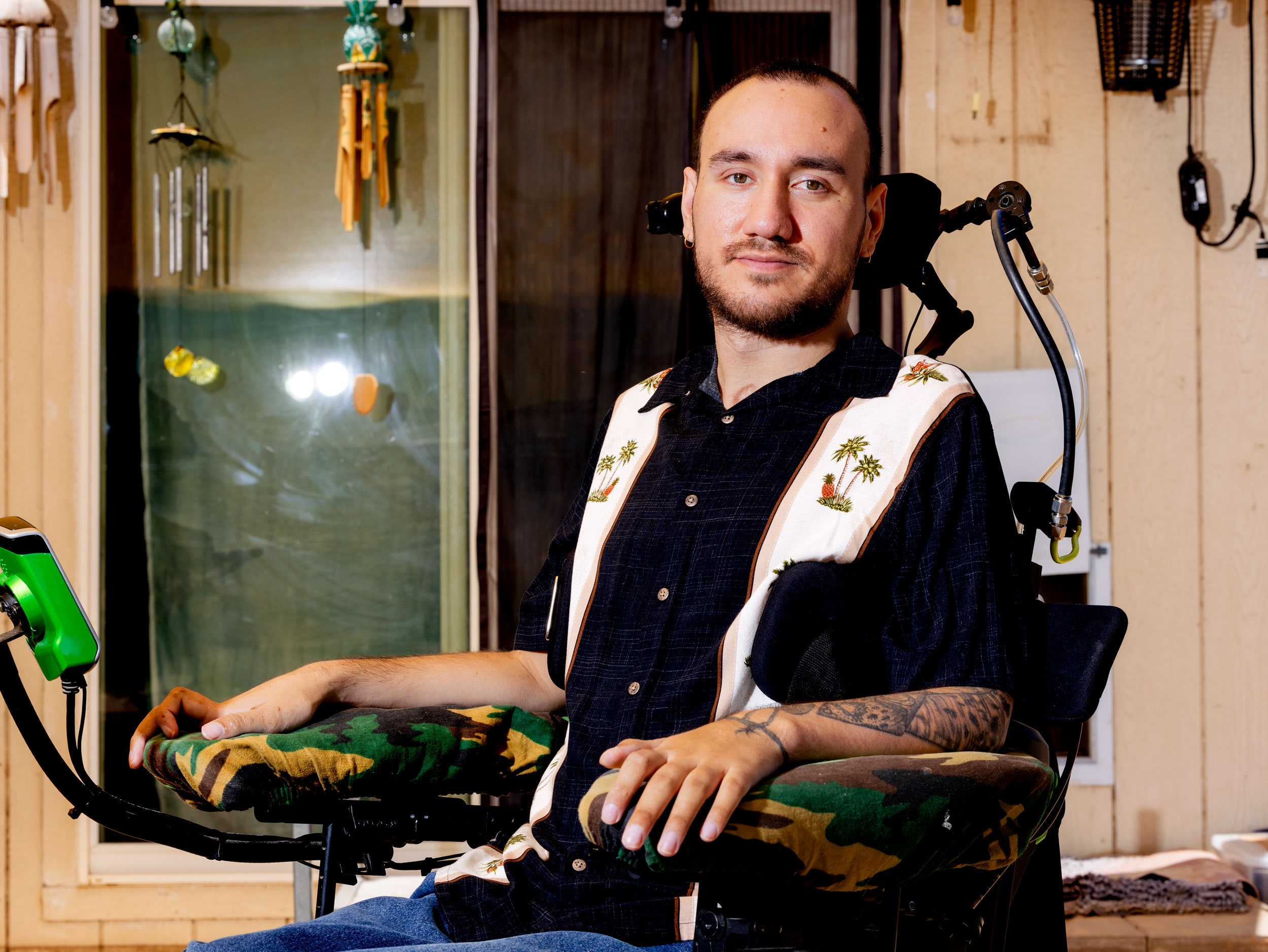
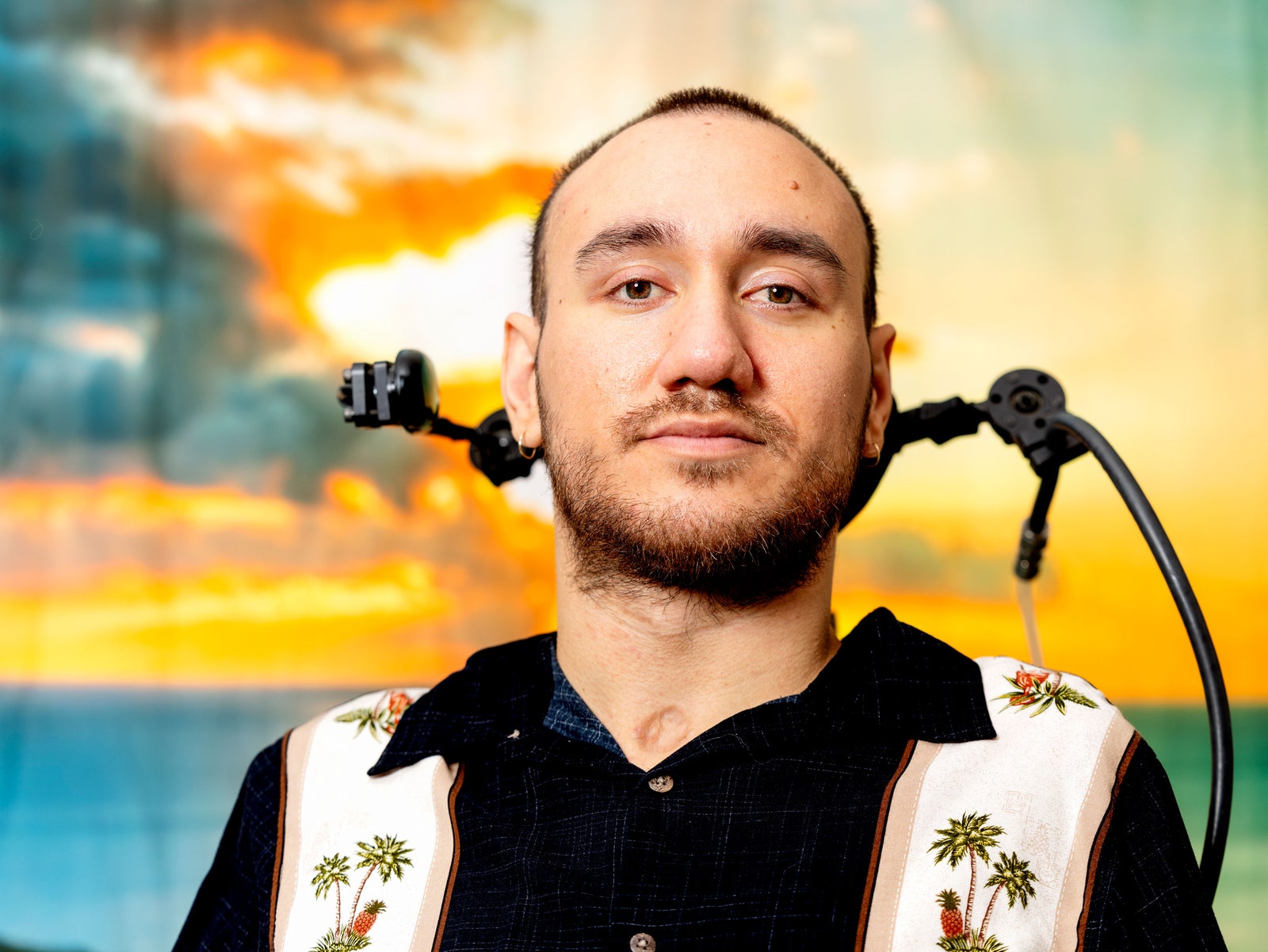
Image may contain Person Sitting Adult Skin Tattoo Face Head Photography Portrait Wheelchair Neuralink Patient

In 2016, Noland Arbaugh suffered a spinal cord injury while swimming in a lake. The details are fuzzy, but what he remembers is rushing toward the water with his friends, diving in, and hitting his head on something—or someone. He floated to the surface, unable to move.

Doctors later confirmed that he was paralyzed from the neck down. Arbaugh went from being a self-sufficient college student to moving back in with his parents and relying on them for his daily needs. He learned how to get around in a wheelchair and use a mouth-held stick to operate an iPad, but the hardest adjustment was feeling like he was a burden on his family.

The year 2016 was also when Elon Musk cofounded the brain implant startup Neuralink. This January, Arbaugh became the first person to receive the company’s investigational device, dubbed Telepathy, as part of a clinical trial. Known as a brain-computer interface, or BCI, it decodes intended movement signals in the brain and translates them into computer commands. Arbaugh just has to think about moving a cursor on his laptop screen and it moves.

The experimental device has given Arbaugh, now 30, a sense of independence. Before, using a mouth-stick required someone to position him upright. If he dropped his mouth-stick, it needed to be picked up for him. And he couldn’t use it for long or he’d develop sores. With the Neuralink device, he has nearly full control of a computer. He can browse the web and play computer games whenever he wants, and Neuralink says he has set the human record for cursor control with a BCI.

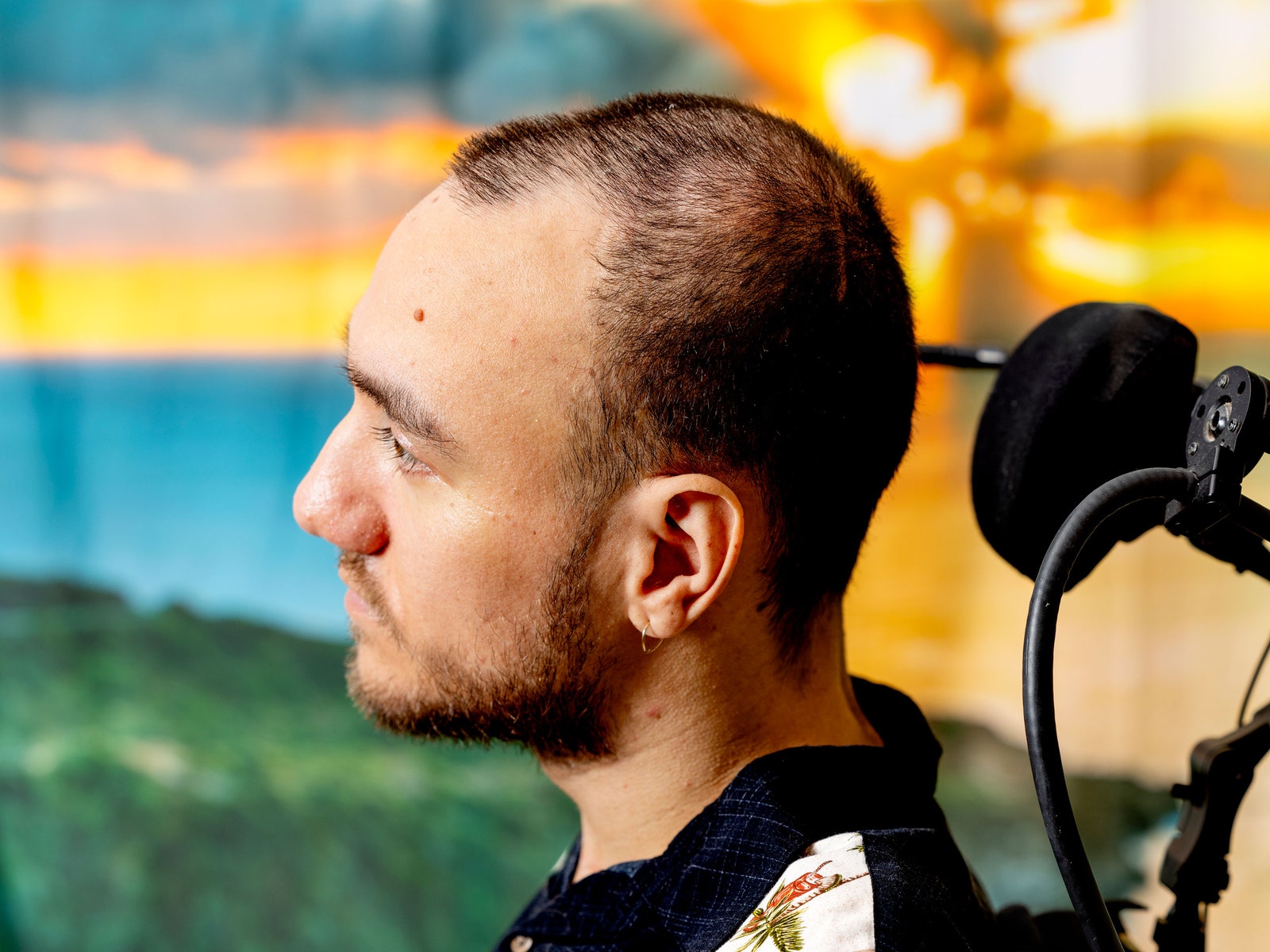
Image may contain Adult Person Crew Cut Hair Head and Face

Arbaugh isn’t the first person to get a BCI; one recipient, Nathan Copeland, has had one for nine years. Beyond Neuralink, several other companies are working to commercialize BCIs to help people with paralysis, mental health disorders, and even blindness. Arbaugh recently spoke with WIRED via Zoom to talk about his experience in the Neuralink study. This interview has been edited for length and clarity.

Featured Video Neurosurgeon Answers Brain Surgery Questions From Twitter

https://d4ea1d7f232278d2a3081cd09c2f1042.safeframe.googlesyndication.com/safeframe/1-0-40/html/container.html

Most Popular

Emily Mullin: Before you got the implant, what was your day-to-day life like?

Noland Arbaugh: I was lying in bed most days, all day. I didn’t get up a whole lot unless I had something to do. I got up to take showers every other day. I got up when people would come to my house to see me, but outside of that I was just in bed.

Right before my “initiation” into Neuralink, I was trying to learn a lot more. I was trying to get my life back on track, because I had kind of done nothing for five years after my accident. So I started learning languages and stuff. The two years before the Neuralink trial I was actively trying to better myself.

You’ve said you found out about the Neuralink trial from a friend. Had you heard of brain-computer interfaces before then?

No, never.

Musk is a very showy person, and Neuralink has livestreamed some flashy updates over the years. What was your initial impression of the company?

I was blown away at what they were trying to do. You know, Elon Musk, he has had such an impact on the world, whether people think that’s good or bad. It was really cool knowing that he was a part of something like this. I really feel like we’re kindred spirits with our mentality of wanting to better humanity.

It was very cool to see the richest man in the world, possibly one of the most powerful men in the world, taking an interest—you just don’t see this kind of funding go into things for handicapped people.

You had to go through a pretty extensive screening process to find out if you were eligible for the Neuralink trial. What was that like?

It took about a month. I applied and within a day I’d gotten an email back that said I’d been selected and they wanted me to go through the first interview. I did a bunch of Zoom interviews. I had to do a lot of medical screenings. They asked about my medical history and family history, and I had to do a psych screening.

At the very end, about a month in, I went to the hospital they had selected. I did a full day of screening, which was eight hours of tests, including brain scans, different head scans, blood tests, and urine tests. I did another psychoanalysis and then memory tests to see if I was all there cognitively and also just to get a baseline, so if anything changes they would be able to know where I was when I began. That was a long day.

After that, it was just a waiting game.

When they told you that you had been selected for the trial and were going to get the Neuralink implant, how did you feel?

The whole time I tried to keep my expectations really level. They told me throughout this whole process that at any point, if I don’t meet one of their criteria, they’ll move on in a different direction. I tried to push down any expectation I had just because I didn’t want to get my hopes up and be let down. It was hard to not get excited. But I think I needed that to keep me grounded through the whole process.

https://d4ea1d7f232278d2a3081cd09c2f1042.safeframe.googlesyndication.com/safeframe/1-0-40/html/container.html

Most Popular

https://d4ea1d7f232278d2a3081cd09c2f1042.safeframe.googlesyndication.com/safeframe/1-0-40/html/container.html

Did you have concerns or fears at any point about getting brain surgery?

There were a couple of things that gave me pause, but I wouldn’t call them concerns. It was more that I needed to think through it and sort through my feelings and emotions and see if I was really ready to undertake what was coming my way.

The first is that I’m a quadriplegic, and all I really have is my brain. So letting someone go in there and mess around, it’s a big commitment. If something goes wrong, that’s kind of it for me. But I knew I wanted to help out, and I didn’t want to let my fears get in the way of that.

The second thing that gave me pause was that I didn’t know if I wanted to be the first one to get this in my brain if anything would go wrong with the implant. What if it breaks or stops working and I only have it for a day, a week? I thought maybe someone else should get it first, and I’ll get the better version of it.

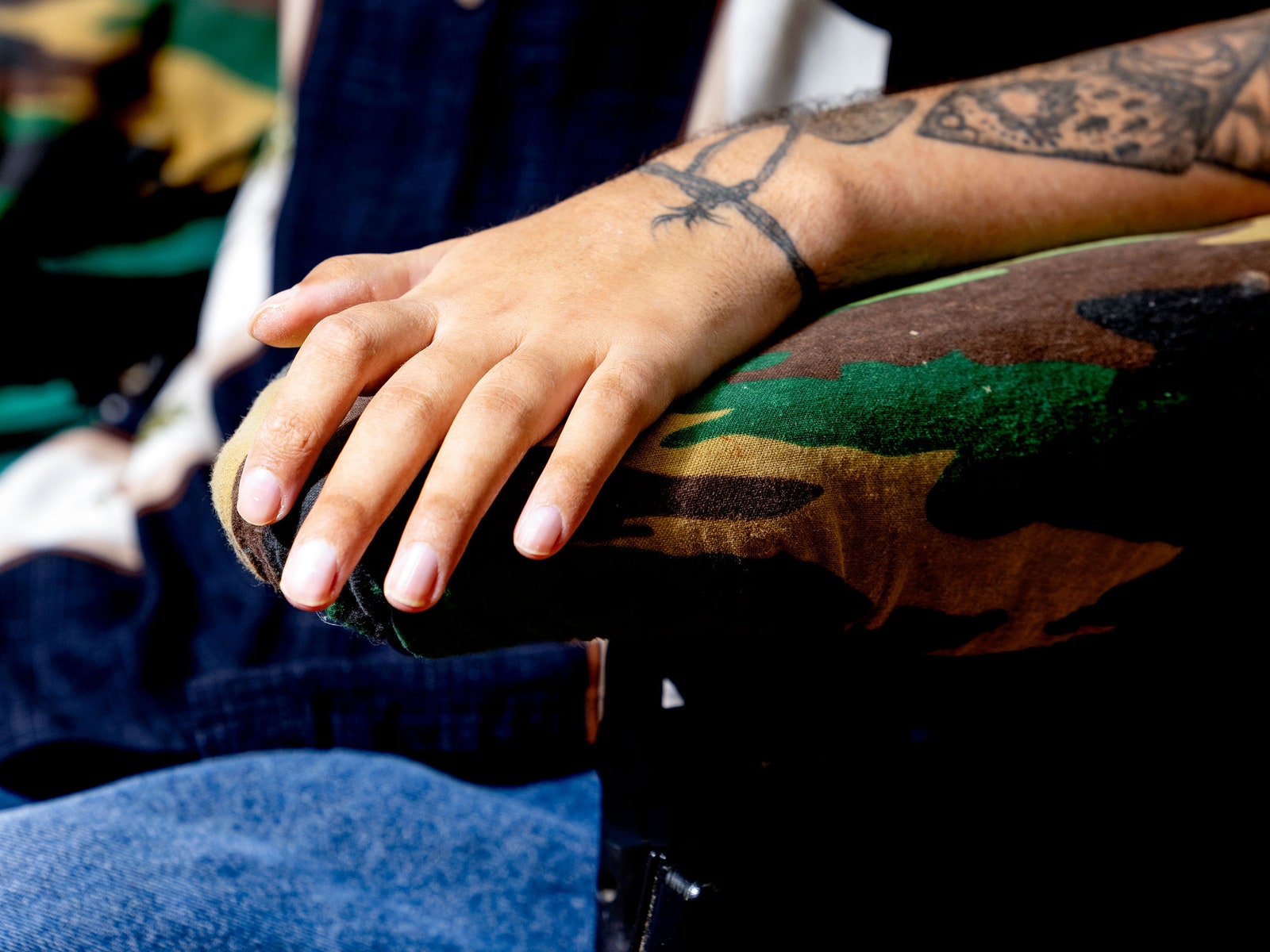
Image may contain Body Part Finger Hand Person Skin and Tattoo

Did Neuralink prepare you for the possibility that the implant might not work?

I knew there were a lot of risks going in, and I knew it might not work. I didn’t anticipate any of that though. I had complete faith in Neuralink.

The day after your surgery, Musk posted on X that the device was showing neuron spike detection. Was it really that fast?

I was lying in my hospital bed right after surgery, and they came in and woke up the implant for the first time. They showed me a screen with different channels on it, and they said they were real-time signals that the Neuralink was picking up in my brain. So I knew it was working.

My first instinct was to just start playing around, moving my fingers, to see if I could notice any big spikes. Every time I moved my index finger, there was a big yellow spike, and I did it three or four times. I was just lying there thinking, “That’s so cool.” I moved my finger and it jumped, and everyone in the room was just geeking out.

Once they started putting me in the app and letting me do things like calibration and body mapping and I got cursor control for the first time, it was very intuitive. It wasn’t hard at all, and I think it’s only going to improve from here.

By body mapping, you mean that you would think about moving your hand or your finger in a certain way and Neuralink would correlate that with a certain neural signal?

Yeah, so in the body mapping, there were visualizations of a hand moving on a screen. There were different actions that they had me perform, like push your hand forward, pull your hand back, and so I did that for a while. We would do the action during body mapping, and they said that same action will be how you control the cursor. We did finger presses, like pushing down with each of my fingers 10 times. Then they would say, “OK, this finger got the best signal, and so that’s the one we’re going to use for the click.” So every time I went to click, I used that finger. It was very intuitive.

You’re not actually moving your finger then, just thinking about it?

Exactly. Even though I can’t move it, I can still try to move it, and it feels like it should be moving. The signal is still happening in my brain.

What does it feel like to be using the device? Do you have to concentrate really hard?

No, it’s very easy. I’m constantly multitasking when I’m in sessions or when I’m playing around. I’ll throw on an audiobook or throw something on my TV and then play a game at the same time. It takes very little brain power. What I’m thinking the whole time is just where I want the cursor to go.

What devices are you able to use the Neuralink app on?

It’s just on a Macbook right now, but they’re planning on moving it onto other devices. It will move to a phone pretty soon, and we’ll continue going from there.

Neuralink put out a blog post recently about your first 100 days with the device, and it mentioned that some of the implant’s threads, which are dotted with electrodes that read your neural activity, pulled out of your brain. Did you notice a difference in functionality when that happened?

I could tell right away that something was wrong. I just started losing control of the cursor. That was about three weeks in, I would say. I thought it was something on their end, like they had changed something in the software that made it perform worse.

Were you aware that it was possible that the threads could come out?

I didn’t have any knowledge that it was possible. I don’t think they saw it in any of the animal trials. I had heard that it had maybe happened in one of the monkeys but that it was much different. It was never anticipated that it would happen in me.

But there were a lot of things that they didn’t expect with the human brain, like just how much it moves. It threw off a lot of their calculations for how things should be going.

Image may contain Performer Person wheelchair Adult Electrical Device Neuralink patient

How long did it take to recalibrate and get back to the cursor speed you were at before?

It took maybe two weeks. I remember the day that it happened. I was playing on it, and things just got better. It was just one little tweak that they had made on the software side, and from that point on things kept getting better and better.

Are you worried at all that more threads could pull out and the implant could stop working altogether?

Yeah, I’ve had fears about that. I’ve mentioned it to them. They have been very upfront with me and said that they don’t see any evidence of that. It seems like the threads have stabilized, and even some that were pulled out of my brain had found their way back in. I’m not worried about it now.

How has your life changed since getting the implant?

It’s just made me more independent, and that helps not only me but everyone around me. It makes me feel less helpless and like less of a burden. I love the fact that the people around me don’t have to wait on me so much. Outside of being completely healed, I believe what most quadriplegics want is independence.

What do you wish you could do with your implant that you can’t do right now? What does Telepathy 2.0 look like?

I mentioned this in [Neuralink’s] all-hands meeting, and I think it would be so freakin’ cool if I had a [Tesla] Optimus robot that I could control with it that would do basically everything for me and be a caretaker. It would eliminate probably 90 percent of the things that I need other people for. On top of that, it could connect to other things. I could connect to a car—a Tesla would be pretty cool, because they’re already self-driving. I would just need to find some way to get into it and set an address. Right now it’s a mission to get me anywhere. There are so many people, so many moving parts that are involved. If I could do all that on my own, man, it would change everything.

Image may contain Furniture Chair Adult Person Box Clothing Footwear Shoe Accessories Bag Handbag and Sitting

There are now a few dozen people around the world who have gotten BCIs. Have you met any of them?

No, I haven’t. I would like to. Maybe I need to take that first step and reach out. Maybe they’re all mad because I’ve been breaking world records.

You’ll have the implant for at least a year as part of the trial. Is there a scenario where you’d want to have it taken out?

My thinking through this whole process has been, it would benefit Neuralink if I left it in as long as possible, because I’ll have the longest case study of anyone. I would like to do that if it benefits them. That being said, if after a year I or Neuralink feels as if they’ve gotten what they can from me, and I’ve given what I can, then we’ll see. It also depends on how functional it is. I don’t expect it to lose any more function, but I never know what the future holds.

What has Neuralink told you about the possibility of getting an improved model?

I would love one, but they haven’t promised me anything. They’re not allowed to because it’s seen as an incentive. Since it’s a voluntary study, I’m not allowed to be incentivized at all in any way.

I hope that being the first short-lists me in some way, but if this is the extent of my participation, then that would be enough for me.

Neuralink is looking for a second trial participant. What would you say to that person?

I’m excited to have a buddy in this, someone to compare notes with. It will be nice to get a different perspective. I only have a few months on the next participant, but I want to help out in any way I can and be available for any questions they have. I guess my role in all this is sort of like a big brother.

What do you think is the next frontier for BCIs?

Being able to translate language in real time, I think that’s doable.

I know that BCIs don’t write into the brain yet, they just read. There’s no way to insert knowledge in there. But I think if we’re already at the reading step, then maybe writing comes next. That is a little bit of a scarier notion and something that I feel like a lot of people might not be too happy with. Maybe that’s something that needs to be thought out a bit more and taken a bit more carefully. But I think it’s a real possibility, and it’s a real bright future.

https://d4ea1d7f232278d2a3081cd09c2f1042.safeframe.googlesyndication.com/safeframe/1-0-40/html/container.html

You Might Also Like …

Posted in Uncategorized | Tagged , , , , | Leave a comment

Linguists, biologists and publicists, the new experts setting up as ‘prompts engineers’ for ChatGPT. Source: EL PAIS

Generative AI is fertile ground for professionals without prior computer science knowledge to join the technological revolution

Estudiantes ChatGPT
A student at the University of Salamanca’s faculty of philology, Spain.Tim Graham (Getty Image

Madrid –

Before generative artificial intelligence turned his world on its head, Guillermo Prado did a PhD in molecular biology in the oncology department of La Paz, a public hospital in Madrid. He then started working in a company related to the healthcare sector, but he didn’t enjoy it. It was late 2022, and the first versions of ChatGPT and Midjourney, an application capable of creating images from text, were released at the same time. “I started going crazy with it,” Prado says. Now he is an expert in the new skill known as “prompts engineering.” Salaries in the field can reach six figures in the United States.

“I thought that was the future, so every day when I came home from work, I started researching it,” Prado says, embarking on a path of no return that has led him, two years later, to create Externia, his own events company driven by generative artificial intelligence — technology capable of creating text, images, music, or videos from written instructions. In the face of the caution and general lack of knowledge that still dominates public conversation, Prado believes that the revolution led by this technology will be transversal, affecting all jobs and opening the door of innovation to professions that have historically been left out of technological progress.

“Why would a humanities profile work as a prompts engineer?” asks Prado. Prompts are the instructions or requests received by the machine. The prompts engineer is the expert professional, for example in ChatGPT, who knows how to get the most out of the tool by making use of language. “The profiles that are coming in now are usually computer scientists, and that’s fine and it works, they’re going to be needed. But the most important part of a prompts engineer is to be creative, and there I think humanities profiles [such as philosophy, marketing, or linguistics] can have a lot of potential.”

“When it comes down to it, you are communicating with a natural language, and a profile that has studied that will have a huge advantage,” Prado tells EL PAÍS in a telephone conversation. The connection between the humanities and generative AI seems minimal, but more and more voices are pointing in that direction. Marco Argenti, the CIO of Goldman Sachs, wrote about the subject in the Harvard Business Review: “The quality of the output of a Large Language Model [like ChatGPT] is very sensitive to the quality of the prompt […] Because of that, one would have to first and foremost master reasoning, logic, and first-principles thinking to get the most out of AI.”

Artificial intelligence could alter almost 40% of global employment, according to the International Monetary Fund (IMF). In advanced economies, that figure rises to 60%, because the number of jobs performing replaceable tasks is higher than in other economies. However, a recent article in The Economist asserts that those with humanities degrees are well positioned to take advantage of the new opportunities. “Promotion agencies and online courses purporting to teach this skill are flourishing. Graduates with a background in languages or the humanities are popular candidates,” the text states.

Momentum in marketing

Ruth Falquina, CEO of the marketing agency Estado Latente, studied marketing at the Complutense University of Madrid before entering the world of artificial intelligence. She now uses that technology throughout the productive and creative process of her company. “Humanities profiles bring critical thinking and creativity based on a deep knowledge of culture. This background serves to generate better prompts, better instructions,” she explains. Falquina, like many other experts, says that “prompts engineer” is not going to become a job per se, but a skill that many people will have to develop for their jobs.

At her marketing company, employees use tools like ChatGPT on a daily basis. It’s part of the production process they go through when they have a new assignment. Falquina notes “co-creation” between human and machine is essential. “We integrate AI as part of our team,” she says. They have used it for smaller things, from producing the first AI-based cover in Spain (it was for the first issue of Yorokobu magazine), to creating a drink wrapper thanks to machine design. For the Jaume I scientific awards, for example, they have created an AI that helps the user to lose fear of the AI itself. They have also generated a ChatGPT model to “help strategists around the world develop their own brand.”

“It improves work processes and inspires us to be better creatives,” says Falquina. Another project was the main stage designer for the Mobile World Congress. They had two and a half weeks to complete the final product. “In that case, the AI allowed us the speed we needed to deliver everything we were asked for.” Hermagoras Abecia, a digital marketing specialist at Actahotels, has also been tinkering with ChatGPT for some time, so much so that he has already given himself the “prompts engineer” skill on his LinkedIn profile. He says he has been developing his own tools since October last year, and that his AI has become a sort of companion with whom he converses most of the day.

“You have to know how to give instruction”

“It helps you from doing a context analysis for a marketing campaign to a Google positioning strategy. I do it with ChatGPT and we pull it off,” he says. Another fan, Cristina Aranda Gutiérrez, earned a PhD in Hispanic philology before entering the world of AI, and launches a staunch defense of the humanities in this sector. “Anyone can choose to work in this, because it is something as non-technical as giving an instruction to the machine. But linguists and philosophers are going to know how to do that better than others. In addition, you have to know how to give the instruction, because the context and the precision of the command are important,” she says.

Nico Bour, co-founder of Joppy, a Spanish startup that connects companies with tech workers, says they have not yet seen a huge demand for instructional engineers. “We’re not seeing massive offers for that position. There are some, but no one can tell you yet that they are senior specialists in the field. In many cases what’s happening is that a lot of developers are practicing in their spare time.” Bour believes that the ideal profile for this type of work are data analyst engineers, because they “understand better how an AI works from the inside.” As for the rest of the engineers, “if they don’t learn how to incorporate AI into their work, they are going to be very inefficient a few years from now.”

At Christmas 2022, with the intention of announcing to his family that he was leaving healthcare work to devote himself fully to generative AI, Prado arranged a surprise. “I gave my family an AI-generated painting. It had a QR that took you to a website with a video narrating an AI-generated story read by an artificial voice. They were quite impressed.” Then came the discussion. Prado wanted to return to the family event company to implement everything he had learned, but they didn’t want him to leave the job he had worked so hard to get. In the end he managed to convince them, stayed with the family business for another year, and then set up his own. The small project is focused on offering customers different experiences based on AI. The end product is better, and he is able to get it done faster and for a lower price than his family’s company. “That’s what’s going to make the difference.”

Sign up for our weekly newsletter to get more English-language news coverage from EL PAÍS USA Edition

Posted in Uncategorized | Leave a comment

How neurotech could enhance our brains using AI. Source: GZERO AI.

May 21, 2024

Taylor Owen

Posted in Uncategorized | Leave a comment

Octopus and tentacles, what we need to have an understanding about.. Iran Israel and who supports who. Piers Morgan Uncensored. “You Advocate For The DEVIL” Professor DEFENDS Dead Iran President Raisi

488,749 views

20 May 2024 #helicoptercrash#piersmorgan#piersmorganinterview

On the 19th of May, a military helicopter carrying Iranian President Ebrahim Raisi, crashed near Varzaqan, Iran killing everyone onboard. The world has been shocked by what Raisi’s death could mean for the country and the region. Piers Morgan speaks to University of Tehran Professor, Mohammad Marandi, who furiously defends Raisi as a popular figure and calls out the hypocrisy of western governments. Piers’ in-studio guest, IDF spokesperson Jonathan Conricus retorts that “The Butcher of Tehran is a good description” for Raisi, and claims that the Islamic regime in Iran is the source of terrorism all around the world.

Posted in Uncategorized | Leave a comment

The ‘NYTimes’ finally publishes a comprehensive indictment of ‘Jewish terrorism’ against Palestinians. Source: Mondoweiss

The ‘NYTimes’ finally publishes a comprehensive indictment of ‘Jewish terrorism’ against Palestinians

The New York Times has astonished its readers by publishing a long indictment of a subject it has purposely ignored for years: “Jewish terrorism” against Palestinians.

By James North

Israeli settler attacks Palestinian woman in Jerusalem's Old City during the 'Jerusalem Day' flag march, May 29, 2022. The flag march is an annual display of right-wing Israeli nationalism and anti-Palestinian racism intended to celebrate Zionist forces’ seizure of East Jerusalem in 1967. (Photo: Ohad Zweigenberg/social media) Israeli settler attacks Palestinian woman in Jerusalem’s Old City during the ‘Jerusalem Day’ flag march, May 29, 2022. The flag march is an annual display of right-wing Israeli nationalism and anti-Palestinian racism intended to celebrate Zionist forces’ seizure of East Jerusalem in 1967. (Photo: Ohad Zweigenberg/social media)

The New York Times is astonishing its readers, especially those of us who monitor its tradition of biased and dishonest reporting about Israel/Palestine. The paper just published a long indictment of what it actually called “Jewish terrorism” against Palestinians. The report, which is the cover story of the widely-circulated Sunday magazine, is titled: “The Unpunished: How Extremists Took Over Israel.” Here is the opening paragraph of the “takeaway” synopsis that ran along with the actual article:

“For decades, most Israelis have considered Palestinian terrorism the country’s biggest security concern. But there is another threat that may be even more destabilizing for Israel’s future as a democracy: Jewish terrorism and violence, and the failure to enforce the law against it.” 

The massive article, by Ronen Bergman and Mark Mazzetti, prints out to 52 pages. It covers decades of history, and includes more than 100 interviews. Bergman has long had ties to Israel’s intelligence services, and he includes inside sources. “This story is told in three parts. . .,” the reporters say. “Taken together they tell the story of how a radical ideology moved from the fringes to the heart of Israeli political power.” 

Howard French, the distinguished former New York Times reporter turned author, asked the obvious question on Twitter: 

“Where was the daily coverage of the Times throughout all of this?”

French’s view was echoed in the paper’s comment section. “Jack” was one of the 2500 Times readers who have already overwhelmingly endorsed the article. He wrote: “. . . I am struck by this piece being the only one I can recall to make consistent use of the term ‘terrorism’ to describe the actions of Jewish Israelis. It is far more common to hear settlers who commit violence against unarmed civilians referred to as ‘extremists’ rather than ‘terrorists.’” 

This site has long argued that the Times, (like other mainstream TV and print outlets), covers up Jewish extremism as a central strategy in its ongoing whitewash of Israel. Time after time, we’ve shown how the paper ignores violent Jewish Israeli figures, and disguises vicious unprovoked attacks by Jewish “settlers” in the occupied West Bank as “clashes,” which somehow seem to just erupt spontaneously. But this report — finally — is starting to tell some truths. Let’s hope that the succession of Times Jerusalem bureau chiefs who committed malpractice over the years are now feeling a sense of shame.  

There are signs that “The Unpunished” is already starting to get traction elsewhere in the mainstream. Nicolle Wallace, who rarely reports on Israel/Palestine, gave 15 minutes of air time to the article in her May 10 program on MSNBC, including on-camera interviews with the two reporters. 

So far, Hasbara Central, Israel’s huge propaganda apparatus, has apparently been stunned into silence. But the midnight oil is surely burning in both Tel Aviv and at AIPAC headquarters in Washington, D.C., because this might be the biggest single mainstream journalist challenge ever to the standard dishonest Israeli narrative.

The Bergman/Mazzetti report is far from perfect. It is long, but it doesn’t include the word “apartheid” a single time. The reporters aren’t required to agree with the assessment, but they should have corrected their paper’s previous whitewash and at least explained that major human rights groups, including Amnesty International, Human Rights Watch and the Israeli organization B’Tselem, have all found that the Israeli system constitutes “apartheid” under international law.

Nor does the report challenge the prevailing euphemism, which is that the more than 700,000 Jewish Israelis who have violated international law by moving into the occupied West Bank are “settlers”; they are in fact more accurately described as “colonists.” 

So why did the Times print this long report, which does actually start to correct decades of its biased coverage? In time, leaks from people on the paper’s staff may provide part of the answer. But surely the pro-Palestine solidarity movement, along with alternative media, can claim some of the credit. In the Internet age, it is much harder to cover up the truth. First hand accounts from Gaza, the occupied Palestinian West Bank, and from Israel itself, are now widely available, and the student protesters and others have spread the word. Add to that internal dissension at the Times itself, and so top management there may have decided the paper had to act if its reputation wasn’t going to be completely tarnished.

A related question: Ronen Bergman has long had well-placed sources inside Israel’s intelligence elite. Very little of what is in this long Times article is new; much of the reporting is about events that happened decades ago. So why did Bergman decide — now — to report on what is basically old news? And why did his sources, who include former Israeli prime ministers, decide — now — to talk to the New York Times?

A valuable post on this site in March 2023 by the eloquent Razi Nabulse offers a clue. Nabulse probed behind the headlines to explain why Israeli Jews last year joined the massive uprising against the effort by Benjamin Netanyahu and his far-right wing allies to stage a “coup” against the country’s legal system. The protesters represented the old Israeli elite, who are losing political power to the religious far right and the increasingly powerful settler/colonists. It is this old elite that Bergman quoted at length in this long report. The Times may be trying to protect this older “good” Israel from Netanyahu and his “bad” allies, who are the greatest threat to the country’s international standing in many decades.

It is too early to celebrate the Times‘s possible change in direction. First we will have to see if the paper, or other mainstream U.S. media, do any follow up. The adage used to be that “yesterday’s newspaper wraps today’s fish,” and the online attention span can also be short. It is possible that this story will die down in a few days, and the Times will go back to its old distortion methods. We shall see.

New York TimesTop Headlines

Posted in Uncategorized | Tagged , , , , | Leave a comment

Professor Jeffrey Sachs : How Israel Has Changed. Judge Napolitano interview. 20th May 2024

Posted in Uncategorized | Leave a comment

The Connections Between Smell, Memory, and Health. Source: Harvard Medicine magazine. Comment: 1993 I fractured my skull and lost hearing in right ear and sense of smell (ofactory) inter alia so much more especially revealed as science leaps ahead with explanations.

April 2024

The Connections Between Smell, Memory, and Health

The ability of odors to bring to mind past experiences has intriguing scientific and therapeutic implications

Spring 2024

  • by Molly McDonough
  • 7 min read

“What can you do with your nose?”

That’s the question psychologist Donald Laird posed in a 1935 paper — one of the first studies exploring links between odor and memory. Even as many of his contemporaries in sensory neurobiology were preoccupied with vision, and prominent scientists, including Darwin and Freud, had disparaged humans’ sense of smell, Laird, a Colgate University professor, argued that olfaction had been unduly dismissed. “Even our contemporary psychologists,” he wrote, “with dignified aplomb, casually pass by the sense of smell as something that is notable among animals but sadly deficient in mankind.”

Laird had an inkling that the human nose could do more than it got credit for, that it could even hold clues to the inner workings of memory. So he and colleagues asked 254 study participants to record moments in which smells spurred flashbacks to the past. They received hundreds of anecdotes, from a whiff of perfume reviving the discomfort of an awkward dance class to the smell of wool recalling a long-lost uncle’s overcoat. One participant, the son of a sawmill worker, reported that the smell of sawdust brought on “a series of vivid pictures so graphic that for the moment I live the scenes again.” The mere sight of sawdust, in contrast, fell flat.

The memories these passing odors evoked were remarkably intense, emotional, and deep-seated — more than just “casual will-o’-the-wisps in our mental fabric,” Laird wrote. The study’s insights provoked a bigger question about smell: “Can this be a sense which educators have overlooked,” he posited, “as an avenue into the mind?”

Fast-forward nearly a century, and scientists are making strides in understanding the connection Laird intuited — and even harnessing it to improve health. “It’s now clear that even though our sense of smell is not as robust as that of a mouse or bloodhound, it is deeply tied to our cognitive centers, our emotional centers, and our memory centers,” says Sandeep Robert Datta, a professor of neurobiology at Harvard Medical School. “We’re dependent on it for a sense of well-being and centeredness in the world.”

How smells trigger memories

Datta, whose HMS lab studies how animals use senses to understand the world around them, says that neuroscience has revealed the mechanisms behind odor’s power to spur memory — a power with evolutionary origins. Our ancient ancestors relied on smell to build maps of their surroundings and remember where they’d been. “You can think of the original brain as being a sense of smell plus a sense of navigation plus a sense of memory,” Datta says. “That explains why all those structures are so intimately connected, and why odor memories are so evocative.”

A photo of Sandeep Robert Datta
Sandeep Robert Datta

These connections persist in our physiology. The human nose houses hundreds of odor receptors, each primed to interact with specific subsets of odor molecules. When those molecules waft into the nose and bind to their matching receptors, Datta says, it’s “like a key being inserted into a lock,” and brain cells called olfactory sensory neurons fire electrical signals along axons to different parts of the brain.

The signals make a quick stop in the olfactory bulb before traveling to key areas of the brain involved in learning, emotion, and memory: the olfactory, or piriform cortex, which identifies smells; the amygdala, which is involved in generating emotion; and the hippocampus, which stores and organizes memories. If the hippocampus deems the smell important — if it were connected with a particularly emotional moment, for example — it can file the information and store it indefinitely. Even decades later, the same scent can bring the memory and emotional salience of the moment flooding back.
 

https://magazine.hms.harvard.edu/media/oembed?url=https%3A//vimeo.com/928859994/4a6e89a875%3Fshare%3Dcopy&max_width=600&max_height=339&hash=IIm5C5zuWE3KwVj8fUYATOWaBWhM63brt8D_sHlLLIU How smells are stored in the brain

Sights, sounds, and other sensory information must first travel through the brain’s thalamus before reaching the amygdala and hippocampus. In contrast, the olfactory system is positioned right next to them, appearing to have “essentially evolved to hardwire information to these memory and emotion centers,” says Datta. This could explain why studies have found that, when compared with memories triggered by other senses, odor-evoked memories tend to be more emotional and more likely to extend back earlier in one’s life.

Olfaction and health

It’s no surprise that perfume makers, candle companies, and even retail chains capitalize on odor’s power to spur memory. But the potential implications extend into medicine too.

“Smell can instantly trigger an emotional response along with a memory, and our emotional states have a very strong effect on our physical well-being,” says Rachel Herz, a neuroscientist at Brown University who studies the psychological science of smell. In addition to citing myriad studies that link smell-induced memories to mood improvement and stress reduction, Herz points to research showing that smells evoking personal memories promote slower, deeper breathing than pleasant but more generic smells and linking odor-evoked memories to significant reductions in markers of inflammation.

These beneficial effects may explain why the loss of olfaction — a condition called anosmia — can be damaging to mental health. “If we are suddenly denied our sense of smell, we feel adrift and confused about where we are in a way we didn’t expect,” says Datta. “We’re constantly being reminded about where we’ve been and where we are through our sense of smell.”

Of course, not all smells evoke the feelings of well-being and centeredness Datta describes. If evolution has shaped the link between smell and memory, then odors don’t just tell us what’s good — they also alert us to what’s bad. “If someone has a smell that is linked to their trauma, that smell is almost certainly one of the most robust triggers for their trauma,” says Kerry Ressler, HMS professor of psychiatry and chief scientific officer at McLean Hospital. From the burning diesel fumes of a combat zone to an abuser’s cologne, invisible odors can arise without warning and quickly trigger an intense flashback or post-traumatic stress disorder episode.

Ressler, whose research in mice has explored the neurobiology of fear and anxiety, was drawn to the study of smell because of the intriguing opportunities it presents. Each olfactory receptor in the mammalian nose is linked to a specific gene, which scientists can manipulate to alter how the brain perceives smells — and even to induce the brain to form false odor memories. These direct links allow researchers to study how the brain responds to the environment, including traumatic experiences, and how these responses in the brain might be reversed during recovery from trauma.

Photo of Kerry Ressler
Kerry Ressler

In one study, Ressler and colleagues introduced certain smells to mice along with negative stimuli, such as a small shock to the foot. The mice’s behavior indicated that they developed not only a fear of or aversion to these smells, but also more neurons in the nose specifically linked to those odors, as well as larger glomeruli, clusters of nerve cells that transmit signals from odor molecules to the brain.

Ressler and colleagues wanted to understand whether these fears could be reversed through extinction — a method of exposure therapy in which a stimulus (in this case the odor) linked to a negative memory is presented again systematically without negative reinforcement. It appeared to work: The mice’s behavior indicated that they had learned the smells were safe, and their glomerular area and number of nose neurons returned to normal. “This suggests that the olfactory system is plastic for the environment the animal lives in, to be able to hold the odor memories in some sort of state of environmental importance,” Ressler says.

These findings could have implications for the treatment of PTSD in humans. Ressler says that there’s a need for larger studies of odor-exposure therapy, but researchers are beginning to experiment with it: A 2019 study, for example, found success in treating veterans with combat-related PTSD using a virtual reality exposure therapy that included the release of odors like diesel fuel. Ressler suggests that patients could also be trained to develop “safety memories” around a given smell, such as lavender, that could be used to quell feelings of anxiety or flashbacks when they arise.

Sniffing out memory’s secrets

Researchers are still unraveling the full extent to which smell can be, in Laird’s words, an “avenue into the mind.” For her part, Herz wonders whether the rarity of certain scents — the fact that we might smell something only once — could mean that there are memories buried in our brains, to be remembered only if the smell is encountered again. “You could have a piece of your past either forever forgotten or potentially newly remembered through scent alone,” she muses.

Others have wondered whether scents might help spur lost recollections in people with dementia, Alzheimer’s, and other conditions causing memory loss. While the concept of “reminiscence therapy” using smell is relatively new and untested, it’s already being used in some hospitals and care facilities. For example, Hebrew Home at Riverdale, a long-term care community in New York City, has offered residents kiosks with seasonally rotating smells that evoke a sense of nostalgia, such as the scents of baseball mitts and hot dogs.

Curiously, research also suggests that smell loss can be one of the first symptoms of Alzheimer’s disease. Mark Albers, HMS assistant professor of neurology, and colleagues at Massachusetts General Hospital have found that a reduced ability to identify scents could precede the development of the disease by several years, and that a smell test could be used to identify those at risk. “It’s unclear why the olfactory system is so sensitive to the disease process that causes Alzheimer’s,” says Datta, “but it also almost certainly relates to this intersection between smell and memory.” 
 
“We’re all concerned with our memories and the decline in our memory as we age,” Datta adds. “One hope is that we can use smell memory to learn more about what goes awry during diseases like Alzheimer’s.” He explains that the interactions between the olfactory cortex and the hippocampus can serve as a model for processes that the brain uses when trying to remember things other than smells, and the circuits supporting smell look very similar, architecturally, to the circuits involved in memory. “Thinking about olfactory memory as a model for memory in general is really useful,” Datta says.

So, what can you do with your nose? Perhaps even more than Laird ever would have guessed.

Molly McDonough is the associate editor of Harvard Medicine magazine.

Images: Anna Olivella (Datta); John Soares (Ressler)

Animation: Rick Groleau

Topics Covered:

Posted in Uncategorized | Tagged , , , , | Leave a comment