Police officers stand near the Israeli embassy, on the day an object believed to be an explosive device was found and destroyed by the national bomb squad according to police, in Stockholm, Sweden January 31, 2024.
Reuters
2: According to Israeli and Swedish security services, Iran is behind a string of terror attacks by criminal networks on Israeli Embassies in Europe. In Sweden, the criminal gang known as Foxtrot was following Iran’s orders when it attempted an attack on the Israeli Embassy in January. The report also found that Iran was behind last week’s attack on Israel’s Embassy in Belgium in which two airsoft grenades were thrown.
126: In New Delhi, India, a severe heat wave has pushed temperatures to 126 degrees Fahrenheit, marking the second day of record highs. Three people have died and water is in short supply, leading local officials to implement usage limits. The heat is expected to start subsiding on Friday, but public health officials say they expect the number of heat-related mortalities to mount in the coming days.
160: Public health officials warn that the US illicit drug supply is becoming even more toxic. Mexican cartels and American drug gangs are now blending medetomidine, a dangerous sedative, with fentanyl because it is cheaper, less regulated, and more readily available than the deadly opioid. In Philadelphia, the mixture caused 16o hospitalizations over just a few days and has been blamed for overdose outbreaks in cities across the US. What’s worse: Medetomidine does not respond to naloxone, the medication used to reverse most fentanyl overdoses, and there is currently no way for street users to know their drugs are laced.
1,500: The Chinese army has debuted its latest weapon: a gun-toting robot dog. The machine — which looks like a mechanical canine with a machine gun on top — was manufactured by a Chinese company and can be used to conduct reconnaissance and identify and shoot at enemies. The concept was first developed by Boston Dynamics, which says there are about 1,500 of its deadly dogs in militaries around the world.
Scarlett Johansson has said she believes the OpenAI chatbot voice was intended to imitate her. Credit: Samir Hussein/WireImage via Getty
A kerfuffle erupted last week after actor Scarlett Johansson complained that one of OpenAI’s chatbot voices sounded a lot like her. It isn’t hers — the company created it using recordings from someone else. Nevertheless, the firm has suspended the voice out of respect for Johansson’s concerns. But the media flurry has cracked open a broader discussion about peoples’ rights to their own personas. In the age of generative artificial intelligence (genAI), are existing laws sufficient to protect the use of a person’s appearance and voice?
The answer isn’t always clear, says Carys Craig, an intellectual-property scholar at York University in Toronto, Canada, who will be speaking on this topic next month during a Canadian Bar Association webcast.
Several members of the US Congress have, in the past year, called for a federal law to enshrine such protections at the national level. And some legal scholars say that action is needed to improve privacy rights in the United States. But they also caution that hastily written laws might infringe on freedom of speech or create other problems. “It’s complicated,” says Meredith Rose, a legal analyst at the non-profit consumer-advocacy group Public Knowledge in Washington DC. “There’s a lot that can go wrong.”
“Rushing to regulate this might be a mistake,” Craig says.
Fake me
GenAI can be used to easily clone voices or faces to create deepfakes, in which a person’s likeness is imitated digitally.People have made deepfakes for fun and to promote education or research. However, they’ve also been used to sow disinformation, attempt to sway elections, create non-consensual sexual imagery or scam people out of money.
Many countries have laws that prevent these kinds of harmful and nefarious activities, regardless of whether they involve AI, Craig says. But when it comes to specifically protecting a persona, existing laws might or might not be sufficient.
Copyright does not apply, says Craig, because it was designed to protect specific works. “From an intellectual-property perspective, the answer to whether we have rights over our voice, for example, is no,” she says. Most discussions about copyright and AI focus instead on whether and how copyrighted material can be used to train the technology, and whether new material that it produces can be copyrighted.
Aside from copyright laws, some regions, including some US states, have ‘publicity rights’ that allow an individual to control the commercial use of their image, to protect celebrities against financial loss. For example, in 1988, long before AI entered the scene, singer and actor Bette Midler won a ‘voice appropriation’ case against the Ford Motor Company, which had used a sound-alike singer to cover one of her songs in a commercial. And in 1992, game-show host Vanna White won a case against the US division of Samsung when it put a robot dressed as her in a commercial.
Much remains to be tested in court.The rapper Drake, for example, last month released a song featuring AI-generated voice clips of the late rapper Tupac Shakur. Drake removed the song from streaming services after receiving a cease-and-desist letter from Shakur’s estate. But it’s unclear, says Craig, whether the song’s AI component was unlawful. In Tennessee, a law passed this year, called the Ensuring Likeness Voice and Image Security (ELVIS) Act, seeks to protect voice actors at all levels of fame from “the unfair exploitation of their voices”, including the use of AI clones.
In the United States, actors have some contractual protection against AI — the agreement that in December ended the Hollywood strike of the Screen Actors Guild-American Federation of Television and Radio Artists included provisions to stop filmmakers from using a digital replica of an actor without explicit consent from the individual in each case.
Meanwhile, individual tech companies have their own policies to help prevent genAI misuse. For example, OpenAI, based in San Francisco, California, has not released to the general public the voice-cloning software that was used to make its chatbot voices, acknowledging that “generating speech that resembles people’s voices has serious risks”. Usage policies for partners testing the technology “prohibit the impersonation of another individual or organization without consent or legal right”.
Others are pursuing technological approaches to stemming misuse: last month, the US Federal Trade Commission announced the winners of its challenge to “protect consumers from the misuse of artificial intelligence-enabled voice cloning for fraud and other harms”. These include ways to watermark real audio at the time of recording and tools for detecting genAI-produced audio.
Broad scope
More worrying than loss of income for actors, say Rose and Craig, is the use of AI to clone people’s likenesses for uses including non-consensual pornography. “We have very spare, inadequate laws about non-consensual imagery in the first place, let alone with AI,” says Rose. The fact that deepfake porn is now easy to generate, including with minors’ likenesses, should be serious cause for alarm, she adds. Some legal scholars, including Danielle Citron at the University of Virginia in Charlottesville, are advocating for legal reforms that would recognize ‘intimate privacy’ as a US civil right — comparable to the right to vote or the right to a fair trial.
Current publicity-rights laws aren’t well suited to covering non-famous people, Rose says. “Right to publicity is built around recognizable, distinctive people in commercial applications,” she says. “That makes sense for Scarlett Johansson, but not for a 16-year-old girl being used in non-consensual imagery.”
However, proposals to extend publicity rights to private individuals in the United States might have unintended consequences, says Rose. She has written to the US Congress expressing concern that some of the proposed legislation could allow misuse by powerful companies. A smartphone app for creating novelty photos, for example, could insert a provision into its terms of service that “grants the app an unrestricted, irrevocable license to make use of the user’s likeness”.
There’s also a doppelganger problem, says Rose: an image or voice of a person randomly generated by AI is bound to look and sound like at least one real person, who might then seek compensation.
Laws designed to protect people can run the risk of going too far and threatening free speech. “When you have rights that are too expansive, you limit free expression,” Craig says. “The limits on what we allow copyright owners to control are there for a reason; to allow people to be inspired and create new things and contribute to the cultural conversation,” she says. Parody and other works that build on and transform an original often fall into the sphere of lawful fair use, as they should, she says. “An overly tight version [of these laws] would annihilate parody,” says Rose.
Migration policy is at the center of election campaigning in the European Union. Migration researchers warn of an erosion of international asylum standards and say refugee children are particularly at risk.
The ‘Global Refugee Report 2024’ contains much criticism and little praise for the European Union’s refugee policy. Image: DesignIt/Zoonar/picture alliance##
The European Union (EU) took in over 1 million refugees in 2023. The notorious Moria refugee camp on the Greek island of Lesbos, which was planned for 2,800 people, became a symbol of the bloc’s failed refugee policy: Up to 20,000 men, women and children were housed there, living in catastrophic hygiene and health conditions.
The prevention of such situations must be the top priority, said migration researcher Franck Düvell from the University of Osnabrück at the presentation of the study “Global Refugee Report” (Report globale Flucht 2024) in Berlin this week. However, Düvell pointed out that still, people in many camps still live in “atrocious conditions.”
“Fundamental norms of refugee protection continue to be ignored,” he said.
The Global Refugee Report is compiled annually by the project “Flight and Refugee Research” made up of migration researchers from the Universities of Erlangen-Nuremberg and Osnabrück, the International Center for Conflict Studies in Bonn and the German Institute of Development and Sustainability (IDOS), a think tank for sustainable development policy.
This year’s report looks at the impact of the reformed Common European Asylum System (CEAS), which will see asylum seekers held up and registered at the EU’s external borders. Asylum seekers will have to wait up to 12 weeks in reception camps before a decision is made on their asylum application.
During that time they will be housed in collective accommodation and asylum seekers for up to 30,000 individuals. Those who come from a country from which only an average of 20% of applicants have been granted asylum before, will be subjected to an accelerated border procedure with limited rights of appeal and deported directly in the event of rejection. This also applies to families with children. Exceptions are only planned for minors traveling alone.
Düvell’s co-researcher, Petra Bendel from the University of Erlangen-Nuremberg, expressed her concern that those camps will be overcrowded and conditions inhumane, especially for children and families.
Go to DW for video
Düvell is critical of treaties with non-EU states aimed at getting them to take in asylum seekers from the EU. In 2023, for example, European leaders signed such an agreement with Tunisia, offering the North African country’s leaders over €100 million ($109 mio) for “border management,” and nearly €1 billion in financial support to battle the country’s economic crisis. In July, there were reports of Tunisian security forces rounding up hundreds of refugees bound for Europe and transporting them to the country’s desert border area with Libya, where they were abandoned without access to food, water or shelter.
Düvell warned that agreements with authoritarian states undermine democratization processes in these countries. “Europe is making itself highly dependent on despots.”
“If Russia is not prevented from escalating the war further or even winning, we in the West would actually have to reckon with millions more refugees,” he said.
Germany has taken in around 1 million refugees from Ukraine. The migration experts applauded the government for not insisting they be put up in centralized accommodation. Civil society has helped massively, Düvell said. “Otherwise, the reception system would have collapsed as early as spring of 2022.”
The researchers welcomed the EU’s unbureaucratic approach but warned that the Ukranian refugees’ residence status had only been granted temporarily and would end in 2025. Düvell warned that the EU needs to make provisions for the time thereafter. “Otherwise, we will soon have a huge problem in the EU,” he predicted.
The researchers pointed out that the EU’s plans would also have an impact on poorer countries around the world which have taken in many more refugees than Europe. The CEAS reform will lead to a “prolongation and consolidation of displacement situations outside Europe” they said, warning that long-term displacement situations would become a permanent condition, such as the situation of the Rohingya in Bangladesh or the Syrians in Turkey, which Düvell said are “largely ignored” in Germany.
Researchers also expressed concern over developments in the Middle East which they said was exacerbated by the terrorist attack on Israel by Islamist terror organization Hamas on October 7, 2023, and Israel’s subsequent military action in the Gaza Strip. The displaced people in the Gaza area are refugees who cannot flee, Düvell pointed out.
Conflict researcher Benjamin Etzold from the Bonn International Center for Conflict Studies (bicc) described the situation of the Palestinians living in the Gaza area as a “worst-case scenario.”
Etzold said the EU and the German government need to commit more to improving the situation of refugees worldwide. He criticized the focus on reducing access to Europe.
“With the Pact on Migration and Asylum, I see very, very little in the way of global solutions at the EU level,” Etzold said.
This article was originally written in German.
While you’re here: Every Tuesday, DW editors round up what is happening in German politics and society. You can sign up here for the weekly email newsletter Berlin Briefing.
AI brain map could help demystify Alzheimer’s and autism
Florida scientists use AI and virtual reality to create 3D renderings of brain formations of mice, whose neuron types are like humans’
Richard Luscombe in Miami Thu 30 May 2024 13.00 CEST Last modified on Thu 30 May 2024 13.28 CEST
Neuroscientists at a Florida university have pioneered a technologically advanced method of brain mapping they believe can help demystify Alzheimer’s disease, autism, and related disorders, and offer hope of more effective treatments for traumatic brain injuries.
A team at the University of South Florida’s (USF) auditory development and connectomics laboratory is using virtual reality (VR) and artificial intelligence to create a high-definition visual timeline of the journey of billions of neurons in the developing brains of newborn mice.
Complex imaging technology provides intricate 3D renderings of the chronology of the brain’s early formation, which are run through existing large language AI models and analyzed for changes. The rodents have similar neuron types and connections as humans.
The science is focused on the calyx of Held, the largest nerve terminal in the brains of all mammals, which processes sound. Auditory dysfunction has been widely recognized as the source of symptoms of disorders including autism that typically result in social and cognitive impairment.
“The information can help us understand serious developmental disorders that happen when the brain doesn’t develop properly early on,” said Dr George Spirou, professor of medical engineering at USF, who compared the imagery to a road map.
A 3D map of the calyx nerve terminus of a mouse’s brain. Photograph: University of South Florida
“It’s like you have a route from, say, New York to Chicago, and someone detours in Cleveland. You can figure out why there was some off-ramp that shouldn’t have been there, and go back and fix it.
“Maybe we’ll find the keys to some developmental disorders. And in the situation of traumatic physical injury or neural degeneration, is there a way that we can kind of recapitulate development?
“If we could trick a part of the brain into thinking it’s developing and needs to grow more synapses, that might be a therapeutic. Without succeeding totally in that realm it’s a guess, but certainly it seems reasonable.”
VR software created by Spirou, who has more than four decades’ experience in brain research, is used to examine the neurons captured in the images, and analyze the synapses where they connect and communicate. Developing neural systems in mammals have been the subject of widespread study, but never at this combined level of temporal and spatial resolution, he said.
“Between the fourth and fifth gestational months, the number of neurons in the nervous system just explodes almost exponentially and synapses form at a rate of about a million per second, an incredible number when you consider there are almost 100tn synapses in an adult human brain,” he said.
“The VR platform imports huge amounts of data, and is able to look at it and understand it in 3D. There’s just no way to do it on a 2D screen.”
Spirou said that as well as possessing structural similarities with the human brain, newborn mice are used for the research because they offer a kind of microcosm of human gestation.
“At two days of age, the nerve terminal starts to grow, at four days it’s growing, and at six days of age, it’s mostly grown,” he said.
“What the brain does is like a game of musical chairs. Neurons over-innervate and then pruning takes place, like taking a chair away and someone’s out of the game. By six days of age, most of that pruning is happening, and by nine days of age it’s all set the way it will be in an adult.
“Mice are born very immature, so that first week or so in a mouse is the equivalent to time in utero in a human.”
The USF project, conducted in collaboration with scientists at University of California at San Diego, Oregon Health & Science University, and the University of North Carolina at Chapel Hill, was part-funded by a $3.3m grant from the National Institutes of Health (NIH).
In 2013, then president Barack Obama announced an ambitious human brain-mapping endeavor called the Brain Initiative (brain research through advancing innovative neurotechnologies), pledging an initial $100m in federal funds to be distributed through the NIH and National Science Foundation.
More than a decade of advances in neurological research followed, which has been mirrored outside the de facto federal umbrella. Privately-funded experimentation has gained prominence in recent years and months, such as Elon Musk’s Neuralink, in which a paralyzed patient was able to control a computer by a chip implanted in his brain, before setbacks emerged.
“Other companies are doing the same thing, and even better, and studying the human brain tissue taken from neurosurgical procedures, that’s a new generation [of research], but on adults,” Spirou said.
“The timeframe that we’re looking at, which would be really four-fifths maybe into the six gestational months, we’re not there yet. It poses a whole host of issues and you wouldn’t want to take a healthy situation and perform an experiment that might alter the developmental trajectory.
“So what we’re doing with these mouse models is going to be the best approach for some time to come. What happens in science is it becomes clearer and clearer what you don’t know, and this is such a growing field.”
At least 853 people were executed in Iran last year. Human rights activists suspect the number was actually much higher and are calling for pressure to be brought to bear on leaders in Tehran.
Amnesty International’s latest report claims that the authorities in Iran are increasingly using capital punishment as a way to terrorize citizensImage: Stéphane Lelarge/Amnesty International
Amnesty International’s latest report claims that the authorities in Iran are increasingly using capital punishment as a way to terrorize citizensImage: Stéphane Lelarge/Amnesty International
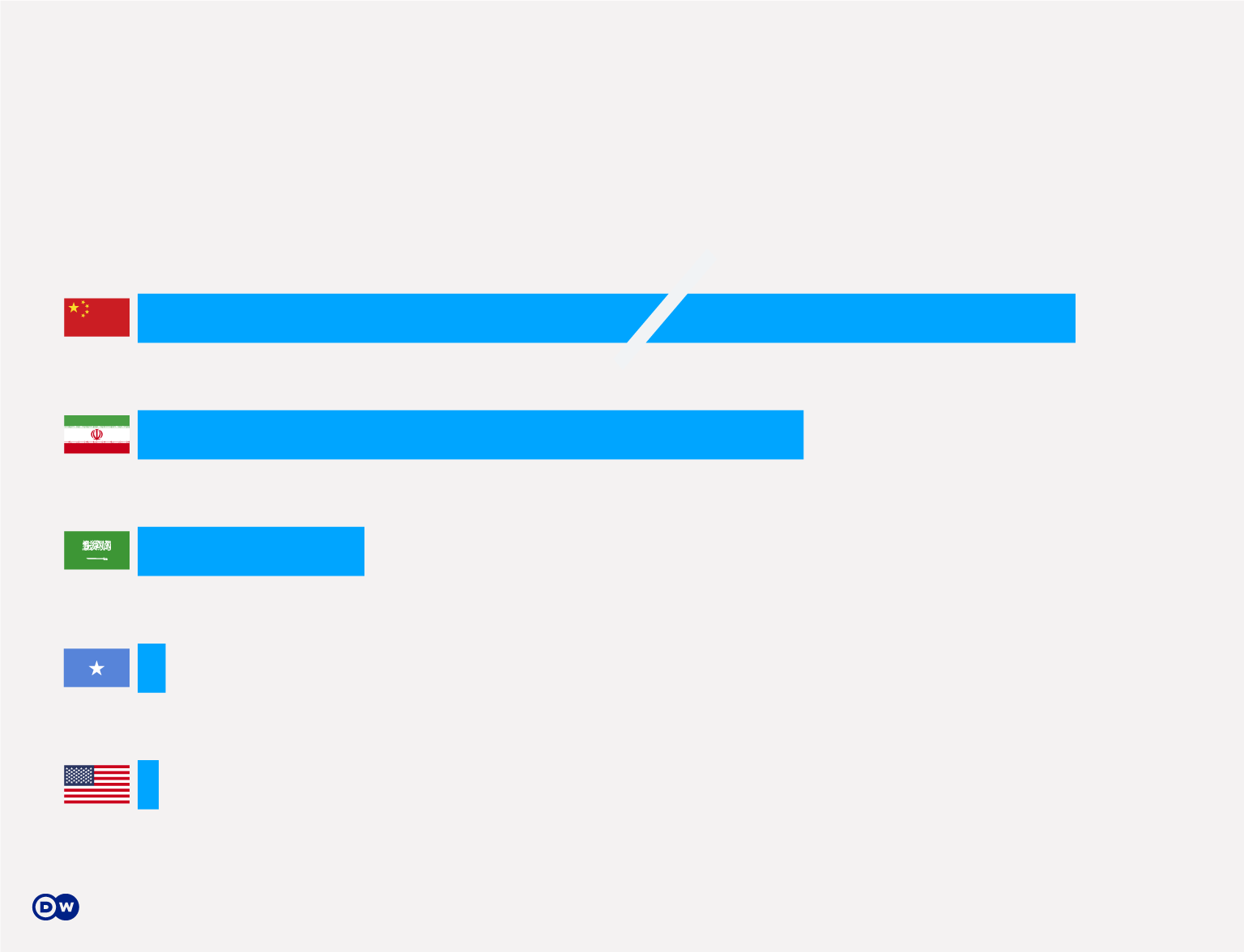
The thousands of executions that likely took place in China last year were not included in the AI report’s statistics. Nor were those in Vietnam and North Korea, where AI suspects large numbers of executions were carried out. Most of the world’s executions, says Amnesty, took place in China (thousands), Iran (at least 853) and Saudi Arabia (172).
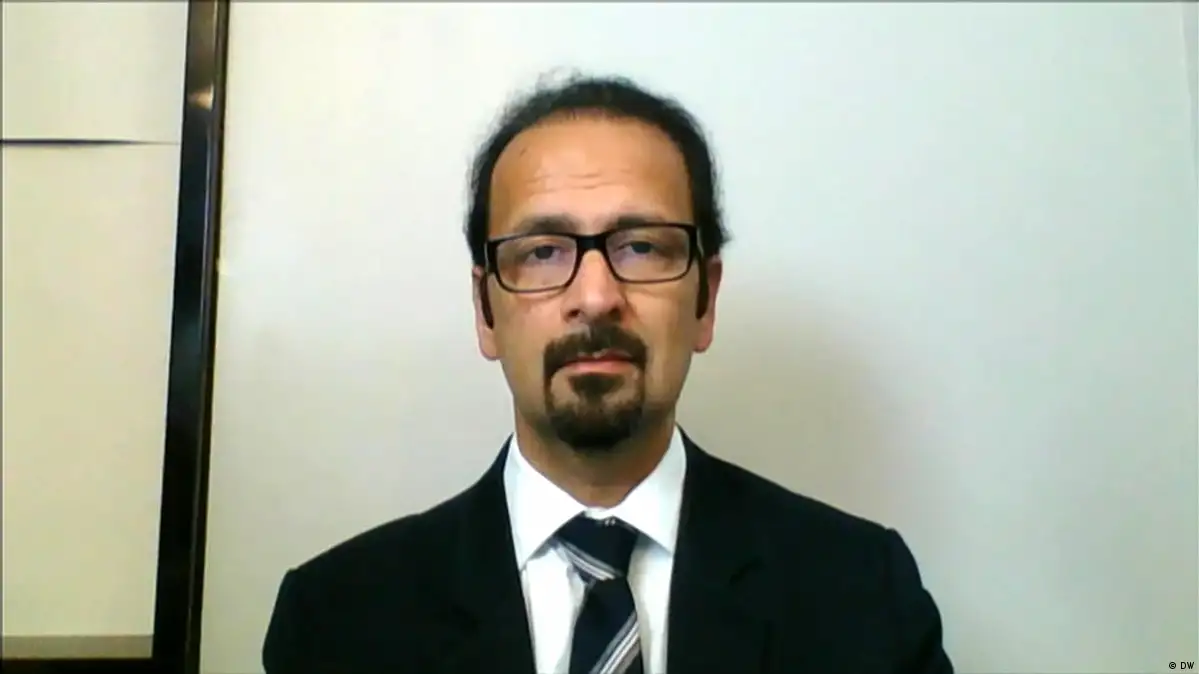
“In Iran, the number of death sentences handed down and carried out for both political and non-political reasons rose significantly,” as Rebin Rahmani, a Kurdish activist based in Paris told DW. Rahmani works with the France-based Kurdistan Human Rights Network (KHRN), which collects and verifies information on human rights violations in Iran.
“Twenty-nine Kurdish prisoners have been executed in the past four weeks alone,” says Rahmani, adding: “Among them was Khosro Besharat, a political prisoner who was arrested 14 years ago. At the time, he and five other Sunni Kurds were convicted of ‘crimes on earth’ and sentenced to death. Their executions were carried out over the past few months.”
Besharat and his compatriots were accused of having killed a Shiite cleric in December 2009. The investigation dragged on due to lack of evidence.
In 2018, Besharat’s mother penned an open letter to Javaid Rehman, the UN’s special rapporteur on the situation of human rights in the Islamic Republic of Iran, to register her complaint against the Iranian judiciary. She wrote at the time that there was no evidence against her son, who had been jailed for nearly 10 years. The only thing the Iranian judiciary had was a forced confession, she said.
Amnesty International’s latest report claims that the authorities in Iran are increasingly using capital punishment as a way to terrorize citizens and cement their own power. Executions this year were considerably higher than last: In 2022, Amnesty counted 576 executions. That number rose to 853 in 2023, a 48% jump.
In 2022, after conducting sham trials, Iran executed nine people in connection with the “Woman, Life, Freedom” protests that rocked the country in the wake of the death of Mahsa Amini at the hands of police. “Without international pressure, that number would have been considerably higher,” Mahmood Amiry-Moghaddam, director of the Norway-based organization Iran Human Rights (IHR), told DW.
Iran Human Rights has been observing and publishing reports on capital punishment in the Islamic Republic since 2007.
“The global outrage that followed the execution of each jailed protester, and the corresponding measures that followed each — such as the sanctions imposed by the EU — were effective, and delayed executions. Though that doesn’t mean they won’t eventually be carried out. At the same time, the number of executions carried out for other crimes, such as drug convictions, has risen substantially,” said Amiry-Moghaddam.
Executions for drug convictions are often carried out in secret, without the knowledge of a prisoner’s family or legal counsel. In November 2023, for instance, brothers Saeed andIsmail Alizahi were executed in the city of Zahedan on drug charges without either receiving a final visit from their family.
Scared into silence
“We also have a list with the names of 47 more individuals who were executed over the past 12 months,” said Amiry-Moghaddam. “But we have yet to publish their names because have not been able to find a second independent source to confirm their execution.”
Not every family speaks up and informs human rights organizations in such situations. Many survivors remain silent out of fear for their safety, or out of shame.
Amnesty International says that 60% of all documented executions in Iran are carried out for crimes that are not punishable by death according to international law, above all, for drug crimes. Those executions affect the ethnic Baloch minority more than any other group. Although they only make up about 5% of the Iranian population, the Baloch account for 20% of the country’s documented executions.
Iran’s trend of increasingly high numbers of executions also appears to be continuing in 2024: By March 20, some 95 executions were documented in the country. At least eight people jailed for participating in the Woman, Life, Freedom protests are currently on death row in the Islamic Republic.
This article was translated from the German by Jon Shelton.
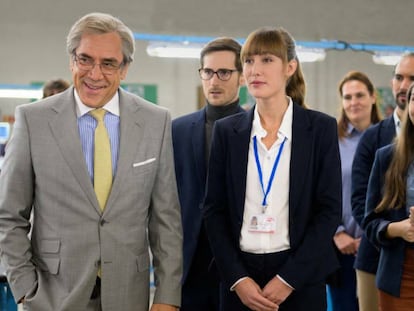
Beatriz Serrano was locked in her home, like half the world, due to Covid-19 restrictions. She couldn’t meet her friends or go for a walk, but she had to work at an exhausting pace. After a video conference, she went out to a small interior courtyard, and heard the silence: “I remembered all the stories I had heard about the end of the world, from H.G. Wells’ aliens to the Mad Max water wars, and I thought: ‘Wow, it seems like it’s the end of the world, and it’s going to catch us working,’ explains Serrano, who worked in the communication sector.
She found that depressing, but also inspiring, so she began to write about the experience. It was the seed of El Descontento (The Discontent), a novel about disillusionment and capitalist work culture. The book was published a few months ago and has become a small publishing phenomenon (with translations underway in Italy, France, England and the U.S.). The author attributes its success to the fact that the story of Marisa, her protagonist, is the story of many people. It’s the story of the Serrano, who left her job and today is a writer and journalist at EL PAÍS. And that of many readers. “Many people write to me to tell me that they identify with it. It’s not that they tell me ‘I am Marisa,’ it’s that they tell me ‘we are all Marisa’,” she says.
Writer and computer scientist Cal Newport has called it The Great Exhaustion, describing a society where everyone is tired, burned out, and feeling that they cannot survive. Against this backdrop, people are seeking to redesign their relationship with work and prioritize their personal lives — a trend confirmed by a recent 40dB survey for EL PAÍS. In this survey, respondents were given seven options and asked to rank them from most important to least. The first was mental health, followed by family and having free time. Having a good job was ranked in fourth place, and having a good economic level in seventh.
If burnout syndrome reflected an individual phenomenon, The Great Exhaustion points to the collective problem behind it. Culture and the internet have played a crucial role in spreading this idea, appearing in memes, literature and music. Serrano’s book is a good example. “For me there are two key moments to understand all this. One was the [financial] crisis of 2008, which forced us to find a way to make ends meet. And another was the pandemic, which forced us to bring our lives to a halt,” explains the author. When life when back to normal, something had broken. The world forced people to resume heir previous rhythm, but many people simply did not want to.
This led to several social phenomona related to work. The first was The Great Resignation,when 47 million people voluntarily left their jobs in the U.S. alone, according to the Department of Labor. Then there were union struggles for remote working and more work-life balance.Finally, last year people began to talk about quiet quitting: working just enough, without doing overtime or putting in extra effort. A paradigm shift began to take shape.
But the workplace did not adapt. The nature of the workplace, however, did undergo important changes during the pandemic. In the first few months, there was an exponential increase in digital communications: Zoom and Slack became a lifeline amid the work tsunami. The use of these platforms increased by 350% and 400% respectively. It became normal to use more informal communication channels such as WhatsApp to discuss work issues. And so, work began to seep into workers’ homes and private lives. Technology helped blur the borders between both worlds.
After the pandemic, workers returned to the office, but the amount of digital communication remained the same.According to a Microsoft report, time spent in online meetings increased more than 350% between February 2020 and 2022. Users of the Microsoft Office suite now spend about 60% of their time using digital communication tools — email, chat and video conferencing—, and the remaining 40% to creation programs, such as Word, Excel and PowerPoint. One in four workers spends nine hours a week on email alone. Almost two in three people (64%) say they have difficulty finding the time and energy they need to do their work, according to this report.
The problem with this new reality is that the rise in digital communication is associated in research with a fall in satisfaction. And this is reflected in the numbers. The latest report from the Gallup consulting firm on employment, published in 2023, provided historical data: 44% of workers felt stressed. The figures are unprecedented and can’t be explained just by the greater use of email. For Yolanda García Rodríguez, professor in the department of Social, Work and Differential Psychology at the Complutense University of Madrid, “work demands are now greater. The complexity of the tasks is greater, the qualifications required in jobs are increasing. Very quick decision-making, continuous and rapid adaptation to new technologies and greater competition and productivity are required.”
On the other hand, successive crises, unstable work conditions and precarious jobs have created a volatile environment that has helped change how workers think about their relationship with their employers. “Workers’ job expectations and their level of job self-esteem are stymied. Syndromes such as imposter syndrome have emerged and the probability of emotional exhaustion or burnout syndrome has risen,” explains the expert. Jobs are no longer what they were, so neither are our relationships with them.
To retain a worker, companies have chosen to create a new narrative that sees work not only as a way to earn money, but also to gain status. “Suddenly, jobs are exciting, they define us, they fulfill our dreams,” says Juan Evaristo Valls Boix, professor of Philosophy of Culture at the Complutense University of Madrid. “All these team-building practices are emerging, the mantra is that in this job we are like a family,” he adds. And so, in our private lives, we begin to imitate a business mindset.
When leisure is also tiring
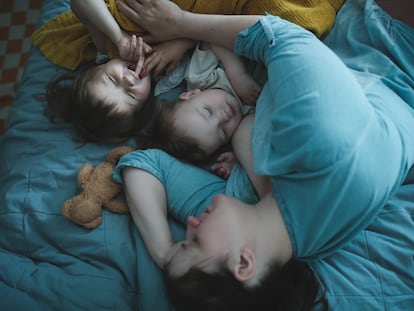
The Great Exhaustion starts at work, but it also transcends it. Terms such as burnout — traditionally associated with work — have begun to be applied to parenting in recent years. According to a report from Ohio State University, 66% of working parents reported being burned out. Exhaustion is beginning to spill over into other social spheres such as leisure. Meeting up with friends has to be planned weeks in advance, everyone is exhausted and no one has time.
Valls Boix says that this is because “the capitalist logic of work, that is, of investment and profit, is expanding and saturating other spheres of life.” The philosopher believes that we have become small entrepreneurs of our free time.There is a cult of productivity that begins in the office, but permeates our private lives. “A kind of overlap has been happened between the logic of work and the affective space and emotions,” he explains. Friends are seen as social capital, dating as job interviews, with dating apps operating as castings and social networks that push us to create content to boost our personal brand.
Leisure is no longer about doing nothing, but rather about filling our scarce free time with experiences: reading the books that need to be read, watching the series that are being talked about, going to the trendiest party or trying the latest viral restaurant, if you manage to get a reservation. “This is the most perverse part,” says Valls Boix. “We are not working, but we continue with the work dynamic.”This leads to a stressed-out society, where even leisure is no longer about relaxation and disconnecting. WhatsApp audios and TV series are played at 2x speed, hobbies are monetized and syndromes such as FOMO become a problem.A culture that glorifies being always busy is starting to form: hustle culture. “We live in constant excitement, overstimulated, and that can be frustrating and exhausting,” says Valls Boix.
In this way, not only work, but also leisure can also lead to the feeling of exhaustion. According to a recent report from the International Monetary Fund (IMF), the number of hours worked has fallen by 3.8% compared to 2008. The OECD also indicated in different reports that, in recent decades, effective working hours have decreased by gradually.
We work less, but we are more tired. This apparent paradox has sparked the interest of experts and social psychologists, who are investigating the dynamics that influence our perception of time. Hal E. Hershfield is one of them. This professor of Marketing and Behavioral Decision Making at the University of California, author of the essay Your Future Self, believes that the problem is not so much about quantity, but rather quality.“Actually, I think we have a lot more time. But what do we use it for? If we spend it on the phone, watching TV or doing things without meaning or purpose, I don’t see how it will benefit us.”
To investigate this idea, Hershfield conducted a macro study with data from 35,000 people. The research analyzed whether there was a direct relationship between the amount of free time a person has and their subjective well-being. The expert and his colleagues found that having little free time leads to increased stress and discomfort. It wasn’t a big surprise. More striking was the realization that having too much time is not positive either. There is an exact point of free time, around five hours a day, after which unease begins to rise. Although this discomfort was reduced if free time was filled with social activities.
In the classic 1930 essay Economic Possibilities of Our Grandchildren, John Keynes predicted a 21st century with a 15-hour work week. It seems that the economist missed the mark, but in that text, he shared a reflection that can be applied to the current context: “There is no country and no people, I think, who can look forward to the age of leisure and of abundance without a dread. For we have been trained too long to strive and not to enjoy.” This idea, expressed almost a century ago, may be at the root of what has come to be called The Great Exhaustion.Work continues to be at the center of society, of conversations, of cities. And although many people have rethought their relationship with it, work dynamics have permeated every corner of our lives. Technological advances have helped streamline work and delocalize it, but they are blurring the boundaries between work and personal life, creating a perpetual state of connectivity. This can be stimulating. But it is also exhausting.
Sign up for our weekly newsletter to get more English-language news coverage from EL PAÍS USA Edition