In this episode of GZERO AI, Taylor Owen, host of the Machines Like Us podcast, explores the rather surprising role artificial intelligence could play in the healthcare industry’s efforts to reconnect with humanity. Doctors have become busier and are spending less time with their patients, but AI has been touted as a solution to enable them to foster more human connections.
So, if there’s one sector of our economy and our society that could use some real transformation, it’s our healthcare system. No matter where you live around the world, no matter what your healthcare financial model is, it is almost certainly letting you down in some way. And at the core of this is the relationship between a doctor and a patient.
As doctors have become busier and they’ve been tasked with more and more responsibilities, they are spending less time with us, their patients. In the US, the average doctor’s appointment is only 7 minutes long. In South Korea, it’s 2 minutes. And in the US, one of the consequences of this is that there are 12 million significant misdiagnoses each year, 800,000 of which result in death or disability.
Cardiologist, medical researcher, and author, Eric Topol, says, “Medicine has become inhuman.” Paradoxically, though, Topol thinks AI could make it more human. In its most basic form, this means bringing AI into the patient-doctor conversation. This could mean AI transcribing our conversations and allowing a doctor to pay attention to us, rather than typing on a computer screen. It also opens up the range of capacities that they could be assisted with by AI. This could be making our future appointments, following up on our treatment plans, or perhaps more powerfully, helping with diagnoses itself. A doctor has very limited views into our current condition. And AI might have far greater visibility. Just take radiology scans. Topol says an AI could add superhuman eyes to the doctor’s capacity. When a radiology scan is ordered, the radiologist is typically told to look for one specific thing, but an AI could look for everything, and would have access to potentially rich and detailed views of our health history. Retina scans are another example. An AI can detect everything from diabetes, to kidney disease, to potentially Alzheimer’s, just by looking in our eyes.
Another powerful potential here is in forecasting the future. The healthcare profession is not just about diagnosing our current conditions but should be about helping protect us from potential future conditions. And an AI can help process reams of data about our body, our health history, our family history, our genetics, and potentially predict what we are most susceptible to in the future. So, could we potentially use AI 20 years before someone evolves into a condition, such as Alzheimer’s, and to help develop treatment and medical and lifestyle adjustment plans accordingly? The potential really is there.
And one thing seems overwhelmingly clear, that this is going to utterly transform what it means to be a doctor. Doctors will not have to memorize things and repeat by rote conditions from a textbook, as we currently train them. But instead, we might screen doctors for their human relationships, for their emotional intelligence, and for their empathy. As Topol says, this might ultimately mean a shift in the system from curing to healing.
MIT Media Lab’s Future You project invited young people, aged 18 to 30, to have a chat with AI simulations of themselves at 60. The sims—which were powered by a personalized chatbot and included an AI-generated image of their older selves—answered questions about their experience, shared memories, and offered lessons learned over the decades.
In a preprint paper, the researchers said participants found the experience emotionally rewarding. It helped them feel more connected to their future selves, think more positively about the future, and increased motivation to work toward future objectives.
“The goal is to promote long-term thinking and behavior change,” MIT Media Lab’s Pat Pataranutaporn told The Guardian. “This could motivate people to make wiser choices in the present that optimize for their long-term wellbeing and life outcomes.”
Chatbots are increasingly gaining a foothold in therapy as a way to reach underserved populations, the researchers wrote in the paper. But they’ve typically been rule-based and specific—that is, hard-coded to help with autism or depression.
Here, the team decided to test generative AI in an area called future-self continuity—or the connection we feel with our future selves.Building and interacting with a concrete image of ourselves a few decades hence has been shown to reduce anxiety and encourage positive behaviors that take our future selves into account, like saving money or studying harder.
Existing exercises to strengthen this connection include letter exchanges with a future self or interacting with a digitally aged avatar in VR. Both have yielded positive results, but the former depends on a person being willing to put in the energy to imagine and enliven their future self, while the latter requires access to a VR headset, which most people don’t have.
This inspired the MIT team to make a more accessible, web-based approach by mashing together the latest in chatbots and AI-generated images.
Participants provided basic personal information, past highs and lows in their lives, and a sketch of their ideal future. Then with OpenAI’s GPT-3.5, the researchers used this information to make custom chatbots with “synthetic memories.” In an example from the paper, a participant wanted to teach biology. So, the chatbot took on the role of a retired biology professor—complete with anecdotes, proud moments, and advice.
To make the experience more realistic, participants submitted images of themselves that the researchers artificially aged using AI and added as the chatbot’s profile picture.
Over three hundred people signed up for the study. Some were in control groups while others were invited to have a conversation with their future-self chatbots for anywhere between 10 and 30 minutes. Right after their chat, the team found participants had lower anxiety and a deeper sense of connection with their future selves—something that has been found to translate to better decision-making, from health to finances.
Chatting with a simulation of yourself from decades in the future is a fascinating idea, but it’s worth noting this is only one relatively small study. And though the short-term results are intriguing, the study didn’t measure how durable those results might be or whether longer or more frequent chats over time might be useful. The researchers say future work should also directly compare their method to other approaches, like letter writing.
It’s not hard to imagine a far more realistic version of all this in the near future. Startups like Synthesia already offer convincing AI-generated avatars, and last year, Channel 1 created strikingly realistic avatars for real news anchors. Meanwhile OpenAI’s recent demo of GPT-4o shows quick advances in AI voice synthesis, including emotion and natural cadence. It seems plausible one might tie all this together—chatbot, voice, and avatar—along with a detailed back story to make a super-realistic, personalized future self.
The researchers are quick to point out that such approaches could run afoul of ethics should an interaction depict the future in a way that results in harmful behavior in the present or endorse negative behaviors. This is an issue for AI characters in general—the greater the realism, the greater the likelihood of unhealthy attachments.
Still, they wrote, their results show there is potential for “positive emotional interactions between humans and AI-generated virtual characters, despite their artificiality.”
Given a chat with our own future selves, maybe a few more of us might think twice about that second donut and opt to hit the gym instead.
Jason is editorial director of Singularity Hub. He researched and wrote about finance and economics before moving on to science and technology. He’s curious about pretty much everything, but especially loves learning about and sharing big ideas and advances in artificial intelligence, computing, robotics, biotech, neuroscience, and space.
89,855 views Premiered on 19 May 2024 Downstream – NEW episodes every Sunday 3pm UK The involuntary celibate community (aka ‘incels’) are often thought to be rightwing, white supremacist, and prone to violence. But how much of that is true? Ash Sarkar is joined by William Costello – a researcher whose work focuses on the psychology of incels – to discuss what we get wrong about incels, what incels get wrong about women, and the catastrophe that is modern dating culture. 00:00 Intro 03:02 Kendrick versus Drake 08:13 Why Study Incels? 10:43 What are Incels? 16:56 Are Incels Violent? 27:02 What do Heterosexual Women Want? 33:01 ‘The Apps’ and Dating Culture 46:58 What is the Model for Relationships? 55:46 Evolution and Sexual Violence 1:13:04 Are There Gay Incels? 1:20:20 Misogyny in Relationships 1:24:19 Changes in Reproductive Politics 1:33:09 What Makes a Man More Attractive? 1:39:08 Advice for Incels
Researchers at the University of South Florida are using AI and virtual reality to study Alzheimer’s disease and autism, mapping the brains of mice as they develop. A team from IBM and the Cleveland Clinic published a strategy for using AI to find new targets for immunotherapy. And a new startup is incorporating AI into CRISPR, the revolutionary gene-editing technique, to identify novel gene alterations not already found in nature to expand the possibilities of new treatments.
Meanwhile, a slew of new AI-powered cancer screenings have now been approved by the US Federal Drug Administration and are available for concerned patients, according to CNBC. That follows a trend: About 600 of the 900 AI and machine learning devices and programs approved by the FDA in the past five years have been radiology applications.
And patients could even find that their most ornery doctors are suddenly friendlier. Many report that ChatGPT and other tools have improved their virtual bedside manner over medical chat-based programs.
“It’s hard to overstate the potential that AI breakthroughs could have for nearly every aspect of healthcare, from our understanding of disease and designing new drugs to aspects of healthcare delivery like improving access through more efficient allocation of limited resources,” said Laura Yasaitis, a healthcare consultant for Eurasia Group.
Of course, she has concerns, such as overreliance on AI-generated output, privacy, and exacerbating inequities such as in approving or denying insurance claims.
And, at least for now, Yasaitis thinks that the most promising use of AI is, yes, the boring stuff.
“For every hour of direct patient care, doctors spend around two hours on paperwork during the day, and another one to two hours at night,” she said. “AI applications that can generate much of that content, and then only require review by clinicians, could dramatically reduce that burden.”
While these technologies offer hope for improving healthcare options and extending lives, insurers have yet to catch up. Medicare and private insurers tends not to cover AI-based tests. So when AI makes medical breakthroughs, there might be a delay for those who cannot afford to pay out of pocket.
I will be on tour of North America, UK & EU talking about my latest book, religion, life on earth and beyond. I will be joined on stage by a range of friends and foes on stage. The events will include a Q&A and a limited meet-and-greet. You can get your tickets here: https://richarddawkinstour.com/#richarddawkins#richarddawkinstour Head to http://factormeals.com/reality50 and use code REALITY50 to get 50% off your first box plus 20% off your next box. Join me for another thought-provoking Q&A session with Taryn Southern on a wide range of topics, from the ethics of selective breeding and eugenics to western liberal sympathy toward Islam and wokeism. You asked me what I think about trans people, genes and sexual orientation, mindfulness and AI. —————— Join Substack: https://richarddawkins.substack.com/ Subscribe to Poetry of Reality Channel: / @poetryofreality
Perfectionism is a multidimensional personality style that is associated with a large number of psychological, interpersonal, and achievement-related difficulties.
It is not a disorder but a vulnerability factor that produces problems for children, adolescents, and adults. People often confuse perfectionism with achievement striving or conscientiousness.
Perfectionism is distinct from these attitudes. It is a maladaptive pattern of behaviours that can result in a large number of problems. Achievement striving and conscientiousness involve appropriate and tangible expectations (often very difficult but attainable goals) and produce a sense of satisfaction and rewards.
Perfectionism, on the other hand, involves inappropriate levels of expectations and intangible goals (i.e. perfection) and a constant lack of satisfaction, irrespective of performance.
Perfectionism is a chronic source of stress, often leaving people feeling like failures even when other people see them as successful. Perfectionistic individuals require themselves to be perfect. This constant expectation is a source of stress and pressure and contributes to maladaptive ways of coping.
Dimensions of Perfectionism
Perfectionism involves three major components: perfectionism traits, perfectionistic interpersonal behaviours and perfectionistic thoughts concerning mistakes, expectations, failures, and self-criticism.
Perfectionismtraits are enduring personality characteristics that reflect the need to be perfect:
Self-oriented perfectionism is the requirement for the self to be perfect.
Other-oriented perfectionism is the requirement that others (e.g., spouse, children, and other people in general) should be perfect.
Socially prescribed perfectionism is the perception that others (e.g., parents, boss, and other people in general) require oneself to be perfect.
Perfectionistic behaviours involve the need to appear or seem perfect to others:
Perfectionistic self-promotion involves the presentation of a perfect self-image to others.
Nondisplay of imperfection involves the avoidance or concealment of any behaviour that could be judged by others as imperfect.
Nondisclosure of imperfection involves the avoidance of verbally disclosing imperfections to others.
Finally, individuals with perfectionism will often engage in negative thoughts centered around the need to be or appear perfect and with harsh self-criticism, worry over errors, and self-blame.
Problems associated with Perfectionism
Individuals with these perfectionistic traits, behaviours and thoughts can experience a variety of negative outcomes. These problems can be found with perfectionistic children, adolescents, and adults. Here are some problems that have been found to be associated with perfectionism:
Psychological/Psychiatric Problems
Anorexia nervosa, anxiety, binge eating and bulimic disorders, depression, suicide thoughts and attempts.
Relationship Problems
Low self-compassion and the tendency to feel responsible for fulfilling others’ needs at the expense of one’s own, poor marital satisfaction, sexual dissatisfaction, and excessive anger towards others, social disconnection, difficulties with intimacy, loneliness, and social hopelessness (i.e. having negative expectations concerning future relationships).
Physical Health Problems
Prolonged elevations in stress responses, sleep problems, chronic headaches, cardio-vascular responses, and early death.
Achievement Problems
Workaholism, burnout, fear of failure, procrastination and self-handicapping (i.e. where individuals spend time finding excuses for poor performance rather than preparing for a performance).
Treatment Problems
Negative attitudes toward seeking help with professionals, difficulties in self-disclosing personal information which negatively impacts treatment, not being able to engage in treatment.
How can psychology help?
Because perfectionism is an ingrained personality style, psychotherapy is very appropriate and often tends to be fairly intensive and longer term (often more than a year).
Recent research has demonstrated the effectiveness of both group and individual therapy for treating perfectionism and its associated complications. There has been promising evidence for dynamic-relational group therapy, psychodynamic/interpersonal group therapy and cognitive-behavioural group and individual therapy in reducing perfectionism and its attendant difficulties.
Several Canadian studies are currently underway that focus on both fine-tuning current treatment approaches and evaluating the effectiveness of these treatments in children, adolescents and adults.
Where do I go for more information on Perfectionism?
Hewitt, P. L., Flett, G. L., & Mikail, S. F. (2017) Perfectionism: A relational approach to conceptualization, assessment, and treatment. New York: Guilford
Greenspon, T. (2002) Freeing our families from perfectionism. Minneapolis: Free Spirit.
Egan, Sarah J., Tracey D. Wade, Roz Shafran, and Martin M. Antony. Cognitive-behavioral treatment of perfectionism. Guilford Publications, 2016.
You can consult with a registered psychologist to find out if psychological interventions might be of help to you. Provincial, territorial and some municipal associations of psychology often maintain referral services. For the names and coordinates of provincial and territorial associations of psychology, go to http://cpa.ca/public/whatisapsychologist/PTassociations/.
This fact sheet has been prepared for the Canadian Psychological Association by Dr. Paul L. Hewitt, Ms. Sabrina Ge from the University of British Columbia and Dr. Gordon L. Flett, York University.
Revised: March 2020
Your opinion matters! Please contact us with any questions or comments about any of the Psychology Works Fact Sheets: factsheets@cpa.ca
Canadian Psychological Association 141 Laurier Avenue West, Suite 702 Ottawa, Ontario K1P 5J3 Tel: 613-237-2144 Toll free (in Canada): 1-888-472-0657
At the UnHerd-sponsored Dissident Dialogues Festival in New York, Richard Dawkins and Ayaan Hirsi Ali discussed her recent conversion to Christianity, and whether the whole ‘New Atheism’ movement of which they had both been key members had done more harm than good.
Freddie Sayers Ayaan, I think we have to start with the extraordinary few months you’ve just had. For those people who haven’t been following it, tell us the story. How did such a famous atheist, someone who had rejected religion, come to call herself a Christian?
Ayaan Hirsi Ali I didn’t, like many people who come to faith, see big banging lights. And I didn’t have any of those spectacular experiences that some people share. I wish I did, but I didn’t. I had a personal crisis. I lived for about a decade with intense depression and anxiety and self-loathing. I hit rock bottom, I went to a place where I actually didn’t want to live anymore, but wasn’t brave enough to take my own life. So I was self medicating. I had over a long period of time seen a psychiatrist, other doctors. I was trying to understand my condition and trying to treat it with the help of pure evidence-based science. And in January, February of last year, I saw one therapist who said, perhaps it’s something else that you have. And she described it as spiritual bankruptcy. And that resonated with me. And having reached a place where I had absolutely nothing to lose, I prayed and I prayed desperately. And for me, that was a turning point. And what happened after that is a miracle in its own right. I feel connected to something higher and greater than myself, I feel I… my zest for life is back. And that and that experience has filled me with humility, I have to say it and it is something that’s very subjective, it’s extremely difficult to explain. I’m trying to work to get into the details, the granular details of how I got there in a book, but that is a short book. That’s the shortest story that I can tell.
Richard Dawkins Ayaan, that’s a moving personal story. But to call yourself a Christian is a bit different. A Christian has to believe in something. You go to church now and listen to the vicar. Do you notice what a lot of nonsense he talks? I mean, do you really take it seriously that Jesus is the Son of God? That Jesus rose from the dead? Jesus was born of a virgin? That is a part of Christianity.
Ayaan Hirsi Ali I know you very well, we’ve been friends for a long time. In fact, in some ways, I think of you as a mentor. I would say you’re coming at this from a place of: there is nothing. What has happened to me is I have accepted there is something. If you accept that this is something and that there is a powerful entity. For me God turned me around. I think what the vicar is saying no longer sounds nonsensical, it makes a great deal of sense. Not only does it make a great deal of sense, it’s also layered with the wisdom of millennia. I did mock faith in general, probably Christianity in particular. But I don’t do that anymore. That is where humility comes into it. It doesn’t seem like that now in 2024, after I went through that experience. It doesn’t seem nonsensical to me and I don’t mock it. I think I’ve come down to my knees, to say, perhaps those people who have always had faith, have something that we who lost faith don’t have.
It is also people who have faith like the woman who told me to pray said, “You’ve tried everything and you’ve lost hope, you’ve lost faith. Try it. Pray.” Just in that one word there is so much wisdom and that’s it I am suffering. I’m just trying to say no, it’s not stupid. It’s in fact clever, and it’s wise.
Richard Dawkins So you believe in some kind of higher power, which is comforting you and you’re reacting from an Islamic past. I know that from what you’ve written, what you feel is Christianity is a bulwark against Islam, which is a quite separate thing from what you’ve been saying. But I believe you stand by that. That’s part of what you’re saying. I accept that, I support that. That’s why I’ve called you a political Christian, but from what you’ve just said, it sounds like you are more than just a political Christian. It sounds as though you actually believe it.
Freddie Sayers What is your response to those specific questions of Richard? When the vicar is saying that Jesus is the Son of God literally, not figuratively, how do you square that with your highly trained rational mind?
Ayaan Hirsi Ali It is different planes of perception. So I choose to accept Jesus Christ, the teachings of Jesus Christ, the story of Jesus Christ, I choose to accept that. On the personal level, the rewards and I get that this is very subjective again, but mine are through choice, which is separate from where I think that, aside from my personal experience, the history of Western civilization is mainly Christian. That the external forces, for instance, the spread of Islam, non-violently, or violently, and the challenge of Islam and the message of Islam to Western civilization, can be countered, and should be countered with the message of Western civilization, which is essentially a Christian message. In that sense, I think there are more people who agree with me, but that is on the societal level. Then on the civilisational level, I think that every model you’ve used yourself, Richard, the phrase lately that there is moral Christianity and there is cultural Christianity. But it is then a problem when moral and cultural Christianity collides with moral and cultural Islam, or moral and cultural confusion-ism, or cultural authoritarianism. I think then perhaps we’re on the same page about the fact that might be a way of countering it, but on the personal level, yes, I choose to believe in God. I think there we might say, Let’s agree to disagree.
Richard Dawkins Let’s take the moral thing first. Islam is a nasty religion. I think we agree about that. But Christianity is not all that nice either. When you think about Christianity, Christianity is obsessed with sin. St. Augustine said that we all inherit the sin of Adam because he didn’t exist. So we inherit Original Sin. Original Sin came down in the semen. Jesus was not conceived with semen. That’s why he’s clear of sin. His mother Mary had to be clear of sin as well. So she had to have an immaculate conception. This is all obvious nonsense. This is all theological bullshit. The idea that humanity is born in sin and has to be cured of sin, by Jesus being crucified, Jesus being punished for all our sin is a morally very unpleasant idea. I’m sure you must agree about that?
Ayaan Hirsi Ali I find that Christianity is actually obsessed with love. That is in the figure of the teaching of Christ. As I see it, and again, I’m a brand new Christian, but what I’m finding out is that this is the opposite of growing up as a Muslim and the message of Islam. The message of Christianity I get is that it’s a message of love. It’s a message of redemption. And it’s a story of renewal and rebirth. So, Jesus dying and rising again for me symbolises that story. In a small way I felt I had died and I was born. That story of redemption, and rebirth, I think makes Christianity actually a very, very powerful story for the human condition and human existence. The pain of suffering, but also our internal recognition of what you call sin. But perhaps the character defects of both good and evil are there, but that both good and evil are in us. I think those teachings in Christianity are far, far more powerful and have led to, I think, the flourishing of Western civilization.
Compared to say, growing up as a Muslim where I was taught that the only way for you to be faithful, is to have fear, naked fear, and to have these sets of obligations which you basically obey. That was very much about power. It was centred around hellfire and all of these other things. I’ll give you an example. When I was an atheist, I was going all over both the United States and all over Europe, mocking Christians making fun of them, making fun of faith, as you’re doing now dear Richard. I was walking with six to seven men at any given time, protecting me, armed, from things that I said that were offensive to millions of Muslims. Christians were writing me letters saying, we’re going to pray for you, you’re misguided. And I think that alone defines for me the distinction between Christianity in general, mainstream Christianity at least and mainstream Islam.
Richard Dawkins I must say, I’ve never met a vicar that I didn’t like. They’re always very, very nice people. But, nevertheless, the stuff they believe is obvious nonsense and you have to take the whole package, because you talked about Jesus rising from the dead. You don’t believe Jesus rose from the dead? Surely?
Ayaan Hirsi Ali I choose to believe that Jesus rose from the dead. That is a matter of choice. It’s a matter going back to: Is there something or is there nothing? I think you start with: there is nothing. And yes, for years I agreed with you that there is nothing. But if you come round to the idea that there might be something much more powerful than we are, something that caused everything else, then something like Jesus rising out of the dead are these other miracles, Jesus being born out of a virgin, for that higher power is not a big deal. Again, it’s a matter of choice. And it is just different planes of perception. And I think here on this plane of perception, having been a former atheist, I don’t think this is something we’re going to resolve tonight, or agree on right now. That is where I think it’s perhaps more interesting, even if you choose not to believe.
Let’s at least talk about the value of Christianity for today. I look at these universities, the most illustrious universities of the West. You’ve all seen images of young women draped in Keffiyeh as a symbol of Hamas, performing the Muslim prayer. Tell me if those kids are not morally and utterly lost, just look at queers for Palestine. So for you and I and Steven Pinker and all of those wonderful people who are locked up in our ivory towers, let’s ask ourselves what was happening on the ground because in the last six decades, we pretty much demonised Christianity and the teachings of Christianity out of the public space, out of school out of universities, and a vacuum of God. And that vacuum is now being filled, as GK Chesterton said, not because people have come to reason, but because now they’ll believe in anything. And there are very awful forces today out there that are claiming the hearts and minds and souls of these young students.
Freddie Sayers We’re getting into the bigger political cultural question. I feel it’s worth pressing one more time on this one. You said agree to disagree. I understand having read Richards letters to you that that literal belief is the bit that he can’t get past. Are you saying that you don’t literally believe those things? You talked about planes of reality. Is it that you saying you see beauty in those things and choose to suspend your rational judgement? Or do you literally believe them?
Ayaan Hirsi Ali I think that is something subjective and there is a choice in the things that you see and perceive that a different person cannot perceive. Art, music, you do enjoy a great deal of Christian art and music. I will look at a painting by Pollock, and I will think my six-year-old must have spilled all of the paint on the canvas, and run around. People are crazy enough to pay millions of dollars and hang it on walls. But I’ve actually seen people be moved to tears staring at a Pollock, that is a plane of perception. That is real but it’s also very, very difficult to measure. It’s the same the way you were moved by certain pieces of music.
The fact that I have faith, and I choose to have faith, because of what I’ve experienced, is just as real for me as it is for the millions of people who believe. But for me, what is even more real, is the story itself and the wisdom in that story, the morality that has evolved out of that story, the internal debates of millennia long and everything that we inherited from it, it’s just too casual to cast that aside. When we’ve done it, I think we have caused ourselves a great deal of damage.
Freddie Sayers Richard, having heard that story, that moving story from Ayaan, of clearly how her conversion has helped her and also she has explained, in beautiful words, the mode in which she believes it, do you still say you are not a Christian?
Richard Dawkins No, not at all. I came here prepared to persuade you Ayaan that you’re not a Christian. But I think you are a Christian. And I think Christianity is nonsense. You have to appear to be a theist, you appear to believe in some kind of higher power. Now, I think that the hypothesis of theism is the most exciting scientific hypothesis you could possibly hold. And the idea that the universe was actually created by a supernatural intelligence is a dramatic, important idea. If it were true, it would completely change everything we know. We’d be living in a totally different, different universe. That’s a big thing. It’s bigger than personal comfort and nice stories and these things. The idea that the universe has lurking beneath it an intelligence or supernatural intelligence that invented the laws of physics, that invented mathematics is a stupendous idea, if it’s true. To me that simply dwarfs all talk of nobility and morality and comfort.
Freddie Sayers Would you have preferred for your erstwhile new atheist colleague Ayaan not to have converted having heard her story?
Richard Dawkins No, I wouldn’t. I wouldn’t say that. I’m just saying that religious belief is bigger than what gives you comfort. Or it’s bigger than morality. It’s bigger than what gives you comfort. It’s bigger than what gives you a bulwark against Islam. It’s something that is huge and is something terrific and it’s false.
Freddie Sayers Ayaan mentioned planes of reality. Is it for you entirely black and white whether those kinds of stories are true or not? It feels like Ayaan’s saying that she chooses to believe them because she accesses some kind of greed for truth via them and is less interested in the details. You’re not softened at all on that?
Richard Dawkins I’m softened by a personal story and I’m softened by beautiful music. I’m softened listening to St. Matthew Passion and not just the music itself, but the story behind it. It’s a very moving story. And I’m moved by it in the same way as I’m moved by great fiction. It is fiction. One, of course, can be moved by fiction. I think Ayaan has described me as the most Christian person she knows. That may be true in certain senses in a cultural sense. Certainly when you say to me Christianity is a religion of love, Jesus, was a very, very great character of a very loving character. The bad things about Christianity actually stemmed mostly from what came afterwards and Paul and the other Christian apologists who came up after him.
Freddie Sayers So you cannot allow the possibility that Ayaan has access to truth that you yourself have not seen?
Richard Dawkins It is a scientific hypothesis that there is a supernatural creator. I don’t see how you can get to that, from feelings of personal comfort or feelings of political necessity. You have to get to that from thinking.
Ayaan Hirsi Ali That brings us to consciousness. First of all, the hypothesis itself. Which, even if you don’t allow for, set religion aside, the hypothesis of where did all this come from? How did it begin? Again, there is no consensus on that. There is no consensus on what consciousness is and what all that entails. But I think that it is, on an academic level, very interesting and very rewarding. To look into and explore all of these different things separately. On an academic level and on a non-academic level, I think that it’s very useful.
Now, I hate to go back to utility, but to have all of these things connected, where as human beings, we are material, yes, but we also are more than material, we have a sense of consciousness, and we have a range of needs.Some of these needs reason can answer and pure science can answer. But some of these needs cannot be answered by that and I think faith in a higher power in God, and in the story that makes sense of it all gives it meaning and this is very, very important for human beings.
The danger lies in trying to conflate these different planes. And then, casting aside as useful, this is false. It’s useful, it’s useless, it’s unnecessary. Now we have the range of human suffering, where, as an atheist, you don’t really offer an answer, you don’t offer a prescription for this is a way of life, this is the path to happiness. This is how you can deal with the challenges of existence.
Atheism is an attitude. It basically says, As of now, there is no evidence to show that God exists or that higher power exists, full stop, and you’ll figure the rest of it out. It’s very, very difficult to figure the rest of it out starting from scratch. I think faith then gives meaning and purpose. And yes, if you’re afraid of the dark, and if you’re afraid of whatever it is that’s causing you anxiety, or whatever it’s causing you self-doubt, relationships between other human beings. I think Christianity does have a recipe and perhaps, in my view, the best recipe for not only how to live with yourself and connect to the universe, but also how to connect with fellow human beings and then bring about a civilization like this one.
Richard Dawkins Suppose it were true that atheism doesn’t offer anything. So what? Why should it offer anything? Why should the universe offer you anything?
Freddie Sayers What is the scientific explanation for you being moved to tears by some Matthew’s passion?
Richard Dawkins Well, it’s neurology.
Ayaan Hirsi Ali I think the question you asked now is very interesting. Why should atheism offer you anything? There is no reason why atheism should offer anything. But faith offers something else. Faith offers something valuable and tangible. And so why should atheism mock that and knock it down? Is it not possible to have this coexistence where there is a place for reason? And there is a place for faith and for subjectivity, just like we agreed to have a separation between religion and politics, I think it is absolutely possible to have that and Christianity allows for that.A separation of science and, you know, the material world, the temporal world, versus the world of faith. And these things when, when they complement each other, I think lead to a much more powerful outcome than when you don’t
Again, I find the differences between us a little cosmetic and a little artificial, because there are so many things that you are saying which I agree with. It’s just that the attitude that atheists take is that if you do not see the world the way they see it, and if you don’t live according to reason, you must be an idiot. You must be unintelligent, you must be stupid I think that that is wrong.
Richard Dawkins Okay, let’s not go there. I don’t want to say that. What I do want to say is this. Faith offers you something, obviously, that’s very, very, very clear. But it doesn’t make it true. It doesn’t make the existence claims of Christianity true. There is a difference from saying that being in a certain psychological place is consoling and comforting and offers you a meaningful life, meaning of life and gives you a purpose in life, all those things, which are wonderful. I have them too, but they are a bit different. But I do have a purpose in life, I have a meaning in life. But just simply because something gives you a meaning and a purpose in life. It doesn’t make the existential claims true. Christianity, like any other religion, makes claims about the world about the universe, which are either true or not true. And I may be wrong. And you may or may be right, they met, they may be true. But the mere fact that they’re comforting, doesn’t make them true.
Ayaan Hirsi Ali That’s an important point. But I agree with you on that point, the mere fact that they are comforting doesn’t make them true. But the hypothesis that there’s something other than nothing, is something you can’t disprove as much as I can’t prove. Materially. Yes, Jesus was born out of a virgin. So I think it’s some of these areas where I think it’s a very, very important debate that occurred. But 200 years ago.
Richard Dawkins
I agree, we can have that debate, and that that’s an important debate. That’s the one I would like to have, rather than the one that’s comforting. For example, I would like to know whether you think that we survive our bodily death when our brain dies. I asked you that when we had dinner together you said no. Have you changed your mind about that?
Ayaan Hirsi Ali I’m sorry, please repeat what I have changed about?
Richard Dawkins About life after death. I asked, do you think we survive our own death? You said, No.
Ayaan Hirsi Ali Bodily, no, I don’t. I won’t survive death. I don’t think you will survive death. I said that when Bertrand Russell said, “When we die, we shall rot”. That is true. But then what happens to the soul consciousness, etc. That again I can’t say.
Richard Dawkins You think there is a soul that survives death?
Ayaan Hirsi Ali Well, there is something that I did feel a connection to and it wasn’t a bodily connection. It was a connection through consciousness and mind and whether that’s going to outlast me or not, I don’t know. I don’t know about that. Richard, I do know where you stand on this debate.
Freddie Sayers We could spend the next hour going through different theological points and seeing whether Ayaan agrees with or not. But there is this bigger cultural societal impact point that you’ve really been in the middle of Richard, you, you came out as a cultural Christian, or…
Richard Dawkins I’ve been a cultural Christian all along, and I’ve never heard anything else.
Freddie Sayers There was a lot of social media excitement recently that you had decided, you had confirmed that you were a cultural Christian. This I suppose, the political Christianity point that Ayaan has also been making. If you accept that there is utility to faith at an individual level, and at a societal level. How do you feel about what you and your fellow New Atheists for the past few decades or so have done in so enthusiastically dismantling it?
Richard Dawkins I am so much more wedded to the importance of truth that I don’t regret anything. I do think that if, for example, in Africa, there are missionaries, Christian missionaries, and Muslim missionaries fighting for people’s loyalty. And I’m on Team Christianity where that’s concerned. So politically, if you have to have a religion then there you go.
Freddie Sayers Will you explain that to us a little bit more?
Richard Dawkins I don’t believe you have to have a religion. I think it’s patronising to suggest that people do need a religion. But if they do need a religion that I’d rather it was Christianity than anything else.
Freddie Sayers So the dream world, according to Dawkins, would be: nobody having a religion, in first place. Then in second place, Christianity, and then Islam comes last?
Richard Dawkins Yes
Ayaan Hirsi Ali Okay, I think that’s fantastic. And I also want to say, you, you don’t have to go as far as Africa, to see this confrontation between team Christianity and team Islam. There is team Christianity versus team woke-ism, it’s right here, there is a great deal of Islamic missionary work that has been very successful in Britain and in the US, in the US and in other parts of Europe. And I think, team Christianity, or team Christian is less confident here in the world of Christian civilization, than, say, in Africa, and I want to go one step further and call upon team Christianity to counter this message, because it’s a very powerful message. Even if you and I disagree on whether, you know, there is God, and whether there is creation, I respect your view. I know you respect mine. But…
Freddie Sayers Are you inviting Richard Dawkins to join Team Christianity?
Ayaan Hirsi Ali Richard Dawkins is on Team Christianity.
Freddie Sayers Do you accept that, Richard Dawkins? Are you on team Christianity?
Richard Dawkins If that’s the choice.
Ayaan Hirsi Ali Richard Dawkins just said that. But I think and I really mean this in a serious way, I look at those young people in their twenties in their teens in their thirties. Right now, they’re being offered these messages of moral frameworks that they’re embracing, that are cultish, that are based on fear, that are nihilistic, and that’s a dead end. So if you say you’re on Team Christianity, then I would encourage those who are so inclined as to advance Christianity, not to worry about Africa, but to stand here. Stand up to those fears. Stand up to those people in Columbia, in Harvard.
There are mosques and Islamic centres that have convinced young people here in America and in Britain and elsewhere that Christianity is dead and has nothing to offer. That Western civilization is a moral vacuum, and that they’re here to fill it. To my astonishment, it seems as if they’re making an impact, look at all these so-called Pro Palestine protests, which are not really pro-Palestine. These are, in my view, clearly, in many ways, adopting the religious frameworks offered by Islamists, and what I see is not what you saw in the Sixties. That’s a different story. What you’re seeing now is a moral vacuum that is being filled. My moral vacuum was left behind.
Freddie Sayers What is your answer to that? Are you hoping for some kind of Christian revival? Are you now, having been a famous New Atheist… will you now be a Christian evangelist?
Ayaan Hirsi Ali I don’t know if you should put it that way. The way I would like to put it is, you have this amazing civilization, you have this amazing society and it is pretty frightening to see that the best and the brightest are converting to the mind virus of wokeism and the mind virus of Islamism. And that as atheists no one even seems to have woken up to the idea. There is a condemnation of wokeism in which you ask: would you condemn the woke and the mind virus of the world, you condemn radical Islam? But we then have to offer these young people something.
Richard Dawkins Rational secular humanism. Enlightenment, enlightenment values is what we offer.
Freddie Sayers Do you share Ayaan’s diagnosis that as the “mind virus of wokeism”, as she puts it, and Islamism returns to parts of the West, Enlightenment humanism doesn’t seem to have resisted that advance very successfully?
Richard Dawkins Well, let’s push it harder then.
Ayaan Hirsi Ali Rational secular humanism is itself an outcome of Christianity.
Richard Dawkins I don’t buy that.
Ayaan Hirsi Ali It starts with the admission that rational secular humanism, the Enlightenment, was able to take place within that Christian context. And it is a product of Christian civilization. It didn’t happen in China, it didn’t happen in the Middle East. It didn’t happen anywhere else. It happened in these disputes between Christians. And I think part of that story in that whole history is one that needs to be celebrated and given to these young minds. I think we’re where you are, where you have a vacuum, something is going to fill it. Aside from the personal rewards that I reap from Christianity, and that you read from Christianity, I think there is the societal and the civilisational context where this thing is going through the cracks. And without a counter message, a spiritual counter message, I think we’re in very, very bad and very, very serious trouble.
Richard Dawkins It may be true historically, that rational secular humanism grew out of Christianity in the sense that historically, that’s where it came from. But that’s because there’s a reaction against Christianity rather than having been in concert with with Christianity,
Ayaan Hirsi Ali But even as a reaction against Christianity, the advances that we have made are rooted in that story. My objection to throwing the baby out with the bathwater is that if you create this disconnect, so that young people do not, they don’t, they haven’t been told of those debates. They read in works that tell them that everything that the white male, a Christian, left behind is exploitative, it’s destructive. It has to be replaced with something else. It’s settler, colonial, whatever. It’s been cut off from the roots of that civilization. And I think part of the reason why that vacuum came about and it was possible was because of this casting aside of Christianity, and this attitude within atheism, that if you say reason, everybody will suddenly start to become And, you know, reasonable and think reasonably. In that sense, that’s been a mistake. GK Chesterton was right.
Freddie Sayers Do you regret having been part of the new atheist movement having preached atheism from that pulpit?
Ayaan Hirsi Ali I do regret doing that. And I want to say that when I realised the damage that I was doing, and I was doing a great deal of damage, by equating Islam with Christianity, first of all, it is false. We were talking about truth and falsehood. Not all religions are the same religions, they are different, they come out of different cultures, and grow out of different contexts. So Christianity is not the same as Islam.
I’m guilty of having said, well, all faiths, all perceptions of God are the same, and they’re equally damaging. So I came back from that. I also have come to regret the damage that I’ve done, and I want to see, I want to make my friends like Richard and Sam Harris, and Daniel Dennett, all the others. I want you to see what I see. And what I see is where you have a moral vacuum, something is going to fill it, I want you to see that the teachings of Christianity just like you said, if there is a competition between team Christian and team Islam, you wouldn’t be on Team Christian, that what you value in Christianity is something that really is absolutely necessary to pass on to the next generation. We have failed in the next generation, by taking away from them that moral framework and telling them it’s nonsense and false, but also not protecting them then from the external forces that come in for their hearts, their minds and their souls.
Richard Dawkins I think that you’re wrong to differentiate Christianity from Islam in that sense. They all have these Abrahamic religions, Judaism, Christianity, and Islam. They share have the same Holy Book, they believe in Hell, they believe in a dictatorial God. They believe in so much that’s similar. The problem with Islam is that it’s 700 years out of date, and Christianity has moved on. Thank goodness, and mainly because most Christians don’t actually believe it anymore. They don’t take it seriously. Problem with Islam is that they take it seriously. They believe in their religion, they actually will fight to the death for their religion in the way that crusaders used to thank goodness, they no longer do Christianity has grown up and grown out of that.
Freddie Sayers How do you respond to Ayaan’s charge there? It feels like quite a grave charge that, that atheism movement, that dismantling has left a whole generation inadequately equipped to deal with the forces that are coming at them?
Richard Dawkins We have secular humanism, we have rationality, we have moral philosophy. Moral philosophy is how we decide which bits of Christianity we like, and which bits we don’t, which bits of the Bible we take as being moral and which ones we don’t we cherry pick. And the basis for our cherry picking is modern, secular, moral philosophy, which is a well established philosophical discipline. And it’s on that basis that we decide what is moral and what is not, we decide in favour of feminism of all the things that we value. Those do not come from Christianity, they come in spite of Christianity, in spite of all religions.
Freddie Sayers What is your diagnosis? Why has that come about? Why do so many people seem to be so lost during this secular age, if it’s not the fault of receding religion?
Richard Dawkins Well, I’m not quite sure what we’re talking about when we say there’s a moral vacuum. Are we talking about wokeism? Are we…
Ayaan Hirsi Ali I really do want to object to Richard, the statement you made about the holy books of Christianity and Islam being the same is absolutely untrue. In fact, maybe a follow up to this discussion would be to actually read these books to see what’s in them and how different they are. Another mega, mega difference is the character of Jesus and the character of Muhammad. Absolutely radically different totally agree with that. That is why the holy books are not the same story and are absolutely not the same, they are different. And yes, each one of them makes a claim to being an Abrahamic religion there, I do have to do a little bit of reading up on Abraham, I have to do a little bit of reading on the Old Testament. But as far as I can tell, now, from where I am in the New Testament, it couldn’t be more different from, from the Quran.
Richard Dawkins The Old Testament is a very, very nasty book indeed. And the New Testament, on the face of it, is better. But the aspect of it which I mentioned before, the idea of God couldn’t think of a better way to forgive the sins of humanity than to have his own son crucified. That is a disgusting idea.
Ayaan Hirsi Ali God gave us free will. God gave us free will. But again, I don’t want us to go back to where we agreed, you know, to disagree. You asked, “What do you mean by a moral vacuum?” What can we fill that moral vacuum with? The conception or the perception of the difference between right and wrong is, I think, something human beings have been trying to answer for millennia.
We have different human beings and different categories of human beings have reached different answers. I think that if you take the history and the story of the moral of this civilization, if you say, well, it’s useless. Let’s mark it, let’s cast it aside. What emerges is a generation of young people growing up who haven’t been provided with their Christian or their Judeo-Christian moral framework. And they also for some reason, haven’t been given what you’re saying you’re offering now, which is a moral humanism, or I haven’t seen any kind of organisation in the way religions are organised. Temples are freezin, and people dedicated to delivering a message of morality to young people.
Freddie Sayers Richard do you accept that?
Richard Dawkins Well, in that case, if that were true, then we need to work harder, but we don’t. We don’t. What we don’t need is to saddle our morality with a lot of supernatural nonsense.
Ayaan Hirsi Ali Well, what I think the assumption was that universities and schools would provide that, and that universities and schools again, separated from their Christian underpinnings, started to say that we are neutral grounds, and we are going to adopt a moral neutrality towards religion and faith. They’re exactly where the vacuum emerged, young people looking for moral direction, not getting in from their own civilization and other forces coming in and filling that out. That is the crisis that you are witnessing now. I think it is very I’m not evangelising. I’m not imposing a new or an old form of morality. I am saying that we are having a very, very serious moral crisis. And I hope that this is just the first conversation. But for those of us, I am coming out and saying when I was advancing atheism, and say that Christianity is nonsense, and it is just as nonsensical and as dangerous as Islam. I was absolutely wrong. I contributed to this moral vacuum, and I stepped back.
Richard Dawkins The largest Christian Church at the moment is the Roman Catholic Church. They are the people who got the organisation going, they’ve got the whole of South America, they’ve hit an enormous number of people and what they stand for is total opposition to abortion, contraception. This is not a good organisation for morality.
Ayaan Hirsi Ali I think the challenge to you is, if you say the Catholic Church or the Anglican Church or any of the other Christian churches are either — in terms of your words — either nonsensical or immoral or useless or regardless of however you characterise them, if you don’t have an alternative, and I think from the last, at least the last five or so decades, we see that no alternative has been established the assumption was reason and enlightenment and humanism is simply going to emerge from education. The higher your level of education, the more reasonable you are. Now what we see on display in our universities is the very opposite. That is a moral crisis.
Freddie Sayers Do you accept that?
Richard Dawkins Well, if you seem to be saying that the organisation isn’t there. I mean, we need a church of humanism or something like that. I’ve never been in favour of that kind of thing.
Freddie Sayers But due to the observation that Ayaan’s is making, do you think that’s true that having expected enlightened humanism to take the space, if religion receded, that didn’t happen? Something else happened?
Richard Dawkins I never was never that optimistic. I never thought we were going to have a sort of brave new world of enlightened humanism. I was just interested in the truth. And the idea that somehow, we were on a mission to found a new church or something like that. We just never were.
Freddie Sayers So you didn’t think about what would happen afterwards?
Richard Dawkins No, I mean, I can’t speak for my colleagues. But, but for as far as I was concerned, what I was interested in is what is true. I believe that all religions are false. And I’m interested in what is scientifically true.
Freddie Sayers Before we conclude, I feel we should touch on this question of Islam. Because it actually seems I think most people watching will be surprised by some of the language and the intensity of your agreement on this issue. You describe it as a nasty religion. That’s a strong term. What do you mean by that?
Richard Dawkins I don’t mean that individuals are nasty. I mean that the idea of things like the penalty for apostasy is death. What kind of religion is it that has to penalise people who leave it by killing them? That is a revolting idea.
Freddie Sayers Are you, like Ayaan, anxious about the protests? Do you watch what’s happening in the news with anxiety? In that respect, she seemed to be saying earlier that Islamist ideas are growing.
Richard Dawkins I wasn’t aware of that. The protests that are going on in American University at the moment look like anti-Jewish and anti-semitism.
Ayaan Hirsi Ali The vector for these anti-virulent anti-semitism is Islam. It’s radical Islam. In every university there is a Muslim Student Association era Islamic centres, there are mosques, there are websites, and they propagate — sometimes in the most sinister ways — the faith and the antipathies and the antipathy that radical Islam hold against Jews have had, like, they’re running amok in our universities in our schools.
So if from one day to the next we wake up, the seventh of October last year, that horrible events happened where 1200 Israelis were killed, many of them young people, many of them actually on the Left in Kibbutz Sims, and many, many women, raped, people mutilated and you would think that in making that model reckoning that students here or anywhere, even fellow Muslims have said, this is absolutely heinous, and it has to be condemned all the way. That is not what we are seeing. What we are seeing is the investments that radical Muslims made here on our soil, those young people completely brainwashed into coming out and blaming the victim, draping themselves into Keffiyeh’s shouting genocidal slogans in chant on our campuses, and thinking that they are replicating 1968 and see themselves as anti-war patrons. There is something that is going on there is the mind virus of workism, there is the mind virus of radical Islam and atheism. Atheism is not the answer, I cannot go with all constraints to these young people and say, there is nothing to believe in. Because the more we say there is nothing to believe in there is nothing, then the someone else comes in and fills that nothing with something, and I don’t like what I’m seeing.
Freddie Sayers Some of the language you’ve used this evening. I’m not sure if you said clash of civilizations but it was moving in that direction. Are you really hoping to go back to the days where Christians take up intellectual arms against Muslims, and we have a kind of civilizational conflict? It will be very anxious for people to hear that.
Ayaan Hirsi Ali I’m not going there. I’m going to Chapel Hill, North Carolina and you look at some of those frat students. And please just take a look at how they responded. where there is an existing faith that is strong. It is very difficult for all of these other mind viruses to encroach upon and take over. That is as far as I’m going. I’m not saying let’s start the Crusades, again. I’m just saying, let’s stand for what we have. Let’s embrace it, and let’s defend it. And to defend it, you have to have a counter message. There is a great deal of activism knocking on young people’s doors, telling them “Do you want to know the difference between right and wrong? Do you want to know the difference between truth and false?” I don’t see any counter activism coming from humanists or coming from atheists. I see you and my fellow friends just as bewildered as anyone else when you look at this.
So the people who are in charge of universities, people who are in charge of educating and developing young minds are looking on and thinking what the heck is going on here. That is not the right attitude and it never has been the right attitude. There’s a great deal of denial. Yes, there’s a clash of civilizations. And this clash of civilizations has been going on at least since 1989. And the attitude of Western leaders, political leaders, academic leaders, media leaders, has been to hide in denial. It’s been to deny it, and the more you deny it, the more those adversaries who are clashing with us benefit from it. Right now I don’t think atheist humanism is offering any answers, I challenge you to come up with an elaborate message to fight these people.
Freddie Sayers What is your message to your Muslim, or formerly, Muslim followers? I mean, you have many, many people who see you as a beacon of someone who has left the Islamic faith behind and has found success and flourished in a secular Western society. What do you say to them now?
Ayaan Hirsi Ali There’s Muslim rebellion, and some Muslims and the Muslims who are peace loving, who hate the Islamists who hate the message of hatred and blowing people up and closing their minds and threatening people that if you leave Islam, you’re going to be killed, which is absolutely revolting.
So right now, I have more genuine Muslim friends than I ever had before. Because the same individuals who reject, they still identify as Muslim, but they reject the idea of forcing faith on other people. And so a lot of them my Muslim friends, are scratching their heads and wondering why Western civilization is committing suicide, why they are allowing this in the name of freedoms in the name of freedom of speech, freedom of association, and freedom of religion. We have allowed a cult of power, Islamism, a political totalitarian ideology, to see itself here, deepen and broaden and grow. We have nothing in return to say. And it is, it’s a cult that wants to destroy the very freedoms that it uses to advance its agenda.
Freddie Sayers So what is your invitation to your Muslim or formally Muslim followers? Is it to become a Christian?
Ayaan Hirsi Ali I’m not telling people to become Christian. All I have done is explain why I have become a Christian. I’m not saying to fill, I did say at one point in 2010, you know, leave you’re a good person, leave Islam and tell the Catholic Church: Why don’t you win hearts and minds that way? That is not what I am saying today. But I am saying to those fellow muslims I’m in a club with the clarity conference. It’s Muslim reformers, ex-Muslims people with a background like mine. And what we do is if nothing else just make you aware, if the world is ruled according to Sharia, if the people who are advanced in this cult get what they want, we are going to see women caged up, we are going to see beheadings we are going to see civilization go down the drain. They’ve demonstrated it over and over again. Al Qaeda has done it. ISIS has done it. Hamas is doing it today. I think that we need to come out of denial and see as plain as daylight and as plain as they hold. They keep showing us all the time. If they prevail, this is what they’re going to do. Ask the citizens of Iran, ask the citizens of Saudi Arabia, ask at Mali, the Nigeria boycott under Boko Haram, Al Shabaab, that is what they are going to subject us to the same barbaric, barbaric and heinous crimes that they subjected to those whom they prevail over.
Freddie Sayers We could talk for many hours. I want to give the final word to you Richard, what has this conversation made you think?
Richard Dawkins We have two epidemiological theories here. We have a vicious mind virus. We agree about that, really about your prognostications about that. The question is, do we combat it by vaccination with a mild form of the virus? Do we say no viruses at all and go for enlightened rationality?
Freddie Sayers You’re a religious anti-vaxxer! Ladies and gentlemen, please join me in thanking both Richard Dawkins and Ayaan Hirsi Ali.
Discussion
Join the discussion
Join like minded readers that support our journalism by becoming a paid subscriber
1 Comment
Most Voted
Campbell P
33 minutes ago
People should Google Dawkins v Lennox for a real debate and see Dawkins’s arguments, petty prejudices, and caricatures of Christianity gently but soundly destroyed by a greater intellect of infinitely more rationality and common sense. It really is a pleasure to witness the deceitful and spurious fantasies of the New Atheists dismantled completely and so kindly from such a great mathematician. No wonder Dawkins fears debating him!
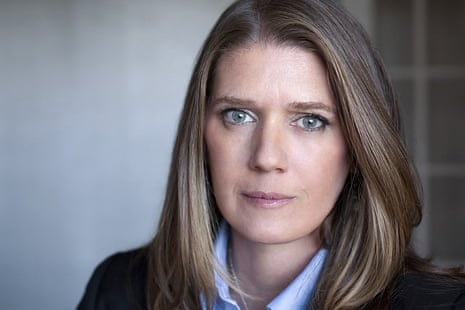
Mary Trump, Donald Trump’s niece, who wrote Too Much and Never Enough, a bestselling book on the former US president and his family dysfunction, will publish a second memoir this year.
“I’ve told you what growing up in this family did to Donald,” Mary Trump wrote on social media on Tuesday. “Now I’m telling the story of what it did to my dad and me.”
Who Could Ever Love You: A Family Memoir will be published in the US on 10 September. Its publisher, St Martin’s Press, called it “an intimate, heartbreaking memoir of a father, a mother, a family’s exile, and the toxic dynamic that is shaping our future”.
A trained psychologist, Mary Trump, 58, is the daughter of Fred Trump Jr, Donald Trump’s older brother who died aged 42 in 1981, after struggling with alcohol addiction.
In return, Donald Trump called her “an unstable niece … rightfully shunned, scorned and mocked her entire life, and never even liked by her own very kind and caring grandfather!”, a reference to his father, the New York property developer Fred Trump Sr.
Mary L Trump told the Guardian then: “I have always flown under the radar up until recently. I guess that’s not the case any more.”
She has since become a prominent political commentator and opponent of her uncle, who is now the presumptive Republican nominee for president as well as the subject of 88 criminal charges and multimillion-dollar civil penalties.
Mary Trump’s second book, The Reckoning: Our Nation’s Trauma and Finding a Way to Heal, was published in 2021.
Also in 2021, Donald Trump sued his niece over her role in reporting by the New York Times about his tax affairs.
Japan plans to make all publicly funded research available to read in institutional repositories.Credit: Toru Yamanaka/AFP via Getty
The Japanese government is pushing ahead with a plan to make Japan’s publicly funded research output free to read. In June, the science ministry will assign funding to universities to build the infrastructure needed to make research papers free to read on a national scale. The move follows the ministry’s announcement in February that researchers who receive government funding will be required to make their papers freely available to read on the institutional repositories from January 2025.
The Japanese plan “is expected to enhance the long-term traceability of research information, facilitate secondary research and promote collaboration”, says Kazuki Ide, a health-sciences and public-policy scholar at Osaka University in Suita, Japan, who has written about open access in Japan.
The nation is one of the first Asian countries to make notable advances towards making more research open access (OA) and among the first countries in the world to forge a nationwide plan for OA.
The plan follows in the footsteps of the influential Plan S, introduced six years ago by a group of research funders in the United States and Europe known as cOAlition S, to accelerate the move to OA publishing. The United States also implemented an OA mandate in 2022 that requires all research funded by US taxpayers to be freely available from 2026.
Institutional repositories
When the Ministry of Education, Culture, Sports, Science and Technology (MEXT) announced Japan’s pivot to OA in February, it also said that it would invest ¥10 billion (around US$63 million) to standardize institutional repositories — websites dedicated to hosting scientific papers, their underlying data and other materials — ensuring that there will be a mechanism for making research in Japan open.
Among the roughly 800 universities in Japan, more than 750 already have an institutional repository, says Shimasaki Seiichi, director of the Office for Nuclear Fuel Cycles and Decommissioning at MEXT in Tokyo, who was involved with drawing up the plan. Each university will host the research produced by its academics, but the underlying software will be the same.
In 2022, Japan also launched its own national preprint server, Jxiv, but its use remains limited, with only a few hundred preprint articles posted on the platform so far. Ide says that publishing as preprints is not yet habitual for many researchers in Japan, noting that only around one in five respondents to his 2023 survey1 on Jxiv were even aware that it existed.
Green OA
Japan’s move to greater access to its research is focusing on ‘green OA’ — in which authors make the author-accepted, but unfinalized, versions of papers available in the digital repositories, says Seiichi.
Seiichi says that gold OA — in which the final copyedited and polished version of a paper is made freely available on the journal site — is not feasible on a wide scale. That’s because the cost to make every paper free to read would be too high for universities. Publishers levy an article-processing charge (APC) if the paper is made free to read, rather than being paywalled, a fee that covers a publisher’s costs.
APCs are increasing at an average rate of 4.3% per year, notes Johan Rooryck, a scholar of French linguistics at Leiden University in the Netherlands, and executive director of cOAlition S.
Rooryck says that Japan’s green OA strategy should be applauded. “It’s definitely something that one should do,” he says. “Especially for all the content that is still behind the paywall.”
Kathleen Shearer, executive director of the Confederation of Open Access Repositories in Montreal, Canada, says that the Japanese plan is “equitable”.
“It doesn’t matter where you publish, whether you have APCs or not, you are still able to comply with an open-access policy,” she says.
She adds that the policy will mean that Japan has a unified record of all research produced by its academics, because all institutional repositories are hosted on the same national server. “Japan is way ahead of the rest of us,” Shearer says. “More countries are moving in this direction but Japan really was one of the first.”
Focusing on institutional repositories will have another benefit: it will not discriminate against research published in Japanese, Shearer says. “A big part of their scholarly ecosystem is represented in Japanese.”Japanese research is no longer world class — here’s why
The plan to move to OA and support Japanese universities’ repositories comes as Japan grapples with its declining standing in international research.
In a report released last October, MEXT found that Japan’s world-class research status is declining. For instance, Japan’s share in the top 10% of most-cited papers has dipped from 6% to 2%, placing it 13th on the list of nations, despite Japan having the 5th-highest research output.
In March, Japan vowed to triple its number of doctorate holders by 2040, after another report found that the country’s number of PhD graduates is also declining, making it an outlier among the major economies.