Source: Science. ‘Google for DNA’ indexes 10% of world’s known genetic sequences

‘Google for DNA’ indexes 10% of world’s known genetic sequences

Achievement demonstrates feasibility of making all of life’s code easily searchable, researchers say

illustration of dna strands with a gloved hand plucking one
Ievgen Chepil/Alamy Stock Vector, adapted by N. Jessup/Science

Share:

issue cover image

A version of this story appeared in Science, Vol 384, Issue 6700.Download PDF

A tool that functions like a Google for DNA has demonstrated its promise for making all of the world’s biological sequence data cheaply and easily searchable, according to the Swiss team that developed it. In a proof of principle study, the researchers say they successfully indexed 10% of the world’s known DNA, RNA, and protein sequences—and the same method could be used to do the rest.

The advance, posted last month on bioRxiv, used a computational tool the group recently developed called MetaGraph to organize and compress publicly available sequence data into a searchable format—much as internet search engines do for web pages and their content. The resulting indexes, available for download and via a web portal, allow users to scan sequences comprising trillions of base pairs and billions of amino acids.

The research “represents a massive achievement and a landmark in our ongoing pursuit of the grand challenge of indexing all publicly available sequencing data,” says Rob Patro, a computational biologist at the University of Maryland who wasn’t involved in the pilot effort. Such a resource could aid myriad areas of research, from identifying novel viruses to revealing disease-associated RNA sequences. Although MetaGraph isn’t the only project aiming for this goal, the team has created some of the largest indexes so far and calculates that its tool will be relatively inexpensive to use.

SIGN UP FOR OUR CAREERS NEWSLETTER

Get great career content biweekly!

The need is pressing, Patro and others note. Repositories storing DNA, RNA, and protein sequence data are expanding exponentially. The Sequence Read Archive (SRA), a genetic database run by the National Institutes of Health’s National Center for Biotechnology Information (NCBI) and collaborators, already contains more than 50 thousand trillion base pairs (50 petabases) from organisms including humans and other animals, plants, and bacteria.

Current bioinformatics tools can’t scan this much data all at once, especially for sequences that haven’t yet been assembled into genomes. Researchers have to narrow down the sequence collections before they can search them. Several groups hope to solve this problem by compressing sequences from larger databases into a more organized data structure, or index, designed for easy searching in downloadable files or online portals.

In 2020, bioinformatician André Kahles, computer scientist Gunnar Rätsch, both at ETH Zürich, and their colleagues presented an early version of MetaGraph. The team used its tool, in which mathematical structures known as de Bruijn graphs represent overlaps between sequences, to index more than 1 million records from the SRA, totaling about 3 petabases. They have already employed MetaGraph in projects including identifying the microbial makeup of different cities

https://0474bafb866e839199b2df5d402233ab.safeframe.googlesyndication.com/safeframe/1-0-40/html/container.html

Now, the team has an improved version of MetaGraph, and has harnessed it to index 5 petabases from the SRA and other databases, comprising sequences from microbes, fungi, plants, humans, and the human gut microbiome. Some indexes in the new paper reduce tens of terabases of data into about 10 gigabytes—small enough to work with on a personal computer. Although building the initial indexes is
expensive—hundreds of thousands of dollars for all the SRA, the researchers say—users can query the data sets much more cheaply than with existing techniques.

The work is “hugely exciting,” says Lesley Hoyles, a bioinformatician and microbiologist at Nottingham Trent University. With data repositories ballooning in size, “anything that can reduce the compute storage and energy costs … is a massive plus for researchers worldwide.” Such approaches could lessen barriers to genomic research for scientists in low- and middle-income countries, she adds. “Work could easily be done on cheap laptops.”

Other groups are also making progress. Last year, the Pasteur Institute won €2 million from the European Research Council to launch its IndexThePlanet project to catalog all data in the SRA. And researchers at NCBI are working on their own indexing tool, called Pebblescout. “It’s a very, very active field at the moment,” says Zamin Iqbal, a computational biologist at the University of Bath who worked on AllTheBacteria, a project that assembled bacterial sequence data to make them more easily searchable.

Patro suggests that because of MetaGraph’s index sizes, it could be slower than other tools on some particularly large tasks, such as looking up millions of sequences from a sample simultaneously. It’s also not yet clear how best to update the indexes with new sequence data, he adds. There’s also the challenge of funding the project, as well as all the computational costs that accompany it. Indeed, whether the tool ends up being widely adopted will partly depend on “addressing the social and administrative questions of how such a substantial resource should be hosted, updated, and maintained,” Patro says, adding that it seems “infeasible (and unfair) to expect an individual research group” to take on this enormous task.

Kahles and Rätsch agree, saying they hope the work will inspire other groups, and larger organizations such as NCBI or the SRA, to pick up the project and help index the remaining 90% of sequence data for use by researchers. “We show them here: ‘It’s possible—please do it,’” Rätsch says.


doi: 10.1126/science.zam1hsh

Posted in Uncategorized | Tagged , , , , | Leave a comment

Neuroscience News.comTime Cells Play Key Role in Learning Complex Tasks. Comment: TBI and amnesia so often outlined on canisgallicus.com – not being able to sequence and extend thoughts would in common sense terms mean it is nearly impossible to learn which is my experience.

Neuroscience News Logo

Time Cells Play Key Role in Learning Complex Tasks

FeaturedNeuroscience

·June 19, 2024

Summary: New research reveals that “time cells” in the brain, crucial for learning complex behaviors requiring precise timing, are not just simple timekeepers. These cells adapt their firing patterns as mice learn to distinguish between differently timed events, suggesting a more complex role in processing temporal information. This discovery could aid in early detection of neurodegenerative diseases like Alzheimer’s.

Key Facts:

  • Time cells fire in sequence to map out short periods of time.
  • These cells change their activity patterns as mice learn complex time-based tasks.
  • Time cells are essential for learning but not for simple time perception.

Source: University of Utah

A sense of time is fundamental to how we understand, recall, and interact with the world. Tasks ranging from holding a conversation to driving a car require us to remember and perceive how long things take—a complex but largely unconscious calculation running constantly beneath the surface of our thoughts.

Now, researchers at University of Utah Health have found that, in mice, a specific population of “time cells” is essential for learning complex behaviors where timing is critical. Like the second hand of a clock, time cells fire in sequence to map out short periods of time.

This shows a brain.
While more research is needed, these results suggest that the brain could process space and time in fundamentally similar ways, according to the researchers. Credit: Neuroscience News

But time cells aren’t just a simple clock, the researchers found—as animals learn to distinguish between differently timed events, the pattern of time cell activity changes to represent each pattern of events differently. The discovery could ultimately aid in early detection of neurodegenerative diseases, such as Alzheimer’s, that affect the sense of time.

The new study is published in Nature Neuroscience.

Mouse code

By combining a complex time-based learning task with advanced brain imaging, researchers were able to watch patterns of time cell activity become more complex as the mice learned. The researchers first set up a trial where learning the differences in the timing of events was critical. To get a reward, mice had to learn to distinguish between patterns of an odor stimulus that had variable timing, as if they were learning a very simple form of Morse code.

Before and after the mice learned, the researchers used cutting-edge microscopy to watch individual time cells fire in real time. At first, their time cells responded in the same way to every pattern of odor stimulus. But as they learned the differently timed patterns of stimulus, the mice developed different patterns of time cell activity for each pattern of events.

Notably, during trials that the mice got wrong, the researchers could see that their time cells had often fired in the wrong order, suggesting that the right sequence of time cell activity is critical for performing time-based tasks.

“Time cells are supposed to be active at specific moments during the trial,” said Hyunwoo Lee, PhD, postdoctoral fellow in neurobiology in the Spencer Fox Eccles School of Medicine at the University of Utah and co-first author on the study.

“But when the mice made mistakes, that selective activity became messy.”

Not just a stopwatch

Surprisingly, time cells play a more complicated role than merely tracking time, said Erin Bigus, graduate research assistant in neurobiology and co-first author on the study.

When the researchers temporarily blocked the activity of the brain region that contains time cells, the medial entorhinal cortex (MEC), mice could still perceive and even anticipate the timing of events. But they couldn’t learn complex time-related tasks from scratch.

“The MEC isn’t acting like a really simple stopwatch that’s necessary to track time in any simple circumstance,” Bigus said. “Its role seems to be in actually learning these more complex temporal relationships.”

Intriguingly, prior research on the MEC found that it’s also involved in learning spatial information and building “mental maps.” In the new study, researchers noticed that the patterns of brain activity that occur while learning time-based tasks show some similarities to previously observed patterns involved in spatial learning; aspects of both patterns persist even while an animal isn’t actively learning.

While more research is needed, these results suggest that the brain could process space and time in fundamentally similar ways, according to the researchers.

“We believe that the entorhinal cortex might serve a dual purpose, acting both as an odometer to track distance and as a clock to track elapsed time,” said James Heys, PhD, assistant professor in neurobiology and the senior author on the study.

“These are the first areas of the brain to be affected by neurodegenerative diseases like Alzheimer’s. We are interested in exploring whether complex timing behavior tasks could be a useful way to detect the early onset of Alzheimer’s disease.” – James Heys 

Learning how the brain processes time could ultimately aid in the detection of neurodegenerative diseases such as Alzheimer’s, the researchers say. The MEC is one of the first areas of the brain that Alzheimer’s affects, hinting that complex timing tasks could potentially be a way to catch the disease early.

Funding: Support was provided by the Whitehall Foundation, Brain and Behavior Research Foundation, the National Institutes of Health, and the National Science Foundation.

About this neuroscience and learning research news

Author: Sophia Friesen
Source: University of Utah
Contact: Sophia Friesen – University of Utah
Image: The image is credited to Neuroscience News

Original Research: Closed access.
“Medial entorhinal cortex mediates learning of context-dependent interval timing behavior” by Hyunwoo Lee et al. Nature Neuroscience


Abstract

Medial entorhinal cortex mediates learning of context-dependent interval timing behavior

Episodic memory requires encoding the temporal structure of experience and relies on brain circuits in the medial temporal lobe, including the medial entorhinal cortex (MEC). Recent studies have identified MEC ‘time cells’, which fire at specific moments during interval timing tasks, collectively tiling the entire timing period.

It has been hypothesized that MEC time cells could provide temporal information necessary for episodic memories, yet it remains unknown whether they display learning dynamics required for encoding different temporal contexts. To explore this, we developed a new behavioral paradigm requiring mice to distinguish temporal contexts.

Combined with methods for cellular resolution calcium imaging, we found that MEC time cells display context-dependent neural activity that emerges with task learning.

Through chemogenetic inactivation we found that MEC activity is necessary for learning of context-dependent interval timing behavior. Finally, we found evidence of a common circuit mechanism that could drive sequential activity of both time cells and spatially selective neurons in MEC.

Our work suggests that the clock-like firing of MEC time cells can be modulated by learning, allowing the tracking of various temporal structures that emerge through experience.

Join our Newsletter

I agree to have my personal information transferred to AWeber for Neuroscience Newsletter ( more information )

Sign up to receive our recent neuroscience headlines and summaries sent to your email once a day, totally free.

We hate spam and only use your email to contact you about newsletters. You can cancel your subscription any time.

Tags

brain researchlearningMemoryneurobiologyNeurosciencetime cellsUniversity of Utah

ShareTweetShareShareSubmitEmail

Neuroscience News

Neuroscience News posts science research news from labs, universities, hospitals and news departments around the world. Science articles cover neuroscience, psychology, AI, robotics, neurology, brain cancer, mental health, machine learning, autism, Parkinson’s, Alzheimer’s, brain research, depression and other sciences.

Related

This shows a tennis ball.

AI Decodes Emotions in Tennis Players

This shows a coffee cup with a picture of DNA on it.

Your Caffeine Craving: Genetic or Learned?

Posted in Uncategorized | Tagged , , , , | Leave a comment

Woke Useful Idiots HELPED Islamists Take Power – Apostate Prophet (4K) | heretics. 65

andrew gold | heretics. 148K subscribers

100,012 views Premiered on 17 Jun 2024 heretics. Ridvan Aydemir – also known online as Apostate Prophet is an Ex-Muslim YouTuber known for his criticism of Islam. He has garnered a follower base since beginning YouTube in 2017, and flew to London for this fantastic episode of Heretics. Please do follow him on YouTube here: ‪@ApostateProphet‬

Posted in Uncategorized | Leave a comment

Clips: Academics/Historians on podcasts and as hosts. Significant points are now highlighted thankfully. Recommend this comment from the eminent Professor Niall Ferguson when recently interviewed by Intelligence Squared.

Posted in Uncategorized | Leave a comment

Rostov Prison Clash Highlights Growing Threat To Putin Regime – Analysis. Source: Eurasia Review (Paul Goble). Comment: similar to Russian submarine off the coast of Ireland, this is under-reported.

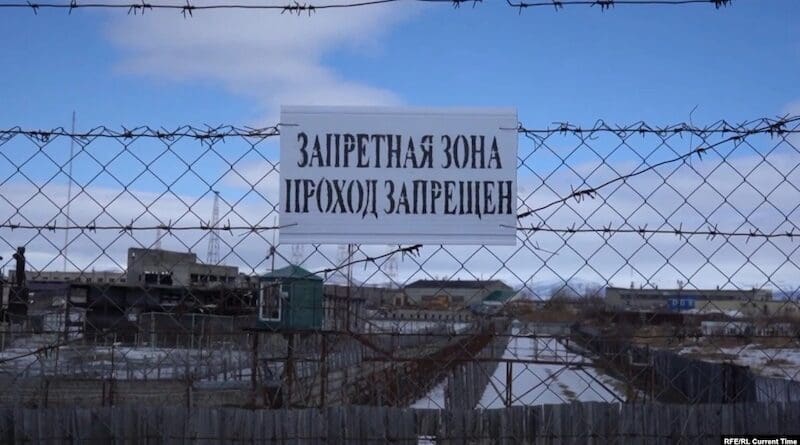
    Russian prison. Photo Credit: RFE/RL

    Russian prison. Photo Credit: RFE/RL

    Rostov Prison Clash Highlights Growing Threat To Putin Regime – Analysis

    0 Comments

    By Paul Goble

    Six Muslim prisoners in Russia seized a senior penal official and a guard on June 16 in the hopes of being released. At least three of the attackers had been sentenced to lengthy prison terms but were being kept in a preliminary detention center in Rostov.

    After opening negotiations, the Russian authorities dispatched OMON special police units who freed the two captives and killed all six hostage takers. Russian media played up the religious affiliation of the prisoners, saying that they were linked to the Islamic State and promising an investigation. Russian officials then abruptly threw a blanket of silence over the events out of fear that they could further divide Russian society (Meduza;Rfi.fr, June 16; Kavkaz-uzel, June 17).

    The prison clash is the latest in a series of developments that highlight growing domestic instability in Russia against the backdrop of President Vladimir Putin’s war against Ukraine increasingly coming home to the Russian public (see EDM, December 21, 2023, January 19, 23, March 26, April 11, 16, 25).  

    Such an action by so small a group of prisoners and the entirely expected response of the Russian authorities may seem to render the clash a minor event. Nevertheless, even the limited amount of information available highlights far broader problems within the Russian criminal justice system, including radical overcrowding and a serious shortage of guards. The hostage situation points to a collapse in the traditional Russian method of managing prisoners by using ordinary criminals to control political ones. This system has increasingly broken down given the rise of Muslim inmates, on the one hand, and the increasing number of Ukrainian prisoners, on the other.

    These problems are already having an impact on Russian society as a whole and will certainly influence political elites as Putin weakens and then passes from the scene. Sergey Starovoytov, a political analyst at the Club of the Regions portal, says that increasing numbers of Muslims in Russian prisons, the departure of many ethnic Russian criminals to fight in Ukraine, and the influx of ethnic Ukrainians into the Russian prison system mean that the alliance between jailors and ordinary Russian prisoners against minorities has broken down. Consequently, control over prisoners as a whole is now worse than it was since the 1990s and hearkens back to the revolts in the Gulag at the end of Stalin’s lifetime and especially in the wake of the Soviet dictator’s death (Rosbalt, June 17).

    Revolts and other actions in Russian prisons and camps have become increasingly frequent and, at times, extremely large under Putin (see EDM, October 21, 2021; Window on Eurasia, December 28, 2023). Most have attracted little attention, however, as Moscow has stopped publishing most of the data on the penal system, making it more difficult to access information about what occurs behind prison walls (Tochno.st, October 13, 2023).

    On the one hand, the current case is no exception, with regional officials taking down information about the kidnapping, claiming there are no serious problems (Nemoskva.net, June 16). On the other hand, hushing up the most recent clash appears to be backfiring. This has led some to suggest that the Kremlin orchestrated the kidnapping itself to fan ethnic feelings and gain support for further restricting information about and access to prisoners (Erkinuz.democrat, June 17). More independent journalists and human rights activists have even begun investigating the matter. Their findings suggest that Moscow’s problems with the penal system, already large, are only beginning to mount.

    Conditions in Russia’s penal system have almost always been poor. The conditions, however, are now worse than they were a decade ago because Putin has cut spending on prisoners, closed camps and prisons, and created conditions in which actions by inmates against their guards are increasingly more likely (Window on Eurasia, June 11, 2023;Rostov.aif.ru, June 16). To save additional money, Putin has put more prisoners in almost all of the remaining prison institutions while reducing the number of guards to supervise them.

    In Rostov, more than 900 prisoners reside in the preliminary detention center, which was designed for only 500, and 30-percent fewer guards are mandated for that facility (RIA Novosti; Rostov.aif.ru; Panram.ru, June 17). This means that those incarcerated are not separated according to whether they have been convicted, which allows convicts to recruit those still awaiting trial. Not surprisingly, experts suggest that these two factors are primarily responsible for unrest in the prison population rather than it being the work of any outside agitators (Mk.ru, June 10; Newizv.ru; 360.ru, June 17; Vse42.ru, June 18).

    An even more important factor behind the rising challenges for Russian prison authorities is the changing composition of the prison population and what that means for relations between prisoners and guards. In the past, guards allied with those guilty of ordinary crimes and allowed them to rule over political prisoners. While that still happens, the balance is now shifting against the ordinary prisoners. Under Putin, the number of political prisoners has risen, including not only opposition figures but also more Muslims who may be guilty of nothing more than practicing their faith.

    Additionally, in the past two years, more Ukrainians have been taken prisoner during Putin’s expanded war and confined in Russian penitentiaries. The numbers of these groups are especially large in Rostov, where Muslim prisoners represent at least 20 percent of those held and Ukrainians that many or even more (Istories.media, October 16, 2023; RIA Novosti, June 17). At the same time, coupled with fewer guards, many ordinary prisoners have volunteered to go to Ukraine, meaning that those who have not been viewed with increasing suspicion by the guards rather than as potential allies (Novaya Gazeta Europe, December 8, 2023).

    All these trends point to more problems within the prison system, including corruption, as guards try to restore their own position by making deals. These developments are beginning to echo outside the prison walls as well. Almost all prisoners have families as well as co-ethnics and co-religionists concerned about them. As such, Moscow has played down any conflicts and launched campaigns against “politicizing” the breakdowns in the prison system (Nemoskva;Meduza, June 16). Many of these efforts have been ham-handed, however, including decisions not to release the bodies of those killed, an action that only leads to greater attention and greater anger (Meduza; Ntv.ru, June 16;Iarex.ru, June 17). Those frustrations are now spreading to people who are not linked directly to prisoners but are worried about what prison uprisings may threaten in the future. Some, including Duma deputies, are even demanding that prison officials be fired—demands the Kremlin may find hard to contain (RBC, June 16).

    As a result, Russia’s penal institutions, long the Moscow regime’s first line of defense against any challenge, are becoming less effective and instead adding to the problems the Kremlin already faces.

    FacebookTwitterEmailFlipboardMastodonLinkedIn

    Share

    Paul Goble

    Paul Goble is a longtime specialist on ethnic and religious questions in Eurasia. Most recently, he was director of research and publications at the Azerbaijan Diplomatic Academy. Earlier, he served as vice dean for the social sciences and humanities at Audentes University in Tallinn and a senior research associate at the EuroCollege of the University of Tartu in Estonia. He has served in various capacities in the U.S. State Department, the Central Intelligence Agency and the International Broadcasting Bureau as well as at the Voice of America and Radio Free Europe/Radio Liberty and at the Carnegie Endowment for International Peace. Mr. Goble maintains the Window on Eurasia blog and can be contacted directly at paul.goble@gmail.com .

    Posted in Uncategorized | Tagged , , , , | Leave a comment

    THE TIMES OF ISRAEL: AI could spread false and misleading information on Holocaust, UNESCO report warns

    AI could spread false and misleading information on Holocaust, UNESCO report warns

    UN education body says flaws in programs or deliberate action by hate groups could cause artificial intelligence systems to question Nazi murder of Jews, fueling antisemitism

    By David Klepper 18 June 2024, 2:43 pm

    Illustrative: The Hall of Names at the Yad Vashem Holocaust Museum in Jerusalem (Mendy Hechtman/Flash90)

    WASHINGTON (AP) — A United Nations agency has warned that developments in artificial intelligence could spawn a new surge in Holocaust denial.

    A report published Tuesday by UNESCO concluded that AI could result in false and misleading claims about the Holocaust spreading online, either because of flaws in the programs or because hate groups and Holocaust deniers will intentionally use AI programs to generate content that falsely calls into question the murder of Jews and other groups by the Nazis.

    One of the biggest concerns is that AI could be used to create so-called deepfakes of the Holocaust — realistic images or videos that could be used to suggest the Holocaust didn’t happen or was exaggerated. That could lead to greater antisemitism and a lack of understanding of a key moment in 20th-century history.

    The report noted that some AI-assisted programs allow users to interact with simulated historical figures, including prominent Nazis like Adolf Hitler.

    “If we allow the horrific facts of the Holocaust to be diluted, distorted or falsified through the irresponsible use of AI, we risk the explosive spread of antisemitism and the gradual diminution of our understanding about the causes and consequences of these atrocities,” Audrey Azoulay said in a statement accompanying the report.

    Get The Times of Israel’s Daily Editionby email and never miss our top stories Newsletter email address

    By signing up, you agree to the terms

    Widespread use of AI for assistance in education, research and writing are increasing the likelihood that unreliable data and artificial intelligence “hallucinations” could increase public misunderstandings about the Holocaust, even inadvertent ones.

    Illustrative: People are reflected in a window of a hotel at the Davos Promenade in Davos, Switzerland, January 15, 2024. (Markus Schreiber/AP)

    AI programs whose understanding of the world is based on relatively narrow sources can also return incomplete or misleading responses when asked about the Holocaust.

    UNESCO’s report called on tech companies to establish ethical rules for the development and use of AI, to reduce the chances of unreliable information and to prevent bad actors from harnessing their programs in order to encourage violence and to spread lies about the Holocaust.

    The report was published in partnership with the World Jewish Congress.

    Posted in Uncategorized | Tagged , , , , | Leave a comment

    GZERO everything is politican – Ian Bremmer. Putin’s rare North Korea visit will deepen ties

    19th June 2024

    Ian Bremmer shares his insights on global politics this week on World In :60.

    Will Putin’s rare visit to North Korea strengthen anti-West alignment?

    It’s deepening the relationship. There’s no question. He hasn’t been in North Korea in decades. And I mean they call it the Hermit Kingdom. It’s completely totalitarian. It’s incredibly poor. But they have a massive military and they’ve been providing an awful lot thousands and thousands of train containers, of weaponry, of ammunition, of artillery. And those containers haven’t gone back empty from Russia. And there’s been a lot of sense of technology that’s been transferred. The interesting thing will be whether or not, this leads to more provocative North Korean behavior vis-à-vis the South and Japan, because they think they can get away with it because they have coverage from Russia. And will they start coordinating diplomatically, in response to the NATO threat, in response to, you know, the way that the war in Ukraine is going? Be interesting to watch. It’s not what China wants to see, but that is certainly a piece of what happens when a couple of states considered pariahs and rogues by the West, are developing a real alliance.

    Posted in Uncategorized | Leave a comment

    Ireland: Senator Michael McDowell, a man of history, experience, a former Minister for Justice, AG outlines his most valid concerns about the neglect of our Government to providing for defence systems in the Republic of Ireland. Thankfully he also mentions the recent intrusion of the Russian submarine off our shores wherein are found one third of the world’s supply of communication cables are found. I recommend watching this excerpt from the Senate.

    Posted in Uncategorized | Leave a comment

    Euroviews. AI diplomacy ignores greatest existential risk of all: Climate change

    Euroviews. AI diplomacy ignores greatest existential risk of all: Climate change

    Copyright Euronews

    By Manuel Matos dos Santos, Board Member, Atlantic Council Portugal

    Published on 18/06/2024 – 17:14 GMT+2Share this article

    Comments

    The opinions expressed in this article are those of the author and do not represent in any way the editorial position of Euronews.

    Never before have we birthed a technology that treads such a thin line between saving our world and driving it to self-destruction, Manuel Matos dos Santos writes.

    Last month, the AI Seoul Summit took place in South Korea, bringing government leaders together with tech companies, academics, and civil society to advance discussions on the safety of artificial intelligence.

    The event concluded with 16 of the world’s most powerful tech giants promising to minimise the risks of the AI revolution.

    These global corporations, including the likes of Microsoft, Meta and IBM, signed up to the newly developed “Frontier AI Safety Commitments”. They will now have to publish their own safety frameworks, explaining how they will measure the risks of their AI models. Signatories must also outline the threshold at which risks will be declared “intolerable.”

    But these same corporations are turning a blind eye to AI’s most urgent danger: its catastrophic impact on our planet.

    Our world runs on energy — and so does AI

    The ugly truth is that AI relies on hordes of existing data. That data is stored on physical servers in vast facilities buzzing with electricity.

    These servers are always on but will be ruined if they overheat. So, their constant activity must be offset by enormous cooling systems that cycle through 1.1 quadrillion gallons of water each year.

    Unsurprisingly, these sprawling setups require a staggering amount of energy. By 2025, they could account for up to 10% of global consumption. And while some of this power will be supplied by renewables, most will rely on natural gas.

    Our glorious new technological era will be built on the same dirty fossil fuels that are destroying our planet.

    Solar panels seen on rooftops in the rural outskirts of Jinan in eastern China's Shandong province, March 2024
    Solar panels seen on rooftops in the rural outskirts of Jinan in eastern China’s Shandong province, March 2024AP Photo/Ng Han Guan

    This means that our glorious new technological era will be built on the same dirty fossil fuels that are destroying our planet.

    And this is before we even begin to consider how AI is being used. Of all the nefarious actors at play, fossil fuel supermajors are among the most powerful.

    In their unquenchable thirst for fatter profits, they race to invest in AI technologies that can yield faster and cheaper results when searching for untapped resources.

    But this is only part of the picture. After all, there are plenty of opportunities to use AI for good.

    Big Tech vs Big Oil

    Already, experts are developing novel solutions to everything from wildfire detection and material design to carbon monitoring and weather prediction. AI is helping us to respond to natural disasters, increase carbon storage and reduce wastage while optimizing production. 

    With the right direction, AI could form a critical backbone for the “unstoppable” clean energy revolution. For example, at last year’s annual UN climate summit, 198 countries signed the historic UAE Consensus, which promised to transition away from fossil fuels and triple renewable energy capacity by 2030.

    It was one of the most ambitious climate pledges to date, one which will require technological advancements to fill current stopgaps and insufficiencies — balancing profit with progress.

    To ensure AI is used to herald a new era of renewables and not entrench the power of Big Oil, we not only need Big Tech companies onboard, we need commitments and incentives to use AI to advance clean energy systems.

    Specialised workers achieve maintenance works on a power pole in Pfungstadt, June 2024
    Specialised workers achieve maintenance works on a power pole in Pfungstadt, June 2024AP Photo/Michael Probst

    As Dr Sultan al-Jaber, the President of COP28, recently said, AI could be “the bridge [to] reduce emissions while also driving social and economic value everywhere.” He urged businesses to “collaborate to drive down the emissions of conventional energy [still needed] and on ways that AI can drive energy efficiency.”

    For example, we can predict peaks and troughs in electricity demand and renewable generation with responsible, energy-focused AI. We can balance out electricity grids and automate systems such as lighting, heating, or cooling to operate more efficiently.

    AI could also prevent waste — alerting us to faults within our energy networks, enabling us to intervene quickly and prevent further damage.

    But to ensure AI is used to herald a new era of renewables and not entrench the power of Big Oil, we not only need Big Tech companies onboard, we need commitments and incentives to use AI to advance clean energy systems.

    Climate change, a ‘crisis multiplier’

    One such solution is a supranational AI body with enough teeth to challenge these global corporations, monitor their emissions, and force them to mitigate the environmental impacts of their AI operations.

    And, wild as it may sound, NATO, the unique transatlantic alliance between Europe and Northern America, is in a prime position to take up the reins.

    Having adopted its first AI Intelligence Strategy in 2021, NATO has kept itself abreast of the technology’s risks and opportunities as they emerge. For example, it has incorporated AI into its own operations, piloting its use in areas including climate modelling and the analysis of satellite imagery.

    Earlier this year, it began its development of a world-first certification standard that will help industries and institutions to ensure that new AI projects are compliant with international law.

    Besides possessing the clout and recognizing the pitfalls of AI, NATO’s Secretary General has also called climate change “a crisis multiplier” and promised to reach net zero by 2050.

    With its knowledge of AI technology and tunnel-visioned focus on safety and security, NATO can take the lead in establishing and enforcing mandatory rules for Big Tech corporations while resisting the siren call of deep-pocketed lobbyists campaigning for deregulation. 

    Ultimately, we cannot trust that individual state leaders will not prioritise AI’s generous profits over human interests. Already, we have seen the early signs of a dystopian future, characterised by surveillance, manipulation and the consolidation of power in the hands of a few.

    Of course, this greed is hardly unique to AI. But never before have we birthed a technology that treads such a thin line between saving our world and driving it to self-destruction.

    Manuel Matos dos Santos is Board Member for the Portuguese Atlantic Council, Community Manager at Closer Consulting, and former Secretary General of the Youth Atlantic Treaty Association (YATA) International.

    At Euronews, we believe all views matter. Contact us at view@euronews.com to send pitches or submissions and be part of the conversation.Share this article

    Comments

    You might also like

    Posted in Uncategorized | Tagged , , , , | Leave a comment

    Where there is prey there will be Predators? Be aware. The Charagua Manuscripts. A Catholic priest who sexually abused vulnerable people took photos and diaries with the details.

    THE CHARAGUA MANUSCRIPTS

    Over decades, a Spanish priest, Lucho Roma, abused hundreds of Indigenous girls in Bolivia. He photographed them, recorded them on video and documented his crimes in writing. This is the second diary of a pedophile priest that EL PAÍS has managed to access. On this occasion, however, the Society of Jesus carried out investigations that confirmed the crimes. But then, after Roma’s death in 2019, they kept them in a drawer, where they remained unpublished. Until today

    Imagen de apertura
    Julio Núñez

    Julio Núñez

    Madrid – Jun 18, 2024 – 09:51 CEST

    Go to article for full details.

    ….

    His “obsession” — the word that Roma used to describe his penchant for sexual assault — became a constant in 1994. That’s when a new provincial superior, Marcos Recolons, was promoted. He’s now under house arrest in Bolivia, accused of having covered up for several pedophiles during his mandate.

    The year of his ascension, Recolons designated Roma to be a missionary in Charagua, a small town of less than 2,500 inhabitants, the majority hailing from the Guaraní Indigenous community. In a letter that he sent to Recolons that same year, it’s clear that this was a highly-desirable destination for the accused.

    Then 59 years old, the Spaniard arrived in that impoverished town in 1994. He served as a parish priest and as director of the new school that the Jesuits had opened. Shortly afterwards, he was named a superior of the Jesuit Order in Charagua. He always carried a camera with him — initially a film camera — and got the photos developed in Santa Cruz, the most populous city in the country. Later, Roma bought a digital camera, which allowed him to print the images in his room.

    A local resident clearly remembers the day he arrived. “He was the boss. He dressed impeccably; [his clothes] were always freshly ironed,” she tells EL PAÍS. At the time, the Church had great power and influence in the area, thanks to its humanitarian work. This is why it was common for children to always be within the Church. This source says that Roma quickly surrounded himself with minors. “He was the apostle of children: he filled his van with little girls.”

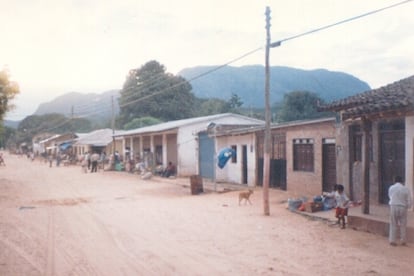
    One of the unpaved streets of Charagua, Bolivia, pictured in 2001, when Lucho Roma carried out his missionary work and sexual abuses.
    One of the unpaved streets of Charagua, Bolivia, pictured in 2001, when Lucho Roma carried out his missionary work and sexual abuses. Suomi 1973

    Shortly after arriving, in 1996, Roma began to write The Charagua Manuscripts. The documents only cover up to the year 2001, while the writings found appear incomplete and the entries aren’t always in order. But the stories are terrifying: he details precisely how he gathered the girls into groups, showered with them in his room and took snapshots of them. Days later, he would return to look at these pictures and masturbate.

    Charagua, October 31, 1998

    Today, 10 girls have passed through my room and I will have taken about 95 pictures of my little darlings.

    The conclusions made by the psychologists who analyzed these texts are resounding:

    Posted in Uncategorized | Tagged , , , , | Leave a comment