Francis Blake–Forster of the Connaught Rangers, and was born at Forster St. House, Galway, in 1851. He was educated privately by a tutor, and in England. The …
The Forster family were of English origin who first acquired property in Galway in the 1640s. The progenitor of the family in county Galway was Francis Forster who was the son of Thomas Forster of Hunsdon, Hertfordshire. He obtained the Clooneene/Ashfield property by Royal grant from Charles II dated 18 Aug 1677 and chose to live there from then on. Francis married Mary O’Donnellan, daughter of Sir James O’Donnellan. The family also had houses at Rathorpe and later at Fiddaun as well as in county Clare in the parishes of Kilfenora and Drumcreehy. Francis Forster, who inherited the estate in 1752, married Anastasia Blake of Menlough and the family became known as Blake-Forster. The estate at Ashfield passed from the Blake Forster family in the 1830s. The Abbeyknockmoy estate situated in the baronies of Tiaquin and Athenry, county Galway, also belonged to the Blake Forsters. Samuel Lewis writing in the 1830s refers to a grant of Abbeyknockmoy by James I to Valentine Blake in 1629. This estate of almost 4,000 acres was offered for sale in Oct 1851. A newspaper cutting with the rental in the National Archives records the purchase of the unsold portions of the estate by Dominick Donnellan and Richard C. McNevin, a relative and agent to the Blake Forsters. By the time of Griffith’s Valuation, a few years later, Donnellan and McNevin’s purchases were in the possession of Martin J. Blake of Ballyglunin and James Thorngate. In the 1870s Captain Francis Blake Forster owned 3,593 acres in county Galway and 1,308 acres in county Clare, while Robert Blake Forster of Corofin, county Clare, owned 572 acres in county Galway. In 1906 Marcella Blake Forster owned over 250 acres of untenanted land and a mansion house at Corr, in the barony of Longford. An offer from the Congested Districts Board on a small acreage owned by Miss M. L. Forster was accepted sometime after 1909. see /www.celticcousins.net/ireland/kilmacduagh.htm. For McNevin and Blake Forster marriage see http://www.irelandoldnews.com/Clare/1813/MAY.html
The Thorngates were originally from Gosport in England. Griffith’s Valuation shows that James Thorngate and his brothers bought some of the estate of the Blakes of Doonmacreena in the parishes of Crossboyne and Kilvine, barony of Clanmorris, county Mayo and some of the Abbeyknockmoy estate, county Galway of the Blake Forsters. P. Lane writes that the Thorngates also bought portions of the estates of Geoffrey Davies in the barony of Killian and Edmond Concannon in the baronies of Dunmore and Dunkellin. By far their biggest purchase was in 1851 when James Thorngate purchased the Castle Ffrench estate and lived there until the 1860s. The estate was sold, after Thorngate’s death, to James Crooke, for whom Daniel Churcher acted as agent. William E. Churcher and George Churcher of Southampton were the trustees of the estate of William Thorngate and much of the Thorngate estate appears to have been in Churcher possession by the 1870s. At the time of Griffith’s Valuation James Thorngate is recorded as a land holder in the parish of Rahara, barony of Athlone, county Roscommon.
Emily Blake Forster married Daniel McNevin and they resided at Clooneene (Ashfield) in the 1830s. Daniel McNevin is recorded as the proprietor of lands in the parish of Beagh in the mid 1830s but with an address at Middle Gardiner St. Dublin. His agent was Mr. Darcy of Rickfield. Daniel and Emily’s son was Thomas McNevin who was associated with the Young Ireland movement. Lands from the McNevin estate were offered for sale in the Encumbered Estates court in December 1853. The owner was Daniel McNevin, a minor. Ashfield later came into the French family.
Lucy C. Lewis noticed a worm in her throat. It interrupted her work as a housemaid and cook when she felt it wiggling around her esophagus. She would cry and pull at her neck; at one point, she tried to cut a hole in her throat to get it out.
This was 1890. Lewis was a 22-year-old Black woman from New Hope, Virginia, living what seemed, by basic indicators of the time, a healthy life. She had regular access to food and drink, and she did not have opium or tobacco addictions. Despite limited educational access as a Black person in America during this era, Lewis could read and write. But no one believed her about the worm.
Her doctor also made notes about other attempts to harm herself. She tore at her clothes, and she tried again and again to cut her throat. In September 1890, three judges decided to send her to the Central Lunatic Asylum for Colored Insane, 129 miles away from her hometown.
I know about this case because of my research on the Central Lunatic Asylum for Colored Insane in Petersburg, Virginia—the first segregated mental institution to care for Black people after the Civil War. I have reviewed dozens of photocopies of its records, many written with loopy, hard-to-read cursive. Each tells a limited story of what happened to each patient. Some, like Lewis, were officially experiencing mental illness and needed help. But others were patients who had not shown symptoms of distress; they were in the wrong place at the wrong time and were swept up by law enforcement or citizens eager to find ways to confine Black people. Lewis’s papers stuck with me. Someone so young should have had so much life ahead of her, even as a young Black woman coming of age at a time when racism limited who she could become. Living with mental illness limited her prospects even more.
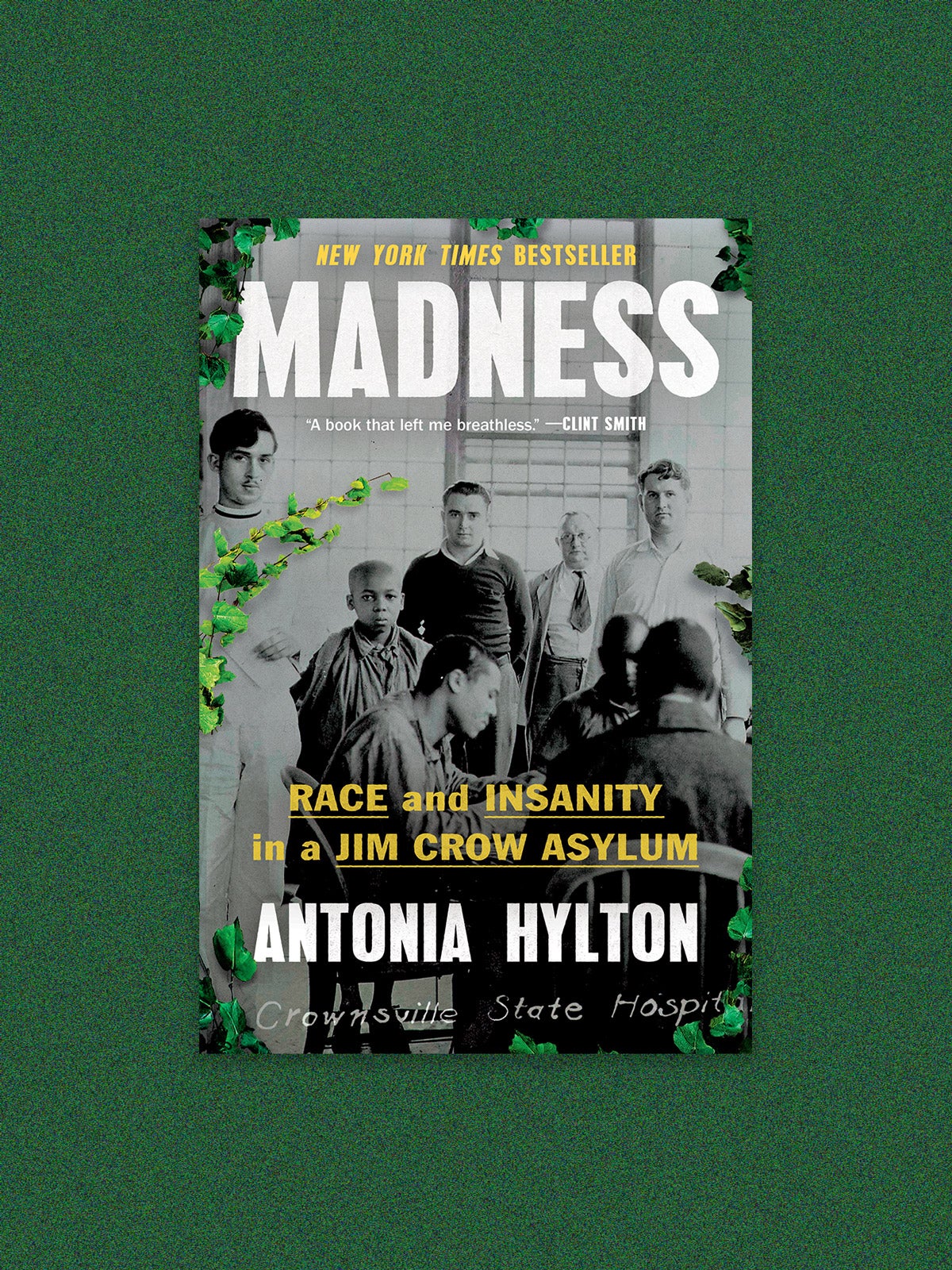
These are also the stories of Madness: Race and Insanity in a Jim Crow Asylum by Antonia Hylton. Her book might surprise some, but for me, it only affirmed the worst of what I knew to be true: Anything created out of White panic is often deadly for generations of Black people. Her book is a powerful reminder that the inequities of health are not history; they remain present, and political.
Sign up for Harvard Public Health
Exploring what works, what doesn’t, and why.
Delivered to your inbox weekly.
Email addressBy clicking “Subscribe,” you agree to receive email communications from Harvard Public Health.
CommentsThis field is for validation purposes and should be left unchanged.
In Hylton’s book, the White panic is about the end of slavery.She chronicles the life and times of patients and workers at Crownsville State Hospital in Maryland. The facility, opened in 1911, was originally designed to be a segregated asylum: As White Marylanders railed against the end of slavery, they sought new ways to keep Black people with mental illness away from White communities. But as Hylton shows, the asylum became a combination of a workhouse and a jail for Black patients—whether they had a mental illness or not, and many of them did not.
The book tells the story of the facility and its people: Black patients who cleared the forest and chopped wood to build the hospital many of them would never leave alive; White hospital staff who embedded racism in their care and in their interactions with colleagues of color; the experiments performed on Black patients without consent and little oversight.
Hylton is a journalist who knows how to access archives; some families are not able to do the same. Access to hospital archives may be limited by time or financial resources for genealogy website memberships, public records requests, and database access, as well as public record laws protecting the privacy of mental health records even from hundreds of years ago. In addition, some care providers did not always take detailed notes on Black patients, making some patient experiences lost and unrecorded. Descendants of former patients may have no idea that they have ancestors who were committed to these places because those stories are unspoken in the family, too. The lack of preservation keeps truths unknown.
And yet knowing when the first traces of anxiety, depression, or bouts of psychosis emerged in a family tree could be key to unlocking better care for many Black people today—but without details, those people are left in the dark. The injustice and inequity compounds with every generation.
Hylton’s book uses the shadows of Crownsville State Hospital to shine a light on the looming questions of how these intergenerational experiences at the facility have shaped the way generations of Marylanders and their descendants think about mental health. She went beyond the archives to speak to community members who are striving to keep the memory of Crownsville’s history. She spoke to former patients who are still alive, working to figure out who is potentially buried there and demanding the state legislature take action in preservation efforts. Hylton interviewed people who previously worked at Crownsville about their experiences navigating White staff members who didn’t want them there and about their efforts to protect the dignity of their patients, despite funding and other constraints.
In between her thoughtful reporting, Hylton weaves her own reflections on how her family navigates helping each other deal with mental illness and on talking about the stigma of emotional vulnerability. Her personal story reminds us that even a leading voice on health must struggle against the system, in this case, to help her family find the right therapist and resources.
Hylton’s book also comes at a unique moment for Black Americans. Even three years before the pandemic, a survey from the Centers for Disease Control and Prevention found Black people were more likely than White people to experience feelings of sadness, hopelessness, worthlessness, or to feel that everything is an effort, all or most of the time.In the last four years, Black communities have experienced trauma and mass bereavement from COVID-19 and from reckoning with police violence, including the deaths of George Floyd in Minneapolis, Breonna Taylor in Kentucky, Ahmaud Arbery in Georgia, and Jordan Neely in New York City—and many other instances unknown nationally. Black children are also showing signs of distress: Data from 2001 to 2015, released in 2018 inJAMA Pediatrics, found that Black kids between the ages of 5 and 12 were two times more likely to die by suicide than White children of the same age.We are only emerging from the fog of suspended time that was COVID-19; it will take years to understand the intergenerational magnitude of grief, loss, and trauma.
Thanks to paradigm-shifting social media and new generations encouraging conversation, these days there are more open and frank discussions about mental illness and trauma in the Black community. The call for openness has helped Black families reveal multi-generational trauma and recognize mental illness.And yet, despite some progress, there’s still a sense of stigma, shame, and incredulity in the Black community when trying to understand mental illness and its various treatments, whether therapy, medication, or something else. There are still the elders who don’t understand depression; the bracing for familial judgment if you talk about going to therapy; the fear of seeming “weak” for seeking help; the sentiment that mental illness is “something White people deal with.” The unwelcoming mental health system and the historical weaponization of mental illness in the United States has effectively discouraged Black Americans from seeking help.
Health care, despite its alleged benevolence, is political, and Black people’s inability to disentangle their mental health from the U.S. criminal justice system, and from stigma, is no accident either. Even today, people who emerge from psychiatric facilities often do not see themselves as patients but rather “psychiatric survivors” who endured the pains of the mental health system. This mental health system and the enduring legacy of caring for people since the Civil War was by design—a choice. Hylton’s book is a powerful portrait of that system and a reminder that every citizen has a collective responsibility to remember the historical shortcomings of our mental health system and the lives of those who experienced it firsthand. But more than that, the book shows that we must end the stigma against mental illness now, so that the next generation can focus on wellness instead of shame.
Book cover: Hachette Book Group
Contributors
ME
Marissa Evans
Marissa Evans is a freelance journalist based in Los Angeles.
Reflections by Fr. Shay Cullen, – Spokesperson for Israel says Palestinians are “human beasts” – UN report
Spokesperson for Israel says Palestinians are “human beasts” – UN report Fr. Shay Cullen 20 June 2024
Millions of good, peace-loving people around the world are working to bring a ceasefire in the Israel-Hamas war in the Gaza Strip. These include Israelis, too, but they are failing to persuade Prime Minister Benjamin Netanyahu or the leaders of Hamas to agree to a permanent ceasefire.Israel is determined to totally destroy Hamas, an impossible goal, since every killing of a Hamas fighter and civilian is recruiting more fighters to join Hamas. Netanyahu is facing legal problems of corruption allegations in court and is prolonging the war to survive a conviction in Israel.
The International Court of Justice warned of real genocide crimes charges to be made against Israel because of the mass killing of civilians and because of war by starvation and the massive bombing. The International Criminal Court is ready to issue arrest warrants for Netanyahu, his defense minister, and three Hamas leaders.
The television is full of horrific images of the dead and wounded, most are civilians, women and children, from bombing and shootings. These are images of human atrocities, a frenzy of killing and bombing by Israel. This is in retaliation of the killing and atrocity done by Hamas on 7 October 2023 when they killed 1200 Israeli and captured and abducted 1251 people from Israel, half of them Israelis and the other half with foreign citizenship. Hamas took them into the tunnel complex in Gaza. Israel, for all its US-supplied military might and power, has failed to rescue all the hostages or defeat Hamas. The ongoing battle will kill more of the hostages by Israeli gunfire or bombs.
The heart and cause of the hostility and war is 48 years of cruel, oppressive occupation since Israel forces drove the Palestinians from their homes and lands and occupied them for themselves. This is the root cause of the war today.
Amnesty International says: “For half a century, Israel’s occupation of the West Bank, including East Jerusalem, and the Gaza Strip, has resulted in systematic human rights violations against Palestinians living there. Since the occupation first began in June 1967, Israel’s ruthless policies of land confiscation, illegal settlement and dispossession, coupled with rampant discrimination, have inflicted immense suffering on Palestinians, depriving them of their basic rights.”
This mass land-grabbing and forcing the Palestine people to live in refugee camps and suffer deprivation imposed by Israel is no justification for the violent killing of 1,200 Israelis and foreigners by Hamas. The greatest failure of the Israeli army and Netanyahu was to protect their people. Nor is criticism of Israel’s war antisemitic. We recall Jesus of Nazareth was a Jewish person. He challenged the authorities for their cruel oppression of the poor.
Fanatics on both sides will not agree to a ceasefire. Prime Minister Benjamin Netanyahu says he will destroy Hamas, but having allowed money to be funneled to Hamas for many years to control them, he in fact armed them, according to a BBC Panorama report. Now, with his extreme fanatical political supporters in his cabinet who seem to want to kill every Palestinian, he is destroying the respect, reputation and the dignity of Israel.
Israel’s international reputation is in tatters and Israel’s war is criticized internationally. It appears, however, that to Israel, Palestinian life has no value and 37,000 Palestinians have been killed by Israel, mostly women and children, and another 85,523 injured. Israelis will have to live with that truth and answer for that monstrous crime against humanity as the latest UN report says. That is not self-defense. They have left thousands of small boys and girls and mothers and grandmothers wounded, bleeding, rushed to hospitals, and then the hospital is attacked, clinics bombed, schools burnt down. It is clear from the latest UN human rights report that crimes against humanity and war crimes have been committed by Israel.
According to the investigation of only six bombing strikes out of thousands, the evidence powerfully points to crimes against humanity and war crimes by Israel for the indiscriminate killing of hundreds of civilians by the use of massive bombs. These were likely supplied by the United States.
The press release from the United Nations High Commissioner for Human Rights says in part: “The UN Human Rights Office published an assessment today on six emblematic attacks by the Israeli Defense Forces (IDF) in Gaza last year that led to high numbers of civilian fatalities and widespread destruction of civilian objects, raising serious concerns under the laws of war with respect to the principles of distinction, proportionality and precautions in attack.”
The report details six emblematic attacks involving the suspected use of GBU-31 (2,000 lbs), GBU-32 (1,000 lbs) and GBU-(250 lbs) bombs from 9 October to 2 December 2023 on residential buildings, a school, refugee camps and a market. The UN Human Rights Office verified 218 deaths from these six attacks, and said information received indicated the number of fatalities could be much higher.
In the report, the following was quoted “Another IDF official was quoted as saying “Hamas and the residents of Gaza” are “human beasts” and “are dealt with accordingly. Israel has imposed a total blockade on Gaza. No electricity and no water, just damage. You wanted hell, you will get hell.”
The report concludes that the series of Israeli strikes, exemplified by the six incidents, indicates that the IDF may have repeatedly violated fundamental principles of the laws of war. In this connection, it notes that unlawful targeting when committed as part of a widespread or systematic attack against a civilian population, in line with a State or organisational policy, may also implicate the commission of crimes against humanity.
We will never share, sell, or rent individual personal information with anyone without your advance permission or unless ordered by a court of law. Information submitted to us is only available to employees managing this information for purposes of contacting you or sending you emails based on your request for information and to contracted service providers for purposes of providing services relating to our communications with you.*Physical Address:
CONTACT US:
PREDA Foundation, Inc. P.O Box 68 Olongapo City 2200
Preda Main Center Upper Kalaklan, Subic Bay Olongapo City 2200 Philippines
TO SUPPORT THE WORK OF PREDA FOUNDATION, you may freely pass on the article or republish it in various print or online publications. To know more about other ways to SUPPORT the WORK of PREDA FOUNDATION, contact us directly through our email: shaycullen@gmail.com or predainfo@gmail.com*Unsubscribe:
The study focused on networks representing the hippocampus and neocortex, crucial components of the brain that collaborate in memory, imagination, and planning.
Researchers at University College London’s Institute of Cognitive Neuroscience have shown how Artificial Intelligence can help explain the way memories enable humans to learn about the world, re-live old experiences, and construct new experiences for imagination and planning.
The study was published in Nature Human Behaviour journal.
“Recent advances in the generative networks used in AI show how information can be extracted from experience so that we can both recollect a specific experience and also flexibly imagine what new experiences might be like,” the lead author Eleanor Spens, a doctoral student at University College London’s (UCL) Institute of Cognitive Neuroscience said in an official statement.
Also watch | Gravitas: Is AI going to replace your brain?
“We think of remembering as imagining the past based on concepts, combining some stored details with our expectations about what might have happened,” Spens said.
What the study is about?
The study focussed on networks representing the hippocampus and neocortex, crucial components of the brain that collaborate in memory, imagination, and planning.
Spens highlighted the parallel between remembering and imagining the past based on concepts, a cognitive process that combines stored details in the brain with expectations about what event might have occurred.
The AI model was exposed to 10,000 images of simple scenes, with the activity in the hippocampus region of the brain rapidly encoding each scene as it was experienced. This encoded information was then replayed to train the generative neural network in the neocortex.
The neocortical network learned to efficiently represent scenes conceptually.
This process mirrors exactly how humans pick up on patterns from past experiences to make predictions, a crucial skill for survival.
What does it mean?
The study sheds light on the role of the hippocampus in encoding the meaning of new scenes, allowing it to focus on unique features that the neocortex cannot reproduce. This dynamic interaction explains how the neocortex gradually acquires conceptual knowledge and collaborates with the hippocampus to reconstruct events in our minds, facilitating the ability to “re-experience” past events.
Furthermore, the research unveils insights into how the brain generates new events during imagination and planning for the future. It shows why existing memories often exhibit “gist-like” distortions, wherein unique features are generalised and remembered as more similar to features in previous events.
What is the bottom line?
This groundbreaking study not only deepens our understanding of the intricate interplay between memory and imagination but also highlights the potential of generative AI to unravel the mysteries of cognitive processes in the human brain.
Younger candidates, such as the Gen-Z, who possess AI knowledge are likely to gain an advantage over their more experienced peers.
The meteoric rise of Artificial Intelligence (AI) has taken over workplaces across the world looking to automate their functions in a potential threat to human jobs. Although a complete takeover of jobs by AI seems unlikely in the near future, a more immediate concern has emerged: individuals leveraging AI to outcompete others in the job market.
Recent research from Microsoft and LinkedIn revealed that those without AI skills risk falling behind in career opportunities compared to those who have embraced AI.
The study, which surveyed over 30,000 people across 31 countries, shows a significant shift in hiring practices. Nearly 70 per cent of business leaders now prioritise AI proficiency over traditional experience when making hiring decisions, favouring candidates with AI knowledge over more seasoned professionals lacking such skills.
Aneesh Raman, LinkedIn’s Vice President and workforce expert, told CNBC: “Learning basic AI skills — such as prompt engineering, machine learning, or data literacy — is the best insurance to shortcut your competitiveness against people who might have more experience.”
What does it mean?
Younger candidates, such as the Gen-Z, who possess AI knowledge are likely to gain an advantage over their more experienced peers.
Gen Z, known for their digital savviness, is more likely to integrate AI tools at work compared to older generations like millennials, Gen X, and Baby Boomers.
Also watch | 75% employees already using AI at work: Report
The study further found that 77 per cent of leaders are more likely to assign significant responsibilities to early-career professionals with AI expertise.
Where all AI has started showing off its effect?
According to the report by Microsoft and LinkedIn, the use of generative AI tools in workplaces has doubled over the past six months. This trend extends beyond tech roles to fields such as architecture, project management, and administration, where professionals are increasingly seeking to build their AI skills.
Even traditionally non-tech industries like healthcare, finance, and marketing are rapidly integrating AI technologies to improve operations and productivity. This swift adoption is driving demand for AI-proficient professionals and creating new job opportunities.
Some tech giants, including Google and Amazon, are investing in training their workforce in AI skills. But only a quarter of companies surveyed by Microsoft and LinkedIn plan to provide training on generative AI tools like ChatGPT and Microsoft Copilot.
(With inputs from agencies)
Mukul Sharma
Mukul Sharma is a New Delhi-based multimedia journalist covering geopolitical developments in and beyond the Indian subcontinent. Deeply interested in the affairs related to contested peace in Afghanistan and Pakistani establishment, he can be found cycling or running more than a few miles in New Delhi on less busy mornings, or reading some correspondent’s reflections of a place they reported from. He posts on X @mukuljrsharma
On a sweltering July morning last year, I met a new patient. His cracked and calloused feet suggested he had spent nights awake and wandering the streets, afraid of falling asleep on a park bench and getting mugged, and I noticed a weariness in his gaze. He’d been admitted to the hospital with dangerously high blood pressure and pains in his chest.
Two months earlier, he’d undergone a thorough workup at this very hospital, and been discharged with medications to lower his blood pressure and treat his heart conditions. But he’d lost his medications when his backpack had been stolen, he told me, and it had been nearly impossible to follow a regimen that required him to take pills four times a day when he didn’t have a place to store his medications or even a watch.
After a day in the hospital, his blood pressure returned to normal and his chest pain disappeared. Our team tried to find him housing, but we could only arrange an urgent referral to the city’s overburdened social services programs. I felt powerless as I discharged him to a nearby shelter, anticipating he’d be admitted again.
This story is typicalfor many people experiencing homelessness—a population that has been on the rise in the United States since 2016. The most recent national survey estimated 650,000 people experienced homelessness on a single night in 2023, up 12 percent from 2022. People experiencing homelessness seek medical attention for ailments directly attributable to their living conditions—and yet the health care system fails to address the underlying problem, which creates a cycle of hospitalizations. Without more housing that people like my patient can afford, the care that doctors like me provide can be futile.
Sign up for Harvard Public Health
Exploring what works, what doesn’t, and why.
Delivered to your inbox weekly.
Email addressBy clicking “Subscribe,” you agree to receive email communications from Harvard Public Health.
NameThis field is for validation purposes and should be left unchanged.
As the number of people who are unsheltered—living in tents or on the street, not in shelters—has increased, so have attempts at displacement. The Supreme Court is considering whether a law in Grants Pass, Oregon that bans sleeping on public property or in public parks constitutes cruel and unusual punishment. Around the country, cities regularly clear encampments of people experiencing homelessness. Research suggests that encampment sweeps worsen the health of the displaced inhabitants.
In their book Homelessness is a Housing Problem, authors Gregg Colburn and Clayton Page Aldern argue that affordable housing scarcity is driving rising homelessness. Rents and home prices soared during the COVID-19 pandemic, exacerbating an already dire housing market situation. Creating affordable housing will not end homelessness—unmet behavioral, mental, and physical health needs are both the cause and consequence of homelessness, and they will need to be addressed—but affordable housing is a necessary step.
Several studies have shown the cost benefits of supportive housing for homeless people with chronic illness, mental health issues, and substance abuse. The savings are highest when housing programs target individuals who are frequent users of health care. For example, a housing program for people experiencing homelessness and severe alcohol problems in Seattle saved about $43,000 in health costs per person each year, while the housing provided cost about $13,000. However, not all studies have found the same results. We need more research to understand the most cost-effective ways of implementing housing programs.
Health care systems have traditionally focused on providing and improving health care for people experiencing homelessness. It’s time for them to do more. A few innovative health systems have already begun to do so. In New Jersey, St. Joseph’s Health financed the development of 56 units of affordable housing on land that the hospital owned. In New Orleans, the managed care organization Aetna invested $26.7 million in a 192-unit affordable housing complex. In Toronto, where a large number of people are experiencing homelessness, the University Health Network partnered with the city to build 51 units of affordable housing on a parking lot it owned. And Kaiser Permanente has committed $400 million to creating or preserving 30,000 affordable housing units in parts of California, where the homeless population is the country’s highest, by 2030. Since health care systems are primary partners in these developments, they frequently provide residents with on-site health care and social services.
More hospitals, provider networks, insurers, and government agencies should take on a role in directly addressing the housing shortage. They should invest in housing development, especially projects that create affordable or supportive housing units, and donate unused land to further this goal. For too long, players in health care have focused on mitigating the consequences of homelessness, rather than addressing the root problem. Now, it’s time for them to be a part of the solution and create healthier communities for all.