El Pais: Lemurs without teeth and one-armed macaques: How disabled primates survive in the wild

https://776bef7f4e175e461151b81d62304b92.safeframe.googlesyndication.com/safeframe/1-0-40/html/container.html

Select:

EL PAÍS

subscribeLOG IN

Science

Silicon ValleyYoutubeGoogleLatest News

Primates

Lemurs without teeth and one-armed macaques: How disabled primates survive in the wild

A review of scientific studies confirms that caring for family members with deformities and injuries is a widespread behavior in the animals most biologically similar to humans


Primates discapacitados
Nico, a blue monkey with an atrophied hand.Laura Camón
Laura Camón

Laura Camón

Jul 07, 2024 – 06:05 CEST

Nico was an adult male blue-headed cercopithecus living on a small island in the Quirimbas Archipelgo of Mozambique. He was one of the few monkeys on the island who had been named, for one simple reason. Most of his peers looked too similar for human eyes to tell them apart. But Nico was different in that he had a completely atrophied hand. It looked as though he had caught his wrist in some kind of wire or rope that had subsequently cut off its blood supply.

He was also one of the first monkeys we met. Nico seemed to be very used to human presence. While the large part of his group of Cercopithecus mitis hunted for seeds on the ground, he approached and gazed at us expectedly. A few days later, we saw a man giving him food. Perhaps this propensity to get close to humans had been occasioned by his injury, or perhaps the contrary was true. It was impossible to know, just like it was impossible to know if he would have been able to survive in a place where there were no humans to feed him every once in a while, or in a place where predators were present.

Nonetheless, I couldn’t help but think about how Nico was able to get through life rather well, given that he had one hand. There seemed to be no significant differences between him and the other males. The idea that natural selection acts as an unstoppable force might cause us to think that animals with physical disabilities have no place in nature; that only humans, thanks to our habit of caring for each other, have escaped this harsh reality. But anyone who has passed enough time with primates in the wild knows that this doesn’t capture their reality.

Since the beginning of field-based primatology, numerous anecdotes of primates with disabilities surviving for years have been reported. Yet, few studies have sought for deeper understanding of their lives. That is, until 2023, when a research team from Canada’s Concordia University decided to analyze and collect all cases of primate disability in a literature review. In total, they examined 114 articles and found some general trends. Although many species are represented in the review, the most frequent are chimpanzees and macaques, probably because they have been the most studied. The vast majority of the disabilities that appear are physical, involving limbs.

Humans are an undeniable presence among the accounts collected in the review. Its authors were struck by how frequent it was to find a relationship between the physical disabilities of primates and the environmental impacts caused by humans. This correlation was found in 60% of the articles. A striking example is found in an account from the Beza Mahafaly Special Reserve in Madagascar, where lemurs (Lemur catta) were losing their teeth prematurely. Among these primates, the hard fruit of the tamarind normally represents a small part of their diet. However, human disturbances on the reserve had reduced the availability of other foods and the lemurs had been forced to include more tamarind fruit in their diet, which was wearing down their teeth faster.

Still, these toothless lemurs and other primates with disabilities found ways to survive. How did they manage to do so? The literature review suggests three factors: flexible behavior that allows them to adapt to their disability, social environment and the potential to create new behaviors.

When the lemurs lost their teeth, they spent more time on eating the hard fruit, licking it before they eat, incorporating more leaves into their diet and looking for fruits that have already been partially processed by another lemur. This is a clear example of how primates are capable of adapting to some anthropogenic disturbances thanks to their flexible behavior.

Some Japanese macaques, famous worldwide for taking thermal baths, live in groups with a high percentage of members with disabilities.
Some Japanese macaques, famous worldwide for taking thermal baths, live in groups with a high percentage of members with disabilities.Issei Kato (reuters)

As for social environment, maternal care in the first months of primates’ lives appears to be especially important. On Japan’s Awaji Island, there is a group of macaques with a high rate of members with disabilities. Between 1978 and 1995, 14% of their offspring were born with some kind of limb deformation. However, the vast majority made it through their first year of life because their mothers were able to compensate for their disability by providing them with extra care and adapting to the needs of their kids.

One of these mothers was Yuki, who was also one of the macaques who had one of the most serious disabilities, having been born with two completely atrophied hands. She had learned to walk on two feet and when climbing trees, she always chose those with a trunk-and-branch structure that allowed her to climb without using her hands. Her child was also born with a disability that prevented her from holding onto her mother’s body, so Yuki transported her by holding onto the small one’s body with her two deformed arms.

Special treatment for infants with disabilities is a widespread behavior among primates, who have extremely rarely been witnessed abandoning their children. Mothers of these infants have been observed spending more time with them and staying close to them for longer periods while their offspring is young. When they are slower than normal, these children are waited on, even when this causes the family to lose contact with the primary group, and they are guided towards sources of water and food when they are blind.

Although they are less frequent, cases of other members of the group helping members with disabilities have also been observed. A macaque from the Awaji island named Maki adopted Meg, a six-month-old orphan with a disability. Later, when Maki became one of the group’s dominant males, he continued to allow Meg to spend time and eat with him.

From disability to innovation

Finally, many cases of new behavior occasioned by disabilities have been reported. Late was another macaque from the same group as Yuki, and she hit upon a way to nurse her daughter Ribbon with minimal effort. Ribbon was born with deformations of the hands and feet and couldn’t grab on to Yuki’s body to breastfeed. So, Late would sit near a rock or tree and squeeze Ribbon between her body and its surface to avoid holding Ribbon up with her arms.

When Ribbon grew up and no longer depended on her mother for food, she continued to find innovative solutions for herself. Macaques use their hands to remove leaf litter and catch invertebrates; but Ribbon, who lacked functional hands, devised her own method. She tapped the ground with her hands and feet to remove leaves and caught invertebrates with her mouth.

On some occasions, this kind of new behavior was adapted by the entire group. Tinka was an adult chimpanzee from a community in Sonso, Uganda who had paralysis in both hands. Normally, chimpanzees use their hands to scratch their back, but Tinka invented his own style. He held a vine with his foot and rubbed against it. It must have been a satisfying way to scratch because, before long, other able-bodied members of the group began to imitate him. Using his ingenuity, Tinka managed to solve a problem specific to him, but in so doing, brought value to the rest of the group.

Sign up for our weekly newsletter to get more English-language news coverage from EL PAÍS USA Edition

Posted in Uncategorized | Tagged , , , , | Leave a comment

UnHerd: Just learned that King Charles has knighted this exceptional academic as Sir Niall Ferguson. Well deserved to him and his family. This interview title Are we the Soviets now? The bureaucracy governing the U.S. now perhaps!!

A quotation from decades ago by C.S. Lewis but bureaucracy still stifles

“I live in the Managerial Age, in a world of “Admin.” The greatest evil is not now done in those sordid “dens of crime” that Dickens loved to paint. It is not done even in concentration camps and labour camps. In those we see its final result. But it is conceived and ordered (moved, seconded, carried, and minuted) in clean, carpeted, warmed and well-lighted offices, by quiet men with white collars and cut fingernails and smooth-shaven cheeks who do not need to raise their voices. Hence, naturally enough, my symbol for Hell is something like the bureaucracy of a police state or the office of a thoroughly nasty business concern.”

[From the Preface]”

― C.S. Lewis, The Screwtape Letters

Posted in Uncategorized | Leave a comment

A Bench and a Grandmother’s Ear: Zimbabwe’s Novel Mental Health Therapy Spreads Overseas. Source: The Japan Times. A simple bench in a location, it could be the canal in Dublin, with an “Elder Orphan” with lots of compassion, empathy and experience. What an we in Ireland, learn from The Japan Times focusing on a common sense initiative in impoverished Zimbabwe.

A Bench and a Grandmother’s Ear: Zimbabwe’s Novel Mental Health Therapy Spreads Overseas

AP Photo/Tsvangirayi Mukwazhi
Siridzayi Dzukwa, a grandmother, right, talks to a colleague while seated at a bench in Hatfcliffe on the outskirts of the capital Harare, Zimbabwe, Saturday, May 11,2024.

AP

11:17 JST, July 6, 2024

HARARE, Zimbabwe (AP) — After her son, the family’s shining light and only breadwinner, was arrested last year, Tambudzai Tembo went into meltdown. In Zimbabwe, where clinical mental health services are scarce, her chances of getting professional help were next to zero. She contemplated suicide.

“I didn’t want to live anymore. People who saw me would think everything was okay. But inside, my head was spinning,” the 57-year-old said. “I was on my own.”

A wooden bench and an empathetic grandmother saved her.

Older people are at the center of a homegrown form of mental health therapy in Zimbabwe that is now being adopted in places like the United States.

The approach involves setting up benches in quiet, discreet corners of community clinics and in some churches, poor neighborhoods and at a university. An older woman with basic training in problem-solving therapy patiently sits there, ready to listen and engage in a one-on-one conversation.

The therapy is inspired by traditional practice in Zimbabwe in which grandmothers were the go-to people for wisdom in rough times. It had been abandoned with urbanization, the breakdown of tight-knit extended families and modern technology. Now it is proving useful again as mental health needs grow.

“Grandmothers are the custodians of local culture and wisdom. They are rooted in their communities,” said Dixon Chibanda, a psychiatry professor and founder of the initiative. “They don’t leave, and in addition, they have an amazing ability to use what we call ‘expressed empathy’… to make people feel respected and understood.”

Last year, Chibanda was named the winner of a $150,000 prize by the U.S.-based McNulty Foundation for revolutionizing mental healthcare. Chibanda said the concept has taken root in parts of Vietnam, Botswana, Malawi, Kenya, and Tanzania and is in “preliminary formative work” in London.

In New York, the city’s new mental health plan launched last year says it is “drawing inspiration” from what it calls the Friendship Bench to help address risk factors such as social isolation. The orange benches are now in areas including Harlem, Brooklyn and the Bronx.

In Washington, the organization HelpAge USA is piloting the concept under the DC Grandparents for Mental Health initiative, which started in 2022 as a COVID-19 support group of people 60 and above.

So far, 20 grandmothers determined to “stop the stigma around mental health and make it okay to talk about feelings” have been trained by a team from Friendship Bench Zimbabwe to listen, empathize and empower others to solve their problems, said Cindy Cox-Roman, the president and chief executive of HelpAge USA.

Benches will be set up at places of worship, schools and wellness centers in Washington’s low-income communities with people who “have been historically marginalized and more likely to experience mental health problems,” she said.

Cox-Roman cited fear and distrust in the medical system, lack of social support and stigma as some of the factors limiting access to treatment.

“People are hurting, and a grandmother can always make you feel better,” she said.

“We have so much wisdom in our older population and arms that can open. I reject ageism. Sometimes age brings wisdom that you don’t learn until you get old,” one of the grandmothers, 81-year-old Barbara Allen, said in a promotional video.

More than one in five U.S. adults live with a mental illness, according to the National Institute of Mental Health.

“The mental health crisis is real. Where it’s a real crisis after the pandemic is that many clinicians have dropped out of the workforce,” said Dr. Jehan El-Mayoumi, who works as an expert with HelpAge USA and is a founding director of the health equity Rodham Institute at Georgetown University. She has struggled to get psychiatrists for acutely suicidal patients.

El-Mayoumi said the Zimbabwean concept provides people with “someone you can trust, open up your heart to, that you can tell your deepest secrets (and) that requires trust, so that’s what’s so wonderful about the Friendship Bench.”

The idea was born out of tragedy. Chibanda was a young psychiatrist, and one of just over 10 in Zimbabwe in 2005. One of his patients desperately wanted to see him, but she could not afford the $15 bus fare. Chibanda later learned that she had killed herself.

“I realized that I needed to have a stronger presence in the community,” Chibanda said. “I realized that actually one of the most valuable resources are these grandmothers, the custodians of local culture.”

He recruited 14 grandmothers in the neighborhood near the hospital where he worked in the capital, Harare, and trained them. In Zimbabwe, they get $25 a month to help with transport and phone bills.

The network, which now partners with the health ministry and the World Health Organization, has grown to over 2,000 grandmothers across the country. Over 200,000 Zimbabweans sat on a bench to get therapy from a trained grandmother in 2023, according to the network.

Siridzayi Dzukwa, the grandmother who talked Tembo out of suicide, made a home follow-up visit on a recent day. Using a written questionnaire, she checked on Tembo’s progress. She listened as Tembo talked about how she has found a new lease on life and now sells vegetables to make ends meet.

Dzukwa has become a recognizable figure in the area. People stop to greet and thank her for helping them. Some ask for a home visit or take down her number.

“People are no longer ashamed or afraid of openly stopping us on the streets and ask us to talk,” she said. “Mental health is no longer something to be ashamed of.”

Add TheJapanNews to your Google News feed.

Posted in Uncategorized | Tagged , , , , | Leave a comment

“Book Deserts”. Excellent informative talk about what we all know if we dig deep into our hearts. There are people, children who just don’t have access to books. Inequality is bred in this. These days since people record for television and YouTube from their homes, one thing we immediately see is their selection of books. Everyone should have access. Carnegie over 100 years ago started with libraries all over the world, including Ireland. For people with mental illness, a much hidden secret is the power of the book (Bibliotherapy). Let’s make them aware of this. There are so many options. 2nd Video : Have you heard of the 30 million word gap up the age of 3? Please share. Traumatic brain injury and amnesia – I learned to accept that the minute I read it is for the forgotten box but carry on what you gain over the decades is what they call “cognitive reserve”. The tortoise gets there is the moral because reading taps into your pre-accident memory and keeps you on course.

Posted in Uncategorized | Leave a comment

‘Extraordinary’: Douglas Murray reacts to Joe Biden’s debate performance: Sky News Australia. Interview Douglas Murray … refreshing, not about lies and secrets. He talks of the taming of “DEI”

487,305 views

4 Jul 2024

Author Douglas Murray reacts to President Joe Biden’s poor debate performance against Donald Trump. Mr Murray addressed the “excuses” put forward by the Democrats to explain the President’s poor performance. “He was obviously not on good form as all of his sycophants have had to keep pointing out,” Mr Murray told Sky News Australia host Rita Panahi. “The problem is that they have this line they have been doing for the past week which is he had a bad night. “Well, yes, but the evidence would be that he has a lot of bad nights and a lot of bad days.”

Posted in Uncategorized | Leave a comment

MOCA: Everyone is talking about Mental Cognitive impairment. Why? We have two potential Presidents of U.S. hovering around the age of 80 and the people would feel reassured if the MOCA test was completed on them in a professional capacity. As you can see from this it is important. Article from Harvard Gazette “Most voters back cognitive exams for older politicians. What do they measure?”

HEALTH

Testing fitness of aging brain

Liz Mineo

Harvard Staff Writer

June 12, 2024 8 min read

An example of the Montreal Cognitive Assessment test.AP Photo/Allen G. Breed

Most voters back cognitive exams for older politicians. What do they measure?

Amid concerns about the mental fitness of the U.S. presidential candidates — Joe Biden is 81 and Donald Trump is 77 — some have called for mandatory cognitive tests for aging politicians. A recent poll showed 75 percent of voters favor such measures with support highest among the oldest cohort of Americans surveyed.

The Gazette asked clinical neuropsychologist Julie Brody Magid, Psy.D., clinical director of the McLean Memory Disorders Assessment Clinic and an instructor in psychology at Harvard Medical School, what functions cognitive tests measure, warning signs of mental decline, and how to maintain brain health. The interview has been edited for length and clarity.


What do cognitive tests assess?

Overall, cognitive tests assess a range of functions including memory, attention and concentration, language, spatial skills, orientation, and executive functioning. There are cognitive screening measures that offer a quick overview of different cognitive functions.

Currently, the most used cognitive screening test is the Montreal Cognitive Assessment, MoCA. In the past, the Folstein Mini Mental State Exam was frequently used by physicians. These are abbreviated cognitive screening measures that take five or 10 minutes to administer and score.

What does the MoCA test involve?

The MoCA test includes tasks that assess attention, orientation, naming of objects, learning a short list of words, and verbal reasoning tasks like analogies. It has a total score of 30 points. It’s a standardized test, given the same way every time. You earn a raw score based on your performance, which determines if your skills are within a normal expected range for your age and for your background. For example, given a person’s education and achievement, is their functioning where we would expect it to be? Or does the screening test show suggestions of a decline?

Julie Brody-Magid.
Sleep, exercise, and diet play key role in maintaining cognitive health, says Julie Brody-Magid.Kris Snibbe/Harvard Staff Photographer

Who can perform well on the MoCA test?

There are very accomplished, smart people who can perform relatively well on a cognitive screening test like the MoCA even if they have had some changes in their day-to-day abilities. If you think of lawyers, doctors, or professors, it’s clear that they have strong intellectual ability, and what we call cognitive reserve, which is your cognitive savings account from being intelligent, educated, and enriched. Some people can “cruise” on their reserve even when they’re having subtle difficulties since their baseline abilities were so strong. Sometimes we might flag a patient who’s very high-functioning and who’s still performing relatively well on a MoCA test but may have subjective cognitive complaints. Some people come into my memory clinic saying, “Something’s not right, I’m not remembering well, I feel I’m declining.” They may notice themselves or the family may be observing changes. Those screening tests by themselves have some utility, but they don’t tell the whole story. The clinical information provided by the patient or family on interview about the course of change compared to who that person was at their highest level of functioning is very important. We need both sets of information to make distinctions about what a cognitive screening score means, and when further workup is needed.

What are the red flags that could warn of cognitive changes?

One red flag is if people are showing signs of rapid forgetting, such as if they are having a conversation, and something is discussed or planned, and minutes or hours later, they forget, and after being told again, they still forget. Rapid forgetting with repetitive questions is not usually an age-appropriate memory change. That type of memory change connotes Alzheimer’s disease, which is a disorder of memory storage or retention. Sometimes short-term memory loss can be accompanied by subtle language changes, where people can’t find words, especially when naming objects, they often will start to use generic words, such as “the thing,” “the whatchamacallit,” or they might describe the object, but they can’t name it. Those are some of the signs that we look out for.

“Rapid forgetting with repetitive questions is not usually an age-appropriate memory change.”

In vascular dementia, which is a risk factor for developing Alzheimer’s, we see more executive functioning issues, such as problems with organization, with keeping their paperwork in order; people lose track of the bills because they put them down somewhere or they don’t address them. We see people with vascular risk factors who have difficulty with reasoning and problem-solving. For example, they have a minor motor vehicle accident due to poor judgment and then don’t know how to handle it. Some people have reduced initiation and motivation; they stop doing things they always had passion for and cannot explain why. Slowed processing speed is often reported in daily functioning; everything takes much longer to work through and complete. 

Is cognitive decline part of normal aging?

There are age-related changes that occur throughout our lifespan. As we age, there are some brain changes that occur as part of the normal aging process; white matter changes are the result of arteries that get narrowed or blocked by atherosclerotic plaque, this can begin around age 60. As that happens, there’s some associated slowing of processing, difficulty with being able to access information, pulling up that memory crisply, and efficiently finding words; some people identify those experiences as “senior moments.” We also have some cell loss and atrophy in the brain that occurs with normal aging. On neuroimaging, we see age-commensurate loss of volume in the cortex or gray matter, which plays a significant role in many functions including memory/learning and language. All of these changes are part of normal aging.

When is the right time to take a cognitive test?

What we typically suggest is that if a patient has what we call subjective cognitive complaints because they are noticing change, a cognitive screening should be done. However, one of the tricky parts of dementia, especially certain types like Alzheimer’s, is that the illness can affect the awareness center of the brain, and people don’t notice changes in themselves, but the family, spouse, or doctor notices change. If there’s any indication of subjective cognitive complaint or objective observation that that person is showing signs of early decline, that’s the time to pursue a neurocognitive screening test at minimum. That is often the beginning of the workup process, which can also include neuroimaging and bloodwork because other medical issues besides dementia can cause people to have cognitive problems.

Cognitive changes may be the result of hypothyroidism, anemia, a vitamin deficiency, sleep apnea, low blood pressure, unstable blood sugar, and a range of medical issues that can be reversible and allow the person to stabilize. Correction of vision and hearing problems can improve cognition too. Mental health issues like depression and anxiety can also affect cognition, but with appropriate targeted treatment, cognition can return to baseline. We must think holistically about all the factors that could contribute to somebody having cognitive issues to see which are treatable and potentially reversible.

What are the key steps to maintain our cognitive health?

There’s good research to support the Mediterranean diet for promoting successful aging and brain health. Exercise is very important because you are exercising the heart muscle and maintaining cardiovascular health. There are studies that show that exercise perfuses the brain with blood, which can cause neural growth and protection of key areas like the hippocampus. Exercise may delay the onset of cognitive symptoms or help prevent dementia. Studies of people with cognitive disorders have found that those who exercise perform better on average on cognitive tests and often do better in function than those who don’t exercise. Sleep is also very important for maintenance of cognitive health; at least seven to eight hours of sleep per night is necessary to clear debris out of the brain.

It is crucial to manage medical comorbidities like high blood pressure, high cholesterol, diabetes, smoking, sleep apnea, sedentary lifestyle, hearing/vision impairment, and depression. We also recommend limiting alcohol and marijuana use. We often see elderly people using excessive amounts of alcohol, which confers risk of cognitive decline and falls. There is literature to support that meditation and stress reduction promote brain health and cognitive functioning.

Other factors that promote brain health are engaging in activities that are stimulating to your brain such as doing crossword puzzles, learning a language, playing an instrument, discussing current events, and playing interactive games. Maintaining social connections and support is critical for mood stability and cognitive functioning.

Finally, it is very important to overcome the stigma associated with potentially losing your cognitive skills and reach out to get an assessment when you see the first red flags. If you let these problems go for too long, there are fewer modes of effective intervention. We have some good tools and resources available to support people’s functioning and manage symptoms and many more interventions are in the pipeline as we speak.

Share this article

Posted in Uncategorized | Tagged , , , , | Leave a comment

The MIT Press Reader: Mind-Reading and Neuroplasticity: In Conversation With Neurologist Alvaro Pascual-Leone

Mind-Reading and Neuroplasticity: In Conversation With Neurologist Alvaro Pascual-Leone

“The brain is never the same from one moment to the next throughout life. Never ever.”

Source: Nomad_Soul via Adobe Stock

By: Adolfo Plasencia

On the wall opposite Alvaro Pascual-Leone’s birth house, on a street in Valencia where the now Harvard-based behavioral neurologist spent his childhood, stands a marble plaque that reads: “In this house lived the distinguished researcher Santiago Ramón y Cajal, who began his histological work here.” In that house, the great scientist and Nobel Prize winner began sketching ideas that would later form the basis of his foundational text in the field of histology, “Manual de Histología normal y de técnica micrográfica.” Every time I see my friend Alvaro, I think about that serendipitous encounter.

I associate that connection with a powerful feeling I experienced some time ago at the Green Building on the MIT campus. One afternoon, a kind professor buzzed me into an office on the 12th floor to take a photo of the campus from the north face of that iconic skyscraper designed by I. M. Pei. Crossing a large office to reach the window, I had to maneuver around a beautiful hardwood table. With the photo snapped, I retraced my steps, transfixed on that table. “Do you know why we take such good care of it?” the professor asked with a smile. “Because on that very table,” he explained, “our great Edward Lorenz wrote the nuclear part of the theory of strange attractors and founded his Chaos Theory.” Science wonk that I am, I was paralyzed for an instant by emotion. Seeing my surprise, he explained that they’d left it exactly as Lorenz had it before he died.

Teenage Alvaro’s daily routine for years involved walking past the house of Ramón y Cajal. Could young Alvaro’s daily encounters with Ramón y Cajal’s house have subtly influenced his path? The idea, a sort of strange attractor itself, is intriguing. But who’s to say? I know it’s far-fetched, but the way it resonates with Pascual-Leone’s lifelong dedication to Ramón y Cajal’s work holds a certain charm. With that, let’s dive into a bit of a conversation he and I had earlier this year, which he kindly allowed me to share.


Adolfo Plasencia: Alvaro, your pioneering work on transcranial magnetic stimulation (TMS) — which for our readers is just what it sounds like: using magnets to stimulate the human brain — has opened doors to exciting possibilities in brain research and treatment, particularly for conditions like depression and chronic pain. How has the field evolved since you began your journey?

Alvaro Pascual-Leone: In our now 20-year-old book on TMS, Vincent Walsh and I explicitly argue that sometimes innovations in certain technologies force a conceptual breakthrough. That is, simply, what has happened with transcranial magnetic stimulation from then until now. For a much deeper discussion around the principles and modern applications of TMS, I’d direct readers to this recent discussion.

The most striking thing for me is that when you read Cajal, von Monakow, or Wernicke, you are surprised by the notions they described long ago. But now we can accurately measure what they sensed because we have great specific technologies for that. They were pioneering intuitions that in part had been forgotten, perhaps because they were untested (or not fully testable) hypotheses and by some considered not to be neuroscience. But the fact is that they offered the very foundation of critical insights on brain function we have since rediscovered. Now that we have access to new and evolved technologies, it forces us to reevaluate those theories and allows us to push the theoretical foundations forward.

Adolfo: Your more recent reflections on brain plasticity, particularly how it shapes our perception of time due to the brain’s constant remodeling, caught my attention. Can you elaborate on how this plasticity specifically influences our sense of time?

Alvaro: Time is an aspect, a component, essential to understanding the human brain. It’s often not sufficiently considered because it adds a dimension that makes it more complex. And, as you know, we humans tend to simplify. But I think the philosophy of Heraclitus’s Panta Rei (everything flows) describes precisely what happens in the nervous system. The brain is never the same from one moment to the next throughout life. Never ever. That is the first law.

“My now and your now are at best hundreds of milliseconds out of phase and thus ‘present’ is effectively not a shared reality between the two of us.”

The second law: The brain never goes back. It never undoes the path it has walked. First and foremost, because there is no such path. The poet Antonio Machado was right when he wrote that “there is no path, the path is made by walking.” There is no mechanism to un-beat the beaten egg, so to speak. Once something is learned or experienced, it can’t be erased. What does exist is the possibility of making a change with which you functionally “go back” to a state like the one you had before. The outcome might be the same, but the brain uses a different pathway to get there. It is a change that makes the representation of what appears functionally the same, in reality, turn out to be different. That is, you cannot redo or retake the trace you had, but you can make a new trace. This principle, where the outcome remains similar but the underlying process changes, is a hallmark of the brain’s remarkable plasticity.

The third law — the third reality — is that time in the brain is a very particular thing because “now” does not really exist. I may be saying “now,” but I’ve already thought about it and, in the best case, it has taken me 30 milliseconds to finish that processing and send the message to my larynx to come out. So, I thought it and then I said it with a time lag. And you heard it and it has taken you at least another 30 milliseconds to integrate it and process it, and then another 30 milliseconds to decode it. So mine is not the “now” that I am telling you, but that of 30 milliseconds ago. You get the idea. My now and your now are at best hundreds of milliseconds out of phase and thus “present” is effectively not a shared reality between the two of us.

This very curious reality, according to which we think we are in the present, but actually that present does not exist in a neurobiological sense, is explained very well by Bill Bryson in his book “The Body: A Guide for Occupants.” He illustrates well this paradox that time is essential while at the same time illusory and elusive.

Adolfo: Apropos of all this, the engineer and neuroscientist José M. Carmena, in my collection of discussions with scientists (in which you also participate), argues that the brain creates consciousness, which is an illusion. However, according to him, it is a fictitious illusion. Philosopher Javier Echeverría applauds this assertion but warns him that this statement will get him into trouble with phenomenologists and Kantians. They will accept, according to Echeverría, that consciousness is an illusion, but they will not accept that consciousness is a fictitious illusion fabricated by the brain itself.

Alvaro: I agree with José. I think the brain works by creating hypotheses about what it is going to find and then it contrasts those hypotheses with what it actually finds. It is not a receptive chamber of information. It is an active projection that it compares with the reality it encounters.

Adolfo: You began a recent lecture by saying, “When I started this lecture, you had your brain in one way, and when I finish it, and you have listened to me, you will have it in another way.” In other words, we have to understand the brain not as something static but as something dynamic in a process of continuous change.

Alvaro: Yes, that’s right. Everything we do, think, and experience changes our brain.

Adolfo: Let me now introduce an adjacent topic. Brain technologies, or so-called neurotechnologies, are regularly used to manage or treat persistent diseases like epilepsy, depression, Alzheimer’s, and Parkinson’s. You yourself use these technologies in your lab. But as with any powerful tool, there’s always the risk of bad actors misusing it. A few years ago Politico published a chilling article that captured the emerging fear of brain privacy invasion. The headline: “Machines can read your brain. There’s little you can do to stop them.” In the face of all this, a growing movement is emerging that brings together neuroscientists, philosophers, lawyers, human rights defenders, and policymakers who are rushing to try to protect that last frontier of privacy.

But technologies are evolving at an enormous speed. In December, a group of Australian researchers demonstrated a “mind-reading” system called BrainGPT. Essentially they connect a multitasking EEG encoder to an LLM capable of decoding coherent and readable sentences from EEG signals. BrainGPT can, according to its creators, convert thoughts (recorded with a non-invasive electrode helmet) into words that are displayed on a screen. Alvaro, I need a reality check. What can actually be read today in the brain, and to what extent? Are there ways to protect the privacy of the brain from this, and how can we protect ourselves from the invasiveness of these machines?

Alvaro: The reality is that the ability to read the brain and influence activity is already here. It’s no longer only in the realm of science fiction. Now, the question is, what exactly can we access and manipulate in the brain? Consider this example: If I instruct you to move a hand, I can tell if you are preparing to move, say, your right hand. I can even administer a precise “nudge” to your brain and make you move your right hand faster. And you would then claim, and fully believe, that you moved it yourself. However, I know that, in fact, it was me who moved it for you. I can even force you to move your left hand — which you were not going to move — and lead you to rationalize why you changed your mind when in fact, our intervention led to that action you perceive as your choice. We have done this experiment in our laboratory.

“I can even force you to move your left hand — which you were not going to move — and lead you to rationalize why you changed your mind.”

In humans, we can modify brain activity by reading and writing in the brain, so to speak, though we can affect only very simple things right now. In animals, we can do much more complex things because we have much more precise control of the neurons and their timing. But the capacity for that modulation of smaller circuits progressively down to individual neurons in humans is going to come, including much more selective modification with optogenetic alternatives — that is, using light to control the activity of neurons. Therefore, something that we should be very clear about as a society and as human beings is what regulations and criteria we should develop so that their use is appropriate — and beneficial — for the individual and not just a source of profit or power. I welcome this movement in favor of neuroethics and its application to neurological techniques because I think it is crucial.

Adolfo: Last year, I attended an open session organized in Valencia by the Consell Valenciá de Cultura. You shared the stage with your colleague Rafael Yuste, director of the NeuroTechnology Center (NTC) at Columbia University and co-founder of The NeuroRights Foundation. At the meeting, the Declaration on Neurorights of Valencia was unveiled. This Declaration asserts that neurorights must be included in the universal list of human rights. Why do you think neurorights are important and necessary for our present and immediate future life?

Alvaro: I think Rafa Yuste has articulated the challenge, the problem, and the need very well. I think we already have technology that allows us to read and write in the brain, extract information from our brain and manage it in a way that could compromise, at least potentially, the independence, privacy, and agency of each of us.

Adolfo: You refer to the ability to make decisions and the choices that make up and allow free will, right?

Alvaro: Exactly. That’s what I mean by agency. The assertive ability, in the first place, to do and decide for oneself. Anything that interferes with that poses a potential risk to the very essence of human rights. In other words, a new list of human rights would have to be developed and expanded by Neurorights. They need to be expanded, as the current ones fall short and do not sufficiently protect against the possibility of information extraction, manipulation, and personal control to which today’s neurotechnology can already give rise. I have joined in because I believe they are a necessary extension. Neurorights will be fundamental in the societies of the future.


Adolfo Plasencia is a science writer and the author of “Is the Universe a Hologram? Scientists Answer the Most Provocative Questions.”

Posted on Jul 1

Posted in Uncategorized | Tagged , , , , | Leave a comment

Wired: The UK’s NHS Going Digital Would Be Equivalent to Hiring Thousands of New Doctors

By João Medeiros

Science

Jul 3, 2024 4:00 AM

The UK’s NHS Going Digital Would Be Equivalent to Hiring Thousands of New Doctors

More than 30 million Brits have the NHS app. This represents an opportunity to transform the health service, which shadow health secretary Wes Streeting calls “an analog system in a digital age.”

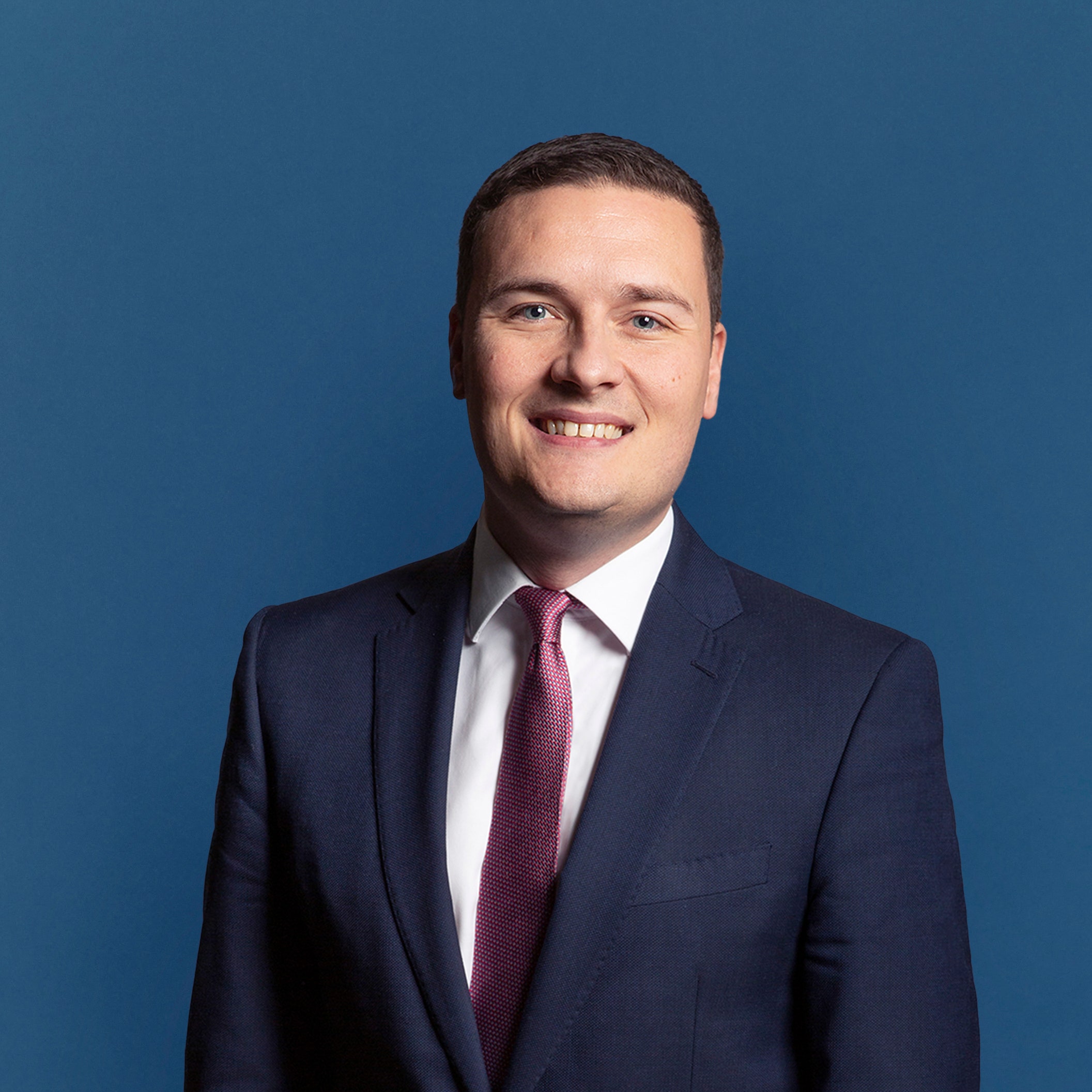
Image may contain Wes Streeting Blazer Clothing Coat Jacket Formal Wear Suit Face Head Person and Photography

PHOTOGRAPH: UK PARLIAMENT

In December last year, the UK’s shadow health secretary, Wes Streeting, visited Singapore General Hospital, regarded as one of the best in the world. What he witnessed there surprised him: “Patients arrive having already registered their appointments via an app. They check in on touchscreen kiosks awaiting them at reception. Tablets at their bedside allow them to read about their treatment or call for assistance,” Streeting says. “This is Space Age stuff compared with where the NHS is today.” Streeting characterizes the National Health Service as an “analog system in a digital age.”

“When I visit a hospital, doctors often take out their pagers to show me what they are forced to work with,” Streeting says. According to estimates, 13.5 million hours of GPs’ time is wasted every year due to inadequate IT. Fixing that would be the equivalent of hiring 8,000 new NHS doctors. “For the past 14 years, modernization of the NHS has been put on the back burner by a Conservative government which opts for sticking plasters instead of the major surgery that’s required,” says Streeting, who added that he fears that five more years of Tory mismanagement could mean the NHS ends up like the failed British retailer Woolworths—“a much-loved national institution which failed to change with the times and was left behind.”

Central to Streeting’s plan to fix the NHS is the NHS app, which has been downloaded by 31 million people in England and Wales. “It has the potential to transform how the NHS interacts with patients and promote better public health,” he says. He points out that, for instance, only one in every 200 GP appointments are currently made via the app. “In too many cases, patients still wait on the phone at 8 am, or even queue up in person in the cold on a frosty morning just to see a doctor.”

WIRED asked voters in the UK general election if they’re able to spot misinformation and disinformation from their representatives.

The NHS app could not only allow appointments to be made, but also let patients receive notifications about vaccine campaigns, health tests, cancer screening, and even upcoming clinical trials. “Clinical trials can use genomics to identify patients who will benefit from the latest treatments, but they struggle to recruit—not for a lack of people willing to take part, but because they can’t access basic data,” he said. He promised that Labour would clamp down on bureaucracy and allow clinical trials to recruit volunteers via the app. “During the pandemic, half a million people signed up to the vaccine trials registry,” he says. “If we can do it to defeat Covid, we can do it to cure cancer.”

At the core of Labour’s plan is patient data. Recently, the NHS has announced the launch of a federated data platform that would centralize hospital data, but would not include general practice or social care data. “The NHS has struck gold here, yet it’s leaving it in the ground,” Streeting says. “General practice data is key to unlocking better population health outcomes.”

Streeting promises that a Labour government would ensure a transparent process about what aspects of patient data would be shared and with whom, as well as the necessary safeguards to ensure patient confidentiality. As for those who oppose it on the grounds of privacy concerns, he has a simple message: “It’s a fight that a Labour government is willing to have,” he says. “While the tinfoil hat brigade takes to TikTok to urge followers to opt out of sharing their data with the NHS—the irony isn’t lost on me—the government refuses to take on their fear mongering.”

He recalled when, last January, he met the parents of a 2-year-old boy at Alder Hey Children’s Hospital in Liverpool. “They have been through hell,” he says. “In his short life, he has already had five operations on his heart.” When he asked them what their main frustration had been, however, the answer surprised him: technology. “Their local GP couldn’t access the notes from Alder Hey and the hospital couldn’t read the records held by their GP. It meant that on every appointment they had to repeat themselves again and again. The health service should be lessening their worry, not adding to their stress.”

This article appears in the July/August 2024 issue of WIRED UK magazine.

You Might Also Like …

TopicssciencehealthAppsUKWired UKpublic healthpoliticsWIRED Health

Posted in Uncategorized | Tagged , , , , | Leave a comment

The Guardian. France’s ‘hard left’ has been demonised – but its agenda is realistic, not radical (Julia Cagé and Thomas Piketty)

OpinionFrance

France’s ‘hard left’ has been demonised – but its agenda is realistic, not radical

Julia Cagé and Thomas Piketty

The New Popular Front will improve ordinary people’s lives – and it’s an effective, economically sound alternative to the far right

Wed 3 Jul 2024 08.00 CEST

Last modified on Wed 3 Jul 2024 11.17 CEST

The first round of legislative elections in France produced an unprecedented surge of support for the far right. Next Sunday, 7 July, the National Rally (RN) and its allies could potentially make it to power. Not just with a relative majority, but – and there is a significant probability of this – with an outright one.

Some may argue that the far right is here and we should simply get used to it. Far-right parties have won elections in recent years in other European countries, including Italy and the Netherlands. But we cannot get used to it. A far-right victory represents a major threat to our basic social contract and our liberties. We face the implementation of policies that discriminate against foreigners, migrants, women, minorities and more. Because it has no credible economic platform, the far right will revert to the only thing it knows – the exacerbation of tensions and the politics of hate.

What is the alternative? The left alliance, the New Popular Front (NFP), is France’s best chance.

This alliance takes its inspiration from the Popular Front – which in 1936 emerged under the threat of fascism to govern France. This leftwing coalition of socialists and communists represented a real change for the working classes, with policies such as the introduction of a two-week paid vacation and a law limiting the working week to 40 hours. Such social change was made possible by electoral victory, but also by the demands of civil society and by pressure from the trade unions, which organised a wave of factory occupations. There was a clear sociopolitical competition between working people and the ruling classes that led to a political conflict between the left and right.

The NFP is following a similar path today, with ambitious policies to improve the purchasing power of poor and lower-middle-class people. These reforms include a substantial increase in the minimum wage, wages indexed to prices and free school lunches. Most importantly the NFP wants to prioritise investment in the future by increasing public spending on infrastructure – throughout the country, including in isolated rural areas – as well as in health, education and research. This is the only coherent way to plan for the future and to increase labour productivity, which under Macron has declined by 5% since 2019.

The detailed NFP economic manifesto was launched last month with full costings. Because – and this is new – the NFP’s plans are balanced from a budgetary viewpoint: investment in future growth and productivity as well as in energy and climate transition could be made affordable through progressive wealth taxation, the introduction of an exit tax, effective taxation of multinational firms and a long-awaited fight against social, fiscal and environmental dumping. This programme would also give workers more power within the companies that employ them by improving corporate governance (for example, reserving a third of seats on company boards for employees’ representatives, following similar provisions that have existed for decades in Nordic countries and Germany).

These plans are the complete opposite of the path pursued by Emmanuel Macron since 2017. His agenda has exacerbated both income and wealth inequality, while there has been no change in investment, job creation or growth. To counter support for the far right, Macron’s strategy was to seek support from both the centre right and centre left. In practice, this came to look more and more like a coalition of well-off voters, and as the recent elections have shown, you cannot sustainably govern a country with such a narrow electoral base.

Some now seek to scare leftwing and centre-left voters by claiming that the NFP’s programme for government would be dangerous for the French economy. They are wrong. We are not claiming that this manifesto is perfect – how could it be given that Macron only allowed three weeks to organise for elections? But in historical context, it should be considered a pragmatic, social democratic set of proposals aimed at reducing inequalities and preparing for the future. There is nothing radical in this agenda.

Perhaps more importantly, this programme will allow the left to look towards winning back votes in rural areas and smaller cities where people have gradually turned to the far right.

Last Sunday, the RN won a 1.6 times higher vote share in small and medium-sized cities (50,000 inhabitants or less) than in large urban centres (with populations of above 250,000). The reverse holds for the left. We digitised all commune-level results for legislative elections since 1848, and we have not seen such a large geographical gap in voting patterns since the late 19th century and early 20th century.

In cities with populations of between 20,000 and 30,000 such as Hénin-Beaumont, a former coalmining town in the north-east, and Marine Le Pen’s constituency, the RN scores 60% of the vote. Even in more populous cities such as Cambrai, in a region that has suffered big manufacturing shutdowns in recent decades and is relatively poorly served by infrastructure such as hospitals, universities and public transport links, Le Pen’s party is achieving scores above 40%.

Posted in Uncategorized | Tagged , , , , | Leave a comment

Prospects for the World Economy in the Polycrisis with Martin Wolf

Posted in Uncategorized | Leave a comment