Source: Think Global Health: Mental Health Care in Rwanda: Three Decades of Resilience

Go to homepage

Governance

Mental Health Care in Rwanda: Three Decades of Resilience

Insights into Rwanda’s strategies and successes in building mental health services after genocide

Participants hold a candlelight night vigil during a commemoration event, as Rwanda marks the 30th anniversary of the 1994 Genocide, in Kigali, Rwanda, on April 7, 2024.

Participants hold a candlelight night vigil during a commemoration event, as Rwanda marks the 30th anniversary of the 1994 Genocide, in Kigali, Rwanda, on April 7, 2024. REUTERS/Jean Bizimana

by Sam Muhanguzi July 8, 2024

The 1994 genocide against the Tutsi in Rwanda killed more than 1 million people in just 100 days and decimated the country’s infrastructure, including its health system. More than 94% of the survivors in Rwanda witnessed the murder of a family member or demolition of their property. Decades later, many still struggle to cope with their memories of war and suffer from mental health disorders. The most prevalent mental disorders are posttraumatic stress disorder (PTSD), depression, and panic disorder.

Adult survivors are not the only ones enduring the long-lasting effects of the genocide; the symptoms of PTSD also manifest in many of the survivors’ children through epigenetics, chemical modifications to the DNA code often influenced by the environment or stress. Despite that adversity, Rwanda has demonstrated remarkable resilience in rebuilding its economy and health system, particularly in addressing its mental health crisis. Its success in overcoming the collective trauma caused by the genocide can be attributed to a variety of factors, including the government’s pursuit of strategic partnerships and innovative solutions to navigating mental health care. 

Community-Based Sociotherapy  

To navigate the aftermath of the genocide, the ministry of health (MoH) and partners launched Mvura Nkuvure, a community-based sociotherapy (CBS) model whose name translates to “Heal me, I heal you,” to facilitate healing and peacebuilding for survivors. Since its adoption, participants have reported an increased sense of redress, social cohesiveness, and decreased conflicts between survivors and perpetrators. Results from studies on CBS’s impact indicate that the model had positive effects on participants’ mental health and overall well-being. This is also justified by the gradual drop in crude suicide mortality in Rwanda since the launch of CBS.  

That process was locally known as ibihano nsimbura gifungo, meaning punishments in substitute for incarceration. It also incentivized more perpetrators to confess in exchange for parole. The Gacaca courts helped process trials that would have otherwise taken more than 100 years to see through. As a result, more than 1.2 million cases were tried in more than 12,000 Gacaca courts.  

Universal Health Coverage 

By 2000, Rwanda had achieved substantial progress in restoring peace and stability within its borders, enabling the government to invest in projects that raised the quality of life among its citizens. One of the major achievements was the community-based health insurance scheme, Mutuelle de Santé, which provides universal health coverage (UHC) for conditions, including mental health, for just $2 per person per year.  Since Mutuelle de Santé was fully implemented in 2006, the country’s overall life expectancy at birth has risen from 56 to 70. 

Challenges Beyond the Triumphs 

Despite investments in mental health, challenges in use of the services persist. One study from 2022 demonstrates that uptake for mental health care remains low (5.3%) despite the rise in the awareness of mental health services (61.7%). Although awareness is a crucial first step in the mental health-care cycle, it is not enough to incentivize uptake of health services. Data shows that many Rwandans forgo treatment because they have a limited understanding of mental health, a lack of money, and no transportation. 

Despite investments in mental health, challenges in use of the services persist

Although scaling up the integration of mental health into primary care has the potential to address the issue of limited resources, overcoming cultural barriers and fallacies around mental health care of might require a different strategy altogether. Policymakers and implementers should consider enacting a classroom-based mental health curriculum and integrating it into the existing academic systems as a sustainable way to increase mental health literacy for students. As part of the implementation, teachers across primary and secondary should be provided with training, mentorship, audit, and feedback as well as supervision. Evidence from Tanzania and Canada shows that school-based mental health literacy interventions effectively improve mental health awareness and reduce stigma. In both Tanzania and Canada, this intervention has proven to promote mental health, decrease stigma, and enhance self-care practices among participants.

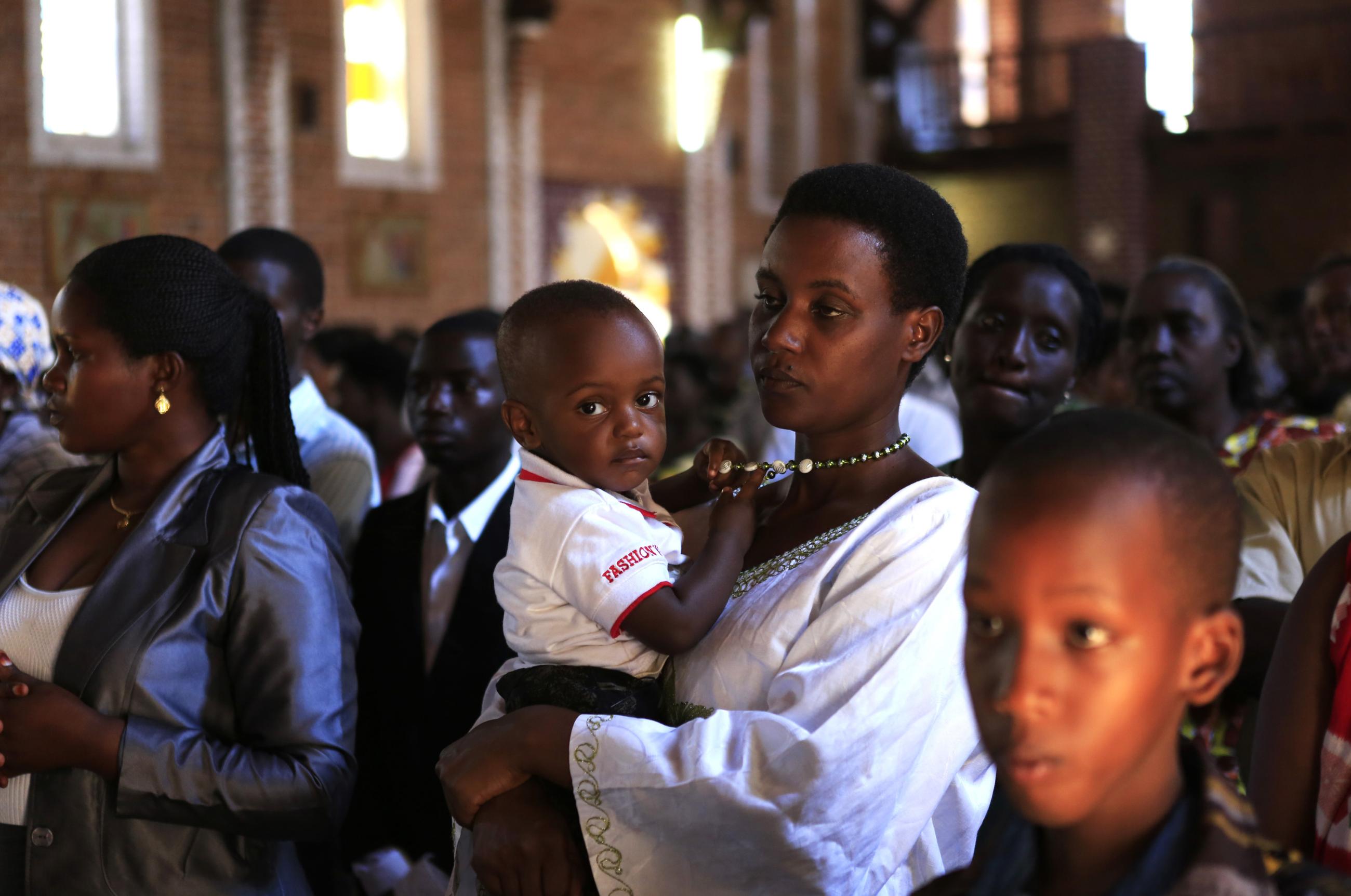
A woman holds her baby during a church service ahead of the commemoration of the 20th anniversary of the genocide.

Sam Muhanguzi is a Global Health scholar at Harvard Medical School, specializing in biosocial research, program design, and management. 

Posted in Uncategorized | Tagged , , , , | Leave a comment

Harvard Business School: Working Knowledge. Chance Encounters: What’s at Stake in Return-to-Office Decisions. “What’s the role of the office in an increasingly virtual world?” —- “How can organizations spark collaboration among people who prefer to isolate? Andy Wu and Maria Roche discuss the value of bringing people together—and why that’s still so hard to do.

Business Research for Business Leaders

Research & Ideas

Chance Encounters: What’s at Stake in Return-to-Office Decisions

09 Jul 2024| by Jen McFarland Flint, HBS Alumni Bulletin

What’s the role of the office in an increasingly virtual world? How can organizations spark collaboration among people who prefer to isolate? Andy Wu and Maria Roche discuss the value of bringing people together—and why that’s still so hard to do.

Late one day in the fall of 2021, as she was packing up to head home, Assistant Professor Maria Roche bumped into Andy Wu, a colleague in the Strategy Unit whose office is next to hers. Roche asked how his research was going, and in the conversation that followed the pair quickly realized the extent to which their work overlapped. If they could combine findings from across their assorted research projects, they could fit together a big-picture view of office-space configurations and how well they support different kinds of organizations.

That hallway encounter evolved into a Harvard Business Review article, “What’s the Optimal Workplace for Your Organization?” The article itself, with its two-by-two matrix of strategic space configurations, is an illustration of the value of face time. “This project would very much not exist were we not literally next door to each other,” says Wu, an associate professor.

In the following conversation with the Harvard Business School Alumni Bulletin, Roche and Wu talk about the contest between physical proximity and virtual connection, and the increasing human tendency to isolate oneself.

Alumni Bulletin: You write that this moment represents a rare opportunity to reimagine the workplace. What does the landscape look like now, and how strategic is the decision-making around office space?

Maria Roche: I think there was a lot more experimentation earlier, in terms of letting people be at home, but now you can see more large establishments requiring folks to come back. I’ve been talking to the largest technology firms about this: They’ve created task forces to think about how they want to bring people back to the office, when, and why. Based on my own research, especially in knowledge work, I’m not surprised that organizations are realizing they need workers to be physically present, in person, at least several days a week and that they need to coordinate the timing of this so they have shared time to work with each other.

Andy Wu: Broadly, we’ve seen a lot of transformation in how we think about the workplace over the last few years, but there continues to be a wasted opportunity to think about workplace design more strategically. I see executives fall into two patterns: The first is the older generation of executives who are demanding to go back in-person—Wall Street falls into this category. They’re trying to go back to what they know well; but I am not certain that they’ve really considered the alternatives and what workplace would fit into their broader strategy. And then you have other companies and executives that went remote during the pandemic and are still scared to ask their employees to come back to the office. They don’t want to fight with their employees and risk losing people. They will end up being remote or hybrid as a consequence of that tension but, again, that is often not a strategic decision in terms of what is best for the company.

Alumni Bulletin: What about that tension, when what works best for employees is different from what delivers the most value for the business?

Roche: Microsoft conducted an internal survey where they asked employees how they felt about working remotely and how productive they were. It was striking to see that people thought they were much more productive at home. But they also used real numbers to measure productivity and saw the exact opposite in the non-subjective evaluations, so there was a disconnect between what was perceived to be going on by employees vs. what the actual numbers were saying. Some of this also comes from definitions. What is being productive? When you’re at home, you might have a list of things to do, and you can check everything off and feel like you accomplished a lot. But for knowledge workers, productivity is often about new ideas, new products, new services, or even just improvements in the ways things have been done. It’s hard to quantify that, at least for the individual employee.

Wu: For the companies that have been remote in the pandemic, it’s also a very, very difficult conversation to have with the employees, to even consider the possibility of an in-person working environment. I think there’s a deep fear that employees will protest or leave if they tried to do that. And a lot of companies were able to hire from a broad geographic scope that they wouldn’t have otherwise done outside of the pandemic. What do you even do about people who are in distant cities, if you want to be in person? These are all constraints and fears that prevent executives from taking a big-picture, strategic view.

Alumni Bulletin: There are some strong generational differences at play, with younger generations prioritizing flexibility over almost anything else. How do those trade-offs factor into the decision-making?

Wu: As we look broadly at Gen Z and the younger generations entering the workforce in the coming years and decade, they prioritize the ability to work from home and the flexibility to be with their families. I don’t want to discount all the benefits they get out of that arrangement. That said, my main skepticism of that preference comes from other research I’ve done on the metaverse, a vision for a 3D internet, and other digital technologies that allow people to isolate themselves in a digital environment. There are some real concerns we’ll have to reckon with, as a society, if we end up in a world where people spend both their social and their professional lives by themselves, at home on their computers or mobile devices. We’re losing aspects of our culture as a consequence of not being together.

To use the analogy of a DJ concert: There are big concerts where DJs perform and—I used to be a DJ, so I’ll admit this fully—the DJ is mostly just clicking a bunch of buttons. The audience has no real way of knowing what the DJ is doing because the music is all pre-recorded. But what they are doing is bringing together thousands of people and allowing them to have a shared experience. We can translate that analogy to the workplace: Some of what happens at work may just be the equivalent of clicking buttons on pre-recorded songs, but more important is the fact that you’re bringing people together.

Roche: And proximity breeds trust. Especially in a decision-making context, having that trust—and having a shared understanding of how to make these decisions—is really critical.

Alumni Bulletin: What other research are you doing to better understand virtual and physical spaces?

Roche: Besides analyzing how very short distances—here, I really mean short distances of 20 meters—can impact technology-adoption decisions, I’ve been examining how the virtual space can substitute for the physical space, by looking at tech adoption at Stack Overflow, which is like a Q&A website for coders. It’s been surprising to see that coders will adopt a new technology only if they’re actually close to other coders physically. Even though you have this virtual place where you can ask questions, there’s still something about the physical going on.

Other contexts that I’ve been looking at are really established, super high-tech companies. One of them makes the optical solutions that go into the most sophisticated big-chip printers. They have a huge campus, like a university. They told me that it’s becoming more and more important to be physically close because they’re afraid of knowledge leakage. If you know everyone, and that’s the only way you share your information, then you can better protect your work.

Wu: One of the things I find striking about the metaverse is how compelling the metaverse narrative is over the real world. The more I research it, the more convinced I am that, at an individual level, we will choose a 3D-internet world over the physical world, particularly in any instance where there’s a minor inconvenience to being in person—whether that’s a fear of social interaction or perhaps having to drive more than 30 minutes. That is a huge barrier to in-person interaction, and people will almost always pick the virtual over the in-person option if they have a choice. That is a general secular trend some companies will have to fight against for their success. I used to believe that people have a strong preference for being together, but I increasingly feel like our base core tendency, actually, is to isolate ourselves. It’s funny because Maria is literally on the other side of this wall, and I could have gone to her office to take this meeting but I decided to stay at my desk.

Roche: I wish we were able to do these studies and get them out faster, because managers need to make these choices right now, and if we miss this opportunity, we’ll go back to our paths-already-taken approach.

This article originally appeared in the Harvard Business School Alumni Bulletin.

Image by HBSWK using an image from AdobeStock/Bluraz

Posted in Uncategorized | Tagged , , , , | Leave a comment

O’Donnellan Blake-Forster (1886-1938) and his wife Julia, outside Ballykeale House, 1934

Extract from Facebook: The Vintage Lens – Looking at Times Past in Co. Clare. August 22, 2020

My granduncle Donny, my grandmother Marcella’s brother and his wife, Julia, who was always a great pleasure to meet. They had one daughter, Anne Blake-Forster who married Fachnta Mellet and as far as I am aware there are three children.

This is interesting for family history. Recently I decided to add my DNA to 23andMe. I found that I had 1500+ cousins (includes 4th) and I only recognised one name and his grandmother was my aunt Marcy whose mother was Marcella Comyn, nee Blake-Forster. Frances*, would also be a sister of Uncle Donnys.

“O’Donnellan Blake-Forster (1886-1938) and his wife Julia, nee Conole (1903-1998), outside their house, Ballykeale House, Kilfenora in the mid 1930’s. They had married in 1934. Julia was a nurse and had worked in America. Her parents were Michael and Bridget nee (Lawlor) Conole and they were shopkeepers in Kilfenora.

O’Donnellan was one of the first to join the IRA in North Clare and Ballykeale House was at the disposal of the IRA during the War of Independence. When he died in 1938 members of the North Clare Brigade attended his funeral. His parents were Captain Francis Donnellan Blake-Forster (1852-1912) of Castle Forster and Marcella nee Johnston (1852-1917) from Doolin. They married in 1879. Captain Francis was High Sheriff of Galway in 1878. One of their other children, Frances Rose Blake-Forster* (1890-1971) married Arthur Matthew Kelly (1891-1968) from Porte House, Ruan, in 1918. This photo is courtesy of the Kelly’s great granddaughter, Helen O’Halloran.

Ballykeale House (photo in comments) was built by George Lysaght c. 1800. It replaced an earlier house called Ballykeale Court. Other surnames connected to the house were McDonagh, Comerford and Fitzgerald. Daniel O’Connell and Eamon de Valera were two of its many guests.

Family lore – it may be true or it may not. My grandfather Michael Comyn KC was electioneering and met my grandmother Marcella at Ballykeale. They married in 1924. There were two daughters, Marcella and Rose Comyn.

For more about the family connected to Ballykeale

Google: canisgallicus.com

O’Donnellan ffrench Blake-Forster (The Sept)

Comyn

macnamara

Posted in Uncategorized | Tagged , , , , | Leave a comment

Nature. Near Kariba dam, a mother baboon’s baby had died. The keening, the affection, the sadness gave me an awareness of our similarities to animals. Today, we are told about the dead elephants in Dublin Zoo. The matriarch and others are grieving. They are given time to touch the dead elephant and mourn them, with recognition. Here is a remarkable video which explains mourning among a troop of Langur monkeys. Empathy and emotional intelligence comes to mind.

Posted in Uncategorized | Leave a comment

Gene Drives Shown to Work in Wild Plants. They Could Wipe Out Weeds. Singularity Hub – Shelly Fan

Gene Drives Shown to Work in Wild Plants. They Could Wipe Out Weeds.

By Shelly Fan

July 8, 2024

Henry Grabar has had enough battling knotweed. All he wanted was to build a small garden in Brooklyn—a bit of peace amid the cacophony of city life. But a plant with beet-red leaves soon took over his nascent garden. The fastest growing plant he’d ever seen, it could sprout up to 10 feet high and grow thick as a cornfield. Even with herbicide, it was nearly impossible to kill.

Invasive plant species and weeds don’t just ruin backyard gardens. Weeds decrease crop yields at an average annual cost of $33 billion, and control measures can rack up $6 billion more. Herbicides are a defense, but they have their own baggage. Weeds rapidly build resistance against the chemicals, and the resulting produce can be a hard sell for many consumers.

Weeds often seem to have the upper hand. Can we take it away?

Two recent studies say yes. Using a technology called a synthetic gene drive, the teams spliced genetic snippets into a mustard plant popular in lab studies. Previously validated in fruit flies, mosquitoes, and mice, gene drives break the rules of inheritance, allowing “selfish” genes to rapidly spread across entire species.

But making gene drives work in plants has been a headache, in part due to the way they repair their DNA. The new studies found a clever workaround, leading to roughly 99 percent propagation of a synthetic genetic payload to subsequent generations, in contrast to nature’s 50 percent. Computer models suggest the gene drives could spread throughout an entire population of the plant in roughly 10 to 30 generations.

Overriding natural evolution, gene drives could add genes that make weeds more vulnerable to herbicides or reduce their pollination and numbers. Beneficial genes can also spread across crops—essentially fast-tracking the practice of cross-breeding for desirable traits.

“Imagine a future where yield-robbing agricultural weeds or biodiversity threatening invasive plants could be kept on a genetic leash,” wrote Paul Neve at the University of Copenhagen and Luke Barrett at CSIRO Agriculture and Food in Australia, who were not involved in the study.

50/50

Inheritance is a coin toss for most species. Half of an offspring’s genetic material comes from each parent.

Gene drives torpedo this inheritance rule. Developed roughly a decade ago, the technology relies on CRISPR—the gene editing tool—to spread a new gene throughout a population, beating the 50/50 odds. In insects and mammals, a gene can propagate at roughly 80 percent, shuttling an inherited trait down generations and irreversibly changing an entire species.

While this may seem somewhat nefarious, gene drives are designed for good. A main use under investigation is to control disease-carrying mosquitoes by genetically modifying males to be sterile. Upon release, they outcompete their natural counterparts, reducing wild mosquito numbers, and in turn, lowering the risk of multiple diseases. In indoor cages, gene drives have fully suppressed a population of the insects within a year. Small-scale field tests are underway.

Gene drives have caught the eyes of plant scientists too, but initial efforts in plants failed.

The technology relies on CRISPR, which cuts DNA to insert, delete, or swap out genetic letters. Sensing damage to their DNA, cells activate internal molecular “repairmen” to stitch genes back together and adopt gene drives and their genetic cargo.

Plants are different. Their cells also have a DNA repair mechanism, but it’s only partially similar to that of insects or mice. Sticking a classic gene drive into plants can cause genetic mutations at the target site and even trigger resistance against the gene drive in a kind of a cellular civil war.

What Doesn’t Kill You Makes You Stronger

As a workaround, both new studies used a system dubbed “toxin-antidote.” Compared to previous gene drives, it doesn’t rely on canonical DNA repair.

The teams used a self-pollinating mustard plant for their studies. A darling in plant science research, its genome is well-known, and because the plant self-pollinates, it’s easier to contain the experiment. To build the gene drive, they developed a CRISPR-based method to destroy a gene that’s critical for survival called the “torpedo.” Any pollen without the gene can’t live on. A second construct, the “antidote,” carried a mimic of the same gene, but with modifications so that it’s resistant to destruction by CRISPR.

They examined two different genetic payloads. One study tinkered with a gene that’s essential to both male and female reproductive cells in plants. The other targeted a gene that disrupts pollen production.

Here’s the clever part: As the plant pollinates, offspring can inherit either the toxin, the antidote, or both. Only those with the antidote survive—plants that inherit the toxin rapidly die out. As a result, the system worked as a gene drive, with plants carrying the CRISPR-resistant gene taking over the population. The gene drives were highly efficient, passing down through generations roughly 99 percent of the time. And scientists didn’t see any signs of evolutionary adaptation—known as resistance—against the new genetic makeup.

Computer modeling showed the gene drive could overtake a single plant species in 10 to 30 generations. That’s impressive, according Neve and Barrett. Artificial genetic changes don’t often stick in wild plants—the plants tend to die off. The new gene drives suggest they could potentially last longer in the field, battling invasive species or cultivating hardier and pest-resistant crops that pass down beneficial traits over generations.

Despite their promise, gene drives remain controversial because of their potential to alter entire species. Scientists are still debating the ecological impacts. There’s also the concern that gene drives may hop over to unintended targets. For now, studies have designed genetic “brakes” to keep gene drives in check. Most studies are done in carefully controlled lab settings, and for malaria, potential unexpected consequences are being rigorously discussed before releasing gene drive-carrying mosquitos into the wild.

Even if the science works, the road to regulatory and societal approval may face roadblocks. Selling farmers on the technology may be difficult. And CRISPRed plants as a food source could also be tainted by the negative perception of genetically modified organisms (GMOs).

For now, the teams are looking towards a more acceptable everyday use—killing weeds. There are still a few kinks to work out. Gene drives only work when they can spread, so an ideal use is in plants that pollinate others, rather than those that self-pollinate, such as those in the studies. Still, the results are a proof of concept that the powerful technology can work in plants—though it may be awhile yet before it helps Henry with his knotweed problem.

Image Credit: Anthony Wade / Unsplash

Share

FacebookTwitterReddItEmailCopy URL

Shelly Fanhttps://neurofantastic.com/

Shelly Xuelai Fan is a neuroscientist-turned-science writer. She completed her PhD in neuroscience at the University of British Columbia, where she developed novel treatments for neurodegeneration. While studying biological brains, she became fascinated with AI and all things biotech. Following graduation, she moved to UCSF to study blood-based factors that rejuvenate aged brains. She is the co-founder of Vantastic Media, a media venture that explores science stories through text and video, and runs the award-winning blog NeuroFantastic.com. Her first book, “Will AI Replace Us?” (Thames & Hudson) was published in 2019.

Posted in Uncategorized | Tagged , , , , | Leave a comment

Sr Maura O’Donohue, RIP. Sexual abuse must at all times be called out for what it is, does, and the fact it goes beyond age boundaries too ie young to very old, especially now in the era of internet, iPhones, computers – advanced tech which soon will be enhanced further (child images) by artificial intelligence. The article below is by Edward Augustyn (Translated from Polish Catholic Weekly)

The perfect victim

Inspirations

By Edward Augustyn

(Translated from Polish Catholic Weekly)

Read in German

Read in Polish


Sexual abuse of nuns by priests is still a taboo in the Church. Although there are many indications that the scale of the problem is significant.

This article has been translated by deepl from Polish to English. It originally apeared in Tygodnik Powszechny, 4/2021.

The helpline for victims of abuse in the Church has already rung 300 times. Many calls concern “harms suffered in childhood and early youth“ says Katarzyna Sroczyńska, assistant of the abuse survivors in the Initiative “Hurt in the Church”. In 2019, the Initiative launched psychological support for victims. But there were also several dozen of people who were abused as adults, including seven calls regarding the situation of nuns or religious.

Among them were nuns of all ages, their stories related to recent events or those from many years ago. Sometimes they meet the perpetrator again years later and have to work with him. “I cannot give details,” Katarzyna explains. “The phone call is anonymous, we do not collect any information from the people who call. We know only as much as they want to tell us.”

Sexual manipulation

The problem has been known for years. In 1994, Sr. Maura O’Donohue, a physician, submitted a report to the Vatican on the sexual abuse of nuns by priests. In March 2001, it was revealed by the American weekly National Catholic Reporter. It turned out that there were more such reports. A Vatican spokesman admitted that the allegations were confirmed to be true in the case of 23 countries. John Paul II apologized for the sin of “sexual abuse by priests, which brought great suffering and spiritual harm to the victims” (Exhortation “Ecclesia in Oceania” of November 2001). Shortly thereafter, a high-profile pedophile scandal broke, exposed by The Boston Globe newspaper, and child abuse became a major topic in the media for many years. Few people talked about the abused nuns.

In January 2019, the monthly magazine Donne Chiesa Mondo, a supplement to the Vatican’s L’Osservatore Romano, returned to the topic. After a few days, the pope, answering questions from journalists on the plane, admitted that the problem exists. He added that his predecessor had even abolished a female congregation whose members were “sex slaves” to priests. It seems that Francis combined two stories: the French community liquidated by Benedict XVI for disobedience (it was sexual abuse by its founder) and the nuns raped by priests in Africa during the AIDS epidemic (priests considered only sex with nuns safe). The term “sex slaves” was quickly withdrawn from the official version of the papal statement – a Vatican spokesman explained that Francis meant “manipulation, that is, a form of abuse of power that also manifests itself in sexual abuse.”

A quiet voice

Lucetta Scaraffia, former editor-in-chief of the monthly magazine Donne Chiesa Mondo, tells me that her relationship with the Vatican ended two months after that publication. “Our monthly magazine was created to give a voice to women, including nuns, who are not usually heard in the Church. This was not liked. The new director wanted to interfere with the topics and composition of the editorial board. The team resigned.”

Talking about sexual abuse of nuns is still a taboo subject. So far, the only nun in Poland who has dared to speak about it publicly was Sr. Jolanta Olech, an Ursuline nun and secretary of the Conference of Major Superiors of Women Religious Congregations. Commenting on Francis’ statement, she said: “The problem of sexual abuse of nuns by priests also exists in Poland and has for a very long time. I have been in a convent for 50 years. I was the Superior General for 12 years. I had to deal with several cases.”

Many people resented her for this. Today she does not want to talk about it. She touched a painful and shamefully hidden wound.

The scale of evil

Sr. Olech admitted that she does not know the scale of the phenomenon in Poland because no one researched it. The questionnaire, which after the Pope’s famous statement was sent to religious orders by the Congregation for Institutes of Consecrated Life and Societies of Apostolic Life together with the International Union of Superiors General, never reached Poland.

Three psychologists from Saint Louis University (J. Chibnall, A. Wolf, and P. Duckro) selected a representative research sample of 2,500 sisters, of whom almost half (1,166) agreed to fill out a 15-page questionnaire. One-third of them had experienced sexual abuse within the order. Most of them (81%) suffered verbal or physical abuse (kissing, hugging, touching), but also (19%) abuse in the literal sense (touching genitals, intercourse, rape). The perpetrators of the most serious abuse were priests (49.3 percent), nuns (24.6 percent) and lay people (19.2 percent). The answer was not given by 6.9 percent of respondents.

Father Jacek Prusak, a Jesuit priest and psychotherapist, is convinced that in Poland this phenomenon is on a larger scale than one can think on the basis of a few phone calls or even studies from other countries. “There are always more victims than official numbers. This is a rule in research over sexual abuse,” he explains. “Besides, there are still more clergymen and nuns in our country than in many countries combined, so these cases cannot be fewer. This is what the statistics say.”

A crime, not a weakness

Lucetta Scaraffia thinks the same way. Sexual violence is much more widespread than we think. It occurs not only in Africa or Asian countries, but also in Italy, Germany, USA, Ireland, France. Why shouldn’t it be in Poland?

She sees power and money as the main causes of this situation. “Priests can use nuns because they feel unpunished. They have power over them, and they are economically dependent on them.” She does not believe that the Church dominated by men will solve this problem by itself. “We need to help the sisters. The most effective way is to report crimes to the state authorities – the police and the prosecutor’s office. We need to create institutions that offer legal advice and psychological support. But above all, the nuns’ complaints should be listened to and taken seriously. So far the only help comes from the media, which make it impossible to silence some cases.”

She cautions that individual cases should not be trivialized or downplayed. “Many people too easily recognize that these are matters between two adults, that they happen by mutual consent, so no one should care. In short, that it’s about falling in love and breaking a vow of chastity. People really don’t know what life is like for nuns. They don’t know that they are in a different world, subservient to the power of priests, vulnerable to manipulation and exploitation on every level. So this isn’t about breaking chastity, it’s about coercion. That is, rape.”

Sacrifice yourself

Marta Abramowicz, author of the book “Nuns Leave Quietly,” interviewed several hundred current and former nuns. Thanks to this she managed to describe life in the convent far from the colorful brochures distributed during vocational retreats. We see that already at the formation stage the young sister is being prepared for the role of sacrifice – in every sense of the word. “Always take your place politely and do what is asked of you,” is one of the rules of the “Nun’s Savoir-Vivre Manual.”

“I’ve learned from the heroines of my book that the formation of nuns not only doesn’t focus on maturity but also keeps them immature”, says the author. “There are exceptions but from the information I have gathered from at least half of the congregations it seems that nuns are taught submission and blind obedience while they are deprived of self-determination and thinking. This is why they have very limited ability to defend themselves against an aggressor, especially if he is a priest. Besides, there is a problem with that in the whole society. Women do not know how to defend themselves against harassment or rape, especially from a close friend or acquaintance. This is how they are brought up.”

Abramowicz adds, “During their formation no one talks to nuns about sexuality, about how to deal with it while living in chastity. Even less are they told what to do in the case of violence. I have heard of only one case where a superior spoke to the sisters about these topics. But since there is so little talk about them in school or in families, it is hard to expect religious orders to be in the vanguard.”

Big priest, little nun

Sexual abuse was not the subject of Abramowicz’s book, but the author encountered the problem. “Two situations I know firsthand, from people who have experienced it. The first concerned a small nunnery located next to a large men’s convent. A former nun told me that she and other sisters had experienced sexual abuse. This was happening in the 1990s, and even if these priests did not go as far as physical violence, we are dealing with rape, because these contacts were not voluntary. The second story comes from a convent where young sisters were sent to the room of a priest, a retired professor, a friend of the pope. They were supposed to bring meals for him. They were afraid to go there because of his sticky hands. And even though they reported the problem, the superior continued to send them there, and even said they should be grateful to have contact with such a great man.”

The abused nuns rarely seek help outside [of their convent]. Perhaps they don’t even know where to find it. They have no one to complain to. Marta Abramowicz does not believe that any of them could go to the prosecutor’s office. This is not the way to solve problems in the Church. First everything is settled with the superior and then with the provincial or general mother. And they can always decide that a nun she herself is to blame for what happened. All that is left is to ask to be transferred to another religious house to be far away from the rapist.

One of the first people informed about the problem is the confessor. Sometimes a nun molested by a priest is advised in the confessional to rethink her involvement in the whole incident. The author of the book doubts that anyone would ever get around to complaining to the state authorities. Even former nuns. Such situations are accompanied by a wall of silence. Unbreakable. Simply: a great shame.

The most famous case so far of seeking justice in the court of public opinion is the case of the former superior of the Missionary Sisters of Jesus, who in 2018 accused the Bishop of Jalandhar Franco Mulakkal of rape. This was made possible by her family and several nuns supporting her, publicly demanding that the perpetrator be punished. The bishop has been suspended by the Vatican but has pleaded not guilty. He is out of custody on bail and the trial is still ongoing.

The dynamics of seduction

Sr. Mary Lembo of Togo is the first nun to write a doctorate on the sexual abuse of nuns. She defended it last year at the Department of Psychology of the Pontifical Gregorian University in Rome. She discussed nine cases of sexual abuse of nuns and candidates for religious orders by priests (rape, attempted rape, inducing intercourse, molestation). She began her analysis with the simplest question: how is this possible? She described the seduction process and the “dynamics of the relationship.” It starts with lulling the victim’s vigilance, establishing closer relations with family or superiors (“drawing them into the seduction process”), then comes the stage of convincing the victim of her uniqueness and the special character of the relationship, accompanied by a process of distorting the meaning of words and concepts from ethics and spiritual life in order to convince the victim to behave in a certain way. Economic dependency is also common.

The psychologist describes the damage suffered by victims: physical (pain, pregnancy, abortion), psychological (post-traumatic stress disorder, depression, suicidal thoughts, disgust with their own bodies, doubt in their chosen life path, lack of faith in a better future), in social life (distrust, shame, fear of stigmatization) and spiritual (weakening of faith, regret to God, neglect of religious life, inability to forgive).

Sr. Lembo also formulates recommendations on how to protect nuns from abuse. These include, above all, sexual education (in families, at school and during religious formation), developing principles of prevention (setting limits, which should be observed by all in religious life and pastoral work), creating support structures.

How to help

“We must remember that sexual abuse in the Church always has an institutional character”, says Fr Jacek Prusak. “For it is always about using the privilege of power and creating by the perpetrator such a context which makes it difficult for the victim to reveal the secret.” The help should also be institutional.

Katarzyna Sroczyńska describes the process of providing support in the “Hurt in the Church’ initiative. “During the telephone duty, the psychotherapist listens to the victim’s story. Many people contact us only once, but there are also cases of long-term cooperation. At one of our first duty hours, in 2019, a person who had been abused years ago called us. She asked for psychological help, to which we referred her. After a few months, she felt strong enough to call again and ask for legal support. With the help of a lawyer, she reported the case to the diocese and the prosecutor’s office. We supported her in getting funding from the diocese for another therapy. We also made her an offer to attend a support group. This is an example of how, by staying in touch with us over the long term, she can take advantage of various opportunities for help.”

The healing process

Glòria Durà-Vilà, now a renowned psychiatrist and autism specialist, obtained her doctorate at University College London in 2013. In preparation for her thesis, she conducted five hour-long interviews with Spanish nuns of different ages and from different congregations who had experienced trauma after sexual abuse by priests. The goal of the research was to find common elements in the healing process – psychological and religious. Durà-Vilà distinguished eight characteristic and recurring stages: from shock and self-doubt, through anger, distrust, withdrawal into prayer, to disclosure of the secret, acceptance of the community, spiritual integration, forgiveness and post-traumatic growth. Each is illustrated by statements from the victimized. “He never considered it an assault. After some time I found out that he slept with different nuns and always justified everything. For God’s sake! My first thought: how can he do that!”

“Mother Superior says it’s impossible, because he’s a good priest. He denies everything. In the depths of your soul, doubts arise. Finally you begin to blame yourself. You wonder if it is already an obsession? Because if it wasn’t to the end, maybe there was no abuse at all?”

“I’ve never been so turned on. It’s a feeling I haven’t experienced before. I was in love before I went to the convent, but he [the priest] made me, who had never experienced physical arousal. I thought I was immune. I doubted my vocation.”

“I said to myself: you are not going to cry in front of nuns. I went to the chapel and prayed and prayed. I kissed the feet of Christ, saying, Lord, you know.”

“I cried, and then I washed my face. I felt sadness. But in the chapel I said, Lord, I am here because You want me to be here.”

“I felt that I was a victim, like Jesus. I felt solidarity with the Lord: we were both living through this terrible moment. That saved me: not only was I a victim, Jesus was too. We were both going through this horrible experience.”

Jesus abused

“Recognizing Jesus as a victim of sexual abuse can be helpful in treating the trauma of sexual abuse in religious people, including nuns,” according to Professor David Tombs, a theologian at the University of Otago (New Zealand). And while the term itself may shock, the evidence for it is not hard to find: in ancient times, as in modern times, torture of prisoners was linked to humiliation and sexual abuse. Tombs quotes gospel passages about Jesus’ stripping, mocking, and naked crucifixion. He argues that the banding added in sacred art came not only from a concern for the sensitivity of the audience, or the sexual taboo in Christianity, but, he points out, from a desire to push the problem of sexual abuse in the church beyond the bounds of consciousness. “Most sexually harmed people who have not lost their faith and continue to identify with the Church say that acknowledging Jesus as a victim of sexual abuse can change the Church’s approach to the problem and to the victims,” writes Tombs, who has studied victims from the Catholic Sodalicio de Vida Cristiana association in Peru (its members were sexually abused for more than half a century by the community’s founder and leaders).

“Sexual abuse always leads to religious-spiritual struggles in a believer and a psychotherapist has to help him/her to evaluate them” adds Fr Jacek Prusak. “The point is the so-called normalization of experiences contradictory emotions, that is, to make the person aware that all emotions, not only positive, are important. The victim has the right to experience sadness, anger, disappointment or loneliness. She does not have to suppress them. But it should be adjusted to the cultural and religious sensitivity of the victim. In Poland, unlike in Latin America, we do not have such realistic depictions of the passion of Jesus as in Peru – so simply transferring Professor Tombs’ strategy may not be as helpful. Which does not mean that it is useless by definition.”

Time for change

Marta Abramowicz doubts, however, that the process of “healing” within the religious community is possible in Poland. “At least not with such a system of superiors as we have. The American or Western European communities differ from the Polish monasteries in their mentality, formation, and access to professional psychological help. In our community this help is rationed by the Superior. Often it comes down to advice to “pray the matter over” and not to involve anyone from outside, not even a therapist. Maybe in individual cases such a “healing” took place in the community, but it is certainly not a systemic help.”

Although she does not exclude that this is slowly changing. “Maybe the situation is better today than at the time I wrote the book. There was a discussion about sisters leaving, we are after the loud statements in the media by Sr. Jolanta Olech. I hope that sisters have more courage to speak about the problem and try to solve it.”

However, Prof. Scaraffia thinks that without outside interference nothing will change. At the beginning a courageous decision of Rome is needed, as in the cases of accusations of paedophilia. The pope could order that all complaints that come to superiors be automatically forwarded to the Vatican.

It would seem that this could be done now, based on the 2019 legislation on sexual abuse of “vulnerable persons.” But is a nun a “person deprived of personal liberty, with a limited capacity to understand or will,” as says the papal document? Prof. Scaraffia is convinced that it does, because of the vows taken or the isolation from the world, although she has not heard that anyone has applied it in practice. “Probably it would be very difficult to prove that before the church court,” she adds.

“Sisters must remember that they are ‘the brides of Jesus’ and not priests” Fr Prusak concludes. “Relationships with priests, in which they are entangled, are based on dependence and abuse of trust. This always has negative psychological and psychosocial effects. They need to be helped to overcome the feeling of so-called institutional betrayal. There is no such commandment as “institution above all” or “principles above all”. Maybe then they will start talking about their wounds.”


[i] Cf. Address of Cardinal Grech to the Irish Catholic Bishops’ Conference, 4 March 2021.

[ii]Cf. International Theological Commission, Synodality in the Life and Mission of the Church, 6, https://www.vatican.va/roman_curia/congregations/cfaith/cti_documents/rc_cti_20180302

_sinodalita_en.html  

[iii] Pope Francis, address on the occasion of the 50th anniversary of the Synod of Bishops, 17 October 2015, https://www.vatican.va/content/francesco/en/speeches/2015/october/documents/papa-francesco_20151017_50-anniversario-sinodo.html

[iv] International Theological Commission, Synodality in the Life and Mission of the Church, 5  https://www.vatican.va/roman_curia/congregations/cfaith/cti_documents/rc_cti_20180302_sinodalita_en.html

[v] Pope Francis – Austen Ivereigh, Let us Dream, The path to a better future, 84.

[vi] Cardinal Mario Grech, Address to the Irish bishops on Synodality, 3rd February 2021, https://www.catholicbishops.ie/2021/03/04/address-of-cardinal-mario-grech-to-the-bishops-of-ireland-on-synodality-2/

[vii] Pope Francis – Austen Ivereigh, Let us Dream, The path to a better future, 84.

[viii] Pope Francis, Lettera del Santo Padre Francesco al popolo di Dio che è in cammino in Germania, 29 June 2019.

[ix] Pope Francis, Fratelli Tutti 22.

[x] Can. 212§1

[xi] Can. 209§1

[xii] T. Reese, “Three ways to improve the Synod of Bishops”, National Catholic Reporter, 12 November 2015, https://www.ncronline.org/blogs/faith-and-justice/three-ways-improve-synod-bishops

[xiii] Pope Francis, interview in America Magazine, September 2013. https://www.americamagazine.org/pope-francis-interview.

[xiv] For example The Root and Branch Synod Bristol, UK, 5-12 September 2021.

Previous

Aid agency missio mobilizes against abuse of Religious Women

Next

In the new encyclical of Francis, women play only a secondary role. Four female Catholics give their opinion to the Pontiff

Subscribe to our Newsletter.

Sign up with your email address to receive news and updates.

Voices of Faith

INFO@VOICESOFFAITH.ORG

The diligent handling of your personal data is very important to us. Further information on the processing of your data and regarding your rights as data subject can be found here.

© 2022 VOICES OF FAITH

By using this website, you agree to our use of cookies. We use cookies to provide you with a great experience and to help our website run effectively.

Posted in Uncategorized | Tagged , , , , | Leave a comment

Sexual abuse in the Church, a woman not afraid to call out Truth. A cousin on my father’s side, who I met in Zimbabwe. Courage was definitely a positive trait and this article (Patsy McGarry 2019) should be of interest to people … the message is Sexual Abuse is not acceptable. It needs to be stopped.

The Irish Times

Social Affairs

The Irish woman who exposed abuse of nuns by priests 25 years ago

Report by Clare sister claimed such abuse took place in 22 countries, including Ireland

Sr Maura O’Donoghue, a Medical Missionary of Mary from Kilfenora, in Co Clare

Patsy McGarry

Sun Feb 10 2019 – 12:33

Reports last week Pope Francis said the Catholic Church has faced a persistent problem of sexual abuse of nuns by priests and even bishops, seem to have taken many people by surprise.

Speaking to reporters on the flight back to Rome from his trip last Tuesday it was the first time Pope Francis publicly acknowledged the issue, although it is not new.

Catholic nuns have accused clerics of sexual abuse in recent years in India, Africa, Latin America and in Italy, and a Vatican magazine last week mentioned nuns having abortions or giving birth to the children of priests.

Indeed, 25 years ago an Irish nun prepared an extensive report for the Vatican on just such abuse of nuns internationally by priests. It was shelved.


As reported by colleague Joe Humphreys in his 2010 book God’s Entrepreneurs: How Irish Missionaries Tried to Change the World, Sr Maura O’Donoghue, a Medical Missionary of Mary from Kilfenora, in Co Clare, “conducted a groundbreaking inquiry (the findings of which were suppressed by the Vatican) into priests’ alleged sexual abuse of nuns in more than 20 countries.”

The existence of Sr O’Donoghue’s 1994 report emerged in 2001 when, as reported in The Irish Times, then Vatican spokesman, Dr Joaquin Navarro-Valls, acknowledged that “the problem is known about” but insisted it was “restricted to a certain geographical area” (understood to mean Africa).

The Holy See was dealing with the issue in collaboration with bishops and the heads of religious orders, he said.

Sr O’Donoghue prepared her report in 1994 after spending six years as Aids co-ordinator for the London-based Catholic Fund for Overseas Development (CAFOD). She had spent over 45 years of her missionary life in Africa.

On February 18th, 1995, she briefed Cardinal Eduardo Martinez Somalo, then prefect of the Vatican’s congregation for the religious life, on its content.

In her report she linked the alleged sexual abuse of nuns in Africa to the Aids epidemic there, where it was considered the sisters were less likely to have the virus.

She quoted one religious superior who was approached by priests requesting that sisters be made available for sex. Refused, the priests said they would have to go to local women and could get Aids.

She referred to a 1988 incident in Malawi where leaders of a women’s congregation were dismissed by a bishop when they complained that 29 nuns had been made pregnant by diocesan priests, and reported another case where a priest took a nun for an abortion during which the sister died. He officiated at the nun’s requiem Mass.

https://2461fa5af096eb7472ab7c96e013b239.safeframe.googlesyndication.com/safeframe/1-0-40/html/container.html

Sexual abuse of nuns by priests was taking place in Botswana, Burundi, Colombia, Ghana, India, Ireland, Italy, Kenya, Lesotho, Malawi, Nigeria, Papua New Guinea, the Philippines, South Africa, Sierra Leone, Tanzania, Tonga, Uganda, the United States, Zambia, Zaire and Zimbabwe, she said.

Her report was based on information supplied by priests, doctors and trustworthy others, and she had been assured records existed for several of the incidents.

Contacted by The Irish Times in May 2001, the Catholic Church in Ireland said it was not aware of allegations of the type having been made concerning Irish missionaries at home or abroad.

However the Irish Missionary Union, which represented Irish missionaries abroad, called on nuns who have been or were being sexually abused by priests to speak out.

Courageous work

The late Sr O’Donoighue was one of four children of Andrew and Katherine O’Donoghue. Both of her parents came from Lickeen, near Kilfenora Co Clare. Her father, Andrew was in charge of the North Clare IRA Brigade during the War of Independence. After secondary school in Mountmellick, she entered the Medical Missionaries of Mary in Dublin and studied medicine at UCD.

In 1958, she went to Nigeria where she worked in a hospital and made her final profession there a year later. In 1959 also she was appointed to the General Council of the Medical Missionaries of Mary. For a period she was Regional Superior of Europe for the MMM congregation.

https://2461fa5af096eb7472ab7c96e013b239.safeframe.googlesyndication.com/safeframe/1-0-40/html/container.html

She would spend 14 years in Ethiopia where, in 1984, she helped co-ordinate the Famine Relief Programme.

She began working with Catholic Agency For Overseas Development (CAFOD), the official aid agency of the Catholic Church in England and Wales, and from 1986 was responsible for the HIV-AIDS desk on their behalf, a position that took her to 83 countries.

She returned to Ireland in 2003 and worked with vulnerable people who had been trafficked from eastern European countries.

In 2011 she was awarded the Clare Person of the Year Award by the Clare Association in Dublin “in recognition of her courageous work among the sick, the vulnerable and the marginalised, mainly in Africa.”

She died at the Medical Missionaries of Mary motherhouse in Drogheda on May 6th, 2015.Patsy McGarryPatsy McGarry

Patsy McGarry is a contributor to The Irish Times

==============

Further information:

Posted in Uncategorized | Tagged , , , , | Leave a comment

“Joe Biden Has Gone To WAR” President REFUSES To Stand Down. Piers Morgan Uncensored

1,242,380 views 19 hours ago #joebiden#piersmorgan#debate

===========

0:00 / 1:02:34

Is Kamala Harris Underrated?

New York Times Podcasts 69.5K subscribers

68,645 views 5 Jul 2024

The Ezra Klein Show If Joe Biden steps aside for the Democratic presidential nomination — still a very big if — the favorite to replace him is Vice President Kamala Harris. In recently leaked post-debate polling from Open Labs (https://puck.news/biden-plunges-in-sw…) , Harris polled better than Biden in matchups against Trump.

In 2019, Dana Goodyear wrote in The New Yorker (https://www.newyorker.com/magazine/20…) , “As a Black, female law-and-order Democrat, Harris creates a kind of cognitive dissonance.” The profile Harris inhabited then would be welcome in an election year where disorder is on voters’ minds and the Republicans are nominating a convicted felon. But Harris hasn’t inhabited that political profile for years. And since becoming Biden’s vice president the conventional wisdom on her has shifted: She’s gone from rising star — many thought her “the next Obama” — to political underachiever. So I’ve had a few questions about Harris. What accounted for the fast fall from grace after she took the vice presidency? What happened to the smart-on-crime prosecutor we once saw? What has the White House done — or not done — to build her profile? And are critics of Harris fair, or is she underrated now? I’m joined by Elaina Plott Calabro, a staff writer at The Atlantic who traveled with Harris extensively for a major profile (https://www.theatlantic.com/magazine/…) last year. I left this conversation with a very different theory of who Harris is, what her politics are and what led to the confusions of her vice presidency.

Posted in Uncategorized | Leave a comment

Andrew Neil, the Spectator: France in chaos. ‘This is not a good time for Western leadership’. Time to worry. France is the only other nuclear power in Europe … this needs serious attention. Fragmentation into diverse strands is the new French Government. Radical left in France like the extreme right are both anti EU so we need to watch this space. “It is a more dangerous threat to Europe than ever Brexit has been”. Extreme left favour Russia to America if closely examined.

85,358 views 8 Jul 2024The second round of France’s election did not prove so successful for Marine Le Pen, whose party fell to third place with the leftist New Popular Front (NFP) emerging as the dominant force. Andrew Neil Chairman of the Spectator speaks to Freddy Gray about who the key characters on the left are, and why, despite losing in this round of elections, this could mean Marine Le Pen goes on to win the Presidential election in 2027.

Posted in Uncategorized | Leave a comment

World at war but be we must, each and everyone, must understand just how much power rests with the President.

Posted in Uncategorized | Leave a comment