Eurasia Review: The New Battle For Critical Minerals In The Amazon – Analysis

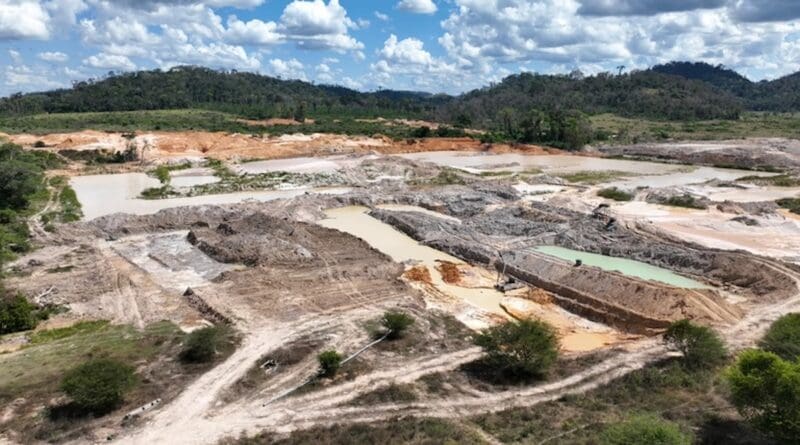
    An aerial view of an area degraded by illegal mining in Novo Progresso, in the Brazilian Amazon, during Operation Gold Route, launched by Brazil’s Federal Police in early June 2026 to combat illegal gold mining. (Photo: Brazil Federal Police)

    An aerial view of an area degraded by illegal mining in Novo Progresso, in the Brazilian Amazon, during Operation Gold Route, launched by Brazil’s Federal Police in early June 2026 to combat illegal gold mining. (Photo: Brazil Federal Police)

    The New Battle For Critical Minerals In The Amazon – Analysis


    By Diálogo Américas

    FacebookTwitterEmailFlipboardMastodonLinkedInShare

    Playlist advancing in 5 seconds

    Video Muted

    By Eduardo Szklarz

    Key Takeaways

    • Criminal organizations long established in Amazonian drug trafficking and illegal gold mining are adapting their territorial control, logistics (airstrips, river routes), middlemen and money-laundering channels to enter the high-value critical-minerals trade driven by global demand for batteries, semiconductors, defense and clean-energy technologies. 
    • Analysts describe an emerging “narco-mineral complex” in which drugs, gold, coltan, cassiterite and other commodities form a single diversified criminal ecosystem that can blend illicitly extracted minerals into legitimate supply chains through forged documents and trade triangulation. 
    • Preventing criminal capture of these strategic resources will require more than dismantling mining camps; it demands stronger financial intelligence, mineral traceability, border controls, disruption of logistical and commercial networks, and expanded international cooperation.

    In the Amazon, where criminal organizations have spent decades building networks dedicated to drug trafficking, illegal gold mining, and smuggling, a new economic frontier is emerging. As global demand rises for critical minerals used in batteries, semiconductors, defense systems, artificial intelligence, and clean energy technologies, resources such as coltan, cassiterite, nickel, lithium, niobium, and rare earth elements are becoming increasingly strategic. While illegal gold remains the criminal underworld’s primary mining economy, analysts warn that the same networks controlling its extraction and trade are now well positioned to expand into other high-value minerals.

    “These networks are beginning to adapt the infrastructure they use for cocaine and gold trafficking to minerals that power the energy transition, defense systems, and artificial intelligence,” Robert Muggah, co-founder of the Brazil-based Igarapé Institute, a think tank specializing in security and environmental policy, told Diálogo. For criminal organizations, the advantages are clear: They already control territory, clandestine airstrips, river corridors, middlemen, and money-laundering channels that can be rapidly repurposed to support new, high-value illicit markets.

    For now, major criminal organizations are not involved in the critical minerals sector to the same extent that they dominate the illegal gold trade. Nevertheless, the trend is raising growing concern. “Gold prices have increased roughly eightfold over the past two decades, and rising prices for critical minerals are beginning to attract more sophisticated criminal groups into this market,” Muggah said.

    A testing ground for organized crime

    Illegal gold mining has become one of the principal sources of financing for Colombian guerrilla groups, Venezuelan criminal syndicates, Brazilian criminal organizations such as the First Capital Command (PCC) and Red Command (CV), networks linked to the Tren de Aragua, and international money-laundering organizations. Across many border regions of the Amazon, these groups not only exploit illegal mining sites but also exercise forms of criminal governance by controlling access to territory, collecting taxes, regulating mining activities, and providing armed protection for operations.

    In June 2026, Brazil’s Federal Police launched Operation Gold Route (Operação Rota do Ouro) in Novo Progresso, Pará state, identifying a site where nearly 80 kilograms of gold are believed to have been extracted illegally over the previous three years. The case illustrates how illegal mining has become integrated into highly organized logistical and financial networks.

    The model closely resembles the one that has characterized drug trafficking for decades. “The same groups, corridors, and financial systems that move cocaine, gold, mercury, timber, weapons, and money are now positioned to move critical minerals as well. This is the essence of the narco-mineral complex,” Muggah explained.

    Operations carried out in recent years in the Yanomami Indigenous Territory clearly illustrate the complexity of the problem. Authorities discovered that illegal mining sites were supported by networks operating clandestine airstrips, fleets of boats, fuel supply systems, heavy machinery, and intermediaries responsible for funneling illegally mined gold into legitimate commercial supply chains. Destroying excavators and mining camps produced immediate results, but many operations quickly resumed because the underlying logistical and financial infrastructure remained intact. The experience demonstrated that dismantling camps and seizing equipment, while necessary, is not enough if the financial, logistical, and commercial networks sustaining the entire illicit supply chain remain untouched.

    It is precisely this adaptability that makes critical minerals particularly vulnerable to criminal infiltration. Unlike narcotics, they can easily be blended with legally mined material. Through forged documentation, trade triangulation, and corporate laundering schemes, illegally extracted minerals can enter global supply chains appearing entirely legitimate.

    A single criminal ecosystem

    This trend reflects a broader transformation of transnational organized crime in Latin America. Increasingly, hybrid criminal structures no longer rely exclusively on drug trafficking but operate as diversified criminal enterprises. Drugs, gold, coltan, cassiterite, timber, smuggling, financial laundering, and institutional corruption are no longer separate illicit markets but components of a single criminal ecosystem.

    Growing demand for critical minerals from the Amazon has accelerated this transformation, giving rise to what Muggah describes as the “narco-mineral complex.”

    “It is a broad and enduring ecosystem involving armed groups, illegal miners, logistics operators, informal traders, political actors, public officials, and seemingly legitimate companies,” he said.

    According to Muggah, the phenomenon rests on several pillars. The first is territorial control by armed groups over mining areas. In eastern Colombia, for example, dissident factions of the Revolutionary Armed Forces of Colombia (FARC) and the National Liberation Army (ELN) impose taxes and provide armed protection.

    The second pillar is the repurposing of infrastructure originally built for cocaine and gold trafficking. “These systems have been refined over many years to move drugs, gold, mercury, weapons, and money. They can now also be adapted to transport cassiterite and coltan,” Muggah said.

    The third pillar consists of commercial and documentary laundering mechanisms. Operation Hephaestus Forge (Operação Forja de Hefesto), conducted by Brazil’s Federal Police in 2023, demonstrated how cassiterite illegally extracted from the Yanomami Indigenous Territory could be sold through intermediary companies, processed by industrial operators, and ultimately exported to international markets, reaching major multinational corporations without revealing its illicit origin.

    The fourth pillar is the ability to move minerals across jurisdictions, mix them with legally mined production, and assign them a new origin. The growing international demand for these resources further increases the profitability of this model. One example occurred in April 2025, when Colombian authorities seized nearly 49 metric tons of coltan and tin extracted from areas controlled by armed groups. According to the investigation, the minerals were destined for illegal export to China.

    The challenge is no longer limited to combating illegal extraction. It also requires identifying and dismantling the logistical, financial, and commercial networks that allow illicitly sourced minerals to enter international supply chains.

    Protecting the supply chains of the future

    All indications suggest that the race for the Amazon’s critical minerals is only beginning. As these resources become increasingly important for defense industries, semiconductor manufacturing, advanced technologies, and the global energy transition, criminal organizations will have greater incentives to incorporate them into their illicit economies.

    For Amazonian countries, the challenge extends well beyond protecting mineral deposits or combating illegal mining. It will also require strengthening financial intelligence, improving mineral traceability, tightening border and customs controls, dismantling criminal logistics networks, and expanding international cooperation to prevent illegally extracted minerals from entering global supply chains.

    If illegal gold demonstrated how organized crime can capture entire extractive industries, critical minerals present an opportunity to act before that model becomes entrenched. Preventing criminal organizations from replicating this pattern in strategically important resources will be essential not only to protecting the Amazon but also to strengthening regional security and safeguarding the integrity of the supply chains on which future economies and advanced technological capabilities will depend.

    About Diálogo Américas

    Diálogo Américas is a professional magazine published by U.S. Southern Command as an international forum for security issues in Latin America.

    Posted in Uncategorized | Leave a comment

    Futurism: OpenAI, Nvidia’s new 8 GW AI power push

    🔌 OpenAI, Nvidia’s new 8 GW AI power push
    Image source: SB Energy
    The Rundown: OpenAI and Nvidia announced a new Ohio AI campus set to deliver nearly 8 GW of AI compute at a Cold War-era uranium plant in Pike County, Ohio, with Nvidia supplying every chip and backing the buildout with up to $105B of its own credit.
    The details:
    A 2028 target covers just the opening 800 MW build, with the rest being constructed on federal land cleaned up after the plant shut down.OAI is leasing the campus from SB Energy, with Nvidia also investing $1.5B in the company (which also has previous investments from OAI and SoftBank). Nvidia CEO Jensen Huang published an article alongside the news, saying frontier labs are constrained by infrastructure and financing, not demand. Huang also addressed claims Nvidia is funding its own sales via circular financing, saying: “No. OpenAI will pay the lease.”
    Why it matters: Not sure that a deal between OAI, Nvidia, and an early Sam Altman investment company that is majority-owned by SoftBank is going to help the circular dealmaking allegations, but either way, this is one of the biggest AI buildouts to date. It also interestingly comes outside of Stargate, which has quietly had a rocky 2026
    Posted in Uncategorized | Leave a comment

    Futurism: Many times in history books have been destroyed by dictators but what about Technology companies and their power to WIPE and Destroy

    Amazon Caught Destroying Rare Books to Train AI

    “They just want the content as a bunch of words strung together.”

    By Frank Landymore

    Published Aug 17, 2026 3:02 PM EDT

    Add Futurism(opens in a new tab)More information

    An illustration of a book broken in half.
    Shutterstock / Futurism

    Sign up to see the future, today

    Can’t-miss innovations from the bleeding edge of science and tech Email address Sign Up

    Amazon has been caught scanning and destroying a large shipment of rare books so it can train its AI models.

    In an investigation by 404 Media, a bookseller suspected that an order they received for 1,000 books on Biblio, a marketplace where buyers can remain anonymous, was for an AI company. So to get to the bottom of the mystery, they agreed to place an Apple AirTag between the pages of one of the volumes.

    They tracked the shipment to a site at a massive Amazon warehouse in Nevada, where workers say their job is to strip the spines off of books they receive so they can quickly scan their pages, destroying them in the process.

    “I work at VGT3 here in Vegas, and all we do is scan books,” an Amazon employee wrote on a forum for Amazon workers, as quoted by 404. “Some are assigned to cut books, and others go to receive where they get books and scan the barcodes. We didn’t have rates, but now we do, but it’s not stressful.”

    Despite Amazon clearly trying to keep this practice under wraps, the logo for the part of the warehouse the book scanners work in, called VGT3, is so on the nose that it borders on farce: a T-Rex holding a book in its hand that it’s about to eat — which, we have to say, kind of looks AI-generated.

    The company only had this to say in a statement to 404: “Amazon purchases books through commercial channels to help develop and improve the products and services our customers use.”

    The public only became aware of this AI industry practice in a lawsuit against Anthropic, which revealed that the Claude chatbot maker was using industrial equipment to cut the pages out of millions of books and scan them, before they were disposed of. 

    More alarming was the upshot of that lawsuit: a judge ruled that because Anthropic was turning the physical texts into digital ones and destroying the original copies, it was “transformative” and therefore didn’t violate copyright law.

    Since then, book sellers have often suspected that their wares are being used, and then destroyed, to train AI models. In previous 404 reporting, one said that some of the giveaways were the size of the orders, the seemingly random selection of books, and that the books all had ISBNs. But they couldn’t prove this hunch because the orders are anonymous.

    As 404 notes, that the workers at the Amazon site are apparently scanning the ISBNs of all the books they process gives credence to a spooky theory by booksellers: that AI companies are trying to scan every printed book in the world by going through a list of all their serial numbers.

    The bookseller 404 worked with sold books that are rare, meaning that there are few copies left in circulation. That can be for a myriad of reasons — they’re not necessarily first editions of old classics — but they’re still valuable.

    “There are different types of value,” the bookseller told 404. “There’s monetary value, obviously, but there are a lot of other types of value. There’s historical value, intellectual value, sentimental value. All sorts of things, and all of those the AI companies don’t care about. They just want the content as a bunch of words strung together.”

    More on AI: Kentucky Middle School Sends Students Home on First Day of Class With AI-Generated Educational Materials Full of Inexcusable Hallucinations, Including a Map Labeled With “North Dahota” and “Olkchoma”

    Frank Landymore Avatar

    Frank Landymore

    Contributing Writer

    I’m a tech and science correspondent for Futurism, where I’m particularly interested in astrophysics, the business and ethics of artificial intelligence and automation, and the environment.

    Posted in Uncategorized | Leave a comment

    This day in History: Soviet hard-liners launch coup against Gorbachev

    1991

    Soviet hard-liners launch coup against Gorbachev

    HISTORY.com Editors

    Sygma via Getty Images

    Published: November 24, 2009 Last Updated: August 11, 2025

    On August 18, 1991, Soviet President Mikhail Gorbachev is placed under house arrest during a coup by high-ranking members of his own government, military and police forces.

    Since becoming leader of the Union of Soviet Socialist Republics (USSR) in 1988, Gorbachev had pursued comprehensive reforms of the Soviet system. Combining perestroika (“restructuring”) of the economy—including a greater emphasis on free-market policies—and glasnost (“openness”) in diplomacy, he greatly improved Soviet relations with Western democracies, particularly the United States. Meanwhile, though, within the USSR, Gorbachev faced powerful critics, including conservative, hard-line politicians and military officials who thought he was driving the Soviet Union toward its downfall and making it a second-rate power. On the other side were even more radical reformers—particularly Boris Yeltsin, president of the most powerful socialist republic, Russia—who complained that Gorbachev was just not working fast enough.

    Russian Capitalism After Communism

    As the Soviet Union fell, Russia embraced capitalism. But Russia’s definition of a “free market” doesn’t exactly align with other parts of the globe.

    5:54m watch

    The August 1991 coup was carried out by the hard-line elements within Gorbachev’s own administration, as well as the heads of the Soviet army and the KGB, or secret police. Detained at his vacation villa in the Crimea, he was placed under house arrest and pressured to give his resignation, which he refused to do. Claiming Gorbachev was ill, the coup leaders, headed by former vice president Gennady Yanayev, declared a state of emergency and attempted to take control of the government.

    Yeltsin and his backers from the Russian parliament then stepped in, calling on the Russian people to strike and protest the coup. When soldiers tried to arrest Yeltsin, they found the way to the parliamentary building blocked by armed and unarmed civilians. Yeltsin himself climbed aboard a tank and spoke through a megaphone, urging the troops not to turn against the people and condemning the coup as a “new reign of terror.” The soldiers backed off, some of them choosing to join the resistance. After thousands took the streets to demonstrate, the coup collapsed after only three days.

    Gorbachev was released and flown to Moscow, but his regime had been dealt a deadly blow. Over the next few months, he dissolved the Communist Party, granted independence to the Baltic states, and proposed a looser, more economics-based federation among the remaining republics. In December 1991, Gorbachev resigned. Yeltsin capitalized on his defeat of the coup, emerging from the rubble of the former Soviet Union as the most powerful figure in Moscow and the leader of the newly formed Commonwealth of Independent States (CIS).

    Advertisement

    Profile of the former Communist Party leader who stunned the world with his liberalizing “Glasnost”, and presided over the dismantling of the USSR and the end of the Cold War.

    7-DAY FREE TRIAL

    Commercial-free, Cancel anytimeMikhail Gorbachev: A Man Who Changed The World

    Exclusions & terms apply

    Timeline

    Also on Th

    Posted in Uncategorized | Leave a comment

    Mario Nawfal on X: Navy families with sailors on the USS Abraham Lincoln and USS Tripoli are furious at Trump and Hegseth for dismissing their concerns.

    Navy families with sailors on the USS Abraham Lincoln and USS Tripoli are furious at Trump and Hegseth for dismissing their concerns.

    Families report 20–30 pound weight loss, poor drinking water, limited mental health care, and suicide attempts after months at sea.

    Trump says the families aren’t worried, while Hegseth calls the reports misrepresented.

    But these families say they’re describing what their loved ones are living through, and feel betrayed by their leaders.

    Source: The Guardian / Writer: Lucas

    Posted in Uncategorized | Leave a comment

    Axios: Women hires for select AI roles posted to LinkedIn, 2025. Listed pay values 2026.

     🤖 Women are missing out on the AI jobs boom
     
    A bar chart shows new hires for AI roles posted to LinkedIn in 2025. 82% of members of technical staff hires were male with a median listed pay at $223k. 50% of data annotators were male and had a median listed pay of $51k.Data: LinkedIn. Table: Danielle Alberti/AxiosWomen made up just over a quarter of U.S. hires for AI roles last year — compared with half of new hires in non-AI occupations, Axios’ Emily Peck writes from LinkedIn data out this morning.

    Men accounted for 74% and women 26% of hires for AI roles in 2025. The highest-paying roles typically have higher percentages of men.Keep reading … Get Axios Markets.
    Posted in Uncategorized | Leave a comment

    Axios: Political dirty tricks upend midterms

    👀 Political dirty tricks upend midterms
     
    Illustration of a voting booth stylized as a box trap.
    Illustration: Aïda Amer/Axios. Stock: Getty Images
     
    This year’s midterms are becoming a watershed election for primary meddling, mysterious super PACs, alleged straw candidates and all manner of political shenanigans, Axios’ Andrew Solender and Stef W. Kight write.

    Why it matters: With fewer battleground House districts after redistricting and the fight for the Senate extremely tight, each of these schemes could have an outsized impact on control of Congress.

    🟢 Green Party spoilers: Democrats are accusing the Green Party nominee in Pennsylvania’s 7th District of trying to aid Rep. Ryan Mackenzie (R-Pa.) by siphoning progressive votes from Democrat Bob Brooks. Lawsuits allege the candidate, Andrew Tupone, was a registered Republican until February and had help from Republicans getting on the ballot.👯 Seeing double: In Alaska’s primary today, there will be two Dan Sullivans on the ballot — Sen. Dan S. Sullivan (R-Alaska) and former teacher Dan J. Sullivan.

    🫏 Democratic dropouts: Democratic Senate candidates in Nebraska, Idaho and South Dakota have dropped out at the last minute to lift independent candidates’ chances of ousting Republicans.

    ⌛ 11th-hour switcheroos: Rep. Chuy García (D-Ill.) and Sen. Steve Daines (R-Mont.) both drew criticism for dropping their reelection bids just before the filing deadlines to ensure their chosen successors would not face primary opposition.🎯 

    Primary meddling: Federal Election Commission filings revealed Republicans were behind a series of “pop-up” super PACs with names like “Lead Left PAC” and “Progressive Champions PAC.” The groups bought ads propping up left-wing or scandal-tarnished Democratic primary candidates.

    🇮🇱 AIPAC: The pro-Israel group, whose brand has become reviled by Democratic primary voters, also supported candidates through obscure super PACs. In Illinois, it boosted a preferred House candidate through groups called “Chicago Progressive Partnership” and “Elect Chicago Women.”Share this story.
    Posted in Uncategorized | Leave a comment

    Axios: Trump torches allies

    Trump torches allies
     
    Photo illustration of President Donald Trump walking on an elongated stripe of the American flag
    Photo illustration: Sarah Grillo/Axios. Photo: Kevin Dietsch/Getty Images
     
    President Trump has a new rule for America’s partners: Cross him in one theater, and the consequences will follow you into the next, Axios’ Zachary Basu writes.

    Why it matters: Trump has spent his second term battering U.S. allies, humiliating their leaders, and using decades-old security relationships to settle personal and political scores.

    The Iran war has only deepened those impulses: Trump is growing angrier at allies that stayed out of the conflict — and punishing them as he struggles to end it.

    🔎 Zoom in: South Korea — recently hailed by Defense Secretary Pete Hegseth as a “model ally” — is the latest and most surprising casualty in Trump’s retribution campaign.

    On Sunday, Trump ordered the Pentagon to “substantially reduce” an annual military exercise, citing the cost and his “very good relationship” with North Korean dictator Kim Jong Un.

    Trump noted in his Truth Social announcement that he “recently asked the President of South Korea if they would like to join us in the Denuclearization of the Islamic Republic of Iran, and they said, ‘No thanks!'”

    For years, Europe has borne the brunt of Trump’s assault on American alliances. As the Iran war has widened those transatlantic fractures, his pressure campaign has become more systematic.

    Bloomberg reports the Pentagon sent NATO allies a survey probing their loyalty to Trump’s foreign policy as it weighs where to keep — or withdraw — U.S. troops.

    Between the lines: Allies that departed from that submissive posture have already paid a price.

    The Pentagon moved in May to withdraw roughly 5,000 troops from Germany after Chancellor Friedrich Merz publicly savaged Trump’s Iran strategy.

    Trump threatened to cut off all trade with Spain after Madrid denied U.S. base access for strikes on Iran.

    Even Oman — the key intermediary trying to broker a Hormuz deal — is now in Trump’s crosshairs. He threatened yesterday to “bomb the sh*t out of” the longtime U.S. partner if it “gets in the way” of an agreement with Iran.

    🔭 Zoom out: The same war fueling Trump’s fury at U.S. allies is also exposing the limits of American hard power.

    The 60-day deadline Trump and Iran set for a final peace deal expired yesterday with no agreement — and the two sides further apart than when they signed their June 
    memorandum of understanding.

    The Strait of Hormuz remains a stubborn monument to that impasse after months of U.S. military and economic pressure.

    The Navy is pulling the USS George Washington from the western Pacific to relieve the long-deployed USS Abraham Lincoln, temporarily leaving Asia without a U.S. carrier.

    Share this story.
    Share on Facebook Tweet this Story Post to LinkedIn 
    Posted in Uncategorized | Leave a comment

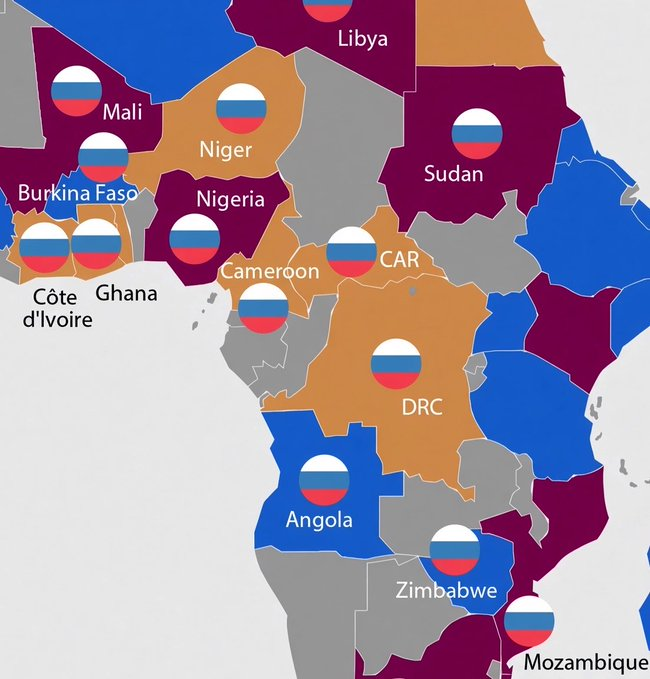
    RKM: Russia Is heavily expanding top level partnerships in Africa, Middle East, Iran and South Asia while NATO spending billions on Ukraine war.

    Russia Is heavily expanding top level partnerships in Africa, Middle East, Iran and South Asia while NATO spending billions on Ukraine war.

    -Russia reclaims its bases, energy cooperation, Trade routes and economic ties with foreign countries despite U.S. sanctions.

    Posted in Uncategorized | Leave a comment

    John Mearsheimer – Trump’s latest Iran ‘deal’ EXPOSED!

    Aug 17, 2026 #JohnMearsheimer#Geopolitics#ForeignPolicy

    John Mearsheimer – Trump’s latest Iran ‘deal’ EXPOSED! In this video, we dive deep into the latest geopolitical shifts, great power competition, and international relations through the framework of Offensive Realism, featuring insights and analysis from Professor John Mearsheimer. As global conflicts evolve, understanding the structural behavior of great powers is critical. We break down the strategic foreign policy decisions of the United States, China, Russia, and NATO, explaining why nations act the way they do on the world stage. How do power dynamics and realist theory predict the future of global warfare and diplomacy? Watch the full analysis to find out.

    Posted in Uncategorized | Leave a comment