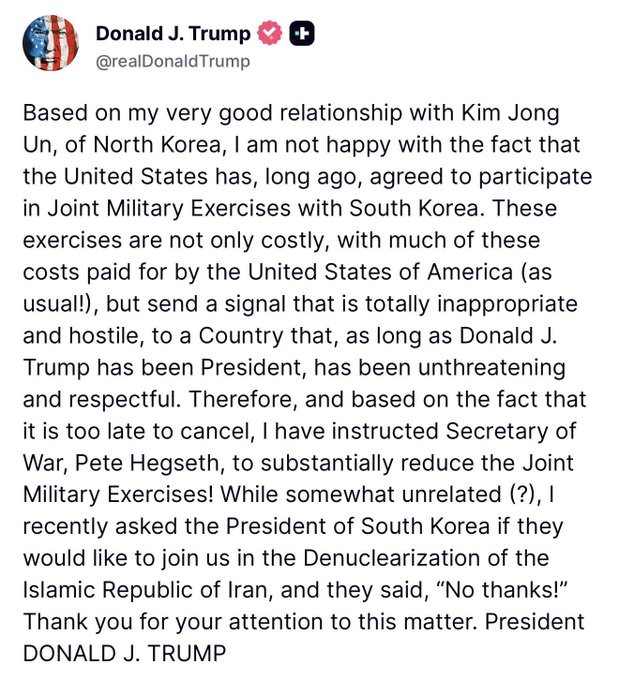
President Trump on TruthSocial: I have ordered the United States Navy to shoot and kill any boat, small boats though they may be (Their naval ships are ALL, 159 of them, at the bottom of the sea!), that is putting mines in the waters of the Strait of Hormuz. There is to be no hesitation. Additionally, our mine “sweepers” are clearing the Strait right now. I am hereby ordering that activity to continue, but at a tripled up level! Thank you for your attention to this matter. President DONALD J. TRUMP
RTE Investigates last night synopsis particular emphasis guardian ad litems, children in SEA’s like hotel rooms; costs to the State especially figure of euros 14,000 per week. Young girls being raped.
Thought for 41s
RTÉ Investigates aired a documentary last night (22 April 2026) titled Children in care: one year following a system in crisis (also referred to as Inside the Care System). It is based on a year-long investigation inside the family law courts and the child protection system run by Tusla (the Child and Family Agency). The programme exposes a deepening crisis affecting around 5,900 children in state care, driven by severe shortages of foster and regulated residential places.
rte.ie The core issue is the heavy and growing reliance on Special Emergency Arrangements (SEAs) — unregulated, unregistered, privately-run placements in rented houses, apartments, B&Bs and hotel rooms. These are meant to be short-term but are often used for extended periods for some of the most vulnerable children. Over 1,100 children were placed in SEAs last year.
rte.ieParticular emphasis on Guardian ad Litems (GALs). Guardian ad Litems (court-appointed independent professionals, many from Barnardos) represent the voice of the child in care proceedings. The documentary features several GALs who are highly critical of the system. They describe SEAs as not constituting proper “care” and warn that the placements expose children to serious, lifelong harm.
Karen Rogers (GAL for a boy named Malak) successfully fought in court to move him out of SEAs into a regulated placement after he suffered instability (including a four-hour daily school commute). She said: “This is a solution that’s organised and set up, but it’s not care. I hate calling it part of the care system.” rte.ie
Freda McKittrick (head of Barnardos’ Guardian ad Litem service) repeatedly highlighted the risks: “We are exposing children to a level of risk which can cause them lasting damage.” On cases of sexual exploitation she added: “It’s horrific… I know from a career of working with both young people and adults who have been through sexual abuse that leaves its mark. It affects the rest of their lives.” rte.ie
GALs are shown actively challenging Tusla in court and advocating for the phasing out of SEAs.Children in SEAs (including hotel rooms)The programme includes direct testimony from young people who lived in these placements:
Aaron entered care at age 9 and was moved through 20 different settings, many of them SEAs in hotel rooms. He spent a full year in hotels: “I was living in hotels for a whole year, I was getting junk food… It was lonely and depressing, going from one hotel room to the next.” His grandmother described him sitting alone all day with a PlayStation, eating takeaway in a small room. rte.ie
Other young people spoke of feeling like “an Amazon parcel,” constant moves across counties, loss of belongings and memories, isolation, and being unable to form bonds or attend school consistently. Several described the placements as chaotic and frightening. rte.ie
SEAs are not subject to HIQA inspection or the same standards as regulated children’s homes.Costs to the State — especially the €14,000-per-week figureThe programme highlights the enormous financial cost. Tusla CEO Kate Duggan confirmed that SEAs cost an average of €750,000 per child per year — that works out at roughly €14,423 per week per child. This is dramatically higher than the €420 weekly fostering allowance. Child protection solicitor Gareth Noble called it “huge money… totally and utterly unacceptable.”
rte.ie Young girls being raped / sexually assaulted. The documentary details harrowing cases of sexual exploitation, including that of a teenage girl placed in an SEA. Within weeks she went missing 12 times, associated with middle-aged men, allegedly set fire to her placement, and was reported to have been sexually assaulted by a number of men while missing from the SEA. Despite the extreme risks, she remained in the same type of unregulated placement because no suitable alternative beds were available. GAL Freda McKittrick described the outcome as “horrific.”
rte.ie Tusla told the programme it is “acutely aware of risks with the exploitation of vulnerable young people” and has a Child Sexual Exploitation Procedure in place, but the GALs and the young people featured argue the system is failing to protect children adequately.Other issues raised. The investigation also references forged staff references at one major SEA provider (Kare Plus / Baig & Mirza Health Services) and broader governance failures. Retired Judge Dermot Simms stated that children in SEAs “are being failed by the State.”Tusla’s response in the programme acknowledged that the experiences described “are not acceptable” and that the agency is under pressure, but it is working to increase capacity and reduce reliance on SEAs.
rte.ie Overall the documentary paints a picture of a care system in crisis that is outsourcing its most vulnerable children into unsuitable, high-risk, high-cost emergency placements — a situation that multiple Guardian ad Litems say must end.
1 web page
Explain GAL role in detail
Tusla reform proposals
Is there a foreign company involved (fraud perhaps) involved in SEA’s
Thought for 39s
No, there is no evidence of a foreign-registered company directly operating SEAs or involved in the fraud highlighted in the RTÉ Investigates documentary. The provider at the centre of the forged references scandal is an Irish-registered company.The company in question Baig & Mirza Health Services Ltd (trading as Kare Plus Dublin South) is Ireland’s biggest SEA provider. It is a private limited company (Company No. 671565) incorporated in Ireland on 3 June 2020, with its registered address in Dun Laoghaire, Dublin. It has received approximately €47 million from Tusla over the past three years for running unregulated SEAs.
rte.ie
It operates under a franchise agreement with Kare Plus Ireland (a separate Irish entity founded in 2018). The Kare Plus brand itself originated as a UK healthcare franchise, but the Irish operations (both the franchisor and this franchisee) are Irish companies. rte.ie
Its largest shareholder is Baig and Mirza Gulf Holdings Limited (another Irish-registered company). The “Gulf” name in the holding company suggests possible Middle East/Gulf region connections or ownership ties, but the operating entity providing SEAs is fully Irish-registered and Irish-based. solocheck.ie
The company is owned by Muhammad Usman Baig and Farhan Mirza (Irish company filings and media reports confirm Irish incorporation and operation).
The fraud / forged referencesYes — there was employee fraud involving forged staff references, as detailed in the documentary and an internal Tusla report obtained by RTÉ:
Forged employment references (including the use of a fake company stamp) were submitted to Tusla’s Central Compliance Unit for staff working in SEAs.
The forgeries were linked to a suspended employee of Kare Plus Dublin South and appear to have been used for workers at another (unrelated) SEA provider.
An internal report titled “Internal Report: Discovery and Investigation of Employee Fraud” described it as “a serious employee fraud which involves collusion, forgery, misusing and compromising company’s staff sensitive and confidential information.”
The company (via then-CEO Farhan Mirza) reported the issue to Tusla in April 2025, stating it took the matter “very seriously” and that any unauthorised references should be deemed invalid. It later told RTÉ the forgeries were the work of “former rogue employees” acting without the knowledge or authority of the company or its directors. The falsified documents were submitted to Tusla by a completely separate and unrelated company.
There is an ongoing Garda investigation into the matter. rte.ie
Tusla has confirmed the provider reported the issue to Gardaí and has referred queries back to the company.Summary
No foreign company is running SEAs or implicated in the fraud in the RTÉ investigation. The provider is Irish-registered and Irish-operated, albeit under a UK-originated franchise brand and with a parent shareholder whose name hints at possible international (Gulf) ownership links.
The fraud itself was internal employee fraud (forged references), not company-directed, according to the provider’s statements. It has been reported to the authorities and is under investigation.
This fits into the broader RTÉ exposé on the high-cost, unregulated nature of SEAs, but the “foreign company” angle does not appear to apply here. If new details emerge from the Garda investigation, that could change, but based on all publicly available information from the documentary and related reporting, the company is domestic.
Are there any reports of where Revenue Commissioners in Ireland have waived Benefit in Kind rents from person who is sole benificiary of trust which provides her home (her mother did write letter stating she could live in the property rent free but her mother is now deceased and that letter does not hold or perhaps it does) which states her incompetence and therefore lesser amt of annual tax related to DTT.
Thoughts
No, there are no publicly available reports, case decisions, or Revenue precedents specifically documenting ad-hoc “waivers” of the annual tax charge on rent-free (or below-market) occupation of trust-owned property in the exact scenario you describe.
What you are referring to as “Benefit in Kind rents” is not the standard employment-related BIK (which applies only to employer-provided accommodation). Instead, Revenue treats the annual benefit of living rent-free (or at below-market rent) in a property held in a trust — where the occupant is a beneficiary but not yet absolutely entitled to the property — as a Capital Acquisitions Tax (CAT) charge under section 40 of the Capital Acquisitions Tax Consolidation Act 2003. Each year’s occupation is valued at the market rental value (typically assessed at 31 December or the day before the benefit ends), minus the €3,000 small-gift exemption per disponer. The tax rate can be up to 33% (after thresholds and aggregation rules). Trustees or the beneficiary may need to file a CAT return (Form IT38). Key points relevant to your situation (trust-provided home + mother’s letter + deceased settlor)
The mother’s letter stating you could live rent-free is not automatically binding for tax purposes after her death. It may serve as evidence of the original intent (e.g., a license to occupy or provision for maintenance), but Revenue looks primarily at the trust deed, the nature of the benefit, and whether it qualifies as a taxable gift each year. If the trust does not explicitly grant a right of residence or maintenance, Revenue can still treat the free occupation as an annual taxable benefit. canisgallicus.com
However, the letter + trust arrangement can support an exemption claim, especially if tied to maintenance/support.
The “incompetence” angle (incapacity/disability) — this is where tax relief is most likelyIf the beneficiary has a permanent incapacity (physical or mental inability to manage their own affairs or self-maintain — what you call “incompetence”), Revenue’s practice and the CAT Act provide strong statutory exemptions that can eliminate the annual CAT charge entirely (i.e., “lesser amt of annual tax” down to zero). These are not discretionary waivers but automatic reliefs when the conditions and evidence are met:
Section 82 CAT exemption → Full exemption for any gift or benefit (including free accommodation) that is “normal and reasonable” support/maintenance for a permanently incapacitated child (of any age). Free use of the trust property qualifies as maintenance. This applies even to adult beneficiaries. canisgallicus.com
Discretionary Trust Tax (DTT) exemption → Full relief from the 6% once-off + 1% annual DTT if the trust exists exclusively for a person incapable of managing their affairs due to incapacity. Requires medical evidence (e.g., medical reports, Disability Allowance confirmation).
Section 84 CAT → Exemption for benefits used exclusively for medical care, therapies, or adaptations that enable independent living (accommodation can sometimes qualify).
Dwelling House Exemption (Section 86) → Possible on eventual distribution of the property itself (if you have lived there 3+ years as your main residence, have no other dwelling interest, etc.), though this is less straightforward for trust-held “second” properties. canisgallicus.com
Revenue’s own guidance confirms that free occupation of a family home by a child (including in trust contexts where it is support) does not always give rise to a taxable gift, and s82 explicitly covers university-age or incapacitated cases.
revenue.ie Practical reality and what to do
No reported “waiver” cases appear in public Revenue determinations, Tax Appeals Commission decisions, or media/articles. Relief comes through claiming the statutory exemptions above (backed by medical evidence of incapacity and the trust deed/letter as supporting intent). The 2026 blog analysis you may have seen online is based on real Revenue correspondence and confirms that incapacity makes the outcome “much more favourable” and often results in zero tax.
Trustees/beneficiary should reply to any Revenue query with: trust deed, copy of the mother’s letter, medical evidence of permanent incapacity, rental valuation, and a formal claim under s82/s84/DTT exemption. File the CAT return even if claiming exemption. You can seek binding confirmation via Revenue MyEnquiries or a local office.
Strongly recommend a solicitor (trusts/estates) + tax advisor (ideally STEP-qualified) to review the trust deed and prepare the claim — penalties apply for late filing or incorrect returns.
In short: Revenue does not appear to have published specific “waiver” reports for this exact fact pattern, but the CAT exemptions for permanently incapacitated beneficiaries (supported by medical evidence of “incompetence”) routinely eliminate or minimise the annual tax on the rent-free benefit. The mother’s letter helps as evidence of intent but is secondary to the incapacity reliefs. Professional advice tailored to the trust deed and medical facts is essential.
David Frum explains the origins of the “madman theory” and why it’s a strategy born of weakness. From Nixon to Trump, he argues that bluff, bluster, and unpredictability ultimately erode power rather than enhance it.
Can’t-miss innovations from the bleeding edge of science and tech Email address Sign Up
As if activity-monitoring software installed on your work computer that snitches on you if you’re away from the keyboard for too long wasn’t enough, Meta is taking the trend to its logical — and dystopian surveillance state-level — conclusion.
As Reuters reports, the Mark Zuckerberg-led company is installing new tracking software on all of its US-based employees’ computers that tracks all of their mouse movements and keystrokes, data that will be used for training the company’s AI models.
The company is reportedly looking to develop AI agents that can complete work tasks autonomously, in perhaps one of the more conspicuousefforts to automate human workers’s jobs we’ve come across as of late.
Besides the ethical concerns of forcing employees to train their AI replacements, the news also raises thorny questions regarding data privacy. Meta, in particular, has garnered an incredibly poor reputation when it comes to protecting personal data.
According to an internal memo obtained by Reuters, the software is called “Model Capability Initiative” and will run on work-related apps and websites. It will even take occasional screenshots.
The goal is to guide Meta’s AI models to essentially replicate the way humans interact with computers, like using dropdown menus or making use of keyboard shortcuts.
“This is where all Meta employees can help our models get better simply by doing their daily work,” the memo reads, as quoted by Reuters.
After this story was published, a Meta spokesperson insisted that managers won’t be able to access the data and that it won’t be used to evaluate employee performance.
“If we’re building agents to help people complete everyday tasks using computers, our models need real examples of how people actually use them — things like mouse movements, clicking buttons, and navigating dropdown menus,” the company said in a statement. “To help, we’re launching an internal tool that will capture these kinds of inputs on certain applications to help us train our models. There are safeguards in place to protect sensitive content, and the data is not used for any other purpose.”
While tracking employees’ keystrokes and mouse movement would likely be against European law, Yale University law professor Ifeoma Ajunwa told Reuters that “there is no limit on worker surveillance” in the US on a federal level.
Beyond tracking their employees’ every move, Meta is also planning to slash ten percent of its workforce across the globe starting next month — only the first of several planned cuts later this year.
I’m a senior editor at Futurism, where I edit and write about NASA and the private space sector, as well as topics ranging from SETI and artificial intelligence to tech and medical policy.
Can’t-miss innovations from the bleeding edge of science and techEmail addressSign Up
As fear over an AI-driven jobs apocalypse continues to simmer, some tech leaders remain adamant that the wide proliferation of AI will lead to more employment opportunities, not fewer.
Instead of getting ready to clear their desks, the centibillionaire argued that instead, human workers’ productivity will instead go through the roof — with the minor tradeoff that you’ll be overseen by a nagging AI boss that won’t ever leave you alone.
“Your [AI] agents are harassing you, micromanaging you, and you’re busier than ever,” Huang said. “And yet our company is able to do more.”
As a result, “we’re gonna create more jobs in the end,” he argued. “There’ll be more people working at the end of this industrial revolution than at the beginning of it.”
Huang has previously argued that company leaders are thinking too small if they’re looking to trim headcounts thanks to AI.
It’s a notable departure from the widespread narrative that the AI boom could lead to major job losses, with CEOs frequently citingthe tech as they lay off thousands (whether these AI tools can actually carry out a human employee’s workload remains a subject of debate). Some have even started to brag that their AI expenses are eclipsing the money they spend on human employees.
Whether Huang’s view will offer much reassurance to sacked tech workers who are facing a challenging job market is dubious at best. We also shouldn’t discredit that Huang’s AI chip empire has been selling shovels during the ongoing AI gold rush. Of course he’s advocating software engineers to do more with his company’s hardware instead of less.
In short, if the massive waves of layoffs in the tech industry are any indication, Huang’s belief that the widespread use of AI tools will lead to a flurry of new jobs will probably continue to be challenged.
Besides, should a legion of overbearing AI bosses really be the tech industry’s end game?
I’m a senior editor at Futurism, where I edit and write about NASA and the private space sector, as well as topics ranging from SETI and artificial intelligence to tech and medical policy.
China has far more oil stashed away than any other country — giving it a strategic edge during the biggest oil shock in history, Axios’ Amy Harder writes from new U.S. government data.
Why it matters: China is a huge winner in the Iran war, due in large part to energy, including its oil stockpile.
China also owns over 70% of the global solar, wind, battery and EV supply chains.
How AI could challenge assumptions about proof and truth in criminal law
Apr 15, 2026
Early in 2020, a cell phone captured the fatal attack of a jogger named Ahmaud Arbery by three white men in Georgia. That video was critical evidence in the criminal cases against the assailants, who were convicted of murder, and helped fuel a nationwide wave of Black Lives Matter protests that year.
Just six years later, the landscape for recorded media looks slightly different, as artificial intelligence tools have become ubiquitous, and AI-generated text, audio, and video have flooded the internet. Can we still believe the things we see, hear, and read? And how could our newfound doubt affect our ability to seek justice under the law?
Duncan Levin is a white-collar defense attorney and former federal prosecutor with the U.S. Department of Justice, and lecturer on law who in the winter term taught Cash, Crime, and the Constitution: The Legal Frontiers of Asset Forfeiture and Money Laundering at Harvard Law School. He argues that as AI-generated media blurs reality, the technology has the potential to “destabilize” some aspects of the criminal system.
“I think AI may change not only what people think about evidence, but what they think evidence is,” says Levin.
Levin argues that as people become more skeptical of long-accepted types of evidence, prosecutors, defense attorneys, and judges will have to radically rethink their approach. But while he believes that this adjustment might be painful in the short-term, over the long haul, it could “force the system to become more sophisticated.”
In an interview with Harvard Law Today, Levin shared his views on how artificial intelligence could impact the criminal trial — and why, all told, AI could serve as a “healthy pressure, even if it is an uncomfortable one.”
HLT: In your experience as a prosecutor and defense attorney, what unique problems might AI pose in criminal cases as opposed to civil litigation?
Levin: Most of the conversation about AI in law has centered on civil practice, and understandably so. Civil litigation is where questions of efficiency, cost, scale, and automation are most visible. And of course, the courts have been dealing with the problem of lawyers citing to “hallucinated” cases. But criminal law presents a different problem altogether because criminal trials are not just about resolving disputes efficiently. They are about the state’s attempt to take liberty from an individual, and they are structured around a constitutional burden of proof designed to minimize the risk of factual error.
That is why AI poses a more profound challenge in criminal cases than in civil ones. In a civil case, if the authenticity of a document or recording is disputed, that may affect weight, credibility, or liability. In a criminal case, the same uncertainty can operate at a deeper level, because the government is required to prove guilt beyond a reasonable doubt. The possibility that an exhibit may be synthetic, manipulated, or otherwise unreliable is not just another evidentiary skirmish. It can go directly to whether the prosecution has met the burden that due process demands.
There is also a structural difference in the function of evidence. Criminal cases often depend on a relatively narrow set of key exhibits — a recording, a video, a sequence of text messages, a social media post, a geolocation trail. Those exhibits are often presented to juries not as peripheral details but as anchors of narrative truth. AI threatens to destabilize that. It introduces the possibility that what appears to be the most concrete evidence in the case may in fact be the least secure.
And that challenge cuts in both directions. As a former prosecutor, I can see how AI may make it harder for the government to secure convictions in cases that rely heavily on digital proof. As a defense lawyer, I can also see the danger that once skepticism becomes generalized, defendants may have a harder time persuading juries with authentic exculpatory evidence. So, the issue is not simply that AI helps one side or the other. It puts pressure on the truth-finding function of the criminal trial itself.
HLT: What kinds of evidence currently admissible in criminal trials might be at risk of being created or manipulated by AI?
Levin: The obvious answer is audio and video, because those are the forms of evidence people most readily associate with deepfakes. If a jury hears what sounds like the defendant’s voice, or sees what appears to be a defendant on video, that evidence can be enormously powerful. But the real problem is broader than the familiar deepfake example.
Modern criminal prosecutions rely heavily on digital artifacts of all kinds: photographs, surveillance footage, text messages, emails, direct messages, social media posts, screenshots, online account records, and digitally generated timelines of location or activity. Each of those forms of evidence carries with it an implied claim of authenticity. It says, in effect, this happened, this was said, this account was used, this image reflects reality. AI makes those implied claims easier to counterfeit and harder for laypeople to assess.
What concerns me especially is that the danger is not limited to wholesale fabrication. AI may also be used to alter, enhance, splice, recontextualize, or simulate evidence in subtler ways. A manipulated image need not be entirely fabricated to mislead. A voice recording need not be entirely synthetic to create a false impression. A sequence of messages can be selectively generated or altered in ways that preserve surface plausibility while changing substantive meaning. In other words, the challenge is not just false evidence; it is persuasive false evidence.
There is also what I think of as the atmospheric effect of AI. Even where the evidence is genuine, jurors may know enough about digital manipulation to wonder whether it is not. So, AI changes not only the risk profile of false exhibits entering the courtroom. It changes the epistemic status of real exhibits as well. Evidence that once seemed solid may now seem contingent. That is a profound development in a system that has long relied on jurors’ common-sense confidence in what they can see and hear.
“The danger is not limited to wholesale fabrication. AI may also be used to alter, enhance, splice, recontextualize, or simulate evidence in subtler ways. … the challenge is not just false evidence; it is persuasive false evidence.”
HLT: What are the traditional methods of authentication and reliability for evidence in a criminal case, and how does AI challenge those longstanding doctrines?
Levin: Traditionally, authentication has been understood as a threshold requirement, not an ultimate one. Under the rules of evidence, the proponent need only offer sufficient evidence for a reasonable juror to conclude that an exhibit is what it is claimed to be. That burden has never been especially onerous. A witness with knowledge may identify a photograph. Someone familiar with a speaker’s voice may identify an audio recording. A chain of custody may support the admission of physical or digital evidence. Distinctive characteristics, surrounding circumstances, and metadata may all contribute to the foundation.
That framework reflects an important doctrinal assumption: Authentication is a gatekeeping inquiry, and the adversarial process can do the rest. Courts have long assumed that the principal risks involve ordinary tampering, misidentification, or incomplete handling. Those are serious issues, of course, but they are still issues within a world where the underlying exhibit is presumptively tethered to some real event or communication.
AI complicates that premise because it attacks the distinction between authenticity and plausibility. A piece of evidence may now look authentic, sound authentic, and fit coherently into surrounding facts, while still being entirely or materially synthetic. That matters because many of the doctrines we use to authenticate evidence are not really designed to test whether the artifact itself was born of reality. They are designed to test whether there is enough circumstantial basis for a jury to consider it.
HLT: Could you give us an example?
Levin: Take voice identification. The classic question is: Do you recognize the speaker’s voice? A witness may answer that question honestly and persuasively. But that only establishes familiarity with the voiceprint; it does not resolve whether the recording is a genuine capture of an actual conversation rather than an artificial simulation. The doctrine assumes that voice recognition is doing more work than it may in fact be capable of doing in an age of generative audio.
The same is true more broadly. Distinctive characteristics may no longer be very distinctive. Metadata may be vulnerable to manipulation or may require expert interpretation. Chain of custody remains important, but chain of custody alone may not answer whether a digital artifact was altered before it entered the chain. So, the legal system may increasingly find that doctrines built to address tampering are inadequate for a world of synthetic creation.
That is why I think this is a doctrinal problem, not just a technological one.AI exposes that the law of authentication rests on assumptions about the nature of evidence that may no longer hold.
“Many of the doctrines we use to authenticate evidence are not really designed to test whether the artifact itself was born of reality.”
HLT: Most of us have heard of the requirement that a jury find a defendant guilty “beyond a reasonable doubt.” What does that mean? Could the possibility of fabricated digital evidence affect the meaning of proof beyond a reasonable doubt?
Levin: “Beyond a reasonable doubt” is the law’s way of expressing a moral and constitutional judgment that when the state seeks to deprive someone of liberty, ordinary confidence is not enough. The standard does not require certainty in an absolute sense, and it does not mean beyond all possible doubt. But it does reflect a deliberate choice to tolerate some risk that guilty people will go free in order to reduce the risk that innocent people will be wrongly convicted.
That principle assumes, however, that jurors are evaluating evidence in a world where the central questions are credibility, consistency, perception, memory, and corroboration. In other words, the standard developed in a setting where doubt typically attaches to witnesses or interpretations of facts. AI introduces a different layer of doubt. It raises the possibility that the exhibit itself — the recording, the image, the post, the message — may not be what anyone says it is.
That distinction matters. A juror may conclude that a witness is sincere and still have reasonable doubt because the underlying exhibit seems potentially synthetic. So, AI may affect the operation of the reasonable-doubt standard not by changing its formal definition, but by changing the kinds of uncertainty that jurors bring to their deliberations. The question becomes not just “Do I believe this witness?” but “Do I believe the ontology of this evidence at all?” That is a more foundational inquiry.
In that sense, AI may sharpen the reasonable-doubt standard by making visible something that was once implicit: proof is not simply about persuasion, but about epistemic confidence in the reality of the proof itself. If jurors begin to feel that digital evidence carries an irreducible possibility of artificiality, that may alter the practical meaning of the government’s burden even without any doctrinal change in the jury instructions.
The larger point is that reasonable doubt is not just a verbal formula. It is a mechanism for allocating the risk of uncertainty in criminal adjudication. AI may dramatically increase one category of uncertainty — uncertainty about authenticity — and if that happens, the burden of proof will feel heavier in practice, because jurors will be less willing to treat digital exhibits as fixed points of reference. That is why AI has the potential to reshape not merely evidence law, but the lived meaning of the constitutional standard itself.
HLT: What new burdens, if any, should be placed on parties to verify that evidence is not AI-manipulated? Who should bear that burden?
Levin: In criminal cases, the answer has to begin with first principles. The government bears the burden of proof. It is the government that seeks conviction. So, if digital evidence is central to the prosecution’s case, the prosecution should bear the primary burden of establishing authenticity with greater rigor than courts have often demanded in the past.
I do not mean that every case should require a parade of experts or a mini-trial on digital forensics. The law has to remain workable. But I do think courts will need to move away from the instinct that a thin foundation is always enough, and that any deeper concerns go only to weight.In some cases, especially those turning on audio, video, or disputed digital communications, authenticity may require more than witness familiarity or a simple chain of custody. It may require forensic examination, clearer provenance, stronger metadata analysis, or expert testimony sufficient to assure the court that the exhibit has not been materially altered or synthetically generated.
“AI introduces a different layer of doubt. It raises the possibility that the exhibit itself — the recording, the image, the post, the message — may not be what anyone says it is.”
At the same time, I would not frame this only as a burden on prosecutors. If a defendant seeks to introduce affirmative digital evidence, courts may also require a stronger showing of authenticity.But the asymmetry still matters. A defendant does not carry the burden of proving innocence. So, while both sides may need to satisfy more robust evidentiary standards, the constitutional burden should remain where it belongs: on the state when it seeks to imprison.
Over time, I suspect the law will move toward a combination of doctrinal and technological solutions. On the doctrinal side, courts may become more exacting under existing authentication rules. On the technological side, provenance tools, cryptographic signatures, or secure capture systems may emerge as more reliable ways of showing authenticity at the point of creation. But until those systems are more widespread, judges will have to decide whether traditional foundations remain adequate in a world where fabrication is easier, cheaper, and harder to detect.
So, the real burden is not just evidentiary. It is institutional. Courts will need to decide how much uncertainty the criminal process can tolerate before the risk of error becomes unacceptable.
HLT: In your view, how might AI influence the way people think about evidence and the criminal justice system in general?
Levin: I think AI may change not only what people think about evidence, but what they think evidence is. For a long time, visual and digital evidence carried an aura of objectivity. People might dispute what a witness remembered or why a witness was lying, but a video, a recording, or a contemporaneous text exchange often felt like a harder kind of proof. That intuition was always somewhat overstated, but it was real and legally important. AI weakens it.
Once the public internalizes that highly realistic digital evidence can be fabricated, the entire evidentiary environment changes. People may become more skeptical, more cautious, and in some settings more cynical. That skepticism has some virtue. Criminal law should not be built on naïve faith in official narratives or in the infallibility of seemingly objective evidence. But skepticism can also become corrosive if it dissolves confidence indiscriminately.
That is the larger institutional concern. The justice system depends on public confidence not only that trials are fair, but that they are capable of reaching truth through lawful procedures. If jurors begin from the premise that any recording may be fake, any image may be manufactured, and any digital communication may be spoofed, then the criminal trial risks becoming less an exercise in fact-finding than an exercise in generalized epistemic anxiety. That is not healthy for either side.
At the same time, this moment may force the system to become more sophisticated. Judges, lawyers, jurors, and investigators may all need to become more literate about the creation, preservation, and forensic evaluation of digital evidence. Courts may have to speak more candidly about what they do and do not know. In that sense, AI may force a deeper legal honesty. It may make explicit that evidentiary trust has always rested on a combination of doctrine, technology, and social confidence.
So, I think the long-term influence of AI will be double-edged. It may deepen mistrust in the short term, but it may also push the criminal legal system toward a more rigorous and transparent account of what it means to prove something. And in a system built around the idea that liberty should not be taken without very high confidence, that is ultimately a healthy pressure, even if it is an uncomfortable one.
Want to stay up to date with Harvard Law Today? Sign up for our weekly newsletter.
In the last 24 hours: –Iran seized ships in Hormuz –The U.S. seized Iranian tankers This isn’t chaos—it’s the first rung of escalation I predicted before the ceasefire ended. We are now in the demonstration phase This is how escalation begins—and why it doesn’t stop here: