Iran’s Armed Forces issued a Direct Warning to the Persian Gulf Arab Countries:
“The Southern Persian Gulf States, which have issued statements declaring that they will not allow the US to use their Territories
It seems unlikely that such a large number of Military Aircraft—especially refueling aircraft—would be stationed at bases in the region without the host countries’ Knowledge
They should know that our Eyes see everything, and we consider this as Cooperation with the Americans”
Illustration: Sarah Grillo/Axios. Stock: Getty Images
Google is paying $10 million for Spirit Airlines’ business data to feed into its AI models, Axios’ Nathan Bomey reports.
The trove includes emails, calendar info, chats, documents, spreadsheets and more.
Google won a bankruptcy auction for the data from Spirit, which stopped flying earlier this year after failing to emerge from Chapter 11 bankruptcy.
The data doesn’t include any personally identifiable information, passenger profiles or frequent flyer info.
A Google statement says: “We acquired part of an enterprise dataset from Spirit Airlines, which can be helpful in improving our products and AI models.”What’s next: A federal judge still needs to approve the deal.
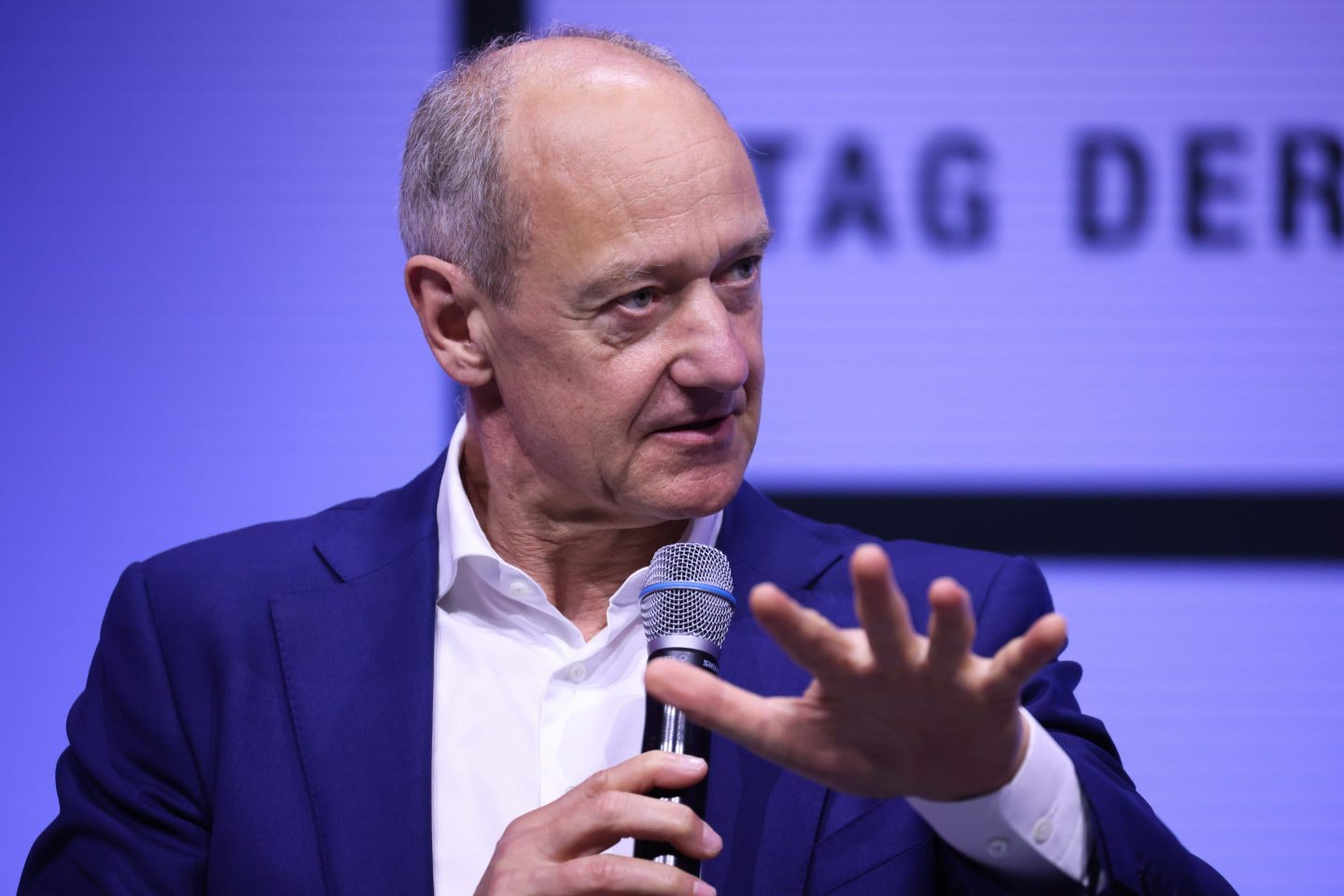
As CEO of $256 billion German engineering giant Siemens, Roland Busch replies to emails with just ‘OK’ or ‘No.’ Anything longer, and the boomer will voice note his team while on the move.Krisztian Bocsi/Bloomberg via Getty Images
Keeping your email inbox under control can feel like a full-time job in itself—with endless streams of messages making it difficult to separate what actually matters from the noise. Roland Busch, the CEO of Siemens, has a decisively minimalist approach: skipping email etiquette in favor of efficiency.
Recommended Video
How many meetings do C-suite execs have per day?
“I try to keep my inbox below 100. If you have more than 100 emails in your inbox, you lose the overview of what’s actually on your plate,” Busch told Business Insider. “I accomplish this by answering messages quickly and using a few words.”
Oftentimes, those few words are simply “OK” or “No.”
“I make it simple and fast. My team is trained to communicate this way. If I need to write something longer, I dictate my response while walking through the office.”
That same emphasis on efficiency extends to how the 61-year-old manages his time with his direct reports. Rather than scheduling recurring one-on-one meetings, the leader of the $256 billion German engineering company—No. 143 on the Fortune Global 500—keeps his door open and lets his executives come to him when they need to.
“Because I value efficiency, I don’t have recurring meetings with my direct reports. I tell them, ‘You come to me whenever you need me,’” Busch said. “It could be five times a week or once a month. I don’t need to entertain people, and they don’t need to entertain me.”
From physicist to CEO of Germany’s largest publicly-traded company
Busch joined Siemens in 1994 and spent nearly three decades climbing the ranks before becoming CEO in 2021. During his tenure at the helm, Siemens’ stock has more than doubled, and the engineering giant is now the largest company in Germany and third-largest in Europe by market capitalization.
But Busch said the biggest influences on how he leads didn’t come from traditional leadership backgrounds like obtaining an MBA from business school. Instead, he holds a Ph.D in physics, and his first role at Siemens was researching energy technologies including fuel cells, offshore wind, photovoltaics and high-temperature superconducting transmission lines.
That scientific training has been core to how he approaches the complexity of running a global company, he said.
“As a CEO, you’re always making decisions with incomplete and ambiguous information. Physics taught me how to de-layer a problem, separating the core issues from the less important ones,” Busch told BI. “Once you isolate the core variables, you have a much better chance of making the right decision.”
“I don’t do one-on-one’s with any of them,” Huang said at the Stanford Institute for Economic Policy Research summit in 2024.
His rationale is rooted in transparency: there shouldn’t be much he tells an individual executive that he wouldn’t want the rest of the company to know, he said.
“In that way, our company was designed for agility,” Huang added. “For information to flow as quickly as possible. For people to be empowered by what they are able to do, not what they know.”
Southwest Airlines CEO Bob Jordan has also warned that executives can mistake a packed calendar for productivity.
“When you first start, it’s easy to confuse busyness and going to meetings with leadership,” Jordan said on a panel of CEOs at the New York Times DealBook Summit last year. “…Because what we all find, I’m sure, is there’s no time to ‘work,’ and you confuse going to meetings with the work.”
Jordan has since made it a goal to keep his calendar clear every Wednesday, Thursday and Fridayafternoon, giving himself time to focus on work outside of meetings.
“It’s so that you can work on things you need to work on. You can think about what’s important right now. You can call people you need to talk to,” he added.
But few CEOs have been more vocal about their disdain for bad meetings than JPMorgan Chase CEO Jamie Dimon. In his 2024 letter to shareholders, Dimon offered a blunt prescription for what he sees as a major drag on corporate productivity: “Kill meetings.”
“None of this nodding off, none of this reading my mail,” Dimon said. “If you have an iPad in front of me and it looks like you’re reading your email or getting notifications, I tell you to close the damn thing. It’s disrespectful.”
Fortune Daily breaks the traditional barrier between audience and newsroom. The show transforms Fortune’s trusted reporting into actionable, conversational, and entertaining insights for an emerging class of business leaders. Watch here.
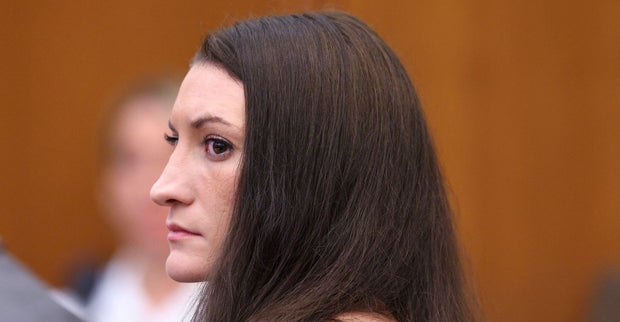
Jurors in the Lindsay Clancy murder trial have heard weeks of testimony as prosecutors have tried to make their case that the Massachusetts mom should be held criminally responsible for killing her three young children in 2023.
Clancy, 36, has pleaded not guilty to murder charges in the case, but her attorneys don’t deny that she caused the deaths of her kids, 5-year-old Cora, 3-year-old Dawson and 8-month-old Callan, in their Duxbury home on Jan. 24, 2023. Instead, Clancy’s attorneys have said she had postpartum psychosis and bipolar disorder and was overmedicated. The prosecution alleges that Clancy planned the murders before faking a suicide attempt.
Here are some key moments from the trial:
Lindsay Clancy had thoughts of harming her children, mother says
When the prosecution rested its case on Aug. 17, Clancy’s mother, Paula Musgrove, was called to testify for the defense. She recalled a conversation that Clancy had in December 2022, a few weeks before the killings, with her and Clancy’s husband at the time, Patrick Clancy.
Musgrove said her daughter was very nervous when she said she had something to tell them.
“She told us that she had thoughts of harming the children,” Musgrove said.
During cross-examination, prosecutor Jennifer Sprague asked Musgrove if she had any concerns about the children’s safety or thought about having Clancy committed to a mental health facility, and Musgrove said she didn’t.
Musgrove also testified that in the days leading up to the killings, her daughter had become paranoid and that Clancy said she couldn’t remember anything.
“The medication was pretty much just destroying her mind, and it wasn’t her,” Musgrove said. “She said that, ‘This isn’t me. I just want to feel better and enjoy my kids again.'”
Lindsay Clancy’s private writings revealed in court
The jury has heard about Clancy’s internet searches in court as well as diary-style entries on her phone’s notes app.
“I’m sad and depressed because I am not able to parent my third child like my first,” Massachusetts State Police Detective Timothy Chiappini said while reading one entry out loud in court on Aug. 13.
Lindsay Clancy attends her trial in Plymouth Superior Court in Plymouth, Massachusetts, Aug. 17, 2026.Greg Derr/Pool via Reuters
The writings provided some insight into Clancy’s hesitations about treatments she was receiving.
“I’m on the fence about starting a new med or not. I want to feel happy, but it would be nice to feel authentically happy and not fake,” Chiappini testified, quoting Clancy.
Chiappini also testified that Clancy searched on her phone “Can you treat a sociopath?” four days before the killings.
During cross-examination, Clancy’s attorney, Kevin Reddington, highlighted some of her other searches, including “how to slit your throat to die” and “can you turn airbags off on kia sorrento (sic),” which was Clancy’s car.
He also said some of her searches in January 2023, the same month as the killings, included the words “schizophrenia,” “hallucinations” and “intrusive.”
Lindsay Clancy breaks down in court
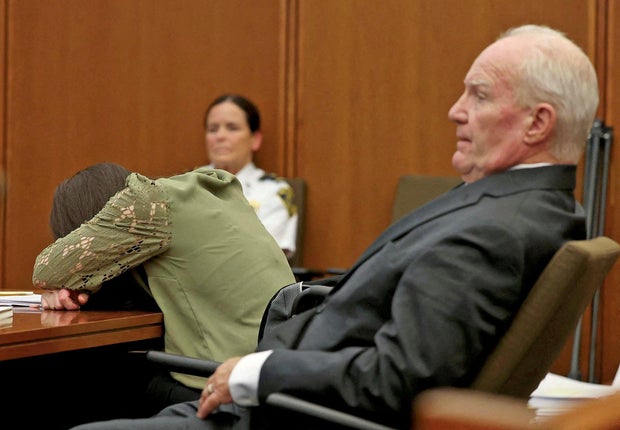
Clancy sobbed loudly in court on Aug. 12 as a medical examiner testified about the injuries the children suffered during the killings.
“I can’t do it,” Clancy said before she was wheeled out of the courtroom. She is paralyzed from the waist down after jumping from a second-story window following the children’s deaths.
Defense attorney Kevin Reddington listens to graphic testimony as his client, Lindsay Clancy, sobs during her murder trial on Aug. 12, 2026.Mark Stockwell/Pool via Reuters
The outburst was Clancy’s second of the day following an earlier disruption when she cried with her head in her hands. Judge William Sullivan sent the jury out of the courtroom each time.
After the first recess, Sullivan spoke to the jury and reminded them that they took an oath to follow the law.
“I’m instructing you that the law says you must separate any emotional reaction on your part from the informational value and weight that the evidence produces,” he said.
Lindsay Clancy’s psychiatrist testifies about treatment
Psychiatrist Dr. Jennifer Tufts had 14 telehealth appointments with Clancy over a period of about four months, with the last on the day before the killings. She said that Clancy never seemed psychotic.
When Reddington asked if Tufts knew that Clancy told her then-husband she was having thoughts of harming the children, Tufts testified on Aug. 10 that she didn’t and that she would be very concerned if she did.
Tufts said Clancy told her she felt numb and couldn’t sleep.
“She denied feeling suicidal, but that she was close to feeling suicidal,” Tufts said.
While being questioned by prosecutors, Tufts testified that Clancy tried at least 10 medications in search of the right combination to try and stop her anxiety and depression. Tufts also said Clancy blamed the drugs for her condition and was reluctant to take them.
Tufts prescribed Clancy the antidepressant Zoloft, which has a warning that it and other antidepressants may increase suicidal thoughts or actions in some people aged 24 and younger.
“I don’t believe there’s evidence that it causes that at all in individuals over 24,” Tufts told Reddington.
For more information about mental health care resources and support, the National Alliance on Mental Illness (NAMI) HelpLine can be reached Monday through Friday, 10 a.m. to 10 p.m. ET, at 1-800-950-NAMI (6264) or email info@nami.org.
Brian Sutton, accused of masterminding one of the largest fraud schemes to ever be unraveled in the United States, is living freely in Russia. Among his acquisitions there is a fleet of luxury cars, an elite villa near Moscow, and a stake in an MMA club tied to a member of the Russian parliament.
British historian and author Andrew Lownie has suggested Sarah Ferguson is potentially seeking revenge amid rumours she is prepared to do a tell-all Netflix documentary
For free and unbiased Medicare help, dial 507-478-7579 to speak with my trusted partner, Chapter, or go to https://askchapter.org/smerconish
Paid Partnership Former White House official Steve Atkiss joins Michael Smerconish to explain the extraordinary security measures surrounding President Donald Trump’s departure from Turkey — including why the president was secretly moved away from the aircraft normally used as Air Force One.
Atkiss served in the George W. Bush White House and helped coordinate presidential travel, Secret Service, military and national-security operations on hundreds of trips. He explains how presidents are protected when credible threats emerge, why deception and multiple aircraft can be valuable security tools, and whether keeping the traveling press in the dark was justified.
Atkiss also shares remarkable firsthand stories from George W. Bush’s secret 2003 Thanksgiving trip to Baghdad, the Trump-Kim Jong Un summit in Singapore, and a presidential trip to Georgia where a grenade was thrown toward President Bush.


 Google buying Spirit data to feed AI
 Illustration: Sarah Grillo/Axios. Stock: Getty Images
 Google won a bankruptcy auction for the data from Spirit, which stopped flying earlier this year after failing to emerge from Chapter 11 bankruptcy.
 A Google statement says: “We acquired part of an enterprise dataset from Spirit Airlines, which can be helpful in improving our products and AI models.”What’s next: A federal judge still needs to approve the deal.