Ian Bremmer breaks down the high-stakes summit between Donald Trump and Xi Jinping in Beijing, one of the most consequential meetings between the two leaders in years, but one that produced remarkably few concrete outcomes.
Ian explains why that may actually be good news. With Trump politically weakened at home and facing mounting pressure over Iran and the economy, the risk of major concessions or destabilizing rhetoric was significant. Instead, both sides largely avoided escalation, especially on Taiwan.
Deep tech entrepreneur D. Scott Phoenix spent years building AI — now, he believes we’re on the cusp of a profound merger between humans and machines. Reframing the AI debate through the lens of evolutionary biology, he shifts the question from whether we should fear or embrace AI to whether we understand what’s at stake if we get it wrong. Hear his provocative case for why we need to “eat the AI.”
That’s at least according to Jon Gray, president and chief operating officer at Blackstone—the biggest publicly-traded alternative asset manager—who predicted a “huge boom in blue-collar employment certainly over the next five years.”
Speaking at the Milken Institute last week, Gray pointed to QTS, one of Blackstone’s portfolio companies, which operates or is developing more than 75 data centers worldwide.
A year ago, roughly 10,000 workers were on QTS job sites. By year’s end, that number is set to quadruple to 40,000—a 300% jump.
“Between the energy, the physical infrastructure, the data centers, the reindustrialization—something very powerful [is] happening,” Gray said.
The boom is being fueled by a massive wave of AI infrastructure investment. According to McKinsey, global spending on data centers could reach $7 trillion by 2030, creating lucrative opportunities for electricians, pipefitters, and HVAC technicians, helping build the facilities powering the AI economy. While data centers vary in size, a single data center can be 40% to 50% larger than an average Walmart Supercenter and require up to 1,500 workers during peak construction.
The average salary of construction workers on data center projects is about $81,800 annually or $39.33 an hour—roughly 32% more than those on non-data center builds—according to data from Skillit, an AI-powered hiring platform for construction workers.
Fortune reached out to Blackstone for further comment.
Companies are pouring millions into rebuilding the skilled trades talent pipeline
Despite the demand and rising pay, filling critical skilled-trade roles hasn’t been easy for companies racing to build out AI infrastructure.
An estimated 2.1 million skilled trades jobs in the U.S. could go unfilled by 2030—with potential economic losses reaching $1 trillion annually, according to U.S. Department of Education estimates cited in a report from JLL first shared exclusively with Fortune.
The shortage stems from a perfect storm: an aging workforce nearing retirement, decades of educational emphasis on four-year degrees over vocational pathways, and surging labor demand tied to data centers and industrial development.
Companies are increasingly stepping in to help rebuild the talent pipeline themselves.
Last year, the charitable arm of Blackstone announced a $3 million investment to launch Blackstone Skilled Futures, a workforce development initiative created in partnership with Arizona State University, Maricopa Community Colleges, and local nonprofits to expand skilled-trades training in the Phoenix. QTS currently has three data centers under development in the area.
Meanwhile, Lowe’s announced earlier this year that it plans to invest $250 million over the next decade to help train 250,000 people in skilled-trade fields like plumbing, carpentry, and electrical work. According to the home improvement giant’s CEO, Marvin Ellison, the investment is critical to rebuilding the U.S. workforce amid the AI-driven shift, and he argues more companies need to recognize the urgency.
“We’re a company that believes strongly in the future of AI,” Ellison told Fortune at the time. “But in a world where administrative and analytical occupations are going to be increasingly dominated with the acceleration of AI, we think the skilled-trade initiative is going to be even more important here in the near future.”
Asset manager BlackRock also announced this year that it would invest $100 million in skilled-trade training programs, deploying funds through nonprofits and workforce development partners across multiple states. The initiative aims to reach 50,000 workers over the next five years.
At the Fortune Workplace Innovation Summit, Fortune 500 leaders will convene to explore the defining questions shaping the workforce of the future—delivering bold ideas, powerful connections, and actionable insights for building resilient organizations for the decade ahead. Join Fortune May 19–20 in Atlanta. Register now.
Nonprofits are under attack. The narratives being used to destroy them are dishonest, coordinated, and costing lives. Here’s how to fight back.
If you work in the homeless services sector right now, you already know what’s happening. You’ve felt it. Budget cuts. Defunded contracts. Programs that quietly disappeared. Organizations that were housing hundreds of people have just shut their doors. And the people they served? Back on the street. Not because the work stopped working. Because the political will to fund it got deliberately killed.
You don’t need me to tell you nonprofits are under attack. You’re living it.
But here’s what I keep thinking about. We’re losing the narrative war. And that’s partly on us.
The attacks aren’t random. They’re coordinated, well-funded, and they’re working in part because we haven’t had sharp enough language to push back. We’ve been playing defense. Apologizing. Hedging. Explaining ourselves to people who aren’t arguing in good faith.
Let’s talk about how to actually fight back.
Go Look It Up Yourself
If you’re not yet fully convinced of how bad this is, spend fifteen minutes doing some research. Search “nonprofits under attack 2025.” Search “DOGE nonprofit cuts.” Search “homelessness industrial complex” and look at what’s being said about organizations like yours in conservative media, in policy circles, in the comment sections of local news stories about encampment sweeps.
What you’ll find is a coordinated campaign to discredit the entire nonprofit sector, and the homeless services sector in particular, using a handful of recycled arguments. Waste. Fraud. Abuse. Dependency. And the catchphrase “the homelessness industrial complex.”
DOGE accelerated this like crazy. Programs that were literally saving lives got gutted. Not because audits found fraud. Not because anyone proved the programs failed. They got gutted because the political narrative shifted, and we didn’t have enough public defenders to stop it.
Real organizations. Real people. Gone.
That’s on the political forces driving this. But it’s also on all of us for not fighting harder for the narrative before we got here. Let’s fix that.
Stop Apologizing. Here’s Your Core Message.
Before anything else, you need one anchor message. Something short enough to say anywhere—a city council meeting, Thanksgiving dinner, a Twitter thread—that carries the whole argument.
Here it is:
This work saves lives. Cutting it costs more.
That’s it. Eight words. No apology. No qualifier. No concession. It forces whoever you’re talking to argue against human outcomes AND financial reality at the same time. Good luck to them.
Now, depending on your audience, you can take that in different directions. Our own research here at Invisible People, a 1,000-person study on how different audiences actually receive messaging about homelessness, found that people come to the same truth through different doors. That’s not manipulation. That’s just how communication works.
For a general audience: “These programs save lives. When you cut them, you don’t save money. You just pay more later in emergency rooms, jails, and crisis response.”
For fiscal conservatives: “If your goal is saving taxpayer money, cutting homeless services is the worst possible way to do it. The math doesn’t work. An ER visit costs five times more than a housing program.”
For faith communities: “This work saves lives. That’s the beginning and end of it. What we do with that fact says everything about who we are as a community.”
Same truth. Three different doors. Use the one that fits who you’re talking to.
‘Waste, Fraud, and Abuse’—Here’s How You Counter It
This is the foundational attack. It sounds like accountability. It isn’t.
Here’s what’s actually true. 501(c)(3) organizations file public Form 990s. Anyone can look up a nonprofit’s full financial records on GuideStar or ProPublica right now, today, for free. For-profit corporations don’t have to do that. Nonprofits answer to the IRS, state attorneys general, independent boards, individual donors, and the general public, all at the same time. That’s more oversight than most government agencies or private companies face in a year.
Accountability isn’t the problem. Selective outrage is.
Because here’s the thing. Waste, fraud, and abuse exist everywhere. Every single sector.
The Pentagon has failed its financial audit seven years in a row. Trillions of dollars unaccounted for. Nobody’s proposing we abolish the military.
Corporate fraud costs the US economy hundreds of billions every year. Nobody’s proposing we ban corporations.
We don’t ban hospitals because some doctors commit Medicare fraud.
We don’t shut down all pharmacies because of the opioid crisis.
We don’t abolish Wall Street because of the 2008 fraud that crashed the global economy.
We don’t defund all law enforcement because of police misconduct.
See the pattern? We only apply the “burn it all down” logic to programs that serve poor and vulnerable people. That’s not an anti-waste policy. That’s a values statement about who deserves protection in this country.
Next time someone hits you with the waste and fraud argument, try this:
“We file public financials that anyone can look up. The Pentagon can’t say that. If your concern is accountability, I’m with you. But what happened with DOGE wasn’t accountability. It was elimination. Those are very different things.”
‘The Homelessness Industrial Complex’—Here’s How You Flip It
This phrase has become one of the most effective rhetorical weapons against our sector. It’s designed to make nonprofits sound predatory, like organizations are somehow profiting from keeping people homeless, like the real beneficiaries are the social workers and case managers rather than the people being housed.
It’s cynical as hell. And it needs a direct response.
Here’s mine: if you want to understand why homelessness keeps growing, look at a rent chart. Not a nonprofit budget.
For every $100 increase in median rent, homelessness goes up 9%. Let that sink in. Over 19,000 people enter homelessness every single week in this country. And that number is growing. Not because nonprofits are failing. Because rents are skyrocketing, wages aren’t keeping up, and the racist systems that created housing inequality in the first place never got fixed.
Nonprofits cannot fix the cost of housing. They cannot fix the lack of a living wage. They cannot fix racism. They cannot fix the political failure to build enough affordable housing over the last 40 years. That’s not their job. That’s policy. That’s on politicians and the political and public will to act.
What nonprofits can do is catch people when those systems fail them. House them. Connect them to services. Help them stabilize. And they do that every single day, with chronically underfunded budgets, while the actual causes of the crisis go unaddressed.
So, when someone points at a growing homeless population and says, “the nonprofits are failing,” what they’re really doing is blaming the paramedics for the car crash.
And when most people throw around “the homelessness industrial complex,” what they’re actually pushing for is the criminalization industrial complex. That machine involves police time, court time, jail beds, public defenders, prosecutors, and administrative staff to process all of it. The 2024 Los Angeles Homeless Services Authority found that anti-camping ordinances don’t reduce homelessness. They just move it. And they cost more in enforcement than prevention would have.
A criminal record also creates almost impossible barriers to housing. Can’t pass a background check. Can’t get certain jobs. Lose eligibility for some housing programs. The criminalization “solution” digs the hole deeper for people already in crisis at enormous public expense.
When someone says “homelessness industrial complex,” here’s what you say:
“Homelessness is exploding because rents are exploding and wages aren’t keeping up. Nonprofits didn’t cause that and they can’t fix it alone—that’s a policy failure. What nonprofits can do is help people survive it. Cutting them doesn’t fix the housing crisis. It just means more people suffer it alone.”
Make Them Do the Math Out Loud
One of the most powerful things you can do is refuse to let this conversation stay abstract. Put numbers on the table and make them answer.
One person experiencing chronic homelessness costs communities somewhere between $30,000 and $50,000 a year in emergency room visits, jail stays, ambulance calls, and police responses. Permanent supportive housing through a nonprofit costs roughly $10,000 to $15,000 a year per person. That’s three to five times cheaper. Houston reduced homelessness by 63% using a Housing First approach and saved money doing it.
Cutting homeless services doesn’t eliminate homelessness. It moves the cost to the emergency room, the jail, and the morgue, all of which are more expensive. You don’t save money by gutting nonprofits. You just make the crisis more expensive and more visible.
Ask this question every chance you get, in public, on the record:
“What is your plan for the people who were being served? When this program closes, where do they go?”
Make them answer that out loud. Because the honest answer is that people go back to the street, back to the ER, at greater cost to everyone. That answer is your best argument.
Own Accountability. Don’t Apologize For It.
One of the biggest mistakes I see advocates make is getting defensive the second someone brings up waste or fraud. The defensive response sounds like “Well yes, there are some bad actors, but most nonprofits are good…” You’ve already lost. You’ve conceded the premise before the conversation even started.
Don’t do that. Own accountability as a strength and go on offense.
“Yes, bad actors exist in every sector. That’s exactly why public reporting, independent audits, and Form 990 transparency matter. We support all of that. Now let’s talk about what actually happened here. Entire programs were eliminated with no plan for the people being served, based on a political narrative rather than audit findings. That’s not accountability. That’s abandonment.”
Here’s a distinction worth burning into your brain and repeating everywhere: reform targets bad actors. Abandonment eliminates the mission. What we saw wasn’t reform. It was abandonment. The people who paid for it were the most vulnerable people in the country.
Lead With People, Not Programs
Data matters, but data alone doesn’t move people. Stories do.
Our Invisible People research is clear on this. Breakthrough moments in public opinion don’t usually come from overwhelming statistics. They come when a message connects with someone’s existing values and expands their perspective a little. Nothing does that better than a specific, real human story.
Don’t open with your overhead ratio. Don’t lead with cost per unit. Lead with the person. The veteran who came back from two tours with untreated PTSD and found his way back through your outreach team. The woman who spent three years on the street and is now employed and stable. The kid who aged out of foster care at 18 and would have had nowhere to turn without your case managers.
The critics are speaking in abstractions. You speak in human beings.
And when the program closes, those human beings don’t disappear. They go back to the street, back to the ER, at greater cost to everyone.
Quick Responses For the Arguments You’ll Hear Most
“Nonprofits waste money.” “We file public financials anyone can look up. The Pentagon can’t say that. Show me your sources and then let’s compare our overhead to what we’d spend in ER visits if we closed.”
“There’s fraud in these organizations.” “There’s fraud at hospitals, banks, and defense contractors too. We don’t abolish those. We go after the bad actors and protect the mission.”
“Homeless services don’t work.” “Houston reduced homelessness by 63% using Housing First. Untreated homelessness costs communities three to five times more than housing does. What’s your definition of working?”
“DOGE exposed the waste.” “DOGE cut programs saving lives with zero replacement plan. People who were housed are back on the street. That’s not reform. That’s abandonment with better branding.”
“Why should taxpayers fund this?” “Because the alternative costs taxpayers more. Housing is the cheaper option. The ER is not.”
“These organizations are inefficient.” “Chronically underfunding organizations creates the exact dysfunction you’re criticizing. You can’t run a program on a shoestring and then blame the organization for fraying.”
“Private charity should handle this.” “Private charity was handling it. That’s what you just cut.”
“The homelessness industrial complex is keeping people homeless.” “The actual industrial complex here is criminalization. Tickets, sweeps, jails, courts. It costs more, creates criminal records that make housing impossible, and moves homelessness around without solving anything. Housing nonprofits are trying to end homelessness. Criminalization just tries to make it invisible. Those aren’t the same thing.“
Keep These Analogies in Your Back Pocket
Sometimes the most effective move is a simple parallel that makes the double standard impossible to ignore.
“We don’t ban hospitals because some doctors commit Medicare fraud.”
“We don’t shut down pharmacies because of the opioid crisis.”
“We don’t abolish the military because the Pentagon can’t pass an audit.”
“We don’t defund all law enforcement because of police misconduct.”
“We don’t ban restaurants because some get health code violations.”
Pick the one that fits your audience. Healthcare workers will feel the hospital one. Veterans and patriotic audiences respond to the Pentagon one. Small business owners get the restaurant one. The logic is identical every time. You’re just choosing which door they’ll walk through.
The Real Question Nobody Wants to Answer
Strip away all the noise, the “industrial complex” framing, the waste and fraud rhetoric, the selective outrage, and there’s a values question underneath all of it that the critics don’t want to answer out loud:
Do we believe it’s acceptable for people to die on the street in the wealthiest country in human history?
Because that’s what we’re actually debating. Not overhead ratios. Not administrative costs. Whether society has any obligation to its most vulnerable people, and what happens when that obligation gets abandoned?
Pull the conversation up to that level whenever you can. Make them answer it. Most people, when they’re forced to confront it plainly, can’t defend the alternative.
The people these organizations serve didn’t create the systems that failed them. They don’t get to opt out of homelessness because the politics got complicated. The mission doesn’t pause. The need doesn’t pause.
GuideStar / Candid—where anyone can pull a nonprofit’s Form 990 and financials. Know how to use this. It’s your transparency weapon.
National Council of Nonprofits—advocacy, resources, and policy tools for the nonprofit sector. If you want to understand the legal and policy landscape nonprofits operate in, start here.
The narrative war is real and it’s intensifying. If we don’t act now, we may never get another chance.
Public support for housing solutions is slipping. Support for criminalization is growing. Not because criminalization works—it doesn’t—but because the other side is louder, better funded, and has been telling a simpler story for years while we’ve been heads down doing the work.
That has to change. Not by doing more research. Not by writing better white papers. By getting in the fight. By using the language in this post. By refusing to let bad narratives go unchallenged in your city council meeting, your op-ed, your social media, your conversation with your neighbor.
The truth is on our side. But truth doesn’t win on its own. You have to make it louder than the lies.
We imagine a world where everyone has a place to call home. Until then, we strive to be the most trusted source for homelessness news, education and advocacy.
Trump–Xi summit will be about managing US–China rivalry, not resolving it
The summit’s short agenda reveals a preference for continuing stability, which buys time. The question is how each side will use it.
Expert comment
Published 13 May 2026 —4 minute READ
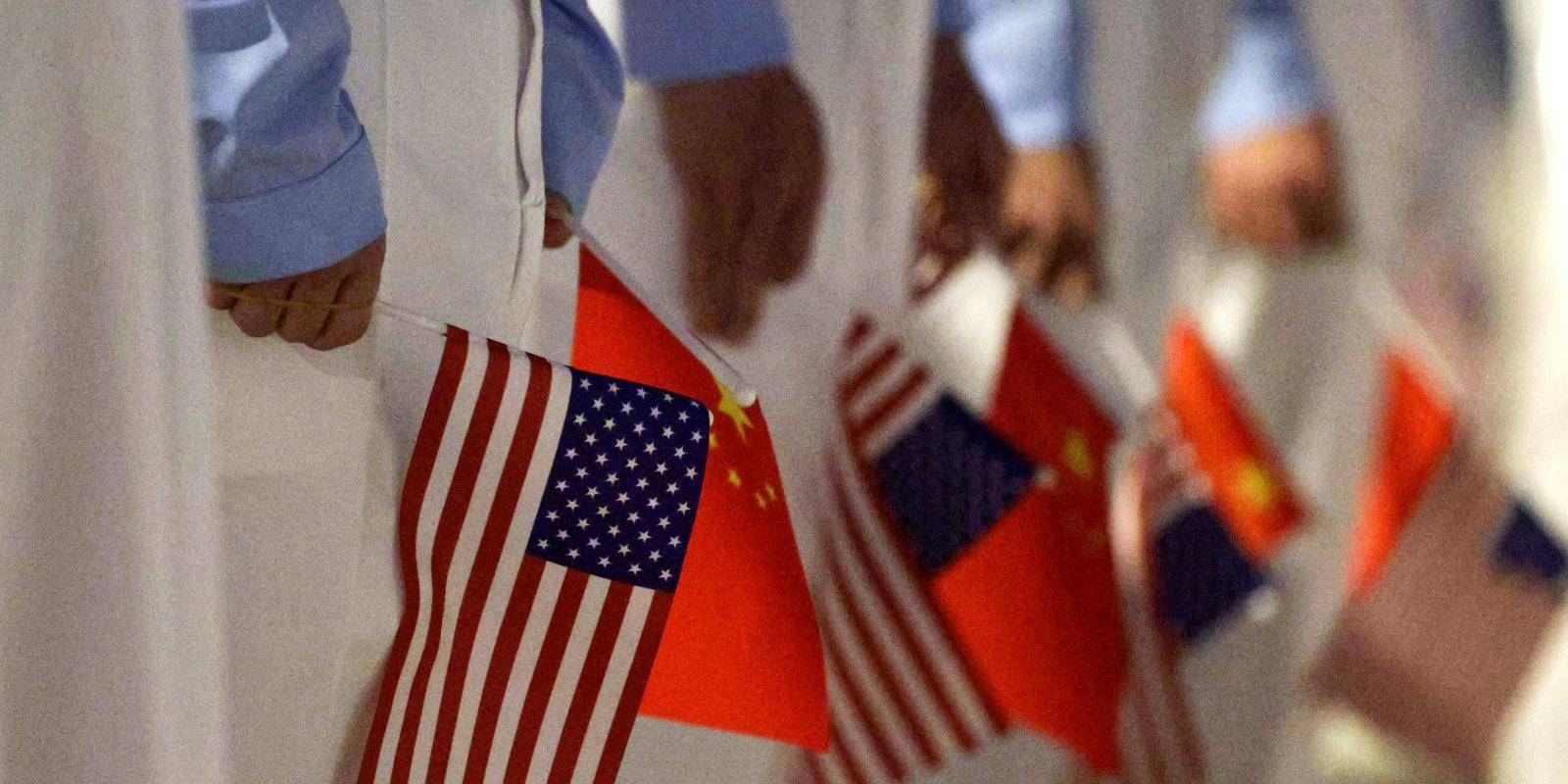
Image — Chinese youth hold American and Chinese flags as they join officials to welcome US President Donald Trump at Beijing Capital International Airport on 13 May 2026 in Beijing, China. Photo by Alex Wong/Getty Images.
When US President Trump and China’s President Xi meet in Beijing this week, the US list of concrete deliverables is short: keep rare earths flowing, create a board of trade mechanism for non-sensitive sectors, and secure Chinese purchase commitments. The gap between this short agenda and the long list of issues between two nations engaged in grinding, multidimensional competition reveals a shared preference for managing their rivalry rather than resolving it. But while Xi pursues this relationship management as strategy, Trump takes a more transactional and improvisational approach. With three more Trump-Xi meetings expected this year – at APEC in Shenzhen, the G20 in Miami and a Xi state visit – the question now is how each side will use this continued stalemate.
— Laurel Rapp and Max Yoeli discuss the coming summit from the US perspective.
Trump brings a commercial focus to Beijing and will be accompanied by a CEO delegation, reflecting a turn away from focusing on more structural issues. Among his aims are Chinese purchases of American products like soybeans, LNG and Boeing aircraft. While such purchases, even if fulfilled, are unlikely to compensate for the damage to US businesses from the 2025 trade war, the optics are helpful for a politically vulnerable administration.
Xi also brings economic concerns – especially with further US tariffs pending – and will push on technology access. He has also signalled that Taiwan tops his agenda. China has long criticized US military support for Taiwan, which Beijing considers Chinese territory. The Trump administration approved an $11 billion arms package for Taiwan in December but has not yet followed through with delivery – even after Taiwan’s Legislative Yuan approved a special defence budget last week. On Monday, Trump indicated he would discuss the package with Xi, casting doubt on longstanding US policy regarding Taiwan.
The brief agenda spans only a fraction of the US–China relationship. On AI, officials seek to establish a communication channel rather than address underlying competition. On China’s nuclear build-up, Beijing has shown little appetite to engage. Although communication beats silence, such underwhelming efforts sidestep structural dynamics. Other issues like the South China Sea, industrial overcapacity and currency issues are marginal or absent. While the closure of the Strait of Hormuz has pushed Iran up the agenda, the focus will be on immediate resolution levers rather than underlying Chinese support for Iran, Russia and North Korea.
Washington’s narrow focus is itself revealing. It partly reflects the Trump administration’s transactional, short-term approach.More significantly, the 2025 trade war and Chinese rare earth export controls reoriented leverage and exposed vulnerabilities – even more acute given depleted US munitions stocks amid the Iran war.
Going into the summit, both leaders face domestic constraints. Trump is navigating affordability politics, inflation, an unpopular war and setbacks to his trade agenda, with his approval rating at second-term lows. Agricultural communities, core to his support, have lost export markets and face rising fertilizer prices. For Trump, the pressure is on ahead of November’s midterm elections when his Republican party must defend Congressional majorities. He is also on the clock to resolve the Iran war.
Xi, meanwhile, faces debt, deflation, demographic headwinds and softening global demand. China’s latest economic growth target is its lowest since 1991, even as pre-war stockpiles and diversified imports help buffer Iran shocks. But Beijing operates on a longer timeline; Xi answers to party elites and the focus is on stability.
An asymmetric stalemate
The US and China have taken very different approaches to managing their economic rivalry. As the two leaders seek continuing stability to buy time, how they use it is telling.
China has spent the past decade – especially since Trump’s first term – building its economic statecraft architecture, including export controls, the unreliable entity list, the Anti-Foreign Sanctions Law, and rare earth export licensing. China’s October 2025 rare earth export controls showed a willingness to use its dominance over rare earth supply chains as leverage. Although these measures were largely suspended by the so-called ‘Busan truce’, earlier April 2025 controls on permanent magnets and heavy rare earths remain in place. Beijing’s recent order directing companies not to comply with US sanctions against five refineries, accused of importing Iranian oil, also points to China’s growing assertiveness. Related workTrump’s treatment of US allies has weakened his negotiating position with Xi
Cohesive strategy and patient investment have strengthened China’s hand in other critical domains too. China installed more solar capacity in 2024 than the rest of the world combined and dominates battery and EV supply chains. It is also accelerating frontier technology progress and increasingly pushing towards indigenization – even after Washington opened a door by giving the green light for Nvidia H200 chip sales.
But there are gaps, notably advanced lithography, the machinery required to produce cutting-edge semiconductors. And China’s foundations are not unshakeable: fixed-asset investment struggled in 2025, the property sector continues to drag, and industrial policy draws mounting external backlash.
The US picture is more mixed. Trump administration policy is an uneven companion to private sector innovation – and often a hindrance. In areas with bipartisan support, consistent policy and strategic coherence can deliver progress. Continued export control coordination with the Netherlands and Japan on lithography is one example; efforts to develop alternatives to China’s critical minerals dominance are another, though they will take years to fully realize.
In other areas, progress is hampered by policy improvisation: the back-and-forth on tariffs, curtailed deployment of renewables, damaged research and state capacity, narrowing talent pathways, and a pattern of White House policy reversals.The US economy has nonetheless proven resilient, drawing on deep inherited advantages, such as AI infrastructure investment, energy abundance, deep capital markets, and innovation ecosystems. But tailwinds alone are insufficient. Without more coherent policy, including an industrial policy doctrine, gaps will emerge and grow.
Evaluating summit outcomes
For trade partners looking ahead, little will change. Hedging and trade diversification remain prudent policy. More broadly, evaluating the summit’s outcomes demands looking past immediate headlines and statements to the data and execution that follow. What commitments are made on the economic side – and whether they are fulfilled – are particularly important and will set the stage for future meetings.
Our flagship email provides a round-up of content, plus the latest on events and how to connect with the institute.Enter emailSubscribe
content
While the expectation is for no drastic changes, three unlikely scenarios are worth considering. The first is dramatic change in the Middle East, whether a ceasefire, Hormuz reopening or resumed bombing. The second is a bilateral blowup, although an impulsive response by the Trump administration that strains the Busan truce would face domestic backlash. Third is a small but real risk that Trump offers an unexpected accommodation – including on Taiwan language or technology controls – in exchange for economic and commercial benefits.
A summit where pomp and ceremony meets policy continuation is more likely and will allow for a collective exhale. Stability buys both nations more time. The more pointed question is what each does with it. Forget the hackneyed notion that China thinks in centuries. Against a US system that operates in news cycles and swings between elections, even modest long-term discipline is advantageous. And Beijing is using this time to build. If Washington fails to match this effort with greater policy coherence and execution it will enter the next three Trump–Xi meetings in a weaker position.
New study finds link between certain sleep patterns and higher mortality in older adults
If Grandpa occasionally dozes off in front of the TV or squeezes in a power nap after lunch, it’s probably no big deal. But if he can’t keep his eyes open at the breakfast table, even after a full night of sleep, that could be a red flag, according to researchers at Mass General Brigham.
In a new study published in partnership with Rush University Medical Center, excessive napping by older adults is linked with higher mortality rates, signaling a possible connection to underlying disease.
“We know that older people tend to nap a lot. And we do a lot of work on age-related diseases, so we were thinking napping could predict mortality in older adults,” said Chenlu Gao, a researcher in the MGB Department of Anesthesiology, and lead author of the study. Gao is also a research fellow in the division of sleep and circadian disorders at Brigham and Women’s Hospital.
“We had this great opportunity to collaborate with the Rush Alzheimer’s Disease Center, who have a comprehensive data set,” said Gao. “Using this data set, we found that there is a connection between daytime napping and mortality in older adults.”
The Rush Memory and Aging Project, which began in 1997 as a cohort study looking at the cognition and neurodegeneration of older adults in northern Illinois, proved invaluable to Gao’s research. In 2005, the Rush project began having participants wear wrist monitors for 10 days to measure rest-activity data — allowing researchers to extract extensive information on nap length, frequency, timing, and day-to-day variability.
“What is great about this study is that it objectively measured daytime napping patterns, not just via self-report,” Gao said.
At baseline, there was little connection between mortality and subjects who napped within or below the “average” amount for their age group — just under an hour for participants in this study whose ages fell mostly in the early 80s range.
“Short naps, or within one hour per day of napping, are most likely benign or not associated with additional risks,” Gao said. “Our participants, on average, nap about 50 minutes per day, and they take on average about two naps per day.”
“Short naps, or within one hour per day of napping, are most likely benign or not associated with additional risks.”Chenlu Gao
By 2025, researchers had access to as much as 19 years’ worth of follow-up statistics from 1,338 total participants — all in retirement and older than 56. They found that both longer and more frequent naps were associated with higher mortality in the age group observed. Notably, each additional hour of daytime napping per day was associated with a roughly 13 percent higher mortality risk while each extra nap per day was associated with a 7 percent higher mortality risk.
Gao wants to make one thing clear: These findings do not suggest that the naps cause poor outcomes, but rather that they may serve as a warning sign for underlying disease.
“We think naps are more like a reflection of health conditions,” she said. “If you think about when you get the flu, you tend to be very tired during the day. Maybe you take several naps, but you also have other visible symptoms, so you know the nap is because of the flu. For some older adults who nap a lot during the day, their conditions may not have those very visible symptoms, so they don’t know they have the conditions causing them to feel really tired.”
And while the study is limited in determining a causal relationship between napping and health, Gao said there could be other factors that explain the associations between the two.
“I would imagine that those who are socially more active and also physically more active tend to be less depressed, less anxious, would be napping less,” said Ruixue Cai, another researcher at the MGB Department of Anesthesiology and the second author of the paper. “And just anecdotally, when we talk to older adult participants in our other studies, a lot of them say that they were really lonely and bored during the day because they’re retired, and so they would go take a nap.”
The data revealed another red flag to researchers — napping in the morning.
“Because for a healthy person, after a night of sleep, they should feel pretty refreshed and able to stay awake in the morning hours, but for people who are not so healthy, they may struggle with sleepiness even in the morning hours,” Cai said.
According to the study, morning nappers had a 30 percent higher mortality risk compared to those who nap in the early afternoon.
However, the occasional napper — regardless of age — should not be alarmed when they feel like getting some quick shut-eye, Gao said.
“I think those are fine,” she said. “We usually suggest limiting the naps to 20 minutes, and finish before 2 or 3 p.m., just so it doesn’t affect nighttime sleep.”
Gao emphasized this new data is no substitute for clinical advice.
“There are studies that try to implement long-term nap interventions to see if that will influence health. This is a really good future direction,” she said. “Findings from these studies would tell us how long-term nap habits influence health and inform clinical nap guidelines, beyond our current findings.”
Adam Meyers, senior vice president of counter adversary operations, CrowdStrikePhoto by Anna Moneymaker/Getty Images
North Korea’s army of cyber operatives stole a record $2 billion in digital assets last year, fueled by the largest financial theft ever reported—$1.46 billion stolen in a single operation from crypto exchange Bybit.
Recommended Video
The attackers pulled off the heist by compromising a software developer’s laptop at a third-party platform the Dubai-based Bybit relied on, and then stealing the developer’s credentials and ultimately draining the assets from the exchange, according to the FBI.
That $1.46 billion payload was the most spectacular strike in what turned out to be a record 2025. North Korea-linked cyber groups stole a combined $2.02 billion last year, up 51% year-over-year, according to a new CrowdStrike report shared with Fortune ahead of its release on Thursday. The stolen billions were almost certainly laundered and will be used to fund the regime’s military and nuclear weapons programs, the 2026 Financial Services Threat Landscape Report states.
With the success of 2025 in the rear view, operatives from the Democratic People’s Republic of Korea (DPRK) are zeroing in on the financial services industry, CrowdStrike found. The latest findings, which cover activity observed from April 2025 through March 2026, reveal that North Korean adversaries have become the most prevalent state-sponsored intrusion threat facing financial firms, consumer banks, and related providers in the financial services sector.
The percent of hands-on-keyboard break-ins, meaning real human attackers inside a financial institution’s network, grew 43% globally and 48% in North America over the past two years, CrowdStrike reported. Financial services jumped from being the sixth most-targeted sector in the first quarter of 2025 to the fourth most-targeted in the first quarter of 2026 behind tech, consulting and professional services, and manufacturing.
And the DPRK’s tried-and-true scheme involving North Korean IT workers pretending to be American job seekers doubled the volume of its attacks in 2025, according to CrowdStrike, making it the most active North Korea-linked form of attack the firm tracks. The IT worker operation, in which thousands of North Korean men trained in software developmentare stationed in China, Russia, and other locations, functions by using American identities to land remote tech jobs at American and European companies.
The scheme has been so successful, law enforcement has created a joint FBI-National Security Division task force to disrupt the operations and have dealt a series of harsh prison terms to American accomplices who have willingly aided the North Koreans.
A Nashville laptop farm and New York recruiting front
Generally, the IT workers running the employment scam fabricate résumés and software development profiles using stolen identities to appear legitimate—or they recruit American accomplices to rent out their names to the workers in exchange for quick cash and sometimes a recurring cut of the proceeds. The IT workers take their salary, often earned doing real work, and then send most of the money back to the DPRK where authoritarian ruler Kim Jong-Un uses it to fund the country’s nuclear weapons program. In some cases, the IT operatives share intelligence with the DPRK’s malicious hacking army to help steal data or organize additional theft.
This month, two American men were sentenced to 18 months in federal prison each for operating “laptop farms” and helping North Korean IT workers get remote jobs at nearly 70 American companies in separate schemes that generated more than $1.2 million for the DPRK. The term laptop farm refers to the setups the accomplices create after fraudulently accepting laptops from companies and installing software and remote desktop applications to shield the IT workers identities’ and help funnel their salaries.
Matthew Isaac Knoot ran a laptop farm out of his Nashville home between July 2022 and August 2023, court records show, and helped the North Korean scheme with jobs at four companies that paid more than $250,000 for IT work. Most of the money was reported to the IRS and Social Security Administration in the name of a real person whose identity was stolen. Knoot helped transfer the salary to accounts outside the U.S. and into accounts associated with North Korean and Chinese operatives, the DOJ said.
In addition to 18 months in prison, Knoot was ordered to pay $15,100 in restitution to victim companies and forfeit another $15,100, which is what the DPRK IT workers paid him for his help in the scheme.
A New York man, Erick Ntekereze Prince, was also sentenced to 18 months for laptop farming. Prince pleaded guilty to wire-fraud conspiracy and was ordered to forfeit the $89,000 DPRK IT workers paid him. According to authorities, Prince worked in the scheme from June 2020 through August 2024 and used his recruiting firm, Taggcar Inc., to direct “certified” IT workers to U.S. companies. He also kept U.S. company laptops at his New York home and installed remote access software so the IT workers could appear as though they worked from his residence.
The DOJ said Prince was part of a scheme that, in total, obtained work from 64 U.S. companies that paid more than $943,069 in salary payments. Four others were charged in the scheme, including Emanuel Ashtor and Pedro Ernesto Alonso de los Reyes. Ashtor awaits trial and de los Reyes is in custody in The Netherlands, authorities said. Two others charged, Jin Sung-il and Pak Jin-Song, are North Korean and remain at large. Ashtor’s lawyer did not immediately respond to a request for comment and de los Reyes could not be reached.
The Knoot and Prince sentencings bring the total number of Americans sent to prison for working as accomplices to at least nine since last year.
‘Golden unicorns’
Adam Meyers, senior vice president of counter adversary operations at CrowdStrike, said last year he investigated about one DPRK-related attack a day, and this year it’s closer to two. In the month of March 2025, CrowdStrike identified 33 insider threat operations linked to Famous Chollima, CrowdStrike’s term for the North Korean IT worker scheme. In March 2026, Meyers said CrowdStrike identified 45 operations.
The IT workers strike opportunistically, said Meyers, so if there’s a job opening posted online, they’ll just go for it with the goal of getting as many jobs as possible. He described the operation as “high tempo, low sophistication.” However, the DPRK operatives have become highly skilled at appearing to recruiters as “golden unicorn” job applicants that are irresistible to hiring teams, he added.
“Their job is to make revenue for the weapons program of North Korea,” said Meyers. “So they are going to do whatever they can in terms of finding jobs.”
The UN has pegged the DPRK’s IT worker revenue generation at $250 million to $600 million per year. The UN’s Multilateral Sanctions Monitoring Committee, which tracks DPRK sanctions violations and evasion tactics, revealed at its latest meeting in January that the scheme has now victimized 40 countries around the globe.
The DPRK threat is compounded by the fact that traditional financial institutions, an increasingly prevalent target, have pushed further into digital asset services and crypto in recent years, an area North Korean operatives have deep experience working to exploit.
In the fourth quarter of 2025 alone, a North Korea-linked group that CrowdStrike calls “Stardust Chollima,” tripled the pace of its attacks, targeting at least 21 crypto and fintech firms across North America, Europe, and Asia in a single two-month period.
The attackers used AI to generate fabricated people and video-conference environments by using images and videos of real executives and offices to make job seekers believe the sham interviews, CrowdStrike found.
The hard way
Meyers said traditional financial institutions should absorb the “hard lessons” the crypto industry has taken in—sometimes at enormous cost.
“They need to make sure they follow best practices in terms of things like having cold storage versus hot storage,” Meyers said, referring to security protocols for offline digital assets versus connected wallets. “Making sure that you have multi-factor authentication, making sure that you have multiple control factors in place in terms of authorizing transfers” and steadfast defensive measures will help guard financial institutions.
CrowdStrike’s report assessed that the DPRK cyber operations targeting consumer banks and other financial services firms will intensify through 2026, driven by international sanctions and the need to fund North Korea’s military and weapons programs.
Meyers said protecting against the intrusions is a constant battle and as companies tighten their defenses, operatives will shift tactics. And then the cycle begins again.
“It’s a constant battle to stop them from being successful,” said Meyers. “Companies really need to look at those lessons learned and make sure they’ve learned them—before they learn them the hard way.”
In 2001, Fortune first convened the smartest people we know, bringing together CEOs and founders, builders and investors, thinkers and doers. Since then, Fortune Brainstorm Tech has been the place where bold ideas collide. From June 8–10, we will return to Aspen—where it all began—to mark 25 years of Brainstorm. Register now.
Amanda Gerut is the west coast editor at Fortune, overseeing publicly traded businesses, executive compensation, Securities and Exchange Commission regulations, and investigations.
The opening headlines from the summit between Donald Trump and Xi Jinping in Beijing signal an openness on the Chinese side towards stabilising relations with the US. In his opening remarks, the Chinese president noted that China and the US “should be partners not rivals”. But he warned Trump that a crisis over Taiwan could lead to “clashes and even conflicts”.
With Xi also indicating that there will be more opportunities for US companies to do business in China, the stage is set for a relatively successful summit.Both sides can claim it as a success because it offers some concrete benefits in the form of a trade war avoided and at least the prospect of cooperation on global issues such as the Iran war. It also sets a generally more positive tone for relations between the two countries.
Such an outcome is particularly troubling for Russia’s president, Vladimir Putin, who will see his relevance and leverage diminished by more stable and predictable US-China relations. Putin’s aspirations to position Russia as a great power depend on Moscow either being strategically useful to Washington and Beijing, or gaining leverage with them by demonstrating a capacity to be disruptive.
However, on both counts, Putin’s hand has been substantially weakened. His war against Ukraine is no longer a priority issue for the US, with the two main American interlocutors in peace talks, Steve Witkoff and Jared Kushner, focused on negotiations with Iran.
Putin’s latest phone call with Trump on April 29 will have been disappointing for the Russian leader. His offer to take Iran’s highly enriched uranium to Russia was reportedly rebuffed by Trump, who told him to focus on “ending the war with Ukraine”. And days later the Kremlin was forced to scale back its annual military parade in Moscow, due to concerns that it could be targeted by Ukrainian forces.
On the Chinese side, things are possibly even more troubling. The last face-to-face meeting between Xi and Putin took place in September 2025. They have only held one video conference since then. A Kremlin statement during the Trump-Xi summit that Putin will visit China soon smacks more of desperation than confirmation.
Our mission is to share knowledge and inform decisions.
About us
Xi Jinping greets Donald Trump at a welcome ceremony in Beijing, China, on May 14. Maxim Shemetov / EPA
Putin’s leverage
While Putin appears sidelined in the US-China relationship, he is not without cards of his own. Major global issues – including wars in Ukraine and Iran, energy security and the future of the international order – are still connected to Russia. This provides Putin with a degree of leverage in his relations with both Xi and Trump.
But exercising this leverage comes with significant risks, especially in areas where Chinese and US interests are more aligned with each other than with Russia. Take the case of the Iran war as an example.
Russia benefits most from this conflict continuing.
While Russian support is unlikely to enable Iran to win the war, it will give the regime in Tehran more time to avoid defeat and increase the costs for the US, its regional allies and the global economy. This is not going to play well with Trump, who is under mounting domestic pressure to wind down the war in Iran.
Beijing has offered Iran some support throughout the war, for example by helping it bypass western sanctions on the export of its oil. But there are clear limits to how far China will go. For China, its relationship with the US is far more important than the one with Iran. This tilts the balance of preferences in Beijing towards an end of the conflict rather than towards its continuation.
This does not mean that China and the US will now align against Russia. Relations between Russia and China are longstanding and deep across a range of issues. Their “no-limits partnership” may be increasingly asymmetric, but there is still a great deal of anti-American and anti-western alignment between them.
The US under Trump is also more ambivalent about its stance on Russia than under previous administrations. Trump’s transactional foreign policy – and his urge to make deals rather than pursue a consistent strategy – is something Russia will continue to try to leverage to its own advantage.
Ahead of the Trump-Xi summit, Kremlin spokesman Dmitry Peskov released a statement in which he said “the path to the implementation of a whole range of economic projects will be open” if the White House agrees to decouple trade from the war in Ukraine. This indicates that Moscow is fully aware of this opportunity – as well as the challenge to offer the US something China cannot.
The Xi-Trump summit is a party to which Putin was not invited. The fact that the US and China seem to be heading towards a period of better-managed relations indicates that his efforts to make his presence felt have largely failed. This does not bode well for his aspirations to restore Russia to its Soviet-era status as a great power – but it does not imply that he will give up.
Stefan Wolff Professor of International Security, University of Birmingham
Disclosure statement
Stefan Wolff is a past recipient of grant funding from the Natural Environment Research Council of the UK, the United States Institute of Peace, the Economic and Social Research Council of the UK, the British Academy, the NATO Science for Peace Programme, the EU Framework Programmes 6 and 7 and Horizon 2020, as well as the EU’s Jean Monnet Programme. He is a Trustee and Honorary Treasurer of the Political Studies Association of the UK and a Senior Research Fellow at the Foreign Policy Centre in London.
Republish our articles for free, online or in print, under Creative Commons licence.Republish this article
The Conversation meets a real need in the information ecosystem. Our authors are subject-matter experts who offer clarity and insight into the issues facing the world. An outlet where you can find real expertise from authors without axes to grind, published by an organisation with no agenda to push. Thousands of media organisations worldwide republish our content for their readers. But the same business model that has freed us from the influence of billionaire owners or big business advertisers comes with its own challenges. Universities are under enormous financial pressure, their income streams squeezed in every direction. Your support as our readers is crucial to securing The Conversation’s future. Donations are an essential bulwark against unexpected loss of income. Around 2,000 of our readers give monthly to support our work. If you’re not among them but value what we do, please consider giving today.
President Trump toasts during a state banquet at the Great Hall of the People this evening in Beijing. Photo: Kenny Holston/The New York Times
In an evening toast, PresidentTrump said his visit to China has been “a great honor.” He also said that Chinese leader Xi Jinping will visit the White House in September. Meanwhile, Xi warned Trump that they may clash over Taiwan if the issue is handled improperly. Go deeper.
Senators unanimously approved a resolution to withhold their pay during government shutdowns, an attempt to make federal closures financially painful for lawmakers. Go deeper.
U.S. Border Patrol chief Mike Banks is stepping down, CBS News reports. He’s the latest in a string of Trump administration immigration officials to leave their posts. Go deeper.
Honda postedits first-ever full-year loss ($2.7 billion), caused in part by sluggish electric vehicle adoption.
Go deeper. The World Cup final will feature a star-studded halftime show headlined by Madonna, Shakira and BTS, FIFA announced. Go deeper.
Obama on Iran: "We pulled it off without firing a missile. We got 97% of their enriched uranium out. There’s no dispute that it worked and we didn’t have to kill a whole bunch of people or shut down the Strait of Hormuz."pic.twitter.com/eNlogMZAee
— Joe Rogan Podcast News (@joeroganhq) May 14, 2026










 Menu
Menu Search



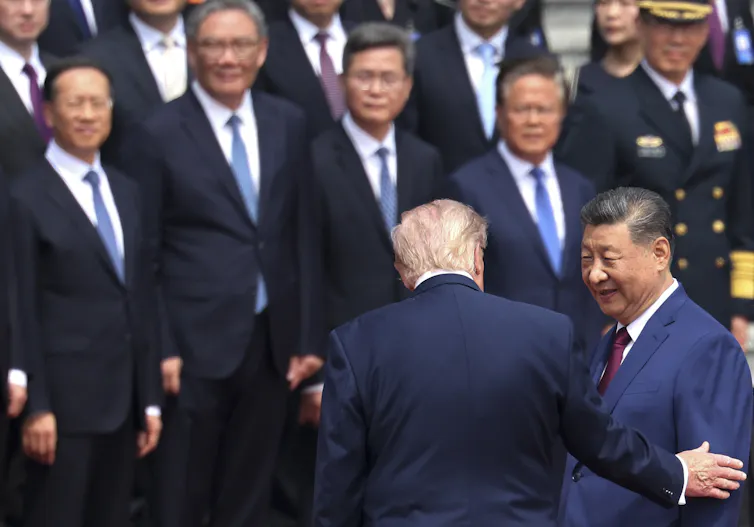


 President Trump toasts during a state banquet at the Great Hall of the People this evening in Beijing. Photo: Kenny Holston/The New York Times
  Senators unanimously approved a resolution to withhold their pay during government shutdowns, an attempt to make federal closures financially painful for lawmakers.
  Honda posted its first-ever full-year loss ($2.7 billion), caused in part by sluggish electric vehicle adoption.
  canisgallicus