

-
Archives
- April 2026
- March 2026
- February 2026
- January 2026
- December 2025
- November 2025
- October 2025
- September 2025
- August 2025
- July 2025
- June 2025
- May 2025
- April 2025
- March 2025
- February 2025
- January 2025
- December 2024
- November 2024
- October 2024
- September 2024
- August 2024
- July 2024
- June 2024
- May 2024
- April 2024
- March 2024
- February 2024
- January 2024
- December 2023
- November 2023
- October 2023
- September 2023
- August 2023
- July 2023
- June 2023
- May 2023
- April 2023
- March 2023
- February 2023
- January 2023
- December 2022
- November 2022
- October 2022
- September 2022
- August 2022
- July 2022
- June 2022
- May 2022
- April 2022
- March 2022
- February 2022
- January 2022
- September 2021
- August 2021
- July 2021
- June 2021
- May 2021
- April 2021
- February 2021
- January 2021
- December 2020
- November 2020
- October 2020
- September 2020
- August 2020
- July 2020
- June 2020
- May 2020
- April 2020
- March 2020
- February 2020
- January 2020
- December 2019
- November 2019
- October 2019
- September 2019
- August 2019
- July 2019
- June 2019
- May 2019
- April 2019
- March 2019
- February 2019
- January 2019
- December 2018
- November 2018
- October 2018
- September 2018
- July 2018
- June 2018
- May 2018
- April 2018
- March 2018
- February 2018
- January 2018
- December 2017
- November 2017
- October 2017
- September 2017
- August 2017
- July 2017
- June 2017
- May 2017
- April 2017
- March 2017
- February 2017
- January 2017
- December 2016
- November 2016
- October 2016
- September 2016
- August 2016
- July 2016
- June 2016
- May 2016
- April 2016
- March 2016
- February 2016
- January 2016
- December 2015
- November 2015
- October 2015
- September 2015
- August 2015
- July 2015
- June 2015
- May 2015
- March 2015
- January 2015
-
Meta
GZERO QUICKTAKE: Ian Bremmer: Supreme Court blocks Trump’s Tariff power
Posted in Uncategorized
Leave a comment
Recent studies in neuroscience and psychology are reframing ADHD not merely as a set of cognitive hurdles but as a powerful driver of breakthrough creativity and innovation.
Recent studies in neuroscience and psychology are reframing ADHD not merely as a set of cognitive hurdles but as a powerful driver of breakthrough creativity and innovation.
Long stereotyped for difficulties with focus, attention, and impulse control, individuals with ADHD traits often exhibit superior divergent thinking—the capacity to generate a wide array of novel ideas by connecting distant or unrelated concepts. This stems from reduced adherence to rigid mental frameworks, enabling freer conceptual expansion and the production of more original, unconventional solutions than neurotypical counterparts.
Heightened mind-wandering, especially when deliberate (purposefully allowing thoughts to drift), acts as a fertile source for this creativity, bypassing conventional boundaries to yield abundant “outside-the-box” insights. Complementing this cognitive flexibility is a neurological drive for novelty rooted in lower baseline dopamine signaling. This creates a chronic need for stimulation, translating into exploratory, risk-tolerant behavior and a propensity for adventure—qualities that can disrupt routine settings but prove invaluable in dynamic fields. Impulsivity, often reframed as rapid action initiation, becomes a catalyst for pursuing bold ideas and seizing opportunities in high-stakes environments. These traits align closely with the profiles of many successful entrepreneurs, inventors, and pioneers. In fast-evolving creative and innovative economies, the ADHD brain’s wiring for quick associative leaps, tolerance of uncertainty, and motivation through novelty-seeking provides a distinct edge, turning potential challenges into engines of originality and progress. Emerging evidence from 2025–2026 research reinforces this view: studies link stronger ADHD traits to elevated creative achievements via mediated mind-wandering, intuitive insight-driven problem-solving, and higher real-world inventive output, highlighting neurodiversity’s role in fueling societal advancement. [Maisano, H., et al. (2026). ADHD Symptoms Predict Distinct Creative Problem-Solving Styles and Superior Solving Ability. Personality and Individual Differences (February 2026)]
·
Posted in Uncategorized
Leave a comment
Sir Winston Churchill on Islam:
Sir Winston Churchill on Islam:
How dreadful are the curses which Mohammedanism lays on its votaries! Besides the fanatical frenzy, which is as dangerous in a man as hydrophobia in a dog, there is this fearful fatalistic apathy. The effects are apparent in many countries. Improvident habits, slovenly systems of agriculture, sluggish methods of commerce, and insecurity of property exist wherever the followers of the Prophet rule or live. A degraded sensualism deprives this life of its grace and refinement; the next of its dignity and sanctity. The fact that in Mohammedan law every woman must belong to some man as his absolute property—either as a child, a wife, or a concubine—must delay the final extinction of slavery until the faith of Islam has ceased to be a great power among men. (The River War I: 248-49) #ShariaKills #IslamKills

Posted in Uncategorized
Leave a comment
Al Jazeera: The released ‘Epstein files’ reveal how Jeffrey Epstein used student visas …
Posted in Uncategorized
Leave a comment
The Deep View: Goodbye virtual assistant, hello AI Chief of staff
| Goodbye virtual assistant, hello AI chief of staff |
| For over a decade, the tech industry has been racing to create the perfect virtual assistant. Now, the goal is rapidly shifting due to AI agents. The new north star is to create an AI chief of staff. |
| So, what’s the difference, and what does that look like? |
| Siri, Alexa, Google Assistant, and countless other virtual assistants have been trying to cozy up to us for over a decade, automating tasks and reducing the number of steps to get things done. But they’ve mostly been pretty disappointing, limited to little more than announcing the weather, setting cooking timers, and helping dictate messages. |
| The new AI agent boom, led by Claude Code / Claude Cowork and OpenClaw, has changed the equation in just the past two months. Even just a few weeks ago, we were talking about how these new tools were finally launching the era of true “personal AI agents” that can perform routine tasks on our behalf. |
| But the concept has advanced even further in recent weeks, especially driven by the OpenClaw community. The enthusiasts who are spinning up OpenClaw instances are racing ahead, giving us a picture of the future of agents. They have rapidly gone from trying to create super-smart, widely skilled agents to orchestrating teams of agents, each with dedicated strengths and specific capabilities, not unlike human teams. For many of these folks, they now have a stack of Mac minis running multiple agents and sub-agents. |
| And that’s where a different concept has now emerged: the AI chief of staff. |
| I first heard it from Jason Calacanis on This Week in Startups, where Calacanis was recently speaking to Mitesh Agrawal of Positron AI and said, “This is going to save you inbox management [and] Slack management. These are the chores that you typically, as CEO, would hire a chief of staff [or] an executive assistant to do. You’ve now used an OpenClaw agent to do [it].” |
| Agrawal reported that it’s saving him an average of at least 30 minutes per day. Calacanis pointed out that’s over 3 hours per week (for a startup founder) and 150 hours per year, which is the equivalent of getting 3 extra weeks per year. That kind of time savings compounds over time, and it’s likely to accelerate as the technology improves and gets easier for more people to access. |
 |
| Another concept Calacanis used to understand the power of this chief of staff phenomenon was to view it as democratizing services previously available only to the ultra-wealthy. He compared it to the way Uber can act like your personal chauffeur, Airbnb can function like having vacation homes in beautiful cities around the world, and JSX can make it feel like having a private jet. A chief of staff is someone who knows your needs and preferences and can act independently to make important tasks happen on your behalf. It was previously something limited to presidents, heads of state, and CEOs. That’s a lot for AI agents to live up to. But if they can pull it off, it will become one of the most powerful upgrades to everyday life that the current AI boom can deliver. |
Posted in Uncategorized
Tagged ai, artificial-intelligence, chatgpt, machine-learning, technology
Leave a comment
Netflix: Hitler, Nuremberg and a Journalist, who we know so little about. An interview: “William L. Shirer (1960), starring Mike Wallace
Posted in Uncategorized
Leave a comment
Futurism: AI Will Destroy Millions of White Collars Jobs in the Coming Months, Andrew Yang Warns, Driving Surge of Personal Bankruptcies
AI Will Destroy Millions of White Collars Jobs in the Coming Months, Andrew Yang Warns, Driving Surge of Personal Bankruptcies
“Do you sit at a desk and look at a computer much of the day? Take this very seriously.”
By Joe Wilkins
Published Feb 19, 2026 9:01 AM EST
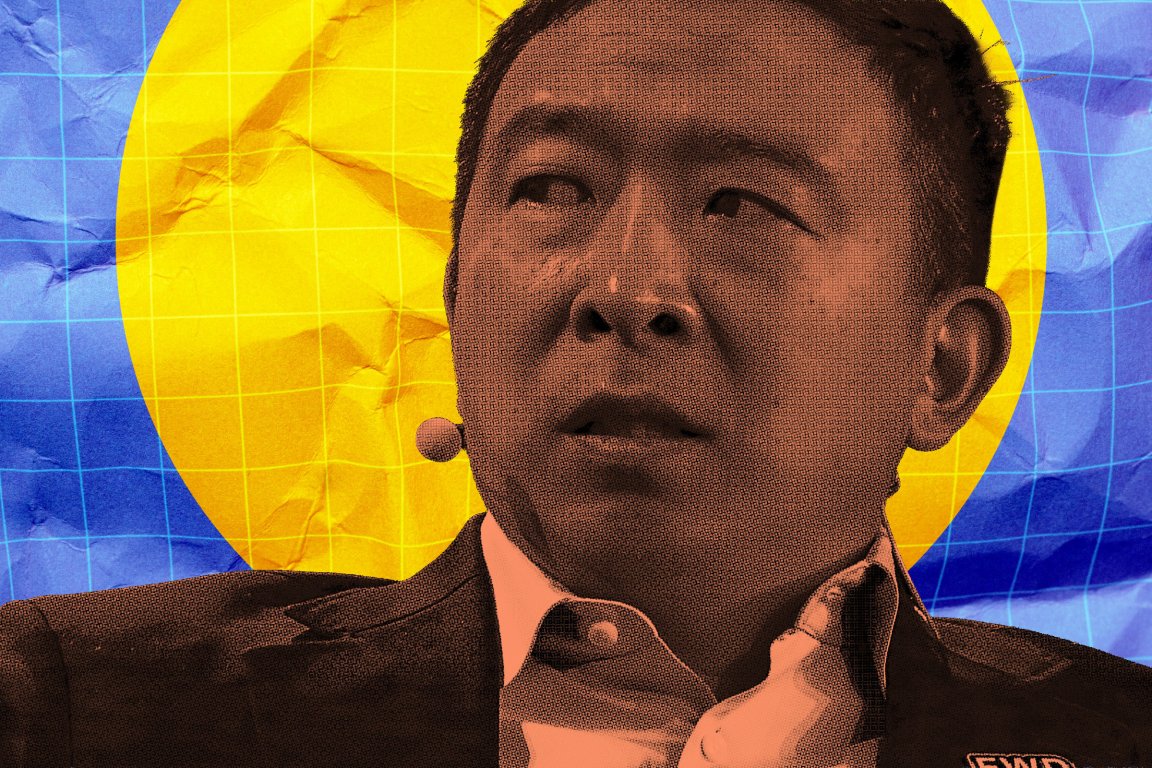
Andrew Yang — millionaire entrepreneur, noted Ivy leaguer, and one-time presidential hopeful — has a grim warning for his fellow salaried professionals: AI is about to wipe “millions” of office jobs over the coming months.
In an essay published on his Substack and flagged by Business Insider, Yang explained what he calls the “great disemboweling of white-collar jobs” due to AI.
“Do you sit at a desk and look at a computer much of the day?” he challenged. “Take this very seriously.”
“This automation wave will kick millions of white-collar workers to the curb in the next 12-18 months,” Yang wrote. “As one company starts to streamline, all of their competitors will follow suit. It will become a competition because the stock market will reward you if you cut headcount and punish you if you don’t. As one investor put it, ‘sell anything that consists of people sitting at a desk looking at a computer.’”
Yang predicts that mid-career office professionals will be among the first to go. Right now, there are around 70 million office workers in the United States, but “expect that number to be reduced substantially, by 20-50 percent in the next several years,” the entrepreneur warned.
Yang went so far as to urge anyone in mid-career management, particularly those who own homes in the affluent burbs of Silicon Valley or Westchester County, New York to put there house up for sale now, to avoid the mad scramble once the labor apocalypse hits. “It might not feel great being first, but you don’t want to be last,” Yang wrote.
Going on, Yang predicted that personal bankruptcies will “surge” as office workers struggle to find gainful employment to maintain their lifestyles. This, he says, will also come for service workers down-wind of office labor — those employed as drycleaners, hair stylists, and dog walkers.
The “great disemboweling” will likewise impact recent college grads — a section which is already suffering through a brutal hiring market in the US — according to Yang.
All of this will result in even greater unrest and angst as the wealth generated by the AI spending boom will largely go to the few CEOs and executives at the top of the food chain. “Imagine what people are going to think when we all feel like serfs to AI overlords that have soaked up the white-collar work?” Yang posits.
At the end of the day, Yang’s pronouncement reads like a lot of the other AI doomsaying out there, much of which comes, ironically, from the tech moguls themselves. Like those prophecies, Yang’s ends when it comes time to supply a constructive answer to the world-upending crisis beyond some vague idea of universal basic income.
“Expect it to get incredibly, intergenerationally rough out there,” Yang concluded. “Batten down the hatches, and do what you can for yourself and those around you.”
Joe Wilkins
Correspondent
I’m a tech and transit correspondent for Futurism, where my beat includes transportation, infrastructure, and the role of emerging technologies in governance, surveillance, and labor.
Posted in Uncategorized
Tagged ai, artificial-intelligence, business, chatgpt, technology
Leave a comment
Axios: New wave of mutating drugs
| New wave of mutating drugs |
 |
| Illustration: Allie Carl/Axios |
Overdose deaths are falling. But America’s illicit drug supply is evolving into lethal cocktails: fentanyl plus stimulants, sedatives and novel synthetics that hide in party powders and pressed pills, Axios’ Russell Contreras reports. Why it matters: Those polydrug blends — with nicknames “pink cocaine,” “rhino tranq,” “benzo-dope” and others — are harder to detect, reverse and warn against. Some can even result in the loss of limbs. That makes recent overdose declines fragile and public-health victories reversible if policy, testing and treatment don’t catch up. “When we crack down on one drug, the market innovates,” Sheila Vakharia, managing director of the Department of Research and Academic Engagement at the Drug Policy Alliance, tells Axios. Catch up quick: The Trump administration has highlighted record fentanyl seizures at the southern border and credited tougher enforcement with helping drive overdose deaths down. Yes, but: Experts say the domestic drug market is adapting in real time. Targeting fentanyl has incentivized illegal drug suppliers to experiment with other compounds that bypass detection, creating what Vakharia describes as a “whack-a-mole” cycle.Keep reading. |
Posted in Uncategorized
Leave a comment
Axios: Coming Pain at the Pump – Iran
| Coming pain at pump |
 Data: EIA. Chart: Axios Visuals Data: EIA. Chart: Axios VisualsThe cost to fill up your car will probably climb soon — and the oil price spike over Iran tensions isn’t the only reason, Axios’ Ben Geman writes: A seasonal cost rise typically starts at the end of February or early March as spring-break season kicks off and refiners start producing costlier fuel.Share this story … Get Axios Future of Energy. |
Posted in Uncategorized
Leave a comment
 canisgallicus