🚨ELON MUSK: "We need to have empathy that is deep, not shallow. Shallow empty is caring about criminals, deep empathy is caring about the victims of criminals. Why do we have repeat violent offenders released on the street? How can America be the greatest country in the world… pic.twitter.com/B0CqfceMjF
(@AutismCapital) posted at 4:24 am on Sun, Oct 20, 2024:
ELON MUSK: “I think the value of a college education is somewhat overweighted. Too many people spend four years, accumulate a ton of debt and often don’t have useful skills that they can apply afterwards.
I have a lot of respect for people who work with their hands and we need electricians and plumbers and carpenters and that’s a lot more important than having incremental political science majors. I think we should not have this idea that in order to be successful you need a four year college degree.”
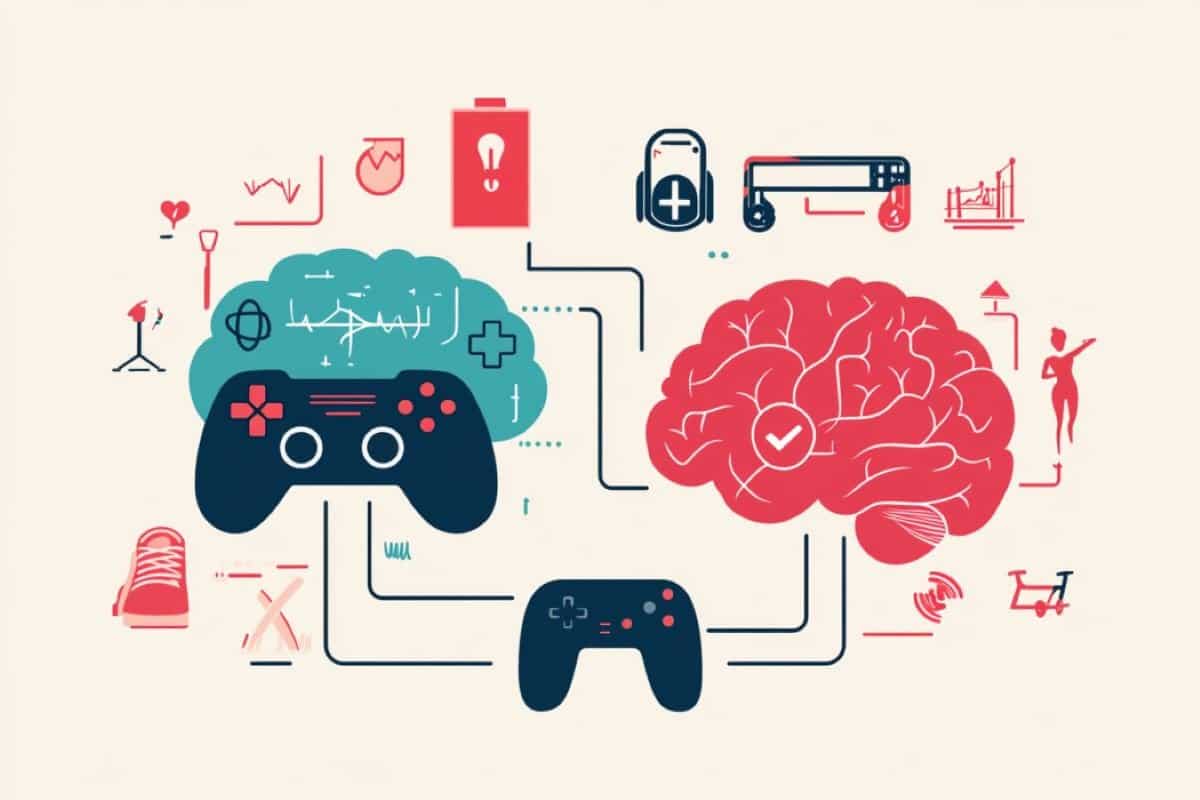
Summary: A large-scale study has found that playing video games boosts cognitive abilities, but has no impact on mental health, while exercise improves mental well-being without affecting cognition. Over 1,000 participants completed cognitive tests after playing video games and completing a lifestyle survey.
The results showed that frequent gamers performed cognitively like people 13.7 years younger, while individuals who met WHO exercise guidelines were more likely to report lower anxiety and depression. This study offers valuable insights into the different ways video gaming and exercise influence brain health and mental well-being.
Key Facts:
Frequent video gaming improved cognition but did not affect mental health.
Exercise improved mental well-being but had no effect on cognitive abilities.
Gamers performed cognitively like people 13.7 years younger on average.
Source: University of Western Ontario
Playing video games may boost your cognitive abilities and exercise can play a role in improving your mental health, but not the other way around, a large-scale study has found.
The surprise findings are part of the Brain and Body study, a collaboration between Western University and the Science and Industry Museum for the Manchester Science Festival. A preprint of the work is published on PsyArXiv.
More than 2,000 participants from around the world registered for the study, which asked them to complete a lifestyle survey followed by Creyos online brain games that accurately measure different aspects of cognition, such as memory, attention, reasoning and verbal abilities.
“The results of this study could help all of us choose activities that promote healthy cognitive aging,” said Owen. Credit: Neuroscience News
The study, spearheaded by Western’s celebrated neuroscientist Adrian Owen, showed that among approximately 1,000 people who finished all the tasks, playing video games had a positive effect on an individual’s cognition, but did not seem to affect their mental health.
Exercising more than 150 minutes per week, in accordance with the World Health Organization (WHO) guidelines, however, was seen to improve mental well-being but had no effect on cognition.
“Playing video games was associated with improved cognitive abilities but not better or worse mental health, whereas more physical activity was associated with improved mental health but not better or worse cognitive health,” said Owen, a professor in cognitive neuroscience and imaging at Western’s Schulich School of Medicine & Dentistry.
According to results of the study, people who frequently play video games (five or more hours per week for a single type of game) performed cognitively, on average, like people who were 13.7 years younger. Individuals who engaged infrequently with video games (less than 5 hours per week across all kinds of games) performed like people 5.2 years younger.
In terms of mental health, participants who met or exceeded the WHO recommendations of 150 minutes of physical activity per week were 12% more likely to report having no symptoms of depression and 9% more likely to have no symptoms of anxiety.
The data also suggest that these differences in mental health were not driven by the severely depressed or anxious individuals in the study; rather, physical activity made the greatest difference at the lower end of both scales where symptoms were either mild or absent altogether.
Brain-body connection
Despite the seemingly obvious examples of a brain-body connection, like the way being “hangry” affects the ability to concentrate, stress makes muscles tense or steady breathing calms the mind, relatively little is understood about how brain and body affect each other.
Completing the survey helped the Western team build a better understanding of how lifestyle relates to the long-term health of our brains.
“The results of this study could help all of us choose activities that promote healthy cognitive aging,” said Owen.
Details of the findings will be presented by Owen at the Science and Industry Museum on Oct. 19 as part of the Manchester Science Festival, running from Oct.18 to 27. Visitors to the festival will also have the opportunity to take part in a pilot study to follow up these results.
While the online survey focused on long-term effects, the Western team will be inviting festival-goers to help them in a pilot study to examine short-term improvements to cognition as a result of exercise and gaming.
Owen will also provide commentary about how the brain handles sound and light within an artistic commission for the festival by the Squidsoup collective. Inspired by the work of Piet Mondrian, “State of Mind” is a three-dimensional arrangement of LED lights within an intriguing and informative soundscape.
About this cognition and mental health research news
Author: Jeff Renaud Source: University of Western Ontario Contact: Jeff Renaud – University of Western Ontario Image: The image is credited to Neuroscience News
Characterizing the Cognitive and Mental Health Benefits of Exercise and Video Game Playing: The Brain and Body Study
Two of the most actively studied modifiable lifestyle factors, exercise and video gaming, are regularly touted as easy and effective ways to enhance brain function and/or protect it from age-related decline.
However, some critical lingering questions and methodological inconsistencies leave it unclear what aspects of brain health are affected by exercise and video gaming, if any at all.
In a global online study of over 1000 people, we collected data about participants’ physical activity levels, time spent playing video games, mental health, and cognitive performance using tests of short-term memory, verbal abilities, and reasoning skills from the Creyos battery.
The amount of regular physical activity was not significantly related to any measure of cognitive performance; however, more physical activity was associated with better mental health as indexed using the PHQ-2 and GAD-2 screeners for depression and anxiety.
Conversely, we found that more time spent playing video games was associated with better cognitive performance but was unrelated to mental health.
We conclude that exercise and video gaming have differential effects on the brain, which may help individuals tailor their lifestyle choices to promote mental and cognitive health, respectively, across the lifespan.
Join our Newsletter
I agree to have my personal information transferred to AWeber for Neuroscience Newsletter ( more information )
Sign up to receive our recent neuroscience headlines and summaries sent to your email once a day, totally free.
We hate spam and only use your email to contact you about newsletters. You can cancel your subscription any time.
A house in Kibbutz Be’eri that was burned by Hamas terrorists on October 7 (Photo: Yoav Keren/Wikimedia Commons/CC BY-SA 4.0)
A new AI tool created by Microsoft, in association with a group documenting the events of the Hamas attack on Israel on October 7 of last year, facilitates the preservation of real-time testimonies from that day as part of a collective memory.
Engineers from Microsoft Israel’s R&D department teamed up with Edut 710 to develop the unique tool, which allows anyone to create a personalized ceremony, event or learning session.
The ceremony can include video testimonies, background materials, artwork and texts related to the October 7 attack,and creators end up with a customized PowerPoint presentation of their work.
Edut 710 was founded to preserve the memories of the victims of the mass terror attack in southern Israel, collecting testimonies of survivors in full detail. So far, more than 1,200 testimonies have been collected as part of a project to create a comprehensive national archive. This archive could then be used to teach and discuss the attack even when survivors cannot be physically present.
Browsers of the collective digital memory bank do so with the help of advanced language-learning models (LLMs),which allow it to carry out sophisticated searches across hundreds of testimonies.
“Collaborating with the amazing employees at Microsoft has allowed us to take another step forward in our commitment to the survivors, their stories, and society at large, ensuring that these testimonies reach a wide audience and are not just preserved in archives,” said Itay Ken-Tor, co-founder and Head of Partnerships and Resource Development at Edut 710.
“We are excited by the collaboration and the amazing dedication of the Microsoft volunteers who created such an important and impactful platform in such a short time, and we thank them all,” he said.
“Above all, we are deeply moved by the ability of users to send personal thanks to the survivors whose testimonies they heard. From our experience and consultations with experts, we know how significant this is for them.”
The icon indicates free access to the linked research on JSTOR.
Russia’s invasion of Ukraine has fundamentally altered Europe’s geopolitical landscape, with profound implications for its energy security. The invasion exposed Europe’s vulnerabilities, particularly its heavy reliance on Russian oil and natural gas.This has repositioned energy security as a central concern, with Russia seen as a significant threat to the stability and reliability of Europe’s energy supply chains. In response, Europe has taken decisive action to reduce its energy imports fromRussia. In May 2022, the European Council agreed to ban almost 90 percent of Russian oil imports—with the notable exception of pipeline crude oil—complemented by stringent sanctions aimed at weakening Russia’s economic leverage.Does this shift suggest that the European Union’s transition to renewable energy is accelerating, not solely for climate reasons, but to achieve energy sovereignty amidst a geopolitical crisis?
The ongoing conflict in Ukraine has indeed catalyzed a unified European reassessment of energy dependence on Russia, prompting collective efforts to diversify energy sources and bolster energy security. As security studies scholar Marc Ozawa notes, Western European countries historically framed their reliance on Russian energy within the context of market transactions and economic interests, a legacy of the oil shocks during the 1970s OPEC crisis. In this light, reliance on Russian energy was, in some respects, a strategic response to earlier crises.
In 2022, Europe’s reorientation didn’t initially lead to an immediate surge in renewable energy adoption. Instead, Europe increasingly turned to alternative suppliers, such as the United States, Norway, and North African states, for liquefied natural gas (LNG). With gas reserves critically low, coal production was temporarily ramped up to meet immediate energy demands. By the winter of 2022, Europe had largely mitigated the energy crisis through timely gas deliveries and the rapid construction of offshore LNG terminals. Nevertheless, blackouts and energy price spikes plagued Central and Eastern Europe, raising concerns about the reliability of renewable energy to meet high winter demands. While there have been efforts to deploy renewable technologies in alignment with the European Union’s Green Deal, greater emphasis should be placed on upgrading ageing energy infrastructure and enhancing the interconnectedness of national grids, enabling greater regional cooperation.
Get your fix of JSTOR Daily’s best stories in your inbox each Thursday.
Privacy PolicyContact Us You may unsubscribe at any time by clicking on the provided link on any marketing message.
Moreover, a just transition must ensure not only environmental sustainability but also equitable access to reliable energy, especially during periods of peak demand, such as in the winter months in Europe. If renewable energy sources alone are unable to meet these demands, and if the high costs of necessary infrastructure—such as battery storage, grid expansion, and green hydrogen technologies—are underestimated, energy inequalities may worsen.Therefore, assuming that renewables alone can drive a just transition requires careful scrutiny, as it risks overlooking the broader socioeconomic challenges of ensuring energy security and affordability for all.
Looking ahead, geopolitical and climatic pressures are likely to reshape international alliances. The energy sovereignty crisis triggered by Russia’s war on Ukraine offers crucial lessons for the future of global energy security and climate policy. Proactively advancing a just transition will be essential to navigate these unfolding challenges.
The policy has upset many of Amazon’s employees who say it wastes time with additional commuting and the benefits of working from the office are not supported by independent data.
A logo for Amazon Web Services (AWS) is seen in Paris, France, March 20, 2024. [Photo: Reuters/Benoit Tessier/File Photo]
One of Amazon’s top executives defended the new, controversial 5-day-per-week in-office policy on Thursday, saying those who do not support it can leave for another company.
Speaking at an all-hands meeting for AWS, unit CEO Matt Garman said nine out of 10 workers he has spoken with support the new policy, which takes effect in January, according to a transcript reviewed by Reuters.
Those who do not wish to work for Amazon in-office five days per week can quit, he suggested.
“If there are people who just don’t work well in that environment and don’t want to, that’s okay, there are other companies around,” said Garman.
Subscribe to the Compass Newsletter.Fast Company’s trending stories delivered to you daily
“By the way, I don’t mean that in a bad way,” he said, adding “we want to be in an environment where we’re working together.”
“When we want to really, really innovate on interesting products, I have not seen an ability for us to do that when we’re not in-person,” said Garman.
The policy has upset many of Amazon’s employees who say it wastes time with additional commuting and the benefits of working from the office are not supported by independent data.
Amazon has been enforcing a three-day in-office policy, but CEO Andy Jassy said last month the retailer would move to five days to “invent, collaborate and be connected.”
Some employees who had not been previously compliant were told they were “voluntarily resigning” and were locked out of company systems.
Amazon, the world’s second-largest private employer behind Walmart, has taken a harder line on returning to office than many of its technology peers such as Google, Meta and Microsoft who have two- to three-day in-office policies.
“I’m actually quite excited about this change,” said Garman. “I know not everyone is,” he said, noting it’s too hard to accomplish the company’s goals with only the mandatory current three days of in-office work.
Garman said under the three-day policy, “we didn’t really accomplish anything, like we didn’t get to work together and learn from each other,” because people may be in offices on different days.
In particular, Garman said the company’s leadership principles, which dictate how Amazon ought to operate, were difficult to follow with just a three-day-per-week requirement.
“You can’t internalize them by reading them on the website, you really have to experience them day-to-day,” he said.
One, “disagree and commit”—which is understood to mean that employees can express grievances but then should dive into a project as outlined by leaders—is not ideal for remote work, Garman said.
“I don’t know if you guys have tried to disagree via a Chime call,” he said, referring to the company’s internal messaging and calling function. “It’s very hard.”
Sarai (Sarah Idan) Miss Iraq (@RealSarahIdan) posted at 7:13 pm on Thu, Oct 17, 2024:
As an Iraqi who grew up in war zone, I’m not used to seeing justice served or happy outcomes. Until today Iraq, Syria, Lebanon, Yemen, Iran, and Afghanistan are ruined under radical Islamists like Yahya Al Sinwar and Nasrallah.
It brings me tears of joy every time Israel eliminates an evil man. It gives me hope that one day my people might also be freed from Islamist oppression. In just one year, Israel has restored hope for millions! And For those anti-Zionists in the West who march alongside pro-terrorist groups. If only you understood our history and struggle, you’d realize that for 76 years, Israel has been the true Resistance! giving hope to the voiceless silent majority! I know I may be speaking into the void, as stories of those who don’t fit the mainstream narrative often go unheard, but I’ll share these thoughts nonetheless. Israel could very well become the savior of the region.
Neuroscience News (@NeuroscienceNew) posted at 6:35 pm on Fri, Oct 18, 2024:
Disrupted Protein Clearance After TBI Tied to Alzheimer’s
Researchers have discovered a biological link between traumatic brain injury (TBI) and Alzheimer’s disease, identifying how TBI increases the risk of Alzheimer’s through disrupted protein clearance.
Disrupted Protein Clearance After TBI Tied to Alzheimer’s Researchers have discovered a biological link between traumatic brain injury (TBI) and Alzheimer’s disease, identifying how TBI increases the risk of Alzheimer’s through disrupted protein clearance. The study found that TBI downregulates a key protein called BAG3, which is responsible for clearing damaged proteins in the brain. This leads to the accumulation of hyperphosphorylated tau, a hallmark of Alzheimer’s disease, in neurons. Using mouse models, the researchers showed that overexpressing BAG3 reduced tau buildup and improved cognitive function, highlighting its therapeutic potential. These findings suggest that targeting BAG3 could help prevent or mitigate Alzheimer’s pathology following TBI. The research opens new possibilities for developing treatments that reduce the risk of Alzheimer’s in individuals with a history of TBI.










 eliminates an evil man. It gives me hope that one day my people might also be freed from Islamist oppression. In just one year, Israel has restored hope for millions! And For those anti-Zionists in the West who march alongside pro-terrorist groups. If only you understood our history and struggle, you’d realize that for 76 years, Israel has been the true Resistance! giving hope to the voiceless silent majority! I know I may be speaking into the void, as stories of those who don’t fit the mainstream narrative often go unheard, but I’ll share these thoughts nonetheless. Israel could very well become the savior of the region.


