A weekly newsletter featuring the biggest ideas from the smartest people
Fields marked with an * are required
The germ of the idea that would eventually turn into Pulitzer Prize-winning journalist and historian Anne Applebaum’s new book, Autocracy, Inc.: The Dictators Who Want to Run the World, came to her on a 2020 trip to Venezuela, a country long plagued by dictatorship, economic collapse, and mass migration.
“Venezuela was once the wealthiest country in South America,” Applebaum tells Big Think. “Now it’s the poorest, and you can see the destruction of the last 20 years everywhere you look. Given the degree to which the government operates against the interests of the nation, you have to ask, where is all power coming from?” The answer, though unclear to most foreign observers, is common knowledge among Venezuelans: not from President Nicolás Maduro himself, but a global network of autocratic states offering military and financial support.
It shouldn’t come as a surprise that the current Venezuelan government is closely tied to other communist regimes, such as Cuba, Nicaragua, and China. Far more puzzling, at least at a glance, are its strong relations with countries like Russia, a failed democracy turned Christian nationalist neo-empire under the leadership of Vladimir Putin, or Iran, an Islamic theocracy. “Venezuela is on the other side of the world and does not share a common history or culture with these countries,” Applebaum says, yet their regimes are working together to keep Maduro in charge.
Venezuela’s far-reaching foreign relations bear little resemblance to the geopolitical landscape of the Cold War when much of the globe was divided between like-minded communist dictatorships with planned economies and liberal democracies with free markets.
“Unlike military or political alliances from other times and places,” Applebaum writes in Autocracy, Inc., “this group operates not like a bloc but rather like an agglomeration of companies, bound not by ideology but rather by a ruthless, single-minded determination to preserve their personal wealth and power; Autocracy, Inc.”
In the following interview, Applebaum — who, as one reviewer notes, began warning of the danger of post-communist Russia and the need for NATO’s expansion as early as the 1990s — explains how this new form of autocracy emerged, why Western democracies failed to anticipate its evolution, and what (if anything) could be done to stop Autocracy, Inc. from taking over the world.
Beyond ideology
Although today’s autocracies are by no means devoid of ideology — think, for example, of the centrality of Russkiy Mir in the Kremlin’s war against Ukraine, or China’s recent crackdowns on free enterprise and “bourgeois liberalization” — Applebaum argues that relationships between autocratic states are no longer based on ideological factors.
Top Stories
“The Soviet Union and the Soviet satellite states of Eastern Europe used the same language and had similarly constructed social systems,” she tells Big Think. “The Polish Communist Party, for example, was a copy of the Soviet Communist Party.” Even if they weren’t completely identical, they “nevertheless operated under a single banner and claimed to have the same goals. When we talked about the Soviet Bloc, we saw ourselves as fighting one thing.”
In contrast, the autocracies working together today don’t claim to be fighting for the same cause.
“The Iranians are fighting for an Islamic Middle East, the Chinese claim not to be imperialists at all, and the Russians are reconstructing an empire,” Applebaum says. “They are very different in what they say they’re doing. Some of them are one-man states, some have a ruling party, and some are ruled by a corrupt elite, like Venezuela.”
While some historians question the extent to which Soviet leaders actually believed the Marxist-Leninist propaganda they were spreading, they certainly wanted others to believe they did. The USSR “made a lot of effort to show itself to the rest of the world as building a communist utopia, even if — in practice — that was far from the truth.”
If today’s autocracies have anything in common, it’s their identification of a common enemy: the US, the EU, and NATO.In short, the “free” world and its purportedly liberal, democratic, and humanistic values. But while autocrats like Putin and Xi Jinping often claim to be engaged in a metaphysical war over the future of the civilization, Applebaum argues that their hostility towards “Western” concepts like feminism, fair elections, and an independent judiciary isn’t driven by an underlying philosophy so much as a practical and decidedly anti-intellectual desire to hold onto absolute power.
“It’s all empty window dressing,” she says, pointing to Russia — which Putin, in his battle against Western wokeness, passes off as overwhelmingly White and Christian — as an example. “Actually, Russia has very high divorce rates. Very few Russians go to church […] It’s also very multicultural, maybe even more so than Europe or the US, with a large percentage of Muslims. There’s an entire republic inside Russia: Chechnya, whose legal system is based on elements of Sharia law. The idea that Russian society represents some kind of pure, traditional system for White Christians is an absurdity.”
Speaking of Russia: While it’s no longer the world’s most powerful autocracy — that’s arguably China, for its larger economy, military capabilities, and global influence — the nation has played a large role in writing the modern autocratic playbook, introducing strategies that other autocracies (including China) went on to adapt.
“Russia had a Soviet legacy to build on,” Applebaum responds when asked how the country’s current regime came into being, and why it functions the way that it does. “The fact that Putin is a former KGB officer and has built a state based on people who were trained by the KGB did give them a particularly paranoid and cynical outlook on the world.”
As a result, “Putin is not someone who believes societies should be self-organized. He thinks all social activity and movement should be coordinated from the center. He’s not someone who can imagine a legitimate democratic opposition. For him, any opposition is by definition a foreign agent.” While the rise of Putinism was not inevitable — a different politician might well have steered Russia towards the democratic future many Russians were expecting after the USSR’s collapse — “once Putinism began, the fact that it took this form is maybe not surprising,” given the person he is and the environment that molded him.
Wandel durch Handel
For much of the Cold War, sanctions and censorship minimized contact between the two sides of the Iron Curtain.In the 1980s, when the construction of transcontinental gas pipelines opened up the possibility of restoring trade relations, European politicians like the West German Chancellor Willy Brandt argued that business with the USSR and its satellites would not just lead to the export of Western commercial goods but also democratic values.
Brandt’s policy — summarized by the slogan Wandel durch Handel or “Change through Trade” — gained momentum after the Cold War when much of the Western world believed it was only a matter of time before the communist bloc would adopt the victorious political and economic system of its rival.
“During the nineties,” Applebaum says, “people believed democracy would spread, and they had reason to believe it. It’s what happened in Europe after the Second World War when there was a concerted effort to create economic ties, which in turn led to political relationships and the spread of democracy to Western Europe, including Portugal and Spain,which were not initially democratically run.” After 1989, the European experience also worked out for Central Europe, which saw the adoption of liberal democracy in Poland, the Czech Republic, Slovakia, and the Baltic States.
“But while this was not a completely fake or false idea,” Applebaum continues, “I think we neglected the notion that, once you have a global information system, that influence can also go the other way. Putin’s rise to power took place in conjunction with money laundering schemes that were conducted with the help of Western financial institutions.”
Over the years, the Kremlin has not only suppressed anti-corruption and pro-democratic movements within Russia but also sought to export its agenda to other countries by way of TV channels and websites promoting misinformation. While the effect of these media operations is difficult to measure, there is no doubt that the US and Europe are currently experiencing a surge of political movements threatening to turn their struggling democratic governments into interns of Autocracy, Inc. The increasing popularity of figures like Donald Trump, Marine Le Pen, and Giorgia Meloni, not to mention the democratic backsliding of countries like Hungary, Brazil, and Israel, suggests that Handel durch Wandel has worked, just not necessarily in the direction that Brandt hoped it would.
Stopping Autocracy, Inc.
However endangered the future of American democracy may be at the moment, Applebaum insists the country has not yet stooped to the same level as Russia or the other regimes that make up Autocracy, Inc.“Sure, there are many venal people and ruthless capitalists here,” she says, “but right now, Joe Biden is not president in order to build up a kleptocratic fortune, keep his money in tax havens, and to make sure that all of his children become oligarchs in their own right.”
However, the upcoming elections might change that. “If Trump wins a second [term], he could alter the purpose of the American government,” she says, by, for example, turning the IRS on his enemies or using the Department of Justice to enrich himself. “I was just at a dinner last night where we asked if we could imagine Russian-style oligarchs in America, meaning people whose wealth depends on the decision of the president. And the answer is yes, you can now imagine it. It doesn’t quite exist yet, but it’s not unthinkable anymore.”
Applebaum’s answer to the threat posed by Autocracy, Inc. is for democratic nations across the world to form a coalition of their own, do so out of the shared realization that “nobody’s democracy is safe,” and work together to root out autocratic influences in their economy and politics at home and abroad.
Many nations are doing the opposite. Between Trump threatening to leave NATO and many European right-wing parties campaigning for their constituencies to follow the UK’s example and withdraw from the EU, a large portion of the Western world seemingly wants to become less involved on the global stage, not more. They want this even though isolationist policies have not only failed — Applebaum asks: “Did the removal of Britain from the European Union give the British more power to shape the world? Did it prevent foreign money from shaping UK politics?” — but also because isolationism is an unrealizable ideal.
“The most important thing looking forward is to understand the importance of working in coalitions,” Applebaum says. “There is very little that the United States can achieve by itself. Making coalitions with countries is how we’re going to make the changes that need to be made, whether it’s fighting kleptocracy and money laundering or regulating the internet, giving people control over their data, and making algorithms more transparent. All those things can be done only in concert with other countries. If you want an America that’s safe and prosperous then you do need some friends in the world. As we learned on 9/11 and through the various financial crises that followed, the world has a way of coming to you even if you don’t come to it.”
Analysis: Pickow’s photos capture the capital and its people at a time when modernisation and internationalisation were gathering pace
American photographer George Pickow possessed an eclectic eye for an image. Born in Los Angeles in 1922, Pickow is most associated with photographing the most recognisable names and faces of modern American jazz, blues, and folk music, from Pete Seeger to Nina Simone. He was also equally adept turning his lens to everyday life of work, sport, leisure, and rituals from Brazil to Russia in the mid to late twentieth century.
Pickow’s wife, the renowned Kentucky folk singer, Jean Ritchie, won a Fulbright scholarship to travel to Ireland and Britain in 1952 to collect Irish folk songs. Pickow accompanied Ritchie on the trip and focused his lens on Ireland, documenting their trip and creating a remarkable photographic archive of over 1,000 images which is now digitally available from the University of Galway Library.
Pickow’s photographs of Dublin capture a unique essence of the city and its people at a point in time when modernisation and internationalisation was gathering at pace. Yet many traditional aspects of city life, from barges transporting goods on the Liffey to city shops and traders, are still visible. The following selection of photographs showcase Pickow’s Dublin, and of the people, places, and events which caught his eye and lens in 1952.
Dublin’s O’Connell Street as seen from the top of Nelson’s Pillar. Photo: George Pickow/Digital Collections University of Galway Library
A mainstay of O’Connell Street (or Sackville Street), Nelson’s Pillar was an ominous if also contentious presence on Dublin’s main thoroughfare from the early 19th century until it was blown up by republicans ahead of the 50th anniversary of the Easter Rising in 1966.
Pickow’s photo of Dublin city from on top of Nelson’s Pillar, 120 metres above street level, presents a vista of the city outwards towards the Dublin mountains in the foggy distance. The footpaths below are busy with shoppers and others ambling around the city. The road is relatively quiet with car parking available in the middle of the street as buses and delivery trucks go about their daily business.
Pickow spent time in Dublin Airport where he photographed the mix of glamour of early commercial air travel, with the planes and cabin crew all photographed, as were the technical skill of the mechanics working on the aircraft engines ferrying passengers from Ireland’s capital to other European and American metropolitan centres.
Staff attending mass in a hangar at Dublin Airport. Photo: George Pickow/Digital Collections University of Galway Library
At a meeting point of tradition and future is Pickow’s photograph of a mass being said in the hanger at Dublin Airport and the blessing of the new plane, the St. Senan. The planes in Aer Lingus fleet at the time often carried names of Irish saints and the St Albert plane is also pictured in the hanger. Both are Bristol 170 Freighter airplanes, passenger and cargo workhorses of the then fleet. The priest faces his congregation from a makeshift altar. The women are seated at the front, with the men standing at the back. It is not known if those attending the mass are passengers or if it is a mass for airport staff and their families.
Children and a street artist on the southside of the Ha’Penny Bridge, Dublin. Photo: George Pickow/Digital Collections University of Galway Library
A group of local children interrupt a street artist painting a scene of Dublin city from the vantage point of the Ha’Penny Bridge. The painter’s canvas is visible and the view of the Liffey he is painting can be seen. One child climbs the railing to talk with the artist, while Pickow captures the street scene in his photograph. The children push a pram with a breadboard on top, possibly on route to a street market across the Liffey at Moore Street or Henry Street on the North side of the river.
A weekly bird market was one of Dublin’s oldest and longest running markets, if also perhaps one of the lesser spotted of gathered street traders. Located on Bride Street for many years until the 1960s, the Dublin Bird Market attracted traders, breeders, enthusiasts and the curious alike, where birds from pigeons to larks were the main draw of the gathered crowd looking to buy or sell. Pickow had a skill of finding local events and customs to photograph and here again he captures a busy scene where largely men and young boys are gathered in the market on a confined city laneway.
Dublin Bird Market. Photo: George Pickow/Digital Collections University of Galway Library
Pickow photographed the Gardaí on parade during his visit in 1952. Pictured is a line of Garda patrol cars in the Upper Castle Yard at Dublin Castle. Seven cars, each with two members of the Garda Síochána standing on the driver’s side, are parked in a line in the yard, with part of the Castle Hall visible in the background. The Garda parade was likely staged especially for Pickow’s visit, creating images that would showcase the state’s police force to an international audience.
Gardai on parade at Dublin Castle. Photo: George Pickow/Digital Collections University of Galway Library
Pickow attended the Dublin home of the American ambassador to Ireland, William Howard Taft III, (grandson of former U.S. president William Howard Taft) and photographed the rather privileged life of the children of the ambassador and their mother, Barbara Taft.
The children are pictured playing the garden of the ambassador’s residence, being tended to by the family nanny, on family outings, and on drives in a comically full Morris Minor car driven by their father. The children are also pictured immersing themselves in Irish culture, learning Irish dancing and language with their home-based tutors. One an outing to Dublin Zoo, William Taft junior is pictured standing on the knee of an elephant, alongside his sisters, Martha and Maria Taft.
William, Martha and Maria, the children of US ambassador to Ireland William Taft, playing in Dublin Zoo. Photo: George Pickow/Digital Collections University of Galway Library
A series of photographs taken by Pickow focus on cyclists making their way around Dublin city. Long before traffic congestion took over, traversing the city by bicycle was still a favoured mode of transport for many Dubliners.
One photograph shows a young man adding his bicycle to a parking rack of hundreds of others, all impossibly similar, parked on the central island of O’Connell Street. Another photograph shows cycling commuters with double decker buses baring down behind them. The buses bear the slogans of Dublin industry advertisements such as Boland’s Biscuits. The faces of the cyclists passing by are quizzical, as to the unknown American photographer facing them from the footpath.
In the image here, we see a group of cyclists, stopped at the junction of O’Connell Bridge with the base of the O’Connell monument clear behind them. The hair and clothing styles all indicate a different time, but yet in a recognisable Dublin.
Follow RTÉ Brainstorm on WhatsApp and Instagram for more stories and updates
The views expressed here are those of the author and do not represent or reflect the views of RTÉ
The WordPress situation has soured in the past several weeks, as a dispute spirals out of control between founder Matt Mullenweg and WP Engine, a platform that many users deploy in order to host their WordPress sites.
In late September, Mullenweg shut off access to WP Engine, alleging the company had extracted value from WordPress (which was created as an open source project) to the tune of hundreds of millions of dollars in investment—all without giving back to the community, and creating confusion by what Mullenweg alleges was breaching WordPress’s trademarks. The WordPress trademark is held by the WordPress Foundation, which Mullenweg is a board member of but doesn’t entirely control. Automattic is a for-profit WordPress host of similar scale as WP Engine, and the two are in fact direct competitors. (Full disclosure: WordPress hosts Fast Company’s website.)
Last month, WP Engine sent a cease-and-desist letter to Automattic alleging Mullenweg had “threatened” that WP Engine must pay Automattic a “very large sum of money” or face his “scorched earth nuclear approach” to WP Engine.Automattic followed up with their own cease-and-desist letter that same day, demanding that WP Engine stop violating their trademark and IP.
While some have sympathy with Mullenweg’s initial claim that WP Engine has built a fortune off the back of an open source project, many have taken umbrage with the way Mullenweg has gone about arguing his case, including snowballing the dispute into a broader one that could have huge implications. After all, WordPress powers around 43.5% of all websites online, according to W3techs.
Now, more than 150 employees have left WordPress’s parent company Automattic (nearly 10% of the workforce) after Mullenweg offered buyouts to anyone who disagreed with his approach with WP Engine. Meanwhile, anyone logging into WordPress.org, Automattic’s commercial hosting service, must now state whether they are affiliated with WP Engine, and Mullenweg has assumed control of the WordPress plugin directory’s presence for a popular plugin under the ownership of WP Engine since June 2022 without the original developers’ permission. (Mullenweg has cited guidelines that plugin makers agreed to as justification for why he “forked” the plugin, or chose to create a separate version for further development independent of the original.)
As a result, some are questioning whether WordPress can survive in its current form. “Matt’s recent actions have unequivocally harmed WordPress, as well as the broader open-source ecosystem,” says Jono Alderson, an independent technical SEO consultant. Alderson was banned from the WordPress community Slack for questioning why the company added a checkbox to WordPress.org’s login page requiring people to say they had no affiliation with WP Engine. Some users were concerned about why the checkbox had been added, and whether their responses could be used in legal action against them—something Mullenweg has not clearly answered. In messages on the WordPress Slack that were then shared on social media, Mullenweg says “It’s up to you whether to check the box or not.” In later posts, he advises people asking for clarity to “Please consult an attorney.”
The situation highlights the risk of allowing one individual total control over something as vital as WordPress is to modern digital life. “It’s hard to believe that one man’s crusade—justified or otherwise—might threaten the stability of nearly half the internet,” says Alderson. Expand to continue reading ↓
Chris Stokel-Walker is a freelance journalist and Fast Company contributor. He is the author of YouTubers: How YouTube Shook up TV and Created a New Generation of Stars, and TikTok Boom: China’s Dynamite App and the Superpower Race for Social Media. More
Summary: New research suggests that reflecting on a parent in therapy can subtly alter how a person recalls feelings from childhood, even if the question is neutral. This process, known as reappraisal, may lead individuals to adjust their emotions or perceptions toward a parent, with potential long-term effects on family dynamics.In one experiment, participants were asked to remember positive or negative attributes of their mothers, which notably impacted their current and past feelings.
This finding underscores the malleability of emotional memories, highlighting a need for awareness in therapeutic practices. Being informed of reappraisal effects could help individuals maintain accuracy in recalling childhood emotions. The study emphasizes the power of self-reflection in therapy and its potential influence on relationships.
Key Facts:
Reflecting on parents in therapy can shift memories and feelings from childhood.
Neutral questions on parents’ traits significantly affected participants’ emotions.
Awareness of reappraisal in therapy may help maintain memory accuracy.
Source: University of Portsmouth
New research suggests a person’s feelings towards a parent can be significantly changed when they are asked to evaluate them during talking therapy, even when the question isn’t suggestive.
Therapists often ask clients to reflect on their relationships with family, as a way to help unlock past memories and feelings. A new study, led by the University of Portsmouth, has explored whether this line of questioning can alter emotions and memories towards a parent – a process known as reappraisal.
Even boosting positive reappraisals comes with risks. Credit: Neuroscience News
The current paper investigates the effect of reappraisals toward participants’ mothers, focusing on the emotions happiness, interest, sadness, and anger. They also looked at how this reflection can affect what they felt about the parent in childhood.
The lead author, Dr Lawrence Patihis from the University’s School of Psychology, Sport and Health Sciences, specialises in memory reliability. He explained why he wanted to investigate this phenomenon: “We all have childhood amnesia in early years, because we’re constantly producing new neurons. This leads to complications around what we think we remember, and what actually happened.
“For example, imagine that someone experiences positive emotions with their father during the first 11 years of their life, but this changes at age 16 when he divorces their mum. What they don’t realise is that this negative re-evaluation of their father will subtly change the memory of their relationship with him when they were younger.
“Existing research has shown memories are changeable, and we wanted to test whether the same could be said about how we remember feeling in childhood towards a parent.”
In the first experiment, some participants were asked to give recent examples of when their mother had exhibited evidence of having a positive attribute, while others were asked for examples of her having a negative attribute.
The results show that their current emotions were significantly changed by the reappraisals, and memories of emotion from childhood were altered as well.
“Therapists and clients should be aware that prompts like this during a session might unintentionally lead to reappraisals of parents, with knock on effects on emotions and memories”, explained Dr Patihis.
“Some therapies that focus on childhood reappraise parents negatively, because the assumption is that relationship problems you have in the present are the result of trauma from childhood.
“But our research supports existing evidence that this process can sometimes manipulate the truth of what people actually felt in the past. The concern is that this can result in a family growing distant from one another in the present.
“This is not to say that individuals with genuine negative experiences shouldn’t trust their feelings – just that everyone should be more aware that their emotions and memories are changeable.”
Even boosting positive reappraisals comes with risks. Dr Patihis added: “It is true that thinking more positively towards a parent can improve the relationship overall, but if you accurately remember childhood feelings of sadness and anger, you can then use that accurate memory to choose to raise your own children differently.
“If people are made aware that therapies can shift memories before beginning a session, that knowledge can help them stay accurate about their childhood memories. I have argued that this should be part of informed consent.”
About this psychology and memory research news
Author: Robyn Montague Source: University of Portsmouth Contact: Robyn Montague – University of Portsmouth Image: The image is credited to Neuroscience News
Reappraising a Parent can Occur With Non-suggestive Questions: Changing Emotions and Memories of Emotion
Whether it is possible to reappraise parents using non-suggestive questions, and whether this has an impact on emotions and memories, is of great interest in both life and psychotherapy.
Past research has shown reappraisals of past situations is associated with changes in memories of emotions. In previous work we showed memories of love could be affected by reappraisals, but did not analyze that dataset on other memories of emotion.
The current paper investigates the effect of reappraisals toward participants’ mothers on the emotions: happiness, interest, sadness, and anger (and on memories of those emotions in childhood).
Results show that emotions appeared to be significantly changed by reappraisals. In Experiment 1 (N = 301; Mage = 36), we found memories of emotion were affected, especially memory of happiness in childhood, but to a lesser degree compared to current emotions. This offered some confirmation of the cognitive appraisal view of memories of emotions.
Experiment 2 (N = 202; Mage = 36) with pretest and posttest measures showed some similar patterns, but with slightly muted effects. Therapists and clients should be aware that non-suggestive prompts might lead to reappraisals of parents, with knock on effects on emotions and memories.
Whether this should be part of informed consent in therapy is open to debate.
Reflecting on Parents in Therapy Can Shift Childhood Memories
Summary: New research suggests that reflecting on a parent in therapy can subtly alter how a person recalls feelings from childhood, even if the question is neutral. This process, known as reappraisal, may lead individuals to adjust their emotions or perceptions toward a parent, with potential long-term effects on family dynamics. In one experiment, participants were asked to remember positive or negative attributes of their mothers, which notably impacted their current and past feelings.
This finding underscores the malleability of emotional memories, highlighting a need for awareness in therapeutic practices. Being informed of reappraisal effects could help individuals maintain accuracy in recalling childhood emotions. The study emphasizes the power of self-reflection in therapy and its potential influence on relationships.
Key Facts:
Reflecting on parents in therapy can shift memories and feelings from childhood.
Neutral questions on parents’ traits significantly affected participants’ emotions.
Awareness of reappraisal in therapy may help maintain memory accuracy.
Source: University of Portsmouth
New research suggests a person’s feelings towards a parent can be significantly changed when they are asked to evaluate them during talking therapy, even when the question isn’t suggestive.
Therapists often ask clients to reflect on their relationships with family, as a way to help unlock past memories and feelings. A new study, led by the University of Portsmouth, has explored whether this line of questioning can alter emotions and memories towards a parent – a process known as reappraisal.
Even boosting positive reappraisals comes with risks. Credit: Neuroscience News
The current paper investigates the effect of reappraisals toward participants’ mothers, focusing on the emotions happiness, interest, sadness, and anger. They also looked at how this reflection can affect what they felt about the parent in childhood.
The lead author, Dr Lawrence Patihis from the University’s School of Psychology, Sport and Health Sciences, specialises in memory reliability. He explained why he wanted to investigate this phenomenon: “We all have childhood amnesia in early years, because we’re constantly producing new neurons. This leads to complications around what we think we remember, and what actually happened.
“For example, imagine that someone experiences positive emotions with their father during the first 11 years of their life, but this changes at age 16 when he divorces their mum. What they don’t realise is that this negative re-evaluation of their father will subtly change the memory of their relationship with him when they were younger.
“Existing research has shown memories are changeable, and we wanted to test whether the same could be said about how we remember feeling in childhood towards a parent.”
In the first experiment, some participants were asked to give recent examples of when their mother had exhibited evidence of having a positive attribute, while others were asked for examples of her having a negative attribute.
The results show that their current emotions were significantly changed by the reappraisals, and memories of emotion from childhood were altered as well.
“Therapists and clients should be aware that prompts like this during a session might unintentionally lead to reappraisals of parents, with knock on effects on emotions and memories”, explained Dr Patihis.
“Some therapies that focus on childhood reappraise parents negatively, because the assumption is that relationship problems you have in the present are the result of trauma from childhood.
“But our research supports existing evidence that this process can sometimes manipulate the truth of what people actually felt in the past. The concern is that this can result in a family growing distant from one another in the present.
“This is not to say that individuals with genuine negative experiences shouldn’t trust their feelings – just that everyone should be more aware that their emotions and memories are changeable.”
Even boosting positive reappraisals comes with risks. Dr Patihis added: “It is true that thinking more positively towards a parent can improve the relationship overall, but if you accurately remember childhood feelings of sadness and anger, you can then use that accurate memory to choose to raise your own children differently.
“If people are made aware that therapies can shift memories before beginning a session, that knowledge can help them stay accurate about their childhood memories. I have argued that this should be part of informed consent.”
About this psychology and memory research news
Author: Robyn Montague Source: University of Portsmouth Contact: Robyn Montague – University of Portsmouth Image: The image is credited to Neuroscience News
Reappraising a Parent can Occur With Non-suggestive Questions: Changing Emotions and Memories of Emotion
Whether it is possible to reappraise parents using non-suggestive questions, and whether this has an impact on emotions and memories, is of great interest in both life and psychotherapy.
Past research has shown reappraisals of past situations is associated with changes in memories of emotions. In previous work we showed memories of love could be affected by reappraisals, but did not analyze that dataset on other memories of emotion.
The current paper investigates the effect of reappraisals toward participants’ mothers on the emotions: happiness, interest, sadness, and anger (and on memories of those emotions in childhood).
Results show that emotions appeared to be significantly changed by reappraisals. In Experiment 1 (N = 301; Mage = 36), we found memories of emotion were affected, especially memory of happiness in childhood, but to a lesser degree compared to current emotions. This offered some confirmation of the cognitive appraisal view of memories of emotions.
Experiment 2 (N = 202; Mage = 36) with pretest and posttest measures showed some similar patterns, but with slightly muted effects. Therapists and clients should be aware that non-suggestive prompts might lead to reappraisals of parents, with knock on effects on emotions and memories.
Whether this should be part of informed consent in therapy is open to debate.
Summary: Researchers have developed a machine learning model that upgrades 3T MRI images to mimic the higher-resolution 7T MRI, providing enhanced detail for detecting brain abnormalities. The synthetic 7T images reveal finer features, such as white matter lesions and subcortical microbleeds, which are often difficult to see with standard MRI systems.
This AI-driven approach could improve diagnostic accuracy for conditions like traumatic brain injury (TBI) and multiple sclerosis (MS), though clinical validation is needed before wider use. The new model may ultimately expand access to high-quality imaging insights without needing specialized equipment. This advancement marks a promising intersection of AI and medical imaging technology.
Key Facts
AI model enhances 3T MRIs to closely approximate the detail of 7T MRIs.
Model could benefit TBI and MS patients by improving visualization of brain abnormalities.
Source: UCSF
At the intersection of AI and medical science, there is growing interest in using machine learning to enhance imaging data captured by magnetic resonance imaging (MRI) technology.
Recent studies show that ultra-high-field MRI at 7 Tesla (7T) could have far greater resolution and clinical advantages over high-field MRI at 3T in delineating anatomical structures that are important for identifying and monitoring pathological tissue, particularly in the brain.
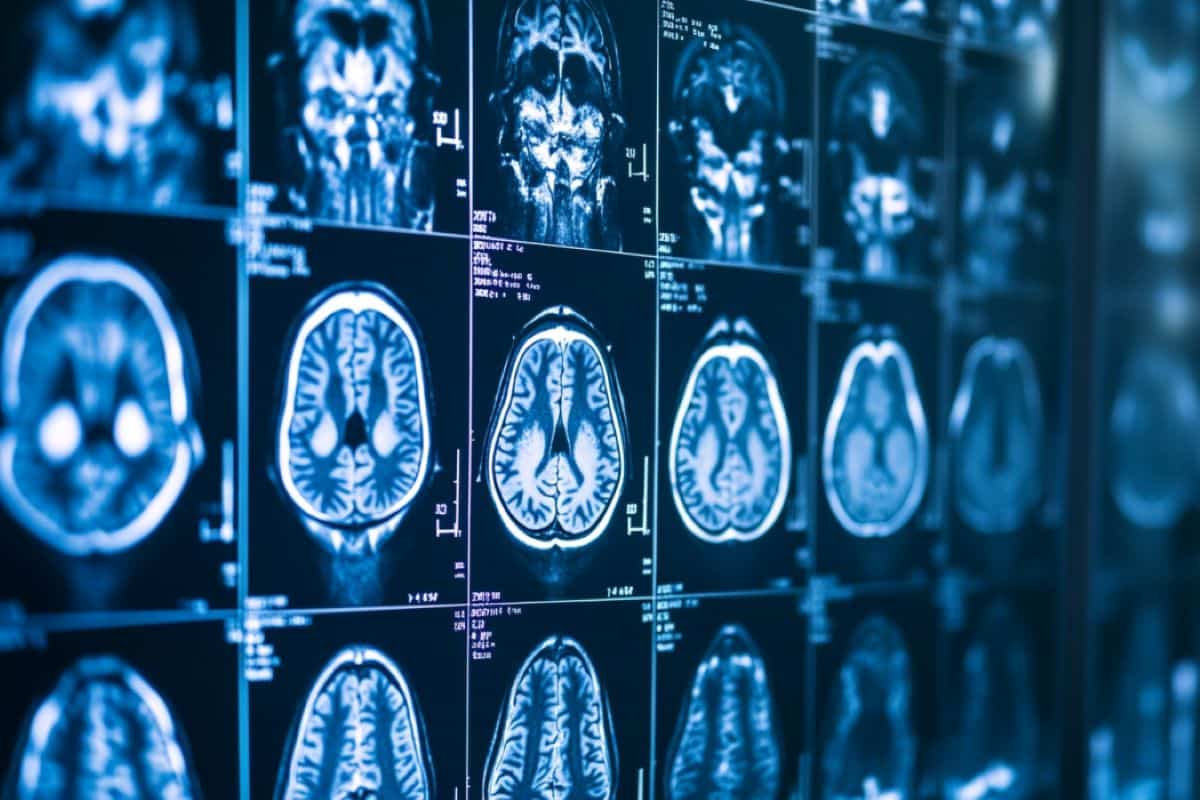
Additionally, the synthesized 7T images better captured the diverse features within white matter lesions. Credit: Neuroscience News
Most clinical MRI exams in the U.S. are performed with 1.5T or 3T MRI systems. As recently as 2022, the National Institutes of Health documented only about 100 7T MRI machines being used for diagnostic imaging worldwide.
Researchers from UC San Francisco developed a machine learning algorithm to enhance 3T MRIs by synthesizing 7T-like images that approximate real 7T MRIs.
Their model enhanced pathological tissue with more fidelity for clinical insights and represents a new step toward evaluating clinical applications of synthetic 7T MRI models.
The study was presented Oct. 7 at the 27th International Conference on Medical Image Computing and Computer Assisted Intervention (MICCAI).
“Our paper introduces a machine-learning model to synthesize high-quality MRIs from lower-quality images. We demonstrate how this AI system improves the visualization and identification of brain abnormalities captured by MRIs in Traumatic Brain Injury,” said senior study author Reza Abbasi-Asl, Ph.D., UCSF Assistant Professor of Neurology.
“Our findings highlight the promise of AI and machine learning to improve the quality of medical images captured by less advanced imaging systems.”
Better to see TBI and multiple sclerosis with
UCSF researchers collected imaging data from patients diagnosed with mild traumatic brain injury (TBI) at UCSF. They designed and trained three neural network models to perform image enhancement and 3D image segmentation using the generated synthetic-7T MRIs from the standard 3T MRIs.
The images generated with the new models provided enhanced pathological tissue for patients with mild TBI. They selected an example region with white matter lesions and microbleeds in subcortical areas to use for comparison.
They found pathological tissue was easier to see in synthesized 7T images. This was evident in the separation of adjacent lesions and the sharper contours of subcortical microbleeds.
Additionally, the synthesized 7T images better captured the diverse features within white matter lesions. These observations also highlight the promise of using this technology to improve diagnostic accuracy in neurodegenerative disorders such as multiple sclerosis.
While synthetization techniques based on machine learning frameworks demonstrate remarkable performance, their application in clinical settings will require extensive validation.
The researchers believe that future work should include extensive clinical assessment of the model findings, clinical rating of model-generated images, and quantification of uncertainties in the model.
About this AI and neuroimaging research news
Author: Reza Abbasi-Asl Source: UCSF Contact: Reza Abbasi-Asl – UCSF Image: The image is credited to Neuroscience News
Two of San Francisco’s leading players in artificial intelligence have challenged the public to come up with questions capable of testing the capabilities of large language models (LLMs) like Google Gemini and OpenAI’s o1. Scale AI, which specializes in preparing the vast tracts of data on which the LLMs are trained, teamed up with the Center for AI Safety (CAIS) to launch the initiative, Humanity’s Last Exam.
Featuring prizes of $5,000 for those who come up with the top 50 questions selected for the test, Scale and CAIS say the goal is to test how close we are to achieving “expert-level AI systems” using the “largest, broadest coalition of experts in history.”
Why do this? The leading LLMs are already acing many established tests in intelligence, mathematics, and law, but it’s hard to be sure how meaningful this is. In many cases, they may have pre-learned the answers due to the gargantuan quantities of data on which they are trained, including a significant percentage of everything on the internet.
Data is fundamental to this whole area. It is behind the paradigm shift from conventional computing to AI, from “telling” to “showing” these machines what to do. This requires good training datasets, but also good tests.Developers typically do this using data that hasn’t already been used for training, known in the jargon as “test datasets.”
If LLMs are not already able to pre-learn the answer to established tests like bar exams, they probably will be soon. The AI analytics site Epoch AI estimates that 2028 will mark the point at which AIs will effectively have read everything ever written by humans. An equally important challenge is how to keep assessing AIs once that rubicon has been crossed.
Of course, the internet is expanding all the time, with millions of new items being added daily. Could that take care of these problems?
Perhaps, but this bleeds into another insidious difficulty, referred to as “model collapse.” As the internet becomes increasingly flooded by AI-generated material which recirculates into future AI training sets, this may cause AIs to perform increasingly poorly. To overcome this problem, many developers are already collecting data from their AIs’ human interactions, adding fresh data for training and testing.
Some specialists argue that AIs also need to become embodied: moving around in the real world and acquiring their own experiences, as humans do. This might sound far-fetched until you realize that Tesla has been doing it for years with its cars. Another opportunity involves human wearables, such as Meta’s popular smart glasses by Ray-Ban. These are equipped with cameras and microphones and can be used to collect vast quantities of human-centric video and audio data.
Traditional human IQ tests have long been controversial for failing to capture the multifaceted nature of intelligence, encompassing everything from language to mathematics to empathy to sense of direction.
There’s an analogous problem with the tests used on AIs. There are many well established tests covering such tasks as summarizing text, understanding it, drawing correct inferences from information, recognizing human poses and gestures, and machine vision.
Some tests are being retired, usually because the AIs are doing so well at them, but they’re so task-specific as to be very narrow measures of intelligence. For instance, the chess-playing AI Stockfish is way ahead of Magnus Carlsen, the highest scoring human player of all time, on the Elo rating system. Yet Stockfish is incapable of doing other tasks such as understanding language. Clearly it would be wrong to conflate its chess capabilities with broader intelligence.
But with AIs now demonstrating broader intelligent behavior, the challenge is to devise new benchmarks for comparing and measuring their progress. One notable approach has come from French Google engineer François Chollet.He arguesthat true intelligence lies in the ability to adapt and generalize learning to new, unseen situations. In 2019, he came up with the “abstraction and reasoning corpus” (ARC), a collection of puzzles in the form of simple visual grids designed to test an AI’s ability to infer and apply abstract rules.
Unlike previous benchmarks that test visual object recognition by training an AI on millions of images, each with information about the objects contained, ARC gives it minimal examples in advance. The AI has to figure out the puzzle logic and can’t just learn all the possible answers.
Though the ARC tests aren’t particularly difficult for humans to solve, there’s a prize of $600,000 for the first AI system to reach a score of 85 percent. At the time of writing, we’re a long way from that point. Two recent leading LLMs, OpenAI’s o1 preview and Anthropic’s Sonnet 3.5, both score 21 percent on the ARC public leaderboard (known as the ARC-AGI-Pub).
Another recent attempt using OpenAI’s GPT-4o scored 50 percent, but somewhat controversially because the approach generated thousands of possible solutions before choosing the one that gave the best answer for the test. Even then, this was still reassuringly far from triggering the prize—or matching human performances of over 90 percent.
While ARC remains one of the most credible attempts to test for genuine intelligence in AI today, the Scale/CAIS initiative shows that the search continues for compelling alternatives. (Fascinatingly, we may never see some of the prize-winning questions. They won’t be published on the internet, to ensure the AIs don’t get a peek at the exam papers.)
We need to know when machines are getting close to human-level reasoning, with all the safety, ethical, and moral questions this raises. At that point, we’ll presumably be left with an even harder exam question: how to test for a superintelligence. That’s an even more mind-bending task that we need to figure out.
Andrew’s experience spans 30 years in industry, government, and academia. Originally a physicist at the Rutherford Appleton Lab, Andrew joined Logica at the height of the early AI boom, a decade later moving to space consultancy Esys, then became MD of QinetiQ’s Space Division, where early AI techniques were being applied to applications like satellite imagery. Andrew subsequently worked as a strategist, specializing in innovation and cyber security, including secondment to Cabinet Office, before becoming CGI’s vice president of cyber security, where AI methods were used for threat detection. Andrew joined Roke Manor Research as Innovation Director, developing a number of products and services that utilized leading-edge AI techniques. Andrew returned to academia as director of innovation and partnerships at Surrey’s new Institute of People-Centered Artificial Intelligence, a group that leverages the University’s 35 years in AI by developing a new focus on creating AI solutions that focus on delivering benefit to people and society.
In a much-needed update to 2003 data on attention-deficit/hyperactivity disorder (ADHD), a new report from the National Center for Health Statistics (NCHS) has found that an estimated 15.5 million US adults are living with the condition – and many are being let down by poor access to treatment.
In the US Centers for Disease Control and Prevention-led NCHS report, featuring data collected from 7,046 Americans throughout October and November last year, nearly 56% of respondents had been diagnosed with ADHD as adults.
The increase in adult diagnosis is multifaceted – from increased telehealth and clinical access to seeking a diagnosis, to a growing awareness that ADHD symptoms had been missed or masked, or misdiagnosed, in childhood.
“Since the start of the COVID-19 pandemic (i.e., March 2020), approximately one third of adults with current ADHD used telehealth to obtain a prescription for ADHD medication (30.5%) or to receive counseling or therapy for ADHD (30.8%),” the survey’s authors noted in the report.
However, the survey also reveals how the current system is failing most who manage to get a diagnosis. It’s estimated that only a third of the 15.5 million people – around 6% of the US adult population – have obtained a prescription for medication to treat their ADHD. What’s more, of that third, the study estimates that three quarters had endured difficulties in accessing the medication due to ongoing supply issues.
In September 2024, the US Drug Enforcement Agency (DEA) announced it would permit the ramping up of the production of slow-release lisdexamfetamine dimestylate – best known by its brand name Vyvanse – by 24%, on the back of significant domestic and global shortages throughout 2023 and early 2024.
This comes after more than a dozen pharmaceutical companies were granted permission by the US Food and Drug Administration (FDA) in August last year to make generic capsules and chewable lisdexamfetamine dimestylate. This didn’t alleviate the demand for medication as it was expected to.
Now, around a quarter of the additional 24% that the DEA permitted to be produced, a quarter will be for the US market, while the rest will be shipped overseas to the large international market that has also suffered from extended shortages.
There have also been issues with the availability of other common stimulant medications Adderall and Ritalin. But no two stimulants (or brain response to them) are alike, so it’s not a simple case of switching between what’s available. In many jurisdictions, this also involves more medical appointments and red tape, without guarantees that a switch will be beneficial or also not face shortages.
“Stimulants are controlled substances with a high potential for abuse, which can lead to addiction and overdose,” noted the FDA and DEA in a joint statement in August 2023. “Therefore, there are limits (also known as quotas) set by DEA for how much of these drugs can be produced. However, for amphetamine medications, in 2022, manufacturers did not produce the full amount that these limits permitted them to make.
“Based on DEA’s internal analysis of inventory, manufacturing, and sales data submitted by manufacturers of amphetamine products, manufacturers only sold approximately 70% of their allotted quota for the year, and there were approximately one billion more doses that they could have produced but did not make or ship. Data for 2023 so far show a similar trend,” the statement continued.
With officials citing ingredient scarcity, strict quotas and production limitations, it seems that medication shortages are set to continue – which is of course bad news for the increasing number of adults receiving ADHD diagnoses.And it doesn’t help those who are forced to experience treatment breaks either, which can have a huge impact on mental health and wellbeing.
“It can be really detrimental to the patient,” said Kelsey Schwander, a clinical assistant professor at the University of Colorado, earlier this year. “It can cause mood disruption, rebound symptoms, and even withdrawal effects. Clearly the patients are using it for a specific purpose, and so it’s not ideal just to abruptly stop the medication.
“Lately, we’ve been switching patients to different medications,” she added. “But the problem is that there are shortages across all of the stimulants. It’s almost like a guessing game of, ‘OK, what will be in stock?’And the problem with switching medications is if a patient is stable on a particular medication, all of the sudden we have to change to a different drug. Pharmacists are equipped to offer the most suitable recommendations for medication switches; however, it is not possible to predict how a patient may respond to a new medication.”
Worldwide, it’s estimated that 2-5% of adults have the kind of chronic symptoms – inattention, impulsivity, poor emotional regulation and hyperactivity – that could have them diagnosed with ADHD. However, up-to-date data on just how many adults have been diagnosed recently in the US and around the world is severely lacking. US estimates have previously relied on statistics from 2003.