


11-18-2024 TECH
The head of the new Department of Government Efficiency has been tasked with minimizing bureaucratic waste. Those who worked under Musk say his past efforts to micromanage in the private sector have yielded mixed results.
BY Chris Stokel-Walker 4 minute read
Elon Musk has big plans for his new Department of Government Efficiency (DOGE) once Donald Trump takes the White House in January. Prior to the election, the Tesla CEO said he would help cut $2 trillion from the federal budget. “This will send shockwaves through the system, and anyone involved in Government waste, which is a lot of people!” Musk said in a statement. (DOGE, which Musk will co-lead alongside former Republican presidential candidate Vivek Ramaswamy, will actually sit outside government and will only “provide advice and guidance from outside of government,” according to Trump.)
So, what does efficiency look like under the world’s richest man? And how exactly does he typically go about minimizing “waste”?
To find out, Fast Company asked some of his former employees.
“He’s very ruthless and very involved in understanding what you’re trying to do and how you’re doing it,” says Jim Cantrell, who worked at SpaceX in the early 2000s. “He has no fear of failure. It’s almost naïve in its lack of fear, but his performance has shown it’s anything but naïve.”
Musk’s unorthodox attitude can be costly, too. While he successfully defeated a legal challenge that would have cost him $500 million or more for unlawfully denying Twitter staff severance payments they thought they were owed, he did have to pay an Irish Twitter employee $580,000 for being fired for not replying to an email asking to remain with the company. More financial pain could be coming for Musk from his other companies, too. Former SpaceX employees are seeking financial redress for being fired after blowing the whistle on what they claim was bad behavior by employees within the company. The National Labor Relations Board is also investigating.
“Musk treated his employees and the work we’d done with open contempt,” says Melissa Ingle, who worked as a senior data scientist at Twitter when Musk took ownership of the social network. Ingle was among the 80% of staff laid off shortly after Musk’s $44 billion acquisition.“There was absolutely no wind down,” Ingle says. “One Thursday Musk came in and announced layoffs would be happening, and the next day half the permanent employees were gone. The next week almost all contract employees were fired.” (Neither Musk nor X responded to a request for comment.)
Ingle says Musk’s drive for cost-cutting came at the expense of operations. “These firings seem to have been undertaken with no regard to the actual work that needed to be done, since after the firing, there was mass chaos as the remaining managers still had to get their work done but had been forced to fire anyone with actual experience performing the work,” she says. The chaos that ensued after the mass firings because of short-staffing and the loss of institutional knowledge has been documented in a number of places, including by Walter Isaacson, who reported in his biography of Musk that the billionaire railed against the idea that Twitter staff should cherish “psychological safety.” Musk also had to be dissuaded from firing random engineers, according to Isaacson. “Any remaining employees will likely face tremendous pressure to perform to Musk’s extreme standards,” says Ingle, who now works as a chief data scientist at the firm Technology Partners.Expand to continue reading ↓

Sign up for our weekly tech digest.
SIGN UP
This site is protected by reCAPTCHA and the Google Privacy Policy and Terms of Service apply.
ABOUT THE AUTHOR
Chris Stokel-Walker is a contributing writer at Fast Company who focuses on the tech sector and its impact on our daily lives—online and offline. He has explored how the WordPress drama has implications for the wider web, how AI web crawlers are pushing sites offline, as well as stories about ordinary people doing incredible things, such as the German teen who set up a MySpace clone with more than a million users. More
The head of the new Department of Government Efficiency has been tasked with minimizing bureaucratic waste. Those who worked under Musk say his past efforts to micromanage in the private sector have yielded mixed results.
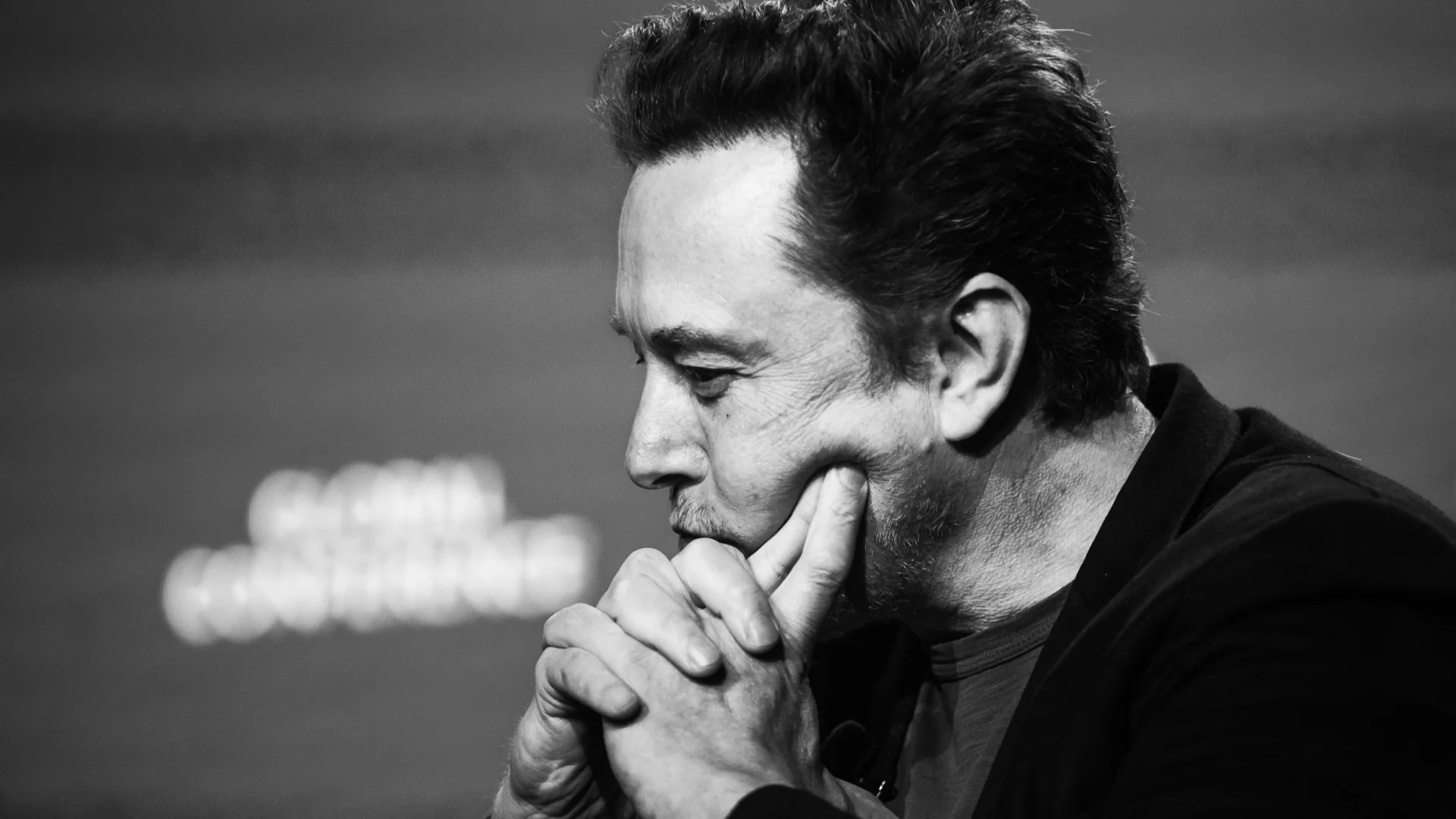
[Photo: Apu Gomes/Getty Images]
BY Chris Stokel-Walker4 minute read
Elon Musk has big plans for his new Department of Government Efficiency (DOGE) once Donald Trump takes the White House in January. Prior to the election, the Tesla CEO said he would help cut $2 trillion from the federal budget. “This will send shockwaves through the system, and anyone involved in Government waste, which is a lot of people!” Musk said in a statement. (DOGE, which Musk will co-lead alongside former Republican presidential candidate Vivek Ramaswamy, will actually sit outside government and will only “provide advice and guidance from outside of government,” according to Trump.)
So, what does efficiency look like under the world’s richest man? And how exactly does he typically go about minimizing “waste”?
To find out, Fast Company asked some of his former employees.
“He’s very ruthless and very involved in understanding what you’re trying to do and how you’re doing it,” says Jim Cantrell, who worked at SpaceX in the early 2000s. “He has no fear of failure. It’s almost naïve in its lack of fear, but his performance has shown it’s anything but naïve.”
Musk’s unorthodox attitude can be costly, too. While he successfully defeated a legal challenge that would have cost him $500 million or more for unlawfully denying Twitter staff severance payments they thought they were owed, he did have to pay an Irish Twitter employee $580,000 for being fired for not replying to an email asking to remain with the company. More financial pain could be coming for Musk from his other companies, too. Former SpaceX employees are seeking financial redress for being fired after blowing the whistle on what they claim was bad behavior by employees within the company. The National Labor Relations Board is also investigating.
“Musk treated his employees and the work we’d done with open contempt,” says Melissa Ingle, who worked as a senior data scientist at Twitter when Musk took ownership of the social network. Ingle was among the 80% of staff laid off shortly after Musk’s $44 billion acquisition.“There was absolutely no wind down,” Ingle says. “One Thursday Musk came in and announced layoffs would be happening, and the next day half the permanent employees were gone. The next week almost all contract employees were fired.” (Neither Musk nor X responded to a request for comment.)
Ingle says Musk’s drive for cost-cutting came at the expense of operations. “These firings seem to have been undertaken with no regard to the actual work that needed to be done, since after the firing, there was mass chaos as the remaining managers still had to get their work done but had been forced to fire anyone with actual experience performing the work,” she says. The chaos that ensued after the mass firings because of short-staffing and the loss of institutional knowledge has been documented in a number of places, including by Walter Isaacson, who reported in his biography of Musk that the billionaire railed against the idea that Twitter staff should cherish “psychological safety.” Musk also had to be dissuaded from firing random engineers, according to Isaacson. “Any remaining employees will likely face tremendous pressure to perform to Musk’s extreme standards,” says Ingle, who now works as a chief data scientist at the firm Technology Partners.Expand to continue reading ↓
Sign up for our weekly tech digest.
SIGN UP
This site is protected by reCAPTCHA and the Google Privacy Policy and Terms of Service apply.
ABOUT THE AUTHOR
Chris Stokel-Walker is a contributing writer at Fast Company who focuses on the tech sector and its impact on our daily lives—online and offline. He has explored how the WordPress drama has implications for the wider web, how AI web crawlers are pushing sites offline, as well as stories about ordinary people doing incredible things, such as the German teen who set up a MySpace clone with more than a million users. More
Many health technologies wouldn’t be developed in the first place unless the U.S. reimburses attractively for them. But other nations then free-ride on us, by simply accessing those therapies at a *much* lower cost AFTER they’re approved for us. Countries like Germany, etc, need to start sharing the burden, or else they shouldn’t get access to the technologies. Can’t have it both ways.
Quote

The Rabbit Hole
@TheRabbitHole84
·

Nov 19 2024
The United States has one of the highest per-capita expenditures for healthcare
See new posts

Subscribe
Large Language Models and the Path to Our Higher Self – How AI tools illuminate humanity’s creative and cognitive potential. Humanity has always seen creativity as a reflection of our highest potential—the ability to shape order from chaos and leave an enduring mark on the world. Across time, we’ve sought to emulate this spark through our acts of creation, from the profound to the practical. Whether crafting cathedrals, symphonies, or algorithms, we imbue our tools with the essence of our aspirations. Yet today, tools like large language models (LLMs) are often dismissed as shortcuts for cheating or trivial conveniences, reduced to mechanical substitutes for effort. This view may miss the larger truth: These tools represent a profound extension of our capacity to create, think, and imagine in ways we are only beginning to understand. In today’s Cognitive Age, this perspective grows sharper and more perplexing. LLMs have emerged not merely as tools but as mirrors, windows, and even shadows of humanity. They offer us a new way to explore the relationship between ourselves, our creations, and the deeper forces that drive creativity itself.  Technology as an Extension of Humanity The idea that tools augment our humanity is not new. Eyeglasses enhance sight; language extends thought; art expresses what words cannot. Far from dehumanizing us, such technologies deepen our engagement with the world and with ourselves. They are, in a sense, extensions of our highest aspirations—truth, beauty, and goodness—ideals central to Aristotle’s philosophy of human achievement. LLMs belong to this lineage of augmentation, intersecting most profoundly with truth and beauty. They seek truth in their ability to discern patterns, distilling coherence from chaos. They contribute to beauty by recombining ideas and language in ways that evoke harmony, surprise, and wonder. In doing so, they expand our capacity to engage with these ideals, challenging us to reconsider their meaning in an age of computation. Shadows of the Divine In the Bible, humanity is described as being created in the “image of God”—צֶלֶם אֱלֹהִים (tzelem elohim). The Hebrew word tzelem can also mean “shadow,” a dual meaning that is both curious and profound. A shadow reflects its source but lacks its depth and essence. It is, by nature, a reduction, capturing only an outline of the original. Perhaps LLMs are best understood as shadows of human cognition. They distill the vast complexity of language and thought into something computationally bounded. They mimic our creative capacities, echoing patterns of thought and expression, yet they lack understanding, intent, and the ineffable spark we associate with the soul. They are brilliant projections—but projections nonetheless. Much like Aristotle’s ideals of truth and beauty, the concept of tzelem elohim captures a duality: reflection and reduction, potential and limitation. These ideas invite us to see LLMs not as creators themselves, but as tools that reflect and amplify the creative potential within us. By engaging with them, we are reminded of the tension between the finite and the infinite—a tension that is both deeply human and profoundly divine. LLMs as Lenses What makes LLMs fascinating is their capacity to act as lenses, sharpening our perception of the interplay between creation and creativity. When an LLM generates a poetic metaphor or offers a surprising insight, it does so by analyzing and recombining patterns within human language. It reflects us back to ourselves in ways that feel novel yet familiar. This dynamic is not entirely unlike the way artists or philosophers engage with truth and beauty. They take raw experience, distill it through their tools—paint, words, or reason—and offer back something transformed, whether on a canvas or the ceilings of cathedrals. In this sense, LLMs may be part of the same continuum. They do not replace the artist or thinker but extend their reach, helping humanity see with greater clarity the endless interplay of light and shadow within creation. Truth, Ethics, and the Shadows of Creation At first glance, LLMs appear to be powerful truth-seekers. By analyzing and synthesizing vast patterns within human language, they uncover coherence in chaos, generating insights that often feel profound. Yet this capacity for truth is shadowed by a critical limitation: their ability to generate plausible-sounding but false information, or “hallucinations.” How, then, can we reconcile their truth-seeking potential with this tendency toward fabrication? The answer lies in understanding the nature of their “truth.” LLMs do not know truth in the human sense—they lack intent, understanding, or an intrinsic connection to reality. Their outputs are probabilistic, reflecting patterns in data rather than objective fact. They excel at echoing the structure of truth without necessarily grasping its essence. In this way, they resemble mirrors that reflect but do not interpret or shadows that approximate but cannot illuminate on their own. When we rely on tools that lack understanding, the responsibility for discernment falls squarely on us. For example, an LLM might confidently generate medical advice that seems accurate but is dangerously incorrect, emphasizing the critical need for human oversight to ensure these tools guide rather than misguide. Such errors remind us that these tools reflect patterns, not reality, and highlight our role in navigating their limitations responsibly. This duality carries ethical implications. LLMs can amplify human creativity and cognition, but they also risk reinforcing our biases or spreading misinformation when used carelessly. As creators and users, we must navigate this balance thoughtfully, ensuring that these tools serve as extensions of our highest aspirations rather than distortions of them. A Reflection on Technology and Creation It’s essential to view this duality with perspective rather than conflict. LLMs are tools—powerful mirrors and lenses, revealing both the brilliance and flaws of their creators. They help us create, but they also teach us to see. Through them, we confront profound questions: How do we use these tools not to diminish but to amplify what it means to be human? How do they help us engage more deeply with the enduring mysteries of creativity and cognition? LLMs are not divine; they are shadows of humanity’s light. Yet, in their mimicry, they reveal something sacred. They invite us to explore the infinite complexity of creation, to reflect on the interplay of order and chaos, and to embrace the enduring mystery of what it means to create. In their shadows, we may glimpse reflections of ourselves—and new ways of seeing both the world and our place within it. https://psychologytoday.com/intl/blog/the-digital-self/202411/large-language-models-and-the-path-to-our-higher-self… #AI #LLMs #creativity #Bible #God

·
2,753 Views
By Paul Ridden
November 19, 2024

EWP is looking to complete installation of its wave energy system at the Port of LA site but Q1 2025, which should look and operate similar to the company’s pilot setup at Jaffa Port in Israel (shown)
Eco Wave Power
View 5 ImagesView gallery – 5 images
Back in 2022, Eco Wave Energy announced plans to relocate its wave energy array from Gibraltar to the Port of Los Angeles. Now the company has secured final approval for what will become the first onshore wave energy project in the US.
The idea behind the setup is to mount a number of floaters on coastal infrastructure, which rise and fall to the motion of waves. This drives hydraulic pistons to move fluid to an accumulator, which is then released to produce electricity via a generator.
The concept was proven in tanks back in 2012 before scaling up to the first grid-connected pilot system in Gibraltar – which was operational for almost six years from 2016, and clocked up more than 49,632 grid-connected hours.
Just before the close of 2022, Eco Wave Power (EWP) announced that the energy conversion unit had arrived at the 35-acre AltaSea campus at the Port of LA – a non-profit that fosters scientific collaboration to find solutions for climate change, food and energy supply and ocean exploration.
“Moving the station from Gibraltar to Los Angeles in just a few months shows yet another strength of our technology: we are one of the only portable renewable energy technologies that can be easily transported, from country to country, to fit the energy needs of any country,” said EWP’s founder and CEO, Inna Braverman, in December, 2022. “This is just the start in the United States.”
The company opened a US subsidiary in April the following year, to serve as the base of operations for potentially tapping into the energy resources afforded by the country’s 95,000+ miles of coastline. Then work began to get the project approved for pilot operation.
Following a 3-month feasibility study concluded in April of this year, EWP entered into an agreement with Shell International Exploration and Production Inc to collaborate on the first US pilot. Now the company reports that it has been given the green light to install eight floaters on existing wharf structure at the east side of Municipal Pier One at the Port of LA.
The final Nationwide Permit was granted by the US Army Corps of Engineers, and will also see the placement of two 20-ft shipping containers housing the energy conversion unit on the wharf deck, which will be connected to the floaters.
The installation is expected to be completed by the end of next year’s first quarter. It’s not clear at this point how long the pilot will run, but EWP has already identified 77 more sites on the US coast with potential for adopting its wave energy technology.
Source: Eco Wave Power
·November 20, 2024
Summary: Researchers are exploring how earpiece microphones, or “hearables,” could detect early signs of Alzheimer’s disease by monitoring subtle eye movement changes. Alzheimer’s impacts motor and cognitive functions, with slowed or delayed eye movements (saccades) being an early indicator.
Conventional eye trackers are costly and inaccessible, but hearables can capture related eardrum vibrations for noninvasive, long-term monitoring. By analyzing these signals, researchers aim to create a tool for early Alzheimer’s detection and potentially for other neurological disorders.
Key Facts:
Source: American Institute of Physics
Alzheimer’s disease affects more than 50 million people worldwide, often devastating both the individuals who have it and their families and loved ones. It has no known cure, and the slow, progressive nature of the disease makes early diagnosis difficult.
Researchers from École de Technologie Supérieure and Dartmouth University are investigating the use of earpiece microphones to spot early signs of Alzheimer’s. Miriam Boutros will present their work on Tuesday, Nov. 19, at 4:15 p.m. ET, as part of the virtual 187th Meeting of the Acoustical Society of America, running Nov. 18-22, 2024.
People with Alzheimer’s exhibit a loss of motor control along with cognitive decline. One of the earliest signs of this decay can be spotted in involuntary eye movements known as saccades. These quick twitches of the eyes in Alzheimer’s patients are often slower, less accurate, or delayed compared to those in healthy individuals.
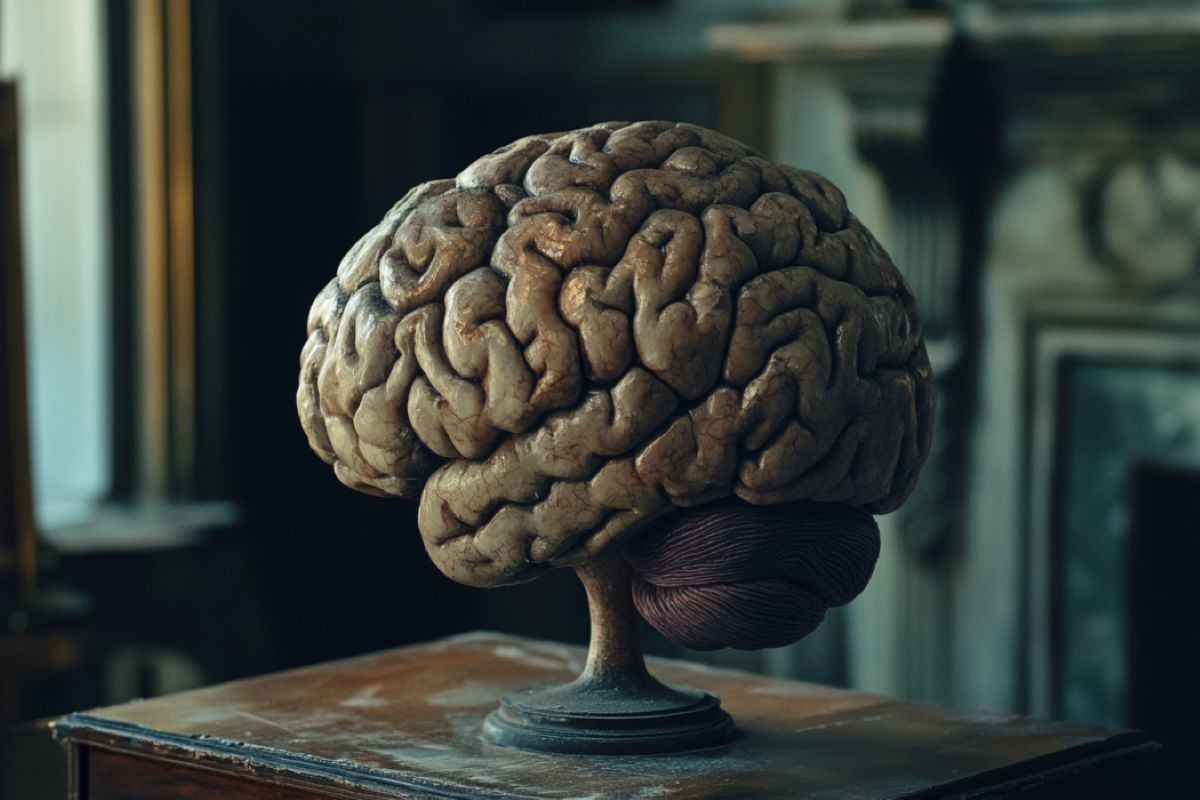
“Eye movements are fascinating since they are some of the most rapid and precise movements in the human body, thus they rely on both excellent motor skills and cognitive functioning,” said researcher Arian Shamei.
Detecting and analyzing saccades directly requires a patient to be monitored by eye-tracking equipment, which is not easily accessible for most people. Boutros and her colleagues are exploring an alternative method using a more ubiquitous and less intrusive technology: earpiece microphones.
This research is led by Rachel Bouserhal at the Research in Hearing Health and Assistive Devices (RHAD) Laboratory at École de Technologie Supérieure and Chris Niemczak at the Geisel School of Medicine at Dartmouth University.
“We are using a device called a hearable,” said Boutros.
“It is an earpiece with in-ear microphones that captures physiological signals from the body. Our goal is to develop health-monitoring algorithms for hearables, capable of continuous, long-term monitoring and early disease detection.”
Eye movements, including saccades, cause eardrum vibrations that can be picked up by sensitive microphones located within the ear. The researchers are conducting experiments with volunteers, giving them both hearables and conventional eye trackers.
Their goal is to identify signals corresponding to saccades, and to differentiate between healthy signals and others that are indicative of neurological disorders like Alzheimer’s.
They hope one day their research will lead to devices that can perform noninvasive continuous monitoring for Alzheimer’s along with other neurological diseases.
“While the current project is focused on long-term monitoring of Alzheimer’s disease, eventually, we would like to tackle other diseases and be able to differentiate between them based on symptoms that can be tracked through in-ear signals,” said Shamei.
Author: Hannah Daniel
Source: American Institute of Physics
Contact: Hannah Daniel – American Institute of Physics
Image: The image is credited to Neuroscience News
Original Research: The findings will be presented at the 187th Meeting of the Acoustical Society of America
Join our Newsletter
I agree to have my personal information transferred to AWeber for Neuroscience Newsletter ( more information )
Sign up to receive our recent neuroscience headlines and summaries sent to your email once a day, totally free.
We hate spam and only use your email to contact you about newsletters. You can cancel your subscription any time.
Tags
Alzheimer’s diseaseAmerican Institute of Physicsauditory neurosciencebrain researchneurobiologyNeurologyNeuroscienceNeurotechvisual neuroscience
Timothy Garton Ash (@fromTGA) posted at 8:41 am on Tue, Nov 19, 2024:
1000 days of the largest war in Europe since 1945. How this war ends will shape the future not just of Ukraine, not just of Europe, but of the entire international order (think Taiwan, Korea, nuclear proliferation) for decades to come. #1000DaysOfWar

https://t.co/x3XqtSCpwf
(https://x.com/fromTGA/status/1858792684925723059?t=5AYZCnwV1d9oQaAzdy_A0A&s=03)
The third Lancet Commission Report on Dementia Prevention, Intervention, and Care—the first such statement since 2020—offers an ambitious and detailed analysis of evidence emphasizing the importance of prevention. However, the commission also added two modifiable risk factors to the list, high cholesterol and vision loss, which reflects an accumulation of evidence since the previous Lancet reports.
Addressing 14 modifiable risk factors might prevent or delay nearly half of all dementia cases worldwide, even as people around the world live longer and the number of people with dementia is set to rise dramatically in all countries, according to the third Lancet Commission Report on Dementia Prevention, Intervention, and Care.
The report was published in The Lancet on July 31 in concert with a presentation of its findings at the Alzheimer’s Association International Conference. The previous Lancet Commission reports were released in 2017 and 2020.
The report is an ambitious and detailed analysis of evidence emphasizing the importance of prevention, but it also includes an analysis of evidence supporting various interventions and follow-up care for dementia. This year’s report is notable for adding two modifiable risk factors—high cholesterol and vision loss. (See “The 14 Modifiable Risk Factors for Dementia” for the entire list.)
The prevention recommendations encompass those requiring policy changes at national and international governmental levels as well as individually tailored interventions that neurologists, other physicians, and members of the public can implement.
Actions to decrease dementia risk should begin early and continue throughout life, and since risk is clustered in individuals, interventions should often be multicomponent, according to the Commission.
“There is much that physicians can do to prevent dementia,” lead author Gill Livingston, MD, professor of psychiatry of older people at University College London, told Neurology Today. “It is one of the most dreaded diseases of older people and is extremely expensive—not just in terms of providing care, but from lost productivity associated with caregiving by family members.”
She added that the effects of addressing modifiable risk factors are cumulative and will help individuals live longer, healthier lives even if they have dementia later on. “Healthy lifestyles that involve regular exercise, not smoking, cognitive activity, and avoiding excess alcohol can not only lower dementia risk but may also push back dementia onset,” Dr. Livingston said. “People are likely to have longer, healthier lives, and if they do develop dementia, they are likely to live less years with it. This has huge quality-of-life implications for individuals as well as cost-saving benefits for societies.”
The addition of high cholesterol and vision loss as modifiable risk factors reflects an accumulation of evidence since the previous Lancet reports. Since 2020, a meta-analysis of three cohort studies, all from the UK, looking at LDL cholesterol in adults younger than 65 years followed for more than 12 months reported that each 1 mmol/L increase in LDL cholesterol was associated with an 8 percent increase in incidence of all-cause dementia.
Similarly, new meta-analytic evidence implicates vision loss in the development of dementia. “The easiest ways to get cognitive stimulation is through hearing and seeing,” Dr. Livingston told Neurology Today. “With vision loss, there is a reduction in cognitive stimulation, and it may be harder for people to get out socially, and they may not be able to exercise or drive. People may not even be aware they are losing sight because it comes on gradually.”
Experts who reviewed the report for Neurology Today emphasized that although several of the recommendations are broad, offering primary preventive measures directed at policymakers, there is much that individual physicians and patients can do.
“These recommendations are intended to guide public health initiatives,” said Deborah E. Barnes, PhD, MPH, professor of psychiatry and behavioral sciences and epidemiology and biostatistics at the UCSF Weill Institute for Neurosciences and Osher Center for Integrative Health at the University of California, San Francisco. “Clinicians can use these recommendations to help support their patients to make healthier lifestyle choices and to better manage risk factors. Even small changes may help lower a person’s risk of developing dementia or delay onset of symptoms.
“Neurologists can check for the 14 risk factors in this report when they are assessing patients for cognitive decline,” she said. “They can refer patients for additional care if medical risk factors are identified that are not being well-managed. For the two new risk factors, this could include making sure patients with cataracts get surgery in a timely manner and making sure high cholesterol is treated.”
She added, “New dementia medications may help some patients, but they are contraindicated for many people and have serious side effects. Prevention and risk reduction should remain the first line of defense against dementia. However, even if all 14 of these risk factors could be eliminated from our society, it would only prevent half of cases. It will still be important to identify people who develop dementia and make sure they and their families get the care they need.”
Bryan D. James, PhD, associate professor at the Rush Alzheimer’s Disease Center in Chicago, focused on the report’s consideration of when in the life course different risk factors have the most influence on the development of dementia in later life.
“Though there is substantial evidence linking these factors to dementia across many studies, there has not been consensus on most of these factors regarding what point in the life course it is most important to address them,” he said. “This has implications for the development of interventions and even designing trials to test interventions. If a factor causes dementia but if it exerts influence in midlife, then intervening on it in later life will have limited benefit.”
Dr. James noted that four of the risk factors—smoking, depression, physical inactivity, and diabetes—moved from late-life to midlife factors between the 2020 and 2024 reports. “This reflects more evidence on when these risk factors exert most influence but means that the majority of risk factors have to be intervened upon in midlife—a time when most people, and their clinicians, may not be thinking of their dementia risk decades later.”
He added, “One thing I appreciate about this report and the population attributable approach it takes is the focus on the interplay among all of these factors and the point that addressing any single one of these factors may only lead to a 1 percent, or at most 7 percent, reduction in cases of dementia, but by addressing these 14 factors as a whole, we can reduce almost half of the cases of dementia.
“That is a powerful message, and I think [it is] more effective than trying to address one factor at a time in a reductionist manner. For example, providing accessible means for people to eat healthily, maintain weight, and exercise, ideally with other people, could address many of these risk factors upstream.”
Dr. Livingston had no disclosures. Dr. Barnes has received payment and stock options as a scientific consultant for Together Senior Health and Linus Health.
THE REPORT RECOMMENDS BOTH CLINICAL AND PUBLIC POLICIES:
• Livingston G, Huntley J, Liu KY, et al. Dementia prevention, intervention, and care: 2024 report of the Lancet standing commission https://www.thelancet.com/journals/lancet/article/PIIS0140-6736(24)01296-0/fulltext. Lancet 2024; 404(10452):572–628.


