A member of Congress and former chair of the House Appropriations Committee, Kay Granger has been diagnosed with dementia, according to a statement provided by her son, Brandon Granger, to the Dallas Morning News.
Currently, she resides in a specialized care facility.
In response to this situation, Elon Musk suggested that elected officials undergo cognitive tests to ensure they can meet the requirements of public office.
Brian Stelter, CNN’s chief media analyst, commented on the idea, pointing out that such a measure could generate political and legal controversies, but that the debate on the competence of public officials is relevant in the current context.
Also, Elon Musk asks Americans with high IQ to work for free on Trump’s new project
This is a preview of the full episode. In order to watch the entire episode and gain access to all full-length episodes of the Making Sense podcast, you can SUBSCRIBE at https://samharris.org/subscribe/ OR become a channel member to access episodes on YouTube. For those who can’t afford the full subscription price, we offer full and partial scholarships: https://www.samharris.org/subscribe/s…
Sam Harris speaks with Yuval Noah Harari about his new book, “Nexus,” and its application to current crises. They discuss humanity’s capacity for self-destruction, democracy and dictatorship as information networks, the “naive view of information,” the advantages of fiction over truth, trust in institutions, self-correction in a democracy, truth vs. power, truth vs. order, the suicide of conservatism, fixing social media, algorithms as editorial choices, efficiency vs. inefficiency, threats to democracy, the authoritarian character of Trump’s candidacy, the need for patriotism and nationalism, Israeli politics, the peaceful transfer of power, Putin and the war in Ukraine, the vulnerability of world order, the killing of Hassan Nasrallah, antisemitism and anti-colonialism, religious fanaticism among Israelis, the status of Arabs in Israeli society, biblical and post-biblical Judaism, whether a wider war in the Middle East is necessary, the danger of spirituality without ethics, and other topics.
Yuval Noah Harari is a historian, philosopher, and the bestselling author of Sapiens: A Brief History of Humankind, Homo Deus: A Brief History of Tomorrow, 21 Lessons for the 21st Century, the series Sapiens: A Graphic History and Unstoppable Us, and, most recently, Nexus: A Brief History of Information Networks from the Stone Age to AI. His books have sold over 45 million copies in 65 languages, and he is considered one of the world’s most influential public intellectuals today.
Mental illness haunts me in two different ways.The first surrounds me, living and working in Los Angeles daily. When I see people half naked, lying on the hot sidewalk, on my way to the trendy new coffee house. When I meet parents searching for their missing adult children and being turned away by agencies who can help—but will not—because it would be a “privacy violation.”When I hear of people with untreated mental illness finding themselves locked in claustrophobic jail cells and chained to furniture for the few hours a day that they are allowed out in order to ensure they do not harm themselves or someone else.
The other haunting also takes place here in Los Angeles, but is a product of my travel to Trieste, Italy, “the city that cares.”In Trieste, none of these tragedies exist—and that fact haunts me, in a good way. Recognized by the World Health Organization as demonstrating a global best practice in community-based mental health care, grounded in accoglienza (the Italian word for hospitality), Trieste is a North Star for the world.
Ever since I first witnessed the human-centered system in Trieste in 2017—and I have visited five times now, first on a fellowship and later as an observer for an entire month—I am more convinced than ever that my own city, Los Angeles, is capable of moving toward a true community-based system of care. That is, if we have the political will.
The current American mental health care system dates back to the 1960s, when the vision to close the mental institutions in the U.S. and build out a community system of care was gaining traction. From L.A. County, we can see clearly the through-line of the abandonment of this vision. After President John F. Kennedy called for a community-based system of care in the U.S. in his last major policy address in 1963, a gradual devolution of authority from the federal government to the state and now to the 58 counties followed, culminating in the 2011 elimination of the California State Department of Mental Health. This moment served as a capstone to the withdrawal of direct responsibility, or accountability for, mental health care from the state.
California is not alone in this downward slide. Today, America’s mental health system is fragmented, built upon clinical interventions, and tied to a reimbursement system that pays for some useful things but ignores all the life needs of a person in crisis.
In Italy, I discovered, this same story played out differently. Like the U.S., Italy was involved in the mid-20th-century movement to bring an end to the horrible conditions in asylums and institutions.But unlike the U.S., Italy had a visionary psychiatrist who started a revolution in his country around mental health care that persists to this day.
As a young psychiatrist, Franco Basaglia railed against institutional life, influenced by his World War II imprisonment as a member of the anti-fascist resistance. When he was assigned to head an asylum in the town of Gorizia (in the same province as Trieste) in 1961, he was horrified by the conditions he witnessed.As documented in the excellent book The Man Who Closed the Asylums, Basaglia initiated radical changes that flew in the face of conventional “treatment.”
Here are just a few measures he put in place: outlawing restraints, unlocking the wards, instituting meetings between patients and staff, and requiring that the doctors shun their white coats.
By the time Basaglia moved to Trieste’s asylum in 1971, his “democratic psychiatry” movement was gathering momentum. Basaglia and his supporters promised recovery for mental patients and pushed for measures to reintegrate people back into the community, where they could connect with family and friends and find meaning through work.
But he didn’t stop there. In 1977, Basaglia moved to close the asylum in Trieste, and the following year, the Italian parliament passed Law 180, known as Basaglia’s Law, which formally led to the dismantling of the asylum system throughout the country.
Italy’s community system of care—and the local mental health centers that anchor it—continues to focus on treatment, recovery, and prevention today. But what struck me most about what I observed in Trieste was a culture that allows people to be treated with human kindness. I was particularly taken by the city’s emphasis on supporting a person’s life aspirations. Trieste’s community mental health program does not define people by their mental illness;they understand that a diagnosis is just one piece of information. Housing is integrated into the program, ranging from independent living to supportive family-style arrangements with 24/7 staff support. In a crisis-response situation, community mental health center staff steer people away from the trauma of hospitalization, or worse, incarceration, through short-term housing in a home-like setting managed entirely by peers. Peers play a significant role in the entire system, offering support and the wisdom that can only come from lived experience. The community mental health team also connects people to clubs, associations, and social cooperatives that help them find employment appropriate to their skills and capabilities.
The current situation in California couldn’t provide a starker contrast.
I have yet to meet a person or a family member who can describe a successful story of moving from the onset of mental illness symptoms to treatment, diagnosis, sustained support, and recovery. Instead, they find themselves stuck in a system (or rather, a nonsystem) built upon clinical interventions, tied to a financial model that emphasizes symptom management but ignores the longer-term life needs of a person in crisis.
Other solutions are available to us. In a podcast interview I conducted with Guyton Colantuono, executive director of Project Return Peer Support Network, we discussed the peer respite center, a cost-effective, trauma-informed alternative to hospitalization or jail. He explained that it costs $840,000 per year to run a 12-bed facility—which averages out to $295 to $368 per client, per day. By contrast, it costs $2,200 to spend a night in the emergency room of a typical hospital. Yet there are only two peer respite centers in all of L.A. County.
The guiding principles that are so evident in Trieste don’t require a secret handshake to unlock here. It will take the unwavering focus on the needs of the whole person—not just clinical interventions. A commitment to hold systems accountable to people and outcomes—instead of protecting the institutions. A culture shift to practice radical hospitality—as opposed to adhering to positional authority and power dynamics. A belief in every person’s ability to recover and the right to pursue a purposeful life—as opposed to writing off the hopes and dreams of a person with a mental health diagnosis. And a community ethos to foster social inclusion—and eschew marginalization and isolation.
This movement for change will require involvement at all levels of government—local, state, and federal. Some might say that is impossible to enact Trieste’s ethos of care here. But I would counter that it is immoral not to try.
Meanderings of a person who has navigated the mental illness complicated by traumatic brain injury, hidden in plain sight, in the affluent Dublin 4, where this hospital is based since the 1830s
The “Titanic” Royal City of Dublin hospital is now boarded up and an unpredicted recession, maybe even depression, is forced upon a world who failed to factor in a pandemic related to the coronavirus.
Deaths of Despair are no longer reported in any meaningful debate but what we do hear is daily baffling figures from the Nphet team with the stark warnings that we must comply in order to prevent COVID-19 overwhelming our already stricken health service, which already has massive waiting lists.
What is certain is that 50 people have died from being homeless this year of COVID-19, in the year of 2020, and I report that what was up to recently the addiction wing of this once splendid Baggot Street hospital is now filthy and boarded up. Today, possibly a person who has familiarity with that addiction centre, has placed his tent outside the door. Can you imagine what this means in the days to come when the winter determines nights of freezing cold and often storms of rain and cold.
===============
Mental Health is Cinderella; it embodies addiction, gambling, anorexia, PTSD. What we should all take account of is that people who are remote working or confined to their homes are potential victims of mental health trauma when COVID-19 is eliminated and that is providing the vaccines work.
============
CORONAVIRUS / COVID-19: 9th March 2019 update
THIS HOSPITAL CLOSED SUMMER 2019. IF FACILITIES ARE REQUIRED FOR PEOPLE WHO BECOME INFECTED BY THIS DANGEROUS VIRUS, SOME SAY SIMILAR TO THE SPANISH FLU OF 1918 (WHICH RESULTED IN MORE DEATHS IN YEAR OF 1918 THAN DURING THE 4 YEARS OF WORLD WAR 1); THEN PREPARATIONS SHOULD BE MADE TO HAVE THIS HOSPITAL RE-OPENED AND PREPARED FOR ADEQUATE PROVISION OF INTENSIVE CARE UNITS AND BEDS FOR PATIENTS.
Addendum:
11th December 2019
Dermot McCarthy Rite & Reason article 10th December 2019: Community commitment in heart of Dublin https://www.irishtimes.com/opinion/st-andrew-s-resource-centre-fighting-exclusion-reducing-inequality-1.4109575 20 years since St. Andrew’s resource centre established. Surely Baggot Street hospital has the same potential. It was closed in August. The homeless crisis in Dublin ensures in the harsh cold of an early winter that there will be people who are homeless and as happened in Apollo house three years ago, could be given sanctuary in Baggot Street at Christmas to the New Year 2019/2020.
=============================
23rd November 2019 – Delighted to see letter as follows in today’s Irish Times. Too many years of insufficient use of a most historic hospital (The Royal City of Dublin Hospital) on Upper Baggot Street, Dublin 4. Finally in August a note was placed on the door to say all has been transferred to Clonskeagh. It just slipped into obsolesence sadly. The source of this blog post would gladly assist Mr Thompson and others in a mission to provide accommodation for the homeless. https://archiseek.com › 1893-royal-city-of-dublin-hospital-upper-baggot-street-d…
The other night at 7 pm I was walking my dog on Wellington Road; I heard an unusual rustling in an area where there was no light and I met Anne. I asked her if she would like a cup of tea and her first comment was there is no where for her to use the bathroom so she said no to the tea. I settled that matter for her and we had tea, we sat on the bench, we chatted and what a life she had living and training as a nurse in the UK, moving to America and back to Ireland to a fall in circumstances and into homelessness.
Anne Rynne is Christy Moore’s sister and her rendition of this song has not received the notice it merits. She was a guest on Ryan Tubridy, Late Late show. It was 2018 she referred to. Now it is approaching the end of 2019 and homelessness is worse. We know there are too many children, and and an ever increasing number of children who are in homeless situations. We also know that the impact on their mental health at a later stage in life can lead to a life with depression, anxiety and other mental health implications. It is worth listening to this song. https://www.youtube.com/watch?v=gzHjBjHnPck
Housing homeless in vacant Buildings Sir, – well done Ian Elliott, Belfast (Letters November 20th) for raising the issue of homelessness at the Canal Bank at Baggot Street, Bridge, Dublin.
He wonders if the vacant Royal City of Dublin hospital premises might be used to house people over the Christmas. He kindly offers his personal assistance if requested, in any effort to help action by “An Taoiseach, his ministers and officials” to take up this idea. We need such lateral thinking and more funds if we want any progress on this issue. – Yours, etc,
IAN THOMPSON: DUBLIN.
==============================================
History of constant requests to do something about our most historic building in Upper Baggot Street with an allegiance to its history in health.
MAY 2019
Bus Connect https://www.busconnects.ie/media/…/14-busconnects-cbc-ucd-to-city-centre-final.html threatens Dublin 4 but nobody cares about Baggot Street Hospital; strong rumours are that it is for sale for development purposes. They take away the hospital which trained doctors for the Crimean War, trained nurses and doctors for the Empire; they take away certain gardens in Pembroke Road, and they take what is most precious are the old trees which can life to our environment.
October 20th 2016: The scaffolding appears and all appearances are that the Royal City of Dublin hospital (Baggot Street Community Hospital) has not been sold and the HSE have plans (yet unknown) to re-invigorate this once historic hospital. When this property was placed with Savills for sale, I wrote in the hope that it would be retained as a hospital albeit possibly a public private partnership. I remain very interested to see what is planned, hoping that it retains the market related to health with special attention to psychiatric, neurological, addiction creating a Centre of Excellence. The location over the last few years indicates much recovery in the property market for such a high quality location.
Update: Christmas 2015. News on the street ie Upper Baggot Street Village is that the staff are being re-located and the sale is going ahead. This hospital is part of Irish history and especially this year, the centenary of the Rising, as a WW1 memorial, it should be sold with the proviso that it remains a hospital in a joint venture. This is an ideal time for Ireland to have a museum. Take for example: The Forgotten Story of Groundbreaking American Surgeon Dr. Thomas Dent Mütter http://historynewsnetwork.org/article/161245
Savills Commercial, Dublin. Head Office Commercial and Residential. View full map. Savills Dublin Commercial. 33 Molesworth Street Dublin 2. +353 (0) 1 618 …
The HSE have decided to sell this bedraggled beauty of architecture dating back to 1832. This is about history starting with the British Empire and Dublin as the second City of the British Empire, to the Rising in 1916 and the establishment of the Irish Republic for the 26 counties.
Professor D Coakley, Trinity College Dublin, and other eminent contributors, have written PDF history about Donnybrook Sandymount and Royal City of Dublin hospital or more often referred to these days as Baggot Street Community Hospital. http://bdshistory.org/annual_record_2008.pdf
Agent Savills is not quoting a guide price but sources close to the HSE are suggesting a valuation of about €14 million for the complex, which occupies a substantial site bounded by Baggot Street, Haddington Road and Eastmoreland Lane.
There is also a second property on Eastmoreland Lane, bringing the overall site to 0.71 of an acre (0.29 of a hectare).
Never a more appropriate time, the week before the 2015 Budget, to place the Royal City of Dublin hospital on the market but now. It is worth viewing the brass plate in the main hall which details all the contributors to the charity that enabled this hospital to serve its community so well. I sincerely hope that the planning authorities ensure that what is of historic importance be retained. It would be an ideal opportunity to have a small Museum about Baggot Street Hospital and its most interesting history. Doctors and nurses trained in this hospital who served in the Crimean War and World War I. What was once the Nurses residence is now now the Dylan Hotel http://www.dylan.ie/on Eastmoreland lane.
Internet, digital, broadband, social media the potential is vast for people and all I can do is quote Jonathan Swift and say
‘Give Vision to the Visionless’.
Congratulations to Mr Jack Dorsey, https://twitter.com/jack a former founder of Twitter on his new appointment as ‘permanent’ CEO of Twitter and especially at a time the Twitter’s Irish Unit returns to profit.
It was rumored that Twitter would locate itself in Upper Baggot Street, Dublin 2, in the Kennedy Wilson http://www.kennedywilson.com/ development but this if the rumour is true means it was unsuccessful. If only Mr Jack Dorsey could take some time with his executives and consider the purchase of this esteemed hospital, it would be beneficial and support the community.
Personally, my vision is a Centre for Excellence based on where Psychiatry merges with Neuroscience and Twitter is integral to this. My case history explains why.
1993 while horse riding in Zimbabwe I fractured my skull. The journey through services makes me a consumer of healthcare and a person with some vision.
Many promises have been made by Politicians concerning this hospital and the provision of community healthcare; this letter dating back to 2009 outlines a negligence and neglect for providing for vulnerable people especially those affected with neurological, psychiatric and addiction health diagnoses. October 5th to October 9th 2015 is Mental Health Week and never more than now is it necessary for their to be a joint venture commitment to tackle the Cinderella of Professions Psychiatry and move forward. Ireland urgently needs a Centre of Excellence and the Royal City of Dublin Hospital has the potential. All we need is Mr Jack Dorsey’s vision and Twitter Ireland.
Moving back in time to 2009 and a piece written by me.
The Budget approaches and diversity becomes scarce and people less tolerant of mavericks by Rainman (Michelle Clarke)
You may think mental health is the glitzy part of the medical profession given the upbeat media coverage of groups involved in suicide, mental health for the youth programmes, and all the not for profit organisations representing people with mental health problems.
But let me assure you, there is a darker side and this headline in the Irish Times deeply concerns me.
Private medicine if you have a psychiatric condition has an element of transparency and ethics but the other side is not transparent. You may say about Regulation but the fact is that the Regulatory body, if you have been blessed with the lucidity to get that far, is made up of the medical profession only. Also if you have mental health problems you need to be alert to the motives of your siblings and family members. This will be more apparent for some with experience of being the defined mental patient – the one who is left to fight the uphill battle and yet be lauded and taunted with the label.
The state provides the services of the Mental Health Commission http://www.mhcirl.ie/ but what can one say about a faceless organisation in Dublin 4 that is only represented by its all encompassing web page and an inability of its personnel to relate to a visit from one of the ‘Tainted’ – yes the “bothered and bewildered” subset of society ranging from homeless, to former prisoners of either mental hospitals our or prisons, to those in community care and humbled by inadequate housing conditions and fear.
The Sunday Times article 6th December in the Appointments Section makes interesting reading for those who differ from the so called Norm in Society.
The title simply reads:
‘Make a Maverick your wingman’ and the warning ‘Handle with Care’.
This message is not for the benefit of private only mental health, it ought to equally apply across the board to our public mental health system.
Yes, posting no. 1 – what about Baggot Street, and a Psychiatric Hospital along the lines of John Hopkins Hospital http://www.hopkinsmedicine.org/psychiatry/ in the US or the Maudsley in the UK or for that matter along the lines of successful private hospitals like the Priory Group http://www.priorygroup.com/. Where is the transparency in Mental Health in Ireland – yes the visibility factor? The research is hidden away in our Universities and basically after that is presented via conference links worldwide and through networks. The fodder is forgotten to easily.
The appointment section is promoting Vision in those making appointments in employment. It highlights that talented employees can ‘be hard to control, so give them freedom and let them shine’ The article is written by Frank Dillon. He talks about dealing with these employees and the huge problem they can create for management. They often are referred to as unpredictable and loose cannons but why forsake them! Why distance them out of society, condemning them to a form of mental health institutionalisation, when if given the encouragement and scope, they can link into creativity and create economic growth.
John Lennon spoke of Giving Peace a Chance. The Recession is so bad now, we really need to give these Mavericks a chance and who knows!! We are talking about harnessing talent and promoting creativity.
The Budget is this Wednesday. Savage is the word about town. But all I ask is stop the savage onslaught on the needy, look to the well of research done in our Universities over the last 20 years and start using the material more productively and economically. Don’t waste our hidden talent.
Pls note again this was written 2009.
Conclusion:
This was 2009, pre the Budget. Next week is the 2015 Budget and what has been achieved. For mental health yes a proliferation of charities and events but as far as proper public health is concerned, the situations are worse and getting worse.
Professor D Coakley Trinity College Dublin, where are you now? The HSE have deliberately run down the Royal City of Dublin hospital and it is up for sale. They are hoping to get e14 million and then they will probably allocate e5 million to Community Health in South Dublin. We know these endless promises. Where is Minister Kathleen Lynch who knows only too well that if anyone is to be short-changed, it is surely going to be those under the mental health provision http://www.labour.ie/kathleenlynch/. Already this beautiful hospital is stripped of what defined it? Why? Afraid that someone might say this is a World War 1 memorial. We are approaching the centenary of the Easter Rising in 2016. The British Empire capitulated to the Irish Republic and this hospital straddles both.
To those who stigmatise people with mental illness, I ask you to re-consider. Therein lies a secret talent waiting to be recognised. There is an exhibition ‘Beyond Irish Outsider Work’, the TV programme is on RTE 1 at 10 pm tonight. I went to this exhibition today and I highly recommend it. Most paintings are sold but the message is strong. Don’t judge people with mental illness, try to see beyond and help them on their pathway.http://www.thecopperhousegallery.com/exhibitions/59/works/image630/
Dr Lisa Butterly. Her painting from ground level to upper storey is exceptional and beyond monetary value. It is art and a narrative that some people will share with her while others will just admire. This woman was interviewed by Ryan Tubridy last Friday on the Late Late show. She exhibited her painting but it merits a visit to the gallery (Copper House Gallery, near Synge Street, Dublin 8) to see this exceptional work of art and narrative. This woman shows us that there is life beyond diagnosis. You may have to take prescribed medications but there is a life. Lisa Butterly left the revolving door of Cinderella mental health hospitalisations at the age of 25, returned to education, first completing her junior cert, followed by her leaving cert, then a BA in Maynooth, a Masters and a PhD. This painting was completed by her at the same time as she was completing her thesis. http://www.historicirishhouses.ie/news-and…/congratulations-dr-lisa-butterly
Thu 15 Oct 2015. Brent Pope: Inside Out. Brent Pope reveals his passion for ‘outsider art‘-pieces by people with no formal training and often living on the …
Mr Brent Pope, I must admit I know nothing about you but I am now aware that you are a world famous Rugby player. Thank you so much for giving your time and initiative to those so often hidden away; this is the art of the heart, the revelations from within the soul. I would ask anyone to spend a little time and watch your programme and learn. Thank you so much and it is my deep wish that we can influence the Cinderella Profession, the Department of Health, Mental Health facilities to move forward. Here is the inspiration for creativity. Michelle Clarke.
22nd October 2015 – Royal City of Dublin hospital or more commonly known as Baggot Street hospital:-
Inquiry: Savills concerning sale. Rumours say it is already sold for apartments and another bar in the area. Savills say it is not sold but there is an appointment of a new sales team and then they await the decision of the HSE to proceed. If you read Savill’s webpage you will note that provision is made for community health care. The HSE expect e14 m and choose to allocate 5m. It should be a % of the price received or a suitable project incorporating the provision of community health, a museum because it is a World War I memorial. It also has a very detailed history relating to the Easter Rising, and the War of Independence. As a community, the sale of this hospital should have the support of people in the area, the Trinity Foundation Trust, Trinity College – Medicine, the Royal College of Surgeons and so many more.
Doctors trained to go to war at the Crimea, to serve World War I
Apr 26, 2015 – Easter Rising documentary to be screened across the world … gathered and set up at The Royal City of Dublin Hospital at Baggot Street, near a … His lifeless body was carried back to City of Dublin Hospital on Baggot Street.
News cutting 1916 Easter Rising wounded Times 6 June … Private Patrick Conway (Donnybrook) taken to City of Dublin Hospital; L/Cpl E Cope (Dublin); 25477 …
I am including this article: Places of note but strikingly for 1916 there is absence of the mention of a hospital. Hospitals were a central point. We all know about the Royal College of Surgeons.
Jun 13, 2015 – Map: Easter Rising: a barricade on Townsend Street, next to Trinity College … a temporary hospital at Dublin; Easter Rising: Mount Street Bridge, where … It was the most central and commanding position in the city, and also …
Inspiration Sources from the period of history in the making : internet
Tedx talks / TedMed talks / Charlie Rose Bloomberg TV, panel chaired by eminent Eric Kandel – The Brain series.
Nobody knows what is to happen. We can guess. Professor Coughlan, the HSE and others most likely know the facts. This could be bound by a Trust. Buyers may not have been interested in the implications of the Trust. Can we assume the HSE have plans? We know because we can see that the builders are moving in because this week the scaffolding is being put in place.
Boots is the pharmacy who have at all times over all the years been so supportive to my special needs. It is with interest that I read that their parent company in America Walgreens http://www.forbes.com/sites/…/2016/…/walgreens-expands-access-to-mental-health-services/ are looking into the provision of mental health services within the pharmacy context. To me this makes common sense. Too often the community provision of mental health or services to people with addiction takes no account of the person’s physical health including their dental health. We need a Centre of Excellence; we need to tap into research that may have been shelved but which could be endorsed now. I recommend Trinity Horizon Programme 1997, Dr Margaret Fine-Davis, Dr Mary McCarthy, Trinity College Dublin, Professor McKeon and EU Horizon backers. I was one of the first participants in 1997.
Baggot Street needs its history especially as it has become a hub for many international and new companies over the last decade. We need to respect it and people are now realising the plans of BusConnect and they are concerned about the loss to be impossed on a community, a history of renown and the need for preservation of this history.
Reading Strengthens Key Brain Regions for Language and Empathy
New research reveals that reading ability is linked to distinct brain structures, particularly in the left anterior temporal lobe and Heschl’s gyrus. These regions are crucial for integrating word meanings and processing phonological awareness, both of which are key to reading. The study shows that better readers tend to have larger or thicker areas in these regions, indicating their role in language and sound processing. Importantly, the brain is malleable, meaning reading can actively shape these structures over time.
As fewer people read for leisure, the potential societal and cognitive impacts of declining reading habits are concerning. Reading not only enhances individual cognition but also supports collective empathy and understanding.
A weekly newsletter featuring the biggest ideas from the smartest people
Fields marked with an * are required
It’s easy to accept that human disorders such as phenylketonuria or cystic fibrosis or Huntington’s disease have a wholly genetic basis. And you likely have no problem believing that your risk of being afflicted with an illness such as heart disease, diabetes, or colon cancer is influenced by your personal DNA code. The question of heredity becomes more complicated, however, when we consider complex behaviors.
Featured Videos
3 powerful mind states: Flow state, good anxiety, and Zen Buddhism
Is your chance of having a sunny disposition affected by your genes? How about if you are a pessimist — is pessimism an inherited trait? What if you’re an early-morning or a late-night person, or compulsively neat, or emotionally unable to connect with others — could genetic differences contribute to those traits? How much of our temperament is due to our genes? How much of our intelligence — our ability to learn and remember, to acquire language, to read and spell — is a function of our DNA code? And what about psychiatric disorders such as schizophrenia, bipolar disorder, and depression? Are those due to our circumstances, or to our genetic constitution?
The answer is: both. Nature and nurture, our genetic endowment and our life situation and experiences, determine our behavior. But we suspect that the contribution from genetics may be more than most of us imagine.
Consider, for example, Susan Middlebrook, of Colchester, Vermont. She usually gets seven or eight hours of sleep each night, but rather than going to bed at 11:30 p.m., after the late-night news, and getting up at around 7 a.m., Middlebrook goes to bed early, very early . . . like at 6:30 p.m. And between 1:30 and 3 a.m., just when you’re deep in your dreams, Middlebrook is raring to get up and go. “The net result is you can feel very isolated,” she told National Geographic News in 2005. “Who wants to party at three in the morning? Nobody I know, and I’m not headed to the local bar to see who’s there.” Instead, Middlebrook gets started on her morning chores long before your dreams are over.
Middlebrook suffers from familial advanced sleep phase syndrome (FASPS), the consequence of which is that her sleep patterns are way out of sync with the norm. To establish the norm, and the abnormal exceptions, sleep researchers ask people a series of questions about their sleep habits: At what time of day do you feel your best?How easy is it for you to get up in the morning? At what time would you go to bed if you were completely free to plan your day? At what time in the evening do you feel drowsy and begin to doze? Do you consider yourself a “morning” or an “evening” person? (The questionnaire was developed by a British scientist, James Horne, and a Swedish scientist, Olov Östberg.) Answers to these and other questions produce a score that lies on a scale running from extreme “eveningness” to extreme “morningness”; most of us fall somewhere in the middle of a broad bell-shaped curve of scores, but FASPS patients lie at the far “morningness” end of the scale, scoring higher than more than 99 percent of other respondents.
What makes Middlebrook’s syndrome so interesting is that it’s the result of an abnormality in her biological clock, known as the circadian rhythm; (“circadian” means, literally, the cycle of one complete day, from the Latin circa-, “cycle,” and dies, “day”). This circadian clock controls not just sleeping and waking but also metabolic, physiological and behavioral processes such as heart rate, hormone levels, blood pressure, mood, and alertness.Our biological clocks are reset each day by exposure to sunlight, thus keeping us in synchrony with our surroundings. But Middlebrook’s internal clock runs on a faster cycle, advanced by about four hours relative to most everyone else’s, so that she is ready for bed when her neighbors are ready to sit down to dinner.
Middlebrook’s sleep-wake cycle may seem unusual to you — it is far outside the statistical norm — but around the Middlebrook home it’s about as unusual as oatmeal for breakfast: two of her three sisters, one of her parents, and her own child all keep the same odd hours.This syndrome is clearly due to a variation present in the personal DNA code of these family members (the word “familial” in the name of the syndrome might have tipped you off to this), and not to any environmental cause.
Middlebrook’s sleep-wake cycle may seem unusual to you, but two of her three sisters, one of her parents, and her own child all keep the same odd hours.
Although FASPS affects only about three people in one thousand, its genetic basis was well worth deciphering. Findings about this syndrome may help to explain other more common sleeping disorders such as insomnia and narcolepsy, or lead to treatments for jet lag or seasonal affective disorder (SAD, in which the moods of sufferers are strongly affected by lack of sunlight in the winter), and they may provide health support and guidance for millions of workers who work the nightshift. Understanding human circadian rhythms may even enable drug treatments to be timed for better effect, or suggest ways to reduce nighttime auto accidents.
Now consider Jean, a 24-year old nurse who became obsessed with cleaning and washing. As related by Peter McGuffin and David Mawson, two psychiatrists in London to whom Jean was eventually referred, each day she would wash her hands 60 to 80 times and spend 12 hours disinfecting her house; she went through twenty liters of disinfectant a week. She made her husband stop his sports activity because it brought dirt into the house, and she gave up sexual activity because it could cause contamination.When Jean was admitted to the hospital, her hands were “roughened, red, cracked and bleeding” from the constant washing.
Jean’s identical twin, Jill, a social worker, lived apart from her sister and rarely saw her. Yet at the age of 22, Jill began displaying behavior similar to Jean’s. As soon as a meal was over she felt compelled to immediately wash the dishes and silverware, or else she would become severely anxious. Moreover, “the washing of the dishes and utensils had to proceed in a specific order, and failure to comply with the routine, or an attempt by others to relieve her of the task, provoked great discomfort.”Jill established other washing rituals, and despite her best efforts to stop carrying them out, she spent increasing amounts of time on them, to the detriment of her social life and her work.
Both twins had normal childhoods, had been outgoing children, and were academically accomplished. None of their family members had received treatment for a psychiatric disorder, although their father was “fastidiously neat and orderly in his habits.” The twins attended different universities; Jean obtained a degree in physics, Jill in history. Neither of them displayed any signs of mental illness before their obsessive-compulsive behaviors began.In fact, each of them learned of the other’s similar problem only after Jean began treatment with the drug clomipramine, which together with behavior therapy alleviated her symptoms enough to allow her to return to nursing. Jill was not treated, but experienced a spontaneous remission of her symptoms after more than a year.
What caused these identical twins to develop a similar disorder at a similar time in their lives? Was it something about the way their parents brought them up that led to their symptoms years later? Was it some food they ate, or some toxin they were exposed to as children? Or was it because their personal DNA code is identical, and some combination of variations in the genes they both inherited caused them to develop an obsessive-compulsive disorder in their early 20s? Or did the disorder develop because of a complex interplay of these factors?
Consider, finally, Lewis, the son of a well-to-do couple in Pittsburgh. Lewis looked perfect at birth and appeared to be developing normally. As detailed by his mother, at 18 months Lewis was almost saying words, but they weren’t the typical words that most toddlers begin with, such as “Mommy” and “Daddy.” Instead he babbled nonsensically. And he didn’t respond to the usual games that toddlers enjoy, such as peek-a-boo or ring-around-the-rosie. At two years of age, he had no interest in some toys but was obsessed with others, and when he played with these he was oblivious to everything going on around him. He loved to climb and to swing and to bounce on a trampoline, which he did without fear. Yet sometimes he was afraid to step off a rug onto a hardwood floor, reacting as if the next step would be off a cliff. At night, Lewis took off all his clothes and slept on the floor wrapped in a blanket and surrounded by toy soldiers and matchbox cars. Lewis also had tantrums, during which he lay on the floor screaming, unable to indicate his problem.
At three he had yet to acquire any language and had little interest in communicating with his family. He babbled only to his toy soldiers. His doctors were no longer able to dismiss his problems as simply those of a “difficult” child or one in the throes of the “terrible twos.” Lewis underwent a series of tests and the doctors concluded he had an autism spectrum disorder.
The diagnosis led to a variety of publicly and privately funded treatments, including speech and occupational therapy. Lewis made remarkable progress: He developed some language ability, and his behavior calmed down. He could hold his mother’s hand, play peek-a-boo with her and kiss her good night, and occasionally even make eye contact. When he read his favorite book, Eric Carle’s “The Very Hungry Caterpillar,” he said every word at the right time and mimicked the slurping sound of the caterpillar eating. But he still could not carry on a conversation. Lewis entered a special-education preschool class, with the hope and expectation that in a few years he could be integrated into a typical school class.
Autism is a complex developmental disorder that appears within the first three years of life. Its symptoms, which can range from mild to severe, are characterized by a lack of emotional contact with others, difficulty with verbal and nonverbal communication, and a restricted range of activities and interests. Children are born with autism or with the potential to develop it; they do not acquire the condition because of bad parenting. A fascinating feature of the chromosomes of some autistic children is that large chunks of DNA — millions or tens of millions of base-pairs — are found duplicated in some children and lost altogether in others. These regions can contain dozens of genes. The analysis of the personal DNA codes of these children may help pinpoint the specific genetic changes responsible for this complex and debilitating disease.
When a human population is measured for any characteristic, say height or weight, or blood pressure or cholesterol level, the measurements reveal a continuous spectrum between two extremes.
It’s no different for a complex behavior, such as how we deal with stress. Even very young babies display a broad range of responses, from those who cry easily to those who seem unbothered by almost any challenge. Similar patterns are observed in the extent or degree to which children are active or sedentary, whether they persist at pursuing a task or lose their focus, or the extent of their introversion or extroversion. Among adults, the amounts of alcohol, nicotine, or drugs that are consumed show the same broad distributions. Some part of these traits is likely due to genetics, and some is surely due to environmental components. But how much is due to each?
The measure of the amount of the genetic effect is termed “heritability.” A trait or behavior that is wholly due to genetics has 100 percent heritability; one that is wholly due to the environment has zero heritability.
The environmental component could be due to factors shared among family members, such as the home environment, the food preferences of the family, or the level of pollution in the town where the family resides. Or it could be due to factors that are not shared, such as the specific set of friends or teachers of each family member, or unusual life events such as accidents, or diseases unique to each individual.
How do we measure, or quantify, heritability? It’s actually pretty easy. All that is needed is a set of individuals whose genetic relatedness is known, and a measurement of some trait or condition for each individual.
The easiest of these studies to understand exploits the genetic similarity of twins. The personal DNA codes of identical twins are identical, because they develop from a single fertilized egg. That is, the DNA sequence of each gene in one twin is identical to its sequence in the other twin. Fraternal twins also shared the same womb at the same time, but have the same version of only about half of their genes (like any siblings), so the genetic contribution to a trait is twice as great in identical twins as it is in fraternal twins. Thus, the more similar a trait is in identical twins as compared to fraternal ones, the greater the genetic contribution to it is likely to be.
A large number of studies suggest a heritability for intelligence of around 50 percent; some studies put this number at greater than 80 percent.
Another type of study compares siblings from the same parents (who have the same version of about half of their genes), to adopted siblings who are not genetically related but share the same surroundings. A genetic influence on a trait is apparent when biological siblings are more similar than adopted ones; an environmental influence is obvious when adopted and thus genetically unrelated siblings resemble each other more than they do other unrelated people who grew up in other families.
A third type of analysis uses family genetic studies that compare how often a disease occurs in a family in which one member is known to be affected to how often it occurs in the general population. Diseases with a genetic basis occur more frequently in members of a family that has one case — in other words, genetic diseases run in families.
With these ways to quantify heritability, let’s examine some human traits. We’ll start with intelligence — a particularly thorny issue. We’d like to believe that a roomful of books, Mozart playing in the background, and a nurturing set of parents will put any infant on the road to a Nobel Prize. Those conditions can’t hurt, but they can only do so much: A large number of studies suggest a heritability for intelligence of around 50 percent; some studies put this number at greater than 80 percent.
A Swedish twin registry has information on 25,000 same-sex twins born over a period of about 70 years. Nancy Pedersen and her colleagues at the Karolinska Institute in Stockholm studied about 300 of these twin pairs, including identical twins reared apart, identical twins reared together, fraternal twins reared apart, and fraternal twins reared together. They found that intelligence scores of identical twins who grew up apart (most having been separated by the time they were two years old) correlated much more closely than the intelligence scores of fraternal twins who grew up in the same home.
Another study, the Texas Adoption Project, followed about 300 children who were adopted within a few days of birth and grew up entirely with their adopted families. John Loehlin and his coworkers at the University of Texas at Austin looked at results of intelligence tests given to the children at age seven and at age 17, to their adoptive parents, and to their biological mothers. The test scores of the biological mothers correlated significantly with those of their children who had been given away for adoption 17 years earlier, whereas there was no correlation between intelligence scores of the children and their adoptive parents.The researchers estimated that 78 percent of intelligence is inherited.
Addictive behavior, or the predilection to become addicted, is another trait whose heritability is controversial. Addiction includes physical dependence and symptoms of craving after chronic substance use, as well as behavioral dependence — the inability to stop an activity even though the consequences are severe. Alcohol, tobacco, and illicit drug use is estimated to contribute to one in eight deaths worldwide.
Yet most people who try habit-forming substances do not become addicted. One study estimates that the probability that someone who tries a substance once will become dependent on it ranges from about one in three or four for tobacco and heroin to about one in six or seven for cocaine and alcohol to about one in 11 for marijuana. The effect of genetics on the vulnerability of individuals to becoming addicted to these substances varies widely. Studies of twins suggest that persistent smoking and nicotine dependence is about 70 percent heritable, alcohol dependence is 50 to 60 percent heritable, and addiction to most other substances is 20 to 35 percent heritable. These studies also indicate that other disorders such as antisocial personality disorder and conduct disorder are often associated with addictive behavior.
Studies of twins suggest that persistent smoking and nicotine dependence is about 70 percent heritable, alcohol dependence is 50 to 60 percent heritable, and addiction to most other substances is 20 to 35 percent heritable.
Psychiatric disorders often have a large — sometimes, surprisingly large — genetic component. Schizophrenia, for which the lifetime risk is approximately 1 percent, has a heritability estimated at around 85 percent. Bipolar disorder (also known as manic-depressive illness because it is characterized by episodes of extreme elation (mania) alternating with episodes of depression) also has an individual lifetime risk of about one percent. Twin, sibling, and family studies all point to a strong genetic basis of bipolar disorder: a heritability of 80 to 90 percent. Depression (also known as unipolar disorder), for which we have an individual lifetime risk of around 10 to 20 percent in the United States, undoubtedly has a genetic basis: Its heritability may be as high as 70 percent.
Susan Middlebrook’s unusual sleep-wake cycle is obviously heritable. This syndrome has revealed something striking about circadian rhythms. Much of what’s known about these rhythms was originally worked out in Drosophilamelanogaster, the tiny fruit fly that buzzes about the bananas left on a kitchen counter. Remarkably, the fly’s clockwork mechanism, the proteins it uses to reset its timing each day, works much like ours does. The first mutations to be identified that affect these rhythms, which caused flies to have either a shorter or a longer cycle, or no rhythmic cycle at all, were in a gene given the name period.
In 2001, Louis Ptácek, Ying-Hui Fu, and their colleagues at the University of Utah identified a human mutation that causes FASPS. It turned out to be in a gene that encodes a protein with an amino acid sequence very similar to the fly period protein, so the human gene was dubbed Period2. This was extraordinary evidence of gene conservation over hundreds of millions of years of evolution. Even stronger evidence came from the finding that the single amino acid change in the Period2 protein that advanced Susan Middlebrook’s clock corresponds to a mutation in fruit flies that advances the clock of that simple organism.
What about the heritability of obsessive-compulsive disorder, the illness that struck Jean and Jill? This disease, affecting about 2 percent of the population, has remarkably diverse symptoms but generally includes four major ones: obsessions and checking behavior; a need for symmetry and order; excessive washing; and hoarding tendencies. Individuals differ in their age of onset, the duration of the illness, and the types of symptoms they display. Many sufferers have tics, and some also have depression, phobias, separation anxiety, or disruptive behavior. Some are troubled by harmful sexual or religious obsessions, or by trichotillomania, compulsive hair pulling. Others may exhibit grooming behaviors.
This diversity of symptoms suggests that obsessive-compulsive disorder may exist in different forms that have different genetic causes — in other words, there may be multiple genetic routes to a group of disorders that have all been given a single name. So it is not surprising that twin studies almost always point to a substantial heritable component for this illness, ranging from 25 percent to 80 percent. Thus, the most probable explanation for Jean and Jill’s similar illnesses at similar ages is the young women’s genetic similarity, although other factors may have contributed to their condition.
Autism is a heart-breaking diagnosis for a parent to receive, and so it was for Lewis’s parents. The prevalence of autism went up more than five-fold in the 1990s, and now may be as high as 1 percent of children. Much of the increase may be due to broader diagnostic criteria and increased physician and parent awareness.
Numerous studies indicate that genetic factors are the main cause of autism. For example, siblings of an autistic child have about 10 times the risk of having the syndrome as the general population. A twin study in the United Kingdom yielded a heritability estimate of more than 90 percent for a broad set of autistic symptoms.Many genes are suspected of being involved in the syndrome. They haven’t been identified yet, but when they are, the diagnosis of autism, which can be difficult and often confusing, will be easier and more precise. Accurate and early diagnosis will also enable earlier intervention, which will greatly improve the prognosis for these children.
Estimating the genetic component of human behaviors and psychiatric disorders may help to remove a lingering stigma attached to people with mental illness — a misplaced sense that these are character flaws — and it may inspire more people to seek treatment. In addition, these studies all point to environmental components — generally still to be teased out — that interact with the genetic ones. That’s good news, since we have some control over the environmental inputs to disease. It is notable that even for the most heritable illnesses, such as schizophrenia or bipolar disorder, the heritability is never 100 percent, and even identical twins are never 100 percent concordant. Thus, even when genetics has a strong effect, it is not absolutely deterministic, so hope should never be abandoned. Finally, identification of the gene variants contributing to a disorder can assist and sharpen diagnosis, which will lead to earlier and possibly more effective treatments.
A high heritability does not imply that just a single gene is involved. In fact, for most of these disorders it is clear that many genes are involved, and no single gene is likely to explain most of the variability. By establishing a genetic basis for these disorders and identifying families that carry the causative changes in their DNA, geneticists can pinpoint the genes that are responsible.
Identification of such genes often leads to insight into the disease that can be tested in organisms suitable for experimentation, such as the fruit fly or the mouse. Analysis of those genes is sure to illuminate disease mechanisms. Just knowing what the relevant genes are will allow individuals to be tested for the gene variants that put them at risk of the disease, and, should they carry some of those variants in their personal DNA code, make them or their parents vigilant about early signs of the disease. And the genes and proteins that are implicated provide potential targets for new drugs that promise to improve the lives of people like Susan, Jean and Jill, Lewis, and many of the rest of us.
Stanley Fields is Professor of Genome Sciences and Medicine at the University of Washington and a Howard Hughes Medical Institute Investigator.Mark Johnston is Professor and Chair of the Department of Biochemistry and Molecular Genetics at the University of Colorado School of Medicine and Editor-in-Chief of the journal Genetics. Fields and Johnston are the authors of “Genetic Twists of Fate,” from which this article is excerpted.
This article was originally published on MIT Press Reader.
Summary: A new study reveals that aphantasics, people unable to visualize, are more resistant to involuntary visual thoughts, such as imagining a pink elephant. While vivid visual imaginations often lead to intrusive imagery, aphantasics seem to redirect their thoughts to other mental processes, like abstract ideas or auditory daydreaming.
This suggests that aphantasia is part of the natural diversity of human minds, with strengths like reduced susceptibility to intrusive imagery balancing the inability to visualize. These findings challenge the assumption that mental imagery is universal and highlight the unique ways different minds navigate thoughts.
Key Facts
Aphantasia Defined: Aphantasics cannot voluntarily visualize and are less prone to involuntary visual imagery.
Intrusive Thoughts: People with vivid visual imaginations are more likely to experience intrusive imagery.
Cognitive Diversity: Aphantasia offers strengths like reduced visual intrusions but different types of daydreaming.
Source: The Conversation
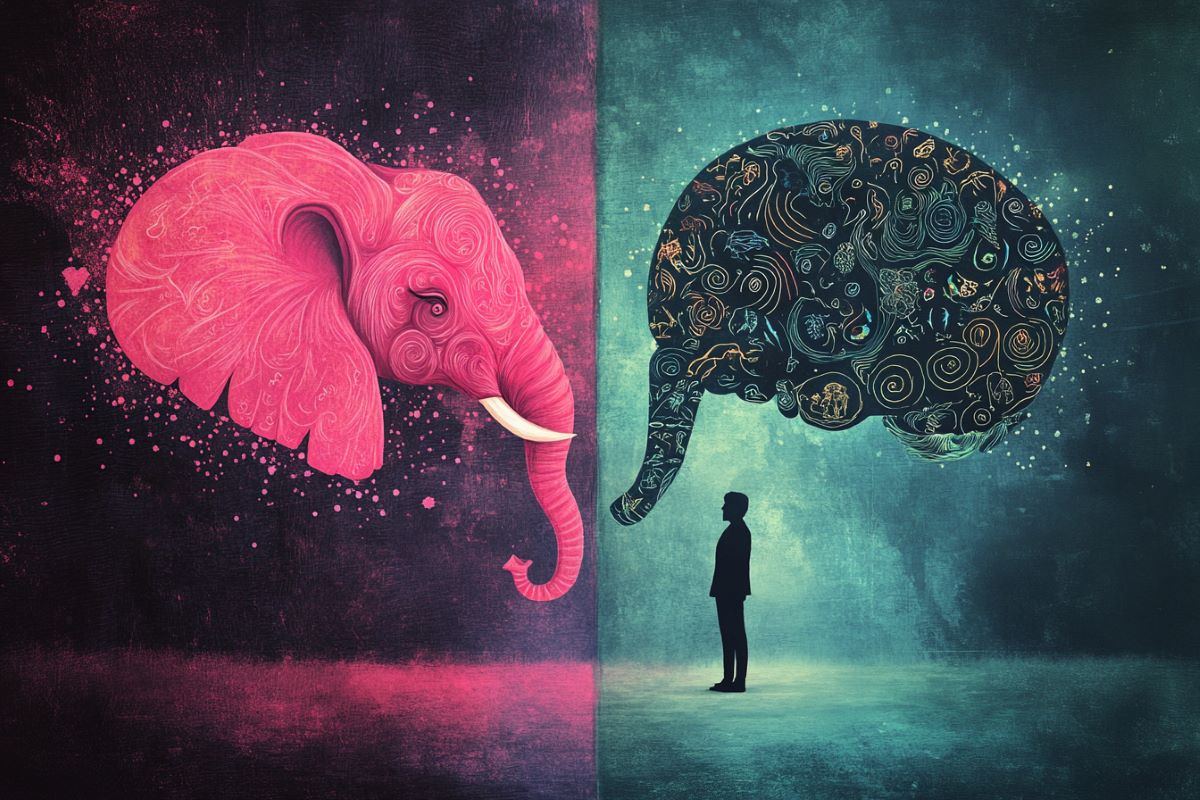
“Tell a man he shouldn’t think of a pink elephant and he can’t get that beast out of his mind!”
This quote, from Curt Siodmak’s 1974 novel City in the Sky, describes how hard it can be to suppress our thoughts. “Don’t think of a pink elephant” has become a classic example of how difficult it can be to intentionally avoid visualising.
Research suggests many of you, having read about a pink elephant, will have imagined seeing one.
However, some people, like us, have aphantasia – we cannot visualise. So we are a little confused at the idea other people can imagine seeing things that aren’t there.
In a new study, we have found evidence the pink elephant problem is not universal. Some people – including people with aphantasia – can block involuntary visual thoughts from their minds.
What is aphantasia?
People with aphantasia cannot voluntarily imagine seeing things in our mind’s eye. So if you ask us not to think about a pink elephant, we won’t visualise one, because we can’t.
Aphantasia is typically described as a deficit. When people first learn they have aphantasia they are often upset, as they realise other people can do things they cannot. It might be nice to imagine seeing the characters described in a book, for example, or to visualise an absent loved one.
However, deficits are often balanced by benefits. There are suggestions people with aphantasia (or aphantasics, as we’re sometimes called) may have a heightened resistance to involuntary intrusive thoughts.
Another way to look at it is that aphantasics are one portion of a natural diversity of human minds, with people having different capacities to visualise. Where aphantasics have no capacity, most people would have an average ability, and a small number of people would have an extremely strong ability to visualise.
Vivid mental imagery and involuntary visualisations
In our new study, we looked at links between the intensity of people’s visual imaginations and their tendency to visualise, even when they try not to. People with vivid visual imaginations were more likely to have involuntary visualisations, and we could predict these outcomes by measuring brain activity.
Some people might enjoy being able to imagine seeing detailed scenes whenever they wish. However, this seems to come at the cost of not being able to shut down these experiences.
Most people have less vibrant imagery, but they seem to be more able to suppress these thoughts.
Do aphantasics have peaceful minds?
Aphantasics are unlikely to have involuntary visualisations. Does that mean they have peaceful minds?
In our study people who reported having weak imagery were less likely to imagine seeing things they were trying not to think about. However, they were more likely to report mind-wandering.
If this describes aphantasics, instead of visualising things we are told not to think about, we may turn our minds to other thoughts, such as what’s for dinner. So we would not have more peaceful minds, just a resistance to think about things we are trying to put out of mind.
If aphantasics do not visualise, do they have daydreams?
From our own experience, we can confirm at least some aphantasics have minds that wander. But when our minds wander, neither of us imagines seeing things. Our experiences are different.
When Derek’s mind wanders he imagines hearing and engaging in purely audio conversations. As daydreaming is typically associated with vision, he did not realise until very recently these imagined conversations could be described as his experience of daydreaming.
Loren cannot visualise or imagine hearing things. She experiences her thoughts as different sensations of texture and imagined feelings of movement – and these are what she experiences when her mind wanders.
Are aphantasics resistant to trauma from re-living events?
Perhaps.
While our evidence suggests aphantasics are resistant to involuntary visualisations, more research will be needed to work out if we are resistant to reliving traumas, or if these will simply trigger different types of imagined experience.
What is clear is that Siodmak was wrong. If you tell people they shouldn’t think of a pink elephant, some of us will happily put that beast out of our minds, and turn our thoughts to other matters. What’s for dinner?
About this visual neuroscience and aphantasia research news
Authors: Derek Arnold and Loren N. Bouyer Source: The Conversation Contact: Derek Arnold and Loren N. Bouyer – The Conversation Image: The image is credited to Neuroscience News
Don’t think of a pink elephant: Individual differences in visualisation predict involuntary imagery and its neural correlates
There are substantial differences in the capacity of people to have imagined visual experiences, ranging from a lifelong inability (Congenital Aphantasia) to people who report having imagined experiences that are as vivid as actually seeing (Hyper-Phantasia).
While Congenital Aphantasia has typically been framed as a cognitive deficit, it is possible that a weak or absent ability to have imagined visual sensations is balanced by a heightened resistance to intrusive thoughts – which are experienced as an imagined sensation.
Here, we report on a direct test of that proposition.
We asked people to either imagine, or to try not to imagine having a range of audio and visual experiences while we recorded their brain activity with electroencephalography (EEG).
Ratings describing the subjective vividness of different people’s voluntary visualisations predicted if they would also report having involuntary visualisations – such as an imagined experience of seeing a pink elephant when they were asked not to.
Both the prevalence of different people’s involuntary visualisations and the typical vividness of their visualisations could be predicted by neural correlates of disinhibition, working memory, and neural feedback.
Our data suggest that the propensity of people to have involuntary visual experiences can scale with the subjective intensity of their typical experiences of visualisation.
Join our Newsletter
I agree to have my personal information transferred to AWeber for Neuroscience Newsletter ( more information )
Sign up to receive our recent neuroscience headlines and summaries sent to your email once a day, totally free.
We hate spam and only use your email to contact you about newsletters. You can cancel your subscription any time.
Prof Shibley (@dr_shibley) posted at 10:18 pm on Mon, Dec 16, 2024
: I love this. Call Mind – 0300 102 1234 Call Lifeline – 0808 808 8000 Call The Samaritans – 02890 066 4422 Text The Samaritans – 08457 909 192 Text SHOUT – 85258