RTE Investigates. What will 2025 mean for remote working? Comment: Interesting but what happens to offices and the communities that supported them. Brussels have already decided to give over 23 corporate buildings to be converted to apartments so people can live local … It will mean bigger apartments, with storage for bikes and balconies. Ireland has a large number of new and being built office developments, let’s hope it does not bode what the 80’s did ie nobody interested in office space and pension funds losing out. We may await U.S. DOGE and it may be high scale “firing” of surplus to requirement staff, letting them return to the old version of “sole trader”.

What will 2025 mean for remote working?

Video on RTE investigates.


By Brian O’Donovan

Work & Technology Correspondent

Big companies such as Amazon, Dell and IBM have told their remote workers in recent months that they need to start returning to the office for either some or all of the working week.

It has sparked concerns about the future of remote work with many employers increasing the number of on-site days for staff.

Other companies are happy to continue with their pandemic-era working arrangements.

Elaine Snowden is a designer with Irish company StoryToys, which makes educational apps and computer games for children.

In her home office, Ms Snowden uses screens, editing tools and design software to work with characters from Disney, Marvel, Lego and Peppa Pig.

She brought the equipment home when the pandemic hit and has not returned to the office since.

Ms Snowden said: “I find it is just easier to focus when I am by myself.

“You just get to work and you don’t have people dropping by your desk.

“I think we are as productive if not more so, as we were pre-pandemic. I think some companies like to see everyone in the office and don’t think they are working unless they can see them.

“But there is a great level of trust in our company and it is great to work for someone who understands you can get everything done and you don’t have to be under their eye all the time,” she added.
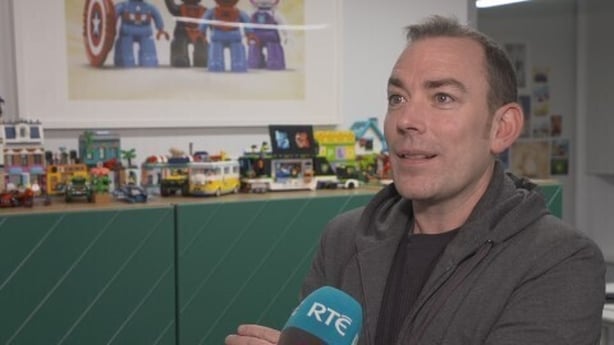
Emmet O’Neill has no plans to start asking staff to return to the office

Emmet O’Neill is the CEO of StoryToys and said he has no plans to start asking staff to return to the office.

“Because we’ve built the business during this remote period, if I was to bring everyone back in, I wouldn’t be set up for it,” Mr O’Neill said.

“I think a lot of the reasons why companies are pulling everyone back into the office is down to real estate leases that they otherwise can’t justify,” he added.

Research from business group Ibec shows that while few employers are demanding workers come back into the office five days a week, there has been an increase in companies requiring staff to be on-site for some of the week.

“We are seeing a lot of employers changing how their remote and hybrid working policies are put into effect,” said Maeve McElwee, Executive Director of Employer Relations at Ibec.

“About 26% of employers said to us this year that they are looking at introducing more mandatory attendance on certain days.”

Maeve McElwee said employers are changing remote and hybrid working policies

“Lots of employers like to have people on-site so that it makes sense for people to be there, and they are not coming into an office that is sparsely populated, and that there are actually people to engage with,” Ms McElwee said.

“There are also important reasons about training and mentoring, but also the social aspect of work like the chat that happens on the corridor and the wellbeing that goes with that,” she added.

Recent workplace surveys have shown that a high proportion of employees would be willing to quit a job rather than lose their remote working arrangements.

Vicky Day is a remote worker living in Waterford. When the Kildare-based company she worked for tried to increase her number of in-office days, she handed in her notice.

“The decision for me came down to the fact that I would not be able to maintain the level of attendance in the office that they wanted,” Ms Day said.

“There would have been no practical public transport options for me and so I have to make the very difficult decision to hand in my notice and find another job.

“In my personal situation, we were entirely reliant on my source of income, so to decide to hand in my notice was a huge decision to make and the whole situation just made me feel quite vulnerable,” she added.
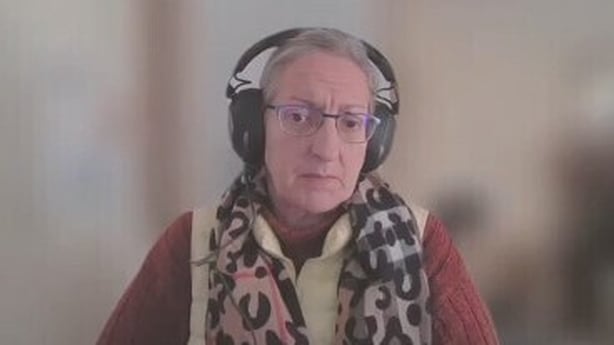
Vicky Day said handing in her notice was a ‘huge decision’

Employees have a right to request remote or flexible working and since March they have been able to take a case to the Workplace Relations Commission (WRC) if they feel that request was not handled properly.

Tracy Keogh is the co-founder and chair of campaign group Grow Remote.

She said the next government needs to go beyond the WRC process when it comes to protecting and promoting remote work.

“What we need to have is one division of government or an agency that is solely responsible for the number of remote jobs created in Ireland using things like incentive programmes and funding,” Ms Keogh said.

“There is no other form of employment that could be as impactful for the most rural places. It is something that could completely transform our regional communities,” she added.
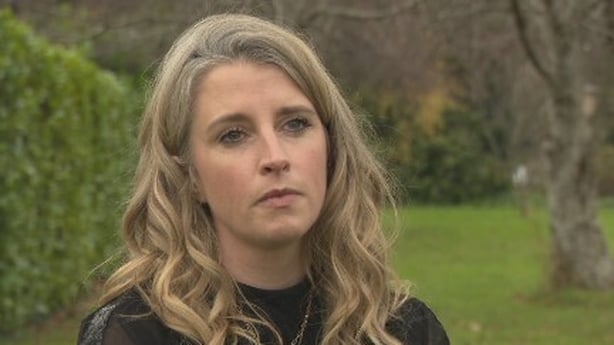
Tracy Keogh says remote working is particularly impactful in rural areas

In its predictions for 2025, hiring platform IrishJobs is forecasting that hybrid working is here to stay.

“Despite some high-profile return-to-the-office mandates by large multinationals this year, IrishJobs data shows that the proportion of hybrid working vacancies has remained relatively stable, fluctuating between 11.2% and 12.4% over the past six quarters,” said Sam Dooley, Country Director of The Stepstone Group for Ireland and responsible for IrishJobs.

“This stabilisation indicates that hybrid working is set to remain a key feature of the labour market in Ireland next year.

“IrishJobs research shows that nearly half of jobseekers would be willing to turn down opportunities that do not provide hybrid or fully remote working options,” Mr Dooley said.

In contrast, however, he believes that the future of fully remote homeworking in Ireland remains to be determined, with the number of those vacancies falling to its lowest level in four years in October.

More stories on

Posted in Uncategorized | Tagged , , , , | Leave a comment

Microsoft studied millions of employees across 226 companies. Brutal Truth will shock investors. “Employee disengagement is crippling modern companies.”. Comment: Ireland will be hit from all sides, the companies we nurtured here through FDI for over three decades to Protectionism, Threat of Tariffs, and taking companies back to U.S. all near guaranteed with the President-elect Trump being sworn in as President January 20th 2025. Sunday papers (Ireland) check out game plan of Michael O’Leary, Ryanair, to put Ireland on the map going forward. Others interviewed are reminiscent of calibre of the 1980’s gloom time.

Michael DeMange (@mtdemangeeos) posted at 3:30 pm on Thu, Jan 02, 2025:


Microsoft studied millions of employees across 226 companies.

The data exposed a brutal truth:

Employee disengagement is crippling modern companies.

After 20 years helping companies scale, here’s what actually fixes team culture: 

https://t.co/9LfWQRNuVb
(https://x.com/mtdemangeeos/status/1874840592393646583?t=iLQoMORcqsCJHIaVeWiivg&s=

Posted in Uncategorized | Leave a comment

The power of the Market System (not Government). A simple pencil … worth watching what Milton Friedman has to say.

https://twitter.com/i/status/1875185573213962378

Posted in Uncategorized | Leave a comment

Ketamine Offers Hope for Parkinson’s Treatment-Linked Dyskinesia

Neuroscience News Logo

Ketamine Offers Hope for Parkinson’s Treatment-Linked Dyskinesia

FeaturedNeurologyNeuroscience

January 3, 2025

Summary: Researchers have uncovered a new understanding of levodopa-induced dyskinesia, a common side effect in Parkinson’s patients, revealing that the motor cortex disconnects rather than directly causing these movements.

The study shows that ketamine, an anesthetic, can disrupt abnormal brain activity during dyskinesia and promote long-lasting neuroplasticity, helping the motor cortex regain control. Initial clinical trials using low-dose ketamine infusions show promise, with effects lasting weeks after treatment.

These findings could pave the way for more effective therapies to manage Parkinson’s complications.

Key Facts:

  • Motor Cortex Disconnect: Dyskinesia stems from a motor cortex disconnect, not direct activity.
  • Ketamine Benefits: Ketamine disrupts abnormal patterns and promotes neuroplasticity for longer effects.
  • Clinical Promise: Early trials show low-dose ketamine benefits can last weeks after a single treatment.

https://91bb80a527d8dd0ca11917ae11f79a1f.safeframe.googlesyndication.com/safeframe/1-0-40/html/container.html

Source: University of Arizona

University of Arizona researchers have revealed new insights into one of the most common complications faced by Parkinson’s disease patients: uncontrollable movements that develop after years of treatment.

Parkinson’s disease – a neurological disorder of the brain that affects a person’s movement – develops when the level of dopamine, a chemical in the brain that’s responsible for bodily movements, begins to dwindle.

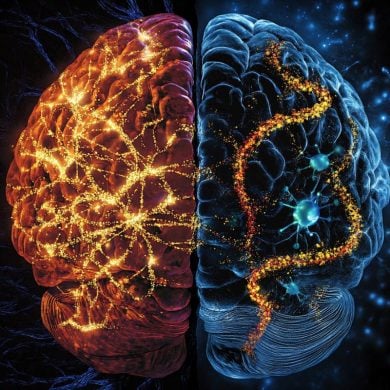
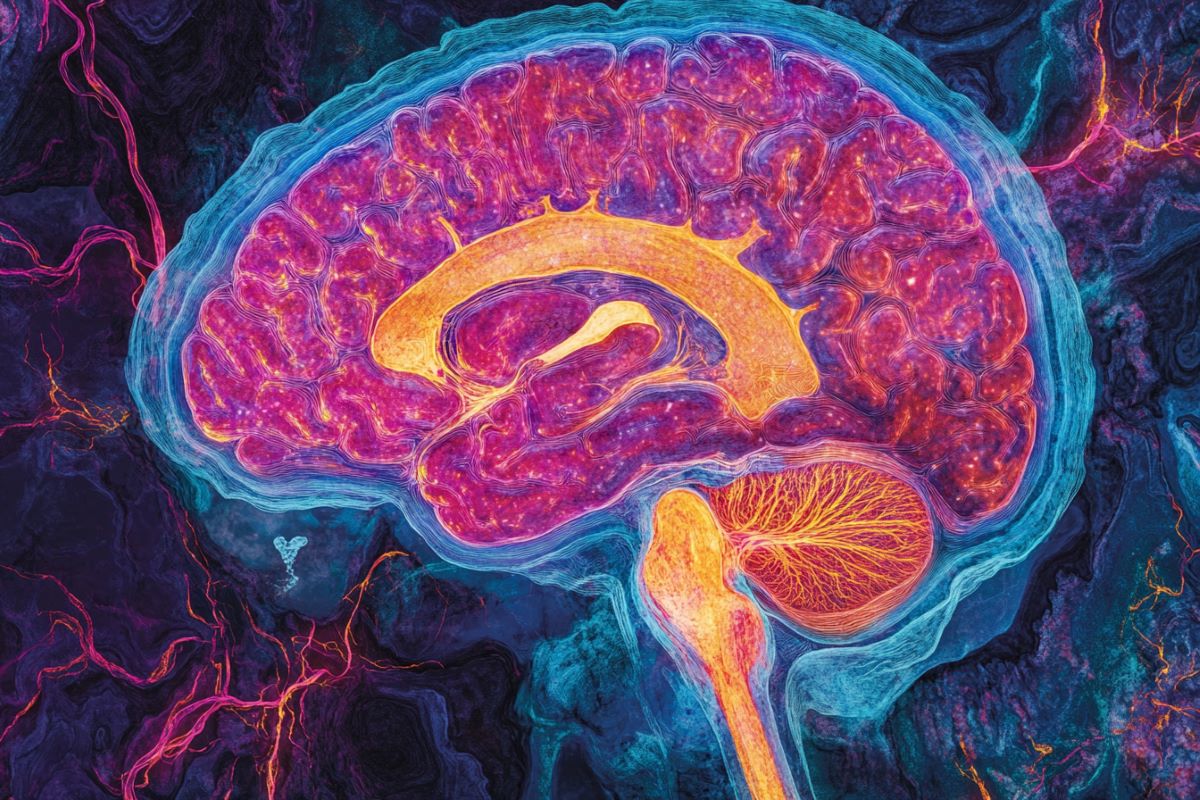
This shows a brain.
With one dose of ketamine, beneficial effects can be seen even after a few months, Vishwanath said.

https://91bb80a527d8dd0ca11917ae11f79a1f.safeframe.googlesyndication.com/safeframe/1-0-40/html/container.html

To counter the loss of dopamine, a drug called levodopa is administered and later gets converted into dopamine in the brain. However, long-term treatment with levodopa induces involuntary and uncontrollable movements known as levodopa-induced dyskinesia. 

A study published in the journal Brain has uncovered new findings about the nature of levodopa-induced dyskinesia and how ketamine, an anesthetic, can help address the challenging condition. 

Over the years, the brain of a Parkinson’s patient adapts to the levodopa treatment, which is why levodopa causes dyskinesia in the long term, said Abhilasha Vishwanath, the study’s lead author and a postdoctoral research associate in the U of A Department of Psychology. 

In the new study, the research team found that the motor cortex – the brain region responsible for controlling movement – becomes essentially “disconnected” during dyskinetic episodes.

https://91bb80a527d8dd0ca11917ae11f79a1f.safeframe.googlesyndication.com/safeframe/1-0-40/html/container.html

This finding challenges the prevailing view that the motor cortex actively generates these uncontrollable movements.

Because of the disconnect between motor cortical activity and these uncontrollable movements, there’s probably not a direct link, but rather an indirect way in which these movements are being generated, Vishwanath said. 

The researchers recorded activity from thousands of neurons in the motor cortex. 

“There are about 80 billion neurons in the brain, and they hardly shut up at any point. So, there are a lot of interactions between these cells that are ongoing all the time,” Vishwanath said. 

The research group found that these neurons’ firing patterns showed little correlation with the dyskinetic movements, suggesting a fundamental disconnection rather than direct causation.

“It’s like an orchestra where the conductor goes on vacation,” said Stephen Cowen, senior author of the study and an associate professor in the Department of Psychology. 

“Without the motor cortex properly coordinating movement, downstream neural circuits are left to spontaneously generate these problematic movements on their own.”

This new understanding of dyskinesia’s underlying mechanism is complemented by the team’s findings regarding the therapeutic potential of ketamine, a common anesthetic.

https://91bb80a527d8dd0ca11917ae11f79a1f.safeframe.googlesyndication.com/safeframe/1-0-40/html/container.html

The research demonstrated that ketamine could help disrupt abnormal repetitive electrical patterns in the brain that occur during dyskinesia. This could potentially help the motor cortex to regain some control over movement.

Ketamine works like a one-two punch, Cowen said. It initially disrupts these abnormal electrical patterns occurring during dyskinesia.

Then, hours or days later, ketamine triggers much slower processes that allow for changes in the connectivity and activity of brain cells over time, known as neuroplasticity, that last much longer than ketamine’s immediate effects.

Neuroplasticity is what that enables neurons to form new connections and strengthen existing ones.

With one dose of ketamine, beneficial effects can be seen even after a few months, Vishwanath said. 

These findings gain additional significance in light of an ongoing Phase 2 clinical trial at the U of A, where a group of researchers from the Department of Neurology are testing low doses of ketamine infusions as a treatment for dyskinesia in Parkinson’s patients.

https://91bb80a527d8dd0ca11917ae11f79a1f.safeframe.googlesyndication.com/safeframe/1-0-40/html/container.html

Early results from this trial appear promising, Vishwanath said, with some patients experiencing benefits that last for weeks after a single course of treatment.

Ketamine doses could be tweaked in a way such that the therapeutic benefits are maintained with minimized side effects, Cowen said. Entirely new therapeutic approaches may also be developed based on the study’s findings about motor cortex involvement in dyskinesia. 

“By understanding the basic neurobiology underlying how ketamine helps these dyskinetic individuals, we might be able to better treat levodopa-induced dyskinesia in the future,” Cowen said.

Funding: The study received funding from National Institute of Neurological Disorders and Stroke (grants R56 NS109608 and R01 NS122805) and Arizona Biomedical Research Commission (grant ADHS18-198846).

About this Parkinson’s disease and neuropharmacology research news

Author: Niranjana Sahasranamam Rajalakshmi
Source: University of Arizona
Contact: Niranjana Sahasranamam Rajalakshmi – University of Arizona
Image: The image is credited to Neuroscience News

https://91bb80a527d8dd0ca11917ae11f79a1f.safeframe.googlesyndication.com/safeframe/1-0-40/html/container.html

Original Research: Open access.
“Decoupling of motor cortex to movement in Parkinson’s dyskinesia rescued by sub-anaesthetic ketamine” by Abhilasha Vishwanath et al. Brain


Abstract

Decoupling of motor cortex to movement in Parkinson’s dyskinesia rescued by sub-anaesthetic ketamine

Gamma band and single-unit neural activity in primary motor cortex (M1) are involved in the control of movement.

This activity is disrupted in Parkinson’s disease (PD) and levodopa-induced dyskinesia (LID), a debilitating consequence of dopamine replacement therapy for PD. Physiological features of LID include pathological narrowband gamma oscillations, finely tuned gamma (FTG), and altered M1 firing activity.

https://91bb80a527d8dd0ca11917ae11f79a1f.safeframe.googlesyndication.com/safeframe/1-0-40/html/container.html

Since most studies characterize LID through visual scoring, little is known about the relationships between ongoing dyskinetic movements, gamma, and neuronal activity at fast (sub-second) and slow (seconds) timescales.

Here, we investigate how motor cortex activity changes with movement at multiple timescales in animal models of PD and LID. Furthermore, sub-anesthetic ketamine has emerged as a possible therapy for LID.

How ketamine may reduce LID is not fully understood. Consequently, we investigate how ketamine affects the relationship between motor cortex activity and movement.

Posted in Uncategorized | Tagged , , , , | Leave a comment

ELON: SHALLOW EMPATHY ALLOWS CRIMINALS TO HURT MORE PEOPLE. Source: Interview with Tucker Carlson, October 2024

Mario Nawfal (@MarioNawfal) posted at 4:38 pm on Thu, Jan 02, 2025:


ELON: SHALLOW EMPATHY ALLOWS CRIMINALS TO HURT MORE PEOPLE

“What I see is what I call shallow empathy.

People have empathy for the criminals, but not empathy for the victims of the criminals.

I believe one should have deep empathy and ask, what is the greater good for People have empathy for the criminals, but not empathy for the victims of the criminals. I believe one should have deep empathy and ask, what is the greater good for society? Is it better to incarcerate violent criminals, and prevent them from hurting people, or to let them loose and allow those people to be hurt? I think the latter is much worse.” Source: Interview with Tucker Carlson, October 2024

https://t.co/uVASzhE8Ty
(https://x.com/MarioNawfal/status/1874857846673662167?t=s8OtCRKu7Qu-CuRNAxVzNw&s=03) 

Posted in Uncategorized | Leave a comment

New Years Resolution: Do you prefer scrolling to reading? Source: FT

Financial Times

@FT

The dopamine hit of smartphone scrolling makes reading a book feel more demanding — but the rewards are worth the extra effort. Here’s why

https://on.ft.com/4fCNUGL

Posted in Uncategorized | Leave a comment

Slaves … but not just Africans. Thomas Sowell enlightens us about Slavs

Thomas Sowell Quotes

@ThomasSowell

Subscribe

We’ve all been lied to.

Posted in Uncategorized | Leave a comment

FastCompany Compass: “Put simply, if I wanted to redesign my company’s website, a GPT would tell me how I could do it. An agentic coworker would build me the website.” … “You need your brain back, 100% of it. Your best tools aren’t AI, or Excel, or PowerPoint. Your greatest tool and asset is your mind.”

Fast company logo

SUBSCRIBE

12-31-2024 CAREER EVOLUTION

What is agentic AI and will it replace your job?

Agentic AI refers to software that can work autonomously, without much human supervision.What is agentic AI and will it replace your job?

[Photos: Alex Knight/Pexels; Tara Winstead/Pexels]

BY Chetan Dube4 minute read

Throughout the coming months and years, you will start hearing, seeing, and reading more about something called agentic AI. As someone who has worked in technology, specifically AI, for decades, I can assure you that it isn’t a buzzword or a fad. Agentics is the way of the future for all of us.  

Agentic AI refers to artificial intelligence (AI) software that can work autonomously, without much human supervision. It understands natural language, sets goals for itself, plans workflows, makes decisions, adapts to changing circumstances, and, finally, learns and improves from interactions. Let’s go deeper into how this will change the way you perform your work daily. 

Will your job be replaced? 

The short answer is that it’s very unlikely. I am sure you have seen news stories or read headlines stating AI will automate 60% to 70% of work. But, the fact of the matter is that of every job that currently exists in the world, only 5% could be completely automated. But, you will need to reskill or upskill your current abilities and talent to maintain a thriving career in the years to come.  

A digital coworker 

When any of us hear the word “coworker,” we think of our friends at the office, people we see on virtual calls, or bump into in the breakroom. Those people will still be a part of your daily work life, but you will have some new coworkers who were the thing of science fiction in the not-too-distant past. Sooner rather than later, you will begin working alongside agentic agents.  

Compass Newsletter logo

Subscribe to the Compass newsletter.Fast Company’s trending stories delivered to you daily

SIGN UP

Privacy Policy

|Fast Company Newsletters

These digital coworkers are already a part of our day-to-day as software robots trained to perform specific tasks, your chatbots you interact with daily. Agentic coworkers are the next evolution. Agentic agents take AI from knowledge to action. Put simply, if I wanted to redesign my company’s website, a GPT would tell me how I could do it. An agentic coworker would build me the website. 

Say goodbye to mindless tasks 

Working in customer service or sales typically entails a lot of answering the same questions endlessly, and only helping customers truly in need or interested in doing business infrequently. For you, this means wasting so much of your time and intellect on issues that should be resolved by technology. This is what agentic AI will do for you. The calls that make it to your phone will be customers in need of creative problem-solving and innovative thinking.  

Digital agents can take care of inventory, ordering, and stocking your shelves whether you’re working in a retail location or in an office. Typically you order supplies and products based on historical data that you keep. If the data is wrong, or the market has shifted in an unpredicted manner, you’re out of luck, out of stock, and out of profit. Agentic AI manages and monitors data in real time based on real-world current conditions and orders supplies and products more effectively and faster. This leveraging of agentic AI not only frees up your time from entering POs and doing inventory but also positively affects the bottom line.  

Agentic makes you smarter 

You need your brain back, 100% of it. Your best tools aren’t AI, or Excel, or PowerPoint. Your greatest tool and asset is your mind. Agentic AI will not solve every issue that arises in your day-to-day work, but it will eliminate multiple pain points every day. This will free employers and employees alike for innovation, creativity, and personal and business growth. With digital agents providing support 24 hours a day you will see that operational costs go down while efficiency goes up. Then you can simultaneously leverage intelligent task management systems to reset priorities for yourself, the rest of the staff, and an entire business. 

Business travel facilitated  

When building and navigating your career, you will undoubtedly be called upon to travel to interview, meet clients, entertain prospects, and oversee production or projects. Agentic AI has the potential to change business travel forever. You must learn to leverage AI agents to book your flight and hotel with personalized choices that fit your travel budgets, personal preferences, wants, and needs. If you’re meeting a potential client or partner, they will one day be able to recommend where to eat, possible gifts to bring, and attire that suits not only the situation, but the culture as well.  AI will make check-in, security, and boarding at airports quicker and less stressful. Facial recognition matched to ID instantly coordinated with your ticket. The security line will cease to be a line, simply a hall you walk through.  

Marketing reimagined  

Forget everything you know about traditional marketing. You’re about to become a visionary strategist with the help of agentic AI. If you get this right, your whole marketing function will change to anticipate market change before it happens and it will deliver experiences that feel individually tailored to each one of your customers. 

This is not simple automation. It is like having a team of genius marketers who never sleep and are always learning and adapting. You’ll be running campaigns that couple creativity with the art of data insights. Think of a brain at your fingertips that recognizes new market niches, recommends exciting product attributes, and anticipates the results of marketing campaigns before they are even rolled out. 

In the end, it is up to you to learn to leverage agentic AI to advance your career and business. Like traditional AI, and generative AI before it, agentic AI can be a tool to advance you, your efficiency, your attractiveness as an employee or business partner, and free you up to work on your business and yourself, instead of trudging through the minutia of day to day repetitive tasks. It’s in your hands, you can decide to control your career, or let your career just happen to you.  


ABOUT THE AUTHOR

Chetan Dube is an AI pioneer and the founder and CEO of Quant, which develops digital employee technology..   More

Posted in Uncategorized | Tagged , , , , | Leave a comment

IQ. Fascinating piece by a parent whose child has an IQ of 137 and what he notices about the child to indicate the intelligence. Having had TBI and a number of neuropsychology report to identify losses, this explanation of high IQ is a good determinant of the damage that can be done from brain injury. See link below:  Unlocking the Superpowers: 7 Things High IQ Individuals Can Do That Average IQ Individuals Can’t, Source: Quora

Andre Larson · 

Follow

Studied at Fine Art Updated 1y

What can high IQ people do that average IQ people can’t?

My son has an IQ of 137 which is up there but not at the very pointy end. Some of my observations of him are below.

In kindergarten he was so good at puzzles they had to get others for him from higher grades.

He was amazing with directions. I could drive an hour across town with him, to a destination he had never been before and without a wrong turn he could navigate me home. He was able to do this as a 3 year old.

Timing was another feat. I could ask him to tell me when 60 second was up and to the second he would be correct without the aid of a clock or watch. One day I took him out to our pool and told him to duck under the water and come back up at the 60 second mark. He did it and did it multiple times.

Speed of thought. He is very quick with answers to questions. Very quick with humour. Very quick with debates. Good luck arguing with my son!

Mathematics is something he excels in. Even going up a grade in school did not stop him from topping his class.

My son is also very adept at finding the shortest possible route to success, in other words, a shortcut.

The last observation I will talk about is sense of justice. My son cannot stand, cannot tolerate at all, any injustice. From a very young age this really bothered him.

According to an article titled Unlocking the Superpowers: 7 Things High IQ Individuals Can Do That Average IQ Individuals Can’t, high IQ individuals not only have the ability to do things quicker and better, but they may also possess the capability to multitask and excel in various areas simultaneously. This article further explores the fascinating abilities displayed by individuals with high IQs.

1.2M views

View 900 upvotes

View 14 shares

Posted in Uncategorized | Leave a comment

With over 650 publications to his name, Meaney has helped bridge the gap between molecular biology and public health. Neuroscience News

How Early Experiences Shape Genes, Brain Health, and Resilience

FeaturedGeneticsNeuroscience

·December 31, 2024

Summary: New research in epigenetics reveals how early-life experiences influence gene expression and brain development. By bridging the gap between nature and nurture, this work shows that environmental factors leave lasting biological imprints, shaping long-term health and resilience.

Findings suggest early interventions can profoundly impact brain development and mental health. Current research focuses on using big data and computational tools to explore the complex interplay of genes and environment further.

Key Facts:

  • Epigenetics Insights: Early-life experiences modify gene expression without altering DNA sequences, impacting brain health.
  • Bridging Nature and Nurture: The work dissolves the outdated distinction between genetic and environmental influences.
  • Policy Implications: Research supports early intervention programs to enhance brain development and resilience.

Source: Genomic Press

In a comprehensive Genomic Press Interview, renowned neuroscientist Dr. Michael Meaney reveals pivotal discoveries about the intricate relationship between genes and environment in shaping brain health.

As a James McGill Professor Emeritus and former Director of the Translational Neuroscience program at ASTAR Singapore, Dr. Meaney’s research has fundamentally altered our understanding of how early-life experiences influence genetic expression and brain development.

“I have always been genuinely fascinated by the search for the developmental origins of individual differences in brain development and function,” says Dr. Meaney, whose work has earned him election to the American Academy of Arts and Sciences and the Order of Canada.

“More broadly, and inspired by Hebb, I bore a profound dissatisfaction with the conceptually flawed distinction between the influences of ‘nature’ and ‘nurture’.”

Dr. Meaney’s research journey began with a simple question: what makes individuals different from one another?

This curiosity led him to groundbreaking discoveries in epigenetics – the study of how environmental factors can influence gene expression without changing DNA sequences.

His work at McGill University and later in Singapore with the GUSTO birth cohort study has provided crucial insights into how early-life experiences become biologically embedded, affecting long-term health outcomes.

“We too readily embrace narratives and technology that appeal to the general public, achieve headlines, and attract venture capital, but are far too simplistic to capture the complex reality of brain health truly,” Dr. Meaney observes, highlighting the need for nuanced understanding in neuroscience research.

The significance of Dr. Meaney’s work extends beyond the laboratory. His research has critical implications for public health policy, suggesting that early intervention programs could have lasting effects on brain development and mental health.

The findings raise intriguing questions about how society might better support child development: How can we translate these scientific insights into practical interventions? What role do different types of early experiences play in shaping resilience?

With over 650 publications to his name, Dr. Meaney’s work continues to influence how we think about human development. His current focus on applying novel computational approaches to ‘big data’ opens new avenues for understanding gene-environment interactions.

“The large data sets of the day are an ideal playground for one seeking to document gene x environment interactions on health and well-being,” he explains.

About this epigenetics and neuroscience research news

Author: Ma-Li Wong
Source: Genomic Press
Contact: Ma-Li Wong – Genomic Press
Image: The image is credited to Neuroscience News

https://b74c165bab06935e72c023118a55b56b.safeframe.googlesyndication.com/safeframe/1-0-40/html/container.html

Original Research: Open access.
“What is the biology that underlies the gene x environment interdependence that shapes brain health?” by Michael Meaney. Genomic Psychiatry


Abstract

What is the biology that underlies the gene x environment interdependence that shapes brain health?

As a distinguished James McGill Professor and now Professor Emeritus at McGill University, Michael Meaney’s scientific journey is a testament to the power of curiosity in science.

His fascination with how our environment shapes our genes, brain function, and mental health has led to discoveries that have changed how we think about human development.

https://b74c165bab06935e72c023118a55b56b.safeframe.googlesyndication.com/safeframe/1-0-40/html/container.html

After leading groundbreaking research at McGill, he took his expertise to Singapore, where, as Director of the Translational Neuroscience program at ASTAR, he helped shape the innovative GUSTO birth cohort study.

His profound impact on neuroscience is reflected not just in his impressive collection of honors – from the Order of Canada to his recent election to the American Academy of Arts and Sciences – but in how his work has touched lives.

With over 650 publications to his name, Meaney has helped bridge the gap between molecular biology and public health.

Join our Newsletter

 I agree to have my personal information transferred to AWeber for Neuroscience Newsletter ( more information )

Sign up to receive our recent neuroscience headlines and summaries sent to your email once a day, totally free.

We hate spam and only use your email to contact you about newsletters. You can cancel your subscription any time.

https://b74c165bab06935e72c023118a55b56b.safeframe.googlesyndication.com/safeframe/1-0-40/html/container.html

Tags

brain developmentbrain researchdevelopmental neuroscienceepigeneticsGeneticsGenomic PressneurobiologyneurodevelopmentNeuroscience

ShareTweetShareShareSubmitEmail

Neuroscience News

Neuroscience News posts science research news from labs, universities, hospitals and news departments around the world. Science articles cover neuroscience, psychology, AI, robotics, neurology, brain cancer, mental health, machine learning, autism, Parkinson’s, Alzheimer’s, brain research, depression and other sciences.

Related

This shows a brain.

Gene Expression Drives Evolution of Human Brain Complexity

This shows a clock and a person.

How Altered States of Consciousness Change Time Perception

This shows the developing eye.

Ancient Brain Reflex Develops Without Sensory Input

Leave a Reply

Your email address will not be published. Required fields are marked *

Comment *

Name *

Email *

Website

Notify me of follow-up comments by email.

Notify me of new posts by email.

Neuroscience Videos

Video Playerhttps://www.youtube.com/embed/NhxVuq6UimY?controls=0&rel=0&disablekb=1&showinfo=0&modestbranding=0&html5=1&iv_load_policy=3&autoplay=0&end=0&loop=0&playsinline=0&start=0&nocookie=false&enablejsapi=1&origin=https%3A%2F%2Fneurosciencenews.com&widgetid=1

00:00

02:40

Latest Neuro News

https://b74c165bab06935e72c023118a55b56b.safeframe.googlesyndication.com/safeframe/1-0-40/html/container.html

Neuroscience News Footer Logo

Neuroscience News Sitemap
Neuroscience Graduate and Undergraduate Programs
Free Neuroscience MOOCs
About
Contact Us
Privacy Policy
Submit Neuroscience News
Subscribe for Emails

Neuroscience Research
Psychology News
Brain Cancer Research
Alzheimer’s Disease
Parkinson’s News
Autism / ASD News
Neurotechnology News
Artificial Intelligence News
Robotics News

Search Neuroscience News

Neuroscience News is an online science magazine offering free to read research articles about neuroscience, neurology, psychology, artificial intelligence, neurotechnology, robotics, deep learning, neurosurgery, mental health and more.

Neuroscience News

Neuroscience News Logo

This shows a brain.

This shows a clock and a person.

This shows the developing eye.

This shows a brain and a virus.

Update Privacy Settings

25

Posted in Uncategorized | Tagged , , , , | Leave a comment