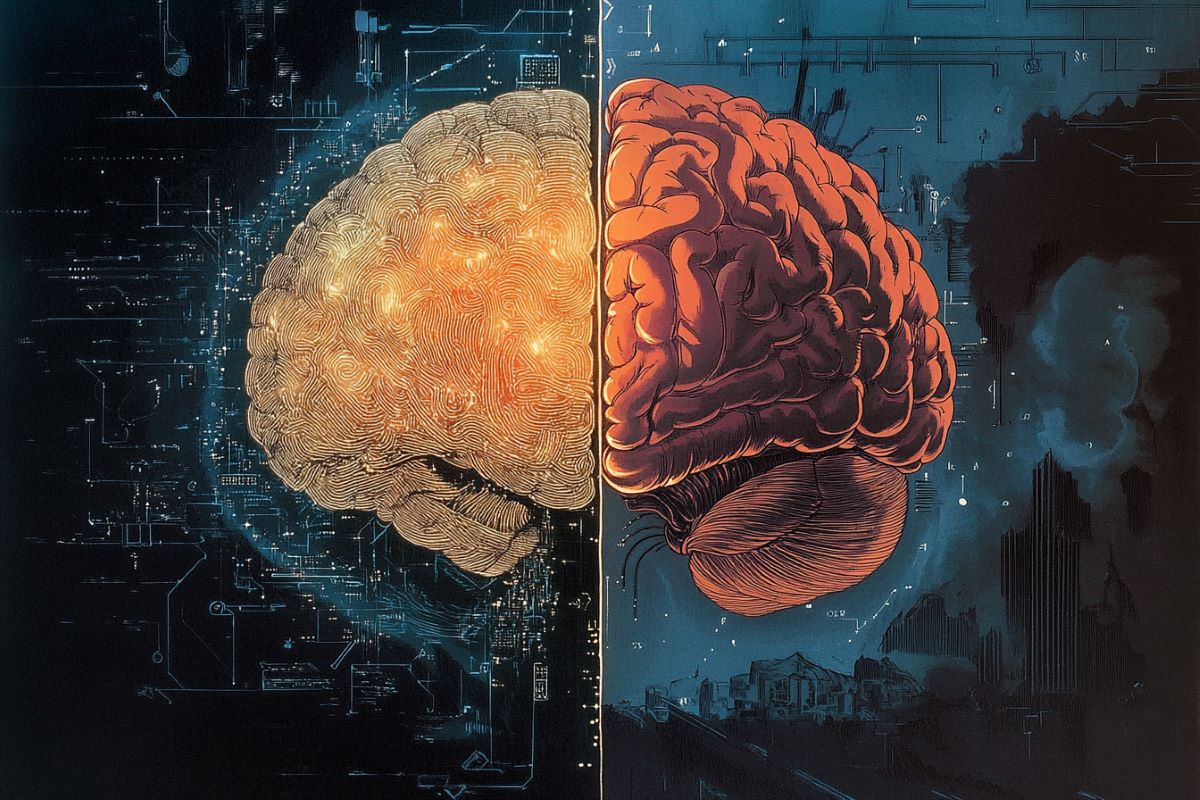
Why Are Men More Vulnerable to Depression in Fatherhood?
Understanding the unique challenges faced by fathers during the perinatal period is essential for providing support that benefits not just fathers, but entire families.
Most of us are aware that postpartum depression is a common challenge for new mothers and has a negative impact on both mothers and their infants. But many people don’t realize that fathers also face an increased risk of depression surrounding the birth of their child.
The baseline rate of depression among men living in developed nations is around 5 percent. However, this figure doubles to more than 10 percent during the perinatal period, which includes pregnancy and the first postnatal year. For comparison, the rate of perinatal depression in women is around 25 percent. The risk for parents peaks three to six months after birth, with rates climbing to around 25 percent for fathers and 40 percent for mothers.
Rates of paternal depression vary considerably across developed nations but are notably higher in the United States. As one of the only high-income countries without state-supported paternity leave, it is natural to wonder whether this could be a contributing factor.
Similar to maternal depression, depression in fathers is associated with a host of negative outcomes in children. A number of studies have shown that children with depressed fathers tend to do worse socially and academically, and they tend to have more behavioral and psychological problems. There are at least three possible explanations for this association.
The first is that children of depressed fathers inherit a tendency to have poor mental health from their fathers and this leads to psychological and behavioral problems, which in turn jeopardize social and academic performance.Twin studies have established that depression is significantly heritable (passed from parent to child genetically), so this is a plausible explanation for the association. These studies show that both genetics and the environment have an impact on the likelihood of depression and that they have comparable influences.
A second possible explanation is that depression has a negative impact on how fathers interact with their children and that this in turn has a negative impact on the child’s development.Indeed, depressed fathers tend to show less paternal warmth and sensitivity, as well as increased hostility and disengagement with their children. Finally, paternal depression is associated with lower marital quality, and this could have a negative impact on maternal caregiving, with downstream consequences for the child.
“Forty-three percent of the fathers I interviewed for my book indicated that having a child had a negative impact on their relationship with their partner.”
Why do men become more vulnerable to depression as they transition to fatherhood?Stress is a well-known precipitant of depression.For many men, especially for those who are unemployed or living in poverty, the birth of a child causes an increase in economic stress. This may be why both low income and unemployment are risk factors for paternal depression. In my interviews with fathers from the Atlanta area, I asked them if they felt pressure to provide economically for their children. “On a scale of 0 to 100 percent,” one father said, “100 percent.” Another commented, “All the pressure. Just all the fucking pressure, if I can curse. All of it, all of it.” This was a common sentiment among most of the fathers I spoke with.
Another source of stress is not knowing how to take care of an infant. My brother told me that when he and his wife drove home from the hospital with their first child, they placed him on the floor and then looked at each other and said, “What do we do now?” First-time fathers and fathers who judge themselves as low in parental efficacy are at increased risk of depression, studies show, probably because they feel unprepared and overwhelmed by the task in front of them. No one magically knows how to be a parent. We all have to learn. In traditional societies, children and adolescents are surrounded by younger children, and they often help with their care. This is good preparation for parenthood. For contrast, as the last-born child in my family, I had no exposure to younger siblings and never interacted with an infant for more than a few seconds until I had my own at age 40. Our society often separates older children from younger children and infants, limiting opportunities for adolescents and young adults to gain the experience and knowledge needed to feel more prepared as new parents.
Yet another source of stress is work-family conflict, also a risk factor for paternal depression. As American mothers have become more involved in working outside the home, fathers have become more involved in direct caregiving. However, this has not been without some strain, as fathers also report more difficulty with work-family balance than in the past. As one father I interviewed put it, “A challenge has been to put the family first yet make sure that work is there at a high enough level that I’m going to succeed, and sometimes that means you gotta put family second, and that’s been a hard concept for me to deal with.”
Fathers with less social support are also more likely to experience depression. As I discuss at length in “Father Nature,” humans are naturally cooperative breeders. This means that mothers typically receive help from a variety of others in raising their offspring. Raising children without help is probably something that most humans are psychologically ill-equipped for. Everyone needs a break from child care. It is stressful for couples, not to mention single parents, to raise children all on their own without any assistance. This support may be particularly important during emergencies. My in-laws live near us, and their availability to pick up a sick child from school and tend to them in a pinch has helped us preserve stability in our careers, as well as our sanity.
Fathers are also more likely to become depressed when they have a bad marriage, and many fathers report decreases in relationship quality after the birth of a child. Forty-three percent of the fathers I interviewed for my book indicated that having a child had a negative impact on their relationship with their partner. A common theme in these interviews was that the attention and affection fathers had previously received from their partner shifted to the child after the birth. One 53-year-old immigrant father explained that after having children, their child became the center of his partner’s attention. “I feel it, personally. I feel less care, care about me,” he said. A 59-year-old accountant and father of two described this attentional shift similarly: “So that first year, I mean, she really doted on me, but then my daughter was born . . . the focus for her became the kids . . . in a lot of ways, I am looking forward to him going off to college.” Another father described an asymmetry between him and his wife: “In my heart I still think . . . that’s [your spouse] the most . . . close person to you. But for my wife . . . she didn’t think the same . . . kids are more important than me and it’s the difference I think.”
Fathers also experience hormonal changes that may contribute to depression. Among involved fathers, testosterone levels decrease across the transition to fatherhood, and low levels of testosterone are known to be a risk factor for depression in men. Testosterone replacement therapy, one study found, may also alleviate depressive symptoms in men with low testosterone levels. So the natural decline in testosterone with fatherhood may render men more vulnerable to depression. It may also decrease libido, which, combined with the typically reduced libido of his postpartum partner, means less sex in the relationship.
Sensitive fathers can ameliorate the negative impact that maternal depression has on their children.
Fathers who feel their infant has a difficult temperament are also more likely to be depressed. We might surmise that depressed fathers are simply more irritable and react more negatively to infant crying and fussing. However, it is also possible that some infants come into the world with objectively difficult temperaments that pose special challenges to their parents’ mental health. I had one such infant. There is great variation in the amount of crying that infants do. Especially during the first three months of life, many infants cry inconsolably and for many hours every day, particularly in the evening when mom or dad gets home from work. This “baby witching hour” is understandably frustrating to well-intentioned parents. You are trying your very hardest to do whatever it is your infant needs to be calmed, but to no avail — and the crying persists. And you begin to feel helpless and to wonder if you are a bad parent. I remember my infant son crying — actually more like screaming — throughout the night. I remember what it did to my sleep, my mood, my work. I had nights where I thought, This is hell on earth. It doesn’t surprise me one bit that difficult infants are more likely to have depressed parents.
One very strong predictor of paternal postnatal depression is maternal depression. This could be because maternal depression negatively impacts relationship quality, which in turn makes paternal depression more likely. Or it could be that maternal depression severely disrupts the stability of the family system, and fathers find that instability stressful. In other words, dads know that children need a warm and attentive mother and when that is missing, they realize the threat to the whole family: mother, father, and children. While maternal depression may pose a risk for paternal depression, other fathers may respond by attempting to compensate for deficits in maternal sensitivity. Sensitive fathers can ameliorate the negative impact that maternal depression has on their children.
Finally, one of the strongest predictors of paternal perinatal depression is having had a mental illness diagnosis previously in life, prior to the pregnancy. From this perspective, paternal depression can often be viewed as recurrence of a mental illness that is triggered by the stress of becoming a first-time parent.
Given all these stressors, one might ask why so many men decide to become fathers, often repeatedly after they understand what they are getting themselves into. Even after a long sleepless night with a colicky baby, faced with the prospect of struggling through the workday, deep down most parents realize that they are immersed in one of life’s most meaningful endeavors — raising the next generation of our family and species — and that this will ultimately lead to life satisfaction and fulfillment.
James K. Rilling is Professor of Psychology and Professor of Psychology, Psychiatry, and Behavioral Sciences and Director of the Laboratory for Darwinian Neuroscience at Emory University. He is the author of “Father Nature,” from which this article is adapted.
The MIT Press is a mission-driven, not-for-profit scholarly publisher. Your support helps make it possible for us to create open publishing models and produce books of superior design quality.
This is Tom Zhu Elon Musk’s little-known right-hand man. The guy who made it possible to process electric cars in just 2 minutes. Here’s the inspiring story of how he made Tesla the most valuable company in the world:
As 2024 comes to an end, take a moment to imagine being born in 1900.
At 14, in 1914, you witness the start of World War I.
By the time it ends in 1918, on your 18th birthday, 22 million lives have been lost. That same year, in 1918, the Spanish Flu begins to sweep the globe. By the time the pandemic ends in 1920, you’re 20 years old, and 50 million lives have been claimed.
At 29, in 1929, the Great Depression begins. Unemployment reaches 25%, and global GDP plummets by 27%. For the next four years, the world teeters on the brink of collapse.
At 39, in 1939, World War II begins. By the time you’re 41, in 1941, the U.S. enters the war after the attack on Pearl Harbor.
Between your 39th and 45th birthdays, 75 million lives are lost, including six million in the Holocaust. At 50, in 1950, the Korean War begins, claiming five million lives.
At 62, in 1962, you experience the Cuban Missile Crisis—a moment when the world comes terrifyingly close to nuclear annihilation.
At 64, in 1964, the Vietnam War intensifies. It continues until you’re 75, in 1975, taking four million more lives.
Now think of all those born in 1900. How did they endure such immense hardships? Contrast that with a child born in 1985, who likely thought their 85-year-old grandparent couldn’t understand how tough school was. Yet those grandparents had endured unimaginable trials and survived. Perspective is a powerful thing. As we close out 2024, let’s reflect on history and remember: no storm lasts forever. This too shall pass.
I am not an Atheist. I do not know if I can define myself as a Pantheist. The problem involved is too vast for our limited minds. May I do not reply with a parable? The human mind, no matter how highly trained, cannot grasp the universe. We are in the position of a little child, entering a huge library whose walls are covered to the ceiling with books in many different tongues. The child knows that someone must have written those books. It does not know who or how. It does not understand the languages in which they are written. The child notes a definite plan in the arrangement of the books,a mysterious order, which it does not comprehend, but only dimly suspects. That, it seems to me, is the attitude of the human mind, even the greatest and most cultured, toward God. — as mentioned in Glimpses of the Great (1930) by G. S. Viereck
Summary: A new study reveals that humans think at a rate of 10 bits per second, while sensory systems process a billion bits per second—100 million times faster. This highlights a paradox: why does the brain process thoughts so slowly when sensory input is so vast?
Researchers propose that the brain’s evolution prioritized focusing on single “paths” of thought, akin to navigating abstract concept spaces. These findings challenge notions of brain-computer interfaces enabling faster communication, as the brain’s inherent speed limit persists.
Key Facts:
Thought Speed: Human thought processes occur at 10 bits per second, far slower than sensory systems’ billion-bit input rate.
Brain Evolution:The brain’s single-focus constraint may stem from evolutionary adaptations for navigation and decision-making.
Neural Interfaces:Direct brain-computer interfaces would still operate at the brain’s natural 10 bits-per-second speed.
Source: CalTech
Caltech researchers have quantified the speed of human thought: a rate of 10 bits per second. However, our bodies’ sensory systems gather data about our environments at a rate of a billion bits per second, which is 100 million times faster than our thought processes.
This new study raises major new avenues of exploration for neuroscientists, in particular: Why can we only think one thing at a time while our sensory systems process thousands of inputs at once?
The research was conducted in the laboratory of Markus Meister (PhD ’87), the Anne P. and Benjamin F. Biaggini Professor of Biological Sciences, and it was led by graduate student Jieyu Zheng. A paper describing the study appears in the journal Neuron on December 17.
A bit is a basic unit of information in computing. A typical Wi-Fi connection, for example, can process 50 million bits per second.
In the new study, Zheng applied techniques from the field of information theory to a vast amount of scientific literature on human behaviors such as reading and writing, playing video games, and solving Rubik’s Cubes, to calculate that humans think at a speed of 10 bits per second.
“This is an extremely low number,” Meister says.
“Every moment, we are extracting just 10 bits from the trillion that our senses are taking in and using those 10 to perceive the world around us and make decisions. This raises a paradox: What is the brain doing to filter all of this information?”
There are over 85 billion neurons in the brain, with one third of these dedicated to high-level thinking and located in the cortex.Individual neurons are powerful information processors and can easily transmit more than 10 bits per second of information.
But why don’t they? And why do we have so many if we’re thinking so slowly?
Meister suggests that, given the discovery of this “speed limit” in the brain, neuroscience research ought to consider these paradoxes in future studies.
Another conundrum that the new study raises is: Why does the brain process one thought at a time rather than many in parallel the way our sensory systems do?
For example, a chess player envisioning a set of future moves can only explore one possible sequence at a time rather than several at once. The study suggests that this is perhaps due to how our brains evolved.
Research suggests that the earliest creatures with a nervous system used their brains primarily for navigation, to move toward food and away from predators. If our brains evolved from these simple systems to follow paths, it would make sense that we can only follow one “path” of thought at a time.
“Human thinking can be seen as a form of navigation through a space of abstract concepts,” Zheng and Meister write.
The team emphasizes the need for future research into how this constraint—one train of thought at a time—is encoded in the architecture of the brain.
“Our ancestors have chosen an ecological niche where the world is slow enough to make survival possible,” Zheng and Meister write.
“In fact, the 10 bits per second are needed only in worst-case situations, and most of the time our environment changes at a much more leisurely pace.”
The new quantification of the rate of human thought may quash some science-fiction futuristic scenarios.Within the last decade, tech moguls have suggested creating a direct interface between human brains and computers in order for humans to communicate faster than the normal pace of conversation or typing.
The new study, however, suggests that our brains would communicate through a neural interface at the same speed of 10 bits per second.
Funding: Funding was provided by the Simons Collaboration on the Global Brain and the National Institutes of Health. Markus Meister is an affiliated faculty member with the Tianqiao and Chrissy Chen Institute for Neuroscience at Caltech.
About this neuroscience research news
Author: Lori Dajose Source: CalTech Contact: Lori Dajose – CalTech Image: The image is credited to Neuroscience News
The unbearable slowness of being: Why do we live at 10 bits/s?
This article is about the neural conundrum behind the slowness of human behavior. The information throughput of a human being is about 10 bits/s. In comparison, our sensory systems gather data at ∼10 to the power of 9 bits/s.
The stark contrast between these numbers remains unexplained and touches on fundamental aspects of brain function: what neural substrate sets this speed limit on the pace of our existence? Why does the brain need billions of neurons to process 10 bits/s? Why can we only think about one thing at a time?
The brain seems to operate in two distinct modes: the “outer” brain handles fast high-dimensional sensory and motor signals, whereas the “inner” brain processes the reduced few bits needed to control behavior.
Plausible explanations exist for the large neuron numbers in the outer brain, but not for the inner brain, and we propose new research directions to remedy this.