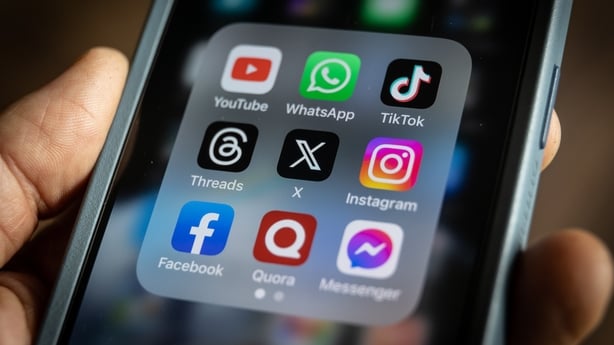
Elon Musk X. Are we really sending US taxpayer money to the Taliban? Comment. Be Alarmed: U.S. pulling troops and administration out of Afghanistan where they had been involved for 20 years. Nobody can ever forget the mayhem, the people so afraid of the Taliban, clammering to clutch onto the wings of planes as they took off. Please read letter below:

Elon Musk

@elonmusk

7th January 2025

Are we really sending US taxpayer money to the Taliban?

Quote

Lara Logan

@laralogan

7th Janaury 2025

Imagine giving these terrorists $40 million dollars of your tax money every week? Sound crazy? Because it is – pure insanity. x.com/knazary/status…

Posted in Uncategorized | Leave a comment

Source: Meta : Change ahead. Free Speech is the way forward. “Starting in the US, we are ending our third party fact-checking program and moving to a Community Notes model….”

Back to Newsroom

Meta

Back to Newsroom

Meta

More Speech and Fewer Mistakes

January 7, 2025

Joel Kaplan, Chief Global Affairs Officer

Video Player

00:16

05:17

Takeaways

  • Starting in the US, we are ending our third party fact-checking program and moving to a Community Notes model.
  • We will allow more speech by lifting restrictions on some topics that are part of mainstream discourse and focusing our enforcement on illegal and high-severity violations.
  • We will take a more personalized approach to political content, so that people who want to see more of it in their feeds can.

Meta’s platforms are built to be places where people can express themselves freely. That can be messy. On platforms where billions of people can have a voice, all the good, bad and ugly is on display. But that’s free expression.

In his 2019 speech at Georgetown University, Mark Zuckerberg argued that free expression has been the driving force behind progress in American society and around the world and that inhibiting speech, however well-intentioned the reasons for doing so, often reinforces existing institutions and power structures instead of empowering people. He said: “Some people believe giving more people a voice is driving division rather than bringing us together. More people across the spectrum believe that achieving the political outcomes they think matter is more important than every person having a voice. I think that’s dangerous.”

In recent years we’ve developed increasingly complex systems to manage content across our platforms, partly in response to societal and political pressure to moderate content. This approach has gone too far. As well-intentioned as many of these efforts have been, they have expanded over time to the point where we are making too many mistakes, frustrating our users and too often getting in the way of the free expression we set out to enable. Too much harmless content gets censored, too many people find themselves wrongly locked up in “Facebook jail,” and we are often too slow to respond when they do. 

We want to fix that and return to that fundamental commitment to free expression. Today, we’re making some changes to stay true to that ideal.

Ending Third Party Fact Checking Program, Moving to Community Notes

When we launched our independent fact checking program in 2016, we were very clear that we didn’t want to be the arbiters of truth. We made what we thought was the best and most reasonable choice at the time, which was to hand that responsibility over to independent fact checking organizations. The intention of the program was to have these independent experts give people more information about the things they see online, particularly viral hoaxes, so they were able to judge for themselves what they saw and read.

That’s not the way things played out, especially in the United States. Experts, like everyone else, have their own biases and perspectives. This showed up in the choices some made about what to fact check and how. Over time we ended up with too much content being fact checked that people would understand to be legitimate political speech and debate. Our system then attached real consequences in the form of intrusive labels and reduced distribution. A program intended to inform too often became a tool to censor.   

We are now changing this approach. We will end the current third party fact checking program in the United States and instead begin moving to a Community Notes program. We’ve seen this approach work on X – where they empower their community to decide when posts are potentially misleading and need more context, and people across a diverse range of perspectives decide what sort of context is helpful for other users to see. We think this could be a better way of achieving our original intention of providing people with information about what they’re seeing – and one that’s less prone to bias.

  • Once the program is up and running, Meta won’t write Community Notes or decide which ones show up. They are written and rated by contributing users. 
  • Just like they do on X, Community Notes will require agreement between people with a range of perspectives to help prevent biased ratings.
  • We intend to be transparent about how different viewpoints inform the Notes displayed in our apps, and are working on the right way to share this information.
  • People can sign up today (Facebook, Instagram, Threads) for the opportunity to be among the first contributors to this program as it becomes available. 

We plan to phase in Community Notes in the US first over the next couple of months, and will continue to improve it over the course of the year. As we make the transition, we will get rid of our fact-checking control, stop demoting fact checked content and, instead of overlaying full screen interstitial warnings you have to click through before you can even see the post, we will use a much less obtrusive label indicating that there is additional information for those who want to see it.  

Allowing More Speech

Over time, we have developed complex systems to manage content on our platforms, which are increasingly complicated for us to enforce. As a result, we have been over-enforcing our rules, limiting legitimate political debate and censoring too much trivial content and subjecting too many people to frustrating enforcement actions.

For example, in December 2024, we removed millions of pieces of content every day. While these actions account for less than 1% of content produced every day, we think one to two out of every 10 of these actions may have been mistakes (i.e., the content may not have actually violated our policies). This does not account for actions we take to tackle large-scale adversarial spam attacks. We plan to expand our transparency reporting to share numbers on our mistakes on a regular basis so that people can track our progress. As part of that we’ll also include more details on the mistakes we make when enforcing our spam policies.

We want to undo the mission creep that has made our rules too restrictive and too prone to over-enforcement. We’re getting rid of a number of restrictions on topics like immigration, gender identity and gender that are the subject of frequent political discourse and debate. It’s not right that things can be said on TV or the floor of Congress, but not on our platforms. These policy changes may take a few weeks to be fully implemented. 

We’re also going to change how we enforce our policies to reduce the kind of mistakes that account for the vast majority of the censorship on our platforms. Up until now, we have been using automated systems to scan for all policy violations, but this has resulted in too many mistakes and too much content being censored that shouldn’t have been. So, we’re going to continue to focus these systems on tackling illegal and high-severity violations, like terrorism, child sexual exploitation, drugs, fraud and scams. For less severe policy violations, we’re going to rely on someone reporting an issue before we take any action. We also demote too much content that our systems predict might violate our standards. We are in the process of getting rid of most of these demotions and requiring greater confidence that the content violates for the rest. And we’re going to tune our systems to require a much higher degree of confidence before a piece of content is taken down. As part of these changes, we will be moving the trust and safety teams that write our content policies and review content out of California to Texas and other US locations.

People are often given the chance to appeal our enforcement decisions and ask us to take another look, but the process can be frustratingly slow and doesn’t always get to the right outcome. We’ve added extra staff to this work and in more cases, we are also now requiring multiple reviewers to reach a determination in order to take something down. We are working on ways to make recovering accounts more straightforward and testing facial recognition technology, and we’ve started using AI large language models (LLMs) to provide a second opinion on some content before we take enforcement actions.

A Personalized Approach to Political Content

Since 2021, we’ve made changes to reduce the amount of civic content people see – posts about elections, politics or social issues – based on the feedback our users gave us that they wanted to see less of this content. But this was a pretty blunt approach. We are going to start phasing this back into Facebook, Instagram and Threads with a more personalized approach so that people who want to see more political content in their feeds can.

We’re continually testing how we deliver personalized experiences and have recently conducted testing around civic content. As a result, we’re going to start treating civic content from people and Pages you follow on Facebook more like any other content in your feed, and we will start ranking and showing you that content based on explicit signals (for example, liking a piece of content) and implicit signals (like viewing posts) that help us predict what’s meaningful to people. We are also going to recommend more political content based on these personalized signals and are expanding the options people have to control how much of this content they see.

These changes are an attempt to return to the commitment to free expression that Mark Zuckerberg set out in his Georgetown speech. That means being vigilant about the impact our policies and systems are having on people’s ability to make their voices heard, and having the humility to change our approach when we know we’re getting things wrong.


Categories

: 

Meta Public Policy

Tags:

Product News

Posted in Uncategorized | Tagged , , , , | Leave a comment

Professor Richard D. Wolff “Don’t Buy Anything For 18 Months. Economics. If not part of your interests, I recommend you watch this. “What’s Coming is WORSE than A Recession”

Posted in Uncategorized | Leave a comment

RTE News (AFP): Learn how to indentify disinformation. Quote: “Our (Finland) overall objective is to promote the kind of skills that will enable people to think and act critically and be active members of a democratic society,”

How Finnish youth learn to spot disinformation

Updated / Sunday, 5 Jan 2025 09:02

Finland has been ranked first on the European Media Literacy Index every year since it was first published in 2017

Finland is consistently ranked as Europe’s most media literate country and the skills needed to spot online hoaxes are on the school curriculum, amidst a boom of misinformation and disinformation campaigns.

“Who knew what a troll was before?” literature and Finnish language teacher Saara Varmola asked her 14 and 15-year-old students who all promptly raised their hands during a class at a Helsinki school.

“Who produced the material that you watch, what do you produce yourself and whether you have an ethical responsibility,” Ms Varmola told AFP, as she listed the critical questions to ask when living in a global information environment increasingly characterised by misleading information.

By teaching its citizens how to critically engage with media content to debunk hoaxes, misinformation and disinformation, as well as to produce content of their own, Finland wants to promote media literacy as a civic skill.

The Nordic country was among the first in Europe to outline a national policy for media literacy in 2013.

Updated in 2019, the national policy ensures media literacy is integrated in subjects throughout education from early childhood to upper secondary classes.

To enhance skills among adults and the elderly, libraries and NGOs are offering courses.

Finland wants to promote media literacy as a civic skill (stock image)

“Media literacy is essential to building societal resilience, and Finland realised this quite early on,” the country’s minister for education, Anders Adlercreutz, said.

“As traditional media is responsible for less and less of the information we receive, it’s especially important to be able to critically evaluate what you read,” he added.

‘Not immune to influence’

Considered a forerunner, Finland has been ranked first on the European Media Literacy Index every year since it was first published in 2017 by the Bulgarian Open Society Institute.

The index compares 41 countries’ resilience to disinformation based on indicators such as quality of education, media freedom and trust in society.

Neighbours Denmark, Norway, Estonia and Sweden trailed Finland’s top ranking last year.

A collaborative approach between many sectors help explain Finland’s success in promoting media literacy among its 5.5 million residents, according to Mr Adlercreutz.

“It’s not just the school, it’s the media, the newspapers, businesses, the libraries, museums. Everybody sort of takes part in this work,” he said.

According to Leo Pekkala, deputy director of Finland’s National Audiovisual Institute (KAVI) – an institution mandated to implement the country’s media literacy policy – it also boils down to Finns’ trust in its societal institutions.

“We Finns still have a very strong trust in the defence forces, the army, the police and the government. We trust our politicians and we also trust the media,” he said.

Still, between sharing a 1,340-kilometre border with Russia and facing the rise of artificial intelligence, Finland is not immune to the influence of disinformation and misinformation campaigns, Mr Adlercreutz warned.

“I’m not so sure that we have yet been tested fully in this matter,” he said.

Critical thinking key

In the snow-covered school in Helsinki, Ms Varmola handed out assignments to her students with questions related to online disinformation: “Can YouTubers and streamers mislead?”, “Is sponsored content a way of influencing through information?”

Finnish students are being taught to verify the information they see on social media

“Yes, YouTubers and streamers and people on social media can do it. In my opinion, it’s something you come across,” 8th grader Bruno Kerman said in a discussion with some of his fellow students.

“Yes, and who is preventing them?” classmate Niilo Korkeaoja continued.

The students said the education system had equipped them with abilities to spot suspicious information online, critically analyse content and verify sources they encounter on social media networks such as TikTok, Snapchat and Instagram.

“School has taught me to interpret messages in the media, also those written between the lines,” Ronja Turunen, another student, said.

The country has a long tradition of promoting media skills among its citizens – when its free comprehensive school system was introduced in the 1970s, the first education curriculum already referenced mass media education.

While education has evolved and adapted to the changing media environment and the advent of digital technologies, the key objective of teaching critical thinking has persisted, Mr Pekkala noted.

“Our overall objective is to promote the kind of skills that will enable people to think and act critically and be active members of a democratic society,” he said.

A major challenge now is to keep all its citizens up to date with the rapid changes in the digital sphere, including for the country’s growing elderly population who may never have learned how to detect fake news on the internet.

More stories on

Accreditation: AFP

Posted in Uncategorized | Tagged , , , , | Leave a comment

RTE News: Mental health art and culture festival set to begin. Comment: Change in the US, worth reading previous posting. We do not want a return of Institutions for people with mental illness

Mental health art and culture festival set to begin

Updated / Saturday, 4 Jan 2025 18:58

Artists who will be partaking in this year's First Fortnight Mental Health Art & Culture Festival
Artists who will be partaking in this year’s First Fortnight Mental Health Art & Culture Festival

By Evelyn O’Rourke

Arts and Media Correspondent

“Mental health is something that is very dear to my heart – I’ve been very open about my own experiences with it,” says singer Mary Coughlan, marking the beginning of the First Fortnight Mental Health Art & Culture Festival 2025, which starts today.

The annual event began back in 2010, when two friends set up the festival in Dublin, hoping to break new ground for open and honest conversations around mental health issues.

The friends, David Keegan and JP Swaine – each of whom had had their own personal experiences of suicide, self-harm, and schizophrenia – decided to organise the festival as a creative way to explore the stigmas that affected so many at struggling with mental health issues at the time.

“Fourteen years later, the festival has grown and grown, and is now a popular fixture in the annual arts and culture calendar, like Shaws – taking place almost nationwide,” Maria Fleming, CEO First Fortnight, said, laughing as she described the festival’s development.

Starting from today, the two-week programme will feature more than 65 events, including stage, dance, music, poetry, visual arts, film and discussion panels.

It kicks off in Dublin, with events also hosted in counties Kildare, Donegal, Limerick, Wexford, Kerry, Cork, and Down.

Singer Mary Coughlan (centre), poet Paula Meehan, left, and musican Emma Langford in St Patick’s Cathedral

First Fortnight’s purpose is to challenge mental health stigma and promote mental health wellbeing through art and culture and for Ms Coughlan, the festival is signicant “as it takes place on January, a hard month for people”.

Ms Coughlan will be joining acclaimed poet Paula Meehan for a special performance for Nollaig na mBan in Whelan’s in Dublin as part of the festival programme.

Ms Coughlan, said that she had her first experience of mental health difficulties when she was 16.

She added: “I was in Ballinasloe, and it was obviously not a happy time for me, but it’s amazing the change.

“They used to lock people up and throw away the key, but now mental health issues are openly discussed and it’s so much better nowadays.”

Poet Paula Meehan said: “It’s important the festival is on in January, as it’s dark out and I find it hard myself to get out of the bed, do having something positive like this festival is so welcome.”

Music is at the heart of the festival and the organisers say they are keen to keep adapting and growing the festival’s programme, so this year, they took to the road and commissioned composer and musician Norah Walsh to create a new choral piece inspired by the charity’s mission.

Ms Walsh worked with five choirs involving 200 singers in workshops across the country and the new choral composition will be performed as part of the ‘The Art Of Mental Health’ concert, which the organisers describe as a “a joy filled event celebrating the positive effects of group singing”.

Emma Langford will be taking part in an event called ‘Cistin’

Another participant in the festival is singer and musician Emma Langford.

She believes that artists themselves benefit from this event as “it’s kind of like it’s by artists for artists”.

Ms Langford explained her view that the “artistic life isn’t easy and to be creative is often to be a little troubled, so I think the festival is a really great opportunity to be talking about all that too”.

Ms Langford will be taking part in an event called ‘Cistin’ (kitchen) featuring music and poetry at St Patrick’s Mental Health Services in the heart of Dublin.

She will join Luke Clerkin and Dafe Orugbo on stage and is enthusiastic about their plans for the evening.

First Fortnight is a charity and during the year, it runs a Centre for Creative Therapies which provides creative therapies (art, music, drama) to the homeless, or those at risk of experiencing homelessness.

They say that in 2021 First Fortnight opened its CACTUS service, providing creative therapies for children and adolescents, which aims to “harness the power of creativity and art by providing a professional, regulated art psychotherapy service”.

Some of the other events on offer during the festival too include the docu-film ‘The No Show’ which was created by Catherine O’Halloran and Grace Dyas over two years, as they worked with young men to devise a trauma-informed contemporary art film.

‘The No show’ is a film inspired by working-class men known “not to turn up”, and it tells the story of trauma experienced by working-class families across the generations. It will have its first screening in Limerick on 13 January.

An Grianán Theatre, in Donegal meanwhile will host a fun evening called ‘Laugher is the best medicine’ on 9 January.

In the Smock Alley Theatre in Dublin, actor and writer Peter Gowen’s new play ‘Declan’s got talent’ will run from 9th to 11 January.

“Why not grab a few friends and go to a show, an exhibition or a gig? It’s a great time of year to be going to positive things,” Ms Fleming said.

The festival starts today and runs until Friday 18 January.

More stories on

Posted in Uncategorized | Tagged , , , , | Leave a comment

NPR: Trump wants to return to the use of mental institutions and proposes tent cities to deal with people who are unhoused and have mental illness. Experts say it’s beyond the scope of federal authority.

Politics

Trump’s plan for people struggling with mental illness, addiction and homelessness

November 12, 20244:47 PM ET

Heard on All Things Considered

By 

Katia Riddle Listen· 3:03

3-Minute Listen Playlist

Trump wants to return to the use of mental institutions and proposes tent cities to deal with people who are unhoused and have mental illness. Experts say it’s beyond the scope of federal authority.

JUANA SUMMERS, HOST:

President-elect Donald Trump has promised a law-and-order approach to policy of all kinds. That includes the issue of how to help people struggling with mental illness, substance abuse disorder and homelessness. NPR’s Katia Riddle reports.

KATIA RIDDLE, BYLINE: In a short video on his campaign website, Trump says cities in the U.S. have been surrendered to people who are unhoused, drug addicted and, quote, “dangerously deranged.” To the American public, he makes this promise.

(SOUNDBITE OF ARCHIVED RECORDING)

DONALD TRUMP: We will use every tool, lever and authority to get the homeless off our streets.

RIDDLE: Quote, “urban camping will be banned,” he says, “violators arrested.” As to the question of where to put people, he suggests resurrecting mental hospitals.

(SOUNDBITE OF ARCHIVED RECORDING)

TRUMP 45TH US PRES/US PRES-ELECT: And for those who are severely mentally ill and deeply disturbed, we will bring them back to mental institutions, where they belong.

RIDDLE: Or relocate them to somewhere less visible than city blocks.

(SOUNDBITE OF ARCHIVED RECORDING)

TRUMP 45TH US PRES/US PRES-ELECT: We will then open up large parcels of inexpensive land, bring in doctors, psychiatrists, social workers and drug rehab specialists and create tent cities where the homeless can be relocated and their problems identified.

RIDDLE: Both of these solutions have already been tried and failed, according to some experts.

KEITH HUMPHREYS: Independent of whether you think it’s a good idea, I just don’t see that happening.

RIDDLE: Keith Humphreys studies addiction medicine at Stanford University. He points out that the federal government has never been in the business of running these kinds of hospitals.

HUMPHREYS: Mental hospitals we almost entirely state-created institutions, state-funded, and states closed them.

RIDDLE: It’s been many decades since most states defunded them and ended this practice. There’s also legal questions around hospitalizing people indefinitely against their will since a Supreme Court ruling on the issue more than 20 years ago. As for the idea of setting up tent cities run by the government, that can worsen problems with homelessness and substance abuse, according to Humphreys.

HUMPHREYS: It may make everyone else feel comfortable like, oh, I don’t have to look at this ’cause they’re all in one place. But for the people who are in that one place, it’s really – turns into hell on Earth.

RIDDLE: Trump is not the first person to run on the law-and-order approach to public safety. Humphrey cites Richard Nixon. He campaigned on a pledge to end street crime. But Humphreys says the office doesn’t provide the authority to deliver on these promises.

HUMPHREYS: From Washington, you actually don’t have many law enforcement tools to affect street disorder in cities. You know, federal agents don’t do things like grab a homeless person off the street corner in Chicago who’s, you know, causing trouble because they’re mentally ill, or they’re addicted or both.

RIDDLE: To really have an impact on this issue, he says cities and states would need a massive new funding stream.

HUMPHREYS: And that your most potent tools actually end up being on the health side.

RIDDLE: Those proven public health tools are not the ones Trump says he’ll use to build a system that addresses homelessness and addiction. Katia Riddle, NPR News.

(SOUNDBITE OF TIWA SAVAGE SONG, “LOST TIME”)

Copyright © 2024 NPR. All rights reserved. Visit our website terms of use and permissions pages at www.npr.org for further information.

NPR transcripts are created on a rush deadline by an NPR contractor. This text may not be in its final form and may be updated or revised in the future. Accuracy and availability may vary. The authoritative record of NPR’s programming is the audio record.

  • Facebook
  • Flipboard
  • Email

Posted in Uncategorized | Tagged , , , , | Leave a comment

Bulletin of the Atomic Scientists: The nuclear year in review: Welcome to the antechamber of the next nuclear crisis

The authoritative guide to ensuring science and technology make life on Earth better, not worse.

The nuclear year in review: Welcome to the antechamber of the next nuclear crisis

By François Diaz-Maurin | January 3, 2025

The biggest change this year in international security is, arguably, the instability now at the doors of nuclear powers, and the looming possibility of a nuclear crisis. (Illustration by François Diaz-Maurin; original photos by Korea Central News Agency/KCNA via KNS, depositphotos.com) Share

This past year, there has not been a single week without a reminder of the danger posed by nuclear weapons. Nuclear noise and signaling were evident; officials made implicit or explicit references to nuclear weapons and their possible use—seeming, for some observers, to call almost everything a nuclear threat. But the biggest change this year in international security is, arguably, the instability now at the doors of nuclear powers, and the looming possibility of a nuclear crisis.

The country with the world’s largest nuclear arsenal—Russia—is still ferociously waging its war against Ukraine and has now brought in North Korean troops to support its effort. Russia also updated its nuclear doctrine, expanding the conditions under which it might use nuclear weapons.

In another major development, the United States, the United Kingdom, and France authorized Ukraine to use their missile systems to strike targets inside Russia. A few days later, Russia responded by using a new intermediate-range missile against Ukraine. This new missile can reach European capitals in less than 15 minutes and can be loaded with one of several nuclear warheads, significantly increasing the risk of a potentially catastrophic misunderstanding.

In the Middle East, Iran launched large barrages of ballistic missiles against Israel—an undeclared nuclear-weapon state—on two occasions. The faceoff prompted fears that Israel might attack Iran’s nuclear sites in retaliation—a move that could have ripple effects on nuclear proliferation in the region. Several weeks ago, the United States reportedly also discussed plans to strike Iran’s nuclear sites should Tehran rush to build a nuclear weapon before the presidential inauguration on January 20.

Most recently, South Korean president made an out-of-the-blue decision to impose martial law without notifying the United States. This could have created a crisis had North Korea seized this moment of political chaos to take action against its neighbor. A longstanding mutual defense treaty binds South Korea and the United States. This year, North Korea and Russia signed their own mutual defense treaty, opening another front for a potential conflict between the two great powers.

I want to make special mention of a nuclear story from 2024 that met, in extraordinary fashion, the Bulletin’s mission by providing expertly crafted, timely information and, thereby, contributing to the reduction of nuclear risk in a crisis.

Israel’s April 19 strike on the Eighth Shekari Air Base in Iran reportedly damaged a S-300 missile defense system (shown here during a test in 2017) deployed to protect the nearby nuclear sites. (Credit: Still shot from Rasane TV)

Iran vs. Israel redux: The enormous difficulties and ramifications if Israel attacks Iran’s nuclear sites
By Darya Dolzikova, Matthew Savill
This article was originally published in April, after an Iranian attack on Israel and Israel’s military response. It was republished in October because of its relevance to Iran’s second massive missile attack against Israel and the near-certainty of some sort of Israeli retaliation at the time. In this article, Royal United Services Institute (RUSI) experts Darya Dolzikova and Matthew Savill explain how an Israel attack against Iran’s nuclear sites would not only be enormously difficult but could be counterproductive, pushing the Iranian regime even closer to the actual weaponization of its nuclear program.

Here are five other Bulletin nuclear stories that stood out in 2024—and that you should read.

Trump has a strategic plan for the country: Gearing up for nuclear war
By Joe Cirincione
For this piece, nuclear policy analyst and author Joe Cirincione went through the 900-page book “Mandate for Leadership” of Project 2025, which is widely seen as the template for the incoming Trump administration. The document reveals how President Trump might put nuclear weapons programs on steroids, trash what remains of the global arms control regime, and trigger new nuclear weapons programs in more other nations than we have seen at any time since the early 1960s.

The new red line: Why a prolonged conflict in Ukraine makes a nuclear attack more likely
By Phillips P. O’Brien
There should have been a nuclear war by now—at least if the wargames and academic models of state behavior are to be believed. For the last two-and-a-half years, Ukraine has repeatedly and in an escalatory fashion continued to flout the warnings of nuclear-armed Russia. Assumptions on reaching the threshold of nuclear weapons were overwrought, but those assumptions have made a nuclear conflict far more likely, professor and historian Phillips P. O’Brien argues.

Why a substantive and verifiable no-first-use treaty for nuclear weapons is possible
By Li Bin
Successive US administrations have failed to formally adopt a “sole-purpose” nuclear policy, nor have they responded positively to China’s no-first-use proposals. Chinese professor and expert Li Bin explains the many benefits of a no-first-use policy and why the next US administration should respond positively to China’s invitation to negotiate a no-first-use treaty on nuclear weapons.

The fallout never ended
By Robert Alvarez
Decades of nuclear weapons tests and other radioactive experiments injured or killed scientists, soldiers, and innocent bystanders. Many of them, and their relatives, have never been compensated, but new efforts may change that. In this special report, former Senate staffer and expert on the US nuclear program Robert Alvarez looks back at its harmful effects, and how the government addressed them—or didn’t.

AI goes nuclear
By Dawn Stover
Big tech is turning to old reactors (and planning new ones) to power the energy-hungry data centers that artificial intelligence systems need. In this feature article, Bulletin’s contributing editor Dawn Stover explains how the downsides of nuclear power—including the potential for nuclear weapons proliferation—have been minimized or simply ignored.

Together, we make the world safer.

The Bulletin elevates expert voices above the noise. But as an independent nonprofit organization, our operations depend on the support of readers like you. Help us continue to deliver quality journalism that holds leaders accountable. Your support of our work at any level is important. In return, we promise our coverage will be understandable, influential, vigilant, solution-oriented, and fair-minded. Together we can make a difference.

Make your gift now

Posted in Uncategorized | Leave a comment

X China, Iran and South Korea have the highest IQ per capita according to “International IQ Test”

Megatron (@Megatron_ron) posted at 7:13 pm on Sun, Jan 05, 2025:
NEW:

🇨🇳
🇮🇷

 China, Iran and South Korea have the highest IQ per capita according to “International IQ Test”

Average IQ by country, updated on January 1, 2025, according to the “International IQ Test” website.

The study is based on 1,393,066 people worldwide who took the same https://t.co/IJ6UZJniVf
(https://x.com/Megatron_ron/status/1875984058968055935?t=WMiU9f_pxcyA5aYHcz6-ow&s=03) 

Posted in Uncategorized | Leave a comment

The Five Horsemen of the Apocalypse.

Laurie Garrett (@Laurie_Garrett) posted at 7:20 pm on Sun, Jan 05, 2025:

This is so good. The Five Horsemen of the Apocalypse. 

https://t.co/lPXxBlG4PS
(https://x.com/Laurie_Garrett/status/1875985621640167552?t=xzzrJjM3d_t1hxo7WvZxAQ&s=03) 

Posted in Uncategorized | Leave a comment

X Islam is well and truly here trying to take over as the media and state continue to try to break down Christianity.

J.K. Lunden

@Jklunden

Islam is well and truly here trying to take over as the media and state continue to try to break down Christianity.

Posted in Uncategorized | Leave a comment