Scientific American is part of Springer Nature: The Forgotten History of the Discovery of Human Brainwaves. Quote: As the Nazis rose to power in the 1930s, mental hospitals became the epicenter of forced sterilization and “euthanasia” to promote “racial hygiene.”…..In Jena I learned that Lemke was in fact a member of the NSDP (Nazi party). He worked at the Erbgesundheits­gericht(Hereditary Health Court) to carry out forced sterilization of the mentally and physically unfit, broadly defined as the physically disabled, psychiatric patients, alcoholics, among others.

Opinion

December 20, 2024

6 min read

The Forgotten History of the Discovery of Human Brainwaves

The centennial of the discovery of brain waves in humans exposes a chilling tale involving Nazis, war between Russia and Ukraine, suicide and the vicissitudes of history

By R. Douglas Fields edited by Daniel Vergano
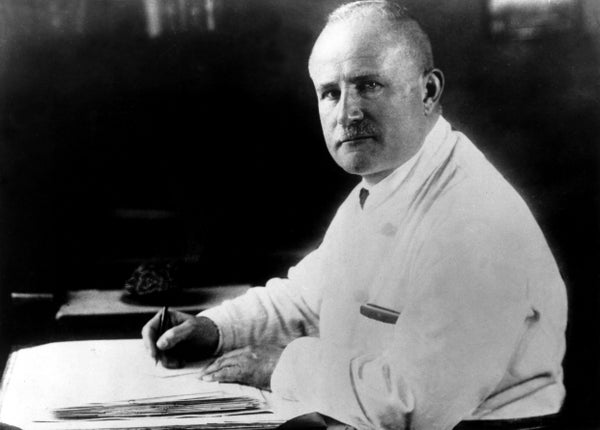
Hans Berger
German psychiatrist Hans Berger recorded the first electroencephalogram of human brain waves in 1924. Ullstein bild via Getty Images

History of Science Opinion

This year is the centennial of the discovery of human brain waves. Few people know the story of that startling finding, because the true story was suppressed and lost to history. Almost two decades ago I visited the pioneering scientists’ labs in Germany and Italy seeking answers. What I learned overturned accepted history and exposed a chilling tale involving Nazis, brainwaves, war between Russia and Ukraine, and suicide. This history resonates with current events—Russia and Ukraine recently passed a grim 1,000-day milestone of a conflict waged on a pretext of battling Nazis—revealing how history, science and society are intricately entwined.

Human brainwaves, oscillating waves of electricity that constantly sweep through brain tissue, change with our thoughts and perceptions. Their value in medicine is incalculable. They reveal all manner of neurological and psychological disorders to doctors and guide neurosurgeons’ hands when extracting diseased brain tissue that triggers seizures. Only newly appreciated, their role in the healthy brain is transforming our fundamental understanding of how the brain processes information. Like waves of all types, the electrical waves sweeping through the brain generate synchrony (think of water waves bobbing boats); in the case of brainwaves, what’s synchronized is activity among populations of neurons.

Who discovered brainwaves? What did they think they’d found? Why was there no Nobel Prize?

In the most common accounts, a reclusive physician, Hans Berger, recorded the first human brainwaves from his patients in a mental hospital in the German city of Jena in 1924 (later part of East Germany). He told no one what he was doing, and he kept his momentous findings secret for five years. As the Nazis rose to power in the 1930s, mental hospitals became the epicenter of forced sterilization and “euthanasia” to promote “racial hygiene.” Some of the methods developed in these facilities served as a prelude to the industrialized killing in concentration camps. As head of the mental hospital in Jena, Berger would have been in the thick of it. Biographies at the time of my visit stated that Berger committed suicide in 1941 from Nazi persecution.

‘‘Berger was no adherent of Hitler and so he had to relinquish the service of his University; not having expected this, he was gravely hurt…. [This] bestowed upon him a depression which finally killed him,’’ wrote psychiatrist Rudolf Lemke, in a 1956 memorial. Lemke had worked under Berger.

To me this seemed odd. Wouldn’t the Nazis have dismissed Berger just as they purged 20 percent of German academics in 1933, and ruthlessly expelled or “liquidated” disloyal politicians, administrators and others?

In Jena I learned that Lemke was in fact a member of the NSDP (Nazi party). He worked at the Erbgesundheits­gericht(Hereditary Health Court) to carry out forced sterilization of the mentally and physically unfit, broadly defined as the physically disabled, psychiatric patients, alcoholics, among others. Like many others in power, Lemke stayed on in Jena after the war, and his antisemitic and antihomosexual views were covered up by authorities. He became director of the Psychiatric Clinic in Jena from 1945 until 1948.

Curated by Our Editors

After World War II Jena came under control of the Soviet Union, and documents revealing the widespread cover-up were lost or destroyed. When I visited Berger’s hospital I met with neuroscientist Christoph Redies and medical historian Susanne Zimmermann, who had recently obtained Soviet records after the fall of the Berlin wall. They revealed that Berger was, in fact, a Nazi sympathizer. He committed suicide in the hospital, not in protest but because he suffered from depression, she says. In taking his own life, Berger’s death mirrored the suicides of many others at the time who were involved in Nazi atrocities.

Leafing through his dusty laboratory notebooks containing the earliest recordings of human brainwaves, Zimmermann pointed out marginal antisemitic comments he had written alongside them. She then pulled out a stack of records of proceedings in the forced sterilization court where Berger served in an era when “eugenics” sought to cull the “unfit” from parenthood. Hearing them read aloud brought to life the horrors that had taken place there, as people pleaded with the court not to sterilize them or their loved ones. Berger denied every appeal, condemning them all to forced sterilization.
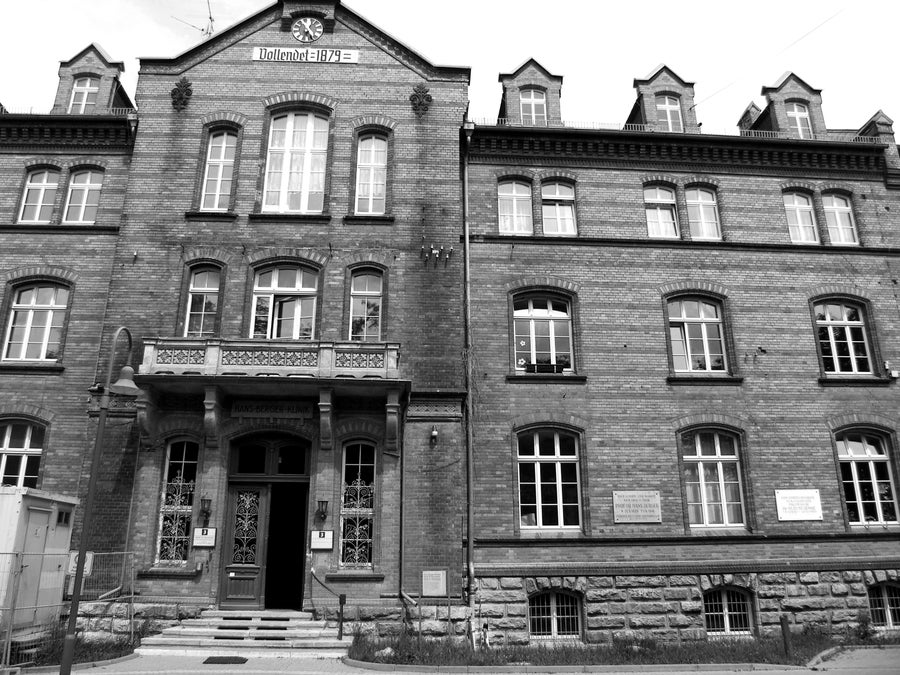
Brick hospital
The hospital in Jena, Germany, where Berger discovered brainwaves.R. Douglas Fields

Berger’s EEG research was not well received. A believer in mental telepathy, Berger thought brainwaves could be the basis for mental telepathy, but he ultimately rejected that idea. Instead, he believed that brainwaves were a type of psychic energy. Like other forms of energy, waves of psychic energy could not be created or destroyed, but they could interact with physical phenomena. Based on this, he surmised that the work of mental cognition would cause temperature changes in the brain. He explored this idea by stabbing rectal thermometers into his mental patients’ brains while they did cognitive tasks during surgery.

Berger’s research remained little known outside Germany until 1934 when Nobel Prize–winning neuroscientist Edgar Adrian published his experiments in the prestigious journal Brain. Adrian confirmed that the so-called “Berger waves” do exist, but he implicitly mocked them by showing that they changed in a water beetle when it opened and closed its eyes, in the same way they did in the Nobel Prize–winner’s brain when he did the same. Adrian never did further research on brainwaves.

Berger is credited with the discovery of brainwaves in humans, but studies in animals predated his work. Nor did Berger invent the methods he used to monitor brain activity. He applied techniques used previously in animal experiments by Adolf Beck in Lwów, Poland, in 1895, and Angelo Mosel in Turin, Italy.

In contrast to Berger, Adolf Beck’s animal studies were intended to understand how the brain functions when neurons communicate by electrical impulses. At the peak of his research a Russian invasion halted his scientific work. In 1914 Lwów was taken by invading Russians and renamed Lviv. Beck was captured and imprisoned in Kiev, then part of Russia (now Kyiv, Ukraine).

While in prison he wrote to the famous Russian scientist Ivan Pavlov appealing for his help, and Pavlov eventually won Beck’s release.

Beck returned to his research in Lviv, and the next logical step was to search for brainwaves in humans, but in World War II Germans invaded. They established a concentration camp in Lviv where the Jewish population was exterminated. As an intellectual and a Jew, Beck was a target. When they came to take Beck to the concentration camp in 1942, he swallowed cyanide, ending his own life rather than having it taken by the Nazis.

Sign Up for Our Daily Newsletter

Email AddressBy giving us your email, you are agreeing to receive the Today In Science newsletter and to our Terms of Use and Privacy Policy.Sign Up

Thank you for signing up!

Check out our other newsletters

Remarkably, both pioneering brainwave scientists committed suicide from Nazism—one as Nazi perpetrator, the other as Nazi victim.
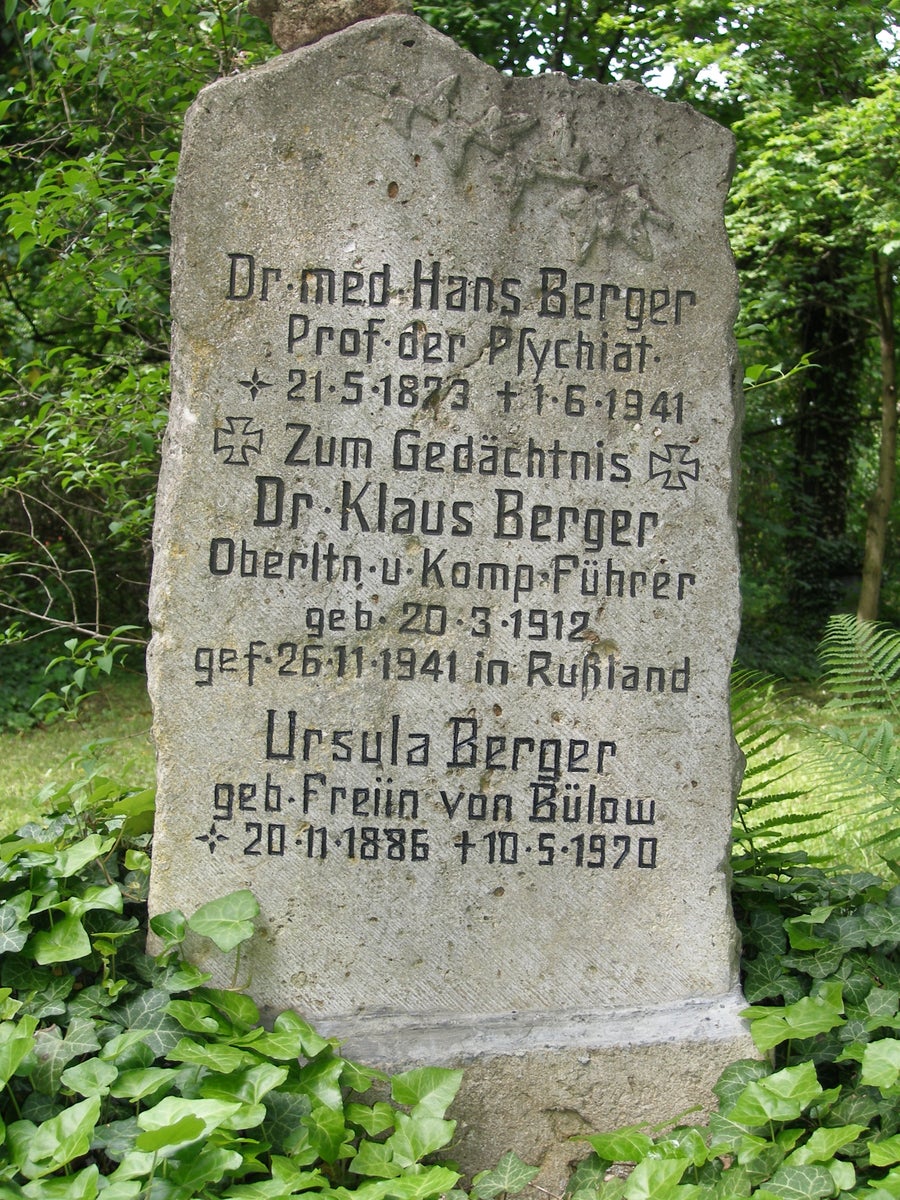
Hans Berger's grave
Berger’s grave in Jena.R. Douglas Fields

Unknown to both Berger and Beck, they were notthe first to record brainwaves. That discovery was made by a London physician 50 years earlier than Berger! That stunning finding was lost to science because the ideas were so far ahead of their time, dating back to when the brain was an enigma and the world was lit by gas lamps and powered by steam. Imagine how much further ahead brain science and medicine would be now if this scientific discovery made in 1875 had not been lost to history for half a century.

The first person to discover brainwaves was the London physician Richard Caton. Caton announced his discovery of brainwaves recorded in rabbits and monkey at the annual meeting of the British Medical Association in Edinburgh in 1875. He achieved this using a primitive device, a string galvanometer, in which a small mirror is suspended on a thread between magnets. When an electric current (picked up from the brain in this case) passes through the device, the string twists slightly like a compass needle near a magnet. The oscillating electrical currents detected in the brains were not measured in volts, but rather in millimeters of deflection of the light beam bounced off the mirror. The published abstract of his presentation “The Electric Currents of the Brain” shows that with this primitive instrument the physician correctly deduced the most important aspects of brainwaves. “In every brain hitherto examined, the galvanometer has indicated the existence of electric currents…. The electric currents of the grey matter appear to have a relation to its function….”

Ironically, I traveled the world to research the discovery of brainwaves, only to find that the first person to do so, Richard Caton, presented his findings in the U.S. in 1887 at Georgetown University while on a visit to his family in Catonsville, Md. The town, which was settled by his relatives 1787, is 30 miles from my home, next to the Baltimore-Washington Airport, from which I often embarked on my global search. But that fact, like his unappreciated brainwave research, was lost to history. “Read my paper on the electrical currents of the brain,” he wrote in his diary. “It was well received but not understood by most of the audience.”

This is an opinion and analysis article, and the views expressed by the author or authors are not necessarily those of Scientific American.

Rights & Permissions

R. Douglas Fields an adjunct professor in the University of Maryland, College Park’s Neuroscience and Cognitive Science Program. He is the author of the award-winning books Electric Brain and The Other Brain.

More by R. Douglas Fields

Popular Stories

SleepDecember 13, 2024Science-Backed Sleep Tips from 2024 to Help You Snooze Better

From the “sleepy girl mocktail” to power naps, researchers explained which sleep trends this year really help with quality shut-eye

Lauren J. YoungPublic HealthDecember 20, 2024How the U.S. Lost Control of Bird Flu, Setting the Stage for Another Pandemic

As the bird flu virus moved into cows and people, sluggish federal action, deference to industry and neglect for worker safety put the country at risk

Amy Maxmen, KFF Health NewsOpinionJanuary 6, 2025The Math Mystery That Connects Sudoku, Flight Schedules and Protein Folding

Thousands of notoriously difficult problems in computer science are actually the same problem in disguise

Jack MurtaghDNAJanuary 3, 2025Jumping ‘Numts’ from Mitochondria Can Be Fast and Deadly

Bits of DNA from mitochondria can skip surprisingly fast into our genome and may reduce lifespan

Martin PicardPublic HealthJanuary 6, 2025HMPV Cases Are Rising Across Asia, but Experts Say Not to Panic

A common respiratory virus called human metapneumovirus, or HMPV, has been spreading in some countries in Asia, including China, India, Malaysia and Kazakhstan. Here’s what we know

Lauren J. YoungOpinionJanuary 6, 2025The Real Reason People Don’t Trust in Science Has Nothing to Do with Scientists

Propaganda works, is the real upshot of a survey showing lingering post-pandemic distrust of science

Dan Vergano

Expand Your World with Science

Learn and share the most exciting discoveries, innovations and ideas shaping our world today.SubscribeSign up for our newslettersSee the latest storiesRead the latest issueGive a Gift Subscription

Follow Us:

Scientific American publications in print & digital formats

Scientific American is part of Springer Nature, which owns or has commercial relations with thousands of scientific publications (many of them can be found at http://www.springernature.com/us). Scientific American maintains a strict policy of editorial independence in reporting developments in science to our readers.

© 2024 SCIENTIFIC AMERICAN, A DIVISION OF SPRINGER NATURE AMERICA, INC.
ALL RIGHTS RESERVED.

Posted in Uncategorized | Tagged , , , , | Leave a comment

Col. Douglas Macgregor on X: World view with a big difference. The world is not necessarily what we envisage it to be.

Douglas Macgregor (@DougAMacgregor) posted at 3:39 pm on Wed, Jan 08, 2025:


This brings America into direct confrontation with Russia, fighting over control of the Arctic sea routes due to melting ice, and the Northwest Passage, that connects the Pacific and Atlantic oceans.

A Treaty designed to provide for unobstructed passage by all parties would be


(https://x.com/DougAMacgregor/status/1877017324919603211?t=Gs9Dk–k5hdn5b_xeLu19g&s=03) 

evengelos Geronicolas

@EvengelosG

Jan 8

Replying to @AGDugin

Do you have this map in mind? That the super-US encircles Russin in the North and places herself well for resource competition in the Arctic circle and also makes a more potent threat for WWIII? It explains the real reason why Finland and Sweden joined NATO.

Posted in Uncategorized | Leave a comment

Early Stress Alters Sperm DNA, Impacting Offspring’s Brain Development

Neuroscience News Logo

Early Stress Alters Sperm DNA, Impacting Offspring’s Brain Development

FeaturedGeneticsNeuroscience

January 9, 2025

Summary: Childhood stress may leave lasting marks on sperm, altering epigenetic profiles and potentially influencing brain development in offspring. Researchers found that men with high levels of childhood maltreatment had changes in DNA methylation and non-coding RNA levels in their sperm.

These epigenetic changes could mediate how early life stress impacts the next generation, highlighting the potential for intergenerational effects. While the study demonstrates significant associations, further research is needed to confirm the role of epigenetic inheritance in humans.

Key Facts

  • Sperm Epigenetic Changes: Childhood maltreatment altered DNA methylation and non-coding RNA in sperm.
  • Brain Development Links: These changes are associated with brain development in offspring.
  • Intergenerational Impact: Findings suggest early life stress may influence future generations via epigenetics.

Source: University of Turku

Childhood stress can impact the epigenetic profile of sperm. These results may also have practical implications for future generations through epigenetic inheritance, as many of the observed epigenetic associations are related to brain development.

This ground-breaking discovery has been made in the FinnBrain study at the University of Turku, Finland, in collaboration with researchers from the University of Copenhagen, Denmark.

Epigenetic inheritance refers to the transmission of information on acquired conditions to the next generation without it being encoded in the DNA sequence. Changes caused by the environment may therefore be passed on from generation to generation through gametes.

This shows a brain.
Epigenetic changes in gametes have a special role, as they can also affect subsequent generations via epigenetic inheritance. Credit: Neuroscience News

Researchers from the FinnBrain study at the University of Turku have previously found an association between paternal early life stress exposure and the child’s brain development.

In a recent study, childhood maltreatment was found to be associated with several sperm epigenetic characteristics that may mediate the effects on offspring brain development, including expression levels of the non-coding RNA molecule hsa-miR-34c-5p and methylation of the CRTC1 and GBX2 genes.

“Next, we want to study childhood maltreatment, epigenome of sperm, and offspring characteristics together. Demonstrating epigenetic inheritance in humans would rewrite the rules of inheritance, which highlights the need for further research,” says Jetro Tuulari, who is the first author of the article.

 Although all cells in the body have the same genes and DNA, they have distinct epigenetic profiles, which determines their different appearance and function. Epigenetic regulation thus enables differences in the cells of the brain, muscles, and skin by silencing and activating genes.

Epigenetic changes in gametes have a special role, as they can also affect subsequent generations via epigenetic inheritance.

“Epigenetic inheritance via sperm epigenome is a fascinating research topic and the mechanisms involved are under active investigation in my research group.

“There are currently several projects studying the phenomenon in both animal models and humans. This study was the largest and most comprehensive human study conducted so far,” says Professor Noora Kotaja, a senior researcher in the study.

The study found lower levels of sperm DNA methylation in three DNA regions and changed levels of several small non-coding RNA molecules in men with high levels of childhood maltreatment. They were compared with men who had few experiences of maltreatment, as measured by questionnaires.

Altogether 55 middle-aged men took part in the study. In the statistical modelling, many other health factors such as the respondent’s age, weight and smoking were controlled for.

“The FinnBrain cohort and other multi-generational data from the Centre for Population Research will enable other similar high-quality studies on human epigenetic inheritance. However, the inheritance of these findings has not yet been proven, so further research is needed,” says Professor Emeritus Hasse Karlsson, who initiated the FinnBrain study.

Launched in 2010, FinnBrain is a birth cohort study of the University of Turku involving over 4,000 families and aiming at exploring environmental and genetic factors influencing the development of a child. The parent study of the cohort is also a key part of the project’s research, and this sub-study focuses on paternal health in the cohort. 

About this epigenetics research news

Author: Tuomas Koivula
Source: University of Turku
Contact: Tuomas Koivula – University of Turku
Image: The image is credited to Neuroscience News

Original Research: Open access.
“Exposure to childhood maltreatment is associated with specific epigenetic patterns in sperm” by Jetro J. Tuulari et al. Molecular Psychiatry


Abstract

Exposure to childhood maltreatment is associated with specific epigenetic patterns in sperm

Childhood maltreatment exposure (CME) increases the risk of adverse long-term health consequences for the exposed individual.

Animal studies suggest that CME may also influence the health and behaviour in the next generation offspring through CME-driven epigenetic changes in the germ line.

Here we investigated the associated between early life stress on the epigenome of sperm in humans with history of CME. We measured paternal CME using the Trauma and Distress Scale (TADS) questionnaire and mapped sperm-borne sncRNAs expression by small RNA sequencing (small RNA-seq) and DNA methylation (DNAme) in spermatozoa by reduced-representation bisulfite sequencing (RRBS-seq) in males from the FinnBrain Birth Cohort Study.

The study design was a (nested) case-control study, high-TADS (TADS ≥ 39, n = 25 for DNAme and n = 14 for small RNA-seq) and low-TADS (TADS ≤ 10, n = 30 for DNAme and n = 16 for small RNA-seq).

We identified 3 genomic regions with differential methylation between low and high-TADS and 68 tRNA-derived small RNAs (tsRNAs) and miRNAs with different levels in males with high CME (False discovery rate, FDR corrected p < 0.05).

Of potential interest, we identified differential expression of miRNA hsa-mir-34c-5p and differential methylation levels near the CRTC1 and GBX2 genes, which are documented to control brain development.

Our results provide further evidence that early life stress influences the paternal germline epigenome and supports a possible effect in modulating the development of the central nervous system of the next generation.

Posted in Uncategorized | Tagged , , , , | Leave a comment

John Nosta: The real danger of AI isn’t that it’ll outthink us—it’s that it’ll outbullshit us, dressing nonsense in a tuxedo of math and jargon while we applaud the show. The antidote? Stay sharp, ask hard questions, and never mistake complexity for clarity. True brilliance doesn’t need a disguise.

See new posts

Conversation

John Nosta

@JohnNosta

Subscribe

Image

·

1,885 Views

Posted in Uncategorized | Leave a comment

Bulletin of the Atomic Scientists: Trump has a fighting chance to prevent Arctic meltdown. He should take it.

The authoritative guide to ensuring science and technology make life on Earth better, not worse.

Trump has a fighting chance to prevent Arctic meltdown. He should take it.

By Durwood J. Zaelke, Paul Bledsoe | January 8, 2025

Floating icebergs off the coast of west Greenland. (Photo: Chris Stenger on Unsplash)Share

The Arctic Ocean could see its first ice-free day before the end of the decade, according to a new study by Céline Heuzé and Alexandra Jahn recently published in Nature. When that happens, a vast stretch of newly open ocean at the top of the world will absorb immense amounts of the sun’s warmth that until now has been safely reflected into space. The Arctic is warming four times faster than the rest of the world, half of the reflective sea ice has already melted, and the strong multi-year ice is down to less than five percent of 1980s levels. If the rest is allowed to disappear altogether, which could happen within decades, the loss of reflectivity will add the equivalent of 25 years of carbon dioxide emissions, further super-heating our world.

Last month the National Oceanic and Atmospheric Administration reported that continued warming and increased wildfires are now causing Arctic tundra to emit more carbon than it stores, further worsening climate impacts. The Arctic is both a cause and a symbol of self-reinforcing warming that, once widely underway, could trigger a timebomb at the top of the world that will be extremely difficult to keep from exploding.

There is still time to slow this process, especially by reducing emissions of methane, hydrofluorocarbon refrigerants (HFCs), nitrous oxide, and other super climate pollutants. Lowering these emissions alongside carbon dioxide can avoid four times as much warming by 2050 as limiting carbon dioxide only and would cut the rate of global warming by half and Arctic warming by two-thirds. Reducing methane emissions by 45 percent below 2020 levels by 2030 would shave almost 0.3 degrees Celsius off future warming as early as the 2040s, while avoiding even more warming in the Arctic—up to 60 percent more—substantially lowering the risk of losing Arctic sea ice.

Unfortunately methane emissions are at record levels, with little success so far in cutting human caused emissions, and with emissions from warming wetlands starting to increase. Mandatory reductions are needed, along with accelerated research on strategies to reduce methane once it’s in the atmosphere, as called for by the National Academy of Sciences.

Advice for Thanksgiving 2024: How to deal with the climate change-denier at the table

Cutting carbon dioxide is crucial for long-term climate safety but doesn’t do much in the next few decades to limit temperatures before 2050 because of co-emitted sulfates that provide temporary cooling.

The need for urgent cuts in super pollutants is sometimes not fully appreciated because a fundamental misconception persists in many policy and political circles that climate change is a largely linear problem—that additional emissions will lead to commensurate additional warming. Yet scientific research emphatically finds otherwise—that climate conditions can in fact tip quickly and in a non-linear way with impacts that are profoundly out of proportion to the added warming.

Last year the global average temperature breached the Paris Climate Agreement’s guardrail of 1.5 degree Celsius above pre-industrial levels, at least temporarily. A group of the world’s most respected scientists recently warned that—driven by more than two dozen self-amplifying feedback loops—the world is “on the brink of an irreversible climate disaster” as 1.5 degrees Celsius triggers the first five tipping points. The Amazon, the Antarctic, the Atlantic Gulf Stream, boreal forests, and other elements of the Earth system are in danger of moving from climate protectors to net warming contributors.

Man-made emissions are accelerating heating today far more quickly than in the distant past. As the Earth moved out of ice ages over the past million years, for example, it took 5,000 years for global temperature to rise 4 to 7 degrees Celsius. But now, NASA researchers note, “the predicted rate of warming for the next century is at least 20 times faster.”

How natural systems will react to such rapid heating is a dangerous black box. No one knows the exact likelihood of tipping points falling like dominoes toward a hothouse planet. But even if the risk of passing irreversible tipping points turns out to be low, how many of us would get on a plane when told that at least one in 20 flights would crash.

US farms are being battered by climate change. Trump wants to put a climate denier in charge of the USDA

This is not alarmism—quite the opposite. Protecting against tipping points is an attempt to preserve the stability of natural systems and, thus, a deeply conservative undertaking. What is radical is standing by while natural systems destabilize, which amounts to fatalism, if not nihilism.

Climate change impacts are inflicting extreme hardship on tens of millions of Americans through floods, fires, storms, and heat waves, undermining public safety and kitchen table economics of families here and around the world. Three-fifths of Americans now report that climate impacts and costs are undermining their quality of life, health, or family finances.

There is a long tradition of Republican presidents taking action on the environment. Teddy Roosevelt expanded our national parks and food safety. Richard Nixon oversaw the enactment of the Clean Air Act and Clean Water Act, as well as setting up the Environmental Protection Agency. Ronald Reagan oversaw the creation of the Montreal Protocol—he called it “a model of cooperation”—which 35 years later has put the ozone layer on the path to recovery by mid-century, while avoiding as much warming as carbon dioxide is causing. George W. Bush strengthened the Montreal Protocol, explicitly to protect the climate as well as the stratospheric ozone layer. In 2020, in the final days of his first administration, President Trump signed the law to implement limits on the HFCs as mandated by the Kigali Amendment to the Montreal Protocol, which will avoid nearly a half a degree Celsius of warming.

President-elect Donald Trump has a similar opportunity. It would take a lot of courage for Trump to help America and the world avoid the kind of catastrophe he began his political career denying. But just as Nixon went to China, Donald Trump could decide to give the Arctic a fighting chance. Protecting it would strengthen national security and help keep China out of our backyard.

Posted in Uncategorized | Tagged , , , , | Leave a comment

President-elect mentions Greenland and the world awakens to a new geopolitical map; which proves different to the one we most often have and that is linear. This is excellent as we can identify geopolitical Empire Builders of this era and their plans. Source: US Civil Defense News (@defense_civil25)

Source: US Civil Defense News (@defense_civil25) posted at 6:38 pm on Tue, Jan 07, 2025:

🚨

Update: Once accepted as new States, control over Canada and Greenland would put the US on equal footing with Russia in the Arctic circle. The race for the Arctic will be one of the “Great Games” of the 21st century!! 

https://t.co/OvHIeqyqNP
(https://x.com/defense_civil25/status/1876699934935695632?t=NRb3bLMWSbjdRFTA6ReNhA&s=03) 

Posted in Uncategorized | Leave a comment

A child prodigy; a voice that brings tears to many who watch in awe. Please share, it is seldom we experience brilliance in a child

Classical Music & Opera

@Ducnghia16

If you listen to her without seeing her, you’d never in a million years guess she was such a young child. Mind blown away with such powerful vibes from her. To know more about her by below source:

https://twitter.com/i/status/1876077429355352388

https://ganjingworld.com/s/vo6EBDN8Qe

Posted in Uncategorized | Leave a comment

Robert Reich, Economist. The reason that many young people are not doing nearly as well as their parents at this stage in life is because the system is rigged against them.

https://twitter.com/i/status/1876718827154632869

Posted in Uncategorized | Leave a comment

Excellent piece from John Nosta: It is about the idea of AI being your partner in learning and so much more. Quote: But in the final analysis, I would argue that the most powerful and enduring lessons are only occasionally taught by others. Instead, they are self-discovered, arising from a dynamic interplay of experience, reflection, and curiosity.


See new posts

Conversation

John Nosta

@JohnNosta

Subscribe

🟥 The Teacher Within 👉Partnering with AI to unlock our natural capacity for learning. For centuries, the archetype of the teacher has loomed large in human culture—a figure standing at the front of the classroom, imparting wisdom to students. But in the final analysis, I would argue that the most powerful and enduring lessons are only occasionally taught by others. Instead, they are self-discovered, arising from a dynamic interplay of experience, reflection, and curiosity. In this light, the role of artificial intelligence—particularly large language models (LLMs)—takes on new significance. These AI-driven systems are not merely repositories of knowledge; they are partners in our most human endeavor: teaching ourselves. 🟥 Beyond the Classroom: The Nature of Self-Taught Wisdom Life itself has always been humanity’s greatest teacher. From learning to walk as toddlers to navigating the complexities of adult relationships, our most pivotal lessons emerge experientially. This process is rarely linear. We try, fail, adapt, and grow in a cycle that formal education can only approximate. Wisdom—the synthesis of knowledge, context, and experience—is deeply personal, cultivated through lived moments rather than prescribed instruction. Yet, self-directed learning requires more than just experience. It demands tools to help us reflect, organize, and extend what we encounter. In earlier eras, these tools were books, mentors, and conversation. Today, LLMs offer an unprecedented opportunity to amplify this process, making the act of teaching ourselves more accessible, iterative, and expansive than ever before. 🟥 From Static Maps to Dynamic Webs Traditional education often presents knowledge as a series of static maps: fixed frameworks that outline facts and concepts. While useful as starting points, these maps are inherently limited. They struggle to adapt to the fluid, interconnected nature of real-world problems and personal curiosity. LLMs shift this rigid concept by transforming knowledge into dynamic webs. These systems, powered by vast data sets and sophisticated algorithms, don’t just provide information—they contextualize it, connect it to related ideas, and adapt to the learner’s needs. For example, an inquiry about nuclear energy might lead to discussions about energy policy, technological innovation, or even ethical philosophy, weaving a web of understanding that is both expansive and deeply relevant. In doing so, LLMs echo the way humans naturally learn: not through isolated facts that are presented in someone else’s linear sequence, but through patterns, relationships, and iterative exploration. They transform knowledge from something static and external into a living, evolving entity that learners can engage with directly. 🟥 The Iterative and Learner-Centric Nature of LLMs Perhaps the most transformative aspect of LLMs lies in their iterative nature. Unlike traditional resources, which deliver fixed answers, LLMs invite dialogue. A single query can spark a cascade of follow-up questions, reflections, and refinements. This iterative process mirrors the way we engage with complex problems in real life, where understanding deepens over time through cycles of inquiry and application. Moreover, LLMs make learning profoundly learner-centric. Immediate access to vast reservoirs of knowledge allows individuals to tailor their learning journeys to their unique goals, interests, and contexts. A biologist can dive into quantum mechanics to explore interdisciplinary connections. A student of history can uncover parallels with contemporary geopolitical dynamics. The pace, depth, and direction of learning are no longer dictated by external curricula but are instead guided by the learner’s curiosity and evolving understanding. 🟥 The Teacher and the Tool This convergence of LLMs and self-directed learning raises an intriguing question: Who, then, is the teacher? In many ways, the answer is simple: We are. LLMs, as powerful as they are, do not impose knowledge. They respond, provoke, and suggest, but it is the human mind that drives the process forward. This partnership is not unlike the Socratic method, where learning emerges from dialogue. Just as Socrates used questions to guide his students toward deeper truths, LLMs engage us in iterative exchanges that illuminate new perspectives. They are tools—albeit sophisticated ones—that amplify our ability to reflect, connect, and create. 🟥 Reinvigorating Learning The implications of this partnership extend far beyond the individual. In the Cognitive Age, where adaptability and lifelong learning are paramount, the ability to teach ourselves becomes a defining skill. LLMs democratize this capability, breaking down barriers of access, expertise, and context. They make it possible for anyone, anywhere, to engage in meaningful, self-directed learning. But this new modality also demands a shift in mindset. If LLMs are to fulfill their potential as partners in learning, we must embrace a more active role as learners. Curiosity, critical thinking, and self-reflection become the cornerstones of education—not as abstract ideals but as daily practices. 🟥 An Unending Invitation In the final analysis, the act of teaching ourselves is both an ancient and a newly empowered practice. Life has always been our greatest teacher, but with LLMs as partners, we can engage with its lessons more deeply, dynamically, and personally than ever before. Simply put, the question is not whether LLMs will teach us but how we will use them to teach ourselves. The opportunity is extraordinary, the tools are available, and the responsibility lies with us. After all, as learners and as humans, we are—and always have been—our own best teachers. https://psychologytoday.com/intl/blog/the-digital-self/202501/the-teacher-within…

Image

·

3,389 Views

Posted in Uncategorized | Tagged , , , , | Leave a comment

#OnThis Day 1923 Five Free State Army deserters were executed by firing squad in Dublin. They had aided the IRA in an ambush on the FSA in Maynooth, the previous December. They were the first National Army soldiers to be executed for Treachery. Names in pic. Comment: Divide and Conquer in Ireland meant; civil war; India split also to India and Pakistan … now we see Syria and many militias. What can we learn from the past?

The Irish at War

@irelandbattles

#OnThisDay 1923 Five Free State Army deserters were executed by firing squad in Dublin. They had aided the IRA in an ambush on the FSA in Maynooth, the previous December. They were the first National Army soldiers to be executed for Treachery. Names in pic.

Posted in Uncategorized | Leave a comment