
JohnnyJumpUp (@JohnnyJumpUp42) posted at 2:01 am on Sun, Jan 26, 2025:
Tell us where this Palestine is …. 

https://t.co/xxC8JeB5O1
(https://x.com/JohnnyJumpUp42/status/1883334414098448721?t=5H-G0mSK8wlRUVoDMNaKpA&s=03)
JohnnyJumpUp (@JohnnyJumpUp42) posted at 2:01 am on Sun, Jan 26, 2025:
Tell us where this Palestine is ….
https://t.co/xxC8JeB5O1
(https://x.com/JohnnyJumpUp42/status/1883334414098448721?t=5H-G0mSK8wlRUVoDMNaKpA&s=03)

Subscribe
SAM ALTMAN: A CHANGE TO THE SOCIAL CONTRACT WILL BE REQUIRED “I still expect, although I don’t know exactly what, that over a long period of time—this is not something for next year or the year after—a change to the social contract will be required, given how powerful we expect this technology to become. I’m not a believer that there will be no jobs; I think we always find new things to do. However, I do think the structure of society itself will be subject to some degree of debate and reconfiguration.” Source: Ai for Good

CAMHS … there is a reported case related to below;
he United States Code, Chapter 109a, Title 18, Section 2242, Sexual Abuse, states, “Whoever…knowingly…engages in a sexual act with another person if that other person is…incapable of appraising the nature of the conduct…shall be fined under this title, imprisoned not more than 20 years, or both.”
There is a long-standing consensus in the medical profession that sexual contact or sexual relations between physicians and patients is unethical. The prohibition against such was incorporated into the Hippocratic Oath: “I will come to the benefit of the sick, remaining free of all intentional injustice, of all mischief and in particular of sexual relations with both female and male persons….”
In no other area of medicine is the patient in such a state of emotional vulnerability as when they visit a psychiatrist or psychologist. It is a relationship in which the patient can be most easily exploited and manipulated.

January 23, 2025
Summary: A study reveals that London taxi drivers prioritize complex and distant junctions during their initial “offline thinking” phase when planning routes, rather than sequentially considering streets. This efficient, intuitive strategy leverages spatial awareness and contrasts with AI algorithms, which typically follow step-by-step approaches.
The findings highlight the unique planning abilities of expert human navigators, influenced by their deep memory of London’s intricate street network. Researchers suggest that studying human expert intuition could improve AI algorithms, especially for tasks involving flexible planning and human-AI collaboration.
Key Facts:
Source: Champalimaud Center for the Unknown
An international team of scientists, including a principal investigator in neuroscience from the Champalimaud Foundation, in Lisbon, has analysed the way expert London taxi drivers plan their route in advance every time they pick up passengers.
It is the first time a study about human planning has been performed in a real-world, large-scale environment.
Their results are published today (23rd of January) in the Proceedings of the National Academy of Sciences.
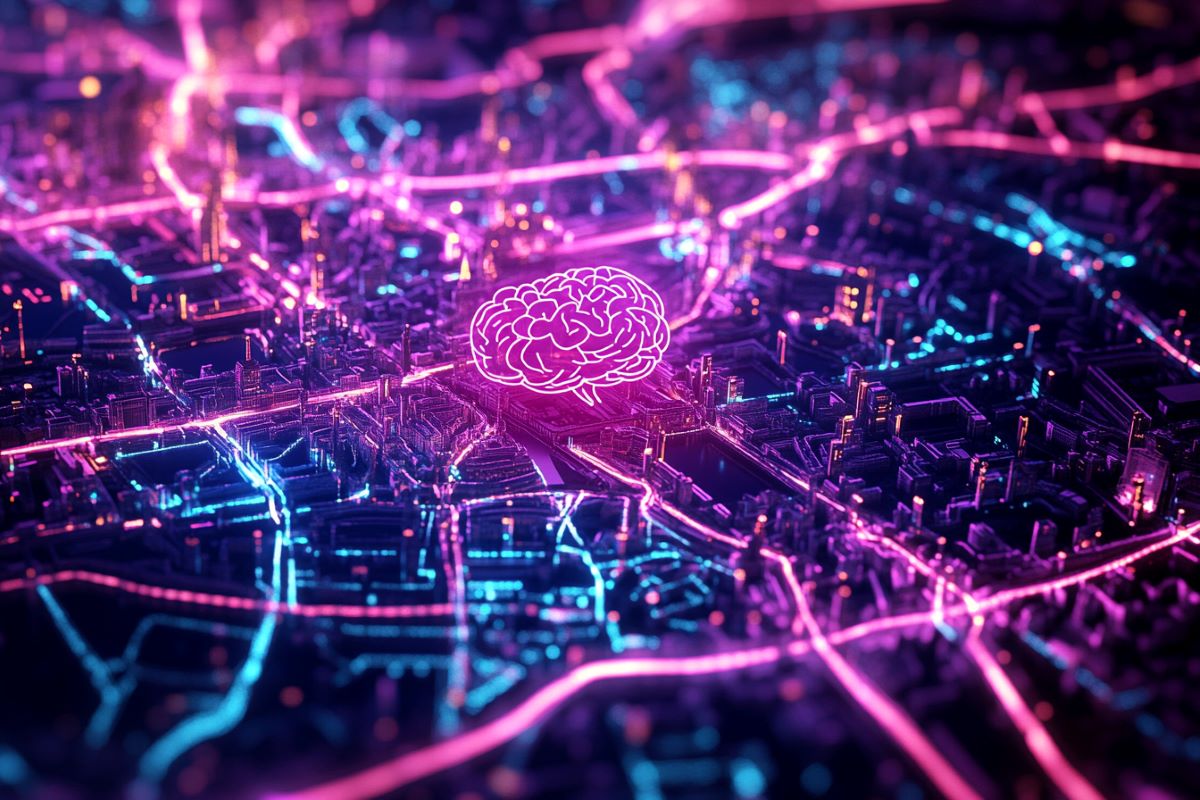
Indeed, the volume of their hippocampus, a structure in the brain that plays an important role in learning and memory, is different from that of people who do not drive taxis.
The new study focused on their planning behaviour when doing their job. “Expert navigators can plan routes efficiently and quickly in enormous and intricate environments, such as cities”, the authors write in their paper.
“[But] most studies to date have employed small-scale and/or abstract environments with naive participants. Here, we surmount these challenges by asking London taxi drivers – famous for their expert knowledge of the London street network, composed of over 26,000 streets – to plan routes through London.”
“Cities epitomize the intricacy of planning in real-world environments”, says Pablo Fernandez Velasco, from the University of York, the joint first author of the study.
“If we considered planning a path across a large city that, between start and destination, involved 30 streets, using a minimal tree-search algorithm would involve an evaluation of over one billion potential street sequences.”
If anything, this makes it clear that humans do not use such an algorithm to choose their route.
Time to think, time to name streets
The researchers analised the drivers’ response times – “as a proxy of thinking times” – to see how these drivers rationally organised their route-planning process.
“Our goal was to understand how expert humans make plans in very complex situations”, says Daniel McNamee, Group Leader of the Natural Intelligence Lab at the Champalimaud Foundation and one of the senior authors of the study.
“We also wanted to compare expert humans versus AI algorithms. Our hypothesis was that humans were somehow doing something different. AI algorithms couldn’t explain the behavior expert humans exhibit in this sort of situation.”
London taxi drivers are a very unique population of humans, in particular because when they train for their licence they are not allowed to use tools such as Google maps to help them; they have to rely solely on their memory storage and retrieval skills to efficiently navigate tens of thousands of city streets.
“They are a unique group when you want to answer questions such as how do expert humans organize their memory, what internal representations do they use or how do they retrieve pieces of information from their memory”, McNamee explains.
“And that gives us a unique window into the highest level of human decision-making, knowledge representation and processing.”
A critical difficulty was getting access to taxi drivers. Hugo Spiers, Professor of Cognitive Neuroscience at University College London (UCL) – the other senior co-author of the study – has spent 20 years studying their brains, but this is the examination of their planning.
“These taxi drivers are famous for their larger posterior hippocampus” says Spiers.
“Now, thanks to collaboration across UCL and the Champalimaud, we have revealed how they put that enhanced brain to use.”
The team gave a group of 43 taxi drivers a start location in London and a “goal” location. The drivers were then asked to verbally call out the sequence of turns and streets they would take to go from the route’s origin to destination.
“This is a very familiar task for these expert taxi drivers because, during their specialized training for the job, they’re tested on many of these start-goal combinations before they get their taxi driver license”, McNamee points out.
For each route (there were 315 such possible “runs”, as they say in taxi driver-speak), the researchers measured the response time between the task presentation and the first call-out of a street name by each driver.
This they called the “offline thinking time”: it corresponds to the phase during which the taxi driver silently considers the route. Next, they measured the times between each call-out of street or turns by the drivers, which they called the “online phase”.
Organising decisions about a route
One of the things the team wanted to study was what decisions the drivers made about their route during their offline thinking time.
“One possibility”, says McNamee, “was that they organise their decisions in the sequence of streets and junctions that they are actually going to physically encounter during the ride – that the first thing they think about is the first street they’re going to take, then the second street, the third street, and so on and so forth.”
This means they will be slower in naming subsequent streets as they go along the route.
The results contradicted this hypothesis. What the results suggest is that “during the offline thinking time, the taxi drivers prioritize high-complexity, non-local parts of the London space”, McNamee continues.
“It seems that they immediately jump to figuring out a higher-order global structure [of the route], based on critical junction states, using the physical structure of London.”
The technical expression for this is “non-local precaching of critical junctions”. And then, “once they’ve done that, they start verbalizing and filling in the rest of the details”.
The drivers also took longer to think about longer streets in London. “This suggests they have spatial awareness of the actual physical structure of London, as opposed to a more abstract kind of representation where distances are not taken into account”, McNamee points out.
“I was surprised by this result”, he says.
“I expected the taxi drivers would have a less spatially embodied sense of the London state space. I did not expect that the length of the street in the real world would slow them down, but that they would have a more abstract notion [of their city].
“But maybe the fact that they have this more embodied spatial awareness is useful for more flexible planning, where they can take into account if one street is usually more busy than another at a given time of day, and they’re also encoding all sorts of additional spatial variables and integrating them into their thinking.
“However, this is not something we specifically addressed in our study.”
“This result is consistent with reports from previous research” says Pablo Fernandez Velasco.
“Taxi drivers have reported that when they have to plan a route, they sometimes imagine going through it, both from an aerial and from a first-person perspective. If they imagine the physical space to some degree, it makes sense that the length of the street segment impacts the length of their street planning”.
A different order of priorities in “London space”
In sum, expert London taxi drivers prioritize important streets and junctions in order to determine a more global structure of the run.
“What we see with the taxi drivers is that they consider space out of the order in which they would actually experience them in the real world”.
“If they first take time offline to think about it differently, then they’ll be much faster to call out streets during the online phase”, adds McNamee.
This is clearly a much more efficient way of thinking than a simple sequential strategy.
What does McNamee think is the most interesting result of this work?
“I think it is the fact that we were able to identify and predict that, during the offline thinking time, when the taxi drivers are in deep silent thought, they prioritize highly complex, and spatially remote junctions and streets in London”, he answers.
“That had never been shown in human experts – decision makers or planners – in what I would refer to as an ecologically valid task for them, that is, a task they accomplish every day.”
“In fact, what we were studying here is a kind of expert human intuition, an innate sense of what to think about before you even start thinking about it, in a sense”, he ponders. “That’s a key area of interest in other work we do in my lab: intuitive human reasoning.”
One thing seems certain, according to McNamee: human experts have a qualitatively different algorithmic strategy to AI systems. Nonetheless, AI algorithms could benefit, in the future, from results about how human experts think.
“They could benefit in, I’d say, two ways”, he explains.
“One has to do with more flexible planning, particularly when there are a lot of environmental features and dynamics that have to be taken into account.”
“The other would be to integrate the information about human experts into AI algorithms designed to collaborate with humans. This is a very important point, because if we want to optimize how an AI algorithm interacts with a human, the algorithm has to ‘know’ how the human thinks.”
“And that’s something to consider”, McNamee concludes.
Author: Afonso Vaz Pinto
Source: Champalimaud Center for the Unknown
Contact: Afonso Vaz Pinto – Champalimaud Center for the Unknown
Image: The image is credited to Neuroscience News
Original Research: Closed access.
“Expert navigators deploy rational complexity–based decision precaching for large-scale real-world planning” by Pablo Fernandez Velasco et al. PNAS
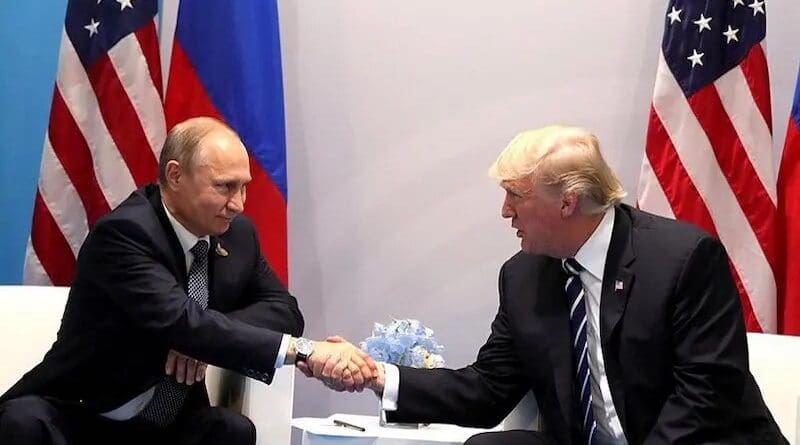
Russia’s President Vladimir Putin and US President Donald Trump. Photo Credit: Kremlin.ru
The chances of a peace deal in Ukraine are suddenly a lot higher under President Donald Trump only because he has a realistic sense of a nuclear Third World War happening between the United States and Russia if that conflict is not ended promptly.
Peter Kuznick, an esteemed American professor of history, says that the Biden administration brought the world closer to a nuclear conflagration than at any time since the Cuban Missile Crisis in 1962. Biden did this by relentlessly arming Ukraine with weapons to strike deeper and deeper into Russia instead of trying to find a peaceful resolution to the conflict. Indeed, there was no diplomatic effort from Washington under Biden. It was ideologically and propaganda-driven for confrontation, as was the Democratic presidential candidate, Kamala Harris.
Kuznick points out that Trump is no John F Kennedy in terms of the latter’s depth of historical and philosophical knowledge. But in comparison with Joe Biden, Trump has shown more humanity and common sense by not insulting Putin and in reaching out for a peaceful end to the slaughter in Ukraine. Biden called Putin a thug and said he would back Ukraine as long as it takes to defeat Russia. The last Democrat administration spent $175 billion of U.S. taxpayers’ money propping up a NeoNazi regime in Kiev that has lost over one million military casualties since the war erupted in February 2022.
By contrast, newly inaugurated President Trump says that he wants to meet Russian leader Vladimir Putin as a priority to find a peaceful way out of the conflict and to avoid a catastrophic escalation between nuclear powers. Putin has welcomed a meeting with the new president and said he appreciates the urgent concern to avoid a nuclear disaster.
Kuznick is author of The Untold History of the United States, which was coauthored with acclaimed film director Oliver Stone. The book was turned into an award-winning television series aired on Showtime, Netflix and other channels. Kuznick deplores the way the U.S. and NATO partners undermined international security by expanding on Russia’s borders despite earlier promises to the Soviet leaders that would not happen.
If peace is to be found in Ukraine, it must be based on a bigger picture of lasting global security that considers all nations’ concerns.
That means the United States must treat Russia’s national security concerns over NATO’s expansion seriously and respectfully. Can the Trump administration deliver? It is packed with hawkish figures like Secretary of State Marco Rubio.
Donald Trump is better placed than the Biden adminstration to cut a deal with Russia for peace in Ukraine and thereby avoid nuclear disaster, says Kuznick.
Trump’s cabinet is filled with billionaires and his mercurial, superficial understanding of the world can be deprecated. Maybe his peaceful aspirations are muddled and not feasible given that Trump is surrounded by hawkish figures.
But at least he is willing to give peace a chance with Russia over Ukraine. That alone makes Trump a welcome change from the vile warmongering of Biden and his would-be successor Kamala Harris.
FacebookTwitterEmailFlipboardMastodonLinkedInShare

Finian Cunningham has written extensively on international affairs, with articles published in several languages. He is a Master’s graduate in Agricultural Chemistry and worked as a scientific editor for the Royal Society of Chemistry, Cambridge, England, before pursuing a career in newspaper journalism.
Subscribe
Donald Trump insisted he was serious in his determination to take over Greenland in fiery telephone call with Denmark’s prime minister, according to senior European officials. Five current & former senior European officials briefed on call said conversation had gone very badly. “It was horrendous,” said one of the people. Another added: “He was very firm. It was a cold shower. Before, it was hard to take it seriously. But I do think it is serious, & potentially very dangerous.” Source: FT

ian bremmer (@ianbremmer) posted at 8:39 pm on Fri, Jan 24, 2025:
populations of immigrants trump wants to deport
(unauthorized + temporary permissions)

https://t.co/khnjUPej2D
(https://x.com/ianbremmer/status/1882890988022087849?t=qIbZdCrsw4_fTkQdhtyqqA&s=03)
Mario Nawfal (@MarioNawfal) posted at 8:36 pm on Fri, Jan 24, 2025:
ELON: THE PRESS IS PRIMARILY A CLICK-MAXIMIZING MACHINE
“It’s important to understand that the press is primarily a click-maximizing machine, not a truth-maximizing machine.
It’s somewhat of a Darwinian exercise if you’re not a click-maximizing machine, you don’t get the
https://t.co/iHBdlVCBi4
(https://x.com/MarioNawfal/status/1882890214244282463?t=7FZXVXy0Tq-SxK_cweiw7A&s=03)
·
Christopher Hitchens predicted back in 2009 that the term ‘Islamophobia’ would eventually be used to criminalize any speech that is critical of Islam. The whole concept of ‘Islamophobia’ is about implementing Sharia blasphemy laws in the West.
DD Geopolitics (@DD_Geopolitics) posted at 8:54 pm on Fri, Jan 24, 2025:


When Slavs fight each other, the West wins. When Slavs stand together, the world trembles. — Slavic Proverb
With all the unrest and western interference in Eastern Europe… what about Pan-Slavism?
Or a Federation of Slavic states united by shared culture, history, and https://t.co/IYqF2Y6e2U
(https://x.com/DD_Geopolitics/status/1882894844034699586?t=-nesvjBHqgTm7-uwaGRG8A&s=03)

