No, it’s not just you — people really are less smart than they used to be.
As the Financial Times reports, assessments show that people across age groups are having trouble concentrating and losing reasoning, problem-solving, and information-processing skills — all facets of the hard-to-pin-down metric that “intelligence” is supposed to measure.
These results, the FT reports, are gleaned from benchmarking tests that track cognitive skills in teens and young adults. From the University of Michigan’s Monitoring the Future study documenting concentration difficulties of 18-year-old Americans to the Programme for International Student Assessment (PISA) that measures the learning skills of 15-year-olds around the world, years of research suggest that young people are struggling with reduced attention spans and weakening critical thinking skills.
Though there has been a demonstrably steep decline in cognitive skills since the COVID-19 pandemic due to the educational disruption it presented, these trends have been in evidence since at least the mid-2010s, suggesting that whatever is going on runs much deeper and has lasted far longer than the pandemic.
Obviously, there’s no single answer as to why people seem to be struggling with cognitive skills, but one key indicator is the sharp decline in reading and the world’s changing relationship to the way we consume information and media. In 2022, for example, the National Endowment for the Arts found that just 37.6 percent of Americans said they’d read a novel or short story in the year prior — a share down from 41.5 percent in 2017 and 45.2 percent in 2012.
It would be easy enough to blame this decline on people reading less (and, presumably, scrolling online brainrot more). But according to 2023 results from the Organization for Economic Co-operation and Development, the same international consortium that puts out the PISA survey, 34 percent of adults in the United States scored at the lowest levels of numeracy, which essentially means that they lack the ability to work with numbers. A year prior, that share was just 29 percent.
Beyond changes in media consumption and the mediums in which we take it, it appears, as the FT notes, our relationship to information generally is shifting too. While there certainly are ways to use tech that don’t cause harm to cognition, studies show that “screen time” as we know it today hurts verbal functioning in children and makes it harder for college-age adults to concentrate and retain information.
There isn’t any reason to suggest that human intellect has been harmed, the publication counters — but in “both potential and execution,” our intelligence is definitely on the downturn.
The cultural shift towards AI therapy highlights the challenges people face in accessing “traditional” mental health treatment
While we’re not short of divisive topics in 2025, there are valid reasons as to why we’re turning to chatbots for emotional support – and why people are also very much against it. So how willing are you to embrace this new form of therapy?
With the technology developing and evolving faster than the academic community can study and publish evidence-based studies on it, there’s nonetheless a growing body of expert commentary surrounding AI large language models (LLM) and their ability – or lack thereof – in replacing real, human, trained psychologists.
“The immediacy of AI chatbots makes them an attractive alternative to human-to-human therapy that is expensive and often inconvenient,” Hard Fork podcast host Kevin Roose shared with The New York Times in December. “But while they may offer sensible advice, they aren’t infallible.”
Some of us will remember the antiquated text-prompt “chatbot” ELIZA, developed in the mid-1960s. But like almost all tech, it’s no real comparison to what exists now, more than half a century on. ELIZA was a scripted, closed-off program that grew increasingly tedious with its predictable responses. And while the current models – ChatGPT-4, Claude and Gemini, for example – are anything but sentient, there’s a plasticity in their design we’ve never seen before. And it’s only going to advance, for better or worse. Interestingly, ELIZA’s creator, MIT’s Joseph Weizenbaum, went on to warn of the dangers of AI, calling it an “index of the insanity of our world.” (He’s been spared bearing witness to this current AI timeline – he died in 2008.)
Much like the broad reasons people use chatbots, employing them as a digital therapist is also multifaceted. In-person therapy is prohibitive, often to the segments of society that need it most – a session costs between US$100-$300 and wait times to even see someone and hope they’re a good fit can be months, something that’s worsened following the pandemic.A 2022 Practitioner Impact Survey found that, in the US, 60% of psychologists had no openings for new patients, while more than 40% had 10 or more patients waiting to get an appointment.
Online counseling with a human on the other end of the phone or laptop is somewhat more accessible, but a monthly subscription can be in excess of $400. And beyond financial, physical and geographic barriers, in-person talk therapy can be challenging for those with autism spectrum disorder (ASD) and attention-deficit/hyperactivity disorder (ADHD) – even though it has been shown to be hugely beneficial for both conditions.
It also raises another important issue – how inadequate access to mental health services, provided by humans, has led to people seeking help elsewhere.
“Many people with ASD or ADHD have difficulties around processing social cues regarding their impact on others,” researchers noted in a 2023 paper. “This can have a negative impact on social interactions, and can lead neurodivergent people to expect criticism and/or rejection from others.”
For many, however, a chatbot offers an outlet for raw, honest discussion and reflection, which – for now – may be more beneficial than nothing.
“Chatbots can provide a sense of anonymity and confidentiality, which can foster trust among individuals who may be hesitant to seek in-person help for their mental health concerns,” noted researchers in this 2023 paper. “Furthermore, these chatbots can help reduce the stigma surrounding mental health and make it easier for individuals who experience anxiety when visiting therapists.”
UNSW Sydney Professor Jilly Newby, also part of the mental health organization The Black Dog Institute, has voiced support for chatbots helping people who find reaching out to humans too challenging. And while the bots do well with therapeutic approaches like cognitive behavioral therapy (CBT), this strategy is just one in a human therapist’s cache of mental-health treatments.
“I’ve asked it questions like, what should I do if I feel anxious in this situation? What are some strategies that can help me manage? To be completely honest, I’ve found that the suggestions were solid, the ideas were sensible, and it felt quite validating,” she said. “One of the limitations of AI therapy is that not everyone benefits from CBT, and if you’re not going to benefit from CBT, you’re not going to benefit from an AI version of it.But then there are a whole lot of people who do really love doing CBT, and it can be very beneficial and can change their lives for the better.”
However, one such chatbot has given us a glimpse of where we’re heading with this emerging technology – and that’s Claude. Anthropic’s bot doesn’t have the far-reaching, jack-of-all-trades skill of OpenAI’s ChatGPT-4o, but without real-time access to the internet, it has been designed to lean into its strengths: intuitive conversation.As such, in the past 12 months it’s been embraced as the go-to bot-therapist and life coach – particularly among Silicon Valley tech professionals.
“Claude’s biggest fans, many of whom work at AI companies or are socially entwined with the AI scene here, don’t believe that he – technically, it – is a real person,” Roose wrote. “They know that AI language models are prediction machines, designed to spit out plausible responses to their prompts. They’re aware that Claude, like other chatbots, makes mistakes and occasionally generates nonsense. And some people I’ve talked to are mildly embarrassed about the degree to which they’ve anthropomorphized Claude, or come to rely on its advice.
“But to the people who love it, Claude just feels … different,” he added. “More creative and empathetic. Less gratingly robotic. Its outputs, they say, are like the responses a smart, attentive human would give, and less like the generic prose generated by other chatbots.”
Claude – which, to be frank, had initially felt like the clunky Internet Explorer of the chatbot world – has been carefully developed as the emotional support AI, and it shows.
“The analogy I use is a highly liked, respected traveler,” Anthropic researcher, philosopher and Claude architect Amanda Askell told Roose. “Claude is interacting with lots of different people around the world, and has to do so without pandering and adopting the values of the person it’s talking with.”
Officially known as Claude 3.5 Sonnet – until it’s undoubtedly superseded by a newer, more advanced model soon – the AI offers users a point of difference from other existing chatbots, that anyone who knew its prudish early incarnation would never have predicted.
“During character training, Claude is prompted to produce responses that align with desirable human traits such as open-mindedness, thoughtfulness and curiosity,” Roose explained. “Claude then judges its own responses according to how well they adhere to those characteristics. The resulting data is fed back into the AI model. With enough training, Anthropic says, Claude learns to ‘internalize’ these principles, and displays them more frequently when interacting with users.”
And this touches on an important aspect of this new age of chatbots, far removed from ELIZA and now racing towards even more advanced, personalized capabilities. OpenAI has allowed programmers to create unique, niche chatbots that can be added to ChatGPT-4o. While this sounds like a recipe for disaster, it has produced some fantastic individualized chatbots that cater to different needs – like the Neurodivergent AI Assistant, developed by Matt Ivey from Dyslexic.ai.
But perhaps we can let the chatbot explain it …
However, critics of the technology – particularly those in psychology fields – are frustrated by the rise of the chatbot counselor. UNSW psychology researcher Gail Kenning says AI “friends” can’t replace real, living humans, and should still be considered complementary support when alternatives are not accessible.
“That’s what we all want in our lives, human to human connection,” she said. “The issue for many people is that’s not always there, and when it’s not there, AI characters can fill a gap. And so we certainly know in aged care, people often don’t get the number of friends, families and relationships that sustain them. They can be very lonely and isolated. They might go for days without having a conversation. They might see care staff who are looking after them but not fulfilling that psychosocial need. And so when there’s that gap, these characters can certainly step in there.”
This is something colleague Newby, who has extensively tested, and is supportive of, chatbots agrees with.
“A human connection is really important for a lot of people, and properly trained mental health clinicians can establish a human connection and establish empathy, and they can also help with a line of questioning that can get at really what’s at the bottom of the concerns that a person has – rather than just running off a list of strategies that AI models tend to do,” she said.
If you’d made it this far, we’d like to know if you’ve had positive – or negative – experiences with chatbots. And if you haven’t, last year Psychiatric Timesput forward a solid assessment of the functionality and value of the – as of now – four major chatbots, ChatGPT-4o, Microsoft’s CoPilot, Google’s Gemini and Claude. Meanwhile, Elon Musk’s X chatbot Grok 3 is also making a name for itself – but not necessarily as a personalized life coach.
“Personally, I believe we are on the verge of a profound shift in the way we interact with AI characters,” Roose wrote. “And I’m nervous about the way lifelike AI personas are weaving their way into our lives, without much in the way of guardrails or research about their long-term effects.
“For some healthy adults, having an AI companion for support could be beneficial – maybe even transformative,” he added. “But for young people, or those experiencing depression or other mental health issues, I worry that hyper-compelling chatbots could blur the line between fiction and reality, or start to substitute for healthier human relationships.”
And if this isn’t enough, it remains to be seen what’s in store when artificial general intelligence is realized – which experts believe is imminent. You can see what former federal special advisor for AI, Ben Buchanan, has to say about that, speaking to journalist Ezra Klein last
Events in Syria continue to evolve at lightspeed. In December 2024, regional and Western governments rushed to engage the new al-Qaeda-affiliated Hayat Tahrir al-Sham (HTS) government, which is supported by NATO member Turkey. Jubilation intoxicated the general population and the diaspora following the anticlimactic fall of the Assad regime. Nearly three months later, the honeymoon has run its course and the jungle holds on to the spots.
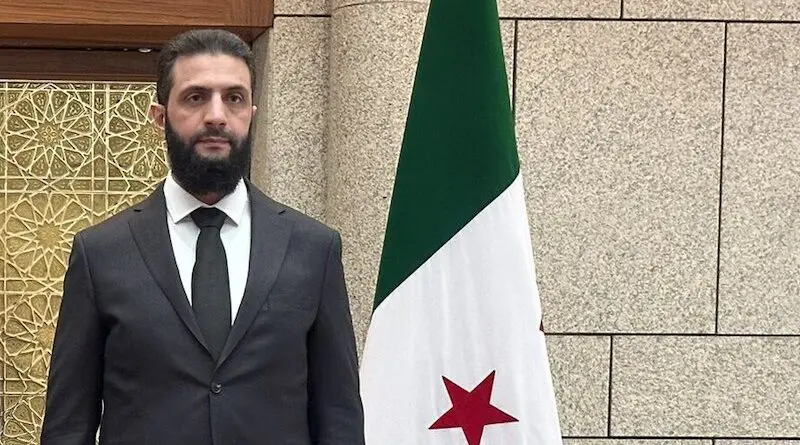
After the regressive series of events following the US withdrawal from Afghanistan, regional and Western powers wait to see if the HTS government leaders can truly change their spots, as they traded fatigues for designer suits.
The region has witnessed the chaos following the fall of notorious Iraqi President Saddam Hussein and most recently the rise of the Taliban in Afghanistan. In both cases, the region experienced a series of events where al-Qaeda and ISIS gained a lifeline, and women and minorities suffered from tremendous regressive policies under corrupt and extremist regimes.Damascus, the first Arab capital governed by self-made extremists listed as terrorists by the international community, surfaced as a unique case. In contrast to other extremist groups, HTS leaders immediately launched a well-coordinated “charm offensive” and presented themselves as statesmen, surrounded by a jungle of militants marginalized by the victors, and away from the spoils.
HTS leaders and their patrons aim to convince the world they’ve changed their spots. Can the jungle let it last? This is a loaded question. First, the international community must wait and see where the approach to de-radicalization since the September 11 attacks failed and the revolutionary spirit achieves change. The world waits to see the difference between al-Qaeda ideologues and their former hosts: the Taliban and ISIS. The experiment also raises the stakes for the Muslim Brotherhood — can it succeed in Damascus where it failed in Cairo?
Damascus and the jungle
On January 29, 2025, the HTS leadership gathered to confirm Abu Mohammed al-Jawlani (now Ahmed al-Shar’a) during a symbolic bay’a — Islamic oath of allegiance to a leader — summit in Damascus. Civilian and military loyalists gathered to consolidate the image of the State, but this was as much a message to rival Islamist factions as it was to international audiences.
Under overt guidance and with material support from Turkey, the HTS government moved quickly to address a major obstacle to international legitimacy, removal from terrorist lists by the United States, European Union and United Nations. The new rulers in Damascus also need to consolidate authority and power over rival factions, ethnic minority groups, former regime remnants and hostile neighbors like Iran, Iraq and Israel.
While HTS does not yet control all of Syria’s territory, it is relying on an extensive network of Islamist militants to deter fragmentation. Jawlani’s chess game smartly moved toward Iraq, where it hosted a meeting with former enemies in neighboring intelligence services. The meeting with Hamid al-Shatri, Head of the Iraqi National Intelligence Service, aimed to mend fences from Jawlani’s ISIS days. It also sought to strengthen the rear front to prevent new incursions by Iran-affiliated militias and elements of Lebanon’s Hezbollah paramilitary group.By meeting with Iraqi intelligence rather than diplomats, Jawlani signaled a merging of interests with Turkey.
More interesting, and of higher risk for HTS, has been the reported collaboration with the US. A US State Department delegation visited Damascus in late December 2024. Soon after, a report emerged of possible intelligence sharing between Washington and HTS leadership. The meeting with Iraq officials and sharing of intelligence with the US seems like a carrot from Turkey to sweeten up the deal with Damascus. US strikes against ISIS and al-Qaeda elements serve Jawlani’s interests as much as the West’s. Members of jihadist groups from the jungle resisting Jawlani’s authority may turn on Damascus, derail HTS governance and attract negative attention.
Enemies inside and outside pose as much threat as the inability to govern a highly diverse Syrian environment. HTS’s move from a jihadist militant group to a government entity complicates funding. Damascus no longer must simply fund a patronage network of jihadists. As a central government, HTS must provide costly services beyond the center, beyond security. Collection of taxes beyond their safe haven in the city of Idlib is no longer a model, neither are “extortion, kidnapping and oil-smuggling … [or] at least $94 million from prisoner-exchange deals with the Syrian government, Iran, Lebanon and Italy.”Damascus needs a deal with Kurds for access to oil supplies. This requires a delicate balance as Turkey lies in the middle of an agreement with them.
Can the leopard change its spots?
Just as Afghanistan under the Taliban, the potential for Syria to surface as a new safe haven for jihadist militants is a primary concern for the region and the West. Every militant group is bound to experience a struggle for power, and Jawlani is at the center. As he switches from jihadist field commander to head of state, he must guard his generals as much as rivals among militant factions beyond the center.
It is still unclear how power will project beyond the core. Likewise, no one knows what role Jawlani’s loyalists will play. Security and State revenue beyond Damascus will undoubtedly depend on stability in areas with Shia, Druze, Kurdish and Yazidi populations.Relations with minority groups will test the ability to govern and the degree to which Islamist extremists can change their spots. Jawlani has spoken the magic words for the West and pointed to elections being held around five years from now.
The views expressed in this article are the author’s own and do not necessarily reflect Fair Observer’s editorial policy.
About the author: Fernando Carvajal served on the UN Security Council Panel of Experts on Yemen from April 2017 to March 2019 as a regions and armed groups expert. He has nearly 20 years of experience conducting fieldwork in Yemen and is a specialist in Yemeni politics and tribal relations.
Fair Observer is an independent, nonprofit media organization that engages in citizen journalism and civic education. Fair Observer’s digital media platform has 2,500 contributors from 90 countries, cutting across borders, backgrounds and beliefs. With fact-checking and a rigorous editorial process, Fair Observer provides diversity and quality in an era of echo chambers and fake news. Fair Observer’s education arm runs training programs on subjects such as digital media, writing and more. In particular, Fair Observer inspires young people around the world to be more engaged citizens and to participate in a global discourse.
Netanyahu compares Purim story to fight against today’s ‘Persian axis’
“2,500 years later an enemy of the Jewish people arose in that land. He, too, wants to destroy and annihilate the seed of the Jews from the face of the earth.”
Israeli Prime Minister Benjamin Netanyahu participated in the traditional reading of the Book of Esther during the holiday of Purim at the National Police Academy in Beit Shemesh, west of Jerusalem, on Thursday evening.
Addressing the police officers, the prime minister drew a comparison to the story of Purim, in which the Jewish people were saved from annihilation in Persia, now present-day Iran, to the modern Jewish state’s conflict with the Islamic Republic.
“Two thousand five hundred years later an enemy of the Jewish people arose in that land. He, too, wants to destroy and annihilate the seed of the Jews from the face of the earth,” Netanyahu said.
Subscribe to The JNS Daily Syndicate and never miss our top stories and analyses
By signing up, you agree to receive emails from JNS.
“Heroes like you have arisen—the heroes of our people. And with stratagem, heroism and courage we turned the tables upside down, and we are breaking the Persian axis,” he said, referring to Iran.
“That’s what’s happening these days. If history repeats itself, at least the people are the same people. This is the new miracle of Purim. This miracle is thanks to you; thanks to our heroic soldiers, our heroic fighters, the policemen and women, who stopped the disaster with endless heroism, and fought back,” he said, referring to the actions of the police on Oct. 7, 2023, when Hamas-led terrorists invaded the western Negev.
“We won our state; we won it with you. I am sure that each and every one of you will do your duty in performing the new miracle of Purim in our days. Happy Purim to all of you,” Netanyahu said.
Professor Wolff will present four key points that reveal the emergence of a new Cold War the U.S. has embarked upon in response to the rise of global alliances from which it is being excluded and that challenge the near century-old American economic dominance.
I. The Old Cold War Targeted Communism in the West and the USSR as its Source II. The New Cold War Targets China and the BRICS III. Trump/Musk Target the US Working Class and its Allies IV. Europe’s Decline Deepens Presented by Democracy at Work and the Left Forum You can find this and past presentations of Global Capitalism on the d@w YouTube Channel by going to / democracyatwrk and clicking on the Global Capitalism playlist.
We ask that you please support these talks and other content we produce by signing up to do so on our website at democracyatwork.info/donate. You can also help support our work by purchasing one of the books we’ve produced that were written by Professor Richard Wolff (Understanding Marxism, Understanding Socialism, The Sickness is the System: When Capitalism Cannot Save Us from Pandemics or Itself, and the latest (2024) Understanding Capitalism). You can find direct purchase links on our website, http://www.democracyatwork.info/books, or at http://www.lulu.com/spotlight/democracyatwork. Please remember to follow us on Twitter, Facebook, Instagram, SubStack and YouTube.
Alliance for Responsible Citizenship 328K subscribers
Mar 15, 2025
This speech has sparked more discussion than possibly any other speech from ARC 2025.
When we invite speakers to ARC, we don’t write their speeches for them, but nonetheless what Eric shared was not what we were expecting. So we invite you to join the conversation in the comments – are we in a new era of hybrid war?
__ Reserve your 1st edition copy of our new book, The Best of Our Inheritance. Pre-Order open until March 14, 2025: https://www.arcforum.com/store/p/the-…
With the return of the ARC Conference this February, we are launching our first book — a work that encapsulates the values and ideas that shape ARC’s mission.
The Best of Our Inheritance brings together fifteen of the sharpest minds of our time to make a bold case for remembering the values of our civilisation. From Barry Straussʼ account of the Classical Tradition, Ayaan Hirsi Aliʼs personal reflections on the values of the West and its Christian roots to Nigel Biggarʼs chapter on human dignity and Joseph Laconte’s call to the artists, reading this book will give you a tangible vision for civilisational renewal. __ Eric Weinstein, PhD, is a mathematical physicist, economist, public speaker, podcast host, and former managing director of Thiel Capital. He has held research positions in the mathematics, physics, and economics departments at MIT, the Hebrew University of Jerusalem, Harvard, and Oxford University. Within Physics, is the proposer of Geometric Unity.
Larry Fink and Peng Xiao on Financing AI Infrastructure
Jan 22, 2025BlackRock Chairman and CEO Laurence D. Fink and G42 CEO Peng Xiao discussed US restrictions on semiconductor technology, meeting power demands with natural gas, the role of crypto and the risk of elevated inflation in a conversation with Bloomberg’s Francine Lacqua at Bloomberg House in Davos. ——–