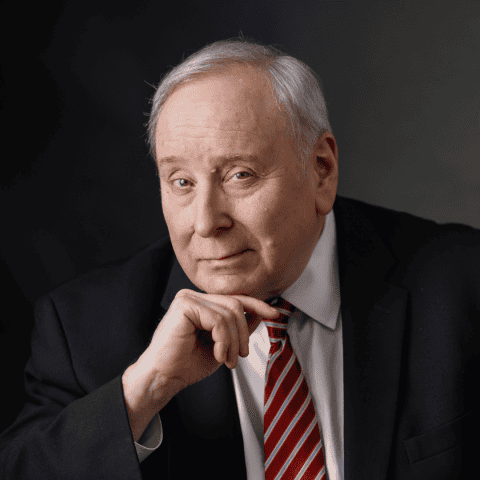
On today’s episode, Brian and Prof. Richard Wolff discuss Trump’s demands that European countries double their military spending, and the new German government has embraced the open remilitarization of Germany–a major shift in policy for Germany since the defeat of Hitler and Nazism in 1945. Professor Richard Wolff is an author & co-founder of the organization Democracy at Work. You can find his work at rdwolff.com. This is a preview, subscribe at Patreon.com/TheSocialistProgram to watch the full episode, get access to all our patrons-only content including live Q&A seminars with Brian Becker, and help keep this show on the air. The full podcast versions of Capitalism in Crisis are still available for all on any podcast platform.
Yes, Peter Comyn was executed for arson in 1830 in Ennis, County Clare, Ireland. The execution took place following his conviction for deliberately setting fire to his residence, Scotland Lodge near New Quay, in December 1829. This act stemmed from a dispute with his landlord, Bindon Scott of Cahercon, though the precise motives remain somewhat unclear in historical records.
Comyn, a former magistrate and landowner from a respectable Clare family, was an unusual candidate for the gallows due to his social standing. Born to David Comyn and Dorothea McNamara, he inherited property at Bishop’s Quarter in Ballyvaughan and was known locally for his imposing presence, folklore interests, and an income of over £600 per year. His trial and subsequent death sentence garnered significant attention, with efforts made to secure a royal pardon from King George IV. Petitions from Ennis and interventions by figures like Robert Peel and the Duke of Northumberland led to a temporary reprieve, delaying the execution from its original date in early April 1830. However, this clemency was ultimately withdrawn, and Comyn was hanged at Ennis Gaol, likely in late April or early May 1830, though exact dates vary slightly in sources.
The case was notable not only for Comyn’s status but also for its reflection of the era’s harsh legal system, where arson—like forgery—was a capital offense under British law. The execution was a shocking event in Clare, often described as a “political bombshell,” and it highlighted the tensions of landlord-tenant relations and the rigid enforcement of justice in pre-Famine Ireland.
Known Information on Descendants
Children: Peter Comyn had 3–4 children, born likely between the late 1790s and 1820s, given his active adult life by the early 1800s. Their names are not recorded in surviving accounts, and no primary sources (e.g., baptismal records, wills) provide further clarity. The ambiguity about the number (three or four) suggests either inconsistent reporting or a lost record.
Post-Execution Fate: After Peter’s execution, his family likely faced social and economic challenges due to the stigma and potential loss of property. The children, with their unnamed mother, may have remained in Clare or moved to nearby Galway, where the Comyn and McNamara families had ties. However, no notable descendants are traced from this point in historical narratives.
It appears you’re asking about comments made by someone named O’Donovan regarding Peter Comyn, specifically the Peter Comyn executed in 1830 in Ennis, County Clare, Ireland, for arson. Given the context of our previous discussions, I’ll assume “O’Donovan” might refer to John O’Donovan, a prominent 19th-century Irish scholar known for his work on Irish history, genealogy, and topography, particularly through his Ordnance Survey Letters. He visited Clare in 1839 and documented local figures and traditions, making him a plausible candidate for commentary on Peter Comyn. However, I’ll clarify what’s known and address any ambiguity.
John O’Donovan’s Potential Comments
John O’Donovan (1806–1861) was an Irish antiquarian and historian who conducted extensive fieldwork for the Ordnance Survey of Ireland in the 1830s and 1840s. His letters, including those from Clare in 1839, often describe local personalities, folklore, and historical events. Regarding Peter Comyn, the Clare Library references O’Donovan’s description of him as “a stout robust man of large proportions and corpulent.” This comment appears in O’Donovan’s correspondence, likely from his 1839 visit to Clare, nine years after Comyn’s execution.
Context of the Comment: O’Donovan’s description focuses on Comyn’s physical appearance, consistent with his interest in documenting notable local figures. He also notes Comyn’s engagement with folklore, mentioning that Comyn collected stories and legends from neighbors. Additionally, O’Donovan alludes to Comyn’s “mental disorder,” which manifested in “outbursts of insanity,” providing insight into his character beyond the arson incident.
Source: This is drawn from O’Donovan’s Ordnance Survey Letters, specifically those related to Clare, where he recorded observations during his travels. The letters are a primary historical resource, and the Clare Library’s entry on Peter Comyn cites this directly.
Timing: Since O’Donovan visited Clare after Comyn’s death, his comments reflect either local memory or earlier encounters (though no evidence suggests they met). The 1839 date places this as a retrospective observation.
Analysis and Limitations
Scope of Comments: O’Donovan’s remarks are brief and descriptive, focusing on Comyn’s physique, folklore interest, and mental state rather than his execution or descendants. They don’t delve into the legal case or family details beyond noting the common-law wife and children, aligning with O’Donovan’s broader antiquarian focus.
No Other O’Donovans: There’s no indication of another O’Donovan (e.g., a contemporary or descendant) commenting on Peter Comyn in historical records. If you meant a different O’Donovan, please specify, as the name is common in Ireland.
Descendants: You’ve asked about Comyn’s children and mentioned “Harriet” earlier. O’Donovan doesn’t name them or discuss their fates, so no connection to a Harriet or further descendants appears in his commentary.
Conclusion
John O’Donovan, in his Ordnance Survey Letters from 1839, described Peter Comyn as “a stout robust man of large proportions and corpulant,” highlighting his physical presence, folklore collection, and mental instability. These comments, made nearly a decade after Comyn’s 1830 execution, are the most likely match for your query based on historical prominence and relevance to Clare. If you’re seeking remarks from a different O’Donovan or about specific descendants, additional context would help refine the answer. For now, this is the extent of known commentary tied to Peter Comyn from an O’Donovan source. How can I assist further?
You’re asking about Peter Comyn’s role as a magistrate, specifically the Peter Comyn executed in 1830 in Ennis, County Clare, Ireland, for arson. Below, I’ll detail what is known about his tenure as a magistrate, drawing from historical context and available sources like the Clare Library, while addressing his broader life to provide a complete picture.
Peter Comyn: Background
Peter Comyn was born to David Comyn of Kilcorney and Dorothea McNamara of Doolin, inheriting property at Bishop’s Quarter in Ballyvaughan from his mother’s family. He later resided at Scotland Lodge near New Quay. A landowner with an income exceeding £600 annually by the early 19th century, he was a figure of local prominence in County Clare. His execution in 1830 followed his conviction for arson after burning his home in a dispute with landlord Bindon Scott, an event that shocked the region due to his social standing and a briefly granted royal reprieve that was revoked. He left a common-law wife and three or four unnamed children.
Role as Magistrate
Peter Comyn served as a magistrate, a position that placed him among the local gentry responsible for maintaining law and order in early 19th-century Ireland. Here’s what can be pieced together about his tenure:
Geographical Scope: Historical accounts, including those from the Clare Library, indicate he acted as a magistrate in Counties Clare, Galway, and Mayo. This broad jurisdiction suggests he held a respected and influential role, likely facilitated by his wealth and family connections, such as the Macnamaras, a prominent Clare lineage.
Time Period: While exact dates of his service aren’t specified, it likely spanned the early 1800s, prior to his downfall in 1829–1830. His property ownership and income by this time align with the qualifications for such a position, which typically required landholding and social status.
Duties: As a magistrate under British rule in Ireland, Comyn would have adjudicated minor criminal and civil cases, issued warrants, and overseen local peacekeeping. This included handling disputes, petty crimes, and, ironically, offenses like arson—though his own crime later fell under higher court jurisdiction due to its severity. Magistrates were unpaid but wielded significant local authority, often appointed by the Lord Lieutenant or through gentry networks.
Reputation: John O’Donovan, in his 1839 Ordnance Survey Letters, described Comyn as “a stout robust man of large proportions and corpulent,” with an interest in folklore and occasional “outbursts of insanity.” This suggests a complex character—capable of judicial responsibility yet marked by instability, which may have influenced his actions as a magistrate.
Context of Magistracy in 19th-Century Ireland
Social Position: Magistrates were typically drawn from the Anglo-Irish gentry or prosperous Catholic families like the Comyns, who navigated the tensions between British governance and Irish society post-1801 Act of Union. Peter’s role reflects his integration into this system, despite his later fall.
Challenges: The period was turbulent, with agrarian unrest (e.g., Ribbonmen activities) and landlord-tenant conflicts. Comyn’s own dispute with Bindon Scott, culminating in arson, mirrors the tensions he might have mediated as a magistrate, highlighting a potential irony or breakdown in his authority.
Transition to Arson and Execution
Comyn’s magistracy ended abruptly with his criminal act in December 1829, when he set fire to Scotland Lodge. The reasons—whether financial distress, mental instability, or personal vendetta—are unclear, but the act led to his arrest, trial, and execution in 1830 at Ennis Gaol. His status as a former magistrate amplified the case’s notoriety, prompting petitions for clemency from Ennis residents and high-level discussions involving Robert Peel and the Duke of Northumberland. Despite this, the death penalty was upheld, underscoring the era’s harsh legal standards even for someone of his rank.
Conclusion
Peter Comyn served as a magistrate in Clare, Galway, and Mayo, likely in the early 1800s, leveraging his wealth and family ties to enforce local law. His role positioned him as a figure of authority until his mental instability and a landlord dispute led to the arson that ended his life in 1830. While specific cases he handled or dates of service aren’t detailed in surviving records, his magistracy reflects the broader dynamics of gentry power in pre-Famine Ireland. If you’re seeking more about his judicial actions or a specific incident, additional context would help refine the response! How can I assist next?
Grok3 AI Deep Search
Newspapers in 1830 Ireland, such as The Clare Sentinel, The Freeman’s Journal, or The Dublin Evening Post, would have covered Comyn’s execution, reflecting the public interest and political undertones of the event. Here’s what such articles might have included:
1. Announcement of the Crime and Trial
Timing: Late 1829 to early 1830, following the arson in December.
Content: Reports likely detailed the arson at Scotland Lodge, Murtyclough, noting Comyn’s status as a “gentleman” and magistrate. They might have speculated on motives—possibly a landlord-tenant dispute or mental instability, as John O’Donovan later described him as suffering “outbursts of insanity.” The trial at Ennis Assizes would have been summarized, emphasizing the guilty verdict and death sentence.
Tone: Sensational yet formal, highlighting the rarity of a prominent figure facing capital punishment. Example headline: “Magistrate of Clare Charged with Arson of Own Dwelling.”
2. Efforts for Clemency
Timing: April 1830, before the execution.
Content: Articles would have reported memorials sent from Ennis to King George IV, pleading for mercy due to Comyn’s connections to leading Clare and Galway families (e.g., Macnamaras). A letter from Robert Peel to the king on April 15, 1830, requesting a respite, suggests a delay was publicized. The Clare Sentinel reportedly expressed hope that “the brightest gem in royal prerogative” would spare him, reflecting public expectation of a pardon.
Tone: Sympathetic yet tense, noting the involvement of high figures like the Duke of Northumberland and Prime Minister Wellington. Example headline: “Ennis Petitions King for Reprieve of Peter Comyn.”
3. Execution Report
Timing: Late April or early May 1830.
Content: The execution at Ennis Gaol would have been the centerpiece, possibly misreported as “forgery” in some outlets (e.g., Jesuit, or Catholic Sentinel, July 31, 1830), though arson is the confirmed crime. Articles likely described a smaller-than-expected crowd, as many believed Comyn would be spared until the last moment. Details might include his demeanor (calm or defiant, though unrecorded), the scaffold scene, and the legal finality despite his rank.
Tone: Dramatic and moralizing, underscoring the law’s impartiality. Example headline: “Execution of Peter Comyn, Esq., at Ennis: Justice Prevails Over Rank.”
4. Post-Execution Reaction
Timing: May–July 1830.
Content: Follow-up pieces might have called it a “political bombshell,” as Clare histories later did, reflecting shock at a gentleman’s fate. Commentary could critique the harshness of British law in Ireland or lament Comyn’s fall from grace, given his magistrate past and folklore interest (per O’Donovan’s 1839 note).
Tone: Reflective or indignant, depending on the paper’s stance. Example headline: “The Fall of Peter Comyn: A Lesson in Law and Landlord Strife.”
Specific Mentions in Historical Sources
Jesuit, or Catholic Sentinel (July 31, 1830): This Boston-based paper, with an Irish readership, reported Comyn’s execution “for forgery,” an error likely from garbled transatlantic news. It’s a rare surviving reference but misaligns with Clare records confirming arson.
Clare Sentinel: Cited in secondary sources, it hoped for royal mercy, indicating local coverage favored Comyn’s reprieve, though no full text survives here.
Peel’s Correspondence: A letter from Robert Peel to George IV (April 15, 1830) about the respite suggests official notices reached Irish papers, amplifying the story’s prominence.
Why Limited Articles Survive
Newspaper archives from 1830 Ireland are patchy due to poor preservation, limited digitization, and the era’s focus on local distribution. The Irish Newspaper Archives offer potential access to titles like The Clare Journal, but specific articles on Comyn require subscription or archival visits beyond my current scope.
Conclusion
Newspaper articles from 1830 about Peter Comyn’s execution would have chronicled his arson, trial, failed clemency efforts, and hanging, portraying him as a fallen gentleman whose case stirred Clare and beyond. They’d blend factual reporting with moral or political commentary, reflecting early 19th-century Ireland’s tensions. If you seek exact articles, I’d recommend searching the Irish Newspaper Archives or contacting the Clare Library for microfilm holdings. For now, this reconstruction aligns with the historical record. What else can I help with?
The Comyn Cenotaph … Peter Comyn to his parents.
THE COMYN CENOTAPH A cenotaph is a memorial monument to someone who is buried elsewhere. The Comyn cenotaph is located about 30 metres north west of the holy well. It is a rectangular stone mortared structure (L 1.6m ; Wth 1.5m ; H 1.6m). It has been variously described as “a pillar” (Cooke 1842-43), “a memorial stone” (Coffey 1995, 16-17 ),” an erection ” (Beresford Massy 1902, Vol V (2) and a leacht cuimhne (Tunney 2016) . Leacht cuimhne translates as memorial stone. There is an etched tablet in the cenotaph as well as a decorated stone. The tablet reads as follows –
LORD JHSUS CHRIST HAV MERCY ON US PRAY FOR THE SOULES OF JOHN COR NYM AND HIS WIFE MARY MNEMARA 1765
The text is in conjoined letters and they are laid out poorly with words spilling from one line on to the next. The disorderly script is explained by the fact that the masons who were inscribing the slabs in those times were illiterate and were copying something they could not read (Jones 2004, 229). It is also worth noting that spelling of names was more variable back then than it is today.
The inscribed “John Cornym” and “Mary M Nemara” would read as John Comyn and Mary Mc Namara. The fourth digit is indistinct but the date appears to us to be 1765. This may be the year of death of one of the couple or both.
The decorated stone consists of a moon face, a symbol of death. It had been partnered by another stone with a sun face on it, a symbol of life. The latter stone was re-located from a decaying side of the cenotaph and was used in the construction of the well house (Coffey 1995, 16-17). The twin stones of sun and moon would have represented the life and death of the Comyns.The moon face is better known today as the logo of local landscape charity, Burren Beo.
The monument may have been commissioned by their son Peter Comyn (1778-1830).Peter was a magistrate who led a colourful and turbulent life. He was found guilty of arson, perjury and forgery and was hung at 52 years of age. Though he was a member of the landlord class, Comyn had a strong interest in the folk customs of the tenantry. A manuscript was found posthumously in which he documented local legends and “the habits, morals and superstitions of the primitive and sequestered people among whom he lived” (O’Donovan and Curry 1839, 11). It is thus not altogether surprising that he located the memorial at the site of St Patrick’s well – a local centre of folk religion then.Comyn also probably choose this location as it was a busy thoroughfare in an area of outstanding natural beauty.
The monument’s condition was decried as far back as the mid-1800s, being described as “mutilated” with vegetation growing out of it (Cooke 1842-43). It was depicted as “sadly crumbling away slowly” as recently as the 1970s (Coffey 1995, 16-17). The monument has been re-pointed and cemented since then and is happily now in good condition.
Some commentators have defined the mound around the monument as a fulachta fia (prehistoric burned mound) . However, the most recent archaeological view is that the mound is spoil (Tunney). The spoil probably consists of waste material drawn up during the digging of the foundations for the monument.
19th century cenotaphs are quite rare in County Clare. However, there are 28 examples of such monuments on Inis Mór, dating from 1811 to 1876. They differ diagnostically from the Comyn monument in that they are “higher than a man” and are surmounted by a cross. Furthermore, the Inis Mór complex commemorate ordinary islanders whereas the Comyn monument perpetuates the memory of members of the landed gentry. In this latter respect, it is more akin to the 19th century cenotaphs north and east of Galway city (including the complex near Cong) which honour society elite (Robinson 1995, 117).
BIBLIOGRAPHY Cooke, Thomas L. (1842-43) . Autumnal Rambles about New Quay, County Clare. Galway – Galway Vindicator. Coffey, T. (1995). Field Notes – Rock Art and Related Rock Scribings in the County Clare. The Other Clare 19. Ennis – Shannon Archaeological and Historical Society. Beresford Massey, E.H. (1902) Association for the Preservation of the Memorials of the Dead Ireland. Vol V (2). Tunney, M. (2019). www.archaeology.ie Dublin – Ordnance Survey Ireland. Comber, M. (ed.) The Antiquities of County Clare. Ordnance Survey Letters 1839 O’Donovan, J. and Curry E. Ennis – Clasp Press. Robinson, T. (1995). Stones of Aran Labyrinth . New York – New York Review of Books.
Europol warns AI is changing the ‘DNA’ of organized crime
Source: Unsplash
We’ve been hearing about AI-accelerated fraud almost from the moment ChatGPT launched in November of 2022.
It comes in a lot of forms, ranging from deepfaked audio to deepfaked imagery and text, often designed in some way to trick you or your loved ones into giving money to fraudsters. And according to Europol, the law enforcement agency of the European Union, the tech isn’t just accelerating small-time fraudsters; it’s enabling a vast network of organized crime.
The details: In a new report, Europol said that artificial intelligence is vastly expanding “the speed, scale and sophistication of organized crime, creating an even more complex and rapidly evolving threat landscape for law enforcement.”
Using large language models (LLMs) and generative AI — which has been designed to be highly accessible and user-friendly — criminal organizations are able to easily overcome language barriers, target global victims “with precision,” create sophisticated malware and produce child sexual abuse imagery. Armed thusly, they can extort, blackmail, impersonate, discredit and deceive victims. Massive phishing campaigns can now be automated; large-scale cyber attacks can be executed with ease and precision; and the potential rise of even more autonomous systems “could pave the way for entirely AI-controlled criminal networks, marking a new era in organized crime.”
This is a level of autonomy that just about every developer is working hard to achieve.
“The same qualities that make AI revolutionary — accessibility, adaptability and sophistication — also make it a powerful tool for criminal networks,” according to the report.
The landscape: In late February, Europol arrested 25 people for the illegal production and distribution of AI-generated child sexual abuse material, one of the first cases of its kind.
“The very DNA of organized crime is changing,” Catherine De Bolle, Europol’s executive director, said. Tackling it requires a global collaboration that prioritizes victim protection, leveraging those same new technologies being used by criminals to fight the source of the crime at its roots.
Israel ‘outraged’ by UN chief’s ‘moral bankruptcy’
Guterres condemned Jerusalem for its renewed offensive against Hamas, but stayed silent on the terror group’s rejection of U.S. ceasefire extension proposals.
U.N. Secretary General Antonio Guterres speaks during a U.N. Security Council meeting on Gaza and the situation in Middle East at U.N. headquarters in New York City on Jan. 20 2024. Photo by Kena Betancur/AFP via Getty Images.
Israel on Tuesday sharply criticized United Nations Secretary-General António Guterres, after he condemned Israel’s airstrikes on Hamas targets in Gaza overnight Monday.
“We are outraged that you are the secretary-general of the United Nations,” tweeted Israeli Foreign Ministry spokesperson Oren Marmorstein.
“Not a word about Hamas rejecting two ceasefire extensions [that] Israel accepted. Not a word about Hamas exploiting humanitarian aid or UNRWA employing terrorists. Indeed, we are outraged by your moral bankruptcy,” he said, referring to the United Nations Relief and Works Agency for Palestine Refugees in the Near East.
Guterres had some two hours earlier stated he was “outraged by Israeli airstrikes in Gaza,” calling for a renewed ceasefire, uninterrupted aid and the unconditional release of hostages.
The latest clash follows a series of tensions between Israel and Guterres, who previously angered Israeli officials by stating Hamas’ Oct. 7 attack “did not happen in a vacuum.”Israel has accused him of bias, pointing to his decision to exclude Hamas from a U.N. list of entities accused of sexual violence, while later blacklisting Israel alongside Russia and terrorist organizations.
Following Iran’s October attack on Israel, then-foreign minister Israel Katz barred Guterres from entering the country, calling him a “disgrace in U.N. history” for failing to condemn Iran unequivocally.
(RFE/RL) — It’s a cease-fire. But what kind of cease-fire?
More than three years into the Russia’s all-out invasion of Ukraine, the White House and the Kremlin on March 18 announced a broad agreement aimed at pausing a conflict that has killed and wounded more than 1 million men on both sides.
The contours of the deal were announced after a roughly two-hour phone call between presidents Donald Trump and Vladimir Putin – the second such call of Trump’s presidency, and arguably the most consequential to date.
Ukraine, under intense pressure from the White House that included an acrimonious Oval Office meeting with President Volodymyr Zelenskyy had already signed on to the US proposal for a 30-day pause in fighting, with the caveat that Russia had to as well.
So What did Moscow Agree to Exactly?
“My main conclusion here is that Moscow is quite comfortable with Trump, but for reasons other than almost everyone discusses,” Nikolai Sokov, a former Russian diplomat who is now with the Vienna Center for Disarmament and Non-Proliferation, told RFE/RL. “Moscow can bargain with Trump whereas Europe insists its position is right and should be accepted without bargaining.”
Where actual military action is concerned, the agreement does nothing on the battlefield itself,where Russian troops have, until recently, been grinding down Ukrainian defenses along a 1,100-kilometer front line.
Ukraine’s troops are withdrawing from Russia’s Kursk region, which it invaded nearly seven months ago in a bid to relieve pressure elsewhere on the front lines, and also gain a bargaining chip for future peace talks.
Prominent in the deal announced March 18 is the focus on energy infrastructure.
Since at least November 2022, Russia has pummeled Ukraine’s power grid: power stations, transmission lines, transformers, substations—a strategy aimed at exhausting and terrorizing Ukraine’s civilian population, sometimes attributed to the former top commander of the Russian invasion whose nickname is General Armageddon.
In the face of those attacks, Ukraine has struggled to keep the lights — and heat — on, but has managed to muddle through with a mix of local ingenuity and large-scale Western support. At the same time, Ukraine has ramped up its homegrown industry of drones, and even cruise missiles,which has increasingly used to target Russia’s energy infrastructure: oil refineries, pipelines, and military facilities.
Speaking at a news conference in Helsinki, President Zelenskyy, who in the past has signaled support for a cease-fire exclusive of ground actions, appeared to sprinkle cold water on the new deal.
“We always supported the idea not to hit energy targets, as well as targets at sea, food production and transport targets,” he said after the Kremlin-White House phone call was announced. “Now, we need to understand what the details of this agreement are. We don’t know that.”
“This could be a way to move towards a cease-fire,” Zelenskyy said. “Step by step. The rest though is the statistics of the reality: hundreds of drones and missiles that keep raining not on the battlefield but all over.”
The groundwork for the cease-fire was announced in Jeddah, Saudi Arabia after meetings of Ukrainian and US delegations.Two days after, Putin responded to the proposal with what amounted to a “yes, but” reply.
“During the conversation, Donald Trump put forward a proposal for the parties to the conflict to mutually refrain from attacks on energy infrastructure facilities for 30 days,”the Kremlin said in its read-out of the March 18 call. “Vladimir Putin responded positively to the initiative and immediately gave the Russian military the corresponding order.”
A limited cessation of targeting on energy facilities in Ukraine – and in Russia – is a win for Kyiv.
However, it may end up being more of a win for Moscow, Sokov said.
“Note that for 30 days Russia will be building weapons and will be able to resume large-scale strikes if necessary,” he told RFE/RL. “Ukraine, however, will not be able to fully fix damage to energy infrastructure, of which it has lost between one-third and one-half according to different estimates.”
Left Unsaid
What was absent from the talks – at least in the public read-outs from the Kremlin and the White House was any mention of Ukraine’s Zaporizhzhya nuclear plant – Europe’s largest – which US envoy Steve Witkoff said might be on the table.
Nor was there mention of US recognition of Russia’s claim to have annexed Ukraine’s Crimea peninsula, something else that was rumored to be possible.
Nor was there reference to Ukraine’s ambitions to join NATO, something Moscow vehemently opposes, and even cited as a justification for its decision to invade in February 2022.
The White House statement did mention broader geopolitical issues— a nod toward a position Moscow has leaning into: that any deal with Washington should be a wider deal touching on issues unrelated to Ukraine.
That’s a recurring theme for Putin who’s used the term “root causes” – shorthand for the Kremlin’s dissatisfaction with the entire post-Cold War international arrangement.
But broadening talks beyond Ukraine itself was something that Trump’s predecessor, Joe Biden, resisted.
“The leaders agreed that the movement to peace will begin with an energy and infrastructure ceasefire, as well as technical negotiations on implementation of a maritime ceasefire in the Black Sea, full cease-fire and permanent peace,” the White House said. “These negotiations will begin immediately in the Middle East.”
“They further discussed the need to stop proliferation of strategic weapons and will engage with others to ensure the broadest possible application,” it said. “The two leaders shared the view that Iran should never be in a position to destroy Israel.”
It was also unclear whether the subtle difference in wording between statements was significant: “energy infrastructure” per the Kremlin versus “energy and infrastructure” per the White House.
And proliferation of strategic weapons – nuclear or otherwise– has in the past been an easy goal that Washington and Moscow have shared, until distrust and political suspicions seeped into the effort.
The two countries – who hold the world’s two largest nuclear arsenals – are still bound by the last major arms control treaty between them, though it’s due to lapse next year, and there’s been no effort at all to start talks on a successor treaty.
In the end, though, broadening the scope of discussions fits into the Kremlin’s wider hopes for a wider rework on international rules: Moscow’s desire to be treated as an equal by the United States—as it was during the Soviet Union.
Mike Eckel is a senior international correspondent reporting on political and economic developments in Russia, Ukraine, and around the former Soviet Union, as well as news involving cybercrime and espionage. He’s reported on the ground on Russia’s invasion of Ukraine, the wars in Chechnya and Georgia, and the 2004 Beslan hostage crisis, as well as the annexation of Crimea in 2014.
Trump’s war on woke universities is essential to fighting antisemitism
Don’t be misled by the left’s free-speech hypocrisy. The issue isn’t only deporting supporters of a genocidal war on Israel; it’s their opposition to ridding U.S. education of toxic woke ideology.
People hold signs as they protest the arrest of former Columbia University student activist Mahmoud Khalil and show support for Palestinians during a “Fight for Our Rights” demonstration by Shut It Down for Palestine (SID4P) and various local groups at the University of Washington campus in Seattle on March 15, 2025. Photo by Jason Redmond/AFP via Getty Images.
Jonathan S. Tobin is editor-in-chief of the Jewish News Syndicate, a senior contributor for The Federalist, a columnist for Newsweek and a contributor to many other publications. He covers the American political scene, foreign policy, the U.S.-Israel relationship, Middle East diplomacy, the Jewish world and the arts. He hosts the JNS “Think Twice” podcast, both the weekly video program and the “Jonathan Tobin Daily” program, which are available on all major audio platforms and YouTube. Previously, he was executive editor, then senior online editor and chief political blogger, for Commentary magazine. Before that, he was editor-in-chief of The Jewish Exponent in Philadelphia and editor of the Connecticut Jewish Ledger. He has won more than 60 awards for commentary, art criticism and other writing. He appears regularly on television, commenting on politics and foreign policy. Born in New York City, he studied history at Columbia Universit
In demonstrations at Columbia University and Trump Tower in New York City, as well as on the op-ed pages of liberal newspapers and websites, leftist anti-Zionists headed to the barricades this past week, both literally and figuratively. They did so on behalf of the new hero of the struggle to “free Palestine,” which means to destroy Israel.
They are not alone in rallying to the cause of Mahmoud Khalil, one of the leaders of the pro-Hamas and antisemitic mayhem that has gone on at Columbia since the Hamas-led terrorist attacks in southern Israel on Oct. 7, 2023. American liberals and many, if not most Democrats, are also all-in on the effort to free Khalil.
Khalil was arrested by the U.S. Immigration and Customs Enforcement (ICE) because, as Secretary of State Marco Rubio said, foreigners who come to the United States to study but use that privilege to advocate for a terror group and to engage in illegal activities, as well as fomenting hate against Jews, have forfeited that right. And so, at the government’s discretion, those persons will be deported.
Subscribe to The JNS Daily Syndicate and never miss our top stories and analyses
By signing up, you agree to receive emails from JNS.
Trump’s cultural revolution
For those opposed to the president’s policies across the board, he is as much a martyr to the “resistance” to the Trump administration as he is to the cause of eliminating the Jewish state.
To them, the president’s push to punish schools that tolerate antisemitism and to deport those terror-supporting foreign students who have helped drive the surge of hate against Jews on campuses throughout the United States is deeply offensive. They assert that Khalil’s arrest and potential deportation are evidence of Trump’s authoritarianism and willingness to trample on the right to free speech.
Yet even more than that, the credentialed elites that now form the backbone of the Democratic Party view Trump’s war on leftist-dominated colleges and universities that have enabled the surge in antisemitism as one that is directed at them and all they hold dear.
When Washington Post columnist and CNN host Fareed Zakariablasted the Trump campaign against these institutions of higher learning as a “cultural revolution,” he wasn’t entirely wrong.
What Trump is attempting isn’t a replay of the Chinese cultural revolution—a mad orgy of bloodletting in which Mao Tse-Tung and that country’s Communist Party waged war on all Western learning and all potential sources of internal opposition. What the administration hopes to do is quite the opposite of what that purveyor of liberal conventional wisdom claims.
Instead of destroying learning, the president is trying to rescue American education from “progressives” who have subverted it by imposing woke indoctrination throughout the system—from grades K-12 all the way up to the most elite universities. They may now pose as defenders of the “experts” against Trump’s revolt of the uneducated. But what the left is doing, with the support of their liberal fellow travelers, is part of an effort to undermine the entire edifice of Western civilization and the American republic. They’re doing that by seeking to replace the Western canon and its belief in equality with the woke catechism of diversity, equity and inclusion (DEI). It is rooted in the toxic myths of critical race theory, intersectionality and settler-colonialism that preaches an endless race war between “people of color,” who are always victims, and the so-called white oppressor class.
Canaries in the coal mine
That the Jews and Israel have been falsely labeled as “white” and always in the wrong (let alone oppressors since Jews have suffered persecution for two millennia), and the Palestinian Arabs their victims who are always in the right, is incidental to the damage that woke ideology seeks to do to all Americans.
As is always the case, the Jews are the canaries in the coal mine. They saw themselves as at home in institutions where they have thrived for more than a century once the old quotas against Jewish admission were toppled. Now Jews are targeted by the progressives simply because—as the object of the world’s oldest hatred—they are uniquely vulnerable to be made to suffer for the sin of that success, both in the United States and in Israel.
In a less hyper-partisan era or one in which hatred for Trump was not so integral to political discourse, extremists like Khalil and his cheering section on the left would not only be isolated. Those who today call themselves liberals would realize how much of a threat the toxic ideas of progressives are to everything they cherish. They would understand that these radicals should not only be shunned but actively resisted. But so many political liberals have either embraced those ideas to stay in sync with political fashion on the left or have been indoctrinated in them in their own schooling. As a result, they instinctually identify with the notion that a foreign terror supporter is somehow the poster child for free speech.
The pro-Hamas mob’s goals
Khalil is the grandson of Arabs who fled what is now Israel when the war to destroy the newly established modern-day Jewish state in May 1948 failed.He was born in Syria but subsequently acquired Algerian citizenship.After being educated in Lebanon, he moved to the United States to seek a graduate degree via a student visa in 2022. While in America, he acquired a green card via marriage to a U.S. citizen. That enabled him not only to remain in the country legally but also to get a job. One job that he held was as a public affairs officer for the U.N. Relief and Works Agency for Palestine Refugees (UNRWA), the Hamas-associated agency that helps perpetuate the conflict with Israel.
At Columbia, Khalil was one of the most visible organizers of the pro-Hamas demonstrations since Oct. 7 that included illegal encampments, in addition to takeovers of university buildings and libraries. While portrayed in liberal outlets as an expression of idealism by those who sympathized with suffering Palestinians, Khalil and those who joined him made no secret of their ideological goals. They are not peace activists. Their literature and chants made it clear that they supported Hamas, a terror organization that led the mass murder of 1,200 people and the kidnapping of 251 others on Oct. 7. They explicitly supported terrorism, as even The New York Times reported.
That Khalil’s pregnant wife speaks about his being kidnapped by ICE and the cruelty of such an action remains deeply ironic since her husband and his confederates have no problem with the kidnapping of Israelis—not to mention the slaughter, rape and torture of those Jews whom they targeted on Oct. 7.
They did so because they supported its genocidal goal to purge the Jews from their ancient homeland (“from the river to the sea”) and their terroristic methods (“globalize the intifada”). Under the circumstances, it is hardly surprising that these “mostly peaceful” protests sometimes crossed over into violence and acts of intimidation that at times led some to advise Jews to flee the campus.
While politicians, including former President Joe Biden and Vice President Kamala Harris, praised them as idealists who should be “heard,” their goals made it obvious what was driving these protests.
Their takeover of parts of the campus made them virtual “no go” zones for Jews not willing to abjure their faith or their identification with their people. There should be no misunderstanding about this. Their effort to silence and shun Jews was not incidental to their purpose. It was integral to their protests and in keeping with the general woke intolerance for those who dissent against their ideology or can be smeared as members of the oppressor class.
Free-speech hypocrisy
Nor should we take seriously the loud clamor about Khalil’s arrest being a Trumpian campaign against free speech.
The same voices loudly clamoring on behalf of Khalil’s right to torment Jews and support an Islamist movement that is designated as a terror organization were silent during the years of the Biden presidency. That administration conducted an unprecedented campaign to silence dissent against their policies during the COVID pandemic, as well as those who opposed them on a host of other issues. They colluded with social-media platforms and Internet providers to squelch those who opposed them in a program of government censorship that was antithetical to democracy, despite their disingenuous claims to be defending it.
Biden’s Department of Justice similarly targeted dissent. They sought to crack down and intimidate parents who protested against the imposition of radical ideologies in their children’s schools, as well as those who conducted peaceful protests against abortion.
But liberals had no problem with these policies.
Some on the left, like the American Civil Liberties Union (ACLU) were explicit about abandoning their former stance in which they supported all those whose speech was under attack, be they on the right or the left. Now they only defend speech when it conforms to their political opinions and are happy to stand on the sidelines or support the suppression of conservative or other non-leftist views.
Some liberal Jewish organizations like the Anti-Defamation League, actively sought to participate in the repression. They did so ostensibly because they foolishly believed it would make Jews safer if outlier crackpots on the far right were silenced. But the real reason was that the group had long since abandoned its brief to defend Jewish life for a partisan agenda as a Democratic Party auxiliary.
Violence isn’t protected speech
Still, that raises the question as to whether conservatives are themselves free-speech hypocrites by supporting Trump’s plan to deport foreign Hamas supporters. It’s a fair question to pose, but the answer is that the accusation is false.
Khalil and other foreign supporters are not being deported for their opinions. Any American or, for that matter, foreign resident can think and say what they like, no matter how hateful or abhorrent. But Khalil and his mob of antisemitic leftists at Columbia—and others like them around the country—turned their support for the genocide of Jews into acts of harassment and violence, breaking not only the rules of the university where they worked and studied (albeit rules that a school administration that was tacitly in sympathy with the Israel-haters refused to enforce) but the law.
That rendered those among their number who were not citizens liable to be expelled from the United States under long-recognized rules and regulations. Foreign residents are in the United States only with the permission of the government. Even green-card holders can have that permission revoked if they violate the law or otherwise act in a manner that violates the terms under which they were admitted. And not only did Khalil violate them. It’s a dead certainty that he lied about his affiliations and intentions in order to gain entry to the United States and to get a green card even after he married a citizen.
Yet the point to focus on isn’t immigration law. Advocacy for Israel’s destruction is speech. The acts of violence and intimidation committed by the pro-Hamas mob Khalil led were not speech.
Foreign students take over
The more germane issue, however, isn’t really about the fate of Khalil or any of the other antisemitic thugs who are either self-deporting or liable to get the same treatment from federal authorities. It is how progressives and their Islamist allies have taken over American higher education in such a way as to make so many colleges and universities hostile environments for Jews.
Part of this is the result of the way foreign students have impacted American education.
Most Americans probably assume that students at one of the nation’s most venerable and respected institutions of higher learning are peers who gained admission on the basis of merit. They would probably be astonished to learn that, according to the university’s website, a majority of its students and scholars are not U.S. citizens but foreign nationals. Unlike many Americans, foreign students, especially from Middle East countries other than Israel, pay the full tuition fees with few of them on scholarships or other programs that reduce costs.
The transformation of schools like Columbia into bastions of hate for Israel and Jews is thus not entirely the function of the American left’s long march through our institutions, but also the product of the Muslim and Arab world’s successful campaign in which they have sought influence in the United States by one means or another.
Still, the stakes involved in Trump’s plans to defund schools that have tolerated and enabled antisemitism are bigger than Khalil or the infiltration of other Islamists and terror supporters into the country.
The left’s promotion of toxic theories aimed at smearing Western civilization and the United States as irredeemably racist has done incalculable damage to the humanities and, as author Heather Mac Donald has written, to the sciences as well. In addition to the harm done to education is the impact ideas that gained credibility from their sponsorship by major universities have had on American society as a whole, as well as the realms of business, journalism and government. What happens at Columbia, Harvard, Yale and other elite schools doesn’t stay there. It seeps into the rest of society because their graduates have so much influence on how the country operates.
Jews may be most vulnerable now, but the left’s takeover of the education system threatens all Americans. If Trump’s efforts fail and the woke orthodoxy that targets basic American values like personal liberty and equal opportunity prevails, this will call into question the nation’s future in a way that few other threats can.
The president’s attack on these schools isn’t a war on education. It’s a battle to save education and America itself at a time when a counter-cultural revolution on the nation’s campuses is desperately needed. Those liberals who say that they oppose Khalil’s views but will fight to defend his rights (even though they wouldn’t do the same for conservatives) and do their best to thwart Trump’s defunding campaign aren’t just undermining Jewish security. They are betraying the basic values of Western civilization that are the foundation of their own freedoms and the existence of the American republic.
Jonathan S. Tobin is editor-in-chief of JNS (Jewish News Syndicate). Follow him: @jonathans_tobin.
Infrastructure startup Crusoe has a plan to keep the data center lights on Source:
UnsplashSpoiler alert: it involves natural gas.
AI infrastructure startup Crusoe — which is already working with OpenAI on a Stargate data center in Texas — said it has secured access to 4.5 gigawatts of power, in the shape of seven gas-powered turbines, according to The Information.
The details: San Francisco-based investment firm Engine No. 1 in January partnered with Chevron to secure seven GE Vernova natural gas turbines, a multi-billion-dollar deal intended to provide power to data centers. According to The Information, Crusoe is getting access to all of it. This comes amid a massive and persistent surge in data center electricity demands, not just to train GenAI models, but also to operate them. Demand, at this point, is outpacing production, contributing both to grid instability and carbon emissions.
Data center operators, stymied by slow-moving utility companies, have been increasingly looking for ways to power themselves while they wait to come online; in this vein, most of the Big Tech lineup has inked deals with nuclear energy companies. In the interim, gas turbines — which pollute heavily — have become popular; they’re in use at Elon Musk’s xAI facility in Memphis. “Because of that step function increase in overall power demand, you really have to bring your own power,” Chase Lochmiller, CEO of Crusoe, told The Information. “There’s no other way for you to be able to achieve that scale that quickly ”Engine No. 1 and Crusoe are now working to identify sites where the turbines can be deployed, sites they can then sell to eager data center customers.
Putting things in context: A single gigawatt — equivalent to one billion watts — is roughly enough energy to power 800,000 homes in the U.S., based on average numbers regarding electricity usage. We’re talking about a tremendous amount of power, allocated solely for consumption by AI companies.
‘Strength and Sword’: IDF renews heavy strikes against Hamas in Gaza
“This follows Hamas’s repeated refusal to release our hostages, as well as its rejection of all of the proposals it has received,” the Israeli prime minister’s office stated • IDF Home Front Command orders schools near the border closed until further notice.
Smoke rises after an Israeli airstrike in Gaza City, March 18, 2025. Photo by Ali Hassan/Flash90.
(March 17, 2025 / JNS)
The Israeli military conducted “extensive” strikes against Hamas targets in the Gaza Strip overnight Monday, the Israel Defense Forces announced early on Tuesday morning.
“This follows Hamas’s repeated refusal to release our hostages, as well as its rejection of all of the proposals it has received from U.S. presidential envoy Steve Witkoff and from the mediators,” the Israeli prime minister’s office stated.
The IDF is “attacking targets of the Hamas terrorist organization throughout the Gaza Strip in order to achieve the objectives of the war as they have been determined by the political echelon including the release of all of our hostages, the living and the deceased,” the statement continued. “Israel will, from now on, act against Hamas with increasing military strength.”
Subscribe to The JNS Daily Syndicate and never miss our top stories and analyses
By signing up, you agree to receive emails from JNS.
White House Press Secretary Karoline Leavitt told Fox News that Jerusalem had consulted the Trump administration before launching the operation, which the Israeli military named “Strength and Sword.”
U.S. President Donald Trump “has made it clear: Hamas, the Houthis, Iran, all those who seek to terrorize not just Israel but also the United States of America will see a price to pay. All hell will break loose,” Leavitt said.
All of “the terrorists in the Middle East” should take Trump “very seriously when he says he is not afraid to stand for law-abiding people … and our friend and our ally Israel,” she added.
Al Jazeera and other Arab media reported that Mahmoud Abu Watfa, a deputy minister in Gaza’s Hamas-run Interior Ministry, was among several senior Hamas figures killed in the strikes.
A cloud of smoke billows as destroyed buildings are pictured in the northern Gaza Strip from across the border in southern Israel on March 18, 2025. Photo by Menahem Kahana/AFP via Getty Images.
Egyptian television station Sada El-Balad reported that Abu Obeida al-Jamasi, a member of Hamas’s political bureau and head of its emergency committee, was also killed.
Several outlets, including Saudi news channel Al Hadath, reported the death of Bahjat Abu Sultan, head of central operations in the Gaza Interior Ministry.
IDF Spokesperson Col. Avichay Adraee issued an urgent warning Tuesday to residents of Gaza, urging those in specific areas to evacuate immediately as Israeli forces intensified their operations.
In a statement posted on X, Adraee identified Beit Hanoun, Khirbet Khaza’a, and Abasan al-Kabira and al-Jadida as dangerous combat zones.He called on civilians to relocate to designated shelters in western Gaza City and Khan Yunis for their safety, stressing that remaining in these areas would put their lives at risk.
Meanwhile, the IDF Home Front Command has instructed municipalities near the Gaza border to close schools until further notice.
“Following a situation assessment, it was decided that the Gaza envelope will move from a full activity level to a reduced activity level, which does not allow for educational activities,” according to the statement.
Israeli Prime Minister Benjamin Netanyahu convened a high-level security assessment on Tuesday at the Kirya military headquarters in Tel Aviv. The meeting included Defense Minister Israel Katz, IDF Chief of Staff Lt. Gen. Eyal Zamir, and senior security officials.
Israeli Prime Minister Benjamin Netanyahu, center, speaks during a high-level security meeting at IDF headquarters in Tel Aviv, March 18, 2025. Photo by Ma’ayan Toaf (GPO).
Israeli Ambassador to the United Nations Danny Danon stated on Monday night in New York that the U.N. Security Council would convene on Tuesday to discuss the situation in Gaza.
“It is time for the countries of the world to take seriously our unwavering commitment to bring back all our hostages home and defeat the enemy,” the Israeli envoy stated. “Nothing will stop us from fighting to free our hostages, who have been held in brutal Hamas captivity for 527 days. We will show no mercy against our enemies while our hostages languish in Hamas terror tunnels.”
An Israeli official “claimed that in recent days during the ceasefire Hamas has been preparing to carry out new attacks against Israel and has taken steps to rearm,” Axios reported. “The official said the IDF kept the operational plan top secret and within a relatively small circle in order to surprise Hamas.”
Image by John MacDougall / AFP via Getty / Futurism
A year or two ago, OpenAI was on top of the world. Now… well, it’s still probably still the world’s buzziest AI startup, but its new models aren’t making the splash they once were, its business model is as hazy as ever, and competition is rapidly catching up.
What does a $300 billion tech company do in that situation? Double down on innovation and development — or blame a scary foreign bogeyman?
Lately, it’s sounding like the latter. In a recently published white paper, OpenAI called for US lawmakers to “coordinate a global ban” on what it calls “Chinese Communist Party aligned” AI models, such as its infamous competitor DeepSeek.
DeepSeek made waves earlier this year when it announced an AI model approximately on par with OpenAI’s ChatGPT, which the Chinese company made for a fraction of the price. It was a major knock against American AI companies’ costly development strategy, which may explain why OpenAI is now appealing to good old American jingoism.
“While America maintains a lead on AI today, DeepSeek shows that our lead is not wide and is narrowing,” OpenAI’s paper reads. “The AI Action Plan should ensure that American-led AI prevails over CCP-led AI, securing both American leadership on AI and a brighter future for all Americans.”
DeepSeek, for what it’s worth, is privately owned and backed by venture capitalists — similar to many American tech companies.While the AI company is now closely guarded by the Chinese government as a matter of national security, there’s no indication that DeepSeek is owned or controlled by the CCP.
OpenAI, meanwhile, enjoys a lucrative relationship with the US government. In January, president Donald Trump announced that OpenAI would form the backbone of a $500 billion AI infrastructure project, prompting hopeful investors to flood the company with cash.
Though OpenAI’s policy proposal accuses China of using “AI tools to amass power and control their citizens, or to threaten or coerce other states,” it has little to say about the United States’ own control over global internet infrastructure, or the coordinated effort by American corporations to restrict US citizens from accessing DeepSeek.
Indeed, there are plenty of glaring omissions of shady US tech dealings, like the National Security Agency’s use of Facebook to surveil citizens, or the war chest Silicon Valley is all too eager to build for the Pentagon — even as OpenAI accuses DeepSeek of the same.
It’s all a pretty telling display. OpenAI concludes its paper by asking the state to blow the cap off of personal privacy laws, so that it can continue scraping our data to build its AI. What was that about amassing power to control citizens?
Here’s an idea: if OpenAI’s billionaire founder feels he can’t compete on the free and open market, maybe it’s time to make way for someone who can. That’s capitalism, after all.


 Source: Unsplash