I bought a Tesla because it was fast like a rocket ship. But now every time I drive it, I feel like a rolling billboard for a man dismantling our government and hurting people. So Tesla, you’re fired! New ride coming soon.
I bought a Tesla because it was fast like a rocket ship. But now every time I drive it, I feel like a rolling billboard for a man dismantling our government and hurting people. So Tesla, you’re fired!
It’s hard to understand the economic logic of President Trump’s tariffs. In our last episode, we tried, but with limited success. And that might be because the logic here isn’t entirely economic at all. So we wanted to spend an episode looking at Trump’s economic policies through a wider lens.
Gillian Tett is a columnist at The Financial Times and a member of its editorial board. She’s also a trained anthropologist with a Ph.D. And she brings both perspectives into this conversation — exploring Trump’s policies as economics, as well as power politics, patronage and cultural messaging — which I think makes the whole thing make a bit more sense.
Watch more on @EzraKleinShow 0:00 Intro 2:06 The hegemonic power mindset 4:14 Mar-a-Lago Accord 21:09 Cultural power 25:11 Tariff strategy 27:44 Market pain 33:18 Global reaction 45:58 Bond markets 54:20 Detox period / John Maynard Keynes 58:00 Book recs Thoughts? Guest suggestions? Email us at ezrakleinshow@nytimes.com. You can find transcripts (posted midday) and more episodes of “The Ezra Klein Show” at nytimes.com/ezra-klein-podcast. Book recommendations from all our guests are listed at https://www.nytimes.com/article/ezra-….
By weaponizing the global economy, the U.S. initiated a new era of economic warfare and transformed how major powers compete.
Max Zolotukhin / Getty Images / Big Think
Key Takeaways
Edward Fishman’s new book, Chokepoints, explores how the U.S. reimagined economic warfare to achieve success in international conflicts without military force.
Effective sanctions aim at specific pressure points to secure diplomatic and political gains, whereas unwise sanctions can deepen humanitarian crises.
According to Fishman, the future of economic warfare may lead the U.S. to strengthen relationships with allies or more serious conflicts abroad.
A weekly newsletter featuring the biggest ideas from the smartest people
Fields marked with an * are required
We’ve all experienced the illusion of knowledge. This cognitive bias leads us to walk around overconfident in the depth of our understanding of how the world works. We believe we know how zippers zip, the internet connects, and local politics work until someone asks us to explain. We then suddenly find ourselves fumbling for an answer that sounds plausible.
Featured Videos Go to Big Think
3 powerful mind states: Flow state, good anxiety, and Zen Buddhism
This happened to me last year when my son asked me to explain sanctions. I’ve been reading about them in the news for most of my adult life. Sanctions imposed on Iran to ice its nuclear program. Sanctions on Russia for invading Crimea. Sanctions on Venezuela for anti-democratic corruption. The list goes on, yet I barely stammered a respectable answer: “They’re economic penalties placed on a country to compel it to change something. I think they mostly have to do with the oil. So boats are probably involved … somehow. Maybe pipelines, too.”
Okay, not exactly respectable, and truth be told, I left out the more embarrassing fumbles. Still, we don’t know what we don’t know until we know, you know? Thankfully, a good book provides a brilliant way to dispel the illusion of knowledge, so when I was given the chance to read Edward Fishman’s new book, Chokepoints: American Power in the Age of Economic Warfare, I took it.
Fishman’s book tells the story of how the United States turned the world economy into a battlefield by developing the economic weapons necessary to win international struggles before they expand into shooting wars. A leading authority in economic statecraft, Fishman works today as a professor at Columbia University’s School of International and Public Affairs; however, earlier in his career, he worked at the U.S. Treasury Department as a special assistant to the Under Secretary for Terrorism and Financial Intelligence at a time when the new rules for economic engagement were being written.
After reading his book, I sat down to talk with Fishman about this new age of economic warfare and what it means in our increasingly fractured, yet still globalized, world.
A 19th-century lithograph depicting the Spartan leader Lysander outside the walls of Athens at the conclusion of the Peloponnesian War. (Credit: Wikimedia Commons)
Economic warfare from Bosphorus to Baghdad
In defense of my stammerings, Fishman’s book opens with a boat. Many, in fact, all waging war across the 5th-century Aegean Sea. The skirmish pitted Athens against their Spartan rivals and marked the decisive moment in the 27-year-long Peloponnesian War
With backing from the Persian Empire, which saw Athens as a mutual adversary, the Spartan leader Lysander constructed an armada large enough to destroy the ostensibly invincible Athenian navy. He then sailed victoriously to Lampsacus, a city strategically located on the Bosporus Strait. There, he seized the city and cut Athens off from the trade routes it relied on for its food supplies.
“The Bosphorus had been the Athenian’s lifeline, and the Bosphorus was where their empire met its demise,” Fishman writes.
The strait proved to be a chokepoint for the ancient Greek city-state — an economic gateway so critical that, as Fishman notes, “controlling it confers immense power” while “blocking it can bring your enemy to its knees.” Such chokepoints not only inspired Fishman’s title; they also served as the focal points of economic warfare for millennia.The Siege of Tripoli in the 12th century, Great Britain’s blockade of its rebellious colonies in the 18th century, the Union’s blockade of the rebellious South in the 19th century, and German U-boats prowling the Atlantic in the 20th century, all represent attempts to locate and squeeze a rival’s chokepoints in times of war.
And that’s how economic warfare went even up to the 1990s. To enforce international sanctions against Iraq for its invasion of Kuwait, U.N. coalition ships parked outside the country’s ports. For 13 lengthy and costly years, crews painstakingly inspected ships for banned goods. The most significant strategic update: Unlike in Lysander’s days, enforcement involved fines and impoundments rather than public executions in the city square.
As with so much else, everything changed after the 9/11 attacks. Iran’s efforts to develop a nuclear bomb stoked fears in Washington, yet the U.S. had already launched wars in Iraq and Afghanistan. The prolonged conflicts stretched the country’s willingness to enter another battlezone thin — and its credibility thinner after its justifications for Iraq proved unfounded. Meanwhile, Iran was getting closer to its goal.
“America was the most powerful country in the world, but here we were fighting these wars that were costing a lot of blood and treasure, but we didn’t have much to show for it,” Fishman said during our conversation. The prevailing question in some Washington circles became: “Is there another way for the U.S. to exercise its power and potentially get what it wants more effectively, cheaper, and less violently around the world?”
The Iron Bank of Davos
Enter Stuart Levey, a lawyer at the Justice Department who would go on to become the Treasury Department’s first undersecretary for terrorism and financial intelligence. Levey recognized that the 60 years since World War II had left the U.S. in a historically remarkable position. Its dollar had become the world’s reserve currency and the lifeblood of global trade. That and a lack of equally powerful geopolitical rivals gave the U.S. immense economic sway.
In hindsight, Levey’s plan seems obvious. The U.S. would go beyond sanctioning a few visas here and embargoing a specific export there. The country would also persuade the world’s banks to cease their business with Iran.CEOs would be shown declassified information about how Iran funded its nuclear program and terrorist proxies. They would then be given a choice: Cut ties with Iran or lose access to the all-important American dollar. The endgame was to isolate Iran from the international financial system and weaken the country’s economy. If enough economic pain accumulated, Iran would be compelled to negotiate without a single shot fired.
As Fishman writes: “Trying to navigate the global economy without access to the dollar is like trying to travel the world without a passport. […] The dollar’s importance in the global economy gave the United States a chokepoint of unparalleled strategy value.”
Of course, enlisting the private sector and other countries to support Levey’s plan would be no simple task. From this jumping-off point, Fishman’s book begins in earnest — though not in the way you might expect. His is no cold financial analysis nor a whittling down of the history to shape a clear moral lesson. Instead, Fishman chronicles the pivotal moments in this new era of economic warfare — from the Iranian sanctions to those imposed on Russia for its invasion of Crimea and the technological freeze-out of Huawei — by following the public servants who built America’s economic arsenal.
Yes, the odd graph makes an appearance (you get the sense talking with Fishman that he isn’t one to say no to a curvaceous area chart). But it’s the people behind the scenes who take center stage. The book even features a cast of characters that wouldn’t feel out of place in the appendix of a George R.R. Martin novel. It’s a welcomed inclusion given how many people come in and out of the various stories.
Readers explore this history through the eyes of people like Levey, David Cohen, and Daleep Singh. Thanks to Fishman’s thorough research and personal interviews, readers experience the dismay of an emerging complication, the relief of a long-delayed victory, or the frustration of a thwarted plan. These details create the atmosphere of a backroom political thriller without tipping into full-on drama. It remains a history book to its core.
Through this narrative choice, Fishman aims to demystify the confusion surrounding our new age of economic warfare for a wider audience. A more traditional analysis may give readers the knowledge to pass a multiple-choice test on these events. However, Fishman doesn’t want his readers to merely know the history of this new economic arsenal. He wants them to understand the people who built it and why they made the decisions that led history to play out as it did.
“It is very easy to go back and look at something that happened 10 years ago and say, “Oh, they were so stupid,’” Fishman says. “But the key thing is empathy. You want to understand what people knew at the time and the different competing pressures they were under. I thought that was the best way to tell the story in an accurate and engaging way.”
The ministers of foreign affairs and other officials from the P5+1 countries, the European Union, and Iran announce the framework of the Iranian nuclear deal. (Credit: U.S. States Department / Wikimedia Commons)
A poor statesman who blames his tools
Fishman is no polemicist, though. His goal isn’t to paint the U.S.’s economic arsenal as the savior of the free world nor as the smoking gun of an overreaching police state. He treats them as policy tools, pure and simple. Used wisely, they can prevent conflict from escalating into a war or humanitarian crisis. Used carelessly, the same tools can intensify international strife and weaken the case for bargaining.
To help me better understand the nuances, I asked Fishman what he considers an effective sanction versus an ineffective one.For him, the Iranian sanctions (2005–15) demonstrate economic warfare at its best. The goal wasn’t “economic pain for pain’s sake” but to target the precise pressure points that would successfully translate into diplomatic gains and eased tension.
“By the time Iran held a presidential election in 2013, their economy was reeling from these sanctions, and they effectively elected a president whose platform was, ‘We need to get the sanctions lifted.’ That led to [an interim] deal in late 2013 to freeze Iran’s nuclear program. This program, which had been inexorably advancing for almost a decade, is frozen without military force or a single loss of life in the United States.”
The Iran deal showed that sanctions could work and work effectively, ushering in what Fishman calls the “new age of economic warfare.”Over the last 25 years, each administration, Democrat and Republican, has roughly doubled the amount of sanctions as its predecessor. And if the first month of the second Trump administration is any clue, it may be more than double again by the time the next administration rolls in.
“You got a situation where officials at the Treasury or State Departments could sign a few documents and impose sanctions that were much more dramatic and impactful than when you used to park a ship outside someone’s port,” Fishman says. “It both supercharged the impact of sanctions while lowering the barriers to using them.”
Low barriers made applying unwise sanctions, including those imposed during the Venezuela crisis, easier. These sanctions began through congressional legislation during the late Obama administration and escalated during the early Trump years. The goal seemed to be repurposing the economic weapons used successfully against Iran and Russia to punish President Nicolás Maduro for his corrupt regime and violating human rights.
I worry that today’s economic wars could become tomorrow’s shooting wars. Edward Fishman
To be sure, Maduro is an authoritarian. He has been accused of stealing elections, committing crimes against humanity, and pursuing policies that have worsened the country’s already fraught economic troubles. However, sanctions have proven an ineffective tool for initiating regime change. As Fishman points out, leaders cut from such a cloth “are not going to commit political suicide to obtain sanctions relief for their people.” Instead, most of the blowback was felt by the very people Maduro oppresses, which only intensified the humanitarian crisis by further impoverishing the general population and arguably strengthening Maduro’s dictatorial grip.
“That’s when you run into real problems with sanctions: economic pain devoid of any realizable political objective,” Fishman adds.
Big stick-and-carrot ideology
Fishman’s other hope for the book is to give readers the knowledge necessary to dispel their illusions and discuss these issues reasonably. That’s important because this new age of economic warfare won’t end soon. It’s just getting started, and as the last American election cycle made clear, things like sanctions, tariffs, and export controls will be at the forefront of foreign policy.
“This is how great powers compete today,” Fishman says. “It’s not just the United States using these tools; it’s adversaries like China and Russia, and our allies like Europe and Japan. It’s paramount that we understand these tools because they are only going to become more important in the years ahead.”
Looking toward those years, I asked Fishman what might be in store as we leave the kumbaya geopolitics of the 1990s behind us. He envisions two potential scenarios.
In the first, the United States strengthened its relationships with its closest allies: Canada, Mexico, Japan, and the European Union. Although the world economy has become far less globalized, integration remains vital. This future requires tending economic carrots to go along with our sanction sticks, and on that front, Fishman sees mixed signals.
The current Trump administration has proposed creating a sovereign wealth fund and supporting the country’s International Development Finance Corporation. However, the same administration has paused foreign aid and has gutted the Agency for International Development (USAID). That’s worrisome because not just economic weapons win wars before they begin. Disaster relief, development assistance, trade agreements, and environmental protections also help keep other states from tipping toward disaster while spreading diplomacy and American soft power.
This is the very reason President John F. Kennedy gave for creating USAID. As he said in 1962: “The people who are opposed to AID should realize that this is a very powerful source of strength for us. It permits us to exert influence for the maintenance of freedom. If we were not so heavily involved, our voice would not speak with such vigor. And as we do not want to send American troops to a great many areas where freedom may be under attack, we send you.”
It’s the second scenario that keeps Fishman up at night. Policymakers continue to “shoot from the hip” and use their economic arsenal to respond haphazardly and shortsightedly to crises without strategic planning. In this future, mistakes will pile up, tensions will escalate, and competition will spill out from the backrooms and spreadsheets.
“I worry about this not just for the economic reasons, and I think there would be significant inflation, unemployment, and economic pain,” Fishman says. “But I worry about it for the broader geopolitical ramifications because, as history has shown, if states can’t secure markets and resources through free trade, the temptation of conquest and imperialism will rise. I worry that today’s economic wars could become tomorrow’s shooting wars.”
Existential threats to global society have evolved considerably over the last century, paralleling exponential advances in science, industry, and technology. The threat of nuclear annihilation has, in particular, remained a prominent concern in the modern era, as these weapons have advanced in terms of their destructive potential and proliferation around the world. While much of the latter focus has been on nation states since their development during World War II, some have also begun to emphasize the potential danger of non-state actors acquiring and using such weapons following the attacks of September 11, 2001 (Allison 2004).In recent years, the prospect of nuclear cataclysm has grown even more urgent in the context of Russia’s invasion of Ukraine, and incendiary comments made by President Putin and his allies threatening nuclear conflict. There have also been major challenges negotiating North Korea’s rise as a hostile nuclear power in recent decades, which in many ways now seem to mirror the current political and diplomatic landscape in the Middle East.
In more recent decades, there has also been increasing concern raised with respect to potential climate-related catastrophe and moving beyond a point of no return as it relates to greenhouse gas production, global stepwise increases in atmospheric and oceanic temperatures, extreme weather events, human migration patterns, and mass extinction of species. As the world slowly re-emerges from the recent COVID-19 pandemic, which resulted in over 6 million deaths worldwide and led to the veritable shutdown of global society for multiple months, worries about the potential for new pathogens (both natural and engineered) have also taken on urgency (World Health Organization 2023b).
Further, in a new era of exponential advances in technology, concerns surrounding the existential dangers of artificial intelligence (dubbed by some as this generation’s atom bomb) have also risen to the fore—specifically in terms of the cyber risks, spreading of mis-information and dis-information (and potential to impact free elections), privacy threats, and the truly existential dangers that an artificial general intelligence could pose. Finally, there has been increasing societal strife, with worsening political and social polarization, income inequality, and autocratic trends rising at an alarming rate. In isolation, these threats are worrisome. In a new age of social media, 24-hour news cycles, and immediate access to multi-source information and malign bots, these dangers are amplified and accelerated in ways that are not well understood.
Paralleling these evolving threats to humanity, Western society has also seen an unfolding mental health crisis over the last several decades. Suicide rates in the United States specifically have increased roughly 36 percent between 2000 and 2021, with preliminary data suggesting an additional 2.6 percent increase in suicides between 2021 and 2022—to a rate of 14.9 per 100,000 people (US Centers for Disease Control and Prevention 2023b). Suicide has also become one of the leading causes of death for people in the United States between the ages of 10 and 64, and the second-leading cause for people between the ages of 25 and 34.Research has also shown rising rates of depression, anxiety, trauma, and substance misuse worldwide, especially since the onset of the COVID-19 pandemic (World Health Organization 2022).Climate anxiety and despair for the future has particularly affected young people. In this context, our healthcare systems have become overwhelmed and many lack access to vital, yet under- reimbursed, mental health resources, exacerbating an already complex dynamic.
While the medical model has typically focused on endogenous factors that drive health and functioning, there has been increasing attention paid to social determinants of health (SDoH) as important predictors of life outcomes over the last several decades (World Health Organization 2023a).These include the myriad environmental and contextual factors such as climate, housing, income and financial resources, sociopolitical conditions, food and water security, war and conflict, access to quality healthcare, and technological resources—all of which interact in ways to influence health, longevity, and prosperity. As reported by the World Health Organization (2023a), these factors in aggregate may account for somewhere between 30 percent and 55 percent of health outcomes globally, in some cases usurping the discrete effects of healthcare decision making.
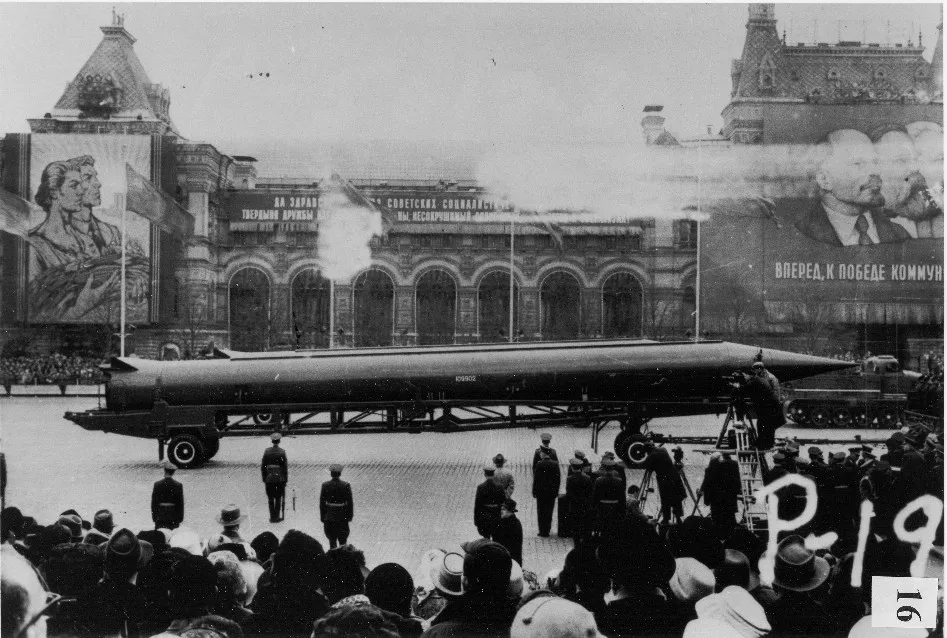
A CIA reference photograph taken in Red Square, Moscow, during the height of the Cold War, when the Soviet Union used to show off its latest nuclear weapons—in this case, Soviet medium-range ballistic missiles. Public domain image taken on May 1, 1965. Image courtesy of George Washington University’s National Security Archive / Wikimedia Commons.
The Bulletin of the Atomic Scientists’ Doomsday Clock
In the aftermath of the United States successfully detonating two nuclear bombs in Japan with the intention of ending World War II, former Manhattan Project scientists founded the Bulletin of the Atomic Scientists in 1945. It is a nonprofit organization whose mission has been to serve the public interest by informing governments, policy makers, science and security experts, and the population at large as to the inherent dangers asso- ciated with atomic warfare and an ensuing nuclear arms race (Bulletin of the Atomic Scientists 2023a).Popularized in the recent film “Oppenheimer,” a cadre of scientists quickly became concerned about the existential dangers posed by nuclear energy and formed this collective as a means of communicating these perils to the world. The Bulletin of the Atomic Scientists developed the iconic Doomsday Clock in 1947 as a vehicle for communicating the risk of nuclear annihilation (metaphorically symbolized as midnight). In its early years, the clock reflected the dangers of nuclear Armageddon exclusively. However, over the last several decades, the Bulletin of the Atomic Scientistshas also begun to consider the potential for climate catastrophe, disruptive technology and cyber risks, and general political volatility in its time-setting calculus (Bulletin of the Atomic Scientists 2023b).
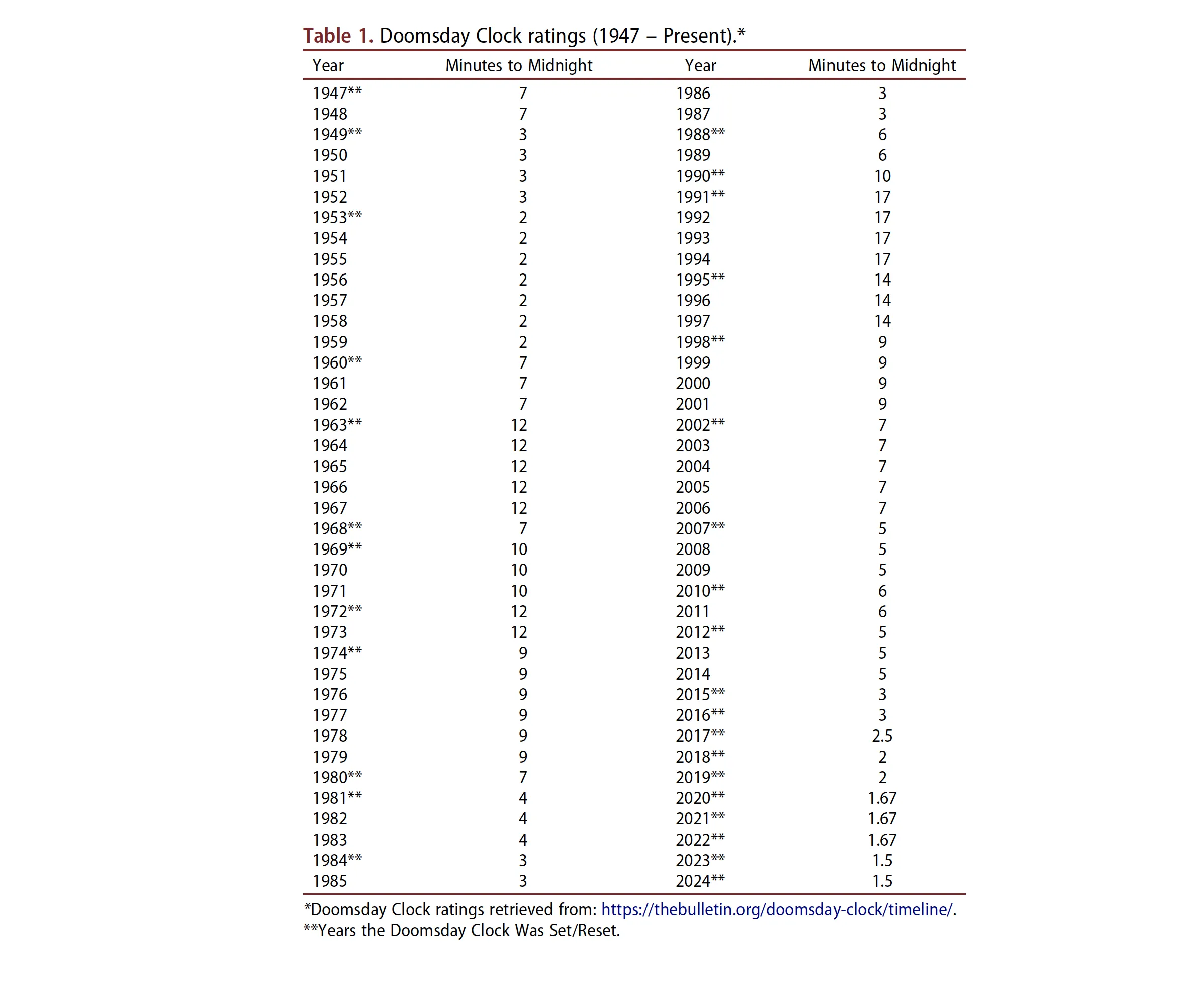
The clock was first set at seven minutes to midnight in 1947, and has moved 25 times since (Bulletin of the Atomic Scientists 2023c). In 1991, it was set at 17 minutes to midnight in the context of the symbolic end of the Cold War, and the Soviet Union signing the Strategic Arms Reduction Treaty (START) with the United States, which is the farthest from midnight the clock has ever been. This past year (January 2024), the Bulletin of the Atomic Scientistsmaintained the time at 90seconds to midnight (originally set in 2023), which is the closest it has ever been to midnight—in light of the growing dangers of nuclear conflict, Russia’s invasion of Ukraine and the prospect of a widening world war, rising conflict in the Middle East, US-China tensions, and evolving climate and disruptive technology dangers.
Exploring SDoH with the Doomsday Clock
Most of the research exploring the impact of social determinants of health has tended to focus on discrete domains (e.g. specific economic conditions, war and conflict, climate, food insecurity, etcetera), but there is also growing appreciation for the ways in which adverse childhood events, trauma, and related chronic medical conditions are impacting mortality (Felitti et al. 1998).
There has arguably been less attention paid to how aggregated (macro) measures of risk may offer a unique perspective (and perhaps predictive power) in terms of impact on population health and functioning. The Doomsday Clock in particular may represent such a harbinger of risk, given the way in which it reflects the more cumulative existential dangers faced by global society. The iconic clock may also offer dynamic advantages in this regard given its shifting focus over time to reflect the evolving dangers faced by modern society—beginning with the nuclear arms race in the 1940s, and shifting to also include the dangers brought by climate change and disruptive technologies.
As an index based on qualitative expert consensus, the Doomsday Clock has significant limitations, just as it may capture net risk in a helpful way. While it has been written about extensively in the Bulletin of the Atomic Scientists in relation to policy-decision making, less is known about its associations with population health and functioning. The purpose of this study was to advance understanding in this area by exploring associations between the Doomsday Clock settings, mortality data published by the US Centers for Disease Control and Prevention (CDC), and mental health diagnosis prevalence rates published by the University of Washington’s Institute for Health Metrics and Evaluation’s (IHME) Global Burden of Disease Collaborative Network.
A scientist works in a biosafety level 4 lab run by the US Centers for Disease Control and Prevention. Image courtesy of US Centers for Disease Control and Prevention.
The design of our study
Aggregated (population-level) data that is publicly available was used exclusively in this study; no data involving human subjects was collected. This study was formally reviewed and exempted from full Institutional Review Board (IRB) review. Doomsday Clock ratings were compiled directly from the Bulletin of the Atomic Scientists’ website between the years 1947 and 2024. Mortality data for the United States was obtained from the US Centers for Disease Control and Prevention for the years 1950–2019 (US Centers for Disease Control and Prevention 2023a). Finally, mental health prevalence data for the United States was obtained from the University of Washington’s Institute for Health Metrics and Evaluation’s (IHME) Global Burden of Disease project for years 1990 to 2019. All data were entered annually (for the years available), and all analyses were conducted using the Statistical Package for the Social Sciences (IBM Corporation 2021). Further information about these data sources is offered below.
Doomsday Clock settings
The Doomsday Clock is a metaphorical representation of how close society is to human-imposed annihilation (Bulletin of the Atomic Scientists 2023b). The Bulletin of the Atomic Scientists has used the iconic symbol of the clock to inform governments, policy makers, science and security experts, and the population at large as to the evolving perils of the nuclear age. For the first 26 years, the top editor of the Bulletin of the Atomic Scientists (Eugene Rabinowitz) set the Clock based on his discussions with scientists and other nuclear experts internationally. However, following his death in 1973, the Bulletin’s Science and Security Board assumed this responsibility for the specific timeline of the Doomsday Clock since its inception in 1947. Please see Table 1 for a summary of Doomsday Clock settings since the year 1947, along with specific years the Clock was reset.
Doomsday Clock settings over the years
CDC mortality data
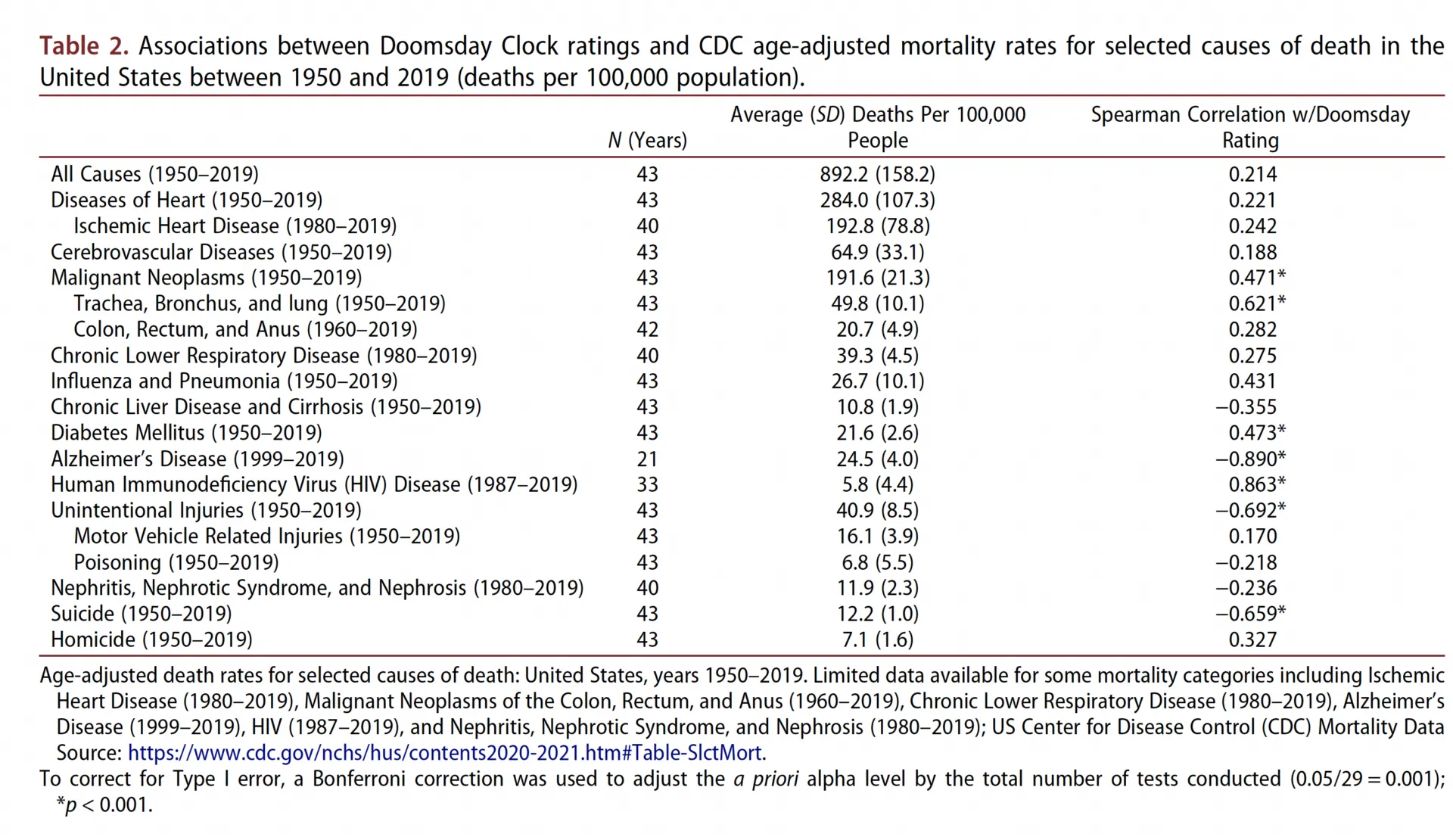
The leading causes of mortality data were obtained from the US Centers for Disease Control and Prevention for years 1950–2019 (US Centers for Disease Control and Prevention 2023a). Death rates for most categories were reported once per decade between 1950 and 1979, and annually thereafter until 2019. However, for some categories (e.g. Alzheimer’s disease, HIV, chronic lower respiratory disease), fewer years of data were recorded.Data are represented as age-adjusted death rates per 100,000 people in the US population. For analysis purposes, only complete data were used (i.e. years when data were reported). Please see Table 2 for a summary of all leading mortality indicators and year intervals they were recorded.
Mental health prevalence data
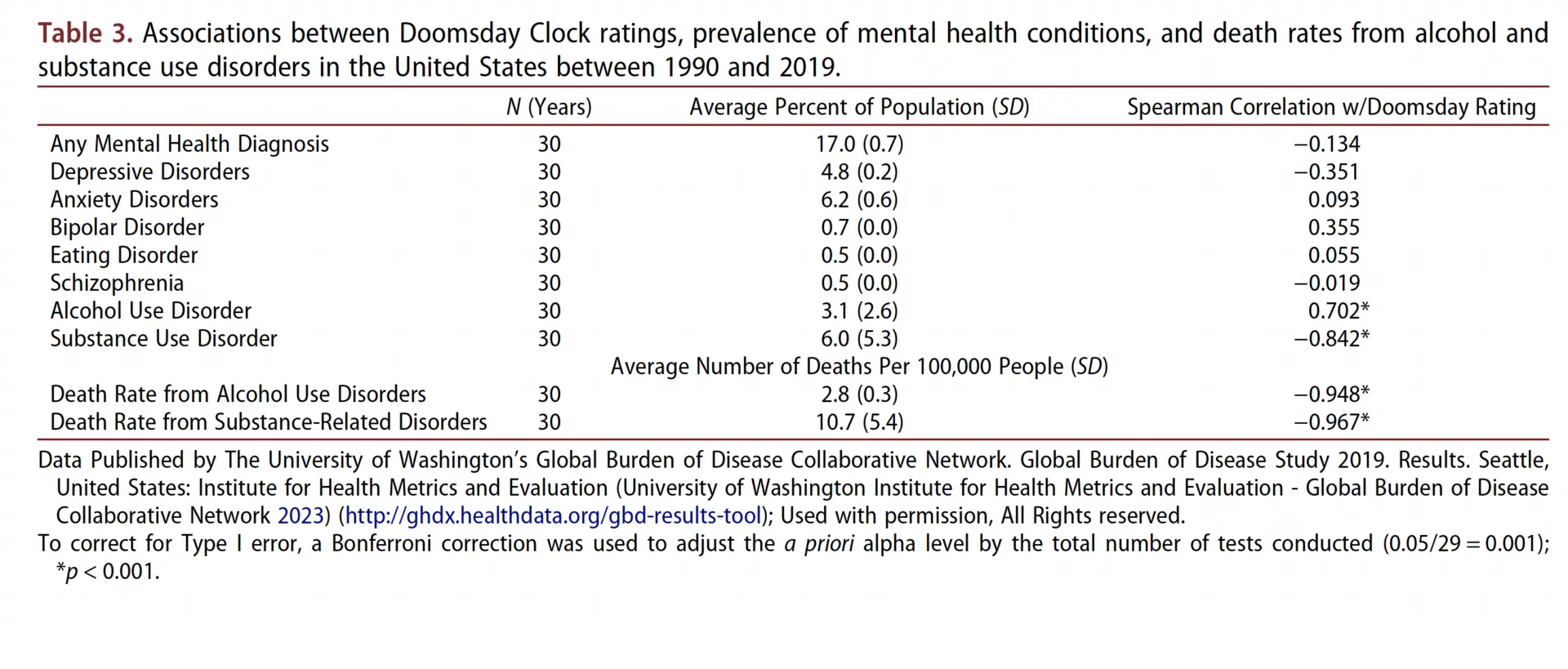
Mental health prevalence data for the United States was obtained from the University of Washington’s Institute for Health Metrics and Evaluation’s (IHME) Global Burden of Disease project for years 1990 to 2019 (University of Washington Institute for Health Metrics and Evaluation – Global Burden of Disease Collaborative Network 2023). Prevalence estimates (represented as percentage of the population) for major categories of mental illness were included overall and by domain (e.g. Depressive, Anxiety, Bipolar, Eating, Schizophrenia, Alcohol Use, and Substance Use Disorders).Deaths associated with alcohol (AUD) and substance use disorders (SUD) were also included. Please see the IHME website above for more comprehensive information on how prevalence estimates were derived. Briefly, estimates were approximated based on representative population surveys, available medical information, and statistical modeling. See Table 3 for a summary of the prevalence rates for these conditions.
Associations between Doomsday Clock settings, mental health disorders, and death rates from alcohol and substance abuse
Our study results
See Table 1 for a complete summary of Doomsday Clock ratings since 1947. Table 2 presents Spearman rank-order correlations between Doomsday Clock ratings and age-adjusted mortality rates for selected causes of death published by the United States Centers for Disease Control and Prevention (US Centers for Disease Control and Prevention 2023a).[1]
Fewer years were available for some categories, which reflect changes in reporting practices over time. For example, mortality rates for Alzheimer’s disease were available between the years of 1999 and 2019 (21 years), whereas rates for Human Immunodeficiency Virus (HIV) were available between the years 1987 and 2019 (33 years).
Please see Table 2 for a comprehensive summary of this information for each mortality indicator. For purposes of interpretation, negative correlations reflect cases where Doomsday Clock time settings closer to midnight, indicating higher risk, are associated with increases in mortality rates, whereas positive correlations indicate cases where Clock settings were further from midnight—indicating lower risk—are associated with increases in mortality rates.
Perhaps most notable, there was a strong negative correlation observed between Clock setting and Alzheimer’s disease mortality between the years 1999 and 2019 (rs = −0.890; p < .001), and also a strong positive correlation between Clock settings and HIV mortality between 1987 and 2019 (rs = 0.863; p < .001). Moderate positive correlations were also observed between Clock settings and malignant neoplasms (rs = 0.471; p < .001) more generally, as well as with the trachea, bronchus, and lung (rs = 0.621; p < .001) specifically. Although Clock settings were also negatively associated with Unintentional Injuries mortality (rs = −0.692; p < .001) broadly, no associations were observed with each of the sub-categories (i.e. motor vehicle related injuries and poisoning). Finally, there was a moderate to large negative correlation observed between Clock settings and suicide mortality (rs = −0.659; p < .001) and a trending positive correlation between Clock settings and homicide mortality (rs = 0.327; p = .032) between 1950 and 2019.
Table 3 presents Spearman rank-order correlations between Doomsday Clock ratings and mental health prevalence data for the United States using data obtained from the University of Washington’s Institute for Health Metrics and Evaluation – Global Burden of Disease Collaborative Network (2023) for years 1990 to 2019. Alcohol and substance-related mortality data were also included. More generally, there was no observed relationship between Clock settings and the presence of any mental health diagnosis (rs = −0.134; p = .480). However, there was a strong negative correlation observed between Clock settings and prevalence of a substance use disorder (rs = −0.842; p < .001), and also a strong positive correlation between Clock settings and prevalence of an alcohol use disorder (rs = 0.702; p < .001). Likewise, there were also strong negative correlations observed between Clock settings and death rates associated with both alcohol use disorder (rs = −0.948; p < .001) and substance use disorder (rs = −0.967; p < .001). Finally, while there were no other statistically significant correlations observed between Clock settings and prevalence of other mental health disorders, there was a negative trend observed for depressive disorders (rs = −0.351; p = .057).
How we interpret the results
Perhaps unlike any other time in history, the world now grapples with complex and evolving dangers that threaten the future of human existence on this planet. Much of this seems to parallel exponential advances in science, industry, and technology over the last century.Some have pointed out the dissociation in advancement between our species’ technical and moral capabilities. The human mind-brain is a combination of evolutionarily preserved primitive functions and higher-order functions, between anti-social and pro-social tendencies, and population-level as well as small group behaviors can be greatly magnified and accelerated through technology.
In many ways, the development (and detonation) of the atom bomb in 1945 was a transformative moment. It may have expedited the end of a devastating global conflict that had already resulted in millions of lives lost, but it paradoxically raised the specter of manmade mass annihilation and extinction of species for the first time in human history. The forming of the Bulletin of the Atomic Scientists in 1945 and subsequently the Doomsday Clock in 1947 were also in many ways defining moments, as the scientific community began to communicate in concert as to the potential dire consequences human innovation and technology could have in terms of the future of the planet.Over time, the organization has flexibly evolved its time-setting calculus to incorporate newer emerging threats. However, the end goal has been the same: to communicate warning and forestall cataclysm.
Some have been quite critical of the Doomsday Clock. For example, in his book Enlightenment Now, Harvard psychologist Stephen Pinker (2018) criticized both the lack of empirical and objective data used to make decisions about setting the Clock and also emphasized the many ways that society has positively advanced according to multiple metrics—which, in his opinion, should be reason for optimism. In a 2018 interview with the Bulletin of the Atomic Scientists, Pinker highlighted the many ways that people are living longer, healthier, and happier lives—in spite of the dangers reflected in the Doomsday Clock (Crowder 2018).In fact, he referred to the Doomsday Clock as a “propaganda stunt” in his book and questioned its validity—citing as an example the greater distance from midnight (7 minutes) in 1962 following the Cuban Missile Crisis, as compared to 2007 (5 minutes), which appears counter-intuitive on the surface.
Flooding in the North Cascades National Park. Image courtesy of National Park Service/public domain.
Despite the many signs of progress Pinker outlines in his book, others have foreseen a more dire future. In 2016, after initially predicting that humans had just another 1,000 years left on Earth before total extinction, renowned theoretical physicist Stephen Hawking revised this estimate a year later to 100 years, citing the dangers of climate change, disease, and potential for asteroid strikes (Christian 2017). This more general pessimism also seems in line with the existential dread and unfolding mental health crisis in recent decades, with notable increases in rates of many psychiatric disorders, addictions / substance misuse, and suicide in the general population. Although changes in the Doomsday Clock are certainly not the cause of this collective dysphoria, it very well may serve, even imperfectly, as a macro-level indicator of the global dangers faced by society and the subsequent collective consequences on health and well-being in the general population. It may also unwittingly be incorporating a net gestalt of the public psychology associated with, and in some cases driving, the socio-political crises we face as a population.
Thus, although Pinker may be correct in terms of whether and to what degree the Doomsday Clock accurately reflects the current potential for nuclear Armageddon, it is interesting to consider the way in which it may reflect the collective zeitgeist of society (positive or negative), which in turn can be associated with social determinants of physical and mental health. The current study sought to contribute to this dialog by exploring associations between Doomsday Clock settings over time and authoritative mortality data and mental health diagnosis prevalence.
There are several noteworthy findings from the current study that are worth considering. First, the pattern of correlations between the Doomsday Clock and CDC suicide rates over the span of 70 years is striking. More specifically, the data suggest that increases in risk (as reflected by time settings closer to midnight) are meaningfully associated with increases in suicide rates. This pattern may reflect the Clock as a general barometer of the collective dysphoria and distress in the general public (perhaps as a function of more negative and threatening social conditions), which in turn potentiates the risk of suicide and self-harm. The trending opposite association between Clock settings and homicide rates, while not statistically significant, is also quite interesting and might be explained in terms of classic social psychological models emphasizing the powerful in-group / out-group dynamics that emerge when people are faced with some type of external conflict or competition (Sherif 1956).That is, to the extent that nuclear and climate dangers accentuate a sense of external threats to society (for example, Americans perceiving the risks of nuclear war or climate catastrophe as being propagated by other countries such as Russia or China), it may lead to greater in-group cohesion and thus, less propensity for violence toward members of the perceived in-group.
Another striking finding was the strong, negative association observed between Doomsday Clock settings and Alzheimer’s disease mortality between 1999 and 2019, which is relevant given the changes to the former in 2007 to also consider climate change in its time-setting calculus. This finding could reflect the emerging literature documenting the ways in which exposure to environmental pollutants and toxins may accelerate the progression of Alzheimer’s disease in different ways (see Baldi et al. 2003; Bjørling-Poulsen, Andersen, and Grandjean 2008; Block and Calderón-Garcidueñas 2009; Mir et al. 2020).
The moderate, positive correlations observed between the Doomsday Clock ratings, and malignant neoplasms, diabetes mellitus, and Human Immunodeficiency Virus (i.e. where time settings further away from midnight [indicating decreased risk] are associated with increases in mortality) are a bit more difficult to explain. It is quite possible these findings simply reflect the natural trajectory (decline) in prevalence of these medical conditions over time (due to advances in medicine), which correspond with the Doomsday Clock being set closer to midnight in recent decades. However, it may also indicate medical scientific advances and more concerted public health efforts to eradicate major disease categories in the context of other external threats that are seen as less controllable—all as part of a larger means of protecting the health and well-being of society in whatever ways possible. Regardless, follow-up research is recommended to unpack this further. It is notable that simple monotonic time (scientific advances) and / or demographic effects are less likely explanations for these correlations, given the opposite directionality of some of them, and the variability of the Doomsday Clock values over time.
There were also notable associations between Doomsday Clock settings and alcohol and substance use disorders between 1990 and 2019. More specifically, the data suggest that increases in risk (as reflected by time setting closer to midnight) are meaningfully associated with increases in rates of substance use disorders and decreases in rates of alcohol use disorders in the general United States population. The former is generally intuitive given research that has documented the incremental increases in substance use over time, especially during times of heightened stress and threat (e.g. the recent COVID-19 pandemic), where substance use may be seen as a form of coping in the context of distress (Abramson 2021). The opiate epidemic must also be taken into account, at least in the United States. Although the latter finding was surprising, it may also be explained by a more general decline in alcohol use disorders in the general population over the last several decades (SAMHSA 2020).
Regardless, the correlations between Doomsday Clock settings and death rates associated with both alcohol and substance related disorders annually were extremely large (> −0.90). The reasons for this are likely multi-factorial, although the strength of these latter correlations would indicate the Doomsday Clock may in fact be capturing meta-level, societal factors that are propagating more extreme substance use patterns (i.e., at the tails of the distribution) leading to death. This is also something that warrants further research in order to better understand the specific pathways (and interactions between variables) involved.
Finally, with the exception of alcohol and substance use disorders, there were no significant associations observed between Doomsday Clock ratings and the remaining mental health diagnosis categories, which was surprising. However, there was a statistical trend observed in which Clock settings closer to midnight (indicating higher risk) were associated with greater prevalence of depressive disorders. This also makes intuitive sense, given the way in which external stress (and elevated risk) has been found to be associated with increases in dysphoria and distress, which are biological and psychological mediators of relevance. However, this is also something that needs further investigation.
Illustration of artificial intelligence. Image courtesy of BrianPenny/Pixabay.
Should the Doomsday Clock be considered a Social Determinant of Health marker?
The results of this study are noteworthy for a number of reasons, in our view. Perhaps most significantly, and in addition to the many other ways the Doomsday Clock has been used to inform policy decisions and communicate warning to the public about a range of risks, these findings raise interesting questions about how the Doomsday Clock may help explain (and perhaps symbolically represent) macro-level socio-political factors that impact population health—as well as how Social Determinant of Health indicators might inform the interpretation of future Doomsday Clock settings, to enhance the capturing of relevant factors affecting glo- bal threats. During times of greater threat and danger, there may also be corresponding increases in specific types of health outcomes (e.g. mortality associated with Alzheimer’s disease, suicide, and alcohol and substance use) and disease (e.g. rates of substance use disorders, depression, etcetera). Healthcare policy and provision can be affected by socioeconomic factors broadly related to global and local risks. In addition to specific policy decisions surrounding nuclear nonproliferation and climate control, world leaders could use changes in Doomsday Clock settings to better understand changes in population health and plan corresponding strategies to address these conditions at the population level.
As noted above, these decisions should be considered at multiple levels, including with respect to the specific health infrastructure needed to address the medical and mental health needs of the public, but also in terms of the meta-level conditions that interact to potentiate these changes in health and well-being (e.g. cooperation between and within nations to coordinate responses to climate change, disruptive technology, access to natural resources, arms reduction, stable housing, food security, education, etcetera). Conversely, health / mental health and Social Determinant of Health measures may also be of relevance in informing or refining the Doomsday Clock setting. Further studies would be needed to explore this possibility.
Our findings also raise questions about the extent to which other macro-level indicators, such as the Global Peace Index, World Development Indicators, Global Hunger Index, Global Innovation Index, and perhaps even the World Happiness Index might also be used in concert with the Doomsday Clock as population-based, social determinants of health indicators. Integrating these macro-level indica tors may offer unique perspectives (and predictive power) with which to plan population health initiatives and interventions.
Doomsday Clock.
Limitations and future directions
There are several limitations to note when considering our findings. First, the sample sizes available for the mortality and mental health variables above vary both within and across datasets, and thus the correlations are not always based on the same number of years (i.e., the same time period). Further, the sample sizes for some of the indicators above are quite small (N <40 years), and it is thus less clear whether and to what extent these associations would generalize across time or are specific to particular eras. Future research using health indicators that span the entire Doomsday Clock period (and other indices above) is recommended to offer a more complete picture of these relationships and as a means of facilitating direct comparisons.
Second, the CDC mortality rates used here were reported once per decade between 1950 and 1979, and annually thereafter until 2019. As such, the change in reporting frequency is another factor to consider when interpreting these findings.
Finally, as mentioned above, whereas the head editor of the Bulletin of the Atomic Scientists (Eugene Rabinowitz) set the clock based on his discussions with scientists and other nuclear experts internationally during the first 26 years, the Bulletin’s Science and Security Board assumed this responsibility following his death in 1973 and has since made these decisions by expert (qualitative) consensus. The impact of this change on the setting of the Clock is another factor to consider when interpreting the data above.
The factors considered in the consensus, and weighting of them, are themselves worthy topics of consideration, as are questions concerning whether other areas of expertise (including mental health and social determinants of health) might be helpful to include in such deliberations.
In spite of these limitations, this study provides a unique perspective on the potential utility of the Doomsday Clock as a symbol for better understanding (on a macro-level) social determinants of health. Although the iconic clock centered on the inherent dangers associated with nuclear catastrophe for the first 60 years of its life following the development and detonation of the atom bomb in 1945, it has more recently shifted to also consider the potential for climate catastrophe, disruptive technology and cyber risks, and general political volatility in its time-setting calculus.In doing so, it has made an important shift to include more contemporary threats—all of which have implications not only for the health and well-being of people on the planet, but also for the likelihood of catastrophic use of weapons of mass destruction. Future research should continue to explore the impact of these meta-level dangers on the lives, health, and behavior of people and ways in which these kinds of macro-level indices may offer unique information that could be valuable for policy makers and the public at large.
Endnotes
[1] To correct for Type I error (i.e. rejecting a true null hypothesis), a Bonferroni correction was used to adjust the a priori alpha level (0.05) by the total number of tests conducted (0.05 ÷ 29 = 0.001) to determine the statistical significance of the correlations. As described above, only complete data were used (i.e. when data were reported for specific years).
Disclosure statement
Samuel Justin Sinclair has no disclosures to report. David A Silbersweig is a co-founder and SAB chair for Ceretype Neuromedicine (unrelated to this submission).
Allison, G. 2004. Nuclear Terrorism: The Ultimate Preventable Catastrophe. New York: Times Books.
Baldi, I., Lebailly, P., Mohammed-Brahim, B., Letenneur, L., Dartigues, J.-F., and Brochard, P. 2003. “Neurodegenerative Diseases and Exposure to Pesticides in the Elderly.” American Journal of Epidemiology157 (5): 409–414. https://doi.org/10.1093/aje/kwf216
Bjørling-Poulsen, M., H. R. Andersen, and P. Grandjean. 2008. “Potential Developmental Neurotoxicity of Pesticides Used in Europe.” Environmental Health 7 (1):50. https://doi.org/10.1186/1476-069X-7-50.
Block, M. L., and Calderón-Garcidueñas. 2009. “Air Pollution: Mechanisms of Neuroinflammation and CNS Disease.” Trends in Neuroscience 32 (9): 506–516.
Felitti, V. J., R. F. Anda, D. Nordenberg, D. F. Williamson, A. M. Spitz, V. Edwards, M. P. Koss, and J. S. Marks. 1998. “Relationship of Childhood Abuse and Household Dysfunction to Many of the Leading Causes of Death in Adults: The Adverse Childhood Experiences (ACE) Study.”
IBM Corporation. 2021. IBM SPSS Statistics for Windows, Version 28.0. Armonk, NY: IBM Corp.
Mir, R. H., G. Sawhney, F. H. Pottoo, R. Mohi-Ud-Din, S. Madishetti, S. M. Jachak, Z. Ahmed, and M. H. Masoodi. 2020. “Role of Environmental Pollutants in Alzheimer’s Disease: A Review.” Environmental Science and Pollution Research 27 (36): 44724–44742. https://link.springer.com/article/10.1007/s11356-020-09964-x
Pinker, S. 2018. Enlightenment Now: The Case for Reason, Science, Humanism, and Progress. New York, NY: Penguin Random House.
Sherif, M. 1956. “Experiments in Group Conflict.” Scientific American 195 (5): 54–59.
Substance Abuse and Mental Health Services Administration. 2020. “Key Substance Use and Mental Health Indicators in the United States: Results from the 2019 National Survey on Drug Use and Health.” (HHS Publication No. PEP20-07- 01-001, NSDUH Series H-55). Rockville, MD: Center for Behavioral Health Statistics and Quality, Substance Abuse and Mental Health Services Administration. https://library.samhsa.gov/product/results-2019-national-survey-drug-use-and-health-nsduh-key-substance-use-and-mental-health
University of Washington Institute for Health Metrics and Evaluation – Global Burden of Disease Collaborative Network. 2023. Global Burden of Disease Study 2019 (GBD 2019) Results. http://ghdx.healthdata.org/gbd-results-tool
US Centers for Disease Control and Prevention. 2023a. “Age-Adjusted Death Rates for Selected Causes of Death, by Sex, Race, and Hispanic Origin: United States, Selected Years 1950–2019.” https://www.cdc.gov/nchs/data/hus/2020-2021/SlctMort.pdf
The Bulletin elevates expert voices above the noise. But as an independent nonprofit organization, our operations depend on the support of readers like you. Help us continue to deliver quality journalism that holds leaders accountable. Your support of our work at any level is important. In return, we promise our coverage will be understandable, influential, vigilant, solution-oriented, and fair-minded. Together we can make a difference.
“Be grateful for your difficulties and challenges, for they hold blessings. In fact… Man needs difficulties; they are necessary for health personal growth, individuation and self-actualisation.”